


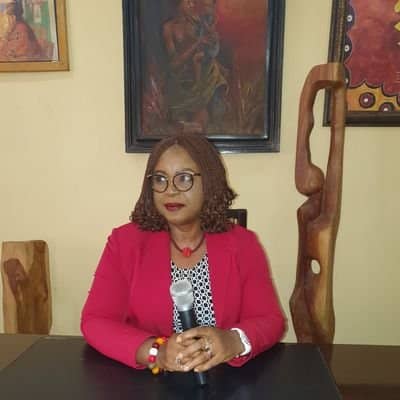
“Kemi Badenoch: A Broken Clock is Right Twice a Day,” Joy Ezeilo, SAN, Law teacher and Senior Advocate of Nigeria, began in an X (formerly Twitter) post.
Despite opinions to the contrary on the subject, which has dominated every news platform, the former United Nations (UN) Special Rapporteur on Trafficking Persons in Africa had this to say.
“The issue of citizenship in Nigeria affects all citizens, particularly women, by creating identity crises and hindering national development. The concept of “indigeneship” often limits women’s rights in both their home states and those of their husbands.
“Chapter III of the 1999 Constitution further complicates this by treating women as inferior citizens, as citizenship is primarily granted based on descent rather than place of birth, unlike in countries like the U.S.
“Section 26(2)(a) exemplifies sex discrimination by denying husbands of Nigerian women the right to citizenship by registration.
“Kemi Badenoch’s critique of this provision is valid: it unfairly disadvantages Nigerian women with foreign spouses, violating the anti-discrimination guarantee outlined in Section 42 of the Constitution and other ratified international human rights treaties by Nigeria.
“Unfortunately, amendments proposed by the 9th National Assembly to resolve these issues failed to pass in the Constitution Review process. It’s hoped that the 10th National Assembly will grant Nigerian women equal rights to confer nationality on their foreign spouses.
“For further reading, see my article, Joy Ezeilo, “The 1999 Constitution of the Federal Republic of Nigeria and the Woman Question,” published in NJR, Vol. 8, 2000/2001, pp. 161–177. Prof. Joy Ezeilo, (SAN, OON, Life Bencher)”
However, Human rights lawyer, Femi Falana, SAN, faulted the United Kingdom Conservative Party leader, Kemi Badenoch, over her claim that she cannot pass Nigerian citizenship to her children because of her gender.
During an interview with CNN’s Fareed Zakaria on Sunday, Badenoch asserted that she cannot pass on her Nigerian citizenship to her children because of her gender. She suggested that it is easier for Nigerians to acquire British citizenship than for foreigners to become Nigerians.
She said, “It’s virtually impossible, for example, to get Nigerian citizenship. I have that citizenship by virtue of my parents. I can’t give it to my children because I’m a woman.
“Yet loads of Nigerians come to the UK and stay for a relatively free period of time, acquire British citizenship. We need to stop being naive.”
Reacting in a statement issued on Monday, Falana described Badenoch’s statement as “a display of utter ignorance” and accused her of misinforming the British public to score political points.
Falana said, “In her desperate attempt to impress the British electorate, Kemi Badenoch keeps running down Nigeria.
“Contrary to her misleading claim, her children are Nigerians because she is a Nigerian. Her assertion that she cannot give Nigerian citizenship to her children because she is a woman is not in consonance with Section 25(b) and (c) of the Nigerian Constitution which provides that every person born in Nigeria after independence, either of whose parents or grandparents is a citizen of Nigeria, or any person born outside Nigeria to a Nigerian parent, is a citizen.
“Furthermore, by virtue of Section 42(2) of the Constitution, no citizen shall be subjected to any disability or deprivation merely by reason of circumstances of birth, gender, or class. Therefore, her two children are Nigerian citizens. The fact that she may not want them to claim it is irrelevant. For now, they are dual citizens of Britain and Nigeria.”
Falana also faulted her assertion that Nigerian citizenship is impossible for foreigners to obtain, noting that “Sections 26 and 27 of the Constitution clearly state that foreigners can acquire Nigerian citizenship through naturalisation or registration once they meet the legal conditions.”
He, however, acknowledged gaps in the law, saying that “A woman married to a Nigerian man can be registered as a citizen, but the same privilege is not extended to a man married to a Nigerian woman, which reflects the patriarchal nature of the law. This should be urgently amended.”



“Legal fireworks! Ezeilo SAN backs Kemi Badenoch on citizenship eligibility claim, differing with Falana. The debate rages on!”