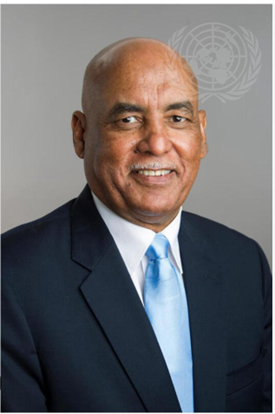
Former Sudanese Ambassador and Permanent Representative to the United Nations, Amb. Omer Dahab F. Mohamed delivered a compelling presentation at the 2025 African Bar Association (AFBA) Annual Conference in Ghana.
He emphasized that culture forms the foundation of a nation’s identity and power in international relations.
He warned that distorting or undermining cultural values weakens national strength and sovereignty.
According to him, protecting Africa’s cultural heritage is vital to preserving its independence and integrity.
Ambassador Dahab praised the Inter-Parliamentary Network of Family for proposing a new Charter to defend family values.
He said the family remains the fundamental unit of humanity and is currently under serious threat.
He added that national parliaments play a crucial role in ensuring public participation and executive accountability.
This approach, he explained, prevents constitutional violations by ensuring government commitment to legislative decisions.
Quoting the African Charter on Human and Peoples’ Rights of 1981, he reminded participants that economic, social, and cultural rights guarantee civil and political rights.
He also cited the 2006 African Charter on Cultural Renaissance, which links culture to Africa’s political and social liberation.
He concluded that all rights are equal and mutually reinforcing under international law.
Ambassador Dahab stressed that Africa cannot preserve its culture without creating an enabling environment for families.
He said economic development and trade among African states are essential for cultural survival.
He referred to the Draft African Charter on Sovereignty and Values, which promotes intra-African trade and economic growth.
He highlighted the African Continental Free Trade Agreement (AfCFTA) as a key driver of this goal.
He noted that AfCFTA is the world’s largest trade agreement by the number of participating countries.
He explained that the agreement aims to boost intra-African exports, reduce trade costs, and remove customs barriers.
He said, if implemented, AfCFTA could lift 30 million Africans out of extreme poverty by 2035.
He also projected that Africa’s exports could grow by $50 billion, strengthening the continent’s economic sovereignty.
Ambassador Dahab stated that both the Draft Charter and AfCFTA reflect genuine African will and ownership.
However, he criticized some external agreements, including the 2023 Samoa Agreement and the 2025 AU Convention on Violence Against Women and Girls.
He said these instruments attempt to impose a “sexual rights agenda” on Africa, including same-sex marriage and abortion.
He argued that such “new rights” have no foundation in international human rights law or African constitutions.
He cited American scholar Francis Fukuyama, who described these as “new-minted rights” aimed at social equalization.
He stressed that Africa must reject foreign agendas that contradict its values and legal traditions.
Looking ahead, Ambassador Dahab expressed optimism about African parliaments reaffirming the continent’s sovereignty and values.
He urged the African Union to actively support this effort through its relevant commissioners and institutions.
He called for stronger collaboration with the African Commission on Human and Peoples’ Rights and the AU Commission on International Law and concluded that united action and dialogue would strengthen Africa’s independence, identity, and global voice.