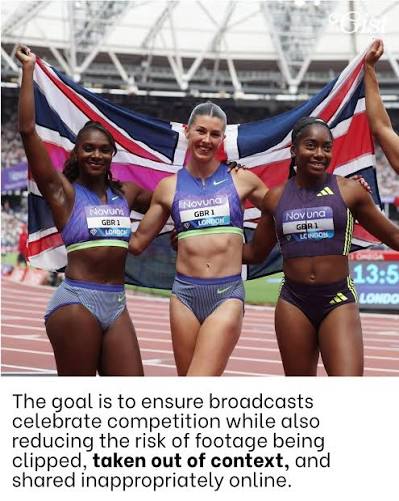
New guidelines seek to protect women from objectifying camera angles after athletes recount online abuse, mental health impact
Europe’s leading public broadcasters have introduced new guidelines aimed at ending the use of camera angles that unnecessarily sexualise female athletes during live sporting events, marking a significant shift in how women’s sport will be televised.
The guidelines, developed by the European Broadcasting Union (EBU) in collaboration with female athletes, urge television crews to adopt more respectful filming techniques and avoid shots that objectify competitors or expose them to online exploitation.
The move follows growing concerns from sportswomen who say intrusive camera work has fuelled sexualised social media content, harassment and lasting psychological harm.
Among those who helped shape the new standards is British Olympic bronze medallist and pole vaulter Holly Bradshaw, who said she had repeatedly found herself the target of abusive online comments and inappropriate videos created from competition footage.
“How our sport is displayed during live broadcasts can be incredibly powerful, yet sometimes harmful to the women competing and the women and girls watching,” Bradshaw said.
Drawing from her own experience, she disclosed that she had received abusive messages on social media after slow-motion replays and revealing camera angles captured her in compromising positions during competitions.
“Many athletes, myself included, have found themselves worrying more about the cameras than their performance,” she said, adding that television coverage has too often featured close-up shots and prolonged slow-motion replays that serve little sporting purpose while leaving athletes exposed to ridicule and sexualisation.
The concerns were echoed by Serbian Olympic long jumper Ivana Španović, who warned that intrusive camera positions do more than create momentary embarrassment.
She said certain filming techniques can cause significant discomfort during competitions and may have “serious long-term effects” on athletes’ mental health.
New Standards for Sports Coverage
Following consultations with athletes, the EBU has issued a series of editorial recommendations designed to promote more respectful coverage of women’s athletics.
Among the key directives is the instruction to avoid positioning cameras beneath athletes during events such as the pole vault and high jump, where low-angle shots are more likely to produce revealing images unrelated to sporting performance.
Broadcasters are also encouraged to limit unnecessary close-ups and slow-motion replays that focus on athletes’ bodies rather than the technical or competitive aspects of an event.
According to Glen Killane, Executive Director of EBU Sport, the guidance responds to longstanding concerns about how women are portrayed during sports broadcasts.
He said the sexualisation of female athletes through selective camera placement and editing decisions remains “a significant concern” across many sporting events.
“Lingering shots on bodies, low-angle cameras that capture revealing views, and excessive slow-motion replays that serve no technical or storytelling purpose are among the issues observed in the media coverage of women’s athletics competitions today,” Killane said.
A Wider Debate on Women in Sport
The guidelines reflect a growing international conversation about the portrayal of women athletes and the balance between broadcasting sport and respecting athletes’ dignity.
Advocates argue that while television plays a vital role in promoting women’s sport, production choices should never expose competitors to unnecessary humiliation, objectification or digital exploitation.
The EBU’s recommendations are expected to be applied during the European Athletics Championships, which begins on 10 August in Birmingham and will be carried by broadcasters including the BBC.
The guidance will not automatically apply to all international competitions. Events such as the Diamond League, although also televised by the BBC, are produced outside the EBU framework and are therefore not bound by the new standards.
For many athletes, however, the reforms represent more than a technical adjustment in television production.
They signal growing recognition that excellence on the track, field or runway should define women’s sport—not the camera angles through which it is viewed.