The aftershocks of the Jeffrey Epstein scandal continue to ripple through the world’s most powerful institutions, forcing fresh reckonings from Davos to Cambridge.
In a dramatic leadership shift, Borge Brende, president and CEO of the World Economic Forum (WEF), announced he is stepping down, citing regret over how he handled his relationship with convicted sex offender Jeffrey Epstein.
His departure comes just weeks after the WEF launched an independent investigation into his ties with Epstein, following disclosures from the U.S. Justice Department showing that Brende attended three business dinners with the financier and communicated with him via email and text.
“A Distraction” to Davos
In a statement, Brende described his 8½-year tenure as “profoundly rewarding” but told Norwegian media he did not want the controversy to overshadow the organisation’s mission.
“Like many others, I have felt a great deal of discomfort at being linked to Jeffrey Epstein,” he said, admitting he regretted not exercising greater transparency about their contact.
Though the WEF’s official statement did not mention Epstein directly, text messages released in Justice Department files from 2018–2019 revealed a notably cordial tone. In one exchange, Brende reportedly described Epstein as a “brilliant host” and wrote “missing you Sir” after a dinner attended by former Trump adviser Steve Bannon and a former Norwegian minister.
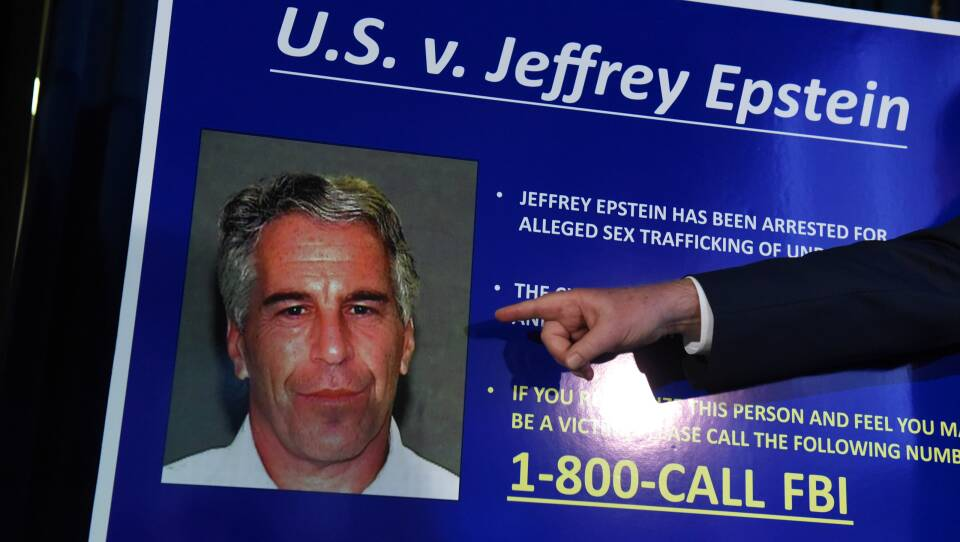
Their final communication occurred roughly a week before Epstein’s arrest in 2019 on federal sex-trafficking charges.
Epstein had previously pleaded guilty in 2008 to state charges involving prostitution of a minor in a controversial plea deal brokered by then-U.S. Attorney Alexander Acosta. He died in jail in August 2019 while awaiting trial on federal charges. His death was ruled a suicide, though it remains the subject of public scepticism.
The U.S. Justice Department has since released more than three million pages of documents related to Epstein’s network, fuelling renewed scrutiny of prominent figures across politics, academia and finance.
Independent Review Finds “No Additional Concerns”
WEF co-chairs Andre Hoffmann and Larry Fink said an external review of Brende’s relationship with Epstein concluded there were no additional issues beyond those already disclosed.
Still, the reputational damage proved untenable.
WEF Managing Director Alois Zwinggi will serve as interim president while the Board of Trustees searches for a permanent successor.
For an organisation synonymous with elite global networking in Davos, even perceived proximity to Epstein’s orbit carries heavy consequences.
Harvard’s Reckoning
Across the Atlantic, the scandal is also reshaping Harvard’s leadership landscape.
Lawrence H. Summers, former U.S. Treasury secretary and Harvard president emeritus, will retire from teaching at Harvard University at the end of the academic year.
His resignation follows the release of emails by congressional investigators showing that Summers maintained a personal relationship with Epstein long after the financier became a registered sex offender.
The emails revealed deeply personal exchanges, including banter about Summers’s romantic interests. In one 2019 message, Epstein described himself as Summers’s “wingman.” In others, language used in reference to a woman drew sharp criticism.
Summers, who had already stepped back from teaching and public roles in November, said he was “deeply ashamed” and taking “full responsibility” for continuing communication with Epstein.
He has also resigned from policy positions and previously stepped down from the board of OpenAI, which he joined in 2023.
Expanding Fallout at Harvard
Harvard confirmed that Martin A. Nowak, a professor of mathematics and biology with longstanding documented ties to Epstein, has been placed on administrative leave pending further investigation.
The university is conducting a broader review of its historical connections to Epstein, including donations and personal associations. Academics previously linked to Epstein include Harvard professor emeritus Stephen Kosslyn and literature scholar Elisa New.
Although Harvard banned direct donations from Epstein after his 2008 conviction, some academics maintained contact with him after his release from jail in 2009.
A prior university investigation in 2020 referenced Summers only briefly, but the newly released documents have intensified scrutiny over how elite institutions managed their relationships with Epstein despite his criminal record.
The Global Elite and the Epstein Effect
Epstein’s case, marked by a lenient 2008 plea deal, a dramatic 2019 federal arrest and his death in custody, has become a defining scandal of the modern era, exposing uncomfortable intersections of wealth, influence and moral compromise.
For the World Economic Forum, whose annual Davos summit convenes presidents, billionaires and CEOs, reputational credibility is currency.
For Harvard, a pillar of American academia, the controversy cuts to questions of ethics, oversight and accountability.
The emerging pattern is unmistakable: nearly seven years after Epstein’s death, his associations continue to destabilise some of the world’s most powerful institutions.
And as more documents surface, the question facing global elites is no longer whether Epstein’s shadow still looms.
It is who else may find themselves standing in it.