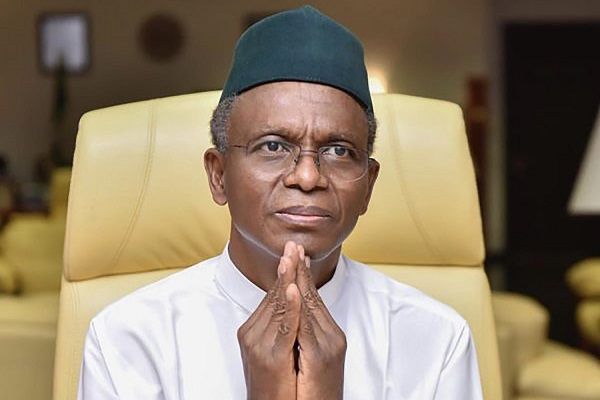
Nigeria’s political arena was thrust into fresh turmoil on Monday night after former Kaduna State Governor Nasir El-Rufai was detained at the headquarters of the Economic and Financial Crimes Commission (EFCC) in Abuja following hours of interrogation over an alleged N432 billion corruption probe.
The detention came as the Federal Government simultaneously filed criminal charges against him before the Federal High Court in Abuja over the alleged unlawful interception of phone communications belonging to the National Security Adviser, Nuhu Ribadu.
The convergence of corruption allegations, cybercrime charges and a reopened disappearance case marks one of the most consequential legal crises faced by a former Nigerian governor in recent years.
EFCC Grilling Over N432bn Allegations
Multiple sources within the anti-graft agency confirmed that El-Rufai arrived at the commission’s Jabi headquarters around 10 am in response to an invitation and was questioned over allegations arising from the 2024 report of the Kaduna State House of Assembly.
The legislative report accused his administration of misappropriating loans, violating due process in contract awards and plunging the state into heavy debt between 2015 and 2023.
A senior EFCC source said investigations had been ongoing for about a year.
“As a commission, we don’t just rush to invite suspects. Persons accused are always the last; that is, after we might have done our investigation to an advanced stage,” the source said, adding late Monday that the former governor remained in custody.
The EFCC spokesperson, Dele Oyewale, confirmed that El-Rufai honoured the invitation but declined to comment on the details of the interrogation.
What the Kaduna Assembly Alleged
In 2024, an ad hoc committee of the Kaduna State House of Assembly alleged that roughly N423bn was siphoned under El-Rufai’s administration, alongside disputed cash payments and contracts exceeding N155m and the alleged diversion of N1.37bn earmarked for a light rail project.
The committee recommended investigation and prosecution over alleged abuse of office, reckless borrowing, money laundering and contract irregularities.
El-Rufai has consistently denied wrongdoing, describing the probe as politically motivated and insisting that all loans were lawfully appropriated for infrastructure, education, healthcare and security reforms.
Cybercrime Charges Over Alleged NSA Phone Interception
As the EFCC interrogation unfolded, the Federal Government filed a three-count charge marked FHC/ABJ/CR/99/2026, accusing El-Rufai of offences under the Cybercrimes (Prohibition, Prevention, etc.) Amendment Act, 2024 and the Nigerian Communications Act, 2003.
Prosecutors allege that during a February 13, 2026 appearance on Prime Time on Arise TV, El-Rufai admitted that he and unnamed associates intercepted communications linked to Ribadu.
In one of the counts, the government alleges he failed to report those involved in the interception. Another count accuses him of using technical systems in a manner capable of compromising public safety and national security.
During the interview, El-Rufai claimed he learned of an alleged plan to arrest him through a leaked conversation from the NSA’s phone, stating: “The government thinks they are the only ones who listen to calls. But we also have our ways.”
Legal analysts warn that, if substantiated, unauthorised interception of a sitting National Security Adviser’s communications could constitute a grave breach of national security laws.
No date has yet been fixed for his arraignment.
DSS Reopens Dadiyata Disappearance Case
In a parallel development, the Department of State Services (DSS) has reportedly reopened investigations into the 2019 disappearance of government critic Abubakar Idris, popularly known as Dadiyata.
Security sources said investigators are probing El-Rufai and his sons over the unresolved case. His passport was reportedly seized at the Nnamdi Azikiwe International Airport to prevent foreign travel while inquiries continue.
El-Rufai has repeatedly denied any involvement, maintaining that he neither knew Dadiyata personally nor had any reason to target him.
Protests Erupt in Abuja and Kaduna
Monday’s dramatic developments triggered protests at the EFCC headquarters in Abuja and at the Kaduna State House of Assembly.
In Abuja, demonstrators demanded accountability over the alleged N432bn probe, while supporters of the former governor gathered nearby, chanting solidarity slogans.
In Kaduna, civil society groups pressed lawmakers for updates on the legislative findings that prompted the anti-graft referral.
Political Reactions and Presidential Backing for Ribadu
Opposition figures questioned the timing of the charges, with some suggesting the unfolding legal drama could heighten political tensions ahead of the 2027 elections.
Meanwhile, President Bola Tinubu publicly praised Ribadu during a visit to Adamawa State, describing him as “honest, bold, courageous and committed,” and vowing continued support in the fight against terrorism and banditry.
The statement came days after El-Rufai accused the Office of the National Security Adviser of procuring a toxic chemical, an allegation the office denied and referred to the DSS for investigation.
A Defining Legal Battle
Once a central figure in Nigeria’s ruling establishment and a vocal national commentator, El-Rufai now faces simultaneous investigations into alleged financial mismanagement, cybercrime and security-related controversies.
Whether the cases ultimately amount to lawful prosecution grounded in evidence or political persecution, as his allies contend, will be tested in court.