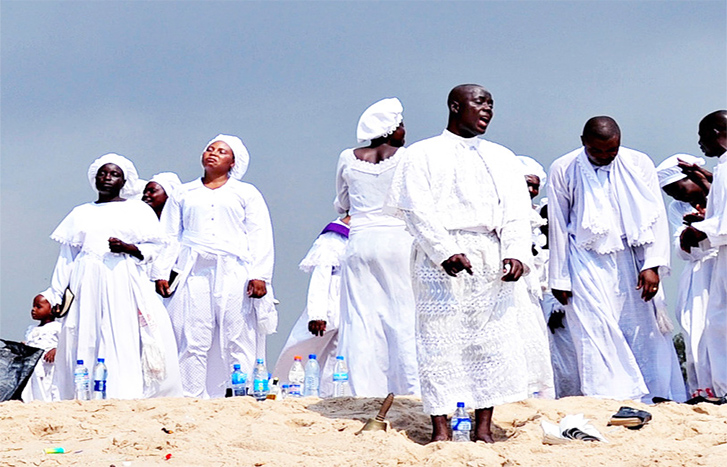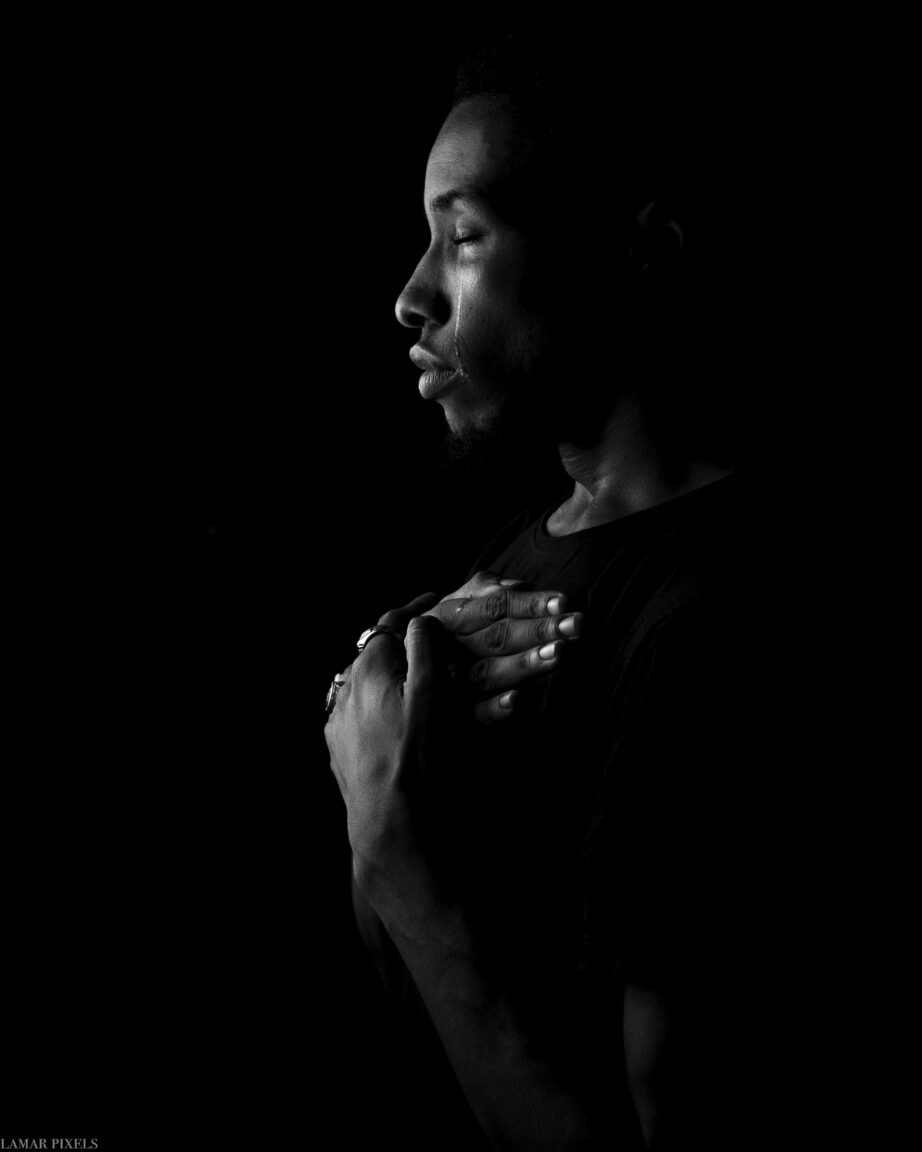
Behind headlines of insecurity and survival are men absorbing fear, grief, and pressure, with nowhere to put it.
There is a kind of silence many Nigerian men learn early—one that does not mean peace, but survival.
Let’s look at the recent killing of Mallam Bashar Sani, a Director at the College of Education, Maru in Zamfara State. Once again, this incident highlights the harsh realities of life in parts of northern Nigeria.
Widely respected as an educator and public servant, Sani was also a man trapped in a cycle of fear, responsibility, and impossible choices.
Over the years, he reportedly paid about ₦25.7 million in ransom to secure the release of abducted relatives. When bandits first attacked his family home, they kidnapped his two wives. He paid ₦10 million for their freedom. Months later, they returned for his younger brother. Another ₦3.5 million was paid.
The demands kept coming—cash, phones, airtime—each payment a negotiation for life.
The family relocated, hoping for safety.
For a while, it worked.
Then the bandits returned.
This time, they abducted Sani, one of his earlier abducted wives, and his daughter. A ransom was paid again. More demands followed—motorcycles, phones, airtime. Everything was delivered.
But Sani did not return.
He reportedly died in captivity after enduring torture and untreated injuries.
He did what many Nigerian men are expected to do. He carried the burden. He paid. He protected. He endured.
And in the end, it was not enough.
His story is not isolated. It is emblematic.
On January 2, 2024, bandits attacked the Al-Kadriyar family residence in Bwari, on the outskirts of Abuja. They abducted the father, Alhaji Mansoor Al-Kadriyar, and his six daughters. A relative was killed during the attack.
Days later, the father was released, with a condition: “Raise ransom for your daughters.”
When the deadline passed, one of them, Nabeeha Al-Kadriyar, was killed.
Her death sparked national outrage. Donations followed. Eventually, the remaining daughters were released.
But beyond the headlines lies a quieter question. What does it mean to be a father in such a moment?
To be released, solely to negotiate for your children’s lives. To bear the burden of time, money, and fear, aware that failure carries consequences too painful to spell out.
Across large parts of Nigeria, insecurity has become routine. Banditry, kidnapping, and insurgency have disrupted livelihoods, displaced communities, and created a constant undercurrent of fear.
The psychological toll is immense: chronic stress, anxiety, trauma.
And yet, many men remain silent.
In a culture that discourages emotional expression, vulnerability is often mistaken for weakness.
Men learn to endure, not to process.
The consequences are visible.
Withdrawal. Depression. Substance abuse. Quiet desperation.
The World Health Organisation (WHO) notes that men are more likely to die by suicide globally, and though Nigeria lacks comprehensive data, mental health experts agree: silence is costing lives.
For many, the breaking point begins with loss of income, of stability, of purpose.
“Everyone depended on me. When I couldn’t provide, I felt useless.”
Rather than seek help, many retreat inward.
Therapy remains inaccessible or misunderstood. Some see it as foreign. Others as a luxury. Yet healing often begins in smaller spaces. Conversations with friends. Moments of honesty; even in unexpected places.
But these are fragile solutions in the face of systemic failure.
Economic pressure continues to rise. The cost of living continues to climb. Jobs are uncertain. Insecurity persists.
And still, men are expected to provide. To protect. To endure.
Section 14(2)(b) of the 1999 Constitution states that the security and welfare of the people is the primary purpose of government. It stipulates that the government must ensure public welfare, uphold social justice, and protect fundamental human rights, including life, dignity, and freedom from discrimination.
Yet for many, that promise feels distant. This is because the government is huge in making promises. Making the promises real remains to be seen or felt.
For the average Nigerian man, though, the roles do not change. Only the pressure does.
Provider. Protector. Father. Son.
No room to falter.
And so, the silence continues.
From childhood, boys are handed a script that leaves little room for emotional truth.
“Be strong.”
“Don’t cry.”
“Man up.”
These are not suggestions; they are instructions.
But trauma does not disappear when ignored.
It adapts.
It shows up in anger, in distance, in the inability to connect. In the father who cannot say “I love you.” In the man who does not know how to ask for help.
Men are expected to be unbreakable.
But what happens when the unbreakable breaks?
Too often, nothing.
Because there is no space for that breaking. No shared language that says: you are allowed to be human.
Instead, trauma is recycled; passed down through silence, through absence, through what is never addressed.
To speak about the trauma of men is not to compete with the suffering of women. It is to complete the picture.
Because a society cannot fully heal when half of it is emotionally silenced.
So what does healing look like?
It begins with permission.
Permission to feel. To speak. To seek help without shame.
It requires a cultural shift; one that redefines strength not as suppression, but as the courage to confront pain.
Because the truth is simple: silence is not strength. It is survival.
And survival is not the same as healing.
If we are to truly confront trauma in Nigeria, we must listen not only to the voices that cry out, but also to those that have been trained not to.
The echoes are there.
We just have to be willing to hear them.
A lawyer and equity advocate, Lillian can be reached at [email protected]