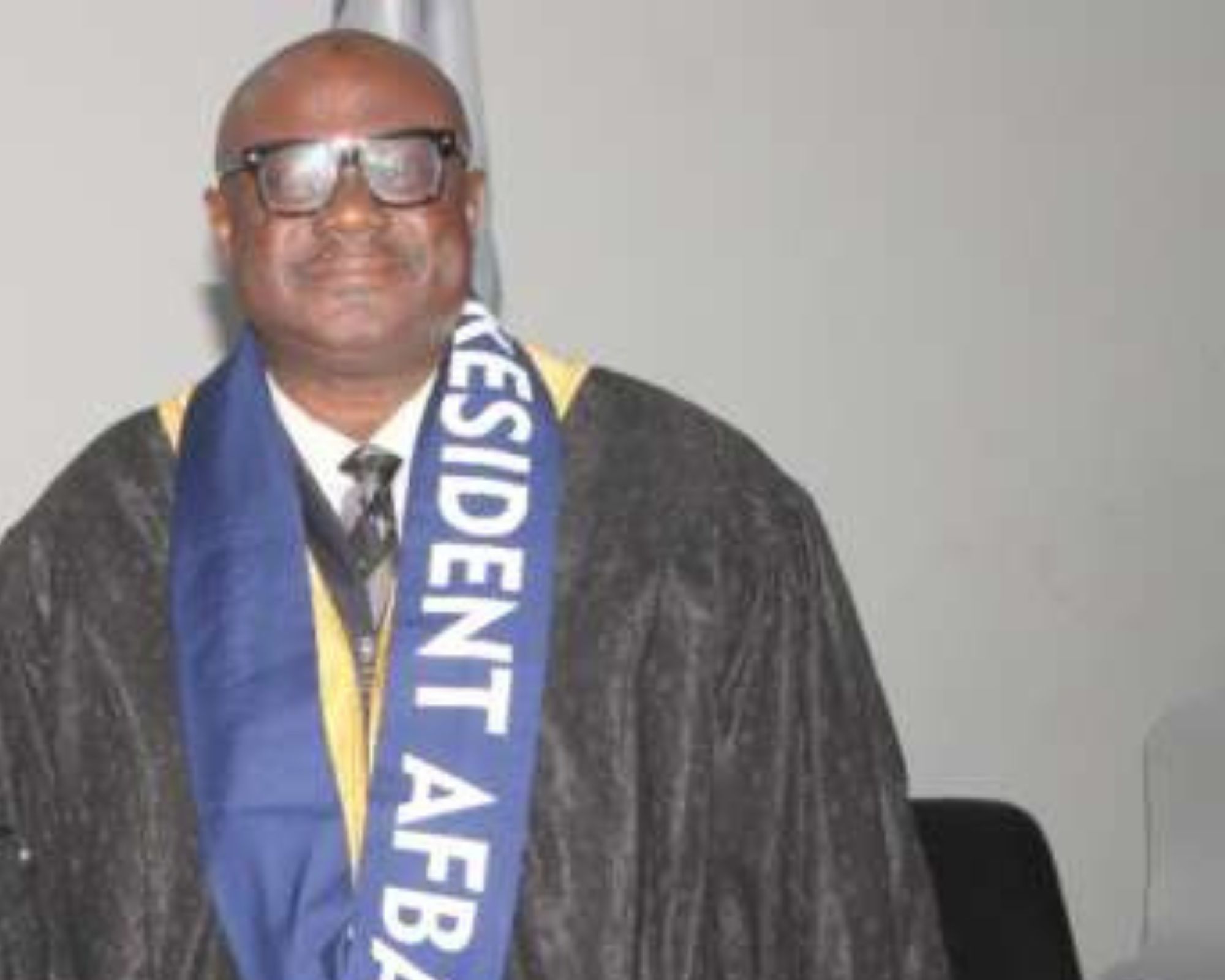
The President of the African Bar Association (AfBA), High Chief Ibrahim Eddy Mark, has warned that constitutional democracy across Africa is facing mounting threats from political interference, attacks on judicial independence, disregard for court decisions and the gradual erosion of civic freedoms, calling on judges and lawyers to defend the rule of law with courage and integrity.
In a goodwill message to the 2026 Annual Conference of the Nigerian Law Society, Mark said the challenges confronting constitutional governance across the continent require renewed commitment from the Bench, the Bar, civil society and all defenders of justice.
Addressing the conference themed “Constitutional Democracy and the Role of the Judiciary,” the AfBA President described the judiciary as the indispensable guardian of constitutional order, warning that democracy cannot survive where courts are weakened or their authority undermined.
“History teaches us that the strength of any democracy is measured not merely by the conduct of elections but by the fidelity of its institutions to constitutional principles,” he said, stressing that an independent, impartial and courageous judiciary remains the final refuge of citizens seeking justice against arbitrariness and abuse of power.
While acknowledging that many African countries have made progress in democratic governance, Mark cautioned that constitutionalism across the continent remains “a work in progress.”
He identified persistent threats including attacks on judicial independence, disregard for court decisions, constitutional manipulation and shrinking civic space as obstacles to democratic consolidation, insisting that these developments should inspire collective action rather than resignation.
According to him, the legal profession has a historic responsibility to serve as the conscience of society by defending constitutional governance, promoting access to justice and ensuring that constitutions remain living instruments for protecting the rights and dignity of citizens.
“The legal profession has always stood as the conscience of society,” he said, reaffirming AfBA’s commitment to promoting the rule of law, defending judicial independence, protecting human rights and strengthening legal institutions across Africa.
Mark commended the Nigerian Law Society for choosing a conference theme that transcends national boundaries, noting that debates on constitutional democracy and judicial independence have become increasingly relevant across the continent as African democracies grapple with evolving political, economic and institutional pressures.
He expressed optimism that the deliberations would generate practical recommendations capable of strengthening Nigeria’s constitutional democracy while offering useful lessons for other African jurisdictions confronting similar governance challenges.
The AfBA President also reaffirmed the Association’s commitment to deepening collaboration with the Nigerian Law Society in promoting justice, defending human rights and strengthening legal institutions throughout Africa.
Ending on a reflective note, Mark observed that constitutions alone cannot preserve democracy unless institutions remain strong and those entrusted with protecting them act with courage.
“While constitutions are written on paper,” he said, “constitutional democracy is sustained by the integrity of institutions and the courage of those entrusted with their preservation.”
His remarks come at a time when debates over judicial independence, constitutional governance and the rule of law have intensified across several African jurisdictions, with legal practitioners increasingly warning that the resilience of democratic institutions will depend not only on constitutional guarantees but also on the willingness of governments and citizens alike to respect the limits of public power.