The courtroom in Jackson, Mississippi, was sweltering, but the air inside was frozen with hatred. It was 1961.
The judge sat high on his bench. The opposing counsel, all white men, lounged in their chairs, smirking. The defendant was a student trying to enter the University of Mississippi.
The lawyer representing him was standing at the podium. She was tall, elegant, and Black.
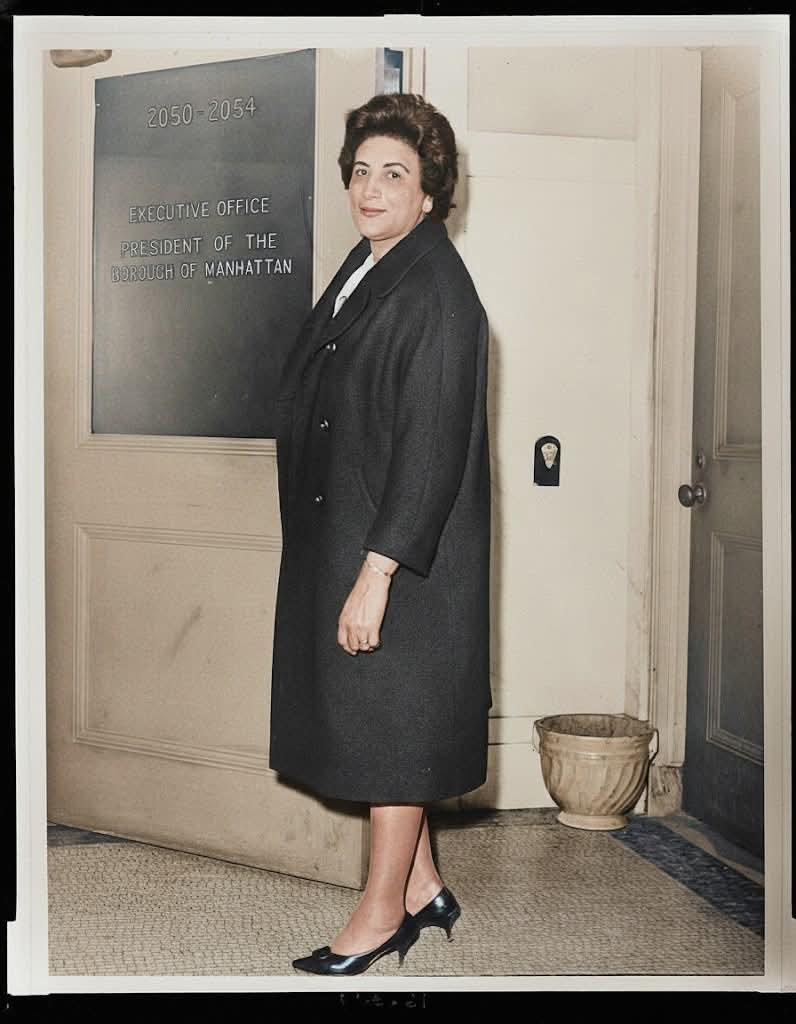
Constance Baker Motley. As she began to speak, citing federal statutes with perfect diction, the judge did something unthinkable.
He swivelled his leather chair around. He literally turned his back on her. He sat there, facing the wall, refusing to look at a Black woman who dared to act like a lawyer in his court.
The room went silent. The disrespect was total. It was designed to humiliate her, to make her stutter, to make her quit. Constance didn’t pause. She didn’t raise her voice. She didn’t cry. She spoke to the back of the judge’s head.
She laid out her argument with the precision of a surgeon, knowing that while the man in the chair wasn’t listening, the court stenographer was typing every word.
She knew this case wasn’t going to end in this sweaty room. It was going to the Supreme Court. She wasn’t arguing for the judge’s approval. She was arguing for his reversal.
Constance Baker Motley was the legal architect of the Civil Rights Movement, but she is often the invisible woman in the history books.
While Martin Luther King Jr. was moving the hearts of the people in the streets, Constance was moving the levers of power in the courts.
She was the woman Thurgood Marshall hired when he needed the sharpest mind in the room.
She wrote the original complaint for Brown v. Board of Education, the case that ended school segregation. She was the legal general who fought for the Freedom Riders. She represented Dr. King in Birmingham, getting him out of jail so he could continue the march.
But her toughest fight was the “Meredith Case.” James Meredith wanted to be the first Black student to attend the University of Mississippi (“Ole Miss”).
The state of Mississippi fought back with the ferocity of a wounded animal. They used every legal trick, every delay, and every threat of violence they could muster.
Constance spent eighteen months on the case. She travelled through the Deep South at a time when Black lawyers were being beaten and killed.
She couldn’t stay in hotels. She couldn’t eat in restaurants. She slept in the homes of local activists, with armed men guarding the front porch.
In court, the opposing lawyers didn’t call her “Mrs. Motley.” They didn’t call her “Counsel.”
They refused to use her name at all. They pointed at her and called her “her” or “she.” She ignored it all. She possessed a “cool fire.” She knew the Constitution better than they did.
She trapped them in their own laws. She forced them to admit their racism on the record.
She ground them down, motion by motion, appeal by appeal.
When the victory finally came, it was explosive. The courts ordered Ole Miss to admit James Meredith.
Riots broke out on campus. Two people were killed. President Kennedy had to send in the National Guard. But amidst the tear gas and the bricks, James Meredith walked through the doors of the university. He walked through a door that Constance Baker Motley had unlocked.
Her record is staggering. She argued ten cases before the United States Supreme Court.
She won nine of them.
She desegregated schools, buses, parks, and lunch counters. She didn’t use a megaphone. She used a briefcase. In 1966, President Lyndon B. Johnson appointed her as a federal judge.
She became the first Black woman in American history to sit on the federal bench.
The woman who had been forced to talk to the back of a judge’s head was now the one wearing the robe. She spent the next forty years delivering the justice she had once been denied.
Constance Baker Motley died in 2005. She never sought the limelight. She wasn’t the face on the poster.
But if you look closely at the Civil Rights Movement, you will see her fingerprints on every major victory. She proved that while marching is essential, someone has to write the writs.
She taught us that dignity is a weapon. When the world turns its back on you, you don’t stop speaking. You speak louder, you speak clearer, and you make sure the record shows exactly who was afraid to face the truth.