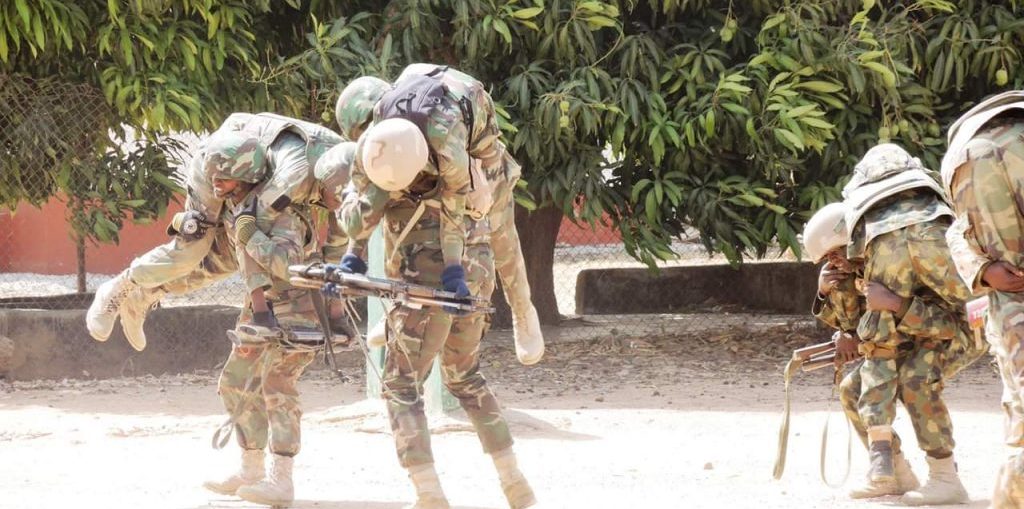
Frontline soldiers in Yobe and Borno say a government peace policy has become a weapon against them.
What was meant to end the insurgency, they warn, is now arming it with intelligence.
The Nigerian military’s reintegration programme, known as the “Borno Model,” aims to rehabilitate surrendered Boko Haram fighters.
But soldiers say these “repentant” ex-fighters are feeding information straight back to their old commanders.
“They know our camps, our routines, our armouries,” one soldier said. “They pretend to work with us, then disappear back into the bush.”
Since 2016, officials have celebrated thousands of surrenders and rehabilitation graduations.
In July 2024, the Borno State government proudly announced that 8,490 “low-risk returnees,” including minors, had been reintegrated.
But in the field, soldiers tell a darker story.
Many troops say they are forced to patrol, share intelligence, and even live with ex-Boko Haram members.
“We go on patrol together,” a soldier said. “They guide us through the forest. But we don’t trust them.”
That distrust runs deep.
Several soldiers said the ex-fighters received uniforms, motorbikes, and stipends—sometimes more than regular troops.
“They wear our uniforms,” one soldier complained. “If they escape, they can commit crimes with our identity.”
Anger is growing inside the ranks.
“These are men who killed our colleagues,” another soldier said. “Now they eat beside us. How can we trust them?”
The soldiers allege that the “repentant” fighters have leaked critical information—troop numbers, patrol schedules, even armoury locations.
Insurgents have used that intelligence to strike at night, ambush supply convoys, and seize weapons.
There’s precedent for these fears.
In October 2024, thirteen “repentant” ex-fighters fled Borno with rifles and motorcycles provided by the state.
It confirmed what many soldiers had warned: insider access is being exploited.
Experts say reintegration itself is not the problem.
Around the world, former fighters are often rehabilitated to reduce violence.
But such efforts require tight screening, community acceptance, and constant monitoring.
In northeast Nigeria, soldiers say those safeguards don’t exist.
Commanders under political pressure to show “success” are deploying unvetted ex-fighters alongside loyal troops.
The result, they argue, is deadly.
“Boko Haram now knows when we rest, when we move, when we reload,” one soldier said.
“They hit us at our weakest moments. Someone is telling them everything.”
Security analysts agree the policy needs urgent reform.
They recommend biometric tracking for all returnees, strict separation from military camps, and transparent reporting of resources.
Without that, they warn, reintegration risks becoming a revolving door back to insurgency.
The policy’s failure has broader consequences.
In a region already ravaged by violence and displacement, every betrayal costs civilian lives.
When military cohesion breaks, entire communities suffer.
Advocates insist that peacebuilding and protection can coexist—but only with accountability.
Soldiers who raise concerns, they say, should be heard, not silenced.
For now, troops on the front line feel abandoned.
“They tell us these men have changed,” a soldier said bitterly. “But every time we bury our own, we know they haven’t.”
Reintegration was meant to heal the wounds of war. Instead, it may be reopening them—one insider attack at a time.