- As politicians spar, villagers bury their dead
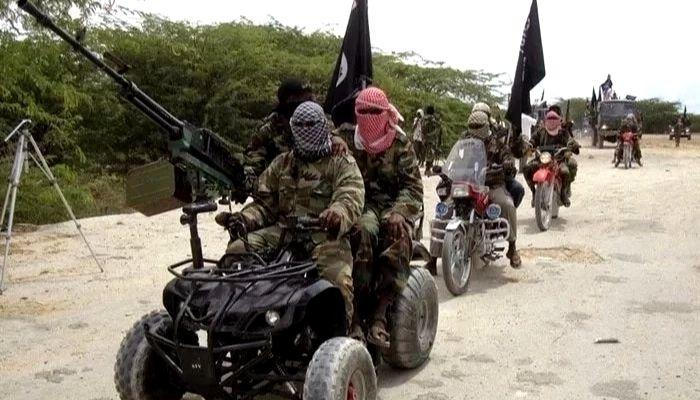
They came before dawn — dozens of armed men riding in formation on motorcycles, engines slicing through the silence.
By sunrise, at least 29 people were dead.
Gunmen stormed the villages of Tunga-Makeri, Konkoso and Pissa in Borgu Local Government Area of Niger State early Saturday, unleashing a wave of killings, arson and abductions in what officials fear could mark another escalation in Nigeria’s expanding rural insurgency.
Emergency authorities say the toll may rise as search teams comb surrounding forests for the missing.
“People fled into the bush,” said Musa Saidu, head of the Niger State Emergency Management Agency. “We are still accounting for them.”
A Calculated Operation
Security sources say the attackers arrived on 41 motorcycles, each carrying two or three heavily armed men — a level of coordination that suggests planning, not spontaneity.
In Tunga-Makeri, six residents were gunned down. In Konkoso and Pissa, at least 20 more were killed. Homes were torched. A police station was set ablaze.
Survivors insist the attackers were not looters.
“They were not interested in stealing,” said Abdullahi Rofia, who has been sheltering displaced residents in a neighbouring community. “They came to kill and terrorise.”
The assault occurred near the site of another massacre earlier this month, where more than 100 people were reportedly killed in a similar ambush — raising fears of a widening operational corridor for armed groups once concentrated in Nigeria’s north-west.
Terror Without Borders
For years, criminal gangs known locally as “bandits” have plagued rural communities with kidnappings and ransom operations. But security analysts say the violence is mutating — becoming more lethal, more brazen and less economically motivated.
The line between banditry and insurgency appears increasingly blurred.
Residents say daily life has collapsed.
“No one goes to the farm. No one goes to market,” Rofia said. “People are traumatised.”
Authorities have imposed emergency measures, including restrictions on late-night movement and a ban on commercial motorcycles after 8 p.m. Joint security teams have been deployed. Rescue operations are ongoing.
But in Borgu, official reassurances ring hollow against fresh graves.
‘We See Their Movements’: Zamfara Governor Points to Deeper Failure
As violence ripples across northern Nigeria, Zamfara State Governor Dauda Lawal argues that the crisis is not rooted in a lack of intelligence, but in the failure to act on it.
“We track their movements in real time,” Lawal said in a recent interview, describing the use of drones and satellite monitoring to trace armed groups. “Every movement is communicated to the relevant agencies.”
His frustration is palpable.
“You are telling me a bandit is superior to the state? That is not possible,” he said. “The first duty of government is to protect lives and property.”
Lawal inherited a state battered by a decade of killings, unpaid salaries and institutional collapse. He says his administration has stabilised finances and rebuilt schools — but security remains the existential challenge.
Without safety, he admits, investment and recovery are illusions.
“There is no investor that will put money where it is not secure,” he said.
Pressure Mounts on Abuja
Nigeria’s federal government faces mounting scrutiny as violence spreads beyond traditional flashpoints.
Security forces are battling jihadist factions in the north-east, armed gangs in the north-west and central regions, and separatist unrest in the south-east — a multi-front crisis stretching resources thin.
Last month, officials said 200 suspected bandits were killed in an operation in Kogi State. Weeks earlier, more than 250 children and staff were abducted from a Catholic school in Papiri in one of the largest recent mass kidnappings. Though they were later released, the episode underscored how vulnerable rural communities remain.
International involvement has added another layer of complexity. U.S. forces conducted Christmas Day strikes against Islamist militants in Sokoto State, with President Donald Trump warning of further action if attacks continued.
Yet many victims of jihadist violence in Nigeria are Muslim, according to monitoring groups — complicating simplistic narratives about the conflict.
Surveillance Politics, Insecurity Reality
Meanwhile, a domestic political storm over alleged wiretapping of senior officials has ignited debate about state power and misplaced priorities.
Columnist Lasisi Olagunju wrote pointedly that while political elites feud and monitor one another, “the people suffer unrelenting violence.”
“While the big men bicker, the people suffer unrelenting violence. El-Rufai, his friends and the government are very erect listening to conversations and banters across classrooms and newsrooms, but they are limp when bandits and terrorists carry on their business online and offline…
“When those entrusted with state power treat surveillance as sport, and those outside power treat it as justified revenge, when interception becomes culture, privacy becomes casualty. What we treat as bravado is actually erosion of trust, of law, and of the fragile peace that holds this democracy together.”
For villagers in Niger State, such debates feel distant.
Their concern is immediate: who protects them when the motorcycles return?
A Fragile State of Fear
The attack in Borgu is not just another statistic in Nigeria’s long security ledger. It is part of a pattern — coordinated, expanding and increasingly audacious.
Each raid chips away at public confidence.
Each delayed response fuels suspicion.
Each unprotected village deepens the sense of abandonment.
Before dawn on Saturday, the engines roared.
By morning, families were burying their dead.
And across Nigeria’s rural heartland, one question lingers in the smoke:
If the state can see the threat coming, why does it keep arriving?