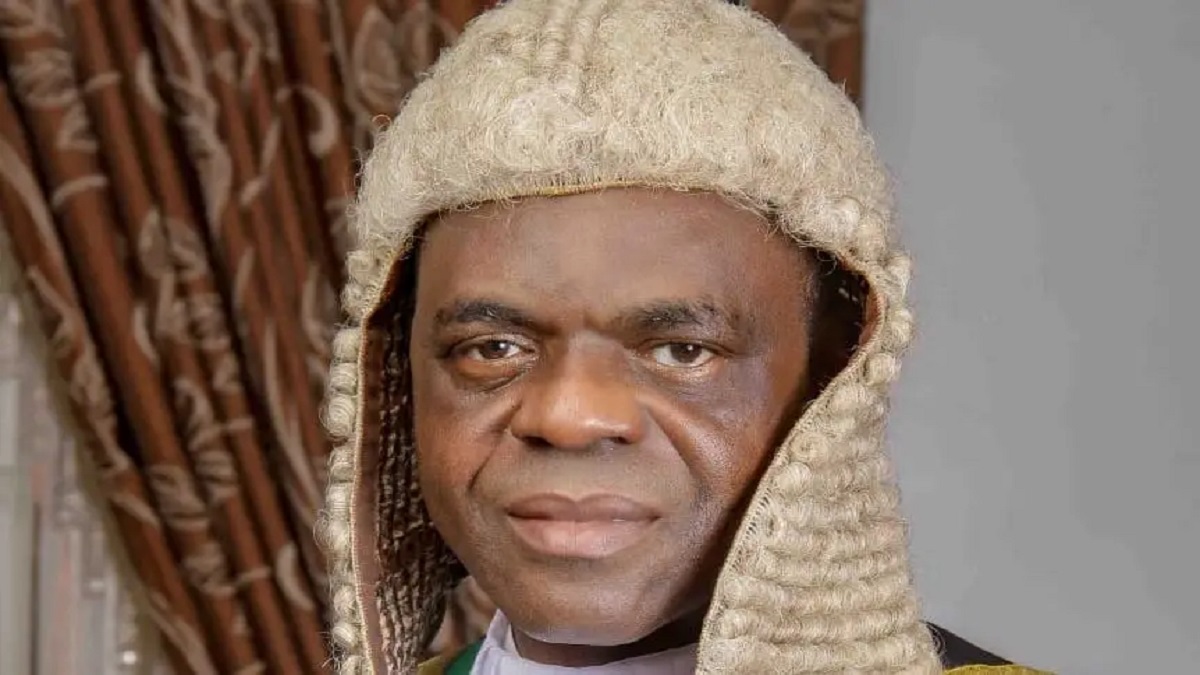
Nigeria’s Chief Judge of the Federal High Court, Hon. Justice John Terhemba Tsoho, is facing allegations that he failed to disclose several bank accounts in his latest asset declaration, a potential breach of the country’s Code of Conduct regime that governs public officers.
A month-long investigation involving document reviews and interviews indicates that in the asset declaration form submitted to the Code of Conduct Bureau on April 29, 2024, Justice Tsoho did not list multiple bank accounts allegedly under his control.
According to documents reviewed, three accounts domiciled with United Bank for Africa and one account with Access Bank were not disclosed in the filing, despite legal requirements mandating full transparency of assets, including bank accounts and balances.
Repeated attempts to reach Justice Tsoho for comment were unsuccessful. Calls were not answered, and messages requesting clarification went unanswered as of press time.
What the Law Requires
Under Nigeria’s Code of Conduct framework, public officials must declare all assets, properties and liabilities immediately upon assuming office and at periodic intervals thereafter.
Section 15 of the Code of Conduct Bureau and Tribunal Act states that any false statement or omission in an asset declaration constitutes a breach of the law.
If an asset is acquired after a declaration and cannot reasonably be attributed to legitimate income, gifts or approved loans, the law presumes it to have been unlawfully acquired — unless proven otherwise.
Conviction by the Code of Conduct Tribunal carries severe penalties, including:
- Removal from office
- Disqualification from holding public office for up to 10 years
- Forfeiture of improperly declared assets
Tribunal decisions are appealable to the Court of Appeal.
At the time of publication, it remains unclear whether the findings will trigger formal investigations by the Bureau or other anti-corruption agencies.
Echoes of the Onnoghen Precedent
Any prosecution would inevitably draw comparisons to the 2019 conviction of former Chief Justice of Nigeria, Walter Onnoghen, who was removed from office after being found guilty of failing to declare several bank accounts.
Onnoghen’s accounts were ordered forfeited by the tribunal. However, in November 2024, the Court of Appeal reversed the conviction following a settlement agreement with the federal government.
Legal observers say a similar case involving a sitting Chief Judge of the Federal High Court would carry profound institutional implications.
A Career Under Scrutiny
Justice Tsoho was appointed acting Chief Judge in July 2019 by then Chief Justice of Nigeria, Tanko Muhammad. He was later confirmed substantively following a recommendation by the National Judicial Council and approval by then-President Muhammadu Buhari.
Born in Benue State in 1959, he rose through Nigeria’s judicial ranks after being called to the Bar in 1985.
But his tenure has not been free of controversy.
In 2023, critics questioned his refusal to grant a detention order against former Central Bank Governor Godwin Emefiele during a high-profile corruption probe. In late 2024, he also faced backlash after reassigning a sensitive receivership case involving financial institutions and the Nestoil Group.
Separate allegations circulating among critics include claims of age discrepancies in his official records. Those claims remain unproven. Under Nigeria’s Penal Code, proven falsification of age records could potentially attract forgery charges.
Justice Tsoho has not publicly addressed these accusations.
Judiciary Under Pressure
The allegations surface amid broader internal scrutiny within Nigeria’s judiciary.
The National Judicial Council, chaired by Chief Justice of Nigeria Kudirat Kekere-Ekun, has launched what sources describe as a discreet but wide-ranging probe into petitions against several senior judges.
Justice Kekere-Ekun has pledged sweeping reforms aimed at restoring public confidence in the judiciary, and multiple judges have faced compulsory retirement or sanctions in recent months.
Whether the allegations against Justice Tsoho will escalate into formal proceedings before the Code of Conduct Bureau or Tribunal remains uncertain.
But if substantiated, the case could test the judiciary’s willingness to police its own, and potentially reshape the conversation around accountability at the highest levels of Nigeria’s bench.