Home Blog Page 991

The Judiciary: NBA & JUSUN vs The Executive Arm of Government

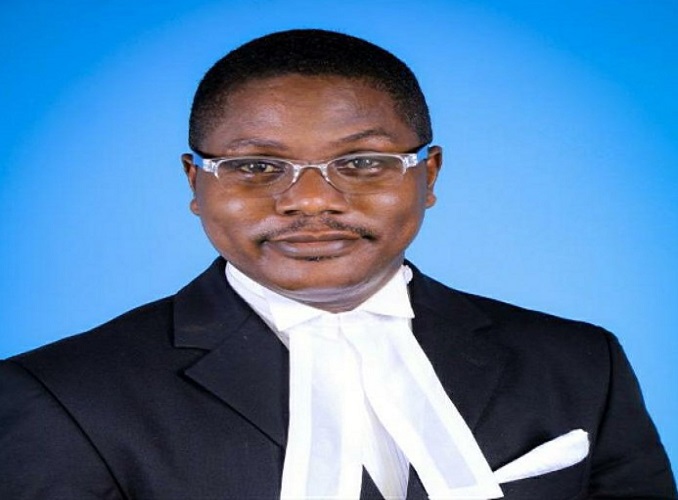
By Bayo Akinlade

One positive thing about JUSUN is that they have always been in the forefront of fighting for the independence of the Judiciary. We may not like most of them who give the Judiciary a bad image especially with regards corruption but let’s face it, we are all guilty of the corruption that takes place within the Judiciary.

Now that the NBA, for the first time in a long time, reacted to a looming strike by JUSUN, it is the right time to interrogate the reason for the strike.

Let’s be practical, the Judiciary has been delibrately under funded just like any other institution that has an important role to play in the empowerment of citizens. (NMA on my mind)

The Judiciary unlike the legislative arm of Government and some agencies of the Executive actually generate money for the government but what do these lawyers (Judges and Magistrates) get in return? They are overworked, underpaid and not appreciated at all.

Let us look at Lagos State which is still the best example. Many of our Magistrates are still yet to get cars. Imagine a magistrate who is over 20 years post call driving a car given to them over 10 years ago. What kind of punishment is that? Many of the Magistrates go to their courts with public transport, rent apartments etc exposing them and their families to all sorts of dangers while their counterparts in the Executive and Legislative arms of Government are living large.

The NBA has largely been politicized and cannot look beyond it’s 2-year ceremonial existence where we run conferences and do elections.

Litigation lawyers despise their colleagues on the Bench and the Bench equally undermines the relevance of the NBA (with good reason)

The bottom line is that the Judiciary, NBA and JUSUN must work together to deal with the intrusion into the Judiciary.

The independence of the Judiciary is non-negotiable and I support JUSUN in their position and it is my strong opinion that each NBA Branch must step up their advocacy in ensuring that the Judiciary gain it’s independence.

Bayo Akinlade Esq. (Convener FIACIJ) is the immediate past chairman of NBA Ikorodu branch in Lagos State.

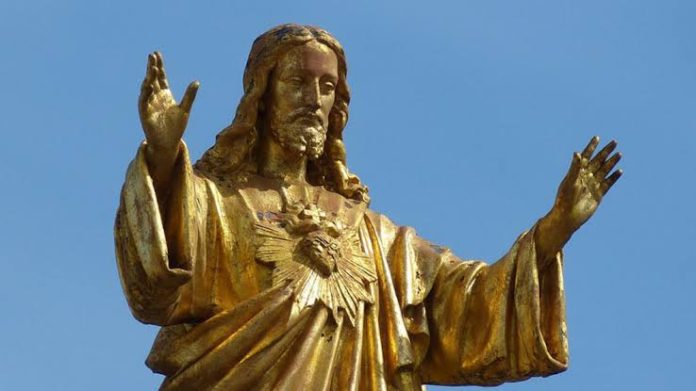
‘LEADERSHIP AND MANAGEMENT CLASSICS FROM JESUS’

Inside Stuff With MARTINS OLOJA,
‘The Guardian’, Sunday April 4, 2021, Back Page

In this season of economic recession when deception has become a powerful tool of preventing depression, it will be relevant to share some sound leadership and management lessons from the reason for this season, the Grand Master Jesus.

Gold and silver I do not have to share to friends and relations at Easter but what I have today is more precious than silver and gold – what that man of Galilee had taught the world before Business and Management Schools emerged in 1920’s. The man who represents the truth is the original big man whose resurrection more than two thousand years ago, we are celebrating today as it has been written and rewritten that indeed, Mr. Death could not hold him captive even in the grave.

That was how Yeshua as the truth, conquered the power of deception, a powerless power.
As I noted in this column on 17 February 2017 in an article titled, “Truth in a Grave”, I had never been conscious of the power of this ancient truth until 2013 when a Muslim friend and a colleague, a former editor, sent me a stunningly deep Easter greeting: “Martins, this season means just one inescapable fact: that you can actually keep truth in a grave but it won’t stay there.”

I was shocked to receive this message from a Muslim. I have been sharing the import of the message actually credited to Clarence W. Hall who originally noted that: “If Easter says anything to us today, it says this: You can put truth in a grave, but it won’t stay there. You can nail it to a cross, wrap it in winding sheets and shut it up in a tomb, but it will rise! That is the “resurrection power” that we are celebrating today. And that is why no academic or principality or power has risen to describe the very influential son of God as ‘the late Jesus’. He is alive, Amen. That is also why the man that is both prominent and significant in heaven and on earth is always in the news media and media art. Even in the sophisticated West, if editors of news magazines are short of remarkable cover stories, they can create any settings and leads around Jesus, either positively or negatively, and pronto they have a good story to sell like hot cakes.

Rick Warren, an American cleric, and author of a classic, ‘The Purpose Driven Life’, claims in the book that some people are prominent but not significant, while some are significant but not prominent. I see the big man of Nazareth as both significant and prominent and there are some remarkable lessons that have formed a body of knowledge I would like to share with managers and leaders that are grappling with how to deliver returns on investment (ROI) and services to the people even in global context.

For instance, the other day in my industry, (the print media) one of the best English language newspapers in the world, ‘The New York Times,’ had been so affected by the advent of the ‘citizen journalism’ that their bottom lines were not so good in 2012 despite their distinctive journalism. They had to cross over to a world-class broadcaster in the UK, the British Broadcasting Corporation where they (head hunted) and recruited a retiring director general, Mr. Mark Thompson as the CEO of the very successful newspaper. It is one of the most significant and strategic crossovers from broadcasting to print genre in this complicated digital journalism age where management and leadership skills are rare.

Journalism education has been of very high standard. But the business part of journalism, which is now more critical, has been suffering. Brethren, I just discovered that consultants to ‘The New York Times’, for instance, may have studied some lessons from the management school of Jesus, after all. We will share the paradigm shift shortly.

As we mark the phenomenal resurrection today, let’s study and imbibe some management expertise that has emerged from the school of the great leader, Jesus. Even so many management specialists such as Bob Briner, Matthew Kelly, etc have shared some of the many timeless lessons. The servant leader, Jesus teaches us, for instance to recognize that we are a great asset and very valuable. Matthew Kelly’s ‘Rediscover Jesus’ released in 2015 pinpoints this lesson very succinctly when he says that Jesus believes that we are infinitely valuable and we should believe in that power as our brand equity (reputation) wherever we go. And so, any time, we don’t believe that, we will be living in a state of deception, disconnected from the deepest, truest reality.

Jesus, an oracle and an orator of all time, revealed this value proposition when he said to us with great clarity: “You are the light of the world… You are the salt of the earth…You are so valuable that God has counted and keeps track of every hair on your head…”
So often, the world managers, supervisors want to belittle and even demonise us (as workers) and put us down. The secular world system can be so impersonal, reducing us to numbers or defining us by our functions. But the management guru in Jesus offers a radically different view by saying we are infinitely valuable. This is in great contrast to the depersonalisation of the world as the great manager continually reaffirms God’s personal interest in us even to the numbering of the hairs on our head.

I have just read from the author of ‘The Manager: Inside The Minds of Football’s Leaders’, Mike Carson that this is also the management strategy of the special one, Jose Mourinho, wherever he has managed football clubs: That the Portuguese and current manager of Tottenham Hotspur Football Club in the UK, would more than anything else, affirm that his players’ value is not derived from what they (can) do but from who they are – as special creatures that can do all things and win laurels…It is said that, that was how he has made many not-so talented players such as Christiano Ronaldo to be as resourceful and achieving as the talented Lionel Messi. The ‘special one’, Mourinho shaped up Ronaldo to be better this way at the Real Madrid, Spain not too long ago.
Recall that I once described Ronaldo as a “reconstructed phenomenon” who is not as talented as Messi of Barcelona, Spain. But through deft management of his social and emotional intelligence, Mourinho has made (of) him (Ronaldo) as Jesus would – making him to believe in who he is and what he can do. That is Ronaldo who is still banging in goals in Juventus at 36.

‘Master Jesus had A Plan:’

It is incredible how so many leaders and managers at different levels assume positions and offices without clear-cut manifestos, blue print or master plan they should follow faithfully. This is the road to failure. Jesus had a plan he executed faithfully. And it was his most critical success factor. He knew where he was going. He knew, for instance, that his plan would end up in Jerusalem where the ultimate sacrifice would be required of him. This teaches us that a plan, as your compass, puts you in charge of your energies and activities. Do you want to lead without a plan? Emulate Jesus today.

‘And He Prepared Very Well:’

In this time when we celebrate mediocrity curiously in an age when operational efficiency is a key builder of brand equity, one great leadership lesson from Jesus is the power of preparation. As Bob Briner notes, in a cosmic sense, Jesus’ preparation was without a beginning and was forever. But in an earthly sense, he prepared for thirty years before beginning to execute his strategic plans. He, (Yeshua) unlike some African leaders, did not get to the ministry before launching his policy and growth plans. The great planner, Jesus believes that inadequate preparation produces inadequate results. Undoubtedly, Jesus based much of his approach to accomplishing his plan on his understanding of the Old Testament. And so he had a foundation of knowledge upon which to base his actions, and he executed them brilliantly. To succeed, we need to follow this action plan – foundation of knowledge of action plans, not by intuition or ad-hocism.

‘He Chose His Associates Carefully:’

Jesus, the servant leader, has taught us an ancient principle that if you are hiring, don’t go through the trouble to find and attract the best possible talent that you will later hamstring with a staff he does not want and vice versa. And here is the thing, you should give your managers the freedom to choose their key people and in an orderly manner, bring in people to replace those who will be moving on. Besides, the great teacher wants us to note that if you are being considered for a management position, do not jeopardise your reputation and future opportunities by agreeing to a position in which you must keep the present staff. Briner also agrees that, ‘It rarely works”. How? Jesus carefully chose his own associates (disciples). True, one of the twelve betrayed him but managers and leaders would wish they had been successful in selecting the right employees/ministers eleven out of twelve times. If this often becomes the outcome, they would be more successful and better rated. This management history shows that Jesus did an extraordinary job of selecting his associates. If you understand this construct, you will know that, in any case, even Judas who betrayed him, was part of it. So, always remember the Jesus lesson here: Choose your closest associates, and allow those you hire to do the same thing. Most experts including Briner agree that it is the best way to increase your odds for success.

‘He Dealt with Corruption Instantly:’

Despite his humility, the leader did not allow his meekness to be taken as a weakness. He spotted corruption in the temple immediately and he did not waste time. His anger was first noticed against corruption when he dealt decisively with moneychangers in the temple (in Jerusalem). As soon as he spotted the activities of the extortionists and usurers in the House of God, he did not constitute any committees to study the little foxes that could spoil the vines of his ministry. Nor did he postpone his action. The angry boss immediately and forcefully drove the scammers out. This is a powerful lesson for anyone in management or leadership position. There should be mechanisms for detecting scams and other improprieties in any organisations and action should not be delayed and covered up. And culprits should be named and shamed instantly as Jesus did.

‘He Pruned for Productivity:’

Grace and capacity to prune for productivity is one great lesson that modern leaders and managers should learn from the greatest leader of all time, Jesus. We do not need to agonise over redundancies, overlapping functions and unbearable overheads amid dwindling incomes. Through his actions and teachings, Jesus demonstrated that he expected his associates to be fruitful and productive. He said so clearly, “I am the true vine, and my father is the vine dresser. Every branch in me that does not bear fruit He takes away; and every branch that bears fruit He prunes, that it may bear more fruit”. This is so useful at this time when most leaders and managers do not know what to do with the employees and offices that are no longer productive. Borrow a leaf from Jesus today and save yourself by pruning for efficiency and productivity. Enjoy your Easter with these useful classics from the timeless business and management school of the original teacher, Yeshua.

***It in incredible that this article (just slightly edited) first appeared here on April 16, 2017 to mark the Easter…


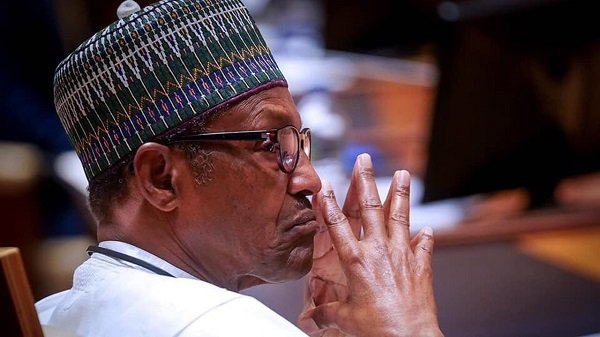
BUHARI: NO HIDING PLACE.

                   By Kassim Afegbua.   

The events in the last one week since the president travelled to London have cast the nation in very bad light. I mean, the ridicule that has been going on in London by some Nigerians trying to “smoke” out our president from his place of medical attention. The demonstrations, the supposed sacrifice lodged at the entrance of the Abuja House in London, the vibrations from protesters, and the general ill-feeling that now pervades the environment of our president, have pointedly made a loud statement that the world has indeed become a global village. No hiding place for anyone. If the subject of the president’s medical tourism was for him to get some rest so that his Doctors could attend to him, he is surely not getting a scintilla of that. The president travelled a day before the National Association of Resident Doctors, (NARD), went on strike to push home their request for improved services in the nation’s health sector. The president is also reputed to have spoken vehemently against foreign medical trips by rich Nigerians during the tenure of his predeccessor. He wondered aloud why Nigerians should devote their resources to seek medical attention abroad, while leaving the nation’s health sector comatose. Almost six years after, it is “audible to the deaf, and visible to the blind” (apology to Patrick Obahiagbon), that president Buhari’s words were the usual political rhetorics anchored on deceit to hoodwink the hapless voters. Those words have become subject of hypocrisy.

I am yet to draw my conclusion about president Buhari’s neglect of the health sector even to the point that the Aso Clinic that is designed to cater for the first family has been literarily abandoned. I am yet to lay my hands on any plausible explanation as to the reason why this Buhari presidency had invested so little in a sector that he so much criticised during his campaigns. What is wrong if the president decides to revamp the health sector and make real his promise to avoid foreign medical trips? Why is it difficult for a man of supposed “integrity” to fulfill his promise of helping to stop foreign medical tourism and save Nigerians huge capital flight? Why is it difficult to replicate back home the services he often gets each time he embarks on these numerous foreign medical trips? It is becoming more like playing “kalo-kalo” with Nigerians; his wife returns from Dubai, then he took his turn to London. And just imagining the protests in London against his continued stay, gives me a thought for concern and heightens the urge for a more holistic intervention in the health sector back home. If our hospitals were in good shape, will the president find his present obsession for medical tourism? Following his initial condemnation of foreign medical trips, will it not be right to accuse him of double standard? Is he not guilty as charged? He has stayed outside the country for medical reasons more than any public officer in recent times. It is a shame!

Nigeria, under president Buhari, has become a country drifting aimlessly like a ship on the high seas, inching ever so slowly towards a gigantic iceberg with a Captain in a seemingly drunken stupor, at the wheels. A captain either totally oblivious of the impending danger or is indeed on a suicide mission, with innocent lives at stake. A president who seems either disconnected from the plight of the people or totally incapable of showing any empathy for those he is sworn to serve. A President in a true state of utter confusion apparently unwilling to take responsibility for the oath of office he swore to uphold. It makes one wonder, if the sole purpose of pursuing the Presidency was simply the allure and trappings of the office of the President. While poverty is on the rise, anarchy brews in the forests, and a select few vicious vultures, waiting in the wings, ever ready to feed on the spoils that the vacuum of an absent leader creates. As the incompetence lingers, exploitation increases, bandits and kidnappers are emboldened, with monetary rewards, while the enduring flock are fed with false hope by advocating more patience. Patience for what? For the fraud on the Nigerian people to be perfected or for the incoherent President to finally regain consciousness?

But the question is when is it time to draw the line in the sand and demand accountability from a failed government?. What compounds the problem is that he is surrounded by enablers, who have no regard for country and are strictly in power for self-enrichment. The enablers, will do everything in their power to keep the President in a state of “mental paralysis” as it serves their purpose. The President is bereft of all qualities that would have made him a good leader. He has absolutely no clear vision for the country and to date has not and is not capable of articulating what his goals are for the nation he serves. Aside from lack of a well defined vision, he is sorely lacking in communication skills. The only communication skill he seems to exhibit is how to seek foreign medical attention. In addition, he obviously lacks crisis management skills, a key prerequisite for a strong, problem-solving leader in a contemporary world. He has shown time and time again that he is incapable of uniting this nation, eradicating domestic terrorism and has zero interest in doing so. He cannot engage in constructive dialogue with his own cabinet on the way forward for this country, let alone give regular updates on the state of affairs of the nation. He makes all his predecessors look like saints and to say that his presidency has been a dismal failure is putting it lightly. A man who does not care about his legacy, will certainly go down in history, as the worst President, that Nigeria has ever had.

The protests going on in London are part of the symptoms of failed leadership, reason why leaders must ensure at all times that they live above board in delivering their responsibilities. If president Buhari had delivered on promise, we won’t see such rejection by his own nationals in another man’s country. They would rather celebrate him and play good hosts to him as a responsible president. But his failures have become his Achilles heels haunting his past and present, and preparing the way for his awful tomorrow. President Buhari would have emerged the luckiest president in Nigeria if he was able to exploit the leadership gap he inherited, and consolidate on the opportunities around, to fulfill the expectations captured in the APC manifesto, chief of which is restructuring. Trying to play smart, he created his own manifesto in his heart, abandoned his party in the first three years, and ran Nigeria aground simultaneously. The equation of a united Nigeria began to whither away, assuming a frightening dimension, each zone talking about seccession and self-determination. Protest after protest, Nigerians keep agonising day in, day out as life rapidly become cheaper. The killing field is getting wider and wider, the killers multiplying in geometric proportion, and the stream of blood flowing from the North to the South. Our wailings are drenched in the sea of voices as our president who should offer succour is hibernating in the inner comfort of the Queen’s orchard, “unaware” of our sullen predicament.

I have this sober feeling that president Buhari surely needs help from us, but he should be humble enough to so declare. Instead of allowing sychophantic aides to continue to glorify his failures, and calling them achievements, the president should seek penitence from a populace that has become victims of his incapacitation. Anybody can fall ill. It is nothing to celebrate about. But not being able to solve the problems for which you were so avuncular, becomes an unpardonable sin against humanity. And the neglect of the health sector is a handy reference. And for me, the Buhari presidency has since become a retirement package for him, enabled by conquistadorial aides, ploughing our till and stealing our collective patrimony. The Vice President is kept in abeyance, seen like a suspect to the throne. The president carries with him the aphrodisiac of the villa, clutching at it with religious fervour to imprint his maximum rulership. That is surely not how to cultivate power or its allure. Nigeria is burning everyday. From Owerri in Imo state to the far North, it is one killing after another. The Airforce is still searching for the Alpha Jet in its pockets, churning out all manner of analysis to put a lie on Boko Haram claims, but the remnants of that plane have refused to surface.

This is Nigeria of anything goes, but the unconscionable minds have no place to hide anymore. That is why president Buhari is being ridiculed and humiliated in London, but like a man in medical trouble and trauma, he appears helpless to do otherwise. If I were in his shoes, I will join the next available flight to Nigeria and declare emergency in the health sector. But under President Buhari, that won’t happen. The moral lesson is that there is no hiding place for the good, the bad and ugly leaders. Not any more!.

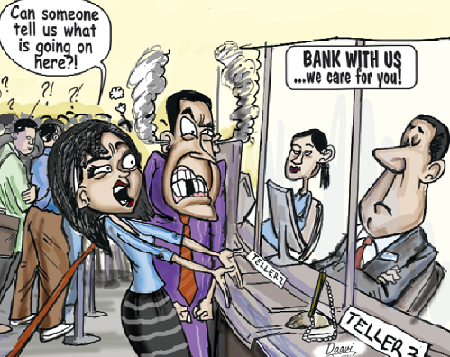
Duty of Care Owed By Banks in Nigeria.

Duty of Care Owed By Banks in Nigeria. Daily Law Tips (Tip 768) by Onyekachi Umah, Esq., LL.M, ACIArb(UK)

Introduction: 

In a bank-customer relationship, the bank is the servant to its customer. The relationship is based on trust while the customer of a bank believes and expects his bank to be prudent and transparent. In managing the monies of customers and performing other banking services, banks owe duty of care to their customers. Once such duty s breached, the concerned bank becomes negligent and is expected to pay/compensate the affected customer. So, here is a summary of the duty of care owed by banks in Nigeria to their customers. 

Bank-Customers and the Duty of Care:  

Being a customer to a bank, simply creates a fiduciary relationship (a relationship based on good faith and trust). As such, there is a higher duty of care expected from banks, because of the fiduciary. Fiduciary makes the duty of care owed by banks to customers to be higher and above that of an ordinary person. Contrary to public opinion, the duty of care that flows from fiduciary relationships do not need legislations and regulations to be perceived or performed. 

Duty of care owed by banks in Nigeria to their customers will be discussed further through the judgments of the Supreme Court of Nigeria and the Court of Appeal. 

  1. Aside any legislation, common law principles and regulations from the Central Bank of Nigeria, there is a minimum duty of care affixed and expected of any bank in Nigeria. This is the dutyto exercise reasonable care and skill in carrying out its customer’s instructions. This has been reiterated by the Supreme Court of Nigeria in the case of DIAMOND BANK LIMITED V. PARTNERSHIP INVESTMENT COMPANY LIMITED & ANOR (2009) LPELR-939(SC), wherein the apex court held that“… a Bank has a duty to exercise reasonable care and skill in carrying out its customer’s instructions. That this duty extends over the whole range of banking business within the contract with the customer.”
  2. The judgment of the Supreme Court in the caseof UNION BANK OF NIGERIA PLC v. MR. N.M. OKPARA CHIMAEZE (2014) LPELR-22699(SC), confirms this when it held that; “…the appellant [bank] is a fiduciary to the respondent. It owes the respondent a duty to exercise a high standard of care in managing the respondent’s money.”
  3. The decision of the Court of Appeal in the case of GUARANTY TRUST BANK v. CHIEF DOTUN OYEWOLE & ANOR (2013) LPELR-22166(CA), is very instructive; “By the state of pleadings of both parties, it is not disputed that 1st Respondent is an account holder with the Appellant which issued the 1st Respondent Account number 421/421752/110. This fact alone establishes a fiduciary relationship which thereby elicits a duty of care by the Appellant to the 1st Respondent. A breach of such a duty of care imposes a liability for negligence on the bank (The Appellant). (See Afribank Nig. Plc v. A. I. Investment Ltd (2002) 7 NWLR (Pt.765) 40, Agbanelo v. UBN Ltd (2000) 23 WRN 1, Ndoma-Egba v. A.C.B. (2005) 7 SC (Pt.111) 27.”  Per DONGBAN-MENSEM ,J.C.A (Pp. 10-11 paras. E)
  4. The Court of Appeal in the case of CHIEF JOSEPH OLUWOLE ODULATE v. FIRST BANK NIGERIA LIMITED (2019) LPELR-47353(CA), held that;  “It is true in law and in fact to state that Banks owe their customers a duty of care. Banks are professional and commercial keepers of money who have represented that they would keep in safe custody any money or other valuables their customers may keep with them. The law holds them to that promise and also expects Banks to promptly comply with lawful instructions of their customers with regards to money kept in the Bank’s custody. The Apex Court in the case of UBN PLC v. CHIMAEZE (2014) LPELR-22699(SC) (Pp. 40-41, paras. G-A) Per ARIWOOLA J.S.C “…the appellant is a fiduciary to the respondent. It owes the respondent a duty to exercise a high standard of care in managing the respondent’s money.”
  1. The judgment of the Supreme Court in the case ZENITH BANK v. ATO PROPERTIES LTD (2019) LPELR-47783(CA), where the court held that; “My lords, when it comes to the relationship between a bank and its customer, or whoever is having dealings with a bank in connection with his funds with the bank, it is settled law that generally a Bank in its dealings with its customers owes to them a duty of care and thus negligence if proved is a ground for liability against a Bank by its customer. It follows therefore, that between the Appellant, a Bank and its customer, the Respondent, negligence will arise where the bank, breaches the implied duty to observe the standard expected of a reasonable banker in respect of dealings with the customer’s fund and the onus, of proving that it is not negligent lies on the Appellant, the Bank.”
  2. Also, the appellate court in the case of DIAMOND BANK LIMITED v. MOCOK ONU NIGERIA LIMITED (2019) LPELR-46440(CA), reiterated the duty of care owed by all commercial banks in Nigeria to their respective customers; when it held that; “The relationship between the appellant and the respondent is discernable from the averments in paragraphs 2 and 3 of the statement of claim as well as paragraph 2 of the statement of defence. By the combined effect of the said averments, the respondent maintained a current account with the appellant, a registered commercial bank. The nature of such relationship has been given recognition in plethora of judicial decisions that it involves a specie of contract with special usages with particular reference to monetary or commercial transactions. Consequently, a banker has a duty under its contract with its customer to exercise reasonable care and skills in carrying out its part with regards to transactions in its contract with its customers. The Banker’s duty to exercise reasonable care and skills stretches over the whole range of banking business within the ambit of the contract with the customer. This duty applies to interpreting, ascertaining and acting in accordance with the instruction of the customer. See N.N.B. LTD V ODIASE (1993) 8 NWLR (pt 310) 235, FIRST BANK OF NIGERIA LTD V AFRICAN PETROLEUM LTD (1996) 4 NWLR (pt 443) 438, U. B. A. V FOLARIN (2003) 7 NWLR (pt 818) 18, AGBANELO V UNION BANK PLC (2000) 7 NWLR (pt 666) 534 and LINTON INDUSTRIES. TRADING CO. (NIG) LTD V C.B.N. (2015) 4 NWLR (pt. 1447) 94.”

Conclusion: 

Banks and other financial institutions are regulated by the Central Bank of Nigeria, in line with federal laws and regulations. For the fact that a bank-customer operates a bank account with a bank, creates a bank-customer relationship and a duty of care on the bank. Consequently, at all times, a bank must be careful, prudent, transparent, faithful and honest in relating and managing the affairs of its customer. Where a bank fails in its duty of care, the bank is negligent and the concerned customer may complain to the Central Bank of Nigeria (the federal regulator of banks in Nigeria) and or approach a court of law for redress. 

My authorities, are:

  1. Sections 1, 2, 3, 4, 5 and 6 of the Constitution of the Federal Republic of Nigeria, 1999.
  2. Sections 1, 2, 60 and 61 of Central Bank of Nigeria Act, 2007. 
  3. Judgment of the Supreme Court of Nigeria in the case of UNION BANK OF NIGERIA PLC v. MR. N.M. OKPARA CHIMAEZE (2014) LPELR-22699(SC)
  4. Judgement of the Supreme Court of Nigeria in the case of DIAMOND BANK LIMITED V. PARTNERSHIP INVESTMENT COMPANY LIMITED & ANOR (2009) LPELR-939(SC)
  5. The judgment of the Court of Appeal in the case of GUARANTY TRUST BANK v. CHIEF DOTUN OYEWOLE & ANOR (2013) LPELR-22166(CA)
  6. The judgment of the Court of Appeal in the case of CHIEF JOSEPH OLUWOLE ODULATE v. FIRST BANK NIGERIA LIMITED (2019) LPELR-47353(CA)
  7. The judgment of the Court of Appeal in the case of DIAMOND BANK LIMITED v. MOCOK ONU NIGERIA LIMITED (2019) LPELR-46440(CA)
  8. The judgment of the Court of Appeal in the case of ZENITH BANK v. ATO PROPERTIES LTD (2019) LPELR-47783(CA)
  9. Onyekachi Umah, “What is Negligence in the Eyes of Law?” (LearnNigerianLaws.com, 31 March 2021) <https://learnnigerianlaws.com/what-is-negligence-in-the-eyes-of-law/> accessed 31 March 2021
  10. Onyekachi Umah, “You are Responsible for the Safety of Your Guests, Invitees and Visitors” (LearnNigerianLaws.com, 6 June 2018) <https://learnnigerianlaws.com/daily-law-tips-by-onyekachi-umah-esq-tip-116-you-are-responsible-for-the-safety-of-your-guests-invitees-and-visitors/> accessed 31 March 2021.
  11. Onyekachi Umah, “Can the Central Bank of Nigeria blacklist a Bank Employee?” (LearnNigerianLaws.com, 29 March 2021) <https://learnnigerianlaws.com/can-the-central-bank-of-nigeria-blacklist-a-bank-employee/> accessed 31 March 2021
  12. Onyekachi Umah, “The Central Bank of Nigeria Notices on Cryptocurrencies; a Ban or a Banger?” (LearnNigerianLaws.com, 9 February 2021) <https://learnnigerianlaws.com/the-central-bank-of-nigeria-notices-on-cryptocurrencies-a-ban-or-a-banger/> accessed 31 March 2021.
  13. Onyekachi Umah, “Who Are The Shareholders Of The Central Bank Of Nigeria” (LearnNigerianLaws.com, 7 February 2019) <https://learnnigerianlaws.com/daily-law-tips-by-onyekachi-umah-esq-tip-263-who-are-the-shareholders-of-the-central-bank-of-nigeria/> accessed 31 March 2021
  14. Onyekachi Umah, ”How To Prove That A Bank Is Licensed In Nigeria” (LearnNigerianLaws.com, 30 March 2019) <https://learnnigerianlaws.com/how-to-prove-that-a-bank-is-licensed-in-nigeria-daily-law-tips-tip-300-by-onyekachi-umah-esq-llm-aciarb-uk/> accessed 31 March 2021
  15. Onyekachi Umah, “Contents Of A Genuine ATM Receipt In Nigeria” (LearnNigerianLaws.com, 19 March 2019) <https://learnnigerianlaws.com/contents-of-a-genuine-atm-receipt-in-nigeria-daily-law-tips-tip-292-by-onyekachi-umah-esq-llm-aciarb-uk/> accessed 31 March 2021
  16. Onyekachi Umah, “Is It Illegal To Spray Or Dance On Naira Notes (Money) In Nigeria” (LearnNigerianLaws..com, 21 December 2018) <https://learnnigerianlaws.com/daily-law-tips-by-onyekachi-umah-esq-tip-254-is-it-illegal-to-spray-or-dance-on-naira-notes-money-in-nigeria/> accessed 31 March 2021
  17. Onyekachi Umah, “No Bank In Nigeria Can Unilaterally Change /Vary Interest Rate In Its Agreement With A Customer” (LearnNigerianLaws.com, 23 August 2018) <https://learnnigerianlaws.com/daily-law-tips-by-onyekachi-umah-esq-tip-168-no-bank-in-nigeria-can-unilaterally-change-vary-interest-rate-in-its-agreement-with-a-customer/> accessed 31 March 2021
  18. Onyekachi Umah, “Use/Demand for Foreign Currency in Nigeria is a Crime” (LearnNigerianLaws.com, 7 June 2018) <https://learnnigerianlaws.com/daily-law-tips-by-onyekachi-umah-esq-tip-117-use-demand-for-foreign-currency-in-nigeria-is-a-crime/> accessed 31 March 2021
  19. Pic credit: graphic. com.gh

Sabi Law Projects:

#SabiLaw

#DailyLawTips

#SabiBusinessLaw

#SabiElectionLaws

#SabiHumanRights

#SabiLawOnTheBeatFm

#SabiLawLectureSeries

#CriminalJusticeMonday

#SabiLawVideoChallenge

Speak with the writer, ask questions or make inquiries on this topic or any other via [email protected], [email protected] or +2348037665878 (whatsapp). To receive free Daily Law Tips, join our free WhatsApp group via https://chat.whatsapp.com/L7h4f1exItZ38FeuhXG4WN or Telegram group, via the below link: https://t.me/LearnNigerianLaws

To keep up to date on all free legal awareness projects of Sabi Law Foundation, follow us via

Facebook Page:@LearnNigerianLaws,

Instagram:@LearnNigerianLaws,

Twitter: @LearnNigeriaLaw,  

YouTube: Learn Nigerian Laws

WhatsApp Groups via (https://chat.whatsapp.com/L7h4f1exItZ38FeuhXG4WN),

Telegram Group: (https://t.me/LearnNigerianLaws),

Facebook group: (https://www.facebook.com/groups/129824937650907/?ref=share)

or visit our website: (www.LearnNigerianLaws.com)

Please share this publication for free till it gets to those that need it most. Save a Nigerian today! NOTE: Sharing, modifying or publishing this publication without giving credit to the author or Sabi Law Foundation is a criminal breach of copyright and will be prosecuted. This publication is the writer’s view not a legal advice and does not create any form of relationship. You may reach the writer for more information.

This publication is powered by www.LearnNigerianLaws.com {A Free Law Awareness Program of Sabi Law Foundation, supported by the law firm of Bezaleel Chambers International (BCI).} Sabi Law Foundation is a Not-For-Profit and Non-Governmental Legal Awareness Organization based in Nigeria. For sponsorship and partnership, contact: [email protected], [email protected] or +234 903 913 1200.

What is Negligence in the Eyes of Law?

What is Negligence in the Eyes of Law? Daily Law Tips (Tip 767) by Onyekachi Umah, Esq., LL.M, ACIArb(UK)

Introduction: 

Words and terms may mean different things in different languages and disciplines. Where a person fails to be careful and his carelessness causes damage to another person, the careless person is negligent. Being negligent may lead to the payment of the cost of negligence. In law, it is common to find parties in court arguing over negligence, duty of care, breach of the duty of care, degree of negligence, damages caused by negligence and compensation for negligence. So, at the center of such cases sits the question; “What is Negligence in the eyes of law?”. 

Negligence in law:  

The judgments of the Supreme Court of Nigeria and the Court of Appeal have developed rich legal literature on and around “Negligence”. Hence, the judgements of the courts will be exclusively relied on here. 

  1. In 2019, Justice Eko of the Supreme Court of Nigeria, stated in the case of ADESINA v. PEOPLE OF LAGOS STATE (2019) LPELR-46403(SC); “Negligence, according to the Oxford Advanced Learner’s Dictionary, is the failure to give enough care or attention. Negligence connotes lack of proper care and attention. It is a careless lack of proper conduct. In OGBIRI & ANOR v. NIGERIA AGIP OIL CO. LTD (2010) L.P.E.L.R.- 4586(CA), I stated, relying on ODINAKA v. MOGHALU (1992)4 N.W.L.R. (Pt. 233) 1 at 15; OJO v. GHARORO (2005) 18 L.R.C.N. 1652 at 1713 – 1713, that generally, negligence is an omission or failure to do something which a reasonable and prudent man, under similar circumstances, would not do. See also RABIU HAMZA v. PETER KURE (2010) 10 N.W.L.R. (Pt. 1203) 630 at 646 per Muhammad, JSC. Negligence is any conduct that falls below the legal standard established to protect others against unreasonable risk of harm. The term denotes culpable carelessness: Black’s Law Dictionary, page 1133 9th Ed.”Per EKO ,J.S.C ( P. 12, paras. B-F )
  2. Justice Saulawa of the Court of Appeal in the case of CHEVRON NIGERIA LIMITED & ANOR v. KEHINDE OMOREGHA & ORS (2015) LPELR-24516(CA), stated that;  “The term negligence denotes the failure to exercise the standard of care that a reasonably prudent person would normally have exercised in a similar situation.  That’s to say, any conduct falling below the legal standard established to protect others against unreasonable risk of harm, as against conduct that is intentionally, wantonly, or willfully disregardful of other’s rights.  It is trite, that the negligence usually includes culpable carelessness. Also termed actionable negligence; ordinary negligence; simple negligence.  See BLACK’S LAW DICTIONARY 9th Edition 2009 @ 1133. I think, it was Patrick Devlin, who once aptly remarked that -“Negligence in law ranges from inadvertence that is hardly more than accidental to sinful disregard of the safety of others.”  See THE ENFORCEMENT OF MORALS (1968) @ 36 copiously alluded to in BLACK’S LAW DICTIONARY (Supra) @ 1133.”  Per SAULAWA ,J.C.A (Pp. 14-15 paras. C).
  1. The Supreme Court of Nigeria in the case of DIAMOND BANK LIMITED V. PARTNERSHIP INVESTMENT COMPANY LIMITED & ANOR (2009) LPELR-939(SC), held that; “It is settled that negligence is a question of fact and not of law. So, each case must be decided in the light of the facts pleaded and proved. No one case is exactly like another. See the case of Alhaji Kalla v. Jarmakani Transport Ltd. (1961) ANLR 778 @ 785 referring to the English cases of Baker v. Longburst (E) & Sons Ltd. (1933) 2 KB. 461; 102 L.J. KB. 573; 149 L.T. 264; (1932) All E.R. Rep. 102 and Tart v. Chitty (G.W.) & Co. Ltd. (1933) 2 KB. 465; 102 L.J. K.B.568; 149 L.T. 261; (1931) All E.R. Rep. 826.”
    1. The Court of Appeal in the case of P.W. NIGERIA LIMITED v. MANSEL MOTORS LIMITED & ANOR (2017) LPELR-43390(CA), where the court held that; “A duty of care arises “whenever a person is by circumstances placed in such a position with regard to another that everyone of ordinary sense who did think would at once recognize that if he did not use ordinary care and skill in his own conduct with regard to those circumstances he would cause danger or injury to the person or property of the other, a duty arises to use ordinary care and skill to avoid such danger …”
    1. Again, in P.W. NIGERIA LIMITED v. MANSEL MOTORS LIMITED & ANOR (2017) LPELR-43390(CA), the appellate court held that, “Negligence is a tort and it is complete and actionable when three conditions are satisfied, these are (i) the defendant owed a duty of care to the claimant; (ii) the duty of care was breached; and (iii) the claimant suffered damages arising from the breach. A claimant must prove the three conditions by preponderance of evidence or on balance of probabilities to succeed in an action rooted in negligence and once these requirements are satisfied, the defendant in law will be held liable in negligence Abubakar Vs Joseph (2008) 13 NWLR (Pt 1104) 307, Iyere Vs Bendel Feeds and Flour Mills Ltd (2008) 18 NWLR (Pt 1119) 300, GKF Investment Nigeria Ltd Vs Nigerian Telecommunications Plc (2009) 15 NWLR (Pt 1164) 344 and Diamond Bank Plc Vs Partnership Investment Co Ltd supra.”

Conclusion: 

Under the Nigerian law, my neighbour is the person or persons that may be affected by my lack of care. The care must be one expected of any person in a similar situation. For instance; (1) while enjoying basketball on the street, I should be careful enough to ensure that the ball does not hit a passerby. So, at that point, I owe a duty of care to all passersby.  (2) While mounting a big sign board in a show room, I should be diligent enough to ensure that all screws are tightened to prevent the sign board from detaching and hitting guests on the show. So, I owe a duty of care to all persons within the area of the sign board to ensure that my negligence with the sign board does not harm them. (3) A manufacturer of toothpaste should be careful to ensure that no consumer uses a toothpaste with acid that damages the teeth. (4) An event organiser must be diligent to ensure that the stage for an event does not break and injure participants. 

We are all our neighbours-keepers in law and our neighbour is anyone that may be affected by our carelessness. When we fail in our duty of care to our neighbour, we may be ordered by a Court of law to pay for such carelessness. So, in all our activities, we must always look out for our neighbours in law. 

My authorities, are:

  1. Sections 1, 2, 3, 4, 5 and 6 of the Constitution of the Federal Republic of Nigeria, 1999.
  2. Judgment of the Supreme Court of Nigeria in the case of ADESINA v. PEOPLE OF LAGOS STATE (2019) LPELR-46403(SC);
  3. Judgement of the Supreme Court of Nigeria in the case of DIAMOND BANK LIMITED V. PARTNERSHIP INVESTMENT COMPANY LIMITED & ANOR (2009) LPELR-939(SC)
  4. The judgment of the Court of Appeal in the case of CHEVRON NIGERIA LIMITED & ANOR v. KEHINDE OMOREGHA & ORS (2015) LPELR-24516(CA)
  5. The judgment of the Court of Appeal in the case of P.W. NIGERIA LIMITED v. MANSEL MOTORS LIMITED & ANOR (2017) LPELR-43390(CA)
  6. Onyekachi Umah, “You are Responsible for the Safety of Your Guests, Invitees and Visitors” (LearnNigerianLaws.com, 6 June 2018) <https://learnnigerianlaws.com/daily-law-tips-by-onyekachi-umah-esq-tip-116-you-are-responsible-for-the-safety-of-your-guests-invitees-and-visitors/> accessed 30 Much 2021.

Sabi Law Projects:

#SabiLaw

#DailyLawTips

#SabiBusinessLaw

#SabiElectionLaws

#SabiHumanRights

#SabiLawOnTheBeatFm

#SabiLawLectureSeries

#CriminalJusticeMonday

#SabiLawVideoChallenge

Speak with the writer, ask questions or make inquiries on this topic or any other via [email protected], [email protected] or +2348037665878 (whatsapp). To receive free Daily Law Tips, join our free WhatsApp group via https://chat.whatsapp.com/L7h4f1exItZ38FeuhXG4WN or Telegram group, via the below link: https://t.me/LearnNigerianLaws

To keep up to date on all free legal awareness projects of Sabi Law Foundation, follow us via

Facebook Page:@LearnNigerianLaws,

Instagram:@LearnNigerianLaws,

Twitter: @LearnNigeriaLaw,  

YouTube: Learn Nigerian Laws

WhatsApp Groups via (https://chat.whatsapp.com/L7h4f1exItZ38FeuhXG4WN),

Telegram Group: (https://t.me/LearnNigerianLaws),

Facebook group: (https://www.facebook.com/groups/129824937650907/?ref=share)

or visit our website: (www.LearnNigerianLaws.com)

Please share this publication for free till it gets to those that need it most. Save a Nigerian today! NOTE: Sharing, modifying or publishing this publication without giving credit to the author or Sabi Law Foundation is a criminal breach of copyright and will be prosecuted. This publication is the writer’s view not a legal advice and does not create any form of relationship. You may reach the writer for more information.

This publication is powered by www.LearnNigerianLaws.com {A Free Law Awareness Program of Sabi Law Foundation, supported by the law firm of Bezaleel Chambers International (BCI).} Sabi Law Foundation is a Not-For-Profit and Non-Governmental Legal Awareness Organization based in Nigeria. For sponsorship and partnership, contact: [email protected], [email protected] or +234 903 913 1200.

Conditions for Assignment of Burden or Benefit of Debt.

Conditions for Assignment of Burden or Benefit of Debt. Daily Law Tips (Tip 766) by Onyekachi Umah, Esq., LL.M, ACIArb(UK) 

Introduction: 

Debt is generally any amount of money owed. Managing debt and debtors can be frustrating, especially in a country with poor access to justice and no dependable database. Both the burden of a debtor to repay debt and the benefit of a creditor to recover debt can be assigned and transferred to a third party. However, there are conditions that must be observed for an assignment of debt to be valid. The conditions and are considered below. 

Transfer of Burden or Benefit of Debt:   

In every debt, there must be at least a debtor and a creditor. While the debtor has an obligation to repay debt, a creditor has a right to demand and recover debt. There could be transactions seeking to transfer and assign the responsibilities of a debtor or creditor. For such assignment to be lawful and effective, there are basic conditions that must be fulfilled, according to the Supreme Court of Nigeria. 

  1. The Supreme Court of Nigeria in the case of FERDINAND GEORGE v. UNITED BANK FOR AFRICA LIMITED (1972) LPELR-1321(SC), where the court held that;

 “Obviously, where the burden of a debt is being assigned, the creditor must consent or the assignment could be used as a simple means of avoiding liability. When the benefit of a debt is assigned the debtor does not need to consent. He still owes the money which he previously borrowed, and so long as he knows whom to pay in order to get an effective receipt and discharge he has no cause to be consulted over the assignment.”  Per FATAYI-WILLIAMS ,J.S.C (Pp. 9 paras. A)

  1. The Court of Appeal in the case of JULIUS BERGER NIGERIA PLC & ANOR v. TOKI RAINBOW COMMUNITY BANK LTD (2009) LPELR-4381(CA)

“Under the common law, a debt or other legal thing in action includes the benefit of a contract or a debt arising out of contract from which payment was to be made at a future date. Such debt is capable of being assigned under section 136 of the Law of property Act 1925. See BRICE V. BANNISTER (178) 3 Q. B.D. 569, JAMES V. HUMPHREYS (1908) 1 KB. 10, CONTRAST LAW V. COBURN (1972) 1 WLR 1238. Furthermore is was held that the benefit of a contract is only assignable in cases where it can make no difference to the person on whom the obligation lies to which of two persons he is to discharge it. TOLTURST V. ASSOC PORTLAND CEMENT MANUFACTURERS LTD (1902) 2 K.B. 660 at 668, (1903) A.C. 414. A party to a contract can in equity also assign a contractual right in one of two ways (a) he can inform the assignee that he transfers the chose to him or (b) he can instruct the debtor to discharges the Obligation by payment to or performance for, the assignee. Thus an agreement by traders or merchants with a Bank that payment for goods sold by them should be remitted direct by the purchasers to the Bank has been held to, constitute a valid equitable assignment of the amount to the Bank. BRANDTS SONS & CO. V. DUNLOP RUBBERCO. (1905) A.C. 454. Generally however, a mere direction by a creditor to his debtor to pay money to a third party is not necessarily an assignment unless the instructions can be said in their context text, to amount to an irrevocable mandate to the debtor. See CURRAN V. NEWPARK UNEMAS LTD (1957) 1 ALL E.R. 295, BRITISH EAGLE INT’L AIRLINES LTD V. CIE NATIONAL AIR FRANCE (1973) 1 LIOYD’S REP.414 AT 427. Another principle of the common law on assignment in that an assignment made by letter is complete as soon as the letter is posted to the assignee as was held in the case of ALEXANDER V. STENHARDTWAKER & CO. 0903) 2 K.B. 208 The above general positions of the common law on assignment are to guilde a determination of the issue. whether indeed, fact and law, there was an assignment of the benefits of the contracts between the company and the 1st Appellant to the Respondent.” Per MOHAMMED LAWAL GARBA ,JCA (Pp. 27-29, paras. C-B).

  1. The Court of Appeal in the case of JULIUS BERGER NIGERIA PLC & ANOR v. TOKI RAINBOW COMMUNITY BANK LTD (2009) LPELR-4381(CA)

“The question I now ask is what in law are the essential requirements which make an assignment of such benefits, interests or title to property effective? Speaking generally, they include:-(1) ownership of or entitlement to the benefits, interest, rights or title to property by the assignor; (2) the absolute transfer in writing of such benefits, interests, rights or title to property to person/named therein; (3) Where, as in the present appeal, the benefits, rights and interests are in possession or custody of 3rd party, there is the requirement that the assignor should notify that 3rd party in writing of the assignment. See Chitty on Contracts Vol. 1 Paragraph 19 – 007 at page 1166, Halbury’s Laws of England, 4th Edition, volume 6 paragraphs 12 at page 9. It is however to be noted that no particular form or mode is prescribed or required by law for a legal assignment as long as the assignor absolutely and unequivocally indicates the transfer of the benefit, interest or title to the assignee. Once the above requirements are met, an assignment will be effective in law and the assignee would be entitled to the subject of the transfer and a claim thereto.” Per GARBA ,J.C.A ( Pp. 25-26, para. D )

  1. The Court of Appeal in the case of BEN ELECTRONIC CO. (NIG) LTD v. ATS & SONS & ORS (2013) LPELR-20870(CA)

“It is not in doubt that Professor Sagay in his text Nigerian Law of Contract, 2nd Edition, Ibadan Spectrum Books Ltd. 2000 at page 516 paragraph 9, had supported the views expressed by the learned Counsel to the Appellant that in certain circumstances the owner of a contractual right can transfer same to a third party without the consent of the debtor, thereby enabling the third party to enforce the right against the debtor or obligator. The learned Author following English authorities like Torkington v. Magee (1902) 2 K.B. 42 at page 430, other texts like “Cheshire & Fifoot on Equity 10th Edition” (pages 455 – 475) and Jegede’s “Principles of Equity” pages 145 – 184, also added that the process of transfer of such a right is known as “Assignment” and that the types of property which are susceptible to this type of transfer are known as “Choses in action.” 

“Section 25(6) of Judicature Act now replicated in Section 136 of the Law of Property Act 1925 provides as follows: (1) Any absolute assignment by writing under the hand of the assignor (not purporting to be by way of charge only) of any debt or other legal thing in action, of which express notice in writing has been given to the debtor, trustee or other person from whom the assignor would have been entitled to claim such debt or thing in action, is effectual in law (subject to equities having priority over the right of the assignee) to pass and transfer from the date of such notice;- (a) The legal right to such debt or thing in action (b) All legal and other remedies for the same and (c) The power to give a good discharge for the same concurrence of the assignor; Provided that if the debtor, trustee or other person liable in respect of such debt or thing in action has notice:- i. That the assignment is disputed by the Assignor or any person under him or; ii. Of any other opposing or conflicting claim to such debt or thing in action, he may if he thinks fit either call upon the person making claim hereto to inter plead concerning the same, or pay the debt or other in action in Court.” 

Conclusion: 

Debt is payable, even where the original creditor appoints another person as its representative or replacement. The consent of a debtor to such arrangement is not needed. However, a debtor cannot transfer his obligation to repay debt to a third party, except with the consent of his creditor. Any such assignment by a debtor without the approval of his creditor is deemed as a plan to delay/evade debt. Although no particular writing style or form is approved for assignment of debt, an assignment of burden of debt or benefit of debt should be clear and ambiguous at all times. 

My authorities, are:

  1. Sections 1, 2, 3, 4, 5 and 6 of the Constitution of the Federal Republic of Nigeria, 1999.
  2. Judgement of the Supreme Court of Nigeria in the case of FERDINAND GEORGE v. UNITED BANK FOR AFRICA LIMITED (1972) LPELR-1321(SC)
  3. Judgment of the Court of Appeal in the case of JULIUS BERGER NIGERIA PLC & ANOR v. TOKI RAINBOW COMMUNITY BANK LTD (2009) LPELR-4381(CA)
  4. Judgment of the Court of Appeal in the case of BEN ELECTRONIC CO. (NIG) LTD v. ATS & SONS & ORS (2013) LPELR-20870(CA)
  5. Onyekachi Umah, “Creditors, Debtors And The Covid-19 Lockdown?” (LearnNigerianLaws.com, 21 April 2020) <https://learnnigerianlaws.com/creditors-debtors-and-the-covid-19-lockdown-daily-law-tips-tip-552-by-onyekachi-umah-esq-llm-aciarbuk/> accessed 28 March 2021
  6. Onyekachi Umah, “Owing Debts And Refusing To Pay Is Not An Offence In Nigeria” (LearnNigerianLaws.com, 14 December 2019) <https://learnnigerianlaws.com/owing-debts-and-refusing-to-pay-is-not-an-offence-in-nigeria-daily-law-tips-tip-478-by-onyekachi-umah-esq-llm-aciarb-uk/> accessed 28 March 2021
  7. Onyekachi Umah, “The Supreme Court Has Warned Efcc And Police Against Recovering Debts And Investigating Disputes From Civil Transactions” (LearnNigerianLaws.com, 26 October 2019) <https://learnnigerianlaws.com/the-supreme-court-has-warned-efcc-and-police-against-recovering-debts-and-investigating-disputes-from-civil-transactions-daily-law-tips-tip-444-by-onyekachi-umah-esq-llm-aciarb-uk/> accessed 28 March 2021
  8. Onyekachi Umah, “When, Why And How Can A Guarantor/Surety Be Held Liable For Debt Guaranteed” (LearnNigerianLaws.com, 25 July 2019) <https://learnnigerianlaws.com/when-why-and-how-can-a-guarantor-surety-be-held-liable-for-debt-guaranteed-daily-law-tips-tip-380-by-onyekachi-umah-esq-llm-aciarb-uk/> accessed 28 March 2021
  9. Onyekachi Umah, “How To Be Exempted From Electricity Disconnection In Any Part Of Nigeria Even When Owing Debt For Consumed Electricity.” (LearnNigerianLaws.com, 29 June 2019) <https://learnnigerianlaws.com/how-to-be-exempted-from-electricity-disconnection-in-any-part-of-nigeria-even-when-owing-debt-for-consumed-electricity-daily-law-tips-tip-361-by-onyekachi-umah-esq-llm-aciarb-uk/> accessed 28 March 2019
  10. Onyekachi Umah, “You Cannot Be Arrested For Breach Of Contract/Refusal To Pay Debt” (LearnNigerianLaws.com, 15 October 2018) <https://learnnigerianlaws.com/daily-law-tips-by-onyekachi-umah-esq-tip-205-you-cannot-be-arrested-for-breach-of-contract-refusal-to-pay-debt/> accessed 28 March 2021
  11. Onyekachi Umah, “It Is An Offence For Hospitals/Creditors To Detain Patients/Debtors For Debts” (LearnNigerianLaws.com, 26 July 2018) <https://learnnigerianlaws.com/daily-law-tips-by-onyekachi-umah-esq-tip-150-it-is-an-offence-for-hospitals-creditors-to-detain-patients-debtors-for-debts/> accessed 28 March 2021
  12. Onyekachi Umah, “EFCC Cannot Recover Debts” (LearnNigerianLaws.com, 25 July 2018) <https://learnnigerianlaws.com/daily-law-tips-by-onyekachi-umah-esq-tip-149-efcc-cannot-recover-debts/> accessed 28 March 2021
  13. Onyekachi Umah, “It Is Not a Crime to Be a Debtor In Nigeria” (LearnNigerianLaws.com, 20 June 2018) <https://learnnigerianlaws.com/daily-law-tips-by-onyekachi-umah-esq-tip-124-it-is-not-a-crime-to-be-a-debtor-in-nigeria/> accessed 28 March 2021
  14. Onyekachi Umah, “Nigerian Police Cannot Be Used For or Be Part for Debt Recovery” (LearnNigerianLaws.com, 28 May 2018) <https://learnnigerianlaws.com/daily-law-tips-by-onyekachi-umah-esq-tip-110-nigerian-police-cannot-be-used-for-or-be-part-for-debt-recovery/> accessed 28 March 2021
  15. Onyekachi Umah, “Tips On Recovery of Debt’ (LearnNigerianLaws.com, 10 March 2016) <https://learnnigerianlaws.com/tips-on-recovery-of-debt/> accessed 28 March 2021
  16. Onyekachi Umah, “How to Recover Property Wrongly Seized by Court” (LearnNigerianLaws.com, 9 March 2021) <https://learnnigerianlaws.com/how-to-recover-property-wrongly-seized-by-court/> accessed 28 March 2021
  17. Onyekachi Umah, “Should Landlord Stop Rent-Owing Tenants from Moving Out?” (LearnNigerianLaws.com, 26 August 2020) <https://learnnigerianlaws.com/should-landlord-stop-rent-owing-tenants-from-moving-out/> accessed 28 March 2021
  18. Onyekachi Umah, “Should A Landlord Remove Roof Of A Tenant For Failure To Pay Rent/Pack Out?” (LearnNigerianLaws.com, 3 August 2020) <https://learnnigerianlaws.com/should-a-landlord-remove-roof-of-a-tenant-for-failure-to-pay-rent-pack-out-daily-law-tips-tip-624-by-onyekachi-umah-esq-ll-m-aciarbuk/> accessed 28 March 2021
  19. Onyekachi Umah, “Should A Landlord Lock Gates/Doors Of A Tenant For Failure To Pay Rent/Pack Out?” (LearnNigerianLaws.com, 29 July 2020) <https://learnnigerianlaws.com/should-a-landlord-lock-gates-doors-of-a-tenant-for-failure-to-pay-rent-pack-out-daily-law-tips-tip-620-by-onyekachi-umah-esq-ll-m-aciarbuk/> accessed 28 March 2021
  20. Onyekachi Umah, “Should A Landlord Cut-Off Tenant From Water/Electricity Supply For Failure To Pay Rent/Pack Out?” (LearnNigerianLaws.com, 17 July 2020) <https://learnnigerianlaws.com/should-a-landlord-cut-off-tenant-from-water-electricity-supply-for-failure-to-pay-rent-pack-out-daily-law-tips-tip-612-by-onyekachi-umah-esq-ll-m-aciarbuk/> accessed 23 March 2021
  21. Onyekachi Umah, “Does Police Have Powers To Settle Civil Disputes In Nigeria?” (LearnNigerianLaws.com, 13 May 2020)  <Does Police Have Powers To Settle Civil Disputes In Nigeria?> accessed 28 March 2021
  22. Onyekachi Umah, “A Guarantor/ Surety And A Witness Are Not Same” (LearnNigeriansLaws.com, 12 May 2020) <https://learnnigerianlaws.com/a-guarantor-surety-and-a-witness-are-not-same-daily-law-tips-tip-567-by-onyekachi-umah-esq-llm-aciarbuk/> accessed 28 March 2021
  23. Onyekachi Umah, “Minimum Period For Defence Of Undefended List Case In Abuja” (LearnNigerianLaws.com, 25 February 2020) <https://learnnigerianlaws.com/minimum-period-for-defence-of-undefended-list-case-in-abuja-daily-law-tips-tip-512-by-onyekachi-umah-esq-llm-aciarbuk/> accessed 28 March 2021
  24. Onyekachi Umah, “Bounced Or Dud Cheque And Its Legal Consequence In Nigeria.” (LearnNigerianLaws.com, 5 March 2016) <https://learnnigerianlaws.com/bounced-or-dud-cheque-and-its-legal-consequence/> accessed 28 March 2021

Sabi Law Projects:

#SabiLaw

#DailyLawTips

#SabiBusinessLaw

#SabiElectionLaws

#SabiHumanRights

#SabiLawOnBeatFm

#SabiLawLectureSeries

#CriminalJusticeMonday

#SabiLawVideoChallenge

Speak with the writer, ask questions or make inquiries on this topic or any other via [email protected], [email protected] or +2348037665878 (whatsapp). To receive free Daily Law Tips, join our free WhatsApp group via https://chat.whatsapp.com/L7h4f1exItZ38FeuhXG4WN or Telegram group, via the below link: https://t.me/LearnNigerianLaws

To keep up to date on all free legal awareness projects of Sabi Law Foundation, follow us via

Facebook Page:@LearnNigerianLaws,

Instagram:@LearnNigerianLaws,

Twitter: @LearnNigeriaLaw,  

YouTube: Learn Nigerian Laws

WhatsApp Groups via (https://chat.whatsapp.com/L7h4f1exItZ38FeuhXG4WN),

Telegram Group: (https://t.me/LearnNigerianLaws),

Facebook group: (https://www.facebook.com/groups/129824937650907/?ref=share)

or visit our website: (www.LearnNigerianLaws.com)

Please share this publication for free till it gets to those that need it most. Save a Nigerian today! NOTE: Sharing, modifying or publishing this publication without giving credit to the author or Sabi Law Foundation is a criminal breach of copyright and will be prosecuted. This publication is the writer’s view not a legal advice and does not create any form of relationship. You may reach the writer for more information.

This publication is powered by www.LearnNigerianLaws.com {A Free Law Awareness Program of Sabi Law Foundation, supported by the law firm of Bezaleel Chambers International (BCI).} Sabi Law Foundation is a Not-For-Profit and Non-Governmental Legal Awareness Organization based in Nigeria. For sponsorship and partnership, contact: [email protected], [email protected] or +234 903 913 1200.

50-YEAR-OLD MAN WHO CALLED HIMSELF TO BAR ARRESTED: WHAT NBA SHOULD DO

By Stephen Azubuike

On 1 April 2021, it was reported that the Ogun State Police Command had arrested a 50-year-old man, one Azeez Agboola, for allegedly parading himself as a lawyer before Chief Magistrate B. I. Ilo in the Agbara area of the state.

It is a usual occurrence to find fake lawyers appearing especially in the lower courts all over the country. This situation was one of the factors that inspired the Nigerian Bar Association (NBA) to come up with the idea of issuing official NBA stamp to lawyers, upon verification exercise conducted in conjunction with the Registrar of the Supreme Court. Every lawyer called to the Nigerian Bar has a unique Supreme Court enrollment number. This is because, upon acquiring a law degree from an approved institution, and after a successful completion of the mandatory training at the Nigerian Law School, a person will be called to the Nigerian Bar as a Barrister and Solicitor of the Supreme Court of Nigeria by a body known as the Body of Benchers. It is this Call that entitles a person to practice law in Nigeria. 

According to the preliminary police interrogation, it was reported that Azeez Agboola claimed to have acquired a law degree but failed Law School exams which made it impossible for him to be called to the Bar by the appropriate Body. Consequently, Mr. Agboola called himself to the “Bar” by practicing without valid licence. 

Unfortunately and unknown to him, he actually called himself to a bar more befitting for people of his kind. It is left for the Police to prepare to welcome him behind bars. Efforts should be made to see whether he will name his other “Learned Friends” in the illegal profession. The NBA should set up a task force that will follow up on the case to ensure Mr. Agboola receives a proper welcome in prison. This will serve as a deterrent to many others like him out there.

The courts, especially the lower courts, are encouraged to toe the line of Chief Magistrate B. I. Ilo who reasonably suspected from Mr. Agboola’s presentation before the Court that he might be a fake lawyer and alerted the Police. Others like him are still out there. 

Mr. Agboola followed his dream. He was probably exercising his faith in the saying that one should never allow his dream to die. But not this time. He allowed his dream to die the moment he failed to study harder and pass his Law School exams. He overstretched his faith and will now face his fate.

The post titled http://50-YEAR-OLD MAN WHO CALLED HIMSELF TO BAR ARRESTED: WHAT NBA SHOULD DO was first published on Stephenlegal on April 5, 2021 by Stephen Azubike.

STEPHEN AZUBUIKE is a lawyer with expertise in Commercial Dispute Resolution and Technology Law practice. He is a Partner at Infusion Lawyers. He has successfully argued cases from the High Courts of various jurisdictions to the Appellate Courts on behalf of financial institutions, other corporate bodies and multinationals. He has worked with a number of startup tech companies. He tweets @siazubuike.

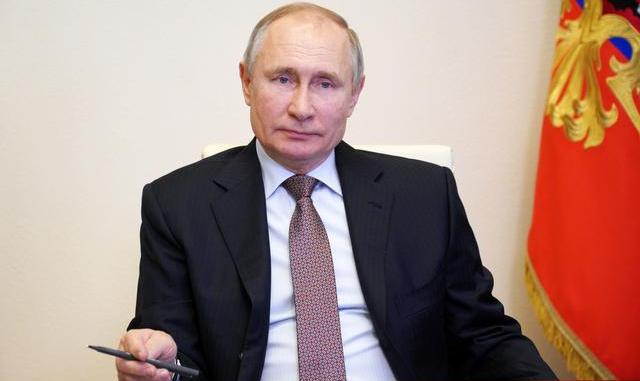
Putin signs law allowing him to run for two more terms in Kremlin

Russian President Vladimir Putin signed a law allowing him to run for two more terms in the Kremlin once his current term ends in 2024, a document posted on a government website showed on Monday.

The legislation, which could pave the way for Putin to stay in power until 2036 should he choose to do so and win re-election, reflects sweeping changes to the constitution that were brought in last year.

Source

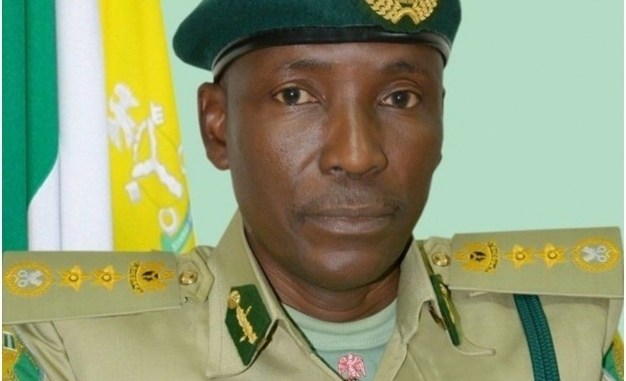
How gunmen over-powered our securitymen, released 1,844 inmates in Owerri Prison — NCoS boss

Acting Controller-General of Corrections, John Mrabure

The Nigerian Correctional Service (NCoS) on Monday afternoon gave the official account of how the Owerri Custodial Centre in Imo State was attacked by unknown gunmen and forcefully released a total of 1,844 inmates in custody.

“The attackers who stormed the facility at about 0215hrs on Monday 5th April, 2021, gained entrance into the yard by using explosives to blast the administrative block.

“They were said to have arrived the centre in their large number in several Hilux pick-up vans and Sienna Buses armed with sophisticated weapons and immediately engaged the security personnel on duty in a fierce gun battle.

“They eventually detonated the explosive to gain entrance,” Acting Controller-General of Corrections, John Mrabure, said in a statement issued on his behalf by NCoS Public Relations Officer Francis Enobore, mni.

The Acting Controller-General of Corrections disclosed that he has “ordered a comprehensive investigation into the incident and in collaboration with other security organizations, commenced a search and recover operations to recapture the fleeing inmates.”

“While appealing to the good citizens of Imo State and indeed Nigerians to volunteer useful intelligence that will facilitate the recovery effort, the Ag. Controller-General wishes to assure that the security of custodial centres in the country remains sacrosanct.

“He equally directed all officers attached to custodial facilities to remain vigilant at this trying moment in our history,” the statement said.

It disclosed that “as at the last count, 6 inmates have so far voluntarily returned to the facility while 35 inmates refused to escape from custody during the attack.” (News Express)

Why I had 2 abortions — Tito, ex-Governor Ladoja’s daughter

Tito, daughter of former Oyo State Governor, Rasheed Ladoja, has disclosed on her Twitter page that she had two abortions and dealt with the shame for a long time.

The ex-Governor’s daughter said this in a series of tweets on her Twitter handle.

Tito, who is married to singer, Bez Idakula, stated that she had the abortions because she thought those were the only options available to her at the time.

But when she was eventually ready to have kids and suffered a miscarriage, she said she thought it was God punishing her for her past.

However, she said she was wrong because she didn’t understand the salvation she has in Christ.

She explained that Christ’s death and resurrection took away the shame and guilt and advised those dealing with shame to look to Christ for redemption.

She further said her husband and three babies are proof Christ has set her free with grace.

Here are Tito’s tweets: “I’ve had 2 abortions. I was scared and wasn’t ready. I took the only options I thought were available to me at the time.

“And even in this age of pro choice, I am not personally proud of the choices I made. And I lived in shame and guilt for years.

“It almost crippled me when I found myself fighting for the life of my daughter.

“I couldn’t stop thinking: ‘I deserve this punishment. Now I’m ready, and God is finally ready to get me back.’

“But then I didn’t understand the salvation and righteousness that I have in Christ.

“That in his death and resurrection Jesus Christ, destroyed my shame and gave me a new name. A new beginning.

“A new identity. Even in the midst of my ‘sin’ and deepest shame, God couldn’t have punished me because that is what Christ took on when he chose that sacrifice.

“In the stripes and death he took all my sin and in his resurrection he set me FREE. What GRACE! So undeserved.

“I mean, my husband and 3 babies are proof of God’s Grace! I thought: ‘I have to earn it,’ this love, this mercy, this grace. (TheEagleonline)

TIPS