Home Blog Page 98

Nigerian Grammy-winning singer, Tems is first African female artist with seven Billboard Hot 100 entries

Grammy-winning Nigerian singer, Tems, has become the first African female artiste to record seven entries on the United States Billboard Hot 100 chart.

The Nigerian singer secured this record after her track “What You Need” entered the chart at number 93 this week.

This latest entry brings her total count to seven, placing her in a three-way tie with Burna Boy and the South African band, Seether, for the most appearances by any African act in the chart’s history.

In 2022, she made history as the first African artist to debut at number one on the Billboard Hot 100 chart with her collaborative hit “Wait for U,” featuring Future and Drake.

J. Cole’s “Bunce Road Blues” featuring Tems and Future, is set to debut on the Billboard Hot 100 chart next week.

Let the poor in Makoko breathe! By Olufunke Baruwa

For more than a century, Makoko—often described as the largest floating slum in Nigeria, home to an estimated 200,000 people was a living testament to resilience. Built on stilts above the Lagos Lagoon, with fishing as its economic heartbeat and canoes as its streets, the community fashioned purposeful life from a place others derided as marginal. Here were homes, social networks, markets, schools and churches, structures and systems that sustained families across generations. But in late December and through January, bulldozers and amphibious excavators escorted by soldiers and armed police razed vast swathes of the settlement, destroying at least 3,000 homes and displacing more than 10,000 people within a matter of days.

What happened in Makoko was not simply urban planning; it was state driven urban violence and dispossession of those at the bottom of the economic pyramid carried out without meaningful notice, proper consultation, or plans for relocation and rehabilitation. This is, tragically, part of a pattern in Lagos and other Nigerian cities where the poor are treated as obstacles to “development,” rather than citizens with rights to dignity, shelter, and livelihood.

A Pattern of Displacement, Not Development

Lagos is a megacity, overcrowded, underplanned, choking with traffic and burdened by a severe shortage of affordable housing. The demand for land and waterfront access is intense, and the result has consistently been that those without economic power pay the price.

In 2016–2017, tens of thousands of residents of Otodo Gbame, another waterfront settlement, were forcibly evicted with minimal warning and no relocation plan. The eviction was so egregious that the Lagos High Court later described it as cruel, inhuman, degrading, and a violation of constitutional rights. Those left homeless were never resettled even years later and the lands they once occupied became sites for private development.

This experience has echoed through other communities. Since 2020, waterfront settlements including Oworonshoki, Oko Baba, Ayetoro, Ilaje Otumara, Owode Onirin, Baba Ijora, and Orisunmibare have endured waves of demolition and eviction, often in defiance of court orders and without compensation. These actions have uprooted families, erased businesses, undermined children’s education and forced countless citizens into precarious living conditions.

Makoko’s recent demolition, under the guise of safety and sanitation, was justified by authorities as necessary to remove structures too close to high tension power lines and to reduce hazards. The Lagos State Government claims that the action was part of a broader safety and environmental policy. But residents and civil society groups counter that the demolitions far exceeded the asserted safety parameters, extending well beyond legally prescribed setback distances, and were carried out with significant force and little regard for due process.

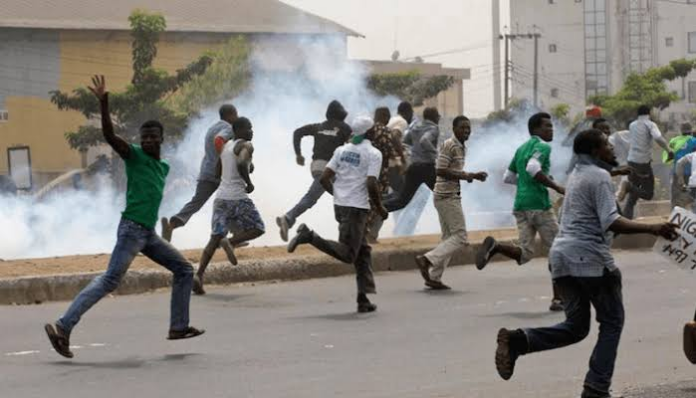
The scale of human suffering cannot be overstated. In Makoko, families pulled roofing sheets and planks apart in desperation, attempting to salvage what they could before bulldozers arrived. In some cases, authorities reportedly used tear gas against residents, injuring women, elderly persons and children. In the chaos that ensued, there are reports of several deaths, including elderly residents and newborns.

More than homes were lost, livelihoods, community systems, and social infrastructures including schools, clinics, places of worship, and markets were obliterated. Thousands now sleep on boats, in dilapidated shelters, or in open spaces, exposed to the elements and worsening insecurity.

For a community that survives through fishing, canoe transport, small commerce and social networks woven tightly over generations, the loss is existential. There is no comprehensive plan to relocate families, no promise of affordable housing and no social infrastructure to preserve education and healthcare. Instead of a considered, humane transition, residents have been left to fend for themselves, their futures uncertain.

Who Benefits from “Urban Renewal”?

One of the bitter ironies of Nigeria’s urban planning history is that many eviction campaigns are justified in the name of beautification, safety, or development, yet the outcomes overwhelmingly benefit elites and private investors, not the displaced poor. Prominent waterfront and inner city lands have been turned into luxury estates, high end commercial spaces and gated communities where everyday Nigerians cannot afford to live.

In Otodo Gbame, land once occupied by working class families is now prime real estate. The slums have been cleared, but the people have not been rehoused nor adequately compensated. They linger on the margins, often in worse conditions than before the evictions, with limited access to work or stable housing.

In private conversations and public commentary, many Nigerians suspect similar motives around the Makoko demolition, land reclamation to make way for future high end development, tourism frontage or speculative real estate value rather than genuine, inclusive urban improvement. While this remains a matter of contention, it underscores why trust between communities and government has eroded.

The Right to the City: A Matter of Justice

At the heart of these mass demolitions is a fundamental issue of social justice: who has a right to the city?

Every person who lives in Nigeria’s cities, whether in upscale Lekki or informal Makoko, is a citizen with constitutional rights. The right to housing, security of tenure, livelihood and dignity are enshrined in our laws and in international human rights standards to which Nigeria is a signatory. Forced evictions without consultation, compensation or resettlement plans violate these standards, and they exacerbate poverty rather than alleviate it.

To be clear: slums and informal settlements do pose challenges. They often lack basic infrastructure like piped water, sanitation, electricity, adequate roads and can indeed present risks. But the solution cannot be demolition without planning, without compassion, without relocation or support. Urban policy that ignores these elements is not urban renewal: it is urban violence.

Towards Inclusive, Rights Based Urban Policies

Nigeria’s housing deficit is vast and growing. Estimates suggest that the country needs hundreds of thousands, if not millions, of new affordable housing units each year to keep pace with urbanisation. The absence of proactive, scalable housing solutions means that slums will continue to grow, not because people prefer them, but because people have no alternatives.

Genuine development would focus on affordable housing construction tied to relocation plans before demolition begins; participatory urban planning, involving community members in decisions that affect their homes and livelihoods; legal protections for informal settlements, with incremental formalisation where appropriate rather than forced expulsion; social infrastructure investments in schools, clinics, clean water and sanitation that uplift communities rather than uproot them.

Such policies require political will and investment. They also require a shift away from development paradigms that equate modern cities with luxury towers and gated enclaves, and towards models that are inclusive, equitable and reflective of Nigeria’s diverse urban population.

The destruction of Makoko should be a moment of national reflection not only on the immediacy of the tragedy, but on the broader trajectory of our urban policies. When the voices of the poor are drowned out by the roar of excavators and the lure of lucrative land deals, we risk not just the displacement of people but the loss of humanity in governance.

African cities like Lagos can be vibrant, equitable and prosperous, but only if the rights of all residents are recognised and protected. Progress that excludes and marginalises the poor is not progress at all; it is a reiteration of inequality and injustice in concrete and steel.

The residents of Makoko deserve more than debris on the lagoon and uncertainty for the future. They deserve homes, livelihood support, and a place in the city they helped build because society cannot build for the wealthy and powerful alone.

The views expressed by contributors are strictly personal and not of Law & Society Magazine.

Fresh Taraba Killings Erupt, 55 Abducted in Kaduna: Nigeria’s insecurity emergency deepens

Fresh violence has erupted in northeastern Nigeria, where residents of Tiv communities in Takum Local Government Area of Taraba State say armed assailants launched renewed attacks, leaving dozens feared dead and several bodies recovered as of Tuesday evening.

Local sources described scenes of chaos and desperation as the killings reportedly continued into the night.

“Killings are ongoing now in the Tiv community in Takum LGA. It is serious killing. Dozens of people died and about six corpses have been recovered as I speak to you,” one distressed resident said.

Another community member accused state authorities of indifference, alleging the attacks were targeted and systematic.

Read Also Bandits Strike Again: Mass abductions in Kaduna, church kidnap in Benue expose security failures

“People are mounting at Takum Local Government. The governor doesn’t care. It’s targeted. Only the media can help these people,” the source said.

Images obtained from the area show victims lying lifeless, underscoring the intensity of violence sweeping through the district.

A Pattern of Escalation

The latest assault follows weeks of sustained attacks on Tiv Christian settlements in Chanchanji district, where residents say entire villages have been overrun, homes torched, and farmlands seized.

Earlier reports indicated that more than 100 people were killed within a month in coordinated raids across Tiv communities. Survivors have fled en masse, abandoning livelihoods in farming-dependent settlements now largely emptied.

Rev. Dr. Amb. Micah Philip Dopah, a community elder and official of the Northern Christians Religious Leaders Assembly (NOCRELA), previously warned that repeated pleas for intervention had gone unanswered.

“The issue has been on for long. But government is not doing anything. People are being killed daily without any help,” Dopah said.

NOCRELA disclosed that at least 102 people were killed within 33 days in Chanchanji district alone, describing the attacks as coordinated and deliberate. The group accused suspected Fulani militia of carrying out the assaults and faulted security agencies for failing to act despite distress calls.

The violence in Taraba is unfolding against the backdrop of what analysts describe as a nationwide collapse of security containment.

55 Abducted in Kaduna as Kidnapping Economy Expands

Late Sunday night, more than 55 villagers—including elderly residents and children—were abducted from Kutaho Gida and Kujir villages in Kagarko Local Government Area of Kaduna State.

The incident was disclosed by a prominent law professor and former Chairman of Nigeria’s National Human Rights Commission, who warned on social media: “Do not allow anyone to deny this one too!”

In another Kaduna attack just after midnight on February 9, gunmen stormed a home in Danhono 2 village, abducting four members of the Abdulrazak family, including two children aged 13 and 10.

In Benue State, nine worshippers were seized during a night vigil at St. John’s Catholic Church. A retired army officer was separately killed in an ambush in Kwande LGA.

Each incident followed a now-familiar pattern: armed raid, abduction or killings, followed by official assurances that “tactical teams have been deployed.”

A Nation of 2.2 Million Kidnap Victims

Behind the headlines lies staggering data.

According to Nigeria’s National Bureau of Statistics Crime Experience and Security Perception Survey (May 2023–April 2024), an estimated 2.2 million Nigerians were kidnapped in just one year.

Ransom payments during that period exceeded ₦2.2 trillion, with households paying an average of ₦2.7 million per case — often by selling land, livestock, or taking loans.

Independent trackers recorded at least 7,568 abductions between July 2023 and June 2024 across Zamfara, Kaduna, Katsina and other states.

Security analyst Confidence McHarry described the crisis as systemic.

“Kidnapping has become a profitable enterprise. Gangs operate across state lines with structured networks. Government responses are largely reactive rather than preventive,” McHarry said.

Even high-profile rescues, analysts note, are rarely accompanied by transparent explanations of how operations were conducted, further eroding public trust.

Abuja’s Promises Under Scrutiny

Successive federal administrations have pledged decisive action — including troop surges, mass recruitment into security agencies, and emergency security frameworks.

Yet rural communities continue to empty.

Farmers in parts of the North-West and North-Central regions report paying “taxes” to armed groups or abandoning farmlands altogether. In some areas, bandits and insurgents are said to exercise de facto control.

Critics argue that while deployments increase after major incidents, there has been limited evidence of sustained territorial recovery or dismantling of ransom networks.

The scale of abductions and coordinated village raids suggests the crisis has evolved beyond isolated attacks into what researchers call a “ransom economy” — one that thrives amid weak enforcement, porous borders, and limited accountability.

Fear as a Way of Life

For many Nigerians, security has become a private burden rather than a public guarantee.

Families hire local vigilantes, negotiate ransoms quietly, avoid night travel, or withdraw children from schools.

In parts of Taraba, Kaduna, Benue, Zamfara and Borno, the question is no longer whether violence will strike — but when.

As fresh killings unfold in Takum and dozens remain missing elsewhere, residents say the cycle of massacre, condemnation, and renewed attack has become painfully predictable.

The widening gap between official assurances and lived reality has left communities asking whether Nigeria’s insecurity crisis is being contained, or quietly normalised.

Man hangs himself after failed attempt to slaughter daughters

A 46-year-old man simply identified as Jegede Ojengbede on Sunday committed suicide in Ise Ekiti after his failed attempt to slaughter his two daughters.

A statement by the Ise Ekiti Command of Southwest Security Network codenamed Amotekun issued by its Director of Information, Adeleye Adewale, said it took the intervention of the security agency to foil Ojengbede’s plan to kill his daughters, who are aged 15 and 10 years old.

Witness accounts indicated that the deceased was a notorious drug addict, and the foiled manslaughter attempt might have been influenced by his purported substance abuse.

His body was said to have been found hanged on a tree on the outskirts of the town.

According to the security agency, the timely arrival of the Amotekun Operatives saved the two siblings who were almost dead, having sustained serious injuries, but were quickly rushed to an undisclosed hospital in the town where they are receiving medical treatment.

Meanwhile, the incident was said to have thrown the community into pandemonium as it was a taboo, but another witness account said certain rituals had been performed on the deceased by traditional chiefs of the town in line with the traditions of the community.

It was gathered that the Ise Ekiti division of the Nigeria Police has commenced a thorough investigation of the incident after it was officially informed by the Amotekun Operatives.

The Conclave

Three Decades Later: Couple’s emotional journey to welcoming their first child

Segun and Kemi Omotinugbon, devoted members of the Mountain of Fire and Miracles Ministries (MFM), have shared the deeply emotional story of how they welcomed their first child after more than 30 years of marriage — a journey marked by decades of waiting, faith and unwavering hope.

The couple recounted their experience during a testimony session at the church’s monthly prayer programme, Power Must Change Hands, held at MFM’s international headquarters along the Lagos-Ibadan Expressway in Ogun State over the weekend, drawing tears and applause from worshippers in attendance.

Read Also: Mother of twins says her husband rejected offer of second wife despite 24 years

Read Also: “A Miracle at 63: Nigerian Woman Welcomes Natural Twin Birth After 40 Years of Waiting”

Kemi said their journey to parenthood was marked by years of emotional and physical challenges, including medical interventions and repeated disappointments.

Kemi disclosed that they underwent different treatments in the past, including two unsuccessful in-vitro fertilisation (IVF) procedures.

The woman revealed that she eventually conceived in May 2024, when she was 56 years old.

Kemi described the pregnancy as difficult, particularly because of her age, but said she received strong emotional and spiritual support throughout the period.

She disclosed that she welcomed a baby boy in January 2025, shortly before she turned 57.

She said: “We got married in July 1994; July precisely. Since then, we’ve been believing God for the fruit of the womb. It has been a challenging time, but God manifested Himself in the end.

‘We went through some treatments, including two failed IVFs, and endured many prayers, including corridor prayers with the General Overseer, who was very supportive and guided us prayerfully. By God’s grace, in May 2024, I conceived.

“The journey was challenging because of my age, but I was able to overcome it. At the time of conception, I was 56, and by the time the baby was born in January last year, I was close to 57. Praise the Lord.

“The journey has been filled with pain, tears, and moments of joy. Whenever I saw people testify, I asked God, ‘When will I testify?’ I believed God had not called me to shame, and indeed, God did it.

“There was a time I had an attack on my leg, and I prayed that I would be able to carry the pregnancy safely. God helped me, and in January 2025, we were blessed with our child.”

Amadi vs Dickson: Explosive clash over e-transmission throws Nigeria’s electoral future into question

By Lillian Okenwa

A fierce confrontation between two influential voices in Nigeria’s policy and political circles has thrust the country’s fragile electoral credibility back into the national spotlight, raising urgent questions about whether Africa’s largest democracy is moving toward greater transparency or drifting into familiar uncertainty.

The Senate’s sudden reversal on electronic transmission of election results has triggered a high-stakes debate that goes far beyond legislative procedure. For many analysts, the dispute cuts to the heart of Nigeria’s democratic stability: Can future elections be trusted?

At the centre of the storm are governance expert Dr Sam Amadi and former Bayelsa State governor Senator Seriake Dickson, whose sharply divergent positions reveal deep fractures within Nigeria’s political establishment over the role of technology in safeguarding the ballot.

On Tuesday, the Senate rescinded its earlier rejection of electronic transmission to the Independent National Electoral Commission’s (INEC) Result Viewing Portal (IREV), re-amending the Electoral Act to permit digital uploads — but notably stopping short of making them mandatory. Lawmakers inserted a fallback to manual collation using Form EC8A in cases of network failure, a provision critics warn could reopen old pathways to manipulation.

“There Is No Technical Obstacle”

Dr. Amadi, Director of the Abuja School of Social and Political Thoughts and former chairman of the National Human Rights Commission, dismissed claims that Nigeria lacks the infrastructure for real-time transmission.

“There is no confusion. There is no technical obstacle,” he said. “INEC transmitted governorship election results electronically before 2023 without problems.”

According to Amadi, the failure to upload presidential results during the 2023 elections reflected institutional unpreparedness rather than technological limitations.

“INEC failed to prepare for the presidential upload. There are no nine states where transmission was impossible. That claim is simply false.”

He warned that granting discretion in transmission risks dragging Nigeria back into an era synonymous with electoral manipulation.

“If you weaken electronic transmission, you return us to fake results declared at gunpoint, altered figures at collation centres, and midnight declarations. That’s how democracies collapse.”

In an unusually blunt criticism, Amadi also accused Senate President Godswill Akpabio of misleading the public.

“Akpabio is lying — the IREV and B-VAS don’t even require internet. What they use is coded.”

Watch the video here.

Dickson Pushes Back: “We Are Not There Yet”

Senator Seriake Dickson, who represents Bayelsa West, offered a sharply different perspective, cautioning against what he described as a widespread misunderstanding of “real-time” transmission.

Speaking to ARISE News, the former governor argued that Nigeria has not reached the level of technological maturity required for fully digital voting.

“What is the meaning of real time? We are not voting electronically in Nigeria. We are not at the point where you press a button and your vote is instantly added to a portal,” Dickson said.

He dismissed the phrase as largely rhetorical.

“The concept is superfluous. It does not in itself guarantee transparency.”

Dickson’s stance reflects a more cautious school of thought within the political class, one that fears overreliance on technology without systemic readiness could spark fresh disputes rather than resolve them.

Senate Explains Its Dramatic Reversal

The legislative about-face followed a motion by Senate Chief Whip Tahir Monguno, who said the amendment was necessary to align electoral law with public expectations.

“This amendment is to bring our laws to make it a replica of the wishes and aspirations of the people,” Monguno stated.

Seconded by Minority Leader Abba Moro, the motion passed via voice vote.

The reversal effectively acknowledges that the Senate had earlier approved an amendment without any provision for electronic transmission — a development that alarmed civil society groups and election observers who view digital reporting as critical to preventing result tampering.

New Controversy Over PVC Penalties

The transmission debate is not the only issue raising concerns.

Columnist Suyi Ayodele, in his article “The Senate Coup Against Nigerians,” highlighted what he described as a troubling reduction in penalties for Permanent Voter Card (PVC) trading , a practice widely linked to vote-buying.

“In addition to rejecting the all-time electronic transmission of results, Akpabio also rejected the 10-year jail term for PVC traders and opted for a two-year imprisonment term,” Ayodele wrote.

“In essence, the Senate is saying that a 10-year jail term is too harsh for anyone caught either selling or buying PVC.”

For reform advocates, the move risks signalling tolerance for electoral malpractice at a time when public trust is already precarious.

Haunted by History

Nigeria’s unease over election transparency is rooted in a long trail of contested polls.

The 2007 general election, widely condemned by international observers, became synonymous with ballot stuffing, missing result sheets, and logistical chaos. Even the eventual winner, President Umaru Musa Yar’Adua, admitted the process was flawed — an extraordinary acknowledgement that triggered reform efforts.

In 2011, post-election violence across northern Nigeria left hundreds dead and thousands displaced, demonstrating how disputed outcomes can quickly escalate into national crises.

Although the 2015 election was celebrated after an incumbent conceded defeat, it exposed systemic weaknesses, including card reader failures that forced reliance on manual accreditation in several areas.

By 2019, allegations of militarisation at polling units, delayed voting, and widespread vote-buying again clouded the process.

Then came 2023 — arguably Nigeria’s most technologically anticipated election. INEC had promised seamless electronic transmission through the Bimodal Voter Accreditation System (BVAS) and the IREV portal. When presidential results failed to upload in real time, opposition parties rejected the outcome, courts were flooded with petitions, and public confidence suffered a significant blow.

For many analysts, the psychological damage from that episode still lingers.

Trust: The Currency Nigeria Keeps Losing

Election credibility in Nigeria is more than a procedural concern; it is a cornerstone of national stability.

Each disputed poll has historically deepened voter apathy, triggered protests, and pushed political battles into prolonged legal warfare. Security experts warn that when citizens lose faith in ballots, they may shift their trust away from democratic institutions altogether.

Against this backdrop, the Senate’s latest amendment is being interpreted not merely as a legislative adjustment but as a defining signal of Nigeria’s democratic trajectory.

A Democracy at a Defining Moment

The clash between Amadi’s urgency and Dickson’s caution reflects a deeper national dilemma: Should Nigeria accelerate technological safeguards to prevent manipulation, or proceed more deliberately to avoid unintended consequences?

With memories of the fiercely contested 2023 presidential election still fresh, analysts warn that ambiguity, not just fraud, can erode confidence in democratic outcomes.

For millions of Nigerians, the stakes extend beyond legal clauses or technical jargon. What they seek is simple but fundamental: certainty that their votes will count — and be counted correctly.

As the country edges toward future election cycles, one question now dominates political discourse:

Is Nigeria reinforcing the guardrails of democracy, or quietly loosening them?

Skunk, colorado and Nigeria’s bent destiny

By Funke Egbemode

Do you know what it means to find the severed heads of cats neatly arranged in trays at a market square? Only the initiated know. If curiosity pushes you further, speak to officers of the National Drug Law Enforcement Agency (NDLEA). They have seen things—unspeakable things. They have seen cat heads openly displayed for sale. Won ti rí orí ologbo l’á tê. One day, one discovery. A signpost into a very dark world.

Please follow me on this excursion on what happens from skunk farms in Colorado to Nigeria’s street corners:

Skunk inside plantain chips packaging.

Ketamine, ecstasy and tramadol pills hidden in coffee satchels and book parcels.

Cocaine concealed deep in a woman’s sacred place, yes, and then more in her footwear.

95 wraps of cocaine in a 62-year-old man’s stomach.

More skunk hidden inside rechargeable electrical bulbs.

Metamphetamine (Meth) concealed in giant music speakers.

Tramadol tablets packed inside car spare tyre, car doors.

And this!

Illicit ‘orisirisi’ hidden inside frozen snails.

Mind-bending drugs do to society what welders do with wrought iron. They bend reason, warp senses, destroy destinies and drag the bizarre into the open.

Seriously, if drugs had legs, they would be the most restless travellers in Nigeria. They travel by every means of transport available, including backpacks and innocent-looking lunch boxes of dispatch riders. If, for instance, cocaine, skunk and meth had mouths, they would be screaming, “Anywhere but there!” I mean, they get pushed into all kinds of hot, even smelly places. Because honestly, where haven’t drugs been found?

Once upon a time, when NDLEA said it had made a seizure, Nigerians pictured the usual suspects: airports, seaports, border towns, maybe one dark bush path where a nervous courier, whose village people had pursued to Lagos, bumps into an NDLEA checkpoint, sweating like a Christmas goat. Those were the innocent days. Today, NDLEA press releases read like stuff from a badly managed magician show. Drugs are no longer just smuggled; they are imaginatively hidden.

Creativity has gone virally criminal or crimininally viral because more and more people are becoming mules, couriers. More and more colorful drugs are getting into Nigeria and are being distributed with devil-may-care daring but foolhardy people. The recruitment drive must be something to be researched too. How is it that every week NDLEA reports its catch, a new arrest, complete with names photographs and visuals, right the following week, a new guy is caught with another dangerous drug hidden in another creative place? Every day, every week? Does Nigeria even have enough jail space to keep these people? Why is it that the arrests are not stopping this evil business? Whose children, fathers, mothers, even grandparents are these mules?

These are some of the questions that run around my head every weekend. I read those statements from NDLEA’s Director of Media and Advocacy, Femi Babafemi.

For years, NDLEA officers have watched suitcases at the airports like hawks with binoculars. Drugs inside bags? Old news. Drugs sewn into clothes? Been there. Drugs swallowed, packed in the stomach like export goods? Sadly familiar.

But today’s smugglers have moved on to bigger things. They have moved to more irreverent locations.

Yes, drugs have turned up inside holy books. Yes, holy books. The irony and anger alone would power the national grid. Cocaine tucked neatly between pages of prayer, as if divine intervention would make NDLEA officers look the other way. Maybe the smugglers thought, “Surely God will understand.” No such luck.

NDLEA witchcraft understood and swooped in. How do they even do it, like they have ‘inside eyes’ or there is GPS installed inside the officers upon graduation from training college?

They see drugs hidden inside food items. Not just any food—our food. Yams, plantains, garri sacks, crayfish containers. Things your mother sends you from the village. Imagine opening a bag of foodstuff with joy, only to discover it carries enough illicit substances to rent a shop and put them evil things on display, if it were possible.

The drug trade in Nigeria now is free for all. Years ago, mules were beautiful girls believed maybe to have sexy ways to hoodwink airport officers. Not any longer. There is no age or gender barrier. There was Mama Kerosine, real name, Fatima Ilori, a 65-year-old female drug kingpin (also known as Mama Kerosine or Mamak Rousin), arrested in the Onireke/Elekuro area of Ibadan, Oyo State. The NDLEA found on her 238.4 kg of skunk, a cousin of cannabis. There was also a Remi Bamidele (45), arrested at Sasa, Ibadan, with over 10kg of various cannabis strains, including Colorado, Scottish Loud, Ghana Loud, and Canadian Loud. Read that again. I did not even know there are so many ‘Louds’. Maybe there is even Nigeria Loud.

And now to the two cases that informed this piece.

A suspected drug kingpin operating a “Colorado” synthetic cannabis lab at Badeku in Ibadan, Oyo State was nabbed recently. According to NDLEA officers, in his lab, they found and seized ‘precursor chemicals and skunk production paraphernalia’. Yeah, a skunk production laboratory. He was manufacturing what would kill, maim and steal other people’s joy and future. He was not a retailer or wholesaler. He was a manufacturer. He would have employees, marketers and supply chain.

The second guy is a 62-year-old drug dealer, Nwabueze Nicholas Izueke, who was arrested at Mallam Aminu Kano International Airport with 95 jumbo wraps of cocaine concealed in his stomach. He is 62, probably with married children and a couple of grandchildren. He is probably a titled man, a deacon or some sort of church leader. When I saw the report, I felt like crying, for him, for all of us. I thought of how long he could spend in jail. He is eight years short of 70. What kind of life will he have in there? Then I thought of how many lives his past jumbo trips had ruined and I became even sadder.

Take a moment to think of all the angles of these two businessmen, how long they have been at it, and the hundreds of them still hiding in dark places and manufacturing skunk and packaging Loud.

Once upon a time, checking car boots was enough. NDLEA has since learned that smugglers think three steps ahead and one step sideways.

These days, drugs have been found inside fuel tanks—yes, fuel tanks. Because why not turn a car into a rolling chemistry experiment? Others were hidden in the dashboards, car doors, spare tyres, and shock absorbers. Vehicles are no longer means of transportation; they are mobile drug warehouses, stash houses on wheels.

Some smugglers have been known to hide drugs inside coffins. Coffins. The dead, apparently, are not exempt from being unwilling accomplices. Shouldn’t all of these force the nation to pause and ask deep questions about morals, desperation, and how far some people will go to make money?

Nigeria is an agricultural nation, but NDLEA’s discoveries have added an unexpected crop to the list of what we plant. There are cannabis farms tucked away in forests, plantations hidden among legitimate crops, fields that look peaceful until you realize they are not cassava or corn farms. They are rogue farms, desecrating the soil that should grow yam and cocoa yam, cocoa and kola nut.

More saddening still are the offices, corporate spaces and even homes where these evil transactions are going on even as you read this. Drugs have been found inside bedrooms, kitchens, wardrobes, and ceilings. Not just hidden but stored with intention. Some homes function like quiet distribution centres, blending into neighbourhoods where everyone greets everyone and jog together.

Even offices have not been spared. Corporate respectability has occasionally turned out to be just a costume, with drugs hidden in filing cabinets, behind shelves, or inside office equipment. It turns out that not all paperwork is paper. Some are paperwork to wrap colorado and skunk.

But why won’t these dark evil stop? This thing is real evil, deep, present danger with long scrawny demonic finger reaching out to destroy the tomorrow of every user and cause pain, indescribable sorrow to the friends and family of victims.

How is it that some people are comfortable building their wealth and empire on the tears and terror of the drug business? They build places of worship and hospitals, set up foundations and charities to ‘help the less-privileged’. They destroy millions and pay the school fees of a hundred and continue as if that will somehow wash away the evil they inflict on the world.

For as long as mind-bending substances are circulated by dry-eyed, mean men and women, there will be no real development in Nigeria. We can amend the electoral act from now till hell freezes over, buy new equipment to fight terror, those whose minds are bent, young and old, will continue to bend our destinies.

The views expressed by contributors are strictly personal and not of Law & Society Magazine.

Bandits Strike Again: Mass abductions in Kaduna, church kidnap in Benue expose security failures

In yet another grim chapter of Nigeria’s deepening insecurity, suspected terrorists and armed bandits have carried out coordinated abductions that further expose the federal government’s inability to protect its citizens, even as official reassurances echo unfulfilled promises.

Late Sunday night, more than 55 villagers — including elderly infirm individuals and children — were abducted from Kutaho Gida and Kujir villages in Kagarko Local Government Area of Kaduna State, according to a prominent law teacher and former Chairman of Nigeria’s National Human Rights Commission, who broke the news on X. “Do not allow anyone to deny this one too!” the rights advocate warned, underscoring public distrust in official narratives.

This latest mass abduction follows an unsettling pattern in northern and central Nigeria where criminal gangs have elevated kidnapping from sporadic crime to an entrenched national crisis.

Church Worshippers Snatched, Soldier Shot Dead

In Benue State, police have confirmed that nine worshippers were seized during a night vigil at St. John’s Catholic Church in Ojije, Utonkon, Ado Local Government Area. Police spokesperson DSP Edet Udeme said tactical teams have been deployed to secure their release, a now familiar refrain after every such attack.

Also in Benue, a retired army officer, Sgt. Chiayongo Jem’m, was gunned down in a suspected bandit ambush in Anem Village, Ikyurav-Ya, Kwande LGA, as investigators comb nearby forests for the assailants.

Family of Four Taken at Midnight in Kaduna

In another chilling incident just after midnight on February 9, gunmen stormed a home in Danhono 2 village, Millennium City, Kaduna, abducting four members of the Abdulrazak household, including two young children aged 13 and 10. Security forces, including the Nigerian Army Strike Force and Special Police Unit, were deployed to track the kidnappers and rescue the victims.

These latest attacks arrive against a backdrop of staggering national kidnapping figures that paint a horrifying picture of insecurity:

According to the National Bureau of Statistics (NBS) Crime Experience and Security Perception Survey (May 2023–April 2024), an estimated 2.2 million Nigerians were kidnapped nationwide in just 12 months, with the majority in rural areas and the North-West region leading all zones.

Ransom payments during this period reportedly reached over ₦2.2 trillion, with households paying an average of roughly ₦2.7 million per case — a massive economic burden on families already under siege.

Other analysts note a similar trend: between July 2023 and June 2024, at least 7,568 people were abducted in 1,130 incidents, spread across states such as Zamfara, Kaduna, and Katsina. (

The scope of violence deepens when mass kidnappings are considered. In recent years, heavily reported school abductions — like the November 2025 seizure of 303 students and 12 staff at a Catholic school in Niger State — have drawn international attention to Nigeria’s insecurity crisis. (

Experts Sound the Alarm

Security experts and analysts say the situation has evolved far beyond isolated conflict into a sprawling economy of fear and ransom.

Confidence McHarry, a policy researcher at SBM Intelligence, told Newsweek Nigeria that the cycle has become self-reinforcing:

“Kidnapping has become a profitable enterprise. Gangs now operate sophisticated networks across states — with entire communities paying huge sums as ransoms. Government responses often follow attacks rather than prevent them, creating a sense that authorities are always one step behind.”

McHarry noted that even when hostages are freed — as in the case of 166 churchgoers released recently in Kaduna — the absence of transparent rescue strategies fuels scepticism about government efficacy.

Another analyst, Kenn Maduagwu of Nextier’s Nigeria Violent Conflict Database project, warned that violent conflicts, including kidnapping, accounted for thousands of casualties and displacements between 2023 and 2024, offering a broader context of escalating threats alongside banditry and terrorism.

Public Trust Plummets, Fear Rises

For many Nigerians, the repeated cycle of tragic headlines and delayed responses has eroded public trust.

In rural and urban areas alike, families now employ private guards, negotiate ransom payments, or abandon farmlands and schools — decisions driven by sheer survival rather than confidence in state security forces.

Critics argue that despite periodic government declarations — including a national emergency response and plans to recruit tens of thousands of security personnel — tangible improvements have remained elusive.

While authorities continue to deploy troops and tactical units after headline-grabbing kidnappings, the sheer scale of abduction figures and rampant ransom economy suggests the crisis has metastasised into a systemic failure of security policy and enforcement.

The question for Nigeria now is stark: Can a nation under siege reclaim its streets, churches, and homes — or will insecurity become the country’s new normal?

The last hope (1), By Ebun-Olu Adegboruwa, SAN

INTRODUCTION

The judiciary in Nigeria is going through very turbulent times and it is very worrisome. In democratic societies, the judiciary serves as the final arbiter of disputes, ensuring that laws are applied fairly and justly. The Nigerian Constitution, which lays the foundation for the country’s legal and political systems, also underscores the crucial role of the judiciary in protecting citizens’ rights and maintaining the rule of law. Section 6(6)(b) of the 1999 Constitution of the Federal Republic of Nigeria is particularly significant as it asserts the judiciary as “the last hope” of citizens, reinforcing its position as a vital safeguard for the protection of constitutional rights and the delivery of justice. Section 6 of the 1999 Nigerian Constitution deals with the powers and functions of the judiciary. Specifically, subsection (6)(b) states that “the judicial power of the Federation shall not be exercised by any person or authority except the courts of law and, when authorised by law, tribunals.” This provision firmly establishes that judicial power in Nigeria is exclusively vested in the courts and tribunals. It also highlights the critical role of the judiciary in upholding the rule of law, ensuring accountability, and protecting the rights of individuals against potential violations by other branches of government or individuals with undue power.

The Concept of the Judiciary as the “Last Hope”

The phrase “last hope” implies a final safeguard or recourse. In the context of Section 6(6)(b), the judiciary is seen as the ultimate institution to resolve disputes, particularly those relating to individual rights, freedoms, and the proper functioning of government institutions. This provision recognises the judiciary’s position as a critical pillar in the democratic structure, tasked with providing justice when all other avenues might fail. For Nigerian citizens, the judiciary serves as the last line of defense when the other branches of government—the executive and legislature—fail to protect their rights or act unlawfully. The courts act as an independent body, free from political influence or pressure, to uphold the Constitution and ensure that justice is served, particularly in cases where there are abuses of power or violations of human rights.

The Judiciary’s Role in Protecting Fundamental Rights

One of the most important aspects of the judiciary’s function as the “last hope” is its responsibility to protect fundamental human rights. The Nigerian Constitution guarantees a range of rights for citizens, including the right to life, personal liberty, fair trial, and freedom of expression. However, these rights can often be infringed upon, either by government actions or private parties. In such instances, individuals can turn to the judiciary to seek redress. Courts are empowered to review the constitutionality of actions taken by the executive or legislative branches and declare them unconstitutional if they violate any of the fundamental rights enshrined in the Constitution. This serves to maintain the balance of power among the various arms of government and prevents the abuse of power.

Judiciary to the Rescue

In March 2020, the Kano State Government announced the deposition and subsequent banishment of Muhammad Sanusi II as the Emir of Kano. It took the brave intervention of the judiciary to save the situation. Very recently, the Supreme Court struck out the criminal case against the former Chief Security Officer to late General Sani Abacha, Major Al-Mustapha (Rtd) for want of diligent prosecution. Though General Sani Abacha himself was never known to have used the courts to seek justice during his lifetime (given his autocratic rule), his family became involved in lengthy legal battles after his sudden death in 1998. Abacha’s family members, particularly his children, resorted to legal actions to reclaim assets and properties that were seized by the Nigerian government or discovered in various international jurisdictions following the collapse of his regime. Abacha’s family sued both in Nigerian courts and abroad, contesting asset seizures and attempting to block the confiscation of wealth accumulated during Abacha’s rule. Many of these cases have continued to unfold over the years, with Nigerian courts being one of the critical venues for these posthumous legal disputes. Alhaji Atiku Abubakar, a former Vice President of Nigeria, has made several legal challenges throughout his political career, particularly in relation to election outcomes. His actions have also highlighted how public officers, even at the highest level, turn to the judiciary to challenge political outcomes they believe to be unjust. In 2015, former President Goodluck Jonathan approached the court for a determination of his eligibility. During his tenure as the governor of Lagos State, Senator Bola Ahmed Tinubu (now President) challenged the power of the federal government of Nigeria to withhold funds meant for the local government councils in Lagos State. Retired judges in Ogun State filed an action in court for the payment of their pensions while the former Chief Justice of Nigeria, Hon Justice Walter Onnoghen fought his sudden removal from office in court. These are few examples of leaders and public officers who have resorted to the judiciary as their last hope. One therefore wonders how while in office, leaders treat the judiciary with disdain, with contempt, neglect and even disobey lawful orders made by the courts. It calls for urgent judicial review.

Judicial Review: A Mechanism of Accountability

Judicial review is one of the core mechanisms through which the judiciary functions as the “last hope” in protecting the rule of law and upholding constitutional principles. It refers to the judiciary’s authority to review and, if necessary, invalidate laws, policies, or actions that are inconsistent with the Constitution. Judicial review, particularly in cases involving unconstitutional legislation or executive actions, is a powerful tool in the hands of the judiciary. In Nigeria, courts regularly engage in judicial review to ensure that laws, executive orders, and administrative actions do not violate constitutional provisions. This is especially vital in safeguarding the rights of citizens and ensuring that governmental actions are conducted within the boundaries of the law.

Ensuring Justice Through the Courts

In a country as diverse and complex as Nigeria, the judiciary’s role as the “last hope” is amplified by the potential for inequality and injustice. The courts serve not only as an adjudicator of disputes but also as an equalizer, ensuring that every citizen, regardless of their status, ethnicity, or background, has access to justice. This is important because without the assurance of fair and impartial adjudication, the fundamental ideals of democracy and justice would be compromised. For instance, in cases of political corruption, human rights violations, or electoral malpractice, the judiciary has often played a key role in holding wrongdoers accountable, irrespective of their political or social status. By providing an independent forum for legal redress, the judiciary ensures that justice prevails and that citizens can rely on the legal system to protect their interests.

Challenges to the Judiciary’s Role as the Last Hope

Despite its critical role, the judiciary in Nigeria faces significant challenges in fulfilling its duties as the “last hope”. These challenges include:

1.    Political Interference: The judiciary is often under pressure from the executive and legislative branches, which can compromise its independence. Political interference, especially in high-profile cases, undermines public confidence in the judiciary’s ability to deliver impartial justice.

2.    Corruption: Corruption within the judiciary can also hinder its effectiveness. Cases of bribery, favouritism, and other forms of unethical behaviour tarnish the integrity of the courts and prevent citizens from obtaining justice.

3.    Inadequate Funding and Resources: The Nigerian judiciary often suffers from insufficient funding, outdated infrastructure, and a backlog of cases. These issues impede the ability of the judiciary to deliver timely justice and meet the demands of a growing population.

4.    Public Confidence: Public trust in the judiciary can erode when there is a perception of bias, corruption, or inefficiency. Ensuring the independence and impartiality of judges is critical to maintaining faith in the judicial system.

Suggested Solutions

To strengthen the judiciary in Nigeria as the “last hope” for citizens and ensure that it continues to effectively uphold the rule of law, several reforms and strategic solutions are needed. These solutions must address both institutional and systemic challenges, with the goal of enhancing the judiciary’s independence, efficiency, and capacity to deliver justice fairly and impartially. Below are key recommendations to strengthen Nigeria’s judiciary:

Enhance Judicial Independence

To ensure that the judiciary is the true “last hope” of Nigerians, its independence must be safeguarded from political and executive interference. This can be achieved through clear separation of powers among the executive, legislature, and judiciary, ensuring that judges and judicial officers are free from undue influence by political or governmental pressures. Also, it will be necessary to secure the appointment and tenure of judges by ensuring that the appointment process for judges is transparent and based on merit, rather than political patronage. Additionally, judges should have security of tenure, meaning they cannot be arbitrarily removed from office. There should also be independent judicial fund through the establishment of an independent, constitutionally protected budget for the judiciary, separate from the executive, to prevent financial manipulation and ensure adequate resources for the judiciary’s operations. This should not be a matter of cosmetic legislation without concrete implementation.

The views expressed by contributors are strictly personal and not of Law & Society Magazine.

Three Nigerians won Grammys, but Nigeria didn’t notice

By Azuka Onwuka

At the 2026 Grammy Awards, three people of Nigerian descent won Grammys. Their names are Shaboozey (born Collins Obinna Chibueze), Tyler, the Creator (born Tyler Okonma), and Cynthia Erivo (born Cynthia Chinasaokwu Onyedinmanazu Amarachukwu Owezuke Echimino Erivo).

Yet, in much of the Nigerian media, it was almost as if nothing happened. Instead, the headlines and social media posts focused on Davido, Burna Boy, Ayra Starr, and Wizkid, who were nominated but did not win. These are brilliant artists, and their global success deserves respect. But something was deeply wrong about what happened. Nigeria failed to celebrate its own people who actually won.

This silence was not a small mistake. It sends a message that to be celebrated as Nigerian, you must live in Nigeria, sound Nigerian, or work in the Nigerian entertainment industry. That idea is not only narrow but self-destructive on the global stage.

Shaboozey, Tyler Okonma, and Cynthia Erivo did not suddenly become something else because they live in the United States or the United Kingdom. Their blood did not change. Their family roots did not change. Their Nigerian names did not change. They carry Nigeria with them, whether or not they wave the flag on stage.

So, why did Nigeria ignore them? Some may say it is because they are not based in Nigeria. But that is not a serious reason. We live in a world where people move across borders every day. Doctors trained in Nigeria work in Canada. Engineers born in Nigeria build systems in the United States. Writers raised in Nigeria publish books in the UK. Nobody says they are no longer Nigerian.

Some may say it is because their stage names do not sound Nigerian. Shaboozey, Tyler, and Cynthia are not names that immediately make people think of Nigeria. But the job of journalists is not to guess. It is to know. When someone wins a Grammy, it takes only a few minutes of research to find their background. Their full names are clearly Nigerian. Their family histories are public. There was no excuse.

Others may argue that these three do not speak much about Nigeria. That may or may not be true. But even if it is true, it still does not remove their ancestry. A child born in Canada to Nigerian parents is still Nigerian, even if that child has never been to Lagos, Enugu or Ibadan. Identity does not disappear because of geography.

What Nigeria did was something Shakespeare described in Julius Caesar, when Mark Antony spoke about a “grievous fault”. It was not an accident. It was a serious failure of judgment. Smart countries do not behave this way.

When someone with Israeli roots becomes powerful or famous anywhere in the world, Israel claims that person. When someone with Indian roots becomes a tech leader or movie star, India celebrates that person. When someone with Chinese or Japanese roots rises in business, sports, or culture, their countries loudly say, “This is one of ours.”

They do not wait for that person to live in their country. They do not wait for that person to speak the language perfectly. They do not wait for that person to hold a local passport. They understand something many Nigerians don’t: global success by your people improves your country’s image.

Foreign countries also understand the other side of the coin. When a citizen of a Western country with Nigerian roots does something negative, the country plays up the culprit’s Nigerian ancestry, but if it is something positive, the country claims the achiever. Nigeria, on the other hand, often does the opposite. If someone with Nigerian roots is arrested or accused of a crime in another country, the Nigerian media is quick to point out the Nigerian connection. But when someone with Nigerian roots wins one of the biggest awards in the world, sometimes the response is silence. That is not how a serious country behaves.

Shaboozey, for example, is not just some American singer with a Nigerian name. He spent part of his childhood in Nigeria. He attended boarding school here.

His connection to Nigeria is real and lived. Even though Tyler was angry with his Nigerian father for being absent in his life, when he found out that his mother lied to him about his dad, he changed his attitude towards him and adopted his surname, Okonma, identifying as Tyler Okonma. That shows how he cherishes his Nigerian roots. How many Nigerians have as many Nigerian name components as Cynthia Erivo? The Igbo meaning of Onyedinmanazu (who is not gossiped about when absent?) is particularly deep in native wisdom. These are not people pretending to be Nigerian. They are Nigerian by blood. Nigeria should be proud of that.

There is another important reason for these matters. Every time someone searches for “Nigeria” on Google, the articles and stories they find shape how the world sees the country. If the Nigerian media only writes about corruption, insecurity, poverty, crime, and failed elections, that becomes Nigeria’s image. But when Nigerian media also writes about Nigerians winning Grammys, leading global companies, acting in major films, or shaping world culture, that changes the story. It shows that Nigeria produces people who succeed at the highest level. That is how countries build soft power.

Soft power is all about influence rather than weapons or money. It is about how people feel about your country. When Nigeria is linked to global excellence, it becomes harder for the world to dismiss Nigerians as only desperate migrants or poor refugees. It shows that Nigerians are contributors, not just survivors.

And this matters even more because of migration. Every year, thousands of Nigerians leave Nigeria. Some go to school. Some go to work. Some go because they are tired. Millions of children of Nigerian parents will be born in other countries in the coming decades. Some of them will grow up speaking English with foreign accents. Some will not speak any Nigerian language. Some may never live in Nigeria at all. But their blood will still be Nigerian.

Among them will be future scientists, artists, athletes, and business leaders. Some will become famous. Some will become powerful. When they succeed, will Nigeria pretend they are not ours because they were born in London, Vancouver, or Los Angeles? That would be foolish.

These people will shape how the world sees Nigeria, whether Nigeria claims them or not. If Nigeria ignores them, other countries will happily take credit for them. But if Nigeria claims them, celebrates them, and tells their stories, Nigeria gains from the image it has built.

This is why the media has a serious responsibility. The media should not only report what happens in Lagos or Abuja. It should also track what Nigerians are doing around the world. It should know who has Nigerian roots, whether through the father or the mother. It should highlight them, not hide them.

Shaboozey, Tyler Okonma, and Cynthia Erivo winning Grammys was not just a music story. It was a Nigerian story. It was about what Nigerian families are producing across the world. It was about how far Nigerian talent has spread. Ignoring that story was a missed chance.

Nigeria is not only the people who live within its borders. Nigeria is also in Houston, in Shanghai, in Halifax, in Paris, and in Melbourne. Nigeria is in every place where Nigerians and their children are building lives.

If Nigeria wants to boost its image faster, it must learn to act like other smart countries. When Nigerians win, Nigeria should notice. Every achiever with an ounce of Nigerian blood must be claimed and celebrated.

The views expressed by contributors are strictly personal and not of Law & Society Magazine.

TIPS