Home Blog Page 965

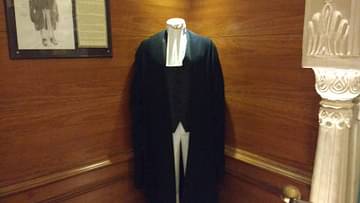
Judiciary deeply affected, physically and psychologically, by COVID-19; 34 judicial officers, 3 High Court judges have passed away: CJI NV Ramana

“Till date, approximately 800 Registry staff have tested positive and three officials passed away,” the CJI said.

The COVID-19 pandemic has taken a toll on Indian judiciary, judges and court staff who have been severely impacted, both physically and psychologically, by the virus, Chief Justice of India NV Ramana said on Thursday.

Continue reading

Elisabetta Belloni named as first woman to head Italy secret service

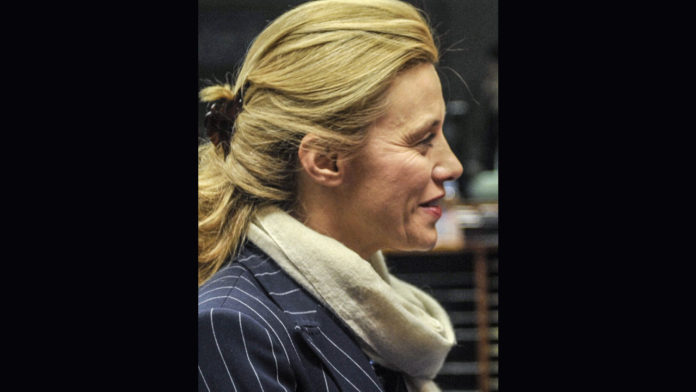
FILES) In this file photo taken on November 11, 2008 then Italian Foreign Ministry advisor, Italian diplomat Elisabetta Belloni attends a General Affairs and Development Council meeting at EU headquarters in Brussels. – Italy’s prime minister Mario Draghi appointed on May 12, 2021 career diplomat Elisabetta Belloni as head of the Department of Informations for the Security (DIS), the first woman ever in Italy to be appointed to this position. (Photo by DOMINIQUE FAGET / AFP)

Italy has for the first time appointed a woman, career diplomat Elisabetta Belloni, to head the country’s secret service, Prime Minister Mario Draghi announced Wednesday.

Belloni, who has already been the first woman to hold key foreign ministry posts, will now lead Italy’s Security Intelligence Department (DIS), reporting directly to the cabinet, said the statement.

The DIS’s brief includes handling intelligence and security matters at home and abroad as well as counter-espionage and cybersecurity.

Belloni came to public prominence when she led the foreign ministry’s crisis unit between 2004 and 2008, taking responsibility for operations involving Italians injured or killed abroad, whether in attacks or natural disasters.x

She was the first woman to hold that position.

The unit also handled kidnappings, and one high-profile case she oversaw was the freeing of La Repubblica correspondent Daniele Mastrogiacomo who was abducted in Afghanistan.

She also coordinated the search for Italian survivors of the December 2004 tsunami in Thailand.

Born in Rome in 1958, Belloni first entered the foreign ministry in 1985 and took postings in Vienna and the Slovakian capital Bratislava.

The 62-year-old’s most recent position was as secretary-general of the foreign ministry, the highest position a career diplomat can hold there. There too, she was the first woman to occupy the post. (Guardian)

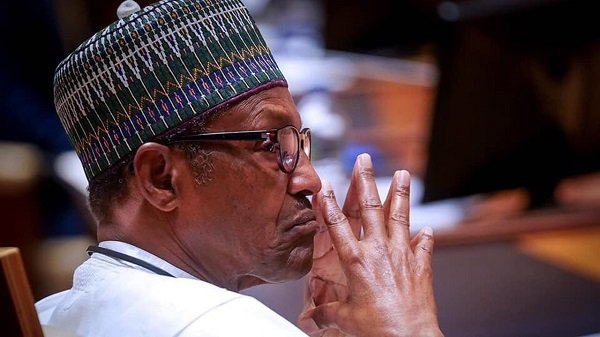
Coup talk and echoes of a banana republic, By Azu Ishiekwene

These days, it seems all right to play with fire. The blaze started like a solitary spark in Mali in August when the streets, the elite and jihadists banded to remove President Ibrahim Boubacar Keita. 

The former president had discarded election results and written a version that tightened his grip on power. How he thought he could reinvent the Mansa Musa legend in a country riven by violence and poverty only he can tell. Outside the capital, Bamako, however, it was clear that Keita’s ambition was dead on arrival, awaiting funeral. And, of course, he didn’t last to tell the story.

To this day, efforts by the 15-member Economic Community of West African States (ECOWAS) to remove the military regime that sacked Keita, or even get a firm handover date commitment, have failed. You can choose when to have a military government, but often, you can’t decide when, or even if, they would leave.

Before the coup in Mali, West Africa had been coup-free for nearly a decade, with the exception of Guinea Bissau. 

Apparently, soldiers in Niger, Mali’s eastern neighbour, had their own plans as well. On the eve of the swearing-in of President-elect Mohamed Bazoum, they struck, but failed. A government spokesperson described the attempt as a “cowardly and retrograde” act, but the same ECOWAS which rallied to chase away The Gambia’s Yahya Jammeh four years ago when he wanted to steal an election, barely said a word. 

To compound the region’s misery, Chad happened. The military coup was partly as a result of President Idriss Deby’s misrule and mainly as a result of the destablisation of the Sahel and the Chad Basin by ISWAP elements from Libya. 

Like ECOWAS, the African Union (AU), has also been silent. France, weeping more than the bereaved, didn’t mind the hypocrisy of defending Deby’s repressive record and his son’s illegitimate takeover, because clearly, French financial and strategic interests were worth the crocodile tears. Within nine months a region that had witnessed relative political stability recorded three military coups, two of them successful.

What started as a spark in Mali is slowly growing into a wildfire. And now, a section of public opinion in Nigeria, a regional powerhouse, is that it might not be a bad idea to light a fire from the neighbourhood to quench the current blaze of domestic problems.

Why is Nigeria playing with fire? How did we become so desperate and so overwhelmed by the bad examples from our neighbours that copying them now appears to be only where salvation lies? 

Robert Clarke, a senior advocate of Nigeria, swore by his father’s grave last week, that if things continued the way they were, he could not guarantee that Nigeria would survive another six months. His apocalyptic view may have been exaggerated, but his concern is not. 

Kidnapping for ransom has become a deadly game with dozens of school children in and out of dormitories as targets. A foreign newspaper recently described Nigeria as a bandit country, with little distinction between bandits and negotiators.

Since January, dozens of security men have been killed in violent attacks, while police stations and correctional centres have been set on fire and destroyed with hardly a record of anyone held to account.

On top of this, Boko Haram has planted flags in communities less than two hours’ drive from Abuja, the federal capital, and is reported to be collecting taxes and even distributing “relief materials” in some communities. Where Boko Haram is not running amok, ethnic militias have seized the space, issuing ultimatums, imposing curfews and generally behaving like an alternative government.

Kaduna State in the North west, which has the highest concentration of elite military institutions in the country, has been so badly devastated by the spate of deadly clashes, kidnappings and banditry, that Governor Nasir el-Rufai suggested that schools should relocate close to military bases. But anyone who has seen the fortification around these bases will know that even the bases are struggling to save themselves.

In the midst of this, President Muhammadu Buhari’s government appears bereft, divided against itself, weary of issuing condolences, but not ashamed of being condoled with. The government is lost between hijackers and incompetents. Not a good place to be.

That should worry anyone and Clarke is right to fear the worst. But agreeing, as most members of the elite now do, that Nigeria is in serious trouble, besieged by echoes of what has brought its neighbours to their knees, does not mean the worst would happen. Nor does it suggest that a military coup is desirable or viable. 

Not because the military’s knee-jerk promise of loyalty means much, but for two main reasons: one is the enlightened self-interest of the military itself, and two, is that state institutions and civil society have been severely weakened, and ethnic and religious passions dangerously inflamed. With the proliferation of arms among rogue elements wearing different hats, the military cannot prevail without the country potentially dissolving into fragments.

In pre-1999 Nigeria when soldiers ruled, they held power without being accountable. At first, they didn’t care, hiding behind the vague idea of “national interest and corporate survival” as the main reasons for seizing power.  

As time went on and it became clearer that they tolerated criticisms mainly as a small price to pay for the large amounts of money they were stealing, they began to clamp down on civil society and became more hostile and intolerant. 

By the end of the Cold War and with increasing internal pressure and demand for change, soldiers had had enough. But not before Nigeria’s peacetime generals and their acolytes emerged, discreetly below Forbes’ radar, as some of the richest men on the continent.

Democracy has made them even more prosperous, and with less headache that comes from being at the political helm. Today’s military top brass is speaking in cryptocurrency, fat bank accounts, prime landed assets and foreign stock options. Rocking the boat is too high a price.

With chunks of the trillions of naira set aside for the prosecution of the endless war on insurgency in the last over one decade ending in private military pockets, only mad officers would make a coup. For what?

Also, the country is so broken along ethnic, tribal and religious lines with light arms and ammunition per capita nearly tripling in five years, that militias with secessionist agenda may prove far more difficult to handle than any ambitious officers may reckon. And that’s not adding Boko Haram and the current wave of banditry to the messy pile. 

The hubris of a potential coup is exaggerated. The chances of Mali or Chad happening in Nigeria are zero. What should keep the country awake at night is not a threat from the army but the surge of poverty, hopelessness and lawless groups that could supplant both the military and civil society together. We’re mutually vulnerable.

Former US Ambassador to Nigeria, John Campbell, is right that the Nigerian elite is fed up with Buhari’s government. Those pretending otherwise are mostly hypocrites or folks determined to be misled. Also, calls for Buhari to resign are futile. Those calling for his resignation know he won’t, and they too, would not resign if they were in his shoes. But it’s foolish to think that a military coup is an option. 

The value of the current frustration is that it must not be invested in short-cuts or quick solutions. Instead, it should make citizens wiser, and perhaps, more painstaking in choosing the next leader in two years’ time.

•Ishiekwene is the Editor-In-Chief of LEADERSHIP

Did The Pandemic Break Bill and Melinda Gates?

By Bamidele Ademola-Olateju

After Vice President Al Gore lost his bid for the White House, their marriage cracked and he and Tipper went their separate ways. I was so crushed and hurt by their divorce. To me, they were the ideal couple, their divorce was so unexpected that it taught me great lessons on relationships. It eroded my confidence in the resilience of marriage. I have been with Uncle Demi for 34 years and married for 29. Through my marital journey, I have learned a lot of lessons. I have rejoiced at my fortune at marrying a good man. Yet, I refuse to discuss marriage as an authority because of the Gore’s divorce. If Tipper and Al can split, who can’t?

The Bezos were first in this new Billionaire epochal divorces. What that shows is that money can complicate marriage either for the lack of it or for too much of it. It also tells us that it does not matter who we are and what we have achieved; relationships are difficult. It requires a lot of nurturing and tendering to thrive. Dealing with another is fraught with issues given individual differences.

In the 29 years since I have been married, I have come to know that marriage and love are two different things. Some have both. Others have one or the other while some have none. What sustains a marriage? My answer is not love and I have no apologies for that. My answer is unequivocal. What keeps a marriage is your ability to manage familiarity and sameness. Can you handle familiarity? Love is a different kettle. What sustains love is tolerance, mutual respect and understanding.

I believe the Pandemic buried the Gates’s marriage. These days, most marriages survive because couples spend most times apart at work. A reflection on our hunter and gatherers life, shows that, finding food kept us busy. When we developed into agrarian societies, we kept working for food, only going back home to have sex when we can and sleep. Same with the industrial revolution, at the time, we needed more brawn than brain to power the engines. All that is fading! Now, ideas rule world. Technology drives everything. The iron triangle of sex, marriage and child bearing has been dismantled forever by contraception. With that done, women can work, make money, decide to have sex without getting pregnant and pursuing an independent destiny. Worse, men are losing testosterone.

Midlife is a confusing time. With so much going on, there is no manual on how to navigate it. Once children are grown, women often find themselves alone, helpless, rudderless and with a diminished sense of purpose. With same education as a man, if not better, what should she do? That is when women become Church workers and prayer warriors. For those who are not cut from that cloth, it is A very confusing phase.

The Pandemic highlights human emptiness regardless of socioeconomic status, our lack of real control of our lives confronts us, it forced spouses to stay together and notice the flaws that were overlooked for one reason or another. It forced a reckoning. A reckoning no money in this world can prevent.

Many of us are up there in the Maslow hierarchy of needs. Bread and butter is no long an issue. Shelter and esteem stuff were done with at birth or sometimes in early adulthood. What we struggle with is purpose, meaning, self-actualization. Covid-19 revealed us as thoroughly impotent. It forced a search for meaning, purpose and happiness.

I can hear that voice pounding my brain that Bill and Melinda are actualized. That they have committed billions to philanthropy and built it from scratch. I know. I understand. Since their children became adults, what else? Have they had to stay at home facing themselves since they were married? Bill was always working. Do they really know each other? Think local, how many of Nigeria’s richest has a happy wife? How many has a wife at home? Women want attention and some money. Money can’t replace that attention.

I have been telling my fellow women, if you want your marriage to survive, invest in a hobby or hobbies in middle age. Volunteer. Keep your friends and schedule time with them the way men do. If you don’t, you will get bitter and angry when the children are gone. Midlife is tough when you are not in a circuit. Build one today. I wish the Gates’s well in this new phase. May they find what completes them and gives them peace, joy and happiness.

“A 95-year-old man just became the oldest organ donor in US history”- CNN report

A woman who is recovering from a liver transplant not only has a new lifesaving organ, but one that made history.

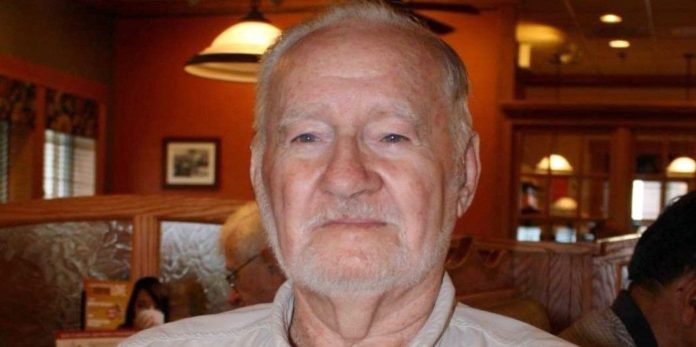
That’s thanks to Cecil Lockhart from Welch, West Virginia, who died at age 95 on May 4, making him the oldest organ donor in United States history, according the Center for Organ Recovery & Education, which coordinated the recovery of the liver.

The previous record for the oldest donor was a 93-year-old, according to the United Network for Organ Sharing.

“CORE is incredibly proud to have been able to make this historic organ donation possible,” said CORE President & CEO Susan Stuart, in a news release.

“This landmark in the field of transplantation is just another example of CORE’s pioneering legacy and commitment to innovation, which, over the last 40 years, has given 6,000 people in the United States the opportunity to save more than 15,000 others as organ donors.”

▪︎Inspired by his son

Lockhart’s family said he wanted to become an organ donor after his son, Stanley, healed the lives of 75 people through tissue donation and restored sight to two others through cornea donation after he died in 2010.

“When my brother was a donor after he passed away a few years ago, it helped my dad to heal,” said Sharon White, Lockhart’s daughter.

“Today, knowing his life is continuing through others really is helping us through our grief too.”

Lockhart’s son-in-law, Bill Davis, told CNN that Lockhart was a giving individual throughout his life. He served as a corporal in the US Army during World War II and was a coal miner for more than 50 years.

The pandemic disrupted organ transplants. But these three siblings aren’t giving up

“Anything he could do to help people he did. And this is just a way he’s continuing to help people after his time on Earth is finished,” Davis said. “If we could all be that way, I think the world would be a little bit better place for us to be in.”

At Lockhart’s funeral, his family asked everyone to register as an organ donor to honor his memory. Davis said some people indicated to him that they would answer that call, inspired by Lockhart’s ability to save a life at age 95.

▪︎How to become an organ donor

While many people believe there is an age limit associated with being an organ donor, UNOS chief medical officer David Klassen said no one is too old or too young to donate.

“Every potential donor is evaluated on a case-by-case basis at the time of their death to determine which organs and tissue are suitable for donation,” Klassen said. “Cecil’s generous and historic gift is a perfect example of that.”

As of February, more than 107,000 people are waiting for a lifesaving organ transplant in the US and 17 people die each day waiting for a transplant, according to organdonor.gov.

One donor can save up to eight lives by donating a heart, two lungs, a liver, pancreas, two kidneys, and intestines.

A CORE spokesperson told CNN that while Lockhart was not registered as an organ donor, he was able to donate his liver because he had discussed his wishes with his family.

While expressing the desire to donate organs with family allows someone to donate, CORE encourages people to register as a donor to ensure they are able to make that impact.

You can do this by filling out a simple registration form, which asks for basic contact information and the last four digits of your social security number. (CNN)

Adebanjo: Buhari still in office because Nigerians are over-tolerant of despots

Ayo Adebanjo, leader of Afenifere, a Yoruba social-cultural group, says President Muhammadu Buhari will not be in office if Nigerians are not “over-tolerance of despots”.Advertisement

THISDAY reports that Adebanjo spoke on Tuesday during the 95th birthday celebration of Reuben Fasoranti, former leader of the group.

Noting the spate of insecurity in the country, Adebanjo said the Buhari administration has failed Nigerians.

“I have told them that in a better and civilised country, he should have gone long ago. If he has self-respect, he should have gone because everything has to fall,” Adebanjo said.Advertisement

“What is he presiding over? Is it over corruption, security, education? Law and order have broken down in the country for the past three years. It is only because Nigerians are over-tolerance of despots; that is why he is still there.”

The Afenifere leader said the youths have also failed the country, adding that they “should be ashamed of themselves”.

“The younger generation has failed the country. The country was not as bad as this when we were demonstrating for self-governance,” he said.Advertisement

“They want the old men to fight their cause for them. Why should people like me be in the trenches at 93 and Baba Fasoranti at 95? Where are those in their 40s and 30s?

“When we were at their age, we were in the streets, at Lagos, London, everywhere.

“You are PDP in the morning, APC in the afternoon and SDP in the evening, and they say they are young; the youth should be ashamed of themselves.”

Credit:TheCable

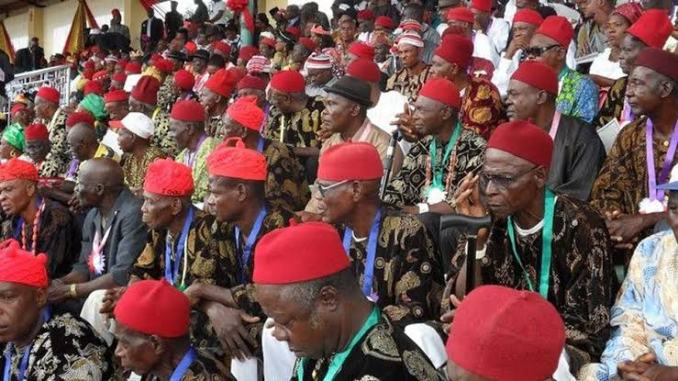
CP Odumosu, Ndigbo are not Nigeria’s problem

By Ikechukwu Amaechi

In his famous 1984 book titled, The Trouble with Nigeria, legendary novelist, Chinua Achebe, made a profound statement. “Nigerians of all other ethnic groups will probably achieve consensus on no other matter than their common resentment of the Igbo,” he wrote. Some people took umbrage, accusing him of overgeneralization.

But Achebe who towers very high in the pantheon of novelists that elevated the delicate art of storytelling to the realm of prophecy knew what he was talking about. He wasn’t given to frivolities and never used words carelessly. While it is not true that individually, every Nigerian is involved in this conspiracy against Ndigbo, and Achebe didn’t say that either, there is no doubt that scapegoating Ndigbo for Nigeria’s woes is a national pastime. The tendency of reducing every national problem to an Igbo problem is rather too apparent for any discerning observer not to notice.

The 2020 #EndSARS protest by Nigerian youths against police brutality was suddenly framed by some devious people as a ploy by the Igbo to destroy Yoruba commonwealth even when most of the vandalised private businesses, particularly on the Lagos Island, belonged to Ndigbo. Without any proof, some were already baying for Igbo blood until well-meaning Yoruba elite intervened to save their skin.

Anyone who is still in doubt of the veracity of Achebe’s claim should just pause and reflect on the frightening spin that is gradually but inexorably being put on the ravaging insecurity in the land and it will be evident that Nigeria is a country where prejudice, particularly against the Igbo, oils the wheels of governance.

Suddenly, the insecurity that has left the Northeast desolate and reduced Nigeria to a banana republic is being framed as a Southeast problem. The National Security Council that has been clueless as to how to tame the monster rose from a meeting on Tuesday claiming to have found a secret formula to quell the agitation in the zone. Meanwhile, the Southeast has no representative in the Council that took that all-important decision.

A day earlier, Lagos State government organised a security summit attended by Governor Babajide Sanwo-Olu and other high-ranking state officials, where, out of the blues, the Lagos State Police Commissioner, Hakeem Odumosu, accused members of the Indigenous People of Biafra (IPOB), and by extension Ndigbo, of plotting to launch attacks in Lagos State.

Delivering a paper on ‘Appraisal of Security Situation in Lagos State,’ Odumosu alerted Lagosians of an impending plot by the IPOB to attack what he called soft targets in the state. It wasn’t even an allegation. He was emphatic and unequivocal. And because he had convinced himself that the plot was real, he disclosed that the threat by IPOB has been put on the radar of the Lagos State Police Command’s intelligence gathering and other security services. He didn’t say what the soft targets were. There was no shred of evidence to prop the incendiary claim, knowing full well how combustible the Nigerian situation is at the moment.

But that was not his problem. He knowingly flew a very dangerous kite to achieve a sinister motive, which is to pitch other ethnic nationalities in Lagos, particularly the Yoruba, against the Igbo. He was deliberately setting Ndigbo up.

All that is left now is for some fringe elements to cause mayhem in Lagos and Ndigbo will pay the price. Even when fringe elements don’t act, a vindictive government whose capacity for mischief is unmatched as it played out during the #EndSARS protest, has set the stage. All it needs to do now is unleash state sponsored hoodlums on the state whenever it chooses and the Igbo will be fall guys.

Odumosu also said the Lagos State Police Command had taken note of threats by agitators of Oodua Republic and other Yoruba separatist groups, claiming further that 24 of such groups have been identified.

But it was apparent even to the uninitiated that throwing in the so-called threat by Oodua agitators was a carefully calibrated decoy to mask the intent of his allegation, which is to instigate the Yoruba against Ndigbo in the Southwest, particularly in Lagos. But Odumosu owes Nigerians an explanation. He must present the evidence he has that Ndigbo are plotting to attack Lagos, a state where they have over 60 per cent of all their investments in Nigeria.

Expectedly, Daily Trust, which has been making unsubstantiated allegations of northerners being killed in the Southeast while ignoring the verified massacre of Ndigbo by herdsmen in Nimbo, Enugu State, Ebonyi and all parts of Igboland, came out with the screaming headline: “IPOB plotting to attack Lagos, says CP.”

The allegation is as worrying as it is absurd. The message is incendiary. It was ethnic profiling at its worst, and unbecoming of a security chieftain of Odumosu’s standing.

I don’t speak for IPOB and I believe Nnamdi Kanu’s bombast is unhelpful. But I have sympathy for their struggle, which is a cry for equity. As the 17 governors of Southern Nigeria who met in Asaba on Tuesday affirmed in their communique, “the peoples of Southern Nigeria remain committed to the unity of Nigeria,” but it must be “on the basis of justice, fairness, equity, oneness and peaceful co-existence between and among its peoples with a focus on the attainment of shared goals for economic development and prosperity.”

Without these, there will be no peace in Nigeria. Ndigbo will only defend their turf if need be but they don’t go about destroying the hard-earned assets of other people. Ndigbo love life and they live it to the fullest. They create wealth and those engaged in the business of creating wealth hardly destroy same. Ndigbo don’t live in forests. They build cities and live in mansions. So, they hardly fit into the profile of those that have made Nigeria a good-for-nothing country, a pariah in the comity of nations. Blood is sacred in Igboland. Ndigbo are not in the business of hacking pregnant women to death and opening their wombs to smash the heads of the fetuses.

That is why Odumosu’s claim should trouble all Nigerians of good conscience. And Nigerians of good conscience, if such people still exist in this febrile environment, should speak out because, as Thomas Jefferson, the third president of the United States, once noted, “All tyranny needs to gain a foothold is for people of good conscience to remain silent.” If they don’t, they will be complicit in whatever evil plot that informed the allegation.

It is good that Nnamdi Kanu pushed back immediately and dismissed the allegation as “total falsehood.” Taking to his Twitter handle, he described the allegation as a plot to fuel division. But he made a disturbing allegation.

“The public is hereby notified that the allegations that IPOB is plotting to attack Lagos is a LIE,” he tweeted. “Lagos State CP, Hakeem Odumosu, who made the allegation is a former CSO to Tinubu & their intention is to fuel division between Yorubas & Biafrans. It won’t work. This is not 1967!”

Could this allegation have anything to do with 2023 politics and the Igbo quest for the presidency? For now, the answer blows in the wind. But it will be unfortunate if Odumosu is motivated by politics to make this allegation. Playing politics with security is a dangerous mix.

But it is heartwarming that many Yoruba are seeing Odumosu’s allegation for what it is – a malicious kite. In their very strong pushback, pan-Yoruba groups that included Oodua Nationalist Coalition (ONAC), Agbekoya, Oodua Peoples Congress (OPC-Reformed), Oodua Liberation Movement (OLM), Yoruba World Congress, (YWC-Lagos State Chapter), Oodua Women Coalition (OWC), Network for Yoruba Alliance (NENA), and Oodua Koya, (AOKOYA), raised very pertinent questions.

Noting, significantly, that Odumosu spoke for the police high command in Abuja, the coalition frowned at his public declaration.

“We are worried that since the police already claim to be in possession of what appears to be a confidential information, the proper thing would have been to discreetly go after the IPOB members to arrest them unless the police is not sure of its information,” they declared.

Most importantly, the groups made two valid claims.

First, they observed that “the police statement carries the possibility of being misinterpreted as an Igbo plot against Lagos and Yoruba people. This is dangerous given the fragile nature of Nigeria.”

Secondly, they expressed their deep concern that by publicly levelling the allegation against IPOB, the Police high command “tempts the prospect of setting Yoruba in the South West against Igbo. This is very unfortunate at a time that state institutions are increasingly being turned to instruments for pursuing primordial ethnic interests.”

It was also heartwarming to hear them declare unequivocally that, “The Yoruba will work never to allow this to happen.” That shows that the country has not lost all despite the desperate attempts by malcontent characters.

Ndigbo are not Nigeria’s problem. Making them scapegoats of the failure of governance in Nigeria will fail. They are peace loving. A people that have businesses in all the nooks and crannies of the country cannot at the same time be instigating violence from which they are bound to suffer most. That is the pastime of those who have nothing to lose.

Actually what is Bini about Ikwerre??

By Livingstone Wechie

Recently, just a few years ago, Ogbakor Ikwerre wrote Bini Kingdom a letter seeking to identify with them as to establish an acclaimed Bini Ancestry but in response, Bini stated that there was no available evidence that Bini has anything to do with Ikwerre ancestrally. This fact is on record but just to state that we must be careful as a people not to allow the quest by some for political correctness cast us into the bottomless pit. Nobody and I did not say Ikwerre is Igbo but it is doubtless that Ikwerre as a multi ancestral ethnic block has most of its ancestry traced to Igbo. All the crap that Igbo hates Ikwerre is just a post civil war narrative and script and has never worked for us.

Do you know what is called Cabon dating, anthropology, archaeological investigation or DNA of a people? It is there for us to apply further beyond rabblerousing. By the way, assuming without conceding, let us look at it, what Bini documents have you studied or can anyone reference that has Ikwerre or Iwhuoroha as you call it as validating the purported Ikwerre-Bini origin? What is Bini about Ikwerre? Are you aware that Bini people have denied any link with Ikwerre on record? Ironically, Elele people are in Court in Benin claiming that they own Bini and not the other way. They claim strongly that they were in the land of Bini as owners before the arrival of Bini people in that history. It will be an interesting legal engagement. Are you also aware that there are lots of Ikwerre prominent families that have traced their ancestry to Ngwa, Arum, etc in Igbo land?? Are you Aware that Ohaji in Imo state is an Ikwerre clan which Prof. Otinti affirmed in his book History of Ikwerre Volume 1? Do you know about Ikwerre-Ede in Imo State?? When you struggle to assert an erroneous Bini ancestry or kill the Igbo roots, you raise the flawed argument of abandoned property yet for the records:

  1. Sir Jackson Mpi, first and last Ikwerre to be conferred with Knight of the Order of British Empire, OBE, by Queen Elizabeth II of England in 1960, identified himself as Igbo. From the ancient Kingdom of Isiokpo, Sir Mpi worked tirelessly for Igbo advancement.
  2. Dr Obi Wali was the first Ikwerre PhD holder, senator and university lecturer. He was also the only Ikwerre in the 1978 Constituent Assembly where he was selected one of the 50 Wise Men that drafted the 1979 constitution. The great Dr Wali identified fully with his Igbo heritage and was gruesomely assassinated defending it.
  3. Okogbule Wonodi, first Ikwerre registrar of any university, first and only Ikwerre poet and Paramount title Holder of Eze Ohiaemeru. Ohiaemeru, where you have present-day Comprehensive College in Borokiri, was his ancestral home before the British vacated them between 1913-1923. Wonodi remained a respected member of Nzukor Igbo and Ohanaeze Ndigbo till the end of his life.
  4. Patriot Emmanuel Aguma was former Mayor of Port Harcourt. As Principal of St John College, Diobu, he was the first Ikwerre to head any college. One of six pre-independence Ikwerre University graduates, former administrator of Port Harcourt Province in the defunct Peoples Republic of Biafra, first Ikwere minister in 1979, Aguma remained a member of Ohanaeze Ndigbo.
  5. Emmanuel Oriji was a respected local government administrator, traditional ruler, a commissioner in old Rivers and core Igbo nationalist. The immediate past Deputy Secretary-General of Ohanaeze Ndigbo, Chief Isaac Wonwu, is an illustrious Ikwerre son from Elele. He is known to assert his Igbo identity. Equally valid, Chief Jackson Womenazu from Rumukrushi in the Evo Kingdom is a member of the Elders’ Council of Ohanaeze Ndigbo.
  6. In colonial documents, written when Igbos had no capacity to influence anything, Ikwerres also defined themselves as having Igbo ancestry. When Ikwerre leaders presented their case before the 1957 Sir Henry Willinks Commission, Wobo declared that Ikwerres were Igbos and Port Harcourt to Onitsha had Igbo links .

The cream of Ikwerreland have asserted their Igboness. Most illustrious sons and daughters. Tell me any Ikwerre whose CV can match those of Mpi, Wobo, Aguma, Wonodi, Dr Wali etc? Even the Ijaws that are not Igbos in any way worked closely with our Igbo counterparts. Amanyagbor of Kalabari was Adviser to Ojukwu on Political Matters,
The great SPU Ogan was Adviser on Traditional Matters. Sylvanus Cookey former VC of Uniport was in the Cabinet office of Ojukwu. He and Arthur Mbanefo were the only person in that office. This is why the likes of Alhaji Asari Dokubo have made frantic moves to establish their alliance with Ndi Igbo and the Biafra question. Need I talk about the strong structure of the ogoni block which has been enviably internationalised?? This is despite the fact that Obio-Akpor Local Government Area in Ikwerre land has more Crude Oil than the whole of Ogoni land. This is the record as verified in the NNPC. Where are we actually, what is the definition of our identity? What is our stake in the Nigerian project and what are our demands?? Is this how we want Ikwerre to die? By playing “be careful?

Untill Ikwerre does the needful to strongly establish its alliance with strong neighbours counterparts without prejudice, we are nearing extinction in many ways because of the abuse and misery contributorily brought upon us by our own political elites who have used our strength to trade their selfish political interests without empowering our people economically for the future. Ikwerre is one of the highest Oil rich ethnic nations and contributes among the highest barrels daily and in revenue to the federation account yet attempts have been made to suppress this fact and our own politicians curiously conspire to kill this basic advantage which should be one of our negotiating tools just because it is not in their selfish interest as they think. To them, no other Ikwerre sons and daughters must be Millionairs or Billionaires but come cap in hand. Shame!! . Let me ask a simple question, if anarchy or war breaks out today or this disputed Nigeria tears apart, where will Ikwerre be in the equation? Major ethnic blocks are busy forming cohesion and synergy for the future while we are still fighting identity crisis. We should better wake up and face reality. Anyone can chose to get primordial about these realities but we can not run away and expect to thrive by taking the back seats in almost everything.
=====================================
ABOUT THE WRITER:

LIVINGSTONE WECHIE
Is Ikwerre, a native of Nkpolu Oroworukwo Community, Rebisi, in the Port Harcourt City Local Government Area of Rivers State.

He is the Convener of IKWERRE PEOPLE’S CONGRESS (IPC) and the Executive Director, THE INTEGRITY FRIENDS FOR TRUTH AND PEACE INITIATIVE (TIFPI)

He is a Lawyer, Human Rights Activist and Researcher.

EXCLUSIVE: Amaechi soft-pedals on ‘unremitted’ N165bn claim, tackles Hadiza for ‘insubordination’

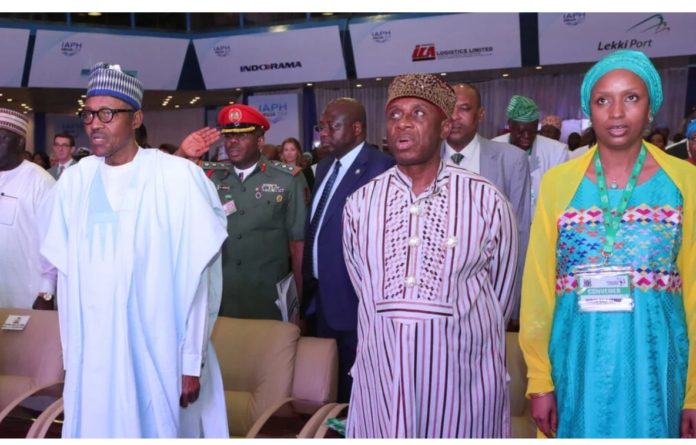
The war between Rotimi Amaechi, minister of transportation, and Hadiza Bala Usman, the suspended managing director of the Nigerian Ports Authority (NPA), has taken a turn, with the minister apparently dropping his claim that the agency did not remit an operating surplus of N165 billion to the consolidated revenue fund account (CFR).

A member of the administrative panel set up by Amaechi to probe Usman has told TheCable that the focus will now be “insubordination”.

“We are looking at two things. One, the suspended MD was in the habit of communicating directly with the president and bypassing the honourable minister. This is gross indiscipline and a breach of public service communication line. That is enough to get her sacked,” the member, who cannot be named, said.

“Two, the minister directed her to restore all Intels’ contracts that were suspended or terminated. What she didn’t know was that the president was in the know of it. She failed to comply. This is insubordination and she is not above discipline.”

However, TheCable learnt that Buhari withdrew his approval for the reinstatement of Intels’ contract after Usman wrote to the chief of staff, Ibrahim Gambari, to explain NPA’s position.

Gambari forwarded her response to Abubakar Malami, the attorney-general, for legal opinion.

Malami, TheCable understands, said the NPA was right and that no contracts were terminated or violated.

Buhari then withdrew his approval for the reinstatement of Intels’ contract and that is believed to have infuriated Amaechi, who accused Usman of insubordination.

He, nonetheless, was still able to get the president to approve Usman’s suspension and probe.

The insider further said: “If you look at the terms of reference properly, we are to examine and investigate compliance with the communication channel as obtained in the public service. Insubordination is not a small offence.”

The panel member accused Usman of bypassing the minister and dealing directly with the president despite a “clear reporting hierarchy”.

Asked about the N165 billion non-remittance claim, the member said: “Available evidence shows that the allegation may not be true… it is a mater of reconciliation of what the Budget Office thought should be the remittances with what the actual remittances should be.

“Since audits have been done over the years, there is obviously nothing more to that. It is not as if NPA’s monies are in private banks. Everything is with the CBN, so if there were no remittances, it is just about looking at NPA’s accounts with the CBN.”

Although the minister asked the eleven-member panel to “examine and investigate the procurement of contracts from 2016 to date” as part of the terms of reference, the source said it was going to be a “tricky job”.

“At NPA, any contract beyond N50 million for goods and services and N200 million for works are referred to the ministerial tenders board (MTB), which is headed by the permanent secretary of the ministry,” the insider said.

“If we go into probing contracts since 2016, we may end up probing the minister himself. About 70 percent of the contracts for capital projects go to the MTB, after which the minister presents them to the federal executive council (FEC), presided over by the president himself, for approval. We will check if all the procedures were followed, but I am personally not optimistic about that. The suspended MD, from indications, is a process person.”

A VERY PERSONAL WAR

Amaechi, who is one of the very few ministers with direct access to Buhari since 2015, has denied allegations that he is fighting a personal war with Usman, whom he nominated for the position in 2016 after working with her in the APC presidential campaign council.

Several reports have traced the “cold war” to the renewal of $1.5 billion channel management contracts in which the minister is said to have gone against a competitive bidding process in favour of companies nominated by him.

Amaechi has denied the allegation, insisting that he did not at any time seek to bypass the process.

However, he has recently been making a strong case for Intels, the ports logistics company which has several contracts with NPA.

Former vice-president, Atiku Abubukar, was a major shareholder in the company.

He has sold down his shares, complaining of a political witch-hunt.

Amaechi got the president to approve that all Intels’ contracts that were “terminated” by NPA be restored.

Gambari then wrote to Usman to ask for details on the contracts as highlighted by the minister.

‘INTELS CONTRACTS NOT TERMINATED OR SUSPENDED’

Usman, in her response to Gambari, denied that any contract was terminated or suspended.

Excerpts from her response read thus: “Concession agreement for Onne Terminal A and B in Rivers Ports, Rivers State – This Contractual agreement remains valid and has not been terminated. It commenced in 2005 and will come to an end in 2030 (Copies of the agreement attached herewith as annex 1).

“Concession agreement for Calabar Terminal A in Calabar Port, Rivers State – This Contractual agreement remains valid and has not been terminated. It commenced in 2005 and will come to an end in 2030 (Copy of the agreement attached herewith as annex 2).

“Concession for Warri New and Old Terminal, Delta Port, Delta State – This Contractual agreement remains valid and has not been terminated. It commenced in 2005 and will come to an end in 2030 (Copies of the agreement attached herewith as annex 3).

“Service Boat Operations Managing Agent – This contract commenced in June 2007 with a review of an extension of 10 years in 2011 to culminate in August. The Authority had in 2017 served INTELS with a notice of termination for its refusal to comply with the TSA policy of the Federal Government. Following the receipt of the termination notice, the Company complied with the Policy and a supplemental agreement was signed to recognize the compliance to TSA and the notice of termination was accordingly withdrawn. It is important to note that the agreement with INTELS on this service was not  terminated but it reached the end of its contractual period in August 2020. In compliance with the Public Procurement Act, the Authority in Dec 2019 initiated a public tender process in anticipation of the expiration of the contract for the appointment a contractor to provide the Authority with that service. INTELS alongside other bidders submitted their bids to qualify for the tender in line with the criteria spelled out in the public advert. INTELS violated one of the criteria advertised for the tender process and was accordingly disqualified. The tender process proceeded accordingly and the companies that scored the highest were prequalified and the outcome of the transparent tender process was forwarded to the Federal Ministry of Transportation for onward transmission to the Federal Executive Council (FEC) for its consideration. We are still awaiting feedback from Federal Ministry of Transportation on concluding the tender process. It is pertinent to note that the Federal Government is losing revenue due to non-conclusion of the tender process to engage a contractor for the service as currently no one is providing the service and the Authority is not equipped to do that. Upon disqualification in the tender process, INTELS initiated a court suit against the Authority to prevent the Authority from proceeding  with the tender process citing a debt owed one of their sister companies Deep Offshore Nigerian Ltd for the development of Onne 48 an amortization project whose payment will be derived from the revenue raised  from this service (this contract is explained in item 5 below). They filed this suit knowing fully well that the two contracts are not linked in any way as there is no clause in any of the agreements which states that INTELS has to be the collecting agent to enable payment of the construction work for Onne 48 or any debt arising from it. What the contract states is that payment for the construction of Onne 4 B will arise from revenues of service boat operation which the Authority will continue to service irrespective of who the collecting agent is. (copies of  the  agreements, letter to FMoT on the tender process are attached herewith as annex 4).

“Construction of Onne 4 – This contract was signed in 2011 for the construction of Onne 4 which comprises of berths (9, 10, and 11), road networks and other infrastructure in Onne Port at a cost of $370.4 million USD. The payment for the construction work will be through amortization from revenues raised from the service boat operations. This contract commenced in April 2011 for a forty month period which is deemed expired and not terminated. The project works as detailed in the agreement was completed. (copy of agreement attached as annex 5).

“Construction of Onne 4B – This contract was signed in 2013 for the construction of Onne 4B which comprises of additional berths, dredging and reclamations, shore protection, road infrastructure in Onne Port at a cost of $2.79 Billion USD with a completion period of 6 years for the works and a concession of 25 years of the completed works to INTELS. The payment for the construction work will be through amortization from revenues raised from the service boat operations. The project works were suspended in 2017 with mutual agreement between the Authority and INTELS as there was a need to make payment for works that had already been done and payment not made which had become a huge debt burden to the Authority. The Authority then proceeded to reconcile pending certificates for work done to enable payment through the revenue source. This contract was suspended with mutual agreement not terminated. Following the expiration of the contract for the service boat operations, the Authority has confirmed to INTELS that it remains committed to discharge its debt obligations and will do so irrespective of the expiration of INTELS contract as service boat operations management agent. (copy of agreement attached herewith as annex 5).

“Utilization of berths 9, 10 and 11 – There was never a contractual agreement on relationship between the Authority and INTELS on the utilization of these berthsThe Authority offered these berths for use to INTELS from 2013. In 2018 it was discovered that INTELS had not been making the payment for the use of the berths for the period of 5 years and was also not putting the berth to optimal use. The Authority requested for INTELS to make the payment for the use for the 5 year period it had been using the berth following which it withdrew the offer it had given INTELS for the use of the berth due to their attendant delay in making the requisite payments required and its lack of optimal use of the facility. It is pertinent to note that no agreement was signed with INTELS for the use of the berths but only an offer letter which was withdrawn. The Authority consequently offered the berths for use to an internationally renowned container handling company Messer International Container Terminal Limited for use of the berth for discharging container cargo which the Authority requires urgently in order to decongest Lagos Ports. The company has duly signed an agreement with the Authority for the use of the berths and has commenced installation of container handling equipment when INTELS filed a court suit against the Authority challenging the withdrawal of the offer for the use of the berths. We are currently in court on the matter.

“Managing Agent for the maintenance and operations of water supply at Onne – The Authority appointed INTELS to manage its water treatment plants at Onne Port in 2018 for a period of 5 years. This contract is subsisting and has not been terminated. (copy of agreement attached as annex 7).”

Credit: TheCable

What is the Nigerianness of Ndi Igbo? By Victor Terhemba

In recent media reports, the governor of Kaduna state, Mallam Nasir El-Rufai, was reported to have said the Igbos cannot get the presidency by “insulting everyone and demanding for the presidency”. Sometime last year in 2020, the respected late Isa Funtua while a guest on Arise TV Morning Show said that the Igbos should not expect to be given the presidency, that they must participate. What did he mean when he said the Igbos must participate? Because to the best of my knowledge, the Igbos have always participated and are fully involved in Nigerian politics. 
Even the current president toured the entire states of the South East to campaign for votes and he got votes from that region. That he got few votes doesn’t mean that they didn’t participate by voting for another party or candidates. The Igbos overwhelmingly voted for Late President Umar Musa Yar’Adua, a Fulani man from Katsina state, in 2007. 
Since the events of 1966 and the subsequent civil war that was not unconnected to the events of 1966, the Igbos in Nigeria have largely been relegated to the fringes by the other two major ethnic groups. Since then, no Igbo man or woman has been considered good enough to lead the country. Some have sworn they will never vote an Igbo man. Some people from the north have revealed that they were taught to hate the Igbos ethnic groups.

The Igbos have been pilloried at every given opportunity to prove their Nigerianness. At every turn, the Nigerianness of an Igbo person is called to question. Every time, the Igbos have to prove they are Nigerian enough before they can be considered for certain privileges, especially, for political positions. The other two major ethnic groups, the Yorubas and Hausas, have, themselves, not proven to be more Nigerian than the Igbos. What is the crime of the Igbos? The coup of January 15, 1966, and the Nigeria – Biafra civil war. But are these valid reasons for the discrimination and suppression of the Igbo race? Are these two events justifiable for the victimization and neglect that the Igbos have suffered in Nigeria? Let me try to disprove these notions and make nonsense of those arguments with the chronological order of historical events.

To begin with, the Nigerianness of Sir Ahamdu Bello, one of Nigeria’s founding fathers, was never called into question despite his own open admittance of his hatred and resentment towards the Igbos who are fellow Nigerians like him. Ahamdu Bello went further to say, as premier of the North, he would rather “hire an expatriate than hire an Igbo man”. These statements are not Nigerian-like but Ahmadu Bello is considered more Nigerian than any Ndi Igbo person.

They say Ndi Igbo cannot be trusted and must always prove their Nigerianness because 54 years ago, the South Eastern region tried to secede from Nigeria and form a new independent state of Biafra. But historically, the Igbos were not the first to demand secession from Nigeria, the North was. After the July coup of 1966 in which many Igbo officers were killed, including Aguyi-Ironsi who was head of state then, by Northern soldiers, they (Northern soldiers) demanded that the North secede from Nigeria. History has it that there were chants of “Araba” by the Northern soldiers in Lagos and Ibadan. As a matter of fact, many of the soldiers and Northerners had already relocated to the North.
These are two secessionists but hypocritically, it is the Igbos that have to prove their Nigerianness every inch of the way while their northern counterparts are the true Nigerians. After being prevailed upon by senior Northern elites and civil servants to remain a part of Nigeria, the Northern soldiers were rewarded with the Head of state position.

Events that preceded the civil war birthed the fictitious crimes of the Igbos. The supposed crimes of Ndi Igbo started in January 1966 (although, there has been deep resentment against Igbos even before then) when a bunch of Nigerian soldiers, comprising mostly of Igbos officers, decided to truncate democratic rule in the country by violently removing the democratically elected government they described as corrupt and incompetent through a coup. This adventure led to the death of senior Northern political and military leaders such Sir Ahamdu Bello, Tafawa Balewa, Zakariya Maimalari, amongst others. History accounts mention that there was some sort of excitement from Nigerians when news of the coup filtered into the society but by the next morning, the coup was tagged as an Igbo coup to eliminate top leaders of the North.
It did not impress on those who sold this narrative that Chief Festus Okotie-Eboh, a South Easterner, was also killed in the violence. This fact was totally ignored. It also didn’t matter that even Aguyi Ironsi was marked by the coup plotters but only survived because that night he was away on Lagos waters attending a boat party. It also didn’t matter to the disingenuous inventors of this mischief that the coup also had the active participation of Northern soldiers as collaborators.
I think it is significant to point out that the coup of January 1966 was nicknamed an “Igbo coup” but the coup of July 1966 was nicknamed a “counter-coup”. The use of words is very powerful, especially when it is deliberate.

How can we ask the Igbos to prove their Nigerianness when it was the Northerners who carried out a murderous pogrom in 1966 to cleanse out Igbos from the North? Igbos were massacred in their large numbers by Northerners who were on a rampage killing anyone that was Igbo or suspected to be Igbo. Yet, it is the Igbos who are asked to always prove their Nigerianness. Some of those who partook in the orgy of killings and massacre of senior Igbo officers have been rewarded with the highest positions in Nigeria to the indignation of the Igbos.

Those who claimed that they were fighting to keep Nigeria united by perpetrating massacres, rape, and wanton killings against the Igbos are considered more Nigerian than those who were fighting to preserve their lives and free themselves from the stranglehold of oppression and death. Many families, till date, live with the effects and scars of the Asaba massacre of 1967 committed by Nigerian soldiers.

We have a Nigerian president whose major trademark, aside from his gross incompetence, inefficient leadership skills, and lack of innovative ideas, has been nepotism. Through his actions, he has unashamedly shown a premium preference for his kinsmen and women cut from the same religious and ethnic cloth. A president who has made Nigerians poorer than he met them in 2015 when he assumed office. He continues to admonish Nigerians to live within their means while he superintends the shrinking of that means. While the country seems to be in the firm grips of terrorists, bandits, kidnappers, and other criminals carrying out senseless and avoidable killings, the president feels overwhelmed and can only plead with the criminals to cease further carnage.
This is a president known to have harboured, rewarded, and defended his friends who were known to be corrupt and terrorists’ sympathisers. These are not the actions of a patriotic Nigerian; especially a Nigerian who promised his people economic prosperity and safety. Yet, this president has never been asked to prove his Nigerianness. This president was once rewarded with the Head of State for committing treason in 1983 because he is more Nigerian than those soldiers of January 1966.

It is ironic that those who harboured (and still do) deep resentment against fellow Nigerians are considered more Nigerian than those they hate. Those who enjoyed and participated in the orgy of killing fellow Nigerians because they are Igbos are considered more Nigerian than their victims. It is ironic that those who committed the Asaba massacre of 1967, those who used hunger as a weapon to wipe out fellow Nigerians, are considered more Nigerian than others.

In the absence of truth and justice, we keep glossing over the real issues and continue with the pretentious belief that all is well with Nigeria. I have not known any society that has experienced peace and development in the absence of truth and justice.
There is nothing sacrosanct nor sanctimonious about the unity of Nigeria. If we harbour deep resentment against each other on the basis of ethnicity or religion, then why do we pretend that we are Nigerians with shared values and objectives?

To the politicians of South East, it is clear that they are not interested in the collective development of the Ndi Igbo community. To them, it is politics as usual. They hope that by kowtowing and pandering to the whims and caprices of the more Nigerian ethnic groups they will eventually be rewarded with a seat at the Presidency and be finally accepted as Nigerians.

Terhemba writes from FCT, Abuja.
He tweets via @VictorTerhemba 

TIPS