Home Blog Page 920

How FCMB sold a Joint Venture to AMCON in the name of non-performing loan: The court decides

By Stephen Azubuike

FCMB Ltd v. Ogbuefi [2021] 10 NWLR (Pt. 1783) 1

In 2007, one Hon. Chief Ogbuefi and First City Monument Bank Ltd (FCMB) agreed to do business and make some money. The nature of the relationship as evidenced by the documents executed and exchanged was that Chief Ogbuefi made an equity contribution of N40 Million in the expectation that FCMB will contribute N60 Million to make a total of N100 Million. This N100 Million joint contribution was for joint trading in stocks of blue chips companies which were to be exclusively managed by FCMB. Both Parties agreed that the profit realized from the N100 Million joint venture investment was to be in the ratio of 60% to FCMB and 40% to Chief Ogbuefi.

It was established that after Chief Ogbuefi made his contribution of N40 Million, FCMB failed to give him any information such as acknowledgement of receipt of the N40 Million equity contribution, record of purchase/sale of stocks, dividends/bonuses earned, etc., with regard to the joint business.

After several years with no communication from FCMB, Chief Ogbuefi was notified by a letter from FCMB that all FCMB’s rights in connection with the joint venture business had been assigned to the Assets Management Corporation of Nigeria (AMCON). Chief Ogbuefi later received a letter from AMCON demanding payment of the alleged outstanding loan obligation of over N58 Million.

Alarmed, Chief Ogbuefi engaged his lawyers to come to his aid. His lawyers approached AMCON over the matter. After a careful consideration of all that had transpired, AMCON washed its hands off the situation on the basis that, in reality, the relationship between FCMB and Chief Ogbuefi was not a banker-customer relationship but a joint venture. Accordingly, AMCON wrote Chief Ogbuefi confirming that the purported loan portfolio of Chief Ogbuefi assigned to AMCON by FCMB had been returned to FCMB. Clearly, AMCON understood the limits of its statutory mandate and acted in line. FCMB packaged a joint venture business arrangement as a loan transaction and sold it to AMCON in order to command the coercive powers of the Corporation. But it failed.

Consequently, the road to liability became as clear as a highway. Chief Ogbuefi dragged FCMB on that road through court action at the High Court of the Federal Capital Territory claiming several reliefs. On 19 October 2017, the trial Court upheld his case and dismissed the counter-claim filed by the Bank. The Court held that the relationship between FCMB and Chief Ogbuefi was a joint venture business arrangement and not a lender-borrower relationship. The Court delivered judgment in favour of Chief Ogbuefi against the Bank.

Aggrieved, FCMB filed an appeal which was unanimously dismissed for lacking in merit on 3 February 2021.

AMCON is commended for the role it played in scrutinizing the deal between Chief Ogbuefi and FCMB and rightly assessing its position on time. The trial Court and the Court of Appeal are also commended for the well-reasoned judgments.

It is ordinarily mysterious how a joint venture business translated into a loan transaction. Unraveling this mystery may be good for preserving the integrity of the banking system.

This article was first published August 26, 2021 by https://stephenlegal.ng/how-fcmb-sold-a-joint-venture-to-amcon-in-the-name-of-non-performing-loan-the-court-decides/

AUTHOR: STEPHEN AZUBUIKE is lawyer with expertise in Commercial Dispute Resolution and Technology Law practice. He is a Partner at Infusion Lawyers. He has successfully argued cases from the High Courts of various jurisdictions to the Appellate Courts on behalf of financial institutions, other corporate bodies and multinationals. He has worked with a number of startup tech companies. He tweets @siazubuike.

Rude Boy in a rude shock: Only one solution can save his marriage

By Stephen Azubuike

The marriage of Anita to Paul Okoye (AKA Rude Boy) of the defunct Psquare was, before now, well-admired considering the story behind the union, the period the marriage had lasted and how happy the couple appeared publicly. The couple was said to have dated for ten years. They thereafter tied the knot, and remained tied together for over seven years (with three kids) until the wife now seeks to untie the knot by judicial process.

Arguably, Anita devoted the fullness of her love to Paul even before he became a super star. This naturally entitles her to the queenship of his heart as one who loved unconditionally. Paul on the other hand is commended for finding true love in Anita and honouring her.

Photo Credit: Popu9ja

Anita claims the marriage has broken down irretrievably, meaning there’s nothing left to be salvaged except the millions she claims as monthly upkeep from Paul.

Typically, a divorce proceeding is a proceeding whereby the court looks at the case presented to confirm that the facts and circumstances warrant dissolving the marriage in accordance with the law; while necessary consequential orders are made to take care of other related issues like upkeep and custody. The law believes there is no point preserving a marriage that has broken down irretrievably. This is the reason irretrievable breakdown is the only ground a marriage under the Marriage Act can be dissolved. To breakdown irretrievably simply means that the engine of the marriage has damaged beyond repairs. This is what Anita is telling the court.

Several facts identified by law can support the claim of irretrievable breakdown of marriage such as denial of conjugal rights or failure to consummate the marriage, desertion, intolerable adultery, living apart for a continuous period of two or three years, terrible behaviour no one is reasonably expected to live with and inexplicable absence of a partner that leads to a presumption of death.

To succeed, Anita needs to prove any of the supporting facts in line with established legal principles. However, if Paul steps in and decides not to object to the dissolution of the marriage, the Court will have less troubles in granting their wishes.

The One Solution

Although Rude Boy might be in rude shock when served with the divorce papers from Anita, only one solution can save the situation if he desires to rescue the sinking titanic. That is, Mediation.

Mediation is one of the alternative dispute resolution mechanism that has awesome advantages especially when successful. One or more seasoned mediators (not necessarily marriage counselors) have the capacity to thoroughly lead the couple through a reconciliation process that will identify all the elements rocking the boat. Divorce proceedings, no matter how well conducted, can hardly ever reveal the underlying problems.

Where a seasoned mediator steps in, there’s hope. But should both parties unanimously decide to go their separate ways, then the law will guide the process of permanent separation. Interestingly, if they find love again and decide to remarry, the law will welcome them with a banquet.

While the public is feasting on the controversy, information available on social media can hardly reveal or represent the real problems between the former lovebirds. Through mediation, there is real hope.

At the risk of going religious, it is my personal belief, which I am constitutionally entitled to, that a couple who continually work for the good of the marriage and adores God’s presence in their lives will remain happy and successful, and no matter the challenge, they’ll come out victorious.

This article was first published on the  August 22, 2021 by https://stephenlegal.ng/rude-boy-in-rude-shock-only-one-solution-can-save-his-marriage/

AUTHOR:STEPHEN AZUBUIKE is lawyer with expertise in Commercial Dispute Resolution and Technology Law practice. He is a Partner at Infusion Lawyers. He has successfully argued cases from the High Courts of various jurisdictions to the Appellate Courts on behalf of financial institutions, other corporate bodies and multinationals. He has worked with a number of startup tech companies. He tweets @siazubuike.

Petroleum Industry Act is not a raw deal, By Aniebo Nwamu

My belief in the efficacy of market forces as the cure for voodoo economics remains unshaken. And so I welcome the Petroleum Industry Act (PIA) which came into effect this Monday. What irks me is its lateness in coming, and what I dread is its shoddy implementation. 

Twenty wasted years are enough proof of our lawmakers’ diligence. It was in the same year, 2001, that they set out to review the 1999 constitution which everyone agreed was riddled with flaws – it’s a constitution that lies in its very first sentence. Twenty years and several billions of naira after, the National Assembly is still “on top of the situation” or the situation is on top of the legislature.

But has the long wait really ended? Procrastination is the thief of time.  Even after the PIA’s enactment, minister of state for petroleum resources Timipre Sylva told us that fuel subsidy and the current pump price of petrol would stay “for now”. In other words, the government won’t obey its own law “for now”. A pronouncement by President Buhari on Wednesday wasn’t emphatic either. A nine-member steering committee led by Sylva has been given one year to work, suggesting that the new law may not be fully implemented until the panel concludes its work. So, the PIA may remain in the cooler — the law exists but its implementation has to wait. This is lawlessness.

Just like America’s misadventure in Afghanistan, Nigeria’s romance with “guided deregulation” of the oil and gas industry for 20 years may be ending badly for the country. We knew that fuel subsidy was not sustainable. We knew that state-owned refineries wouldn’t work efficiently. And we knew that public funds were being looted in the guise of subsidy and turnaround maintenance of refineries. Now we’ve been forced by threats of total economic collapse to do what we should have done 35years ago. How long shall we tolerate ineptitude?

Deregulation or liberalisation was a pillar of the Structural Adjustment Programme (SAP) introduced by the Gen. Ibrahim Babangida regime, but the policymakers chose to whitewash a fraud while killing Nigerians in instalments. Although the military leaders then told us they had rejected a loan of the International Monetary Fund (IMF), they accepted the global financial institution’s conditionalities through the backdoor. Corruption stepped in to distort SAP’s implementation. Yet, if the IMF prescriptions had been followed faithfully since 1986 when SAP was born, our water would have found its level well before the end of the 20th century. 

Here’s a good piece of news for the Niger Deltans and other Nigerians who have expressed discomfort with the PIA: it’s not what you think. Sylva was right when he said it’s better to have 3% of something than 100% of nothing. It’s not statistics that matter; what matters is delivery of tangible benefits. NNPC boss Mele Kyari, who speculated that with 3% the local oil-producing communities would share $500m (N250bn) each year, was simply dreaming – he’s counting his chicks before they’re hatched. So it’s better we wait for one year – or two years – to see what will trickle in. If foreign investors refused to come, who else would contribute the 3%? In Nigeria, pessimists are almost always right – few things give cause for optimism these days.

Before the start of World War II, U.S. President Franklin D. Roosevelt’s government implemented “The New Deal” to bail Americans out of the Great Depression. Nigeria’s “New Deal” is likely to emerge from the ashes of a raw deal. The PIA is not a raw deal perhaps. But I don’t see it regaining the “$50bn worth of investments” lost in the past decade to delays, as President Buhari declared on Wednesday, or supporting “the nation’s economic recovery and growth plan” until we achieve political stability as well as security of life and property.  

Nonetheless, I believe in market forces, the vagaries of demand and supply. In 1987 we thought all hell had been let loose as the dollar exchanged for N10. A few years later, it hit N22.  Nobody dreamed it would ever reach N160. But it did — and that was the rate at which the current government met it in 2015. I don’t know the rate today, but the rumour is that a dollar fetches more than N500. And I bet you won’t get the American currency with N1,000 by 2023, the exit year of this administration.

That shouldn’t evoke fear anyway. Things won’t get worse than they are now. There will be no apocalypse when a litre of petrol costs N300. Life will still go on if the pump price hits N500 or N700 per litre. So bring it on! What may change is people’s lifestyle. We’d be forced to travel less and use internet services more. Thanks to lockdowns during Covid-19, many meetings are now conducted online. Business executives don’t need to book flights from Lagos and other state capitals in order to attend meetings in Abuja or London or Dubai. And why have we stopped trekking short distances? The medics say it’s good for our health.

When fuel stations don’t get much patronage, they may reduce prices or even close shop. When we stop asking for dollars and pounds, their rates of exchange will change in favour of the naira. When there’s no demand for foreign goods, warehouses will fill up – and smugglers or genuine importers will consider changing their business models. When schools charge high fees, withdraw your kids and put them in schools that take much less. If imported food becomes too expensive, learn to eat village food or grow your own food or eat less. And learn to first satisfy needs before wants (luxurious items). Market forces? You can’t alter the course of nature.

Let’s stop worrying about events of the future, for water will always find its level. Most Nigerians are down already and need not fear any fall. We haven’t died since 1981 when unimaginable things started happening through “austerity measures”. Who knows, the tonic needed to jumpstart the economy may lie in implementation of legislations such as the PIA.

*Nwamu, a serial entrepreneur, writes from Abuja.

SMS/WhatsApp only: +234-8054100220 

Email: [email protected]

Website: www.eyeway.ng

IBB Years: Despotism In Full Sail


By Tony Eluemunor

Ah, may we not forget the blood of the 20 Ahmadu Bello University (ABU), Zaria, Students. May 22 and 23 1996, student riots were quelled by the Police so draconically that 20 students died. The students wanted to mark the eight anniversary of the bloody Ali Must Go students uprising of 1978. That the students marched into a female hall of resi­dence, Amina Hall, and so broke the rule banning males from the female halls was the unforgivable offence for which the student union leader was rusticated and another student was suspended for a year. The stu­dents were protesting against the rustication of their student leader, in front of the Senate building when the Police arrived – at the invitation of the Vice Chancellor, Prof Ango Abdullahi.

The VC was not disciplined. When the Nigerian Labour Con­gress (NLC) planned a sympathy protest for June 4, the Labour lead­er, Ali Ciroma and five others were arrested and detained for ten days. Worse was to come. I covered the February 23 -26 1988 NLC delegates conference at Benin-City. Ciroma was clearly re-elected despite the challenge he faced from pro-FG (and FG-sponsored) candidate, Takai Shamang. Immediately af­ter the election, I met Prof Ikenna Nzimiro, a fire-eater whom IBB had invited into the government as an Adviser. Nzimiro told me he would tell IBB that the election was totally free and fair.

As the labour unionists were rel­ishing the victory, singing “solidari­ty forever” Adamu Ciroma stopped the celebration and told them that IBB would annul that election in his attempt to break Labour’s backbone. The unionists said he would not dare do that. Tears were streaking down Ciroma’s cheeks as he spoke. I left Benin for an appoint­ment with Chief Arthur Nzeribe. I was in his Owerri Office when news came that IBB had nullified the NLC election and appointed a Sole Ad­ministrator.

IBB also dealt with the Academic Staff Union of Universities (ASSU). 1987, The University of Benin, un­der Prof Alele Williams had sacked five Professors including Dr. Festus Iyayi (ASUU national chairman), Prof Epiphany Azinge, Prof Itse Sagay, among others. The local ASSU branch went to court and won an interim victory that the Profes­sors be reinstated. IBB’s reaction: he issued Decree 36 to back the sack to “shut up” both ASSU’s and the court’s mouths. The real sledge hammer landed when IBB banned ASSU from July 7, 1988 till August 27, 1990. That was apart from the sacking of “radicals”, “leftists” and such others who were “teaching what they were not paid to teach” in disregard of existing laws.

To continue please click on the link:

https://independent.ng/ibb-years-despotism-in-full-sail/

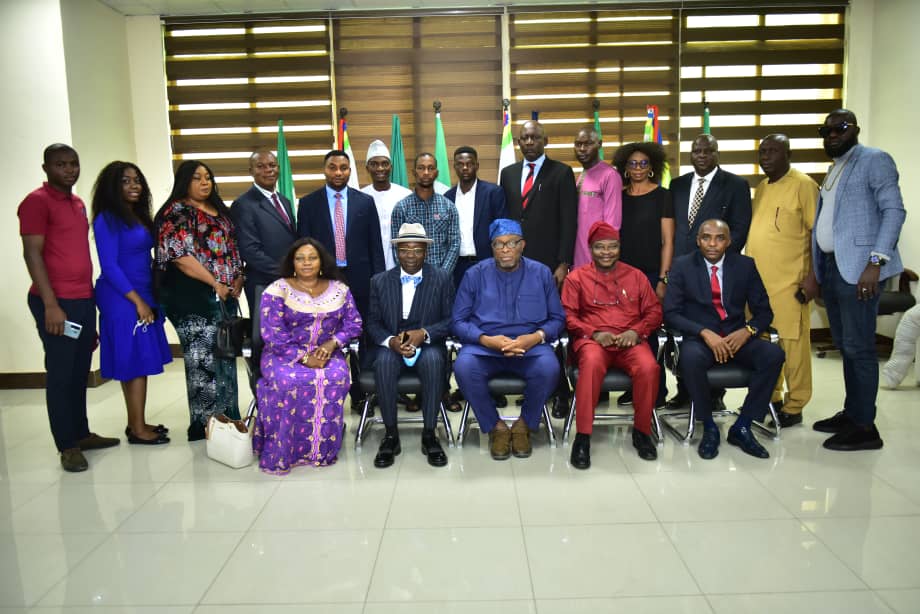
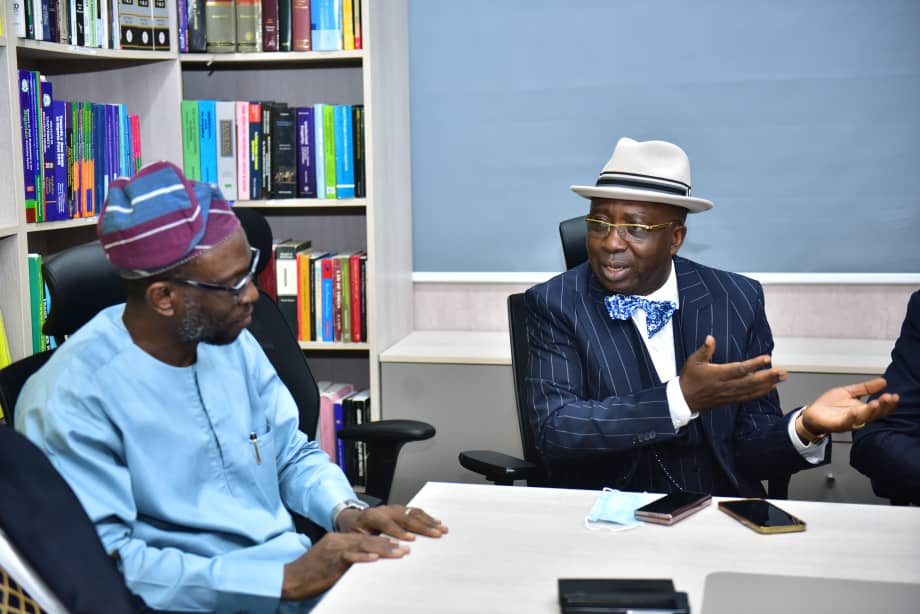
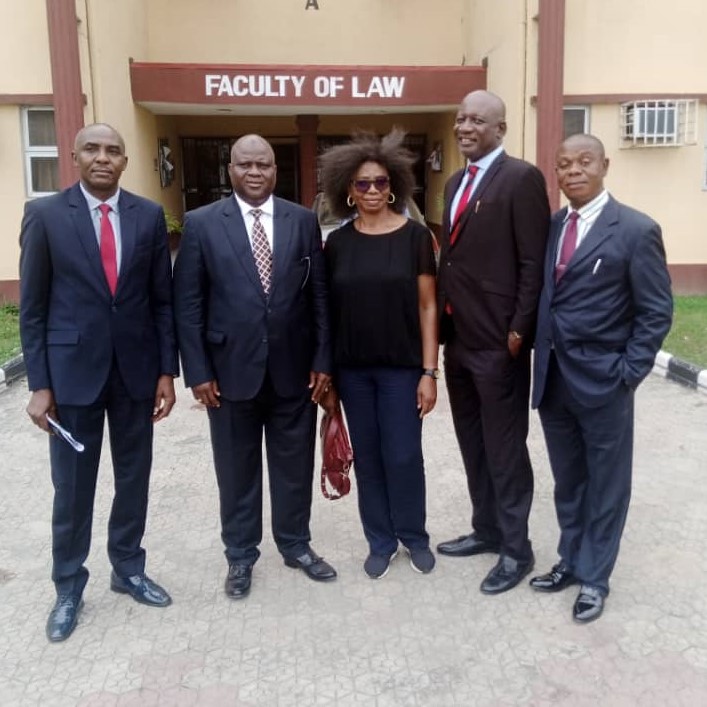
Onoja SAN seeks Constitutional amendment for Magistrates’ and Upper Area Courts to enforce fundamental rights

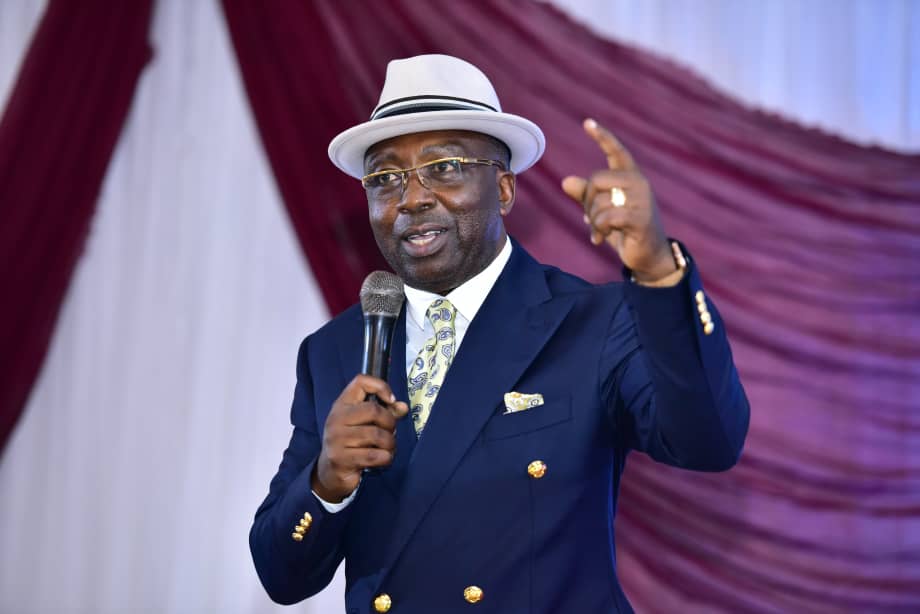
Senior Advocate of Nigeria (SAN), Chief Ogwu James Onoja has called for the amendment of 1999 Constitution to give Magistrates’ and Upper Area Courts powers to enforce fundamental rights.

Onoja who was Grand Honoree at the just concluded 34th Annual Law Dinner of the Faculty of Law, Lagos State University (LASU) posited that since these courts are nearer to the grassroots and accessible to majority of Nigerians as they are situated in communities, it will be fair and just to expand their scope to accommodate fundamental rights matters.

L-R: Saheed Apampa, LASU’s outgoing President of LAWSAN, Chief Onoja receiving a plaque from Dean of Faculty of Law, Prof Olagunju Gbadebo Anthony and Mrs Rosemary Onoja in the middle.

In his paper titled: Judicial Protection of Human Rights in Nigeria: Prospects and Challenges, Chief Onoja pointed out that: “Violation of fundamental rights is a daily occurrence in every community in Nigeria, in villages and organisations far away from the prying eyes of the law and institutions saddled with the responsibility to bring violators to account. The court with jurisdiction to handle rights violation is the Federal or State high Courts. These courts are normally situated in cities and urban areas far from the major theatres of right violations.”

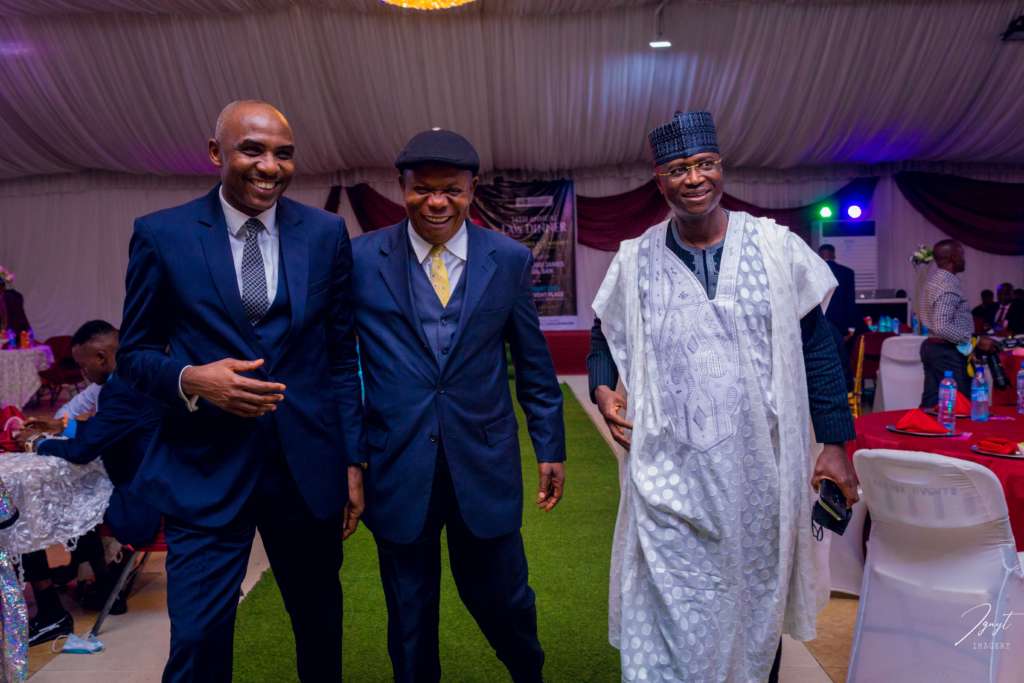
L-R: Moses Ebute, SAN, Peter Idenyi, Esq. and Kunle Ogunba, SAN at the event

He further entreated: “It is my humble suggestion that section 46(1) and (2) of the 1999 Constitution be amended to give the Magistrate and Upper Area Courts the vires to enforce fundamental rights. These lower courts now manned by Legal Practitioners, are nearer to the grassroots and accessible to the majority of Nigerians as they are situated in communities.

“There is a compelling urgency to amend laws and rules of judicial engagements in Nigeria to allow the indigents who are ordinarily the victims of right violation to access the courts.”

The Senior Advocate who further advocated for increased access to justice at all levels of the society said: “This can be in the form of reduced filing fees and charges for instituting human rights cases and increased availability of probono services by Legal Aid Council and offices of Public Defenders across the country.”

Likewise he suggested “that policy and law makers should consider laws that will allow the use of arbitration and mediation, with all their benefits, to resolve human rights cases especially in the determination of quantum of damages payable and where there is no issue of liberty and threat to life.”

This he stressed is because: “Most of the High and Appellate Courts in Nigeria have included Arbitral Proceedings and Mediation Centers in their Rules and it is just and expedient to take advantage of these provisions and institutions to address human rights cases. This is important because of the delayed trials and lengthy period of trials and appeals from High Court to Supreme Court where in some instances, the victim never live to take benefits of compensation awarded by courts.

“It is my opinion that Lawyers and litigants take the enormous opportunity presented by Sections 6(1)(e) and 22(1)and(2) of the National Human Rights Commission (Amendment) Act, 2010 to expediently bring right violators to account without the frustration of delayed court proceedings and technicalities.

“As I end this paper, I admonish Magistrates and Judges of the Nigerian Judiciary to utilize every chance they get to protect the fundamental human rights of Nigerian citizens and I do hope these words of the great jurist – Justice Thurgood Marshall will guide and encourage them: ‘You do what you think is right and let the law catch up.’ ”

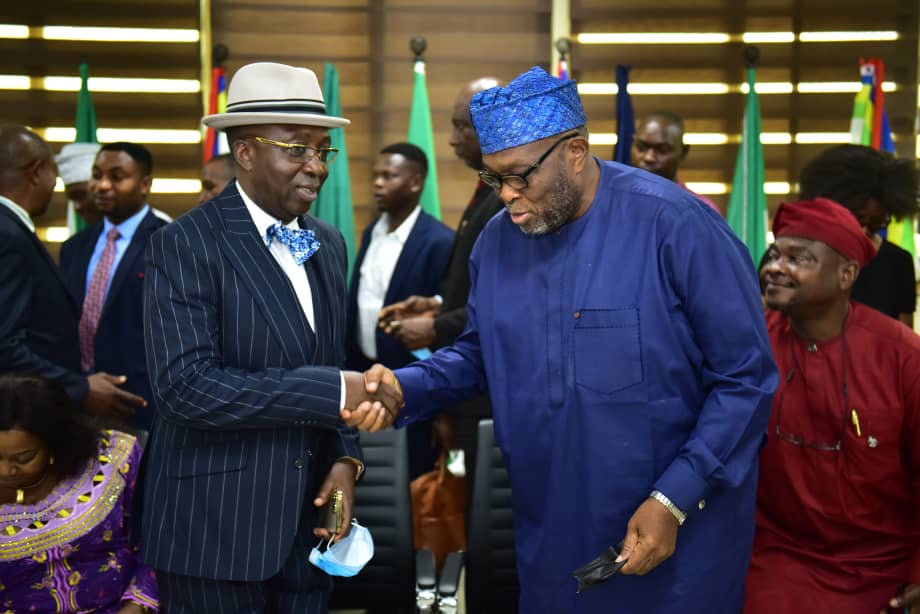
Onoja and Prof Oyedamola Oke, Acting Vice Chancellor of LASU  during a courtesy visit day after the dinner
Bar and Bench Publishers Team with the Acting VC and Dean Faculty of Law
Prof Gbadebo Anthony receives copies of Onoja’s latest book, Fundamental Rights ( Enforcement Procedure ) Rules, 2009 Practice Procedure Forms & Precedents
Courtesy call on immediate past  Vice Chancellor of LASU, Prof Olanrewaju Fagbohun, SAN
L-R: Moses Ebute, SAN, Ganny Ajakpe, Esq., Fmr. National Welfare Secretary NBA , Lillian Okenwa, Publisher, Law & Society Magazine, Afam Okeke, Esq., Fmr. Gen. Sec. NBA Abuja (Unity Bar) and Peter Idenyi Esq.
Fagbohun presents Onoja with one of his books
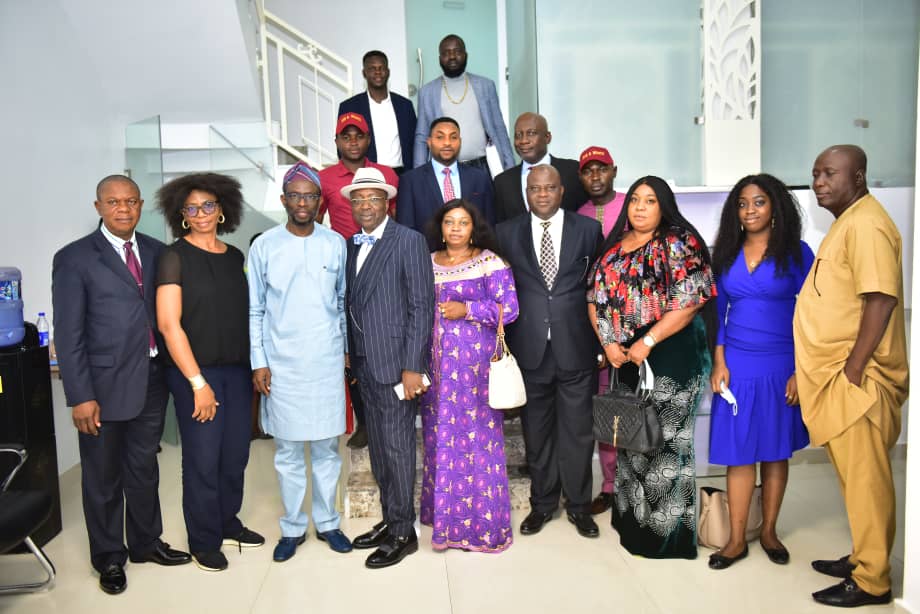
Group photo at Fagbohun’s ultra modern Law Office in Victoria Island Lagos

Why I Weep For My Country

By S.O. Akobe

They killed two, injured many and took one away

In the very place where their gallant defenders are brewed

Today, the lion has become a lamb 

And the eagle now flies with the feathers of a fowl

Insurgents are pardoned while legitimate agitators are jailed

Tables are prepared for invading nomads to dine and wine

While the aborigenes are made to flee the land of their births

With open arms, they negotiate with cruel unknown gunmen

And unleash terror on harmless worshippers 

They freeze bank accounts of innocent protesters 

But pay thousands of dollars as ransoms to merciless bandits

The bandits now use the money to procure more sophisticated weapons

And launch attack on their Formations

They do not spare even the very place where their gallant fighters are trained

They struck at night and the defenders were caught defenceless!

Who shall we tell this gory tale?

And to whom shall we run?

Only time shall tell!

Written by S.O. Akobe; a lawyer, Poet and Social Commentator.

Summary Of Key Provisions In The Rivers State Value Added Tax Law No.4 Of 2021.

By Success Gilbert, Esq, MCIArb

INTRODUCTION

The Federal High Court sitting in Port Harcourt on Monday August 9, 2021, delivered a judgement in suit No: PHC/PH/CS/149/2020,filed by the Attorney General of Rivers State against the Federal Inland Revenue Service (FIRS) and Attorney General of the Federation, challenging the power of the Federal Government of Nigeria to impose and collect taxes outside the scope of items listed in 58 and 59 of Part 1 of the Second schedule of the constitution of the Federal Republic of Nigeria 1999 as (amended).

The court presided over by His Lordship, Hon. Justice Stephen Dalyop Pam, resolved in favour of the plaintiff and against the defendants that only the Rivers State Government and not the Federal Government of Nigeria is constitutionally entitled to impose Value Added Tax (VAT), enforceable or collectable in the territory of Rivers State.

Consequent upon this judgment, the Governor of Rivers State, His Excellency, Nyesom Ezenwo Wike, on Thursday August 19, 2021, signed the Rivers State Value Added Tax Bill into Law, following its passage by the Rivers State House of Assembly. This article briefly highlights the key provisions in the Rivers State Value Added Tax Law No.4 of 2021.

           HIGHLIGHTS OF THE VAT LAW

Administration of Tax: The law provides that the Rivers State Board of Internal Revenue Service should administer and implement this law. Section 7(a).
Taxable Goods and Services: The tax shall be imposed and charged on the supply of taxable goods and services. Section 2
Goods and Services Exempt: The list of exempt items in the schedule are as follows:
All medical and pharmaceutical products
Basic food items
Books and educational materials
Baby products
Fertilizers, locally produced agricultural and veterinary medicine, farming machinery and farming transportation equipment.
All exports
Plant, machinery and goods imported for use of the company are for export, otherwise tax shall accrue proportionately on the profits of the company.
Plant, machinery and equipment purchased for the utilization of gas in down-stream petroleum operations
Tractors, ploughs and agricultural equipment and implements purchased for agricultural purposes.
Medical services
Services rendered by the Community Banks, Micro Finance Banks and Mortgage Institutions.
Plays and performance conducted by educational institutions as part of learning.
All exported services. Section 3.
Tax Rate: The rate of tax shall be computed at 5%. Section 4.
Registration: For the purpose of tax, Section 8(1), requires all taxable persons to register with the Rivers State Board of Internal Revenue Service, within 6 months of the commencement of this law or within 6 months of commencement of the business, whichever is earlier.
Contractor: A contractor transacting business with a government ministry, statutory body or any other agency of the State or Local Government shall produce evidence of registration with the Rivers State Board of Internal Revenue Service as a condition for obtaining a contract. Section 8(2).
Registration by Non-resident Companies: A non-resident company that carries on business in the state are to register with the Rivers State Board of Internal Revenue Service, using the address of the person with whom it has a subsisting contract. Section 9
Failure to Register: A taxable person who fails to register or refuses to register with the Rivers State Board of Internal Revenue Service within the specified time commits an offence. Section 8(3) (a) & (b) and Section 27 (1)(a) & (b) and (2).
Remittance and Returns: Monthly remittance and returns is due on or before the 21st day of the succeeding month in a manner specified by the Rivers State Board of Internal Revenue Service. Section 15(1).
Importer of Taxable Goods: An importer of taxable goods shall pay tax on goods to the Rivers State Board of Internal Revenue Services before clearing the goods. Section 16 (2).
Effects of Non-Remittance of Tax: Where a taxable person does not remit the tax within the time specified, a sum equal to 5% per annum, plus interest at the commercial rate, of the amount remittable shall be added to the tax. Section 18
Recovery of Tax: A taxable person aggrieved by an assessment may file an objection to the Rivers State Board of Internal Revenue Service, and they shall determine the objection filled within 30 days. Section 20(1) & (2).
Appeal against the Decision of Board: Where a taxable person is dissatisfied with the decision of the Rivers State Board of Internal Revenue Service, he shall appeal to the Tax Appeal Commission, and any further appeal on the decision of the Tax Appeal Commission shall be made to the Rivers State High Court. Section 20 (3)- (5)
Furnishing of False Document or Statement: Any person who produces, furnishes a false document or statement commits an offence and is liable on conviction to a fine of twice the amount under declared. Section 21(a)&(b).
Evasion of tax: A person who participates in or takes steps to evade tax for himself or any other person commits an offence and liable on conviction to twice the amount of the tax evaded or to imprisonment for a term not exceeding 3 years. Section 22
Failure to Notify Change of Address: A person who fails to notify the Rivers State Board of Internal Revenue Service in writing of any change of address within one month of the change, is liable to pay a penalty of N5,000. Section 23.
Offences by Corporate Bodies: Where an offence is committed by a corporate body or firm, every director, manager, secretary, partner or officer of the firm; commits that offence and is liable as if he had himself committed that offence, unless he proves that the act or omission constituting the offence took place without his knowledge. Section 31 (1) (a) – (d).
Aiding and abetting the commission of an offence: An officer of the Rivers state Board of internal Revenue or any other person who aids or abets the commission of any offence under this law, commits an offence. Section 32.
Powers of the Governor to vary Schedule: The Governor may subject to the approval of the Rivers State House of Assembly amend the rate of tax chargeable and list set out in the Schedule. Section 33 (a) & (b)
Distribution of revenue: The revenue accruing shall be distributed, 70% to the State and 30% to the Local Government. Section 35 (a) & (b).
CONCLUSION

The main objective of taxation is to generate revenue for a state. There is no doubt therefore, that the enforcement and full implementation of this law will further boost the internally generated revenue of Rivers state to meet her ever-growing financial obligations and also fund other critical programs.

Why Are Nigerians Obsessed With President Buhari?

By Agbada S. Agbada Esq.

There is a common, but erroneous belief amongst Nigerians that President Muhammadu Buhari is the personification of Nigeria’s multifaceted problems. This belief has become very potent and has even assumed a mythical character. It has taken a fanatical dimension amongst its many subscribers and any attempt at pointing to any other direction to explain the very dire situation in the country is fiercely resisted and dismissed as insincerity or sycophancy. But as it is with myths, it lacks factual basis.

This is however not to say that Buhari is blameless for the current downward spiral of the country. He is the President and Commander-in-Chief, and as it is commonly said, the buck stops on his desk. While every objective observer will agree that Buhari took over an ailing country from Jonathan – a country that was struggling with and defaulting even in its basic responsibilities of paying salaries, he was expected to come on board with solutions – solutions he promised. Leadership is not a walk in the park; it is expected to be tough. As a matter of fact, leadership is tested during periods of difficulty and crisis. History is replete with individuals whose leadership credentials were established by the problems of their times and their handling of those problems. Franklin D. Roosvelt etched his name on stone by successfully steering the United States of America out of the Great Depression with his New Deal agenda and for leading the Allied Forces to victory in the Second World War after the Japanese daring, utterly devasting, but miscalculated attack on Pearl Harbour. Lee Kuan Yew earned his place as the father of modern Singapore by building Singapore from a third world country to a first world country under difficult conditions. Deng Xiaoping immortalized his name by pulling China from economic doldrums and setting it on the path of rapid and steady economic development, while maintaining a low international profile. With all his oratory and charm, Barack Obama’s success in the White House was defined by the problems he solved, especially his successful handling of the Great Recession, and not his personality.

The challenges that were inherited by Buhari therefore served both as an opportunity as well as a burden. I will therefore not venture into a defence of his administration but will only attempt to highlight the oft dismissed truth that with all his powers and responsibilities as the President – and with all his failings, Buhari is not a personification of Nigeria’s problems; he is a mere fraction of our problems. I believe this truth-telling is important because our obsession with the shortcomings of Buhari has diverted our attention from others who are equally responsible for the parlous state of affairs in the country. Some of the men and women who share equal or even greater responsibility for the ailing system easily find favour in the sight of Nigerians with an anti-Buhari posturing. Nigerians accept the alibi of these pretenders and even treat some as the models of democracy and good governance. And of course, this gullibility is exploited to the hilt.

Nigeria is not running a unitary system of government with absolute concentration of powers at the centre. We run a federal system of government with government powers distributed between the federal, state and local governments. (I know that the question whether ours is truly a federal system remains a matter of debate – a debate I will take on in another piece.) While the quantum and quality of these powers differ among the different tiers of government, they are all vital for the overall and proper functioning of the country. I am not deaf to the arguments in some quarters that the distribution of powers between the federal and state governments is skewed in favour of the federal government and that the state governments are arm strung by this uneven distribution of powers from effectively delivering the fruits of good governance. The proponents of this argument point to the 1999 Constitution as the source of our problems. In their view, the Exclusive Legislative List conferred too many powers on the federal government and denied the state governments critical powers to function effectively. But this is a fallacy that Nigerians seem to accept hook, line and sinker and have refused to probe deeply.

The state governments are not bereft of powers; they enjoy enormous powers under the Constitution and have jurisdiction over such important sectors as health, education, taxation, agriculture etc. under the Concurrent Legislative List of the Constitution. In addition, the state governments enjoy residual powers over matters that are not within the Exclusive and Concurrent Lists of the Constitution which allows the state governments to creatively explore possibilities and opportunities in areas which are completely outside the purview of the federal government to make impact. So, the story about paucity of powers is a hoax. The issue is not about sufficiency of powers; it is about the application of the available powers by the various state governments. It is also important to note that the state governments have absolute autonomy over their financial (not natural or mineral) resources. This means that the federal government does not dictate to the states on the application of their funds. This neutralizes to a large extent, the excuse of insufficiency of powers.

For people who are wont of casting blames on the federal government and the President, one would have expected that our state governors would at least try to be different, even if superficially. But there are rarely any visible efforts by our state governors to deliver good governance to their people. This abdication of responsibility by our state governors is largely responsible for (or at least have greatly exacerbated) our current problems. Poverty, insecurity, illiteracy, unemployment etc. are all biproducts of bad governance. Therefore, our state governors have an opportunity and indeed the powers to deliver prosperity, reduce crime, improve the standard of education, provide quality health care, provide employment, improve their internally generated revenue by attracting investments with the right incentives and policies.
But what do we get? Utter neglect! Mindless plundering! Cluelessness!

There is rarely any state in Nigeria that can boast of a semblance of good governance. (This is not to discountenance the impact a handful of governors, past or present have made in their respective states.) The dividends of good governance are in short supply (if at all in existence) in every state of the federation. Poverty, lack of clean water, absence of decent public schools and hospitals, unemployment, lack of decent housing etc. are spread across every state of the federation (even though not evenly). Every state of the federation is a breeding ground of kidnappers, armed robbers, bandits, terrorists and all other classes of violent criminals who, in some cases are motivated by a sense of neglect, lack and the quest for survival. This explains why every state of the federation has its fair share of insecurity. But our state governors are on permanent honeymoon while their states are being consumed by one crisis or the other. Well, Buhari is there to bear the burden of their collective transgressions.

In addition, state governors are the worst culprits of abuse of power. They are largely responsible for the stunted growth of our democratic process. Our state governors are hypersensitive to dissent of any form. There seems to be a morbid fear amongst them of any meaningful opposition and they deploy the resources, instruments and institutions of the state to gag and stifle dissent. These men have held our democratic institutions to ransom. Rule of law, free, fair and credible elections, independence of the judiciary, legislative and local government autonomy, freedom of expression, freedom of association and other integral elements of our democratic system of government are in the stranglehold of our state governors. They demand for free, fair and credible elections from the Independent National Electoral Commission, but local government elections are almost always charades to legitimize the appointment by the governors of the local government chairmen and councilors.

State Electoral Commissions are populated by their party men and loyalists. Peaceful protesters are met with state sponsored violence and critics are incarcerated at the whims of the governors. The state judiciaries survive at the mercy of the governors. They treat statutory allocations of local governments as their personal funds and strip that critical tier of government the ability and resources to conduct governance. These men rule their states like emperors, dispensing favours to the loyal from the state coffers and beating opposition to submission with the instruments of state. There is zero accountability in the administration of state funds by our governors. But we seem to gloss over the degree of damage our state governors are causing our democratic system, perhaps because their misgovernance occur in smaller geographic units and seem to be compartmentalized. However, this culture of impunity that pervades our thirty six states has now become our national norm.

If the thirty six states of Nigeria are being efficiently governed, the shortcomings of Buhari or any other president would have been benign. But our problems have been exponentially amplified by the inefficiency, lack of probity and the aversion to rule of law by our state governors. If the states are fixed, then Nigeria is fixed. On the other hand, even with a saint as president, we will make no progress without a change at the state levels. If anything, the resistance of the state governors to Buhari’s efforts to implement financial autonomy for the judiciary and the local governments is testament to the fact that even the best policies of the federal government can be effectively truncated by the governors. If we truly desire change, we need to tamper our obsession with Buhari and divert some of that energy to demanding accountability from our state governors. Otherwise, our quest for change will forever remain an illusion.

By Agbada S. Agbada Esq., [email protected]

Abuja: Story of a ticking time-bomb waiting to explode; time to defuse is now!

By Musa Baba-Panya

INTRODCUTION:-

“A people without the knowledge of their past history, origin and culture is like a tree without roots” – Marcus Garvey

Also; “Without history there is no memory. Without memory there is no future. If we don’t learn from the past, we repeat the same mistakes again.” – David Timis

The above quotations make it necessary to begin with a historical excursion of the origin or founding of FCT-Abuja. We will take a trip down the memory lane. And it is as follows;

DATELINE: 3rd February, 1976

It all began on 3rd February, 1976, Gen. Murtala Ramat Mohammed in a National Broadcast creating FCT-Abuja –Federal Capital Territory –FCT as the new Capital of the country said thus;
The few local inhabitants in the area who need to be moved out of the territory for planning purposes will be resettled outside the area in places of their choice at government expense.

General Murtala added;
In order to avoid land speculation in the area a decree is being promulgated immediately to vest all land in the Federal Territory in the Federal Government.

DATELINE: Next day: 4th February, 1976

The very next day, 4th February, 1976 General Murtala signed into law; ‘Decree No.6’, establishing the Federal Capital Territory –FCT FCT-Abuja.

General Murtala had no illusion about the vision and motive of creating FCT-Abuja, in that he said; “We believe that the new capital …will be for all Nigerians a symbol of their oneness and unity. The Federal Capital will belong to all Nigerians.

Thus Section 1(3) of the said decree (now FCT Act Cap. 503) reads; “The area contained in the Capital Territory shall as from the commencement of this decree, cease to be a portion of the states concerned and shall henceforth be governed and administered by or under the control of the Government of the Federation to the exclusion of any other person or authority whatsoever and the ownership of the lands comprised in the Capital Territory shall likewise vest absolutely in the Government of the Federation.

DATELINE: 13th February, 1976

On 13th February, 1976 barely nine days after the creation of FCT FCT-Abuja, General Murtala was killed in a military coup. I submit that the ‘real FCT-Abuja’ equally died that day. And what has emerged to be today’s FCT-Abuja, is a ‘ghost’. Reasons would be canvassed anon.

Post Script:
Section 6 of now FCT Act constitutes the provisions for the manner compensation for the acquisition of the new capital was to be paid. From the wordings of the said provision, it would appear that the law maker (General Murtala) intended the compensation due and payable for FCT-Abuja-FCT was to be completed within a very reasonable time.

But more importantly, the significance of Section 6 explicitly indicates that as at 4th February 1976, the compensation due and payable for the compulsory acquisition of FCT-Abuja –FCT had not been paid. Now this situation or material fact is of great importance as would soon be revealed anon. Needless to say, that what has turned out to be is that, it is now near 45 years; the said compensation has still not been paid.

Post Script:

As at the time of creating FCT-Abuja-FCT, the Republican Constitution of 1963 was in force. And Section 31 provided thus; “No property, moveable or immoveable shall be taken possession of compulsorily and no right over or interest in any such property shall be acquired compulsorily in any part of Nigeria except by or under the provisions of a law that-
(a) requires the payment of adequate compensation therefor;…”

FCT Minister, Mohammed Bello.
DATELINE February, 1976 (After the Coup)

General Olusegun Obasanjo succeeded Gen. Murtala and through the years leading up to 1978, the compensation payable for FCT-Abuja-FCT was still unpaid. But in a bid to making that payment, the said Federal Military Government commissioned the Department of Geography, University of Ibadan to conduct a demographic survey of FCT-Abuja to, inter-alia, ascertain the population of the indigenous people (inhabitants), sizes and numbers of their communities villages and habitations and thereby evaluating the amount of compensation to be paid for the inhabitants resettlement outside of the ‘Territory’. The report stated the estimated population of the inhabitants to be around 400,000 people comprising 9 Tribes; Gbari, Gwandara, Amo-Amo, Igbira-koto, Gade, Koro, Kadara, Bassa, and the predominant Gbagyi. The total cost of compensation was put at N2.8 Billion Naira. That year, Nigeria’s national budget was N400 million Naira. What this meant was that it would require seven years annual budgets to make the compensation payment and effectively resettle the said inhabitants.

DATELINE: 4th July, 1978

Consequent to this inundating reality, on 4th July, 1978 General Obasanjo in an official memo/circular decided and directed thus;

  1. Those who are not affected by the first phase of resettlement but wish to move out of the Territory may do so, but such people will have no claims on FCDA as they are not being forced to leave. This, in effect means that inhabitants not moved out during the present exercise or those who have decided to stay will now be deemed to be citizens of the Federal Capital Territory and FCDA will soon appoint an administrator to administer the Territory and look after their welfare,
  2. The site selected for the building of the Federal Capital City itself will be evacuated and resettlement of the people so evacuated takes place within or outside the Territory.
  3. The meager funds available now should be spent more on development of infrastructure than on payment of compensation.

Thus begun the policy of ‘integration’ as against ‘compensation and resettlement’ as originally envisioned as recapitulated above.

DATELINE: 1st October, 1979

A return to civil rule on 1st October 1979 ushered in a new Constitution. Section 1(3) of the said Decree No.6 was now smuggled into the new Constitution, albeit in a modified form. Section 256(1) 1979 Constitution reads;

The ownership of all lands comprised in the Federal Capital Territory shall vest in the Government of the Federal Republic of Nigeria.

It is this same clause that has been replicated verbatim as Section 297(2) of 1999 Constitution (as amended).

DATELINE: 1980-1981

WHAT MANNER OF COMPENSATION IF AT ALL?

Thereabout early 1980, the then civilian government of Alhaji Shehu Shagari embarked on what seems to be a semblance of compensation and resettlement of original inhabitants of FCT-Abuja FCT. During this period under review, several communities hitherto under former Niger State were compensated and resettled. Thus the inhabitants and communities hitherto situate at present day Maitama, Asokoro, Kukwaba Districts (near Stadium) were compensated and resettled not outside FCT (as originally envisioned) but within, to present day Kubwa Resettlement Village also now called Kubwa Town, a District under Bwari Area Council. It is to be noted that the total landmass and territory of FCT-Abuja was expropriated as follows; 80% from then Niger State, 19.2% from then Plateau State (now Nasarawa State) and remaining 0.8% from then Kwara State (now Kogi State).

The inhabitants of Wuse Town then about the largest community under Niger State including smaller communities of Gawu, were compensated and completely resettled out of FCT-Abuja to ‘new Wuse Town’ along FCT-Abuja-Kaduna High Way under today’s Tafa LGA Niger State. This is about the only successful (proper compensation and resettlement) on record. The remaining portions (settlements under Niger State) remain un-enumerated much less compensated or any attempt at resettlement effected.

Under then Plateau State, then existing communities of Nyanya, Karu, Karshi (under AMAC) and Nasarawa Toto Area were partly compensated (half payment) and their resettlement totally botched. The compensation figures (enumeration and assessments) were widely disputed and thus rejected by about half of the inhabitants. Thus the reason why there is ‘New-Nyanya, New-Karu, New Karshi and New-Toto’ all in today’s Nasarawa State. The ‘old’ equivalents are still existing communities in FCT-Abuja.

As far as the portion of former Kwara State (Kogi) with less than 1% land contribution, there has been no attempt of any kind as the expropriated area was and is largely uninhabited.

All said and done, at the end of the day, over 80% of today’s FCT-Abuja is still uncompensated. Much less resettlement within or outside the Territory attempted. All these communities are on ancestral (home) lands pre-dating 4th February, 1976.

Post Script: Going back to the beginning:

The decision to create a new capital in FCT-Abuja was not taken in consultations with the indigenous inhabitants. The founding fathers (Aguda Panel) were turned away by the southern Kaduna people (Manchok), ditto by the Amalgamation capital of Lokoja. Other places considered like Port Harcourt were not found suitable.

Despite the obligatory manner of creating FCT-Abuja including the promulgation of Decree No. 6, the indigenous inhabitants still warmly welcomed the birthing of FCT in their ancestral lands. It was not a thing of choice yet they gave up their ancestral lands for national cause. It was patriotism most profound and aptly personified.

Both Divine law and human laws, the constitution abhors the forceful acquisition of personal property/land. However, when deemed necessary (for public purpose) the law allows not forceful but compulsory acquisition of land subject to a sine quo non (condition precedent) the ‘prior prompt payment of compensation’.

The compensation for the creation (acquisition) of FCT-Abuja from the original indigenous owners was due and payable as at 3rd February, 1976. It is now over four decades (at least generation goneone bye) and yet the compensation is still unpaid. The law regulating compulsory acquisition and payment of compensation prescribes the accrual of interest at bank rate for delayed or late payment. Hence, it is now over 44 years and the interest has been running and still accumulating. See Section 29(4) Land Use Act and Section 6(1-2) FCT Act.

Post Script: Present day Fallacies

The prevailing status quo as deceptively portrayed by Government and erroneously believed by the average Nigerian is the fallacy that FCT-Abuja was begotten from ‘virgin land’ without indigenous inhabitants or communities or customary custodians or owners. A bye line to this historical misnomer and aberration is another fallacious portrayal and believe that the hitherto indigenous and customary owners of FCT-Abuja have been fully paid compensation and resettled.

DATE LINE: April, 2014
(National Conference holden @ National Judicial Institute, FCT-Abuja)

Delegate Ahmadu Aliyu said to be a former Director of the FCDA strenuously pronounced to the Confab, how FCT-Abuja did not belong to anybody, but to all Nigerians as whatever indigenous inhabitants there were, had been fully paid compensation and resettled.

Delegate Jeremiah Useni, from Plateau State and former Minister of FCT from 1993- 1998 immediately recanted Delegate Aliyu’s fallacious statement to the effect that such was not case. Delegate Useni attested to the fact of the prior and continuous existence of indigenous inhabitants and customary owners of FCT-Abuja. And in furtherance to this plain truth, he further said that it was him, who accorded government and legal recognition to the indigenes’ traditional chiefs and various chiefdoms. Additionally, Delegate Useni was even more categorical when he stated that the compensation has not been paid and where paid, it was only partly paid.

‘Conscience is an open wound only truth can heal it’
Othman Dan-Fodio

Some Fundamental Truths:

  1. The creation of FCT-Abuja was foisted on the indigenous inhabitants, they did not ask for it. Atypical of the natural disposition (peaceful) of the original inhabitants, they embraced the new Capital and availed the Federal Government their ancestral lands for the greater good of the nation.
  2. Without fulfilling the sine quo non to compulsory acquisition of FCT- Abuja, the FGN vide the instrumentality of law decreed the title and ownership of FCT-Abuja lands in the FGN. Section 1(1-3) of Decree No. 6 1976 establishing FCT-Abuja is now mutanda mutandis Section 297(1-2) of 1999 Constitution.
  3. The fundamental (constitutional) right to payment of compensation due and payable as at 4th February, 1976 has been denied for over 45years now.
  4. On 4thJuly, 1978, it was the Federal Government and not the indigenous inhabitants who did a volte d face by changing the policy of compensation and resettlement to FCT-Abuja citizenship and integration. Instead of meeting its constitutional obligations to the FCT-Abuja people, the FGN rather chose infrastructural development.
  5. The universal legal jurisprudence pertaining compulsory land acquisition (also known as the ‘right of executive domain’) is encapsulated in the maxim; fortissimo contra perferentis. This doctrine obligates the strict compliance to the law in matters of compulsory acquisition of land. Thusly, the interpretation of the law of compulsory acquisition would at all times be done in preference to the land owner as against the acquiring authority (Government). The requirement for validity or legitimacy is for absolute compliance with the dictates of law. There is no room for discretion or part compliance.
  6. Section 31 of 1963 Constitution and its successive provisions of Section 40 of 1979 Constitution and Section 44 of 1999 Constitution requiring the (adequate) and prompt payment of compensation in the event of compulsory acquisition of land (property) was not and still remains unfulfilled 45 years after creation (acquisition) of FCT-Abuja .
  7. The Law (Constitution) prescribes the full payment of compensation. There is no room for part, half but full payment. And the payment is with interest at bank rate where payment is late or delayed –from date due to date of actual payment.
  8. Ab initio, FCT-Abuja was begot of illegality. The FGN was and still remains a trespasser to the FCT-Abuja people. A fortorari, FCT-Abuja is begotten of ‘stolen land’. QED!

DATE LINE: 1980 to Present Day:

The Shehu Shagari Government established the Federal Capital Development Authority –FCDA (in pursuance to provisions of Decree No.6 1976). An Administrator of FCDA and subsequently, a Minister of FCT-Abuja were appointed to oversee the running and physical development of the new Capital. Hence commenced the daily sequestration and confiscation of FCT-Abuja peoples’ communities and ancestral lands.

Today, FCT-Abuja people are daily victims of FGN suborned ‘displacement and outright dislocation’ to the extent of becoming ‘permanent internal refugees’ in their ancestral lands. The FGN is now a foremost culprit of; ‘unnatural internally displaced peoples and refugees’; a United Nation’s crime against humanity. As matter of fact, today’s recent IDPs phenomenon started here, in FCT-Abuja and not with Boko Haram insurgency in North East.

IMMINENT & PRESENT DANGER

That FCT-Abuja is a ticking time bomb waiting to explode; that FCT-Abuja is a monumental disaster waiting to happen is a forgone issue. It is a truism as the daily sun rise from the east and setting in the west.

For as long as the compensation due and payable for FCT-Abuja remains unpaid. For as long as the constant and unending demolitions continue with the FCT-Abuja people rendered refugees in their own ancestral lands. For as long as the FCTA remains detached from the people and continuing on the path of antagonism insensitivity and sheer executive rascality, of policy formulation like Land Swap. For as long as FCT-Abuja people remain politically disenfranchised, stateless & citizenship-less and landless. For as long as the land grabbing, scrambling and outright racketeering by State agents (military and speculators) perpetuates.

Every day, with every allocation of uncompensated land, with every development and construction, comes increased deprivation of FCT-Abuja peoples’ fundamental rights and indeed the erosion of their humanity and very existence.

Since the advent of the current Republic in May 1999, FCT Abuja indigenes remain being deprived of even basic constitutional rights to Ministerial Representation in Federal Executive Council. A Court of Appeal Judgment in the case of BABA-PANYA vs. PRESIDENT FRN & 2ORS (2018) 5 NWLR (pt. 1643) 395, (2018) LPELR- 44573 (CA) affirming such right and ordering immediate and forth compliance by Mr. President remains unenforced for over 3 years. Judgment was delivered 15th January, 2018. The judgment further declared this constitutional infringement to have persisted since 1999. What manner of Rule of Law?

There have been up to four lists of Ambassadorial nominations of Mr. President to the Senate; and still FCT-Abuja’s nomination still missing. This despite several and repeated objections by FCT-Abuja’s Senator Philip Aduda (Minority Whip). This is not to talk about numerous other deprivations of inclusion and parity in other political appointments of Perm-Sec, Federal Character (employment, tertiary admissions, judicial appointments, scholarships etc.) quotas. Guaranteed privileges where granted is so done only upon protest by Abuja Indigenes.

Yet another combustible fuel to the ticking time-bomb is the recent sheer land grabbing by the military, particularly the Nigeria Army.

DATELINE: March, 2009

In March, 2009, the Nigeria Army with truckloads of armed soldiers invaded the indigenous communities situated along the Airport Road to Girin Junction to Tunga Maje and up to Zuba along Lokoja-Kaduna Highway. The epic centre is Iddo Sarki, but a total of 22 communities were affected. Army signboards remain implanted everywhere. In October 2015 they carried out a massive demolition of cultivated farmlands leading to the sudden death of Peter Dankai who could not contain the damage done to his farmland (heavily cultivated with uncountable economic trees and cash crops). He dropped dead on the spot. He left behind 2 widows and 7 children. The Army’s Aviation building and livestock ranch) are built on the location of his said farmland. The Buhari Cantonment is also built along the said axis. The Army was and still remains without any form of allocation (grant) letter.

DATELINE: September 2009

The Navy took their turn six months later, in September 2009. They also came with truckloads of armed ratings and implanted signboards all over Iddo Sarki claiming the whole community to have been allocated to them. They returned in recent times (July 2021) and thence commenced the on-going demolition exercises by the FCTA (Development Control) Task Force. Their signboards remain visibly implanted. The Navy has no allocation letter till date.

DATELINE: Year 2014

The Airforce took their turn in year 2014. Similarly, they came with truckloads of armed airmen planted signboards. But unlike the two other services, it claimed only 20 hectares. The Airforce is equally without any allocation (grant) letter.

DATELINE: April 2019

Sometime around second week of April 2019, the Army carried out an armed invasion of the Tunga Maje area unleashed sheer terror on hapless unarmed citizens and causing injuries to several people. An 18 year old young man, Hamza Usman was killed by a gunshot to left side of the chest (no doubt by a sniper rifle). There are pictures of his deceased corpse and copy of death certificate.

In spite of all the said armed invasion and other provocative actions (serving of ‘quit notices’) on the said inhabitants and their communities including government agencies of FRSC, Police College of Education etc. the inhabitants have only resorted to peaceful protests and repeated petitions of NASS, Nigeria Police, DSS and Presidency (Vice-President).

DATELINE: October, 2020

Eventually, in October, 2009 under great constraints the 22 Communities filed a fundamental rights action at the FCT-Abuja High Court holden at Court No. 16 Gwagwalada coram Hon. Justice Idris Kutigi in the case of ADAMU ISYAKU & 4 ORS vs. NIGERIA ARMY & 2ORS (FCT/HC/M/10222/2020.

DATELINE: March 2021

As if the killings, quit notices armed invasions bulldozing were not bad enough, the Army began the sale of application forms to both officers and men of the military and general public soliciting patronage for 4nos different sized plots in a planned Army Command Estate now ready for development at Buhari Cantonment at the said Iddo Sarki –Tunga Maje axis. The prices for the plots are;
Military:- (N 5000/ square meters (m2)) -Maj-Gen -1,200m2 =N6m
-Brig-Gen -1,000 m2 = N 5m
-Col -750m2 = N 3.75m
-Lt.-Col below -600m2 = N 3m Infrastructure Cost N3m per plot
Civilian Price: – (- N 7,500/m2)

Apparently all the Army skirmishes since 2009 has been a subterfuge for the Military High Command to grab choice lands for themselves. Lands not compensated. What a shameful travesty and grave injustice.

Post Script: December 2016

To appreciate the gravity of the situation, Mr. Minister himself raised alarm in a 7 page Memo to Mr. President complaining inter-alia as follows:-

‘viii The Nigerian Army has also laid claim to a large expanse of land along Giri-Zuba axis of Gwagwalada Area Council and has commenced process of taking possession without observing laid down procedures and extant practices of the FCTA
ix The action of the Nigerian Army which threatens the rights of the communities and other legitimate tittle holders on parts of the area, has triggered prompt protest from the affected population.
x There is urgent need to restrain the Nigerian Army from continuing on its course of action in the interest of peace and tranquility. The Army should also be advised to observe due process and extant regulations of the FCTA in asserting their title claims as well as in the development of any structure on the land under reference.’

What more is to be said other than that the Hon Minister himself, (as chief custodian/trustee of the entire FCT-Abuja) has indicted the Nigerian Army. I believe there remains no more truth to be told. Res ipsa loquitor, ‘…the matter speaks for itself’.

Recently, the mode of demolition of our habitations and ancestral homelands took an unprecedented manner. Demolition by the FCTA is now carried out at night in a manner akin to military strike or invasion. The Akpmajeya exercise was conducted at dead of the night, around 3am with over 3 truckloads of heavily armed Mopol including armored assault vehicles. It was a brutal exercise, Gestapo style. Whether the demolition was justified or not, the Akpmajeya community was nothing but a sleepy village, inhabited by ordinary human beings. They were not BH, insurgents, or bandits neither was their place a cohort of crime or criminals. The location is right within the City’s precincts. Right here in the nation’s Capital

MARGINALIZATION: CASE IN POINT

That Abuja Indigenes have and continually remain marginalized is a notorious fact needing no further argument or proof. Truth be told, as earlier said, the Nigerian State broke faith with Abuja indigenes when it decided construction was more of a priority than paying the indigenes their due ; their God given and constitutional right to prompt compensation. And since then everything about our welfare became a ‘byline item’; just simply a footnote.

Already guaranteed rights and privileges (political rights) are always denied. The common patrimony of every state, routine political appointments (ministerial, ambassadorial, Perm-Sec and regular public service employment quotas.) All either denied or sequestered away to highest bidder or other non-indigene beneficiaries. Every now and again, we must first agitate protest and petition before such common or shared rights and privileges are given us.

Case in point: since the reelection of current administration, the President has sent 4 separate lists of ambassadorial nominees to the Senate and up till now, FCT Abuja nominee not presented. This despite repeated (4times) objection/protests by our very own Senator, the most Distinguished PT Aduda. It was a battle to even get the career nomination/appointment through.

When the only Perm-Sec from FCT, Dr. Aboki Zhawa Esq., retired in in year 2011 it took over 9 years before his replacement, Gabriel Aduda to be appointed. And this was not because we had no qualified or competent Directors in the service. Several retired during this same period. Once again a struggle before the said replacement effected. FCT-Abuja’s quota still remains one, whereas some states have upto 3 or more.

Abuja-FCT Public Complaints Commissioner position was taken away and given to a nominee from Plateau State. It took formal petition and serious agitation/protest before the nomination was rescinded and the current incumbent, Hon. MC Ezekiel was appointed.

Since 1985 when the FCT-Abuja High Court was inaugurated, only one indigene, the Hon Justice Othman Musa from Abaji has been appointed to its bench. And the Court is strictly a State High Court. As it operates everywhere, all State High Court Judges from Chief Judge to the least must be and are indigenes of those states, or spouses of indigenes. Not so with FCT-Abuja.

Then there is the most disturbing one of them all. Since 1999, no indigene of FCT-Abuja has been appointed a Minister of the Federation. Ditto Presidential aides (all categories). Whereas over the said 22 years now, several states have had even upto 3 ministers in cabinet. This not to talk about other presidential aides; Senior and Special Advisers Assistances and Pas. In the current Cabinet, 7 States have 2 ministers each; Bauchi, Lagos, Kwara, Edo, Kano, Kaduna and Katsina (has Mr. President as Minister of Petroleum and Hadi Sirika Aviation Minister).

If you compute this ministerial deprivation, you will get a figure that is a bit mind blowing. Now let’s do the numbers. The average monthly pay of a minister has been a little above N1million which translates to N12million yearly. Multiply that by 22years now (May 1999) to sums up to N264million. Yes, over a quarter of a Billion lost in salaries alone. Taking it further, is to divide the total sum with 2.5million people (FCT-Abuja Indigenes) it amounts to N10,560 per person. What’s more to be said. This is a debt owed us by the Government.
The case of BABA-PANYA vs. PRESIDENT FRN & ORS (supra) granting the right of ministerial representation in the FEC, is not the birth of an individual alone. It is that of over 2.5 million Nigerians (over 1% of the population). The case is about their voices which is missing in the Cabinet now for over 22years. 2.5million citizens have no say in the affairs and governance of this country. If that is not injustice then injustice must be redefined.

UNDENIABLE REALITIES TRUTHS TO BE EMBRACED

  1. The FCT-Abuja of today is no more than a ghost. The real FCT-Abuja as envisioned by the founding fathers died with General Murtala on 13th February 1976, barely 10days of its birth (creation).
  2. FCT-Abuja of today is only but an aberration and a constitutional antithesis.
  3. Sections 297 (2) of 1999 Constitution is both unjusticiable and unjustifiable. It is to the FCT-Abuja people a satanic verse (clause).
  4. The creation of FCT was to the FCT-Abuja people a clarion call to national duty. The FGN must affirm the FCT-Abuja people to have made a profoundly patriotic act in ceding their ancestral lands for national cause. A thank you!; is to be said.
  5. The Nigerian State must admit to a breach of faith with the FCT-Abuja people by failing to meet its constitutional obligations for compensation and resettlement. An apology must be made to the FCT-Abuja people.
  6. It is no longer an issue of compensation and resettlement. So much water has gone under the bridge. There was a unilateral policy change to ‘integration’ as against compensation and resettlement.
  7. The estimated cost of N2.8 Billion in compensation and resettlement expense was deemed ‘astronomical’ in 1978. Today, the conservative cost of N300 Billion as per Minister Bala Mohammed’ estimates, is required for full compensation & resettlement of the FCT-Abuja people within the boundaries of FCT and not outside it as was originally envisioned.
  8. Compensating the FCT-Abuja people is no longer feasible. It is out of the equation.
  9. FCT-Abuja is as real as its present existence, and so it has come to stay.
  10. The original inhabitants are the real owners of FCT-Abuja and for as long as they remain uncompensated with accrued interest for 45years as prescribed by the Constitution and extant laws they remain the legitimate customary and title owners of their ancestral homeland that is FCT-Abuja. On our Ancestral homelands we Stand!!
  11. Just like FCT-Abuja is real and has come to stay so also is the existence of the original inhabitants, they are as real and indigenous as they come. And certainly they are here to stay. No leave no transfer and no shaking. Absolutely remaining put.
  12. Since full compensation and resettlement is practically unachievable, then it means FCT-Abuja and its continuous existence has to be renegotiated. Negotiated on a round table vide the auspices of direct and open consultation and dialogue between FGN and assigned representatives of the FCT-Abuja people.

And a suggested way out is as follows:

a. Restrict the Capital to the precincts of the 2050sqkilometers designated Federal Capital City, -FCC. FCDA remains the agency with core mandate of building the Capital. The original inhabitants and communities within the FCC would then be resettled out with full compensation. This would make the Capital truly a virgin land and a home to all Nigerians.
b. The residents of the Capital would now elect a Mayor with appointed or elected City Council.
c. The remaining portion of 6000+ square kilometres be carved out and preserved as a home state (by whatever name so called) for the original inhabitants. This entity shall be the 37th State with a tenured elected Assembly and an elected leader (Governor, mayor or Administrator whatever description so called). The indigenous natives remain citizens of the Territory with the compliments of full rights (citizenship) belonging to all other Nigerians. This would require Constitutional amendment of relevant provisions

We live in a time where violence, kidnapping, bombings and outright criminality and terrorism is being deployed to press home all manner of agitations legitimate perceived or imagined.

Once again the FCT-Abuja people are reaching out for dialogue. The opportunity for peaceful discourse beckons. But like the setting sun that forecloses a day, the opportunity is not without end. It is oft said, ‘make haste whilst the sun shines’. Also equally said is; ‘opportunity may come but once…’.

EPILOGUE:

Although we remain resolute to ensuring that FCT-Abuja does not become another killing field as was the Niger Delta and currently Borno; although we are resolute to not allow the spilling of blood on our ancestral lands, we are even more resolute to nonetheless defend our ancestral lands with our very lives.

As real as FCT-Abuja has become, we are even more real; we are the original inhabitants and owners of FCT-Abuja. FCT-Abuja may have come to stay and that is because we welcomed it. Nigeria’s Capital met us here. We did not ask it to come. It is very well welcomed to go elsewhere as it came here. This is our ancestral homelands. We have nowhere else to go and we are not going anywhere. On our ancestral lands we Stand!!! QED!

For decades, the FCT-Abuja people have been crying out for justice. They have repeatedly begged to be heard all to no avail.

The time for dialogue is now. Not tomorrow. Not next week or next; month, quarter or year, but now. Today! It is time for dialogue. Nay the time is past. We are now in injury time.

I could go on and on for there are many more situations of denials deprivation and outright acts of injustices. But enough said for now. Suffice it however to say that every incidence occurrences, is fuel to the already fused bomb. And reoccurrences only wind down the clock. Tick, tick, tick, tick and tick. The hour glass is about empty. It remains just a little sand bit. Soon, very soon. Imminent soon, and next is the ……booooooom! FCT-Abuja is going to explode.

▪︎Barrister Baba-Panya of Lamilo Chambers delivered this paper on Wednesday at the Town Hall Meeting: FCT Stakeholders on Compensation and Resettlement Matters International Conference Centre, Abuja.


Is Africa’s priority a G-20 seat?

By Bola Bolawole

I felt the compelling need to allow my friend, Babafemi Badejo, Professor of Political Science/International Relations at Chrisland University, Abeokuta, join issues with Jeffrey Sachs on the recommendation that the African Union be made the 21st member of the G-20 economically-powerful nations of the world. Of what benefit will such membership be to the marginalised, oppressed, and long-suffering African people, argues Badejo: “The United Nations held a pre-Summit on Food Systems on July 26-28, 2021 as a primer for its first Global Food Summit coming up in September 2021. At this meeting, Jeffrey Sachs, American and popular economist as well as UN Special Envoy on Sustainable Development Goals (SDGs), made an important intervention. Many Africans were excited that Sachs called for the African Union, representing 1.4 billion people, to have a seat at a G-20 (to transform into G-21). The media focus has been on the tokenism of an AU seat at the G-20, instead of the many cogent issues that Sachs eloquently repeated.

“‘Repeated’ because this thought system dated from a long line of agitators for the independence of Africa and scholars such as Dr. Walter Rodney in “How Europe Underdeveloped Africa”, and, more recently, Dr. Arikana Chihombori-Quao in many speeches and YouTube videos beyond her “Africa 101: The Wake-Up Call”. Arikana was fired as the African Union’s Ambassador to the United States by the African Union! Many Africans saw the termination of Arikana’s appointment as punitive. She dared to point out that colonialists never left Africa and she showed how they have continued to rip-off and exploit the Continent.

“Lucky for Arikana to have only lost her job! Walter Rodney lost his life! He was assassinated in 1980 at the age 38. The riddle of who killed Rodney was never conclusively resolved. However, this illustrious Guyanese lives on through his works as an unsung but great African hero. The Nobel Prize will always elude the likes of Rodney. If his type had been recognized, it would have raised questions on the orthodoxy that Africa’s problems solely rests on African shoulders.

“It is extremely helpful and hope-raising to have an American economist from the US articulate and show the import of external dynamics on the continuing underdevelopment of Africa. He asked the pre-summit meeting to go into the history of why the Democratic Republic of Congo (DRC) remains in turmoil and poverty. Though Arikana articulated on this theme of the West causing turmoil in Africa in order to extract resources, Jeffrey Sachs rightly noted King Leopold of Belgium’s claim to ownership of the Congo through to the CIA’s assassination of Patrice Lumumba and the installation of Mobutu Sese Seko. Arikana details several assassinations of other visionary leaders of Africa as well as the overthrow of others by colonialists operating under a different mode of imperialism referred to as neo-colonialism.

“Jeffrey Sachs rightly pointed to Glencore’s extraction of cobalt from the DRC without responsibility or accountability to the sovereignty claims of the government of the DRC but paying taxes instead at Glencore’s home country of Belgium. Arikana had called attention to the exploitation of Africa through loans from the world arena – especially the West, including the Bretton Woods institutions. The US led some European powers at the end of the Second World War to design a United Nations at the political level and the Bretton Woods institutions at the economic level not to have a tea party but to rebuild and control the world for their own interests. The equals at the time were limited to the United Kingdom and France.

“The claims of the Europeans to ownership of Africa were ratified by the act of the US going ahead with the formation of the UN without insisting on self-determination and the need for all territories being free and at the table from the beginning. But why should the US so insist when it knew that the Europeans would not only accuse it of interference but also call attention to the unsalutary situation of race relations in America – an America built on the back of black people over centuries!

“Of more importance is the fate and living condition of billions of African people than the tokenism of mere political representation by an AU envoy at a G-20 or G-21 meeting. From the beginning up till date, neither the UN Secretary-General nor the president of the Bretton Woods institutions have dared to intervene or call for a stop to the continuing structured rip-off and exploitation of Africans. African leaders themselves are not exonerated in that most of them rip-off the continent and stash away the proceeds with the cover of major powers from the West. In effect, there is a commonality – and criminality – of interests between bad African leaders and external powers ripping off Africa!

“So also can African leaders themselves not be exonerated from the failure to move Africa forward in spite of the active efforts to assassinate any that showed promise on developing the continent. If some Asian leaders could be focused enough to wriggle through structured underdevelopment, why not their African counterparts?

“I doff my hat to Jeffrey Sachs for calling for vaccine equity as opposed to vaccine hoarding with respect to the global Covid-19 pandemic. Sachs noted that the US alone was able to raise seven trillion dollars in loans – at zero interest – to fight the scourge when Africans neither raised a penny/cent! Hence, it was possible for the West to implement lockdowns with some human face as opposed to what happened in Africa. As usual, African leaders found it easier to go-a-begging for vaccine donations through the COVAX arrangement. However, Africans will be naïve to think that the small quantity of vaccines received was out of love. Declaring the Indian version of AstraZeneca as not measuring up for ease of passage in Europe shows the long-term preferred interest on financial flow on vaccine purchases.

“I differ, however, with Jeffrey Sachs on his call for a stronger UN while, at the same time, canvassing a seat for the African Union at the proposed G-21. At the end of the Cold War in 1990/1991, the weak countries called for a new world order in which the United Nations would be a stronger coordinator of our world for good. Boutros Boutros-Ghali got carried away and thought the call was for real. He learnt the hard way as the carpet was pulled from under his feet and he became, so far, the only UN Secretary-General not elected for a second term. He relied on the French to save him by continuing to veto Kofi Annan with the hope that the decision would go to the General Assembly that would gang up against America and give him a second term. The French bargained and lifted their veto on Annan and history was made to have a black man at the helms of the UN. Annan also thought he could be daring in his second term but almost got fired! In summation, only the weak countries yearn for strong multilateralism.

“From antecedents, what use is an African Union’s envoy having a seat at a G-21? Being at the table should not be because Africa has a population of 1.4 billion but should be based on the summation of the material net worth of the African Union making worthwhile contributions. Slighting Nigeria, the G-20 has the token presence of South Africa but what benefits has that put on the table in Africa? Without real decision-making powers, will an AU membership stop Western companies from continuing their underdevelopment of Africa? If anything, such token presence would legitimize an erroneous perception that Jeffrey Sachs is inadvertently selling: that a multilateral G-21 would turn around and start to serve the developmental interest of Africans!

“Power exists to bolster interests. Under Western competitive ideology as opposed to the Yoruba “Omoluabi” (character plus integrity imbued with a “we” sharing spirit) or the Zulu “Ubuntu” (“I am because you are” spirit), it would be naïve to expect that granting a seat to the African Union would see to the protection of African interests. By the way, does our world really need a G-21 when so many UN agencies are deliberately being underfunded as Jeffrey Sachs rightly noted? Should the League of Arab States (LAS); the Association of Southeast Asian Nations (ASEAN); the Organization of American States (OAS) etc., not also be entitled to their respective seats at a G-24?

“Sachs could be of help to Africa if he directs a detailed study that builds on the thoughts of Walter Rodney, Arikana, etc., to unravel the mechanisms of continuing ripping-off and exploitation of Africans by private interests actively supported by their respective national governments and the Bretton Woods institutions. Such knowledge can help towards the implementation of policies that bolster the SDGs by a new set of purposefully-recruited African leaders”

This is food for thought!

Rest well, Mohammed Fawehinmi!

We were together on several occasions on the set of the Lagos State Television (LTV) discussing topical issues. The great efforts it took you to honour such invitations because of your physical condition were eloquent testimonies to your “can-do” and “never-say-die” spirit. The struggle for social justice was, indeed, your life! Now, you deserve your rest!

TIPS