Home Blog Page 892

Needless, unnecessary, unhelpful competition, by Emeka Oparah

Yesterday, as I was taking my morning walk, I listened to one of my favourite preachers, Joel Osteen, speaking on the topic “Be Comfortable with who you are” and it struck a strong and important chord in me. Not only that it struck a cord, it reminded me of an incident from where I got the above caption.

It was in December 2017, I believe-Yuletide. I has just recently taken delivery of a new official car, a BMW 640i, a car I’ve always wanted to own, a dream car, so to say. A fast and powerful sports sedan, the Grand Coupe is so aggressively built that it’s always rearing for a race. All the driver wants to do is to race once the engines are fired. So, this harmattan Sunday morning, I elected to travel from the Island to Ikeja to attend Mass at my “Home Parish”, St. Agnes Catholic Church. And one of the reasons I occasionally took that trip (with all the churches on the Island) was to fire my BMW!

So, this particular morning, I headed out taking my time to drive gently until I got on the 3MB (Third Mainland Bridge), where I could kick down the pedal and fire the engines. Right after the Dolphin Estate, as I made to join the 3MB, a Mercedes Benz 850 McLaren pulled up to my side. The sound alone stirred my spirit and before the driver gave me the thumbs up, my adrenalin was already pumping. I shifted the gears to Sport Mode and we zoomed off.

I noticed the dude smile. May be he felt sorry for me; I don’t know, but he surely looked down on my intention to engage him. To be fair to him, he gave me a head start and after like 500 meters he came wailing monstrously towards me. I took off, he took off too. Then, he flew past me-and that was it! I didn’t see him again (I only heard the wailing of his engines) until the end of 3MB. Nice guy, he slowed down by Oworonshoki Bridge, gave me another thumbs up and took off. I followed him like a wounded lion, but he was gone. He had a better, bigger, faster car. A V12 Engine!!! Mine was only half the capacity of his.

But here’s the thing: I went after this guy who was heading towards Ojota, probably out of Lagos, instead of my destination, Maryland, Ikeja, where St. Agnes is located. By engaging in that NEEDLESS competition, I not only missed my way or veered off my route, but I also got to Mass late, after doing a rigmarole to find my way back from Ojota to Maryland. Don’t also forget the risk I took racing on the not-so-smooth 3MB with all manner of drivers and potholes! Stupidity in high octane.

Now, this is what happens when we involve ourselves in unnecessary competitions. In such circumstances, we tend to take stupid risks, lose our focus and end up worse than we were or ought to be. You don’t even have to take up every challenge. If you have a plan, you will not but rather stick to your own agenda.

Your classmate builds a mansion. Instead of rejoicing and thanking God with him, you want to build a mansion. Or your neighbour drives a brand new Bentley, you discard all you had planned for the year to buy a Bentley unbeknownst to you it’s a gift or an official car. You see a friend in a Private Jet and you immediately want to fly one too. You send your kids to schools you can only ill-afford because a colleague’s kids are in that school. You don’t know the spouse’s employers probably pay for their kids to attend the school. And so on and so forth.

Do not get me wrong: I have not said competition is wrong per se. No. There is something called healthy competition. That is good, when kept within due bounds. You want to challenge yourself to do more, go further, fly higher, etc, etc. You want to be the best in what you do-in your industry, in your team, in your class, in service delivery or product manufacturing. You want your kids to be the best behaved, smartest, best in their class, etc, etc.

The key is this: Do not go out of your way or over-reach yourself just to keep up or be better than the Joneses! As we say in Nigeria, “no go dey do pass yourself”! Davido says “run your race”!!!

Imagine the unnecessary and avoidable risks I took racing an unknown driver heading to an unknown destination on a Sunday morning in an Ember Month rather than focusing on going to Mass, for which I had properly prepared and actually set out! At the end of the day, I missed my turn, went further out of my route, had to find my way back and, of course, I was late. Just negodu!!!

Please take a moment or two to think about this. You will realize, at the end of the day, that some of the competitions we enter are unnecessary, imprudent, even dangerous and costly!

If this message has blessed you, share it with your friends and remember to avoid unnecessary competition.

Have a blessed day!

Mr Oprah is a Vice-President at Airtel Nigeria

Mary Odili’s ordeal: Consequence of overindulging Buhari

Ikechukwu Amaechi
  • Mary Odili, victim of executive lawlessness

By Ikechukwu Amaechi

Justice-Mary-Odili Mary Odili's ordeal: Consequence of overindulging Buhari
Justice Odili

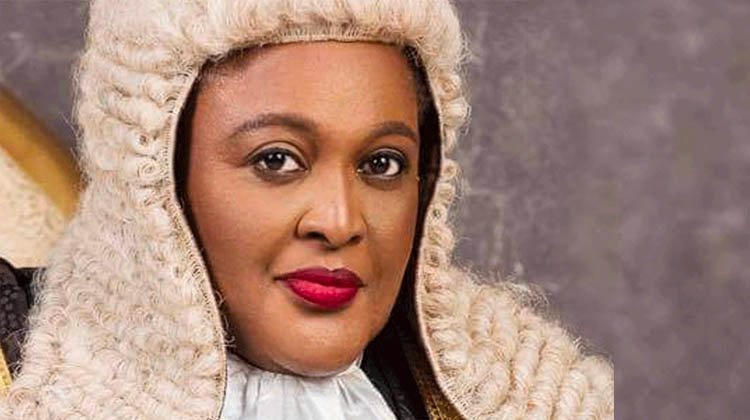
Mary Odili, Justice of the Supreme Court (JSC), has been in the news in the last one week for the wrong reason, through no fault of hers.

A woman with impeccable judicial records, Justice Odili has all the qualities of a good judge, ticking the boxes in judicial temperament, intelligence, ethics, courage, integrity, experience and education.Advertisement

As a judge, Odili applies the law to the facts and understands how a judicial decision affects human beings. Above all, she is a judge of immense courage, always willing to do what the law requires of her even when the course of action is not popular. In rendering justice, she has consistently shown compassion, empathy and respect for the essential dignity of all persons.

This is the same judge that the government embarrassed on Friday. Nigerians are outraged, no doubt, going by the seeming universal condemnation of the orchestrated assault on her Abuja residence. The move has been severely condemned from all quarters for being unconstitutional, illegal and an affront to the entire judiciary.

Yet, I blame Nigerians for her ordeal.

Why?

Because for too long, we have overindulged the whims of the Muhammadu Buhari-led government and the Odili saga is a natural consequence of that overindulgence.

A joint panel recovery unit of the Federal Ministry of Justice comprising the Economic and Financial Crimes Commission, the Nigeria Police Force and the Ministry of Justice, we are told, sought a search warrant from the FCT Chief Magistrate after a so-called whistleblower, Aliyu Umar, claimed that he observed some illegal activities at No. 9 Imo Street, Maitama Abuja. Chief Magistrate Emmanuel Iyanna, approved the request on October 29, 2021.

Nobody was told what the illegal activities were and nobody, not even the Chief magistrate, cared to ask. Armed with the search warrant, the security operatives marched off to Justice odili’s residence with all the swagger they could muster like children sent on a larceny expedition by their father, who noisily kick the front door open.

It is instructive that the Chief Magistrate who issued the vexing search warrant without any name on it revoked it same day, accusing the government of misleading the court.

It is also good that everyone is claiming ignorance of what happened. The leadership of the EFCC and Police have all distanced themselves from the tragi-comedy.

Appearing on Channels Television on Friday night, EFCC Chairman, Abdulrasheed Bawa, said: “It is not an EFCC thing. I have called all the security and law enforcement agencies in the country and they also denied that anybody has been sent to the house to carry out any search or arrest.”

Really? So, what happened? Is this another case of “unknown soldier” saga?

Nigeria’s all-powerful Attorney-General and Minister of Justice, Abubakar Malami, has also distanced himself from the shenanigan, pledging to make himself available for investigation if need be. Who will probe the man who has become, literally and figuratively, the Nigerian state writ large? If you believe that, you will believe anything!

It is also interesting that the Presidency is playing deaf and dumb.

But most scandalous is the fact that it took the Supreme Court four days to react to the egregious assault by agents of the Nigerian state controlled by the executive, a co-equal arm of government, not only on the person of Justice Mary Odili, but the entire Nigerian judiciary.

On Tuesday, the Supreme Court Director of Press and Information, Akande Festus, condemned the siege calling it unlawful and uncivilised, an impunity taken too far, and a shameful show of primitive force on an innocent judicial officer.

Good! But what stopped Chief Justice Tanko Muhammad from personally calling out those who not only debased the judiciary but whimsically violated the rights of the second most senior judicial officer in the country?

Of course, he cannot and we know why. The process that catapulted him to his high office is tainted by the same scandal he is expected to condemn.

Nigerians have themselves to blame for the way Buhari is treating them. Wittingly, we became cheerleaders, clapping and dancing, even as the government continued to trample on our rights, acting with impunity, beyond its powers. Instead of three arms of government, which is what the Constitution envisaged, we now have only the executive, with the judiciary and legislature acting as mere parastatals of the presidency.

When Buhari says jump, the Senate President, Speaker of the House of Representatives and Chief Justice of Nigeria ask, how high sir.

This tragedy started in October 2016 when the government orchestrated what has gone into history books as the worst assault on the Nigerian judiciary with the midnight raid on the homes of some senior Nigerian judges, including Adeniyi Ademola and Nnamdi Dimgba of the Federal High Court in Abuja, as well as Sylvester Ngwuta and John Okoro of the Supreme Court, by operatives of the Department of State Services (DSS).

Four days after his utter humiliation, Justice Ademola pointedly blamed Malami for his ordeal.

In an October 11, 2016 letter addressed to the then Chief Justice of the Federation, Justice Mahmud Mohammed, the embattled judge stated: “What is more intriguing in this whole episode is that I see it as a vendetta/revenge from the Hon. Attorney General of the Federation, Abubakar Malami (SAN). Whilst I was in Kano between 2004-2008 as a Federal High Court Judge, he was involved in a professional misconduct necessitating his arrest and detention. However, with the intervention of the Nigerian Bar Association (NBA), Kano Branch, the allegation of misconduct was later withdrawn by me.

“Consequently, the NJC referred Abubakar Malami (SAN) to the NBA Disciplinary Committee for disciplinary action. It was as a result of this he was denied the rank of SAN by the Legal Practitioners Privileges Committee for the period of four years until when he produced a fake letter of apology, purportedly addressed to me. It was then he was conferred with the rank. Since the above incident, Abubakar Malami (SAN) has threatened to revenge and swore to do anything to bring me down.”

Was any attempt made to investigate this weighty allegation?

No!

Instead, Nigerians cheered and clapped for their anti-corruption government.

The consequence? Emboldened, three years later, Buhari went for Chief Justice Walter Onnoghen and disgraced him out of office using, as usual, trumped-up charges of corruption.

The prudish, cavalier, humiliating and barbaric manner Onnoghen, head of an independent arm of government, was shoved aside, notwithstanding that the government failed to secure prosecutions for most or convictions for any of the judges earlier accused speaks to how much Nigerians have become accomplices to the crimes committed by the government against them.

It didn’t matter to Nigerians that Buhari’s move against Onnoghen was not merely unusual, it was also unlawful. They clapped, danced and made merry on Buhari’s anti-corruption altar.

On March 19, 2021, two years after he was disgraced out of office, Onnoghen revealed that he was a victim of the 2019 presidential election.

“Prior to my suspension, I was confronted with no allegation. There were rumours that I met with Atiku (Abubakar) in Dubai. As I am talking here today, I have never met Atiku one on one in my life. As if that was not enough, I was also accused of setting free, high-profile criminals, whereas I ceased to be a High Court Judge as far back as 1978,” the ex-CJN said.

Five years after the midnight raid on judges’ homes in 2016, law enforcement agents again invaded the private residence of the country’s second most senior judicial officer, Justice Mary Odili, on the preposterous and bizarre allegation of illegal activities.

Barely one year to the 2023 elections, Justice Mary Odili, who may well become the CJN by the time the elections are held is being hounded and Nigerians are behaving as if they are surprised and pleading with Malami to carry out an investigation.

Good luck Charlie, as Ghanaians would say. But, mark my words, this is only the beginning of Justice Mary Odili’s ordeal. What happened to her is not an accident. Those who orchestrated this assault will not rest until she gets the Onnoghen treatment. The corruption allegations are loading and when they are unleashed, we will be out on the streets once again, gyrating to the lyrics of Buhari’s anti-corruption orchestra.

Déjà vu!

Truth be told, Nigerians have overindulged Buhari’s executive indiscretions.

Understanding Tax Appeal Tribunal’s (Procedure) Rules, 2021

By Emmanuel Seungwa Ukera

The Tax Appeal Tribunal (Procedure) Rules, 2021 (hereinafter referred to as the TAT Rules, 2021) were recently issued by the Minister of Finance, Budget and National Planning, Mrs Zainab Shamshuna Ahmed, in exercise of her powers under paragraph 21, Fifth Schedule to the Federal Inland Revenue Service (Establishment) Act, No.13,2007 (hereinafter referred to as the FIRSEA,2007).

The TAT Rules, 2021, introduced with the intention to address procedural gaps observed in the course of implementing the repealed rules, took effect on June 10, 2021, and effectively revokes and replaces the Tax Appeal Tribunal (Procedure) Rules, 2010 (hereinafter referred to as the Repealed Rules).

Although the introduction of the TAT Rules, 2021 was well received and hailed by a vast majority of tax payers, analysts and other stakeholders as a commendable step that would fully unlock the potentials of the Tax Appeal Tribunal and make it more efficient in the dispensation of justice to aggrieved persons, a few analysts have picked holes in the rules particularly the provision of Order 3 Rule 6 which provides for mandatory payment of 50 per cent of the assessed tax to a designated account of the tribunal as a security for prosecuting the appeals.

In contrast to the Repealed Rules which had 24 Orders (XXIV), the TAT Rules 2021 have 27 Orders (XXVII) with each order broken into specific rules dealing with specific issues relevant to each subject matter covered under the Order. The TAT Rules, 2021 also have two Schedules. The First Schedule which deals with the various Forms relevant to the conduct of the proceedings or filing of pleadings and documents before the Tribunal designated as Forms TAT I to TAT II. The Second Schedule stipulates the filing fees for various processes and documents and related costs, most of which have been reviewed upward by 100 per cent to reflect current economic realities. Another unique feature of the TAT Rules, 2021 is that there is a table of contents and clear marginal notes introduced for ease of reference.

It should be clarified that the Documents Only Procedure under Order XV of the TAT Rules, 2021 is intended to allow the Tribunal to resolve tax disputes solely on the basis of documentary evidence especially where the taxpayer and the relevant tax authorities have agreed on the questions of facts. Parties may under such circumstance file an appeal consistent with Forms TAT 6 and TAT 7 to seek the interpretation of the Tribunal regarding the unresolved question of law. The Summary Appeal Procedure under Order XVI on the other hand is useful to the relevant tax authorities in the recovery of tax debt or liquidated money demand such as assessments that have become final and conclusive. Tax payers can also make use of Order XVI to enforce tax refunds recognised under the relevant tax statutes. However, under Order XVI Rule 3 (a) where the Tribunal finds merit in the defence entered by the respondent, it shall transfer the Appeal for hearing and order the parties to file pleadings in compliance with Order III.

Similarly, the introduction of Order XXII empowering the Tribunal to award costs is made subject to the general principle on costs under paragraph 22 of the Fifth Schedule to the FIRSEA which states that each party to an appeal shall bear its own cost. It is trite that while the Tribunal is precluded from awarding the cost of prosecuting appeals before it against either parties, the enabling Act is silent on wasted costs hence the provision of Order XXII which now allows the Tribunal the discretion to award costs against any party or his representatives in deserving circumstances.

By and large, the TAT Rules, 2021 gives recognition to e-filing under Order 3 Rule 5; mandatory payment of 50 per cent of tax assessed as security for prosecuting appeals before the Tribunal and deposition as to payment of undisputed/provisional tax as security as in Form TAT 1(B) under Order 3 Rule 6 (a) and (b) respectively; filing of appeals at any Zone of the Tribunal but heading same in the appropriate zone of the Tribunal where it is to be heard under Order 4 Rule 2; service of processes by electronic means; power of the Tribunal to order service of processes by electronic means and proof of service (including proof of electronic service of processes under Order 7 Rules 3, 5 and 8 respectively; relisting of appeals struck out to be upon application by the appellant, Tribunal to be satisfied before proceeding with hearing in the case of non- appearance by the respondent under Order IX Rules 2 and 3 respectively; hearing of applications and delivery of rulings remotely by virtual means, hearing of ex parte and non–contentious applications in chambers and from chamber to the Tribunal and vice versa, and ruling on applications under Order XI Rules 4, 5 and 6; conduct of pre-trial conference under Order 17 Rule 2; limitation on adjournments under Order XIX; proviso deeming filed addresses as having been adopted under Order XX; and hearing and conclusion of appeals not to exceed six months except as determined by the Tribunal, review of decisions of the Tribunal, time for application for review, time for appeal after review of Tribunal decisions, filing of terms of settlement and entry of consent judgement under Order XXI Rules 1, 6,7, 8 and 9 (1)(2) and(3).

Ukera is a Tax Commissioner, North Central Zone, Jos

Legality Of DNA Test On A Deceased Person

By Deborah Iniye Warrie Esq.

WHAT IS DNA?  DNA (deoxyribonucleic acid) is the molecule that contains the genetic code in the chromosomes of the cells of living things. It thus determines the particular structure and functions of every cell and is responsible for characteristics being passed on from parents to their children. The DNA molecule consists of two strands that wind around each other to form a shape known as a double helix.

NOW, WHAT IS A DNA TEST? It is a test, which, among other things, is used to identify someone or to show that people are relatives.

WHAT IS A DNA PATERNITY  TEST?

According to the Wikipedia DNA Paternity testing means:

“The use of DNA profiles to determine whether an individual is the biological parent of another individual. Paternity testing can be especially important when the rights and duties of the father are in issue and a child’s paternity is in doubt. Tests can also determine the likelihood of someone being a biological grandparent. Though genetic testing is the most reliable standard, older methods also exist, including ABO blood group typing, analysis of various other proteins and enzymes, or using human leukocyte antigen antigens. The current techniques for paternity testing are using polymerase chain reaction (PCR) and restriction fragment length polymorphism (RFLP). Paternity testing can now also be performed while the woman is still pregnant from a blood draw.”

A DNA paternity test is nearly 100% accurate at determining whether a man is another person’s biological father. DNA tests can use cheek swabs or blood tests. You must have the test done in a medical setting if you need results for legal reasons. See OLAYINKA v. ADEPARUSI & ANOR (2011) LPELR-8691(CA)

“To my mind, the paternity of the disputed res has not been determined, anybody can be awarded custody of a child but the most important thing is that if a party is claiming paternity it is trite that a Court of Law should be allowed to determine same on proof of evidence relating to paternity, which could only be done by referral for a DNA test of the parties involved. After such a test the Court has a duty to declare the actual father of the child in dispute, in consonance with the evidence at its disposal.”

Also, prenatal paternity tests can determine fatherhood during pregnancy. Can scientific DNA testing be conducted on a deceased person in a paternity dispute? YES. Before dealing with the question above, it is necessary to first and foremost indicate what does DNA paternity testing entail? In a DNA paternity test, the result (called the ‘probability of parentage) is 0%, when the alleged parent is not biologically related to the child, and the probability of parentage is typically 99.99% when the alleged parent is biologically related to the child.

What is the legal procedure to get a paternity test performed?

Depending on the circumstance of the case, the party involved can file a motion, asking the Court for a DNA test to be conducted. Or the Court can suo motu (on its own accord) order for a DNA case to be conducted. See ANOZIA v. NNANI & ANOR (2015) LPELR-24277(CA)

See the case of Olayinka vs Adeparusi & Anor (2011) LPELR 8691 CA, where this Court, per Denton West JCA, held: “…If a party is claiming paternity, it is trite that a Court of law should be allowed to determine same on proof of evidence relating to paternity, which could only be done by referral for a DNA test of the parties involved. After such a test, the Court has a duty to declare the actual father of the child in dispute in consonance with the evidence at its disposal. DNA, as the molecule that contains the genetic code of any organism hereditary and has become a euphemism for scientific analysis of genetic constitution, to determine one’s roots. where one is a minor (not mature adult) and his paternity is in issue, the Court can order the conduct of a DNA test, in the overall interest of the child, to ascertain where he belongs.”

Medical Procedure

To perform a paternity test at DNA level a blood sample is required from the mother, the alleged father, and the child. Children of any age can be tested. Unlike the traditional blood tests where the child has to be six months of age, there is no age limit with DNA. Paternity testing can be performed on unborn children. Prenatal paternity testing can be performed with the amniotic fluid or a chorionic villus sample collected from the mother’s womb prior to birth or with fetal tissue. Paternity testing can also be performed using postmortem specimens.

Deceased DNA Testing

It is possible to perform paternity testing by comparing DNA profiles from the child and an alleged father or mother who is deceased. To establish parentage,  forensic samples from the deceased individuals are required postmortem for paternity disputes or estate claims. However, prior to commencing testing it would need to be established whether a sample is available from the deceased party.

Who Collects the Sample from the Deceased?

The sample collected from the deceased for DNA testing may be a hair follicle, fingernail, or blood sample. However, a written consent from the deceased party’s family or relative must first be obtained before commencing the test.

What if there isn’t a sample available from the deceased?

A relationship DNA test can be used in cases where an alleged parent is not available for the testing of a direct parent-child relationship. Extended relationship DNA testing can be carried out to determine whether there is a relationship between the persons being DNA tested. Testing can be performed between individuals who may share common relatives, such as siblings, aunts, uncles, nieces, nephews, grandparents, cousins, etc.

MOST PROMINENT CASES WHEREIN DECEASED DNA TESTING WAS USED BY THE COURT

In the matter between D v M and two others, Held in the High Court of South Africa, Gauteng Division, Johannesburg, under case number: 30619/2015, the Court after considering the application brought by an executor of the estate of a deceased person, in terms of which the executor request that the High Court ordered the mother of a minor child as well as a minor child to subject themselves to a DNA test, in order to establish whether another minor child of the deceased was, in fact, the biological child of the deceased. In this matter and various other matters before it was established that a High Court with the necessary jurisdiction may be approached as in the matter of D v M and two others to force the parties to subject them to DNA testing and even to exhume remains of a deceased person to enable DNA test to be done.

Nield-Moir v Freeman [2018] EWHC 299 (Ch) – the Family Law

In this case, Colin Birtles died intestate leaving two daughters Janice and Lorraine.  In accordance with the statutory intestacy provisions, they stood to inherit the estate equally between them.  However, Janice alleged that Lorraine was not the deceased’s biological daughter which, if correct, would have meant that she inherited the whole of the estate herself.

She told the court that her father had told her this was the case during his lifetime, producing various witness statements from others in support. Lorraine defended, stating that she was born during the period of the deceased’s marriage to her mother (raising the common law presumption of parentage) and he was named as her father on her birth certificate.  After their parents’ divorce, he also paid maintenance for her until she was 16 years old. She said the allegations were ‘nothing but gossip and hearsay. She refused to consent to DNA testing. The court had to decide whether they had the authority to order that DNA testing should be carried out. There was no clear legal authority. The judge did not go so far as to compel it but made an ‘unless’ order requiring her to either submit to the test or the court would draw inferences from her refusal.

Other Instances:

DNA testing can be useful in other ways and not just to resolve estate disputes after death.  In the case of Anderson v Spencer [2018], EWCA Civ 100 in 2018 the deceased was diagnosed of bowel cancer, which could be hereditary. Therefore, the applicant wanted to establish his parentage as he was advised that if the deceased was his father, he should undergo a colonoscopy every two years.  The Court of Appeal agreed with the High Court that it could. In 2016, the Privy Council in the case of Re Baronetcy of Pringle of Stichill 2016 GWD 20-360 held that DNA evidence collected for a family research project could be used to resolve a Scottish succession dispute.

DNA TESTING CAN ALSO BE USED IN RESOLVING CRIMINAL CASES

State v. Williams, 458 So. 2d 1315 a Locus Classicus.

On August 22, 2007, a state appeals court in Baton Rouge the capital city of the U.S. State of Louisiana, ruled that Archie Williams (an accused wrongfully incarcerated for 37 years in prison and released on March 21, 2019) had a legal right to DNA testing that could prove his innocence in a rape and attempted murder case for which he was convicted in 1983.  The ruling came nearly a quarter-century after Williams was convicted and 11 years after attorneys for Williams filed the first legal motion seeking DNA testing in the case.

The case stems from a December 1982 attack at a woman’s Baton Rouge home.  An unknown assailant pushed his way into her house, raped her and then stabbed her.  The victim and a friend (who entered the home during the attack) were both asked to identify the perpetrator in lineups.   The victim was shown in 17 different photo arrays.  In the first two, she did not identify Williams, but his photo was in the last three consecutive photo arrays, and she identified him in the last one (Williams’s was the only photo shown in more than one photo array).  He was convicted in April 1983 based on the victim’s identification, even though he did not match her initial description of the perpetrator (among other factors, Williams is about a half-foot shorter than the perpetrator as described by the victim).  Years after he was convicted, the analysis showed that Williams was not the source of bloody fingerprints that the perpetrator left at the crime scene after stabbing the victim.

In December 1996 after unsuccessfully trying to persuade the Baton Rouge District Attorney to agree to DNA testing without a court order, Williams’s attorneys filed a motion in state court asking for DNA testing.  That motion was denied, as were at least nine others over the next 11 years that were filed in state and federal courts. Even after the Louisiana Legislature passed a law in 2001 explicitly granting access to post-conviction DNA testing, prosecutors opposed Williams’s motions seeking testing, and the courts denied testing.

At Williams’s trial, prosecutors noted that motile sperm were collected in the victim’s rape kit.  DNA testing was not available at the time, but prosecutors said the sperm came from the perpetrator and that Williams had the same blood type as the perpetrator.  In court filings in recent years, the Baton Rouge District Attorney’s office had switched course and said DNA testing on the sperm would not prove Williams’s guilt or innocence, since the victim might have had consensual sex with her husband.  Motile sperm, like that collected from the victim immediately after the attack, is only present for a few hours after it is deposited.  In court filings, the Innocence Project had said that if the victim had consensual sex shortly before the rape, there could be two men’s DNA present (the victim’s husband and the perpetrator), and DNA testing could reveal both profiles – still proving whether or not Williams is innocent.

On March 21, 2019, the prosecution joined Williams’s attorneys in requesting that his convictions be vacated. The motion was granted, the charges were dismissed and Williams was released—36 years after his arrest. East Baton Rouge Parish District Attorney Hillar C. Moore III, told Williams in court: “As a representative of the state, I apologize.”

In March 2020, Williams filed a federal civil rights lawsuit seeking damages for his wrongful conviction.

DNA testing exonerated nine people in Louisiana in the last eight years.  In four of those nine cases, DNA didn’t just prove that wrongfully convicted people were innocent – it helped identify and apprehend the true perpetrators of the crimes.  In nearly 40% of the 206 wrongful convictions overturned through DNA testing nationwide, DNA also helped identify the true perpetrators of crimes. It has been shown that DNA can exonerate the innocent while also helping identify and apprehend the guilty, in the interest of justice, public safety, and confidence in the criminal justice system.

CONCLUSION FOR LITIGANTS

Conclusively, although a Court of Law can be approached in order to either force compliance from a person who refuses to provide a DNA sample or even to exhume the body of the deceased person to enable DNA testing to be done, DNA sample obtained from siblings, Grandparents and Uncle/Aunts can also provide a report to prove paternity, and the results from such testing will be admissible in a court of law. See ROYORK (NIG) LTD v. A.G & CJ, SOKOTO STATE & ANOR (2017) LPELR-42506(CA)

“The position of the law is that evidence is admissible when it is relevant to the issues and when it is also competent. The usual catchphrase is: “that admissibility of evidence is governed by relevance”.

What makes a piece of evidence relevant is when sufficient facts relating to the piece of evidence or documentary evidence are copiously pleaded. This goes to show its relevance to the case of the party in question and once the piece of evidence is competent, that is to say, that there is no legal bar to its admissibility, then the document is admissible. ” Per FREDERICK OZIAKPONO OHO, JCA (Pp 23 – 24 Paras A-B)

However , it is advised that you approach the office of a legal representative, should you have the need to establish paternity in any case, to ensure that the correct process is followed. This is because, under the Human Tissue Act 2004, DNA is considered a ‘designated material’ and as such, DNA can only be collected from the deceased by an authorized person in a Human Tissue Authority (HTA) licensed premises.

Also, there are human rights issues in all of these cases. Article 8 of the Human Rights Act 1998 protects our privacy and our family life. Does this extend to privacy over parentage?  There is not much Strasbourg case law on the point.

A case in Switzerland in which the Swiss Supreme Court had ordered that the body of a deceased person was to be exhumed for DNA testing was challenged and the court held that the right to privacy under Article 8 could not prevent DNA testing of a deceased person to establish parentage.  (The Estate of Kresten Filtenborg Mortensen v Denmark (dec.), no. 1338/03,§  ECHR 2006-V Estate).

This was also considered in Nield-Moir v Freeman and interference with Lorraine’s human rights was considered justified as a means of protecting the public interest in the accurate resolution of resolving inheritance disputes.

CONCLUSION FOR LEGAL PRACTITIONERS

There is an abundance of developing case law in this area both in the context of the Court of Protection and estate disputes generally.  Therefore DNA testing is likely to become more and more commonplace and the courts appear to be more readily inclined to order where consent is not forthcoming.  With increasingly complex family structures, the propensity for these sorts of cases is only set to continue.

Reference List:

  1. https://primsol.lawpavilion.com
  2. https://en.wikipedia.org/wiki/DNA_paternity_testing;
  3. http://unistelmedical.co.za/paternity-parentage-testing
  4. https://www.collinsdictionary.com/dictionary/english/dna
  5. https://www.nvrlaw.co.za/NewsResources/NewsArticle.aspx?ArticleID=2965
  6. https://www.paternityforlife.co.uk/
  7. https://en.wikipedia.org/wiki/DNA_paternity_testing;
  8. http://unistelmedical.co.za/paternity-parentage-testing
  9. https://dnaq.com.au/https://dnaq.com.au/deceased-dna-testing
  10. https://my.clevelandclinic.org/health/diagnostics/10119-dna-paternity-test
  11. https://www.merriam-webster.com/dictionary/DNA%20test
  12. https://www.genome.gov/genetics-glossary/Deoxyribonucleic-Acid
  13. https://innocenceproject.org/state-appeals-court-grants-archie-williams-dna-testing-to-prove-his-innocence-11-years-after-he-first-asked-a-court-for-testing/
  14. https://www.law.umich.edu/special/exoneration/Pages/casedetail.aspx?caseid=5529.
  15. https://www.law.umich.edu/special/exoneration/Pages/about.aspx
  16. https://www.wrighthassall.co.uk/knowledge-base/dna-testing-in-wills-and-inheritance-disputes

For more legal advice and tips, follow DEBBY G CONSULTS ON 09018561398 https://wa.me/message/6OOIP3WVZXE6G1 OR https://www.facebook.com/DEBBY-G-Consults-123260913269689/ OR @dg.consults_2021 on Instagram


Know ‘Ur’ Right With Barrister Monkey Jacket

By Daniel Bulusson, Esq

Having practiced law for a period of ten years, being a legal columnist and media practitioner since April 2013, and my interactions with those who bring complaints to my desk, I have come to realize that the primary root cause of most legal tussle, police harassment, land lord tenant dispute, even creditors to commercial disputes on the trade streets stems from the fact that majority of Nigerians go into transactions blindly without actually knowing their rights and obligations as enshrined in the laws of the land.

We see people taking civil issues like debt recovery, eviction of tenant from a property being reported at police stations on a daily, we see the fundamental human rights of Nigerians being abused consistently because of ignorance of the law on the part of the suspect, a typical example is an employee being detained in police custody for close to three weeks without being charged to court on the employer’s instruction and suspicion that the employee used office funds to buy a vehicle.

If the suspect detained had hired the services of a lawyer, or was aware of his fundamental rights as enshrined in the constitution, he would not have allowed himself to be detained for so long without being charged to court, or at least seek police bail pending investigation. The problem with Nigerians is that we don’t know the law, and yet, in our ignorance, we are not ready to listen or seek advice from those who know the law, its like a blind man who can’t see, yet insists on crossing a road at a time those who can see are waiting for traffic to subsize.

I have seen people come to complain about buying a land from a family and don’t have documents to support their claim of such purchase, or a piece of land being sold to several buyers and none of the purchasers ever took steps to perfect such title, the only proof each purchaser has is a sale of land agreement, or traders go into business transactions with one another worth millions of naira on the basis of trust without putting signature to a written agreement and when dispute arise, it is one person’s word against another.

In my humble opinion and I stand to be corrected, many of the disputes we try to solve in this country is a result of the ignorance of many Nigerians on their rights and obligations as provided by the laws of the land. We take serious issues for granted, and wait for ‘casala to burst’ before we take such issues seriously, by then our carelessness has already made the matter worse.

It is for this reason that a WhatApp platform ‘Know ur right with Barrister Monkey Jacket’ was created, to educate Nigerians on their fundamental human rights using current national issues as they happen to explain or buttress a point to the understanding of Nigerians. Readers of our articles or members of the platform are also free to share their experiences of any form of human rights abuses, or report any ongoing abuse of human rights violation so that directive can be given on the appropriate steps to take in seeking redress, and we on our part, can share those experiences to the world.

It is my belief that with proper education on citizen’s right and obligations, various avoidable disputes can actually be avoided, and complaints can be made through the proper channels to avoid the wastage of time and resources pursuing the right thing in the wrong way.

To chat with Barrister Monkey Jacket, send Hi on WhatsApp to +2348087208546 or click the link below https://wa.me/message/IHMZ613UOJY6G1 to join.

Our job is to educate and enlighten you on the right way to take in addressing that issue so that you know your right. Why Monkey Jacket? Because this writer is a fan of wearing monkey Jacket that’s all (Smiles)!

Rotational Presidency And The Future Of Nigeria (1)

By Muiz Banire SAN

If there is any subject that is favourably competing with the state of insecurity in Nigeria today, it is certainly the issue of presidential zoning in the coming 2023 elections.

The only other issue tailing that will be issue of the entitlement to the collection of the value added tax between the federation and some states.

This issue of value added tax collection, just as that of rotational presidency, has largely pitched majority of the Northern states against the Southern states. In virtually all conversations recently, this issue of which region or zone the next president of Nigeria should come from is domineering. It is a major discourse amongst the politicians as well as practically all other stakeholders in the Nigerian project.

In fact, it has transcended the traditional strugglers for power, into the various ethnic groups and individuals. To this end, the Governors of the two regions of the country have publicly come out to state their respective positions; while the southern Governors believe that the presidency must naturally be zoned to the southern part of the country, the northern Governors are of the view that it must be opened to all. Thus, the crux of the ‘agitation’ is simply whether the southern part of the country should exclusively be entitled to the slot come 2023, or the ticket be made free for all, irrespective of the region or zone you are from.

This is equally an issue that I have perfunctorily commented upon in recent past but not in a formal manner that I intend to do now. Although there has been legion of comments from several quarters and individuals on the subject, of interest to me however are those of two of my colleagues that I read of recent. In a seemingly controversial manner, the two erudite scholars will appear to be on a war path on the issue but to mind, their positions are easily reconcilable and sustainable.

The first to fire the salvo is my friend and brother, J. S. OKUTEPA, SAN who contended in his submission that “Nigeria does not need ‘power shift’ but ‘leadership shift’, ‘character shift’ and ‘attitude shift’; a shift in ‘the way we do things’. Nigeria does not need Igbo, Hausa/Fulani or Yoruba power shift because it is an insult to the collective sensibilities of the more than 240 other tribes that are part of the Federation of Nigeria. Nigeria does not need a ‘power shift’ to any of these so-called majority ethnic nationalities of Igbo, Hausa/Fulani and Yoruba because leaving power in the majority ethnic groups has led to deteriorating political, social, and economic developments as the majority ethnic groups have successfully nurtured corruption. Come 2023, let us avoid power shift… we cannot continue to operate a lawless system and expect good results and development… it is the leadership shift we need”.

This position of the learned Silk used to be my position until recent unfolding events, particularly that of justifiable secession and restructuring clamour. My thought has been that we must not emphasize our diversity at the expense of our unity which should be our strength. However, observing unfolding events convinces me otherwise.

That is to say that if the unity must be promoted and sustained, all parts of the country must be positioned to believe in the unity and indivisibility of the nation. Of course, there are several ways of achieving this but the most potent is where they are given the proper recognition in the scheme of things in the country, particularly with regard to the occupation of public offices. Beyond the allegation of nepotism that is rife in the country, the obvious fact is that the number one political office of the country is in the last six years plus being in possession of a particular region of the country, precisely the northern region. The expectation, therefore, is that the office will naturally move to the southern part of the country.

This is what is being described as rotation as opposed to the treatise of Okutepa, SAN on leadership shift. The learned Silk’s position is simply that we should not be bothered by the region or zone the next president of the country is emerging from but rather focus on the content of the potential leader. The import of this is that such competent leader can come from any part of the country.

This argument is indisputably sound where the question of nationalism and patriotism is settled. In other words, it is feasible where the inhabitants of the country see themselves as one. Regrettably, however, this cannot be said of our nation which historically, in the first instance, is a conglomeration of several ethnic nationalities that are not well-knitted. Even if the reality of that evolution was not foreseeable and preventable, same cannot be said of subsequent events to the country’s independence.

The expectation would have been that with time, the differences in us as men and women from different ethnic nationalities would have been dwarfed. Unfortunately, our leaders, over the years, have not succeeded in promoting this ideal but rather actively done otherwise. Today, nobody can pretend that the diversity is staring us more in the face as agitation for restructuring of the nation and secession continues to grow.

This fact convinces me, therefore, that there certainly must be an arrangement in place capable of engendering the confidence of all if the origin of the potential president must not matter. It is the absence of this thought that preliminarily flaws the contention of my brother Silk and necessitates the rotation of the presidency amongst the different regions and probably zones. Thus, my hitherto view of allowing the emergence of any Nigerian as the president of the country has changed. As indicated above, this is not only premised on the historical evidence of the existence of different tendencies in the country but even recent glaring facts of seeming domination and oppression in the country.

The implication of this is the creation of multiple suspicions amongst the different ethnic nationalities. This is now more pronounced mainly between the major regions of the north and south of the country. Altercations along those lines of diversity is now a recurrent decimal in virtually all discourses in the country. This ugly development is certainly unhealthy for the nation.

Thus, to assuage the feeling and allay the fears of the other region, it is expedient that the presidency must be allowed to shift to another region if we mean well for the nation. It is equally essential that this must be done in order to promote the unity of the country crucial to her development. Our leaders need to heed the admonition of the former President of the USA, Bill Clinton, offered to the residents and people of America as a farewell message on his leaving office, quoted in Udemezue’s work and which is apt to the Nigerian situation, to the effect that “… we must remember that America cannot lead in the world unless here at home we weave the thread of our coat of many colours into the fabrics of America.

As we become ever more diverse, we must work harder to unite around our common values and common humanity…. In our hearts and in our laws, we must treat all our people with fairness and dignity, regardless of their race, religion, gender or sexual orientation”. In line with the above, my view is that the presidency must shift to the southern part of Nigeria. In the course of preparing this script, I stumbled on another of my colleague’s work, which is that of Sylvester Udemezue, titled, ROTATIONAL PRESIDENCY IS A MANDATORY REQUIREMENT OF THE NIGERIAN CONSTITUTION AND A NECESSARY PRE-CONDITION FOR STABILITY AND NATIONAL INTEGRATION (a rejoinder to J.S. Okutepa, SAN).

This work substantially mirrors my thoughts on the subject and I was willing to adopt the reasoning therein in toto as mine but for the volume and the editorial policy of my publisher that forbids same.

I, therefore, will encourage my readers to locate the full version of his thoughts which are not only scintillating, well researched, pungent but fantastically articulated. In fact, I had sought his permission to just simply run the article in my column but for the editorial policy that will not permit. Hence, my decision to reecho his thoughts which substantially align with mine but for the extensive legal basis graciously provided by him to all the questions. The starting point of this discourse is the grundnorm, the Constitution of the country which a lot of commentators have relied upon in insisting that rotational presidency is unknown to the Nigerian Constitution and therefore ‘illegal’.

This was the loud position of the northern Governors also. The apostles of this view often forget that it is not everything that the Constitution of the country provides for. It is only the Nigerian Constitution that I have seen to be this voluminous. Constitutions simply contain the fundamental basis of organization and not the details. In responding to this question, the great scholar, Udemezue, deployed the preamble to the Constitution in conjunction with relevant and germane provisions contained in Chapter 2 of the Nigerian Constitution on Fundamental Objectives and Directive Principles of State Policy.

The preamble to the Nigerian Constitution stipulates that the country must be organized and run on the principles of freedom, equality and justice for the purpose of the unity of the country. Further, the Constitution recognizes and reminds all his subjects of its supremacy which implies that the affairs of the country must be run on the strength of its provisions.

DAILY LAW TIPS by Onyekachi Umah,Esq. (Tip 72)

Do you know it is an offence to sell any butchers’ meat or fresh fish without a weighing balance and total weight of the meat or fish. Shell fish is exempted as well as sale of any type of fresh fish at beach or waterside.

See section 29 of Weights and Measures Act.

#DailyLawTips
#LearnNigerianLaws
#SabiLaw

To receive our Daily Law Tips for free follow our Facebook page, Twitter or Instagram via “LearnNigerianLaws”

Powered by www.LearnNigerianLaws.com

A desperate search for what is not missing

By Owei Lakemfa

BAUCHI seems to retain its innocence. An urban city that remains infidelity with its better rural half. As you race out of the city, small beautiful hills run before you ending up at the feet of the enchanting Gubi Rock, paying what may be an eternal homage to their chief.

What pointedly reminds you that you are in a modern Nigerian city is its hordes of commercial motorcycle and tricycle operators who clog the streets in a ‘poor versus rich’ combat with motorists. They seem oblivious of traffic rules and appear deaf to the horns of motorists who want to assert their fundamental right to be on the road.

It was on this visit that I got to know that the alias of Governor Bala Mohammed whose billboards litter the roads, is ‘Jagaban’ and that ‘his people’ want him to contest the 2023 presidential elections. I was in the city to deliver the keynote address of the Academic Staff Union of Universities, ASUU Bauchi Zone “State of The Nation Summit.”

The quite perceptive six universities in the zone; University of Jos, Bauchi State University, Gombe State University, Federal University, Kachere-Gombe; Plateau State University and the host, Abubakar Tafawa-Balewa University, ATBU, believed that such a summit was urgent.

It is part of their efforts to draw attention and find solutions to the suffocating  problems of the country which include a heavily indebted and collapsing economy, a degenerate state of education, failed security system and an increasing sense of hopelessness among Nigerians.

ASUU National President, Professor Emmanuel Osodeke, who said the security situation is so bad that many Nigerians are afraid to travel by road, revealed that the union is mobilising the populace to support a bill it is sending to the National Assembly titled: “Bring Back Your Children.” The import is to midwife a law that would compel all those leading or  who want to lead the country at any level, to have their children enrolled in schools in the country, not abroad.

The chairperson of the summit, Professor Omotoye Olorode was at home; he was in a university he had spent his 1983 sabbatical, and some of his old students were now professors in the institution.  He recalled that in 1984, ASUU organised a State of the Nation summit which produced a widely circulated communiqué titled: “How to save Nigeria.”

He said that publication showed that: “We saw all that has happened, coming, because that is what we are taught to do.” ASUU, he recalled, organised similar summits in 1992 and 2001 making the same warnings and demanding a change of direction, but that theirs was a voice crying in the wilderness to which the ruling elite were deaf.

He said when a country is in crisis, its intellectuals have a duty to analyse the issues especially the root causes, speak up and join in the struggle for a solution. He regretted that while in 1984, the country had a synergy of the academic, labour and young people, the ruling elite including in the military had worked hard to break that unity. Olorode, 80, however, added that the struggle to emancipate the country must go on adding that it is an inter-generational duty.

In my address, I told the summit that Nigerians live in times when education is the bedrock of development, when we accept that available schools are insufficient and that the phenomenon of out of school children is unacceptable, yet we close schools due to the advance of terrorists and bandits.

That even when some schools are open, we have lost the courage to tell parents to send their children rather than keep them at home. The simple reason is that we cannot keep the schools safe from marauders who rob, kidnap and kill.

Also, that we live in times of hyper-inflation when food is in short supply and many are hungry, but many farmers are at home or in Internally Displaced Persons Camps yielding ground to insurgents, bandits and terrorists. I pointed out that in large parts of the country, the state and the citizenry have abandoned the farms to bandits who sow fear, culture death and reap very rich harvests of ransom.

I also posited that we live in times when the Nigerian would need at least a three-day dry fasting before embarking on a road journey. That while in the past, we complained about the inadequate and poor state of the roads, today, we have abandoned many of these roads to bandits while in some cases, even workmen repairing roads or building new ones are kidnapped along with the armed security provided for them.

I also pointed out that we live in times when we complained that the telecommunication coverage in the country is limited, but due to activities of bandits and terrorists, some states in the country shut down telecommunication services. So the populace in such places are not only deprived means of communication but that if under attack, will be unable to call for help.

I recalled that three years ago, I interviewed a veteran trade unionist for a book I co-authored on the privatisation of the power sector, entitled The Light In The Tunnel May Be A Coming Train. He told me a shocking story of how in parts of Katsina State, parents were withdrawing their children from school and handing them as apprentice to bandits!

In this instance, the loss of the classroom is the gain of the forests as such children were being made to transit from the classroom to the forests; from being taught with the chalk to counting bullets; from being taught how to handle the pen, to how to handle the gun. For them, power will flow not from knowledge or the pen, but the barrel of the gun.

Based on these, I posited that while we can talk economics and education, politics and governance, freedom of speech and the fundamental right to movement or even about the future, what may condition all these, is security or lack of it.

My conclusion was that we need a minimum programme of free, accessible and qualitative education and  healthcare, rural development and transformation, the right to work, food and shelter and a general mobilisation and military training for Nigerians to defend themselves, their families and communities based on a pro-people ideology.

I pointed out that while we can tackle general insecurity, our greater challenge is tackling the greed, prodigal and poverty-inducing misrule in the country by the political elite who hold the country hostage. So, Nigerians need to organise and mobilise to chase out those causing us pain and suffering. I concluded that we are in desperate search of solutions that are within our grasp.

Jalumi War: Remembrance and Lessons

By Lasisi Olagunju

Today, November 1, 2021, is the 143rd anniversary of the Jalumi War. Some historians call it the Battle of Ikirun but Jalumi (meaning: plunge into river) is the more popular name for the one-day war that commenced at dawn on Friday, November 1, 1878 and was won and lost before dusk same day. Those who drowned in Otin River that day might be soldiers of the Emir of Ilorin but the war was not strictly a Yoruba-versus-Fulani war. It was, in fact, a Yoruba-versus-Yoruba war. The Fulani army of Ilorin was invited as an ally by one of the sides, but the invitee saw more than being an ally in that expedition. There were old scores waiting for settlement.

It was a war without a heart; a killing field from which one-child parents went home empty-handed. Jalumi was fought between the Ibadan/Oyo army and the allied forces of Ijesa, Ekiti and Ila who invited the Fulani forces of Ilorin to join their campaign. But while the objective of the “rebellious” Yoruba groups was to liberate their people from the stifling overlordship of Ibadan, the Ilorin establishment jumped at the invitation as an opportunity to finish off all the sides and fulfill its imperial ambitions. It was the same design sixteen years earlier at Ijaye when Ilorin joined its old foe, Kurunmi, against Ibadan. History, indeed, quotes the reigning emir as telling his people why they must be part of that war. Check Samuel Johnson (on page 338) where the emir said: “The Kaffirs (infidels) are at war with one another, and we should combine against this Ibadan which has often baulked us of our prey.” What was that prey? He and his people had no problem knowing what the illusive prey was. And they fixed their gaze on it, repeatedly aiming at getting it, even today. The emir also said something about using the Ibadan-Ijaye war to “yet carry the Quran to the sea” as if there were no Muslim Yoruba at that time. But he was right in his designs; he had a mandate to expand the frontiers of his heritage using the sword of Tortoise to kill Tortoise. So, do not blame the wily Fulani, the alliance-seeking Yoruba crawler was the ass.

How the Jalumi war was fought, won and lost is not hidden in history. Almost a century and a half after that day of blood and death, what lessons were learnt should be the focus here. That war was a war of liberation from Ibadan by the Ekiti, Ijesa and Ila. But how did they become vassals of Ibadan in the first place? Was it not the quest for protection from the same marauding outsider who became an ally in this war? The Fulani was supposed to be a common enemy, but he was also a willing partner to any Yoruba group desirous or worthy of his comradeship. He did that throughout the Yoruba wars of the 19th century. A rash of treacherous alliances delivered 19th century Ilorin from Alaafin’s plots to win back that part of his empire. In one moment, Ilorin supported its arch-rival, Ibadan, in a war called Batedo and mounted a futile siege on Ogbomoso. For that favour, it sought and got Ibadan’s alliance in the Opin War – a punitive expedition against some Ekiti towns. No enmity was too bitter to be thawed with alliance requests. There were many more of such handshakes across lines of indecency. Danmole and Falola’s 1985 paper: ‘Ibadan-Ilorin Relations in the Nineteenth Century: A Study in Imperial Struggles in Yorubaland’ provides a deep insight into the intriguing complexities of the military politics of that era.

Ilorin’s presence in Jalumi was a continuation of a military diplomatic tradition rooted firmly in the end always justifying the means. The Fulani does that till today. You can examine the cold-blooded alliances that birthed (and still rule) the political parties called the PDP and the APC and their current tremors. The Fulani does not forage the forest picking palm nuts that have no kernels. Yoruba war bards knew how poisonous, dangerous and slithering in maneuvers the King Cobra could be. The fast and agile reptile sees no danger subsisting on other snakes while also preying on other breathing stuffs. If you read or heard ‘Arewa ejo’ (beautiful snake) as a praise name of the Fulani, he got that salute from those who experienced him in Yorubaland during that period of encampment and decampment. Yet, descendants of the witnesses to that age of guile are today seeking to use the wise Fulani fingers to pick 2023 presidential chestnuts from the fires of Nigerian politics. It won’t work.

Yorubas do not forget; worse, they do not forgive even their own. Paraphrasing Jonathan Swift, I would say the Yoruba have “just enough religion” to make them hate, but not enough to make them love one another. Their troubles throughout history is from here. Historians say that battles between different Yoruba groups started in 1793 at Apomu in present-day Osun State. Over what? Ask them. For the next 100 years, Yorubaland and its people knew no peace again. About two decades after the Apomu incident, nearby Owu, a thriving community of valiant people, sinned and was comprehensively visited with destruction by Yoruba armies east, west, north and south. Destroying Owu was not enough. A decree accompanied it that it must forever remain in ruins, “never to be rebuilt.” On June 4, 1851, David Hinderer, the first European missionary in Ibadan, wrote of what he saw of what remained of Owu: “This afternoon, I rode out to the place of old Owu which is only two miles from my lodging. Owu was an old very large town composed of the whole tribe of that name. It was destroyed about thirty years ago and is now converted into farms by the Ibadan people but main ruins still remain…To think of the awful and bloody scenes such a large place must have witnessed at the time of its destruction makes one shudder and feel indignant…” (See Akinjogbin’s War and Peace in Yorubaland, 1998 at page 40). The lion ate its cub; it still does. The convulsion which ravaged the Yoruba and their land continued throughout that century. Jalumi, which has its anniversary today, was a spur on that road of self-murder, despoilation, destruction and desolation. The war was one of the opening salvos of another long night which history recorded as the 16-year Ekiti-Parapo War. It was also the very last time the Ilorin forces would make a direct elaborate move to subdue or take any part of Oyo Provinces as a booty.

Before Jalumi, the Oyo/Yoruba had suffered several defeats at the hands of the Fulani. By 1820s, history says Old Oyo was caving in under the yoke of the Fulani. It completed the unraveling soon after. History adds that the Yoruba were wracked by a combination of fratricidal intrigues and treachery. Self-hate and self-immolation had overwhelmed and subdued the Yoruba thoroughly by the time their real nemesis entered through the front door. Cornish explorer, Richard Lander, saw and wrote about the Yoruba of that moment. He said they had “neither foresight, nor wisdom, nor resolution, to put themselves in a posture of defence” against the Fulani challenge. What did Lander see to have activated that damning verdict? The same Lander had, in another breath, acknowledged that “the Yaribeans (Yoruba) have the reputation of being the best bowmen in Africa.” Yet, for all their expertise, they had to abandon their ancestral home for the enemy to inherit. So, it is true that it is not enough to be a man of strength. If you are strong but lack introspective wisdom, you are the very father of the weak.

Over time, Ilorin forces were forced to slow down in their hostile, kinetic maneuvers against Yoruba communities. But the Yoruba himself did not think he should go home and prosper in peace. He must be a predator to his brother and a curse unto himself. And so, civil wars continued here and there which were only brought to a close by the superior powers of the British. A peace treaty was signed in September 1886 under the supervision of the British which by 1893, also signed a firm agreement for peace with Ibadan. Exactly a hundred years after that treaty and the agreement, the Yoruba were forced into another ‘war’ (on June 12, 1993) by the contradictions of Nigeria. We are not even sure that that war has ended or will ever end. Today’s loud demand for restructuring or, even, for self-determination is a major distributary of that strong stream.

The road to peace lies in addressing the causes of war. What were the causes of the Jalumi War of 1878? Injustice, greed. I go back to my favourite author, Jonathan Swift and his opinion here. To him, “war is the child of pride, and pride the daughter of riches.” In other words, wealth or the pursuit of it, makes man proud; and the arrogance of the rich and famous precipitously ignites war. And did the 1878 war end its reasons? If it did not, can the successors to that history help it by repeating the errors of that past?

War and peace are bitter antonyms. Yet it is one of the ironies of man that he has to fight wars in search of peace. War itself is a subversion of everything that edifies living. On 23 September, 1986, Oba Isaac Adelani Famodun II, Owa of Igbajo (1957-1988) at the centenary celebration of the 1886 Yoruba Peace Treaty made a very profound statement along this line. And I am quoting him directly here: “You may have all the land of this earth, but if you do not have peace, you will be running from one corner of your land to another, running after something or something running after you. Until you have peace, you may not enjoy, or enjoy fully, that which you claim to have.” He was very right. Northern Nigeria, for instance, claims to have power and a land area of 660,000 square kilometers (out of Nigeria’s 923,768 square kilometers of land area). Despite this, today, the north and its people run from one corner of the nation to another – in search of peace.

(Published in the Nigerian Tribune on Monday, 1 November, 2021)

As Anambra State Confronts An Organized Crime Family

By Chidi Anselm Odinkalu

On 6 November, 2021, Anambra State, at 4,844 km² the second smallest state by landmass in Nigeria – Lagos State with 3,577 km² is the smallest – is scheduled to go to the polls to elect a new governor. Preceded by no campaigns or debate and defined by an orgy of mass murder, this Anambra election will go down as one of the most disembodied in Nigeria’s recent history. It is a battle between those who see elections as a game of numbers (no matter how procured) and those who seek to ensure that elections are based on credible counting and accounting.

This election is a defining battle for the future of (south-east) Nigeria. If Anambra produces a governor who, like the one in neighbouring Imo State, is manifestly without legitimacy, there will be no end to the crisis in that part of Nigeria. To understand why this is so, it is essential to recap the story of how Anambra’s governorship elections went off-cycle because it presents a resilient cast of characters that represent a dominant strain of criminal impunity in electoral politics in Nigeria.

When Nigeria returned to civil rule in 1999, Anambra voted with the rest of the country. Indeed, one of its sons, Dr. Alex Ekwueme, ran Olusegun Obasanjo close for the presidential ticket of the then dominant party, the Peoples’ Democratic Party (PDP). Obasanjo edged the ticket and, having won the presidential ballot, was sworn in on 29 May 1999 as only Nigeria’s second elected president.

As president, Obasanjo proved almost partial to Anambra State. His Chief Economic Adviser was Chukwuma Soludo, a much-garlanded professor of economics, who came from Anambra State. In 2004, Obasanjo elevated Soludo to become the Governor of Nigeria’s Central Bank. At 44, he was the youngest ever to hold that position.

Inside the presidency, Obasanjo appointed as his Special Assistant for Domestic Matters another man from Anambra State, who was known as Andy Uba. Not much was known about Andy’s background or provenance. Even his true identity was a bit of mystery and he was also known as Emmanuel Nnamdi Uba. Obasanjo would later write in his presidential memoirs that he first met Andy in California without disclosing in what circumstances. The role of “Special Assistant on Domestic Matters” was a fittingly opaque nomenclature for presidential odd-jobs in which Andy proved adept.

The Uba family of Uga in Aguata Local Government Area of Anambra South, from which Andy comes, hunted in packs. He was one of three brothers whose vocation in politics and public life has been largely criminal. The eldest of them is Ugochukwu Uba. In 2004, he was found to have bribed two Justices of the Court of Appeal, Okwuchukwu Opene and David Adeniji, with vast sums of money and some real estate in Abuja in order to procure a favorable judgment returning him as Senator for Anambra South in the 2003 elections. Following an investigation, the National Judicial Council (NJC) recommended the sacking of both Justices and President Obasanjo obliged, relieving them of their judicial roles in 2005. In 2011, the Court of Appeal dismissed the appeals against their sacking, validating the findings of bribery by Ugochukwu Uba, who escaped with impunity.

While Andy’s elder brother, Ugochukwu Uba, was busy finagling his way to the Senate by buying judges, his younger brother, Chris Uba, was active first in procuring a rigged outcome in the 2003 elections for the office of Governor of Anambra State and then in making the state ungovernable. At the conclusion of the exercise on 19 April, 2003, the Independent National Electoral Commission, (INEC), announced Dr. Chris Ngige of the PDP as winner, with a reputed turnout of 47.22%. Nearly three years later, on 15 March 2006, the Court of Appeal turfed out Dr Ngige, returning Peter Obi of the All Progressives Grand Alliance (APGA) as the duly elected governor.

While this tumult over the governorship of Anambra Stat wore on, Chris Uba, Andy’s younger brother, masterminded the kidnap of the sitting governor, Chris Ngige, and the presidency in which his brother worked condoned and excused it and granted him impunity. A disenchanted Dr. Ngige later left the PDP and pitched his tent with the opposition. By 2015, his party, the All Progressives Congress, APC, won the presidency and Dr. Ngige was appointed Minister for Labour and Productivity in the federal cabinet, becoming the senior-most member of the APC in Anambra State.

Ahead of the 2017 governorship election in Anambra in 2017, Andy Uba decamped from the PDP to join Senator Ngige in the APC in order to actualize his ambition to run for the governorship of Anambra on the platform of the APC. In the party primaries in that year, Andy was roundly defeated by Tony Nwoye, his former State Chairman in the PDP, who polled 2,146 votes to Andy’s 931 votes, out of 5,430 votes available.

That was not the first time Andy had sought to govern Anambra. 10 years earlier, in 2007, Andy was part of a conspiracy with Maurice Iwu, then Chairman of INEC, to remove Peter Obi, then only in his second year as governor. In one of the more spectacular acts of electoral fraud in recent Nigerian history, Iwu contrived to organize an election for an office that was not vacant, disqualify Obi from running and award more votes to Andy than there were voters. When this became evident, Iwu reduced the turnout to 95%, awarded Andy 80% of that and still declared him governor. He was “governor” of Anambra State for three weeks, during which many of the state’s assets changed hands and became his. The Supreme Court in a separate judgment voided the conspiracy of Andy and Maurice Iwu, holding that Peter Obi’s four year tenure as governor expired in March 2010. This was how the Anambra governorship election went off-cycle

This year, the APC claims that Andy “won” the party primaries for governorship with 230,201 out of 348,490 votes. The INEC, which has a statutory duty to monitor and certify the conduct of party primaries in the states, reported that no primaries took place in the APC. Dr. Chris Ngige, leader of the party in the State, affirmed as much independently.  By comparison, Willie Obiano, who won the governorship elections in Anambra State in 2017, polled 234,071 votesSomehow, Andy managed to poll more votes in the non-existent APC primaries than there are registered members in all the political parties in Anambra State put together.

In this 2021 cycle, Andy’s elder brother, Ugochukwu Uba, initially ran for the ticket of the PDP with the support of his younger brother, Chris Uba, but they were defeated by Valentine Ozigbo, who emerged as the candidate. Suspicions that Chris Uba’s initial opposition to Andy’s governorship ambitions have melted under generous brotherly attentions have not been credibly denied.

What is clear, however, is that this Anambra election is like none that has preceded it. In the choice between his two former aides from Anambra, President Obasanjo appears to have taken the low road, reported by multiple sources to be working the phones prolifically from different destinations around the world in support of his former odd-jobs man.

Instead of electoral campaigns, we have had campaigns of mass murder. Allegations of opposition to the election by the Indigenous Peoples of Biafra, IPOB, have sounded manufactured for partisan ends. Mass killings have succeeded in creating a siege around the contest, as if that was intended for partisan electoral advantage.

The Nigeria Police Force has announced that it is deploying 34,587 officers, nearly 15% of active duty officers, for the ballot in the state that constitutes a mere 0.51% of Nigeria’s landmass. The Nigeria Security and Civil Defence Corps (NSCDC), will deploy another 20,000 personnelThis does not include officers and men of the armed forces and the State Security Service (SSS) who will also be on duty. The state has become a garrison. What is surprising is how the government that managed to find these assets for the election could not find them to deploy much earlier to ensure the safety of electoral campaigns or for the communities and people of the state ahead of the elections. The appearance of official complicity in the electoral violence in Anambra is unmistakable.

In the absence of debate, the contest in this election is gravity neutral. With no campaigns, consciousness about the contest is low. The attendant campaign of mass murder and regimental suffocation of the environment guarantees that the people will have little incentive to show up at the polls on the day. The insecurity has already frightened off thousands of would-be election workers, with significant shortfalls reported on the 26,000 needed to run the 5,760 polling units. Up to 76,104 voters recently registered voters in the state have also not received their permanent voters cards and could be disenfranchised.

If the intention is to create an atmosphere conducive to writing up a pre-determined outcome, the context could hardly be more favorable. Nevertheless, Anambra State has proved to be the cemetery more than once before to a succession of carpet-baggers, political parvenus and ostentatious bandits in search of safe harbor. No one should be surprised if history repeats itself, even if this time as farce.

TIPS