DAILY LAW TIPS by Onyekachi Umah,Esq. (Tip 96) “‘Mr. & Mrs. Xyz’ Cannot buy Landed Property in Nigeria”.
Only human beings of 21 years and above as well as corporate beings can buy, own, sell and transact on lands in Nigerian. Hence, “Mr. & Mrs. Whoever Somebody” are not legally recognised beings that can own land, transact on them, sue or be sued. To avoid illegality, it is better done in full names of husband or wife or both as separate beings.
See the Married Women Property Act 1882, the Married Women Property Law 1959, section 7 of Land Use Act, as well as the case of Lion of Africa Insurance Co. Ltd V. Mr. and Mrs. Esan (1999) 8 NWLR (Pt. 614) 197.
Group Managing Director and Chief Executive Officer of Nigerian National Petroleum Company Limited, Malam Mele Kyari, said on November 23 that the Buhari regime will inflict yet another pain at the pump by jacking up petrol prices to N340 per liter in February 2022.
If this materialises, it would be the fourth time the regime has increased petrol prices in a five-year period. Every indication points to an irreversible resolve on the part of the regime to go through with the increase. The perennially predictable propaganda against “subsidy” has already started.
Whenever funds in the public trough that people in power steal from runs low, the default revenue-generation strategy they have is to increase the pump price of petrol and to justify it by rehashing the same old, trite, tired, banal emotional blackmail of the poor who will bear the brunt of their cruelty.
Since I came of age, governments have deployed the same pre-made rhetorical template to rationalise increases in fuel prices: subsidy is bad because it’s wasteful and benefit only fuel marketers; we need the money we save from removing fuel subsidy to invest in education and infrastructure for the greater good of everyone even when that never happens; Nigeria has the cheapest petrol price in Africa; because our petrol is the cheapest, it is smuggled to other parts of the continent, so we must increase petrol prices to stop this; we’ll come out with palliatives to ease the hurt that increases in fuel prices will exact on the poor.
These—and many other—rationalisations are, of course, bald-faced, self-contradictory, inane executive lies. As I’ve pointed out repeatedly, fuel price increases are not and have never been about “deregulation,” “subsidy removal,” “liberalisation,” or such other empty but fashionable neo-liberal mumbo jumbo whose meanings the utterers themselves obviously don’t even understand.
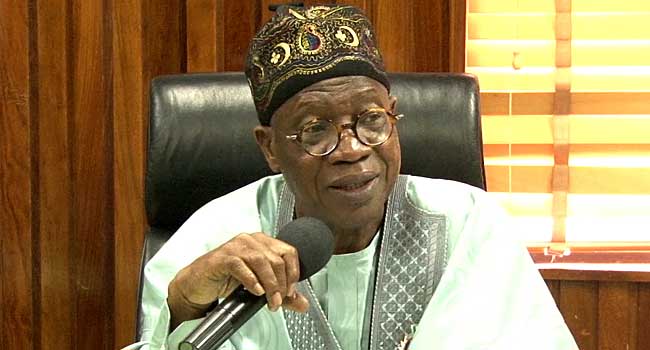
In perhaps the only time he ever told the truth in his entire lifetime, Information Minister Lai Mohammed said in May 2016— in the aftermath of one of the steepest increases in fuel prices in Nigeria— that “The current problem is not really about subsidy removal. It is about the fact that Nigeria is broke. Pure and simple.”
When Nigerian political elites say Nigeria is “broke,” they often mean no more than that they don’t have enough to steal after paying measly salaries to workers.
The last time the Buhari regime increased fuel prices last year, it said it had completely done away with fuel subsidies and had left the price of petrol to the vagaries of demand and supply. Now, the regime’s honchos say again that the subsidy they said they’d completely removed, for which there was no allocation in the 2021 budget, must be removed again!
As compensation for removing a non-existent subsidy on petroleum, Finance Minister Zainab Shamsuna Ahmed said the government will pay a monthly transport bonus of N5,000 to 40 million Nigerians.
I am no mathematician, but even I can point out the mathematical absurdity of Mrs. Ahmed’s proposal. If the government actually fulfils its promise (you can’t trust this compulsively mendacious regime to live up to any promises it makes) to give N5,000 monthly to 40 million Nigerians, it will be picking up a N200 billion monthly bill. That will add up to N2.4 trillion naira a year.
Now, consider that, according to an April 18, 2020 press statement by Senior Special Assistant to the President on Niger Delta Affairs, Senator ItaEnang, Nigeria spent “N1.5trn spent on fuel subsidy in 2019.”
Again, on July 1, 2021, Finance Minister Zainab Ahmed, according to TheCable, “subsidy gulps N150 billion every month.” N150 billion is still less than the N200 billion monthly transport bonus bill the regime will pay to 400 million Nigerians.
In other words, Nigeria will spend more money on transport bonus to an amorphous, unidentifiable, and probably cooked-up 40 million poor Nigerians than the subsidies it says it pays on petroleum subsidies, which it says are too expensive to be sustainable. That makes absolutely no sense.
Also note that thanks to Buhari’s infernal incompetence, Nigeria overtook Indian “as the country with the most people living in extreme poverty.” By many accounts, up to 100 million Nigerians live in abject poverty. By what logic did the regime decide that only 40 million people will need to be shielded from the consequences of the cruelty it will inflict on Nigerians in February 2022?
And, in the aftermath of the inflationary conflagration that a petrol price hike will ignite, how much help will N5,000 render to anyone in a month? N5,000 is currently useless in Nigeria. Imagine how much more useless it will be in 2022 after the prices of everything go through the roof.
In any case, the Senate revealed on Thursday that there is no provision for a N2.4 trillion-naira transport bonus in the 2022 budget. So, this is probably another scam.
Well, since the regime won’t stop its sterile propaganda to justify its asphyxiation of the poor through unjustified petrol price hikes, I won’t be tired of repeating what I’ve written in the past in response to their lies.
Petrol is the engine of the Nigerian economy in ways it is not elsewhere. When the price of petrol goes up in Nigeria, everything else goes up—except the already measly salaries of everyday people. This is not the case in many countries. So, you can’t just arbitrarily jack up petrol prices and ignore its other unsettling effects on other facets of the society.
A way bigger waste than the “waste” of petrol subsidy is the humongous amounts we expend monthly to subsidise the obscene opulence that Nigeria’s political elite—from the president down to a councilor—luxuriate in. Nigerian political elites are some of the most remunerated elites in the world. They even earn more perks than their American counterparts. But no one is talking about this subsidy. Only the comparatively miserly “subsidy” that makes life just a little easier for the common people is subject to scrutiny.
The canard about why the fraud in the oil subsidy regime justifies its discontinuance is disingenuous. It’s the government’s responsibility to catch and stop the fraud. If it can’t fix something as basic as fuel subsidy fraud with all the powers and resources at its disposal, the government has no reason to exist. It has no business being in the business of governance.
It is conscienceless to transfer the burden of government’s incompetence to the masses who are already reeling under the weight of an unbearably crushing existential misery.
Every responsible government in the world subsidises the products its citizens use to survive. State governments in America collectively spend $10 billion to subsidise the fuel consumption of their citizens. The Biden administration just ordered the release of emergency oil reserves in its bid to bring down the prices of petrol, which have gone up in the last few months.
The American government also spends $20 billion every year to subsidise agriculture in what is called “farm income stabilisation.” That’s why food is dirt cheap in America. And we are talking of the world’s wealthiest country. If anyone tells you America doesn’t subsidise the fuel consumption of its citizens, stare him straight in the face and call him or her a fraud without blinking!
Subsidy isn’t just a moral imperative; it’s also an existential imperative. If people are left to grapple with the smoldering violence of unchecked capitalism, they will either die off (if they are stupid and docile) or revolt against the source of their misery (if they are smart and active). There is no middle ground.
Nigeria has one of the lowest and most stagnant wages on earth. A further increase in petrol prices, which will add more fuel to the inflationary fire that is already burning Nigeria to the ground, will only deepen the misery and torment that everyday Nigerians are going through.
What is the benefit in being an oil-producing country if the money that accrues to Nigeria from oil merely subsidises the epicurean pleasures of the elite while the poor are metaphorically forced to hold cream on their hands while their faces are dry? I would be at peace if Nigerians pay high prices for petrol—like our neighbours— because we don’t have it.
If Nigerians choose to accept this with listless abandon, it’s their choice. In any case, labour, which used to fight price hikes, has been dead like a dodo since the Buhari regime came on board. Labour activists are now safely ensconced in the filthy pockets of the government.
I only worry for the millions of people who have no alternative, who live on less than $1 a day, who literally vegetate on the very edge of existence, who will be consumed by the hyperinflationary inferno that is sure to follow the impending cruelly insensate punishment of the masses.
Yes, you are right, the title for this Essay draws inspiration from Phil Collins’ song titled, “What Happened on the way to Heaven?”
The Almajiri and his spiritual father, the Mallam, are now the poster children of all that is negative in face of Islam in northern Nigeria.
The life of the Almajiri is supposed to be a spiritual journey of nurture and knowledge, guided by a Mallam, his spiritual foster father.
Today, all of this is now besmirched.
In his record, Phil Collins asked: How can something so good go so bad?
How can something so right go so wrong?
In other words, was the Almajiri supposed to have ended up as a liability to the religion?
The Almajiri has become a scapegoat for the multiple sins of the Nigerian State in general and the Muslim Umma in particular.
I have decided to add my voice to this debate in a slightly different context.
As usual, as of now, the northern elite will do what they do best: hide in the sands of selfdeception, knowing that this will blow over and soon, no one will remember again.
The Governors indicted themselves when they said that it is time to act now because the Almajiri has outlived his usefulness.
At least they have admitted their complicity and the fact that the Almajiri system had always been a tool for political and economic forms of transaction.
Here is my thesis: the Almajiri is an object not a subject, is a victim not a perpetrator, sinned against rather than a sinner.
Many readers will already be familiar the word, Scapegoat.
It derives from the Jewish ritual of atonement when the Priest places his hands on the head of the goat and confesses the sins of the people of Israel. At the end of the prayer, the goat is released to run into the wilderness with the sins of the entire nation.
Everyone goes home and celebrates in peace because their sins have been transferred to the goat after it has escaped with their sins!
Here is how.
Today, the Almajiri and his Mallam are in the dock and the charges are being read out to them.
The children are charged with the following crimes: being dirty and unkempt, miscreants, delinquents, nuisance to the society, petty thieves, prospective Boko Haram recruits, a stigma, an assault on our collective social sense of decency.
Their Mallam is charged with many sins including: Child abuse, Abduction, Human trafficking, Exploitation, Physical abuse, hard labour, enslavement, etc.
So, we identify the Mallam and his Almajiri more by their crimes than their names.
They are spoken about and not spoken to.
In the media reports, no one bothers to give them a voice of their own.
They do not speak for themselves.
If they had a chance for example, they might say: Everyone calls me, Almajiri.
No one has asked me my name.
We are in the millions but have only one name.
I have no name. I have no father.
I have no mother. I have no home.
I have no town.
I have no tribe.
I have no address.
The streets are my home.
I do not know if I have brothers or sisters.
I am an Almajiri.
No one knows if I have feelings.
No one has ever asked me what I want to be in life.
I live for today and for the sake of Allah.
I have no tomorrow except Allah gives it to me.
Tomorrow is in the hands of Allah.
In all of this conversation, there has been a lot of muckraking, excavation of age-old stereotypes, peeling off layers of prejudice and so on.
However, very little attention has been paid to the deeper issues of why Almajirci (ie, the act of being an Almajiri) has persisted.
We have treated the Almajiri as a Sociological Category and the result is that focus and attention have been on the social cost of Almajirci on the society.
They have been presented as a dislocation of the social fabric of our society.
This plays to our social comfort making the Almajiri guilty of intruding into our social space of bourgeoisie comfort.
They are seen as a nuisance and their begging bowls, torn rags, mucus dripping faces and weather-beaten lips, charred by hunger and pain, assault our social comfort.
We clear them off the streets when some foreign guests (read white folks), are coming to town.
For a crate of soft drinks, they are often released on the streets to burn churches, businesses, homes and properties at the slightest provocation.
Before elections, they are conveniently preserved as vote banks, and at elections, they are lined up and their votes are used as barter.
What if we paused and looked at the Almajiri from a theological category of analysis?
I have no qualification for addressing this issue, but the theological evidence might sober us a bit.
The word Almajiri itself comes from the Arabic word, Al-Muhajir.
It was a very prestigious nomenclature because it was used to describe those who had the rare privilege of having migrated from any place to Madina during the life time of the Prophet.
It derives from the word, Hajara, which means a migrant.
In this case, to be called an Almajiri was almost akin to being a special Muslim!
So, an Almajiri was associated with spiritual knowledge, piety, courage and sacrifice.
Many Christians might be quite surprised to note that Almajiri is not strange to us.
First, the issue of the transmission of faith is one of the primary obligations of good every Jew.
Moses warned the people to: Engrave these words of mine in your heart and your soul, brand them on your hand and keep them before your eyes.
Teach them to your children.
Speak of them when you are in your house and when you travel, when you lie down and when you rise (Dt. 11: 18-19).
From time immemorial the Catechist in the Catholic Church has been the primary transmitter of the faith to children.
So, the Muslims have their Mallam while we Christians have our Catechist, transmitters of the faith to our children.
At birth, the first words a Muslim utters to a child is, God is great, there is no god but Allah.
When the prophet placed knowledge at the heart of the religion, this knowledge centred around the Quran.
Those who handed their children to the Mallam did not do so out of malice as it is being presented by the elites today.
In the Islamic tradition, the Mallam was a privileged and treasured part of the spiritual web of his society.
He was the repository of knowledge and along with that came the respect, the Albarka that every Muslim craved for.
He was a pathway, a light, a source of transmission of values so treasured that the search for the essence of Islamic life began with him.
The Mallam was therefore a spiritual conveyor belt for very special blessing for the community, the guarantor of the continuation of faith.
So, no sacrifice was too much for any parent to make in other for his child to acquire this knowledge, a guarantor to salvation. When they handed their children to the Mallam, they did not see him as a slave master.
The Almajiri of today is not different from Samuel whose parents had placed him in the care of Eli, the Priest! (1Sam. 3:7).
He was there to be tutored in the paths of God.
Both the Mallam and his Almajiri live a life of surrender and sacrifice.
The life of the Mallam was a noble vocation.
He abandoned the comfort of owing a house, a herd of cattle, other property and the pursuit of wealth in exchange for serving God.
The community entrusted their children to him for spiritual nourishment and guidance.
So, as Phil Collins said; What happened on the road to Heaven?
In reality, the average Christian can relate with the idea of the Mallam and his band of Almajiris who seek closeness to God by following and studying under him.
The life of Jesus Christ was not too different from the life of the Mallam today.
For the Apostles, following Jesus, their Lord and Master, the Rabbi, was a form of Almajirci.
Indeed, we Christians use the word Almajiri for Apostle/Disciple of Jesus Christ.
Like the Mallam, Jesus and His Disciples lived off the goodwill of the community.
Jesus said: The son of man had nowhere to lay his head (Lk 9:58).
When the disciples of John asked for his residential address, Jesus said, Come and see (Jn. 1: 38).
At the end of His life, after His Almajiris had been tutored, He gave them the great commission, to preach the Gospel to all the ends of the earth (Mk. 16:15).
The challenge for the Muslim Umma in northern Nigeria is to answer the question, where did all this go wrong?
Where was the Almajiri supposed to go at the completion of his studies?
Was there a career path?
How and why did the Mallam and his Almajiri, a much treasured part of Islamic history deteriorate to the status of the scum of the earth?
I do not have the answers to these questions, but I wish to raise a few issues for the attention of the northern Muslim Ummah.
First, the northern Muslim ummah must accept full responsibility and see the Almajiri as part of the huge baggage of their failure to prepare for a future for their people.
They left their people in the lurch as the modern state emerged, providing no further rung on the ladder of progress for the Almajiri as part of the future for their children.
With both he and his Mallam left behind in the cave of ignorance about the modern state, they grew to fear life outside the cave.
They have remained trapped in time.
The new world of modernity was presented as a contaminant to the purity of Islamic knowledge.
So, while the modern elite equipped themselves and their children with the armour of western education, the Mallam and his Almajiri were left behind in the twilight zone of ignorance, fear, anxiety, disorientation and discomfiture, treating those outside with veiled contempt.
A chasm of prejudice grew between western education and the Islamic education of the Almajiri.
In an opinion article written long ago, Mahmud Jega referred to a song of the Almajiri which said: Yan makarantan boko, Ba karatu, ba sallah, Ba’a biyar hanyan Allah, sai zagin Mallam (Children of western schools. You don’t’ study, you don’t pray, you don’t follow God’s path. You only abuse the Mallam/Teacher).
By not providing a bridgehead, the northern Muslim elite sowed the seeds for disaster that has continued to loom for huge generations of children with almost no future.
Secondly, in fairness, the Sardauna did extraordinarily well in addressing the challenges of his time, with such limited human and material resources.
He proved to be a master at trying to manage the transition from an Islamic feudal society to a modern state across such a vast land.
He made some push to enable Islam cope with the challenges of the time by setting up programmes on Adult Education.
He also set up the Jama’atu Nasril Islam, JNI to regulate and co-ordinate the various Muslim groups in the north.
I think someone took his eyes off the ball and the result is the rather deregulated environment that we have today.
Thirdly, the issue of whether poor Muslims will continue to donate their children to strangers in trust to pursue spiritual knowledge should not be left to the victims to decide.
There is no political will to restrain the Mallam today even if he is guilty of some of the charges of child abuse because they are often the same persons to whom the same political and bureaucratic elite turn to as marabouts in the night when they seek to extend their political or economic fortunes.
Fourth, it is impossible to see the fate of the Mallam and the Almajiri outside the loop of the decay that has gripped the north.
Poverty, destitution and hopelessness hang in the air and the sheer numbers are intimidating.
In terms of population, if we put all the Almajiris together today and accept that we are dealing with over 13 million children, we are dealing with the equivalent of the populations of Abia, Ekiti, Kwara, Yobe, Taraba, Bayelsa, and Gombe.
Resolving the Almajiri crisis will require political resolve, a commodity that has almost totally absent in the calculation of the governing elite in the region.
The fate of the Mallam and Almajiri will hang in a balance for a long time and may consume the region as the numbers overwhelm us all.
Yesterday’s Almajiri has graduated to today’s Boko Haram Commander and foot soldier, Bandit and Kidnapping gang leader, a top grade cattle rustler and so on.
With their main theatre of operation being northern Nigeria, it is easy to see why apocalypse may not be too far if something urgent is not done.
I doubt that anything will be done, though.
For now, I leave the reader with John Pepper Clark’s sobering civil war Poem, Casualties.
He might as well have been referring to the Almajiri when he said: . The casualties are not only those who started
A fire and now cannot put out. Thousands Are burning that have no say in the matter.
The casualties are not only those who are escaping.
The shattered shall become prisoners in A fortress of falling walls.
• Kukah is Bishop, Catholic Diocese of Sokoto, Sokoto State, Nigeria
Apostle TONY O ANTHONY is the founder of Living Soul Harvest Bible Church, Lagos. He spoke on his SUYA NIGHT programme, how he tried to evade the call of God and other salient issues in an interview with Collins Nkwocha.
Please tell us about yourself and how you started the ministry?
My name is Apostle Tony O. Anthony, I’m privileged to be the founder of this great ministry. I never envisaged that I would be a cleric because I did everything I could do as a human being to evade the call of God. It’s pathetic that many people in the ministry today are there because of personal interest, that’s why you see churches in every nook and cranny of the country, yet, there’s no salutary impact. Many of them have taken the ministry as a lucrative venture, they are so desperate that they are ready to do anything to succeed in ministry because they see it as their last resort. I was in Germany when God called me, I was not comfortable with it because I was doing well in Europe, in the quest to evade the call of God, I ran to Moscow, Bulgaria, Ukraine and Holland, but the hand of God was firm on me. In 1996, I came back to Nigeria as God instructed; I didn’t like it because I was living a very comfortable life in Germany, but I had to obey the voice of God.
When I came back to Nigeria, I wanted to start this ministry, God told me that I must be trained. I went to CPM bible school, which was my church before I left Nigeria. I was trained and equipped by the school, the anointing of deliverance that is massive on me today is not a coincidence, Rev. Dr O Ezekiel, the founder of the bible school was known as the “demon destroyer”. People call me apostle of deliverance, it’s because there’s evidence. The work of God is not easy, you must pass through the fire, it’s the fire that refines and makes you ready to do the work.
What is your exact area of calling?
We live in a society where people do anything they like; they give themselves titles because they feel they want it. Mine is different, God has been telling me that I’m apostolic; if I teach, you will believe I’m a teacher, if I preach, you will see me as an evangelist, I am also very prophetic. I was officially consecrated as an Apostle on the 10th of December, 2017 by Bishop Charles Oluoji.
You had your suya night and washing of feet today, what is the essence of this spiritual assignment?
I was on the mountain praying and God told me to hold suya night, the last time I had this type of programme was seven years ago. God told me to do this so that I can attract people and lead them to Christ. We must acknowledge that the main essence of Christianity is to win souls for the kingdom of God, you can see that I started with deliverance, but I had to preach the undiluted word of God to the people. No matter the kind of miracle you perform, if you are not winning souls for the kingdom of God, you are an antichrist. I had to tell the youths that are present today to desist from “yahoo yahoo ” and other crimes, I know that some pastors encourage and even pray for them to keep defrauding people, I’m a genuine servant of the highest God and I stand for the truth. The washing of feet is for spiritual acceleration, it will launch them into a new realm.
This programme witnessed great miracles especially in the area of healing and deliverance, what inspired these?
The holy ghost inspired these because the hand of God is firm on this ministry. I don’t perform miracles, it’s the spirit of God that dwells in me that did the stupendous and amazing miracles you saw today. You saw the great outpouring of the spirit of God, you saw how a lady vomited cowries and the manifestation was dangerous; you saw how God healed people of different sicknesses, that’s the reason why he orchestrated this programme, to liberate his people from the shackles and the bondages of the devil.
God used you to perform these great miracles, how do you feel about it?
I must confess that it wasn’t easy for me, leaving Europe to come back to Nigeria. Many people will rather prefer to die there than to return to this impoverished nation. I am happy that God is using me to this extent, it shows that my coming back to Nigeria is divinely inspired.
Why are you called the Apostle of deliverance?
It’s a special grace that God gave to me. Pastors and other ministers of God come to me for deliverance and I don’t struggle with it. Some deliverance ministers complain of demonic attacks after deliverance, it doesn’t happen and it has never happened to me, even if I don’t pray, that’s why I say that it’s a special grace.
I know that programmes are not held at all times, is there any special programme you hold regularly?
Yes; we hold our holy ghost clinic every Thursday from 9 am and it takes place at Treasure Land Hotel, by the Hotel bus stop, new Igando. I must be candid with you, Sunday services are just to praise God and thank him for what he has done, Thursday is the day that we handle delicate and sensitive spiritual issues. We believe that no matter how big your problem might be, it’s not bigger than our God because you will surely get a solution to any obstacle of affliction that has made your life miserable. After all, the days of miracles are not over yet.
The drama by the Minister of Information and Culture, Lai Mohammed, at the Senate chambers in 2019 on his encounter with his seven-year-old grandson over his being referred to as ‘Liar Mohammed’ on social media, may not be as simple as it seemed. It speaks much about his person.
Mohammed had appeared before the Senate for his screening following his reappointment by President Muhammadu Buhari. Rather than face the business of the day on his strategies at projecting the policies of the government and the country, Uncle Lai, chose to trivialize the issues.
He took the Senate on a comic ride, saying; “Please don’t believe what they say on social media. They call me all sorts of names there. I used to ignore it until one day when my 7-year old grandson called me and said grandpa, tell me the truth, why do they call you Liar Mohammed?”
His response to the question, according to him, was that those behind the name are ‘bad guys’.
“I looked at him. What do you say to a 7-year-old son? How do you explain politics to him? So, I said no, don’t mind them, they are the bad guys”, the Minister said.
With this theatre performance, he was asked to take a bow and go. Lai Mohammed may have considered himself a smart guy in confusing his grandson and selling a dummy to the senators. But Nigerians knew better. Reggae Star, Bob Marley, was right that “you can cheat some people some time but you can’t cheat all the people all the time”.
The Minister has really been having his way all the while, literally hiding behind one finger and humouring himself that he has been playing it fast on the people with half-truths and outright falsehood. But his off-the-cuff dismissal of the Lagos #EndSARS panel report, is one that shows that he is on a dangerous curve that may have more than a telling effect on Nigeria and the Buhari administration.
The Judicial Panel of Inquiry on Restitution for Victims of SARS Related Abuses and Other Matters, was inaugurated by Lagos state governor. Babajide Sanwo-Olu on October 19, 2020, to investigate complaints against human rights abuses by the police.
It was a follow-up to the #EndSARS protests that rocked many parts of the country, with Lagos as the epicenter. When protesters at Lekki were killed the next day, the governor expanded the terms of reference to cover the incident.
The panel in its report which it turned in penultimate Monday, indicated, among others, that 11 protesters were shot dead, four presumed deadh and another 96 corpses on a list supplied by a forensic pathologist at the Lagos State University Teaching Hospital, Professor John Obafunwa, adding, “some of (whom) could have come from the Lekki Toll Gate Incident of October 20, 2020.”
The governor in response, set up a committee to study the report and come up with a White Paper to guide the government on the next line of action.
But hardly had the committee taken off than Lai dismissed the panel report, as a collection of fake news, riddled with errors, inconsistencies and discrepancies.
“Without mincing words, let me say that never in the history of any judicial panel in this country has its report been riddled with so many errors, inconsistencies, discrepancies, speculations, innuendoes, omissions and conclusions that are not supported by evidence.
“What is circulating in public space is simply a rehash of the unverified fake news that has been playing on social media since the incident of October 20th 2020.
“That report is nothing but the triumph of fake news and the intimidation of a silent majority by a vociferous lynch mob”, he fumed at a press conference, barely few days after the committee on the White Paper was inaugurated.
For effect, he added; “There is absolutely nothing in the report that is circulating to make us change our stand that there was no massacre at Lekki on Oct. 20th 2020. For us to change our stand, a well-investigated report of the incident that meets all required standards and will withstand every scrutiny must be produced and presented to the public”.
This is taking callousness and rascality beyond the limits. Protection of life and property is the primary function of the government. For any government that is worth its name, the loss of a citizen in any manner, especially as in the case of the #EndSARS protests by the youths, is usually a low moment in its existence.
In the media, the maxim is, ‘when it bleeds, it leads’. That underscores the premium on human life. What Lai has manifested is that the life of the ordinary Nigerian does not matter to him and the government he serves as the spokesman. Nothing can be more devaluing for a people.
There could have been some errors in the report by the Lagos panel, no doubts. They were after all, compiled by human beings. But to wave off the entire exercise as a rehash of prevailing social media fake news, is clearly out of it.
Lai’s casual dismissal of the report and the issues involved, has made little of the ignoble outing by the Minister for transport in the Second Republic, late Umaru Dikko, who, in laughing off the economic difficulties the citizens were going through at the time, mocked that no Nigerian was yet eating from the waste bins. Dikko did not recover from the backlash of that unreasonable remark till he died.
By writing off the Lagos Panel report, Lai Mohammed has simply danced on the graves of those innocent youths that were wasted by the cowardly security agents on October 20, 2020. He has merely advertised to the world that he is an agent of a government that does not care about the well-being of its people.
But there is limit to the extent he can lie. The footages of the Lekki massacre are already in the public domain. Experiences of lucky survivors are out there on what happened. It is too late for cover up or mindless propaganda to hide the truth. The danger with the poor script by the Information Minister, is that it gives the country negative portrayal abroad.
President Buhari must be his own man at this moment by rising beyond the sycophantic maneuvers of Lai Mohammed. He may, well, be reminded of the immortal words of Sheikh Uthman Dan Fodio that conscience is an open wound, only truth can heal it. As he had earlier remarked, there is need for reports from other states on the #EndSARS protests for the government to take a comprehensive action on the issue. Nigerians are holding him on this.
As for the Minister, he has succeeded in reinforcing the impression by his grandson that he is a Liar.
One of the cheapest commodities in Nigeria these days is death. It is so cheap that human life has lost its sacred value. Hardly there is any day in the last 10 years without bloodshed. Apart from natural disasters like flooding, inferno, road accidents and sickness-induced deaths, insurgency, banditry and kidnapping have become major sources of premature deaths. Like leaderless society, security of life has become elusive and Nigerians have resorted to seeking divine and hired security services.
Death is inevitable but how it comes is a matter of concern than when it happens. The way Timothy Adegoke, an Abuja based Master of Business Administration, MBA, student of Obafemi Awolowo University, Ile Ife, Osun State, was killed, remains tragic, heartless and gruesome. According to media reports, Adegoke was a regular lodger at the hotel and in the process may have cultivated friendship with some of the hotel staff which must have been the reason why he allegedly transferred his bill to a private account number given to him. Thinking that his disappearance may be inconsequential due to their observation that he had no strong link to the high and the mighty. His reserved look, gentle disposition and less boisterous social lifestyle might have given them a wrong assumption that he could disappear without a trace probably like some of their previous victims. If such dastardly act hasn’t been a norm, the effrontery to kill and dispose a lodger like they did to Adegoke wouldn’t have been so easy and neatly done. Because human blood is so strong, it usually demands and cries for justice, that’s why many evil deeds get exposed even when it is done in utmost secret and at remote locations. May evildoers never escape justice and get deserved consequences of their deeds. Nemesis and karma are agents of natural justice and deliverers of rewards for human deeds be they good or evil. The holy book says “Do not be deceived: God cannot be mocked. A man reaps what he sows.” (Galatians 6:7 NIV).
Ritual deaths and tragic disappearances of lodgers in hotels in Nigeria are common occurrences but it is covered up from media attention. The reasons are that the people behind the evil deeds are rich and well connected; also, most of the victims are largely unknown because there’s no public outcry by families and friends that ever linked their missing loved ones to hotels where they lodged. Adegoke’s case became known because he communicated with his wife about his whereabouts at each point of his movement. He also used internet transfer on his mobile phone to pay for his accommodation. He took his previous receipts back home to his wife and he told her all about his location. So, it was possible to trace and eventually locate his remains in the shallow grave where he was buried in an undignified manner. Since the police is still on investigation, I will restrain from further comment on the arrested suspects and their alleged roles in the gruesome murder of the deceased but Osun State Police Command appears to be doing a good job so far. I hope the media and the public will monitor the case to its logical conclusion. What a world!
I read a post ascribed to a popular preacher and Bible scholar where he detailed his “experience” with ritualists in a hotel where he lodged. He narrated how he had wanted to use the ATM outside the hotel later in evening but one of the room service staff insisted on helping him with the transaction because it was getting dark but he bluntly declined. He was somewhat curious as to why the young man was insistent on helping him for the withdrawal.
When he got to his hotel room, he noticed some blood stains on the water closet in the toilet. After a curious observation, he decided to wipe it off with tissue paper and later slept off until a gentle but consistent knocks on the door woke him up very early in the morning. Upon opening the door, he saw the same room service guy, looking startled, shivering and asking if the man of God was okay. Realising that no harm has befallen the pastor, he then asked him to pray for him after confessing the ritual they performed in the room shortly before it was allocated to the Pastor. He said that “nobody had ever survived the night in the room anytime they did such ritual. Knowing that the ritual never failed to claim lives of innocent lodgers, that was why I insisted on helping you to go and use your ATM card so I can know your PIN. Immediately we discover that the lodger is dead, I will go and empty his bank account while the manager and others will ransack the lodger’s belongings and remove valuable items therein before we invite the police to the scene.” That the Pastor survived without even having a slight headache as he slept soundly surprised the hotel staff. After his confession, the Pastor chose to preach to him, prayed for him and walked away from the hotel said to be a prominent one in the town.
Innocent people have gone missing without a trace through hotel accommodation. Because such victims are unknown and their families didn’t know exactly where they lodged or their whereabouts, it made the ritualists operate without a trace. In view of the new scary development, a number of suggestions have been offered in the media space. Some of the ideas canvased include:
1) Pay for your stay with your ATM card or through your bank account. Don’t pay cash as it is not traceable.
2) Snap your receipt and send copies to family members or friends as well as your mailbox.
3) Check your room for video recording devices (switch off the light in the room and bathroom when it’s completely dark if there is a recording device it will glow in the dark).
4) Let a family member know where you are and get someone to call you at regular intervals.
5) Look under the bed you are going to sleep and make sure nothing is placed under your bed (calabash and other forms of ritualistic items). Some beds even have graves under them.
6) Use your own toiletries, towels and beddings wherever you can.
7) Do not drop off used or disposables in their toilets. If such can be disposed later outside and by yourself, it is better.
8). You may make secret recording of the hotel and the room as well as your transactions with their receptionists and keep such in your mailbox.
9) When you finally want to check out, check everywhere (including under your bedsheets and pillows) to confirm that you have not forgotten any item of yours behind.
Always let your family know your location at any given time, even if it is a shot time rest you want to have in the hotel.
From the Mailbox
Re: Infidelity, Rivalry: Killer Wives on Rampage
I see with the content and context of your presentation. It is a Clarion call. You are right. Beyond rhetoric, something must be done quickly in our society to remove the “veil” on marriage! It is covering nonsense, danger and ungodliness. I posited that the slogan,”For better, for worse” should be replaced with the content of Romans 8:28. I also posited that the church, as it were, has deviated from the teaching of our Lord and savior Jesus Christ on marriage. He thought that divorce or separation can be allowed for cases of established immorality!
Instead of the minister who had the right to join can also separate or divorce, but it is left for the court of law to adjudicate. It is wrong! We have problem in our hands. Our society is sinking! We must rise up now! Our theological institutions must sit up and teach right and let the Holy Spirit take His place in the administration of the church as it should be.
Let the church leaders seek the face of God on life threatening issues to avert danger and stop this shame and evil tide now ravaging the church ,the hope of a good society! Good things proceed from God and bad things proceed from the devil!
The failure of the church leaders has precipitated what you now see! Their sanctimonious position leaves much to be desired! They should be prosecuted for joining wrong couples! Why should you join a woman who told you she does not love the man? Why should you join an HIV/ AIDs patient with anybody? Is that faith? Rubbish! Why should you join a prostitute with anybody? Why should you join a drug addict with anybody! The minister ought to have done both the spiritual and physical screening before the joining!
Today we have congregations full of adulterers and adulteresses! Why? For better for worse! Those who commit infidelity can now confront you and say you know there is no divorce, once married, you’re married for life!
May God help our spiritual and legal institutions to get a lasting solution to this social threat to our marital life. – Simeon Ajueyitsi, Lagos.
DAILY LAW TIPS by Onyekachi Umah,Esq. (Tip 95) “Women Just Like Men Have Right To Inherit Any Property In Nigeria”.
No matter the religion, tribe and culture, every woman in Nigeria is entitled to inherit any type property and assets. The place, time, means and conditions surrounding the birth of a woman doesn’t matter. Any religion or custom that says otherwise is illegal, contrary to natural justice and the Constitution of Federal Republic of Nigeria and as such invalid.
See section 42 of the Constitution of the Federal Republic of Nigeria, 1999 and also the Supreme Court judgment in Ukeje V. Ukeje (2014) 11 NWLR (PT. 1418) 384.
CAGED BIRD Trapped by the clutches of cultural precepts Bound by the fear of societal frowns Held by the mirage of an unclear future Pulled back by the forlorn faces of her offspring
She endured the punches She caresses the bruises She wore the marks of jest She buried her freedom in space Drowned in the pool of her tears she watched life dwindled before her
No! No! Not any more! Not any more! Braced up like the lioness she roared! So loud was the sound of her thought No! No! Not any more! Not any more! This time the words came out alive Just then she felt the broken chains The closed door wide open for her The cuffs clicked open The dark cloud brightened up She took a bold giant stride into her freedom.
Written by Uzoigwe Jacinta Obiageri (B.A English and Literary Studies) in commemoration of 16 Days of Activism on Gender-Based Violence under the flagship of the Initiative for Women and Girls Right Advancement (IWOGRA)
By Prof. Omoniyi Bukola Akinola, Dean, Faculty of Law, Redeemer’s University Ede, Osun State, Nigeria.
(Being a paper presented at Legal Practice (LPD) Webinar Part 1, held on 11 November 2021. THEME: Role of Lawyers in Resolving Nigeria’s Security and Stability Challenges)
Abstract
Good governance is the pillar upon which any good society stands and thrives. The aim of this paper is to examine the concept of good governance, the extent of its application in Nigeria and the need to develop an effective model for Nigeria considering its multilingual, multiethnic and multi-religious composition. The paper adopts the doctrinal approach in this research by examining current literature in this topic and making further recommendations for research while finding solutions in tolerance and adherence to the spirit and letters of a Constitution which is generally acceptable to all Nigerians both home and in diaspora.
Keywords: Constitution, ethnicity, Good governance, multilingual, multiethnic, multi-religious
Introduction
There is no gainsaying the fact that Nigeria is a Multilingual, multiethnic and Multi-religious entity. It is also a notorious fact that Nigeria is a blessed nation in terms of human and material resources as an heterogeneous society. A society is simply seen as a group of people living together who share similar customs and laws. In a heterogeneous society however, people of different cultural affinity, values and beliefs live together. The decision to live together may be arrived at through mutual understanding or agreement. It may also be through other forces like colonialism, as is the case with most African nation-states.[1] In the past, issues relating to multilingual, multiethnic and multi-religious societies did not come to the front burner in our national life. It is obvious that what was a blessing in the past has turned to a major issue in governance in Nigeria. In this wise, governance has been defined as the management of society by the people, or as the exercise of authority to manage a country’s affairs and resources.[2] Whether or not there is good governance in Nigeria will be examined in this paper. The paper will further examine the concept and essentials of good governance, its sustenance in a multilingual, multiethnic, and multi-religious society like ours. The paper will not be complete without an examination of the constitutional provision(s) (if any) on the applicability of good governance to Nigeria as a nation. The paper will do a brief comparative analysis of what good governance entails in other heterogeneous jurisdictions and recommend an acceptable model for the peaceful co-existence of Nigerians as a society with diversity in language, ethnicity and religion.
The Concept of Good Governance
The presence of good governance is the absence of bad governance. According to the United Nations, bad governance is being increasingly regarded as one of the root causes of all evil within our societies.[3] Governance is simply the process of decision-making and the process by which decisions are implemented.[4] As far as early 1990s, the notion of “good governance” as necessary for sustainable development and poverty reduction has gained widespread currency, especially among international organizations.[5] Good governance is meanwhile specified as one of the targets of the Millennium Development Goals (MDGs), an agenda for reducing poverty and sustainable development those world leaders agreed on at the Millennium Summit in September 2000. In essence, governance has been defined as “The sound exercise of political, economic, and administrative authority to manage a country’s resources for development. It involves the institutionalization of a system through which citizens, institutions, organizations, and groups in a society articulate their interests, exercise their rights, and mediate their differences in pursuit of the collective good.[6]
In other words, governance refers to several ways by which social life is coordinated. It is a process of social engagement between the rulers and the ruled in the society[7]. It involves participation by both the governor and the governed (i.e. the leader and the follower)[8] and this implies that governance is predicated on the relationship between the ruling class and the ruled class in the society[9]. Governance is as old as human civilization and only became a popular concept in the 1990s due to donor activities[10]. Biswas in his paper described good governance as a way of mobilizing people of a country in the best direction possible which requires the unity of people in society and motivates them to attain political objectivity and this ensures proper utilization of all the resources of the state for its citizens which safeguards sustainable development.[11] In meeting the needs of the society, it is expected that the institution should produce a very good result by making the best use of her resources. The word good governance however, is enormously equivocal as it means different things to different organisations.
Generally, the social contract theory, believes that the terrible, violent, unsecured and unpredictable state of nature necessitate the need for men to come together, under a social contract, and yielded their rights to security of personal lives and property of the state. The state is expected to protect the personal lives and property of the citizens, as well as their general welfare. The state, as an amorphous entity, cedes this power to a smaller and proactive agency called the government. Good governance, therefore, includes the processes and products of the government towards the fulfillment of the social contract it has with the people.[12]
Essentials of Good Governance
Going by the definitions above, it will be noted that good governance has some characteristics in common and if these characteristics are synergized, the society will be a safe place and develop effortlessly both economic and politically. It has been observed that good governance stands on 8 vital pillars. It is participatory, consensus oriented, accountable, transparent, responsive, effective and efficient, equitable and inclusive and follows the rule of law.[13] By way of emphasis, good governance ensures that corruption is minimized, the views of minorities are taken into account and that the voices of the most vulnerable in society are heard in decision-making. It is also responsive to the present and future needs of society. We observe that one of the future needs of the society is creating an enabling environment for employment through generation of data for National planning which engenders national cohesion and reduction of social tension.
The essence of governance is that it is a process of continuing creativity in the search for adjustment and accommodation in the midst of uncertainty[14].
According to United Nations Development Programme (UNDP), “Good Governance is, among other things, participatory, transparent and accountable. It is also effective and equitable as it promotes the rule of law. Good governance is the process where public institutions conducts public affairs, manage public resources and guarantee the realization of human rights in a manner essentially free of abuse and corruption and with due regard for the rule of law[15]. Good governance ensures that political, social, and economic priorities are based on broad consensus in society and that the voices of the poorest and the most vulnerable are heard in decision making over the allocation of developmental resources”[16] while in the World Bank and other multilateral development banks, good governance addresses economic institutions and public sector management which includes transparency and accountability, regulatory reform, and public sector skills and leadership.[17] The International Monetary Fund (IMF, 2020) emphasized that governance is a broad concept covering all aspects of how a country is governed, including its economic policies, regulatory framework, and adherence to rule of law[18].
Sustaining Good Governance in a Multilingual, Multiethnic and Multi-Religious Society
Governance is an approach or perspective that focuses on state, societal institutions and the relationship between them as well as on how rules are made in a society which are accepted as legitimate to enhance values that are sought by individuals and groups within the society[19] whereas at the international and the national levels, it refers to the objective of producing orderly, just, and peaceful relations to deal with the problems encountered in a complex and rapidly changing world.[20] Governance in a multilingual, multiethnic, and multi-religious society entails the vigorous involvement of civil society. In order to achieve this, the societal members must grip the culture of negotiation and tolerance.
Another threat to good governance in a multilingual, multiethnic, and multi-religious society is discrimination between citizens on the basis of language, ethnicity and religion. Discrimination as a global concept is a socially structured action that is unfair or unjustified and harms individuals and groups.[21] Discrimination can be attributed to social interactions that occur to protect more powerful and privileged groups at the detriment of other groups. Once a nation permits the fabrics of discrimination in action and inactions, it sews a thorn garment of disunity and discord which leads to social discords and tensions. Discrimination could be racial, tribal or ethnic, gender-based, ability or disability, among others.
The centerpiece of the international community’s drive against racial discrimination is the International Convention on the Elimination of all forms of Racial Discrimination (ICERD). Its requirements have been accepted by over three quarters of states in the world[22]. Presently, tribal societies have been pushed to the edges of globalization, tribalism is arguably undiminished.[23] Ethnic discrimination is defined as unfair treatment that is attributed to a person’s ethnicity; it poses threats to the well-being of most racial and ethnic minority groups.[24]
Gender discrimination is unequal or disadvantageous treatment of an individual or group of individuals based on gender. Gender discrimination holds back the growth of individuals, the development of countries and the evolution of societies, to the disadvantage of both men and women.[25] Gender discrimination is prohibited under almost every human rights treaty. This includes international laws providing for equal gender rights between men and women, as well as those specifically dedicated to the realization of women’s rights, such as the Convention on the Elimination of Discrimination Against Women (CEDAW) considered the international bill of rights for women. In addition, discrimination against people living with disability stems from the fact that people view them as persons who cannot add value to themselves nor the society, in their right to live a normal life. This Convention on the Rights of persons living with disability (CRPD) came into force in 2006 and it has greatly impacted disability law and human rights law in general all over the world. In essence, state actors in a multilingual, multiethnic, and multi-religious society must ensure that the legal frameworks at domestic and international levels against discrimination of any kind must be adhered to as much as possible. This should be made possible by proper participatory governance model.
Constitutional Provisions for Good Governance under the Nigerian Constitution
The Nigerian Constitution consists of a preamble and seven sections. The 3rd paragraph of the preamble states: “…and to provide for a Constitution for the purpose of promoting the good government and welfare of all persons in our country, on the principles of freedom, equality and justice, and for the purpose of consolidating the unity of our people”[26] The preamble lists reasons for establishing a government. The Constitution is divided into the Chapters stated below:
Chapter I: General Provisions
Chapter II: Fundamental Objectives and Directive Principles of State Policy
Chapter III: Citizenship
Chapter IV: Fundamental Rights
Chapter V: The Legislature
Chapter VI: The Executive
Chapter VII: The Judicature
Chapter VIII: Federal Capital Territory, Abuja and General Supplementary Provisions
From the above provisions, it is clear that the concept of constitutionalism is an essential tool in achieving public accountability, the end of which is good governance. Therefore, the provision of the Constitution indicates that the government is based on the principles of law and not of men. Rule of law is one of the tenets of democracy and when it prevails, it prevents arbitrary rule, sustains the issue of equality before the law and promotes good governance.[27] The rule of law must not be undermined in a democratic regime. The law must be respected by the government and the governed.[28] In other words, the concept of ‘la Principe de legalite’ is opposed to arbitrary powers. Thus, constitution therefore checks and balances the arbitrary actions by government.[29]We must mention in passing that the Judiciary has a vital role to play in sustaining the rule of law.
In the same vein, the UNESCAP view on good governance as stated above should be reiterated that one of the focused eight (8) major characteristics of good governance is accountability. It is therefore important to note that in this era, dedication to the ideals of democracy, rule of law and traditions of accountability, are all embedded in the Constitution thus, this provision for good and responsible governance becomes a core value in measuring the performance of governments at all levels.[30] Discussing further on accountability, good governance must ensure transparency in administration and must contain checks and balances in order to prevent abuse of state power. It is quite unfortunate that in this present administration, the government find it extremely difficult to give a proper account of money spent and the loans taken from other countries. Recently, the Socio-Economic Rights and Accountability Project (SERAP)[31] filed a lawsuit asking the Federal High Court in Abuja to “stop President Muhammadu Buhari from spending N26bn in the 2022 presidency budget on local and foreign travels, meals and refreshments, ‘sitting allowance’, ‘welfare package’, and office building.” In the Suit Number FHC/ABJ/CS/1361/2021 filed on 7th November, 2021, SERAP sought: “an order of mandamus to direct and compel President Buhari to cut the N26bn presidency budget on local and foreign travels, meals and refreshments, and to send a supplementary appropriation bill to the National Assembly to reflect the reduction.” SERAP also sought “an order of mandamus to direct and compel President Buhari to publish spending details on the State House Medical Centre since May 29, 2015 to date; and to redirect some of the money on travels and meals to improve public healthcare facilities across the country.” It further stated that, “The huge spending by the presidency is neither necessary nor in the public interest, especially in the face of the country’s dire economic position, the scant allocations to education and health, and the growing level of borrowing by the Federal Government to fund the 2022 budget.” SERAP also argued that, “Any spending of public funds should stay within the limits of constitutional responsibilities, and oath of office by public officers, as well as comply with Chapter 2 of the 1999 Nigerian Constitution relating to fundamental objectives and directive principles of state policy.”[32] From the above, it is clear that despite the fact that the constitution makes provision for accountability, this administration chose to ignore this provision instead; it keeps on with questionable budgetary allocations, mismanagement, bad governance, lack of accountability and transparency and these and many more serve as conduit pipes for draining national resources.[33] This is because citizens hardly see the evidence of each fiscal year in terms of infrastructure for sustainable development.
Dicey defined the supremacy of the constitution as absolute supremacy or predominance of the regular law as opposed to the influence of arbitrary power[34]. He stated further that supremacy of the constitution emphasizes equality before the law or equal subjection of all classes to the constitution and the right of individuals as defined and enforced by the Courts[35]. The recent invasion on the residence of the Supreme Court Justice, Hon. Justice Mary Odili by the Economic and Financial Crimes Commission shows that this present administration flaunts the rule of law. Kalu observed that in a democratic set-up, the rule of law must be strictly adhered to for the sake of national progress and development. He further stated that the country’s democracy is gradually growing and as such, acts that are not in tandem with the constitution of Nigeria and democratic process must not be tolerated.[36] . From the above analysis, it is clear that the constitution recognizes citizens as equal and if the ‘supremacy of the constitution is respected by all citizens, that is, the governed and the government, there is the possibility that good governance will be the order of the day[37]. According to Uzoigwe and Nwadialor, the intermingling of ethno-religious identities amidst the primordial idea of common ancestry and heritage more often than not sparks off divisions, segregation, discrimination and conflict. Ethno-Religious divides no doubt rear its ugly head most when there is a crosscut between ethnic identity and religious inclinations.[38]
For instance, section 42 of the Constitution of the Federal Republic of Nigeria 1999 prohibits discrimination on grounds of race, sex, religion among others[39] while section 10 wholly prohibits the adoption of any religion as a state religion. This provision extends to this nation called Nigeria. This should not be in letters alone but in words, spirit, action and reaction.
At this juncture, it is logical to say that there is a synergy between the constitution and good governance. The Nigerian Constitution established a national government also created room for separation of powers and checks and balances. Therefore, the constitution is placed above all other laws that guides the government and other organs of government.
For instance, the Yoruba tribe comprise of the several dialects/nationalities such as the Ijebus, Ondos, Oyos, Ijeshas, Afonjas, Okuns, Igbominas, Ibolos, Aworis, Egbas, Ekitis, while in a State like Abia, we have the Ngwas spread across Isiala Ngwa, Obingwa, Osisioma Ngwa, Aba Ngwas with neighbours in Ukwa land, Aros of Arochukwu, Ohafias, Abiribas with Imo State comprising among others of the Owerris, Mbaises, Orlus, Ideatos, etc. South South states such as Akwa Ibom include Ibibio, Eket, Anang, Okobo, Andoni, and Rivers State with Ijaws spread across Ondo, Bayelsa, Edo, Delta States among others. The Edos, Esan are among the nationalities in Edo State while the core north include the Hausas, Fulanis, Kanuris, Nupes, Tivs, Idomas, Langtangs, Adamawa, of the Plateau, and many more.[40] The reality is that even within our geographical regions, we complain of marginalization. Recently this author read a post on one of the platforms in a State in the South Eastern part of the Country complaining that Board appointments within the State Government circles tilts heavily in favour of a particular Senatorial district to the disadvantage of others. Secession is not the solution to perceived marginalization because even in a nuclear family, parents have their favourites but manage to run the family by protecting every interest as much as possible.
Comparative Analysis of Heterogeneous Society with Good Governance Models
It should be noted that governance in multilingual, multiethnic, and multi-religious society comes with many challenges and problems and in order to face these challenges and sustain good governance, institutional mechanisms and frameworks must be drawn and agreed to by the majority while also protecting the interests of the minorities. This will augment a positive and desired result like the case of Tunku Abdul Rahman, the father of Independence in Malaysia who managed to overcome all the challenges and difficulties in uniting the people to bring his country to independence in 1957[41]. As earlier mentioned, Tunku’s achievement in sustaining good governance was as a result of the two mechanisms he crafted in managing race relationship among the people of Malaysia and this method made independence and subsequent nation building possible[42]. First, Tunku identified a suitable vehicle to win independence and to form the government. His potentials fostered the alliance coalition of Parti Perikatan consist of UMNO, MCA-Malaysia Chinese Association and MIC-Malaysia Indian Congress which originally was not his idea but he acquired the strength to lead the country to independence though, the battle for independence was fought on behalf of the Malays but when Tunku took over, he successfully built the nation by uniting Malays and non-Malays and managed both the internal and external challenge among the British, Malay and Non-Malay population.
In addition, Tunku knew the importance of race relations and to this, he laid emphasis on the management of race relations which later produced interdependence among the different races. His position was that the races stand a better chance to when united to produce a good result other than standing alone and this brought the ideal of collective sharing of power and responsibility which assisted him in nation building. Though he was criticized by both Malays and Non-Malays, yet his proposed interdependence was accepted and this gave birth to the reality of a plural society. Today, the transition from “TanahMelayu untuk Melayu” (the Malay land for the Malays only) to “Tanah Melayu untuk semua rakyatberbilang kaum” (the Malay land for citizens of all races) has changed the fundamental views and ideas of nation building especially among the Malays; from one nation for one race to one nation for multiple races.[43]
Another country worthy of examination is Indonesia. Indonesia is a plural society. On August 17th, 1945, Indonesia was proclaimed an independent Republic with Sukarno as its first President. The new government faced the challenge of politically uniting almost 100 million people comprising approximately 300 ethnic groups who spoke an estimated 650 local languages.[44] The Census of the year 2000 registered more than 1000 ethnic and sub-ethnic groups, each group claiming to have its own language and culture. As such, heterogeneity is an inherent characteristic in Indonesia.[45] Like Nigeria, Indonesia also has ethnic and religious crisis especially in its formative years of nationhood. One of the attempts to manage its heterogeneity is the consensus to limit the number of its political parties to three.[46] Between 1996 and 1997, the Indonesian government decided to suppress voices clamouring for regional rebellion and the country eventually paid dearly for it.[47] As a result, the Indonesian government has a rethink.
A notable aspect of the Sukarno regime, which would be further developed under President Suharto, was its ability to orchestrate public policies which engaged virtually all ethnic groups in the process of constructing new national identities. Ultimately these identities were drawn toward the aim of stable and uniform economic development. Although sporadic ethnic rebellions broke out in many areas of the archipelago between 1950 and 1964, virtually all these developments were geared towards struggles for higher political status within the new Indonesian nation, not for a separation from it.
Indonesia appears to have gone a long way towards conceptualizing and implementing a national vision of multi-ethnic co-existence.[48] The Indonesian government has succeeded in constructing a unified, multi-ethnic state (admittedly at some costs to its ethnic minorities) with the fourth largest population in the world (after China, India and the USA) and the thirteenth largest economy, just behind Canada’s.[49] The countries analysed above are yet to attain perfection in nationhood but they have made better strides in benefitting from their multicultural nature than Nigeria.
Developing a Workable Good Governance Model for Nigeria
The Nigerian Constitution consists of a preamble and seven sections. The 3rd paragraph of the preamble provides “…and to provide for a Constitution for the purpose of promoting the good government and welfare of all persons in our country, on the principles of freedom, equality and justice, and for the purpose of consolidating the unity of our people”[50] Accountability and transparency are recommended tools for good governance in Nigeria.
In addition to the points raised above on accountability as a tool for good governance, SERAP also sought “an order of mandamus to direct and compel President Buhari to publish spending details on the State House Medical Center since May 29, 2015 to date; and to redirect some of the money on travels and meals to improve public healthcare facilities across the country.” It further stated that, “The huge spending by the presidency is neither necessary nor in the public interest, especially in the face of the country’s dire economic position, the scant allocations to education and health, and the growing level of borrowing by the Federal Government to fund the 2022 budget has been generating social tension.” SERAP also argued that, “Any spending of public funds should stay within the limits of constitutional responsibilities, and oath of office by public officers, as well as comply with Chapter 2 of the 1999 Nigerian Constitution relating to fundamental objectives and directive principles of state policy.”[51]
Dicey defined the supremacy of the constitution as absolute supremacy or predominance of the regular law as opposed to the influence of arbitrary power[52]. He stated further that supremacy of the constitution emphasizes equality before the law or equal subjection of all classes to the constitution and the right of individuals as defined and enforced by the Courts[53]. The recent invasion on the residence of the Supreme Court Justice, Hon. Justice Mary Odili by the Economic and Financial Crimes Commission and the Police authorities shows that this present administration flaunts the rule of law. Kalu observed that in a democratic set-up, the rule of law must be strictly adhered to for the sake of national progress and development. He further stated that the country’s democracy is gradually growing and as such, acts that are not in tandem with the constitution of Nigeria and democratic process must not be tolerated.[54] . From the abovementioned, it is clear that the constitution recognizes citizens as equal and if the ‘supremacy of the constitution is respected by all citizens, that is, the governed and the government, there is the possibility that good governance will be the order of the day[55]. Section 42 of the Constitution buttressed this position[56]
At this juncture, it is logical to say that there is a synergy between the constitution and good governance. The Nigerian Constitution established a national government also created room for separation of powers and checks and balances. Therefore, the constitution is placed above all other laws that guides the government and other organs of government. It is apposite at this stage that Nigeria should develop a workable and consensual constitutionalism for Nigeria.
Nigeria’s development has inevitably remain worsened, despite the fact that the country is endowed with abundant resources in both human and natural form, yet the country is searching for a workable framework for its development. It should be noted that thousands of development programmes such as Structural Adjustment Programme (SAP) 1986, Poverty Alleviation Programme Development Committee (PAPDC) 1884, Community Action Programme for Poverty Alleviation (CAPPA) 1996, DFFRI down to this present Government Enterprise and Empowerment Programme (GEEP) TraderMoni have been tried yet the country state is still finding it difficult to occupy her rightful position among the wealthy nations. One of the reasons that is responsible for this stagnation is nothing but a result of bad governance. In developing a workable good governance model for Nigeria, the government must ensure it abides by the rule of law. Good governance and stability can be seen under four factors namely: Democratic institution, Rule of law, Transparency and Service delivery.[57]
Friedman and Mueller[58] discussed the essentials of good governance as the core values and human rights advocated by all members of the United Nations and on the idea of open competition in a globalizing, dynamically changing world. In their work, they listed 7 elements in which good governance should rest on. The essentials are: Rule of law, Functions of the state, Securing fair competition, Internalization of external effects, Public goods, education, Regional integration and global compatibility. The essentials are summarized as follow:
Rule of law: The law is above any individual person regardless of class or status. Hence the legal system must provide justice and equal treatment for every member of the society and must observe human right. Chapter IV of the 1999 Nigerian Constitution [as amended].
Functions of the state:The state must ensure its checks and balances work properly and also offer a political process that guarantees the participation of all members of its society through some type of representative process. S14 (1)(c) of the 1999 Nigerian Constitution [as amended].
Securing fair competition:In order to make market economies work efficiently, an effective economic framework is required. Hence, the state must provide enabling environment with a effective legal and judicial system and a well-regulated financial markets with antitrust legislation, consumer protection legislation, intellectual property legislation.
Internalization of external effects:The state is responsible for minimizing the negative side effects of production. Therefore, it should incorporate negative external effects, into the budgets of households and enterprises by means of economic instruments.
Public good:Good governance requires the state to provide basic infrastructure for transportation and communication, the preservation of the society’s cultural heritage, basic education, and a social policy that guarantees residents a minimum income and health care.
Education:Essential of good governance is to ensure the citizens are well educated there by investing in her educational system for optimal use of the intellectual resources in the state.[59]
Regional integration and global compatibility: Since economies and societies are not self- sufficient, the state should adhere to global economies and social standard and integrate this into social standard. Regional integration should also focus on the harmonization of legal rules and standards in order to create viable markets for all and sundry.
Conclusion
Though diversity is associated with multiple social outcomes and expectations, we must find a meeting point in consensual and people-oriented constitutionalism. In the light of this, we join the immediate past Emir of Kano to opine that Nigeria nation is sitting on a time-bomb” because the young, the oppressed, and the marginalized may not tolerate marginalization for much longer and “will soon decide that it is better to fight their war.[60] Nation building is work. Tolerance is vital to nation building in a multilingual, multiethnic and multi-religious society like ours. We will, with respect rephrase the words of Udemezue as follows: our leaders need ideas largely on how to deliver good governance in a multilingual, multiethnic and multi-religious country such as Nigeria.[61]Some of these ideas by this author are reproduced in form of recommendations for us to sustain good governance in a multilingual, multiethnic and multi-religious society like ours.
Recommendations
From this paper, it is apposite to recommend as follows:
There should be a national dialogue on the way forward and such dialogue must relate with issues such as the adequacy or inadequacies of the 1999 Constitution of the Federal Republic of Nigeria.
Nigeria should do a SWOT analysis of those things that unites us and not those factors which widens the gap of nationhood in brotherhood such as sports inter-marriage, development among others.
Nigeria should as a matter of urgency downplay religion and adhere strictly to the spirit and letters of section 10 of the Constitution of the Federal Republic of Nigeria. Religion is private and personal. More so, we are not a mono-religious nation.
Secession is not the answer to the problem because discrimination is rooted in every sect, sectors and State.
Nigeria needs a leader that should as a matter of the oath of office accommodate all and be the father of the nation. Such leader should balance appointments into political offices across multilingual, multiethnic and multi-religious interests on the altar of merit. We believe that there is no linguistic affiliation, ethnic race and religion that do not have persons of integrity, with proven track record of meritorious service across different shades of our nationhood.
Nigeria should develop a proper framework to make for effective institutions and systems and stop dancing to the whims and caprices of individuals. We should more in the direction of institutions and not individuals. This is because rule by individuals leads to a journey of no return from the Palace of autocracy.
For the sake of national cohesion, Nigeria should limit the number of political parties to 5 in order to bring different nationalities together and foster harmonious relationship. In this case, there is a need to draft a new constitution to reflect the will and wishes of Nigerians among others.
The National Orientation Agency (NOA) should be awake to its responsibilities of promoting national cohesion and unity in our diversity.
Reforms should be encouraged in National Youth Service Corp Scheme to promote national integration, unity and imbibe national values and leadership qualities among our youths.
[1] Terngu U. S., and Terngu U. R., Conflict Management in a Heterogeneous Society: The Role of Social Studies Education. Journal of Teacher Perspective Available via http://www.globalacademicgroup.com/Fjournals. Accessed 9 November, 2021
[2]Simonis Udo E., Defining Good Governance: The Conceptual Competition is on. Working Paper WZB Discussion Paper, No. P 2004-005, p. 5. Available at http://hdl.handle.net/10419/50227 and www.econstor.eu. Accessed 8 November, 2021
[5]Simonis Udo E., Defining Good Governance: The Conceptual Competition is on. Working Paper WZB Discussion Paper, No. P 2004-005, p. 4. Available at http://hdl.handle.net/10419/50227 and www.econstor.eu. Accessed 8 November, 2021
[6] Asian Development Bank, Country Governance Assessment 2005, p.7.
[7] Iyoha, F.O., Gberevbie, D.F., Iruonagbe, C.T., & Egharevba, M.E. (2015). “Cost of governance in Nigeria: in whose interest?” International Journal of Social, Education, Economics and Management Engineering. 9, (1) available on https://www.macrothink.org/journal/index.php/jpag/article/viewFile/9055/7362 accessed on 7/11/2021
[10] Arisi, R. O. and Ukadike, O. J. (2011). “Good Governance: A Panacea for Peace and Stability in Nigeria Nation”. European Journal of Scientific Research. Vol. 55, No. 3. Retrieved from http://www.eurojournals.com/EJSR_55_3_10.pdf on 6 /11/21. pp. 413-418
[12] Charlie Nwekeaku, PhD (2014) “The Rule of Law, Democracy and Good Governance in Nigeria” Global Journal of Political Science and Administration, Vol.2, No.1. pp 26-35.
[13] Simonis Udo E., Defining Good Governance: The Conceptual Competition is on. Working Paper WZB Discussion Paper, No. P 2004-005, p. 4. Available at http://hdl.handle.net/10419/50227 and www.econstor.eu. Accessed 8 November, 2021
[19] Arisi, R. O. and Ukadike, O. J. (2011)” Good Governance: A Panacea for Peace and Stability in Nigeria Nation”. European Journal of Scientific Research. Vol.55, No.3. Retrieved from http://www.eurojournals.com/EJSR_55_3_10.pdf on 6/11/2021
[20] Rupesinghe, Kumar (1992) “Governance and Conflict Resolution in Multi-Ethnic Societies, in Valery Tishkov, ed., Ethnicity, Autonomy and the Devolution of Power”. Tokyo-New York-Paris: UN University. Retrieved from https://archive.unu.edu/unupress/unupbooks/uu12ee/uu12ee04.htm accessed on 6/11/2021
[21] Luo Y, Xu and others, A longitudinal study of social status, perceived discrimination, and
physical and emotional health among older adults. Res Aging. 2012;34:275–301. doi: 0164027511426151
[22] Dimensions of Racism(2005) ;A workshop organized by the office of the United Nations High Commissioner for
[38] Uzoigwe A. M., & Nwadlialor L. K., Towards Bridging Ethnic and Religious Divides In Nigeria: Exegetico-Hermeneutical Application of Gal.3:26-29. Available at https/www.ajol.info
[45] Thung Ju Lan, Heterogeneity, Politics of Ethnicity, and Multiculturalism: What is a viable framework for Indonesia? Wacana Vol. 13, No. 12 (October 2011) p. 2
Debt is as old as human existence. In Nigeria, Insolvency procedures are mainly contained in the Companies and Allied Matters Act Cap C20 Law of the Federation of Nigeria 2004 (CAMA), even though there are pockets of other legislations with features of insolvency.l
Insolvency has been described as a situation when a legal or natural person is unable to pay debt. Over the ages, every definition or description of this concept has always pointed to the same result, that of inability to pay debt. Section 567(1) of the Companies and Allied Matters Act 2004 defines an Insolvent person as follows.
Any person in Nigeria who in respect of any Judgement, Decree or Court order against him, is unable to satisfy execution or other process issued there on in favour of a creditor and the execution or other process remain unsatisfied for not less than six week.
This definition requires an order of court to establish that a person is insolvent, whereas in practical situation, corporate insolvency means the in ability of a debtor to meet with its commercial commitment to its creditors. The problem with this definition is that it is restrictive and does not put into consideration other processes that come to play before the order of the court. Insolvency, just like other Nigerian Laws, is based on common law, precedents and local statutes like CAMA and to some extent the Asset Management Corporation of Nigeria Act. On the other hand, Section 247 (1) of the Insolvency Act of UK 1986 defines it thus;
In this Group of parts except in so far as the context otherwise
requires, Insolvency in relation to a company include the approval of a
voluntary arrangement under part 1, the making of an administration order
or the appointment of an administrative receiver
In United Kingdom Insolvency and Bankruptcy is substantially contained in a single statute. The main sources of law in this regard are the Insolvency Act of 1986, the Insolvency Rule of 1986, the Company Director Disqualification Act 1986, Employment Right Act 1986, Employment Right 1996, Part X11 of the Insolvency Regulations (EC) 1346/ 2000.Other aspects of laws that relate to Insolvency in UK includes case laws and Labour related cases. Over there, insolvency is categorized into two types.
Individual Bankruptcy which Part X of UK Act referred to as individual insolvency and corporate insolvency
The words relating to Insolvency has its origin in Latin not solvetem which means not paying. However, aspect of corporate Insolvency could be said to have begun with the first modern companies Law legislation. Just like in the past, Insolvency has it root in bankruptcy Law. Bankruptcy was part of the earliest legal system. The Hammurabi Code of (2250 BC),the Twelve Tables of Roman Republic (450 BC), the Talmud (200 AD) and Corpus Juris Civilis (534 AD) all had procedures for distributing losses amongst creditors and to satisfy debt, a debtor has to bear the implication of his or her indebtedness. The Bankruptcy Act of 1542 in United Kingdom evolved a sort of proportional distribution of debt among the creditors. In some cases, debtor could be made criminally liable for the debt. The Fraudulent Conveyance Act of 1571 provides that any intentional transaction by debtor, after having been declares as bankrupt would be void. The Bankruptcy Act of 1705 empowered the Lord Chancellor to discharge a bankrupt from having to repay all debt, once disclosures of asset and procedure have been complied with. Debtors were mostly imprisoned. The advent of the Industrial Revolution changed a lot of things and business enterprises continued to grow, though, the privilege of an investor to limit liability upon insolvency was not available to the general public. According to M Lester, in his Victorian Insolvency, published by Clarendon in 1995, between 1931 and 1914 nearly 100 Bills on Insolvency were introduced by parliament. The Insolvent Debtor (England) Act of 1813 established a specialist court for the relief of insolvent debtors. Other statutory provisions relating to insolvency are, The Bankrupts (England) Act of 1825, Insolvent Debtors Act of 1842, Joint Stock companies Act of 1814, Limited Liability Act of 1855 which restricted shareholders risk to the amount already put in the business in case of insolvency. The Bankruptcy Act of 1861 not only allowed traders to file for bankruptcy, but with the passage of the Debtors Act of 1869, imprisonment for debt was abolished. Insolvency protection was completed and sealed in the famous case of Solomon vs. Salomon and Co Ltd (1897) AC 22.
A booth maker incorporated a company but was later forced into insolvency. His wife and children were nominal shareholders. He was sued personally by the liquidator for the debt of the company. Having earlier taking a floating charge over the company’s assets, his claim ranked first in terms of priority against other creditors.
The house of Lord held that he was protected under the Companies Act and that the business was distinct from Mr Salomon. According to Company Law experts, the case of Salomon v Salomon (supra) completed the series of reforms in the aspect of protecting an insolvent from destruction. Salomon’s case gave room for the preferential payment in Bankruptcy Amendment Act 1897. It provided for Preferential Creditors to have priority over the holder of floating charge. The Insolvency Act of 1986 was promulgated as an aftermath of Kenneth Corks Report on the Review Committee on Insolvency Law and Practise 1982, CMD 8558
.The Act is significant because it created the administrative process for managers of insolvent company to rescue such a company. The Enterprise Act came into existence in 2002. It is worthy of mention that Section 214 of the Insolvency Act of 1986 imposed liability on directors from wrongful trading especially if directors fails to start Insolvency Proceedings when they ought. In 2007, following the economic meltdown all over the globe, there were series of insolvencies of companies but for now the situation has improved.
It is worthy of mention here that unlike in Nigeria, in the United Kingdom, the court is empowered to make an administration order, appointing a person referred to as an administrator to see to the survival of the company, whole or part of its undertaking, approval of voluntary arrangement and or for a mere advantageous realisation of the company assets in case of wounding up.
While Individual Insolvency involves the inability of individual or natural persons to pay his or her debt, corporate insolvency has to do with companies or corporation who are unable to pay their debts. And the distinction between cash flow insolvency and Balance sheet insolvency is that while Cash flow Insolvency is a temporary cash crisis, and a situation where a legal entity can no longer met the debt obligations on time as they fall due, balance sheet insolvency will arise where company liability exceed the assets of the company . Cash flow insolvency relates to proper case for business rescue consideration. And it is usually applied to a company for the purpose of testing it insolvency. The cash flow test is to the effect that a company must be unable to pay its debt as they fall due. Balance sheet insolvency establishes a typical case of liquidation. This is distinct from secured credit which has to do with lending and enforcement procedure of securities created as collateral to the loan transaction. Most importantly, there should be no substantial dispute as to the amount owed by the company In the case of Stonegate Securities Ltd v Gregory (1980)CH 576 which concerns the liquidation procedure when a company is unable to repay its debts. Mr. Gregory had in accordance with statutory provisions served a notice, demanding payment of a £33,000 debt within 21 days on Stonegate Securities. Stone gate had agreed to buy shares in Mr. Gregory’s property company, Trinette Ltd, when it got planning permission. The company accepted there was a contingent or prospective liability, but argued the debt was not presently due. At the first instance, Mr. Gregory accepted that there was a dispute about when the debt was due, and insofar as the debt was contingent that the contingency might never happen at all. The company sought an interlocutory relief restraining the petition. It held that a winding up petition would not be granted to a petitioner to whom a debt was bona fide under dispute. On appeal Buckley LJ held that Mr. Gregory’s claims must fail. The company had in good faith and on substantial grounds disputes any liability in respect of the alleged debt, the petition was dismissed.
INSOLVENCY PROVISIONS IN NIGERIA.
Inability to pay debt have been statutory described in Section 409 of the CAMA. According to the provisions, a company shall be deemed to be unable to pay its debt if.
A creditor by assignment or otherwise to whom the company is indebted in a sum exceeding #2000 then due has served on the company by leaving it at its registered office or head office, a demand under his hand requiring the company to pay the sum so due and the company has for three weeks thereafter neglected to pay the sum or to secure or compound for it to the reasonable satisfaction of the creditor or.
execution or other process issued on a judgement, decree or order of any Court in favour of a creditor of the Company is returned unsatisfied in whole or in part or
The Court after taking into account any contingent or prospective liability of the company is satisfied that the company is unable to pay its debt.
However Section 123(1) of Insolvency Act of the UK 1986 states as follows;-
A company is deemed unable to pay its debts- inability to
if a creditor (by assignment or otherwise) to whom the pay
debts.company is indebted in a sum exceeding £750 then due has served on the company, by leaving it at the company’s registered office, a written demand (in the prescribed form) requiring the company to pay the sum so due and the company has for 3 weeks there- after neglected to pay the sum or to secure or com- pound for it to the reasonable satisfaction of the creditor, or
(b) if, in England and Wales, execution or other process issued on a judgment, decree or order of any court in favour of a creditor of the company is returned un- satisfied in whole or in part, or
(c) if, in Scotland, the induciae of a charge for payment on an extract decree, or an extract registered bond, or an extract registered protest, have expired without payment being made, or (d) if, in Northern Ireland, a certificate of unenforceability has been granted in respect of a judgment against the company, or (e) if it is proved to the satisfaction of the court that the company is unable to pay its debts as they fall due.
(2) A company is also deemed unable to pay its debts if it is proved to the satisfaction of the court that the value of the
Company’s assets is less than the amount of its liabilities, taking
into account its contingent and prospective liabilities.
(3) The money sum for the time being specified in subsection
(1)(a) is subject to increase or reduction by order under section
416 in Part XV
Though Section 409 provides a test for declaring a company insolvent in Nigeria, when compared with the English provisions on situations that constitute inability to pay debt, section 409 of the Companies and Allied Matters Act has been said to be a lazy test or condition for declaring a company insolvent. Considering the amount involved in section 409 (1), it is not only ridiculous but also laughable and make no sense when the daily inflation is put into considered. The challenge posed by such provision is that there is the tendency that the law on this aspect might be abused, especially with regard to putting an end to an otherwise viable companies on such condition. One of the requirement is that a demand must also be made on the company for payment of the debt owed.
It is the opinion of Chief Anthony Idigbe SAN in his write up titled The Nigerian Insolvency Law and the Right of Creditors and Account holders of Intermediated Security vis a vis the Insolvent Intermediary being a paper delivered at SEC on Unidroit workshop on intermediated securities held in May 2009 that the basic framework for Insolvency in Nigeria is rather obsolete. The highly revered Senior Advocate of Nigeria was of the view that the Nigeria general Insolvency framework is deficient.
Section 462(1-5) deals with Declaration of Insolvency. Section 462 (2) states as follows
A declaration made as aforesaid shall have no effect for the purposes of this Act unless. (a) It is made within 5 weeks immediately preceding the date of the passing of the resolution for winding up of the company and is delivered to the Commission for registration before the date. (b) It embodies a statement of the Company’s assets and liabilities as is the latest practicable date before the making of the declaration.
This subsection must not be read in isolation of section 462(1). The interpretation of the two subsection, is in my humble view, that after a proposal for winding up of a company has been made by two or majority of the directors, depending on the numbers of directors, they may make a statutory declaration to the effect that the company will be able to pay its debt fully within a period of 12 months. The said declaration must be made within 5 weeks immediately preceding the date when the resolution for winding up was passed and such declaration must be delivered to the commission for registration. It should include the assets and liability of company before making the declaration.
Subsection 3 of the section mentioned above provides punishment for any false declaration made by a director to the effect that the company will be able to pay its debt. The subsection will help reduce the incidence of false declaration by the directors and will prevent a situation where the company instead of been wound up will continue to be used as instrument of fraud.
It is worthy of mention that the bulk of the framework of Nigeria Insolvency regime, is contained in part XIV (14), XV (15) and XVI (16) of CAMA on Receivership and Manager, Winding up of companies, Arrangement and Compromise respectively.
Winding up is one of the consequences of Insolvency. However, it does not necessarily mean that once a company is insolvent, it must automatically be wounded up. Part XIV (14) deals with Receivership and Manager. Section 387(1) provides for the categories of people that cannot be appointed as a receivers. They include an infant, person of unsound mind, corporate body, undischarged bankrupt, a director or auditor of the company or any person convicted of offences involving fraud. It is the view of Dr Kunle Aina in his Rethinking the Duties of a Receiver and Powers of Companies in Receivership under Nigerian Law, that failure of the Act to expressly provide for any qualification for the appointment of a receiver may give room for the appointment of incompetent persons as receivers, since there is a presumption that anyone that does not fall within the list of disqualified persons can be so appointed.
Section 387 (2) makes it voidable, if any of the persons named above act as receiver and it also went further to provide a fine of #2000 for corporate body or a term of imprisonment of 6 months for individuasl or #500 fine. The framework for Receivership and Manager is contained in section 387 -400 of Companies and Allied Matters Act of 2004.
Part XV deals with Winding up and by virtue of Section 401(1) of CAMA, Winding up can be by;-
The Court
Voluntarily
Subject to the supervision of the Court
Winding up by the court
A company may be wound up by the Court in the following circumstances
When the Company has by special resolution resolved that the company be wound up by the court.
Default is made in delivery of the statutory report to the Commission or in holding statutory meetings
The number of members is reduced below two
The Company is unable to pay its debt
The Court is of the opinion that it is just and equitable that the company be wound up
Under this head, before presenting a Petition for winding up by the court, a resolution has to be passed for voluntary winding up and winding up would have been deemed to have commenced immediately, except when fraud, mistake is established .After the petition for winding up, the court may dismiss it, adjourn the hearing on a condition or unconditionally or make an interim order or any orders that it deem fit. Section 418 provides that an order for winding up shall operate in favour of all the creditors and of all the contributories of the company as if made on a joint petition of a creditor and of a contributory. The court also have the powers to appoint an official receiver and a liquidator for the purposes of conducting the winding up.
Voluntary Winding Up
The company may voluntarily wind up on the condition listed below;-
when the period fixed for the duration by the has expired or if an event provided by the article has occurred
b .If the Company resolve by special resolution to wind up.
It is worthy of mention that the effect of winding up, is that from the commencement of winding up, the company ceases to carry on business. Also within 14 days after a resolution for winding up has been passed, the notice of the resolution has to be advertised in the Gazette or two daily newspapers and to the Commission.
Winding up subject to the supervision of the court
When a company passes a resolution for voluntary winding up, the Court may on petition, order that the voluntary winding up shall continue but subject to the Courts supervision. The effect of this type of winding up is that it is deemed to be a petition for winding up by the court. Just like the situation of the provisions in the CAMA which provide for disqualification of receiver under section 387, section 509 (1) provide for disqualification of liquidator.
Section 519 (1) provides that in all matters relating to winding up of company, the court can order for a meeting of the creditors to be called and it shall have regard to individual debt.
The Corporate Affairs Commission can also strike out the name of the Company from its registers, if the company no longer carry on business. However, an aggrieved member may within 20 years apply for restating of the name of the company on the register.
After completion of winding up, officers of the court are expected to make a returns to the commission. This is the provisions of section 530 of CAMA.
Part XVI deals with arrangements and compromise
Under Corporate Insolvency, where there is insufficiency of assets of the company to meet the debt need of the company, it is the general creditors that are usually at risk. However with the emergence of the Act which established the Asset Management Corporation of Nigeria, bank related insolvency has been further strengthened with a rescue-friendly environment. Often, because, debt may not be paid on fully to every creditor, then creditors will have to stand in competition with one another for a share of the remaining assets. This has propelled a situation where in cases of insolvency, a statutory priority fixes order among the different types of creditors.
In order of priorities in relation to Insolvency, section 494 of CAMA provides for preferential payment in case of winding up and these include all local rates and charges due from the company at relevant date and having become due within 12 months .They include PAYE tax, deductions, assessed tax, property or income tax from companies, deduction under National Social Insurance Trust Fund Act, salaries of servants, wages of workmen and accrued holiday remuneration just to mention a. few. It was on this basis that Dr Kunle Aina posits in his papers titled Procedure for Registration of Charges in Nigeria-Need for urgent reforms, that the essence of registration of charges is to give potential lenders and parties dealing with a company the accurate and actual situation of the obligation of the company to its creditors, especially whether the company is already overburdened with loan obligation and credit, mostly as to ranking of creditors in the event that the company becomes insolvent.
WHO CAN BRING APPLICATION FOR WINDING UP?
Section 410 provides for the categories of persons who can bring up a petition for winding up. They include; the company, creditor i.e. contingent or prospective creditors, official receiver, contributory, a trustee in bankruptcy to or personal representative of a creditor or contributory, the Commission under section 323, a receivership, if authorised by the instrument under which he has been appointed or by all or any of those parties together or separate.
Section 410 ( 2) (c) provides that unless sufficient security for cost has been given and a prima facie case for winding up has been established, the court shall not hear winding up petition presented by a contingent or a prospective creditor. It is important to mention here that Section 418 of CAMA provides that an order for winding up shall operate in favour of all the creditors and of all contributories of the company as if made on the joint petition of a creditor and of a contributory.
The court also has the power to stay an order for winding up or make an order staying proceeding for a limited time or such term as the court may deem fit to make.
Section 462 (1-5) provides for statutory declaration of insolvency when proposal to wind up voluntary. Section 465 (4) provides for; member voluntary winding up and creditors’ voluntary winding up.
Section 471 provides that sections 472 to 748 of the Act (which has to do with meeting of creditors, appointment of liquidator and creaser of liquidator’s power, appointment of committee of inspection, fixing of liquidators remuneration, power to fill vacancy in the office of liquidator and final meeting and dissolution) shall apply in relation to creditor’s voluntary winding up. The purport of this provision is to show unequivocally the procedures to be followed, if the winding up is that of creditors’ voluntary winding up. The procedure shall be as follows;
There shall be meeting of creditor caused by the company. It is to be held for resolution for winding up, which shall be proposed.
The Notice of meeting of creditors shall be published in Gazette or at least two newspapers printed in Nigeria and circulated in the locality where the company is.
The directors shall ensure a full statement of the Company’s affairs, list of creditors, and their claims shall be laid before the meeting by the director. One of their member shall also be nominated to preside over the meeting etc.
In Ado Ibrahim v Bendel Cement Ltd (2007) 5.MJSC page 1 at page 4, the court held that one of the grounds for winding up especially under Section 408 is on a just and equitable grounds . In that case, the Petitioner filed for winding up of the respondent on the ground that the Company has become irredeemably insolvent. The contention of the Petitioner was on the ground that the petition was brought as a contributory and as a creditor. The Court of first instance found for the petitioner. On appeal, though the Court of Appeal found for the petitioner that he was entitled to present the petition as a contributory, on just and equitable grounds, the petition was struck out. On further appeal to the Supreme Court, by the Petitioner (Appellant) the appeal was unanimously dismissed and the Court held that there were no just and equitable grounds to grant an order of winding up.
The need to establish with certainly the sum owed by the company before proceeding with a winding up petition cannot be over emphasised. An order of winding up hurriedly made will not only impact adversely on the totality of the Company but on the public which supplies its workforce and that same workforce could be thrown out unceremoniously to the market of unemployed, thus foisting hardship on the society (supra).
PROPER COURT AND MODE OF BRINGING INSOLVENCY PROCEEDING.
The proper Court to bring Insolvency proceedings is the Federal High Court .This is by virtue of Section 251 (1)( e) of 1999 Constitution as amended. It states as follows;-
Notwithstanding anything to the contrary contained in this constitution, and
In addition to such other jurisdiction as may be conferred upon it by an Act
of the National Assembly, the Federal High Court shall have and exercise
Jurisdiction to the exclusion of any other Court in civil causes and matters-
(e) arising from the operation of the Companies and Allied Matters Act or
any other enactment replacing that Act or regulating the operations of
Companies incorporated under Companies and other matters Act
Section 407 of CAMA also alluded to this very fact as to the jurisdiction of Federal High Court to hear such matters with specific reference to winding up proceedings.And it shall be by way of petition.
INSOLVENCY IN OTHER JURISDICTIONS.
As part of rescue plans or action leading to and before liquidation, Section 14 of the Insolvency Act of 1986 provides for;
(a ) The appointment of an administrator to manage the affairs of Company balance the respective interest of the company and the creditors with a view to rescuing the company from liquidation, including powers to remove director or appoint any person as director19. However, if the Company is not saved by this process, it will go into liquidation
(b) A Company Voluntary Arrangement;- This is usually form of an agreement where the Company and its creditors agree that a fixed amount which is usually lower than the total debt be paid instalment ally (usually on a monthly basis) and after some time the remaining part of the debt will be written off
In Britain Section 390 provides for the qualification to enable a person become an Insolvency Practitioner thus;-
A person who is not an individual is not qualified to act as an insolvency
Practitioner as insolvency practitioners.
A person is not qualified to act as an insolvency practitioner at any time
unless at that time- (a) he is authorised so to act by virtue of membership of a professional body recognised under section 391 below, being permitted so to act by or under the rules of that body, or (b) he holds an authorisation granted by a competent authority under section 393.
A person is not qualified to act as an insolvency practitioner in relation to
another person at any time unless- (a) there is in force at that time security or, in Scotland, caution for the proper performance of his functions, and (b) that security or caution meets the prescribed requirements with respect to his so acting in relation toy that other person.
A person is not qualified to act as an insolvency practitioner at any time if
at that time- (a) he has been adjudged bankrupt or sequestration of- his estate has been awarded and (in either case) he has not been discharged, (b) he is subject to a disqualification order made under the Company Directors Disqualification Act 1986, or 1986 c. 46. (c) He is a patient within the meaning of Part VII of the Mental Health Act 1983 or section 125(1) of the mental 1983 20. Health (Scotland) Act 1984. 1984.
Under the English Law,the Secretary of States is empowered to constitute an Insolvency
Practitioners Tribunal and amongst other powers of the tribunal, is the power to terminate the
Membership of a practitioner. By Virtue of Section 419 of the UK Insolvency Act, the
Secretary of States may make regulations for the purposes of insolvency practises,
Jurisdiction, laying down the conditions upon which a creditor could be adjudicated on his own petition or on a petition by a creditor.
It is interesting to note that in India, within the context of corporate law, the word Insolvency is not defined. However section 433(e) of the companies Act of India 1955 merely covers companies which are unable to pay its debt. India has gone further to promulgate the Sick Industrial Companies (Special Provisions) Act of 1985 .It is essentially remedial and ameliorative.
Under the South African Law a debtor is not expected to enter into contracts which purport to dispose of his estate. Section 8 (g) of South African Insolvency law provides that an Act of insolvency shall have been committed if a notice in writing is given by the creditor to the debtor. The notice must be in writing and not oral. Also under the South African Law, an act of Insolvency committed by a spouse in a marriage in community of property, operates as an act of insolvency by his or her partner.
The rule of privileged information is not applicable to insolvency matter. Also an application can be brought by one or two creditor for Sequestration or debtor’s estate and the creditor must have a liquidated claim of R100 or R200 round if they are two creditors. Sequestration order is to secure the orderly and equitable distribution of debtor’s assets where they are insufficient to meet the claim of creditors. It is used in relation not to the debtor, but his estate, though the debtor himself and the estate could be insolvent. The Insolvency Act of South Africa provides that insolvency has to do with a diminished legal incapacity imposed by a court on a person who is unable to pay his debt.
CRITIQUE OF LAW INSOLVENCY IN NIGERIA.
In Nigeria, there is no single body of law known as Insolvency Act which contain the meaning, right of parties and extent of Insolvency action against a legal personality.
Insolvency provisions in the CAMA are not only inadequate but have been overtaken by developments in the sector and technologically. Insolvency as a term is not clearly defined in CAMA. The description provided for in interpretation section of CAMA is not adequate for insolvency practise. There is no code of practise for insolvency practitioners in Nigeria, thereby leaving the practise largely unregulated uncoordinated and subject to the whim and caprices of individual practitioners. The provisions contained in CAMA are largely outdated and not in line with current best practises. The Insolvency provisions in Nigeria at the moment does not put into consideration the impact and effect of evolving technological developments.
Court pronouncements on that area of the law is scarce, due to the technical nature of going through the process. The tortious process to justice in Nigeria has not helped matter
The regulatory framework for insolvency especially as provided for in CAMA is weak and vulnerable to abuse. There is no provision for Insolvency Tribunal as in civilized countries like Britain.
RECOMMENDATIONS.
There should be a single body of law on Insolvency to provide the practice direction for its practitioners.
Provisions of CAMA should be amended to bring Insolvency in line with current global best practises.
There should be a code of practise for insolvency practitioners.
Insolvency Practitioners should undergo continuous training programmes to update their knowledge on the area of law.
There should be a tribunal to attend specifically to Insolvency matters just like we have in Britain.
The regulatory framework for insolvency practise should be improved upon by equipping the relevant agencies for effective monitoring, supervision and if need be invoke the relevant sanction.
CONCLUSION.
In conclusion, it will be wrong to say that Nigeria does not have any law on insolvency. The truth is that there are selected provisions of insolvency related issues in the statute books, especially with bulk of it in the in the Companies and Allied Matters Act, AMCON Act and a couple of others legislations. However these provisions are not adequate. There is a very long gap between the provisions and practise of insolvency in Nigeria. To state that reform is needed in the insolvency practise in Nigeria is to say the obvious. What better words can best describe the totality of the law on insolvency than those contained in the preamble of the Insolvency Act 1986 of the United Kingdom?
An Act to consolidate the enactments relating to company
Insolvency and winding up (including the winding up of companies
that are not insolvent, and of unregistered companies); enactments
relating to the insolvency and bankruptcy of individuals; and other
enactments bearing on those two subject matters, including the
functions and qualification of insolvency practitioners, the public
administration of insolvency, the penalisation and redress of
malpractice and wrongdoing, and the avoidance of certain
transactions at an undervalue
It is encompassing. Nigeria should take a cue from this and come up with a comprehensive law on insolvency and its related matters.
REFERENCES
Estine Okolo LL.B , BL, LL.M is a Legal Practitioner email;[email protected]
1.Asset Management Corporation of Nigeria Act of 2010.
2.Bankruptcy Act of Nigeria 1990
Companies and Allied Matters Act 2004
Dr .Kunle, Aina, Procedures for Registration of Charges in Nigeria-Need for urgent
reforms , Senior Lecturer faculty of Law, University of Ibadan Nigeria
5.Dr. Kunle Aina . Rethinking the Duties of a Receiver and Powers of Companies in
Receivership under Nigerian Law. Gravitas review of business and property law. Vol. 6
No. 2. pg 60
6.Federal High Court Rules 2009 Insolvency Act of UK 1986
Insolvency Act of United Kingdom 1986
8 .Insolvency Act of South Africa
9.J A Dada, Principles of Nigerian Company Law, Faculty of law , University of Calabar,
Published by Wilson Publishers (2005)
10.What is Creditors Voluntary Liquidation and how could this type of Voluntary
Liquidation help us- retrieved on 9th November 2014
11.Report of the Review Committee on Insolvency Law and Practice (1982) CMND 8558
The Nigerian Insolvency Law and the right of creditors and Account holders of intermediated Security vis a vis the insolvent intermediary being a paper delivered at SEC on Unidroit workshop on intermediated securities held in Nigeria in May 2009
Orojo O. Company Law and Practice in Nigeria. 5th edition LexisNexis Butterworth’s
2008 p. 443
Paul L. Davies ‘’ Gower and Davies’ principles of Modern Company’’ 7th ed; London,
Our site uses cookies. By clicking “Accept All Cookies”, you direct Law and Society Magazine to store cookies on your device and disclose information in accordance with our Cookie Statement: cookie policyACCEPTREJECT
Privacy & Cookies Policy
Privacy Overview
This website uses cookies to improve your experience while you navigate through the website. Out of these cookies, the cookies that are categorized as necessary are stored on your browser as they are essential for the working of basic functionalities of the website. We also use third-party cookies that help us analyze and understand how you use this website. These cookies will be stored in your browser only with your consent. You also have the option to opt-out of these cookies. But opting out of some of these cookies may have an effect on your browsing experience.
Necessary cookies are absolutely essential for the website to function properly. This category only includes cookies that ensures basic functionalities and security features of the website. These cookies do not store any personal information.
Any cookies that may not be particularly necessary for the website to function and is used specifically to collect user personal data via analytics, ads, other embedded contents are termed as non-necessary cookies. It is mandatory to procure user consent prior to running these cookies on your website.