“If you lay with a scorpion, don’t be surprised when it finally stings you.”
― DaShanne Stokes
One fateful day, Juan Souza Carlos, a Brazilian billionaire, received a fax message at his Sao Paulo office. Not too many people of the generation X and Y know much about fax messages. In the recent past, it was a veritable means of communication. The message was an unsolicited proposal from some Chief in Nigeria who for the purposes of this story, we shall refer to Chief Ike Aminu, to the effect that there was some big money lying in the Central Bank of Nigeria and looking for its rightful owner. On Chief Aminu’s investigation, it was found out that the owner of the money was dead, and the money was going to be forfeited as unclaimed if no body showed up to own it. The money was about $750m. An arrangement has been concluded by some senior bank officials such that all Mr. Carlos needed to do was to visit Nigeria, meet with the officials, agree on sharing formula and bingo, the money would be wired, and everyone would have fun for the rest of their lives. Mr. Carlos agreed to come to Nigeria and was picked up by Chief Aminu and lodged in a five-star hotel. In the morning Chief Aminu and his partners picked him up and they went to Central Bank Head Office, then in Tinubu Square, Lagos. They were given a red-carpet reception and eventually were ushered into the expansive office of the “Governor”. The business was briskly concluded and Mr. Carlos was convinced it was a genuine prospect. It was not illogical to assume that the wily Mr. Carlos would have also planned to renege on the bastards once money hit his account in Brazil in a ‘dog-eat-dog’ style. All he needed to do was to provide his letter headed paper and fly back to Brazil and begin to wait for his wired funds. He returned to Brazil and waited. A few days later, he received a call from his new partners to inform him all was going well but that the bank was insisting on upfront payment of taxes and some fund for greasing some palms for the funds to be released. The withholding tax of 10% and the ‘PR’ of another 5% were what was standing between them and $750m. These amounted to over $112K which was insignificant compared to the main funds. They had been able to mobilise $10K and hoping that Mr. Carlos would come up with the balance. Not suspecting anything, Mr. Carlos wired the balance to Nigeria immediately . The Mugu, or Maga, had fallen! In the next few weeks, different stories would follow, pointing to how more money would be required in pursuit of the non-existent claim of the funds in the Central Bank.
Welcome to the world of the typical Advance Fee Fraud of the 80s and 90s. The name is derived from the demand of advance fees in pursuit of a larger amount of funds. The victim is in pursuit of a larger sum while the beneficiary is targeting a smaller amount which the victim would pay in advance. There are numerous forms of scam in practically all forms of endeavour. The victims are made all sorts of promises including love, marriage and money. At the end of it all, the target is to fleece the victim and defraud her of her money.
Inevitably, the advance fee fraud scheme of those days (known as 419, derived from the relevant section (419) of the Nigerian criminal code), could not endure as people quickly became wise to the scam. The internet quickly gave vent to another ‘419’ scam that has earned Nigeria a reputation across the globe. The Yahoo scam started sometime after Yahoo Mail came into existence in 1997. Their preference for the Yahoo Messenger made the cyber fraudsters to be known locally as “Yahoo boys”. All they require to operate are laptops connected to the internet that runs almost on a 24-hour basis, Premium software exclusively for hacking purposes and a Virtual Private Network (VPN) application to mask their location.
Those involved in the illicit business have several ways of duping their victims and new ways are being developed daily. Beyond the already discussed forms, there are business email compromise, email phishing, identity theft/impersonation and outright hacking into accounts. Interestingly, some of the fraudsters often resort to seeking metaphysical powers from herbalists and native doctors that they believe will enable them to hypnotise or control their victims for the time they are on their radar. This latter category of scammers is called ‘Yahoo Plus boys or ‘G-boys.’
Yahoo boys are also known to be actively involved in ATM fraud. The debut of crypto currency is an added advantage to this trade as they are able to anonymously receive fraudulent proceeds. Holding foreign accounts to receive funds also help the profile of the fraudsters, though this only applies to the big Yahoo boys.
A more complex scheme is phishing, a technique used to acquire sensitive information such as usernames, passwords and credit card details. They stand at ATM galleries to feign assistance to vulnerable illiterate users, the old and the physically challenged and later swap cards to defraud them. Others are able to steal the PIN of unsuspecting users of the ATM and use the cards on the internet to shop or pay for goods.
To facilitate their trade, the scammers invest in informal networks, which revolve around banks, security agencies, co-fraudsters and sometimes, families. The common means of collecting fraudulent money in Nigeria is through the banks, mostly through the foreign money transfer companies like Western Union and MoneyGram. Through compromised bank staff, fraudsters use fake identity to access funds, particularly where the fraudster would have used a foreign name and would not have a recognized identity card in that name.
Internet fraud was mostly carried out at public cafés. However, with regular raids on these internet cafés and the arrest of suspected fraudsters by the police, the “yahoo boys” have simply moved their bases. The proliferation of internet service providers in Nigeria has also made it even easier for scammers to operate. It is now as simple as buying modems and surfing the internet within the confines of their apartments. The “yahoo boys” stay in physical communes of like-minded individuals and use this network to launch internet attacks.
In the area of romance, for instance, the scammers could to set up an account either on Facebook or Instagram using the stolen identity of a soldier stationed in Syria/Baghdad/Afghanistan/Iraq fighting rebels. His profile is embellished with uploaded happy moments of the white military officer using a fake name. The ‘yahoo’ scammer then sends direct messages to his targets, mostly women in their 50’s to 60’s, who are either divorced, widowed or lonely. Once they win their confidence, they swoop in all kinds of ways. To set up a close to reality transaction, the yahoo boy may arrange with a fake delivery company and send a fake package to the victim. The victim would be expected to pay for receiving the package including all handling charges. By the time she parts with funds, she would start the endless wait for a nonexistent package. The business of fleecing the lady continues until she finds out that she had fallen into the hands of fraudsters. Sometimes, the victims are too embarrassed to report the matter to law enforcement agents.
There is no doubt that many young Nigerians are involved in these crimes. Of all these, the hacking method is the most sophisticated. Here, the email or system of a top executive is hacked into and his password, PIN and other details are stolen and used to operate his accounts from where funds are stolen without his knowledge. Hacking into bank accounts has also become popular as a result of this scheme. Account holders who compromise their identities are at risk here. The fraudster is able to steal funds from their victim’s accounts from either an ATM, transfer to another account or by shopping.
It should be noted that most of these crimes are perpetrated by young Nigerians. The country has rightly or wrongly earned a reputation as the fraud capital of the world. In fact, there is a story of a victim who said that when he thought about the ingenuity and hard work deployed by the people who defrauded him, he concluded that they really worked hard for the money and should keep it. So, if our young ones are so talented, even in doing fraud why wouldn’t they deploy their skills to positive ventures?
There is no doubt that many young Nigerians are involved in these crimes. Of all these, the hacking method is the most sophisticated. Here, the email or system of a top executive is hacked into and his password, PIN and other details are stolen and used to operate his accounts from where funds are stolen without his knowledge. Hacking into bank accounts has also become popular as a result of this scheme. Account holders who compromise their identities are at risk here. The fraudster is able to steal funds from their victim’s accounts from either an ATM, transfer to another account or by shopping.
It should be noted that most of these crimes are perpetrated by young Nigerians. The country has rightly or wrongly earned a reputation as the fraud capital of the world. In fact, there is a story of a victim who said that when he thought about the ingenuity and hard work deployed by the people who defrauded him, he concluded that they really worked hard for the money and should keep it. So, if our young ones are so talented, even in doing fraud why wouldn’t they deploy their skills to positive ventures?
There is no doubt that the level of unemployment and poverty in the land is one of the major reasons why we have so much of our youth involved in this despicable business. With close to 50% of our population living in abject poverty, and a youth unemployment figure of similar proportion, it is counterintuitive that this line of business would become attractive to these highly skilled and enlightened but idle individuals. Furthermore, a value system that glorifies the penchant for fast and easy money has not helped matters. Before now, most cultures in Nigeria would frown at ill-gotten wealth and not associate with someone who they were not sure of the source of his wealth. Today, the case is different as the successful scammers are honoured with chieftaincy titles and doctorate degrees, while musicians sing their praises and families worship them.
There have been many cases of fraudsters that have been caught in the recent times. One of them is currently serving a 10-year prison sentence in the United States for internet fraud that caused $11m losses to his victims. He was a rising star within the country’s private sector to the extent that he once graced the front page of an elite magazine, as an under 30 young millionaire.
Another celebrated case was a Dubai resident who flaunted his extravagant lifestyle on social media. He arrived in the United States to face criminal charges where he was alleged to have conspired to launder hundreds of millions of dollars from business email compromise (BEC) frauds and other scams, including schemes targeting a U.S. law firm, a foreign bank and an English Premier League soccer club. He and others further allegedly conspired to launder hundreds of millions of dollars from other fraudulent schemes and computer intrusions, including one scheme to steal £100 million from an English Premier League soccer club. In the process of the investigation, a top-ranking local police officer was implicated.
All these go to show that whitewashing proceeds of crime and pretending to be genuine can help but not for too long. On the other hand, flaunting it will show the fraudster the way to jail, very quickly. For some time now, hardly does a week pass without the Economic and Financial Crimes Commission (EFCC) parading young men for cyber fraud or some being jailed by courts for internet fraud-related offences. The foregoing indicate that we have a major challenge facing us as a society. Nigeria now has the unenviable reputation of being a major cyber-corruption hub. Just a week ago, 60 suspected internet fraudsters were arrested by EFCC at a ‘yahoo boys’ awards night in Abeokuta, Ogun state Capital. The event was christened “Peer Youth Awards” and was organised to reward high level internet fraudsters.
These developments have long term adverse consequences for Nigeria and Nigerians, wherever they may be domiciled. The shameful acts of these few members of our society have completely fouled the pleasant fragrance of numerous hardworking and successful Nigerians, who are quietly doing their honest and noble businesses.
At the end of the day, we do not benefit from whatever miserly returns that come from these criminal endeavours. They need to be snuffed out quickly or we all will continue to pay for the thoughtless acts of a few of us. This is the kernel of our discussion today. We have so many in our society who have become indifferent towards the penchant for our society to look away from, or even venerate, wealth acquired from questionable and criminal sources. It is a time bomb that needs to be diffused by ensuring that we avoid such characters and the proceeds of their illegal pursuits. Eventually, we will, in one way or the other, pay the price for our disregard of their actions. It is a war that must be fought in families, communities, schools, religious organisations and elsewhere. It is a war that we must win.
NYSC In January, 2017, I wrote a piece titled “Has NYSC Run Its Course?”. It was about the National Youth Service Corps (NYSC) programme which was established by the NYSC Decree No. 24 of May 22, 1973 during the regime of General Yakubu Gowon, as a one year programme for fresh University graduates “to promote unity, understanding and national integration among Nigerians” after the Nigerian Civil War. It was a laudable idea at the time, and it served its purpose in those days. Even in my time, in the 1980s, many of my friends enjoyed doing their NYSC in different parts of the country. I thoroughly enjoyed doing my Law School Chamber attachment in Kaduna, in the chambers of General I.B.M. Haruna, and I’m sad that, today, the same Kaduna State has become one of the epicentres of kidnapping students, and in several cases, killing them. If I was doing my Law School Chamber attachment today, I wouldn’t step out of Lagos to do it.
I gave a few reasons why I thought the NYSC programme had lost lost its usefulness, or at least, why I believed that even if it continues, it should be reformed. The major reasons which I provided were insecurity; the poor, unhygienic conditions and the deplorable state in the NYSC Camps. The Nigerian Law School is not immune from these same constraints. And, as far as integration is concerned, today the country seems to be more divided than it has ever been, aside from during the Civil War, on lines of ethnicity/tribe and religion.
At the time I wrote the above-mentioned editorial, the insecurity in the country had not spread and deteriorated to the all time low that it has in recent times. Insecurity was concentrated in the North East with the Boko Haram insurgents, kidnapping in the South South, and a few issues with the Herdsmen in Benue State. Ergo, I stated in that piece: “Certainly, one would be playing Russian Roulette with a child’s life, if you posted them to the North East for NYSC. With all the Boko Haram activities going on there, it would be wicked and unfair to post a person who has a whole life ahead of him or her, to a place where there is a high probability of that life span being cut short, since their safety cannot be guaranteed”. Today, I can say “ditto for most parts of Nigeria”, since we have been experiencing insecurity across the country. The same way I felt about posting fresh graduates to Borno State in 2017, is the same way I feel about posting them (and Law School students) to various parts of the country in the various geopolitical zones today. Government has shown uncountable times, that it has been unable to fulfil its constitutional mandate of ensuring the security and welfare of Nigerians (see Section 14(2)(b) of the 1999 Constitution of the Federal Republic of Nigeria (as amended in 2018)(the Constitution).
I therefore suggested that, since the NYSC was an opportunity for fresh graduates to work, at least for a year before they joined the unemployment cadre, people should no longer be constrained to go out-of-station, unless they opt to. See the articles of Omezia A.D. “Reform or Abrogate NYSC” and “Review of the NYSC Act: An Agenda for Reform” by Desmond O. Oriakhogba and Alero I. Fenemigho (Ajayi Crowther University Law Journal). Agreed, many places may be unsafe, but one tends to feel safer in an environment that one is familiar with. With the practice of Sharia in the Northern States, again, this may discourage Christians and Southerners from wanting to be posted to such places. Meanwhile, presently, I know of a few Southern Christians who were posted to the Yola and Kano Campuses of the Law School – of course, they do not want to go there. When the Federal Government turns a blind eye to State Governments implementing an unconstitutional religious policy which impinges on people’s right to freedom of movement (See Sections 10 & 41 of the Constitution) amongst others, they should know that there will be repercussions, like non-indigenes shying away from going to such places; and they cannot be forced to then go there under the guise of NYSC and Law School, when their concerns are real. Government cannot eat its cake, and have it!
I suggested that NYSC members, can be useful in their own communities. For example, many of them teach in Government schools, while Doctors are posted to Government hospitals. There are Government schools and hospitals in all the States – they can be posted to theirs. And that, instead of wasting time in the NYSC Camp doing military orientation – march past and man-o-war (when many of the graduates have no plans to join the Army or Police) – which adds little or no value to their lives, there should be skills acquisition so that Corpers could be better equipped to possibly use the skills learned during NYSC to start some small scale business when the service year ends, as opposed to joining the massive group of unemployed graduates, becoming frustrated, and even turning to criminality to make ends meet.
Nigerian Law School: Issues Arising 1) Forced Out-of-Station Postings One of my submissions was that the Nigerian Government should learn to review its policies, update them, and abolish those that are no longer useful. NYSC is one of them. It requires updating. Therefore, many right thinking people find it rather bizarre, that the Nigerian Law School is trying to replicate the same failing NYSC model that requires reform, by posting students to out-of-station campuses by force. For many, this policy makes little sense.
Many, myself included, thought that one of the reasons for decentralising the Law School, would be so that students can attend the campus closest to their homes, or the campus of their choice. What if a family that resides in Enugu, who barely had enough money to put their child through Nsukka University, and is hoping that the child is posted to the Enugu Campus of Law School to save their meagre resources, is posted to Yola, Lagos or Bwari? How will they pay for the child’s transportation out-of-station? How will they afford to pay for accommodation and living expenses? Does that mean that they won’t see their child for one year, since they are too poor to afford travelling expenses to and from the out-of-station Campus during the school holidays? Even NYSC, no matter how low the salary is, Corpers are paid.
I’m even surprised that in the South South, the Law School Campus was taken to Yenagoa and not Port Harcourt in the first place, because Port Harcourt has always been the major city in the South South, as Lagos is in the South West, Kano in the North, and Enugu in the South East.
We also know that the conditions in the Law School Bwari Campus, which is now the main Campus, is less than desirable, and many students opt to stay in external hostels off Campus that offer better living conditions. Stories of reptiles being found in the Bwari hostel, the filth, sometimes shortage of running water there, abound. I understand that at a time, the Law School Yenagoa Campus was so bare and unsuitable, that members of the NBA were the ones contributing mattresses for use by the students posted there! What is the condition of the other campuses? Someone who went to deliver a lecture at the Lagos Law School, told me how shocked he was at seeing how decrepit things were backstage leading up to the podium.
2) Questions Why then, force people to go to Campuses that are not well equipped and fit for purpose? Should funds not be expended on fixing the existing campuses, instead of trying to build new ones? The Governor of Rivers State has pledged N5 billion to support the Yenagoa Campus, while building a state of the art facility in the heart of Port Harcourt. I submit that other funds should rather be ploughed into improving the existing Law School campuses, instead of building more for political or other useless sentiments; for now, anyway. Port Harcourt is a project that has already been approved and commenced – I think that the expansion of Law School, should stop there for now. Let us see how it fares, before thinking of establishing more.
Again, why force people to go to Campuses that are located in insecure, isolated places, to be sitting ducks for kidnappers? Why is Government, through the Council of Legal Education (CLE), trying to keep up appearances that all is well, and there is no security risk with out-of-station postings? I visited Bwari a few times earlier this year; unlike the Lagos Campus which is situated right in the heart of town, in one of the best and more secure areas of Lagos – Victoria Island, Bwari is 40km or so outside Abuja, and the road leading there becomes rather lonely at some point, with absolutely no security presence thereon. When I visited the new Nabo Graham Douglas Law School Campus that is being constructed in Port Harcourt, Rivers State, I was glad to see that it is located also in the heart of town like Lagos, where students can feel safe, and not inside any secluded or back of beyond area.
3) Unnecessary Campuses And then, a Senator, a non-Lawyer for that matter, decides to usurp the role of the CLE and decides that the Legal Education (Consolidation, Etc) Act 2004 (LEA) should be amended, to allow for the establishment of six more Law School campuses across the geopolitical zones, his village included! Section 1(2) of the LEA gives the CLE the responsibility for the legal education of persons seeking to become members of the legal profession, and this very much includes the Law School. Should it then be the Senate proposing new Law School campuses, or the CLE that would be the body to decide on Law School requirements? Already, the existing Law School campuses are suffering from gross underfunding, and yet the Senate has come up with this harebrained idea to build more? Who will fund it? Is it the States that cannot pay their workers’ salaries? Or the Federal Government that is crumbling under the weight of debt, so much so that ASUU is always on strike because of non-payment of salaries, allowances etc and lack of proper maintenance and upgrading of Universities, that will fund the construction of new campuses, when the existing ones are in dire need of a huge injection of capital?
Good Government Section 4(2) of the Constitution enjoins the National Assembly to inter alia, makes laws for the peace, order and good government of the Federation, not to satisfy silly whims and caprices of Politicians. Granted Items 27 & 28 on the Concurrent Legislative list empowers the National Assembly to establish institutions for professional education, but the question is how sensible such an action is presently, with the situation that Nigeria is facing in terms of insecurity, insufficient funds plus the fact that new campuses are not required. When resources are scare, they must be distributed in terms of priority, and not wasted on non-necessities. Why waste what we don’t have?! Additionally, presently, the Law School Campuses are spread across the geopolitical zones.
It is obvious that already, Law School Campuses like Yola and Yenagoa are under-subscribed, as those States obviously do not have enough home students to fill their Campuses, nor are they Campuses of choice for out-of-State students. This also sets the stage for corruption, as those who are financially capable will use any means possible, including the offering of bribes to Law School Staff, to change their postings to preferred campuses. Enough of illogical Government policies and half cocked, haphazard, extemporaneous proposed laws from the Senate.
Conclusion Nigeria is being ruled (not led), by a bunch of Political egotistical ‘Apas’ (Wastrels). But, in the case of the Law School, the CLE that knows better has openly disagreed with the Senate/Sponsor of this new amendment. Recklessly establishing Law School campuses all over the place, so that Politicians can boast that while they were in the Senate, they were able to get a post-Tertiary institution located in their villages, cannot be a sufficient reason for such a ludicrous action, when funding even for the ones that are presently in existence is lacking – the allegation that the present campuses are not enough to admit those who want to go to Law School, has been debunked; the CLE posting innocent students out-of-station given the security and economic challenges the country is facing, is also ill-advised. I urge an urgent rethink.
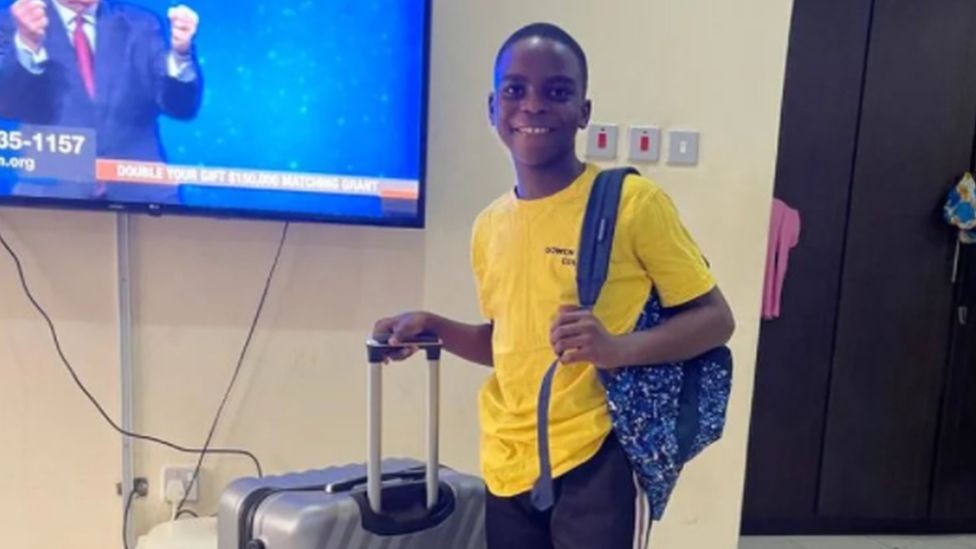
I have resisted the urge to publicly publish a comment on the rather tragic and needless death of Sylvester Oromoni. The reason is perhaps untenable, but understandable regardless.
I have realized that taking on the role of a consumer protection regulator necessarily includes limitation to certain privileges or Constitutional liberties, particularly expression. I am a lawyer, parent, and citizen before being a regulator, but I have learnt that the first attribution to any statement I make is as “REGULATOR”. The responsible thing to do in that case is not to be pre-emptive or premature in public statements, even when it’s an expression of personal opinion.
That said, as an individual and in my role with the FCCPC (Federal Competition and Consumer Protection Commission), I have gathered sufficient information; and there is a lot from open sources to support, if not conclusions, at least a narrative. I applaud Lagos State authorities for swift actions in both engaging and decisively closing Dowen college pending further investigation. As a consumer protection regulator, those decisions are not automatic, simple, or basic. For one there are students in the school who will be affected by the closure. Also, there is a brand that has been created which many consumers desire access to (like the Oromoni family whose late son is one of 4 children and the 3rd to attend Dowen) to the education and services of the school. As such, an early decision in favour of closure was a regulatory indication to me of the magnitude of what had occurred. It establishes that the authorities are sufficiently convinced that something fundamental went wrong, and there was certainly a prima facie or colourable claim that what lead to Sylvester’s untimely death was far below ideal standards or expectations.
More importantly, there was basis to believe that systemic failures or gaps apparently exist enough to endanger other children who were entrusted to the Dowen authorities and faculty. Schools are not closed because of sentiments or to assuage a loss. They are (as should be) closed because of existential threats to safety or gaps in standards that make closure the only reasonable measure (whether temporarily or permanently).
At the FCCPC, we are following the investigation, and articulating the issues we believe must be addressed. However, right now, the outrage that has rightly responded to this episode may somewhat becloud the underlying damage that has been done and the pain of family, friends, schoolmates, and nation. For those young boys in that dormitory, in addition to the pain and suffering of Sylvester’s family, theirs’ also ranks high. The indelible trauma of their experience can conceivably require continuing therapeutic attention.
A few facts have arisen at this point:
Sylvester’s injuries were most unlikely sport (football) related.
His account appear to have been corroborated by other boys
The identities of at least some perpetrators has been disclosed (they are at a minimum, persons of interest)
The School’s initial public statement is rather unfortunate whichever way, whether it was erroneous and on account of lack of internal investigative, control or monitoring mechanisms; or inaccurate and intentional for damage control.
We know a child is dead. The cause of death was unnatural. There is evidence of severe physical injury, and some evidence identifying possible perpetrators. The little we know brings me to the framework we have. What comes to my mind here are Consequence, Accountability, and Retribution (CAR). This is the vehicle for societal behavioural modification and conduct if society will be liveable. Consequence for all, where lapses or failures have occurred, Accountability for an institution whose framework and mechanisms must exist, be seen to exist and operational, and Retribution for those who have engaged in criminal conduct by whatever name so called. Only when this process works in a transparent and fair manner can the cynicism, despondence, and progressively systemic deconstruction of our society, nationhood, even humanity be mitigated.
This is what law enforcement, Lagos State government, and we all as regulators must focus on and do in a timely manner.
In closing, it is sadly fortuitous that about the same time this was unfolding in Dowen in Lagos, Ethan Crumbley, a 15-year-old student of Oxford High School in Oxford Michigan, U.S. took a firearm to school and engaged in a mass shooting killing 4 teenagers, and injuring 7 others. The local authorities have pieced some of the information together as we are doing also. However in as many hours or days, Ethan is currently in custodial detention of the Correctional Department, has been charged with terrorism, murder and other charges, has had his first day in court and a plea taken. And that is not all of it- his parents became fugitives, but were hunted down, arrested, and detained in the same facility as their son, charged with involuntary manslaughter and had their first day in court too. Being a litigator, I have no doubts that the trials are not about to start, the investigations are not closed, but the CAR (Consequence, Accountability, Retribution) system is in gear and moving, even if not in the fastest lane.
This parallel is even more relevant because of stories, (though unconfirmed and unverified) that I have read that some of the identified Persons of Interest have been removed by their parents, and possibly even removed from the country. If this is true, they should be held accountable. There should be consequences for that, and retribution for such action. Government, persons of interest, school authorities, faculty, parents… there is enough blame to go round, and more importantly, lessons for all.
That the mass shooting at the Oxford High School in Michigan is America’s 651st mass shooting in 338 days is unequivocal evidence that America is not perfect, in fact, broken and struggling, but the CAR is moving. We don’t need to be better or perfect either, we just need our CAR to move and keep moving! And this is a collective responsibility for us all because in the death of Sylvester, all are involved- governance system, school administration, individual students, parents… society!!
Babatunde Irukera FCCPC
Here is a must-watch trending video of a zoom meeting on bullying and the tragedy at Dowen College.
Fellow Nigerians, I had a most unusual interview with a man I had always described in the last three decades as the ultimate Crown Prince, Abdul-Lateef Kolawole Abiola, the son of Chief Moshood Kashimawo Olawale Abiola. We’ve been friends ever since and I had written countless stories about him but this is our longest and most revealing interview ever. I thought I needed to share it with you on this page, though the full interview will be published in The Boss online newspaper this weekend… Please, enjoy these excerpts…
Basorun Dele Momodu
Dele Momodu: This is a very rare interview. And for me it is a great honour and privilege to have you. And I like the fact that about two days ago when we spoke, you told me that I could feel free and ask anything. So tell us about yourself from the very beginning
Kola Abiola: Thank you. I am Abdul-Lateef Kola Abiola. I was born into humble beginnings, to late Bashorun MKO Abiola and Alhaja Simbiat Abiola. I am one that has been further humbled by events in my life and that makes me what I am today. That more than describes me as per who I am and why I do what I do today.
Can you take it further back to when you were in school and all that?
Kola Abiola: I came back from England, and started at the University Staff School, Akoka. At that time, my late mum was a lecturer at YabaTech and my father was an accountant. She was teaching back then Textiles Designs. I remember that me and my young ones will walk all the way from UNILAG to YabaTech to wait for my mom to finish before we could go home. From there, I went to Baptist High School where I lived with the principal then; did a bit there before going to Ibadan Grammar School. When I came back on holidays, I had severe Jaundice, and couldn’t go back. I ended up spending six months at home recuperating. Later, I did a term at Maryland Comprehensive Secondary School before my mum shipped me all the way to Aiyetoro in form three. Well, I finished secondary school in Aiyetoro, and went to San Francisco State. Then I went to Berkeley and then to Colorado State University. I have a Bachelors in Finance and MBA in Business Administration. That’s me!
What were the things that molded you knowing very well that daddy was busy, and you stayed with mum?
Abiola: I thank God for her. She always told all five of us that we are not MKO kids, and that we are Simbiat’s kid, especially when dad became polygamous, and as a result of that, the discipline was extra. She was very religious, and she made sure we were religious as well. She was a Taliban in the house. The moment you were able to convince and get her on your side, she will be you one hundred percent. I owe a preponderance of who I am today to her. It is a shame that she didn’t long enough to see us achieve. I wished that by the time she left, the youngest of us, Wura, was doing a PhD. In that respect, she saw us to a point where we could handle things for ourselves. It’s been 29 years since she left, and like I said, one has been humbled by events over my life. She died at 54. I lost my daughter; I lost my father. She is just one who has taught me to be careful, and she’s been very very deep in my thoughts. I took from her in that once that I have decided on what to do, I do it though it takes a while and lot of consideration.
My father and I were connected so well. They say when you look so much like your father, you make enemies of yourselves, certainly not in my case. I think it was by design and my mother ensured that the friendship was there to a point my father couldn’t do anything without calling Kola. In its own little way, it became a problem in the family. She made me come home early just to be around him. The relationship between me and my dad is a design created by Simbiat.
Your father started and grew so many businesses. Could you tell us some of the businesses because I know you were involved in some of them
Kola Abiola: It all started with ITT which he was a part owner. He was an employee, but became a part owner. From that came RCN, Radio Communications Nigeria, and from there came the Bakery (Wonderloaf), and then Concord Press, and then Abiola farms, Concorde Airlines and African Concord. Basically, that is it. Yes, I was involved in a lot of them. A lot of them have been around before I got back. It took me all my service years in Zaria to go back and forth; to restructure and reorganise a lot of the entities. I had to clean them up prior to the arrival of my other brothers so they can step in and take it from me to better heights. Unfortunately, we collectively became a victim of politics – a whole June 12 and electoral history. We all know what happened back then. But more importantly, the government fought us with all their might and the businesses itself became casualties of life. I am not sure anything survived by that time. At the height of it all, we were the highest employer of labour in the country. We had offices in every state. The Concord Press, Airlines, RCN, ITT etc. Like I have said in the past, MKO was well ahead of his time, not to talk about the Abiola Babes etc. He was well ahead of his time. Unfortunately, he paid the price for that also.
Let’s talk about something more international. Before my question, let me use this opportunity for giving me the opportunity to handle the public relations of that country many years ago (1991/1992) Thank you so much for believing in me. What happened to Summit Oil? I know you must have spent about N400 million or more when money was money, but suddenly…
Kola Abiola: Well, we were one of the first indigenous companies to drill and find oil, and that is when we launched. It created a lot of excitement, not just for my family, but for the industry as a whole because it was fully indigenous. And MKO was a strong believer in indigenous challenge. So it was a wholly Nigerian affair. That also extended to the equity and funding of the operation. Now, when the election was annulled, the licence was cancelled. We had two concessions back then; they were cancelled. We started with one that was split into two, and we paid for the second one. And it is funny how things work, but I will probably get it another time. We paid for both, and when the then government of General Sani Abacha came in, he cancelled the licence; we waited till he left office when President Olusegun Obasanjo was sworn in, we got back both licences. We had to do that by reclassifying the concession. We are a Niger Delta based concession with 55 years of exploration time to convert to oil mining licence to an oil prospecting licence. Now, by the time General Abacha left, there was no way we could still run that concession under that regime, so we had to reclassify it to another basin, which took 10 years to prospect and convert the licence. There are some details I can’t tell now, but anyway, after we reclassify it, we still had another problem with the regime. President Obasanjo didn’t quite understand why we had two concessions. We tried to show him that we didn’t operate the second concession because because the licence was suspended. And we actually paid for the two concessions. Anyway, the long and short of the matter is that he actually cancelled one and left us with one. And we continued operating on the one that we had.
But fortunately when late President Musa Yar’dua came to power, I approached him; but before then, we had taken DPR to court because we paid for the concession. We also paid for the data to the original owners of the concession. So we went to court. So when President Yar’dua came, I approached him and explained my situation, which he knew about anyway. And he returned the concession back to us. So we had an out of court settlement, and that’s how we got it back. We have been trying ever since to make it work. We have gone from the first, and we are virtually on the last because it is a long tedious governmental process just to get it operational again. But I have a total commitment to sum it up because of one particular thing; when we signed the signature bonus back then, and we were going to pay for it, my father was approached by family members who didn’t quite understand why he would leave so much and give so much in my hands to go and take the risk, he said well, he believed so much in Kola, and that Kola can achieve this thing, and as Kola has said, ‘we are going from being rich to wealth’.
He honestly believed I know what I was talking about – that’s number one. Number two – I told my that I believe this is what is we are going to be vying for. He said everything was my headache. I said yes, but the only difference was that I didn’t take it as my headache sooner than he cared. He told me if you make this work, you will make my burden a lot more easier. I took up the challenge, and when we struck oil, I proved everybody right. I proved to everybody that this thing will work. Events that happened subsequently were totally out of my control, and because of that till date, I have been travelling to make it works, and that is why I am stuck at it. I have put in a lot of my resources just to make it work. Despite all the setback, I’m still at it, and isha Allah, I am almost there.
Basorun M.K.O. Abiola
Amen! Now, your dad was almost into everything. Could you tell us the story of Concord Airlines
Kola Abiola: Concord Airlines came by default actually. We had two aircraft; Mikilo and Kilo horse power – two HS125. And while it was for personal usage, we also use it as private charter. Along the line, the whole idea came that since we are running private charter, why don’t we start an airline, and that came. It wasn’t my idea; it was sold to him, but once he said he was going to be doing it, I followed him, and made it happen. But I was not going to do differently like it was done back then close to time aircraft that only has a few months to go and too expensive to manage, I decided to use double pops instead because I thought they were efficient, and with that, I can make lot more hubs and more connections. The idea was to have as pop as the operation, and we did that until it was also shut down.
Do you think it is something you would like to resurrect?
Kola Abiola: Good question. For me, it’s like fine China; You drop it on the floor, and its so difficult to get the pieces together again. There are somethings I don’t feel happy with, some that have a possibility, there are some that are still running, but I don’t think the airlines are one of those things in my book.
I started life in Lagos at the Concord Newspapers. What happened to Concord Newspapers because as at the time you invited me, you also wanted to resurrect it. What happened?
Kola Abiola: Concord was proscribed by the military government then, and while they occupied the premises, they virtually stole all the bags and most of the bags left became useless – that’s one. Two – I also felt that I could resuscitate it, which I still plan to resuscitate, using a totally different model. We are in a new age now; the days of having a huge printing press and a thousand and one people all over the place are gone. I discussed that with you, and I gave you the blue print on how I intend to do it. While it came back from date, it still have the problem of feeding its own self because the management then was still trying to maintain that old order. I even recall that we went to the state government of the day for help, and their own idea of helping then was to buy up the generators. I wondered how that would help; how a press would run without generators.. That’s another story entirely. It is doable. I know it’s going to come back. It is not going to come back in the guise which it went, but it’s going to come back in a hybreed of some sort. I am working on it.
Chief MKO Abiola
One of the saddest things that happened was the story of the Abiola Farms. At a time there were fisheries and many more. What happened to all these?
Kola Abiola: The same thing. The farms collapsed because the military government believed that I had a secret airstrip on the farm – the one at Lafiagi and Taraba, and that I was flying in arms and training commandoes there. We didn’t have Boko Haram then let alone training commandoes (laughs). As a result, they shut it down – the same thing with the equipment. I even heard that family members went in there to beat down the equipment and selling the stuffs. The farms were something very dear to me. If there is one thing I have put hands into, the farms were the biggest satisfaction I ever heard. You truly reap what you sow. I got so involved that at the height of it, I was doing about 3000 hectares of maize, another thousand of sun flour. I have my hybreed for sorghum etc. I was really passionate about it.
I really really enjoyed working on it. Of all the companies, that was number one for me – there were kinds of value added, changes to the environment, to the people in those remote areas. The government of the day ended up hurting all these people thinking they were MKO or me. In Taraba for example, and because of the contributions I made there, there is a local government named after me. It is something that was so close to my heart. I felt so bad; there was nothing I could do. There is a limit one can take on government. I hear people say, you didn’t do this, you didn’t do that, you could have done this, you could have done that – I pray to God they never have to face government; they will always find a way to chop off your knee caps. And the system wants to bring you down. For me to be standing, and have survived it, I think I have done a great job so far.
Your dad was a global citizen. He touched lives everywhere, especially in Nigeria. I remember the case when the sultan Abubakar of Sokoto passed on, and he had to get involved in Maccido/Dasuki fiasco. Are you able to recollect what happened at that time because today, Nigeria is so divided that we hardly hear of something where a Yoruba man will go to Sokoto to settle traditional problems
Kola Abiola: My father was very close to the late Sultan Abubakar. The son is the present Sultan of Sokoto. He is very very close to me. When the issue came up and there were burnings and killings in Sokoto, my father and I got into an aircraft and moved to Sokoto. We met with the Sultan, and went to see Maccido also, and he was able to broker peace. You know in Islam, you must have faith; God gives, God takes away. We’ve seen what happened subsequently. But the truth of the matter is there was peace, Sultan Dasuki has been the Sultan of the emirate at some point in time so is his brother, Maccido. Everything is prescribed and ascribed by God. His going there doused a lot of the storm. He met with quite a lot of people in Sokoto that day, and by the time we left, there was a change, and peace returned. You see that goes to show why and what I believe about Nigeria. I have offices in every state. I am at home in every state in Nigeria because we reached out as Nigerians. I grew up in an environment that I couldn’t see anybody by ways or religion but purely by just being Nigerian. We have been to remote places for employees on functions just to support them. So that was just one of many things he did back then. When a Nigerian was given an award in Saudi Arabia, ne chartered a plane and flew everybody there. To me it is a norm. He was a good man.
You did your national service in Zaria. Today, a lot of people in your position will never do that. They will use long leg to come back to Lagos. What happened? How did you find yourself in Zaria?
Kola Abiola: I came home on holiday. My mum wanted me to go back for Ph.D but I just was ready to stay at home and do something. I worked at chemical company back then, but I wasn’t just fulfilled. I knew I could do a lot more coming back to Nigeria. So, I went and filed for my NYSC on my own , but my mum was like when are you going back, and I had to tell her that I want to do my NYSC. She had to make me promise that I would do a PhD, and I would do; I owe her that much. Maybe when my little girl goes back to school, I will join her and do that, but I will definitely do it isha Allah. I was posted to Kaduna, and as God would have it, the camp was in Zaria. Zaria was second home to me. He has a house there and the Emir was like his brother and godfather to me. And I was at home. Not just that, I went to Taraba so was so remote, and I had no problems there. I was at home, and like I said, I have a local government named after me. I had no problems.
The day my mum came to the farm to see what I was doing, she was like, Kola, what are you doing here. Your mates are are out there in Lagos, working in banks and oil companies. I answered her that dad said I should do it, and I am loving it. She said, I’m telling you you can’t continue here, but I reminded her that she was the one that said I should do whatever dad said, so why would she now want me to do otherwise. I made her understand that I was creating things there; I was making things out of nothing, and that’s where I thrive the most. I don’t think I’m a good trader, but when it comes to creating something from zero, I think that’s my strength. When she returned to Lagos, she got my dad to come down and see what I was doing in the place (laughs), and the same scenario played out in Lafiagi, I was comfortable everywhere. Even when I went to Edo State to start drilling oil. I am afraid to invest or do business anywhere. We all see ourselves as one, and that is what it is all about.
Dele Momodu and Kola Abiola
Your dad was involved in the fight for reparations against the many decades of slavery, and a lot of people has said the West was not comfortable with some aspects of his life. What informed the decision to go for reparation
Kola Abiola: You see…my father always fight for justice for the underdog. He felt he had the reach to make a difference. He would always put his best foot forward. Besides being a true Nigerian, he is very much a Pan Africanist, and he felt that you can’t become a strong economic unit if you don’t have the infrastructure, policies and things that could make it convenient for ease of trade and movement. As a result, drop all the barriers that hinder entry and exit of any country. You cannot create the economies if the entry cost is so high; when I have to fly to Italy to get to Gabon or fly to France to get to Cameroun when they are just next door. He felt by doing this, let them pay for that infrastructure that they deprive us because it was on our backs that those infrastructures were built – the cotton fields in America, the plantain fields in the Carribeans. He felt that if they can provide a marshal plan for the Germans, and give the Israelis something every year, why not do something that will make up for all we have lost overtime and generations. And he was very very passionate about that. He just felt that somebody has to start this, and overtime, it would be crystalise, and it is beginning to. Like you said, the man had a foresight, and everything he did was not by error. We are slowly but surely getting there.
At the end of January 1993, your dad suddenly went into politics, and I remember leaving Nduka Obaigbena’s house that night when we picked up the information, and I came to your house in Anthony Village to ask you. I’m sure you remember that night. (Long laughter)
Kola Abiola: Of course I remember…
Exactly, could you please tell us everything that transpired
Kola Abiola: Few months before that, we had a meeting at the hospital with my mum. My dad hinted about him running for president and politics. Her take was that ‘I wholly support you to do this, but there was a big but, allow President Ibrahim Babangida finish his programmes and do what he wants to do, and then you can step in and run’. She had reservations about the process. I think Deji, Agbo, myself, himself, I think Bolaji was also there. We agreed to let the process end; once it was done, we will take it up from there and run for the president. We wanted to see how far he would go with the process. About a week or two after, she passed away, and we were dealing with that. He couldn’t tell me what he was doing because he knew we had an understanding, but I was reading it and heard of it exactly the same way you heard of it. A lot of people were calling to know my whereabouts, I responded that I didn’t know anything about it. So, I came down. He couldn’t call me. Normally, I use to stop by on my way home before going to Anthony. He didn’t call me. I didn’t go. Some people were like daddy said he hasn’t seen you, and I answered that he should call me (laughter). But I came down, and I resigned from the company, and said it was time for me to equally move on. Then the process was going on and election format and strategies and so on and so forth. All along he kept on telling something that this thing is not bright – ‘where is Kola’. If he gets here, we will get the answers to all the questions I am having. Then one late night, around 2:30am, he came by my house. He called out me (he called me Kay). He said he was on his way home, and stopped to see his grand kids. I answered that his grand kids are upstairs. I took him upstairs, and we came back downstairs. He got into his car, came down again to hug me, and said in Yoruba, ‘are you just going to leave this to me to do, and you will not participate in it? Before that, Olu Akerele and I had talked about election, and I told him I wasn’t interested but I would give him a blue print on what he needs to do. I advised him to take it to him, and he would like it. Now, this was at the lobby downstairs. I sat him down and gave him step by step of what has to be done and how it needs to be done. I also predicted who was going to be VP. I think Olu still has a copy of the that thing. I read it line by line. I felt Olu must have gone to tell him that he needed to call Kola. He read and said it was making sense and ordered I be called. Those were the decoy he used to come and see me that night. So I was now that you are telling, I just have to look at it. That was how I got involved.
Is it true that your mum ever told daddy not to go into politics?
Kola Abiola: No. She said he can go into it but let the IBB programme come to conclusion first.
But the programme was elongated. Do you think your dad got impatient with the transition programme, and is it true that he sent people to Babangida to find out if he was ready to go finally
Kola Abiola: Yea, but either way, it is neither here or there. The difference in us, the five of us, was there was no Simbiat, and that told on us, and is still telling on us till today. I really don’t know how best to explain that but you see I was very very close to dad, but there was a limit to how I can look up to him and say my mind with the kind of training she had given to us. There is a limit I can confront him. In the past, I could speak to him, and he could tell where I was coming from. I have a sense that he was not fully on board, I could go to mum. But I seem to be the only one in the room that seems to say things differently. Everybody around him were not saying things based on my perspective; based on the love I have for the man. I think deep about things, and rarely do I speak on things and they don’t come to pass. It is just a gift. I don’t just open up and say things. And that is the reason I don’t give too many interviews as well. This is because my views can be very extreme. I have learnt overtime to manage my tongue and be restraint. Still, there is a limit to how confrontational you can be with your dad. That will be a bit too much. I think that created a circumstance where I was alone in that room so to speak, and there was a limit to what I could achieve.
I am very interested in the SDP (Social Democratic Party) primaries in Jos. There was a lot of work to be done; horse threading, sleepless nights and sure daddy didn’t sleep for weeks. Could you recapture the essence of that marathon campaign to get the SDP ticket?
Kola Abiola: Well, no one, what we did was not conventional. We really planned a coup against the establishment. We were never meant to get that far but because we did things in a very unconventional manner. They couldn’t tell where we were going at any given time, and that gave us a head up. Now, I got very involved with the Yar’dua group. I was about 28, 29, and I have to learn very fast. And I am thankful to that whole process till tomorrow to late General Yar’dua and even late President Yar’dua. I really had a lot to learn at a very short time. We came in a little late in the game. I need to figure out where the power play is, and how we could use that power to achieve the objective. At every given point, we were betrayed. But because of my innocent, I think there was an advantage in that. I see it and brush it up and move to the next thing. I was moving from one person to another, and because they viewed me as a small boy, wondering what I wanted, they listened. In the cause of that, it gave dad an advantage that a lot of what they won’t say to him, or find out, I could. And he trusted me a lot, even at that age. He was so sure it was in the best interest of the objective.
I wanted noting but to deliver the ticket, and I knew it. We paid for every hotel and guest houses in Jos to find out that Baba Kingibe camp has governors on their side, and they were threatening every hotelier not to allow me put any delegate in their hotel or their licences would be cancelled. But thank God, we had camped everybody in Kaduna first. We moved them on the day of the election straight to the stadium. So whatever we paid then was gone. I couldn’t even find a place to sleep myself. It was a problem in Jos then. I was determined to make sure things work. So it was an exercise I will have write about because of the kind of games that played out. Someone that comes to mind is Baba Adedibu for example. I have the highest respect for the man. As young as I was, he would sit me down and said in Yoruba, ‘Kola, what exactly do you want’. I will lay them out, and he will make sure they are achieved. At no given point did he do otherwise. Never! And even when some were playing games, he would say ‘don’t worry, you would get what you want. It may not come out exactly, but you will get what you want’. And I got what I wanted back then. Even in my voting party, it was meant to be different at the stadium. The games were played across states, even in my state, Ogun.
Now, your dad got the ticket. Let’s move on to the general election. I was not in Nigeria on the day of the election because your dad had sent me to Vienna to represent him as Gani Fawehinmi was getting a Bureaucracy award. But on Monday, June 14, I called Nduka Obaigbena in Nigeria, and he told me he has been trying to reach me, and if I could reach Chief Abiola, I should tell him to reach President Babangida urgently. I said why, and he said because he was going to win but they are not going to give it to him. And I said how can someone win an election and they won’t give it to him. Do you think, in retrospect, that it was an error that daddy did not reach out to Babangida early enough?
Kola Abiola: Well, I did. I did the reaching out on behalf of him. We did. It’s just that both sides allowed too many people to get in the middle of friendship. I have always felt the two of them can sort things out for themselves. It’s destiny I guess. There was even a particular case where after the annulment and everything, I actually approached General Babangida, and I said ‘sir, are you going to leave?’ And he said, ‘Kola, yes, I am going to go’. That was the day I believed he was going to go. Everybody around him didn’t believe he was going to go. Those around my dad didn’t believe he was going to go. Unlike the Yar’dua group, those around my dad didn’t have a plan in case Babangida goes. I tried to my them see otherwise.
Talking about Babangida, do you believe that some people worked on him not to hand over to your dad because I later learnt around 1998/99 from Dr. Rilwan Lukman, whom I visited when Chief Olu Falaye was running against Chief Obasanjo, and he told me that the owners of Nigeria (that was my first to hear of owners of Nigeria) have decided on Obasanjo not Falaye. Do you think the owners of Nigeria intervened at that point?
Kola Abiola: You know what. Honestly, I’m not sure Babangida was held hostage by anybody. I think he was held hostage by a process he created himself. That process had dragged for too long that he had no choice. He started with registering multi-parties, and returned to cancel it. After that, he created two parties, and built party offices for everybody nationwide. There was no way he could walk back from it He was already hostage to a process that was so dragged out and was about to consume him. That is what leadership is all about. You have to be objective enough to take decisions even at your own expense. For a process that has dragged out for so long, I want to believe that; yea, there might be people who would not want to go for their own selfish reasons. But for the leader himself, he has to make that call irrespective. I think he was held hostage by the process he had created that was endless as opposed to individuals. That’s my summary there.
President Babangida stepped aside, and Ernest Shonekan from the same Egba House stepped in. Why do you think they invited him, and why do you think he accepted
Kola Abiola: Well, I really don’t know. You see, governance will never be in a vacuum. Never! Like I said earlier, I had a meeting with him (Babangida), and he said to me directly and said, ‘Kola, I want to go’. I went back and conveyed this to my side, and they didn’t believe me, and made no plans whatever for plan B. We had another group – the Yar’dua group, who were saying let’s have this in place in case he goes. There will never be a vacuum – somebody will step in at some point. If the objective is for him to leave, let’s make sure he leaves first, and then we take the next step. But our own side of the fence didn’t believe he would leave, and so made no plan B, and that’s what happened. Now, as to why they picked Chief Shonekan, he was kind of in there already holding a position in IBB’s government. It was easier to move from there. It was not they went somewhere to fetch him, no, he was already in government. Maybe that was convenient, I don’t know. Like I said, we had no plan B.
It has been alleged that Chief Abiola was one of those who said Chief Shonekan should be sacked, and then Abacha took power because he promised to return power…
Kola Abiola: That was a mistake, and I said that back then. It’s treason – whether it is a military or civilian person involved, it is treason. No military man will do that. If he fails he is dead. We won’t plan a coup to get a handover. I didn’t see that coming, and I said that was a big mistake. To call him to take over government to do the right thing? Who does that? If he fails, he dies. If he takes that risk, he did that for himself.
Two days after the Abacha coup, we were with your dad in his study. I remember Prof Agbalajobi, Alhaji Tede Olukoya, Alhaji Adetona and a few others were there with hi, and he actually wanted to issue a strong statement against Abacha, and they advised him against it, and actually advised him to reach out to Gen Abacha. That night, your dad asked me to drop some documents, and the following morning that his vice, Babagana Kingibe, Ebenezer Babatope Babatope and others have decided to join the Abacha government.
Kola Abiola: I actually told him that myself. You see, before that, I knew. It was more like window dressing to make it look like sanction. I had already told my dad that this guy was already in the government, and when I told him, it was a very difficult thing for him to swallow. I could feel for him. He said they all going to be the biggest losers. I really felt so bad, but I had to tell him. But when the meeting was called, he just flowed with it, and didn’t say anything.
Do you think that was the night everything ended
Kola Abiola: I don’t think it ever ended for him. It never ended for him. During one conference Abacha organised, we were having a debate, and it was said that an exit date of the Abacha regime will be revealed at the conference. On our part, we were contemplating boycotting the conference, but I was like this is a military government, and as a result boycotting the conference will be of no consequence
After Abacha, your dad went to Ipetedo to make his declaration. Were you in support of that declaration
Kola Abiola: I was a proviso because we were then under a military regime, and anybody who says we should do this must be behind us. I think he had a press conference where he said he was going to appoint his own cabinet and all that. I was like all of us should go to the Ipetedo place. It wasn’t all about him alone. Let all of them forming the cabinet come there and declare the government with him. That was my own view. When he left – I only found out afterwards. That was my condition. I didn’t say they should not do it. I said if they are going to do it, let everyone of them go with him to do it.
He disappeared for about 13 days. He went into hiding, and I remembered he came out from Surulere to go home before he was finally arrested that night. Are you able to capture those moments?
Kola Abiola: I wasn’t there unfortunately. By the time I got there, he had been taken. I knew he was going to leave. He was coming home that day. I was meant to be at the house that day, but I had some personal things I had to take care of before heading there. But before I got there, the whole place had been sealed up and I couldn’t get to him.
For 13 days, you were not with him
Kola Abiola: I was. I even went to see General Abacha in Abuja. The late Isa Funtua was with him. Once they announced that I was around, he told me that I should wait. Alhaji excused himself, and said the General should see me because that what I was coming for was very important. We had a discussion, and I said we shouldn’t allow this event to corrupt our passion for each other. It was a long talk. We mentioned things I felt I couldn’t do. So I left, and that was the last time I saw him. The powerplay doesn’t understand friendship. That’s it. Once you sit on that seat – even if you don’t see things differently, the guys around you will tell it’s not what it choose to be. And I saw a lot of that back then. I’m even surprised they gave me the access I had back then. Maybe my innocence then was an advantage. I had nothing to hide, and I was honest with everybody. Even at my young age, I had always interacted with them at that level. That was the kind of exposure I got being with my dad.
And so your dad was arrested. Could you tell us what you were doing in those four years since you were at home. For me, I escaped to England
Kola Abiola: I was meant to be have been arrested in the alleged Obasanjo/Yar’dua coup. But I opted not to go. My father has been incarcerated, and if I leave, there is no one to be around. I decided to stay, and waited for them to arrest me in my house. But for some reason, it didn’t happen. Yes, it was a very difficult four years. For me, it was a learning process because I got to know his friends for what they truly are. I got to know family for what they truly are. I needed to sift fast a lot of things. I got to know a lot of truths that I didn’t know. What I thought will be a temporary thing became permanent when he passed away. There was a lot to absorb. I went to Abuja for two to three weeks trying to see him with Mustapha tossing us back and forth. But as God would have it, he ended up doing more time than anybody. As long as you stand for the truth, things will sort themselves out. The only thing we had running then was the bank, not like they didn’t try to take it over. It was a tough four years. Thank God for some investments we made back then in Dubai. It was tough, it was really tough. I had a small tutelage of my mum’s passing away before his incarceration – it was a small bit of it, but at least I had an idea of what it entails. But my dad’s situation was a full blown one; a case study.
You were arrested at some point. That was after the death of Alhaja Kudirat Abiola – God bless her soul – why were you arrested
Kola Abiola: What happened back then was – the last time I saw dad, he said we should change counsel. It was very funny that came up because from day one, I opposed Chief JOK Ajayi as counsel because I know a bit of antecedent between the two of them – the man never liked my dad. I didn’t think he would be there to truly do his judiciary responsibility in that case. I think I was right. I know I was right. So, I really never went to court when that guy was around. So when we saw the last time, he said I was right, and should change the counsel, I started the process and along the line, Alhaja Kudirat – his friends were with Aka-Bashorun – he came in with JOK Ajayi. And he found it difficult to withdraw his services, and I was bent on doing my instructions anyway. So we had an agreement with the late Segun Adetona. Dr Ore Falomo was there. She finally agreed that we withdraw his services, Before we left the meeting we agreed that we would have her write that letter, and then go with her, I sensed conspiracy. But they went and came back without her writing that letter. They came back and said I was right. And we just moved on and started the process. We had a scenario where he (Ajayi) continued with his services while Chief Afe Babalola came in with Chief Williams and decided to write this thing. the irony of it is that this man made it impossible.
Ajayi lodged the case in every court possible, and we have to start unwinding and undoing things before we now got to Supreme Court. He also came to the Supreme Court. When he was shot unfortunately, I was invited to make statement so I went, and got locked up claiming I was part of conspiracy that killed her, which is really unfortunate. Time has shown that I had nothing to do with it. Unfortunately, even her kids accused me of being a party to killing their mum. I don’t think they remembered that I was even locked up for that case, but its another story entirely. It was one of the difficult times I had to go through back then. What I have been doing is to hold the family together, but the system decided to split the family by accusing me of being part of the conspiracy that killed my own father’s wife. But also, I learnt one thing. The same group that was in support of Chief Ajayi then were all also incarcerated – Chief Adesanya and all of them. I think Chief Bola Ige was their lawyer. They went to court, but I refused to go to court because I didn’t do anything. I didn’t want to play into the hands of the military. I was released before all of them. I did about six months while they did about a year. I found out that the bigger the head, the bigger the headache.
Kola Abiola receiving his father’s posthumus GCFR National Honour from President Muhammadu Buhari on June 12, 2018
And then, two days to July 7, 1998. Again, I was in London with Tokunbo Afikuyomi. We just left Nduka Ogbaigbena’s house (he had fled into exile then). We left very early in the morning – walked from Park Lane to Marble Arch. We saw a story on Chief Abiola in the Sunday Times of London that someone came to Nigeria with the then UN Secretary-General, Kofi Annan and they said the condition they met your dad in prison was very bad. Then two days after we read that story, your dad passed on. Could you recollect what happened in the last 24 hours before you got the news of his death?
Kola Abiola: It was like any other day to me. I had gone for my usual workout, came back. I got a call from a friend of mine asking me if I have heard what was going on. This was before it became public. She was crying on the phone, and broke the news to me. At that point, I didn’t even know that the government of the day – Abubakar Abdulsalami had invited us to come and see him a day or two before. Conveniently, I was left out of that trip. I didn’t realise till I got to Abuja to mop up events. I got the news, and I spoke to Dr. Falomo and he made a call for me then. Then I got call from Abuja that I should come. Then it was all over the news that it has happened.
I just sat back, and you know, I had always felt it was just a temporary thing. I put a lot of things on hold because I have had some discussions with him, businesswise. If you recall, I had said that I wouldn’t get involved in whatever the family is involved in businesswise. So I was knocking out some things, waiting for the right time to discuss them with him first, and get the clearance before moving on. My situation with family that was temporary became real. I thank God that I had a space of time to get into where I understand things a little better and the different – it hit me real hard. And before then, because of all these dispute about changing counsel, and for the last one year before then, they didn’t give me access to him because i knew him in signs and papers so they refused to give me access to him. And, I also felt empty because dad was really my friend. He was my dad, he was my friend. I didn’t talked to him – yes – we all had our flaws, but he was a generally good man. He had no hate in him at all. Some will call it naive to have a heart like his, but it is not naive – giving everybody a chance to prove themselves. On getting to Abuja, I can’t telling myself so this thing is really real.
I met with Abdulsalami Abubakar. We went to what they called the State House Clinic, and I saw the condition they put him (laments). This country ehn… Two things that Nigeria does very well is to rubbish your leadership – if a man wins an election, and in the cause of the election, taken in a Black Maria to court. The other thing we also do very well is that we have become a country that does not care about our youths. That can’t be good. Once you rubbish such people, what are the youths supposed to look up to. They rubbish you if you have principles, and then expect the younger ones to have…a man wins an election nationwide, and you take him to court in a black maria. Then I went to the state house to see where they kept his corpse; the place was nasty, half refrigerated. The state House for God’s sake! It reminded me of my days in detention when I will sit out in the evenings and look at the Police Barrack and see the nastiness and I ask myself how do you expect these guys to show empathy to victims. I have seen scenarios where if you are cooking in the kitchen and decide to go to your room to collect salt, there is a possibility that your half cooked food might disappear. A guy dies on duty, and before his wife or parents know, someone is already there packing her out. I saw these things live there. Even in death, the treatment they gave him was disgusting. Just because he won an election. It doesn’t make any sense.
On the morning your dad passed on, a certain man, Yinka Ibidunni woke me up from bed in London just after 7am. He had been calling. He said they want to kill your father, and you are sleeping, and I said my father died in 1973. Which father again do they want to kill. He said your father, Abiola. I said who wants to kill him, he said he just listened to BBC world service and there was an interview from Thomas Pickering and Susan Rice who came from America to see Chief Abiola, and they asked them why do you want to see Abiola, Kofi Annan came, and Abiola said he was not going to bargain his mandate, Emeka Anyaoku came from the Commonwealth, Abiola said no deal. So what do you hope to get from Chief Abiola, They said they were going to persuade him to forget his mandate to which they asked them, ‘if he tells you no, what will happen’, and they responded that he would have become a danger to Nigeria. And lo and behold that evening, I was on to your sister, Wura Abiola, and we were going to issue a press statement that all the human rights people who were saying that Abiola should not leave the prison unless they gave his mandate to him, that we should get them to let Abiola come home….
Kola Abiola: You know MKO very well. If he drives down a street, he will stop by and tell them to check his battery. My dad is not that careless with his health. If he feels any inconvenience health-wise, he is on the next plane out. He will be like, Kola, I’m on BA flight tonight, I’m not feeling too well, and he is gone. Now, when you incarcerate a man like that for four years – he doesn’t have a regulate visitation of his doctor, even at the point we pleaded for him to go out for treatment, Chief GOKAjayi came out to challenge the judge for being an NRC person (can you remember?) and aborted that whole drive. It was just a matter of time. You didn’t need to put a gun to his head. We all know he had blood pressure issue, and no check-up for four years. This is a man that gets a check-up everyday. Like I said, if he drives past a clinic, he will tell the driver to stop so he could check his blood pressure – any clinic and anywhere. And once it is more than normal, he is on the next flight out. Definitely, he was killed. I mean you don’t have to put a knife or gun to his head or spike his drink or whatever it takes. If you have malaria for two weeks, and you don’t get treatment, what’s going to happen? Not to talk about the number of tabs and vitamins dad pops in every morning. Maybe that is why I’m even not a believer in vitamins today because he pops vitamins regularly. He had a tablet for everyday in his bag. And you lock up such a man for four years and think he is not going to die. Of course he is going to die. So he was killed, period. No matter the circumstances or how you want to peddle it.
After his death, you have had a lot of family issues. How are you resolving the family issues. I am aware that there has been litigations. What happened to his will, for example. There was a time you were accused of forging and rewriting the will to favour you and your siblings. So, what has been happening?
Kola Abiola: Number one – I must say one thing – MKO not coming home was a blessing in disguise for a lot of family members because if the man I saw last and the man that had gone through what he went through had come home, a lot of things would have changed. A lot of things. Two – would I change a will that doesn’t even benefit me. That will was dated quite alright, but wasn’t up to date, but that was the last will signed. There was a will he wrote that gave me the right to do and undo everything. But thank God, it was not signed. If it was the one signed, I don’t think I would here speaking with you today. But thank God I wasn’t signed. The copy is there in the file. Wouldn’t I rather forge the signature on that one and leave this one behind – I don’t get it. Number three – I don’t get anything from this will, the way it is now because everything that I could’ve possibly get that was going to my mum were given to me because my mum passed away before him. So whatever thing they are doing now is out of sentiment. Finish. The so-called DNA issue – these kids were doing a blood test in the man’s lifetime, not after death, and they know themselves. They had done it in his lifetime…
Not after death, and they know themselves. They have done it in his lifetime. Their mothers knew they did in his lifetime so why would I want to forge that – to the point that he wrote in his will specifically that a lady has two kids for him but only one (the lady had taken him to court in England) is his. How would I have known that. I can go on and on. But you see, leadership requires objectivity even at your own expense.
If I had wanted to manipulate – remember they were all very young while I was working in these companies – but because of my responsibility to him, his ideals and what he would like to see, that’s why there is something for them to keep. Everything I have inherited has come from my mother 100 percent. And I’m still getting it from her till tomorrow. Because my mum was always the entrepreneur in the house. Even I dare say that all the funding of ITT in those days was Simbiat Abiola. We know we had assets that weren’t utilised, and they were acquired by her. But I have a typical way of doing things. You put your husband as Chairman. Despite the fact that the man was polygamous, everything was the same. She didn’t change anything, and she didn’t even leave a will. So automatically, everything goes back to him.
She didn’t leave a will. I hear a lot of things. You see I can go to sleep at night, I can jog the
Though a Christian celebration, Christmas has turned into a cosmopolitan, cultural, and social celebration marked and enjoyed worldwide by different religious adherents. In Nigeria, a religiously diverse nation, many homes, Muslims, Christians, and traditional religion practitioners, celebrate the spirit of friendship and comradery among different people, enjoy harmless fun, exchange gifts, and share the love that is the hallmark of Christmas.
The frenzy of Christmas and new year celebrations will soon remove our attention from more immense socio-economic challenges pushing Nigeria to the edge. Nigerians never allow any political, economic, or social condition to dampen their Christmas and new year spirit as they enter the festivities celebration mood especially starting from the first week in December. No matter what the year has brought, people go into Christmas and new year celebrations with renewed hope for the bright future of Nigeria.The festivity will be low key for some, and others will still explore fun to the maximum. For some , Omicron variant of Covid-19 may define how they spend the seasonal celebrations.
However, Nigerians have concerns they wish their leaders and government could address, so they have fulfilled celebrations and look forward to 2022 with hope and optimism. These concerns emanate from the yearly experience of people nearer to Christmas celebrations, and these issues have been a recurring decimal in Nigeria during the infamous ember months. Top on the list is insecurity.
Although there have always been fears of insecurity during Christmas periods in the past because of a sense of heightened quest to make money legitimately and unscrupulously, among many people, especially the youths, the desire to show off with the latest gadgets, toys, cars, clothes, and other accoutrements of ostentation pushes many people to engage in various forms of criminality.
In recent times, insecurity has taken a more sinister dimension than previously. The secessionist agitations in the Southeast, the banditry and terrorism of the Northeast and Northwest, the mayhem of Fulani herders and their conflicts with farmers in the Southwest and middle belt region. We also have kidnapping and militancy in the South-South and these entail that most nooks and crannies of Nigeria are insecure. Some have a yearly ritual of travelling back to their villages to commune with family and God. This year, many are having a rethink about making those journies .
The above issue is especially so with people from the Southeast living in faraway North or Southwest. They will struggle to understand the killings in their hometowns and the constant sit-at-home orders by IPOB. Fear is the new normal, and people are afraid for their lives and from harm. Government should do everything within its powers to assure Nigerians of their safety. An orchestrated and detailed plan of providing security, especially in known hot spots by the security apparatus, is essential to instill confidence in the people.
Travelling by road should be made more secure by the government. I sincerely hope that government will give Nigerians the Christmas gift of providing robust security during this festive season on our major highways. If the government has any plans and activities towards offering protection, it should let the citizens know to inspire confidence before the yuletide starts proper.
Besides insecurity in road transportation, traffic management is another bane of road transportation in Nigeria. Traffic jams are prevalent in most urban areas, but with the festive season approaching, this exacerbates and becomes a source of anguish and irritation to drivers and passengers. Government should start on time to plan how to provide robust traffic management and control systems, utilising modern technology. An efficient road traffic control system is a great Christmas gift Nigerians will cherish from the government.
Our gateways are often overwhelmed at peak times during the Christmas season. The airports especially are crowded with people coming back from big cities or abroad to spend Christmas with their families. Often, with crowding comes the collapse of efficient service provision, touting, flouting of rules and best practices in safety, poor crowd management and flouting of laws on Covid 19. The facilities are sometimes not kept in good shape and our gateways, often the first point of contact with foreigners coming into the country, become glorified motor parks where anything and everything goes. The government will use the little time it has now to plan and implement an efficient and effective airport management system that is fit for purpose and will utilise appropriate resources to run the airports effectively. Foreigners and visitors must feel welcomed to Nigeria and have a positive perception of Nigeria in the first few minutes of entering our airports.
Christmas is a festive season, and food prices tend to go up due to high demand. This year has been exceptional. Food prices all year have been increasing at above 10% . Already, the cost of staple food has gone beyond the affordability of many Nigerians. Although the government does not have direct control over the cost of food, Nigerians will appreciate any macro-level intervention it can make to stabilise the price of food. Any measures taken by the government to stabilise the cost of food will be a Christmas gift most Nigerians will love.
Next to food price issues is the rising cost of fuel and gasoline. The gas price has increased by over 200% in the past year. The price of petrol, although stable, for now, is feared to rise drastically if the government goes ahead to remove the fuel subsidy. Nigerians at the lower ebb of the economic strata are feeling the bite of the increase in fuel and gas prices. If they cannot afford foodstuff and Gas to cook food, that will threaten their existence. The direct implications of this are the prevalence of malnutrition, diseases and sometimes death.
An increase in transport fare due to a rise in the cost of fuel will have a significant negative impact on poor people. Fuel scarcity is prevalent during the Christmas period. So far, the government has done a great job to reduce the case of fuel scarcity in Nigeria. We hope that the government will put all strategies and operations to avert any fuel scarcity and force the price of goods not to skyrocket during this festive period. Any positive action in this direction from the government will be a great Christmas gift for many Nigerians. The reality is that fears are growing that inflation could burn red hot, as Nigerians pay higher prices on everything from airfares and electricity to rents, fuel, transport, food items and cooking Gas. The government should not be aloof to these fears and concerns but must work collaboratively with the private sector to reduce these concerns on many Nigerian citizens. On the side of the citizens , we expect economic common sense . People must avoid the temptation of seeing this season as a period of profligacy.
Nigerians would like to have hope in the future, which is the true bedrock of development and patriotism.A recent study by professors at the University of Miami has shown that in nations where people are more optimistic about the future, the impact of the economic recession is weaker, economic expansion is vibrant, and recovery faster. Nigerians need a new lease of hope and optimism buoyed by a combination of heightened government action on security and a clear roadmap of tackling our immediate economic, social, and political challenges. That way we can navigating the future with confidence. Finally , the government must be ready to engage the people . If there is any challenge we have today it is the fact that the citizenry feels hopeless and do not have much expectations .
BULLYING AT DOWEN? WAITING FOR THE TRUTH
The tragic news of the death of 12-year-old Sylvester Oromoni of Dowen College Lagos has brought the issue of bullying in schools at all levels to the fore once more. There are conflicting narratives about the root cause of young Sylvester’s death. First is the claim by his family that the 12- year-old boy, before his passage, stated that some of his peers in school tried to initiate him into a cult group, forced him to drink some strange liquid which he resisted. And he was beaten up, which led to his death at a Warri hospital. Before he passed, the cousin alleged that he mentioned five names of those involved.
There is counter-narrative from the school authorities. They claimed that late Sylvester sustained injury from playing football with colleagues. He was given first aid, but the situation deteriorated as young Sylvester complained of hip pain the next day and was attended to by the school doctor. The school invited the parents to pick him up for proper medical attention when there was no improvement.
The two versions of the same story above are far apart and conflicting. The critical issue now is whose version Nigerians should believe and the implication for society? The fact remains that we may not know the truth of what happened to Sylvester until the investigation into the matter is concluded. As traumatic and emotive as the story is, it is suggested that everyone should desist from jumping to hasty conclusions until we get the facts laid out by the investigators.
The families of Sylvester and the school management must allow for a thorough investigation of the issue. I will implore the investigators to look beyond the specifics of what led to Sylvester’s demise and focus on broader issues of a “culture of bullying” and the structures of bullying, including clandestine groups in our schools . They should also look at the broader scope of these bullying cultures across the schools within the local area to establish a “pattern of bullying behaviours” that threatens the fabrics of society.
Our society deserves to know the truth about this issue. Nothing but the truth can assure all that the safety of young people is the minimum our country can guarantee our young people and their parents. Truth in the context is costly. The dynamic nature of the case may becloud people’s objectivity and make them pander to sensationalism and media trial. Social media is awash with claims and counterclaims of evidence to justify one version of the story or the other. People may easily condone seductive rumours, half-truths, wild allegations, or outright falsehood sold to them through social media, which may persuade the court of public opinion towards accepting the bullying narrative. If that narrative turns out untrue, it becomes difficult to undo the damage that it may have caused to society. The dilemma is that if we dismiss the bullying narrative because we want to preserve the reputation of our institution at the expense of endangering the lives of others who may be victims tomorrow, posterity will not be kind to us.
Whatever the case may be, the inconvenient truth is that the state owes us the duty of going to any length to establish the truth of this matter promptly, logically, and credibly. That is the only thing that can assuage the fears of all citizens, parents, students, teachers, and school authorities on this matter. Even if bullying is not directly linked to the death of Sylvester, it is endemic in our schools. There is a statistical increase in cases of bullying and physical intimidation in our educational institutions. No one knows whether the trend reflects the rise of a violent culture in the wider society. But it does seem that the attraction of the profit motive is swamping the responsibility of private school administrators to protect the young ones entrusted to their care. .It is time for a rigorous review of the administration and welfare aspects of the many private schools in the state. An industry with such robust patronage requires a strict regime of regulation and oversight. That is the best safeguard against tragedies such as the one that just befell young citizen Sylvester.
In line with William Golding’s Lord of The Flies, young people have a proclivity to run wild and hurt each other deeply when adults have not established rules and regulations that guide relationships between and among young people. Young people with a Jack-like disposition may create mayhem within a school environment and institute a reign of terror and pain on others without any compulsion.
THE history of the African continent cannot be complete without reference to slave trade. In fact, during the trans-Saharan slave trade, African slaves were transported across the Sahara Desert to North Africa to be sold to the Mediterranean and Middle Eastern civilisations. Historically, slavery was practiced in different forms, including debt slavery, enslavement of war captives, military slavery, slavery for prostitution, enslavement of criminals, slavery for domestic and court purposes, and plantation slavery.
At the height of the call for the abolishment of slave trade which resolved in the passing of a Bill to that effect by the British Parliament in 1807, some stakeholders who highly profited from the venture openly resisted the abolition. The King of Bonny was so horrified at the abolition that he reportedly exclaimed that: “We think this trade must go on. That is the verdict of our oracle and the priests. They say that your country, however great, can never stop a trade ordained by God himself.”
After several years of the abolition of slave trade, it appears that the King Bonny’s oracles rightfully foretold its subsistence, albeit in another form. Africans, particularly Nigerians, have maintained a firm resolve to sell themselves out to modern form of slavery; and either through ignorance or sheer determination, Nigerians have continued to defy all odds in order to reach the white man’s land, not minding the cost. In thenew era of modern slavery, Africans, especially Nigerians, wilfully sell out their freedom in their foray into the white man’s land in a purported, sometimes elusive, search for greener pastures.
As reported by the U.S State Department, modern slavery takes several forms including:“…the act of recruiting, harboring, transporting, providing, or obtaining a person for compelled labor or commercial sex acts through the use of force, fraud, or coercion…using a number of different terms, including involuntary servitude, slavery or practices similar to slavery, debt bondage, and forced labor. Human trafficking can include, but does not require, movement. People may be considered trafficking victims regardless of whether they were born into a state of servitude, were exploited in their hometown, were transported to the exploitative situation, previously consented to work for a trafficker, or participated in a crime as a direct result of being trafficked. At the heart of this phenomenon is the traffickers’ goal of exploiting and enslaving their victims and the myriad coercive and deceptive practices they use to do so.
In their venture into self-imposed slavery in foreign climes, Nigerians have been known to dare great odds including long and perilous foot crossings of the Sahara Desert to dangerous crossings of the Mediterranean in unseaworthy vessels. There are yearly reports of those who lost their lives in a failed attempt to cross the Mediterranean Seainto Europe with Nigerians constituting a substantial part of the unfortunate statistics. Sometimes in 2016, the sad tale of two Nigerian brothers was reported as follows: “The two brothers from Edo State – Monday and Osas Amanmien – had embarked on the deadly voyage across the angry Mediterranean Sea, intent on hitting Italy where they hoped to make a better living. But the trip turned sour midway, leaving Monday dead. He drowned in the sea following a boat wreck. Although Osas miraculously survived the disaster, he had to endure one hellish hour, hopelessly floating on an empty keg and being brutally buffeted by the bullish, restless waves. And now, he lives with the eternal trauma of the last words of his brother. Monday had said, in a desperate tone: “My keg dey leak ooo,” before he finally went down. Osas says his brother drowned so that he might live. He recalled that when it became obvious that the boat was destined to go down, Monday summoned courage and seized two empty water kegs beside him. One was good, the other was bad. He gave his younger one the better keg so that he would be afloat and live while he struggled with the bad keg. He eventually drowned, Osas said. Not even his dead body was retrieved.”
While the often-unfortunate incidence of Africans’ self-imposed slavery into Europe is attributable to a desire to pursue a dream, or mirage, of financial freedom, the incidence of poverty and bad leadership in Africa must share in the blame. Following the long and tortuous journey to independence by the African states, Nigeria in particular, the resolve and sacrifices of the founding fathers of the nation’s independence, amidst their own ethnocentric affiliations, quickly dovetailed into despair and disillusionment when the progress recorded in the pre independence years and the early years following it were eroded largely by decades of military rule. Despite the return to civilian rule, the expectations of Africans generally in achieving a Utopian statehas continued to fizzle into oblivion particularly considering the incidences of poor leadership, incessant foreign borrowings, and resultant debt profile.
Very recently, the issue of incessant resort to foreign loans by African governments and its consequences was again brought to fore when it was widely reported that the nation of Uganda would likely forfeit its main airport over the non-repayment of a $207 million loan from the Exim Bank of China. According to reports, Uganda ceded its most important airport to China and lifted international immunity in the agreements it signed to guarantee the loans, exposing its Entebbe International Airport to take over without international protection. Interestingly, the government of Uganda has come out to apologise for the mismanagement of the $207 million loan which is about to cause the forfeiture of the nation’s asset! This is clearly reflective of bad leadership and mismanagement that has generally plagued the African states. Sadly, Nigeria is no exception.
There was a recent report in the Punch Newspaper that Nigeria may lose its assets to China over $3.48bn loan which it obtained in several tranches over the years. According to the Punch news reports, the first loan project was for the Nigerian national public security communication system project with $399.50m agreed on December 20, 2010 and disbursed. The second loan was for the Nigerian railway modernisation project (Wu- Kaduna section) with $500m agreed on December 20, 2010 and disbursed. The third loan was for the Abuja light rail project with $500m agreed on November 7, 2012 and disbursed, the fourth loan was targeted at Nigerian ICT infrastructure backbone project with $100m agreed on January 5, 2013 and disbursed.
The fifth loan was meant for the Nigerian four airport terminals’ expansion project (Abuja, Kano, Lagos and Port Harcourt) with $500m agreed on July 10, 2013 but $455.28m was disbursed, which is 91.06 per cent of the agreed amount. The sixth loan was for the Nigerian Zungeru hydroelectric power project with $984.32m agreed on September 28, 2013 but only $518.24m was disbursed, which is 52.65 per cent of the agreed amount.The seventh loan was for the Nigerian 40 parboiled rice processing plants project (Federal Ministry of Agriculture and Rural Development), with $325.67m agreed on April 26, 2016, but nothing was disbursed. The eighth loan was for the Nigerian railway modernisation project (Lagos – Ibadan section), with $1.27bn agreed on August 18, 2017 but only $759.84m was disbursed, which is 17.50 per cent of the agreed amount. The ninth loan was targeted at the rehabilitation and upgrading of Abuja-Keffi-Markurdi road project with $460.82m agreed on August 18, 2017 but only $80.64m was disbursed, which is 59.96 per cent of the amount agreed.The 10th loan was meant for the Nigeria supply of rolling stocks and depot equipment for the Abuja light rail project with $157m agreed on May 29, 2018, but nothing was disbursed. The 11th loan was for the Nigeria greater Abuja water supply project with $381.09m agreed on May 29, 2018, but nothing was disbursed. In terms of repayments, Nigeria paid $102.68m to China in the first six month of 2021, while it still owes about $3.48bn. However, it is clear that these projects are yet to be concluded.
In the past year, Nigeria’s public debt profile hit an all-time high of N28.63 trillion as of the first quarter of the year 2020 – representing a 4.49 per cent increase from the N27.40 trillion being Nigeria’s indebtedness as at the last quarter of 2019. A major undermining factor for a country’s economic growth is its huge debt stock and as such, Nigeria’s humongous debts ratio is directly linked to the decades of misrule and financial imprudence of its military and political leaders. With incessant foreign debts being accumulated by successive governments, Nigeria became caught up on crippling foreign debt crisis which, till date, compromised its economic progress and political stability in spite of the paradox of being an oil exporting country.
From all indications, there is no foreseeable future escape from the country’s debt profile and economic woes. The President of the African Development Bank, Dr. Akinwunmi Adesina, once noted that Nigeria is using 50 per cent of its revenue to service its debts, compared to the average of 17 percent for other African countries. It is therefore commonsensical to conclude that at this rate, unless by some stroke of luck, Nigeria will not be free from debt anytime soon. Despite the humongous foreign loans that Nigeria has been plunged into, it is difficult to see how the economic and infrastructural situations of the nation have improved; and there is no appreciable improvement even in security. To be continued…
The piece is informed by the article which appeared on the 30th November, 2021 edition of Daily Mail, a UK tabloid. The title was sensational: “Lovely Bones author Alice Sebold FINALLY apologises to man she accused of rape in 1981 in a Medium post – seven DAYS after he was exonerated – and years after she made MILLIONS off back of the story” briefly, the facts of the story are this: in 1981 Sebold, then an 18-year-old freshman at Syracuse University was raped by an unknown black man. Months later, she saw a black man on the street and “thought it was him” This black man, Anthony Broadwater, then aged 22, was among the five black men that were featured in an identification parade; and, though Sebold identified the man on the far right of the parade as the person who raped her, Broadwater was nonetheless put on trial because “an officer suggested the man she met in the street must have been Broadwater, since he had been seen in the general area.”. Sebold would go on to identify him as her attacker in the Court during the trial and, together with the now discredited microscopic hair analysis which supposedly tied him to the crime, Broadwater was convicted and would go on to serve 16 years in prison. He was released in 1998 but his name was entered in the New York’s sex offender registry and had been there since.
In 2019, film producer, Tim Mucciante, who was working on the film adaptation of Sebold’s memoir, Lucky, for Netflix noticed some inconsistencies in the book and retained a private investigator to investigate the 38-year-old case. The private investigator linked Broadwater with J. David Hammond, an attorney with CDH Law, a law firm out in Syracuse, who in turn, brought in a colleague, Melissa Swartz of Cambareri & Brenneck to work on the case. Together, these lawyers and the private investigator unravelled the 38-year-old case.
The prosecutorial misconduct of the Police who charged a person different from the man Sebold identified, Sebold’s inexplicable volte-face in identifying Broadwater in Court after she had identified a different person during the identification parade, a lawyer’s false claim that Broadwater and the man standing next to him were friends who looked so much alike that they took advantage of their similitude to commit mischief and the discrediting of hair analysis as a forensic tool coalesced in ensuring that the conviction was overturned. Last week, Justice Water T. Gorman, in an emotional hearing in the Supreme Court of Syracuse, exonerated him of the offence and overturned his conviction. At the time of his discharge, Broadwater, who broke down in tears, was aged 61. Though he is married, he insisted, before his discharge, that he would never raise children who would come into the world and grow with the knowledge of the stigmatization of their father. This stance had been a source of major disagreement between him and his wife.
Coming closer home, on the 16th of July, 2020, a US-based Nigerian, 23-year-old Izuchukwu ‘Izu’ Madubueze, shot himself after Nanichi Anese, a social media influencer, included his name in a list of more than 100 people she designated as sexual abusers and all his requests to obtained the details of the claim were rebuffed. Izu’s case was pitiable and all the more compelling because it came on the heels of a virulent campaign by some feminists tagged “Believe All Women”. Sadly, Izu did not have the providence of a Tim Mucciante to investigate Anese’s claims.
These two cases – Broadwater’s and Izu’s – highlight the flaws inherent in a system of administration of justice that invests a faith-like confidence in the indissolubility of the witness who has sworn to say the truth, the whole truth and nothing but the truth. The internal dialectics that rifles through the resolute buoyancy of this system is reflected in the law of perjury which recognises the possibility of a sworn witness affirming mendacity as datum. This weakness in the adjudicatory process has diminished the confidence people repose in the judicial process. This loss of confidence is all the more visceral when the victim sees the perpetrator walk free from the clutches of the law.
The alternative – the court of public opinion – is not a pleasant prospect either. On the other hand, the vagaries of human emotions eliminate it as a reliable – and responsible – vehicle for the attainment of cathartic justice. A mob, driven by rage, envy, wickedness, ignorance and a panoply of vile emotions, retain no restraint in its determination to defenestrate reason. At the end, the justice served by the mob may not be justice in the true sense of the word; but the infliction of vengeful humiliation on the wrong person. The Broadwater’s case represents the limitations inherent in the conventional path to redressing a wrong; the Izu’s case exemplifies the alternative route and its dire consequences.
Rape is an emotive subject. This is founded primarily on the pervasive effect it has on the victim. As a crude invasion of the privacy of the victim’s body, it leaves the victim traumatised, humiliated and psychologically and emotionally disturbed often for the rest of their corporal existence. Sometimes, rape affects the sexuality of the victim. This explains the justified outrage that accompanies each incident; and the global struggle to eliminate the scourge. It is particularly heart-wrenching where the victim is a minor, or, where the victim is not a minor, but occupies a position of disadvantage in relation to the perpetrator.
But, embedded in this impassioned nature is the propensity to weaponise it as a means of inflicting irreversible injury on the character and career of an innocent person. The consequence is that rape becomes a vehicle for vengeance; and, because nobody would allow themselves to be perceived as encouraging rape, the accusers without any form of restraint or responsibility, reel out recriminations. By being used by vainglorious, vengeful and shadowy characters, rape itself cartwheels the underbelly of the moral courage of the society for sustained campaign of emotional blackmail against a particular gender; or against icons which espouse dissimilar polar worldviews.
What, then, to do? This problem can be resolved from two angles. First, the legal perspective. The elements of the offence of rape are contained in the penal laws. According to section 282 of the Penal Code applicable to the North of Nigeria, rape is sexual intercourse had against the woman’s will; or, without consent; or with her consent, where her consent has been obtained by putting her in fear of death or of hurt; or, in the case of a married woman where her consent is obtained by impersonating her husband; and, with or without her consent where the woman is less than fourteen years of age or of unsound mind. Section 1(1) of Nigeria’s Violence Against Persons (Prohibition) Act, 2015 broadens the concept of rape when it provides that rape could be committed against a woman as well as a man; and that the penetration must not necessarily be vaginal penetration; and that the penetrating object must not necessarily be the penis or any part of the human anatomy. It also invalidates consent obtained by means of false or fraudulent representation as to the nature of the act or the use of any substance or additive capable of taking away the will of such person.
The legal hurdles present a problem. Under the Penal Code, evidence of penetration of the vagina by the penis is necessary to prove rape. This is where medical evidence is relevant. The medical evidence must establish that the victim had been raped. Yet, even after the fact of the rape has been established, another hurdle is encountered: the victim must be able to tie the non-consensual sex to the person accused of the offence. That was the challenge the Court encountered in Francis Okpanefe v. The State (1969) 1 All N.R. 420 where the Supreme Court held that for the offence to be proved, the evidence of the victim must be corroborated. It is this condition that almost ensure that perpetrators escape from the law and leave the victims traumatised and disappointed in the judicial process of seeking redress, thereby leading them to seek alternative justice.
The result of alternative justice, especially in this information age, is the sweeping designation of every intimate communication as evidence of rape or sexual impropriety. The objective is to excoriate the alleged offender, to the point that the alleged offender is considered a pariah unworthy of human companionship. This alternative route becomes appealing as an ideal path to justice because of its guarantee of the instancy of retribution on the perceived offender vis-à-vis the counter-productive stringency of the conventional judicial process.
As the world marks the Sixteen Days of Activism Against Gender-Based Violence, a paradigm shift in the style of advocacy towards an effective containment of this miasma is needed at this point. Responsible and credible advocacy groups and civil society organisations should seize and control the narrative so that people can see the struggle as one against a pervasive evil and not a gender warfare. Victims of rape should be encouraged to go for medical examination immediately non-consensual sex occurs. This is necessary to preserve vital evidence. Further to this, they should be emboldened to speak up and name the perpetrator so that the person can be apprehended and profiled medically as early as possible in order to establish the nexus between him and the offence. That way, toxic campaigns of emotional blackmail that demonise an entire gender or certain icons and undermine sincere efforts towards curbing the menace would have been dismantled.
Encouraging victims of rape to speak up necessarily involves eliminating all forms of societal stigmatisations and pretentious judgments against them. Questions such as “what were you wearing?”, “Why were you with them alone?” “Why did you go out alone?”, “Why were you leading him on?” etc merely obfuscate the issues and put the victim on the defensive. This is unnecessary and should be discouraged. To achieve this worthy objective of tackling rape and all forms of sexual abuses, there is, therefore, the need for responsible persons and civil society groups to take the initiative in driving a public awareness that raises the quality of this conversation.
Ogbu, Blessing Ekpere, Esq., a lawyer, writes in from Abuja
The Nigerian primary education sector has through the years been plagued by a number of phenomena amongst which are child labour and child abuse. The Almajiri system in another light has not always been considered a problem to the primary education system not until recent studies and developments proved contrary.
While primary or basic education has been identified to be a major and incontrovertible drive for development particularly sustainable one of any nation, yet the existence and prevalence of these nefarious activities, circumstances and institutions militating against Nigeria’s primary education system does not augur well for the endeared Nigeria.
Conscious of these verities, the Nigerian government over the years introduced a number of policies and measures by way of reformations to shield the primary education scheme within the country from the ills of child labour, child abuse and the Almajiri system as well as to ensure that the institution of primary education achieves its original goals and objectives. Amongst such measures as evolved are the ratification of the International Labour Organisation (ILO) Convention 138 prohibiting child labour, the promulgation of the Compulsory, Free Universal Basic Education Act 2003, the enactment of the Child’s Right Act 2003 etc.
It is against this background that this article attempts to examine the extent to which the bane of child labour, child abuse and the Almajiri system as extant in Nigeria, constitute a problem to the wellbeing of Nigeria as a country while proffering timely recommendations to salvage Nigeria’s primary education system.
Child Labour and Child Abuse as Stubborn Problems Impacting on the Nigerian Primary Education System
The phenomenon and concept of Child Labour is defined by the International Labour Organisation as the exploitation of children through any form of work that deprives children of their childhood, interferes with their ability to attend regular school, and is mentally, physically, socially or morally harmful while, child abuse or child maltreatment refers to a physical, sexual, and/or psychological maltreatment or neglect of a child, especially by a parent or a guardian.
As affecting Nigeria, the Child Rights Act which is primus inter pares on rights accruing to children in Nigeria defines Child Labour under its broad provisions of Section 28 in terms identifiable to those of the International Labour Organisation. On the other hand, Child abuse is regulated by the cumulative provisions of the Nigerian Criminal, Tortuous and Family Law and incorporates a number of offences which has oftentimes being subject of determination in Courts such as general child injuries, sexual abuse, physical abuse, emotional neglect, physical neglect etc.
Yet, Nigeria, despite having enacted significant laws aimed at curbing the practices of child labour and abuse, statistics evaluating the prevalence of child labour and abuse are very alarming. In fact, the United Nations Children’s Fund (UNICEF) estimations puts child labour prevalence in Nigeria at 43% of the entire children populace while child abuse stands at 60% of the entire children populace revealing a real-failure of extant mechanisms.
However, the effects of these statistics cannot be more appreciated other than in relation to the primary education system of Nigeria which further has a compounding effect on the sustainable development objectives of Nigeria as education has been identified as a critical drive for sustainable development. In effect, children engaged in child labour are usually underrepresented in primary school settings in Nigeria due to non-enrolment or even availability of little or no time for academic activities on the part of the affected children. The resulting effect being total or partial abstention from schooling. The very few who are able to attend classes usually end up with bad grades resulting from their engagements which either do not afford them sufficient time for studying or render them too weak for studies. This is further accentuated by the fact that stress in early ages can disrupt learning and cognitive abilities significantly.
Indeed, the issue of child labour in Nigeria in recent years has been on a perpetual increase. This is despite the provisions of extant laws in force in Nigeria which prohibits child labour in all its forms. However, due to Nigerians’ acculturation to impunity, the practice does not only prevail in local and urban communities but even within institutions set up to mitigate it. Hence, in some parts of the country, pupils are made to cultivate large farmlands and clear big bushes under the pretext of studying agriculture and practicing sanitation respectively.
The cumulative effect of these is a drastic fall in the standard of education at the primary school level which consequently has severe effects on the whole educational apparatus and the developmental objectives of the country.
The Almajiri System and Its Nefarious Effects on the Nigerian Formal Primary Education System
“Almajiranci”, Hausa for the Arabic word “al-Muhajirun” and the Anglicised “Almajiri System of Education” is a system of Islamic education practiced across the world and prevalent in present day northern Nigeria. Historically and as affecting Nigeria, the Almajiri System originated in the Kanem-Borno empire as early as the 13th century with the introduction of Islam in the region. The practice would have gained momentum with the advent of the Sokoto caliphate of Usman Dan Fodio in the early 19th century and would have continued to the colonisation of Nigeria and further into the Independent Nigeria.
As a system, it originally consisted of Islamic theological boarding schools, funded by the State treasury and tasked with the responsibility of inculcating Islamic knowledge and doctrines in the Almajirai who usually are young children. However, with the British colonization of Nigeria, State funding of these schools was stopped. As a build-up to these developments, the mallams engaged these vulnerable children into alms begging in order to meet up with the most basic needs of feeding and clothing. Today, Almajiri has become synonymous with street begging in Nigeria.
While this is appreciated, it is noteworthy that the Almajiri system of education and the formal primary education system in Nigeria has for the most part been incompatible despite government attempts at running parallel educational systems. Hence, in a turn of events, the government had made attempts to integrate the Almajiri System into the formal primary education system, albeit with colossal failures.
This is particularly grave as the continuing existence of the Almajiri system constitutes a threat to the primary education system in Nigeria as the Almajiri System discourages children, parents and guardians from enrolling the children and wards into the formal primary education system given its relative inexpensiveness and the strong support the Almajiri System enjoys from the indigenous populace. The consequence of this is that the right to compulsory primary education for children guaranteed under the cumulative provisions of Section 18 of the 1999 Constitution of the Federal Republic of Nigeria and the Compulsory, Free Universal Basic Education Act 2003 is not upheld and the achievement of sustainable development goals is further impeded.
Final Remarks and the Way Forward
The phenomena of child labour and child abuse and the Almajiri System constitute serious problems to the Primary education system of Nigeria and ultimately to the sustainable development of Nigeria. This in effect refers to their cumulative effects of diminishing the relevance of the Primary education system in Nigeria or impeding the effective actualisation of the objectives of the institution of primary education in Nigeria.
While the government has over time attempted to remediate the situation, yet the effectiveness of extant mechanisms, measures and reformations remains minimal. In this light, it is respectfully proffered in guise of recommendations that the government proscribes the Almajiri System and enact laws to enable the prosecution of parents and guardians who consciously induce their children or wards into Almajiranci.
Furthermore, the government through the judiciary must muster enough political will that would ensure that matters of child labour and child abuse as affecting the primary education brought before it is properly scrutinized and convicted offenders appropriately dealt with. While this is done, a sensibilisation campaign on the importance of primary education has to be undertaken by the government and all stakeholders across the country to the effect of promoting the institution of primary education in Nigeria.
Finally, the government must increase funding of the Nigerian primary education system in line with the UNESCO standard of 15% – 26% of its annual budget to the effect of making primary education effectively and practically free particularly as poverty which is prevalent in Nigeria constitutes a major drive for child labour, child abuse and Almajiranci.
It is strongly contended that the implementation of these measures will effectively tackle the banes of child labour, child abuse and the Almajiranci while significantly improving the Nigerian primary education system.
*Ebere Frankline Chisom, (LLB Part II, ABU, Zaria) Member, Scientific Network on Eviction and Housing Rights (SNEHR), EVICT, University of Groningen, the Netherlands., [email protected], franklinechisom.com
“Each generation must out of relative obscurity, discover its own mission; fulfill it, or betray it.” By Frantz Fanon: Wretched of the Earth.
I have read a foolish write up, from one stranger who claimed to know me in school as a “drop out”. I write this piece not to respond to such idle talk, but rather to encourage somebody who may be facing the kind of challenges of life that I faced, so that such person may continue to persist and not give up.
EARLY STRUGGLES
I joined a protest in secondary school, to complain against deprivations and lack of food and other basic amenities in our hostels. That earned me serious persecution to the extent that I had to leave that school, eventually.
At the Obafemi Awolowo University (Great Ife), I was chosen as Principal Liaison Officer, PLO in my 100 level as the representative of my colleagues. I was subsequently elected Public Relations Officer of the Students’ Union of Great Ife in my 200 level and eventually became the President of the Union in Year 3. For all those who know, Great Ife is the headquarters of the revolutionary struggles of our people and it was indeed hot during our tenure.
THE PERSECUTIONS
Great Ife led the struggle against the IMF loan that was to impoverish Nigeria and so the university was shut down for over six months. In the course of this, names of all student activists were compiled: Adeola Soetan, Adewale Sadiku, Biola Akiode, Bamidele Aturu, Self Pikin, Eweje, Ogbara, Ogundipe; name it. We were all expelled from the university. Chief Gani Fawehinmi challenged our expulsion in court and we were subsequently re-instated.
Then just one day like that, the Dean of the Faculty of Law called me, Mr Nurudeen Alowonle Ogbara and the late Bamidele Aturu (God bless his gentle soul) that we should choose between students’ union struggles and the study of law. We chose both. I paid the sacrifice of that choice. The Dean taught us Land Law and by the end of that session, he returned an “F” for me. In Great Ife Law Faculty then, there was no carryover, once you fail any course you repeat the whole class. So, I had to repeat Year 3 whilst my colleagues proceeded to Year 4. It was painful but we met at the Pacesetters Movement level and decided to forge ahead with the struggle.
The day that this persecution truly affected was when the students took a decision at the Congress to embark upon a three-day protest. The University authorities issued a damning statement that was circulated all over the campus that students should desist from following me as their leader since I was a “failure”. I went into my office at the Students’ Union Building, locked my door and wept profusely. I had struggled all my life to get to this point and now this. The fear was palpable then that I could earn another “failure” in another course, in which case I’ll have to leave the university. It was one of the most challenging moments of my life. But we went on with the protest and I continued with my studies in Year 3.
THE VICTORY
Unknown to me however, Mr Nurudeen Ogbara (Ogbara Again!) had met with some of our Comrade lecturers in ASUU, to petition the Senate of the University over my Land Law result. They demanded a review and my answer scripts were forwarded to the University of Ibadan and University of Nigeria, Nsukka, to be marked by external examiners. Meanwhile, I took my first semester exams in Year 3.
Early in the Second Semester, my scripts came back and it was apparent that I passed the Land Law exam. The Faculty of Law met and took a decision to ask the Dean to remark my paper, which he did and returned a pass mark. It was history in Great Ife as it had never happened. The Senate of the University met and decided that I should be asked to make a choice, whether to proceed to Year 4 and join my colleagues, or remain in Year 3, given that a lot had gone by and it may be difficult for me to catch up. The student movement decided that I should proceed to Year 4, as a mark of rejection of the oppressive conduct of the teacher. There was jubilation in Great Ife, in the hostels, even amongst the lecturers and non-academic staff.
That was when I reaped the goodwill of Great Ife students, as my colleagues volunteered to help me write my notes for the last semester, they gave me their textbooks and offered other useful assistances. Throughout this period, I couldn’t sleep, as I had to copy notes, read voluminous texts and then combine this with my assignments in the Students’ Union, which involved a lot of travelings. Now I had to prove myself, so I studied like I’d never done before. I passed all my papers and proceeded with my colleagues to the Nigerian Law School.
It was a shock when one day, the Director-General of the Law School called myself, Ogbara and Aturu that our admissions had been put on hold. Apparently the Faculty of Law had complained to the Law School about our students union activities and that we were not “fit and proper” to be admitted into the school. We proceeded straight to Gani Fawehinmi Chambers. Chief was livid and boiling! He stormed the Law School premises the following day and threatened to drag the school to court. We were promptly admitted and I graduated with flying colours.
THE PRICE FOR DEMOCRACY
And I proceeded to Gani Fawehinmi Chambers thereafter, which in itself is a story for another day. One day in November 1997, soldiers stormed my house and by daytime, I’d become a permanent guest at the Directorate of Military Intelligence, Apapa, where I went through the most harrowing experience of my life. Chief Fawehinmi challenged my detention in court and he secured a judgment that I should be released but the military government never obeyed it. Pope John Paul II and other world leaders intervened all to no avail. It took the death of General Sani Abacha, eight months later, for me to be released.
DO NOT GIVE UP!
If you’re reading this and facing the greatest challenges of your life, please just keep moving on, don’t faint or give up at all. So long as you are alive, there is hope for a better tomorrow.
Beyond Facebook and social media, there is a God in Heaven who reigns in the affairs of men and women and His ultimate plan is for our good, not evil or shame.
Job 8:7:
“ Though thy beginning was small, yet thy latter end should greatly increase.”
Do not allow naysayers who didn’t create you, to write the story of your life. With determination and God on your side, you will surely make it. Just don’t you ever give up!
From the judgment of Justice Anwuli Chikere of the Federal High Court in Abuja last Tuesday, the banishment of the former Emir of Kano, Alhaji Muhammadu Sanusi II, by the Kano State Government on March 9, 2020 was not only an archaic and barbaric tradition, but an illegality which does not have a place under the 1999 Constitution, Alex Enumah writes
The deportation or banishment of deposed traditional rulers in Nigeria by government has been an age-long practice. During the military regime when the constitution was suspended, Nigerians had witnessed how traditional rulers were banished.
Even during the colonial era, the Oba of Benin, Ovonranwen Nogbaisi, was dethroned and deported to Calabar in 1887.
There were also cases where the Emir of Kano, Ado Sanusi; the Alake of Egba-land, Oba Ademola; the Alaafin of Oyo, Oba Adeyemi; the Sultan of Sokoto, Alhaji Ibrahim Dasuki, and the Emir of Gwandu, Alhaji Mustapha Jokolo, were all dethroned and banished from their respective areas where they held sway.
Sanusi, who was seen as a reformist, had been critical of some government policies – a stance that frequently put him at loggerheads with ruling the politicians in the state. He was never shy of voicing his opinions on pressing issues within and outside the country. This seemed like a break with the tradition where an Emir can only be seen and not heard. More so, since the seat is not adequately protected by the Nigerian law, the norm has always been that even if a traditional ruler does not like the government in power, he exercises patience and act like he does; till the government’s tenure elapses, so as to protect his traditional seat. To many observers, it was just a matter of time before he would run into trouble
So when the Kano State Government led by Governor Abdullahi Ganduje dethroned the Emir of Kano, Alhaji Muhammadu Sanusi II, popularly called Sanusi Lamido Sanusi, on March 9, 2020 on claims of disloyalty and in-surbordination, and consequently banished him from Kano State to Nasarawa State, never to return to the state, many were not shocked.
However, it was obvious that the state government was biting more than it can chew as such an action is a breach of the1999 Constitution (as amended).
Little wonder a Federal High Court in Abuja not only described the action as archaic and barbaric tradition, but also unconstitutional.
Delivering judgment on a fundamental rights enforcement suit, marked: FHC/ABJ/CS/357/2020, filed by Sanusi, the court presided over by Justice Anwuli Chikere, held that the Kano State Government has no power under any law to ban the former Emir from further visiting the city or to confine him to a particular part of the country without his consent.
Justice Chikere held that, having not committed any offence known to law, Sanusi should be able to enjoy the constitutionally guaranteed right of any Nigerian to reside in any part of the country, including Kano.
Justice Chikere, who upheld the argument by Sanusi’s legal team led by Lateef Fagbemi (SAN), declared as illegal, unlawful and unconstitutional, the purported house arrest and restrictions placed on the former Emir by the Kano government, the police and the Department of State Services (DSS).
While the judge did not say anything about the dethronement of Sanusi as it pertains to the Emirate Chieftaincy Law 2019, she voided his purported banishment to Awe in Nasarawa State on the grounds that it constituted a serious infringement of his fundamental human rights.
The judge said: “Fundamental rights law is weighty, inalienable and cannot be wished away as done by the respondents in the instant case.
“There is no provision in the Nigeria’s supreme law (Constitution) that, where a person is dethroned, he should be banished to another place without his consent.
“Every Nigerian citizen must be treated with dignity, except where such a citizen commits a capital offence.”
The Kano State Government had, shortly after dethroning Sanusi, forcefully moved him and his family members, with the help of men of the police and DSS, out of Kano, first to Abuja, then to Loko (Nasarawa State) and later to Awe, also in Nasarawa State.
He was confined to Awe until March 13, 2020 when Justice Chikere issued interlocutory injunction restraining the respondents in the suit from further restricting Sanusi’s movement.
Respondents in the suit included the Inspector General of Police (IG), the Director General of the DSS, the Attorney General of Kano State and the Attorney General of the Federation (AGF).
Sanusi, who said he was not challenging his dethronement, had argued in the suit that his forceful removal from the palace, movement to Abuja and later to Awe, where he was restrained, violated his fundamental human rights guaranteed under sections 34, 35, 40, 41 and 46 of the Constitution.
Justice Chikere, in her judgment last Tuesday held that the manner Sanusi was forcefully removed from the palace after his dethronement and taken, first to Abuja and later to Awe in Nasarawa State against his will, was a gross violation of his rights to personal liberty and freedom of movement.
She further held that the right to freedom of liberty and personal dignity granted under Section 34 of the Constitution cannot be violated as done by Kano government, the police and DSS, except with express order of a court of competent jurisdiction.
The judge declared as unlawful Sanusi’s purported banishment and proceeded to issue an order of perpetual injunction barring the first to third respondents from further arresting, detaining, harassing and containing Sanusi’s movement.
Justice Chikere declared as a nullity the Emirate Chieftaincy Law 2019 under which the Kano State Government claimed to have acted, on the grounds that it was in conflict with express provisions of the Constitution.
The judge, who awarded N10milion damages against the Kano State Government, the IG and the DSS, also ordered them to offer public apology to Sanusi to be published in at least, two national dailies.
Reacting to Sanusi’s banishment, a lawyer, Mahmood Abdulbasit Adewole, condemned the action of the Kano State Government, describing it was unlawful and unconstitutional
“The Government of Kano State has no right to act outside the clear and unambiguous provisions of the Constitution of the Federal Republic of Nigeria, 1999 (applicable to this case); even while acting under the state’s law, because Section 1 (3) of the 1999 Constitution provides for the nullity to the extent of the inconsistency of any law that contradicts the provisions of the Constitution. Section 35 (1) of the said Constitution guarantees the personal liberty of every citizen of Nigeria, except in the circumstances stated thereof. Section 41 (1) of the Constitution guarantees the right of every citizen to move freely throughout Nigeria and to reside in any part thereof, and no citizen of Nigeria shall be expelled from Nigeria or refused entry thereby or exit therefrom. In the instant case, the Kano State Government has not been able to establish that the banishment of the dethroned Emir Sanusi from Kano State and his deportation to Nasarawa State were in accordance with the clear provision of the 1999 Constitution of Nigeria. The Court of Appeal has settled this in the case of Government of Kebbi State vs. HRH Mustapha Jokolo (2013) LPER.
“In holding the view that the banishment was unconstitutional, we are not oblivious of the fact that Section 45 of the Constitution provides that “nothing in Sections 37, 38, 39, 40 and 41 shall invalidate any law that is reasonably justifiable in a democratic society – (a) in the interest of defence, public safety, public order, public morality or public health, and (b) for the purpose of protecting the rights and freedom of other persons.”
“Be that as it may, it is still our contention that the said Section 45 does not cover Section 35 of the same 1999 Constitution which guarantees the right to liberty. It is relevant at this juncture to state that the laws contemplated by the said Section 45 of the 1999 Constitution regarding the right to freedom of movement are no more than laws allowing the restriction of movement of the citizenry and imposition of a curfew during the threat or actual outbreak of war, violence, breakdown of law and order or an epidemic; or such laws allowing people suffering contagious diseases or psychiatric ailments to be confined to hospitals or psychiatric homes, while the instant case of the dethroned Emir does not fall in any of these categories.
“In conclusion, the competent court of law is the only recognised enforcer of any law that seeks to restrict the enjoyment of any constitutional right or freedom of any citizen in order to protect the right of that citizen and other members of the society. Therefore, no executive order of banishment or deportation can be justified under Section 45 of the 1999 Constitution, notwithstanding the rehash of the phrase “is reasonably justifiable in a democratic society”.
The Kano State Government, has however rejected the judgment and would be approaching the Appeal Court in the coming weeks.
Our site uses cookies. By clicking “Accept All Cookies”, you direct Law and Society Magazine to store cookies on your device and disclose information in accordance with our Cookie Statement: cookie policyACCEPTREJECT
Privacy & Cookies Policy
Privacy Overview
This website uses cookies to improve your experience while you navigate through the website. Out of these cookies, the cookies that are categorized as necessary are stored on your browser as they are essential for the working of basic functionalities of the website. We also use third-party cookies that help us analyze and understand how you use this website. These cookies will be stored in your browser only with your consent. You also have the option to opt-out of these cookies. But opting out of some of these cookies may have an effect on your browsing experience.
Necessary cookies are absolutely essential for the website to function properly. This category only includes cookies that ensures basic functionalities and security features of the website. These cookies do not store any personal information.
Any cookies that may not be particularly necessary for the website to function and is used specifically to collect user personal data via analytics, ads, other embedded contents are termed as non-necessary cookies. It is mandatory to procure user consent prior to running these cookies on your website.