Home Blog Page 775

As Nigeria Prepares for the Zoom Presidency

By Chidi Anselm Odinkalu

Having gone to London to watch the crowning of England’s King Charles III earlier this month, a friend joked last week, President Muhammadu Buhari extended his stay so his dentist could crown his teeth. That was how he read the line from the presidency that General Buhari had stayed back in London for a dental procedure. 10 days before the end of his presidency, on his return to Nigeria, Buhari commissioned the Presidential Wing of the State House Medical Centre (SHMC). Estimated to be worth 21 billion Naira, this project provides insight into the mindsets of Nigeria’s higher-ups.

By 2020, the SHMC was reputed to cater to over 32,000 people annually but in reality, it was anything other than what its name suggested. Originally established to “provide health care services to the president, vice president, their families, as well as members of staff of the Presidential Villa”, the clinic became the place where the lowly servants of the rich and powerful rulers of Nigeria in Abuja go to mercifully receive analgesics for their aches and pains. When they died, their families sometimes chose to relieve their pain by announcing that the bodies of their loved ones have been deposited in or moved from the temporary morgue at the Clinic. For the most part, many believed – not without good reason – that the role of the clinic was to hasten the passage of those who used it to the mortuary.

Yet, this Clinic was one of the better-funded medical units in the country. In the four years preceding 2020, it reportedly received average annual appropriations of over N2.5 billion or a cumulative appropriation of over N10 billion. However, the president and his family and staff for whom it was designed were more comfortable getting their medical needs fulfilled outside Nigeria.

No one will ever fully know how much time President Buhari spent with doctors during his eight years in the presidential villa. By November 2022, one count reported that he had spent at least 237 days of his presidency with doctors outside the country. By the penultimate week of his presidency, the count was 250. These numbers are floors, not the ceilings. Tired of the public carping from disaffected Nigerians about his hypocrisy on medical tourism, it seems certain that Buhari’s handlers occasionally dressed up his medical jaunts overseas in a bodyguard of misrepresentation.

Underlying this approach to their management of the relationship between the president and the country was the philosophy, laid bare by Garba Shehu speaking for the presidency in April 2019, that the president “can rule from anywhere in the world.” One decade earlier, in the middle of December 2009, then Attorney-General of the Federation, Michael Aondoakaa, a Senior Advocate of Nigeria (SAN), first claimed this prerogative of a presidency-at-large on behalf of Umaru Musa Yar’Adua, whom, we now know, was battling for his life at the time and probably lacked any awareness that his presidency was in the hands of unknown persons. It is entirely coincidental that Yar’Adua and Buhari were military mates who come from the same Local Government Area in Katsina State.

In the period since Aondoakaa made that claim, Nigeria appears to have evolved a brew of sovereign mendacity in the service of state capture as a unique doctrine of state-craft.

In the week that Buhari was busy attending to his mandibles in London, his chosen successor was reportedly busy in Paris attracting foreign investors to Nigeria. In the period since the Professor of history at the Independent National Electoral Commission (INEC) announced the person he would prefer as Nigeria’s next president; the designated successor has mostly been overseas.

20 days after the announcement of the result of the presidential election, he flew out of Nigeria on 21 March supposedly to perform the Lesser Hajj in the Muslim Holy Lands, returning 35 days later on 24 April. 16 days thereafter, on 10 May, he left again this time it was said, to “woo investors” to Nigeria for ten days. It goes without saying that for many people, this claim tasked credulity. For every day he has spent in the country since being announced as Nigeria’s next president, President Buhari’s chosen successor has spent at least one and a half days outside.

Understandably keen to inoculate his principal against what could be read as a familiar pattern of a ghost presidency, his spokesperson, Bayo Onanuga, explained that he traveled only to avoid pressure and distraction, reminding us, however, that “even if he is in Russia, he can hold zoom meetings and do all kinds of things.”

Even before the onset of the next presidential term, therefore, it has become quite clear that the travel calendar of Nigeria’s next president will be a site of intense scrutiny. Perhaps, anticipating this, President Buhari has sought to buffer his successor by equipping this new VIP wing of the State House Medical Clinic. Conveniently unaware of her own record of medical tourism, Buhari’s wife, Aisha, has been quite voluble in taking credit for this project. Sadly, it seems quite clear that neither President Buhari nor his partner “in the other room” have learnt anything from his peers in other parts of Africa nor from their years as avid medical tourists.

When former presidential spokesperson, Reuben Abati, wrote in 2016 about becoming “convinced that there must be something supernatural about power and closeness to it”, it became a subject of much mirth and laughter with even Buhari’s own spokesperson laying the boot too. But after seeing one African president fart his way through the halls of a major international conference in Washington DC, and another extensively urinate on himself while officiating a public event in Juba, it is not hard to see how or why any presidency could be clothed in wonderment about the wild and weird.

Fantastical tales and theories about the well-being of presidents are as old as power in and beyond Africa. Courtiers exist to spin those yarns. When he toppled President Ben Bella in 1965, Algeria’s famed guerilla leader, Houari Boumédiène, was a dashing 33-year-old. By early 1978, his public appearances became occasional and then rare. Diagnosed with a rare form of cancer, Algerians were massaged with all manner of stories while their president received medical attention in Moscow. In November 1978, he disappeared from public view, eventually dying on 27 December 1978 after 39 days in coma.

While he received medical attention in Belgium for a terminal condition for most of 2012, the public disposition of the government he led was that then Prime Minister, Meles Zenawi, was in either robust health or suffering from a routine infection.

In October 2018, Gabon’s president, Ali Bongo Ondimba, suffered a Stroke while traveling in Saudi Arabia. One month later, he was transferred to Morocco to continue his recovery and rehabilitation, staying there until mid-2019. Back home in Libreville, the public and Gabon’s institutions got tired of a steady supply of misinformation, which triggered a coup attempt. After some 10 months out of public view, a barely recognizable Ali Bongo finally made a public appearance in August 2019.

The people who spin these fables have an interest in the wellbeing of the state or indeed of the occupant of the office but in their benefits from propinquity to him, which must be preserved at all costs. The two most effective ways to do this are to misrepresent the facts or to hide the evidence. Many people may not know it but as powerful as they may seem, presidents can often be glorified prisoners. In this new VIP wing of the SHMC, President Buhari has chosen to invest in a glorified prison as his preferred legacy for his successor.

When they arrive in less than a fortnight, those whose livelihoods depend on this successor may decide that using that facility does not fully conduce to the goal of misrepresenting the facts or concealing the evidence. Goodluck Jonathan was the Facebook president; Buhari is the medical tourism president. Nigeria may be about to transition to an encounter with the Zoom president.

A lawyer and a teacher, Odinkalu can be reached at [email protected]

Ike Ekweremadu: May our children bury, not kill us

By Prof. Mike Ozekhome, SAN, CON, OFR, FCIArb, LL.M, Ph.D., LL.D, D.Litt

INTRODUCTION

When I was growing up in the village in the 60s and 70s, my dear mother always told me, “You will bury me”. I could not then process the meaning. Why would my mother who was still alive, hale and hearty, tell me I will bury her? I can now understand. Indeed, I did bury her in a most befitting manner when she transited in 1997. May our children not kill us. May they bury us instead. Amen. Itsee. This is thus the usual prayer of parents. This has not quite worked out for the Ekweremadus. The genesis and revelation of their ordeal leading to their conviction and jail in faraway cold London arose wholly from their child’s kidney malfunction and their perseverance as parents to save her life. Sonia, the recurring decimal in their travails, puts it most eloquently when she moaned, “I feel guilty, I feel like all this has happened because of me”. She is right. Her health condition called Nephrotic syndrome, a condition where the kidney does not function properly, ignited the entire brouhaha.

Sonia’s survival depends on continuous dialysis for the rest of her life; or a kidney transplant. Senator Ekweremadu’s desire to save his daughter’s life has now put him away in cold London for nearly 10 years. He was first arrested with Beatrice, his wife, on June 23, 2022, by the London Metropolitan Police. They were charged with conspiracy to facilitate the travel for another person with the intention of exploitation – specifically for organ harvesting. At the Uxbridge Magistrate Court where they were arraigned the next day, they pleaded not guilty. They were ordered to be remanded in custody by Magistrate Lois Sheard, pending hearing, because of the severity of the charge. God, may our children bury, not kill us.

THE HOLY BOOKS TO OUR RESCUE

The Bible in Ecclesiastes 6:3 (King James Bible version), tells us:

“If a man beget an hundred children, and live many years, so that the days of his years be many, and his soul be not filled with good, and also that he have no burial; I say, that an untimely birth is better than he.”

The Holy Quran, Surah Al-Anam (the cattle) in 6:151 states, “Say (O Prophet to the infidels), “Come, and I shall recite what your Lord has prohibited for you: Do not associate anything with Him (as His partner); and be good to parents, and do not kill your children because of poverty – We will give provision to you, and to them as well – and do not go near shameful acts, whether they are open or secret; and do not kill a person whom Allah has given sanctity, except rightfully. This He has enjoined upon you, so that you may understand”.

The Ekweremadus’ nasty experience makes me really sad and sober. I can only at juncture find no consolation than the poem of Adly Guigris, in loving memory of Jackson Antonio Clark, titled: “No Parent should have to bury their child.” May our children bury, not kill us.

ORIGIN OF THE PRAYER

“May our children bury but not kill us” is a cheeky twist on the traditional notion of the abhorrence of parents burying their own children. It is a reminder that we should strive to create a future where our children outlive and bury us, rather than they inheriting a world where we dig their own graves. It is also the twist of a degenerate phrase by which we are made to pay for the sins of our children. This ancient belief encapsulates the essence of inter-generational responsibility and the urgency to take action. It is a gentle nudge, reminding us that our decisions today do ultimately shape the world our children will inherit tomorrow.

“Let our children bury, but not kill us” therefore serves as a witty call to duty, inviting us to consider the consequences of our today’s actions and the legacy we intend to leave behind. It challenges us to think beyond our immediate needs and desires. It urges us to prioritize the well-being of future generations. The proverb also serves as a whimsical reminder that our children deserve a better world where they can flourish, rather than being burdened with the consequences of our own mistakes. In its clever twist, it encourages us to embrace responsible decision-making and sustainable practices as we navigate the complex challenges of our time. This is to ensure we leave behind for our children, a world brimming with opportunities and hope.

This proverb wholly encapsulates the challenges of parenthood and the profound sacrifices we make to ensure the continuation of our lineage, even as we journey inexorably to the mythical realm of our ancestors. So, may our children bury, not kill us.

MY HEART BLEEDS FOR THE EKWEREMADUS

This captivating and surreal story of the Ekweremadus has garnered national and global interest of monumental proportions, not solely due to his celebrity status or political notoriety, but primarily because it provokes the question “what would you have done in his peculiar situation?” Readers, answer this question very honestly. Leave out fixations, stereotypes, anger, disappointment, vengeance, revenge, sentiments, emotions, clannishness, nepotism, sectionalism, etc. what would you have done finding yourself in Senator Ekweremadu’s shoes? Tell me. May our children bury, not kill us.

THE CONVICTIONS AND JAIL TERMS

The tale of Senator Ike Ekweremadu’s conviction and 9 years and 6 months jail sentence in a judgement passed on him by Judge Jeremy Johnson at London’s Old Bailey Criminal Court on Friday 5th May, 2023, is for me personally, heart-rending and most traumatic. To compound the travails of the 60-year-old brilliant Prince of Mpu, Aninri LGA, Enugu State, a 4 time Senator; a brilliant Lawyer and tested Politician, his 50 years old beautiful wife, Beatrice, was also convicted and jailed for 4 years and 6 months. One Dr Obinna Obeta, 50, the very medical doctor (himself a kidney transplant survivor), who was found to have acted as the middleman in the kidney organ harvesting odyssey (which started in May, 2023), was jailed for 10 years. Only Ekweremadu’s daughter, 25 years old Sonia, whose ailment ignited the Ekweremadus’ agony was set free. I personally feel both sympathy and empathy for this great Nigerian, who before his “substantial fall from grace” (to use the words of Judge Jeremy Johnson), loomed larger than life in the political and legislative firmaments of Nigeria. Yes, sympathy and empathy are not contradictory or mutually exclusive. I have sympathy because I feel pity and sorrow for him over his misfortune. Empathy for him because I can understand and feel Ekweremadu’s agony, trauma, tears, pains and pangs, from my own little corner, rather than his. Dr Brene Brown’s TED talk narrated through RSA Animate, explains the difference. Sympathy is when you see someone in a deep hole, but you remain on higher ground and speak to him from above. You may even decide to put a silver lining in his pitiable situation, instead of merely acknowledging his pains.

Conversely, empathy is when you feel for the person and climb down the hole to sit beside him and make yourself vulnerable so as to sincerely connect with the person in pains. In this case, you recognize the person’s struggles and pains, but cannot minimize them. My deep inner feelings for Ekweremadu combine both sympathy and empathy. For those who do not like this my thesis, may our children not kill, but bury us.

THE RICH ALSO CRIES

I have heard and read some people who gloat and jubilate over Ekweremadu’s travails. They anchor this mostly on deep-seated anger and sentiments on the usual class “war” between the rich and the poor; the Aristocrats and the peasants. The poor are happy. Yes, happy that the rich for once also cries – courtesy, Amaechi Nzekwe’s novel, “The Rich Also Cry: Stories for Young Readers”. Even the Holy Bible agrees with this, when it admonishes us in Luke 12:13-11,thus: “Then, give thanks and don’t be an ingrate such as the rich fool who thought it was all about his wealth, forgetting that the rich could also cry”. The proverb demonstrates that even rich people have their own painful times when life proves very tough, difficult, even empty and vacuous. A time they want to let go and end it all. Have you, rich readers, ever experienced such a low moment? A state of nadir! Don’t divulge, please. But such people basking in a sense of triumphalism easily forget the immortal post-war confessional prose by the anti-nazi regime German theologian and Lutheran pastor, Martin Niemoller, when he said, “First they came for the socialists, and I did not speak out – because I was not a socialist. Then they came for the Catholics, and I did not speak out – because I was not a Catholic. Then they came for the trade unionists, and I did not speak out – because I was not a trade unionist. Then they came for the Jews, and I did not speak out – because I was not a Jew. Then they came for me – and there was no one left to speak for me”. I do not therefore join the orchestra of those “gotcha” chorus fellows. When you point only one finger at others, the remaining four are pointing at you. When you throw a stone into the market, you do not know whom it may hit. It could be your parents, siblings, children or loved ones. So, may our children bury, not kill us.

THE SENTIMENTS, THE EMOTIONS

IS ORGAN HARVESTING A FORM OF SLAVERY?

In a matter as sensitive as this and which is of international interest, facts and fiction are bound to clash and rival for space. It evokes emotive feelings of the over 2,000 years old slave trade where over 12.5 million Africans were enslaved. It took many years of fierce intervention and intercession by the Abolitionists such as William Wilberforce, Thomas Clarkson, William Cowper, Olaudah Equiano (an Igbo man), Alexander Falconbridge, Elizabeth Heyrick, Toussant Louverture, John Newton, Mary Prince and Abraham Lincoln to abolish this man’s inhumanity to man. So, mentioning slavery in modern times evokes emotive feelings of rejection. May our children bury, not kill us. May our children bury, not kill us.

THE MODERN SLAVERY ACT, 2015

 After the British Slave Abolition Act of 1833, the Modern Slavery Act of 2015 was enacted. This Act encompasses human trafficking and all forms of exploitation. These include the act of recruitment, transportation, transfer, harbouring and receipt of persons.

THE MEANS OF MODERN SLAVERY

The means of modern slavery include coercion, ritual oaths, financial control, debt bondage, abduction, blackmail, abuse of power, over vulnerability, deception, “Stockholm’s syndrome”, grooming, restriction of movement, threats to friends or family, social stigma.

THE PURPOSE OF MODERN SLAVERY

The purpose of modern-day slavery includes sexual, labour and criminal exploitation, organ harvesting, bonded labour, domestic servitude, forced fraud, forced marriage, etc.

When I read sections 2(1), 2(2), 2(3) and 2(7) of the Modern Slavery Act, 2015, I shook my head. I immediately knew Senator Ekweremadu was in deep trouble. The sections provide as follows:

“(1) A person commits an offence if the person arranges or facilitates the travel of another person (“V”) with a view to V being exploited.

(2) It is irrelevant whether V consents to the travel (whether V is an adult or a child).

(3) A person may, in particular, arrange or facilitate V’s travel by recruiting V, transporting or transferring V, harbouring or receiving V, or transferring or exchanging control over V.

 (7) A person who is not a UK national commits an offence under this section if—(a) any part of the arranging or facilitating takes place in the United Kingdom, or (b) the travel consists of arrival in or entry into, departure from, or travel within, the United Kingdom.”

FACTS AND FICTION

Let us see if we can carefully separate the facts from the fiction; the truth from the falsehood.

ONE NARRATIVE AGAINST DAVID, THE KIDNEY DONOR

David Ukpo Nwamini, the organ victim, was said to have claimed to be 15 and underaged. But the Nigeria Immigration Service (NIS) disputed this and revealed his true age as 21. The Comptroller General of NIS, Mr Isah Idris, released a statement on June 27, 2022, clarifying that there was no age falsification on the passport issued by the Immigration agency, contrary to David’s claims. He emphasized that the NIS followed proper procedures in issuing the passport. Some people therefore believed that David, the alleged victim actually exploited the couple to seek asylum in the UK. Such people wonder what he was given in return for simply being picked from the streets of Lagos to go to London. Just like that! Why did he receive the sum of N270,000 he confessed receiving at all? Were the Ekweremadus simply walking on the street and doling out money to whoever cared to receive? Just why?

Ekweremadu’s daughter had been diagnosed with a kidney disease and required a transplant. Embracing the South African Proverb: ‘Motho ke motho ka batho’—A person’s essence is connected to others, Ike Ekweremadu’s resolved to aid his ailing child. This was how David came into the picture. May our children bury, not kill us.

WHAT WORKED AGAINST EKWEREMADU

David, the potential donor had been identified and sent to the UK for assessment with the intention of providing the much needed kidney. He was paid. However, it was discovered that David Nwamini’s (the donor) kidney did not match that of Ekweremadu’s daughter, Sonia. His ineloquent English also raised suspicion among the doctors as to whether he actually understood what he was about to do. Consequently, David the donor was scheduled to return to Nigeria. However, this source claims, David having seen the beauty of London (away from his dreary life on Lagos streets), reneged and refused to return to Nigeria. Instead, he bolted and sought asylum with the UK Police, after wandering the street for three days. He claimed hunger and attempt by the Ekweremadus to harvest his kidney. His story was moving. Even believable. May our children bury, not kill us.

DAVID, THE VICTIM, STATES HIS OWN CASE

However, David Nwamini, the individual at the centre of this case, denied this. He said he had always longed for life in the United Kingdom, away from his wheelbarrow business of selling recharge cards, pure water and mobile phone accessories on the streets of Lagos. He claimed that he was enticed to move to the UK with the lure of job opportunities. Nwamini stated this in his impact statement, which was presented in court. Nwamini shared details about his heart-rending humble upbringing in a Lagos village, where he was the eldest among seven siblings living in a dingy household without access to electricity or running water. Of course, this is the typical life of most Nigerians in the ghettos, I can hear many murmur.

David added that due to his father’s sudden illness with a heart problem, he was compelled to become a full-time street trader in the city of Lagos to support his family. He therefore resorted to the wheelbarrow business; earning a maximum of £7 per day, and sometimes as little as 50 pennies.

David recounted how an opportunity to work in the UK (a long-held but seemingly unattainable dream), was thus presented to him. However, he was taken aback when he discovered the real purpose of the trip: his organs were to be harvested and given to Ekweremadu’s daughter, Sonia.

Hear him: “He [Dr Obinna Obeta, the Medical Doctor middleman], did not tell me he brought me here for this reason, he did not tell me anything about this. I would have not agreed to any of this, my body is not for sale”.

David pleaded that he would not want to return to Nigeria because he is worried for his safety. The victim claimed someone visited his father in Nigeria and asked him to get the victim, his son, to drop the case.

“I worry for my safety in Nigeria; those people can do anything. I think they could arrest me or kill me in Nigeria,” he added. He told the Police he did not want to claim compensation from the “bad people” as it would be “cursed and bad luck”.

Judge Jeremy Johnson was obviously swayed by David’s own touching side of the story. He saw David as the victim who did not deliberately come out to entrap the Ekweremadus. In a very measured (I don’t want to say the usual firm coldness of the British) tone, he convicted Ike Ekweremadu, whom he regarded as “the driving force throughout”.

In this first UK case of its kind, the Judge convicted Ike Ekweremadu for his role in a “despicable trade” that took advantage of the “poverty, misery and desperation” of vulnerable people.

“People-trafficking across international borders for harvesting of human organs is a form of slavery”, the Judge at Old Bailey Criminal Court said as he handed down the jail term.

“It treats human beings and their body parts as commodities to be bought and sold”, he added, noting that the sentence represented a “substantial fall from grace” for Ekweremadu. May our children bury, not kill us.

THE LAW IS CLEAR

Lynette Woodtow, Deputy Chief Crown Prosecutor and National Modern Slavery lead at the Crown Prosecution Service (CPS), enthused it had been “our first conviction for trafficking for the purposes of organ removal in England and Wales.”

She said it highlighted an important legal principle which made it irrelevant whether the trafficking victim knew he was coming to the UK to provide a kidney.

“With all trafficking offences,” Ms Woodrow said, “the consent of the person trafficked is no defence. The law is clear; you cannot consent to your own exploitation”. It is thus a strict liability offence.

HOW THE TWISTS FAVOURED DAVID

The story in David’s favour suggests that the doctors who had examined David did not know whether a crime had been committed. But, they were obviously not comfortable with the yawning discrepancies in David’s dozier. Was David sure he wanted to donate his kidney? Everything appeared smooth. The bubble however burst when Ekweremadu and Dr. Obinna attempted to dispatch David back to Nigeria. David who had neither been given a job, nor sent to school as he said he was promised, was not prepared to return to Nigeria. So, he bolted from his kernel and ran to a Police Station to save himself from starvation. He lied he was only 15 to curry sympathy. He was asked if he was paid money, and he said he was paid only N270, 000. But,the Police upon scrutiny of the Whatsapp chats between Ekweremadu and Dr. Obeta discovered that Ekweremadu had actually given N4.5 Million to Obeta to be delivered to David. But, a greedy Obeta only gave David a miserly N270, 000 and pocketed the balance. The shame of a merchantilistic medical doctor who may never practise medicine again!

Because Ekweremadu kept away from dealing directly with David, it was easy for Obeta (the middle man) to fleece him. This was why he was unaware and kept in the dark of Obeta’s so glaring a scam. But, Judge Jeremy saw through this façade and simulation. He pierced it. He believed Ekweremadu’s indirect involvement with David highlighted the well-worn style of Aristocrats, who play fast and smart by keeping far away from crime scenes, so as to avoid direct involvement in the crime. They usually maintain some cold distance between themselves and the crime, so as to plead alibi. May our children bury, not kill us.

WHAT MULTIPLIED EKWEREMADU’S WOES

One major factor that was highly detrimental to Ekweremadu’s greatest undoing was Obeta’s lying on Oath. Three official documents he signed stated that David was Sonia’s cousin (thus, Ekweremadu’s nephew). However, all the WhatsApp chats between Dr Obeta and his own brother clearly showed Ekweremadu constantly referring to David as “that guy”. Indeed Obeta was to admit in open court that he had lied. He apologized profusely. The sentiments obviously played out against a “big man” (Ekweremadu) who was ready to pluck out a peasant’s kidney to save his own daughter, by paying £7000 to the donor; and further ready to pay for the surgery with a whopping £80, 000 at the Royal Free Hospital, London. This is one of the most expensive in the UK. May our children bury, not kill us.

No doubt, Ekweremadu’s ignoble fate reminds me of Lord Denning, who was once stated in the case of Gouriet v. Union of Post Office Workers & Ors (1977) 3 All ER 70; (1978) AC 435: “Be you ever so high, yet the law is above you.” Ekweremadu was lucky even escaping life imprisonment, as the Judge reckoned with the 51 page pleas for allocutus by World leaders, civil societies, parliamentarians, International Human Rights Commission (IHRC), ECOWAS, ethnic Nationalities, Nigeria’s own highly lettered former Head of State and President, Chief Olusegun Obasanjo, GCFR, Ph.D. That was why he got a term less than the life imprisonment provided for by section 5(1) of the Modern Slavery Act, 2015. The offence is more of strict liability. Although it is legal to donate kidney, but such donations must not be paid for. However, evidence showed that Ekweremadu had doled out a whopping £7000 through Dr Obeta, with a new life in Britain promised David. This was the crux of the matter. Judge Jeremy noted all the pleas. But, he was obviously not impressed. He appeared to have seen the pleas as aggravating, rather than extenuating. They demonstrated oppression of the poor by the rich.

Prosecution Counsel Hugh Davies KC, had argued that the behavior of Ekweremadu showed entitlement, dishonesty and hypocrisy. Ekweremedu on the other hand said he was a victim of a scam. Doctor Obeta said the boy was not offered any reward; rather, he acted altruistically. Lies! Ekweremadu’s wife was not privy to the conspiracy hence the lesser service.

Many have wondered aloud (and I tend to agree), how come the English was so quick to enforce the Modern Slave Act, when they never punished those English men who enslaved Africans and Nigerians for centuries. May our children bury, but not kill us.

WAS JUDGE JEREMY JOHNSON TOO HARSH?

In arriving at his decision, Judge Johnson gave reasons and made copious references to sentencing guidelines, mitigating and aggravating factors, including the very real impact on the victim’s life and his well-considered rejection of any compensation in respect of which an order could have been made. David had said he did not want money from the bad people. Judge Johnson repeatedly referred to David’s age and ethnicity as factors that put him at greater risk if the donation had gone ahead successfully.

Although Ekweremadu’s sentence was 9 years, 6 months, he is to serve 2/3 before he can be released on licence. His wife was given 4 years 6 months out of which she must serve half before she can be released on licence. The doctor got full 10 years the mitigating and aggravating factors were considered to be at par. May our children bury, not kill us.

THE SOCIETY AND IMPACT OF ORGAN TRAFFICKING ON THE VICTIMS

An alarming scarcity of human organs available for transplantation has reached a critical level in our new world. This is marked by a stark contrast between the ever-increasing demand for organ transplants and the severely limited supply. This has led to a very disturbing trend of the escalation of abuses within the organ transplant system. Notably, as noted by WHO-ONT (Global Observation on Donation And Transplantation), one of the most egregious consequences of this scarcity is the illicit practice of trafficking in persons for the unlawful acquisition of organs. There is an acute global shortage of human organs for transplantation. To accurately determine the extent of trafficking for organ removal has remained a difficult task. The Global Reports on Trafficking in Persons by the United Nations Office on Drugs and Crime (UNODC) indicates that between 2010 and 2018, approximately 300 cases of individuals being trafficked for organ removal were identified across various countries. Unlike other types of human trafficking, this particular phenomenon is relatively uncommon.

This is attributed primarily to the exceptional level of medical expertise which necessary to carry out organ removal procedures. It is crucial to acknowledge that the official statistics on the prevalence of this phenomenon do not fully capture its true scale. The complexities involved in detecting and prosecuting this crime contribute to the under representation of its magnitude. One notable challenge is the occurrence of organ trafficking within legitimate medical facilities, making it difficult to identify and expose. The failure to detect and report such cases, along with the geographical dispersion of trafficking in persons for organ removal, are increasingly worrisome for the global community.

Public discourse often confuses organ trafficking with trafficking in persons for organ removal. This leads to their interchangeable use in the media and even within the medical field. But, they are distinct crimes governed by separate, yet complementary legal frameworks.

Despite the legal distinctions, as noted by Human Rights Council, (Report of the Special Rapporteur on sale and sexual Exploitation of children, including Child prostitution, pornography and other child sexual Abuse Material), complications may arise in correctly adjudicating cases where an organ is illicitly obtained from a living organ donor, as both legal frameworks can potentially apply. Such challenges in proper legal handling could have grave consequences for the victims involved.

Furthermore, it is worth noting that discussions surrounding trafficking in persons for organ removal extend beyond organs alone. Related topics such as surrogacy and trafficking in tissues and cells, have also been part of this larger discourse. May our children bury, not kill us.

THE LEGAL FRAMEWORKS TO ADDRESS TRAFFICKING FOR ORGAN REMOVAL

The UN Protocol to Prevent, Suppress and Punish Trafficking in Persons, especially Women and Children (Trafficking in Persons Protocol) criminalizes the act of trafficking individuals for the purpose of organ removal. Article 3 of the protocol explicitly identifies “organ removal” as a form of exploitation that should be prohibited by national laws. The offence, as defined by the Trafficking in Persons Protocol, involves:

  • Recruiting, transporting, transferring, harboring, or receiving individuals;
  • Using threats, force, coercion, abduction, fraud, deception, abuse of power or vulnerability, or providing/receiving payments or benefits to obtain consent from a person in control of another person.

At the regional level, Article 4(a) of the Council of Europe (CoE) Convention on Action against Trafficking in Human Beings, the European Union (EU) Directive 36/2011 of the European Parliament, and of the Council on Preventing and Combating Trafficking in Human Beings and Protecting its Victims, and the ASEAN Convention Against Trafficking in Persons, Especially Women and Children acknowledge the significance of organ removal as a form of exploitation related to trafficking.

WHAT EKWEREMADU WAS PROSECUTED FOR

In the case of Ekweremadu, he was prosecuted for organ trafficking under the domestic legislation of the United Kingdom’s Modern Slavery Act of 2015. This legislation, which is relatively recent, is believed to have been applied for the first time to the Ekweremadus, in a case of this nature.

The UK’s Modern Slavery Act 2015, frowns at human trafficking under which organ harvesting falls and is punishable with maximum sentence of life imprisonment upon conviction. May our children bury, not kill us.

CHARTING THE WAY FORWARD: SOME RECOMMENDATIONS

The following recommendations should be taken as general guidance; and not necessary specific to the Ekweremadus case.

Preventing organ trafficking is a complex and sensitive issue that requires a multi-faceted approach. It involves various stakeholders, including governments, international organizations, healthcare professionals, law enforcement agencies, faith-based organizations and civil society organizations. Because I do not wail and moan over spilled milk, or dwell in damage assessment alone, I always write and proffer solutions. So, here are some recommendations on the way forward, to prevent organ trafficking, and save others from the fate of the Ekweremadus.

  1. Strengthen Legislative Frameworks: Governments should enact and enforce comprehensive legislation that specifically addresses organ trafficking. These laws should criminalize all aspects of organ trafficking, including recruitment, transportation, transplantation, and the involvement of medical and health professionals. Penalties should be severe enough to act as a deterrence.
  2. International Cooperation: Encourage international cooperation and collaboration among countries to combat organ trafficking. This includes sharing information, intelligence, and best practices, as well as coordinating efforts to investigate and prosecute offenders across borders.
  3. Raising Public Awareness: Conducting public awareness campaigns to educate people about the dangers and ethical implications of organ trafficking. Focus on informing potential organ donors and recipients about legal and ethical alternatives, emphasizing the importance of voluntary, altruistic donation.
  4. Ethical Organ Transplantation Practices: Promote ethical practices in organ transplantation; ensuring transparency, accountability, and adherence to established guidelines and protocols. Encourage healthcare professionals and transplant centre to adopt stringent standards and regularly evaluate their practices.
  5. Donor Protection: Establish mechanisms to protect living organ donors, such as ensuring informed consent, providing comprehensive pre and post operative care, and prohibiting the coercion or exploitation of vulnerable individuals.
  6. Strengthen Regulation and Oversight: Strengthen oversight and regulation of organ transplantation by establishing independent regulatory bodies. These bodies should monitor transplant activities, enforce compliance, and investigate any suspected cases of organ trafficking.
  7. International Organ Exchange Programs: Encourage the development of international organ exchange programs to facilitate legal and ethical organ transplantation across borders. These programs should operate within a transparent and regulated framework to prevent abuse and exploitation.
  8. Collaboration with Law Enforcement agencies: Foster collaboration between healthcare professionals and law enforcement agencies to identify and investigate cases of organ trafficking. Enhance training programs for law enforcement personnel to enable them to effectively detect and combat organ trafficking networks.
  9. Support for Victim Rehabilitation: Provide support and rehabilitation services for victims of organ trafficking, including medical care, psychological counseling, and social reintegration programs. Collaborate with NGOs and support organizations to ensure comprehensive care for victims.
  10. Research and Data Collection: Promote research and data collection on organ trafficking to better understand its scope, trends, and underlying causes. This information can help policymakers develop evidence-based strategies and interventions.
  11. May our children bury, not kill us.

CONCLUSION

The Ekweremadu organ trafficking saga serves as a harrowing reminder of the cruel and exploitative trade in human organs.

The sacrifice of a parent in the Ekweremadu case highlights the immense pressures and vulnerabilities that can be exploited by those involved in illicit organ trade. It emphasizes the need for comprehensive efforts to alleviate poverty, improve healthcare systems, and create opportunities for socio-economic advancement, ultimately reducing the vulnerability of individuals and families to exploitation.

Ultimately, the Ekweremadu case should serve as a catalyst for addressing the underlying socio-economic factors that drive individuals to engage in organ trafficking. It calls for strengthened legal frameworks and international cooperation to combat organ trafficking effectively, advocating for the protection of human rights, and supporting initiatives that combat organ trafficking. It is only through concerted international efforts that we can hope to put an end to the horrific practice of organ trafficking and provide justice for the victims involved. May our children bury, not kill us.

WHAT NEXT?

Some Nigerians had taken to the media, asking President Buhari to beg for pardon from King Charles III, during his attendance at the coronation of the king.

I was surprised. Would you have seriously thought Buhari would ask for clemency for the Ekweremadus? Would ethnic and political considerations not have stopped this, with Ekweremadu being an Igbo?, Or, was it really expected that nepotic Buhari, who had granted clemency to convicts of more grievous offences in Nigeria, would ask for same for Ekweremadu?, I do not know. Or, do you? May our children bury, not kill us.

Modern Slavery is a heinous international crime, it is treated with seriousness considering its negative effect and far-reaching impact on human rights and the brutal history of slavery. The Ekweremadus only tried to save their daughter’s life. But, that may not have necessarily been done in the most desperate manner he did, resulting in public disgrace. While the law has taken its course, there remains a window for the Ekweremadus to appeal, get royal pardon; or make a plea bargain. The entire adventure tells us this: ignorantia juris non excusat (ignorance of the law is not an excuse). We must, as parents, always try to consider the pros and cons of any intended action before embarking on same on behalf of our children. Considering the influence and reach of Ike Ekweremadu, many wondered whether if he publicly asked, he would not have got over 20 Nigerians stepping forward to donate kidneys to his daughter. I do not know. Or, do you? Finally, may our children bury, not kill us.


The story of Nigeria’s first female accountant General, Oluwatoyin Madein, FCCA, PhD

By Lillian Okenwa

She describes herself as a “servant leader personality looking for an opportunity to impact positively in social change.”

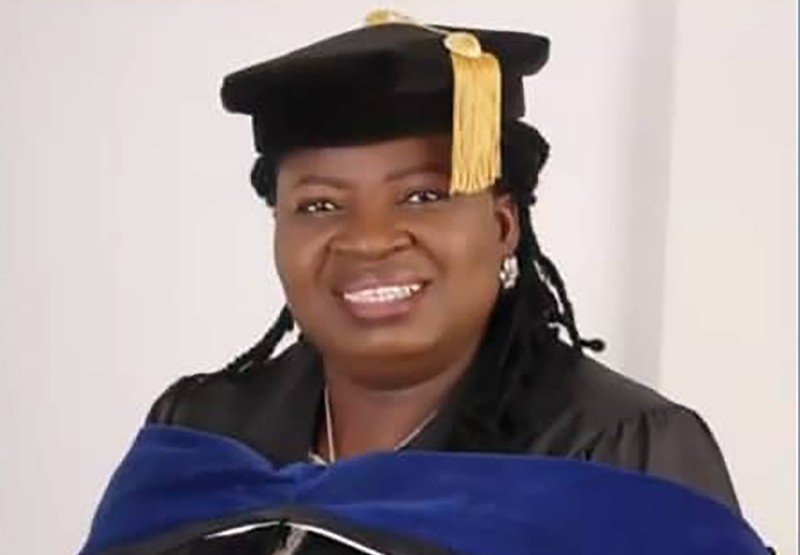
Finally, a huge opportunity has emerged. And Nigerians await Dr Oluwatoyin Sakirat Madein’s impact and the positive social change she has been characterized with at the Federal Ministry of Finance.

It is no longer news that President Muhammadu Buhari has approved the appointment of Oluwatoyin Madein as the new and the first female Accountant General of the Federation (AGF).

An indigene of Iperu Remo in Ikenne LGA of Ogun State, Madein, Director of Finance and Accounts in the Office of the Head of the Civil Service of the Federation, will replace the former AGF Ahmad Idris, who was sacked over alleged his alleged involvement in an N80 billion fraud case.

Born on 7 March 1965, her appointment according to a statement from the Office of the Head of Service of the Federation took effect from Thursday, May 18, exactly one year after the ex-Accountant General, Ahmed Idris, was suspended.

The new Accountant General obtained a Higher National Diploma (Accountancy) in 1988 at Ogun State Polytechnic (now Moshood Abiola Polytechnic), Abeokuta. This was followed by a Postgraduate Diploma and Master’s in Business Administration from Ogun State University (now Olabisi Onabanjo University), Ago Iwoye.

In 2019, she was awarded with Doctor of Business Administration (Honoris Causa), by the Commonwealth University.

A Fellow of the Association of Chartered and Certified Accountants (ACCA), UK, member of the Association of National Accountants of Nigeria, (ANAN) and the Institute of Chartered Accountants of Nigeria (ICAN), she bagged a doctoral degree in Management Finance in 2020 from the Walden University, Minnesota in the United States. The award was a culmination of years of perseverance and exertion having enrolled for the programme in 2012.

With experience that spans over 30 years in the Federal Civil Service as an Accountant, Financial Manager and Internal Auditor, Dr Madein began her career in the civil service as a middle-level officer at Raw Materials Research and Development Council (RMRDC) and eventually joined the team that started — The Family Economic Advancement Programme (FEAP) and National Poverty Alleviation Programme (NAPEP).

The new Accountant General also served in various Ministries including the Ministry of Police Affairs, Commerce and Industry, Works and Housing and Ministry of Youth and Sports Development, Abuja.

She also served as an Executive Officer (Accounts) in Ogun State Property and Investment Corporation (OPIC), Abeokuta before joining the Federal Civil Service,

Offices Held

  • Director, Office of the Head of Civil Service of the Federation – From January 2020 to 18 May 2023.
  • Director (Finance and Accounts), Federal Ministry of Youth and Sports Development – from October 2019 to January 2020.
  • Deputy Director (Internal Audit) Deputy Director (Internal Audit), Federal Ministry of Power, Works & Housing, Federal Ministry of Power, Works & Housing – from November 2016 to October 2019. She was overseeing the Internal Audit Department of the Housing Sector.
  • Deputy Director, Ministry of Lands, Housing, and Urban Development – from September 2014 to January 2020.
  • Deputy Director Deputy Director, Ministry of Police Affairs – from December 2013 to September 2014. Oversaw financial accounting and project management.
  • Assistant Chief Accountant, National Poverty Eradication Programme – from February 2001 to March 2006. Financial accounting.
  • Principal Accountant, Raw Materials Research &Development Council – from May 1990 to October 1997

Shortlisted for the top job with 19 others back in January, Oluwatoyin Madein is married to Engr. Adeleke Olusina Madein and they have four children.

Seun Kuti: Kila cautions Police

By Ladidi Sabo

Popular Policy analyst and Professor of Strategy and Development, Anthony Kila has invited the Nigerian Police to be careful in the way they are handling the case against Seun Kuti, musician and son of legendary musician Fela Anikulapo Kuti.

In a statement issued in Lagos, Prof Anthony Kila warned that the Inspector General of Police (IGP) should deliberately make sure his officers do not confuse or turn prosecution to persecution. The Commonwealth Institute Director noted that “so far so bad with the way the police are handling the Seun Kuti case”.

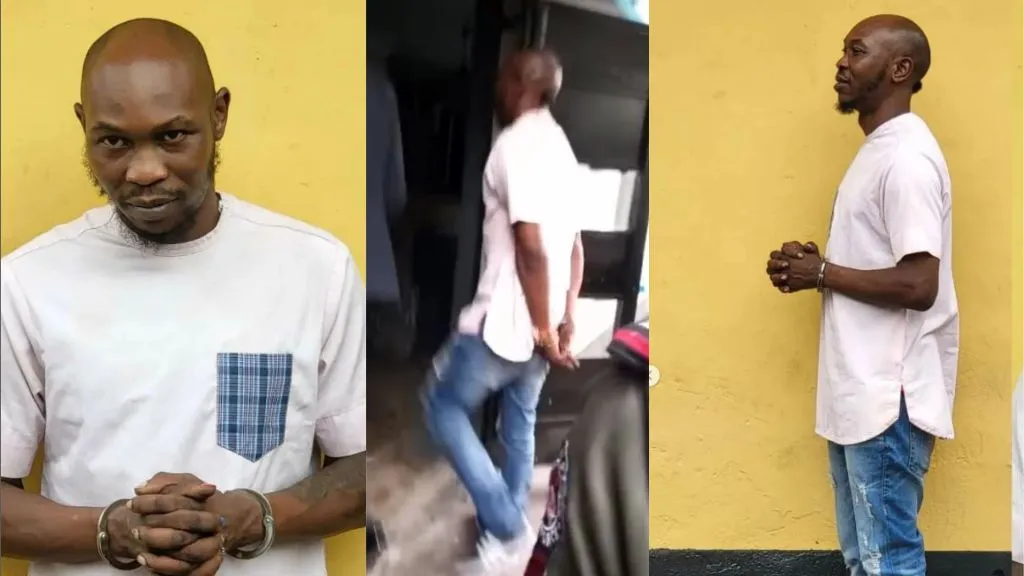
According to Kila, slapping a police officer or anybody is a clear case of suspected assault but from that to handcuffing a known public figure that presented himself to the police authority and conducting a search in his house for an event that happened on the road and which the suspect has not denied smacks of looking for something to create a wrong than dealing with what is wrong. It makes one think of the police as using a sledgehammer deal with an ant.

Kila also stated the IGP should be mindful of the fact that the conduct of the police is under public scrutiny and should therefore make sure through the commissioner of police and officers dealing with the case not to allow the public to suspect the police of vendetta or mobster intervention.

It is a good thing that everyone now knows that the Nigerian Police takes physical abuse seriously. The next thing is to make sure their officers are aware of it and that the IGP will continue to deal with any officer that acts in a way that brings the Nigeran Police to disrepute in the process of policing Nigeria, Anthony Kila observed.

In the meantime, after taking Seun in handcuffs to search his house, the Police now claim to have discovered suspicious items in his residence.

Earlier, Seun’s legal team accused the police of deliberately turning the slapping saga into a national emergency rather operate within the confines of the law.

Kuti’s legal team in a Thursday, May 18, 2023 letter signed by Adeyinka Olumide-Fusika, SAN, addressed to the Deputy Commissioner of Police and lead prosecution counsel, Simon Lough, SAN, warned the first police SAN “not to be caught in any scheme having the potential of making a mockery of the rule of law and exposing the Court administration of Justice to ridicule…”

Excerpts:

Dear Mr Lough, DCP, SAN, etc.,

(1) My attention has been drawn to a tweeted public statement ascribed to you, which, inter alia, “appeals to the defence team of Mr Seun Kuti to desist from engaging in media trial/defence of their client and allow the judicial process take its course”.

(2) You are of course aware of the names and identity of those to whom your advice was directed. That being the case, you should have honoured your own advice against “media trial/defence” by reaching out to them otherwise than through a tweet to the whole world. Your predilection is however understandable and forgiven considering that you are first and foremost a Deputy Commissioner of Police and therefore bound to obey the last order of your superiors in the Nigeria Police Force.

(3) Otherwise, as a Senior Advocate of Nigeria, the unethical implication of your exertion and conduct in court today would not have been lost on you. To your knowledge, the bail granted to Mr. Kuti at the court session of Tuesday 16/5/2023, was not on the application of the Police or its legal team. It was on the oral application and at the instance of Mr. Kuti’s legal team, having chanced upon the ex-parte attempt of the Police to keep Mr. Kuti under Police detention for twenty-one more days as from said 16/5/2023. It should therefore have occurred to you that any application to vary the bail terms, including the term that his release on bail shall be effective after forty-eight hours from that date (which was what you went to court today to make and obtain) cannot be ex parte but on notice to Mr. Kuti’s Defence team. In your elevated position as a Senior Advocate of Nigeria, you ought not to be caught in any scheme having the potential of making a mockery of the rule of law and exposing the Court administration of Justice to ridicule. Mr. Kuti will say no more on this for now.

(4) You have informed the public in your statement that “section 10(4) of Administration of Criminal Justice Law of Lagos State allows the taking of photographs of suspects arrested for identification and record purpose”. However, apart from the fact that it was Mr. Kuti that voluntarily took and submitted himself at your Lagos State Command, Ikeja on Monday 15/5/2023, you omitted to also direct the public addresses of your statement the Section of the Law you cited that authorised or permitted the Police (through Mr. Hundeyin, its Lagos PPRO, who personally took the photographs) to circulate it to the media and the public at large. Or, are you by any chance denying that this was not what happened? Are you saying that it was Mr. Kuti (and or his legal team) that took his photographs in police handcuffs and sent it to media houses and the public at large? As it is obvious that you either do not know or is pretending not to know, in September 2021, Mr. Babajide Sanwo-Olu, the Governor of Lagos, signed the Administration of Criminal Justice (Amendment) Bill, 2021 bill into law.

Section 9(a) of the law states: “As from the commencement of this law, the police shall refrain from parading any suspect before the media”.

(5) Furthermore, according to you, the need for handcuffs was because Mr. Kuti “has shown the tendency of violence … by attacking and slapping a Police Officer in uniform and even threatened his wife in the process”. Mrs. Kuti has instructed that you should be informed that she has never made any complaint to you as insinuated in your statement. I am also sure that the Police Commissioner to whom Mr. Kuti reported and submitted himself did not inform you that he suffered any violence or threat of violence from Mr. Kuti. Mr. Kuti submitted himself to the Police so that he can go answer in court for the allegation of assaulting a policeman. It is the Police who, rather than taking this simple and straightforward step, has decided to create a circus and make a “national emergency” of the matter. Your sweeping insinuation against Mr. Kuti (which only a witness in court is entitled to testify to), using your title of Senior Advocate of Nigeria, belittles that Rank.

(6) Well, now that Mr. Kuti has been put in manacles and taken on parade from one police station to another, and from one location to the other across Lagos State since Monday, 15/5/2023, when exactly is he going to be charged for, as you put it in your statement, “attacking and slapping a police officer in uniform”? Mr. Seun Kuti is patiently waiting to be charged to court for the alleged offence so that he can offer his defence. That should not be too much for a suspect to expect. I do hope that you will use your position as a lawyer, and indeed a Senior Advocate of Nigeria, counseling the Police in this matter, to obey the order of the Magistrate Court to send the case file to the Lagos State Director of Public Prosecution for legal evaluation and possible charge and prosecution before a court of law.

(8) As you can see from this very example, the “defence team of Seun Kuti” has never engaged in “media trial/defence” of its client. Rather, the team only makes cautioning responses to statements and briefings from the Police to the public against Mr. Kuti (at a time he is in police detention and unable to speak by his own mouth to the public).

(9) Thank you.

Adeyinka Olumide-Fusika, SAN

Pp: “defence team of Seun Kuti”

After impregnating deputy, Congolese Education Minister says ‘It was accidental’

When two mature persons of the opposite gender have intercourse could it have happened by accident?

What if that intimacy results in pregnancy, could that be called an accident also?

Well, some intimate affairs analysts posit that when sexual activity happens and pregnancy occurs, it should neither be viewed as intentional nor as an accident but as a consequence of simply having sex.

However, the Congolese Minister of Primary, Secondary, and Technical Education (EPST), Tony Mwaba Kazadi has described his impregnating the Deputy Minister of Education, Aminata Namasia, as “accidental.”

Reports in the Democratic Republic of Congo (DRC) revealed that Minister Kazadi and his Deputy, Namasia, in spite of being married, developed feelings for each other as they worked together in the DRC education ministry and an accident thereafter occurred.

According to The Heritage Times, a DRC journalist, Lungila John took to Twitter to reveal the affair between both officials that led to the deputy education minister’s pregnancy.

The two public officers have come under intense criticism from citizens of DRC, accusing them of reeking of bad conduct and immorality.

Archy Lema, a citizen of DRC and a Twitter user said, DRC is a country of shame. She said Namasia has no education to give to any young lady in the country.

Another citizen of DRC said if politicians in the country, especially Kazadi, and Namasia wanted to be referred to as “excellencies” or “honourables”, their conduct should have been more excellent and honourable, especially since they are very popular and wealthy, unlike other Congolese people.

The Heritage Times said Namasia was appointed the National Deputy Minister of Primary, Secondary, and Technical Education in the Democratic Republic of Congo under Jean-Michel Sama Lukonde’s cabinet on April 12, 2021.

The Independent reported that in 2021, a millionaire property developer was cleared of raping a teenager after claiming he accidentally tripped and fell on her.

Ehsan Abdulaziz, 46, was accused of forcing himself on an 18 year-old-girl who had slept on his sofa in his Maida Vale flat after a night out drinking.

The businessman had already had sex with the teenager’s 24-year-old friend, whom he already knew, in the bedroom and said his penis might have been poking out of his underwear when he fell on the teen.

The young woman said she had woken up in the early hours of the morning, with Mr Abdulaziz on top of her, forcing himself inside her.

He claimed he had gone to see if the young woman wanted a t-shirt to sleep in, or a taxi home. But he said she pulled him on top of her and placed his hand between her legs.

His semen and DNA was found inside the young woman, but he said it was possible he had semen on his hands from having sex with the 24-year-old earlier.

In the evidence, Mr Abdulaziz showed how the girl had put her hand behind his head to pull him towards her, which is how he says he fell.

He said: “I’m fragile, I fell down but nothing ever happened, between me and this girl nothing ever happened.”

The women met the millionaire in London’s West End club, Cirque le Soir nightclub, where he invited them to his private table.

He was cleared of one count of rape at Southwark Crown Court on Tuesday.

Meanwhile, it has been reported that Saudi Arabia may jail a woman who posted a video of husband cheating with the housemaid. Watch video.

https://cdn.jwplayer.com/players/uFmCgTFi-9ygSIn9G.html

Why The Senate President should be sworn in on May 29th

By Emmanuel Ogebe

Practically three months after the February presidential elections, INEC still has only 96% of the results meant to have been uploaded in “real-time” on its IREV portal.

At the Election Tribunal, petitioners complained that INEC has failed to supply 70% of the election materials ordered by the court over a month ago.

The Tribunal which has 180 days to hear the case hopes to wrap up pre-hearing matters by the end of this month – such as duplicate motions on whether to live broadcast the trial – 60 days after the filing of the petitions.

The APC argued that airing the proceedings would turn the court into a stadium or circus although tribunal proceedings have been aired without input of counsel since 2008.

However, the irony here is that it is INEC which has turned Nigeria into a circus of brazen election criminality and venality in the eyes of the world which the courts are now trying to sanitize.

The bottom line is that this litigation will not be resolved by May 29th, without extraordinary gumption and action by all concerned, in time for a legitimate president-elect to be sworn in.

This is because there are issues with both the Person and the Process of the INEC-Declare – Senator Tinubu.

In addition to his drug-money laundering case in the US years ago, recent revelations show a pattern of continuing money laundering via his children with two multimillion-dollar properties in New York and an $11 million property in the UK.

How will the UK and US look at Nigeria if it swears in someone with a globally visible footprint of such obscene venality?

Already the UK has shown us consistently what it thinks of our fantastically corrupt misrulers with the prosecution of three governors and the recent imprisonment of our former Deputy Senate President no less!

Some years ago, I was consulted by a Nigerian ambassador in North America about his colleague designated plenipotentiary to another North American country.

His adopted son was on trial in the country he was being posted to for raping a citizen of that country.

I told the ambassador that it would be a monumental disaster for him to assume duty in that country as his position would always be linked to the trial whenever it came up in the press. Besides there are diplomatic privileges accorded diplomats’ families which the State Department would likely deny his son further complicating the situation.

My esteemed ambassador friend had the unfortunate duty of having to call his colleague just as he was departing Nigeria so that he should not come to his new post.

If a position as ambassador could be so sensitive how much more that of president?

However, that aside, the primary case against swearing-in is not so much the Person as the Process.

The BBC reported that, in Rivers state a fake INEC collator, presented a fake result for Oyingbo LG giving APC a false victory over LP.

This is hugely significant because when an IREC in Adamawa declared a candidate as governor, INEC itself disowned it, suspended and declared him wanted.

The case of the fake collator is even worse because he is not even a lecturer in the institution he claimed to be from and is actually unknown to INEC! Thus, INEC HQ is guilty in the presidential election of procuring a fake official to produce a fake result in Rivers before it turned around and accused its own REC of the same in Adamawa state.

Furthermore, an addition of votes on INEC’s own IREV show LP won Rivers state contrary to INEC’s fraudulent declaration as reported by both Premium Times and BBC.

This means that INEC’s criminality is on full display before the whole world. How can the presidency of the most populous black nation be anchored on such a gigantic scam?

Then there are the constitutional questions.

APC did not win 25% of Abuja as constitutionally mandated. A president-elect was simply not produced merely on this basis without even going further into how badly botched the elections were.

This is without even delving into the other constitutional question, which is apparent to all but wasn’t raised by any of the petitioners, that Senator Tinubu is not of sound mind as required by the constitution as evidenced by his incoherent campaign blubbering and his multiple foreign medical trips.

On May 29, the constitution provided us a clear pathway out of the monstrous state capture and hijack of 200 million people orchestrated by a mafia don and rogue state actors.

They have dared us to go to court and the court must show that it is not a toothless bulldog as nefarious elements imagine.

Neither an extension of the Buhari regime nor an interim government is justified or legal.

The only legal option is a handover to the Senate President once the president and Vice President’s tenure elapse as provided for in the constitution.

– Emmanuel Ogebe, Esq, is a US-based international human rights lawyer and Nigeria Judiciary expert with the US NIGERIA LAW GROUP Washington.

Let’s remember the boy child!

By Lillian Okenwa

A December 31, 2021 opinion published by Nigerian Tribune raised a greatly overlooked point. “So much has been written and said about violence against the female gender and most especially, the girl child. We have heard of how the girl child is abused sexually, physically, and emotionally. We have heard of how brothers, uncles, and even fathers sexually abuse their sisters, nieces, daughters, and sisters…

“While problems faced by the girl child have been brought to the front burner, those of the male child have been overlooked and unrecognized…

“While the uncared boys are turning into street urchins, kidnappers, robbers, and fraudsters in the south, the northern part of the country is breeding almajiris, bandits, and terrorists. When we look at society today, the majority of those who commit suicide are mainly male. Among drug addicts, miscreants, robbers, kidnappers, terrorists, and fraudsters, the male child takes the lead. The question now is why is it that little or no attention is paid to issues that pertain to the male child. Are we saying that the lives of these young men do not matter or that society can do without them?”

Hanatu Enwemadu, Lawyer, certified child therapist, and family well-being advocate in an interview counselled that in order to strengthen society, families, leadership, and institutions “we need to pay more attention to the way the boy child is raised.”

Enwemadu, the executive director/founder of “A Mother’s Love Initiative (AMLi’s), a Non-Governmental Organization (NGO) that advocates balancing and equal training of the girl and boy child observed that: “From education to protection, the girl-child is seen as a vulnerable member of society, issues about them are often at the forefront of advocacy and this has exposed an imbalance in the way child issues are treated based on gender. A vulnerable girl-child is likely to get a quicker response compared to a boy-child.

“The implication of this is that the boy-child is neglected, and societies would be flooded with boys who become irresponsible or susceptible to crimes. My NGO is an intervention platform that provides a positive, permanent shift in the quality of life of the boy-child. For the legal practitioner, the male child is not getting adequate attention in society.

“There is a need to balance and ensure wholesome parenting in the raising of the boy. A sound boy child is pivotal to strengthening society, families, leadership, and our institutions…Parents need to domesticate the boy-child to become a responsible father in the future, this would curb the moral decadence in the society.

“The Nigerian society focused more on the girl-child, thereby neglecting the boy-child, this attitude contributes largely to the increase in social vices in the country. As a society, we need to train both genders equally to change the narrative as no gender is better than the other. The boy-child should not be neglected, I am seeking more attention and mentorship for the boy-child. I encourage parents to please create time for their children…

“We should let the boy-child do chores, he shouldn’t be left to play all the time, while the girls are involved with the chores, they should be included though I am not against them playing. But they should be allowed to grow up thinking about the house chores, cooking, washing clothes, dishes, let them learn how to manage the home.”

It is noteworthy that data from the United States found that after one year of workshops on redefining masculinity and male strength, boys and young men were significantly more likely to intervene in situations when a girl was being touched inappropriately by male peers, intervene when a peer was being harassed or threatened with physical violence, and to disagree with statements supporting pro-harassment beliefs.

It was also observed that boys with positive male role models are more likely to question gender inequities and harmful stereotypes, and less likely to take part in risky sexual behaviours.

Also, research shows that men who are positively engaged in the lives of their children or stepchildren are less likely to be depressed, commit suicide, or be violent. However, in machismo conceptions of masculinity, spending time in the home with family and children is often considered feminine.

The Police has decided to create a circus and make a “national emergency” of the matter – Seun Kuti’s lawyers

The legal team of Seun Kuti has accused the police of deliberately turning the slapping saga into a national emergency rather operate within the confines of the law.

A Thursday, May 18, 2023 letter signed on behalf of Kuti’s team by Adeyinka Olumide-Fusika, SAN, addressed to the Deputy Commissioner of Police and lead prosecution counsel, Simon Lough, SAN, warned the first police SAN “not to be caught in any scheme having the potential of making a mockery of the rule of law and exposing the Court administration of Justice to ridicule…”

Excerpts:

Dear Mr Lough, DCP, SAN, etc.,

(1) My attention has been drawn to a tweeted public statement ascribed to you, which, inter alia, “appeals to the defence team of Mr Seun Kuti to desist from engaging in media trial/defence of their client and allow the judicial process take its course”.

(2) You are of course aware of the names and identity of those to whom your advice was directed. That being the case, you should have honoured your own advice against “media trial/defence” by reaching out to them otherwise than through a tweet to the whole world. Your predilection is however understandable and forgiven considering that you are first and foremost a Deputy Commissioner of Police and therefore bound to obey the last order of your superiors in the Nigeria Police Force.

(3) Otherwise, as a Senior Advocate of Nigeria, the unethical implication of your exertion and conduct in court today would not have been lost on you. To your knowledge, the bail granted to Mr. Kuti at the court session of Tuesday 16/5/2023, was not on the application of the Police or its legal team. It was on the oral application and at the instance of Mr. Kuti’s legal team, having chanced upon the ex-parte attempt of the Police to keep Mr. Kuti under Police detention for twenty-one more days as from said 16/5/2023. It should therefore have occurred to you that any application to vary the bail terms, including the term that his release on bail shall be effective after forty-eight hours from that date (which was what you went to court today to make and obtain) cannot be ex parte but on notice to Mr. Kuti’s Defence team. In your elevated position as a Senior Advocate of Nigeria, you ought not to be caught in any scheme having the potential of making a mockery of the rule of law and exposing the Court administration of Justice to ridicule. Mr. Kuti will say no more on this for now.

(4) You have informed the public in your statement that “section 10(4) of Administration of Criminal Justice Law of Lagos State allows the taking of photographs of suspects arrested for identification and record purpose”. However, apart from the fact that it was Mr. Kuti that voluntarily took and submitted himself at your Lagos State Command, Ikeja on Monday 15/5/2023, you omitted to also direct the public addresses of your statement the Section of the Law you cited that authorised or permitted the Police (through Mr. Hundeyin, its Lagos PPRO, who personally took the photographs) to circulate it to the media and the public at large. Or, are you by any chance denying that this was not what happened? Are you saying that it was Mr. Kuti (and or his legal team) that took his photographs in police handcuffs and sent it to media houses and the public at large? As it is obvious that you either do not know or is pretending not to know, in September 2021, Mr. Babajide Sanwo-Olu, the Governor of Lagos, signed the Administration of Criminal Justice (Amendment) Bill, 2021 bill into law.

Section 9(a) of the law states: “As from the commencement of this law, the police shall refrain from parading any suspect before the media”.

(5) Furthermore, according to you, the need for handcuffs was because Mr. Kuti “has shown the tendency of violence … by attacking and slapping a Police Officer in uniform and even threatened his wife in the process”. Mrs. Kuti has instructed that you should be informed that she has never made any complaint to you as insinuated in your statement. I am also sure that the Police Commissioner to whom Mr. Kuti reported and submitted himself did not inform you that he suffered any violence or threat of violence from Mr. Kuti. Mr. Kuti submitted himself to the Police so that he can go answer in court for the allegation of assaulting a policeman. It is the Police who, rather than taking this simple and straightforward step, has decided to create a circus and make a “national emergency” of the matter. Your sweeping insinuation against Mr. Kuti (which only a witness in court is entitled to testify to), using your title of Senior Advocate of Nigeria, belittles that Rank.

(6) Well, now that Mr. Kuti has been put in manacles and taken on parade from one police station to another, and from one location to the other across Lagos State since Monday, 15/5/2023, when exactly is he going to be charged for, as you put it in your statement, “attacking and slapping a police officer in uniform”? Mr. Seun Kuti is patiently waiting to be charged to court for the alleged offence so that he can offer his defence. That should not be too much for a suspect to expect. I do hope that you will use your position as a lawyer, and indeed a Senior Advocate of Nigeria, counseling the Police in this matter, to obey the order of the Magistrate Court to send the case file to the Lagos State Director of Public Prosecution for legal evaluation and possible charge and prosecution before a court of law.

(8) As you can see from this very example, the “defence team of Seun Kuti” has never engaged in “media trial/defence” of its client. Rather, the team only makes cautioning responses to statements and briefings from the Police to the public against Mr. Kuti (at a time he is in police detention and unable to speak by his own mouth to the public).

(9) Thank you.

Adeyinka Olumide-Fusika, SAN

Pp: “defence team of Seun Kuti”

A country seeking foreign investment must get its court system functional, accelerated – Justice Oludotun Adefope-Okojie

In a contribution made to Vanguard Newspaper on 30 September 2019, Andrew Skipper remarked: “The strength of the Rule of Law in a country ranks among the top three considerations when multinationals make decisions about where to locate foreign direct investment – above considerations such as the cost of doing business and access to national and regional markets.” 

The recently retired Justice of the Court of Appeal, Hon. Justice Oludotun Adefope-Okojie acquiesced to this position she averred that a country that seeks foreign investment must get its court system functional, accelerated and receptive to the needs of the domestic and international people.

Adefope-Okojie who made the statement during her valedictory session on Tuesday, also pointed out that the state of justice delivery in Nigeria has so degenerated that an urgent solution is desperately needed.

Her Lordship who spent 27 years on the bench, said it was unacceptable that a case averagely takes more than five years to conclude at trial, more than three years in the Court of Appeal, and an average of about 12 years in the Supreme Court.

Senior Advocate of Nigeria, Ikeazor Akaraiwe in an interview told Law & Society that: “We must take a holistic view of the problems of justice delivery, and move away from longhand recording of cases. A combination of electronic and stenographic recording is ideal. What is the main factor militating against electronic recording in courts? Power supply. We should deal with the power supply problem by ensuring a combination of generators, solar energy, and inverters for every court on the land… It solves a problem across board.

“Secondly, we need to have a judicial policy that judges or magistrates should not have more than 50 cases in his / her docket in a given year. This enables day-to-day trials, and therefore, a conclusion of cases. Nigerian lawyers and judexes do not know that adjournments of one, two, three months during hearings are an aberration.

“Thirdly, the judicial policy should insist on day-to-day trial of all cases. When cases are filed, judges may fix hearing against 6 or 12 months’ time, and thereafter, hear those cases daily until the conclusion. Adjournments should not be entertained.

“Fourthly, the judicial policy should ensure that when judges’ dockets begin to go beyond 50 cases in a year, new judges are appointed. I still cannot get over the 60-court complex we saw in Vancouver, Canada in 2010, when some of us took a break from the 2010 IBA Conference to visit their courts. We wondered if the 60 court complex was for the entire Province of British Columbia, and the court administrator said ‘No, Victoria City, the capital next door had a similar court complex!’ Directly opposite this court complex was a similar-sized magistrates’ court complex!

Oludotun Adefope-Okojie, JCA (rtd.)

Addressing a full courtroom of judges, well-wishers, and family members, Oludotun Adefope-Okojie observed that no country or business wants to invest in a country where judicial disputes take forever to conclude at all. Adefope-Okojie, therefore, suggested that the judiciary should embrace arbitration to speed up justice delivery.

In her words: “As most international companies, including domestic ones, have arbitration clauses in their contracts, to avoid the legal system and determine disputes expeditiously, the Courts must encourage arbitration rather than consider it a challenge to their authority.

“Trial court judges with less than two years to retire must not be assigned new cases. They should finish all the cases on their docket rather than leave matters part heard to be commenced de novo.

 “Any case that is not concluded before the retirement, death or elevation of the trial judge must not be made to start de novo, except if the witness had not finished evidence and cross-examined.’’

President of the Court of Appeal, Hon. Justice Monica Dongban-Mensem, who was at the event described Adefope-Okojie as hardworking, fair-minded, and courteous.

Tales the country told me: Hilda Baci and Seun Kuti, By Reuben Abati

Nigerians are a creative and resourceful lot and should they put their minds to anything, they are capable of excelling at it… Nations are made through symbols and the patriotism in the hearts of the people. If this had been an election, the situation could have been different. Hilda Effiong Bassey would have been reminded that she cannot cook in Lagos, because she is a non-indigene.”

Two major events dominated the headlines in the weekend that just passed in Nigeria: the heroism, determination, and example of Ms Hilda Effiong Bassey, known as Hilda Baci for short, and the sordid drama of Seun Kuti, son of Fela Anikulapo-Kuti, the eternal music icon, pushing, slapping and assaulting a policeman in uniform. Both subjects deserve commentary.

But let’s start on a positive note, represented by Hilda Effiong Bassey, the Nigerian food entrepreneur, or chef, 27, who made up her mind that she wanted to get into the Guinness Book of World Records by beating the longest cooking marathon record by an individual set by Lata Tandon, an Indian Chef, in 2019. Tandon cooked non-stop for 87 hours and 45 minutes. Nigeria’s Ms Baci decided that she would break that record and cook non-stop for 100 hours. The event took place at Amore Gardens in Lekki, Lagos.

She turned her oven and cooker on Thursday, 10 May, and, indeed, till Monday morning, Baci kept dicing, frying, cutting, cooking, baking and ended up achieving her target. By the time she reached the significant mark of 87 hours and 50 minutes, she had already broken the world record, but she kept going. Nigerians are an interesting lot. Who would ever have thought that culinary skills could bring so much fame and history? There are many lessons and issues to be extracted from the Hilda Baci cook-a-thon that Nigerians just witnessed.

The first is that Nigerians are a creative and resourceful lot and should they put their minds to anything, they are capable of excelling at it. These are the same people that President Muhammadu Buhari once referred to as “diamonds”, who represent the hope of the nation for the present and the future. When a gifted Nigerian seeks to excel, he or she does so. Ms Baci’s achievement is an indication of the can-do spirit of the Nigerian.

The international community often complains about the unusual capacity of Nigerians for fraud and criminality within the local and international arena, but there are in reality more Nigerians doing great things. Ngozi Okonjo-Iweala is representing us well at the World Trade Organisation (WTO). Aminat Muhammed is a strong official at the United Nations in her position as a deputy secretary general. Asisat Oshoala (MON) is a big star in European women’s football. Tobi Amusan is a world record holder in long jump. Chimamanda Ngozi Adichie is a leading writer and voice in the global space of culture and literature. There are Nigerians occupying political positions in Canada, UK, Ireland and elsewhere. We have Nigerians in the US military, in the US NASA programme and in the commanding heights of global trade and economy. Hilda Effiong Bassey has chosen cooking and are we delighted? Yes, we are.

The second thing to say is: Congratulations to her on this remarkable feat, and her admirable qualities, now well-advertised, of tenacity, purpose, vision and determination. Nobody, she teaches us, by the way, can achieve anything in this life, except you set a purpose for yourself and pursue it. It will be recalled that in 2021, this same Ms Baci won the Jollof Face-Off competition, and received a grand prize of $5,000. But that was not enough for her. She wanted a place in the Guinness Book of World Records. And now here she is. 

Every great achievement begins with a dream and the capacity to pursue that dream and stretch the dream to the end of the street. As at the time of this writing, we understand that Chef Hilda has stretched her target from 96 hours to 100 hours! Hilda, you too much oh! Indeed, because, despite all the good things that we have said about the Nigerian spirit, there are many of our compatriots who want the easy way out; they fake it, they cheat, they tell lies, they want the glamour but they do not want to apply themselves. Hilda Baci has just reinforced a simple lesson of life: that the surest way to distinction is through hard work, focus and rigorous self-application. It bears no stating that cooking for more than 90 hours, with short intervals of rest as allowed by the rules, is excruciating rigour. Many marriages have been ruined because some other women can’t even spare 30 minutes to cook for their own children.

The third lesson is the innate Nigerian love for success, glory and achievement that is within us all. Nigerians have an inner craving for good things and when they see it, they gather around it like bees do to nectar. This is what has happened with the Baci story. As she cooked, Nigerians trooped to the Amore Gardens in Lekki to hail her and offer support. Celebrities trooped to the venue in their uncountable numbers. Churches of the white garment variety kept vigil, calling on God to see her through.

The Governor of Lagos visited. Senators of the Federal Republic, led by Senator Godswill Akpabio of Akwa Ibom North West, who wants to be Senate President by autocratic party anointment, also joined the cheerleaders. Hilda Baci is from Akwa Ibom State. No other event unites Nigerians like that, apart from football. It rained overnight. The people refused to leave.  In football, and now in a cooking event, Nigerians have suspended their differences. They don’t think of ethnicity or religion, or geography. They have come together as one nation, united for the glory of the nation. Baci drew support across all the centrifugal borders of Nigeria. Her supporters, in fact, defied the rain. It rained heavily in the night of Sunday to Monday morning. The people refused to go home. They stayed under the heavy rainfall, and kept singing. It was one of those rare occasions when we are reminded that this is a country after all.

Thank you Baci for reminding us, with your culinary skills, that it is possible to have a nation. Nations are made through symbols and the patriotism in the hearts of the people. If this had been an election, the situation could have been different. Hilda Effiong Bassey would have been reminded that she cannot cook in Lagos, because she is a non-indigene. The constituted thugs of Lagos, led by a well-connected Chairman, would have gone to Amore Gardens to chase everyone away. But here we are: an Akwa Ibom woman cooking for the world in Lagos, has brought glory to the same Lagos. The clowns in high places who promote disunity simply need to lend themselves a little sense. Nigerian leaders can learn from Ms Baci how to cook a nation and achieve results. Our leaders know how to eat, but they do not know how to cook.

The fourth point that I see here is that Hilda Baci’s feat is an advertisement for the cooking profession. She has raised the profile of chefs. More persons may well be encouraged by her example to take to cooking as a profession. I have not even bothered to find out how much this has cost her and her sponsors in financial terms and how much she stands to earn. The glory is more important than the financial gain. But what I see is that Hilda Baci is now a cultural icon. It is good that she has been congratulated by President Muhammadu Buhari. This is most deserved. I am also of the view that when Nigeria compiles its next National Honours list, it is people like her that we expect to see on that list, along with Rema, another world record holder; Tiwa Savage, Kizz Daniel, Burna Boy, Tems, award-winning intellectuals, the boys doing wonderful things in fintech, not some funny characters in bulbous robes who take more from Nigeria than they give.

As a father, I would like to advise her to handle fame with care. Fame makes. Fame breaks. As her story developed, there were persons who were more interested in her beauty. Her pictures have been posted online showing her beauty and physical attributes on full display. Nigerian men love food. There is this popular folk saying that the way to a man’s heart is through his stomach. A woman that is an acclaimed cook is a special target for stomach-driven Nigerian men. Ms Baci will get invited to cook by seemingly appreciative men who just want to taste. Beware, Baci. There are too many idle men in this society of ours who promise marriage and heaven, but are closet idiots. Focus on growing your business, and talent. Watch out for those who will soon begin to use your achievement to catch clout, as they say.

The fifth and final point here is to congratulate, Hilda Baci’s mother. She is herself a chef. She runs a restaurant in Abuja. Her daughter is following in her footsteps. She learnt the trade at her feet. I have seen a video showing her expressing delight at her daughter’s achievement. It is the prayer of every parent that their children would do better than them. Mrs. Bassey’s glory came on Mother’s Day, a mother’s hilarious delight!  She has every reason to be grateful. Lecherous Nigerians men have observed that Mrs. Bassey herself is a very good spec. As a serious-minded person, I no longer engage in such conversations, so I won’t tell that side of the story. What I see here is the importance of parenting. In all of this, however, nobody has mentioned Mr. Bassey. Is he alive? This is the burden we bear as fathers. When the children do well, it is their mothers who step forward like characters from Bournvita cartoons. Still, we thank God for all children and mothers who bless the land as the Basseys have done.

Now to Seun Kuti, the enfant terrible, about whom terrible things have been reported during the same weekend that Hilda Baci did us all proud. Seun Kuti was reported to have dropped the ball. He assaulted a policeman. There is a video in circulation showing him telling a policeman in uniform that he would deal with him. He slapped the police officer in uniform. He assaulted the policeman. He reportedly boasted thereafter that he has dealt with many policemen in a similar manner in the past. Seun Kuti is my kinsman. I do not want anything bad to happen to him. But this time around, I think he has carried his offering beyond the Mosque. It has been argued that it is a DNA thing. He is, after all, the son of Fela Anikulapo Kuti. Fela did not willfully break the law. He was, in fact, a law-abiding man. He challenged autocracy. He questioned the law, as all citizens are allowed to do. He was like his mother, the legendary Funmilayo Ransome-Kuti. Seun Kuti’s forebears were defenders and promoters of good governance and the rule of law.

Even when state agents attacked Kalakuta Republic, an assault during which Seun’s grandmother lost her life, the state prevailed, even if unjustly. I think, therefore, that those who consider it a DNA thing for Seun Kuti to attack a policeman are wrong. People make their own choices. They do not inherit choices. What I am saying is that it would be most disrespectful to drag the dead into Seun Kuti’s matter. He is an adult and he must be made to answer for his acts. The law does not recognise pedigree. You commit an act; you answer for it. The only thing the law recognises is the equality of persons before it. Seun Kuti is not above and cannot be above the law because he enjoys hereditary privilege.

Since Saturday, there has been a video in circulation showing him assaulting a policeman on the Third Mainland Bridge in Lagos. The video evidence shows him insulting the policeman and slapping him. He has since claimed that he has enough evidence to show that the policeman threatened his life and those of his family members. There have been other evidence on social media. We hear, for example, that he told the policeman before slapping him: “You dey craze? You dey mad?” In the meantime, the Inspector General of Police and the Police Service Commission have ordered his arrest and investigations. The Police have a duty to ensure that their officers are not routinely assaulted by Nigerians. Dr Solomon Arase, the Police Service Commission (PSC) chairman has commended the affected police officer for the restraint that he demonstrated. That officer whom nobody has named – we need his true identity – should be promoted by Arase’s PSC.

In my view, Seun Kuti was indeed lucky. If that policeman or his colleagues had rifles with them, they could have gunned him down. By now, he would be dead and we would all be talking about extrajudicial killing. The lesson here is that people must know their limits. In today’s Nigeria, my father was this or my grandmother was that, is not a protection claim in the face of the law. The present generation of Nigerians don’t know ancient history anyway. They should not rely on what grandpa and great grandpa and daddy did.

It is however refreshing to hear that Seun Kuti has shown up at the police station. He was reportedly put in silver ware. The offence that he has committed under Section 98 of the Police Act and Section 356 of the Criminal Code puts him in line for a three-year jail term. He says he has enough evidence to prove his innocence. He has a good lawyer: Femi Falana (SAN). Let them go and prove their case in the court of law, and as soon as the case is properly placed, let them address all the allegations, including the underlying innuendo that Fela Kuti’s son is above the laws of the land. Should anyone be above the laws of Nigeria? I am aware, however, that there are other interested persons and groups in the public domain who are now beginning to say that if Seun Kuti is let off the hook, they too will begin to slap and beat Nigerian policemen, and they would cite Seun Kuti’s case as precedent. The substance of this matter lies in Seun Kuti’s relationship with the sovereign but whichever way it is resolved, his brand is already somewhat diminished. He doesn’t need that. This is the sad part of it.

Reuben Abati, a former presidential spokesperson, writes from Lagos. 

TIPS