Home Blog Page 710

State of Nigerian Roads: 19 lawyers drag Federal Government, AGF, Works Minister to court


With the worsening condition of roads in Nigeria, a situation that has cut down lives, impoverished millions and enriched kidnappers and other armed bands, a group of 19 legal practitioners —Samuel Odoh, Abdulraham Abdulkadir, Samuel Ihensekhien, Emmanuel Onyia, Lauretta Ikwuka, Felix Uzoma, James Irogbo, Vincent Adodo, Kazeem Adewale, Godspower Eroga, Obi Ajuluchukwu, Emmanuel Ekpuda, Blessing Esinwoke, Cyril Ede, Lilian Okenwa, Alfred Ogunli, Ikedi Abonyi, Uzoma Aneto, and Theophilus Akinsanmi, have filed a fundamental rights enforcement action against the Federal Government of Nigeria, the Attorney General of the Federation, and the Minister of Works.

The plank of the action filed by the plaintiffs at the Federal High Court in Warri for themselves and on behalf of Nigerians who ply federal highways in Nigeria is for the following:

A Declaration that the reckless abandonment of the bad portions on the Benin-Warri trunk A Federal Highway (particularly the deteriorated axis from Oghara to the Interchange in Benin City) by the Respondents is unconstitutional, unlawful and therefore amounts to a clear violation and infringement of the fundamental rights of the Applicants and Nigerians to freedom of movement as guaranteed under the provisions of Article 12 of the African Charter on Human and Peoples’ Rights (Ratification and Enforcement) Act and Section 41 of the Constitution of the Federal Republic of Nigeria, 1999 (As Amended).

A Declaration that the reckless abandonment of the bad portions on the Benin-Warri trunk A Federal Highway (particularly the Ologbo Axis) by the Respondents and which bad state occasioned accidents on that axis, and the death of more than 10 motorists and commuters in the inferno that was caused by a fallen fuel tanker on the road; is unlawful and therefore amounts to a clear violation and infringement of the fundamental right to life and human dignity of the Applicants and the Nigerians that died in the inferno as guaranteed under the provisions of Article 12 of the African Charter on Human and Peoples’ Rights (Ratification and Enforcement) Act and Section 33(1) & 34(1) of the Constitution of the Federal Republic of Nigeria, 1999 (As Amended).

An order of mandamus compelling the Respondents to effect immediate rehabilitation and reconstruction work on all the bad portions of the Benin-Warri Trunk “A” Federal Highway to quickly avert the avoidable frequent loss of lives and properties of Nigerians on the Highway.

An order compelling the Respondents to verify the number of lives that were lost and properties destroyed in the Ologbo inferno that occurred on 1st October 2023 at the Ologbo axis of the Benin-Warri Federal Highway, for the purpose of adequately compensating the families of the victims.

Lead counsel in the matter, Kunle Edun Esq. has also asked the court to make “an order compelling the Respondents to undertake and insure the lives of Nigerians that ply any of the Federal Highways in Nigeria with reputable Insurance Companies against any future accident and destruction of their properties, that may be caused by bad Federal Highways.”

Again the applicants have asked the court to make an order of directing the Respondents to pay to the Applicants the sum of One Hundred Million Naira (N100, 000, 000.00) as general, punitive and exemplary damages for the flagrant and reckless deprivation of the Applicants of their fundamental rights to life, human dignity and freedom of movement.

The grounds upon which the application was brought include:

“The Applicants’ Rights to Life, Human Dignity and to Freedom of Movement as guaranteed by Sections 3391),  34 (1) and Section 41 (1) of the Constitution of the Federal Republic of Nigeria, 1999 (as Amended) and Article 12 of the African Charter on Human and Peoples’ Rights have been and are still being breached by the  Respondent.

“That the Respondents long and reckless abandonment of maintenance work on the bad portions of the Benin-Warri Trunk “A” Road have led to the death of many commuters, destruction of vehicles and other properties, and many times the abduction and robbing of commuters on the said road.”

19-lawyers-sue-FG-over-bad-roads

Intimate Affairs: Are women mean or what?

By Funke Egbemode

She made incisions on her private part, just at the entrance of the honey well. She said she was desperate to have him forever or at least for as long as she could, but he was not interested in making an honest woman of her.

‘I was tired of being a good girl and a spare tire and he just was not talking about marriage at all.’

So, she sought help and got it from a powerful ‘babalawo’ in one of the Southwest states. She was told to wait seven days before giving him access to the ‘newly renovated’ space. On the eighth day, Laja visited Bimpe for the weekend as usual, not suspecting a thing! Bimpe gave him unfettered access to her upgraded inner sanctuary and that was it. Laja had his fill, swam until he was panting. Bimpe was holding the hook firmly and Laja’s mouth was wide open. She reeled him for good. That same weekend, Laja proposed marriage. What nice food, great sex, expensive gifts and ‘motivational talk’ could not achieve in five years, our ancestor’s blade and powder swung in one weekend.

The wedding was swift and quiet. By the time Laja’s eyes cleared, Bimpe was pregnant with their second child. Laja’s first wife was shocked to her bone marrows. She wept, wailed, threatened, wept some more until she became hypertensive. They already had four children, boys and girls. They were happy. So why did her husband bring in a new wife? Well, Laja didn’t actually want a second wife. He just enjoyed playing in the field. He had done it for many years, broken many hearts until this last hook got him. He’s like many men who like to vigorously hunt games they don’t want to take home. Yes, like you, and you, my guy. You are reading this and planning to tell another girl she’s special and string her along for years.

‘You make me soo happy.’

‘You cook like my mother.’

‘I just can’t get enough of you.’

‘Anytime I am with you, I feel like I’m in Paradise.’

‘You are my place of comfort.’

Yet, you have no intention of marrying her. Four years and she’s still cooking and cleaning and hoping. You dismiss her efforts and faithfulness over plates of ‘isi-ewu’ and chilled beer with your friends. You think you are having the time of your life, right? I pity you. Your mouth is wide open, trust me and you run the risk of being reeled in with a firm hook. Or you think your side-chick wants to remain outside or on the side forever? You think you are smart, smarter than who? If nobody taught or told you how ‘persuasive’ our ancestor’s blade and powder can be, now you know. Those sacred things are real, potent and do not need your faith to do what they are told to do. Men who think they are smarter than women are slow and shallow, easy to catch. A girl does not have to fish all night to catch them. If you have been taking women for granted for years, today is the day to stop.

Who made DNA tests popular? Is it not women? Who made many men toil and raise children that were not from their loins? Indeed, many men are depressed and at death’s door because of what the women in their lives have and are putting them through. What kind of a woman have four children for her husband only for DNA to prove that three of those kids are for another man? I still cannot understand it. Was she targeting her ovulation days to sleep with another man without protection each time she weaned a baby? You’d think a smart cheating wife would eat and clean her mouth, leaving no trace.

A wife who cheats on her husband, has sex without condom during her ovulation and pins the baby on her husband not once but three times for the same lover is deliberately mean, totally evil. Just imagine this. She watches the man rush up and down, sweating, anxious as she goes into labour. How does she feel watching him pray, harass nurses and doctors and then after delivery celebrates? Those kinds of women, where did they come from? If you no longer love your husband, leave him before you kill him. Don’t kill him. Don’t shatter his heart. Just move on with your babies’ daddy.

I’m sure you have heard the story of the Ibadan woman who confessed that out of her six children, only one is for her husband, four are for her pastor and one for a meat seller. Tell me, is there a worse way to kill a man than that confession? Can you imagine the condition of that man after hearing that demonic confession? I can’t. All the children he had naming ceremonies for, paid school fees for, children whose PTAs he attended are ‘suddenly’ no longer his children. Are women mean or what?

‘They’ say that women are mean when their men are down and broke. They say we unleash the full length of our caustic tongues on men that are already flat on their backs and down on their luck. Are ‘they’ lying, taking our names in vain? No, they are not. In my feeble response, let me quickly counter by saying that men who are broke are difficult, if not impossible, to live with. They act like a dog with sores on its head, touchy and irritable with a short fuse that is a constant electrical shock risk. But not all broke men are difficult, the same way it’s not all wives of broke men that are mean. However, since this piece is about women’s meanness, I’ll own up on behalf of my gender that we can be really deadly with men that we perceive as lazy, lacking in ambition and broke. Women have been known to send their husbands to early graves for being broke and poor. Many men became drunks and junkies because drugs, beer bottles and sachets of gin were the only friends they could count on when they lost their jobs or their ‘containers’ got lost at sea.

For me, the deep end of women’s meanness surfaces when a prosperous man’s prosperity is brought to its knees by a vengeful wife or lover. Did you ask how that works? Here’s how. A wife whose philandering husband had caused untold distress and stress decided she’d had enough when he finally brought home a second wife. In her evil wisdom, she decided that the real problem was the extra cash her husband had. Once he was broke and in the poorhouse, the women flocking around him would fly somewhere else and she would have her husband to herself, broke.

Incredible and irrational conclusion? Well, a wickedly jealous woman is not a rational woman. In her utter sadistic state, she forgets that when her husband’s prosperity disappears, she is the worst hit, the prime sufferer. She’d become the bread-winner by force. She’d be stuck with a depressed dog with flies chasing its sores. Why would a woman want to upturn her husband’s fortune just so she can make the man unattractive to other women? What if by some unusual stroke of luck another woman, a wealthy one, picks him up from his wife’s gutter and builds him a palace? What then would be the summary of the life and machinations of the demonically jealous wife?

Women, why do we do those terrible things we actually do? Why do we inflict the pains we do not want other women to inflict on our brothers, sons? Madam, how exactly will you feel if you wake up at 80 to find that your grandchildren are not your grandchildren because your daughter-in-law outsourced her ovulation periods? How will you feel if one slip of a girl jazzes up your only son and whisks him away from his wife and even you, his mother? Oh, you think it can never happen to you? It can, trust me. Karma is a bitch like that and then there is the law of harvest.

So, before you decide to deploy jazz to ruin your husband just to keep him where you want him, under your thumb, in control of his dick, pockets and life, think again because there is a day called tomorrow.

In all, are women meaner than men or men are the meanest? What do you think?

Funke Egbemode ([email protected])

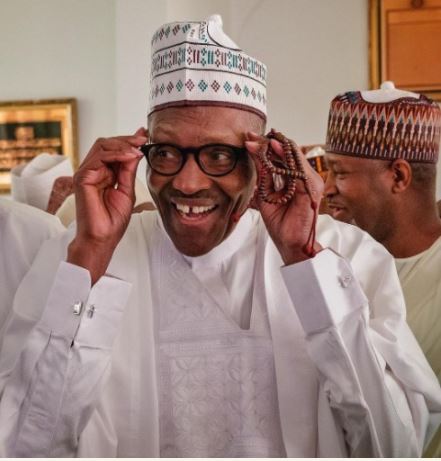
Man scams mother-in-law of N5m with a promise of wedding Buhari

Niger stated based Gambo Adamu has been jailed for defrauding his mother-in-law, Sa’adatu Aliyu out of N5 million with a promise to arrange a marriage between her and former President Muhammadu Buhari has been jailed in Niger State.

Sa’adatu Aliyu , a divorcee, told a Magistrates’ Court sitting in Minna, that Adamu tricked her to part with N5 million with a promise to connect her with Buhari for marriage.

To convince her that he was close to the former president, he placed many imaginary calls to Buhari and later presented to Sa’adatu Aliyu N100,000 cash as pride price, a basket of kolanuts and fried chicken in a bag as gifts from Buhari for the wedding fatiha.

After waiting for days and didn’t see Buhari to pick her from Minna to Daura, Katsina State as his new wife, she approached the court to get justice.

Sa’adatu Aliyu added that the convict also told her to set up a Non-Governmental Organisation (NGO) with her as chairperson while he, Gambo Adamu, would serve as the spokesman, promising her that she would get support from federal and state governments, in addition to allocation of slots for Hajj.

The Magistrate, Ibrahim Musa Zago, sentenced Gambo Adamu to 12 months in prison for cheating, contrary to Section 322 of the Penal Code, with an option of N100,000 fine.

He also ordered the defendant to pay N2m as compensation to the complainant.

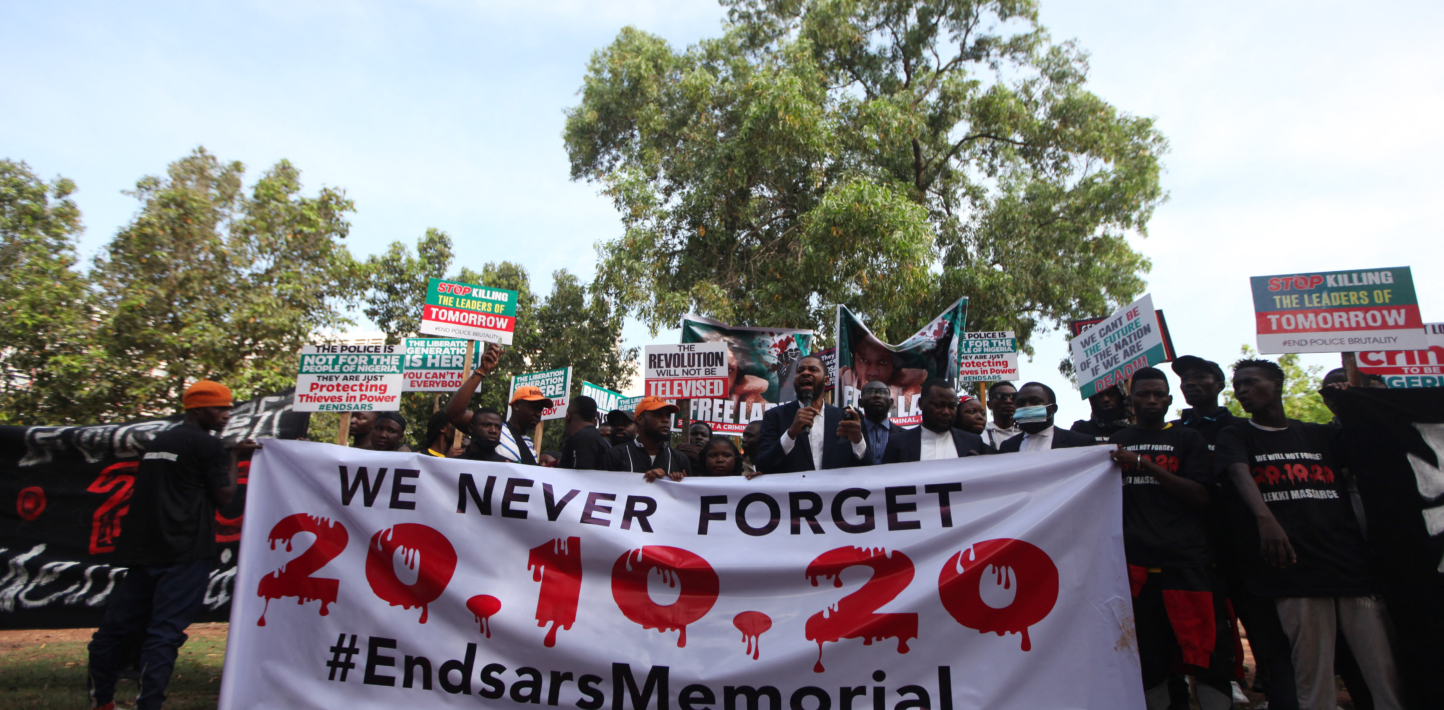
#EndSARS Memorial: Nigerians remember, as Amnesty International reveals that many protesters are still in jail without trial

October 20, 2023, makes it three years since several promising young Nigerians were brutally mowed down by the Nigerian military for protesting the excesses and human rights abuses perpetrated by the Special Anti-Robbery Squad (SARS).

And although Nigerians took to the streets of Lagos state and social media to mourn the death of these unarmed protesters shot by the military during the #EndSARS protests on October 20, 2020, Amnesty International in a report to commemorate the day disclosed that at least 15 protesters arrested in 2020 were still being arbitrarily detained – the majority of them without trial – in Kirikiri Medium Correctional Centre and Ikoyi Medium Security Correctional Centre in Lagos State.

Also a human rights group under the umbrella of Youth Rights Campaign (YRC) has condemned the continued cases of police brutality in Nigeria three years after the October 2020 nationwide #EndSARS protests.

But as the citizens hold remembrance services and reiterate the need to stop harassment by the Nigerian Police, they continue to demand justice for the dead and injured during the protests.

The EndSARS protests, aiming to address the constant Police brutality, peaked on October 20, 2020, when the military gunned down protesters on the night of October 20 at the Lekki Toll gate, where thousands of peaceful protesters converged.

The protests targeted the Special Anti-Robbery Squad (SARS), a Police unit accused of constant harassment and extortion of citizens.

The Nigerian government denied the killings.

However, findings of the Lagos State Judicial Panel on #EndSARS indicted the Nigerian Army of the Lekki Toll Gate massacre.

The ICIR reports that despite the protests and subsequent actions by the Nigerian government and citizens to make the Police more responsible and committed to securing lives and property, the institution still parades crops of corrupt officers, who are often punished when caught.

On April 15 this year, the Lagos State Police Command dismissed the Divisional Police Officer of the Okokomaiko Division, Emmanuel Edebagha, over his failure to monitor the officials in his unit efficiently.

Edebagha’s men were indicted for extortion and misconduct.

Similarly, on October 18, the state Police Command, through its Commissioner, Idowu Owohunwa, ordered the immediate removal of the Divisional Police Officer of the Meiran Police Station in the state over extortion.

Nigerians react

Mohammed Taoheed, a social justice advocate and a freelance journalist, explained that despite the EndSARS protest, numerous reports have highlighted the persistent harassment and extortion of young Nigerians by the Police.

“As a concerned Nigerian and advocate of social justice, I must confess that I’m at loggerheads with the Nigerian government because of how they treated the issue of #EndSars. With no regret, I must say that I count the government as one that lacks the needed understanding of running a heterogeneous entity like this because of the nonchalant attitude displayed over this serious issue.

“We are talking about the lives of human beings — the youth we expect to grow and rule us. Their lives were wasted, and nothing meaningful has been done yet. I reiterate, nothing!”

Also, an X user with the handle Obinna Toochukwu mourned the deceased, adding that Police brutality “is a thing in Nigeria.”

“Remembering the 2020 #EndSARS

“Today, we remember those young Nigerians who fell by Police bullet. Their only offence is being a Nigerian citizen. The rogue organization has not stopped k!ll!ng, maiming, extorting and brutalizing Nigerians. Police brutality is a thing in Nigeria,” he wrote.

Another user, @Chi4Obidatti03, noted that Nigerians were yet to know who gave the order to shoot peaceful protesters in Lagos State.

“On this day, three years ago, the people who were saddled with the responsibility of protecting us pointed the gun at us and shot even when we were holding the national flag and singing the national anthem…until today, we still don’t know who gave the order #EndSARS.”

Although there have been committees’ reports and recommendations across states where the protest happened, Nigerians have continued to ask for the identification and prosecution of those who shot and gave the order to shoot the protesters.

Some other Nigerians, via social media posts, also demanded justice for those in prison and compensation for the bereaved families.

At least 15 protesters still languish in Lagos jail – Amnesty International

The Nigerian authorities have filed trumped-up charges including theft, arson, possession of unlawful firearms, and murder against many of the protesters. Some of those detained allege that they have been subjected to torture.

“Our investigation shows the Nigerian authorities’ utter disdain for human rights. Three years in detention without trial is a travesty of justice. This shows the authorities’ contempt for due process of law. The protesters must be immediately and unconditionally released,” said Isa Sanusi Director Amnesty International Nigeria.

Seven #EndSARS protesters – Daniel Joy-Igbo, Sodiq Adigun, Sunday Okoro, Olumide Fatai, Oluwole Isa, Shehu Anas, and Akiniran Oyetakin – arrested in Lagos in 2020, are being arbitrarily held in Kirikiri Medium Correctional Centre.

Daniel Joy-Igbo, a Beninois #EndSARS protester arrested in Lagos in October 2020, who has also been detained at the Bar Beach Police Station, the State Criminal Investigation Department in Panti, and at a SARS facility in Ikeja, told Amnesty International:

Since my arraignment in December 2020, I have been locked up in the prison without trial. Since then, there is no adjourned date for my case. I have not been taken to court since December 2020.Daniel Joy-Igbo, a Beninois #EndSARS protester

Sodiq Adigun, also arrested in October 2020, who was previously detained at the State Criminal Investigation Department in Panti, told Amnesty International:

“Let the government release me. I have been detained since 2020 without trial. I am innocent. My life has been shattered. I need my liberty.”

Eight #EndSARS protesters – Segun Adeniyi, Onuorah Odih, Jeremiah Lucky, Gideon Ikwujomah, Irinyemi Olorunwanbe, Quadri Azeez, Olamide Lekan and Sadiq Riliwan – have been detained without trial in Ikoyi Medium Security Correctional Centre in Lagos since 2020. 

“All those detained solely for taking part in peaceful #EndSARS protests must be released immediately and unconditionally,” said Isa Sanusi

Torture in detention

Many peaceful #EndSARS protesters have been subjected to torture and other ill treatment while in detention since 2020. They include Oluwole Isa, currently held in Kirikiri Medium Correctional Centre, who told Amnesty International how he was tortured while in detention at the SARS facility in Ikeja:

I was tied with a rope. They bent me backwards and tied my hands and legs together at my back. An iron rod was passed in-between my tied legs and hands. With the iron road, I was suspended on an iron bar. Then, they started beating me with a machete and wooden batons. They were forcing me to admit that I was involved in vandalism during the #EndSARS protests. When I could not bear the torture anymore, I told Inspector that I would confess. At that point, I was almost going to die. He brought me down; I still have the scar of the machete cut on my throat …”

Resurgence of police brutality

Despite consistent claims of carrying out comprehensive police reforms in the aftermath of #EndSARS protests, Nigeria’s police continue to routinely commit violations of human rights, including extrajudicial killings, harassment, arbitrary detention, and extortion with almost absolute impunity, said Amnesty International Nigeria.

In the past year alone, Amnesty International has documented the unlawful killing of at least six people by law enforcement officers. These include 31-year-old Gafaru Buraimoh, who was killed in Lagos on 6 December 2022, and Onyeka Ibe, who was killed on 5 April 2023 in Delta state for refusing to pay N100 bribe. Other cases include Faiz Abdullahi, who died in police custody in Kaduna on 30 July 2023 following torture during interrogation, and 17-year-old student Abdullahi Tukur Abba, who died in hospital after allegedly being tortured in police custody in Yola Adamawa state on 5 August 2023.

Any changes that followed the #EndSARS protests are fast disappearing, as police brutality is again becoming a daily part of life for people across Nigeria. The recent cases of extrajudicial killings and extortion show that the police are not ready to conduct their duties in compliance with international human rights standards. Reforming the Nigeria police force will continue to be a distant dream if impunity remains part of policing operations.Isa Sanusi Director of Amnesty International Nigeria

Nigerian authorities must take concrete and effective measures to end police impunity, including by giving clear directives to the police not to violate human rights. Those suspected of violating human rights should be brought to justice in fair trials and without recourse to the death penalty. Genuine reforms must be initiated to end widespread human rights violations by the police. Nigeria has an obligation to ensure that torture and other ill-treatment are not carried out under any circumstances.

Background

On 8 October 2020, Nigerians took to the streets protesting atrocities by the notorious Special Anti-Robbery Squad (SARS) which was a unit of the Nigeria Police established to fight violent crimes. On 20 October 2020, at least 12 peaceful protesters were killed in Alausa and Lekki Lagos by security operatives. At least 56 people have died across the country during the protests. Victims include protesters and thugs who were allegedly hired by the authorities to confront the protesters. In many cases, the law enforcement and security forces had used excessive force in an attempt to control or stop the protests.  

Credit: icirnigeria/Amnesty International

IMF Prescriptions: A cautionary note to President Tinubu

By Muhammad Sagagi

The point being made that the IMF and the World Bank lend ‘critical support’ to countries around the globe is well noted. However, the real issues go beyond ‘lending support’ to countries. More pertinent issues are the associated costs, the outcome and impact on the society, of that support. If you support a neighbour in distress to commit suicide, you should not expect a ‘thank you’ note from his children!

This ‘debate’ will be of interest to Nigerians as President Tinubu embarks on major market-based reforms to chart a new economic direction for Nigeria.

To many Nigerians, he is trying to follow in the footsteps of President Babangida who, in the 1980’s, implemented an IMF-imposed Structural Adjustment Programme (SAP).

What are the issues?
The IMF champions market-based reforms and does not apologise for that.

IMF policy prescriptions are often seen as obnoxious and anti-poor.

The World Bank is often smarter as it pretends to be pro-poor.

It is often said you need to keep both the IMF and the World Bank. (Actually, the joke around the globe is that you either get married to both or get married to the IMF and keep the World Bank as a sidekick).

One of the key principles underpinning IMF prescriptions is that the market be allowed to function in determining key prices to eliminate persistent price distortions occasioned by government’s interventionist policy.

The market is to determine ‘appropriate’ exchange rates, wages, interest rates, electricity tariffs and prices for PMS etc.

These principles are as controversial as the IMF policy prescriptions which include breaking government monopoly in key sectors; making governments leaner to reduce costs of governance and to engender efficiency in service delivery; budget cuts designed to ‘discipline aggregate demand’ to reduce deficits and fight inflation; and the liberalisation of trade and payments system: including a non-discriminatory (import) tariff structure and a market-determined exchange rate.

The IMF will confidently assert: ‘Once you do these you will get the maximum’.

One question, among many, is whether ‘IMF Principles’ should be the ‘broad philosophical principles’ which will drive Nigeria’s economic growth?

How transformative are these prescriptions?

May be a second question.

Different countries have implemented IMF-prescribed reforms with varied outcomes over time and space.

It is easy to point to ‘success’ stories around the world…. Vietnam, Malaysia, Indonesia, South Korea etc. but it is difficult to ignore the disastrous consequences of SAP in Nigeria and indeed in several other countries.

After IBB unleashed his market forces on the economy, Nigeria certainly didn’t get the maximum….

Remember that IBB completely trusted the ability of the market mechanism to determine ‘realistic’ prices and ‘appropriate’ rates.

He, therefore, jettisoned development planning and opted for what Professor Aluko once described as ‘trial and error economics’.

IBB’s SAP abolished marketing boards, which hitherto regulated agricultural commodity prices, dismantled internal price controls, promulgated the SFEM (later IFEM) decree of 1986 to liberalise foreign exchange dealings, deregulated interest rates and allowed banks to fix deposit and lending rates – all ‘in line with the dictates of the markets’. Interbank rates soared to 50% (and beyond) and lending rates were unquotable! The naira was battered beyond recognition: it depreciated from US 1$=89K in 1985 to US 1$=N22 in 1993.

IBB’s expectations were that these measures would improve the competitiveness of local industries, promote exports, and provide greater access to foreign direct investments.

None of these happened.

It was impossible for the private sector to withstand such sudden, excruciating shocks. IBB’s SAP adversely affected the fortunes of several businesses in the small and medium scale range.

IBB’s private sector shrank!

Indeed, IMF-styled market-based interventions almost always create difficulties for businesses, whether micro, small, medium, or large. SAP contributed to the re-shaping of the trajectory of the northern economy, as the region lost nearly 70% of its manufacturing firms.

The formal sector of the economy is yet to recover from SAP-induced dislocation.

Market-based reforms also almost always inflict excruciating pains on citizens, worsen poverty, unemployment and living standards.

The recent withdrawal of subsidy payments has exacerbated Nigeria’s inflationary trends and has consequently lowered real wages, reduced citizens’ buying power and pushed millions into poverty.

President Obasanjo’s attempt to implement market-based interventions was perhaps more successful than IBB’s. OBJ achieved macroeconomic stability and the economy grew faster than at any period in the recent history of Nigeria.

There is no denying the fact that Nigeria has derived enormous benefits from OBJ’s creation/facilitation of a liberal environment to facilitate private sector participation in key sectors of the economy.

Today, the IT sector is undeniably the fastest-growing services sector in the Nigerian economy.

But OBJ’s numerous promises of new and improved social and economic infrastructure (10,000MW of electricity, for example) and its target of seven million new jobs by 2007 could not be delivered. OBJ’s, like IBB’s market reforms had limited impact on incomes, jobs, and poverty.

By 2010 Nigeria was ranked amongst the poorest countries in the World, with more than 54 million people -36% of the population – living in extreme poverty.

I suspect that OBJ’s partial success in reform implementation was aided by the ‘maturity’ of the economy in the 2000s.

IBB’s economy, smarting from the import substitution/import licencing era, was inarguably more distorted and structurally defective and therefore slower in response to market reform initiatives.

Perhaps too, capacities and competencies and strategies for change differed between the two regimes.

So, what should we say to our president?

I am a market reform enthusiast, although I remain sceptical about the ability of the market system to determine prices and allocate resources fairly, justly and equitably.

The market system must be appropriately guided especially in a developing economy with severe structural defects.

I am also a realist.

State interventionist policies or meddlesomeness in the economy have led Nigeria to where we are today: a struggling nation with a fragile economy and widespread poverty.

State intervention has been neither judicious nor responsible.

So, Mr President should accept to dine with the IMF if they invite him.

But he must use a long spoon.

His pursuit of the ‘the market strategy’ must be in tune with the contemporary realities of the Nigerian society and the dynamics of the global economy.

He must not fall for the ‘small government’ argument as is being canvassed by the IMF.

A ‘small government’ cannot be the foundation upon which the conditions for rapid growth and development can be erected.

A ‘big government’ with efficient institutions and appropriate infrastructure is the key to economic growth.

IMF’s ‘open economy’ agenda has its attractions.

No country can prosper by isolating its industry, agriculture and indeed, services from the rest of the world, forever.

Nigeria must remain open to leverage private capital, skills and technology from around the globe.

There is a caveat, however.

We must be more measured in our approach.

Unrestrained importation of commodities that would ‘compete’ with domestic production will be counterproductive.

It will hurt our industry and agriculture with disastrous consequences on incomes, jobs, and poverty.

So, we must promote ‘regulated openness’ by ensuring that protection is selective, time-bound and tied to specific objectives – such as ability of the protected sector to generate foreign exchange and its capacity for value-addition and backward/forward integration.

Mr President should please not contemplate a budget cut on social infrastructure even if they, the IMF, insist.

Spending on education, health and social programmes is already low even by developing country standards.

According to the World Bank, spending on education (2021-2022) was a paltry 0.5% of GDP, on health 0.4% and less than 0.1% on social protection. This was far below the 1.2% of GDP spent on fuel subsidy in the same period.

Mitigating the negative impact of market-based reforms requires governments to spend more on social assistance, community empowerment, human capital development and sustainable livelihoods all designed to reduce the levels of vulnerability and deprivation of the citizens.

Mr President should be more circumspect when it comes to the determination of ‘appropriate prices’.

Unleashing market forces to determine an appropriate exchange rate, cost-reflective electricity tariff and PMS price at one and same time is certainly an overkill.

Reform initiatives must be carefully planned and sequenced.

He must be more strategic in the design and implementation of these mitigating measures.

Mr. President’s current ‘palliatives’ are, in truth, pitiable and ineffectual.

Let the poor breathe.

Do not tax them to stupor.

True, Nigeria is yet to optimise its independent revenue potential.

Increased local revenues (plus expenditure controls) will undoubtedly relax the fiscal constraint and narrow the budget gaps.

But how far can the government go with internal revenue drive without imposing additional burden on its poor impoverished citizens?

In truth, majority of market operators in the informal sector (which is more than 70% of the economy) have limited ability to pay (in both fairness and practical terms).

Government can review excise taxes on “sin” and non-essential/luxury goods, such as alcohol and cigarettes.

Government can also focus on a review and rationalisation of the many ineffective tax incentives that abound.

We should tell Mr. President to insist on fiscal efficiency.

The IMF will agree with him on this!

MDAs must be challenged to adopt a sound fiscal management strategy so as to reduce wasteful spending.

Government spending is often wasteful, imprudent, and lacking in priorities.

In particular, the cost of running the government will be horrendous – with 48 ministers and over 500 government parastatals, commissions and agencies (with overlapping functions and mandates) and more than 1,000 Assistants….across the executive and legislative arms.

Mr. President may wish to revisit the Joda and Oronsaye Reports.

He may also wish to review government procurement processes to ensure value for money and eliminate all leakages.

A final word: democratize policy design.


National Industrial Court orders Kaduna Govt to issue Theresa Ata letter of appointment confirmation immediately

The Presiding Judge, Kaduna Judicial Division of the National Industrial Court, Hon. Justice Sinmisola Adeniyi has ordered the Kaduna State Government and the Commissioner Ministry of Education, Science and Technology to immediately issue a letter confirming the appointment of Mrs Theresa Ata effective from the 22nd May 2019.  

The Court directed the Kaduna State Government and the Commissioner Ministry of Education, Science and Technology to calculate and pay Mrs Theresa Ata’s salaries and arrears of leave allowances from June 2018 till date within 30 days. 

Justice Adeniyi held that Mrs Ata’s appointment can only validly be terminated as stated in the letter of employment, and the purported oral termination by the Kaduna State Government is not only preposterous; it also cannot qualify as notice as specified in the terms of the contract of employment. 

From facts, the claimant- Mrs Theresa Ata had submitted that she was employed by the Kaduna State Government by a letter of offer of appointment dated 20/02/2017 and was posted to Government Girls’ Secondary School, Kaduna and reported regularly at work but she was not paid salary for almost one year until a letter of complaint was written by her solicitors, and thereafter, she was paid one year’s salary and leave allowance, from 22/05/2017 till May 2018. 

She further alleged that the Kaduna State Government, and the Commissioner Ministry of Education, Science and Technology have not paid her salary since May 2018 even though she attended work regularly and daily signed the attendance register, and all efforts to get her payment were to no avail and her appointment has not been terminated by the Defendants, urged the court to grant the reliefs sought.

In defence, the defendants- Kaduna State Government, and the Commissioner, Ministry of Education, Science and Technology contended that Mrs Ata did not fulfil the conditions of appointment that as at the time of employment, she had exceeded the age prescribed by the State Public Service Rules and the purported appointment is invalid ab initio, and urged the court to dismiss the case in its entirety.

Delivering the judgment, the presiding Judge, Justice Sinmisola Adeniyi held that Mrs Ata was 49 years and 7 months at the commencement of her appointment, and not yet 50 years at the date of her appointment as stated in her statutory declaration of age and therefore eligible to be appointed as prescribed in Part II of the Guidelines for Appointments, Promotion and Discipline, Kaduna State Civil Service Commission 2005.

The Court held that Mrs Ata’s appointment can only validly be terminated as stated in the letter of employment, and the purported oral termination of her appointment by the Kaduna State Government does not qualify as notice as specified in the terms of the contract of employment. 

Justice Adeniyi stated that the law is settled that unless the employer terminates the employment within the probationary period, if it feels that the employee’s conduct and competence are not satisfactory during the probation, the employee is deemed to have been confirmed the employer if he/she continues to work for the employer after the probationary period.

The Court held that the Kaduna State Government, and the Commissioner, Ministry of Education, Science and Technology, Kaduna State have kept Mrs Ata in employment long past the period of probation, and deemed to have confirmed her appointment as contained in terms of employment and Mrs Ata appointment is deemed confirmed from May 2019 and therefore entitled to her claims.

Visit the judgment portal for full details

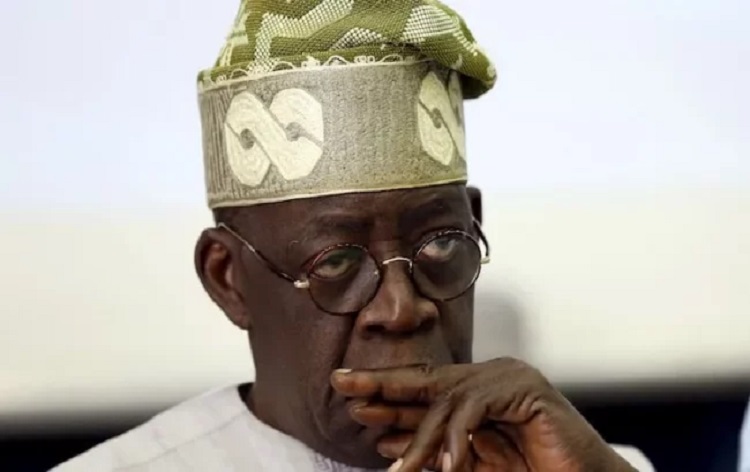
Tinubu’s rising baggage

By Sonnie Ekwowusi

“Tinubu could not have graduated from Government College, Ibadan in 1970 because Government College was established in 1974.”. “Tinubu’s claim that he attended Richard Dailey College stemmed from a stolen identity and falsified results of a woman named Bola Adebimpe Tinubu.”. “Tinubu submitted a forged Chicago State University (CSU) certificate to INEC because CSU stated that the certificate Tinubu submitted to INEC was not issued by them.”. “Tinubu is deeply involved in identity fraud.”. “The Naira currency is currently experiencing its worst free fall in the last 63 years.”. “The US dollar now exchanges for 1,050 Naira. The inflation rate has reached 30%.”. “Over 90% of Nigerians cannot afford a healthy diet.”

“Tinubu appointed Hannatu Musawa, a serving National Youth Service Corps (NYSC) member, as a Minister.”. “Tinubu is the embodiment of provincialism. 90% of his Ministers not only come from his own part of the country but are also his partners in corruption.”. “U.S. Federal Agents have successfully linked Bola Tinubu to drug-related activities.”. “Tinubu’s son, Seyi Tinubu, used a Presidential jet to attend polo games in Kano State.”. “CIA, DEA, and other agencies have announced plans to release documents related to President Bola Tinubu’s criminal convictions in the U.S.”. “Boko Haram killings are escalating, with 252 persons killed in Borno State.”

“Tinubu appoints an unqualified Olanipekun Olukoyede as the new EFCC chairman.”. “Seyi Tinubu, along with his friends, flies on a presidential jet to celebrate his 38th birthday.”. “The Tinubu government plans to spend a staggering N3.27 trillion on palliatives.”. “Amid scarcity and economic hardships in the country, the House of Representatives purchases 360 exotic cars, each costing about N160 million, for its 360 members.”. “CBN Governor Olayemi Cardoso maintains an ominous silence amid the collapsed economy.”. “It is preposterous and unconscionable that, amid the vicious cycle of poverty plaguing Nigeria, coupled with the dwindling government income, the Tinubu Presidency and the National Assembly are embarking on an overspending spree to satisfy their personal interests.”

The foregoing and other issues represent an increasing accumulation of controversial or unfavorable topics that have become the subjects of public discourse since President Tinubu assumed office in Nigeria. Regrettably, these unfavorable matters have the potential to significantly impact President Tinubu’s public perception, his reputation, and Nigeria’s global standing. The way the name ‘Tinubu’ is now being discussed in the popular media suggests that it may become synonymous with cheating or certificate forgery. This is indeed disheartening. Instead of witnessing signs of hope being restored or steps towards the redemption of Nigeria, what we have been witnessing since President Tinubu’s election are instances of certificate forgery, fraud, extravagance, incompetence, and devastation. Meanwhile, governance appears to be in a state of suspension. The Nigerian Naira is currently experiencing its most severe depreciation, with inflation reaching 30%.

While no one expects President Tinubu to work miracles overnight and completely heal the nation’s wounds, what the people are eager to see are indications of a fresh start, signs of renewed hope, and promises of a better future. Unfortunately, thus far, these signs have been notably absent. Instead, we are witnessing dashed dreams and disillusionment. As the saying goes, ‘a journey of a thousand miles begins with a single step,’ but we have yet to witness any such steps from the Tinubu administration. Concrete actions to revitalize the dormant economy have been lacking. The prices of essential food items in the market are consistently soaring. The Central Bank Governor and other Tinubu-appointed Ministers appear to be grappling with confusion. Many Nigerians have lost hope in the Nigerian enterprise. Frustration has led both young and old Nigerians to emigrate in large numbers, seeking opportunities abroad. In fact, it is rare to find a Nigerian family without at least one member residing in Canada, America, or Europe.”

The fallout from all this is a sagging international image. Nigeria’s image abroad is now battered and tattered. Foreigners are laughing at us. They see us as certificate forgers or potential forgers. This is why some people are summoning the courage to question the academic qualifications of Nobel Laureate Wole Soyinka. Imagine, a whole Professor Wole Soyinka being suspected of having committed certificate fraud. The UK has unmasked over 669 Nigerian nurses who cheated in an online nursing exam in Nigeria before coming to the UK to practice nursing. The UK government has vowed to prosecute all of them. In the last nine years shepherded by Buhari, APC, and Tinubu, Nigerians have been witnessing a steady and progressive deterioration of those cherished values that form the superstructure for building our national ethos. The old image of Nigeria as a citadel of cultural and moral renaissance seems blurred. Having been betrayed several times, the people have lost confidence in the ruling party, APC.

Our country has always had some scoundrels in public office, but never in the past have we had such a great number of scoundrels in public office as today. Look at the corrupt and inept politicians occupying the seats of government today. We are really in a moral crisis. Those keeping quiet about it and refusing to take action should bury their heads in shame. Contrary to the views of many, politics and morality are not strange bedfellows. There is morality in politics. Contrary to Machiavellianism, the political end does not justify the means. The Machiavellian doctrine simply teaches that the end justifies the means, suggesting that there is no morality in politics. It implies that a politician could commit any atrocity, such as murder, like Shakespeare’s Macbeth, to satisfy their ambitious political goals and later justify it with Lady Macbeth’s words: “A little water cleans us of this deed.” Machiavellianism is fundamentally faulty. Morality exists in politics. A political strategy does not obviate the need for moral discipline. A politician cannot, for instance, commit evil acts to achieve a greater good.

They cannot, for example, bribe INEC and Prof. Yakubu to seize political power in the name of improving the welfare of the people. A thief must return what he has stolen before seeking forgiveness. Think about it carefully yourself. A thief has stolen what belongs to you. Now, without repentance and without returning what he stole from you, the same thief dramatically comes to you and starts begging you to endorse his thievery or acquiesce to it for the sake of peace and unity in this country. Obviously, the thief and his acolytes feign ignorance of the preamble to the 1999 Constitution, which states, inter alia, that in order to build Nigeria and promote the unity and welfare of all persons in Nigeria, the principles of freedom, equality, and justice must prevail. Does this thief understand that justice begets unity and unity grows in the crannies of justice? If you want progress in Nigeria, allow justice to prevail. Don’t lecture us on progress if you disdain justice. No politician can rig an election to come to power to start doing good. No, the end does not justify the means. You cannot commit evil so that good may come out of it.

In fairness to President Tinubu, he never promised to fix Nigeria upon coming to power. He merely stated that it was his turn to assume the Presidency and follow in Buhari’s footsteps. If you have been a careful observer, you would have noticed that Tinubu has been following Buhari’s footsteps to the letter. Like Buhari, President Bola Tinubu is seriously implicated in educational certificate fraud, forgery, and identity crisis. Like Buhari, President Bola Tinubu is accused of submitting a forged educational qualification to INEC. Like Buhari, Tinubu has been taken to court over certificate forgery. Like Buhari, Tinubu is charged with identity theft. In the case against Buhari, the petitioners successfully met the burden of proof incumbent on them by showing that Buhari did not possess the educational qualifications, as he had failed to attach them to his INEC Form CF 001, as required by the Electoral Act 2010 (as amended). But Buhari deposed to a false affidavit claiming that his certificates were with the military.

However, both the military and Buhari’s witness and former classmate, Major-Gen. Paul Tarfa (Rtd), denied that Buhari’s purported certificates were with the military. Surprisingly, instead of ruling as aforesaid, the tribunal wrongly descended into the arena and assisted Buhari in patching up his defense by ascribing that he attended courses and trainings that could qualify him to contest the Presidential election. What was even more perplexing was that after falsely asserting that his certificates were lodged with the military, Buhari proceeded to tender, through a WAEC official, a Statement of Result of one Mohamed Buhari (not Muhammadu Buhari) showing different school subjects and different scores. Buhari also tendered, through the then Chief of Staff Abba Kyari, a Cambridge WAEC Statement of result where he purportedly scored entirely different grades in different school subjects.

So, you can see that President Tinubu is religiously following the footsteps of Buhari. I need not remind you that Buhari destroyed Nigeria beyond repair. He took Nigeria for a ride. He destroyed institutions in Nigeria, including the judiciary. Imagine appointing Mohammadu Tanko as the Chief Justice of Nigeria. Under Buhari’s watch, Nigeria’s treasury was looted as never before. Buhari put Nigeria into a serious debt burden. It is unbelievable that a man who has ruined the country in this fashion is left to be freely loitering about in his village without being brought to justice. The EFCC cannot even dare to arrest him for aiding and abetting former Central Bank Governor Godwin Emefiele in crimes.

Like Buhari, President Tinubu is ruling as if Nigeria were his personal fiefdom. Instead of appointing his Ministers in such a way as to reflect the federal character of Nigeria and promote national unity, as stipulated in section 14(3) of the 1999 Constitution, President Tinubu prefers to surround himself with the same wheeler-dealers with whom he executed many shady deals during his stint as Lagos State Governor. Like Buhari, Tinubu is not subject to the checks and balances of the National Assembly. Why? Because the current National Assembly is also a mere rubber-stamp National Assembly. It cannot refuse Tinubu anything. For example, Senate President, Godswill Akpabio (off the mic), is Tinubu’s man. Akpabio cannot refuse President Tinubu any deal. Like Buhari’s daughter, Tinubu’s son, Seyi Tinubu, flies the Presidential jet. Upon assuming office at Aso Villa, First Lady Oluremi Tinubu had boasted that her family didn’t need Nigeria’s wealth to survive because God had blessed them with wealth.

But now it is manifestly clear that Mr. and Mrs. Tinubu and their family are feeding off the Federal government’s wealth. Seyi Tinubu flies the Presidential jet at his pleasure. Mrs. Oluremi Tinubu has a pet project, Renewed Hope Initiative (RHI), funded from the coffers of the Federal government. The other day, she was in Jos, distributing ₦500 million as relief and resettlement packages to 500 families in Jos, Plateau State. In their first 100 days in office, President Tinubu and Vice-President Senator Shettima have been indulging in an overspending spree. For example, the Federal government spent a gargantuan sum of $507,000 on hotel accommodation for President Tinubu at the 78th session of the United Nations General Assembly.

Amidst scarcity and economic hardships in the country, the government purchases 360 exotic cars, each costing about N160 million, for the 360 members of the House of Representatives. You may recall that in August 2023, it was reported that the Tinubu’s government was spending a huge sum of N16 billion to purchase exotic cars for Tinubu’s 48-member cabinet, the largest cabinet in Nigeria since 1984. It is preposterous that amid the economic hardship in Nigeria, President Tinubu is retaining a bloated cabinet, a bloated number of Special Advisers, and bloated special aides, among other things. The Senate President and the Speaker of Nigeria’s House of Representatives, Dr. Tajudeen Abbas, have about 3,000 legislative aides. Like the Buhari government, the Tinubu government is also overborrowing money from abroad with little or no thought on how to repay the accumulating debts. Similar to Buhari, President Tinubu is also giving out subtle bribes, otherwise called palliatives, to the people in a bid to silence them. The Tinubu government plans to spend a whopping N3.27 trillion on palliatives alone. Like the failed Buhari’s palliative policy, the Tinubu palliative policy is already a failure. The policy is a drain for dishing out free money and bags of rice and beans to APC stalwarts and election riggers. You and I may not receive the palliatives. Assuming we did receive the palliatives, how would they help us pay our children’s exorbitant school fees or our high house rent? How would the palliatives give us access to an affordable primary healthcare system?

As we speak, bags of rice and beans, along with other palliatives, are being distributed across the country’s communities. Elder Statesman and music legend Steve Black complained that he received one bag of rice to be shared among about 147 persons. He was in a quandary about how to distribute such a small bag of rice among 147 people, so he alerted the public and the media. Just yesterday, they brought small, tiny bags of uncooked rice and beans to my office. The rice and beans, wrapped in dirty cellophane bags, looked repulsively like offerings spread across the expressways. These were Tinubu’s palliatives brought for our office staff. As I watched, they handed each of my colleagues a tiny bag. Of course, they did not dare to give me any of the bags. They knew I would have instantly driven them out of the office or called the police to arrest them for assaulting me.

Anyway, after they finished distributing the items to my colleagues, I called all of them and addressed them on why they should not have accepted the bribes. While respecting their freedom, I told them that collecting the palliatives was tantamount to cooperating in evil. I explained that we do not need palliatives in Nigeria, even in the short run. “We need good governance. We need a constant electricity supply. We need security of life and property. We want the government to patch or repair the potholes on our roads. They should not give us fish; instead, they should teach us how to fish so that we can fish all day, all month, and all year to our heart’s content,” I told them.

Of course, I was unable to convince any of them to reject the palliatives. There is hunger in the land.

The role of the government is not to distribute palliatives; the role of the government is to cultivate the enabling environment in which people can achieve their potentials and create wealth for themselves. Only in such an enabling environment can the average family be assured of shelter, food, clothing, and other basic necessities of life. But rather than creating the enabling environment for people to use their God-given talents to create wealth for themselves, the Tinubu government, like the Buhari government, is wasting money on palliatives, which are indirect ways of making money available for many idle APC supporters.

Like the Buhari government, President Tinubu’s government has launched a manhunt for citizens and journalists perceived to be too critical of this government. Plans have been perfected to bribe media proprietors in Nigeria to stop their journalists from reporting issues that will damage the reputation of the Tinubu government. Already, some mainstream media publishers have been reached to stop publishing some critical stories about President Tinubu and his drifting government. Unimaginable.

From the foregoing, it is obvious that, like the Buhari Presidency, the Tinubu Presidency is drifting into the abyss. It is preposterous and unconscionable that amid the vicious cycle of poverty plaguing Nigeria, coupled with the dwindling government income, the Tinubu Presidency and the National Assembly are embarking on an over-spending spree to satisfy their personal interests. It demonstrates that the Tinubu democracy is greatly challenged from within by the pursuit of personal interests at the expense of the common good. Mind you, the Presidency is the central focus of power and responsibility in presidential democracy. Therefore, it is essential that the Presidency functions effectively in a presidential democracy. If the President is imperiled by certificate forgery, corruption, or incompetence, then our presidential democracy will be imperiled.

Solution: We must all stand up and be counted. Like we did during the Buhari misrule, we cannot get accustomed to tolerating oddities in this Tinubu government. In a democracy such as ours, power belongs to the people. It is not true that the people have ceded their power to the power-drunk politicians. If the people fail to make their leaders accountable for their stewardship, then they should stop wondering why their leaders are making a show of their stupidity and wickedness in public. Mere lamentation on social media that some politicians are incompetent or are stealing from the government is not enough. Each one must contribute something to salvage the system. We need responsible citizenry. We want citizens’ action. In an age in which most people in the world are coming together to tackle some pressing problems, we cannot remain in our various cocoons feigning ignorance or being unmindful of the reigning injustices and evils in Nigeria. Evil thrives when the so-called good people sit back and do nothing.

Sonnie Ekwowusi is the Chairman, Human and Constitutional Rights Committee of the African Bar Association (AfBA)

Nigeria: The Electricity Act 2023 as a catalyst for the development and utilization of renewable electricity in Nigeria

By Lynda Ugochinyere Ezike and Ngozi Chinwa Ole

  1. Introduction

The stratospheric negative ramifications attached to climate change have led to the critical drive for developing countries such as Nigeria, to curtail greenhouse gas (GHGs) emissions – by transitioning from the use of carbon-intensive fossil fuel energy to renewable energy options. The Electricity Act 2023 (‘The Act’ or ‘The Electricity Act’), as signed into law by President Bola Ahmed Tinubu on the 9th of June 2023, proves capable of fostering renewable electricity in Nigeria. The Act is, therefore, evidently replete with imperatives for the development of renewable electricity which, when correctly implemented, could position Nigeria at the forefront of decarbonization and energy transition. This article seeks to aid the attainment of a positive assessment of the Electricity Act and a deep understanding of its provisions – as it relates to renewable energy in Nigeria. In addition, this piece critically evaluates and analyzes the role the Act plays in addressing the barriers to the development of renewable energy.

  1. The Case for Renewable Energy Development

Renewable energy, being clean energy, would contribute to the nation’s climate change strategies. As is known, climate change – which is caused by GHGs from the electricity sector and unsustainable land use, is the most destructive and depleting global environmental problem to date. Nigeria disclosed that the advancement and development of renewable electricity is a part of its climate change attenuation strategies under the Paris Climate Change Agreement 2015. Thus, this not only serves as a clear incentive for the use of renewable energy, but it also gives an environmental perspective as to why its exploitation should be the future and present of Nigeria. The Act is weighted with provisions aimed at combating the negative effects of climate change by way of the utilization of renewable energy sources. At the basal, it requires licensees to produce a specified approved percentage of their total power generation from a hybridized generation or from renewable energy sources, namely: solar energy, small hydro energy, wind energy, biomass etc.. So, it can be affirmed that the Act is the harbinger for the achievement of low greenhouse gas emissions, the promotion of green growth and the encouragement of sustainable economic development.

Nigeria owns an inexhaustible amount of renewable energy resources such as wind, hydropower, sunlight, biomass, and the like. There is a heightened use of renewable energy sources globally due to the myriad of environmental benefits connected to them. From the energy experts’ viewpoint, the exploitation of a Nation’s renewable energy sources will, among other things, provide fixed, definite and affordable electricity tariffs to safeguard Nigerians from volatile fossil fuel costs. Regrettably, despite the nation’s ownership of plenteous energy resources, a good majority of its populace still lack access to an uninterrupted supply of electricity. In light of this, the Electricity Act is structured such that the problem of electricity supply is adequately dealt with. Thus, the 2023 Act encourages embedded generation, hybridized generation, co-generation and the generation of electricity from renewable energy sources like solar energy, wind energy, tidal energy, hydro energy, hydrogen, and biomass, amongst a plethora of other renewable energy sources.

Another case for the development of renewable energy is to acutely and sufficiently manage the issue of energy security in Nigeria. Ultimately, Nigeria seeks to provide electricity security for its citizens, residents and businesses/enterprises/organizations such that all have access to adequate electricity resources at fair prices for the reasonably anticipated future – unaffected by the grievous risk of substantial interruption of service. Interrupted power supply has been an extreme menace to the Nation for eons, and the aforesaid involuntary interruptions of energy supply have consequently caused grave setbacks for Nigeria. This persistent lack of energy security has occasioned a tremendous decline in Nigeria’s industrial production and economic output. According to Energy economics expert, Bob Keefe, “at the core of the economics of climate change is energy security”. As such, the negative ramifications stemming from energy insecurity in Nigeria give a clear signal for there to be a concrete plan in place to ameliorate these unfavourable effects.

Furthermore, renewable energy offers a cost-competitive advantage, in that it is a cheaper alternative to fossil fuels because it is readily and freely available. Due to the recent removal of the petrol subsidy in Nigeria, there has been a consequent increase in the price of fuel. It has therefore become imperative for there to be a total consideration of renewable electricity development in Nigeria. Unfortunately, the current status of renewable electricity in Nigeria is not where it should be within the context of the dire need for it. The limited development of renewable energy cannot be divorced from the absence of capacity to manufacture and maintain it. Furthermore, investors and users struggle with the affordability and accessibility of the initial capital costs of renewable electricity which is slightly higher than that of fossil fuel. However, this difference is often compensated by the low operational costs of renewable electricity technologies which makes it cheaper in medium and long term, in comparison to fossil fuel options. In the event that investors overcome the initial capital costs of renewable electricity strategies, the inability of consumers to afford a cost reflective tariff has also undermined the development of the sector.

In addition, a good majority of Nigerians are completely oblivious of such a thing as renewable energy and, thus, do not know the imperatives for it in comparison to fossil fuels. The renewable energy industry in Nigeria is still a nascent one that is not only unplumbed but is also yet to be fully grasped and comprehended. It is trite knowledge that “when the purpose of a thing is not known, abuse becomes inevitable”. The interpretation of this statement, against the backdrop of renewable energy in Nigeria, is that the lack of its awareness will cause Nigeria to continually deny itself access to its infinite natural resources that could be frequently plenished. With Nigeria grappling with the challenge of uninterrupted power supply, the unawareness of the advantages of renewable energy – such as sustainability, reliability, job creation and reduction of GHG emissions – will stagnate the development of the Country’s energy sector.

Following on from the above-mentioned reasons, it is now apparent why the provisions of the Electricity Act are almost entirely based on the promotion of renewable electricity, along with the implementation. Quite pithily, there are some specific features in the Act that support the development of renewable energy in Nigeria.

  1. The Features of the Electricity Act 2023 in Support of Renewable Energy
    • Introduction

The Electricity Act focuses on the development of renewable energy to the extent that the long title highlights its key feature of aiming to integrate renewable energy into the energy mix. In the first remove, the preliminary provisions set a target of creating an enabling environment for the optimal development of renewable energy. The Minister for Power’s mandate to produce policy directives that detail measures for the development of the renewable energy sector is identified as favorable in this context. Furthermore, the primary regulator of the electricity sector, the Nigerian Electricity Regulatory Commission (NERC), is empowered under the Act to continually promote the development of renewable electricity. There are also some financial measures adopted to facilitate the development of renewable energy such as a rural fund for renewable electricity projects, Feed-in-Tariffs, the N-HYPPADEC, and a renewable purchase obligation. These features will be analyzed in seriatim.

3.2. Objectives

First, the Act vocalizes its overall intention to support the generation of electricity from a variety of renewable energy sources in various respects. First, it aims to provide a framework for the development of renewable energy through the creation of an enabling environment for investment. Following, it is expected that the Act will interact with the barriers to the development of renewable energy. Relevant to renewable energy, is an objective to promote indigenous capacity in technology in the sector. This is timely in view of the identified problem of a deficit in the capacity to manufacture and maintain renewable energy technologies. As reiterated, the Nigerian masses are oblivious to the imperatives and benefits of renewable energy, partly accounting for its stunted development. The Act proposes to promote awareness and public education on renewable energy. Besides creating a clear context for addressing the barriers to the development of renewable energy, the obvious objectives will bolster investors’ confidence to invest in the sector.

3.3. National Integrated Electric Policy and Strategy Implementation Plan (NIEPSIP)

Another identifiable feature of the Act is a policy that is aimed at driving the development of renewable energy. Section 3 of the Act authorizes the Federal Government through the Ministry of Power to adopt the National Integrated Electric Policy and Strategy Implementation Plan. It is apt to mention that policies have always been the precursor to birthing laws in Nigeria. The National Energy Policy 2003 birthed the Electric Power Sector Reform Act 2005, which was the primary law for the sector until the birth of the Electricity Act 2023. Thus, the National Integrated Electric Policy and Strategy Implementation Plan is very significant in this context as it will continue to shape the evolution of law in the sector. The Act defines the scope of the policy to include driving the optimal utilization of multiple sources to generate electricity. The sources include renewable energy sources such as solar, hydro, wind, biomass etc. It shall also contain measures for addressing the financial barriers to the development of the sector including waivers and subsidies. The Minister of Power is mandated to adopt the NIEPSIP within one year from the adoption of the Electricity Act 2023. They are also expected to review it every five years. While the Policy does not form part of the legal architecture given that it is not binding, it cannot be glossed over as it is emblematic and will continue to inform laws that promote the development of the renewable energy sector.

3.4. The Nigerian Electricity Regulatory Commission (NERC)

Under the Electric Power Sector Reform Act 2005, the NERC was vested with the overriding power to regulate the sector. The Electricity Act provides that the NERC, as the vertex regulator of the Nigerian Electricity Supply Industry (NESI), has the overriding power to promote the development and utilization of renewable energy in order to increase its contribution to Nigeria’s electricity mix. The NERC is expected to increase the optimal development of the renewable electricity sector. By way of illustration, the Act stipulates that the Commission should simplify the licensing process for renewable electricity projects. This is a welcomed development in that renewable energy projects were lopsided into the same licensing procedure as fossil fuel strategies. This invariably meant that fossil fuels had the same licensing procedure as renewable energy, except that fossil fuels had accumulated the benefit of experience of usage which translates to cheaper costs. For this reason, fossil fuels became a more palatable and better option in comparison to renewable energy. The licensing process was also complicated and expensive. The latter was argued to add to the already expensive initial capital costs of developing a renewable electricity project. As such, a simplified procedure which may likely be less expensive will reduce the additional costs of licensing which enhances the problem of affordability of the initial capital cost in the sector. The overall import is to make renewable energy more attractive to electricity investors than their fossil fuel compeers. Another way that the NERC is expected to heighten the use of renewable energy is to ensure that the pricing mechanisms put in place by the licensees favour renewable energy consumers. As reiterated, the initial capital costs of most renewable electricity projects are significant and investors cannot easily afford them, especially with an underdeveloped capital market in Nigeria. To address this, the Act mandates NERC to provide incentives to support independent power producers who invest in the energy sector such that they are able to fund their activities while allowing for the generation of reasonable revenue to implement their operations.

3.5. Rural Electrification Fund (REF) and Rural Electrification Agency (REA)

In favour of the utilization of renewable energy, one of the Electricity Act’s features also includes the creation of the Rural Electrification Fund (REF) which is managed by the Rural Electrification Agency (‘REA’ or ‘the Agency’). According to Sections 142 and 143 of the Electricity Act 2023, the REF was established and is solely committed to the promotion, provision and support of renewable electricity investments and projects in the rural and un(der)served areas of Nigeria. It is apt to mention that while the erstwhile Electric Power Sector Reform Act (EPSRA) 2005 also provided for the fund, it merely just stated that it was geared towards supporting rural electrification projects – both on-grid and off-grid. Thus, the REF under the EPSRA 2005 was supporting both renewable and fossil fuel electricity projects. Given that fossil fuel electricity strategies were already benefitting from accumulated decades of subsidies and experience to the exclusion of renewable energy strategies, uniform financial support as provided by the EPSRA 2005’s REF will not specifically benefit renewable energy projects. However, this new Electricity Act provides for the express abutment of the development of renewable energy and is therefore, unlike the ESPRA 2005, a clear-cut added advantage for the renewable energy industry. Relatedly, the Act mandates the REA to manage the operations of the REF. In addition, the REA will also be promoting the advancement, accessibility and support of rural and un(der)served electrification including through the productive use and development of renewable energy.

As seen in Section 129 (1) (g) of the Act, the REA also introduces to the Act, the espousal of the facilitation of tax incentives and affordable interest loans for local producers of renewable energy products for electrification. The latter tax incentive will be handy in reducing the cost of investment in the renewable energy sector. Affordable loan interest will additionally ameliorate the considerable investment costs in the renewable energy sector especially when juxtaposed with fossil fuel investments. Moreover, the REA is saddled with the responsibility of executing renewable energy projects on their own, in rural areas. Notably, it has been assuming the same responsibility of developing rural electricity projects including renewable energy under the ESPRA 2005. A responsibility it managed so well except that it provided similar support for some few fossil fuel projects thereby receiving backlash from scholars including Ole et al in the publication ‘the Nigerian Electricity Regulatory Framework: Hotspots and Challenges for Off-grid Renewable Electricity’ published in the Journal of World Energy Law and Business in 2020. The criticism was premised on the already upper hand that fossil fuel had in the area of accumulated decades of support and years of experience with usage which makes it cheaper than renewable. In addition, another snag with the REA, is that its coverage sadly does not extend to urban areas- as it is strictly confined to rural, unserved and underserved locations in Nigeria.

3.6. National Hydroelectric Power Producing Area Development Commission (the ‘N-HYPPADEC’ or the ‘Commission’)

Furthermore, Section 82 of the Act created the National Hydroelectric Power Producing Area Development Commission (the ‘N-HYPPADEC’ or the ‘Commission’) – which is deemed to be a novel creation. The N-HYPPADEC is solely obligated to work with both the state and federal governments to promote the development of electricity from hydro energy. One may recall that, by way of the 2023 constitutional amendments, the state governments have now been empowered to generate, transmit and distribute electricity from on-grid and off-grid sources. This is, therefore, in line with the N-HYPPADEC’s duty to work unrestrictedly with both state and federal governments to promote the utilization of hydroelectricity. The Commission is mandated to strictly promote, support and execute all plans pertaining to the development of hydroelectricity in Nigeria. Also, all ecological challenges arising from the overloading of dams and all other environmental hazards that may occur in the hydroelectric power-producing areas must be tackled by the N-HYPPADEC. The N-HYPPADEC ‘s establishment by the Act is, thus, indicative of the drafters of the Act and indeed, Nigeria’s firm dedication to providing energy security, increasing the use of renewable energy sources like hydro energy, and accomplishing its net-zero targets.

3.7. Financial Features

Moreover, the Electricity Act caters for a feed-in tariff as provided for by law – i.e., the feed-in tariff is an obligation of the Nigerian Bulk Electricity Trading Company (NBETC) and all other independent licensees under the Act that will either be transmitting, generating or distributing electricity. The feed-in tariffs mandate the mentioned parties to treat as must-buy electricity produced from renewable energy for the purpose of being fed into the national grid. The rationale behind the feed-in tariffs is that the national grid is not designed to accommodate intermittent sources of energy such as renewable. Thus, costs of system upgrade and ancillary costs required for making the national grid fit for this purpose would ordinarily deter NBET and system operators from buying and transmitting renewable energy respectively. As such, the feed-in-tariffs innovation addresses the challenges of accommodating renewable electricity in the national grid by creating some mandatoriness on relevant parties while making sure renewable energy developers’ foot the cost of system upgrade. This is in sync with what is obtainable from other jurisdictions, such as China, that have fared well in the development of the renewable energy sector.

The final feature of the Act as regards the advocation for the use of renewable electricity is the ‘renewable purchase obligation’- which is considered/mentioned in Section 167 of the Act. The ‘renewable purchase obligation’ imposes an obligation on bulk buyers/traders of electricity to ensure that they buy a certain percentage of their total purchase of electricity from renewable energy sources. To put it in plain words, if those who are licensed to trade and sell electricity to consumers (seek to) buy or sell electricity under the Act, the law stipulates that the NERC shall designate a certain percentage of electricity to them which must come from renewable energy sources. So, for example, if the NBETC in buying electricity to trade or for new entrants, purchased 100% fossil fuel, the NERC will designate that 3% of the electricity purchased must be from the renewable energy mix. It is, therefore, crystal clear that the Act is the requisite tool that would galvanize the energy sector into actively transitioning from the dependability of fossil fuels to the efficient utilization of renewable energy sources in Nigeria.

  1. Conclusion

Renewable energy plays a pivotal role in the crucial reduction of GHG emissions, the vital provision of energy security and the curtailment of the reliance on depleting sources of energy – such as fossil fuels. Nigeria is blessed with an infinite amount of renewable energy sources that when properly exploited, could put an end to the protracted lack of uninterrupted electricity supply challenges that have plagued the Nation for years. The Electricity Act 2023 depicts that Nigeria, although a developing nation with poor access to electricity facilities can, notwithstanding, leverage on its ownership of renewable energy sources to curb its energy insecurity and environmental challenges. Nigeria’s astounding wealth of renewable energy sources in conjunction with the appropriate execution of the provisions of the Electricity Act is the providential answer to Nigeria’s electricity supply and climate change problems.

The content of this article is intended to provide a general guide to the subject matter. Specialist advice should be sought about your specific circumstances.

mondaq.com

AUTHOR(S)

Lynda Ugochinyere Ezike

Alliance Law Firm

Ngozi Chinwa Ole

Alliance Law Firm

Provocation As A Defence: How effective in cases of homicide?

By M.O. Idam, Esq.

Till date, various cases of homicide were occasioned by man’s failure to keep his temper in check when provoked. Therefore, ‘Provocation’ was evolved as a defence under common law, following the presumption that humans are not angels who seldomly reacts to anger. Meanwhile, it is only virtuous for a man of honour to react proportionately with controlled violence when provoked.

As a result, the defence of provocation, when successfully established, provides a soft landing for an Accused/Defendant, only to mitigate or reduce a capital punishment to a life imprisonment in homicide cases. Acts committed by the Accused/Defendant when his mind was possessed by passion, rage, fury and anger as a result of the provocative acts of the victim are excused to an extent, under the plea of provocation. See sections 283, 284, 288 of the Criminal Code and Sections 38 and 222(1) of the Penal Code.

The Black’s Law Dictionary defines provocation as:
“such conduct or actions on the part of one person towards another as tend to arouse rage, resentment, or fury in the latter against the former.”

For an Accused/Defendant to succeed in the defence of provocation, he must prove the following:

I. That he acted in a heat of passion.

II. The act was caused by sudden provocation.

III.The act must have been committed before there was time for the passion to cool and;

IV. The mode of resentment must be proportionate to the provocation offered.
See the case of Oladipupo Vs. The State (1992) 6 SCN 233 @2391.

These four requirements must co-exist before the defence can succeed. (See Obaji v. The State (1965) All NLR 282: Stephen v. The State (1986) 5 NWLR (Pt.46) 978.

HEAT OF PASSION:

The Accused/Defendant must have acted out of sudden provocation, when emotions and passion took over his rationality. The action must have been sudden and not an afterthought or revenge.

SUDDEN PROVOCATION:

The Accused/Defendant would have lost his self-control, his mental reasoning was not engaged before the action which resulted in the death of the victim was exhibited. Where the act was committed after the provocation was reasonably expected to have subsided, the defence will not avail the Accused/Defendant. It will be interpreted as an afterthought.

THE MODE OF RESENTMENT MUST BE PROPORTIONATE TO THE PROVOCATION:

For an Accused/Defendant to succeed in his defence of provocation, he must establish that his resultant action was proportionate to the provocation. The force used must not be disproportionate to the provocation. See Eze Vs. State.(2018) LPLER 43715 (SC).

In Holmes Vs. DPP, (1946) A.C. 588, it was held that words alone cannot amount to provocation except if it is of most extreme and exceptional character.

In R Vs. Manchuk [1938] S.C.R 18, the accused suspected that his estranged wife was having extra-marital affair with another man, he barged into her room uninformed and saw her in bed with her boyfriend having an affair. In the heat of anger, he attacked both of them and unfortunately, his wife’s coitus partner didn’t survive it. At trial, his defence of provocation was sustained, the court held that although the act was still sufficiently blame-able to merit punishment—and it may be punishment of high severity—but not the extreme punishment of death. the Court posited that

“provocation… neither justifies nor excuses the act of homicide. But the law accounts the act and the violent feelings which prompted it less blameable because of the passion aroused by provocation…though still sufficiently blameable to merit punishment—and it may be punishment of a high severity—but not the extreme punishment.”

The Court of Appeal in Umar Vs. Kano State (2022) JELR 109148 (CA), held that the defence of provocation when successfully proved in a homicide case, would act to mitigate or reduce a capital punishment being the maximum penalty for the offence of homicide, to life imprisonment.

Put differently, defence of provocation does not discharge and acquit the Accused/Defendant when successfully established, it can only return a death penalty to life imprisonment.

CONCLUSION

When a defence or plea of provocation is successfully established it will not discharge and acquit the Accused/Defendant, but will only reduce his punishment from death penalty to life imprisonment.

M.O. Idam, Esq.
Pp: M.O. IDAM attorneys
[email protected]
Tel: 07058205349

On Sheikh Gumi’s threats against Wike: Restructure Nigeria to avert imminent implosion

By Vincent .C. Mba

“[I]f we give you Christians power with your infidels as heads of security agencies, they will plan to kill me and I have examples.” – Sheikh Ahmad Gumi

For how long should we continue the pretenses of rebuilding the broken tower of Babel?

Boxing irreconcilable contradictions into a canister while praying it doesn’t explode?

How more foolish could a people be in coming to the realization they’ve got it all wrong?

What more would happen before we know it’s time to construct for ourselves a more sustainable paradigm of coexistence?

Should this canister explode or implode, it’s clearly because of our collective foolishness in attempting to rebuild the tower of Babel.

He that hath ears, let him hear, we can and should live in peace together, but certainly in these hypercharged canisters

Each constituent federating subnational units must have the space within the framework of a decentralised union to find their fullest being.

Sheikh Gumi and what he represents have a right to want to destroy Israel, but he certainly doesn’t have a right to make Nigeria as presently constituted structured and governed toe his lines

But, isn’t it time to genuinely restructure Nigeria in view of the deepest animosities across the spectrum?

So that each constituent federating subnational units may within their territories, worldviews and aspirations choose between Israel and Sheikh Gumi who to follow?

How can we build for ourselves a nation we’ll all be proud of and happy to live in with these levels of hate oozing out from all sides?

Nations are myths constructed and sustained around certain irreducible inviolable sacred minimum values of shared beliefs

The 15th January, 1966 coup was clearly unjustifiable, it’s execution was clearly unjustifiable, but how many more Igbos and Southerners and even northern Christians may be murdered in order to compensate for the unjustifiable 1966 coup?

Would restructuring Nigeria along the lines of genuine federalism (quasi sovereigns) anchored on the extant six geopolitical zones truly bring this country to grief as propagated by the Sheikh Gumis?

I do not think so, I think it’s rather the other way round, ie, this canister, like an active volcano is simmering underneath, ever threatening to explode, and would indeed explode unless deliberately dexterously defused.

V. C. Mba

The Kaduna-based Islamic scholar, Ahmad Gumi, had said Christians cannot be trusted with security in the country.

The controversial cleric stated this in a video sermon of over 14 minutes posted on his official Facebook page.

In the sermon, Gumi said the first coup d’etat in Nigeria was carried out by top Christian army officers. 

He went on to curse citizens who campaigned assiduously for the Muslim-Muslim ticket as worthless hypocrites and money-mongers who chased dollars for pleasure and worldly purposes.

Below is an excerpt of the sermon as translated from Hausa:   

“The Minister of the FCT is a Satanic person; I said it before when he was appointed and some people were grumbling. He has gone and brought the Israeli Ambassador, that’s what someone sent and I am yet to watch it. But what is confirmed is he said they will collaborate with the Israelis on Abuja’s security issues. Abuja will now become an extension of Tel Aviv and when they see anyone with a beard like us, they will say it is Bin Laden and we will be killed. 

“Where are those that worked for the Muslim-Muslim ticket? Hypocrites and worthless people. Abuja is becoming an extension of Tel Aviv and security is the bastion of the people. Have you not heard the silence? They know what they are doing. One Miyetti Allah leader came and told me that if they come to me with a proposal of negotiation with bandits, I should not be part of it, that I should leave it alone.

“It is a decoy. Muslims are the heads of the Ministry of Defence, of what significance is it? The real people in charge of Command and Control, those holding the guns and shooting, are we the ones? We are not the ones; they are playing us. There is an agenda. All means of money and economic power have been hijacked by them, they are planning to deceive us for four years and get eight years. They will not InshaAllah. 

“I want to tell you, there is no way Northerners doing their legitimate business will get one billion naira. Our rich people cannot get anything except those they trust. They only trust them because they are doing what they want. Anyone whose loyalty they are not sure of, they will crush him in a few months.

“They will only come during elections like it is done to spread grains to chickens. If they spread grains to chickens, that’s all. Giving spaghetti to people is the solution, this spaghetti issue is a big deal. We are being cheated in this country and in a real mess.

“There’s one Reverend or Bishop during Buhari’s tenure who was saying to me that Muslims have hijacked power. I told him, ‘Yes and I am okay,’ because I knew the Chief of Army Staff would not attempt to attack me. Even if he will not protect me, he will not collaborate with some people to attack me. Our own people either in the military, police or the Department of State Services (DSS) will not be used to harm me, they will also not harm you who is talking as a Christian.

“I want you to know the difference. If you give them power, you give them guns, they will strive to harm you. Let me give you examples: Was Sardauna not a Premier? Who killed him? You gave them guns, Nzeogwu killed him. Who killed Murtala (Muhammed)? Dimka from the North. How did Babangida fare? He escaped by whiskers. who wanted to kill him? Gideon Orkar. You give them guns and they will kill you. Once you give them power, that’s all.

“There’s one Aliyu Masruhi from Tanzania, he had said this for long that there’s no society that gives power without conditions. If it becomes inevitable that we will give power, we must ensure for example security is in our hands and other things and he said, do you agree? But how can you surrender power then you go and hide? 

“If Israelis enter this country, there will be a clandestine operation against any outspoken Islamic cleric; we have seen the signs. Why was Sheikh Jaafar killed? May his soul rest in peace, why did they kill Sheikh Albany? You can see how they are killing; there’s a hit list and we have known this for long.

“Why am I walking with the police? You didn’t see me with police during Buhari’s government, despite my disagreement with them. It is because of this threat that we applied for police protection and they gave us. Even if the President doesn’t like me, he has to give me police protection or else he will be held responsible for my life.

“For you to understand, they will bring the MOSSAD into our country. Because of this, Tinubu should know that we know their plan, he must choose. He should remove the Minister of Abuja; if not, we will collide with him. On the day of a bath, the navel is not hidden.

“Let me tell you what happened during President (Goodluck) Jonathan’s time. We went to a meeting one day at the DSS headquarters and met one operative who knew my police detail. One day he called us and gave us the number of a Mercedes 4matic. He said he was in the toilet and heard the arrangement of how a hit squad had been assembled to kill Sheikh Gumi. 

“All the killings that happened during Jonathan’s time in Jaji were executed by the military and not Boko Haram. Now have you not known the real Boko Haram? Can Boko Haram plant a bomb in Jaji if not them? General Shuwa was killed despite having soldiers in his house. They went and killed him. They were angry because he fought the civil war. You gave them power and they killed your leaders.

“All the killings perpetrated by Israelis are nothing, but the attack carried out by Hamas is now their nightmare. If any Muslim in Nigeria has ever killed a President in this country, they will have put a ceiling on our people’s military career progression. If they attain the rank of a Captain, they will not be trusted to progress and we will concede. But how about them? They killed our leaders, not one, not two, not three. Once you give them power, they will kill, they will continue to kill our people.

“After the DSS operative leaked the plot to kill me, I quickly informed the police commissioner and also posted on Facebook. He then heard them saying the operation should be called off since it was leaked. They now said the person who leaked it was inside their office. He was arrested and detained for two months and survived by chance. He came to my house after two months and explained all that transpired and how he survived by the grace of God.

“One day during Ramadan fasting, I was working to use a projector, I now put the children in a car to proceed to the mosque before me. After the car left the house, we heard a bomb explosion. I asked that pictures of the scene should be taken. There was an attack by bees there, but two people were killed and they were in chains and had pistols, meaning if the bomb did not kill us, they would use the pistol to finish us. The third person coming from Ungwan Shanu was also killed by the bomb explosion.

“We then continued with our study. Three people were killed. If you remember that time, I thank Governor Ramalan Yero for not stopping the Ramadan study. When I returned home, the correspondents of BBC Hausa and Voice of America met me, saying they went to the scene to get stories and capture the real Boko Haram, but troops had sealed off the scene and forced them to delete the pictures they captured. They told me ‘we are trying to know Boko Haram and we have found Boko Haram in action and you are saying we should delete their pictures’.

“The dead bodies of the attackers were hurriedly evacuated in a military vehicle and made to disappear. When Daily Trust reporters came to me, I told them the story and they went to One Division Nigerian Army, and One Division Nigerian Army said they had no information that soldiers took the dead bodies of the two people. Suddenly one Muslim working in the 44 Nigerian Army Hospital’s mortuary came and said the two dead bodies were indeed deposited in the mortuary, and they were Southerners from their looks.

“It is the military that is carrying out these attacks; they are the ones who struck in Jaji to stop Major General MD Isa from becoming the Chief of Army Staff. They are the ones who also killed General Shuwa and all of us are targets.

“I am telling you people to be wise and don’t be fools because of God. These our Muslims politicians just want dollars to go on holidays, go for medical treatments and have forgotten the people. They are targeting us and that was what I was telling that pastor/bishop that if we Muslims are in power with Muslims as heads of security agencies, we will not kill you but if we give you Christians power with your infidels as heads of security agencies, they will plan to kill me and I have examples.

“They killed Sardauna, they killed Tafawa Balewa and they killed Murtala. They killed our people, tell me your own that was killed. This is what I asked him. But they were making noise and shouting that Buhari was doing nepotism. I know but it has no significance because we don’t do evil. However, these people will not help you but do evil, and that’s why we are saying don’t leave power.”

TIPS