Home Blog Page 703

Time to fix Tinubu’s chaotic presidency

By Martins Oloja

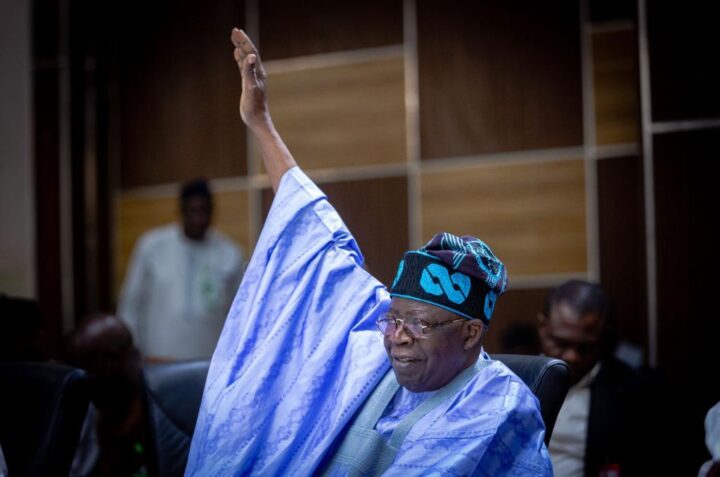
Now that the fear of the Supreme Court is gone for the President Bola Ahmed Tinubu administration, this seems to be the right time for the President to fix the chaos that has taken some steam out of the awesomeness that is usually inherent in presidential palace.

Doubtless, there have been too frequent dissonance and crisis of coherence in the office of the president. And this is not good for reputation management. It is too early for his reputation managers to be running around to control damage that can be quite challenging in this digital media age when information travels at the speed of light. It is Nigeria’s presidency and we have a responsibility to counsel for its stability before it is too late.

Besides, it is not too early to claim that the president’s men are not collating the groundswell of opinion on how to fix the presidential bureaucracy and the public sector. This is about twenty-five years of unbroken democracy and the institutions of governance including the presidential bureaucracy that should set the tone for efficient management of the public service, shouldn’t be this wobbly and brittle. This column has since 2016 contained more than twenty contextual commentaries on the expediency of a strong presidential bureaucracy.

The bureaucracy of the presidency organically comprises the office of the Secretary to the Government of the Federation, the office of the Head of the Civil Service of the Federation and the Office of the Chairman of the Federal Civil Service Commission. These three offices are creations of the Constitution of Nigeria. The Obasanjo administration disrupted the presidential bureaucracy when he added the office of Chief of Staff to the President, as part of the personal staff to the president. The Yar’Adua administration (2007-2010) scrapped the Chief of Staff post while President Goodluck Jonathan (2010-2011-2015) reinstated it and the office exists till the present.

So the presidential bureaucracy today exists with the office of Chief of Staff and the officer (CoS-P) can artfully hijack the presidential bureaucracy with or without the consent of the president. This is where the dissonance that can set off a chaotic bureaucracy in the office of the president occurs. In the last administration of President Buhari, for instance, there were instances when the Chief of Staff signed letters of even transfer of a Permanent Secretary, instead of the Head of the Civil Service of the Federation. Just as we have seen in the current administration whereby the Special Adviser to the President on Media and Publicity has been announcing presidential appointments without details of the appointees: This is the remit of the office of the Secretary to the Government of the Federation, who is the Secretary to the Cabinet Council, Head of the Cabinet Secretariat and Secretary to the Security and Defence Council.

There are seven offices headed by permanent secretaries in the SGF’s office. These offices include Special Services Office (SSO) with a responsibility for managing the bureaucracy of defence and security services of the federation. The SSA Media’s office since the Buhari administration, has been usurping the duties of the Minister of Information too. This has been due to the curious chaos in the presidential bureaucracy that lost its mojo during the post Yar’Adua administration when a politician who had no solid civil service background was appointed to the office of SGF. This is the origin of the current chaos and present and clear danger to the polity.

What is more curious, why has the presidential bureaucracy become so ordinary to the extent that the President had to announce directly the ban of his son, among other non-members of the Executive Council from the Council Chamber? How did the strangers stray into the Federal Executive Council Chambers? What happened to organisational efficiency in the office of the SGF and indeed the presidential bureaucracy? What is responsible for embarrassing withdrawal of appointments of people into the federal public service these days? Ministerial nominees and even nominees to the Federal Civil Service Commission have been withdrawn. Who supervised the budget details of the controversial N5b worth of Presidential Yacht in the noisy N2.2 trillion worth of supplementary budget? How did the office of the First Lady surface in the purchase of SUVs for the office of the President? How did it take a Senator to tell Nigerians that the Yacht had been paid for before the outcry? Was the Navy unaware of the delivery without payment that would have been explained before the Senator Ndume’s revelation? Where was Senator Ndume too when the National Assembly was talking of transfer of the Yacht’s N5 billion vote to the Students Loan subhead? When did the office of the President know about the controversial Yacht? Where were the concerned ministers and presidential bureaucrats when the details of the supplementary budget were being prepared?

The SGF should be made to take back his office and remit as head of the presidential bureaucracy before it is too late. These challenges would have been avoided if they had been listening to and reading suggestions from those who have retired from the public service that once worked. One of such suggestions, for instance, came through an article in The Guardian barely two months ago by a retired federal Permanent Secretary who once worked in the office of the SGF and was the pioneer Director General of the Bureau of Public Service Reform (BPSR), Dr Goke Adegoroye. Here are excerpts from the classic he wrote on the federal and presidential bureaucracy titled: ‘Too Early To Say We Are Losing It: But Can The Bureaucracy Come To The Rescue?’

‘…From several people across social, economic and religious strata within my own ethnic group, all solid and passionate supporters of President Bola Ahmed Tinubu including those who before he was sworn in are so close to him personally as not to require a notice to see him, the one common thread opening their conversation in the last three weeks, be it on telephone or when we meet, after the titular salutation courtesy of Egbon, Bros, Doctor, Awe (buddy) in palpably worrisome tone is: “we are losing it”! This is in direct contradiction to the euphoria of the first week after swearing in with courageous and far-reaching policy decisions that were commended by most Nigerians, the international community and, indeed, politicians across party lines.
While acknowledging the challenge of the Niger Coup to his administration at this early stage of his presidency and are able to wave aside the complaints of those who claimed to have worked for his success at the last election but are now sidelined, they seem worried by two main issues, namely:
media posts alleging payment of huge sums of money to key individuals around the President to influence appointment into political offices and/or facilitate meetings with the President; and
the new cabinet in terms of its size and composition. They point to the geo-political distribution of the portfolios as smacking of a reverse replay of what we accused the last President of, and the non-fulfilment of the promise publicly made to Malam Nasir el Rufai as both not reflecting the true Yoruba spirit.

Their “we are losing it” outburst, is driven by a sense of collective responsibility and it exudes their true Yorubaness as Omoluabi who want fairness for all, the fear that their expectation of a magic wand by the President is becoming a mirage, and the urgency of a reassurance to the populace as an imperative.
It has become my lot to embark on a well calculated gerrymandering to reassure them that things will begin to fall into place very soon. They all assume that as a former top civil servant living in Abuja and with working experience in the Presidency, I must be one of those advising the team of PBAT behind the scenes and as such should be aware of what’s going on. Yet I am at sea myself in finding a solid base to anchor the many theses of reassurance that I have been carefully offloading on them on a regular basis, as I am equally worried that the firm steps that are required to stem the tide might be gradually slipping away.

New Appointments and Deployments Demand Acculturation:
Anywhere in the world, the swearing in of a new President and his Deputy entails new appointments of many aides, political office holders in executive positions and cabinet members, based on careful screening and selection processes. Because these aides and other political appointees are coming from diverse backgrounds, systems and terrains, manifestation of effectiveness and efficiency at their new duty posts is a function of not just the induction protocols they have been taken through but how soon such inductions have been made to take place, ideally before but not later than a couple of weeks after taking office. Otherwise, their entry into the system could lead to other challenges requiring strong efforts to tackle.

In my address at the public presentation of my twin-volume book – Restoring Good Governance in Nigeria at the Ministry of Foreign Affairs, Abuja, Thursday, 25 June, 2015, under the title: Of Indigenous Species and the Threat of Invasive Species as the rationale for the books, I stated that “In the absence of careful selection and systematic introduction protocols, there is the danger of introducing species that can become systematically destructive and a threat to the survival of the native populations in the eco-system”. And that “this usually happens when such species are introduced at the top bureaucratic and/or political office holder levels where they are calling the shots and can deploy their own strains of practices, procedures and behaviours in carrying out their responsibilities”.

Induction training and protocols are an important and indispensable tool of human resources management. With the return to democratic governance in 1999, it was the first step taken by the Obasanjo Administration. Indeed, so crucial did he consider it that he made it to commence within a week after inauguration, with sitting permanent secretaries and key persons from outside the bureaucracy that he had considered as potential Ministers, Special Advisers, Senior Special Assistants etc as the participants. It was from the Induction that he was able to off-load some perm secs and make up his mind on his choice of Ministers and Advisers in certain States. Professor Adebayo Adedeji, now late, was the principal Facilitator. That Induction for political office holders lasted 10 days. It was subsequently extended to the Directorate level officers GL 17, 16 & 15 as a 2-week course that spanned 20 editions, commencing under Abu Obe and concluded under Yayale Ahmed as Head of the Civil Service of the Federation. I was the chairman of the team that synthesized the proceedings of the 20 editions into a single Report for the Head of the Civil Service of the Federation for presentation to the President. The establishment of the Bureau of Public Service Reforms is one of the outcomes of that series of Induction Course.

Living in the Shadow of Electoral Savagery and Judicial Corruption

A Keynote Address presented to the National Association of Philosophy in Port Harcourt, on November 2, 2023.

By Rev. Fr. John Odey

I wish to offer my sincere thanks to all the members of the National Association of Philosophy for inviting me to deliver the keynote address to this gathering on a theme that touches deeply on our nation and on our very being – Philosophy, Values and Good Governance. In a special way, I wish to thank Prof. Aloy Ihuah, a classmate in St. Augustine’s Major Seminary, Jos. I do not need to be told that he is the person who made this impressive association to know that there is one John Odey that can be entrusted with delivering the keynote address to a gathering of intellectuals of this standing. We saw ourselves last in 1984 when we finished our studies in Jos. That I am here today to deliver this keynote address through his recommendation is a resounding testimony of how we have continued to cherish ourselves as classmates. For both of us, it is a glorious reunion.

In a country like Nigeria where the ethnic and the religious groups to which a person belongs, and not the contents of his character, play a dominant role in the way other people assess who he is and whatever he does, it is difficult to give a keynote address in a conference of this nature without causing some ripples and raising some dust. At this particular time when ethnicity, religion, politics and the judiciary have so badly charged and divided us that one can hardly come to a conference of this nature with an open mind, saying the truth may look like a declaration of war. But truth is not war and it has never caused any war. What I am trying to say here is that while I appreciate the honour given to me to present this keynote address I also pray that you appreciate my predicament in trying to give a brief but true account of the current situation of governance in Nigeria to people who are badly polarized by ethnic, religious and political differences.

The 2023 Elections in Nigeria have come and gone. But their ripple and devastating effects will be here with us for a long time to cast a very dark shadow on Nigeria as a whole and on our judicial system in particular. We saw for the first time in the political history of Nigeria when a man brazenly told Nigerians that he wanted to become the president because it is his turn. We saw for the first time in the history of political elections in Nigeria when the result of the presidential election was announced in the dead of the night when people were sleeping. We saw for the first time the new and very dangerous dimension that was introduced into political elections. In a country that fought three years bloody war to be one; in a country where it is claimed that our unity is non-negotiable, members of a particular ethnic group, I call them the endangered species of the Nigerian polity, were asked to vacate a particular state and go home because they have no right being there.

We saw for the first time in the history of political elections in Nigeria how the chief perpetrator and the prime beneficiary of the savagery that passed for presidential election and the man whose role ought to have been that of an arbitrator colluded and told those who were brazenly swindled to go to court. When they went to the appeal court, the presidential election tribunal judges, who had been planted by the master swindlers to do their bidding, sold their integrity, destroyed democracy, brought shame to the judiciary, put revolting question marks on the legal profession and plunged Nigeria into an unprecedented political turmoil. The aggrieved went to court as they were ordered to and the human beings they met in the court as the presiding judges ended up turning justice into wormwood, the judiciary into the enemy of the common man and the legal profession into an object of mockery and a threshold of consternation.

We thought that this enthronement of criminality and an invitation to anarchy would end in the Appeal Court but we were mistaken. It did not end there. On October 26, 2023 the Judges of the Supreme Court of Nigeria, through their judgment, tore to shreds the Constitution of the Federal Republic of Nigeria by upholding the earlier ruling of the appeal court. We are back to square one. In the year 2001, in his book, This House Has Fallen: Nigeria In Crisis, Karl Maier, an American journalist, declared that “Nigeria is the land of no tomorrow.” Twenty-two years later, we are seeing this statement, which must have been regarded by some Nigerians as an unwarranted doomsday prophecy when it was made, becoming a reality. My sympathy goes to the younger generation of Nigerians.

All that happened during and after the 2023 elections so far have compelled Nigeria to keep dancing on the brink of a disaster waiting to happen. And only a dishonest Nigerian can claim that he/she does not know that what happened have very grave, destructive and long-lasting implications for the values we cherish and for good governance. To substantiate this claim and to enable us weigh its validity vis-à-vis what happened in this year’s elections, permit me to cite what I said in the two books I wrote about the 2003 political elections. The first of the two books is called: This Madness Called Election 2003. In that book, knowing that integrity and honour mean nothing for most of our politicians and that they can sacrifice both to get what they want without misgivings, I drew public attention to what would happen if the injustice of that election was upheld. I said:

“There is so much bitterness in the land as a result of the election malpractices. The good people of Nigeria want peace. But there will never be peace until truth and justice are allowed to prevail. If we allow President Obasanjo and his party to go on and rule us on the basis of the elections, which we never had, our children and grandchildren will reap a harvest of social, political and economic disaster, our children will live to curse the day we allowed injustice on the largest scale to prevail in this land.”
How I wished I have been proven wrong! Instead of considering this patriotic observation, I was harassed by the members of the State Security Services (SSS). The harassment they unleashed on me for writing that book is recounted in the second book which I published three months later with the title: After the Madness Called Election 2003. In spite of the harassment, I did not mitigate my denouncement of what had happened in the second book. In it I wrote:

“What is at stake is the fact that we, the common Nigerians, are being educated by our leaders to believe that democracy has neither principles nor rules and regulations to guide its practice. The danger is that we are being made to believe that we are not worth a dime in our leaders’ scale of value. The tragedy of it all is that our leaders, after introducing lawlessness as a political dogma which every one of us who wishes to live in Nigeria has to embrace, turned round to cast aspersions on those who are the victims of their excesses. Lastly, what has endangered the survival of this and other democracies in Nigeria is the wrongful belief that people who are elected by no one can be enthroned without qualms once they have been able to conquer and silence us through the illegal deployment of the army and the police to compel us to submission.

“The boiling issue is that the president and his men have introduced a very treacherous dimension into election rigging. They have turned political elections into a full-blown war against the people who do not agree with them. And in this war, all you need in order to conquer are instruments of terror. You need guns, the army and the police. If the number of the army and the policemen you have is inadequate, you can create your own army and the police simply by placing order for more military and police uniforms. When those uniforms arrive, you put them on a good number of political hoodlums, give them very dangerous guns, and let them loose on the people in the name of peacekeepers.

“As far as this new trend in elections is concerned, the president and his men have made it clear to us that working hard as a leader, keeping electoral promises to the people, performing well in office, building up goodwill among the people and so forth are no longer good enough to make the people elect you again. Instead of wasting your time trying to work hard, keep electoral promises, perform well in office and build goodwill among the people, all you need is to seize the party structure by appointing those who will do your bidding from the cradle to the top, from the wards to the national level. At stake are the pervasion of justice and the subversion of the people’s will. And if there is any Nigerian who does not yet understand that the only solution to violent protests and possible disintegration of the country is the practice of good governance and the enthronement of justice, that person must be naïve.”

Once more, I said all of the above twenty years ago. How I wished again I have been proven wrong! It is unfortunate that everything about the 2023 elections proved me right. The 2007 political elections were twice as bad as those of 2003. Then, in 2023, somebody just had the temerity to tell Nigerians that it is his turn to rule Nigeria and he got what he wanted by hook, crook and savagery and ordered the Supreme Court to tell Nigerians who have been yearning for a change to keep their mouths shut. While our mouths are shut, his supporters are certainly celebrating because of what is called their landslide victory in the Nigerian political parlance. But the other side of their victory is that they may not know how deep the grave they have dug for Nigeria is. It is a bottomless pit. We can call it a political Armageddon.

Those of us who do not like the fact that Nigeria has been reduced to a criminal enterprise may have no alternative since the Supreme Court has spoken. But as powerless and helpless as Nigerians may be, what is clear to them is that no Supreme Court has the right to destroy the legal foundation of a country. But we have to obey, remain calm, suffer, lament and sometimes die in silence because those controlling the levers of power and the judiciary are absolutely in charge of every bit of the situation. They have the police, the army, the Department of State Services (DSS), the public media houses, and the deadly political thugs. They control the nation’s treasury and so have all the money needed to buy the conscience of all of the above.

But it is most unfortunate that they do not spare any thought for the repercussions of their actions. What will future elections look like now that the savagery that passed for 2023 presidential election has been approved and legitimized by the Supreme Court? Since the people’s votes no longer count, will there continue to be any need for the four-year ritual called political election? And if there is, will people abandon whatever they do to survive the hunger and the despair imposed on them by our tyrannical leaders to come out to cast the votes they know will not count? If the army, the police and the DSS have decided to divert their allegiance to the nation to unscrupulous election riggers, will that not lead to some kind of fierce dictatorship that will do nobody any good? Granted that the judgement of the Supreme Court is in conformity with the nation’s constitutional provision, is it not time Nigerians think of amending a constitution that gives one man the right to ride roughshod over a nation of more than 225 million people?

What lesson do our revered judges want us to learn in cases where the so-called legal technicality has been twisted to the point that it has become a glaring legal absurdity? One instance is enough to establish this claim. The law of the land says, among other things, that whoever shall become the president of Nigeria must score 25 percent votes in Abuja, the Federal Capital. Mr. Peter Obi of the Labour Party scored the 25 percent votes. Bola Ahmed Tinubu of the All Progressives Congress did not score the 25 percent. It is the law of karma that people will reap whatever seed they plant. Does it ever occur to the people responsible for the current dismal state of our nation that their children will also live to reap the seed they are sowing today? We have always claimed that the future belongs to the young ones. Why is it that people who have grown old and expired in mind and body have decided to destroy the present and the future of our younger generation?

Talking about values and good governance in Nigeria at this troubled time is a herculean task that demands courage, determination, and patriotic zeal. But the members of this conference are not here on a picnic. We are here to ask necessary questions as to why Nigeria should be in the current mess and to try to provide necessary answers to those questions with the aim of finding a way forward.
About twenty years ago, a conference similar to this was held in Bigard Memorial Seminary Enugu, with the theme: Philosophy, Democracy and Responsible Governance in Africa. It was Msgr. Theophilus Okere who gave the keynote address. After he had lamented over the self-inflicted leadership woes tormenting the whole of African continent, he concluded his address by challenging African philosophers to do something. He said: “We have blamed Kant and Hegel for their racist anthropology. Now if they are wrong about us, what is right about us especially in the light of this ugly human African condition? Our philosophers have questions to answer.”

I believe that I am addressing a substantial segment of the intellectual cream and concerned Nigerians in this conference. For that reason, permit me to say, like Okere, that all of us have questions to answer about the current state of our nation. In its true meaning, democracy is a system of governance that allows people the right and the freedom to choose those to be their leaders. But most of our politicians see it from a different perspective. For this reason, as far as governance is concerned, the worst form of corruption is election rigging. It is the fulcrum around which every other crime committed against the people in the name of leadership revolves. In a nation where election rigging is non-existent or at least minimal, the man who is inclined to be a dictator, to siphon public money into his personal account or to give every plum job and top level appointment in government to his kinsmen will be compelled to do the needful each time he remembers the next election and that the people will vote him out if he does not change his evil ways.

Nigeria became an independent country on October 1, 1960. Barely four years later election rigging strangled the beautiful dreams of the founding fathers of the nation. It is on record that the immediate cause of the January 15, 1966 military coup in Nigeria which eventually escalated to the Nigeria/ Biafra war was the December 1964 Federal Election Crisis in the Old Western Nigeria and the rigging of the Western Nigeria Parliamentary Elections in October 1965. Since then Nigeria has been teetering from one election rigging to the other.

This year, Nigeria is 63 years an independent nation. A fool at 40 is said to be a fool forever. How do we classify a fool at 63? Would it be wrong to say that a fool at 63 is a living dead who is doomed to twist and turn in his grave with palpable but irredeemable regrets? Nigeria is where it is today because some greedy, selfish and myopic persons who planted themselves as political behemoths have jettisoned the cherished values enshrined in the Constitution of the Federal Republic of Nigeria and in the perfunctory National Pledge, such as truth, justice, honesty, unity, loyalty, patriotism, equal opportunity for all and obedience to the law of the land, in favour of ethnic cliquism, religious bigotry and mind-boggling spate of nepotism.

Permit me to conclude this address with my imaginary projection of what it will take to bring about good governance in Nigeria. In 2004, President Olusegun Obasanjo gave national award to many Nigerians, including Prof. Chinua Achebe. Achebe declined the award and gave his reasons. In 2011 President Goodluck Jonathan gave national award to 365 Nigerians including Chinua Achebe who again declined the award and gave his reasons, the summary of which was that national award should not be given to people like a party cake that gets to everybody present when insecurity and other problems were making life a hell for common Nigerians. On September 17, 2012, President Jonathan gave another national award to 149 Nigerians. On September 30, 2012, I wrote an article with the title, National Award Again: Is President Jonathan Under A Spell? in my column with The Voice newspaper. Believing that President Jonathan is a good man who was determined to restore Nigeria to her former glory but could not be allowed by those we call political cabals in our midst, it is in that article that I said what I call my imaginary projection here. I wrote:

By giving such award at this time when the nation is on the brink of extinction because the Federal Government is as helpless as a cripple in the face of intimidating insecurity raises many questions about how wrongly our leaders have placed the nation’s priorities. Nigeria is going. It is dying. Like a wise president that he is, and based on the hindsight of the anger which such national award generated last year, the thinking of most Nigerians is that our president should have put the conferment of national award this year in the cooler and then deal with the herculean insecurity problem first.

I have also severally told people that the man who will begin the process of bringing Nigeria back from the precipice must be brave enough to distance himself from the trappings of power, affluence and false security. Like a real gallant soldier of his country, like a truly loving father of his country, he must be prepared to lay his life honourably for that country if the need arises. He may well begin with a symbolic action that will prove to the people that a no-nonsense man has come to put things in order and most likely compel the people to give him the chance to save the country. For instance, instead of spending billions of our money organizing the installation of the new president and instead of telling the presidential speech writer to steal the best statements from some of the world’s greatest statesmen and arrange them in such a way that they would make great impact on the ears of gullible and suffering and smiling Nigerians, he may decide not to waste our money and to write no long speech. In the alternative, he may tell people to dig his grave wherever he would like to be buried.

Having dug the grave, on the day of the swearing in, he should take all those who are interested in the welfare of this country to that grave. Standing by the grave, and in political parlance, after “all other protocols” must have been observed, he should address those present in the following or similar words:
“Fellow country men and women, I thank you for electing me as the president of this our great country. For me, today is not a day of long and beautiful inaugural address. The spate of insecurity and the other problems bedevilling the country make such a luxury which we cannot afford today. It is a time for sober reflection and action. I have set the pace for the type of action I am calling for by preparing my grave here as the first and foremost thing I will do as the president of Nigeria. You may wonder why I have decided to do a thing like this which certainly looks bizarre. The reason is that anybody who wants to rule Nigeria and to correct the many ills bedevilling the country should be prepared to die any moment. This grave should serve as a proof to you all that I am prepared to do what is right without fear or favour and that I am prepared to give my life in the process to ensure a better future for generations yet unborn if the need arises. I want to make the following one pledge and one request:

“The Pledge: As the president of this country, I am not above the law of the land. I will therefore respect both the letter and the spirit of our constitution. If I break any of the laws of the land, make me to pay for it accordingly. Similarly, under my administration, no Nigerian, no matter how powerful, rich or influential he may be, will break the law of the land and go free. That is why this grave is here waiting for me to go in.

“The Request: Should I try to do what is right and use my position as the president of Nigeria to compel other Nigerians to do what is right and then get killed in the process, I ask that you do me the favour of letting the world know about that in my epitaph. You will do me a great favour if you will be kind enough to write on the plaque that will adorn my grave, this grave here, that “Here lies the remains of Mr. X who was killed because as the president of Nigeria he brooked no nonsense in order to put an end to the many ills bedevilling his country, Nigeria.”

My imaginary projection ends here. I must admit that the problem with this projected symbolic action is that those who have taken cover under ethnic cliquism and religion, organized a robbery syndicate, and have been stealing Nigeria dry cannot give good people who would think of doing something like this the chance to rule the country. This leaves Nigerians who have been clamouring for a positive change at the mercy of despair. But despair is not a philosophy of life. It is a philosophy of death.

In other words, now that one man’s ambition has turned Nigeria into everything that a nation should not be; now that the Supreme Court has destroyed the judicial system, to please one man out of 225 million citizens, by letting Nigerians know that there is no need studying law, we should study only technicalities; now that the fear of one man has become the beginning of wisdom in Nigeria because he threatened to cause chaos and anarchy if he was not allowed to rule Nigeria for not scoring 25 percent votes in the Federal Capital Territory, Abuja, as clearly stated by the law; now that it has become very clear that nothing good is allowed to work in Nigeria; now that our corrupt, greedy and selfish political leaders in cahoots with the judiciary allow only bad things to work and they work against good people, against justice, against truth, against honesty, against hard work, against patriotism, against competence, against our youths and against ordinary Nigerians, where do we go from here? What will be the fate of our children and generations after them? I shudder in trepidation and sorrow that our country has been reduced to a criminal enterprise.

When the Supreme Court of Nigeria validated electoral corruption, which ranks as the worst form of corruption in a democratic system of government, as it did on October 26, 2023, Nigeria stands finished. We therefore have every good reason to say indeed there was a country. When the citizens of a country get to a point where they cannot summon the courage to rise up in unison and call evil by its name and refuse to go along with it; when the citizens of a country get to a point where they cannot say this is democracy and this evil cannot stand, they have become slaves of democracy. Must Nigerians allow this criminality to hold? How long are we prepared to live in the shadow of electoral savagery and judicial corruption in our country? Can this Conference of Nigerian Philosophers offer any solution?

I thank everybody for listening and pray for the success of this conference.

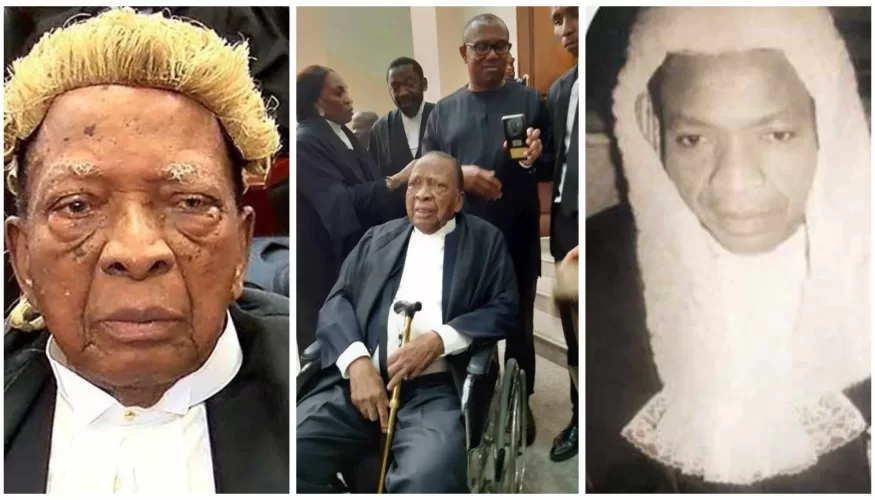
The Life, Loves and Adventures of Obiefuna Benjamin Nwabueze

By Chidi Anselm Odinkalu

In July 2013, Akunnia Obiefuna Benjamin Nwabueze, the extraordinary scholar, teacher, lawyer, winner of the Nigerian National Order of Merit (NNOM) and Senior Advocate of Nigeria (SAN), who has died at the age of 94, applied to the Almighty for another five years on earth. In keeping with the record of a man in whose life Providence appears to have been both present and generous, he received double the time he asked for, living another ten years.

At the time of his passing at the end of October 2023, Nwabueze was the most senior lawyer in Nigeria. With a scholarly output that included over 30 books, 100 conference keynotes, and over 200 peer-reviewed and scientific articles, he was probably also the most prolific and influential legal scholar out of Africa. Published between 1973 and 1977, his trilogy on Constitutionalism in Emergent States, Presidentialism in Commonwealth Africa, and Judicialism in Commonwealth Africa reshaped the study and understanding of public law after colonialism.

In 2013, Nwabueze published Ben Nwabueze: His Life, Works and Times – An Autobiography in two volumes and 719 pages to tell his own story by himself. What follows is sourced to this autobiography. The book, he explains, is “more than a story of events that have occurred in my life; it is also a commentary on people, institutions, such as the marriage and family institutions, and ideas that have played a significant part in my life….”

The story begins sometime in 1931 in Atani, a community on the banks of the River Niger, currently in Ogbaru Local Government Area of Anambra (north), south-eastern Nigeria. It proceeds through his pre-analogue education in primary and secondary schools capturing the age before the introduction of the transistor radio and basic public utilities such as (pipe-borne water and electricity) in Nigeria.

It tells the story of life “as a clerk in a commercial firm, a civil servant/telegraphist in a federal department, a teacher in a secondary school, a law professor, an executive director/legal adviser in a commercial bank, a minister in the federal government, member of the ILO Committee of Experts, deputy chairman of the Presidential Advisory Council, and a private legal practitioner.” It is the story of a war survivor, constitution maker in Nigeria and beyond, and an active participant and broker in Nigeria’s internecine inter-ethnic battles.

Nwabueze’s Autobiography is told in two volumes. Volume 1, comprising 15 chapters and an epilogue in 322 pages, is an intimate self portrait of the man; his life and loves; his family and his community; his beliefs and the closest people to him. The 15 chapters and 397 pages of Volume 2 are devoted mainly to the ideas and pursuits in his life. Volume 1 is a story of life and love; Volume 2 is mostly a story of adventures.

The story that emerges is defined by its clarity, candour and contradiction. Nwabueze narrates an almost charmed progress through challenging personal and professional difficulties and various character-shaping scrapes with injustice. His was a pioneer in communications technology. He was a town-crier, a telegraphist, and an expert in the Morse Code – all forebears of the digital age in which he lived out his advanced years. He was also a son, a life-saving swimmer (entirely predictable for a boy born on the banks of the River Niger), lover, husband, community leader, citizen, father of ten, grand-father to at least 23 children and grand-children respectively and a cancer survivor.

For a man widely associated with the supposedly abstemious study of law, Nwabueze was also an avid theorist on and occasional practitioner of love. Far from deriding the sentiment he admits that he “appreciate(s) it and, sometimes get(s) passionately involved in it.” But even his telling of his loves is done with a clinical candour that is both disarming in its naivete and somewhat brutal in its narrative. The story of his introduction to teenage sex is touching in its innocence:

I led Comfort into my mother’s bedroom. She removed her dresses. We laid on my mother’s bed. I did not know what to do with her. I was scared. I had never had sex before. (I did not have it until 1951 when I was in Enugu as a civil servant). I was then nineteen, going on twenty. After waiting for me to do something, she got visibly angry, jumped out of the bed and, putting back her dresses, said she was going. I tried to hold her back, but to no avail. She was gone. After years of passionate but platonic love, she had wanted us to consummate our love as a farewell, but I had messed it up by my sexual immaturity and shyness with women.

With time, it appears, the professor may have made up for lost opportunities in this department, evolving into a believer in free love, “subject to people willingly imposing moral restraints or moral chains on their sexual appetite.” Unsurprisingly, he takes a rather post-modern view of marriage, believing that “the ritual of the marriage vow whereby parties are made to swear to remain together for good or ill, for richer, for poorer, in sickness or in health till death do them part is meaningless nonsense, and an exercise in futility since, in reality, it carries little or no obligation after the ritual for the parties concerned.”

Besides the narrative of live and loves, Nwabueze’s life is a compelling story of the pursuit of diverse forms of public service in which he demonstrates the stubborn power of ideas. To him goes the credit for the Chapter in Nigeria’s constitution on Fundamental Objectives and Directive Principles of State Policy. He also takes the blame for making them non-justiceable. Beyond Nigeria, he also played influential roles in constitution making in Ethiopia, Kenya, and Zambia.

Professor Nwabueze embodied a life of contradiction: a Christian who does not go to church nor believe in life after death; a rationalist who is nevertheless very passionate and can be impulsive; a Nigerian nationalist who found himself on the side of Biafra during the war; an Anglophile with deep commitment to African traditions and culture; a thinker who morphed into an activist; constitutionalist who served as Minister under military rule (under General Ibrahim Babangida), which – in his own words – is “an obnoxious system of rule.” On this last point, Nwabueze admits to some nagging doubts, perhaps even some regrets as to whether he “did the right thing in accepting the appointment.”

In 1961, Nwabueze enrolled for Ph.D. research as a Commonwealth Scholar at the London School of Economics and Political Science (LSE) with the thesis topic: “The Position of Chiefs under the laws of Eastern Nigeria.” He was to abandon the Ph.D. programme in favour of the patriotic adventure of establishing the Law Faculty of the University of Lagos with his former Professor and mentor, LCB Gower, subsequently also teaching at the University of Nigeria and the University of Zambia, among others.

We will never know what his thesis would have turned into. On the evidence of what transpired thereafter, we have a lot to be grateful for and little to mourn but we may never stop wondering what would have become of the institution of chieftaincy in Eastern Nigeria if Obiefuna Benjamin Nwabueze had been permitted to give it the fullest attentions of his extraordinary intellect.

A lawyer and a teacher, Odinkalu can be reached at [email protected]

Intimate Affairs: What’s your daughter-in-law spec?

By Funke Egbemode

It was one of our girls’ hang-out evenings, our special ‘cult’ outings where we let down our hair and say things we would never say when a man is within earshot. We also join hands and pray and fast when we have to ‘bandy’ together against any bandit problem. But this particular episode was just about wine, smoothies and barbecue and pulling one another’s legs. 

Then Mobola announced to the girls that her son, Ope, had just told her he thought Mimi was the one. 

In other words, after foraging through dozens of skirts, Ope had finally made up his mind to settle down. He had proposed to Mimi in one of those grand colourful events.

At last.

About time.

Long overdue.

Thank God oooo.

It was a chorus of sighs of relief.

Ope is cute and he knows it. He’s successful and well bred. He also has a great job in one of the telecommunication companies.  So, getting the girls was not a problem. Indeed, getting the girls to pull out their claws from all over Ope had been the problem. These girls just love what they love and Ope with his cute innocent manners took full advantage. He walked through them like hot rod through wax. Until Mimi. Now, at age 34, Ope has said he was all ready to quit the bachelors’ club and his mum is saying No. Incredible.

‘Mobola, you sound like a witch right now. You do not want your son to get married? That is witchcraft o, ore.’ I told her point blank.

‘I thought you were getting worried that he was going to end up a cranky old bachelor? What is wrong with Ope marrying Mimi?’ Joke was looking closely at Mobola as if she was trying to figure out what the ailment was that had Mobola in its grip.

Annette rose to her full five feet height, hands on her petite waist. Her worry is different.

‘God will not allow you to ruin my chance to plan a blue chip wedding. Imagine all the colours, primary and secondary, jostling for space and attention at Ope’s wedding, the cake, the aso ebi, the food…. Ah and above all, all those loaded telco guys all in one room. Please, Mobola, God will not spoil your joy, don’t even think of spoiling our hip-hop with your blues.’

Annette is 49, pretty, divorced life-of-the party and according to her, a bride-waiting-to-happen-for-the second-time. See, her vested interest is not just about Ope’s happiness, it is about her second missionary journey.

But why was Mobola resisting Mimi as a prospective daughter-in-law?

Mimi is too beautiful.

W-h-a-a-at? We all chorused.

How is a beautiful bride, daughter-in-law a problem? She will give you grandchildren that turn heads everywhere. What is the matter with you, Mobola? When did it become a sin to be beautiful?

‘When you are about to bring trouble to my doorstep, that’s when.’ Mobola blurted.

Ah, e gba mi. Someone rescue me. What kind of mother doesn’t want her son to have a beautiful wife?

Pray explain how does shopping, gisting, going all over the place with your beautiful daughter-in-law become a tragedy?

‘Okay, I’ll spell it out. A girl with Mimi’s face and body is good as a girlfriend, not a wife for my son. Every man will want her. Her bosses, the neighbours, even my son’s friends. She is an endangered species. She is temptation on two feet.  I know Mimi is a good girl but what about the bad guys, the wolves who’ll lust after her like dogs in heat? Imagine what that will do to my son, their marriage. It will be like planting a mango tree by the roadside. Everybody will want to pluck. They will use sticks, throw stones, even their shoes at it, anything for a piece of the action. It’s not about whether Mimi can control himself, it is about what all those men wanting my son’s wife will do, what they are capable of doing. Yeah, I’d want my grandchildren to be beautiful but I do not want to get my son killed because one crazy man wants his wife at all cost.’

Even Annette looked pensive after that homily by Mobola.

Mothers, they think deep, look far into the future where their children are concerned. I know most men will think Mobola is overthinking things but she does have a point but I guess only mothers can see it. We are selfish that way. Like Mobola, most mothers confronted with a shapely, beautiful Mimi in their son’s life are too worried, too selfish to imagine or ask themselves: what if Mimi is my daughter? If we all take Mobola’s stance, who will marry our beautiful daughters? But that is not the thought on the mind of a mother whose concern is his son’s welfare. The issues of her very beautiful girls being at a disadvantage because of their good looks are a matter for another day.

Crazy as it may sound, Mobola does have a point here. I remember this story of a man who fell victim of ‘magun’ in his own bed, in the warm confines of his own wife’s bosom. Incredible, right? A diabolical man somewhere had set the ‘magun’ trap on another man’s wife and the husband fell into it. He died, untimely, because his fine wife refused to cheat on him with a desperate and obsessed evil louse.

But one man’s meat is another man’s poison. Kate, my friend from Warri is all about her daughters-in-law being loaded on both sides, if you get my meaning. As far as she is concerned, a woman should have appreciable knockers and knock-out hips. ‘Otherwise nothing go fit am.’ She is a fashion designer, so I guess her point of view is understandable.

That started a line of discussion. For fashionista and health freak Annette, it was a shocking revelation when she said, she would resist any woman with a tattoo, pieced nose or nose ring from becoming her daughter-in-law. Wow! For my friend, those things signify deep-seated sense of inadequacy or inferiority complex.

‘I think a girl who has to go under the pin or knife so early in life to enhance her look or the one who got a tattoo will be difficult to satisfy. She will always be in search of some elusive thing.’

Yours sincerely took classes in sociology and psychology in the university but I’m still trying to decode Annette’s logic, but true, I do not like tattoos. A little stud on the nose, yes.

What about a prospective daughter-in-law with a kid?

She’s after one.

Used material, second-hand goods.

Isreal/Palestinian War: Do not take sides, radical preacher warns Tinubu

Radical preacher, Founder and Lead Pastor of The Transforming Church, Rev. Sam Oye, on Thursday warned President Bola Tinubu to exercise caution and not take sides in the Middle East conflict between Israel and Palestine.

According to him, the advice became necessary following demands that Nigeria should cut diplomatic relations with Israel.

The Ogun State-born cleric stated these during a press conference ahead of the annual programme of the church with the theme, “The Encounter” slated for Friday, November 3 in Abuja.

He said the President should rather play the role of a mediator with other world leaders in finding lasting solution to the age-long conflict.

Oye said the programme was aimed at inspiring Nigerians to have hope, despite the current economic challenges facing the country.

While advising Tinubu to take path of mediation, instead of identification, Oye said peace between Israel and Palestine was necessary for global peace.

He said, “I believe that Nigeria as a country has its political stance on matters like this. I am not privy to the details of that in terms of our bilateral relationships with Israel and Palestine. Now, one of the things that I want to say is that there are Christians in Palestine and there are Christians in Israel. There are Muslims in Israel and there are Muslims in Palestine.

“The whole idea which is powered by ignorance is an assumption that the Palestine is all about Muslims forgetting that right there in Gaza Strip, we have Christians there too. So I would say rather than take sides, why don’t we just help resolve the conflict?

“So I will say Nigeria should follow the path of mediation, not the part of identification. I will not suggest that Nigeria identifies with Palestine or identify with Israel. I will say Nigeria should mediate to make sure that there is peace between Israel and Palestine. It’s very important that there’s peace between both countries

“Whatever has to be done, whatever role we can play, I will encourage we play such role but I will not encourage Nigeria taking side. For humanity sake, let us all work together towards peace and reconciliation.”

Explaining reason for the upcoming programme organised by his church, the religious leader lamented the high rate of depression and suicide in the country.

Oye said there was no better time to refocus people’s energy and minds than the time of turbulence.

He said, “The encounter has been an annual programme of our church and the practice for the past 10years. It is all about inspiring people. Most times, the most depressing part of the year is always towards the end of the year when many dreams and goals people think they would achieve were not forthcoming.

“We realise that there is a high rate of depression and suicide this time and we thought that there is no better time to refocus people’s energy and minds to let them know that there is something to be thankful about both now and years to come. So “The Encounter” is that period of inspiration. It is a time where we gather to inspire hope in people and we do that through the instrument that is universal which is music.

“We bring people together in an atmosphere where they got to listen to those singers they like to listen. This year edition will be different. It is now a public knowledge that depression is so high in this country because of the economy and political situation. Our people are committing suicide like never before. There is depression, hopelessness, banditry, naira fall and all that.

“We are facing multiple problems at this time. But there is one thing that uplift an average Nigerian which is good Music. What we are trying to do is to put everyone together and gets inspired by God. This year our goal is to make sure that an average that comes to the event is encouraged.

“One of things that has really encouraged us from our last editions is that people have testified that they found solutions to their problems from attending this programme. Above that, we believe that people come here and receive both physical and mental healings.”

The cleric said the church had reached out to government officials, especially those in the security sector, saying the progamme was also to prompt government to take the issue of insecurity seriously.

He said, “I have reached out to the person in charge of military operations and I am expecting him to come. Security is a collective thing. It is about all of us finding coming

“People go into crazy things because they have lost hope in the country. We are trusting that most of the people in the security sector attend the programme and when they hear us pray, they will know that there is something of great concern. If they doing their job, perhaps we won’t be talking to God about security.

“When people pray to God for security, it is a stylish indictment on the entire security architecture in the country. When people are turning to God for safety, it means they have lost hope in the government.”

My father would have survived but people were busy making videos rather than help — Dora Akunyili’s son

Although recordings of accident scenes and victims on smartphones have helped alert authorities about such mishaps in real time after they had been uploaded on the social media platforms, latest findings show that they have contributed to more losses than it had saved situations.

Unlike in the past when Nigerians hurry to accident scenes to save lives, many today have acquired the bizarre habit arriving at scenes only to make videos and share on social media.

That was the story of Obum Akunyili, one of the children of a former Director General of the National Agency for Food and Drug Administration and Control, late Prof. Dora Akunyili, said his late father, Chike, would not have died if medical intervention was provided at the scene of his attack.

Obum also stated that people who should have helped his late father, the driver and security man, after they were shot by gunmen, were busy making videos at the scene, instead of rushing them to the hospital for medical care.

He stated these as a witness concerning his late father, during the special session at the second public hearing of the Anambra State Truth, Justice and Peace Commission, in Awka.

The Truth, Justice and Peace Commission was constituted by Anambra State Governor, Prof. Chukwuma Soludo in June 2022 to inquire into the violent agitations and restiveness in the state and the South East.

The Commission, which is also a public hearing on violence and violence-related deaths in Anambra, was also commended by Obum for reinstalling hope and belief in the citizens.

The late Chike Akunyili was reportedly murdered by yet-to-be-identified gunmen on September 29, 2021, while returning to Enugu from an event in Onitsha, Anambra State where his late wife was given a posthumous award.

Obum regretted that their late father and his driver bled to death as no effort was made by those around to take him to the hospital for a possible survival chance.

He told the commission that his late father had about 10 per cent chance of surviving the gunshot wound on his head if there was timely medical intervention.

He said, “People who would have helped my father, his driver and security man were busy making a viral video of the scene, asking the driver who was calling out to them for help his name until they gave up.

“Sending messages on a WhatsApp group is not justice and not investigation. Prosecution is done with facts and knowledge. My late father had about 10 per cent chance of surviving the gunshot wound on his head, if there was timely medical intervention.”

He urged Nigerians to always render assistance to dying citizens instead of making videos of them.

While appreciating the commission, he said, “The chairman and commissioners are excellent, hard-working people with high goals for the people dedicated to peace, reconciliation, and a future for Anambra State.”

Responding, the Chairman of the commission, Prof. Chidi Odinkalu, said, “As leaders, actors, and institutions, we have a responsibility to foster hope. It is Truth, Justice and Peace Commission but above all, it is a Hope Commission.

Punch

Melt-down of the road construction industry  in Nigeria

By Okey Ifeachor

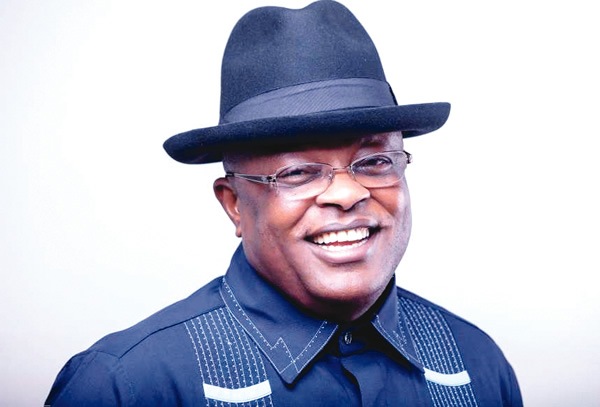
The minister of works, Senator David Umahi, has been in the news since assuming office, by imposing a new policy of concrete technology in road construction in Nigeria. The former Governor of Ebonyi State since his assumption of office has advocated that the federal government will henceforth construct concrete roads in the country.

Minister Umahi argues that concrete roads last longer than asphalt roads, and claims that concrete roads are cheaper to build. Consequently, the Minister insists that contractors that would get contracts to construct roads for the federal government must use cement and not asphalt. Those who will use asphalt must give 15 years of guarantee, and be limited to only 5% variation claim on Bitumen and Bituminous works.

Stakeholders in the construction industry are of different opinions. Most of them are not happy with the Honourable Minister of Works as they say that the drastic change the minister wants to introduce is without any dialogue and consent with the relevant stakeholders in the construction industry. The strategy of Minister Umahi has created uncertainties in the sector.

As a result, almost all roads construction has been stopped throughout the country. This has led to contractors being forced to heavily downsize their operations, and reduce the number of their workers on the different projects, thereby leading to unemployment in the sector in these difficult economic times.

Despite the deplorable state of our roads, we risk entering a period with dark clouds hanging above the construction industry in the coming dry season because of the works minister’s new policy. Nigeria cannot afford a standstill of construction works in the coming months.

Those who question the rush to adopt concrete roads technology in Nigeria argue that the concrete roads Minister Umahi constructed in Ebonyi State as governor have started failing. Just after only about 5 – 7 years, there are heavy cracks appearing in many sections of those roads in Ebonyi State. This is contrary to the claim of the minister that concrete roads will last for 50 years.

Concrete and asphalt pavements are both recognized technologies in roads construction, but their advantages and disadvantages indicate that the preferred technology is determined by the terrain on which they are used. It is important to note that above 90% of the roads worldwide are made in asphalt. Independent of the technology opted for, the focus to improve roads in Nigeria ought to be on the quality of the construction as well as the maintenance of the roads during their lifespan. This requires appropriate and consistent funding from the government.

What Nigerians want is good working lasting roads that would enable people and goods to safely, and rapidly move from one destination to another. This is fundamental to grow our economy.

It is not expedient to embark on only concrete roads construction now that the finance of the country is shrinking. Why should the country move to a more expensive road construction technology in these trying times? Insisting on concrete roads policy will see less projects due to cost impact and budget constraints.

The Minister of Works is therefore urged to ignore the lobby by the cement industry to adopt concrete and in the interest of all Nigerians to focus his on towards quality of works delivered by the contractors whether it is asphalt or concrete roads. The works minister must ensure that awarded contracts are promptly funded as and when due. When funding lags behind, contractors are forced to cut cost or delay the works, which will eventually have a negative impact on the quality of the road delivered. Recently, Minister Umahi admitted that about ten trillion naira is still being owed to the contractors on past projects by the Federal Government.

In these dire economic times, coupled with the erratic funding of road projects by government, it is foolhardy for the minister to insist on construction of roads with concrete technology which is more than double the cost of construction with asphalt technology. Should the minister insist on forcing all road projects in Nigeria to adopt concrete technology, all road projects in Nigeria are most likely to end up as white elephant projects.

Ifeachor, a commentator on national issues lives in Abuja

How CBN colluded with IMF, World Bank to frustrate Nigeria/China currency swap

By Lillian Okenwa

As Nigerians battle rising inflation with the naira gasping for breath, there are indications that the Bretton Woods Institutions are helping with tightening the noose. This is because despite the nearly $2.5 billion currency swap deal between Nigeria and China a little over five years ago, the Nigerian business community has been prevented from benefiting from the agreement.

As at mid October 2023 according to the National Statistics Bureau, Nigeria’s inflation rate has risen to its highest level in two decades, 26.72%.

Paying for goods imported from China with naira would have reduced Nigeria’s dependence on the dollar, thereby giving some boost to the naira.

In June this year rights lawyer and Senior Advocate of Nigeria requested the Central Bank of Nigeria (CBN) to disclose details of Nigeria’s currency swap deal with China which was designed to improve the speed, convenience, and volume of transactions between the two countries.

The CBN in a response to Falana’s Freedom of Information (FOI) request, said the swap deal, which commenced in July 2018, is renewable every three years and that the agreement was renewed after it expired in April 2021.

It further disclosed that the sum of 15 billion Chinese yuan renminbi (CNY) was the “amount usable within the year.”

However, the catch according to Falana is that despite the currency swap agreement, the federal and state governments, and business community have been “prevented from transacting business in naira and yuan.”

Urging Nigerians to use naira as payment for goods imported from China, the Senior Advocate said: “The swap was also designed to improve the speed, convenience, and volume of transactions between the two countries. But the International Monetary Fund and the World Bank, which superintend the Central Bank of Nigeria, have colluded with the Central Bank of Nigeria to frustrate the currency swap.

“The purpose of the economic sabotage is to promote the dominance of the United States Dollar in Nigeria. Hence, the federal government, state governments, and the business community have been prevented from transacting business in Naira and Yuan. Thus, by compelling Nigerians to pay dollars for goods imported from China, the Central Bank has continued to promote the unwarranted dollarisation of the Nigerian economy.”

Like Kenya, Rwanda announces visa-free entry for African countries

The journey towards ease of travel around Africa is gradually becoming a reality with Rwanda announcing visa-free entry for fellow African states.

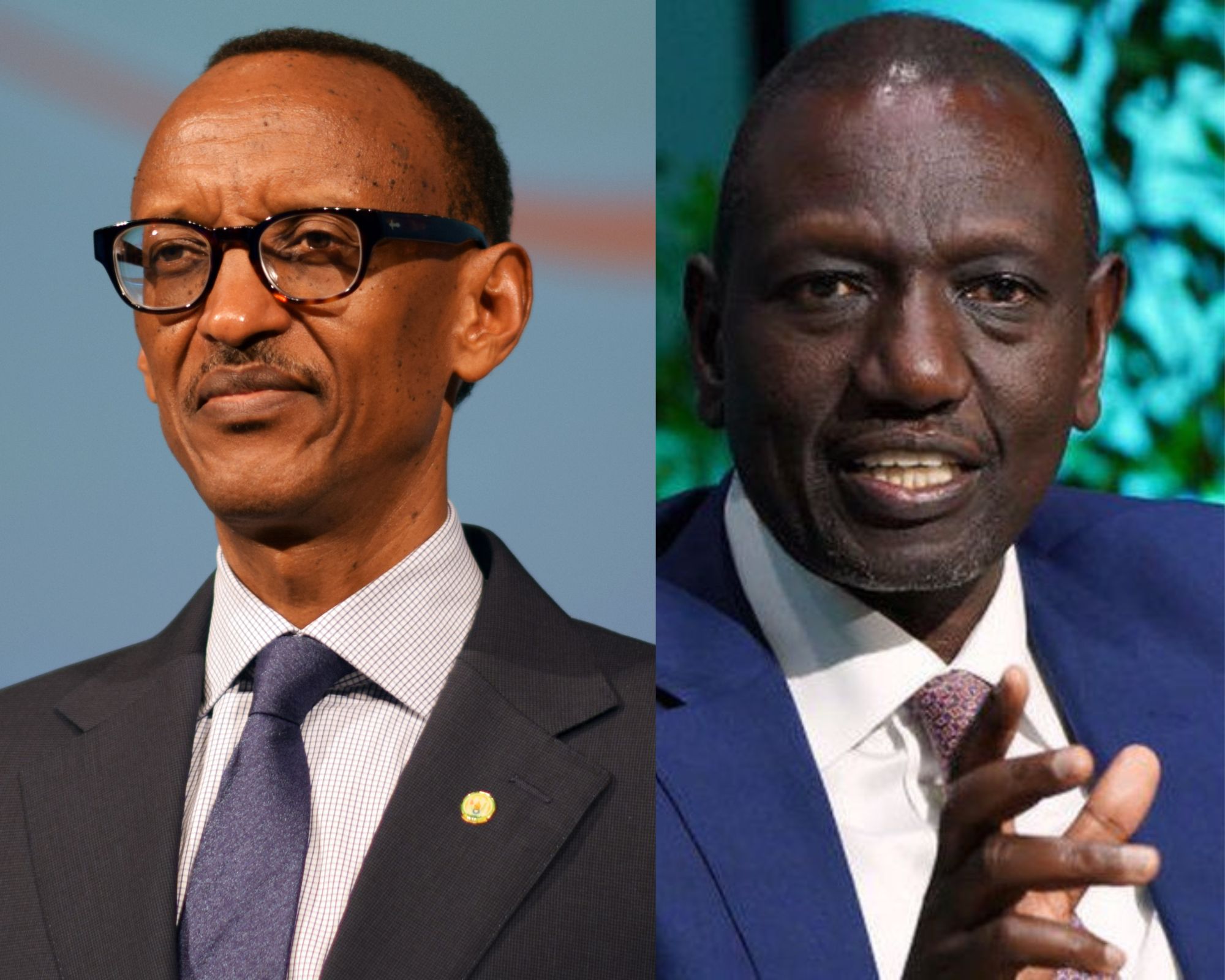
Data obtained from the United Nations Economic Commission for Africa reveal that President Paul Kagame made the announcement in the capital city of Rwanda, Kigali. There, he promoted Africa’s potential as “a unified tourism destination” for a continent that still receives 60% of its visitors from outside of the continent.

“Any African, can get on a plane to Rwanda whenever they wish and they will not pay a thing to enter our country” the Rwandan president stated at the 23rd Global Summit of the World Travel and Tourism Council.

“We should not lose sight of our own continental market. Africans are the future of global tourism as our middle class continues to grow at a fast pace in the decades to come,” he added.

On Monday, the President of Kenya, President William Ruto declared that there will be an end to visa requirements for all African visitors by the end of the year.

The development has been widely praised as Kenya became the fourth African nation to scrap visas for African nationals after Seychelles, The Gambia and Benin.

Unrestricted travel for Africans within the continent has been an objective of the African Union (AU) for the past decade.

Speaking at an international conference recently, Ruto said, “It is time we…realise that having visa restrictions amongst ourselves is working against us.”

However, according to Africa’s Visa Openness Index – which measures the extent to which each country in Africa is open to visitors from other African countries – most countries are making progress towards simplifying entry processes and dropping restrictions to some other nations.

In 2022, Kenya was ranked 31st on the index out of 54 states, but Ruto told an audience in Congo-Brazzaville that visa restriction was bad for business on the continent.

“When people cannot travel, businesspeople cannot travel, entrepreneurs cannot travel, we all become net losers.

“Let me say this, As Kenya, by the end of this year, no African will be required to have a visa to come to Kenya,” he said to loud cheers from the conference delegates.

“Our children from this continent should not be locked in borders in Europe and also be locked in borders in Africa.”

He was speaking at a summit aimed at protecting some of the world’s largest rainforests.

The AU launched its African passport in 2016. The idea behind the passport is for all African citizens to be able to travel throughout the continent without visas – but it is still not widely available.

This is in part because of concerns about security, smuggling and the impact on the local employment markets.

If dropping all visa restrictions is currently a step too far, the Visa Openness Index report recommends a number of other measures. These include lowering fees, making visa-on-arrival standards for African visitors and implementing a secure e-visa system.

The African Union introduced the African passport in 2016, promising to “unleash the potential of the continent” in a manner comparable to that of the European Union. However, up until now, the travel document has only been granted to diplomats and AU officials.

According to the African Union’s website, the African Passport and free movement of people are intended to “remove restrictions on Africans ability to travel, work, and live within their own continent.”

The African Union also established the African Continental Free Trade Area, a free trade area spanning the whole continent with an estimated value of $3.4 trillion. Its goals are to promote economic growth and provide a single, united market for the 1.3 billion people living on the continent.

Reports from Africa.businessinsider/Vanguard

Rejected Marriage Proposal: Man gets life imprisonment for bathing girlfriend with acid

For bathing his girlfriend, Glory Sylvester Ita, with acid following her refusal to marry him, a 33-year-old-man, Jide Afolayan Sunday has earned himself a life imprisonment.

Hon. Justice Blessing Egwu of a High Court in Calabar, Cross River State, found Sunday guilty of attempted murder, and ordered that he serves his sentence at the Calabar Medium Security Custodial Centre as well as pay N10 million compensation fee for the victim’s surgery.

Egwu held that the prosecution proved the charge of attempted mother by pouring acid on the victim after refusing his marriage proposal, stating that it was well planned.

Sunday has been in police custody for months for the attempted murder of Ita by bathing her with acid from head to her abdomen where one of her ears and breast were brutally burnt by the corrosive substance. He also hurt her finger, and attempted to push the victim into the pool to drown. 

During the trial, the prosecutor said the incident was triggered by a breakup where Ita was invited by Sunday (her boyfriend) to Reel home Hotel, Ekon-Etta off Marian Road, Calabar on October 21, 2022, which led to heated argument and he poured acid on her in an attempt to kill her.

According to the prosecutor, the relationship lasted for nine months before Sunday sought her hand in marriage, and when she refused and threatened to end the relationship, he got up and threw the acid over her body.

Due to the hotness and the burning sensation, one of her ear and breast were damaged, while other parts of her body got burnt. Upon his arrest, Sunday denied the allegation, claiming that she was the one who poured the acid on him, but the evidence clearly showed that Ita was actually the victim. He was arrested and charged to court on January 24.

TIPS