Home Blog Page 682

World Bank says NNPCL lack transparency on subsidy, dollar revenues

World Bank has announced that the Nigeria National Petroleum Corporation Limited (NNPCL) is not transparent about the financial gains from fuel subsidy removal.

This extends to subsidy arrears that are still being deducted and the impact of subsidy removal on federation revenues, the bank noted. The Washington-based made this call in its Nigeria Development Update, December 2023 edition titled, ‘Turning The Corner (from reforms and renewed hope, to results).

This is the Minister of Finance and Coordinating Minister of Economy, Wale Edun, revealed that the government was ready to scrutinise the revenue flow from the NNPCL.

According to the World Bank, while revenue gains from the exchange rate reforms are visible, more clarity is needed on oil revenues, including the fiscal benefits from the PMS subsidy reforms.

It declared, “nominal oil revenue gains have been evident since June; these are mostly categorised as “exchange rate gains”, suggesting that they are due to the naira depreciation.

“Except for the exchange rate-related increases, however, there is a lack of transparency regarding oil revenues, especially the financial gains of the Nigeria National Petroleum Corporation from the subsidy removal, the subsidy arrears that are still being deducted, and the impact of this on Federation revenues. It is also unclear why retail petrol prices have not changed much since August, despite fluctuations in the exchange rate and global oil prices.”

The Bretton Woods institution further expanded that gains in net oil revenue of the federation were lower than what they should have been considering what the removal of fuel subsidy should have added to the accounts.

It stated that fuel subsidy cost the federation about N380bn a month, and once removed, the federation account should have recorded an increase in net oil revenues.

It said, “However, most of the gains in the oil revenues in H2 2023, as reported by OAGF, can be attributed to exchange rate gains. Without exchange rate gains, net oil revenue between January and August would have declined by 0.2 of a percentage point of full-year GDP yoy, all materialising in the July–August period.

“In August, additional revenue from 40 per cent profit of Production Sharing Contracts and the interim yearly dividend were reflected in the accounts.  However, these were not as high as what the gains from removing the gasoline subsidy should have been. Given that petrol pump prices have not changed in line with market fundamentals (notably exchange rate movements and global oil prices), there is a risk that the implicit fuel subsidy has reemerged, potentially keeping net oil revenues lower than expected.”

The institution further noted that the reform of fuel subsidy should help the NNPCL to settle its arrears and start paying fully for the Federation’s share of costs in joint venture operations, thereby allowing oil production to gradually increase over time.

Also speaking at the presentation of the report, the Coordinating Minister of the Economy, Edun noted that the removal of fuel subsidy saved the government’s finances.

He stated that while expectations that subsidy removal should boost the government’s revenue, it was faced with debt funding and a high fiscal deficit.

He said, “In terms of the government’s finances, you have rightly pointed out that following the removal of subsidy, there is an expectation that there would be fiscal dividends and it’s fair to say that without it, government finances will be in total disarray now.  However, there is debt funding, pressure on fiscal deficit, and on government finances, and borrowings which have been inherited.

“Our levels of borrowing are being reduced and there is a plan to reduce that fiscal deficit over time. On the revenue side, the first source is oil, and I expect that there will be serious scrutiny on oil revenue and production and insistence on raising oil production and similarly that the revenues are brought into the federation account following the constitution. I think there will be added scrutiny, and I am sure NNPC is getting ready for that.”

Edun further declared that there would be a robust rollout of measures to raise tax revenue soon. He, however, highlighted that tax rates would not be increased but a lot would be done regarding efficiency, digitalisation, and improved collection.

He added that waivers and tax incentives would be scrutinised to revamp it and save leakages, particularly among ministries, departments and agencies.

Subsidy removal and controversies

On May 29, President Bola Tinubu announced the removal of fuel subsidy with, “Subsidy is gone,” to free up foreign exchange earnings.

In his August 1 national address, Tinubu disclosed that the Federal Government had saved about N1tn in two months after the removal of the petrol subsidy freeing up funds for other things in the economy.

He said, “In a little over two months, we have saved over a N1tn that would have been squandered on the unproductive fuel subsidy which only benefitted smugglers and fraudsters.”

According to him, the funds saved from subsidy removal “will now be used more directly and more beneficially for you and your families.”

However, there have been concerns that the dividend of subsidy removal has not trickled down to the average Nigerian.

Recently, a former Governor of the Central Bank of Nigeria, Sanusi Lamido Sanusi, alleged that the NNPCL might not be remitting enough dollars to the federation account despite subsidy’s removal.

Speaking during the Bank Directors Summit organised by the Bank Directors Association of Nigeria recently, Sanusi, said, “The exchange rate needs to be stabilised and we have to address the fundamental question, why is there no money coming in?

“Why is the NNPCL not able to bring in dollars? Am sorry this is the question that cost me my job and I will continue asking this question until NNPCL fixes it up or until I die. Where are the dollars? We need to shine a light on the NNPCL. The finance minister cannot tell you because he doesn’t have a monitoring system that reports to him.

“The finance minister can’t tell you how many barrels of petrol we produce and export. It is only the NNPCL that can give those figures. The finance ministry needs to know how much oil we produce daily, how much we sell, and where the money is going. We are no longer paying subsidies so where are the dollars? It was under recovery during the subsidy era and that has been stopped, so where is the money?”

Sanusi noted that the NNPCL was opaque about its dealings, shrouding many of its dealings in secrecy.

Everydaynewsngr

Justice Benedict Kanyip pays tribute to Justice Edith Agbakoba at special court session

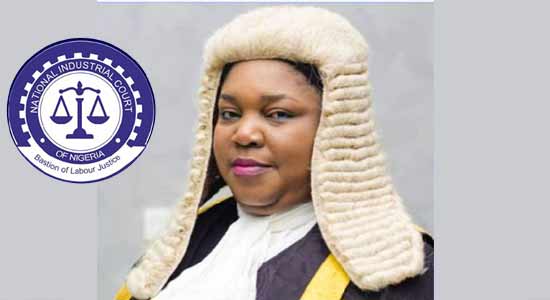
It was an atmosphere of gloom on Wednesday, December 13, 2023 at the National Industrial Court of Nigeria (NICN) when Judges, lawyers and family members of the Late Hon. Justice Edith Nneka Neolita Agbakoba gathered to bid her farewell at at a special valedictory court session held in her honour.

Justice Agbakoba who until her death in the early hours of Monday 6 November 2023. was married to Gozie Agbakoba who represented Onitsha North / Onitsha South at the House of Representatives from 2003-2007. He is the elder brother of rights advocate crusader, Dr. Olisa Agbakoba, SAN.

At the special session on Wednesday presided by Hon. Justice Benedict Bakwaph Kanyip, President of the NICN, His Lordship commenced his address by quoting Robert Greene, emphasizing the profound connection between life and death. He acknowledged the collective mourning that has enveloped the legal community since Justice Agbakoba’s untimely departure and urged everyone present to embrace the reality of mortality as a means to appreciate the fullness of life.

Making reference to the book Ecclesiastes in the Holy Bible, Justice Kanyip stressed the inevitability of death and the brevity of life. He cited biblical passages to underscore the cyclical nature of existence, acknowledging the mysterious journey from birth to death and the ultimate return of the spirit to God.

The NICN President also took a moment to reflect on the life and academic pursuits of the departed Hon. Justice E. N. N. Agbakoba. Born on 21 May 1963 in London, she demonstrated academic excellence and intellectual sagacity throughout her educational journey. Her legal career, from the Nigerian Law School to her esteemed position as a judge, was marked by discipline and commitment to justice.

Justice Kanyip highlighted Justice Agbakoba’s distinguished legal practice at the Legal Aid Council, where she ascended to the positions of Zonal Director and Director, leaving an indelible mark of order and organization. Her appointment as a judge of the National Industrial Court in 2013 showcased her humility, impeccable character, and dedication to the principles of justice.

Kanyib described Justice Agbakoba as an honorable woman dedicated to the effective dispensation of justice, hallmarked by clarity, diligence and integrity. He noted that she would be remembered for her immense contributions to developing labor law jurisprudence in Nigeria.

His speech included touching tributes from the President of the Court of Appeal, Hon. Justice M.B. Dongban-Mensem, and the National Judicial Council. Both praised Justice Agbakoba’s hard work, intelligence, and passion for justice.

Justice Agbakoba’s religious and social life were also celebrated. A devout Christian, she was known for her kindness and dedication to justice, embodying the injunction to seek justice and defend the oppressed. Her positive impact on the lives of those around her, coupled with her warm and engaging demeanor, left lasting impressions.

Justice Kanyip expressed appreciation to the bar, bench and all well-wishers who graced the valedictory session to pay their last respects. He also thanked the Catholic priests who provided spiritual support. Conveying his condolences, Justice Kanyip prayed for God to grant the late jurist eternal rest.

Born in London to the family of Edward Chike Ekpechi and Anthonia Chike Ekpechi, of Onitsha North LGA in Anambra State, Hon. Justice Agbakoba attended Notre Dame High School, London from 1974 to 1977 and Girls High School, Awkunanaw, Enugu from 1977 to 1980 and obtained her West African School Certificate (WASC).

She was said to have died of a cancer related health challenge.

Most part of this story was culled from The Nigeria Lawyer

Best Graduating Medical Student: Attah of Igala congratulates Umola Onoja

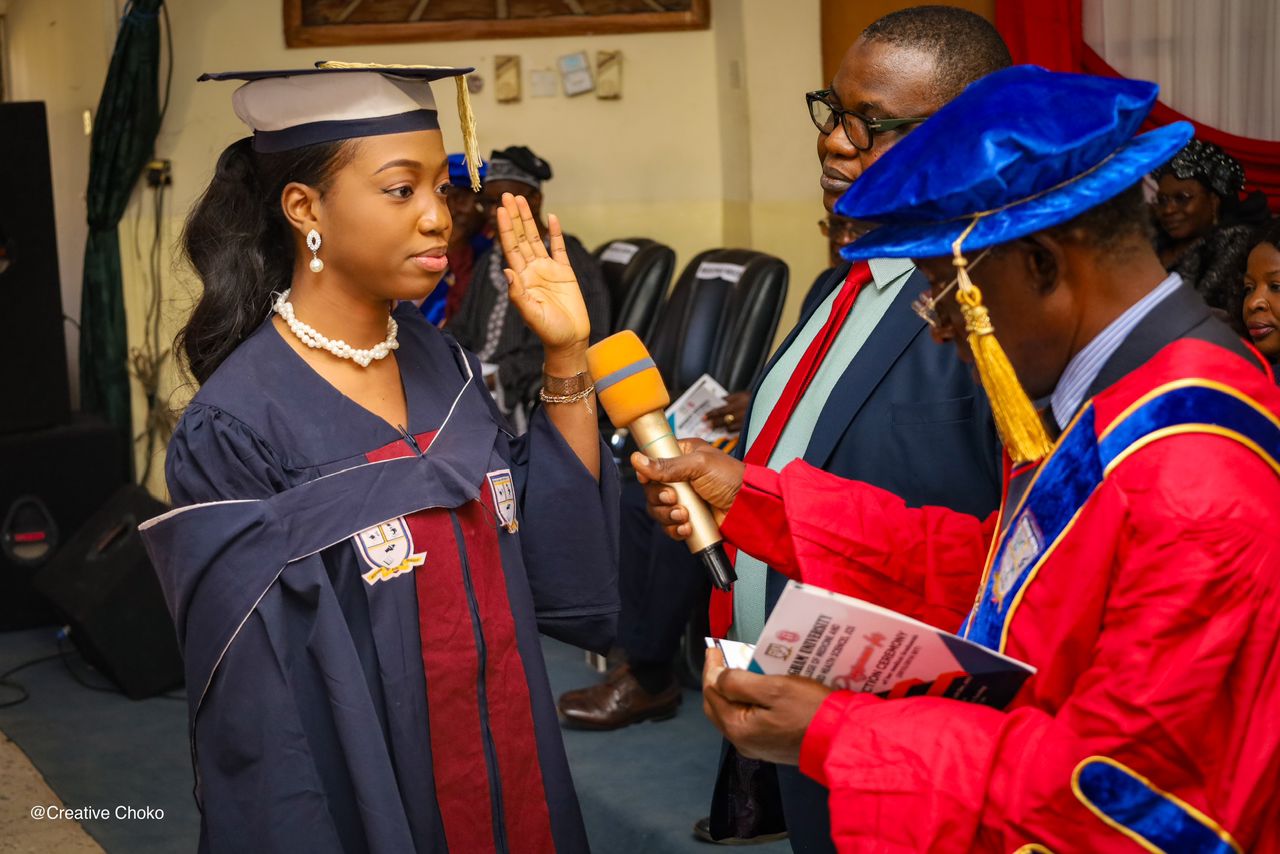
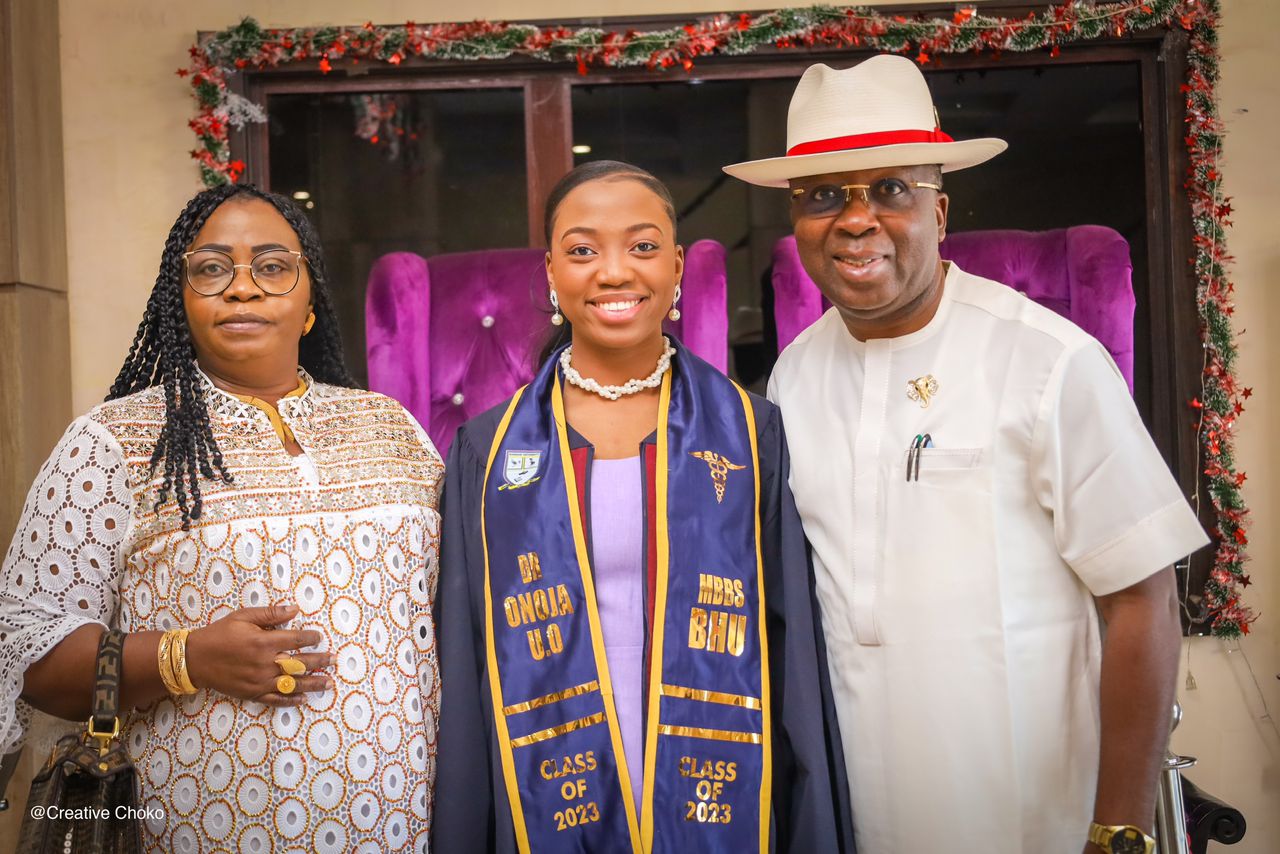
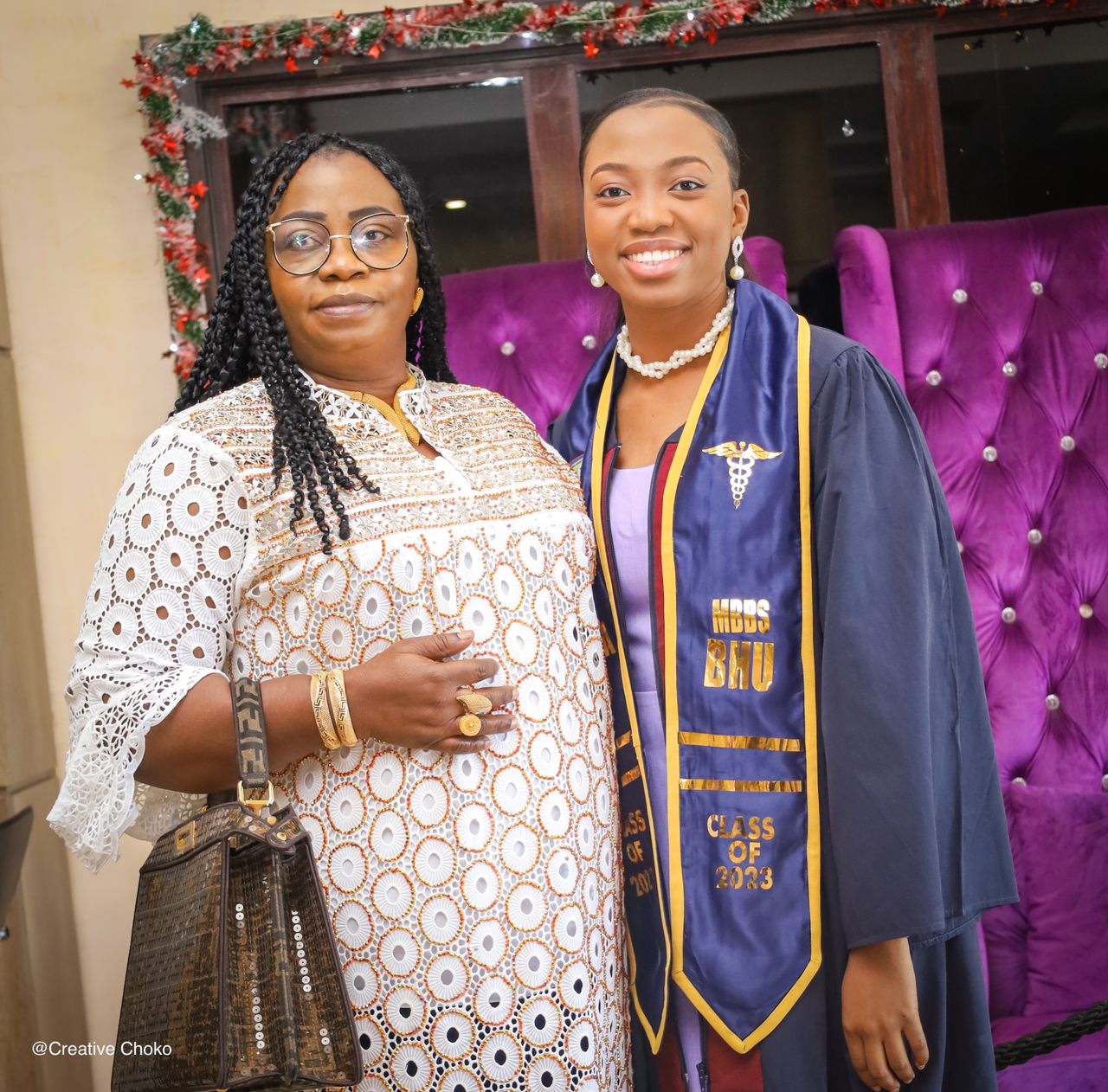
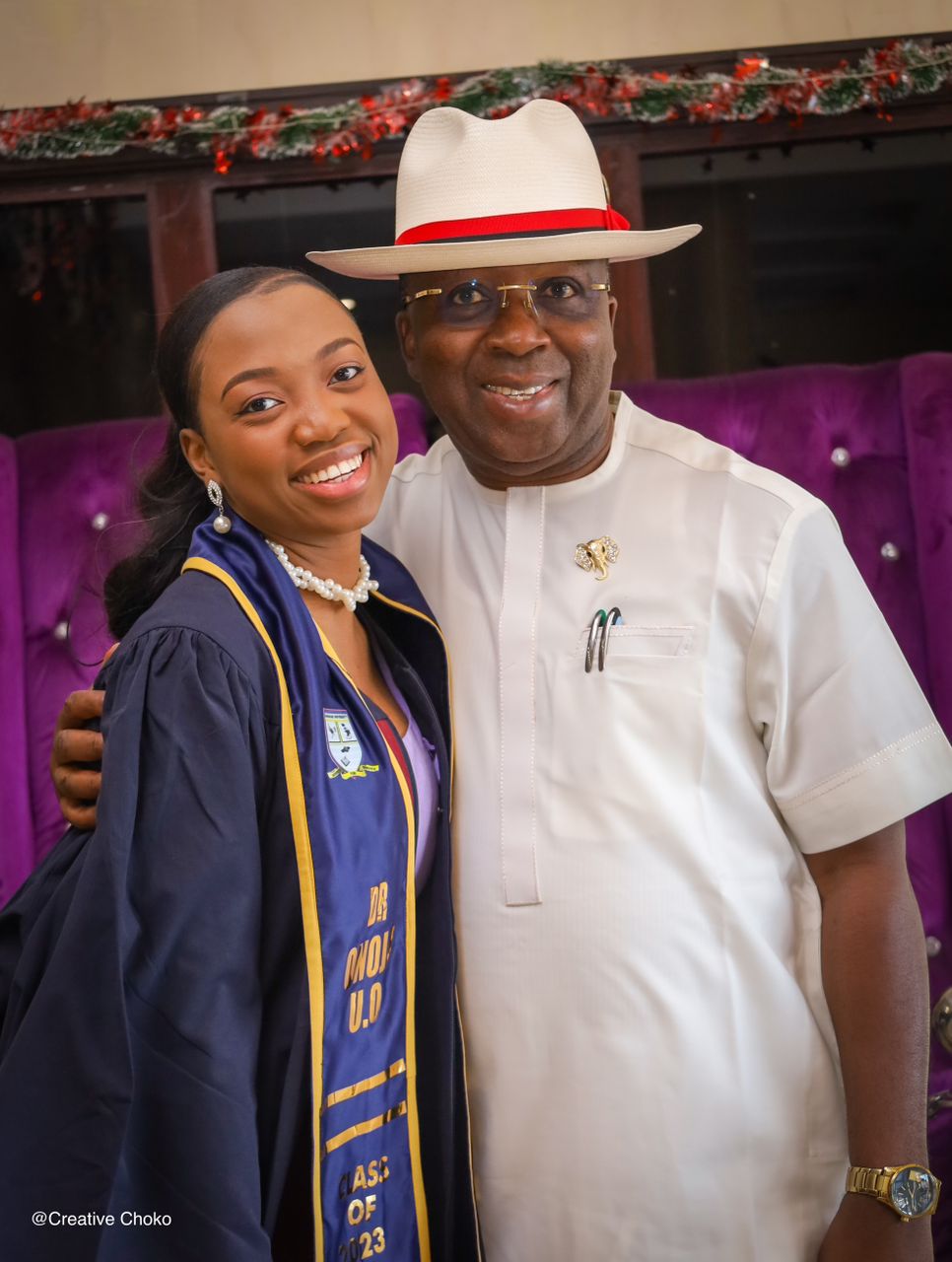
The Atah of Igala, and Chairman lgala Area Traditional Council and President Kogi State Council of Chiefs, His Majesty, Agabaidu Dr. Matthew Alaji Opaluwa Oguche Akpa has congratulated Dr. Umola Onoja for her feat in becoming the 2023 overall best graduating medical student at Bingham University.

His Majesty in a congratulatory letter eulogiSed the 23 year old doctor and prayed that she gains “more wisdom to continue in excellence rising to the pinnacle of Medical Practice.

Out the nine prizes for grabs, Dr Umola won eight — Best graduating medical student in Anatomy; best graduating medical student in physiology; best graduating medical student in Biochemistry; best graduating medical student in paediatrics; best graduating medical student in Obstetrics and Gynecology; best Graduating medical student in Surgery, best graduating female medical student and overall best graduating student.

Below are excerpts from the letter.

CONGRATIJLATORY MESSAGE
Greetings from the Royal Court of His Majesty, Agabaidu Dr. Matthew Alaji Opaluwa Oguche Akpa, CFR, Ata-lgala, Chairman lgala Area Traditional Council and President Kogi State Council of Chiefs.

On behalf of the good people of lgala Kingdom and Kogi State in general, I write to congratulate and felicitate with you and your parents on your uncommon academic excellence culminating in you being the Best Overall Graduating Student in Medicine of Bingham University HIS ROYAL AND EXCELLENT MAJESTY (DR.) ALAJI MATTHEW OPALUWA OGUCHE AKPA Attah Igala and Chairman Kogi Traditional Council of Chiefs.

It is indeed worthy of note that you have also followed the foot-steps of your father in
academic excellence. With this feat you have carved a niche for yourself, the immediate
Onoja family and the entire [gala Kingdom.

We pray God to grant you and the entire family divine protection, more wisdom to continue
in excellence rising to the pinnacle of Medical Practice, your chosen profession.

Accept on behalf of all Royal Fathers in lgala Kingdom our heart-felt felicitation on your /
well deserved Academic Excellence.

Once again, accept the assurance of our esteem high regards.

CONGRATULATORY-MESSAGE-TO-UMOLAOJO-ONOJA

How Justice Adumein ordered a rerun in non-existent polling units

By Lillian Okenwa

  • Lawanati Kofar Jauro, Yelo Lima, Abba Kalu, Shilo Abone are in Taraba, not in Kaduna state where the re-run was ordered
  • Download judgment

Many Nigerians were aghast when the 17 November judgment of the Kano State Gubernatorial Election Petitions Tribunal, that sat at the Court of Appeal, Abuja, appeared to have handed down two different verdicts on the same matter.

While the tribunal announced orally that it has nullified the election of Governor Abba Kabir Yusuf of Kano State, a Certified True Copy (CTC ) of its majority judgement delivered by Hon. Justice Moore Aseimo A. Adumein upheld his appeal and granted all the reliefs sought by the governor. The court has since announced that it was a clerical error.

Days ago however, an ex-Chair of the National Human Rights Commission (NHRC ) and law teacher, Chidi Odinkalu in a tweet revealed that His Lordship, Justice A. A. Adumein had on 2 November 2023, made another ‘error’ in another judgment he delivered.

While delivering judgment in the National Assembly matter between Hon. Zayyad Ibrahim & 1 OR. V. INEC & 2 Ors., Justice Adumein ordered a re-run to be conducted by the Independent National Electoral Commission (INEC) in four 4 polling units which are neither in Kaduna State nor in any part of the North -West. It turned out that the polling units –
a. Lawanati Kofar Jauro –Code 006,
b. Yelo Lima – Code 005
c. Abba Kalu – Code 012 and
d. Shilo Abone – Code 015, are in Taraba State, North Eastern Nigeria.

In two similar petitions addressed to the Hon. President of the Court of Appeal, Hon. Justice Monica Dengbem-Mensem and the INEC Chair, Prof. Mahmood Yakubu dated 20 November,2023, the appellant Hon. Zayyad Ibrahim requested “for a clarification of the orders of this honourable court in the judgment of the Court delivered on the 2nd Novemeber, 2023; as the orders cannot be enforced.”

Asserting that: “These polling units are not in Igabi Local Government of Kaduna State and do not form part of the polling units or wards that I contested the 25th February, 2023 elections under”, the appellant also added: “The Appeal by the Appellant also does not include these places as polling units he is challenging.”

Hon-Zayyad-Ibram-v-INEC

In view of his nomination alongside 10 other justices for elevation to the Supreme Court by the National Judicial Council (NJC), Odinkalu described this as “unsettling.”

Click here and here to download the judgment.

Zayyad-v-INEC-1

Zayyad-v-INEC-2

Onoja, SAN celebrates as daughter grabs overall best graduating medical student at Bingham University

Senior Advocate of Nigeria, Dr. Ogwu James Onoja has been announcing to everyone that cares to listen that he just got the best Christmas package of his lifetime. But this is in no way related to the end of year package currently being doled out by the Nigerian Bar Association, Abuja, (Unity Bar) to which he belongs.

Well, it just turned out that his second daughter is the 2023 overall best graduating medical student at Bingham University!

Born 13 March 2000, Dr. Umola O. Onoja won awards in the following categories:

  1. Best graduating medical student in Anatomy.
  2. Best graduating medical student in physiology.
  3. Best graduating medical student in Biochemistry.
  4. Best graduating medical student in paediatrics.
  5. Best graduating medical student in Obstetrics and Gynecology.
  6. Best Graduating medical student in Surgery
  7. Best graduating female medical student.
  8. Overalll best graduating medical student.

Dr. Umola a talented artist and painter with many of her works adorning her father’s chambers already has many clients in her kitty.

While at the University, Umola was a Sunday school teacher at the children church and now she has joined the Children’s department at the Mountain of Fire and Miracles Ministries, Region 47 Gwarimpa, Abuja.

According to Onoja, SAN who has been grinning cheerfully since yesterday (Tuesday), Umola with her elder sister Edebo also born on 13th March were kid singers with the stage name SHARONROSE SINGERS. Their ALBUM titled African child was released in 2005.

While Edebo plays the saxophone, Dr Umola plays the keyboard. Their Igala song “Obobo Alubasa” (onion soup) is still a hit in Nigeria. You can visit their facebook page SHARONROSE singers.

Congratulating the young doctor, a family friend, Pastor Abel Uloko had this to say: “Umola deserves more applause than we can give now. WHY? In this day and age where children go to the University and redefine the rules of engagement trashing cherished values handed to them by parents; getting distracted and choosing a life of waywardness and immorality, thus derailing the train of academic excellence, Umola Distinguished herself through hard work, commitment, consistency, discipline with through rigorous work ethic and today she’s a true Hero…

“Again Chief, do you think you’ll be paying bills for other people’s children in Kogi and in the orphanages and all your other humanitarian endeavors and Jehovah will abandon your children? No way! God is not unjust! Umola’s result to day is always a harvest of your labour of love over God’s people!

“PLUS,
YOU REMEMBER UMOLA IS A SUNDAY SCHOOL TEACHER…
THE PRAYERS THOSE CHILDREN OFFER TO GOD ON HER BEHALF FOR HER KINDNESS TO THEM IS COMING BACK IN WHAT WE’RE SEEING TODAY
AND IT’S JUST GETTING STARTED!!! CONGRATULATIONS ONCE MORE!!!”

NBA Abuja, Unity Bar distributes end of year package

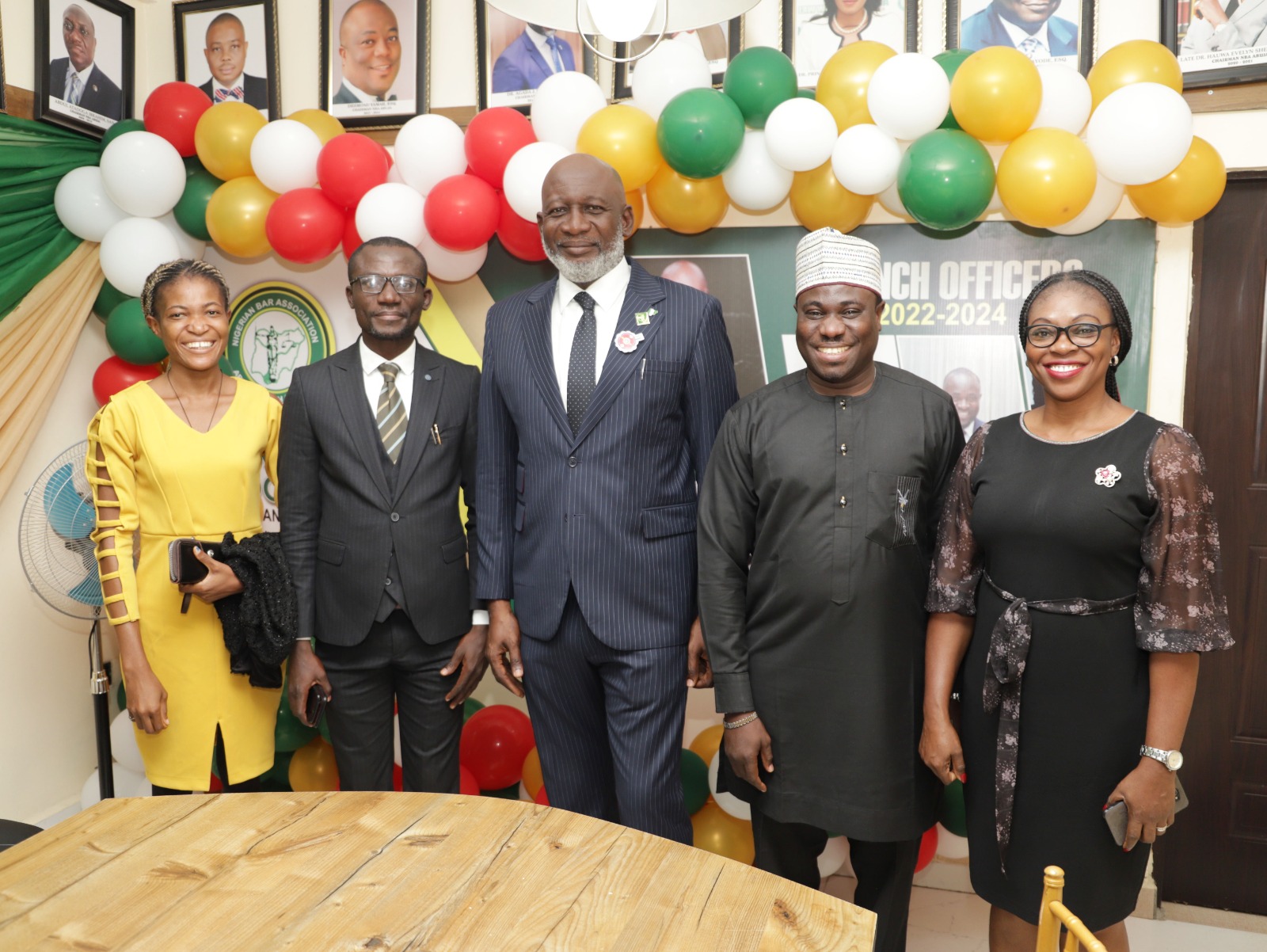
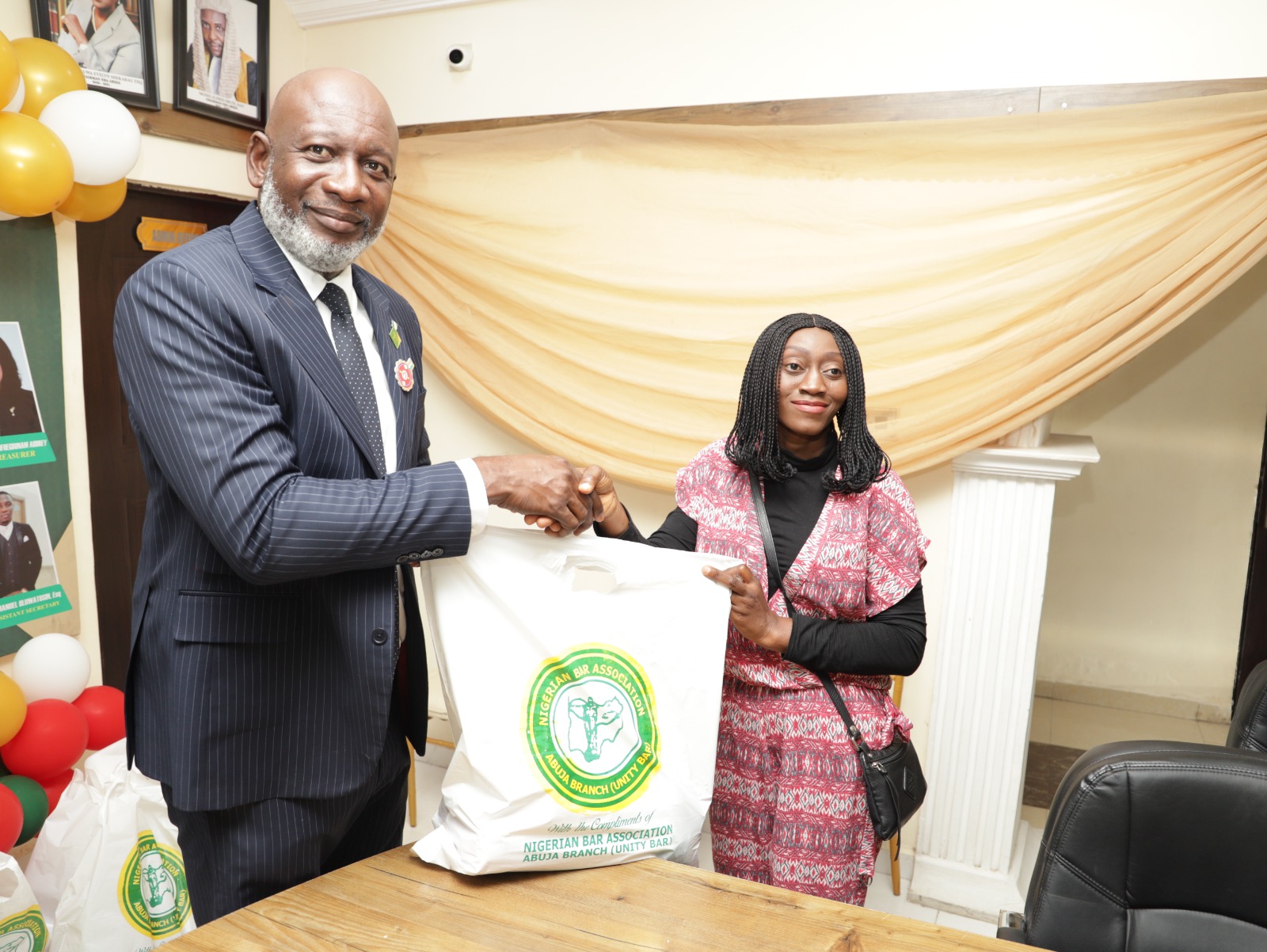
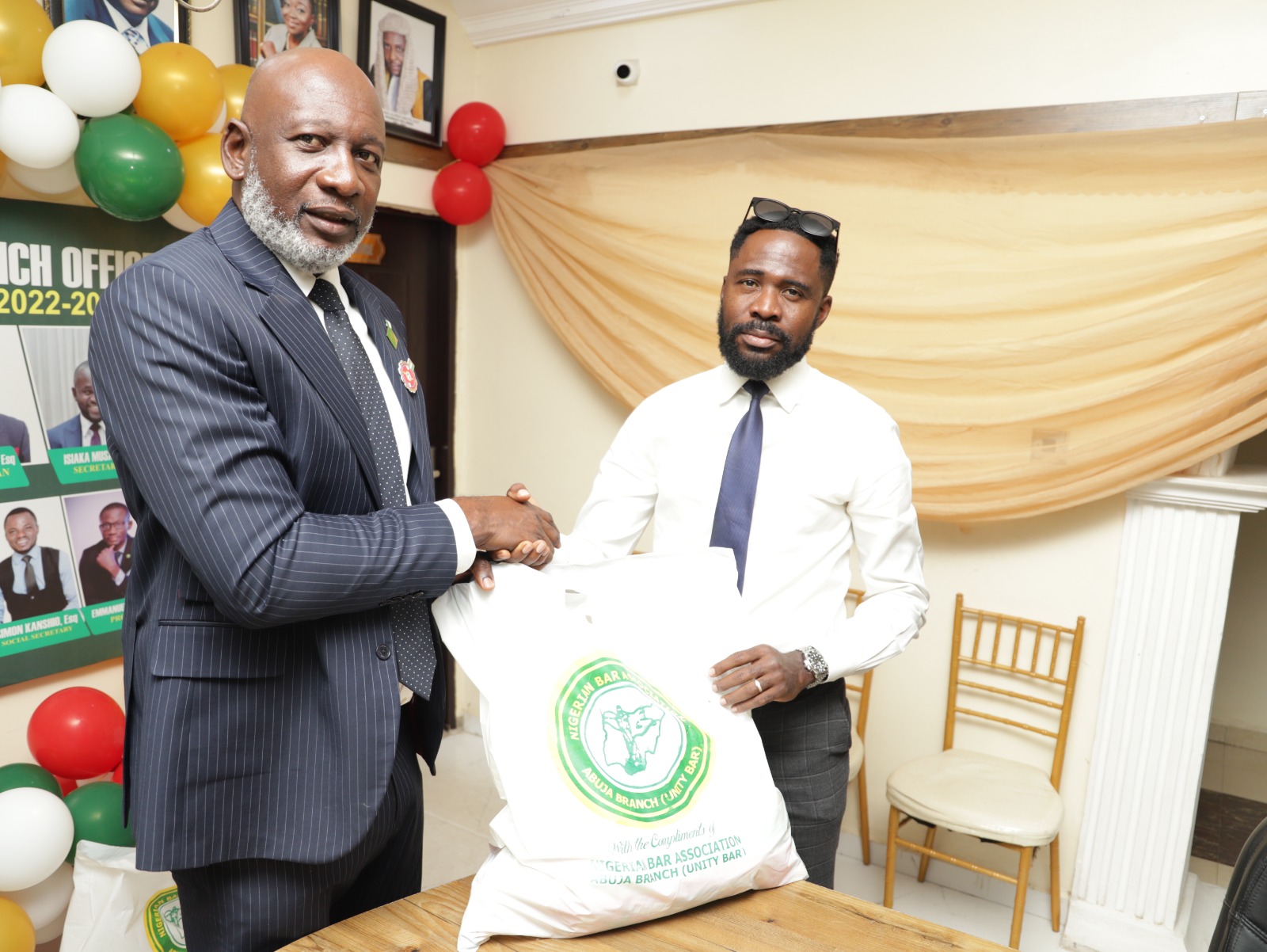
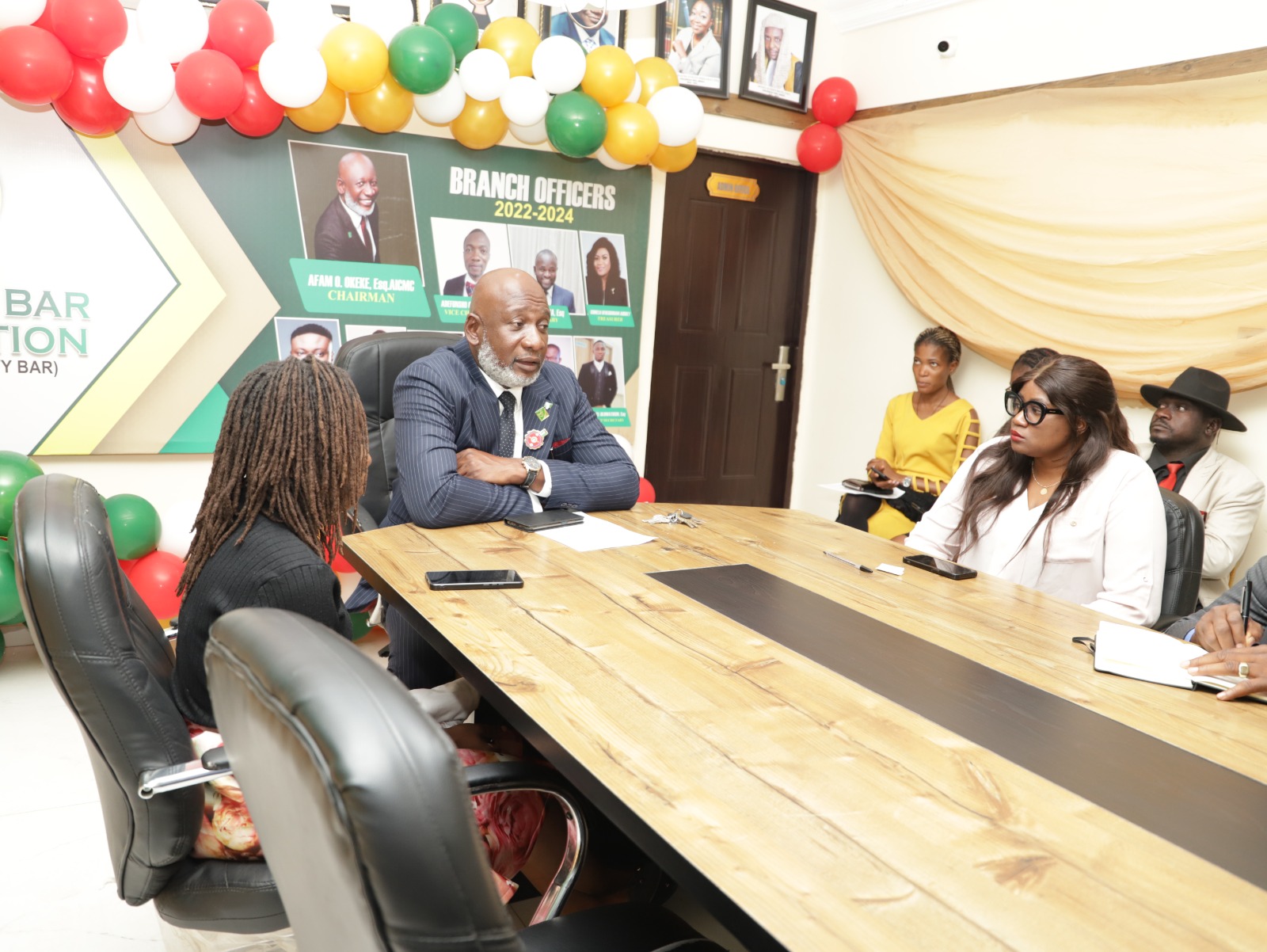
To encourage members who pay their annual branch dues, officers of the Nigerian Bar Association, Abuja Branch (Unity Bar) have approved a novel initiative.

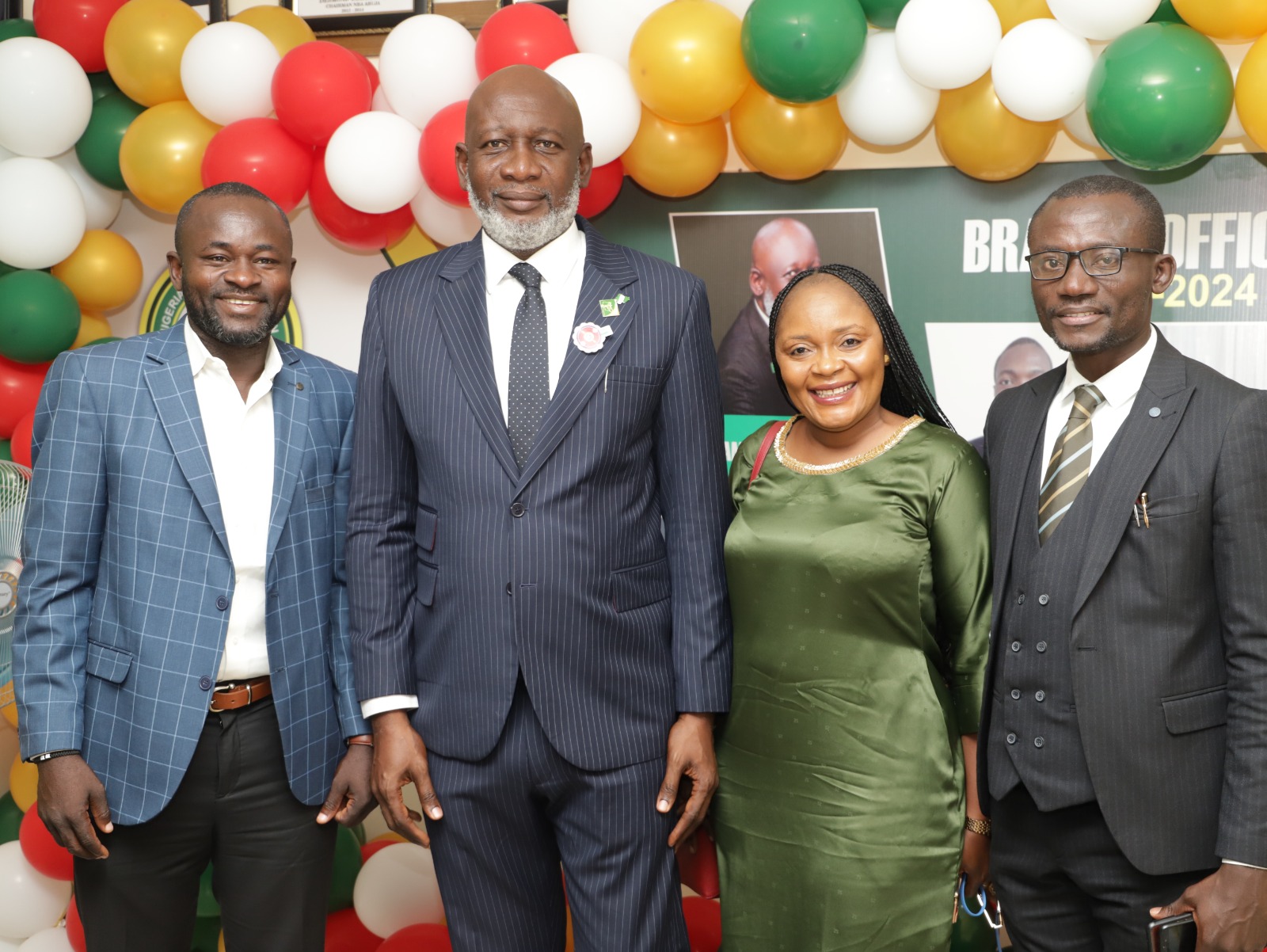
Chairman of the Branch, Afam Okeke said: “It is our own way of giving back to our members and appreciating them for their support. In the words of Paul Newman (American Actor, Film Director, Race car driver, philanthropist and entrepreneur) ‘I’m not running for sainthood. I just happen to think that in life we need to be a little like the farmer, who puts back into the soil what he takes out.'”

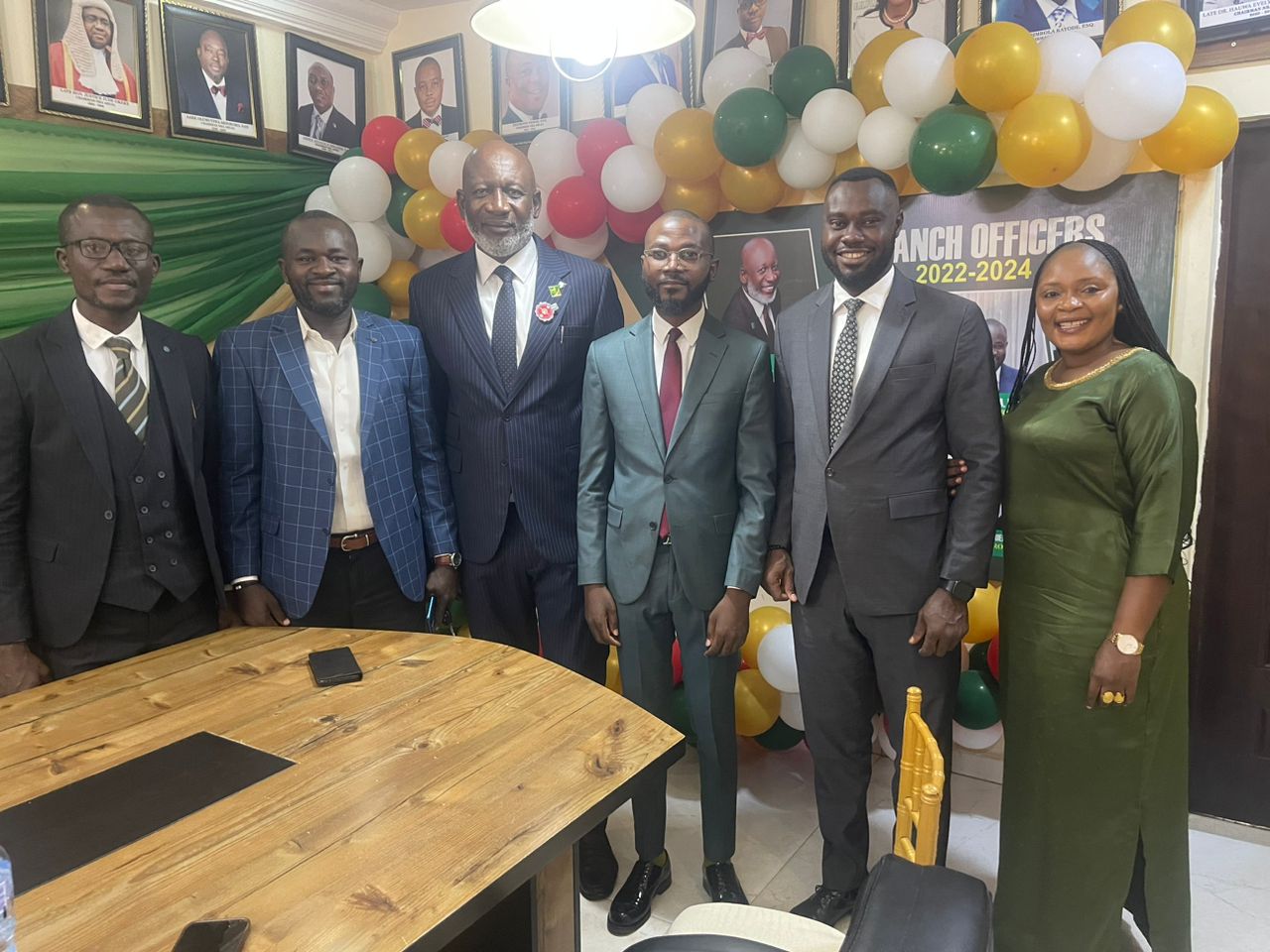
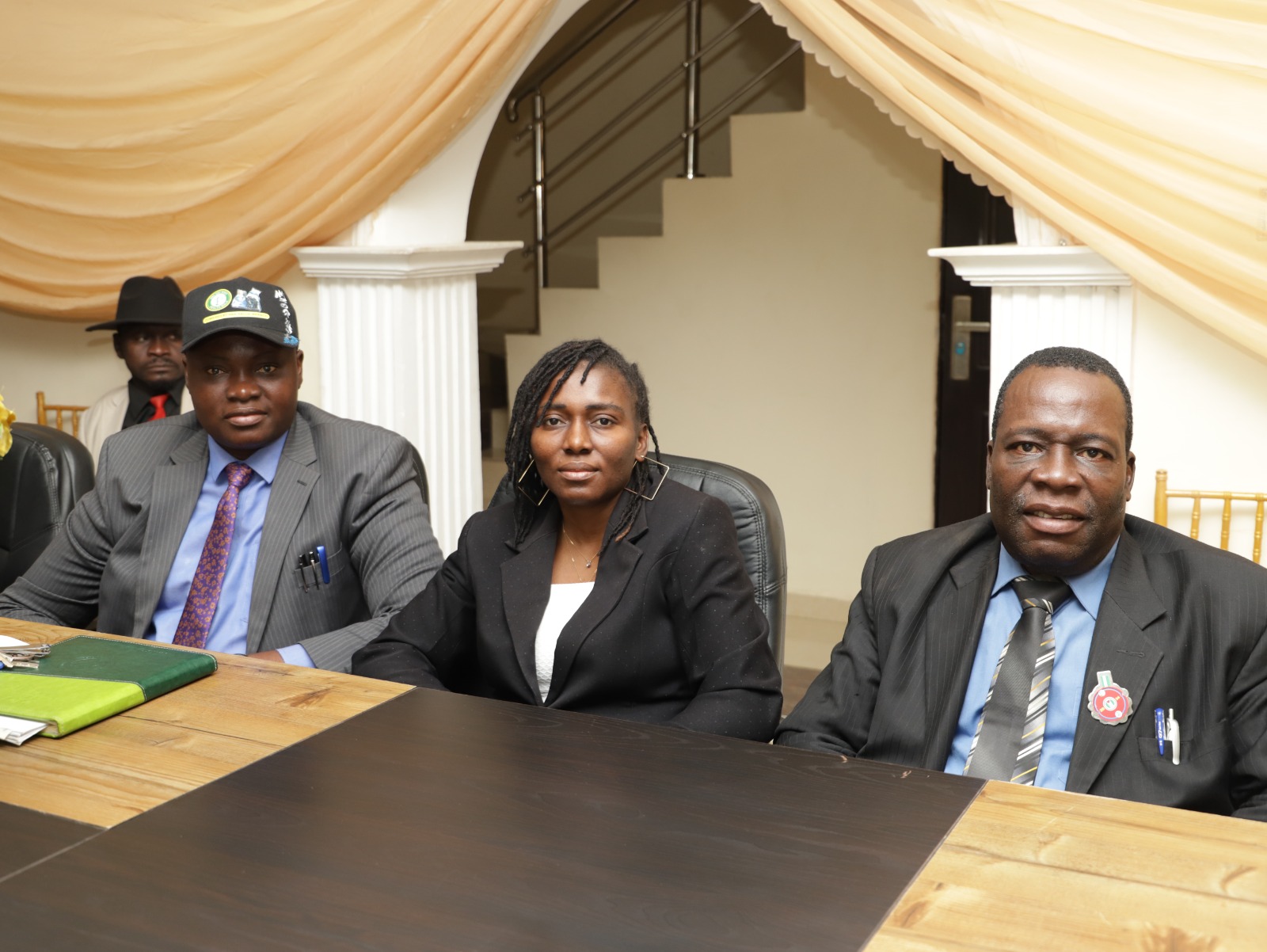
Afam O. Okeke Esq AICMC, the Chairman NBA Abuja Branch (Unity Bar) with some branch officers and Tijjani Abdulrauf Aboki, YLF National Chairman at the event

Mr Isaiah Bozimo, SAN who is one of the beneficiaries, requested the Chairman of the Branch to use his discretion to give his own package to a young lawyer. He thanked the branch for such a laudable initiative.

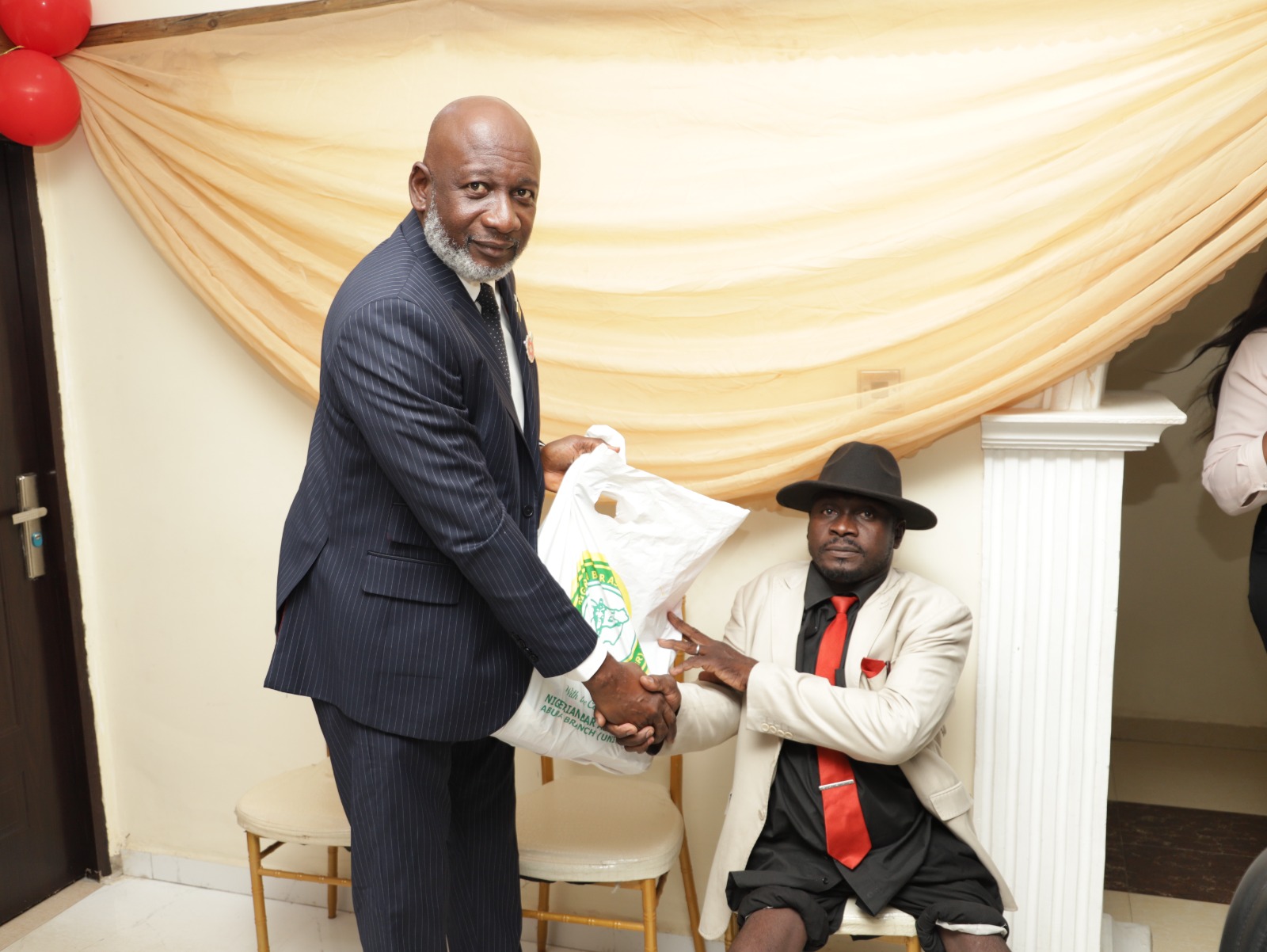
The beneficiaries are divided into 3 categories.
i. First 100 young Lawyers that paid their branch dues.
ii. 6 Lawyers with disability.
iii. First 94 Lawyers who are not young lawyers.

Speaking further on the enterprise, Okeke said: “We want to assure our members that this initiative will be sustained. We want to use this opportunity to encourage members who did not qualify this year to
endeavor to pay their branch dues early in 2024 to qualify.”

The Chairman specially thanked other branch officers particularly the Welfare Secretary and the Treasurer, and also the Welfare Committee ably led by Mrs Rekia Rachael Adejo-Andrew for their support/sacrifice towards the project.

FHC 2 – 1 NBA Abuja: Federal High Court judges floor Unity bar in 50th anniversary novelty match

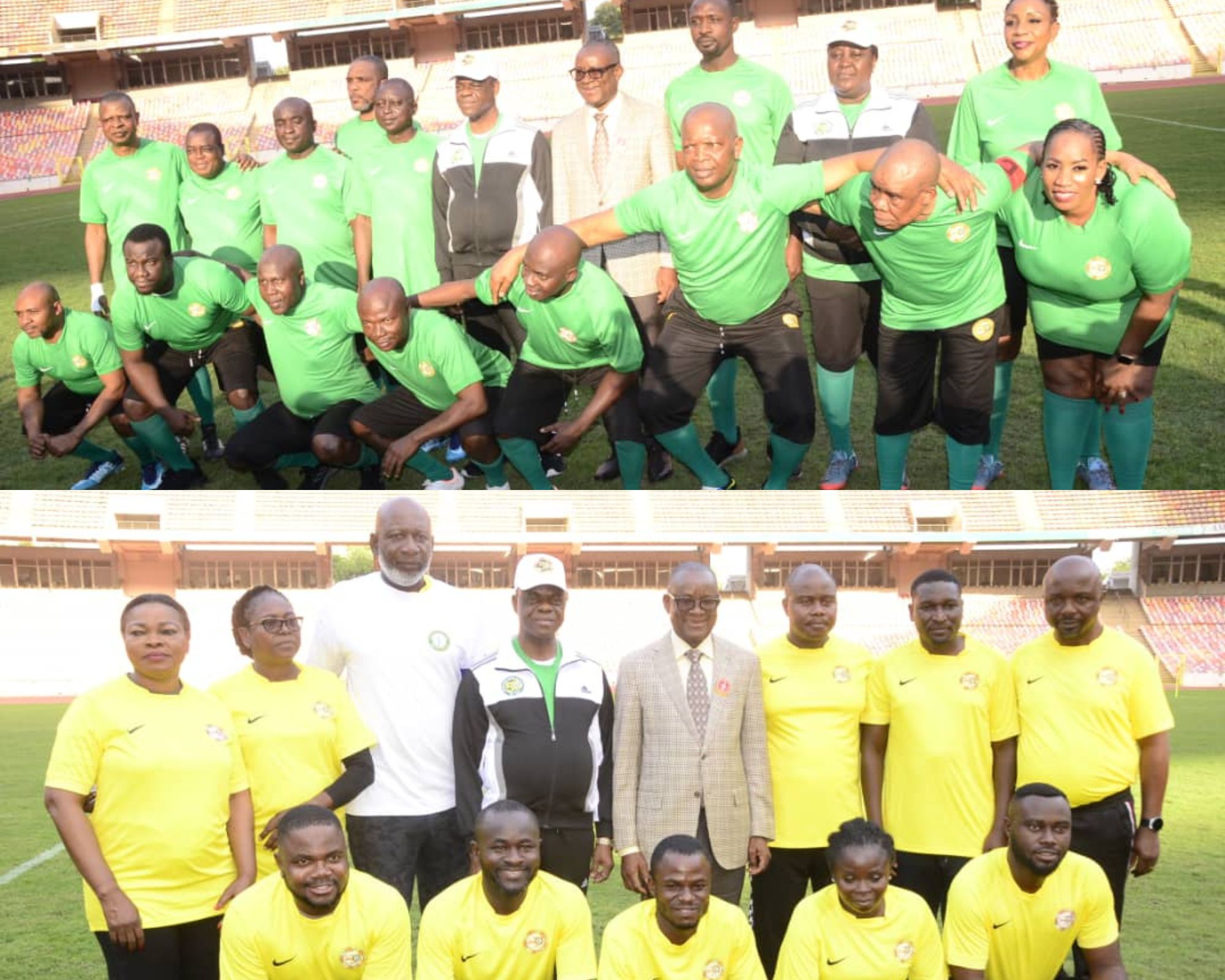
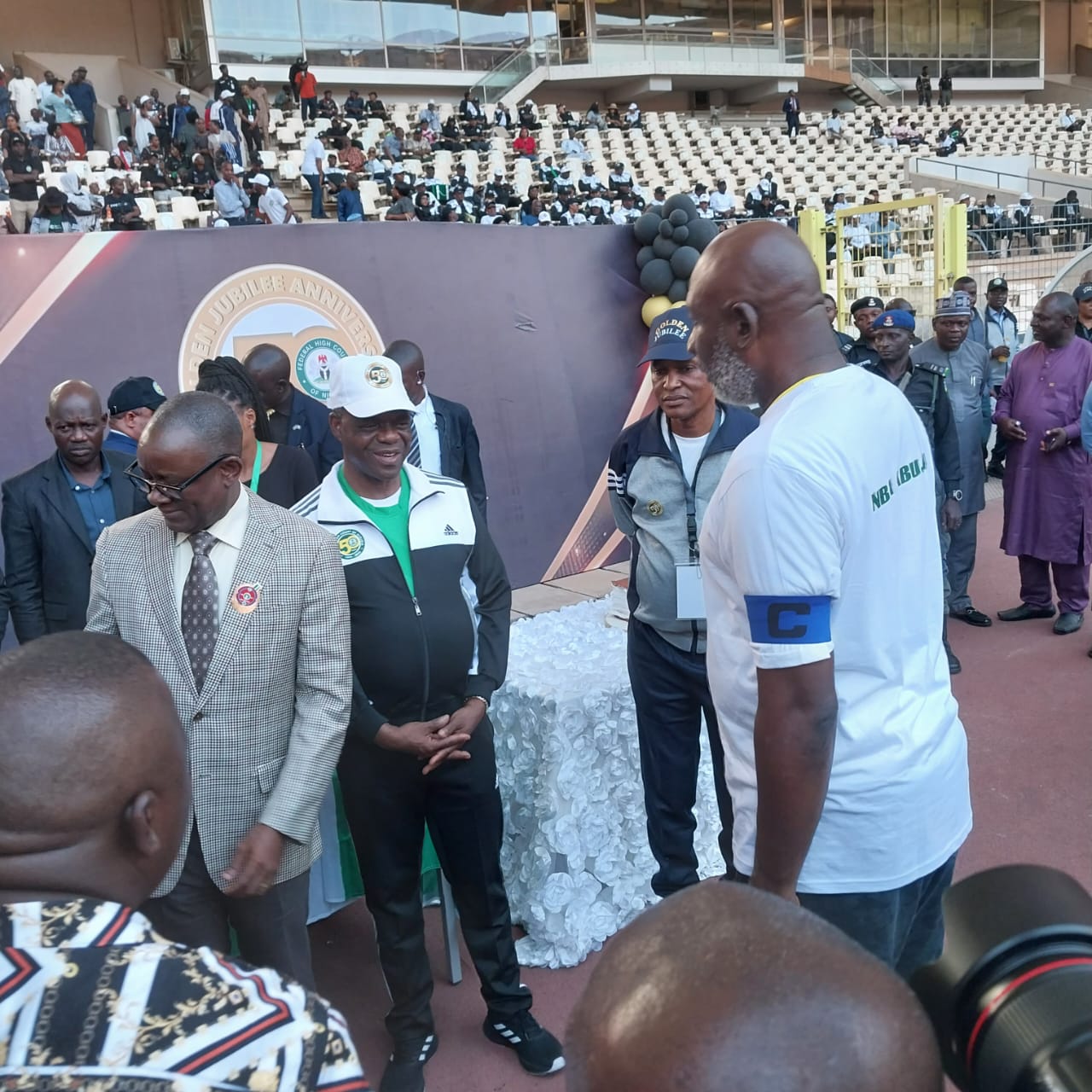
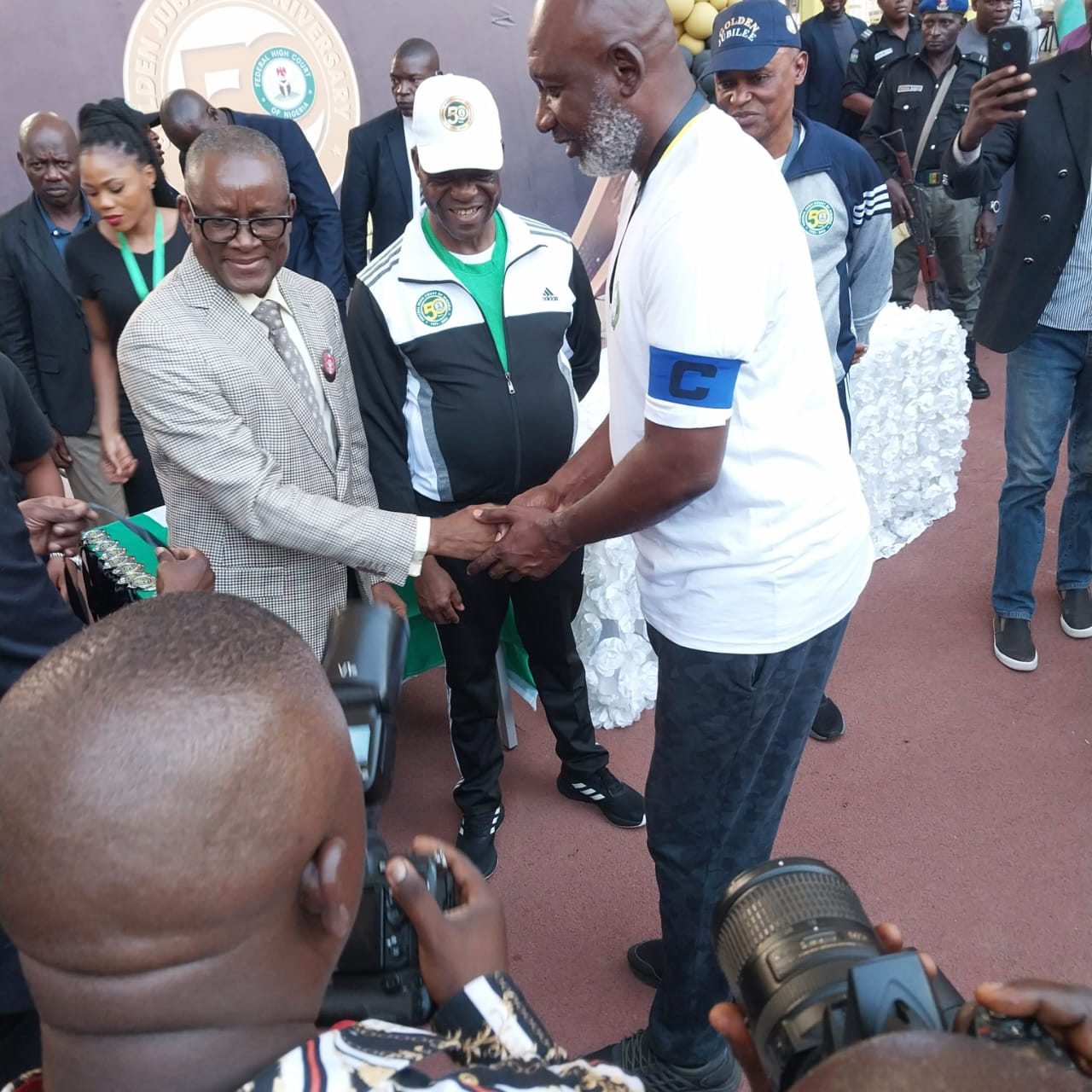
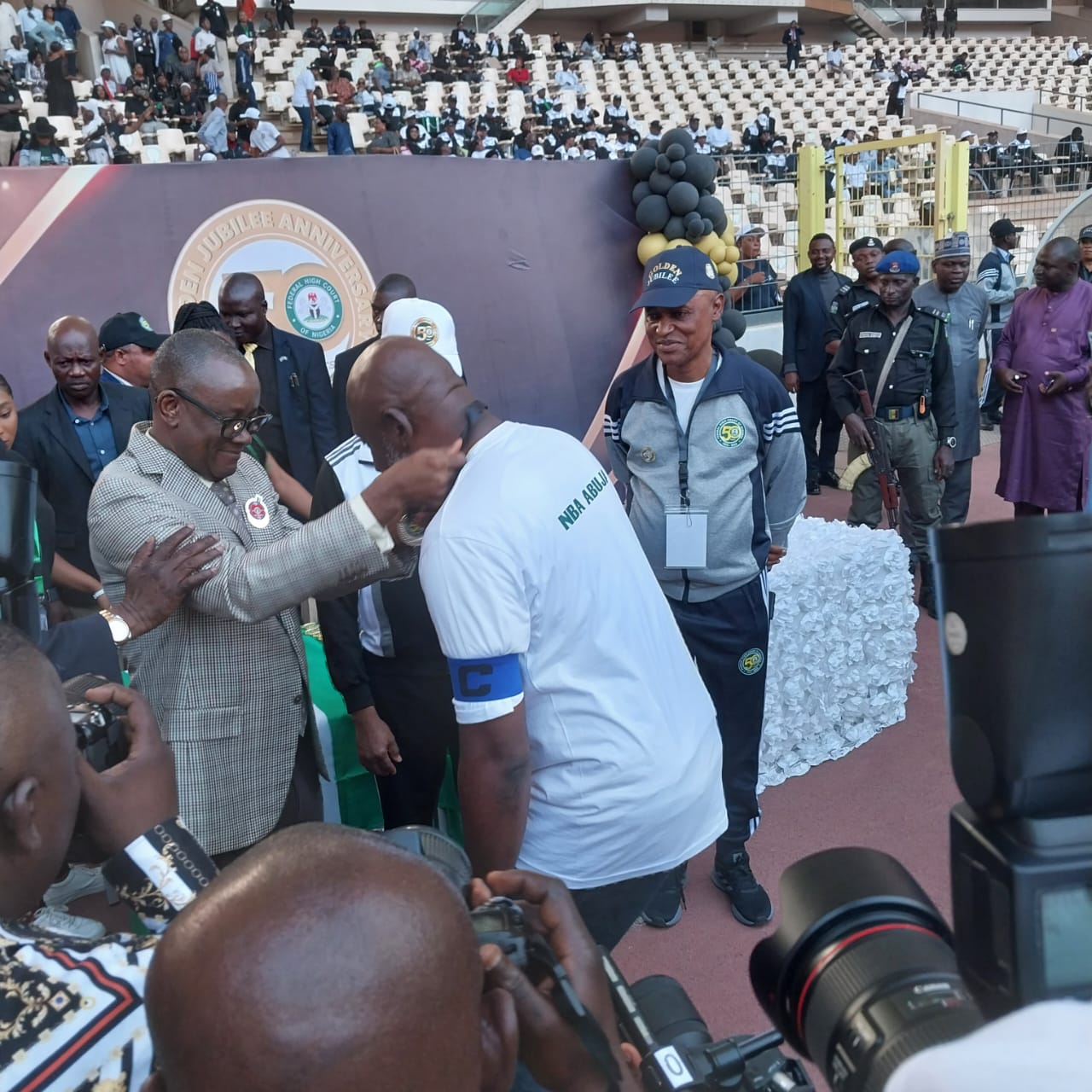
Judges of the Federal High Court proved that they are better footballers yesterday (Tuesday) when they clinched two goals to beat team Nigerian Bar Association(NBA) Abuja branch, Unity Bar in a novelty match at the National Stadium, Abuja.

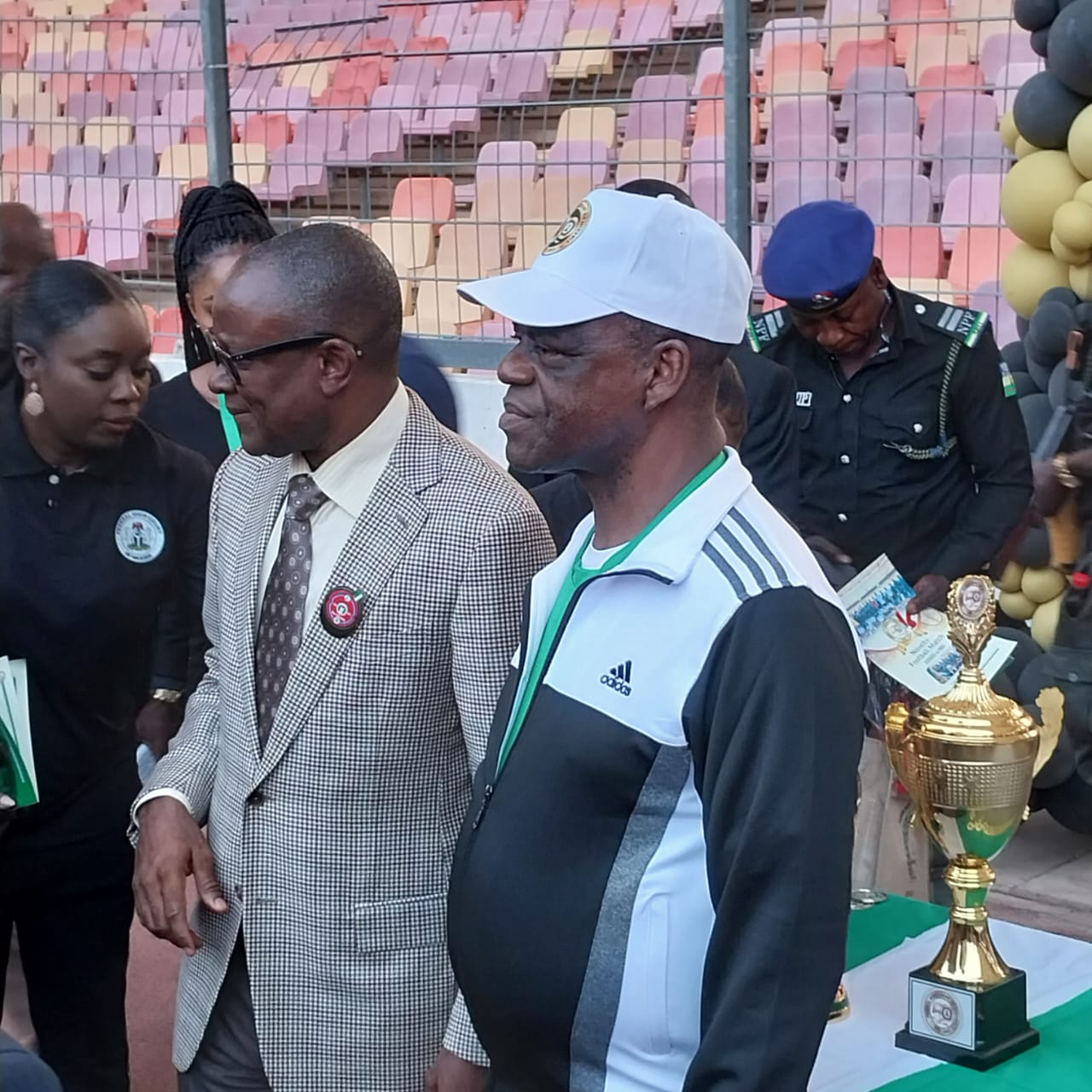
Chief Judge of the Federal High Court of Nigeria, Hon Justice John Terhemba Tsoho and the Hon Minister of Youth and Sports, Mr. Sunday Akin Dare during the presentation of medals and trophy

The match was part of the activities to mark the 50th anniversary of the Federal High Court.

Officials and members of Team NBA Abuja
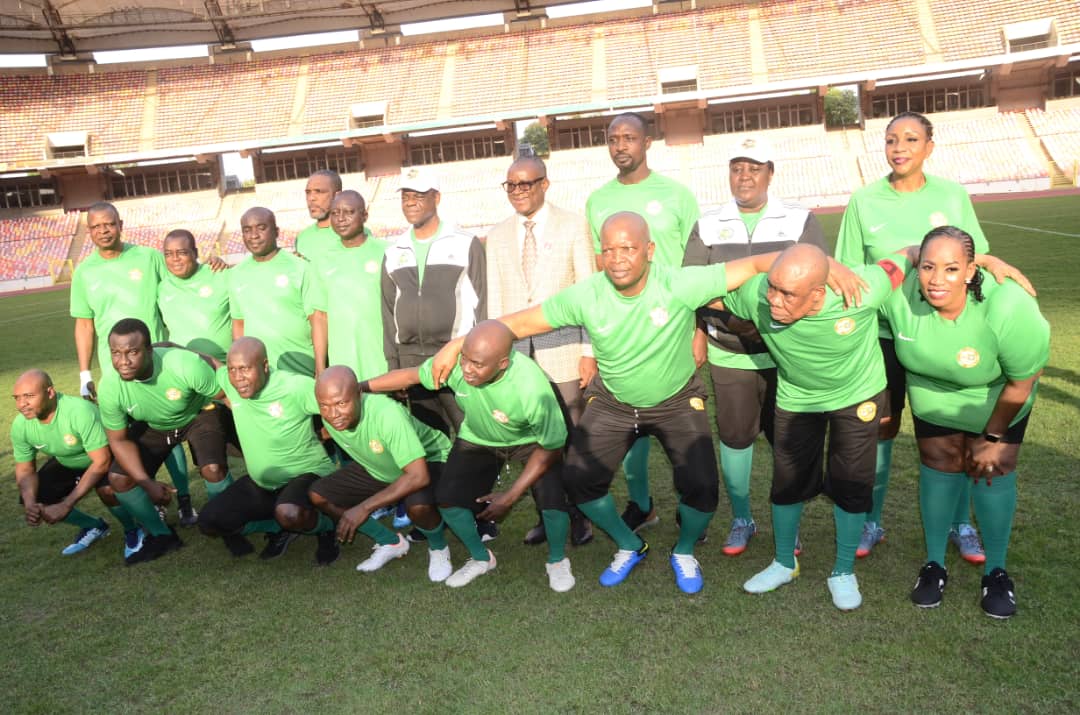
Judges of the Federal High Court of Nigeria in a group photograph with the Hon Chief Judge of the Federal High Court of Nigeria and Hon Minister of Youth and Sports
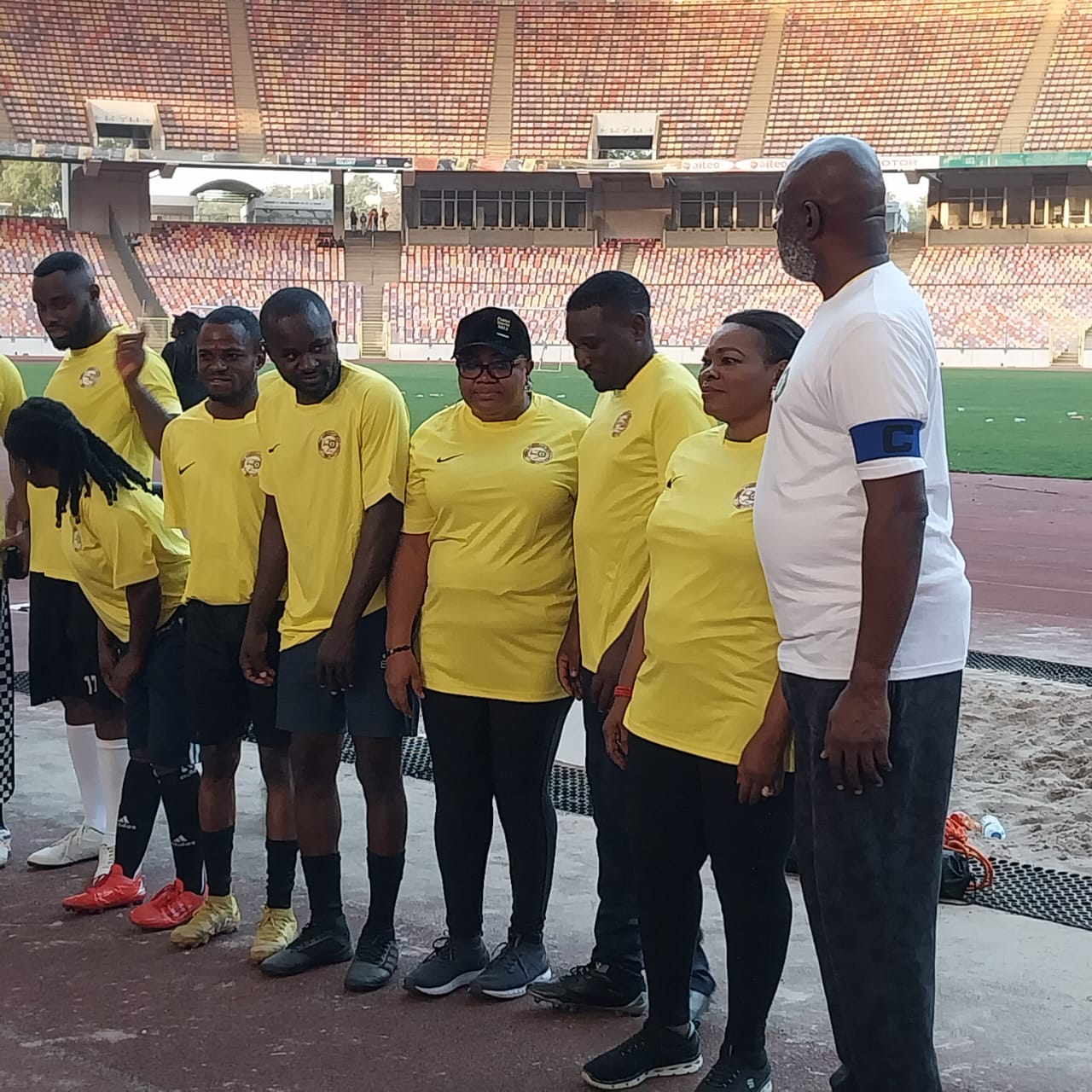
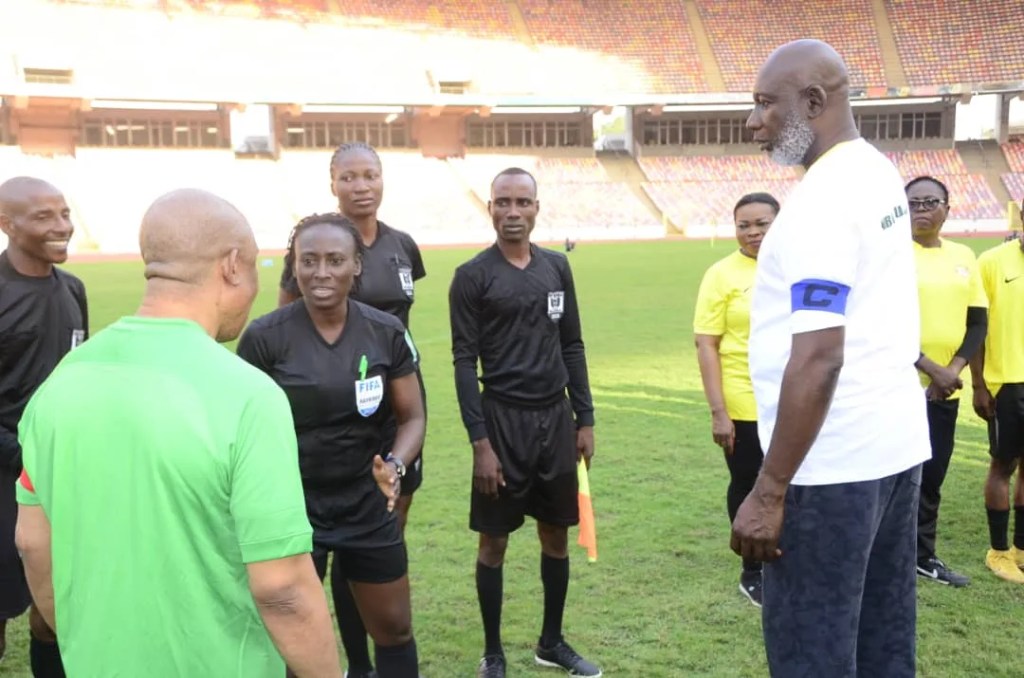
Afam O. Okeke Esq AICMC, Chairman of NBA Abuja Branch (Unity Bar) who doubles as the Captain of the team introducing members of the NBA Abuja Branch team to the Hon Minister of Youth and Sport

FG seeks for N35 billion to revive Ajaokuta Steel Company after squandering far more on frivolities

On Thursday 29 December, 222, then President Muhammadu Buhari revealed that $400m has been spent by his administration to “transform” the Ajaokuta Steel Complex in Kogi State.

He added that the investment will add $1.6bn annual income to Nigeria’s economy and create over 500,000 estimated jobs. Two years after that humongous investment, a mere addition to several that had been made in the past, the steel company is still comatose.

Days ago, the Minister of Steel Development, Shuaibu Audu, requested N35bn funding from financial institutions to revive the moribund Ajaokuta Steel Company. The minister said the collaboration with financial institutions was to seek the best financing options to re-start the light Steel Mill in Ajaokuta and kick-start iron rod production.

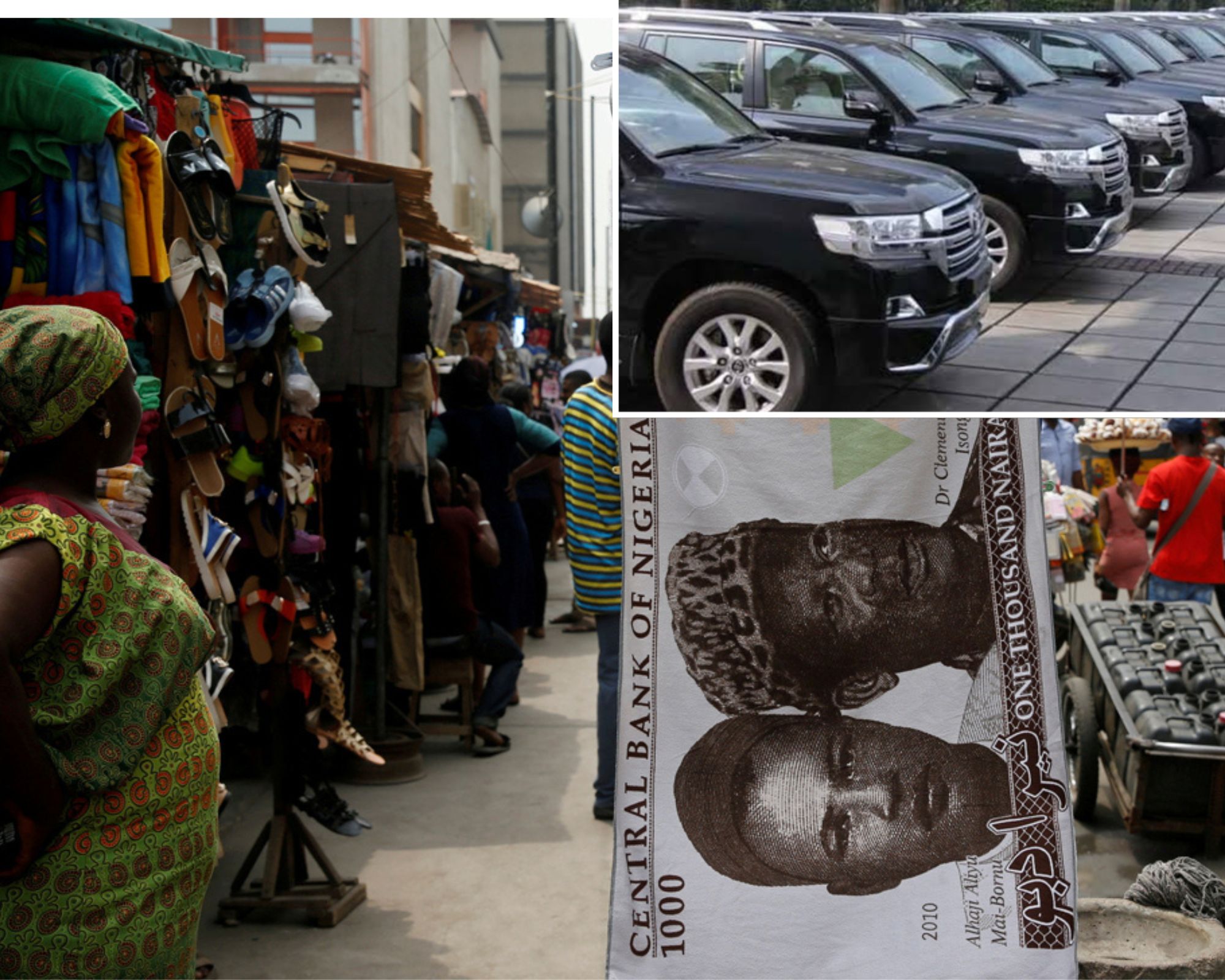
But Nigerians are yet to recover from the shock of National Assembly members taking delivery of N160bn worth of Special Utility Vehicles (SUVs) at a time they were asked to tighten their belts and remain patient amidst inflation and gross economic hardship in the country.

Analysts posit that rather than cut the cost of governance, Nigerian politicians appear to prefer living large, spending the scarce resource on luxury, while poor Nigerians make sacrifices by enduring all manner of hardship. Perhaps if the government had been more prudent, there would be more than enough to get Ajaokuta Steel company on its feet.

In his 11 December 2023 article, Frivolous, unclear, wasteful proposals in 2024 federal budget, Eze Onyekpere gave some insights into government expenditure that could have been better utilised.

“The 2024 federal budget provisions have continued the tradition of frivolities, etc. Let us start the analysis from the State House headquarters. The annual routine maintenance of mechanical/electrical installations of the Presidential Villa for N9.2bn leads the way – it is annual and routine and only for mechanical and electrical installations; Julius Berger liabilities on routine maintenance 2022 & 2023 and work as directed 2022-2023 inclusive of Kaduna work at N4.5bn.

“Purchase of State House operational vehicles for N4bn; replacement of SUV vehicles for N2bn; purchase of tyres for bullet-proof vehicles, plain cars, CCU vehicles, platform trucks, jeeps, ambulances and other utility and operational vehicles for N351m. Other include SAs and SSAs at N3.5bn; acquisition, renovation, rehabilitation and furnishing of State House Annex at N3.5bn. In State House Operations, there is the renovation of president quarters at the State House, presidential villa Abuja for N500m and N300m for the renovation of the Vice President’s quarters.

“The Office of the Chief of Staff to the President has a vote for the renovation of Dodan Barracks Presidential Lodge at N5bn; renovation of Vice President Quarters in Lagos at N5bn; and full digitalisation of the entire State House and Lagos State Offices and Quarters at N10bn. All the foregoing appropriations for the President and the Vice President exclude the provisions in the 2023 Supplementary budget which has just been approved. They also exclude the N15bn residence for the Vice President to be built by the Federal Capital Development Authority. 

“This level of frivolity, inappropriateness, waste and lack of consideration for others is coming from the two frontmen, the president and his vice, who are leading the chorus on sacrifices and belt-tightening by the population.

“Now, we move to the big elephant in the room – service-wide votes of N4.409tn. By the time recurrent non-debt expenditure, debt provisions, and statutory transfers are added to this SWV, it becomes clear that the budget proposal will not shift the needle in favour of the average Nigerian.  The SWV are lump sums of money voted without disaggregation to line items and projects that give little or no idea of what exactly they are to be used for.

“Some of them are unclear expenditure proposals. For instance, N108bn was voted for special projects; National Youth Development Fund of N25bn; unfunded liabilities of N6.9bn, etc. Service wide votes are not to be managed by ministries, departments and agencies that have the legal mandate on the issues but are put under the allocation of the Ministry of Budget and National Planning. Why is SWV paying the electricity bills of MDAs instead of allowing them to be responsible for their bills? Why is SWV retaining the money for international sports competitions instead of the Ministry of Sports?”

Less than a fortnight ago, the Chief Information Officer at Ministry of Steel Development, Maureen Tine-Iulun in a statement, said the minister made the request of N35bn funding from financial institutions when he received a delegation from Stanbic IBTC Bank, on Tuesday in Abuja.

The statement reads: “It has become imperative to seek funding of about N35bn to enable the re-start of the Light Mill Section of the Ajaokuta Steel Plant for the production of iron rod to achieve the agenda of the current administration to revive Ajaokuta in phases in accordance with its set timelines and benchmark.

“This is in furtherance of achieving its mandate of reviving the steel sector, improving industrialisation in the country, diversifying the economy, providing jobs for the teeming youths and growing the Gross Domestic Product, is collaborating with Financial Institutions, for best financing options to re-start the light Steel Mill in Ajaokuta.”

Speaking further, Audu disclosed that the ministry has an existing agreement with the Works Ministry to be off-takers of the rod produced as well as with the Ministry of Defence to build a Military Complex in Ajaokuta, adding, “We have huge opportunities in Ajaokuta and potentially a lot can be achieved.”

Earlier, the CEO, Stanbic Bank, Wole Adeniyi, who was represented by the Head of Industrials, Debola Seriki, expressed the bank’s willingness to partner with the Ministry, while requesting further details for their consideration towards realising the project.

In the same vein, the statement added that the minister met with top management of United Bank of Africa and Voda Infrastructure Management Ltd with a view to ensuring that funds are raised for the immediate take-off of the project for sustainable development of the Steel Sector.

Kidnappers ravage Abuja suburbs, about 30 persons taken at the weekend

  • Whereabouts of kidnapped past Unity Bar Secretary still unclear

As Abuja residents cry out over the spate of kidnappings, not fewer that 30 persons were forcibly taken from their homes over the weekend at various locations in the Federal Capital Territory.

An unnamed estate at Dei-Dei, a satellite town along Kubwa-Zuba-Kaduna Express way, right beside the abattoir of the popular cattle market got a raw deal late Sunday evening with about 17 persons marched into vehicles and taken to the unknown.

A resident who spoke to Law & Society under anonymity said his wife was just lucky.

“I and my wife were attending a function in town and later decided to spend the night with a relation who was also also attending the event. But then my wife realised she needed to get some items at home for the baby so she went back to our house. On approaching our estate she saw a lot of vehicles parked around the gate but did not give a thought to anything. She also saw some men in military uniform around but that was not unusual because sometimes they come to our area to arrest some rough boys who smoke Indian hemp in the bush around us. Our estate is beside the abbatoir the cattle market and Zuma rock is by the other side still close to our fence.

“My wife said there was no light when she entered so she used her phone torchlight to gather what she wanted. Had there been light, she should have been taken away. Next she heard people shouting and banging on doors. When she opened the curtain to peep, she saw men in army uniform beating, kicking our neighbours and shouting move, move. To avoid being see or found, she quickly stuck her breast into the baby’s mouth so that she will not cry and then crawled under the bed.

“It was from under the bed she called and told me what was happening. When I called some people I know in the area to find out more about what was going on, they told me that men in military uniforms with cars and buses have carried some people away. And that before they reached our estate they kidnapped other people form other estates and houses.”

Law & Society gathered that the morning after the incident (Monday), different police teams kept visiting the estate.

However, while an old woman and an infant were released on Monday, the mother of the infant, two of the old woman’s daughters and other are still being held captive.

Meanwhile, Chris Agidy, Esq., popularly known as Barman, who was among 19 persons kidnapped by unknown gunmen at Galadimawa area of FCT, Abuja, is feared dead. He was taken from his home. According to Kubwa Express, one of the released kidnapped victim reportedly disclosed that, after paying ransom, Chris was shot by his kidnappers.
The released victim was said to have revealed that, he heard Chris complaining that he could  not move. After the complaint, he heard two gunshots and believed that the kidnappers shot Chris, whose inability to move, was hindering their operation. Chris, we learnt,  was diabetic and at the time of his kidnap, over 4 weeks ago, did not have his medications with him.

Lawyers of Conscience, a pressure group in NBA, led by Felix Ashimole, Esq, spoke to Kubwaexpress and called on the leadership of NBA, to take up this matter with the highest  echelon of the Police. “A former Secretary of NBA Branch, cannot stay in the den of Kidnappers for weeks and the IG of Police would be allowed to rest,” he said.

Vanguard also reported that there were attacks on Gbaupe, a village behind ACO Estate, Lugbe, along the Abuja Airport Road, where 12 people, including a 9-year-old boy and a 13-year-old girl, were equally kidnapped on Sunday,

A villager told Vanguard that two of those abducted escaped as they were being arched into the bush behind the village. One of the men taken away was said to have been dragged out without a shirt or footwear.

Although it was not the first time that criminals attacked Gbaupe, there had never been such a magnitude of kidnapping in the village.

Men of the local Vigilante were said to have engaged the kidnappers but were overpowered due to superior firepower.

Kidnappers have been having a field day in the axis, which extends between Gbau, Kuje, Gauge, Pegi, Abaji, Keti, and Kwali, unchallenged for more than three years.

As of the time of filing this story, at about 9.15 am, it was learnt that the kidnappers had yet to contact the families of the victims.

Speaking with Vanguard under the condition of anonymity, a resident disclosed that the kidnappers who numbered up to 15 operated from 12.15 am till 2.46 am.

He said, “The kidnapping incident happened in the early hours of yesterday, December 11th Dec. at Gbaupe village behind ACO Estate, Airport Road Abuja. 12 people were kidnapped including three young people and women. Two men later escaped.

“One vigilante was killed. The kidnappers were about 15 in number. They operated from 12.15 a.m. until 2.46 am firing sporadically. The kidnappers are yet to make contact with the family. This is the 3rd incident this year.”

Just yesterday, it was widely reported that a nursing mother and three children have been kidnapped by bandits in Kubwa, Bwari Area Council of the Federal Capital Territory (FCT), Abuja.

Residents say the bandits invaded the community on Sunday night between 7pm and 9pm and abducted a mother, her six-month-old baby and two other children.

Mr Francis Bobai, a resident and board of trustees member of the community, told newsmen that the gunmen kidnapped a woman with her three children, adding that the incident was the 5th in a row without security intervention.

He said, “This is the fifth time kidnappers are attacking with no action from the government.”

Helen Paul and other bastardy stories

By Lasisi Olagunju

Everyone has a history; how you act and tell your story defines you. Ace comedian and celebrity, Helen Paul, trended wildly last week. Men and women with very difficult beginnings should seek out Helen Paul and learn from her how to manage life’s complexities and dankness. I listened to the comedian’s trending video, the entire 59 minutes, two seconds. It contains everything that sets people free from taunts of fate and challenges of life. She spoke candidly; she ‘cried’ and smiled; she talked about her teenage shortcut issues and about her school report card pranks.

She even confessed to sins that people hire SANs to conceal. She was lucid and got applauded. Like romance novelist, Lori Forster, she bared it all. She shamed the world with details that would ordinarily be deemed shameful. She came across as a complete human being. She waltzed through her warty beginning into her glorious now. Helen displayed unbelievable openness; she celebrated every good thing and every bad thing in her past; she freed herself and floated into life’s waiting arms. I wish our husbands in high places allow Helen to teach them how to bathe clean and dry the sponge.

“I was born out of rape,” she announced, telling the tale of the abuse that birthed her and the consequences of her being born at all. She was born in downtown Lagos into nothing and landed in the midst of thorns. She toddled in rejection, wrestling society’s moral thistles. She was denied the privilege of having a name at birth – and even on the eighth day, no one thought of an identity for her beyond the fact that a girl was impregnated by a rapist and from that act came this unwanted baby girl. She said persons she knew as aunties called her a “bastard child”; they would not even agree to sharing the family name with her. Her forename, ‘Helen’ came much later by accident; the ‘Paul’ that serves as her surname was donated by a complete stranger at the point of her registration in primary school. She was, literally, a nobody.

Bastard is a stigma word; an exclusionary term. In English, it means an ‘illegitimate child.’ The French have a different spelling and pronunciation for the word; they have bâtard suggesting “a child conceived on an improvised bed.” A bastard to the creative German is a child begotten, not on a marriage bed, but on a bench. Helen Paul was labeled a bastard by almost everyone she grew up to know as family. That very bad word has an attached legal term; it is called bastardy. There was a time in England when bastards were, in law, deemed to have no parents, no relations and no ancestors. They were not even entitled to a surname “except such as they won for themselves by reputation, and they were heirs-at-law of no one” (George Stevenson, Bastardy, 2006). Helen Paul’s Nigerian experience was, therefore, in seamless synergy with an unpleasant page in England’s social-legal history.

Helen’s story was known to me years before now but not with the tone she rendered it in the latest video. No matter how many times it is told, the bastardy narration continues to provoke gasps. If you say your own is too much, the next page humbles you. Helen is not alone. In May this year (2023), The Washington Post reported a similar story of a child born into a void and who may also grow up nameless. “If life had started gentler for the baby girl who was born at a D.C. hospital on a Sunday in January…, she wouldn’t have been sent home without a name.

But life did not start gently for her. Not at all.” The Washington Post reported that four months after her birth, “and for reasons that are heartbreaking, complicated and frustrating, she still doesn’t have a birth certificate.” The newspaper adds: “Court records show that her mother was struggling with mental illness and addiction during her pregnancy, told people she didn’t want the baby and left the hospital shortly after giving birth and before filling out important paperwork. They also show that despite repeated efforts by the woman who is now caring for the baby, the four-month-old remains without any official documents bearing a name. The child doesn’t have a birth certificate, and without that, she can’t obtain a social security card, receive benefits she is entitled to or qualify for Medicaid.”

Some people’s stories come that sad, strange and complicated. It does not mean that the baby won’t climb the hill of life successfully, even without a name – or with a borrowed name. Look around you, among kings and courtiers, there are many Helen Paul’s lacking the balls to tell their stories. But they are products of grace. The Helen Paul story is a lesson on how grace turns liability to asset, hate to love. But she warns her audience: “Nobody loves you except you; if you don’t love yourself, how can others love you…?” She grew up in a neighborhood where everyone viewed her with disdain and disgust; a product of rape whose story may also not be different from her mother’s: “They said this one won’t get to the tap before she would fetch water…that she won’t finish school before she would carry belle…But I always insist that I would get to the tap, I would fetch water and leave the tap running for who else wants to fetch water.” With a University of Lagos PhD and more than one Masters degrees, plus work home and abroad, she has worked the tap and her bucket is full.

In the two stories above, there is no mention of the men who sowed the seeds. Men almost always melt away after the act; they leave the women to clean up and the products to suffer. The Helen Paul narrative has her maternal grandmother in most of the places where her father is supposed to be; the US story sounds sadder: Daycares turned their back at the blameless baby “because she doesn’t have a birth certificate.” But, sometimes when life makes you bald-headed, it compensates you with a beard. An alien lady is filling the void left by the nameless baby’s ‘father’ and her mother.

I don’t know how much of the equally complicated life story of Apple founder, Steve Jobs, is in our head. Job’s is another story of rejection, adoption and success. To super-rich Steve Jobs, his biological parents who put him up for adoption were no more than his “sperm and egg bank…a sperm bank thing, nothing more.” He eventually made up with his mum but never with the dad.

In competition with the Helen Paul story last week was the scandal of an Osun family. A man’s four children were found to have been fathered by other persons. The man is Kola, his wife is Toyin. Husband and wife were on radio trading blames and accusations and making confessions. In Yoruba land where I come from, it is a stigma to be born without a known father. It is even worse if the father is known but is not the husband of the child’s mother.

There are two main rivers in Osun State. One is Oba, the other is Osun after which the state is named. It is a taboo, actionable before the throne of Olodumare, to hand over the child of the goddess of Oba river to the goddess of River Osun. That is what the woman in the Osun State story has done. With the fingers of her womanhood, she tied the occiput hairs of her husband to the strands at the foreheads of lovers outside. Everywhere something like that is found to have happened, there was a war. And there is in this case. The husband is crying murder, red and blue. But there are questions: What kind of man lived under the same roof with a woman for sixteen years and none of the four children from the union is his? Was the wife right to have claimed publicly that she went to “another village” to scoop seminal deliverance because the cock she had at home could not get her to lay eggs?

People who follow the Osun story see sizzling drama, a tragedy with a catharsis that purifies nothing. I see two shameless adults dancing naked in the marketplace. What Yoruba word, other than òdóko (a flirt), describes a married woman who births four children for four different men outside her matrimonial home? And where is the wisdom in what the man has done, going on radio to disclaim all he had ever called his children? Shouldn’t he have gone quietly into the night with a divorce while attempting a rebuild of his life without, particularly, the children knowing why? Besides, the children are all grown. The first of the four children is sixteen years old; the others are eleven, eight and five years old respectively. Why would His Lordship, the husband, suo motu, go for DNA tests and climb the rooftops to broadcast the results? Some elders wonder where the man’s sense had been since 2007 when the journey started. They ask why the man wrecked himself with a DNA test – seeking to know the content of a snake’s pregnancy. They say the children already called him father and knew no one else as father. They quote Chinua Achebe’s Ogbuefi Ezeudu as he warns Okonkwo about Ikemefuna: “That boy calls you ‘father’, do not have a hand in his death.” Okonkwo did what he was warned not to do and never recovered from its effects. Going to a radio station to ditch those innocent children so openly has social and mental consequences for the children, and, more tragically for the man himself.

Now, what kind of woman acts the part of the lady in the centre of this storm? Between 4th January, 1988 and 9th July of same year, Elisha P. Renne, Professor of Anthropology at the University of Michigan, was in the Yoruba part of today’s Kogi State seeking answers to questions about marriage, fidelity and divorce. At a point, she asks an elderly Bunu Yoruba woman: “If a woman is married and has a lover and has children by this lover, and if the husband dies, who will get custody of the children?” And the woman answers: “Once a husband has accepted a child, even if the man dies, the child belongs to his family. It is the husband who takes the child, not the lover.” But why would a wife do that to her husband? The woman adds: “If it weren’t for ojúkòkòrò (greed) you wouldn’t have a lover to help you have children. Before you have a child for a lover, there must be reasons. The reason why women had lovers in the old days was if a woman was with her husband for ten years and had no children. It may not be the husband’s fault. It may be that God doesn’t join them together. In that case, a woman may have a lover in another village. If God accepted her prayer, she might go to another village and become pregnant. If she became pregnant after living with her husband for ten years, she would not tell the husband (that another man was responsible) but would continue to be with him, and the husband would accept the children as his own. And the secret would remain with the woman. When the husband saw that the wife was pregnant, he would kneel down and thank God, and the woman would never tell the lover she had become pregnant by him.”

Professor Renne isn’t done with her questions. She asks the old woman again: “What about a woman who has children and still takes a lover? “It is ojúkòkòrò (greed),” the woman responds, sharply, and continues: “If it is a woman who easily has children, she won’t be taking a lover as a woman who doesn’t.” She blames men for losing concentration on their families and everything around them. She declares that before òlàjú (civilization), wives were never left for wolves to devour: “They wouldn’t be doing in the old days what they are doing nowadays. Your husband would be watching you; you would be afraid. They would do things together with the husband’s family, with the wife’s family, so the husband or the wife would not be alone and be able to meet a lover.” The seminal conversation did not end without the old woman telling the Oyinbo researcher that in her days, “if you were a child of a lover, you would not like to hear that you were an omo àlè (bastard).” Even today, to label someone an omo àlè is to murder them (See Elisha P. Renne’s ‘If Men are Talking, They Blame it on Women: A Nigerian Woman’s Comments on Divorce and Child Custody’, published in Feminist Issues/Spring, 1990).

Everyone is sitting in judgement over the serial adultery in Osun; even notorious sinners are part of the jury. No one is giving a thought to what becomes of the innocent products of the waywardness. Bastard is a sound no one is ever happy to dance to. The first Norman king of England was William I (1066-1087). But because he was born out of wedlock, his subjects silently called him William the Bastard. He was aware of the stigma and didn’t enjoy it; no one does. Yet, he was very successful as a warrior king so much so that 200 years later, history changed his name to William the Conqueror. Helen Paul as a child heard being called omo àlè (child of illegitimacy) because she had no identifiable father. She declared, correctly, that a child of her experience can’t “grow in love.” And that is because what she went through was horror. Although she lived and thrived and didn’t get lost, she hasn’t forgotten who said what – and she won’t forget. The Osun man said his wife gave him four omo àle because DNA test results said he didn’t father them. The four victims of the tests are not likely to forget and forgive everyone involved in their humiliation. They are a dangerous addition to the bitterness walking the Nigerian space.

TIPS