Home Blog Page 659

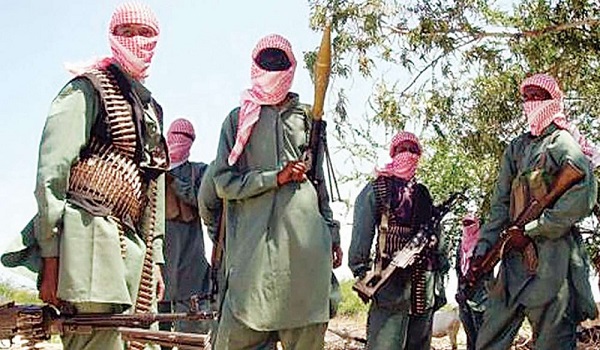
Video: Again Kidnappers strike in Abuja, open fire on highway, capture man driving home with wife

The ongoing wave of insecurity in Abuja appear to be opening new dimensions with yesterday’s adduction of Abdullahi Sabo, a resident of the nation’s capital as he was driving home from work along the airport road.

The unfortunate man was heading home with his wife when gunmen intercepted his vehicle at Sabon- Lugbe, Airport road in the nation’s capital.

The victim was driving in his Ash colour Lexus Jeep with registration number ABC 769 TP when the unfortunate incident occurred.

Reports said that he had left the city centre and was heading home when the attackers inside an unmarked Golf car opened fire and deflated tyres of the jeep.

One of the victim’s neighbours, Daramola Joseph, who spoke through telephone with our reporter, confirmed Sabo’s abduction.

“They shot the tyres, forcing the vehicle to stop, but before they could get close to the jeep, the man’s wife had escaped. However, they went away with the husband,” he said.

“The man with his wife were returning from the city centre and heading towards the access road to Jedo Estate when the gunmen struck.”

Contacted, spokesperson of the Federal Capital Territory (FCT) police command, SP Adeh Josephine, said she would find out and get back to our reporter.

However, she had not done so as of the time of filing this report.

The development came less than 48 hours after gunmen invaded Army Estate in Kurudu, still in Abuja, and abducted some residents.

At town hall meetings in Bwari and Gwagwalada Area Councils, Minister of FCT, Nyesom Wike, assured residents of their safety, saying adequate security measures had been put in place.

He also announced the arrest of some bandits and  their informants.

Daily Trust

Imperative of structural reduction in cost of governance

By Jide Ojo

On January 9, 2024, President Bola Tinubu announced the reduction of his cost of travel by 60 per cent. The Special Adviser to the President on Media and Publicity, Ajuri Ngelale, revealed this while briefing State House correspondents at the Presidential Villa, Abuja. Ngelale said the directive applied to the offices of the President, Vice President, First Lady, wife of the Vice President and all ministries, departments and agencies.

Ngelale was quoted as saying, “President Bola Tinubu has approved that anywhere he travels within this country he will no longer accept or allow huge security delegations to be following him from Abuja, which attracts massive bills with respect to estacode and duty allowances from now on.  He has approved a massive cost-cutting exercise that will cut across the entire Federal Government of Nigeria and the Offices of the President himself, the Vice President and the Office of the First Lady. It will be conducted in the following fashion. On international trips, the President has directed that no more than 20 individuals be allowed to travel with him. That number will be cut down to five in the case of the First Lady. Additionally, the number in the entourage on official international trips for the Vice President will be cut to five. The number that will be placed as a limit on the wife of the Vice President is also five.”

I have joined millions of Nigerians in lauding the president on this initiative. However, successive administrations have done similar things with little or no effect on the economy. There is no gainsaying that there is a need to cut down travel cost but that is not far-reaching. Before I propose my recommendations, there is a need to discuss further the profligate nature of Nigeria’s political leadership.

The PUNCH of January 15, 2024, reported that Tinubu has spent not less than N3.4bn on local and foreign travel within six months of assuming office. The figure is 36 per cent more than the N2.49bn earmarked for the President’s travel expenditure in the 2023 budget. Though Tinubu inherited the budget halfway, he spent more than what was apportioned for the whole year between June and December 2023. The President also approved the sum of N3bn for the purchase of three bulletproof Mercedes Benz S-class 580 and the supply of other vehicles to the State House.

This profligacy is not limited to the Federal Government. Again. The PUNCH of yesterday, January 16, reported that, “Despite spending at least N21.04bn on foreign trips in the last three years, 14 state governments have failed to attract any form of foreign investments into their domains. The states in question are Bauchi, Bayelsa, Benue, Borno, Cross River, Ebonyi, Edo, Gombe, Imo, Jigawa, Nasarawa, Taraba, Yobe, and Zamfara. Between 2021 and the third quarter of 2023, these states failed to attract any of the $14.85bn that foreign investors channelled into Nigeria.”

The report went further that, “Between 2021 and 2023, Bauchi spent N3.81bn on foreign trips without having anything to show for it. Bayelsa spent N1.99bn, Benue spent N1.33bn, Borno spent N1.73bn, Cross River spent N663.16m, Ebonyi spent N1.01bn, Edo spent N1.77bn, Gombe spent N32.09m, Imo spent N541.23m, Jigawa spent N1.10bn, Nasarawa spent N541.26m, Taraba spent N2.52bn, Yobe spent N1.24bn, and Zamfara spent N2.77bn. The figures for foreign trips were extracted from state budget performance reports sourced from Open Nigerian States.”

The PUNCH editorial of January 15 said inter alia that, “The Tinubu administration has not inspired confidence with its large cabinet, ostentatious convoys, and sickening luxury at public expense amid an inflation rate of 28.20 per cent, job losses and factory closures. There is also the ruinous forex crisis in which the currency is exchanging for over N1,000 to $1. Multidimensional poverty saw about 10 million more Nigerians sliding into penury since May 2023’s petrol subsidy removal, according to World Bank estimates.” The editorial therefore proposed among other things that, “The President should reduce the Presidential Air Fleet and sell the N5 billion-yacht embedded in the 2023 supplementary budget. The gains from the cost-cutting should be directed to the provision of social and health services and infrastructure.”

I fully endorse the recommendation of this newspaper. However, for there to be a significant reduction in the cost of governance, a number of administrative cum legal steps need to take place. First is the imperative of structural reforms, including altering the constitution to reduce the number of ministers, federal and state lawmakers. For instance, the President relied on the second paragraph of Section 147 (3) of the 1999 Constitution to appoint 48 ministers. This section needs to be amended to peg the number of ministers to a maximum of 18 (three ministers to represent each of the six geo-political zones). The constitution should also be altered to either scrap the Senate as Senegal did in 2012 and Mauritania did in 2017, or reduce the National Assembly and state Houses of Assembly members by one-third as done in Italy. Recall that in October 2019, Italy’s parliament voted to cut the number of representatives in both houses by more than a third. The lower house approved a law to reduce members of parliament from 630 to 400 and senators from 315 to 200.

If these three aforementioned countries can do what they did, nothing prevents Nigeria, a heavily indebted country, from structurally cutting down the cost of governance. I also suggest another look at the Steve Oronsaye report which former President Muhammadu Buhari promised to implement but failed to do so. Recall that in 2011, the then President Goodluck Jonathan set up the Presidential Committee on Restructuring and Rationalisation of Federal Government Parastatals, Commissions and Agencies, under the Chairmanship of former Head of Service, Mr Steve Oronsaye. It came up with far-reaching recommendations aimed at reducing the cost of governance. Despite the white paper being out, the immediate past administration did not implement the report. Tinubu should be able to take up the gauntlet and implement this report. Nigeria, in my estimation, does not need over 1,000 ministries, departments and agencies, many of whom have duplicate mandates.

There is also the need to block all revenue leakages, particularly from the government-owned enterprises that collect revenue for the Federal Government. It is a notorious fact that some of them under-declare and do not remit the actual amount that they should pay into the federation account. Similarly, the issue of oil theft and illegal mining of Nigeria’s solid minerals needs to be tackled headlong. Corrupt practices in ministries, departments and agencies need to be exterminated. That is why the alleged embezzlement of public funds in the Ministry of Humanitarian Affairs and Poverty Alleviation needs to be thoroughly investigated as ordered by the President and all those found culpable prosecuted in a court of law. Lastly, the aforementioned cost-saving measures should cut across the three tiers and three arms of the government. Nigerians deserve good governance and a better life!

X: @jideojong

Jide Ojo

punch footer logo

Women Affairs Minister parleys with Army over alleged abuse of female Soldier by top officers

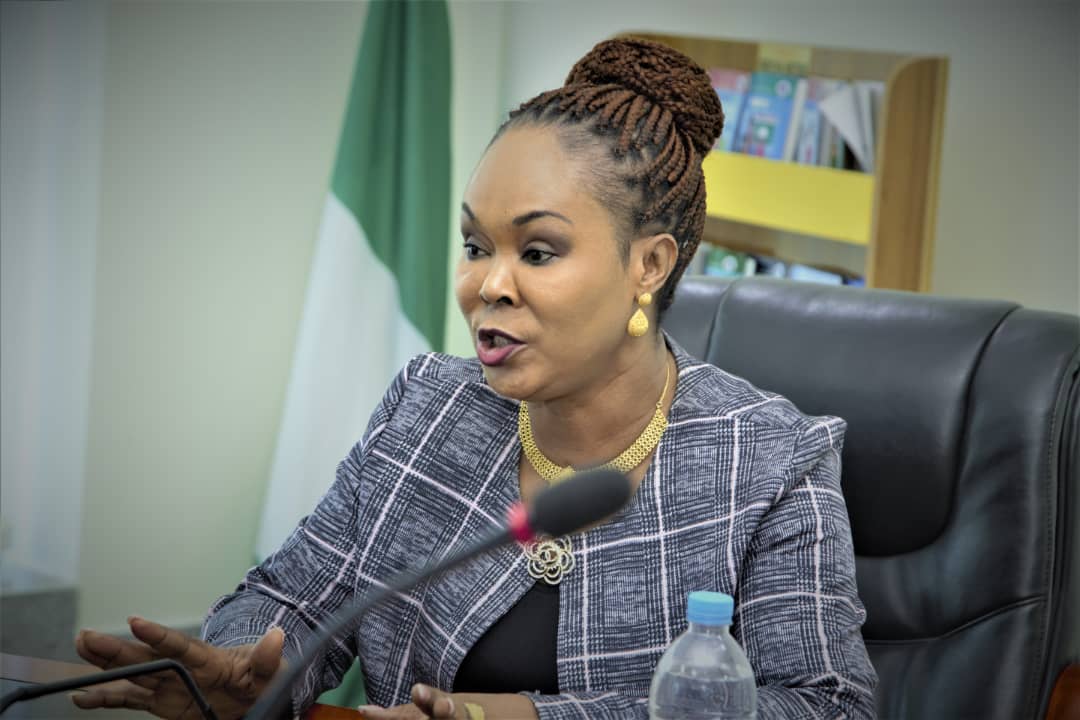
The Minister of women affairs, Uju Kennedy-Ohanenye, has met with the Chief of Army Staff, Lt Gen Taoreed Lagbaja, at the Nigerian Army headquarters, Abuja, over the female soldier that was allegedly sexually assaulted by some top officers.

SaharaReporters had reported that one Ruth Ogunleye, a female soldier of the Nigerian Army, had in a viral video accused two colonels and a Brigadier-General of sexual harassment, intimidation and threat to life.

She had lamented how the senior army officers – who she identified as Col. I.B. Abdulkareem, Col. G.S. Ogor and Brig. Gen. I.B. Solebo – had been oppressing her since she was posted to Cantonment Medical Centre, Ojo, Lagos in 2022, for refusing their sexual advances.

She said she had been locked up several times for no reason, ejected from her apartment, and put in a psychiatric hospital for a month without any medication based on a false claim that she had a mental illness.

The women affairs minister in a statement on Friday through her media aide, Ohaeri Joseph, announced her visit to the Army Chief to get adequate information concerning the soldier’s case and efforts in resolving the matter.

She expressed confidence in the way the military authorities were handling the case, saying “I am happy to have met the Chief of Army Staff with his top management and must commend their collective efforts towards handling this matter.”

The minister explained that her visit followed the mandate of her ministry to promote the interest of every woman in Nigeria, adding “I have received strong assurances from the Chief of Army Staff concerning this matter who has equally detailed some senior officers to accompany me to visit Miss Ogunleye. I interacted with her and I am optimistic that the outcome will be fine.”

On January 16, it reported that the female soldier who recently complained in the viral video about sexual harassment in the military has been arrested and moved to Abuja.
SaharaReporters learnt that the soldier was flown to Abuja from Lagos on Tuesday morning.

“The lady who complained in the viral video about sexual harassment in the military has been arrested and moved to Abuja by air this morning. She was flown out accompanied by military police in mufti from Lagos to Abuja,” a top military source told SaharaReporters.

According to her, her bank account had been frozen since February 2023 and she had not been paid salary for no reason.

She further alleged that Col. Abdulkareem had attempted to rape her on multiple occasions. The female soldier said the army officer later claimed that she had a mental illness, adding that she had made several efforts including writing a petition and getting some senior and junior officers to intervene but that all was to no avail.

She also said that Col. Abdulkareem had denied her access to every army course and passes to see her parents. According to her, her father contacted Col. Abdulkareem over her issues, but he (Abdulkareem) reportedly told her father to inform her to obey the last order. 

Medical Negligence at LASUTH: Lady narrates how mother slipped into coma over wrong medications

This is a story that touches the heart. It is about medical negligence that has put the life of an otherwise healthy woman in the balance. She is in coma even as her distraught daughter, Mrs Damilola Awosedo pens her pains and calls on the Lagos State Government and the public to come to the aid of the family to get the management of Lagos State University Teaching Hospital [LASUTH] to take responsibility instead of playing the Ostrich by keeping mum and carrying on as if nothing has happened.

Read the story as told by Mrs Awosedo:

My mum was scheduled for an adrenal mass surgery in October 2023 at LASUTH. This is someone that wasn’t having any symptoms and only discovered this tumor because she did a general check up.

On the day of the surgery (12 Oct 2023), it was rescheduled but they didn’t give a date.

January 1st 2024, urology department of Lasuth called my mum to come in for her surgery on the 2nd which was on a Tuesday. My mum and I went there on the 2nd and they scheduled the surgery for 4th as she had to be admitted few days before the surgery.

On the 4th of January, the surgery was cancelled again as the first patient’s surgery ended late and they only do surgeries on Thursdays (as they said); so we went back home again. She wasn’t really bothered because she was very healthy and wasn’t feeling any type of way except for the fact that she knew that she had Andrenal mass.

On the 9th of January, they called her again and asked her to come in immediately. She told them it was too sudden and she’d come in the next day, which was Wednesday, 10th of January. The next day, she went to the hospital as planned.

On the 11th, they took her to the theatre and commenced the surgery around 2:45pm. At around 5pm, a doctor came out and told me to start looking for blood…i got the blood and by 9pm , they finished the surgery and told us to go and pay for ICU without any explanation…the initial plan was for her to return to the surgical ward.

Later that night, a doctor explained that they mistakenly punctured a blood vessel during the surgery and she lost 4 litres of blood; her heart stopped and they had to do CPR for about 3 minutes before she came back, which resulted in the emergency. This aside, we all know that bleeding might occur during surgery but the patient management fundamentally failed us as they had no preparation for that.

After 3 days in the ICU, which was Sunday, 14th of January, they discharged her to the female surgical ward as she had recovered quickly.

At the female surgical ward she could now walk, talk, and play. The doctors concluded that she was fit to go home on Wednesday, 17th January.

Tuesday night, a nurse came to give my mum her medications. She was injecting her a particular IV when my mum said her eyes were closing. I asked the nurse what she was giving her and she replied that it was antibiotics and told my mum to lie down that maybe she was feeling sleepy before; then, she proceeded to push in the rest…immediately, my mum said “I can’t breathe anymore”and started seizing. I ran to ask for help and some people came in to attend to her.

They sent me out of the room and I tried peeping and saw them snapping the drug so I entered and checked the name…I realized the nurse gave my mum VECURONIUM (NEOVEC), an anaesthesia used in the theatre to paralyse patients before surgical procedures. Even in the theatre they only inject 5mg and this nurse gave my mum 10mg..which means, she gave her the wrong injection, and still gave her overdose.

My mum was rushed to the ICU again fighting in between life and death. This is a patient that walked into this hospital healthy.

According to the doctors, after administering the injection, it immediately stops air passage and the patient is supposed to be put on ventilator immediately. failure to do so, it can affect any of the vital organs in the body.

In my mum’s case, it affected her brain and she hasn’t come around since 16th that she had been taken to the ICU and is having continuous seizures. The doctors are telling us that the chances of her coming around is 50/50 and we should keep praying.

Now, this injection is not part of the prescriptions since she has been in the hospital. The doctors made it clear that we can’t have access to it and it is only sold in pharmacies close to the operation theatre.

How the injection got to the normal ward, they refused to explain.

The nurse that made this grave mistake, they refused to provide her.

They are refusing to take any responsibility whatsoever and we sense that they are trying to cover it up.

We have been paying this additional bill and have spent over 400k in 48 hours, excluding the millions we spent before and after her surgery.

I still can’t fathom how a medical nurse will still not know the difference between an anaesthesia and antibiotics. This is the height of incompetence and how the injection got into the ward is still a MISERY.

But LASUTH is saying absolutely nothing about it.

PLEASE COME TO OUR AID🙏🏽

Also, according to the doctors, she could have lived with this tumor, but they created fear in us and operated on her only out of their curiosity as this was their first case of ANDRENAL MASS.

The Conclave

Bauchi housewife recounts how immigration Officer raped her in front of husband and kids

In a tale that sounds like fiction, a 20-year-old housewife and resident of Bauchi, Lubabatu Yusuf Samaila, has narrated the strange the story of how a Deputy Immigration Superintendent, Sani Muazu, a benefactor of her husband sexually assaulted her in her own home, before her family and went ahead to detain her husband after she filed a rape complaint.

Recounting the incident, which occurred on December 9, 2023, she detailed how Sani Saleh Muazu assaulted her in her home, disregarding her plea for him to stop the act.

According to the victim, despite her resistance, Muazu proceeded to assault her in front of her traumatised children.

Her words: “On December, 9, 2023, at about 3 o’clock in the afternoon, Sani Saleh Muazu came to my house and started hugging me, touching my breasts.

“I begged him to stop it because of my small children but he threatened me, that he was stronger than me so I should just cooperate, moreover he was the one taking care of my family.

“I kept pleading with him to stop as my children were watching as I struggled to free myself from his grip and run away but he kicked me with his leg and I fell down.

“He slapped me and I started crying.

“My seven-year-old son who had a fractured leg and couldn’t walk crawled into the room on his buttocks from outside and saw what was happening and started crying, begging him to stop.

“Muazu raised his hand and hit me on the chest repeatedly as my sons cried, saying don’t kill our mother.

“He then pinned me to the ground with his leg. I couldn’t struggle again, climbed me and started having intercourse with me in front of my children.

“My husband heard my children crying and he rushed inside the room and met Mu’azu on top of me and he held him up and started shouting so this is what you are doing to my wife? This has been your intention of bringing us to Bauchi?

“Mu’azu stood up and slapped my husband hard and they started wrestling.

“I was weak, I couldn’t stand up; I was just lying on the bed crying.

“They kept wrestling until they got outside and he ran away.

“Up till now as I speak with you I am still feeling the pain.”

The victim expressed frustration over the lack of police investigation into her alleged rape, revealing that instead, they arrested and detained her husband for purportedly defaming the suspect.

The victim in a petition is seeking the intervention of Inspector General of Police, Kayode Egbetokun, regarding her rape complaint against Deputy Immigration Superintendent.

Muhammed Alkassim, the founder of African Child Development and Human Rights Protection, who issued the petition on her behalf, while addressing journalists at a press briefing on Friday criticised the Commissioner, Bauchi State Police Command for neglecting the investigation of the alleged rape, asserting that Lubabatu is in desperate need of help and justice.

Alkassim accused the police of deviating from their primary duty, citing sections 1 and 2 of the newly established Police Act.

He disclosed that the organisation’s petition, submitted on December 22, 2023, has remained unaddressed by the CP for almost three weeks.

He revealed that on the day of submitting the petition, the suspect was promptly arrested but released unconditionally within 24 hours, though facing serious charges.

He therefore called for the immediate re-arrest of the suspect on behalf of the victim, declaring the organisation’s commitment to pursuing justice.

However, the Bauchi State Police Command countered the civil society organisation’s claims.

Its Public Relations Officer, Superintendent Ahmed Mohammed Wakil, in an interview with journalists stated that the CP had directed the Deputy Commissioner of Police, Criminal Investigation Department to investigate the case.

Wakil confirmed that the investigation is ongoing and assured the public that the outcome will be disclosed.

Regarding the arrest of the victim’s husband, Wakil clarified that he was charged with criminal defamation, aiding and abetting offences, including kidnapping.

He said the charges stemmed from a petition filed against Yusuf Samaila by Nazir Umar and Co chambers on behalf of their client, Sani Saleh Mauzu, which prompted the arrest of Lubabatu’s husband based on the allegations raised by the complainant.

Credits: The Nation

How to Stop the Kidnapping Epidemic in Nigeria

By Farooq Kperogi

In the last few weeks, kidnapping in Nigeria has escalated into such a terrifyingly contagious national epidemic that it’s now difficult to keep up with its spread and malignancy. When I decided to dedicate this week’s column to this phenomenon, I kept a record of the abductions that had been reported in the news media. I noted their similarities, differences, levels of severity, and drew parallels with the historical data at my disposal.

I gave up. It was not just simply overwhelming; it kept expanding beyond the bounds of normality. What has become apparent to me is that kidnapping has replaced armed robbery as the crime of choice by outlaws.

News stories of armed robberies are now few and far between. Criminals have found gold in kidnapping. It’s a relatively low-risk, minimal-effort, but high-reward crime.

Even the Federal Capital Territory, hitherto the oasis of safety in a national desert of insecurity, is now the theater of some of the most frighteningly lethal abductions.

Kidnapping isn’t new, of course. It has been with us since independence. And, although Abuja had been a sanctuary, it hadn’t been entirely immune from the plague of kidnappings. In September 2019, for example, the daughter of Dr. Umar Ardo, former Vice President Atiku Abubakar’s cousin and special adviser, was kidnapped in the heart of Abuja and was released only after a $15 million ransom was paid in bitcoin, according to PM News.

In the same month, a Nigerian-American professor of political science who retired from a university in Mississippi and relocated to Abuja was kidnapped in downtown Abuja and wasn’t released until he paid an N8.5 million ransom. There had been several other unacknowledged abductions in Abuja before now.

But the scale, frequency, and magnitude of abductions we have been seeing lately are unprecedented, and this poses significant challenges to Nigeria’s security, economy, and societal fabric. The complexity of the kidnapping syndicates, the vastness of the Nigerian terrain, and the often-sophisticated methods employed by these criminals necessitate an innovative approach to combating this menace—if the government is truly interested in containing it, that is.

Fortunately, it appears the government is interested in finding solutions to this troubling challenge to peace and national stability, especially because it’s now getting uncomfortably close to the seat of power.

Defense Minister Mohammed Badaru told Arise TV that abductions have skyrocketed in the FCT because kidnappers from the adjoining states of Niger and Kaduna are fleeing the scorched-earth policy of security agents against them, but that “the president has given us the marching forward [sic] and all the support that the security agencies need to end this thing.”

Badaru was saying, in other words, that security forces in Kaduna and Niger aren’t stopping bandits; they are merely scaring them away from their snug hideouts to the FCT. That is not reassuring. Well, if the government truly wants to confront and reverse the menace of kidnapping, there are at least two low-hanging fruits they can pluck.

One of the most promising technologies to tackle kidnapping is geotagging. Geotagging refers to the process of adding geographical identification metadata to various media. It can be used to locate the phones used for ransom negotiations.

Unfortunately, Dr. Isa Ali Pantami, Nigeria’s former minister of communication who bills himself as a cybersecurity expert and who should lead efforts to use technology to locate kidnappers, chose to lead crowdfunding efforts for ransom payment for some victims of kidnapping. While I appreciate the compassion that drives the effort, how many more people can we crowdfund for to pay ransoms?

True cyber security experts tell us that each time a kidnapper uses a phone to communicate, the device connects to nearby cell towers, which leaves a digital footprint. Modern smartphones, often used by kidnappers, have built-in GPS capabilities, which further enhances the accuracy of location tracking. Geotagging utilizes this data to pinpoint the location of the phone.

Many countries have used this method to locate, apprehend, and eliminate kidnapping rings. For example, in Colombia, a country once notorious for kidnappings, security agencies have successfully employed geotagging. In one notable case, Colombian authorities tracked the mobile phone of a kidnapper using geotagging, leading them directly to the hideout and facilitating a successful rescue operation.

Mexico’s adoption of advanced geotagging techniques in collaboration with the United States has led to several high-profile successes. The technology was pivotal in dismantling a notorious kidnapping ring in Mexico City. This shows the potential of cross-border technological cooperation, and Nigeria can replicate that with its neighbors.

For course, for Nigeria to effectively employ geotagging, there is a need for significant investment in technological infrastructure. This includes the upgrading of cell tower networks for better coverage and accuracy, and the integration of advanced software for real-time tracking.

Security agencies must be trained in the nuances of geotagging technology. This includes understanding the legal and ethical implications of tracking and developing the technical expertise to analyze and act upon the data gathered.

Collaboration with international agencies experienced in dealing with kidnappings can provide Nigerian authorities with the necessary technological and strategic support. Sharing of best practices and intelligence can enhance the effectiveness of the geotagging approach.

The use of geotagging in combating kidnapping in Nigeria offers a ray of hope in a seemingly relentless struggle. While technological solutions like geotagging are not panaceas, they are critical tools in the arsenal against kidnapping. The successful implementation of geotagging, complemented by infrastructural improvements, capacity building, international collaboration, and legal safeguards, can significantly bolster Nigeria’s fight against this scourge. As kidnapping continues to evolve, so must the strategies.

Another low-hanging fruit in the fight against kidnapping is to trace the trail of the ransom given to kidnappers. A security analyst by the name of Kabir Adamu told the TVC recently that most ransom payments aren’t executed through cash, and that banks are complicit in lubricating the “business” of abductions.

“I will shock you today to tell you that, in almost all the cases we investigated, the ransoms paid to bandits are through our banks,” Adamu said. “I say this with all sense of responsibility. In almost all, it’s very few that cash is collected and taken to these guys. They are so brazen and bold that they provide account numbers. And two banks are guilty; I’m not going to mention the names of the banks. But of course, if the security agencies are interested, I will be happy and willing to provide it to them. And that is if they don’t already know.”

This is not new news to me. In an October 23, 2021, column titled “Sponsors of Nigeria’s Terrorist Bandits,” I called attention to Daily Trust’s July 28, 2021, story titled “Kidnappers in FCT Begin Collection of Ransom Through Banks” where we read of a Mrs. Aminat Adewuyi who was kidnapped in Niger State and paid money to an account the kidnappers provided.

“The ransom payment slip, a copy of which was obtained by Daily Trust showed that Adewuyi’s husband paid N500,000 into an Access Bank account with number 1403762272 and the name Badawi Abba Enterprise,” the paper reported.

The column went viral, but nothing was done about the identity of Badawi Abba Enterprise to this day. It’s one of several examples. Was it incompetence or complicity on the part of the Buhari government that it knew the identity of kidnappers but refused to do anything about it? Will the Tinubu government be different this time?

*Kperogi is a Professor of Journalism and Emerging Media at Kennesaw State University, Georgia, United States, and a notable columnist. He can be reached on X, formerly known as Twitter, via: @farooqkperogi

Independence of the judiciary is no longer guaranteed by the Constitution but the disposition of whoever is the president

By Ikechukwu Amaechi

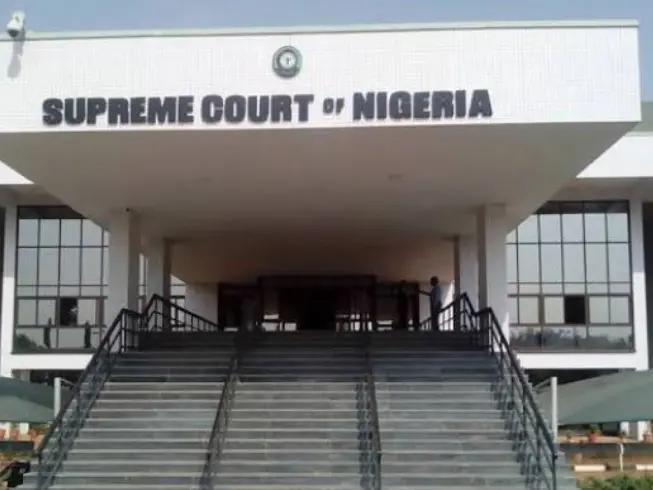
Since the Supreme Court reversed the Appeal Court judgements that sacked Kano State Governor, Kabiru Yusuf; Caleb Mutfwang of Plateau State; and Zamfara’s Lawal Dauda, many Nigerians, characteristically, have been ululating about how the judiciary has redeemed itself. Those wishing to cut the apex court a bigger slack talk about how the Supreme Court has redeemed the image of the judiciary.

Some have even stretched the inane adulation by claiming, rather ludicrously, that the verdicts are a veritable proof of President Bola Tinubu’s democratic credentials because it must take the non-interference of the president for the judiciary, a supposedly independent arm of government, to do the needful.

So, the independence of the judiciary is no longer guaranteed by the Constitution but the disposition of whoever is the president. Those who hold this view are right, though. But the truth which they refuse to also admit is that Tinubu refused to interfere not because he is a democrat who cares so much about the integrity of judicial pronouncements but because he is acutely aware that when dealing with those three states, the political risk of any judicial hanky-panky far outweighs the gain. The victory from any deliberate judicial miscue, if any, will be pyrrhic.

So, the president stepped back to save his own political skin and on Friday, January 12, a five-member Supreme Court panel ruled that the Appeal Court verdicts on Kano, Plateau and Zamfara governorship polls were perverse, flying in the face of not only the law but judicial precedents.

Justice Helen Ogunwumiju berated the Appeal Court judges for going into the issue of nomination and sponsorship despite several decisions of the apex court to the effect that a political party cannot challenge the primary election of another. So embarrassed, or so it seemed, was Justice Emmanuel Agim that he warned the legal profession to wake up or risk rendering itself irrelevant to the society. Justice John Okoro lamented that “a lot of people have suffered” because of the wrongful judgements of the appellate court which had sacked several legislators who won elections under the platform of the PDP in Plateau State.

Justice Okoro’s lamentation bears repeating because as you read this, two Plateau State PDP senators and five members of the House of Representatives freely elected by the people are idling away at home, while seven APC impostors elected by Justices Oluwayemisi Williams-Dawodu, Abdulaziz Waziri and Okon Abang, none of whom is from Plateau State, not to talk of casting a ballot in the February 25, 2023 National Assembly election, are in Abuja representing themselves and the principalities who made their ascension possible. In the 25-member Plateau State House of Assembly, the self-same panel sacked 16 members elected on the PDP platform, and willfully handed their seats to the APC.

The tongue-lashing of the Appeal Court judges was so loud that Mike Ozekhome, a Senior Advocate of Nigeria, SAN, likened it to the whipping of errant children. “The Supreme Court spared no words, they used legal and judicial Koboko (cane) to flog the Court of Appeal for what they termed miscarriage of justice, perverse judgements,” Ozekhome said while speaking on Saturday, January 13, in an interview with Arise TV.

But it is not enough for the Supreme Court to publicly chastise the lower court judges for their shameful judicial gymnastics and validation of purloined mandates, what happens to the victims of the “wrongful judgements of the appellate court?”

Should the beneficiaries of electoral shenanigans be allowed to keep their loot? Besides this public chastisement, should the judges who enabled these heists be allowed to get away with the crime? No! Allowing the Plateau travesty to stand is tantamount to rewarding judicial perfidy and political banditry. The politicians and their collaborators in the judiciary orchestrating these absurdities are worse than the bandits terrorising Nigerians.

That said, will it be correct to say that the Supreme Court has redeemed the judiciary simply because it called out erring lower court judges? I dare say that will amount to stretching logic.

In restoring the mandates of Kano, Plateau and Zamfara governors, the Supreme Court simply dodged a bullet. Enlightened self-interest rather than aversion to perfidious judgements informed the decision because the apex court has given, perhaps, more perverse judgements than the Appeal Court.

For instance, no judgement can be more perverse than the January 14, 2020 Supreme Court ruling that nullified the election of Emeka Ihedioha as the governor of Imo State and declared Hope Uzodimma the winner of the March 9, 2019 governorship election.

Criticising his colleagues who delivered the perverse judgement, Justice Centus Nweze of blessed memory said it was “preposterous” for the apex court to award the “electoral victory” to Uzodimma who had contended that the March 9, 2019 election was invalid.

When his colleagues ignored him, he, like Pontius Pilate, washed his hands off the perfidy with this profound statement: “The decision of the Supreme Court in the instant matter will continue to haunt our electoral jurisprudence for a long time to come.”

Many of the Appeal Court judges drew inspiration from that 2020 illogical ruling by the Supreme Court in handing down their 2023 perverse judgements.

Again, the January 20, 2023 Supreme Court judgement that affirmed Godswill Akpabio as the valid candidate of the APC for the Akwa Ibom North-West Senatorial District, and another ruling on February 6, 2023 that declared former Senate President, Ahmad Lawan, as the authentic APC candidate for the Yobe North Senatorial District, were as perverse as the Appeal Court judgements sacking Yusuf, Muftwang and Dauda.

The Supreme Court ruling on the February 25, 2023 presidential election left a sour taste in the mouth of not a few. So, Nigerians should not be deceived. The Supreme Court does not stand on any moral high ground when it comes to perverse judgements and judicial hanky-panky.

On Wednesday, January 17, Aloy Ejimakor, special counsel to the leader of the Indigenous People of Biafra, IPOB, Nnamdi Kanu, decried the failure of the Supreme Court to release the certified true copies, CTC, of its judgement made last year.

Ejimakor wrote: “Today makes it Thirty-Three (33) days after Supreme Court delivered the final judgement in the case of Federal Republic of Nigeria versus Mazi Nnamdi Kanu.

“Following the delivery of said judgement on 15th December 2023, applications were filed for the release of Certified True Copies, CTC, of the Judgement and the enrolled Order. But to this day, the Supreme Court is yet to comply.

“This failure to release the said CTC is a flagrant violation of the Constitution that entitles Nnamdi Kanu to be issued copies of the judgement within seven days of the delivery of the judgement on 15th December 2023. It is a fundamental right and thus enforceable.

“Section 36 (7) of the Constitution provides that: ‘When any person is tried for any criminal offence, the court or tribunal shall keep a record of the proceedings and the accused person or any persons authorised by him in that behalf shall be entitled to obtain copies of the judgement in the case within seven days of the conclusion of the case.’

“It will be recalled that the Supreme Court had, in the said judgement, ordered that the case be remitted to the Federal High Court for consideration of  a trial.

“To be sure, the Federal High Court cannot proceed with consideration of any trial without the certified judgement and enrolled order. Similarly, Kanu’s lawyers cannot proceed with his defense without the CTC of the said judgement and the order.”

This is the Supreme Court, not the lower courts. Truth be told, no level is holier than the other. If only politicians, even those who won their cases and have praised the judiciary as the last hope of the common man could tell their experiences and the role money played, Nigerians will begin to appreciate how deep the rot runs.

So, the restoration of the mandates of Yusuf, Muftwang and Lawal, though heart gladdening, is not an act of judicial altruism. No! The Supreme Court simply dodged a bullet, knowing full well that there would be dire consequences if it did otherwise unlike Imo State where the Justices knew there will be no consequences for their judicial malevolence and went ahead to do the unthinkable.


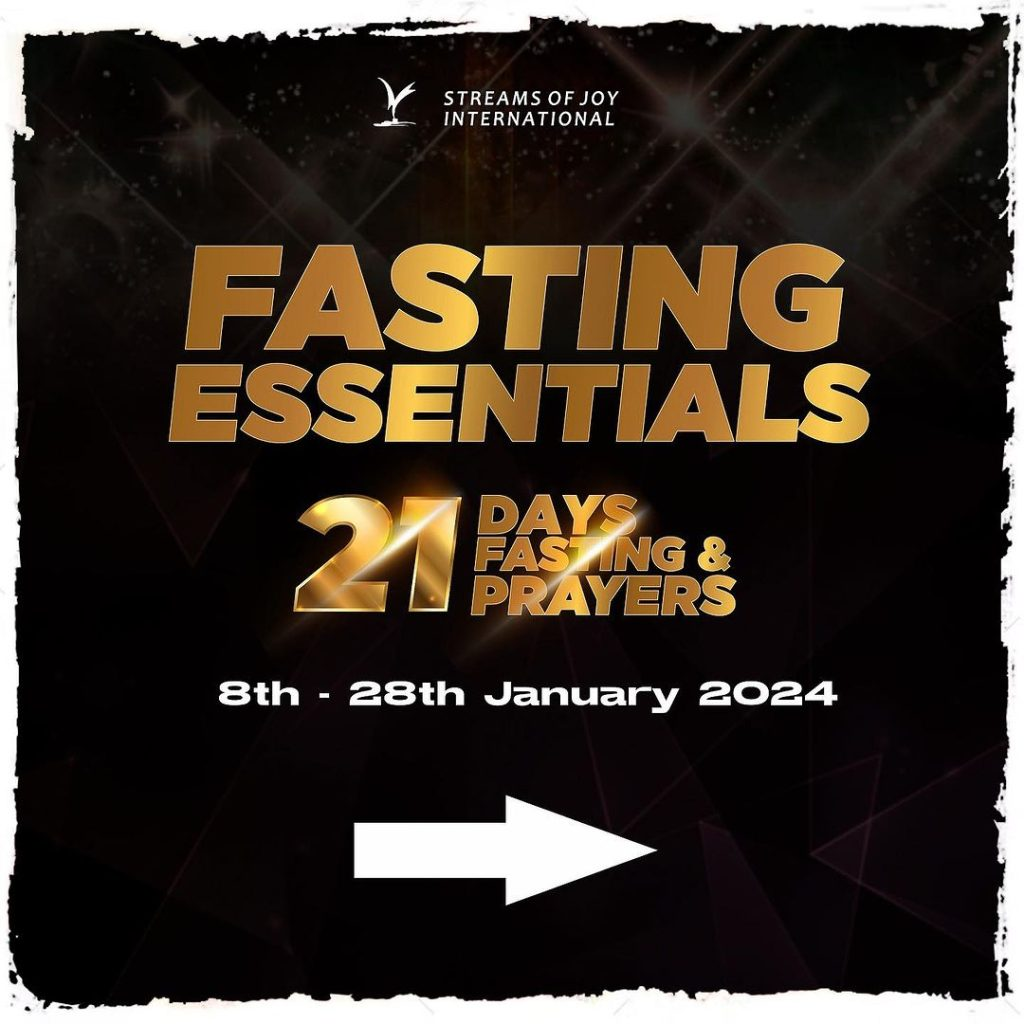
NSPPD 21 Days fasting and prayer 20th January 2024 (Day 13 prayer points)

PRAYER THEME: OH LORD BLESS MY FAMILY

Study/Meditate: (Isaiah 43:18-19; 49:24-26, Genesis 1:27-31, 16:10-13, 2 Chronicles 16:9, Jeremiah 31:29, Ephesians 3:14-21, Psalm 136)

Pray/Declare:

And EL-ROI said Yes! By His Yes, My Family is blessed, honored and favored! Nothing missing, nothing broken! It is our year of Back to Back celebrations and rest on every side! It is going round, I see each and every member of my family arising with a testimony that indeed What God Cannot do does not exist! (2 Corinthians 1:20)

Over ______’s Family, I arise as the as the transition man/woman and I announce: ”Lift up your heads, you gates; be lifted up, you ancient doors, that the King of glory may come in.“ Psalms‬ ‭24‬:‭7‬ ‭NIV‬‬

2024: The King of Glory is Here! Lord by the Covenant of your Glory upon our lives in 2024, Give us a divine makeover, Rebrand our destinies, Reintroduce us in a bigger, better and more glorious way! Hallelujah! (Zechariah 2:5)

2024: LET IT RAIN!!! It is our latter rain season and It must rain! For every sound of the abundance of rain we heard in yesteryears with no evidence, Let it rain now! Not by process but by grace(Zechariah 10:1)

2024: OUR JUBILEE, THEIR VENGEANCE! My Father My father, As our latter rain arrives, without mercy,rain down your wrath upon every Herod/Pharoah that tried to stop us in times past! Vengeance! Fire! (Isaiah 61:1-3)

Every planting that is not in alignment with God’s word over my family, out by Fire! Demonic exchangers, advertisements of negativity in form of lack, delays and disappointments, afflictions, sickness and diseases, Out by Fire! (Matthew 21: 12-14)

I Hear it again! _______’s family, MOVE OVER TO THE OTHER SIDE!!!!!! No one will be left behind! I redeem all the remaining days of 2024! Winds of negativity planing to arise, not in 2024, Fire! Peace be still!!! (Mark 4:35-41)

The accuser has been cast down! There is therefore Now no condemnation against the family of _______ Hands/voices of accusation, Written laws, spoken words, ancient ordinances against our rising, the blood of Jesus is against you, Fire!!! (Revelation 12:10, Romans 8:1)

No enchantment, no divination against the family of _______! Any evil hand that shall arise against the fulfillment of our 2024 prophecies, Fire! Any weapon fashioned against our advancement, be destroyed! Wherever they shall gather, scatter by Fire! (Numbers 23:23, Isaiah 54:15-17)

Our 2024 blessings shall not exist side by side with losses, we will not rejoice and cry at the same time, we will not laugh and mourn! I take a journey in the spirit against doors of negativity, close by Fire!!! (Ecclesiastes 3:14-17, Proverbs 10:22)

I am that savior that has arisen! Like Rahab for her family, El-Roi, over the lives of my family members and those connected to me, for every good seed I have sown in accordance to your will, as I embark on this journey closer to you, please see me, pass through me and bless them! Amen! (Obadiah 21, Joshua 2:12-13)

Because ”It is right and just for God to trouble my troublers“, Any man or woman that has arisen as a troubler of my family’s destiny, Abba Keep them busy with affliction! 2024: God of Vengeance arise! (2 Thessalonians‬ ‭1‬:‭6‬ ‭TPT‬‬)

Though we passed through Fire, through the waters, My family members and I have arrived at our Wealthy Place! Our Status has changed, there’s no more decline! Let the evidence burst out out in our health, our finances, in the works of our hands, our vision, plans and projects! Hallelujah (Psalm 66:12)

Indeed, We The Family of _______ have seen the God that sees us! Thank you El-Roi for a 2024 of Divine Remembrance, Grace, Mercy and Favor! Hallelujah! (Psalm 102:13)

#nsppd
#21Daysfastingandprayers
#Streamsofjoyinternational
#whatGodcannotdodoesnotexist

See also: NSPPD 21days fasting and prayer (Day 12 prayer points)

See also: NSPPD 21days fasting and prayer (Day 11 prayer points)

See also: NSPPD 21days fasting and prayer (Day 10 prayer points)

See also: NSPPD 21 days fasting and prayer (Day 9 prayer points)

See also: NSPPD 21days fasting and prayer (Day 8 prayer points)

See also: NSPPD 21days fasting and prayer (Day 7 prayer points)

See also: NSPPD 21days fasting and prayer (Day 6 prayer points)

See also: NSPPD 21days fasting and prayer (Day 5 prayer points)

See also: NSPPD 21days fasting and prayer (Day 4 prayer points)

See also: NSPPD 21 days fasting and prayer (Day 3 Prayer Points)

See also: NSPPD Fasting and Prayer Points 9th January 2024 (Day 2)

See also: NSPPD 21 days fasting and prayer 2024 begins today

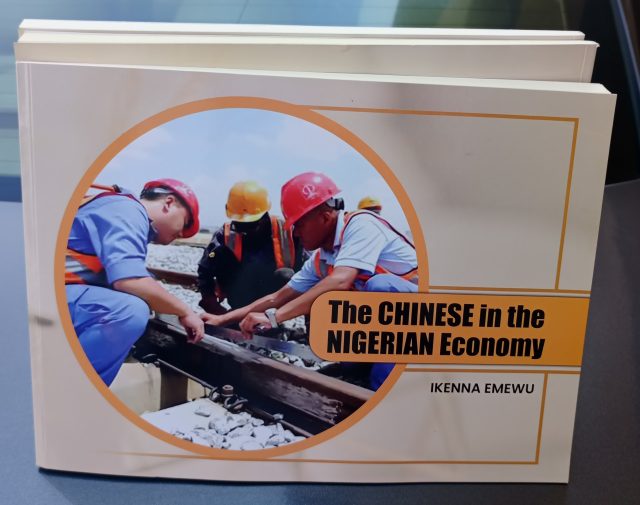
Book Review: The Chinese in the Nigerian Economy

The Chinese in the Nigerian Economy

Book Review

Title – The Chinese in the Nigerian Economy

Author – Ikenna Emewu

Publisher – Afri-China Media Centre Ltd.

Date of publication – December 2023

ISBN – 978-978-783-171-7

Topic of focus – Economy

Pagination – 130

Layout – landscape (A4)

Chapters – 7

Preamble – China’s desire to invest in other worlds is hot, unpretentious, and voracious. Investors from this world’s largest manufacturing country spread out in almost all

countries, and do not exclude Nigeria which has been one of the spots within their investment focus.

The 2023 World Population Review (worldpopulationreview.com) on the FDI (inward and outward) standing of the world countries listed China as second to the USA. However, with Hong Kong as the third, if counted together with Mainland China, then China is the highest. This trend has been sustained since at least 2014.

Already, since 2014, “China has remained the world’s largest investor in Africa in terms of total capital. They invested more than $72 billion in the continent from 2014 to 2018, according to the Brookings Institute. Those investments created more than

137,000 jobs across 259 projects.”

Such figures even from a US-based agency can disprove the notions that China uses Africa as an experimenting ground for enslaving loans, commodity dumping, and export of poor quality goods only. Whereas China is a single country

Africa owes the most, China is also by pole the largest investor in Africa, Nigeria inclusive. And Nigeria is at the top of the table.

This new book is possibly the latest release in the Nigerian market. This work is a product of knowledge with rich content delivered in simple, flowing journalistic language that makes for easy reading and understanding.

The book is segmented into seven main chapters, apart from the preliminary sections including the Introduction, Acknowledgment, Dedication, and Foreword, which was written by the Chinese Consul General, Ms. Yan Yuqing.

The content is derived from a broad spectrum of information sources, including interviews, research, participation, and visits. Some facts of the book are drawn from investigation and long-term relationships and interactions with the sources.

It is a book that aims to fill the information gap that exists in Nigeria about Chinese investments and contributions to the Nigerian local economy. The extent of the presence of the Chinese in the Nigerian economy has made them a major topic of discussion in our everyday lives. Unfortunately, most of our discussions are based on hearsay and unverified conclusions while none of us made efforts to find out what exactly is the true position of things.

Just a few days after this book was out, the author said read on a WhatsApp chat group he belongs to about a video that circulated widely on social media. It was a video of a chain of trucks on the Obudu-Vandeikya Road in the Cross River-Benue axis of Nigeria. Without any link with the video deriving either from the picture or the comment of the clip recorder, someone attached a comment to the video that it was “illegal Chinese exports every week.” Funny enough, many viewers believed it without asking how the person came to that conclusion. At a closer look and examination, the caption was based on unverified sentiments.

Such positions that have become commonplace in Nigeria are what the book aims to factually address.

Chapter 1 is on China’s Preferred Investment Market and addresses the perception of Nigerians about China, comparative values, and the quality of local Chinese goods and services. It also looked at the various segments of sub-sectors of the economy where the Chinese investors are active players in the automobile market; smartphone market; construction sector; ICT hardware, and other important issues.

Chapter 2 is on how Chinese interest and presence in Nigeria moved from trade to local investment in manufacturing with the various policy issues around them at the local and diplomatic stages. It analyzed the views of experts in the field, particularly diplomats from the Nigerian and Chinese sides, economists, and investors, including Nigerian investors, and their perceptions about the Chinese.

Chapter 3 tackled the persistent issue of negativity, to discern what is factual and what is not. It is an important discourse with a broad view and historical perspectives about the flops and failings of the Nigerian economy, especially the failed industrialisation policies since 1962 to goal is to determine whether China or its activities in Nigeria. It also looked at the other factors that contribute to the problems of our manufacturing or real sector up to the present. The topic helps to channel our attention to the necessary actions to get things right.

The chapter is on economic diplomacy between Nigeria and China since 1972 when the two were established. It is about the past and present efforts of the two countries to influence each other’s economies using diplomacy. The chapter helps us understand the important issues regarding debts, loans, debt trap claims, the influences in our infrastructure sector, and how Chinese players in the sector have fared in Nigeria in the past years.

Chapter 5 is so important and on a topic that deserves the most attention, which is labour issues and friction between Chinese employers and Nigerian workers. According to reliable sources, Chinese investors employ over 200,000 Nigerians. We looked at the preponderance of labour frictions, workers’ rights, the causes, what efforts are put in place to resolve them, enforcement lapses, and culture shocks involved. Even the reported cases of the incidents were looked at and even beyond Nigeria to other African countries. It also proffers solutions to the issues and how to make them right.

Chapter 6 is on the ways some of the companies have been doing things right, especially by helping to deepen the expertise and human capital base of Nigerian workers with new and advanced skills acquisition.

Chapter 7 zeroes in on specific Chinese companies, their worth, and contributions to the Nigerian economy in tangible terms.

Washing Feet . . . and Dishes

I have set you an example that you should do as I have done for you. John 13:15

John 13:6–17
On Charley and Jan’s fiftieth wedding anniversary, they shared breakfast at a café with their son Jon. That day, the restaurant was understaffed with just a manager, cook, and one teenage girl who was working as hostess, waitress, and busser. As they finished their breakfast, Charley turned to his wife and son and said, “Do you have anything important going on in the next few hours?” They didn’t.

So, with permission from the manager, Charley and Jan began washing dishes in the back of the restaurant while Jon started clearing the cluttered tables. According to Jon, what happened that day wasn’t really that unusual. His parents had always set an example of Jesus who “did not come to be served, but to serve” (Mark 10:45).

In John 13, we read about the last meal Christ shared with His disciples. That night, the Teacher taught them the principle of humble service by washing their dirty feet (vv. 14–15). If He was willing to do the lowly job of washing a dozen men’s feet, they too should joyfully serve others.

Every avenue of service we encounter may look different, but one thing’s the same: there’s great joy in serving. The purpose behind acts of service isn’t to bring praise to the ones performing them, but to lovingly serve others while directing all praise to our humble, self-sacrificing God.

By: Cindy Hess Kasper

Reflect & Pray
When has someone unexpectedly offered to help you with a difficult task? Why is humility such an important aspect of serving others?

Loving Savior, thank You for showing me how to be a servant.

Bible in a Year:
Genesis 43–45 Matthew 12:24–50

https://odb.org/2024/01/18/washing-feet-and-dishes

TIPS