Home Blog Page 645

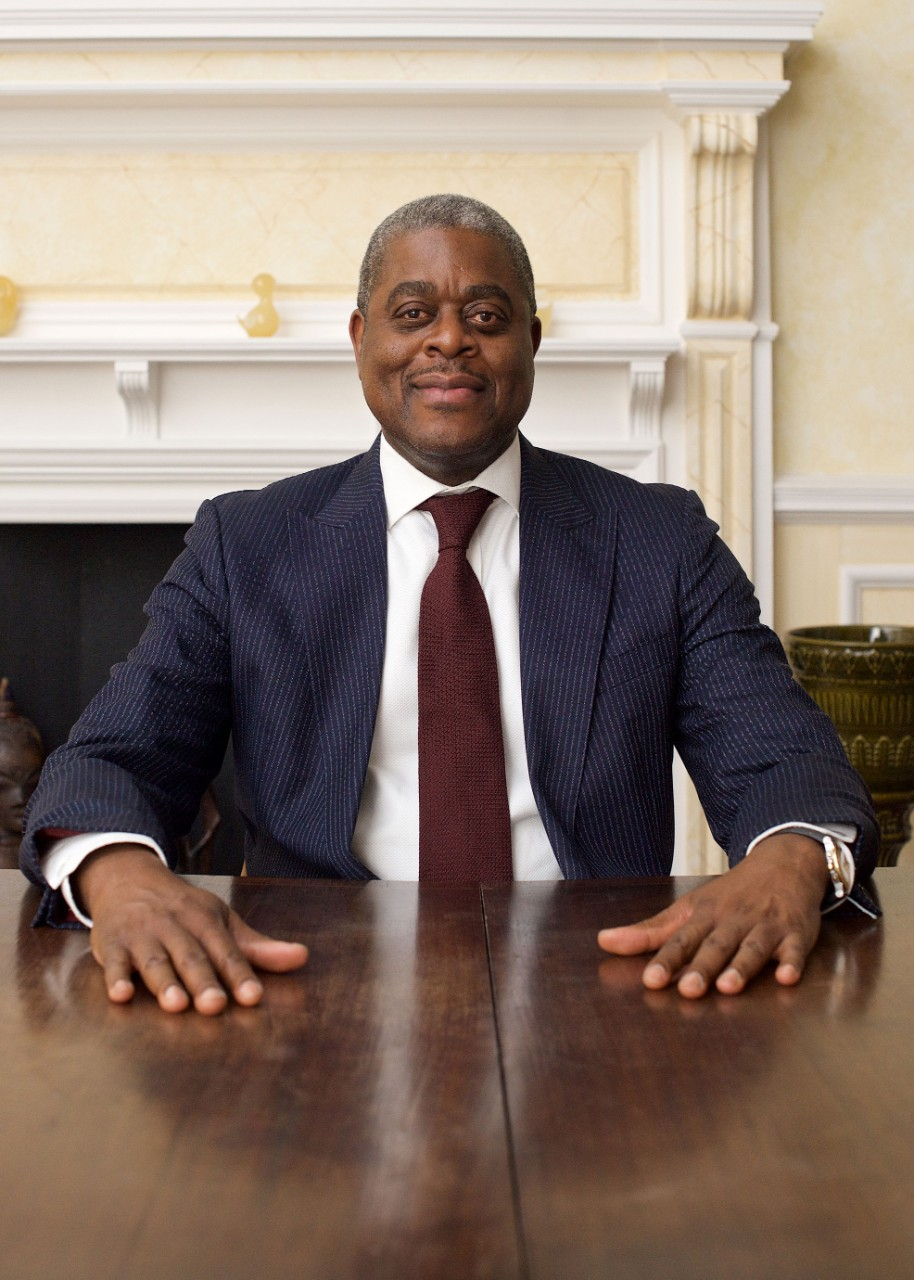
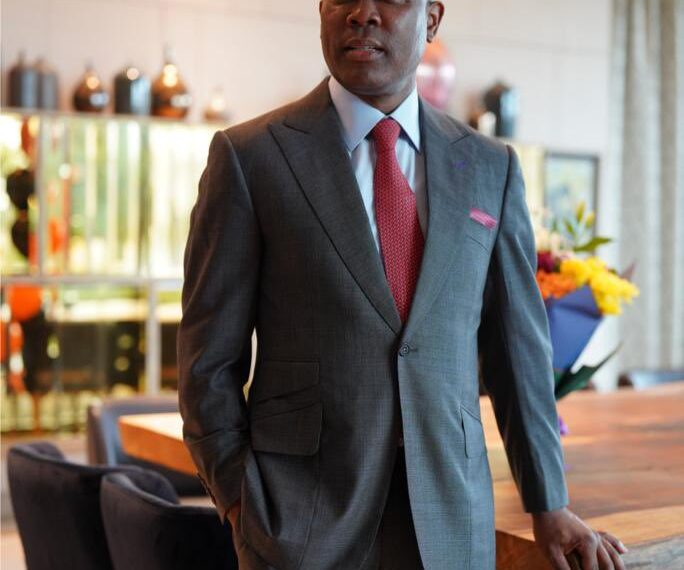
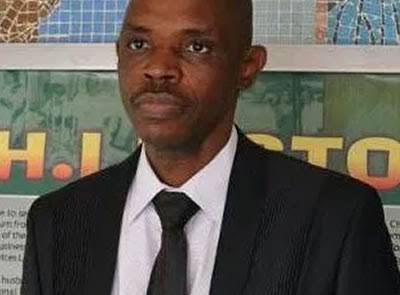
Abimbola Ogunbanjo, the top lawyer who died in the helicopter crash fire

Son of the recently deceased doyen of Commercial Law practice in Nigeria, Chief Christopher Oladipo Ogunbanjo, Abimbola Ogunbanjo was among those who died in the helicopter crash which took the life of the Group Chief Executive Officer of Access Holdings Plc, Herbert Wigwe, on Friday.

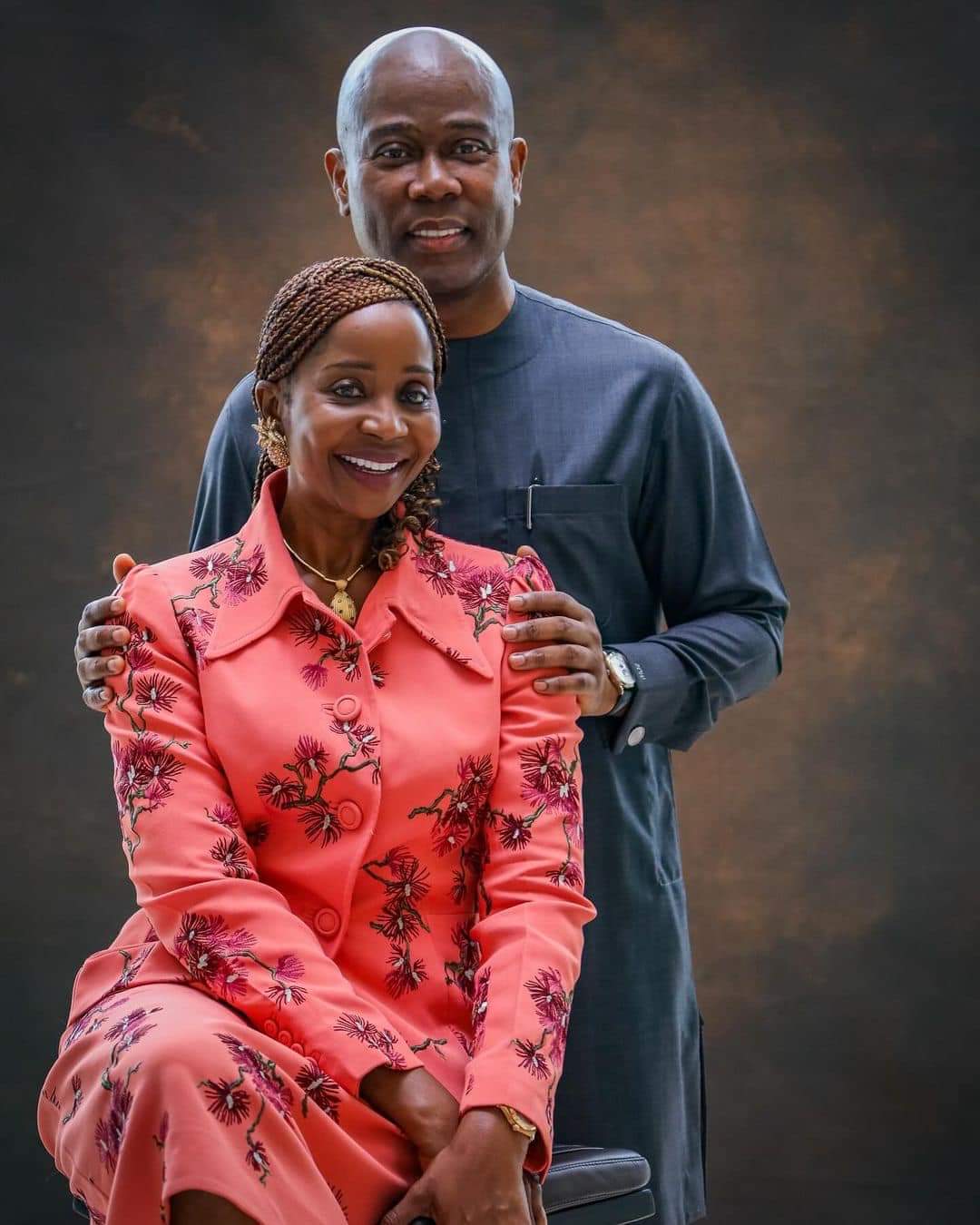
Aside from the former chairman of Nigeria Exchange Group (NGX ), Wigwe’s wife and son also died in the disaster which happened near the Nevada border in California, United States of America.

Ogunbanjo who certified in international capital markets and marine law, held the position of  GCEO at the NGX group from 2021 to 2022.

He had his early education at Corona School Apapa; University of Lagos Staff School, Claremont School, Hastings, Sussex and Igbobi College, Lagos State; before he went to Millfield School, Street, Somerset, England where he attained his GCE O’ Levels.

Afterwards, he proceeded to the American College, in Switzerland to pursue a Bachelor’s degree in Business Administration.

Ogunbanjo also held a Bachelor’s degree in Law from the University of Buckingham, United Kingdom.

He had Certificates in international capital markets and Maritime Law from the New York Institute of Finance, and the University of Southampton respectively.

He provided pro-bono legal services to the Nigerian Chamber of Shipping and the Chris Ogunbanjo Foundation where he also served on its board of directors.

He also served as Managing Partner of the renowned, leading corporate law firm of Chris Ogunbanjo LP (Solicitors), a firm he joined in 1990 after a spell as a credit analyst with Chase Manhattan Bank (Nigeria) Limited.

He served on the boards of several multinational corporations and non-profit organisations, including Beta Glass Plc and the Advisory Board of the University of Buckingham Centre for Extractive Studies.

The ex-NGX chairman equally served on the Board of GTL Registrars Limited, AIICO Insurance Plc and ConocoPhillips Limited amongst others.

Abimbola Ogunbanjo was a Global Ambassador for the Cervical Cancer-Free Nigeria) campaign, an initiative of Global Oncology, a US-based nonprofit organisation supported by Stanford University.

The CCFN campaign aims to reduce the unnecessary deaths of Nigerian women from cervical cancer, by raising awareness about the safety, efficacy, and availability of the human papillomavirus vaccine among the Nigerian public.

The Elerunwon of Erunwon-Ijebu, Oba Johnson Okubena, conferred on Ogunbanjo the traditional title of Bamofin of Erunwon Ijebu Kingdom, on December 8, 2018.

On October 11, 2022, former President Muhammadu Buhari conferred the National Honour of Officer of the Order of the Federal Republic on Ogunbanjo for his contributions to the development of the capital market, corporate law and in recognition of his virtues and appreciation of his services to Nigeria.

PUNCH

More details emerge about chopper crash that took Wigwe, others

  • Chopper model has a history of crashes
  • Wigwe’s love for the Super Bowl
  • How his Special Assistant cheated death

United States’ National Transportation Safety Board (NTSB), on Sunday, provided details on some of the items recovered from the scene of the helicopter crash that led to the death of the Group Chief Executive Officer of Access Holdings Plc, Herbert Wigwe, his wife, son and other crew members onboard.

The board also provided a brief insight into the aircraft’s flight trajectory before crashing near Halloran Springs in California.

The details were provided by a board member with the NTSB, Michael Graham, during a press briefing held Sunday afternoon in Barstow, California.

At the briefing, Mr. Graham notes that they were at the crash scene to gather evidence on Sunday.

Law & Society reported that on Friday, a chopper ferrying Herbert Wigwe, the CEO of Access Holdings, his wife Chizoba, son and Abimbola Ogunbanjo, the group chairman of Nigerian Exchange Group Plc (NGX Group) crashed, killing them and some others near the California-Nevada border in the United States.

The NTSB, an independent agency charged by the US Congress to investigate every civil aviation accident and significant accidents in the other modes of transportation across the United States of America, has since moved to the location to commence investigations into the possible causes of the crash.

Faleye Olushola, Wigwe’s Special Assistant was lucky. Olushola, whose name was listed on the manifest, narrowly escaped death as he opted to travel by road.

On arriving Palm Springs, Olushola made the decision not to board the helicopter bound for Boulder City in Nevada, citing concerns about night-time weather conditions.

The helicopter model and history of crashes

The ill-fated aircraft model – Eurocopter EC 130B4 suffered five crashes in 2023. The history of the Eurocopter EC 130 can be traced to several fatal accidents in the past.

Manufactured by Airbus Helicopters SAS (formerly Eurocopter), the single-engine aircraft and its variations have a long history of accidents.

Timeline:

A similar crash occurred on December 1, 2023, involving the same Eurocopter EC 130B4, which struck power cables during takeoff and crashed into a ball of flames near Ex Hacienda el Hospital, Cuautla, Morelos in Mexico. Three people died in the accident, and it was the last of 11 crashes involving Airbus models in 2023.

The same aircraft model crashed in the Grand Canyon in 2018 and claimed the lives of five people.

The 2018 crash involving another Eurocopter EC 130B4 killed five people, all of them Britons, in the Grand Canyon.

Two brothers, Stuart and Jason Hill, 30 and 32, were among the dead. Stuart Hill’s girlfriend Becky Dobson was also killed in the crash. The three were pronounced dead at the scene.

Husband and wife Jonathan and Ellie Udall were also victims of the deadly crash. They both died of complications from burns days later.

The pilot Scott Booth and Jason Hill’s girlfriend Jennifer Dorricott survived. But both sustained life-altering injuries.

The aircraft burst into flames after crashing. The pilot told American investigators that the helicopter encountered a “violent gust of wind” and started spinning.

In January 2023, two EC130B4s operated by Sea World Helicopters collided in Gold Coast, Queensland, Australia, killing four people and injuring eight.

Following these accidents, it is now required all helicopter fuel tanks be shielded from fuel tank rupture on impact.

Since 1975, 100 crashes involving the aircraft and previous models manufactured by Airbus Helicopters SAS have been recorded.

Crash scene

Mr Graham said the team began the day’s activities with aerial drone mapping and site documentation of the wreckage, and that the airworthiness group began a detailed examination of the debris field.

W

“The debris field was approximately 100 yards in length,” he said, noting that all major components of the crashed helicopter were accounted for and identified at the accident site.

The investigators listed the components to include three main rotor blades, the main transmission, the engine, tail rotor landing and gear skids.

Mr Graham said the ADSB data (flight track data) shows that the helicopter was travelling along Interstate 15, approximately 1000 to 1500 feet above ground level.

He noted that near the end of the flight, track data showed a slight right turn, turning south of the interstate and a gradual descent and increasing ground speed.

The official explained that the flight track data ended about a quarter mile from the wreckage location, while the wreckage site shows the helicopter impacted the terrain in a “nose low and right bank angle”.

“Various electronic devices and onboard equipment were recovered at the scene for further examination and Analysis,” he said, adding that the wreckage will moved to a secure location on Tuesday for further examination and analysis.

Rain, wintery mix

Meanwhile, he recalled that during his first briefing on the incident he had mentioned that witnesses reported rain and a wintery mix at the crash location. This, he said, was confirmed by his team.

“Our NTSB meteorologist through weather radar images and data can now support witness reports of precipitation at the time and location of the accident,” Mr Graham said.

“We’re working with Orbic to schedule interviews with key personnel.”

Mr Graham said Sunday’s briefing will be the last on-scene press briefing by the NTSB.

However, the official stated that the unseen portion of the investigation will continue until complete.

“As a reminder, a preliminary report of the accident is expected within 30 days and a full NTSB investigation lasts 12 to 24 months before a final report is issued. Any additional information about the status of the investigation will come from NTSB headquarters in Washington,” he said.

Wigwe’s Love for the Super Bowl by Chukwudi Iwuchukwu

Every year, Herbert Wigwe had this culture that he did not miss.

He was a big fan of the Super Bowl, the biggest sports ritual in America, and so he cleared his table to travel to California to watch a sport that helps him relax and rejuvenate and which he considers one of his guilty pleasures.

He left Nigeria on Wednesday and sadly, he would not be coming back again.

Let me digress.

In 2002, the late Herbert and his partner, Aigboje Aig-Imoukhuede, had a dream.

To own a bank of their own

At that time, they were working for Guaranty Trust Bank as executive directors.

However, the boardroom politics of GTB were so intense and toxic that they knew they had to exit and do their own thing.

So they incubated and hatched a dream to buy a bank of their own.

Even when they did not have the resources to buy a bank, they were not discouraged; rather, they started looking for investors who could invest in their dream.

One of the investors they met who eventually bought into their dream was Cosmas Maduka of Coschsris Motors.

With enough money in the bank, backed by solid dye in the wood investors, the Access Bank project was launched by these two ambiguous young men who were in their 30’s.

AIG was 36.

Herbert was 35, but his young age did not stop him from dreaming big and dreaming what was possible.

Their age at that time eventually became an albatross, an Achilles hill, as the CBN staff told them to their faces that they were too young to own a bank, and rightly so.

But they were unwavering and never allowed the pessimism of the CBN staff to discourage them.

Access Bank—at the time, the 65th largest of the 89 banks in the country—was a small bank before AIG and Herbert took over in 2002.

A midsized, small bank.

AIG was the CEO of the bank when they started before handing it over to Herbert in 2013, who took over from where he stopped and then turned Access Bank into the monstrous beast that it is today.

Access Bank was not this big when Herbert took over.

That a small bank in 2002 is today the biggest bank in Nigeria by assets is a testament to Herbert’s drive and the kind of business leader he was.

Not only that Access bank grew to be the biggest bank in Nigeria by asset under his watch, three years ago, he put it on course to become a top 10 Pan-African financial institution with vast interest and subsidiary in banking, insurance, pension and payments.

A transformational business leader in every aspect

He dared to dream and showed the world through his story and examples that nothing is too daring or too big to attempt if you believe in yourself.

But beyond this, he was an impactful leader who pushed everyone around him to be a better version of themselves.

Bold, daring, and full of courage.

He believes everything is possible, and he has pushed himself to be an example of that possibility.

And he empowered a lot of young people.

Both those who worked directly with him as subordinates and strangers who did not know.

Editi Effiong, the CEO of Anakle, a digital marketing agency in Lagos, once shared a story of how Herbert gave him his biggest break in business.

Herbert saw a viral app on Twitter, the Bride Price app, built by Editi and team.

Herbert was impressed by the vision and innovation that went into the development of the Bride Price app, invited Editi and her team, and then handed over Access Bank’s social media accounts for Editi and his team to manage with a hefty monthly retainer.

He went beyond the management of Access Bank’s

social media.

Most of the Access Bank TV ads shown on CNN were done by Editi and his team because Herbert believed he could do it.

This genorisidy and belief changed Editi’s life into the big man he is today.

And that is Herbert for you.

Who he was

A man who took a bet on himself and other people to scale, evolve, and do big things.

A man whose imagination changed his life.

He loved his wife Chizoba so much, and it is quite ironic that they died together, entwined in each other’s arms.

I thought briefly when the news of his passing broke what went through his mind during his last moment, when it dawned on him that this was the final moment on earth.

Was it a painful transition for him?

So sad that what he enjoyed doing most, his guilty pleasure, took his life on his way to watch tomorrow’s Super Bowl, but we are consoled that Herbert is in a better place, and the businesses he built, which include Access Bank and Wigwe University, will speak eloquently of his legacies in years to come.

For Herbert Onyewumbu Wigwe CON, his watch has sadly come to an end.

May his soul rest in peace.

A native of Osiokpo in Ikwerre Local Government Area of Rivers state, Wigwe was born on August 15, 1966, in Ibadan, Oyo state, to the family of Pastor Shingle Wigwe, who retired as Director-General of the Nigerian Television Authority (NTA), and Mrs. Wigwe, a nurse.

Premium Times/igberetvnews/The Nation

Why is the FG unable to swear in the newly appointed 11 Justices of the S’Court confirmed by the Senate?

By Jibrin S. Okutepa, SAN

Sometime on the 6th day of December 2023, or thereabout, the NJC recommended 11 Justices of the Court of Appeal to be appointed to the Supreme Court Bench. Pursuant to the power vested in the President of Nigeria by the Constitution, the President wrote to the Senate for the confirmation of the appointment of these 11 justices of the Court of Appeal as Justices of the Supreme Court of Nigeria.

On the 21st of December 2023, or thereabouts, the appointments of these 11 justices were confirmed by the Senate. Since then, Nigerians have been waiting eagerly to know when these justices will be sworn in and to start performing their judicial duties and / or functions at the Supreme Court.

Nobody is being told why these justices are not being sworn in. The constitution requires that upon their lordships appointments to the Supreme Court, they must take judicial oath and oath of allegiance before they can resume their judicial duties at the Supreme Court. Many are in the dark, as to the reasons why these jurists have not been sworn in.

Like anything in Nigeria, the Nigerian government thinks that we, the Nigerian people, have no right to know. The continued failure to have these justices sworn in is not only unacceptable and unfortunate but a grave constitutional breach.

Nigerian constitution requires that the Supreme Court should have 21 Justices of that court as its full compliment. This constitutional provision has always been obeyed in breach by the Nigerian government.

Cases are piling at the Supreme Court that require the inputs of more justices of the Supreme Court to decongest the docket of the Supreme Court. Those who have the duty to speak against this inexplicable delay and silence have themselves been visited with the spell of inaction. And these justices cannot talk. Which salaries are they being paid now? Are they being paid salaries of justices of the Court of Appeal or that of the Supreme Court and why? Nigerians want to know.

Nigerians want to know why the 11 justices have not been sworn in. It is our right to know. These justices can no longer sit on the Court of Appeal Bench. Where are the 11 justices of the Supreme Court recently confirmed by the Senate? What is holding their swearing in?

Someone should explain to Nigerians. Nobody should give us the excuses that there are no accommodations and fully furnished chambers for their lordships. The judiciary must not be treated with disdain. These justices must be sworn in now. Government cannot delay anymore. This is the right thing to do now.

What exactly do men want?

By Funke Egbemode

So there have been protests from certain quarters since last week’s piece titled ‘WHAT EXACTLY DO MEN WANT FROM US?’. How dare you make it look like men are difficult, insatiable, irritable and mean? How about what men want from women or at least those things you women really want instead of being sarcastic? I chuckled at that because men have been pretending that they don’t understand women since Adam willingly took the apple from Eve and voraciously devoured it.

They will continue to pretend they are confused even if you give them one apple per minute. It’s their way and women have made their peace with all that. But me, I’m a good girl even if I said so myself, That is why I am obediently throwing more light on what women want from their men. Did you just ask about men and their needs and wants? Ah ah, aren’t those what women are devoted to all their lives, as mothers, sisters, girlfriends, wives and side chicks?

We, poor devoted, faithful us. Aren’t we always looking out for our men from cradle to grave? Is the world not all about making men happy, poor or rich, young or old, boys or men?

Let’s start from when a mother births a son, isn’t the congratulation louder, the celebration more lavish, usually?

‘ E ku ewu omo o. Okunrin abi obinrin?’

The Yoruba would ask. And when the answer is ‘okunrin ni o’ (that is, the baby is a boy), the congratulations climb up a few decibels. It is not unusual to hear the new father cockily topping all that in with ‘Ako l’ogidan bi’. That is, a lion will always birth a male. Don’t ask me if female lions drop from the sky. Let’s just move quickly on to how long it takes to breastfeed a baby boy. I mean traditionally. My people will tell a new mother to breastfeed a baby boy well well. And as if he, the baby boy could hear, he will also throw his fat little legs up, scratch his head and suck ferociously. Yes, with all his might. A job his wife or wives or women must continue forever. Am I making sense? All women know that duty of breastfeeding a baby boy is a lifetime job, stretching from the mother to girlfriends to wives and side chics. May the Lord help women.

I remember what my grandmother (God rest her soul) told me when she came for ‘Omugwo’ all those years ago. My son was three months old and I’d wanted to start training him to sit up, propping him up between pillows. When my grandmother walked in us, she grabbed the boy from me, strapped him on her back like she was on a rescue mission, like I was about to strangle the boy, or something as dangerous. Don’t laugh yet. Then, Mama started a long lecture on how to secure the backbone of a baby boy, his future duties and it was only baby girls that you should start propping to sit up at three months. Did you understand Maami’s lecture? A boy’s back is more important that a girl’s. A boy’s back will be called up for greater responsibilities in the future, not girls’. ‘Someone rescue me’, I muttered under my breath and Maami flogged me with her eyes the way African Mothers only know how to do.

Pray, tell me how giving and getting sexual satisfaction make a boy’s back more important than a girl’s back or is it not a girl’s back that has to carry whole, fully-formed human beings around for months, go through the hard labour of giving births in addition to giving and getting sexual satisfaction?

Whose back deserves more respect? I’ll leave the answer to you.

Back to what we want the men for. Apart from their strong muscular biceps, that is.

Why do men get all riled up when they notice other men are nice to their women? Don’t pull the trigger yet. This is a woman you treat like part of the decor in your living room, right? The one whose dressing or cooking you don’t compliment is now the one you want to frustrate just because you hear her laughing on the phone with somebody.

Okay, when last did you make her smile, least of all laugh out loud, heavily? When last did you actually sit with her, gossip or go down memory lane with her. Do you even remember any of the games she liked, when you were dating, how she used to beat you silly at Ludo and Monopoly? For years now, your marriage has ‘entered depression’ where she’s left to worry out her happiness and excitement. Now you are squeezing your face because she is laughing when she’s on the phone and talking excitedly with her look.

Lesson one: Women have to spend time alone with their men. We love to joke and laugh and talk about unserious matter with our men. After screaming and prancing with your guy watching AFCON or Premier League, create time to do something with her. Put the pillows in the pillow cases, while she’s fixing the bed spread. You will be shocked at what strength it will bring to your union. Being intimate with a woman goes beyond getting in-between her legs.

If you don’t make her laugh, don’t burst an artery when you see another man complimenting her.

Do you know some men don’t know their wives bra sizes. They have no idea what tight or body shape she likes. They stopped buying her panties, thongs or G-stringes

Lesson two: We want you to buy lingerie, even though we can buy them in trailer-loads. The ones you buy us are the ones you treasure more. (The wordings here aren’t clear, ma)

A colleague who thought his wife is unserious and fatty came to work one Monday morning and all angry at that same wife who decide that weekend to enjoy her birthday with those who remembered. What she did? She knew her husband will forget her birthday as usual, so she invited her friends over to dinner in a restaurant close to her office. My friend, her husband was at home wondering where his wife was at 9pm. So he called and that was when he remembered, when he heard the music in the background. You know men and their ‘attack’. The best form of defense is that he accused her of seeing someone on the side or who sponsored the party?

Titi his wife told me she was tired of being miserable, not even on her birthday. He will neutralize it. He won’t buy a gift and some years come home after I’d slept off. Well, this year, I decided to do whatever makes me happy, celebrate myself

Lesson three: Guys, we hate it when you forget our birthdays and wedding anniversaries. We want you to celebrate and pamper us on those days. Buy us gifts and be available. If you don’t, you lose the right to complain when we do something for ourselves.

A man noticed that suddenly his wife has changed her body cream and bought two new bottles of perfumes. She changed her hair-style and fixed semi-permanent eye lashes. She made new dresses and generally become more fashionable. Her husband started suspecting her movements, asking her probing questions.

Why did that man pay for your shopping?

Why did you change your hairstyle?

Where did you find money to buy Brazilian wig?

Since when did you start wearing girdle and body shapers?

Where did you find money to buy bottles of perfumes?

All these questions from a man who hasn’t made love to his wife for four months. All these queries from a man who just rented an apartment for his side chick. Oga, move back. There’s no time to check time. If you think it’s okay to check out your oil rig once in 100 days, just face front, let your wife be.

I’m not suggesting anything bad because even you know that there are likely to be consequences for leaving your farmland to be overgrown with weeds. Another man may see it as fallow and help till it.

So lesson four: Women love to be touched and done regularly. Till your land. Let other farmer see that you are busy on your land. A vacant farmland is likely to attract bidders.

I’ll let you know the time for the next class

Tinubu, matter don pass be careful

By Lasisi Olagunju

The last premier of the Western Region, Chief Samuel Ladoke Akintola, asked his guest what the town was saying. The guest told him the town was solidly behind him. The guest backed his claim with a cassette which he said contained the adulation with which the people of Ibadan welcomed every step so far taken by Chief Akintola. The premier listened to the cassette and brightened up. He thanked the guest, Chief A.M.A. Akinloye, as he took his exit. Akintola’s young confidant and aide, Adewale Kazeem, walked in. The premier told him of Akinloye’s good news and gave him the cassette to listen to. Adewale listened to the cassette, sighed and was downcast. The premier looked at the worried face of Adewale Kazeem and asked why. “The town is not good,” he told Chief Akintola, and added that the content of the cassette was not a true reflection of what the town was saying about the premier and his government. A shocked Akintola intoned “ta l’a á wàá gbàgbó báyìí (who do we believe now)?” The young man told the premier: “You had better believe me, Baba.”

The above happened sometime in 1964. A year later, the problem multiplied for Chief Akintola who became increasingly troubled, his hands unsteady; “he could no longer write his signature on a straight line.” One day, he was advised by the same aide, Adewale Kazeem, to resign his post as premier and end the raging crisis in the region. Akintola’s response was: “Adewale, ó ti bó; ikú ló má a gb’èyìn eléyìí (Adewale, it is too late. It is death that will end all this).” The above details are on pages 161 and 172 of the book ‘SLA Akintola in the Eyes of History: A Biography and Postscript’. The book, published in 2017, was written by a former member of the House of Representatives, Hon. Femi Kehinde. The author did not put those conversations in the book as hearsay. He heard them directly from Adewale Kazeem who rose in life to become a well-respected oba in Osun State.

At 5.50pm on 6 August, 1962, Chief Obafemi Awolowo left his place for the residence of the Prime Minister, Alhaji Abubakar Tafawa Balewa, for a 6pm appointment. It was at the height of the political crisis of the early 1960s. Awo arrived at Balewa’s 8 Lodge on the dot and wasted no time opening their discussion. He asked Balewa: “Are you sure in your mind that this crisis will end well for all of us and for Nigeria?” Chief Awolowo said “Balewa replied in a low, solemn voice that he was sure it would not end well…” (See Awolowo’s ‘Adventures in Power’, Book Two, page 249). And, did it end well? There is no point answering that question. We all know how it ended. Today, there is a new fire on the mountain. Things are bad; very bad. Paris-born Nigerian singer, Bukola Elemide (Asa) sings: “There is fire on the mountain/ And nobody seems to be on the run…” The first time we heard a cry of fire and fear in our politics was in the Western House of Assembly in 1962. Since then, the mountain of Nigeria has been badly scarred by political bush-burners. A fresh blaze is balding the skull of the poor today and the consequences cannot be imagined.

There are consequences for everything anyone does or does not do. Even the words that I use here will have consequences. Ethnic and business ‘friends’ of the president will abuse me like they’ve always done to poets who refuse to do palace clowning. They forget that I am a child of the farm; I walk the furrows, not the ridge. I am beyond their shot. Authored by researchers Iain McLean and Jennifer Nou, a piece appeared in the October 2006 edition of the British Journal of Political Science. And the title? ‘Why should we be beggars with the ballot in our hand?’ That is the question we dare not ask here without them saying we should bring our heads. They say the president is our brother who cannot do wrong. They forget that we were not taught in Yoruba land to merely chase away the fox and pamper the cocky bumbling hen. We were taught to give justice to fox and then to hen – one after the other. How is keeping quiet when the ‘war’ is all around us going to help “our brother”?

The hunger that is in town today is more serious than the hunger that made Sango burn down a whole town. Yet, our leader appears not worried. He is not scared. It is business as usual. Why are we not fearing the consequences of our misbehaviour? A journalist recalled that sometime in 1965, Prime Minister Balewa was at the airport in Ikeja and was asked what he was doing to quench the fire in the Western Region. The big man looked around and declared that “Ikeja is part of the West, I can’t see any fire burning.” Truly, he was kept busy with positive assurances by flightless birds around him. He lived in denial, or in self-deception, he ignored the firestorm. The fire he refused to see grew uncontrollably wild; it became a blaze so much that when the cock crowed at dawn on January 15, 1966, it was too late for the head of the Nigerian government to save even himself.

There were protests in parts of the country last week by hungry Nigerians. But President Bola Tinubu’s trusted people said the protests were unreal; they said the president’s policies are good and popular with the people. They are telling the president that the hungry are not very hungry. They said it was the opposition playing politics, inciting the poor against the state. I saw Lagbaja, the mystery musician, from a distance at the Obafemi Awolowo University, Ile Ife, on Friday. I tried unsuccessfully to reach him and get him to sing: ‘Mo sorry fun gbogbo yin’ to those telling the naked president that his garment is beautiful. The ‘sorry’ is more for Tinubu. He is the one chosen and crowned to rule; and he is the one whose tenure is being measured by mass suffering, mass hunger, mass kidnapping. He is the one being scaffolded from the ugliness of the street. Tinubu is an elder. Should it be difficult for him to know the next line of action when a load is too heavy for the ground to carry and is too heavy for the rafters? We say in Yoruba land that when the going gets tough and life faces you, shoot at it; if it backs you, shoot it. When you are alone, reconsider your stand.

Did President Tinubu read Segun Adeniyi of Thisday last week? The columnist asked him to go and watch again the Yoruba mainframe play, Saworoide. If you are not Yoruba, look for the plot summary of that play, it should be online. Read it. It should tell what the warning is all about. They are all prophets – the warners. Did the president read Abimbola Adelakun of The Punch last Thursday? She warned that “things are getting out of hand.” Did Tinubu read Tunde Odesola of the same newspaper the following day? He wrote that in Tinubu’s Nigeria, “the poor can’t inhale, the rich can’t exhale.” Farooq Kperogi of Saturday Tribune has written twice (last week and the week before) on hunger and anger in the land. He warned Tinubu two days ago not to see himself as Buhari who misruled big time but escaped the whips of consequences.

Festus Adedayo yesterday in the Sunday Tribune likened today’s Nigeria to ravaged Ijaiye, a defeated community of hopelessness. I, particularly, find very apt Adedayo’s reading of today’s suffering as Kurunmi’s war-ravaged Ijaiye of 1860/61. In 2024 Nigeria, respectable people beg to eat; mothers sell one child to feed another. It is tragic. Bola Bolawole’s offering drew from French and Russian histories of social and political tragedy. I do not know what Suyi Ayodele of the Nigerian Tribune is cooking for tomorrow, Tuesday. I will be surprised if Tinubu’s ‘friends’ have not reported these warners to him as his enemies. That is how we are being governed.

The naira is ruined, the kitchen is on fire. We thought the regime of Muhammadu Buhari was the last leg of Nigeria’s relay race of tragedy. Now, it is clear he was actually the first leg in a race that won’t end soon. Tinubu took the baton from his game-mate and said his wand is made of hope in renewed bottles. His first eight months have proved that it is not true that the child does not die at the hands of the circumciser. This is better said in Yoruba – àsé iró ni wípé omo kìí kú lówó oní’kolà! This one is dying – or is dead. Before the president’s very eyes, the country has become a vast camp for stranded people; a nation of displaced people who live on food rations. The people now ask who is going to be their helper. Legendary Ilorin musician, Odolaye Aremu, at a moment of anomie as this, lamented that the one we said we should run to for safety is urging us to run even far away from where he is (eni tí a ní k’á lo sá bá, ó tún ní k’á máa sá lo).

Cluelessness is a physician treating leprosy with drugs made for eczema. Who told the president that opening the federal silos is the solution to a bag of rice selling for N70,000? It was N7,000 nine years ago. The protesting people from the north and in the south are not saying there is no food in the market. There is no scarcity of foodstuffs. It is not a demand and supply problem. There is food in the market, but the food in the market is priced beyond the earnings of the people. That is the issue, the problem, and it cannot be solved with handouts from grain reserves. It can only be solved with a magic that will shrink the price of foodstuffs to a size within the financial capacity of the poor.

Some say it is age that ails Tinubu making him unfelt in this season of pain. But, he won’t be the first old man to be king. There was a prince in Ofa who owned neither calabash nor plate (kò ní’gbá, kò l’áwo). But he had a large piece of cloth as his only item of value. He did not use it; it was too unuseful to the poor old man who would rather lend it for a fee to others for use on their special outings. The man’s condition remained critical, his poverty unremitting. He prepared himself and went to an elder for consultation. He sought counsel on what he could do so that he might gain importance. He was told to give up the large piece of cloth, sit back and watch. He did as he was told and soon after that sacrifice, the king of Ofa died and the people of Ofa made the poor old man king.

They said among themselves that “this one will not be long before he dies and another will take his place.” But the old man became king and refused to die. Instead of dying, he became increasingly robust, younger and stronger. Life and living in Ofa became good and pleasant as well. The poor became prosperous and the rich richer. The people of Ofa fell in love with their king; they no longer wanted him to die. He reigned long and well. At the end of his journey, the departing king was satisfied that he had good tidings to take to his alásekù – those who reigned without destroying the crown, the ones who passed the stool to him for him to pass to others. This Ofa story belongs in the grove of the wise; it is deeper than I have told it. Its code is with the elders.

All who are favoured are counselled to take it easy with life. They should cast away the garment of greed, of hubris and of lust for the self. If they care, they can take counsel from these lines from the ancestral scroll: “Do not run the world in haste. Let us not hold on to the rope of wealth impatiently. What should be treated with mature judgment should not be treated in a fit of temper. Whenever we arrive at a cool place, let us rest sufficiently well and give prolonged attention to the future; let us give due regard to the consequences of things. We should do all these because of the day of our sleeping, our end (Má fi wàrà wàrà s’ayé, K’á má fi wàrà wàrà rò m’ókùn orò. Ohun a bâ fi s’àgbà, K’á má fi sè’bínú. Bí a bá dé’bi t’ó tútù, K’á simi simi, K’á wo’wájú ojó lo títí; K’á tún bò wá r’èhìn òràn wò; Nítorí àtisùn ara eni ni).

Tinubu’s salvation lies with his orí inú- his inner head. That is the priest he should consult. It is what he should go and ask for the way. His reign is painful.

The Perimeter of the Judicial Leash

By Chidi Anselm Odinkalu

It is widely said that Nigerian judges are over-worked and grossly underpaid. Senior lawyers have described the conditions of service of judges in the country as “a disgrace”. So poor indeed is their remuneration that in October 2023, the Nigerian Bar Association (NBA) doorstepped the federal government asking that the salaries of judges in the country be increased by at least 300%. But some lawyers think this even too low.

Judicial salaries, it is said, have depreciated to nothing since they were last reviewed in 2008. Since then, allegations of judicial corruption appear to have escalated almost in inverse proportion to the loss in value of judicial pay, leading to suggestions of correlation, if not causation, between the state of judicial remuneration on the one hand and judicial corruption on the other. Gani Fawehinmi, a Senior Advocate of Nigeria (SAN), who died in 2009, in fact linked this to judicial mortality, lamenting the fact that many Nigerian judges “die in office under circumstances that are related to the barbaric conditions in which they work.”

Every president since Goodluck Jonathan has promised to address this situation without in fact doing anything about it. In his first three months in office, the current incumbent, Bola Ahmed Tinubu, has – like his recent predecessors – repeated the promise.

Unwilling to wait any longer upon politicians whose promises are notoriously fickle, the judges appear to have decided to resort to self-help. On 4 May 2022, Osatohanmwen Obaseki-Osaghae, a judge of the National Industrial Court of Nigeria, issued a judgment declaring that “since 2008 is embarrassingly too low and unrealistic, given the current socio-economic and other realities existing in Nigeria and the current global comparative salaries and allowances paid to Judicial Officers of the same or similar cadre.” She ordered the government to institute a new remuneration structure that would guarantee minimum salaries ranging from N84 million per annum for judges of Customary Courts of Appeal, Khadis of Sharia Courts of Appeal and of the various High Courts in the country to at least N120 million per annum for the Chief Justice of Nigeria.

In reaching this judgment, the judge reasoned that “the downturn in the economy and devaluation of the Naira has completely eroded its purchasing power since 2008”. She claimed that in the 14-year period between the last review of judges’ salaries in 2008 and the judgment in 2022, the exchange rate of the Naira to the Dollar had depreciated in value from N117.74 to N415.83.

Among the many problems with it, the orders in this judgment were directed at institutions in the executive and legislative arms of the federal government, including the National Assembly; the Revenue Mobilisation, Allocation and Fiscal Commission (RMAFC); the Attorney-General of the Federation; and the National Judicial Council, (NJC). Preoccupied very much with the politics of elections since then, these agencies did not appear to have much taken note of the judgment since it was handed down.

Stuck for options, it seems the higher ups in the judicial hierarchy decided in the interim to sort themselves out by dealing in judicial appointments in a manner that entirely unravels their claims about judicial salaries. On face value, the widespread complaints about judicial salaries in Nigeria totally denude the office of a judge of much respect or appeal or so most rational people would think. Surely, few parents would want to inflict on their much loved children a job in which the remuneration and conditions are described in the form of expressions routinely used to describe judicial conditions of service in Nigeria.

Yet, despite all the complaints, the senior-most judges in the Nigerian judiciary have “turned the judiciary into premium job racket for family members.” The latest advertisement for this trend is – not for the first time – the recruitment into the High Court of the Federal Capital Territory (FCT). At the end of January 2024, the  Chief Judge of the FCT High Court, Husseini Baba-Yusuf, who comes from Kogi State, having secured permission from the NJC, requested nomination of suitable candidates to fill 12 judicial vacancies in his court. The request specifically named the states from which it sought candidates. These are: Bauchi, Bayelsa, Enugu, Imo, Kogi, Kwara, Lagos, Oyo, Plateau, Rivers, Taraba, and Zamfara

Kogi, Bauchi, and Oyo States, which were invited to send forward candidates, are already well represented on the bench of the FCT High Court. They just happen to be the states of origin of the Chief Judge of the FCT High Court; of the immediate past CJN, and of the incumbent CJN. The Chief Judge of the FCT runs the court system and will shepherd the nominations through the NJC where the CJN holds sway. What better way to guarantee safe passage of the preferred nominees of the FCT Chief Judge than by sweetening it with a candidate allocated specifically to the CJN? So, of the 12 slots on the list, it appears three are already spoken for with one daughter or daughter-in-law of the CJN, his predecessor and the Chief Judge of the FCT apparently guaranteed seats on the list of appointees.

For senior judicial figures, the opportunity to plant a child on the bench as a parting gift has become something of a ritual, with judicial appointments timed to coincide with high profile judicial retirements. For those who were unable to accomplish generational replacement for themselves on the bench before their retirement, arrangements are made to retrospectively cure the oversight. Hence, for instance, the proposal to translate a daughter of the immediate past CJN, herself currently a relatively junior magistrate in the service of the FCT judiciary, to the High Court Bench.

This facility is also used to build bridges with political heavyweights. As he was about to retire at the end of his eight year term as governor of Kogi State, Yahaya Bello, immediate past governor of Kogi State, got the magnificent gift of a judicial nomination for his beloved wife, Amina, to become a judge of the High Court of Kogi State. Her only qualification for this nomination, apart from having notionally been a lawyer for up to 10 years, is that she is the wife of the state governor. Madam Amina is not a magistrate, a court registrar, an academic or a legal practitioner. But that did not stop the Kogi State Judicial Service Commission headed by Chief Judge, Josiah Majebi, from turning her judicial nomination into a parting gift for her husband. After leading SANs from the state sued the NJC accusing it of blithely disrespecting its own rules in the Kogi State nominations, the NJC was forced to suspend the process of High Court appointments in Kogi.

It is not only children and spouses of judicial and political higher ups who get planted into judicial sinecures in this way. Mistresses and other partners whose only qualification is intimate genital relations with people connected with politics or judicial appointments routinely get nominated too. This is not merely a debasement of high judicial office and the vocation of the judiciary or a clear violation of the Judicial Code of Conduct; it also is a very clear rebuttal of the case for improvement in judicial salaries.

For, one may ask: if the job is so poorly remunerated as they would have us believe, why would a sane and highly placed parent choose to hose-in their child into a dead-end position guaranteed to blight their lives over the course of a tenure that could last over 35 years. There can only be two possible reasons. One is that the parent wishes the child ill. This is most improbable. The other is that the office of the judge has become so corrupt that the gazetted remuneration really counts for nothing. In the words of an infamous proverb from Conakry, once the child gets into the position, they will follow in the footsteps of their parent or paramour and feed off the fertile offerings within the perimeter of the judicial leash. If that is so, we may ask, why bother?

A lawyer and a teacher, Odinkalu can be reached at [email protected]

Link between religious extremism and terrorism

By Richard Odusanya

Religious intolerance has bred extremism and resulted in thousands of deaths in Nigeria, divisions, and terrorism as a bad omen and example of a nation at war with itself. Meanwhile, the twin evils of extremism and terrorism are the core reasons for a decaying society and our present predicament as a troubled nation. As it were, all religions involve specific intellectual beliefs. Each has several literatures held especially scared which contain historical materials with which the validity of the doctrines are connected as well as their modes of propagation.

Unarguably, Africa is a melting pot of different religions. To some outside observers, this is a volatile religious fault line—as exemplified by the ethnic and sectarian bloodshed in Nigeria, where hundreds of Muslims and Christians have been killed. To others, religion is not so much a source of conflict as a source of hope in sub-Saharan Africa, where religious leaders and movements are a major force in civil society and a key provider of relief and development for the needy, particularly given the widespread reality of failed states and collapsing government services.

From my personal experience and observation; the more religious a person is, the more dangerous he is. Because religion carries with it deep-rooted prejudices that cause conflict, mistrust, and oppression. When you use religious faith to determine what is true, then you open yourself up to delusion. The more religious or “faith-full” someone is, the more likely it is that they will hold destructive, delusional beliefs as truth. The thing about a delusion is that it is often very difficult to crack from the outside, and intelligence is no defense from the inside against delusion.

Additionally, as commentator Charles Ellicott, a distinguished English Christian theologian, academic and churchman. Ellicott profoundly posited: “These, by claiming the title of Christians, wearing in before men the uniform of Christ, but by their lives dishonoring His name, did the gravest injury to the holy Christian cause” (Ellicott’s Bible Commentary for English Readers, entry for 2 Timothy 3:5). Ironically, those who have a form of godliness are those who make an outward display of religion. They present themselves as godly, but it is all for show. 

There is no power behind their religion, as evidenced by the fact that their lives are unchanged. They speak of God and live in sin, and they are fine with that arrangement. Otherwise, how else does one explain a situation in which we find ourselves and the overrated system full of RELIGIOSITY without corresponding results? Therefore, we argued that religious extremism, as distinct from religion, motivates wide-scale acts of terrorism, justifies individual acts of violence, and promotes hatred of the “other.” To prove its point, the article looks at the secular-religious debate in Turkey, the use of fatwas by Muslim extremists as part of the dangerous elements in religious extremism as exemplified by a couple of unfortunate incidents in Nigeria for example with Deborah Samuel and many others on my mind.

Furthermore, fatwas are a central feature of the Islamic legal tradition. A fatwa is a religious opinion or ruling (hukm) issued by a qualified jurisconsult known as a mufti or mujtahid. Within the Sunni tradition, fatwas are non-binding religious decrees, whereas in the Shi’a tradition, they can be binding depending on the jurist’s authority. Firstly, the dictates of a fatwa play an important role in advising Muslims about their daily practices under the shari’a (Islamic law). Secondly, adherence to juristic rulings, however, is purely voluntary and a matter of conscience between a believer and God.

Essentially, one of the many examples is on the 12th of May 2022, a 200-level student of Shehu Shagari College of Education, Sokoto, Deborah Samuel was gruesomely killed by her fellow students who accused her of blaspheming Prophet Mohammed. The mob that lynched Deborah Samuel was composed of students and some “foreigners” hired by the extremists to carry out the attack.

Analytically, the role of religious extremism in the Capitol Hill insurrection can easily be identified. In January 2021, a rally organized to protest the results of the 2020 presidential election escalated into the violent takeover of the United States Capitol building. While rioters utilized a wide variety of symbols and slogans in the planning and execution of those attacks, religious motives were a regular fixture of what one reporter labeled “a Christian insurrection.” 

Firstly, religion’s appearance that afternoon was not unexpected, as prominent religious supporters of the Trump Administration framed electoral defeat as an anti-religious conspiracy even before the November election. Secondly, in the days before the Capitol violence, supporters launched a “Jericho March” against alleged electoral fraud, intended to imitate the biblical siege of Jericho by Israelite force.

Following from the above, one prominent definition of extremism as a motivation for terrorism is that extremism comprises ideological beliefs about an obligation to bring back the political system to a form suggested by religious norms through violence. Therefore, the label of extremist is attributed to groups fighting for their political agendas against mainstream systems accepted by the majority of people (e.g., Boko Haram tendencies and Separatists elements in Nigeria, ISIS against the government of Syria, or MILF or Moro Islamic Liberation Front against the government of the Philippines). Such a definition of extremism associated with political violence is related to broad collective responses against perceived oppression or injustice, and it may be fueled by extreme religious dogma or not.

In conclusion, I like to use this article that focuses on “The Link Between Religious Extremism And Terrorism” – as we briefly review the different interpretations and understandings of extremism and terrorism within the context of religion and propose an alternative MODEL that allows for a more accurate and complete understanding of various dimensions of religion.

Finally, permit me to share with you an excerpt from Martin Luther King’s speech “Where Do We Go From Here?” delivered at the 11th Annual SCLC Convention, Atlanta, Georgia, on August 16, 1967. MLK Jr profoundly posited “I’m concerned about a better World. I’m concerned about justice; I’m concerned about brotherhood and sisterhood; I’m concerned about truth. And when one is concerned about that, he can never advocate violence. For through violence, you may murder a murderer, but you can’t murder murder. Through violence, you may murder a liar, but you can’t establish the truth. Through violence, you may murder a hater, but you can’t murder hate through violence. Darkness cannot put out darkness; only light can do that.”

Richard Odusanya

[email protected]

AFCON: Redefining Nationalism And Patriotism

By Richard Odusanya

Nationalism and patriotism can be thought of as consequences of national identity that represent positive evaluations of one’s group but imply different social goals. In the golden words of Charles André Joseph Marie de Gaulle, a French army officer and statesman who led the Free French Forces against Nazi Germany in World War II and chaired the Provisional Government of the French Republic from 1944 to 1946 to restore a republic in France. 

The former French President Charles de Gaulle summed it up best when he said: “Patriotism is when love of your own people comes first; nationalism when hate for people other than your own comes first.” As a conservative statesman, de Gaulle comes from a mindset where patriotism offers a pathway toward order and stability. Patriotic feeling fosters a shared experience that brings together people from all walks of life.

True patriotism is a love for one’s country. Therefore, in our current situation today as a nation – I would argue that true patriotism is a sort of tough love—a recognition of the issues that plague one’s country and the passionate, relentless pursuit of a solution.

Though our beloved country Nigeria has done an abysmal job of following through on its founding principles, the principles themselves—a strong sense of equality and justice, the idea that “all men are created equal,” the celebration of social mobility, constitutionally binding freedom of expression—are exceptional and the core reason for Constitutional Democracy.

A more explicit link between nationalism and patriotism can be found in the work of German philosopher Johann Gottfried von Herder. In Herder’s view, patriotism refers not to a political virtue but to a spiritual attachment to the nation. In this context, the fatherland becomes synonymous with the nation and its distinct language and culture, which give it unity and coherence. Thus, instead of linking patriotism to the preservation of political liberty, Herder associates the love of one’s country with the preservation of a common culture and the spiritual unity of a people.

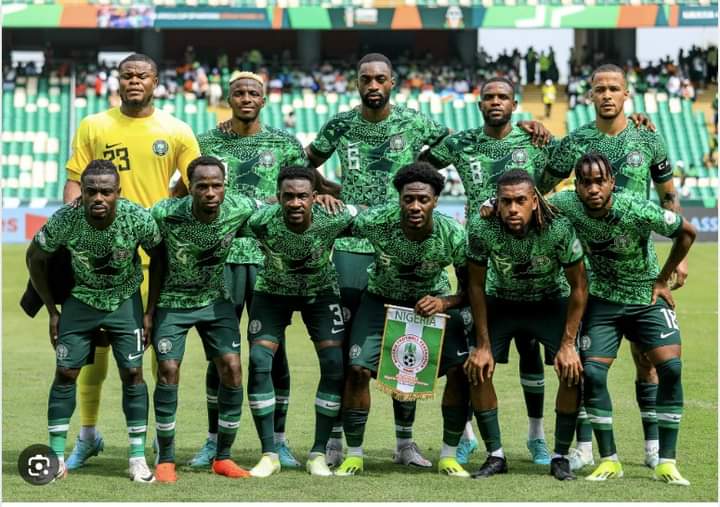
Following from the above, the Nigerian National Team ‘Super Eagles’ in demonstration of team spirit ‘Nationalism and Patriotism’ applying the philosophy of Turn back! Face your fear, and win! Symbolically, Nigeria wins despite the craziest moment in the history of VAR.

 Sadly, many deaths were recorded while watching Nigeria vs South African semifinal football match on Wednesday 7th, 2024.

1. My friend Cairo Ojougboh, Ex-NDDC director, a former member of the House of Representatives

2. Kwara State University deputy bursar.

 3. A Corp Member

 4. Chief Angus Obi, a Nigerian Businessman; and most likely many other enthusiasts.

The sad events occurred as a result of a second goal for the Nigerian team that was unceremoniously canceled and in a twist of fate, the referee, Amin Omar, awarded a penalty kick to South Africa. Teboho Mokoena, South Africa’s ace midfielder rose to the occasion. With the weight of a nation on his shoulders, Mokoena calmly slotted the ball into the net during stoppage time, leveling the score and injecting a fresh dose of suspense into the match. The unexpected equalizer has left the outcome of the match hanging in the balance, with both teams still vying for a spot in the final. That was the craziest moment that was responsible for the deaths of our compatriots.

Essentially, Nationalism and Patriotism played significant roles in the outcome of the Nigeria/South Africa match. Characteristically the epitome of RESILIENCE was noticeable in the Nigerian team the Super Eagles. 

 “Our team has a huge state of mind. The team fights together, There are 25 of us (in the squad) and it’s difficult to beat us,” said Nigeria coach Jose Peseiro.

 “Deep down, thinking about that second canceled (Nigerian) goal and the (South African equalizer), a lot of teams would have given up.

 “I am very happy, the players are happy, they deserve it, we deserve it, the Super Eagles deserve it, and the Nigerian people deserve it.”

So, as we reflect on the subject of Nationalism and Patriotism – let us begin to reinvent the glorious old days as exemplified by the then-youngest governor of Abia State. The pillar of sport in Africa and a Distinguished Senator of the Federal Republic of Nigeria Dr Orji Uzor Kalu promoted nationalism above primordial sentiment as seen in the formation and success stories of Eyimba football club of Aba where Musa Aliyu a Northerner was the team captain.

Conclusively, in the spirit of Renewed Nationalism and Patriotism that enveloped and currently working amongst us – just as we unite to support the Super Eagles, we must also unite to restore HOPE, HEALING, PEACEFUL COEXISTENCE and work for a stronger nation living in HARMONY and PEACE. – as we join millions of our compatriots at home and abroad in wishing the Super Eagles a resounding victory in the Final march.

Finally, I like to join millions of our citizens home and abroad to dedicate this article to the unforgettable and loving memories of the departed compatriots. Goodnight our beloved compatriots – REST IN POWER.

UP NIGERIA

Richard Odusanya

[email protected]

Professor Emevwo Biakolo dies

By Sonnie Ekwowusi

Professor Emevwo Biakolo, scholar in Classics, poet, writer, former lecturer at the University of Ibadan and Founding Dean, School of Media and Communication, Pan-Atlantic University, Lekki, Lagos, is dead. Prof. Biakolo died in his sleep yesterday.

Prof. Biakolo was an exceptional man of letters. He was a member of the Editorial Board of The Guardian Newspaper and a Columnist of the same newspaper during the Abacha dictatorial military rule and, I think, during the dying days of the Babaginda military rule. He strove in his weekly Column to remind the military overlords that a dictatorship that scuttles the rule of law cannot lead to human flourishing.

A public intellectual of repute, Prof.Biakolo was my friend. On several occasions Prof Biakolo and I collaborated in some projects to promote the culture of life.

Gentle, amiable, soft-spoken and respectful, Prof Biakolo was an exceptional academic. In what could be dubbed as a self-exile, Prof Biakolo went to Botswana for a certain period to continue to lecture in a Botswana University. He returned to Nigeria after his sojourn in Botswana to continue to contribute to the improvement of human development in Nigeria.

May God grant his soul a perfect rest

Access Holdings CEO, Herbert Wigwe, wife, son, NGX Boss die in helicopter crash

A helicopter ferrying Herbert Wigwe, the CEO of Access Holdings, his wife Chizoba, son and Abimbola Ogunbanjo, the group chairman of Nigerian Exchange Group Plc (NGX Group) has crashed, killing them and some others in California.

Sources said the ill fated chopper was was headed to Las Vegas when it crashed near a border city between Nevada and California on Friday night. The US government confirmed all on board dead.

Chizoba Wigwe

Herbert Onyewumbu Wigwe was born 15 August 1966 in Ibadan.

Until his death, Wigwe was CEO of Access Holdings Plc, traded as Access Corporation.

He was the Group Managing Director/CEO of Access Bank plc, one of Nigeria’s top five banking institutions, after succeeding his business partner, Aigboje Aig-Imoukhuede in January 2014 till April 2022.

Bamofin Abimbola Ogunbanjo was the Group Chairman of Nigerian Exchange Group Plc, the non-operating holding company that emerged from the demutualisation of The Nigerian Stock Exchange from 2021 to 2022. Prior to this, he was the President of the National Council of the NSE from 2017 to 2021.

Abimbola Ogunbanjo

Days ago Wigwe came under intense criticisms over payment of school fees in dollars in in his university.

However, Wigwe University has said its home students will pay their fees in naira, explaining that its decision for select dollar payment was a strategic one which aligns with its vision to attract a diverse and international student body.


In a statement issued by the institution, Wigwe university noted that it respects the concerns raised by some members of the public, and was obliged to clear the air on the matter.


“The decision to list our fees in USD is a strategic one, aligning with our vision to attract a diverse and international student body. By utilising USD, a universally accepted currency, we aim to provide clarity and transparency for our prospective students from around the world. We want to assure our home students that they will pay their tuition fees in Naira.


“As a hub for intellectual growth, we are not just building individuals, but contributing significantly to the economic development and growth of Nigeria and Africa at large. The presence of international students at Wigwe University has a positive ripple effect on the local economy.


“The exposure to the rich cultural and entrepreneurial landscape of Nigeria creates a potential avenue for future investments and business collaborations. Furthermore, the influx of international students will boost our local economy by bringing in USD, this positive impact will gradually reduce capital flight from our economy,” the school explained.


Wigwe University said it was dedicated to fostering a global learning environment with a focus on excellence, innovation, and inclusivity.


It stated that the institution’s commitment to providing a world class education is reflected in its distinguished faculty, with over 35 per cent hailing from prestigious international institutions.


In addition, Wigwe university said its state-of-the-art infrastructure rivals the best institutions globally, with its campus equipped with modern facilities, smart classrooms, cutting edge laboratories and comprehensive research centres.

According to Wikipedia, Wigwe had a degree in accountancy from the University of Nigeria, an MA in Banking and Finance from the University College of North Wales (now Bangor), an MSc in Financial Economics from the University of London, and was an alumnus of the Harvard Business School Executive Management Programme.

Wigwe started his career at Coopers & Lybrand, Lagos as a management consultant, later qualifying as a chartered accountant. After a stint at Capital Bank, he joined GTBank where he spent over a decade working in corporate and institutional banking, rising to become the executive director in charge of institutional banking.

In 2002, Wigwe and his business partner, Aigboje Aig-Imoukhuede bought into what was then a small commercial bank, Access Bank – at the time, the 65th largest of the 89 banks in the country.

Access Bank is now one of the top five banks in Nigeria and ranked among the top 500 global banks according to a 2015 report by The Banker magazine and is aiming to be Africa’s top bank. It currently serves over 6.5 million account-holders, through 350 branches and with more than 1,500 ATMs in major centres across Nigeria, Sub-Saharan Africa and the UK.

Wigwe also served as the Chairman of Access Bank Ghana Limited,[5] Access Investment & Securities Limited, Central Securities and Clearing System (CSCS) and is the current Chairman of Access Bank (UK) Limited. He is a board member of Nigerian Mortgage Refinance Company and a member of the advisory Board for Friends Africa. He is a Fellow of the Institute of Chartered Accountants of Nigeria (ICAN – FCA), a Fellow of The Institute of Credit Administration, and an Honorary member of the Chartered Institute of Bankers of Nigeria.

TIPS