Home Blog Page 642

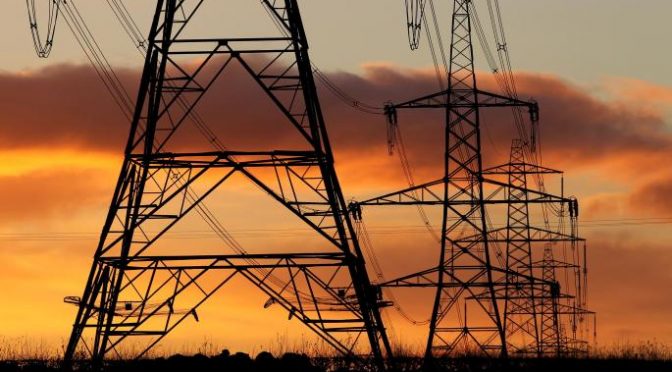
As power generation dips to 3,500mw, why are states not exploring power generation?

  • Watch video

By Lillian Okenwa

The Nigerian Gas Tracker revealed that penalties payable for gas flaring from 2020 to January 2024 is $1.2bn. The report noted that the power generation potential of the gas flared was 59.5GWh.

Despite the continual rise in cost of living, inflation, immense hardship, hunger and the increasing protests against untold suffering in Nigeria, the International Monetary Fund (IMF) has said there is an urgent need for Nigeria to completely phase out electricity subsidy as part of measures to address its economic challenges and the Federal Government appears to agree with them. IMF holds the same view on fuel subsidies.

This is notwithstanding that the IMF kept silent when the British government, last year, paid nearly 40 billion pounds ($50 billion) in energy subsidies; kept mum when the United States’ doubled its subsidies for renewable energy from $7.4 billion in 2016 to $15.6 billion in 2022; and said nothing when the French government announced that it would continue to subsidise electricity bills into 2025.

And although the gas supply crisis in Nigeria has reportedly affected the power sector as the grid remained below 3,500 megawatts despite an installed capacity of 13,000 megawatts, Nigeria has not stopped gas flaring,

The country has continued to suffer losses from its gas, as companies operating in the petroleum industry flared 241.1 million standard cubic feet, MSCF, of gas in the first 11 months (January – November) 2023, according to latest data from the National Oil Spill Detection and Response Agency, NOSDRA.

While there were about 20 power plants on the grid, the level of generation fluctuated between 3,000MW and 3,500MW as industries and homes face supply challenges in the face of rising tariffs.

This comes as the Nigerian government set up a committee to find a solution to the dwindling electricity generation crisis. The committee is confronted with the inability to pay gas producers $1.3 billion.

The debt and drop in generation are coinciding with the return of subsidies on electricity tariffs, even as an N1.7 trillion shortfall is expected in 2024. Nigeria’s electricity generation has dropped to an average 2,000 megawatts from the previous average of 4,000MW.

The committee, which focuses on an intra-ministerial approach, would bring together the Minister of State Petroleum Resources (Gas) Ekperikpe Ekpo, and the Minister of Power, Chief Adebayo Adelabu, to suggest ways and means of achieving sustainable gas supply to power plants.

As of the third quarter of last year, about 20 out of 27 electricity plants on the Nigerian grid were significantly underperforming, with some operating at a mere 0.2 per cent of their installed capacity.

But how is it that Nigeria flares and wastes the gas it desperately needs and at same time owes certain companies for gas supplies? How do you deliberately discard what you need to stay alive and, in another breath, borrow to pay for it? And huge sums of money at that!  This is a clear case of economic sabotage.

Today gas-fired power plants in the country are operating far below capacity due to a lack of gas shortages.

A report by the Nigerian Gas Flare Tracker has revealed that Gas valued at $1.9bn was flared in Nigeria between 2020 and 2024. The report stated that during the period under review, 595.1 million standard cubic feet of gas were flared in nine states of the federation.

The states were Rivers, Delta, Imo, Edo, Akwa Ibom, Bayelsa, Anambra, Abia and Lagos. Curiously. gas flaring continues to trend in Nigeria, despite cries of gas scarcity by electricity-generating companies.

The Nigerian Gas Tracker said 31.6 million tons of carbon dioxide emissions were recorded from 2020 to January 2024. It said that penalties payable for gas flaring in the period was $1.2bn, though the names of companies flaring gas were not listed.

The report noted that the power generation potential of the gas flared was 59.5GWh. Regrettably, after 63 years of independence, Nigeria’s power generation capacity today stands at about 3,500 megawatts.

In their article The Electricity Act 2023 as a catalyst for the development and utilization of renewable electricity in Nigeria, Lynda Ugochinyere Ezike and Ngozi Chinwa Ole posited that: “Renewable energy plays a pivotal role in the crucial reduction of GHG (Greenhouse gases)  emissions, the vital provision of energy security and the curtailment of the reliance on depleting sources of energy – such as fossil fuels. Nigeria is blessed with an infinite amount of renewable energy sources that when properly exploited, could put an end to the protracted lack of uninterrupted electricity supply challenges that have plagued the Nation for years.

“The Electricity Act 2023 depicts that Nigeria, although a developing nation with poor access to electricity facilities can, notwithstanding, leverage on its ownership of renewable energy sources to curb its energy insecurity and environmental challenges. Nigeria’s astounding wealth of renewable energy sources in conjunction with the appropriate execution of the provisions of the Electricity Act is the providential answer to Nigeria’s electricity supply and climate change problems.”

Why then are renewable energy options not being explored in Nigeria?

The repeal and re-enactment of the Electric Power Sector Reform Act, 2005 (the ESPRA) also known as the Electricity Act 2023 (the Act) was seen as a major game changer in the Nigerian Electricity Supply Industry (NESI).

This is because amongst the comprehensive legal and institutional framework introduced by the Act, is that states now have constitutional authority to enact laws that allow them to generate, distribute, and transport electricity within its boundaries, including territories formerly covered only by the national grid.

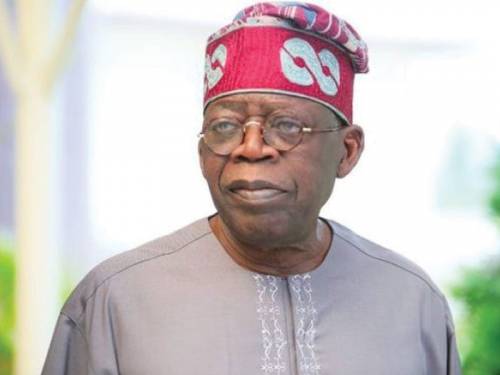
President Bola Tinubu at the time announced that the constitutional amendment permits Nigeria’s 36 states to generate electricity. ‘‘That’s devolution of power and that should be our contribution to the developmental projects you are looking for and we will continue in ways that will help our people,’’ he said.

For decades France exploited uranium in Niger to power its country and add value to its citizens. Nigeria also has uranium, coal, assorted minerals, abundant sunlight, wind and more that could be used to generate power. Why are the citizens suffering?

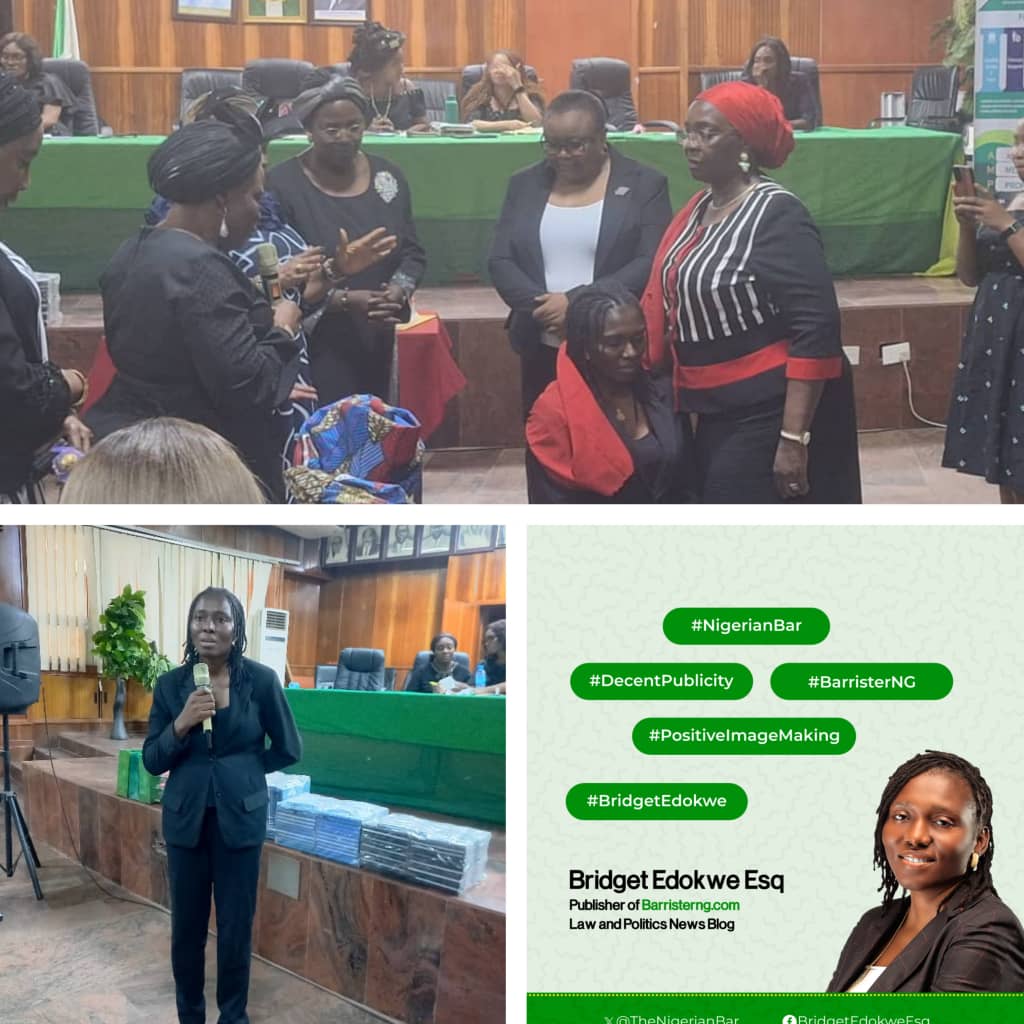
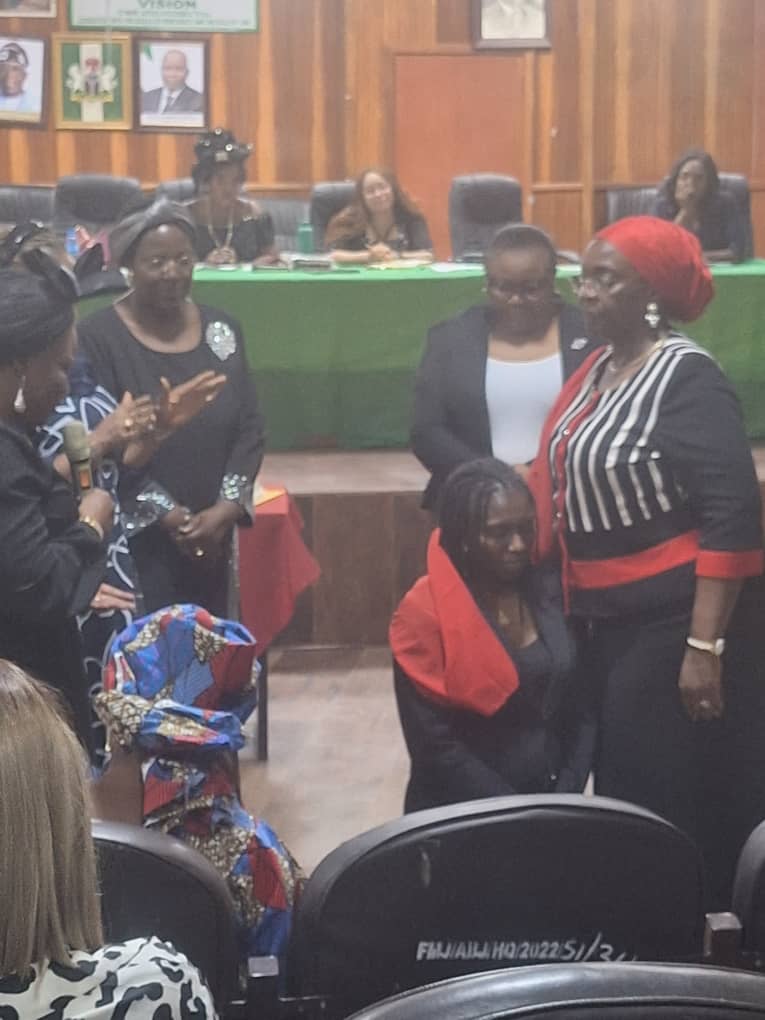
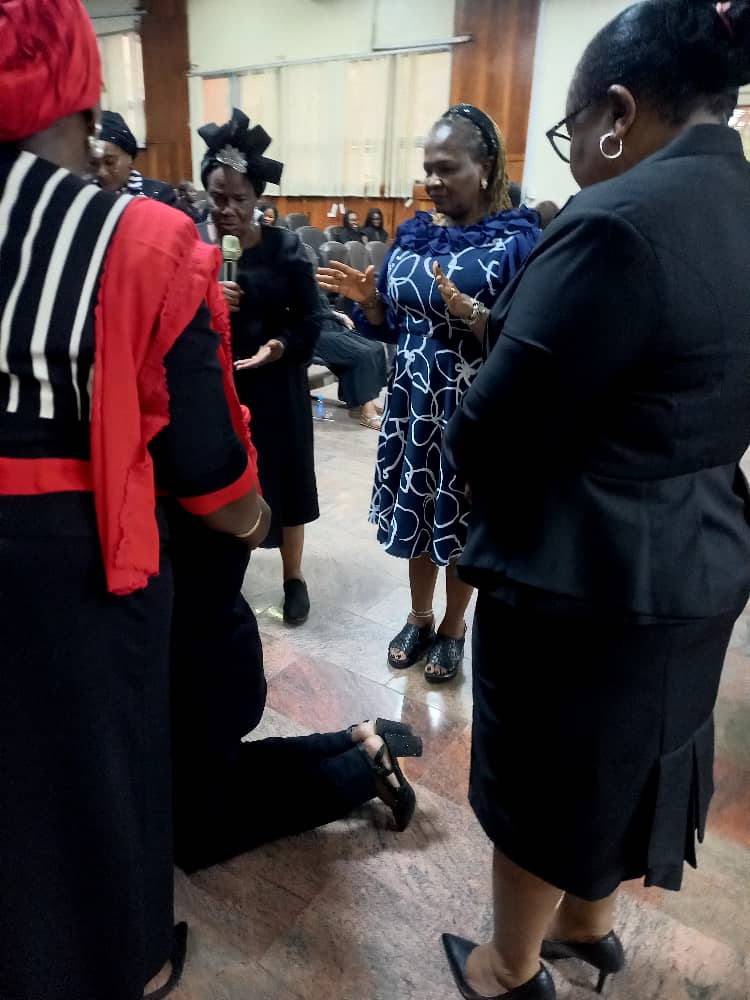
FIDA Abuja prays for Bridget Ijeoma Edokwe Esq as she continues consultations for the Office of NBA National Publicity Secretary

In a show of solidarity and support, FIDA Abuja on Wednesday, unanimously approved Bridget Edokwe Esq’s aspiration for the position of Nigerian Bar Association (NBA) National Publicity Secretary in the forthcoming NBA National officers Election.

Bridget Edokwe Esq, the publisher of Premium Law and Politics News Blog, www.barristerng.com had sought the approval and prayers of the Members of the Federation towards her aspiration for the Office of the NBA National Publicity Secretary.

In addition to their approval, FIDA Abuja prayed and sought divine intervention and guidance for Bridget Edokwe’s journey towards securing the NBA National Publicity Secretary position.

SEE THE IMAGES BELOW:

FIDA Abuja takes FGM advocacy to Abuja communities

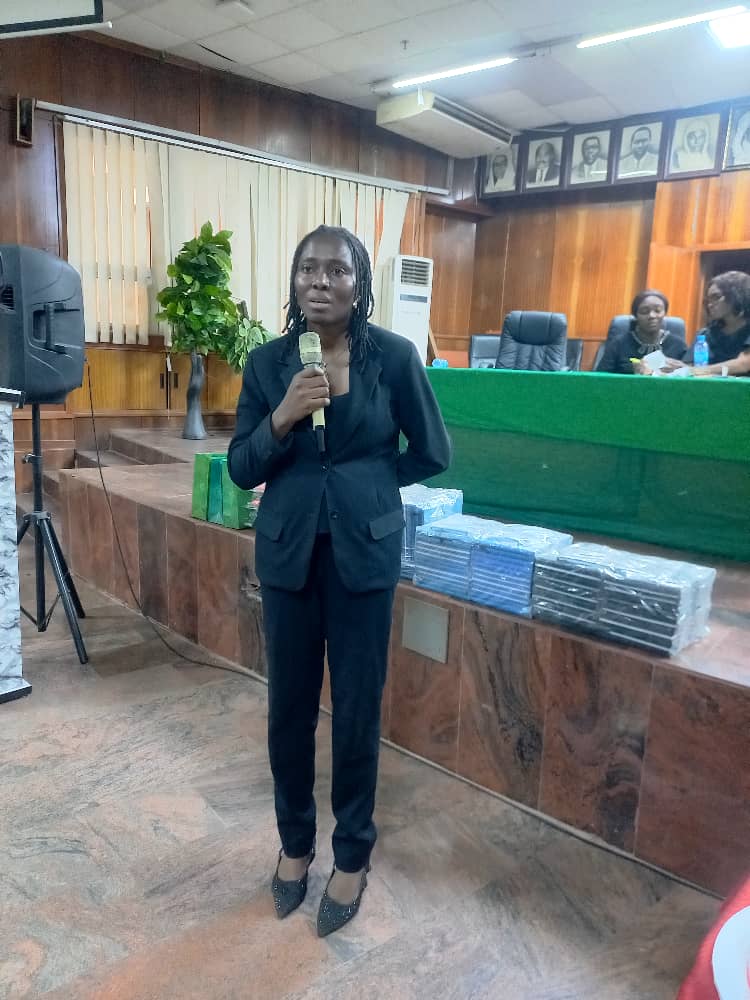
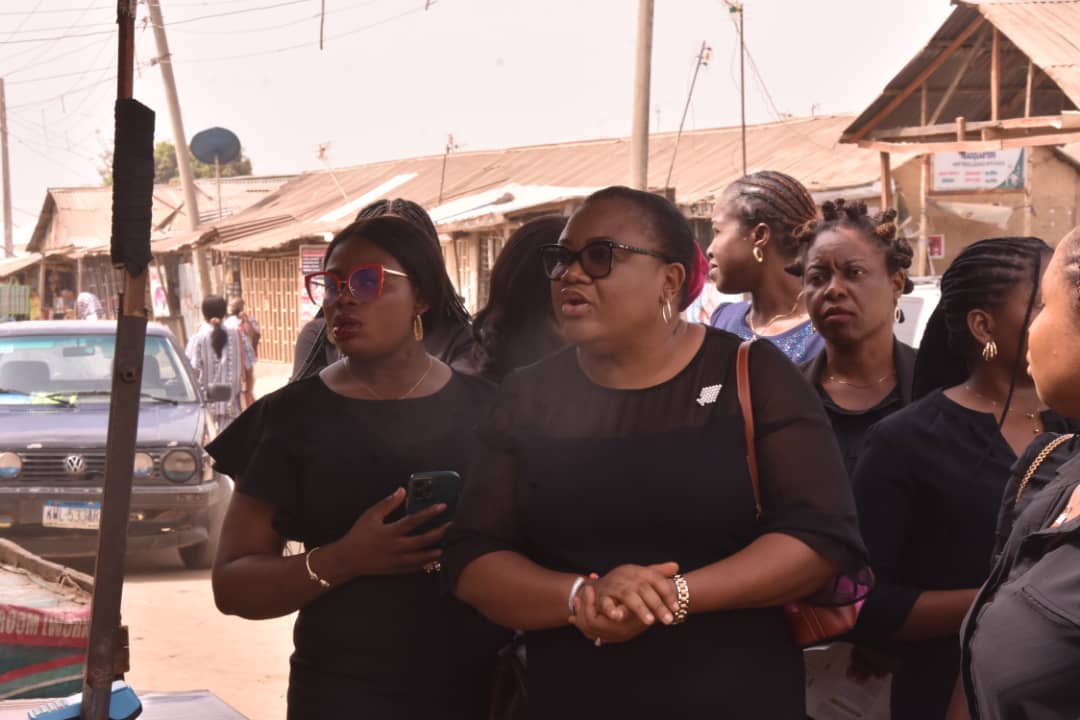
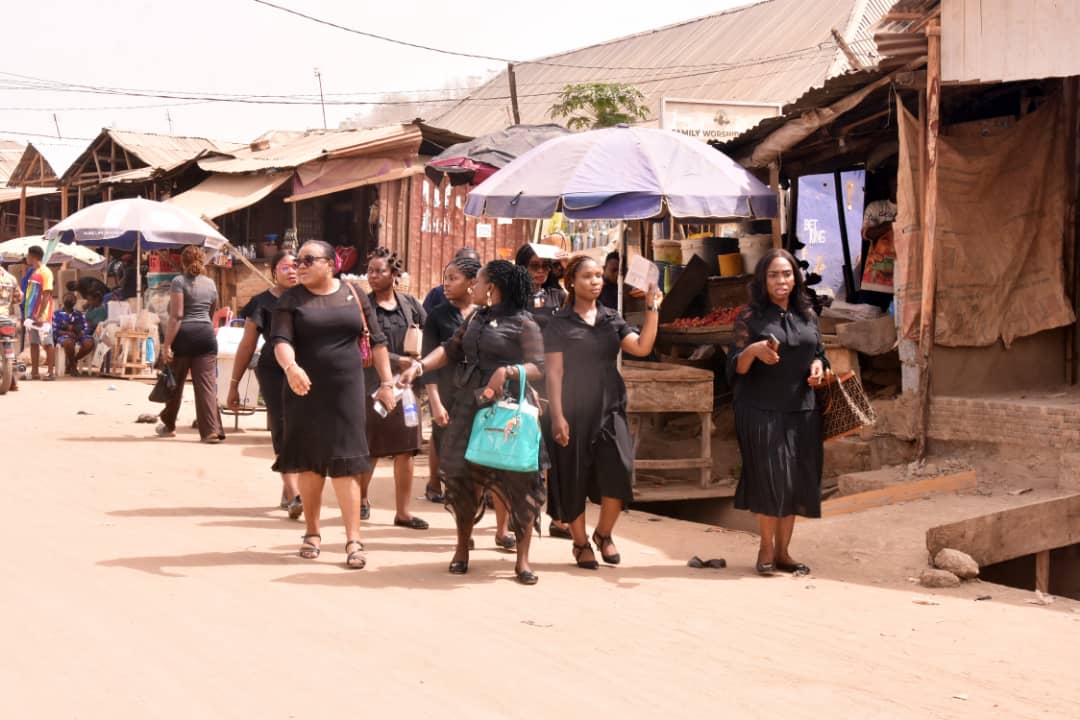
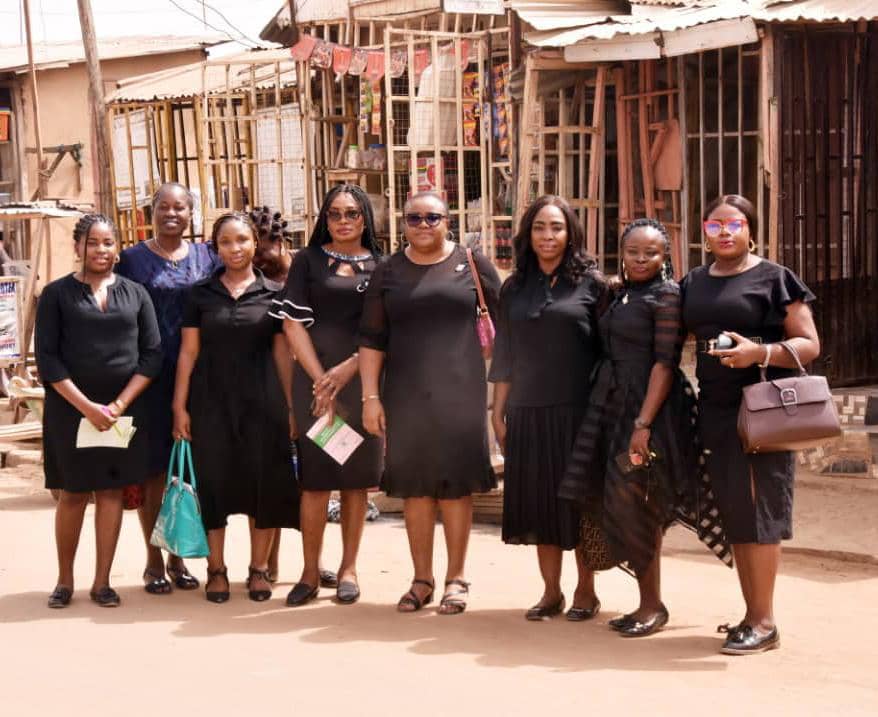
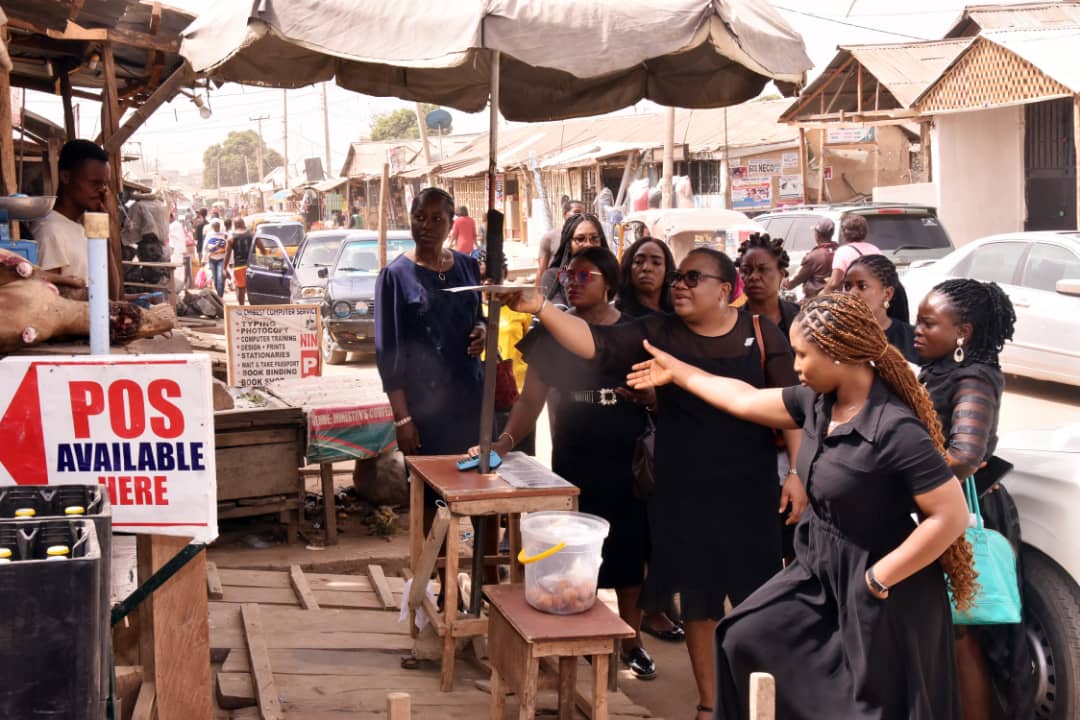
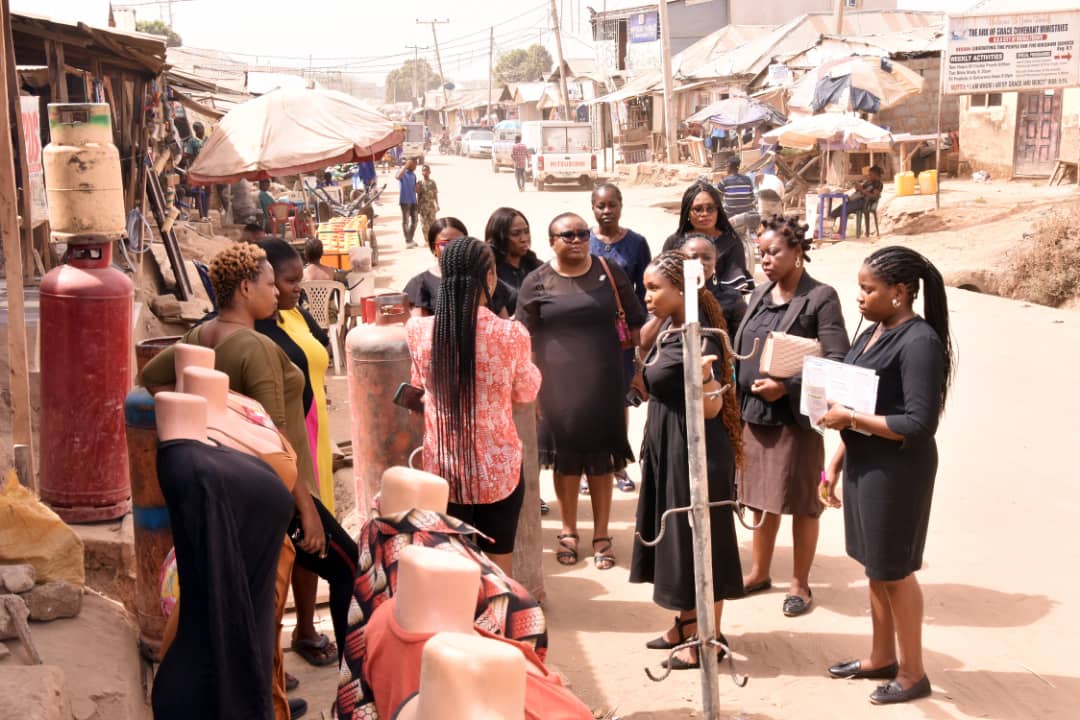
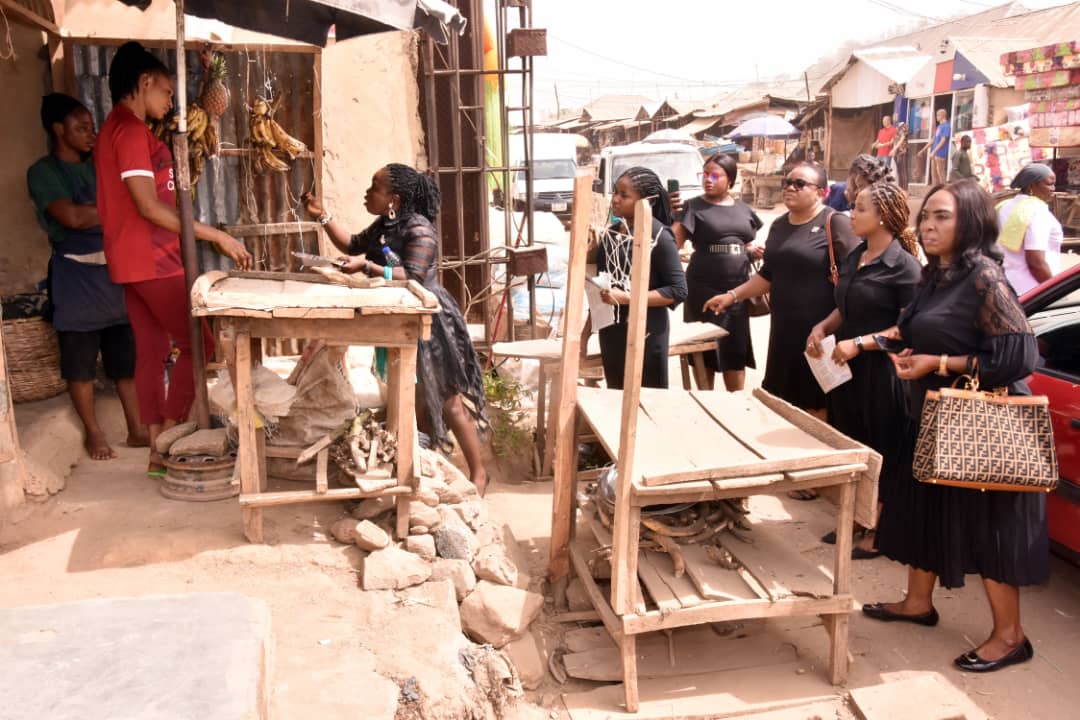
On the Friday 6th of February 2024, the International Federation of Women Lawyers (FIDA Nigeria) Abuja Branch led by its Chairperson Chibuzo M. Nwosu took its activism against female genital mutilation (FGM) to the Wumba community in Abuja.

In the course of the event, the Branch’s Publicity Secretary, Olosen Victoria Ibiezugbe, FIDA’s mandate, while educating members of the community on Section 6 of the VAPP Act 2015 which deals with FGM.

The message was well received by the community.

Copies of FIDA flyers were equally distributed to the community to enable them have a better understanding of FIDA and to furnish them with the association’s contact address in the event they need its intervention.

FIDA Abuja Chair was accompanied by her vice, Francisca Akaniro Opara, Olosen Victoria Ibiezugbe Publicity Secretary, Dooshima Abege, Assistant Publicity Secretary, June Idang-Etim, ex-Welfare Secretary, Uwamusi Ikhisemon-Oje, Chinwendu Olufemi, Naomi Abeji Kpenosen and Andikan Umo.

Hitch Africa set to train drivers on safe driving, vehicle checks

  • Gears up for health outreach in Lagos, Abuja

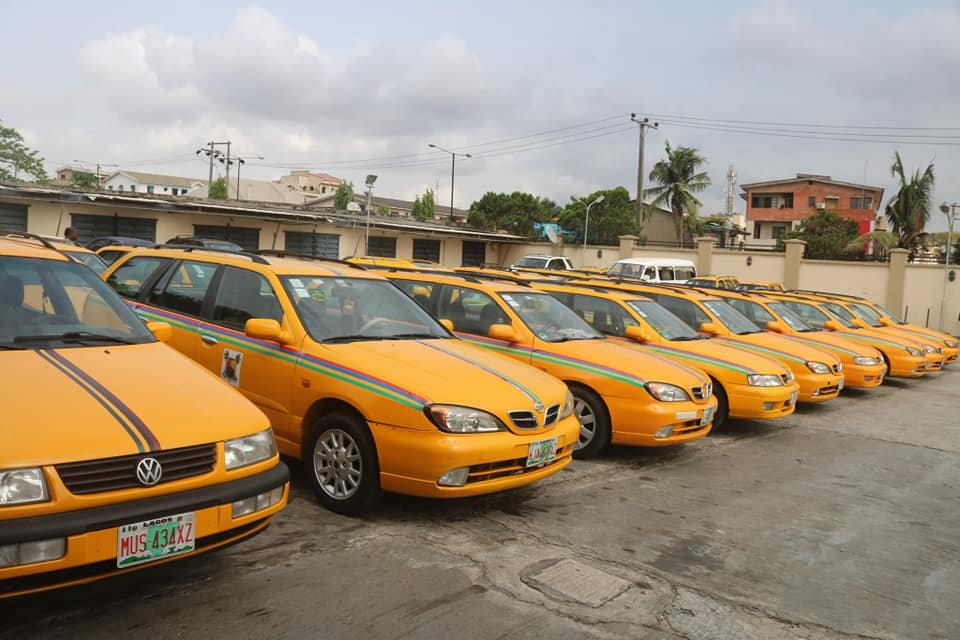
In a bid to promote safety on our roads and healthy lifestyle for cab drivers, Hitch Africa, a Super App that will soon begin operations is hosting a one-day training on defensive and safe driving, vehicle checks and medical outreach for cab drivers in Lagos and Abuja.

The training will be flagged-off in Lagos, Nigeria on February 21, 2024, at Funplex Arena,
CMD, Ketu, Lagos, while Abuja event will be held on February 29, 2024, at the National
Commission for College of Education, Central Business District, Abuja.

Co-Founder/CEO of Hitch Africa, Paul Obalonye in a press release noted, “Hitch Africa is
organizing safe driving training and medical outreach as a demonstration of commitment to
ensure drivers on her platform have the opportunity to upgrade their driving skills, learn soft
skills and safety protocol to serve clients better.”

“Hitch Africa sees quality service delivery as the bedrock of business sustainability, we are
prioritizing partners’ preparedness, to ensure the drivers have the right tools and skills to
deliver premium service by global standard.”

“We want to prioritize the key attributes that enable an efficient Demand Service model that
is both qualitative and meets clients’ expectations.”

According to the technology firm, Hitch Africa, the activities come on the heels of upskilling
the cab driver’s knowledge in rudiments of safe driving. This would ensure our roads remain
safe and secured for all users, drivers, other vehicles, passengers, and pedestrians, and the
entire nation. Additionally, the drivers need to be in good health, hence the opportunity to do
health checks.

“Hitch Africa’s business philosophy is rooted in collaboratively working together to deliver
world class service to teeming clients, ensuring welfare and safety of our partners and
stakeholders. Also, drivers need a healthy body to undertake their daily routine which
primarily includes delivering services to the clients.”

“Hitch Africa is committed to nurturing a supportive environment that empowers everyone
within the value chain, drivers on our platform to undertake their businesses in a sustainable
manner, it delivers results and productivity, a win-win for all.”

Hitch Africa is organizing this event in partnership with Lagos State Council of the
Amalgamated Union of App-based Transport Workers of Nigeria (AUATWON) and Auto
Power Technologies, Abuja.

Hitch Africa stands as a revolutionary borderless marketplace, offering an expansive
selection of On-Demand Services, from rides and food delivery to groceries and specialized
professional services. With a mission to redefine convenience and accessibility, Hitch Africa
empowers users to access essential services on their terms. Its unwavering commitment to
driver partners and the community at large positions it as a transformative force in the OnDemand
Service
sector.

Surviving the Tinubu hardship

By Sonnie Ekwowusi

Please, make it a habit to check in on your family, friends, acquaintances and colleagues. You never know who might have passed away or who might be struggling with thoughts of suicide. Nigeria has unfortunately seen a rise in suicide rates in recent times. Many are also suffering greatly due to the current economic hardships and widespread poverty. Kakistocracy, a term for a government run by the worst people, seems to be prevailing more than ever in Nigeria’s political history. We live in a time where death seems to triumph over life, darkness over light, and lawlessness in cities with kidnapping becoming rampant.

There are reports of walking corpses on the streets, protests, riots, and the poor seeking revenge. In Lagos, even those who used to rig elections are now seen begging for food and money. The traders they once harassed have found new means of livelihood, while the riggers themselves are left without jobs or a future, becoming a burden to society.

Meanwhile, electricity supply is practically non-existent. It’s astonishing that a country as richly endowed as Nigeria still struggles with providing basic electricity in the 21st century. The high humidity worsened by global warming is unbearable. At a time when people need electricity for fans, air-conditioners, and work tools, it’s unfortunate that Nigeria is facing a collapse in electricity supply. Most Nigerians are experiencing sleepless nights, with rats and mosquitoes adding to their discomfort. The unemployed, who rely on electricity for their work, are unable to make a living due to the prohibitive cost of fuel for generators. Despite this, the government is considering increasing fuel prices once again. What a country !

In the horizon, the prominent lawyer and human rights activist Femi Falana, SAN, calls for a social uprising. If the fiery fighter Gani Fawehinmi were alive and kicking today, he would have, among other things, staged a one-man revolution to register his protest. Anyway, if care is not taken, the hungry and angry Nigerian youth will stage another social uprising in Nigeria.

The most tragic aspect is the simmering soaring prices of foodstuffs in Nigeria under this Tinubu government. Go to the market and see for yourself. Prices of foodstuffs such as garri, rice, tomatoes, tubers of yam, egusi, pepper, egg, and so forth have skyrocketed. Spiral inflation is on the prowl. The free fall of the Naira currency is unabated. The foreign exchange crisis has worsened. The US dollar, at the time of writing this, exchanged for N1,600 at the parallel market. It may hit N2,000 very soon. Our leaders hear nothing and say nothing. Ordinary shoe polish now sells for between N1,500 to N2,500. A mudu of yellow garri sells for N280, while a bag of yellow garri goes for N22,000. A mudu of beans now sells for N1,300. The price of sachet water, popularly known as pure water, is now N300 per bag. Meat is unaffordable. Ditto for fish.

A long loaf of bread sells for N1,200. Bakers are about to go on strike. Primary health delivery has been jeopardized. Ordinary drugs and medications are so scarce and exorbitant now. A bag of cement goes for N10,000. Some hospitals have shut down as most medical doctors are continuously fleeing the country in search of a livable medical practice abroad. A bag of rice now sells for N88,000. As usual, the Central Bank of Nigeria (CBN) is confused. Meanwhile, President Tinubu and his Ministers have no inkling on how to recover the economy. President Tinubu, like Buhari, is busy junketing the world, feigning ignorance of the killing and kidnapping holding the Nigerian people hostage.

In its defense, the Tinubu government blames the Buhari administration for the current economic woes afflicting Nigeria. This defense, in my humble view, is fundamentally flawed. These politicians should cease these blame games. The Buhari government blamed the Jonathan administration for its failures. Now, the current Tinubu government is blaming the Buhari administration for its failures. Haba! How can one APC federal government blame another APC federal government for its failures? Governance is a continuum. A government comes to power to govern, not to apportion blame. Therefore, the Tinubu APC government cannot blame the Buhari APC government for its failures. How can one Beelzebub blame another Beelzebub? Assuming the Buhari government was responsible for the current economic hardships, why go after Godwin Emefiele and leave Mr. Buhari untouched, who probably aided and abetted Emefiele? It is noteworthy that despite all the allegations of stealing in Nigeria linked to former President Buhari, the Tinubu government has not deemed it fit to invite Buhari for questioning. Is Buhari above the law of the land?

We knew from the onset that Bola Tinubu would be a disastrous President. The man’s rising baggage points in that direction. The Presidency is the central focus of power and responsibility in a presidential democracy. Therefore, it is essential that the Presidency functions effectively in a presidential democracy. If the President is incapacitated both intellectually and physically, the presidential democracy will be incapacitated. This is why we were warned not to let Mr. Tinubu take over power as President because he would make a mess of it. In his characteristic charismatic manner, Olusegun Obasanjo penned down some articles urging us to make a clean break from our ruinous past. But we did not listen to him. Now we are suffering the consequences.

The man virtually all Nigerians are blaming for Nigeria’s current calamities is the chairman of the so-called Independent National Electoral Commission (INEC), Prof. Mahmoud Yakubu. This man truncated the will of the Nigerian voters in the last presidential election. Prof. Yakubu had the opportunity to become a hero of a free and fair Nigerian election, but he bungled it. If Prof. Yakubu had allowed the will of the Nigerian people to prevail in the last presidential election, the whole world would by now have been honoring him for his integrity. But Prof. Yakubu lacks character. This is why Nigerians are heaping all sorts of abuses on him. For example, the bolt driver who drove me in Abuja two weeks ago was cursing Prof. Yakubu and saying in Pidgin English, “E no go better for him, e no go better for his children and grand, grand children.”

Armed with their respective PVCs, an uncountable number of young voters who longed for the betterment of Nigeria for the benefit of their generation and generations yet unborn left everything and trooped out en masse on February 25 to vote for progress, innovation, and production in Nigeria. Even many Nigerian voters residing abroad flew into Nigeria a few days before the presidential election to vote for a new dawn in Nigeria. But Prof Yakubu simply refused their votes to reflect in the presidential election. Unsurprisingly, Prof. Yakubu has not been sacked as the INEC chairman. Why should President Tinubu sack Yakubu when he (Yakubu) announced him as the purported winner of the February 25 presidential election? Amid the monumental rigging and cheating complaints trailing the February 25, 2023, Presidential election, shameless Prof Yakubu stole out in the mid-morning when Nigerians were still asleep and announced Mr. Tinubu as the purported winner of the February 25 Presidential election.

Picture Prof Yakubu alongside his professional colleague, Prof Nnenna Oti. Whereas INEC’s Returning Officer in the Abia State governorship election, Prof. Nnenna Oti, maintained her integrity and refused to accept the financial incentives offered to her from Abuja to manipulate the Abia State governorship election, Prof. Yakubu sold out and scuttled the will of the Nigerian people. Today, Abia State is excelling more than any state in Nigeria because Prof Nnenna Oti refused to accept the financial incentives from Abuja to refrain from announcing Dr. Alex Oti as the true winner of the Abia State governorship election. Whereas Prof Oti acted rightly and caused Abia State to be put on the excelling world map, Prof Yakubu compromised integrity and honor and brought rot and ruin to the country.

Prof Yakubu and his paymasters do not want an Igbo to be President of Nigeria, but ironically they want an Igbo to play for the Super Eagles and bring glory to Nigeria. In other words, a Stanley Nwabali can be allowed to become the goalkeeper of the Super Eagles and bring glory to Nigeria, but a Stanley Nwabali cannot be allowed to emerge as the President of Nigeria and positively reset Nigeria. Because of this, you and I are now gnashing our teeth in suffering. Serves us right. Until the ghost of ethnic irredentism is exorcized from us, Nigeria is doomed forever.

Despite the Oronsaye Report and public outcry against the high cost of governance, the Tinubu government continues to indulge in over-borrowing and wasteful expenditure. It has refused to cut down on the cost of governance at all levels in order to save Nigeria from financial collapse and to promote the welfare of the people. Unnecessary allowances such as travel allowances, travel estacodes, wardrobe allowances, housing benefits, and other benefits should be eliminated. For instance, in the proposed 2024 budget, a scandalous sum of N15.961 billion has been allocated for international and domestic travel expenses for President Bola Tinubu, Vice-President Kashim Shettima, and their respective hordes of aides at the Presidential Villa. A breakdown of the amount shows that Tinubu’s personal travel budget amounts to N7.630 billion, predominantly earmarked for foreign trips, with N6.992 billion specifically set aside for international travels and N638.535 million set aside for domestic travel.

In the same vein, Vice-President Shettima’s travel allowance amounts to N1.847 billion, split between N1.229 billion for foreign trips and N618.399 million for local travel expenditure. Also, the 2024 Budget has allocated N40.616 billion to the Villa Headquarters, with a substantial portion of N6.484 billion allocated to Villa Headquarters for international and local travel. The sum of N3 billion has also been allocated in the budget for the construction of offices for Special Advisers and Senior Special Advisers. Another N3 billion has been set aside for the acquisition, renovation, rehabilitation, and furnishing of the State House Annex.

Notably, an extra N6 billion has been allocated for operational vehicles, with an additional N4 billion for operational vehicles and an extra N2 billion specifically earmarked for Special Utility Vehicles (SUV). For President Tinubu’s Chief of Staff, Femi Gbajabiamila, he is expected to get a total of N21 billion in the budget. A breakdown of the proposed amount shows that he would get N10 billion for the renovation of his official residence, N104 million for the purchase of computers and printers for local travel and transportation, N290 million for the purchase of vehicles, N10.1 billion for the purchase of computer software, and N103 million for miscellaneous expenses.

You will recall that on December 9, 2023, Senate President Godswill Akpabio threw an extravagant public birthday jamboree to mark his 61st birthday. Apart from the N150 million donated by different Senators at the jamboree, a whopping sum of N800 million was allegedly withdrawn from the Senate Account to foot the birthday expenses. The National Assembly has made a fresh proposal for an increase in constituency projects, which currently stand at N100 billion per year. In fact, the National Assembly wants 20% of the National Budget to be set aside for constituency projects.

It is on record that from 2003 to date, a staggering sum of N2 trillion has been spent on constituency projects. As you know very well, constituency projects allowance is a conduit pipe to siphon the national treasury. Unsurprisingly, Senate President Godswill Akpabio endorses an increased constituency projects budget. It is high time the constituency allowance was abolished. It is preposterous, unconscionable, and a grave betrayal of public trust that a country in debt, running a deficit, should allocate the aforementioned scandalous sums of money for the benefit and comfort of President Tinubu, Vice-President Shettima, Godswill Akpabio, and Chief of Staff Femi Gbajabiamila, and for the so-called constituency projects.

Anyway, hope is the spice of life. Hope is the inseparable companion of hardship and oppressive suffering. Hope banishes fear. Life without hope is repugnant to good judgment. So, hope remains our greatest asset in this Tinubu hardship. With our hope, we can endure the present Tinubu suffering, except that hope that is not anchored on future joy is a blistered hope that leads to destruction. Unfortunately, the Tinubu political-appointee tree is an accursed tree that cannot bear fruits.

In their humble acknowledgment of their respective personal shortcomings and deficiencies, IBB, Obasanjo, Yar’Adua, Jonathan, and even Abacha surrounded themselves with the best and the brightest to help them run the country during their respective stints in power. But President Tinubu has surrounded himself with all sorts of Jannes and Jambres who are only keen on embarrassing themselves and embarrassing the Tinubu government that appointed them. The other day, a Minister in the Tinubu government was threatening to take the United Nations to court. Birds of the same feathers, it is said, flock together.

As I said earlier, we must remain hopeful. Be watchful. Be prayerful. Darkness cannot last forever. We must always be hopeful, I repeat. We cease to live when we cease to hope. With our hope, we can drive from our hearts the specter of Tinubu melancholy and hardship.

Sonnie Ekwowusi is the Chairman, Human & Constitutional Rights Committee, African Bar Association


Our president’s love affair with IMF

By Lasisi Olagunju

A colleague yesterday shared a 1992 campaign video of Chief M.K.O. Abiola promising to demystify governance in Nigeria and stop “people’s heads” from being “shaved in their absence.” A professor friend (political scientist) commented that “that’s partly why he never became president.” Becoming president or king comes with a price. When ‘The Price of Kings’, a political documentary on Palestinian leader, Yasser Arafat, was released in 2011, the Financial Times titled its review of the film: ‘All about the art of compromise’. The reviewer describes the film as a portrait of leadership; he talks about “years of gritty compromise and the abandonment of previously held principles.” He goes on to ask: “What sacrifices would you make for what you believe in? What, in other words, is the collateral damage, personal and political, of statesmanship?”

In January 2012, today’s President Bola Tinubu as opposition leader rallied his economists and got them to tell him the implication of fuel subsidy removal. They wrote it for him. He read it and liked it; he signed it and put his name on it. Conscious of the verdict of history, of posterity, and for emphasis, he got it published – one and a half pages – in his newspaper, The Nation of January 11, 2012. Check the newspaper’s pages 43 and 44. The grim summary of Tinubu’s economists’ damning opinion was that if petrol subsidy was withdrawn in Nigeria, the poor would stop breathing and the rich would suffer. The prophets’ exact words are that “there will be less food, less medicine, and less school across the land. More children will cry in hunger and more parents will cry at their children’s despair…. Poor and middle class consumers will spend the same amount to buy much less. The volume of economic activity will drop like a stone tossed from a high building.”

Eleven years after what has turned out to be an accurate reading of the future, the man who signed the prophecy became president and proceeded to feed to the nation what he had pronounced as poison. A minute after swearing an oath to work for the welfare of the people, Tinubu became a victim of his own prophecy. What happened? You think he did not know the implication of ignoring his seers? He did. Was it sheer self-destructive wickedness? Again, I say no. So, why? The truth is election alone does not make a president here. Our presidency is by election and affirmation. Our votes are subject to affirmation by the kingmakers in London and Washington. The principal does not appoint an agent so that the agent would be master of himself. As opposition leader, Tinubu could independently hire economic advisers who told him the truth. As president, he cannot and dare not choose advisers whose views are at variance with the kingmakers’. The president is endorsed to act strictly the script as given to him by the film director. The script writers are the choice makers. They are the double ‘monsters’ headquartered on Pennsylvania Avenue and H Street, Washington DC.

Mr. Femi Falana, Senior Advocate of Nigeria, last week asked President Tinubu to stop obeying the IMF. He asked the president to reject IMF’s latest advice asking him to further increase the prices of fuel and electricity in Nigeria. Falana will not get a response from the president; the presidency will ignore him. The Senior Advocate ought to know better. The Nigerian government cannot glare down behemoths who hold the knob of life. No poor president has ditched the IMF and the World Bank and slept well since the two were born in Bretton Woods, New Hampshire, in 1944. If you know you won’t sleep with them, do not take their money – and power. If you can’t run errands, never apply and accept to work for them. The presidency of Nigeria is not a detached power house; it is some people’s gate house.

Falana in his intervention wondered why the IMF kept quiet when the British government, last year, paid almost 40 billion pounds ($50 billion) in energy subsidies. He asked why the United States’ doubled its subsidies for renewable energy from $7.4 billion in 2016 to $15.6 billion in 2022. He wondered why the IMF did not ask these countries to stop what they were doing with subsidies. Falana noted that the French government had announced that it would continue to subsidise electricity bills into 2025. Falana said: “The IMF has not called on France to stop subsidising electricity and increase electricity tariffs. So, the IMF’s anti-subsidy campaign in Nigeria should be flatly rejected.”

Tinubu cannot obey Falana and disobey the IMF and its brother, the World Bank. If he tells them no, he will pay. Whatever the earthworm tells the ground is what the ground does. The president is the ground, the Bretton Woods are the earthworm. There is an old video of President Olusegun Obasanjo saying his Central Bank governor, Charles Soludo, “was not really a fan of the World Bank” and was always showing it in words and deeds. The president said he, one day, warned Soludo: “never you say no to the World Bank; otherwise, they will rub your face on the ground – but never you do their bidding.” That is how tough it is – say yes without doing yes. Either way, you will pay.

Shaving people’s heads in their absence is the simple meaning of international politics and global finance. Two of the barbers – the ‘head cutters’ – are the IMF and the World Bank. They are the ones we are asking this president to disobey. The man knows why he is putting his feet where he is directed to put them. If he does not, to which god will he run when trouble comes? But he is wrong. Why has he not read what became of those who did what he is doing? He should read BBC’s Budget Blunders, UK’s ‘Dash for Growth’ budget of 1972/73, the 1976 Pound Sterling crisis, the tragedy of Keynesian measures and IMF’s involvement.

Before this Tinubu, there was a Tinubu in Lagos who made and unmade kings in that city. Lagos of the mid-19th century belonged to big boys from the colonial office, rich returning slaves and a few homegrown wealthy merchants. Madam Efunroye Tinubu not only belonged to the latter group; she literally had the balls of everyone in her firm grip. She was the female, local version of the 16th Earl of Warwick, the overbearing power and property baron “who carved out a position for himself by the strength of his sword.” This Earl had neither the authority nor the right to raise or depose kings” but he did both with cruel equanimity. He did, and P. C. Dharma gives him a generous mention in her 1947 article on ‘Kingmakers of India.’ Madam Tinubu was exactly the Earl in Lagos of the mid-1880s, an arbiter of royal and economic powers. Bold, courageous, no-nonsense, ruthless, her history in Lagos and, later in Abeokuta, is about making kings and using kings. The ones who demurred, who raised objections or showed reluctance, suffered loss of crown and scepter.

Falana asked why the two finance institutions are not giving first world countries the same drugs they are prescribing for us. I think I can answer that question. Small gods do not teach Sango how to inflict maximum damage. Besides, chief priests of the sacred grove are beyond the canes of masquerades. The masqueraders who tried that in the past lost their costumes. I use Madam Tinubu again here to illustrate this. The lady without means transited from poverty in Abeokuta to power and wealth in Lagos. Tinubu was made very rich by the colonial economic system. She was very useful to the government and the business community. She traded in men and goods for her profit and for the good of the powers-that-be. She made very good money. She loved and coveted the white man’s trade and riches but later detested the meddlesomeness of the alien in Lagos affairs. She started plotting the downfall of the masters. The first was in January 1855; it failed. The second was in March 1855. The grand plan was to expel or neutralize all the European merchants in Lagos. The plot was called off, last minute, because two British warships showed up fortuitously in Lagos waters. A deadly disturbance two months later got the British to expel Madam Tinubu from Lagos, never to come back.

No one on the mountain top desires such a fall. ‘Expulsion from Lagos’ is the title of the chapter that tells this part of Madam Tinubu’s epic story in her biography ‘Madam Tinubu: Merchant and Kingmaker’ by Oladipo Yemitan. I read it (starting from page 54) and thought the woman who later rose again and became the first Iyalode of Egba got what he gave her victims. Her boat met every furious tide with fury. The intrigues, the shifting and shifty loyalties on those pages present good lessons in compromise and consequences.

We will be asking our president to hate himself if we insist he must spurn the orders of those that give life to his government. If we would ask anyone to say no to the IMF, it would not be this president. His bones are weak; we should leave him alone. Why can’t we make the rejection by ourselves? The Yoruba say a man uses his own mouth to reject a meal. They also say no one begs another into slavery. Everywhere the Bretton Woods have been successfully glared down and shown to be dumb, it has been the people themselves who did so. But we are not normal people. We always look for king-size heads to help us break our coconuts. If we can’t find one, we simply withdraw into our prayer houses and intensify supplications for ‘divine intervention.’

Normal babies cry at the sight of injections. There is a trending WhatsApp video that shows an unbelievably calm baby while being inoculated. With that video is a caption mocking how we suffer pain here without crying. The baby betrayed neither pain nor anxiety. That baby is Nigeria and its long-suffering people. We take and endure knocks and, like Charles Dickens’ Oliver Twist in the workhouse, we ask for more. American abolitionist and fiery anti-slavery orator, Frederick Douglass, in August 1857 warned that the extent tyrants go is set “by the endurance of those they oppress.” Douglass added that victims of power would be hunted in the north and flogged in the south “so long as they…make no resistance, either moral or physical.”

For millions of my countrymen, life is literally nasty, brutish and short. Every home sobs. Rice was N70,000 per bag last week. This week opened with rice becoming N80,000. Cement sold for N10,000 per 50kg bag on Friday. Naira slid to N1,700/dollar at the weekend. Our minimum wage of N30,000 equals $17. How did we get here after the experience of previous disasters? The IMF gave us some prescriptions some forty years ago. The calcifying effects are still in our blood system. In 2023/2024, that same Doctor Death came back into our embrace. Ola Rotimi wrote ‘Our Husband Has Gone Mad Again’. Why should people’s head go bad more than once? Madness and insanity are synonyms. “Insanity is doing the same thing over and over and expecting different results.” Frank Wilczek, theoretical physicist at the Massachusetts Institute of Technology, United States and 2004 winner of the Nobel Prize in Physics, examined that quote and called it the “Einstein Insanity”— because the quote is attributed to Albert Einstein. Einstein was that thinker who held that if we are not insane, we should be able to predict the consequences of our actions. He was the physicist who believed that human stupidity is one of the two infinite things in the world. He refused to accept that the world is inherently unpredictable. He strengthened his argument with a sound bite from the celestial: “God does not play dice with the universe.” But, here, we are being ruled by dice players – poor players; people who roll the dice, and roll it again – and again, because the results they expect are not what they get. What they do with Nigeria is what my childhood called tokíní tokéjì. They use the people to play Baba Ijebu; they bet with people’s destiny.

Amid all these came from the north last week a regional threat to the president by traditional and religious leaders. They said their people were hungry and restive and that they could no longer control them. Every sentence they uttered sounded like a threat of Armageddon. Their concern would have carried weight if the shouters had done so when their Muhammadu Buhari was in power and was messing up everyone, everything, everywhere. But they maintained complicit quietude and passivity when their evil reigned. Because of their past of unholy silence, their present angst could not resonate with the street in the south. I saw and heard people mocking these northern leaders and their groans. They lost it. Ironically, the Yoruba content of the south is working hard to follow that same road of vicarious infamy. There is an insidious, invidious campaign for indifference going on. I was called “a perennially sulky bad boy” last week by a gentleman who claims to be a ‘Yoruba leader.’ That was because I had the audacity to speak about hunger and pain in the land. The ‘Yoruba leader’ thought Yoruba brotherhood with the president should have stitched my mouth. I thought if he was truly Yoruba, he would be familiar with the causal relationship between criminal, idiotic silence and a bad head.

The rain has not stopped; nobody should say that it is not as heavy as yesterday’s downpour. Things may still get worse. Today, staying at home is hot as hell and there is no safety on the road. It is the perfect Yoruba situation of Ilé ò gbàá, ònà ò gbàá (the home rejects him, the road won’t accept him). Uproars daily follow naira’s death by installment. We sob as if we do not know that the illness that won’t heal will kill. Unfortunately, you feel pain only if you wear the shoes. Those assembled by Tinubu to halt the drift do not have their wealth in weakness. Every fall of the naira swells their bùgá. But they may be wrong. My political economics teacher told me that the way these things are going, every soul in this ship is in danger. He said life vests won’t help and escape boats may be useless.

At last a treaty to protect citizenship rights and end statelessness in Africa

By Chidi Anselm Odinkalu

This past week in Addis Ababa, Ethiopia, the Assembly of Heads of State and Government of the African Union (AU) adopted a new treaty Relating to the Specific Aspects to the Right to a Nationality and the Eradication of Statelessness in Africa. The explanatory memorandum explains that this treaty “seeks to facilitate the inclusion of individuals within African States, by providing legal solutions for the resolution of the practical problems linked to the recognition and exercise of the right to a nationality, to eradicate statelessness, and above all to identify the principles that should govern relations between individuals and States in relation to these issues.”

This protocol plugs the omission of the right to a nationality in the African Charter on Human and Peoples’ Rights and has been long in the making. The demand for it was launched in March 2007 by the Global Pan-African Movement, International Refugee Rights Initiative, and the Open Society Justice Initiative in a joint position issued by Dr. Tajudeen Abdulraheem, Dismas Nkunda and the present writer calling for a continental treaty “to guarantee the right to citizenship and prohibit statelessness in Africa.”

A mere two years later, on 25 May 2009, Tajudeen was killed in a car-crash in Nairobi, Kenya. The drafting and negotiation of the Protocol has taken all of nearly 15 years since his death. In memory of Tajudeen, this column today substantially re-publishes the statement from 2007 which set in motion the process leading to the adoption of the treaty.

On 6 March 1957, the independence of Ghana promised for all Africans and our communities a new era of citizenship in full dignity and equality with the rest of humanity. Over 50 years later, in launching the Citizenship Rights in Africa Initiative (CRAI), we testify that this promise remains to be fulfilled and call on African governments as a matter of urgency to fully assure, respect and guarantee a right to effective citizenship in our continent.

Africa’s peoples did not fight for independence to be reduced to non-persons or second class citizens by our own governments. Today, we say: our governments must stop foreignizing our people.

This initiative is a necessary response to perhaps the biggest challenge facing Africa today – of guaranteeing the right to citizenship and enabling Africans within our continent to co-exist, pursue livelihoods, move freely, and participate in the government of our countries without arbitrary interference. For the average African, irrespective of country, these basic elements of effective citizenship do not exist today.

Thousands of Africans daily join the millions of victims of statelessness and arbitrary denial of citizenship in our continent. Although each case of statelessness or denial of citizenship produces unique experiences of victimization, common patterns are clear. These include the stripping of citizenship status and rights resulting in statelessness; forced expulsion or forced population transfers; elimination of minority groups through mass de-nationalization, followed – in many cases – by targeted killings of members of the affected groups; persecution of vocal opponents or critics of incumbent regimes; and refusal to recognize or accord the rights of particular (groups of) citizens in the absence of documentary proof.

In several cases, governments make such proof extremely difficult or even impossible to obtain. For example, Kenyan Somalis and Nubians in Kenya are required, in order to prove their citizenship, to produce birth certificates of their grandparents, nearly all of whom were born when there were no birth records.

International law prohibits statelessness. The African Charter on Human and Peoples’ Rights similarly prohibits arbitrary and discriminatory interference with citizenship. The pattern is clear. Many governments across the continent daily strip certain people – usually political opponents, members of minority communities, or vocal critics – of their citizenship. For millions of our people, citizenship is no longer a right; it is now a privilege enjoyed at the pleasure of government of the day:

In many countries in Africa, there are millions more who are too poor to challenge this violation or too unknown to register in the frightening statistics of the stateless.

Affected populations include: a majority of the continent’s estimated migrant and pastoralist population of 17.3 million persons representing the biggest population of persons at risk of statelessness in the world; an estimated 30% of Côte d’Ivoire’s 17.5 million people de-nationalized by the Ivoirité-inspired amendments to their country’s citizenship laws between 1995-2000; more than 1.5 million Banyamulenge of Eastern Congo, whose citizenship in the DRC remains disputed even today; another 1.5 million Zimbabwean mine and commercial farm workers born of parents descended from Malawi, Mozambique and Zambia whose nationality was arbitrarily cancelled by the government of Zimbabwe in 2001; and hundreds of thousands of Ethiopians of Eritrean-descent who had their Ethiopian nationality cancelled and nationality documents destroyed before their forced expulsion to Eritrea in 1998-1999 and hundreds of thousands of black Mauritanians expelled to Senegal in the 1990s. The list is endless.

Statelessness and mass denial of citizenship pose a clear and present danger to regional peace and security in Africa. Indeed many of Africa’s current wars, including those in Côte d’Ivoire, Democratic Republic of Congo, and Darfur region of Sudan, are linked directly to citizenship-related persecution and exclusion.

The war between Eritrea and Ethiopia involved cancellation of nationality and tit-for-tat forced population transfers. The 1994 Rwandan Genocide is the logical extreme in Africa’s recent history of what happens when governments choose to arbitrarily put their own people beyond reach of citizenship.

Pastoralist and border populations around our continent, such as the Maasai of Kenya and Tanzania; and the Somalis of Kenya, Somalia and Ethiopia, have been rendered stateless because they straddle the borders of multiple African countries but are unable effectively to claim the nationality of any.

These examples easily demonstrate that statelessness and citizenship are together the most serious human security and human rights problems in Africa today. Statelessness and the arbitrary denial of citizenship violate human dignity, undermine the integrity of government and its institutions, dislocate families, destroy the livelihoods of those affected, render the victims open to further abuses of their rights and lead to war. That millions of Africans have to build their families and contribute to their communities in such conditions of unlawful persecution and uncertainty prevents free and productive economic development, making nonsense of public commitments to fighting poverty by Africa’s leaders.

The causes and consequences of statelessness and mass denial of citizenship in Africa clearly transcend national borders. One country cannot, without reference to another, unilaterally determine that a person hitherto known to be its national belongs to the second country. The history and shared experiences of African countries make a compelling and urgent case for a regional response to statelessness and citizenship.

To achieve this, CRAI will advocate for a regional treaty at the level of the African Union to guarantee the right to citizenship and prohibit statelessness in Africa. Such a treaty will establish principles and rules to eliminate arbitrariness and discrimination in access to as well as proof, acquisition, enjoyment, and loss of citizenship rights on our continent. Such legal instrument should ideally be adopted as a Protocol to the African Charter on Human and Peoples’ Rights.

CRAI offers to work with the African Union in ensuring the preparation, adoption, and entry into force of this treaty at the earliest possible date.

To end the pandemic of statelessness and denial of citizenship in Africa, a regional treaty is necessary but more needs to be done. Therefore, CRAI will use all lawful means to advocate against all forms of statelessness and the causes of statelessness in Africa.

This initiative requires the partnership and support of African communities, citizen groups and the Diaspora, women’s groups, media, academia and researchers, activists, Parliaments, diplomats, governments, regional institutions, as well as international partners outside the continent. We promise to vigorously monitor, investigate, highlight and denounce the numerous cases in different parts of the continent, which make the adoption of such a regional treaty both necessary and urgent.

A lawyer & a teacher, Odinkalu can be reached at [email protected]

40-year old man remanded for allegedly defiling 15-year-old girl

Photo Credit: Debonair Nestory -www.pexels.com

A 40-year old man, Aloma Onunka, has been sent to Kirikiri Correctional Centre in Lagos State for allegedly confusing and luring a 15-year old girl into sex romp.

P.M.EXPRESS reports that the suspect, Aloma, has been arrested and charged for defilement under the Criminal Laws of the State.

The incident happened on 2nd  February, 2024, at about 4pm at Poultry Street, Agunloye, Igbogbo area of Ikorodu, Lagos, where they reside.

According to the Police,  the suspect lured victim to an apartment and defiled her in the process. The victim later revealed what happened to her parents and the matter was reported to the Police. He was then arrested for interrogation over his alleged conduct.

After rounds of interrogation,  the Police found him culpable and consequently charged him before the Chief Magistrate Court in Ikorodu, Lagos State, for the alleged offence, which attracts several years of imprisonment or life imprisonment.

The Lagos State Prosecuting Counsel, Mrs. Olawunmi Osibanjo, told the Court that Aloma, committed the offence  which contravened the provisions of Section 137 of the Criminal Law of Lagos State.

The Court did not take his plea when he was arraigned following a motion moved by the prosecutor, Mrs. Osinbajo asking the Court to refer the matter to the Directorate of Public Prosecutions for legal advice.

The Chief Magistrate, Mrs. A.B. Olagbegi-Adelabu, ordered his remand in custody at the correctional centre at Kirikiri town, Lagos, pending the outcome of the DPP’s advice and directed the prosecutor to duplicate the file and send it to the DPP.

The matter was adjourned till 21st March, 2024, for report of the DPP’s advice to be ready, which will determine if the matter will be transferred to the High Court or not over jurisdiction.

P.M.EXPRESS

So fuel subsidy actually never left…

  • Petrol subsidy nears N1trn monthly, bigger than when Tinubu came

By Abubakar Ibrahim 

Nigeria’s petrol subsidy has returned and is now bigger than the amount being paid before President Bola Tinubu stopped the costly practice last May.

BusinessDay’s analysis has revealed that the country is paying about N907.5 billion subsidy on premium motor spirit (PMS) popularly known as petrol monthly as the country’s foreign exchange crisis pushed the actual cost of litre of fuel to N1,203.

One week before the 2023 presidential election which brought in the new administration, Mele Kyari, the Group CEO of the Nigerian National Petroleum Company (NNPC) Limited, said at the final cutover ceremony of NNPC and the birth of NNPCL at the corporation’s towers in Abuja, that the country is spending over N400 billion monthly on petrol subsidy.

Recent investigations into Nigeria’s petrol pricing dynamics have revealed a significant surge in the landing cost of petrol, attributed to the escalating black-market exchange rate.

According to findings, at the prevailing black-market rate of N1,500 per dollar, the landing cost of petrol has soared to N1,009 per litre, marking a substantial increase from N720 per litre recorded in October 2023.

Till date, the state-owned oil company remains the sole importer of petrol into Nigeria, despite the passing of the Petroleum Industry Act 2021 and the deregulation of the downstream sector, which allows for other private oil marketers who are licensed to import the product into the country.

However, accessing forex required for the importation of the commodity has proved difficult, leading to them depending on the state-owned oil company.

More than 90 licensed marketers, tasked with importing petroleum products into Nigeria, find themselves hamstrung by an unresolved price differential, rendering them unable to bring in any products nearly nine months after President Bola Tinubu announced the deregulation of the downstream segment of the petroleum industry.

Jide Pratt, country manager of TradeGrid, said that marketers need access to forex to import the refined product into the country to change this development.

According to him, it will be beneficial for all parties if the NNPC stops being the sole importer of petrol into Nigeria.

In his calculations, PMS Eurobob delivered to West Africa was $867.60 per tonne. There are 1000 litres in every tonnes, which brings the landing cost of petrol per litre in Nigeria to $0.87.

“With an exchange rate of N1,555/$, the retail price should be estimated at N1098 per litre,” he said. “Alot needs to be done.”

President Bola Tinubu announced that petrol subsidy is gone in his inauguration speech in May 2023. Prior to this, there was a difference of close to N202 for every litre of PMS imported into this country.

Kyari said in February 2023: “In current data terms, the landing cost was around N315/litre. Our customers are here, we are transferring to each of them at N113 per litre.

“That means there is a difference of close to N202 for every litre of PMS we import into this country.

“In computation, N202 multiplied by 66.5 million litres, multiplied by 30 will give you over N400 billion of subsidy every month.”

Meanwhile, Eze Odiri, a public sector consultant, said that there is no way Nigeria can earn substantial forex as the NNPCL has already mortgaged future production volumes for upfront cash.

“We don’t earn any forex. Until NNPCL starts giving us dollar revenues, it will keep on going up as our importation is still high,” he said. “Our non-oil exports are still too small. Then our remittances from diaspora are not getting to the CBN.”

Report by Business Day’s Abubakar Ibrahim 

[Download Full Judgment]10 years in Prison over no offence committed!

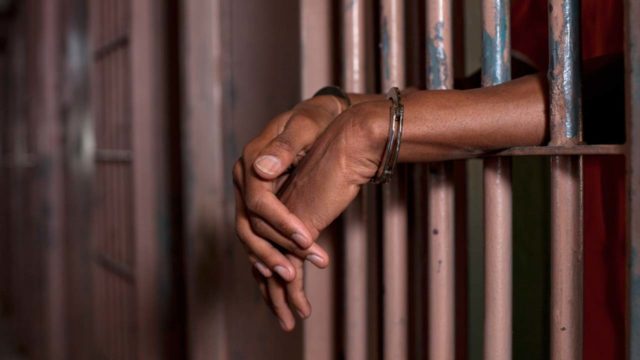
Bamayi Mustapha was kept in Prison for ten whole years over no offence committed! It took trial Court six years to conclude a trial in which only one witness each testified for the Prosecution and the Accused person.

The first and only prosecution witness (PW1) admitted conducting no investigation at all and could not confirm all alleged three robbery escapades of the Accused.

There was no single victim and none was interviewed. No single registration number of several vehicles he was alleged to have robbed between 2013 and 2016. Yet the lower Court in the absence of not a single evidence convicted him on an alleged confession, and curiously not for the armed robbery he had allegedly confessed to but for robbery as lesser offence and sentenced him to 21 years.

Upturning the sentence, the Court of Appeal Makurdi division said: “There is no doubt, in my mind, that before the lower Court, save the extra judicial statement of the Appellant, there was neither any direct eye witness account or circumstantial evidence of all or any of the alleged three robbery escapades of the Appellant. Curiously, even the PW1 admitted clearly that of all the three alleged robbery escapades of the Appellant he can only affirm one of the alleged robbery incidents, but did not say from what source he could affirm the said one incidence having admitted that he never carried any investigation of the allegation against the Appellant but merely took his statement as in Exhibit A.”

In addition, Justice Biobele Georgewill in the penultimate court’s leading verdict said: “Now, the PW1, the only witness to the Respondent, was emphatic that he did not affirm any of the allegation through any independent investigation he carried out. Thus, even his affirmation of one of the three alleged robbery incidents was based strictly on the content of Exhibit A. It was on the face of this obvious and palpable lack and dearth of any evidence, of any form at all, that the lower Court had, relying solely on the Exhibit A, convicted the Appellant, and curiously not for the armed robbery it believed he had confessed to but for the lesser offence of robbery. Honestly, how the lower Court arrived at this finding remains so strange as there was no one singe reason proffered by the lower Court for this finding that while Exhibit A is a confession to armed robbery but did not prove armed robbery but nonetheless it can sustain conviction for robbery.

“My lords, this is one appeal, going by the complete lack of evidence outside of Exhibit A, and the total absence of any form of investigation by the Respondent as even admitted by the PW1, that the learned Deputy Director, M. J. Abokee Esq., ought to have displayed the rare kind of candor of prosecuting attorneys of old, who do not support convictions, which on the facts, evidence and applicable law, they believe are not correct even though in favor of the State. I commend to all prosecuting attorneys of these present times the candor of the great Prosecuting Attorneys of yore as displayed in John Mgboko V. The State (1972) LPELR – 1872 (SC), where the Prosecuting Attorney, one L. A. Iyagba Esq., now of blessed memory, found himself unable to support a conviction for murder against the Appellant, while acceding to conviction for the lesser offence of manslaughter…”

Click here to download the full judgment.

Aghast at Mustapha’s dreadful odyssey, Ikeazor Akaraiwe, SAN remarked: “Appeal taken on 6/2/2024 and by the time judgment was delivered under one week and accused person set free he had already spent ten years!!! What a tragedy of a system of administration of criminal justice despite all the efforts at reforms.”

JUDGMENT-24C-MAKURDI-20211

TIPS