Home Blog Page 637

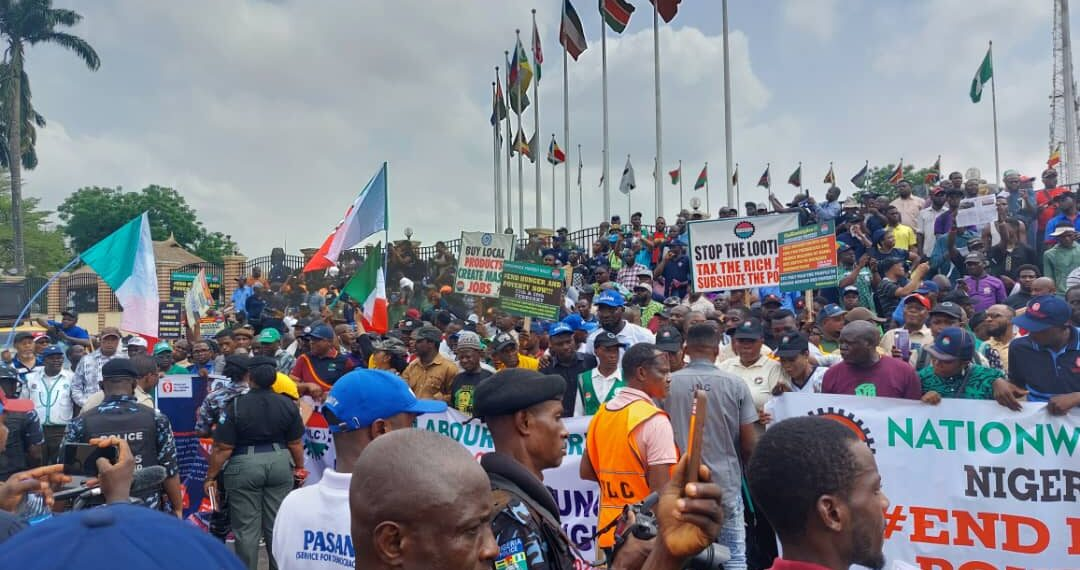
NLC Hunger Anti-Hunger: Police provide Lagos protesters with drinks, biscuits

The axiom that ‘The police is your friend’ came to life as protesters in Lagos were on Tuesday served with biscuits and drinks by the police authorities.

In protest of the savagely biting hunger in Nigeria, members of the Nigeria Labour Congress (NLC), on Tuesday, began their two-day protest.

Protests were held Lagos, Kano, Oyo and Abuja while there have been reports of disruptions in Borno.

The NLC accuses the government of reneging on an agreement to put in place policies to mitigate the suffering of workers due to the removal of petrol subsidies. The government says it is doing its best.

The discontent march which was greeted with a massive turnout of both protesters and the police in Lagos received an unusual positive treatment from the law enforcement agents.

Then in an unusual twist to police – civil society engagements, the police in Lagos provided the protesters with drinks and biscuits, a fact acknowledged by NLC state chairman, Mrs Funmi Sessi.

“Three gbosa to the commissioner of police. They gave us water, they protected us and they gave us drinks,” Mrs Sessi said and her voice was captured on Arise TV as the anti-hunger protest drew to an end near the Lagos State House of Assembly complex as she gave a notice of another protest tomorrow.

The police commissioner in the state reportedly ordered a truck of bottled water and cartons of biscuits which were distributed to refresh the protesters.

The protesters both in Lagos and Abuja called for the return of fuel subsidy among other demands.

The Conclave/Premium Times

Suspected APC thugs allegedly abduct 3 witnesses in Abuja Court at hearing of Kogi AA Governorship Petition

Some thugs suspected to be the ruling All Progressive Congress (APC) faithfuls on Monday 26th February 2024 allegedly abducted three witnesses associated with Olayinka Braimoh, the Action Alliance (AA) Governorship Candidate of Kogi State.

The incident occurred at the National Judicial Institute (NJI) in Abuja, where the Kogi State Governorsip Tribunal was sitting.

The three abducted witnesses have been identified as Idris Khadijat, Safiyat Muhammed, and Abdulmalik Muhammed. Available information indicates that the abductees are currently being molested, with their family members similarly threatened, for daring to testify against Kogi State governor Alh Ododo Ahmed. As at the time of filing this report, the whereabout of other witnesses are still unknown. Reports also suggest that vehicles which conveyed the witnesses to the court proceedings were vandalized by the same thugs.

Confirmation revealed that the attack was carried out due to the strength of AA candidate’s petition as evidences being presented are strong enough for the court to unseat Ododo Ahmed, the governor of the state.

Disturbingly, radio stations in the central senatorial district recently broadcasted a warning to the residents, cautioning them against serving as witnesses for any political party other than APC.

Report by Observer Times

Try to be more flexible

By Bob and Debby Gass

‘The wisdom from above is…willing to yield to others.’ James 3:17 NLT

Flexible people are happy people. They experience a lot less stress than the rigid types who insist on things always being done a certain way. One of the reasons inflexibility is so stressful is that we have to achieve our goals through thinking human beings who often have their own ideas, ideas different from ours. If you’re not the type who is receptive to new ways of doing things because you view them as a personal rejection of your own ideas, ask Jesus the Great Physician to perform some corrective surgery on you.

The Pharisees were the epitome of perfectionism and inflexibility. When they accused Jesus of not keeping the Sabbath, He said, ‘The Sabbath was made to meet the needs of people, and not people to meet the requirements of the Sabbath’ (Mark 2:27 NLT).

Question: How flexible are you? Are you so specific at home that your family stays on edge for fear of violating one of your endless preferences? Must the towels always be folded in a certain way? If plans need to be changed, does it send you into a tailspin or do you stop and consider that God may have a different plan? Don’t try to justify your behaviour by hiding under the cloak of ‘excellence’.

Yes, you would like to see things done in the best manner possible; however, seek to understand when your behaviour leaves the realm of being excellent and begins to border on being an inflexible perfectionist who not only creates stress for yourself but for others as well. The word for today is – relax. Bend a little. Try going with the flow.

Leviticus 23-24, Mark 1:1-22

The Word For Today

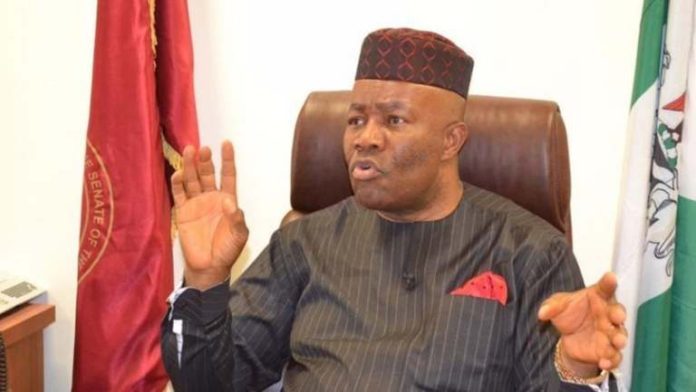
Akpabio: A man for every new season

By Olusegun Adeniyi

Godswill Akpabio (then Akwa Ibom State Governor) once stated that only the re-election of President Goodluck Jonathan could guarantee peace in Nigeria. At an​ interdenominational ​church service beamed live on the Nigeria Television Authority (NTA) network on 2 January 2015, he declared: “As a PDP (Peoples Democratic Party) chieftain, I have found the solution to the peace we are seeking in Nigeria. That solution is the election of President Goodluck Ebele Jonathan for a second term in office. When you do that, you would show that you are not a religious bigot. When you do that, you would show that you are not an ethnic jingoist and that you believe in the unity of this country.”

Of course, we know Jonathan lost the presidential election that year. But Akpabio won his bid to be a Senator. Ordinarily, by their Standing Rules at the time, positions of Principal Officers were reserved only for ranking senators. But on the strength of his previous position as chairman of PDP Governors Forum and the depth of his pocket, the Senate broke their own rule to accommodate Akpabio as Minority Leader. The hope was that he would help to rebuild PDP as a robust opposition platform to counter the excesses of the ruling All Progressives Congress (APC). The hope was misplaced.

Two years into his tenure as Minority Leader, Akpabio resigned from the PDP to join the APC and offered a perfect excuse. “The first thing you need to know about the APC, from the point of view of leadership, I am quite impressed the president has kept his integrity intact. He has been able to improve the image of Nigeria and restore a lot of respect to Nigeria from the international community,” Akpabio said while heaping praises on then President Muhammadu Buhari who later offered him a ministerial appointment after losing his Senate re-election bid. “I am joining the APC to stabilize the government and to assist the government to create employment opportunities for Nigerians so that we can fight the twin brother to corruption, which is poverty.”

We are aware that Akpabio has been fighting poverty with his garrulous and ostentatious lifestyle for almost two decades. Incidentally, on 23 February 2018, while presenting the Special Achievement Award conferred on then Central Bank of Nigeria (CBN) Governor by the Silverbird Group in Lagos, Akpabio commended Godwin Emefiele for maintaining the global integrity of the apex bank and stability of Naira, describing him as “a humble and silent achiever”. Now, after being enabled to the office of Senate President by the current President Bola Tinubu, Akpabio is singing a different tune.

During a thanksgiving service in Rivers State on Sunday, Akpabio compared the economy left by Buhari for Tinubu to a spoof. “Nigeria was like a foam inside a pail. As the foam has filled the pail you think that it was water. The economic situation was tricky. By the time you push your hands (inside), you will only touch water towards the bottom. So, the kind of economic mess we were in, a lot of people do not understand.” After dissing the ‘anti-corruption’ president under whom he was a minister, Akpabio descended on Emefiele. “We don’t even know what to charge the former Central Bank governor (Emefiele) with. Whether to charge him for putting foam on top of the pail or to charge him for printing notes without income. I don’t know what we will charge him with,” Akpabio said, raising questions about the credibility of the ongoing court case if they are still trying to frame the alleged crime. “What we know is that we are here today because of the actions and policies that they (Buhari administration) took, and we recognise that, but we are now battling to ensure that Nigerians can sleep with their eyes closed and have three square meals on their tables.”

‘A Man for All Seasons’ is a British historical drama that celebrates the life of Sir Thomas More, the 16th century Chancellor of England who chose death (he was beheaded) to helping Henry VIII achieve his diabolical aim to jilt his wife for another in a desperate bid for a male child. If that popular drama depicts someone whose moral strength did not bend even in the face of death, then what do you call a man like Akpabio? The only phrase that comes to mind is a man for every new season. That has been the story of the ‘Uncommon transformer’ who for the past 22 years has been a ‘government pikin’—a man whose livelihood has depended on political office: Commissioner, Governor, Senator, Minister and now Senate President!

While endorsing Tuesday’s decision to probe how the N30 trillion Ways and Means CBN loans approved by the last Senate was spent by the Buhari administration, Akpabio said “The food and security crises confronting the nation now are traceable to the way and manner the said Ways and Means were given, collected and spent.” Akpabio may be right but how does such a probe bring down the price of garri in the market or help in halting the depreciation that has rendered the Naira almost of no value? We know that, like all previous probes, it will serve no useful purpose beyond buying time for the government while Nigerians are regaled with tales. Besides, was Akpabio, who has dismissed those protesting the rising cost of living in the country as “sponsored protesters”, not part of the Buhari administration? Does the president need people who can help him find solutions to our mounting economic challenges or those who are good only at inventing self-serving excuses?

For those who may have forgotten, under Buhari, Akpabio was an all-powerful Minister of Niger Delta. He came up with the idea of an Interim Management Committee (IMC) arrangement at the Niger Delta Development Commission (NDDC) – whose members he kept sacking while practically running the show so that nobody would “kill the forensic audit”. In the ‘Off the mic’ drama involving one of his henchmen, it was Akpabio who admitted before a House of Representatives committee chaired by the current Internal Affairs Minister, Olubunmi Tunji-Ojo that our lawmakers are also contractors while inadvertently indicting himself in the process: “I just told you that we have records to show that most of the contracts in NDDC are given out to members of the National Assembly, but you don’t know about it, the two chairmen can explain to you. I was a member of the NDDC committee; so, I know about it.”

In a milieu where politics has become a vehicle to secure power and privilege (rather than advance the public good) and public office merely provides access for the control of resources, it is no surprise that people like Akpabio thrive. He is of course not alone on this, so I do not begrudge him his good fortune. But those whose palm-kernels were cracked for them by a benevolent spirit, to borrow from the eternal wisdom of Chinua Achebe, should not insult our collective intelligence. By virtue of his current office, Akpabio is one of the few people with unhindered access to President Tinubu. If this is what he says publicly at a time like this, one can only imagine what he is telling the man in private moments.

Let me break it down for the Akpabios of this world who may not be aware of the current situation in Nigeria. If, going by the World Bank parameters, living in extreme poverty means surviving on less than $1.90 (now more than N3000) per day, and minimum wage still stands at N30,000, one can then imagine what many Nigerians are going through. As of last year March, when the situation was not even this bad, a World Bank report revealed that “as many as 4 in 10 Nigerians live below the national poverty line.” Several households in the country, the report added, had to adopt “dangerous coping strategies, including reducing education and scaling back food consumption, which could have negative long-run consequences for their human capital.” 

That report was based on the reality of 2022 when Akpabio was still a minister under Buhari. Today, things are far worse. The removal of fuel subsidy and floating of the Naira have combined to push basic necessities beyond the reach of most Nigerians. With daily hikes in the cost of staple foods, essential drugs, transportation costs, school fees, house rent etc. at a time when there seems to be no bottom to Naira’s depreciating value, millions of Nigerians are groaning under an unprecedented level of misery. Nothing depicts our dire situation more aptly than the trending video of a crowd of women rushing to scoop from a pot of rice being cooked by a food vendor, almost like animals. Therefore, if the president listens only to people like Akpabio, how would he understand how dire the situation is for most Nigerians today?

Let me also be clear here. Buhari and Emefiele deserve all the opprobrium anybody can heap on them for mismanaging our economy. That is not my issue with Akpabio. But not all of us suffer from the Nigerian malaise of collective amnesia. A country where an enabler of every sitting president like Akpabio is a source of state wisdom cannot but end as a basket case. It is therefore no surprise that in a bid to address the fast-depreciating value of the Naira, Tinubu’s henchmen have reduced monetary policy to chasing BDC operators around the streets of Abuja with guns!

ECOWAS and Vanishing Democracy

On Monday, military authorities in Guinea dissolved the interim government it had put in place since June 2022.  They pledged to appoint a new administration. We recall that Colonel Mamady Doumbouya toppled President Alpha Conde in September 2021, in a coup hailed by many Guineans. Conde invited it upon himself by forcing through a controversial constitutional amendment that gave him a third term in office. And he brutally crushed the street demonstrations that followed, killing many before he was ousted. Although the military promised to return power to elected civilians by the end of this year, there is nothing to suggest such proposition is still on the cards in Guinea.

However, the latest challenge for the Economic Community of West Africa (ECOWAS) is in Senegal where President Macky Sall, whose tenure expires on 2 April, is also playing the sit-tight game. First, he toyed with the idea of a third term that elicited street protests. When that gambit failed, Sall postponed the election scheduled to hold this Sunday, 25 February till December this year. The Constitutional Court in the country has ruled that proposition also illegal. While Sall promised to abide by the court ruling, uncertainties remain about when the election will hold. That ECOWAS is silent about Senegal shows the hypocrisy of the leaders within the subregion. Meanwhile, Sall himself has shown that despite mouthing platitudes, his belief in democracy is driven only by self-interest. And I say this based on a personal encounter I had with him six years ago. Although I did not reveal who secured for me the encounter at the time, I can do so now and the circumstance in which it happened.

In writing my book, ‘Against the Run of Play: How an Incumbent President was Defeated in Nigeria’, I spoke to many of the principal actors, including President Goodluck Jonathan and current President Tinubu. Because he was abroad on self-exile at the time, it was difficult to get the former Bauchi State Governor, Adamu Muazu. Yet, I needed him to clarify certain issues to complete the book, considering he was PDP National Chairman during the 2015 general election. Eventually, we agreed to meet in Dakar, the Senegalese capital where I arrived on the day preceding a special ECOWAS meeting in Abuja on the Gambian presidential election lost by Yahyah Jammeh who decided not to leave office. As it would happen, Muazu had a dinner appointment with President Sall, and I tagged along. Below are excerpts from my December 2017 recollection, ‘Buhari, Sall and Jammeh’s Defiance’ to illustrate the tragedy of Senegal today. 

=======================================================

…While I do not know much about Sall’s stewardship, it was nonetheless a refreshing time with him until we departed the presidential palace at exactly 1.20am (Nigerian time) which was 12.20am local time in Dakar. He said he would be departing for Abuja by 6.30am for the ECOWAS meeting on the crisis in The Gambia. By then, I had learnt a lot about the mutiny in Cote D’Ivoire where soldiers went on strike last week as well as the attempts by the ECOWAS leaders, including President (Muhammadu) Buhari, to resolve the political crisis in The Gambia.

Fortunately for me, when Sall was receiving us on arrival, I had been introduced to him as a former presidential spokesman in Nigeria, so he had no reason to be on his guard, as most people usually are when with reporters. That gave me ample opportunity to ask probing questions during dinner without raising any suspicion about my interest. I started by reminding Sall of what he already knows: that whereas the problem in The Gambia may be a challenge for ECOWAS, it is one that his country (Senegal) would have to deal with. He agreed with my summation before also expressing optimism that it would be resolved before January 19 (2018). He was confident that Yahya Jammeh will go because the consequences of doing otherwise would be too much for the Gambian dictator. Already, some of Jammeh’s ministers have started voting with their feet.

However, Sall is also mindful of old prejudices between the two countries that for a period in history were one (Senegambia), especially when I asked him whether he was ready to offer asylum to Jammeh; having already told me of such a plan and some of the countries that could play host without mentioning Senegal. “I can have him here in Senegal, but I don’t think he will come,” Sall said as he explained the complications of the negotiations to oust Jammeh. “I think he fears what might happen to him when he leaves office, especially with the International Criminal Court that could look into some things that happened under his watch.”

To say that it will not be easy is an understatement given that Jammeh is digging in, and he is not without his own supporters. For instance, The Gambian Deputy Ambassador to the United Nations (UN), Mr. Samsudeen Sarr, recently took to the social media to reiterate his “unflinching support for His Excellency Shiekh Professor Doctor Alhagie Yahya A.J.J. Jammeh Babillimansa” while attacking Senegal that “has always overtly or covertly expressed its compulsion to annex our Anglophone nation into its 8th region.”

According to Sall, raising the stakes by Jammeh may prove to be no use for him at the end, given that Charles Taylor of Liberia also negotiated his way out of power before he was apprehended three years later under circumstances that were not particularly edifying for Nigeria. The best way out for Jammeh, the Senegalese president argued, was the first option he took to concede the election before reneging. But Sall believes that he and other African leaders have a responsibility to ensure Jammeh’s exit without damage to his country and Senegal will play a decisive role in that direction…

ENDNOTE: President Sall indeed played a very critical role in ECOWAS efforts to force Yahya Jammeh out of Banjul in defence of democracy in the subregion and peace in The Gambia. It is therefore a shame that he would now seek to plunge his own country into avoidable crisis on the altar of inordinate ambition. But the greater challenge is for ECOWAS that must be worried about the state of democracy, anchored on the rule of law, and expressed will of the people within the sub-region.

You can follow me on my X (formerly Twitter) handle, @Olusegunverdict and on www.olusegunadeniyi.com   

The Akpabio-provoked N30b Intifada

Godswill Akpabio

By Festus Adedayo

So at plenary in the senate last week, Senate President, Godswill Akpabio, rushed naked out of the bathtub. He raised his hand up. In the presidency’s search for scapegoat, Akpabio suddenly became Archimedes. Last week, he came forward to shout “Eureka!” He had found the No 1 Nigerian enemy! Ancient Greek scholar, Archimedes, was the author of a find similar to but of sterner stuff than Akpabio’s. Archimedes had proclaimed “Eureka! Eureka!” immediately he stepped into a bath and discovered that the water level immediately rose. This led him to the discovery that the volume of water he had displaced equaled the volume of the part of his body he had submerged. This discovery led to what in science is today known as the Archimedes principle. The Greek scholar was said to have been so excited at his discovery that he dashed out of the bathtub and ran naked through the streets of Syracuse. Before him, this knowledge was not known.

Like Archimedes, Akpabio had made a find that would revolutionize the quest for who exactly was behind Nigeria’s food crisis. He said he got this Archimedes find from an “unverified report.” The world slid into eerie silence. Why would the No 3 Citizen of Nigeria regale Nigerians with a report that lacked the rigour of verification? That office, at the occupier’s beck and call, was stacked with panoply of authentic information about happenings in high and low places. So, why would Akpabio seek to transmute an unverified report into national discourse? Wasn’t this akin to giving life to rumours? Nigerians listened nevertheless. And Akpabio spoke. He had found the enemy of Nigeria. They are the 36 state governors. They collected the sum of N30 billion each from the Federal Inland Revenue Service (FIRS) to cushion the effect of biting inflation and high cost of food in their respective states. He thereafter relapsed into the usual inane platitudes that Nigerian leaders are known by. Every state government should utilize the money, he said. The state governments have a lot to do because they are closer to the people and Nigerians want to eat as there is no excuse, bla bla bla…

The logic of Akpabio’s find does not seem to add up. As governor of a Nigerian state for eight years, he must be aware that FIRS cannot pay money directly to sub-national governments. It is a revenue generating agency. It is not a revenue sharing entity. Even then, in its strict configuring, the Nigerian federal government is the proverbial Alabahun or Ahun, otherwise known as Tortoise, the trickster. A fable is told of how Tortoise and his son were at the dining table. As Tortoise, the father, scooped up a morsel en-route his mouth, his son opened his mouth, hoping the father had meant it for his belly. Tortoise felt sorry for his hungry son and told him that if he was that generous, the world would not ascribe the appellation of ahun (the stingy) to him.

As designed by the RMAFC and approved by the National Assembly, the Federal Government takes 52.68% of federally distributable revenue and states, 26.72%. The FG is very wealthy. Akpabio must however be aware that, as huge and wealthy as it may be in public eye, the federal government cannot give out freebies to any state, except their statutory entitlements. So, did Akpabio not know this or did he damn all he knew for the sake of an ulterior motive? Or was it the usual lack of depth in high places that was unraveling?

If one of the governors, Seyi Makinde of Oyo State, had not bravely spoken out almost immediately last week, the consequences of the deflection of arrows parceled out for Nigerian governors would have been dire. Makinde’s counterpart in Akwa-Ibom, Umo Bassey Eno, also did same. Eno was even blunt and direct: “We are in a time when people want to be relevant and they feel that being relevant is to incite the public, tell lies against government. No civil society behaves like that.” He said this in denying Akpabio’s conjured N30b. Already, a welter of attacks against the governors had sprung up on the social media. If the Akpabio allegation had gone without a lie put to it, we would have had passers-by pelting governors’ vehicles with stones and a state of uprising in the states. Akpabio would have feathered his political nest in the presidency as a good Man Friday.

At critical moments, virtues leaders need to exhibit are self-restraint and forbearance. The mouth, as harmless as it may seem, is a very powerful weapon that leaders must use sparingly. It holds emotions and feelings and is also a tinder which can cause national fire. The moment the mouth is set a-loose, its destructive effect is unimaginable. In the Ifa corpus, Esu, being the most gluttonous of the Irunmoles (deities) reputed with the task of ferrying human appeasements from earth to heaven, is most times depicted with his lose mouth. A story of the destructive nature of the mouth and unconscionable decision is often told in King Odarawu. He was an Alaafin in the old Oyo Empire whose brief reign in the late seventeenth century, after succeeding Alaafin Ajagbo, his father, made him the first Alaafin to be rejected by the Oyomesi, the council of state. Odarawu was a prisoner of his tongue and temper and this led to the brevity of his reign. His fiery temper and the calamity it wrought became almost like a totem which the kingdom used to teach morals about leaders and their mouths.

Told by The Reverend Samuel Johnson in his authoritative Yoruba nation biography, The history of the Yorubas, (p 169) as was the custom, at his installation, Odarawu was asked to name his enemy. Without mincing words, the Prince named Ojo Segi, a town in the kingdom. On what provoked the enmity, Odarawu went down memory lane. Years back, the Prince had gone to buy corn meal (eko) for dinner. Unbeknown to him, the woman who sold the eko was the Baale’s wife. The price of a wrap of eko was then a cowry and Odarawu bought six. He however paid five cowries, according to the privilege of his birth. The Baale’s wife, feeling insulted and not aware of his princely status, decked Odarawu’s face with a dirty slap. She then repeatedly shouted “thief!” at him for trying to withhold a cowry off her legitimate earning. As he was being installed Alaafin, Odarawu asked the council for one favour: the destruction of Ojo Segi. Though the Oyomesi acceded to his request and brought the town to ruins, the council agreed to do away with Odarawu. In their estimation, the new king was a heartless tyrant. If, out of malice against a single woman, he could have macabre pleasure in the destruction of a hapless people, he was not worthy of the kingdom. Oyo people thereafter rejected Odarawu and, in frustration, he committed suicide.

Nigeria’s Senate President, Godswill Akpabio, took on a very minute slice of the vice that brought Odarawu and the people of Ojo Segi to destruction. Akpabio unleashed the power of the tinder in his mouth. Today, Nigeria is embroiled in crises. Her economy is tailspinning into chaos. A video of Thomas Hobbes on Kaduna road, Suleja went viral a couple of days ago. Protesters against the badly hit economy went haywire, showcasing Nigerian life at this time as nasty, brutish and short. A Dangote truck was also said to have earlier been hijacked somewhere in the north and its food content pillaged. From every indication, there is a national emergency and leaders’ cast role at this time should be forbearance and words that will fuse the people together.

Rather, buck-passing and scape-goating have reigned. Yet, hunger has morphed into anger on the streets. Apart from seeking ways out of their hunger, Nigerians want to know who their enemy, the one responsible for this hunger, is. Spiritedly, Bola Tinubu, president of Nigeria, has seized every opportunity to tell the people he is their friend. Like an evangelist, Tinubu has been gospelling. His have been preachments of patience and policies (PPP). But, like the biblical sower, Tinubu’s seeds are not landing on the ridges where they should germinate. They fall on furrows and waysides where sparrows fly down from the sky and immediately swallow them for dinner.

You cannot blame the people. Hunger has stretched their patience thread-thin. It is tearing asunder political party loyalties and primordial sentiments. Even All Progressives Congress (APC) party members are throwing barbs at their party-led government. Yoruba are forcefully retrieving the chain of beads they cavalierly decorated on the amoeba-shaped bottom – the “Idi bebere” – of their child in the wake of the 2023 presidential election. Hunger is angrily making the people break the beads into pieces. Whilst gallant praise-singing soldiers recruited on social media to deodorize the hunger in the land attack them for being bastards, Yoruba listen to the jarring noise of hunger in their bellies. Didn’t our forefathers say that when hunger ingresses into the belly, every other matter egresses? Recently, the people’s hunger pushed them to the streets of Ibadan, Oyo State to protest. Shouting “Enough is enough” to the “Idi bebere” reign of hunger, they demanded what use the Tinubu PPP would be to them by the time hunger had sent them to their untimely graves.

In the midst of all this, explanations for the hunger in the land are finding their way into the information highway. A pot-pourri of explanations confronts the people. The soldiers are struggling to outdo one another in this roulette of convincing hungry Nigerians that they are not too hungry. Yet, Nigerians want to know who their real enemy, the one responsible for this massive hunger, is. According to the soldiers on the social media, the Number One cause of the hunger is the ramrod-thin General, the one who spoke seldom while his mindless appointees stole Nigeria blind; whose eight-year reign was filled with empty sanctimony – Muhammadu Buhari. Cascading the enemies downwards, they equally told us that thin-statured ex-CBN governor, Godwin Emefiele, ranks high on the list of those responsible for this massive hunger. The history of the hunger was further elasticized. According to them, Nigeria’s financial troubles began from the crisis that stampeded Sanusi Lamido Sanusi out of the vault of the CBN. A report of huge financial mess in the Nigeria’s apex bank, they said, had allegedly indicted Lamido. But, so they reasoned, Sanusi ran out of the cold harmattan haze of the hefty allegations into the humid comfort of the Kano Emir’s palace. The palace immediately provided him a shawl for his face, immunity from a Goodluck Jonathan whose roars were as feeble as a cat’s meow. So, to Sanusi we should look for the genesis of our hunger.

The presidency was even more direct. A ubiquitous, even if nameless, opposition must be the culprit. The saboteurs, in the narrative of the president, were those who failed in their bid to clinch power in the last election. They have subsequently remained in “political mode” while working towards the fall of the country. Speaking last Tuesday in Abuja at the inaugural Public Wealth Management Conference organised by the Ministry of Finance Incorporated, the president, represented by Vice President Kashim Shettima, added another scapegoat – smugglers. He said government had uncovered fresh 32 smuggling routes through which food items were siphoned out of Nigeria.

Those feeble explanations have yet to tame the anger on the streets. With attacks on the Tinubu government growing by the day, methinks a Strategic Hunger Council Meeting (SHCM) became imperative. And it was inaugurated. The spirit of Joseph Goebbels, German philologist and Nazi politician, was immediately invoked. How could government deflect these raging arrows? Being same party-led government, there is a tolerable level to which this government could shovel the dirt of current woes on the Buhari government without a boomerang. In any case, the president himself had asked Nigerians not to pity him as he willingly asked to be president. He knew Nigerians would ask if he wasn’t aware of the challenges of governing a chaotic Nigeria before diving into the waters. Swimmers, flaunting their prowess, scold the ogberi (non-initiates) not to even step their foot on the bank of the river if they cannot swim as the Oluweri – goddess of the river – was prepared to make barbecue of them.

So, the SHCM must have agreed that the most effective scapegoats should be the Nigerian governors. Don’t our elders say, being a generally perceived abominable bird, any arrow shot at the vulture is well deserved? (Iri t’a ri’gun la fi nta’gun l’ofa) The Villa goons have empirical and believable reasons to turn their gaslighting state-wards. Since the advent of the 4th Republic, massive theft of Nigeria’s resources has taken place in the states. Governors after governors have pillaged their states’ resources mindlessly, leaving shells as memorabilia. Since 1999, the Economic and Financial Crimes Commission, (EFCC) established to go after the vultures scavenging our vaults, has tumbled from a fearsome lion to a tame cat. Today, rather than governors and other thieves in high places, EFCC’s special menu is scamming boys in university hostels.

The narrative of blame must thus land at the feet of the governors. It began with the social media soldiers calling Nigerians’ attention to increasing FAAC allocations from the casino tables of Aso Rock which they said have swelled state governments’ accounts. With this, they say there is no reason why blames for Nigerians’ pervasive hunger should be pointed in Aso Rock’s direction. The Tinubu government’s fiscal reforms, they also argue, have benefited state governors’ coffers tremendously. It is an argument flushed down general lavatories which has saturated national sewages. Only a deeper thought can defrost the argument of its cants and sophistry. True as it is that many governors go on a binge with their monthly allocations, what was the worth of the state allocations before now and today, with the Tinubu chaotic economy? How much is the worth of those allocations today as Tinubu’s Naira engages in Atilogwu dance? For those who inherited foreign debts from their predecessors among the governors, what is the worth today of those debts which they pay from their federal allocations? Do states pay the same salaries now as before the reforms?

In my thinking, in pursuit of this general scape-goating agenda, a willing recruit needed to be found. No one fitted the bill than Godswill Akpabio. He wears on his lapel the unenviable pedigree of a reversible chameleon. Even before his recent Odarawu journey, like Nostradamus, Thisday’s Segun Adeniyi had appropriately dimensioned him. In his last week’s piece entitled Akpabio: A man for every new season, which is a summary of the reversible political life of the former Akwa Ibom state governor, Adeniyi fittingly attired the Senate president the garment of sanctimony. In the piece, he effectively derobed him of any flavor of virtues of leadership. In its place, Adeniyi wore on Akpabio a befitting garment of an all-weather politician who follows the tide of power and office.

The truth is, characters like Akpabio get away with their insurrectionist statements because the people move on after each Intifada. Since the N30b Intifada, Akpabio has gone into his shells; no remorse, no apologies to the over N200 million Nigerians whose emotions he provoked needlessly by such gross lie. In saner societies, such a leader would be sorry; or, be made to be sorry.

Nigerian Nurses sue NMCN over controversial circular

.

By Chinedu Adonu

Nigerian Nurses have dragged the Nursing and Midwifery Council of Nigeria, NMCN, to court over its recent circular for requesting verification of certificates for nurses and midwives to foreign nursing boards or councils.

Also joined in the suit as 2nd defendant is the Registrar/Secretary General of NMCN, Dr. Faruk Umar Abubakar.

The circular issued by Faruk on February 7, 2024, has been attracting mixed reactions from stakeholders.

The controversial circular, among other things, provides that, “Eligible applicants must have a minimum of two (2) years post qualification experience from the date of issuance of the permanent practising licence. Any application with a provisional licence shall be rejected outrightly.

“The Council shall request a letter of Good Standing from the Chief Executive Officer of the applicant’s place(s) of work and the last nursing training institution attended, and responses on these shall be addressed directly to the Registrar/CEO, Nursing and Midwifery Council of Nigeria. Please note that the Council shall not accept such letter(s) through the applicant.”

Aggrieved nurses, under the auspices of Incorporated Trustees of University Graduates of Nursing Science Association, have now approached a Federal High Court sitting in Enugu, seeking a judicial interpretation of Faruk’s action.

The suit, with No FHC/E/CS/22/2024, was filed by the counsel to the plaintiffs, Barr Chijioke Ezeh.

The plaintiffs are seeking “a declaration that by the widest construction of the Nursing and Midwifery Registration Act ‘CAP N 143 L.F.N 2004) and other relevant extant applicable Laws, the 2nd defendant have no right whatsoever to issue or sign any circular and (or) directives in the exclusion and negation of the Board of Nursing and Midwifery Council of Nigeria, Board of which was ipso facto dissolved by the President of Federal Republic of Nigeria on 19th June, 2023.

“A declaration that by the widest construction of the Nursing and Midwifery Registration Act ‘CAP N 143 L.F.N 2004). Chapter 4 of the 1999 Constitution of the Federal Republic of Nigeria (as amended) and other relevant extant applicable Laws, ALL DIRECTIVES as contained in the purported circular of Guidelines dated 7th February, 2024 as issued and signed by the 2nd defendant are unlawful, draconian, uncharitable, inconsiderate and unkind consequent upon which they are declared null, void and of no effect.

Report by Vanguard

Time to question Buhari

By Lasisi Olagunju

Preparatory to his exit from power last year, President Muhammadu Buhari warned all of us to let him be after office: “Nobody should ask me to come and give any evidence in any court; otherwise whoever it is, he will be in trouble because all important things are on record.” Buhari uttered those words in one of his very rare media interviews. That was in January 2023 – one year, one month ago. And truly, every horror so far traced to him as president has been deflected to some minion somewhere. Whatever was lost under his watch, whatever we seek after his exit, whatever we can’t find in the presidential drawer, we’ve carefully avoided going to the man we handsomely paid to look after them. The chief priest is never guilty of anything. There is always a scapegoat tethered in his honour. The orphaned animal carries the guilt.

Some of the key ‘secular’ supporters of the present president are my friends. I engaged one of them last week on the cost of living crisis ravaging the country. He told me what we’ve been reading on social media: Buhari is the culprit; he is the edá rat that peed into Nigeria’s soup pot. He left a badly managed country. My Èmilókàn friend blamed everything, including the worsening power supply situation, on the former president.

I reminded my friend that the past can’t be solely blamed for the rashes of today. Buhari didn’t float the naira and hack petrol subsidy at the same time. Today’s president did. We’ve run all our lives in this country blaming the next person. I keep reading strenuous efforts being made to do devolution of blames down to state governors. It is ridiculous. Were governors consulted before the naira was fed to the dogs of market forces? Leaders at the very top should accept the consequences of their actions. Buhari in power didn’t. He blamed his past throughout his eight years. His successor cannot be allowed to go that road. As America’s Harry Truman put it, “The president—whoever he is—has to decide. He can’t pass the buck to anybody. No one else can do the deciding for him. That’s his job.” My friend agreed but insisted that Buhari left a very badly managed Nigeria, then added: “But, you know, we can’t come out against him.” I smiled, nodded and reminded him of Buhari’s 2023 promise of trouble if anyone asked him “to come and give any evidence in court.” My friend laughed. We moved our talk to other matters.

But, that is not to say Buhari should not explain what he did to Nigeria. I hope he is following his probe by the Senate. Buhari in power boasted repeatedly of his ‘integrity.’ His people call him Maigaskiya (truth teller). But what kind of integrity disdains accountability, rendering accounts? There is a 2006 book, ‘Responsible Leadership’ edited by Nicolas Pless and Thomas Maak. A chapter in that book is useful here. The chapter, written by George G. Brenkert, is on ‘Integrity, Responsible leaders and Accountability’. Integrity and accountability share an inner connection. They are, in the words of Nigerian playwright, Zulu Sofola, “lightning and thunder inseparable.” George Brenkert maintains that a leader “who is not willing to be subject to conditions involving giving an account of his or her behaviour to others” cannot claim to have integrity. I agree with him. You mouth and wear ‘integrity’ everywhere and still threaten us with trouble if we dare question you

Former President Buhari did not tell us why he had to threaten his successors against potentially calling him to account. He also did not define or explain what he meant by ‘trouble’. But, you remember Shakespeare’s witches and their chant of ‘trouble’ in Macbeth: “Double, double toil and trouble;/ Fire burn and cauldron bubble” Steaming hot cauldron is elevated boiler. Whatever Buhari had covered up in his boiling kettle is coming out. His warning was a cauldron of guilt.

The Senate told us last week that a total of N30 trillion was printed by the government of Muhammadu Buhari and the money appears to have disappeared. I whispered “Goodbye, Giant of Africa” when I listened to the heart-rending deliberation of our Senate on that disaster. Ahmed Lawan, Buhari’s Senate president, interjected deliberations and said what Buhari printed was N23 trillion, not N30 trillion. Godswill Akpabio, Bola Tinubu’s Senate president (who was also Buhari’s minister), interjected the interjection. He said the extra N7 trillion was interest on the original sum.

We – you and I – are the ones paying principal and interest on Buhari’s misrule. Different strokes. In the United States, convicted former President Donald Trump pays for his bad acts. Reports say he owes an additional $87,502 in post-judgment interest every day until he pays the $354 million fine slammed on him two weeks ago by Judge Arthur Engoron in his civil fraud case. So, a court can convict a big man who had been president?

It happened also in South Africa. Not here. Where I come from, a man is never allowed to be bigger than the village. A community that cowers before a bully is a town of kids. And Nigeria should not forever be J. M. Barrie’s (1911) Neverland, a land of eternal childhood, island of people who refuse to grow up. Or the puer, Carl Jung’s archetypal error-man, who is forever afraid of challenges; who is forever waiting for ‘divine intervention’ to solve all his problems. We cannot be weaned of the disease of bad leadership until the leader knows that his feet will be held to the fires of justice after his reign. Lord Denning, Master of the Rolls, while stating the position of the law on equality before the law, says: “to every subject in this land no matter how powerful, I would use Thomas Fuller’s words over 300 years ago; “be you never so high, the law is above you.”

We’ve seen in the US judgement that President Trump is not bigger than his country. That is in the United States. Here, trouble awaits anyone who may want to query Buhari on why he wrecked our economy, printed N23 trillion plus N7 trillion interest, and what he used the printed money for. Or that he took a $3.4 billion loan without a trace of how the money was spent and on what. The former president said the consequence of asking him to account is trouble. That is the stuff master-wrestlers are made of. We call them àgbà ìjàkadì in Yoruba. They always tell their victims that they would be victims unless they know their level.

An elected president threatening trouble if asked to render an account is a guilty mind. We should, at this moment, outgrow our fear of strongmen and serve them queries. Can we be man enough for once and square up to Buhari, the heavyweight? The man’s successors in jittery whispers blame their troubles on him. They say his government wreaked today’s woes. They should ask him to come and account for his deeds – good and bad. And the masquerade should be man (or spirit) enough to step out of his guttural grove. He owes everyone who suffers hunger today an explanation that he is not the cause. His successors say he is.

The Buhari government printed money which disappeared as they came out of the mint. That is what our Senate says it is probing without mentioning the name that professed the heist. They will pan the camera away from the one who should be in the dock. There are other issues. Early this month, the Socio-Economic Rights and Accountability Project asked Tinubu to probe the whereabouts of the $3.4bn loan obtained in 2020 by Buhari from the International Monetary Fund. Buhari took that loan to fight COVID. But SERAP is asking Tinubu to promptly probe the allegations that the IMF loan is missing, diverted or unaccounted for.” It hinted that the 2020 annual audited report recently published by the Auditor-General of the Federation “documents damning revelations, including that there was ‘no information or document to justify the movement and spending of the fund’”. There may be many more of such disappearances.

If I were Buhari, I would not wait for the Senate to call me before storming the chambers with details of the N30 trillion and other scandalous matters. I would come out and show the nation where the money is. But Buhari won’t. He is above the law and bigger than Nigeria, a serially abused country.

Is it not futile for leaders to insist they can’t be questioned? Idi Amin of Uganda recklessly printed money like Buhari and ruined his country. No one could caution or question Idi Amin, who boasted repeatedly that he was the conqueror of everybody, including the British Empire. Then he fell and maggots crept out to feast on his bloated belly. Films, books, fiction and non-fiction, have not stopped asking Idi Amin questions even after his death. Wole Soyinka’s A Play of Giants is one; Francis Imbuga’s Man of Kafira is another. Idi Amin is Boss in Imbuga’s play. He flaunts integrity and transparency. Just like today’s Nigeria in which hunger is the most uttered word north and south, Drunk and Sober, two characters in Man of Kafira, wallow in hunger while corrupt Boss lives in transparent ostentation. The two poor characters speak their frustration about a society that provides “three square meals for the transparent man and not a single trianglar one for us.”

We wait to see how the Senate handles the N30 trillion naira scandal and others. We also wait to see how Bola Tinubu will smell after his own tenure and if he will be willing to be questioned. Ultimately, leaders personally answer for their deeds and misdeeds. No fly follows the corpse of leaders into the grave. Not followers, not associates, not their dogs.

I saw senators struggling to disown Buhari last week. Even dogs that fawned over him and graciously ate his phlegm are barking at him now. That is life. No one admits to using a missing knife to peel their yam. If I were the man of today, I would go watch or read ‘Everyman’, a 15th-century play of man appearing before God naked and all alone. Power and Strength abandon him; Beauty and Knowledge leave too. All he is left with are his Good Deeds. There are modern adaptations of that play. In Dutch, it is Elckerlijc; in Latin, it is Homulus. Duro Ladipo’s Eda is the Yoruba version.

Some governors recently warned that we were on the road to Venezuela. I have written twice on that country; the first was when Buhari’s plantain was decaying and we were told it was ripening. And we were asked to see it so, and we agreed. Venezuela is a burst country where local traders set the price of anything in US dollars and sell everything in US dollars. No one takes the country’s currency, the bolivar, seriously; it is worth less than the wrapper on sweets. But, Venezuela’s head did not go bad overnight. The destruction was gradual, step by step, leader by leader. Long before the bubble burst for that country, Venezuelan playwright and theatre director, José Ignacio Cabrujas, was asked to speak on the curse that rules his country. He said “the state is a magnanimous sorcerer”; it creates illusions and fantasies. He described the reign of one president as “the debut of the myth of progress” and the next as the myth’s “hallucinatory… flamboyant revival.” Powerful imagery that describes our case. I think of the mythical strides of yesterday and the mist in today’s promises.

Shading the truth and exaggerating optimism led us to this day of pies in the sky. Our dog is back to the same behaviour that denied it dinner yesterday. It looks like a foundational curse.

Bola Tinubu cannot renew any hope without showing us how (and why) previous hopes expired. Throughout Buhari’s eight years, the former president feasted on designer shoes and wrapped himself in expensive gowns. He ate big and belched loudly. He tooth-picked his time away while the plane drifted. We demanded to know where the pilot was, we were abused. We asked why he was imperiling a country of 200 million people, we were asked to shut up. Today, some of those who insulted us are in the cockpit; they are whispering alarms at the perilous state of the flight. ‘Where and how is the pilot?’ is the question distraught passengers would ask in life-threatening turbulence. We asked yesterday, we are asking now. All who ask the question today genuinely seek an answer. They ask it just as troubled trees of the forest whine and crackle in terrible storms.

With Buhari, there was no leadership. “In periods where there is no leadership, society stands still,” Harry S. Truman, 33rd president of the United States, uttered that statement long ago and he had reasons to say so. So that today does not end up as yesterday did, we should keep asking questions, even if they are rhetorical. We can make them epiplectic, forked questions of outrage and rebuke. Whatever flavour we choose, what is important is that we do not stop querying power and demanding answers. Buhari was absent, or pretended to be so. His reign ruined Nigeria; he should be made to account for his deeds.

Wigwe: The man with the Midas touch

By Valentine Emeka Utulu

We were just kids, running around, having fun, in September 1979, when I met Herbert Wigwe for the first time.

Upon stepping foot in Federal Government College Warri, in the first term of my Form three, I found myself in School House, upstairs in room 8. In that room was Mba Nwagbara, Christopher Sagay, Omayone Edodo, and Herbert Wigwe. And then when I got to class the next day, I discovered that Herbert was also in Form 3E with me and that is how he became ubiquitous in my life.

Our room in the dormitory was a theater of the absurd, renowned for epic pillow fights and many from far and near came to participate in those bouts. Many also went away nursing concussions that were never treated.

Then one day, Christopher Sagay got us two pairs of boxing gloves from the sports equipment room, recited and taught us an abridged and jumbled version of the Queensbury Rules, showed us the boxing stances, the defence and the offence, the jab, the hook and the uppercut and our boxing bouts commenced in earnest each day after school.

But after some time, I noticed that Herbert’s heart was not in the pillow fights and boxing contests the way mine was. I was in it for the thrill, the adrenaline rush, the irresistible urge to defeat my opponent, while Herbert on the other hand was more interested in promoting the fights, egging us on while he stood aside and with his acerbic wit, took count of who suffered the most punches and whose dentition was to be found on the dormitory floor. He was the Don King of our boxing arena, and had it been that he was allowed by the school rules to make money by promoting those fights, Herbert would have made a fortune.

We had a lot of foolishness in our heads in those days, always thinking of the next prank and on whom to play it on, how to make the dining hall early and “massacre” all unoccupied rations, and how to illegally cook our crazy meals with ring boilers in the hostel. In the midst of all this mayhem, Herbert would suddenly and solemnly make some crazy statements. I remember the day he said, “I want to get married when I am 20 years old, or at the most 25, so that by the time I am 50, I would have finished paying school fees”.

We were 12 years old at the time, wondering where to scrounge the next illegal meal, and here was Herbert, talking about marriage and school fees and where he wanted to be in 38 years’ time. We just looked at him, hissed and pushed him aside. It never occurred to us then that what he was doing was visualizing his future, making predictions based on calculated probabilities and the normal outcome of human affairs: he was preparing himself to maximize his moments and times here on earth.

That was Herbert, the visionary, the man who lived today to the maximum while planning and preparing for tomorrow. And although he also ran around in the grass like the rest of us, he did not have all the foolishness and carelessness associated with boys of our age. There was a certain maturity and wisdom about him even then that was far beyond his years, because he did everything in moderation so that nothing could master him, yet he mastered everything.

He hated history and literature but excelled in mathematics and economics to simply focus on what he felt he needed to succeed in life.

Growing up then, we loved many songs and every Saturday, during school entertainment, we danced to our favorite songs. Many went for love songs, those slow ballads that tugged at the strings of the heart. Others liked the fast-paced rock songs with the electric guitars and loud drums. But Herbert loved one song in particular above them all and he knew every word of its lyrics by heart.

Herbert’s favourite song was by Kool &The Gang, and it was entitled “Take It to the Top” and the lyrics went like this:

“Climbing

Climbing

Climbing

Keep movin’ up

Don’t you ever stop

Whatever it is

Take it to the top

Keep movin’ up

Don’t you ever stop

What ever it is

Take it to the top

The world’s out there waiting, and it’s yours for the taking

So come on, get up, it’s time to go

Stop hesitating and anticipating to the top

That’s your mark, get ready

Set, go!

So let’s go take it to the top; don’t stop

Cause we’ll be movin’

You can make it to the top; don’t stop

We’ll be groovin’

We’re gonna reach that higher ground

Take it on up

Take it on up, a little higher

Take it on up

Take it on up. We will climb together

Take it on up

Take it on up to your highest dreams…”

That the song was his favourite said a lot about who he was and whom he would become. Therefore, many years later when I began to hear of and to see his meteoric rise in the banking sector, I said to myself; “Why am I not surprised? That Ikwere man always had his head screwed on tight”.

And I saw you from my vantage point of knowing your little beginnings as you began to conquer and to bestride the world like a colossus. I saw your passion to simplify and demystify the process of the creation and multiplication of legitimate wealth and to empower everyone around you. I saw you walk with kings and yet you did not lose your common touch neither did your humility ever depart from you. Your smile was ever present and your deep chuckling laugh always tickled.

I saw also, as in the later years, as your intense ambition became tempered and more purpose driven by love, human compassion, empathy and the fear of God (in which is the wisdom of the ancients). And then it became obvious to me and to many that your own version of corporate and venture capitalism was different because it had a rare human touch and a passion for alleviating the sufferings of many.

Then, my friend, did your light break forth as the morning, and you and they that came of you began to build the old waste places of the nation and to raise up the foundations of many generations; therefore, you Herbert, my friend, shall be called, The repairer of the breach, The restorer of paths to dwell in, for, indeed, you have dealt very faithfully.

And each time you called me on the phone, as soon as I said, “Hello?”, you would call my name and begin to chuckle and laugh, and your laughter would infect me, and I too will begin to laugh. I know why you were laughing. In your mind’s eye, you could still see all the foolish things I used to do when we were kids.

The last time we met was three weeks ago at an event, and you turned to my wife and asked her “Madam, how do you cope with this man?” and we all hugged and laughed and I walked you to your car. I did not know then that was the last time I would see you on this side of Heaven.

My dear Herbert, I forgot to tell you something on that day, but I know you hear me from Heaven since you have joined the great cloud of witnesses over there. I should have told you on that day, that I remember all these little things about you because I love you. I should have also told you that I had always known that you would be a great man. What I did not know was just how great you would turn out to be.

I don’t know how you did it, Herbert, but everything you touched turned to gold. Good bye my friend, my friend with the Midas touch.

Valentine Emeka Utulu.
Federal Government College Warri, Class of 1982

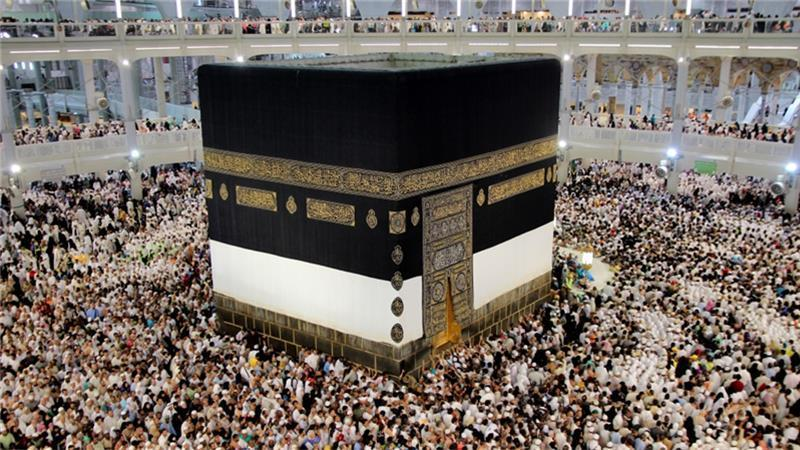
Subsidising religious pilgrimage, irresponsible

By Punch Editorial Board

Amidst the escalating cost-of-living crisis that has made basic food items unaffordable to millions of Nigerians, it is economic irresponsibility for lawmakers to demand that the Nigerian government spend state funds to subsidise religious pilgrimages. With the naira depreciating daily and is near the N2,000 per $1 point, the national debt stock at N87.9 trillion and food inflation at 35.41 per cent, the duty of the legislators is to enact laws that will help in shoring up the value of the national currency, not to add to its woes.

Left to the House of Representatives, Nigeria should put more pressure on the naira by unwisely subsiding the 2024 hajj for Muslims. Legislators canvassed this at plenary last week in Abuja. The major argument of the parliamentarians is that the naira has been seriously devaluated, forcing the National Hajj Commission of Nigeria to increase the fare for the 2024 hajj. Initially, NAHCON had announced a N4.5 million fee, before raising it to N4.69 million for intending northern pilgrims and N4.8 million for pilgrims from the south.

A lawmaker, Umar Ajilo, while moving the motion, described the fees set by NAHCON as “exorbitant” and emphasised the need for the government to make the 2024 hajj more affordable. He pointed to the unsuitability of the current fare, especially for middle- and low-income intending pilgrims. Eventually, the House adopted the motion.

The lawmakers are burying their heads in the sand, failing to come to grips with the deteriorating fate of the naira and the economy at large. This is dangerous. Funding a religious pilgrimage now at the expense of the economy is a misplaced priority.

Indeed, as canvassed in many quarters, the preferential exchange rates given to pilgrims before President Bola Tinubu’s administration unified the naira rates last June lacked economic intelligence.

The folly of such a principle is clear. Tinubu removed petrol subsidy on May 29 and followed that with the naira exchange rate merger two weeks later. The two policies are causing economic shocks. If the government is not subsidising petrol and the naira, it is absurd that the same administration will turn round to subsidise religious  pilgrimages.

Already, the government is battling with electricity subsidy, estimated at N3.3 trillion by the Minister of Power, Adebayo Adelabu. Subsidising the hajj pilgrimage, or any religious pilgrimage for that matter, is uneconomic.

Furthermore, the timing of this proposal couldn’t be more egregious. While the masses suffer under the weight of economic hardship, the political elite, represented this time by the parliament, seem more concerned with appeasing religious interests than addressing the urgent economic needs of the populace.

The House of Representatives’ proposal represents a betrayal of the principles of secularism. It elevates religion above the needs of the country. If the Tinubu administration accedes to the request, there will be no end in sight to religious subsidies, as other religions will demand to be treated the same way.

In contrast, the Lagos State House of Assembly, at its plenary on February 13, advised the Federal Government to reduce international trips for conferences and seminars, and religious pilgrimages. This is laudable. The unnecessary overseas trips by the federal and 36 state governments contribute to the rapid depletion of the naira rate. This is the time to wake up to that reality.

The Nigerian people, who are suffering extreme privation now, must reject this proposal unequivocally and focus instead on how the government can address the economic challenges facing the country.

The HoR should focus on the things that matter, including privatisation, economy, restructuring, and insecurity.

Source: Punch Editorial Board

Public and Private Development Center requests applications for pro bono assistance

The Public and Private Development Center is currently requesting applications from dedicated lawyers who are willing to offer pro bono legal assistance to Pre-trial Detainees and Defendants across the states in Nigeria.

Are you a good match? Are you willing and available? Click on the link below to apply.

https://www.ppdc.org/call-for-pro-bono-lawyers/

TIPS