Home Blog Page 630

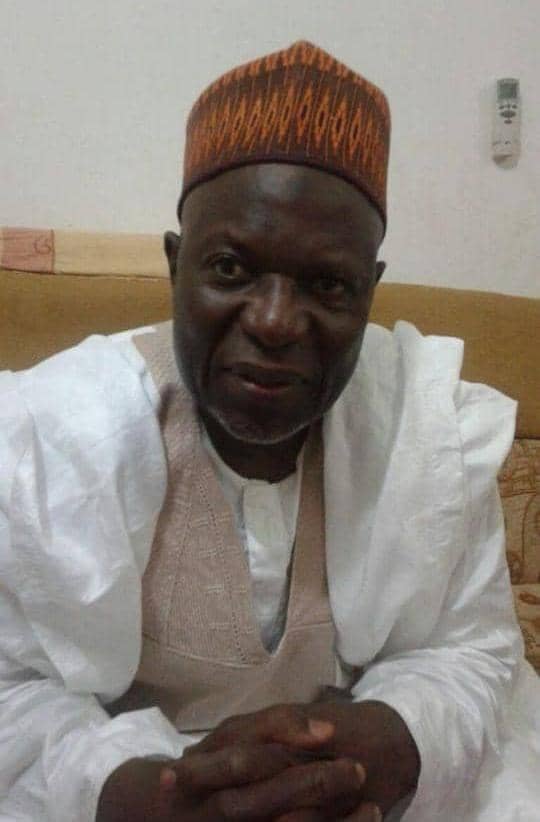
Senator Abubakar Danso Sodangi: NBA Abuja mourns death of ex-Chairman

It is with heavy heart that I bring to your notice the news of the demise of one of our leaders and past Chairman of the branch, distinguished Senator Abubakar Danso Sodangi, Esq.

Senator Sodangi was one of the founding fathers of NBA Abuja Branch and he served the branch as Chairman from 1989 to 1990. He was also a National Officer of the Nigerian Bar Association. He gave his all to the Bar. Senator Sodangi was Chairman of so many committees in the Senate including Senate committee on FCT, Senate committee on Human Rights, Judiciary and Legal matters, etc.

Distinguished Senator Abubakar Sodangi played his part meritoriously and left an indelible footprint on the sands of time. He will be greatly missed. Our thoughts and prayers are with his family.

May Allah forgive his mistakes, make it easy for him on the day of Judgement and grant him Aijanah Fidraus.

Adieu SAS, Sodangi D’ Great

Adieu our Leader

Afam O. Okeke, Esq. AICMC

Chairman

NBA Abuja Branch

Sodangi (31 January 1954 – 11 March 2024) who represented Nasarawa West in the upper chamber of the National Assembly for 12 years reportedly died on Sunday, March 10, 2024, at the age of 70.

The former senator who served as the Chairman of the Campaign Council for the re-election of Governor Abdullahi Sule in 2023 was elected Senator for the Nasarawa West constituency of Nasarawa State, Nigeria, taking office in May 1999, and was reelected in 2003 and 2007. He was a member of the ruling party All Progressives Congress (APC).

Senator Sodangi worked as a preventive Officer with the Department of Customs & Excise (1974–1977); attended the school of Preliminary Studies, Keffi (1977–1979) and the University of Sokoto (1979–1983) from where he gained an LLB (Hons).

He attended the Nigeria Law SchoolLagos, becoming a Barrister at Law in May 1984. He was a member of several professional bodies including Commonwealth Lawyers Association, African Bar Association, International Bar Association and Human Rights Institute. He became a Member of the Board of Directors of PRTV, member of the National Human Rights Commission and Assistant Secretary, Federal Capital Territory Judiciary.

A condolence register has been opened at the branch secretariat. Block 15, Flat 2, FCDA Quarters, Kashim Ibrahim Way, Wuse II near Wuse Market.

Clash of interests as group sues Senate President and Speaker over bill extending retirement age of National Assembly members

  • Lawyer writes Tinubu, describes bill as self-serving
  • CSO tells Tinubu to sign bill

A non governmental organisation (NGO) has asked the Federal High Court to put a hold on at the National Assembly’s quest to extend the retirement age of National Assembly staff from 60 to 65 years.

President of the Senate, Godswill Akpabio; Speaker of the House of Representatives, Tajudeen Abbas; Chairman of the National Assembly and Clerk of the National Assembly are 1st to 4th respondents in the suit.

Earlier, an Abuja lawyer M.O. Idam, Esq. in a letter of protest to to President Bola Tinubu noted that the ” bill is intended not to address the myriad problems assailing the country at the moment but to serve the interest of those who consider public office as a retirement home.”

However, the Alliance for Credible Legislative Conduct, a civil society organisation, wants the president to sign the bill asserting that: “Considering the enormous work inherent within the parliamentary system, especially when compared to advanced democracies and the competencies and experience required to perform arduous legislative tasks.”

A motion on notice with suit number: FHC/ABJ/CS/287 /2024, filed by the Registered Trustees of Mavrik Applicant Solution Foundation, is praying the court for the following:

“An order of Interlocutory Injunction retraining the 1st and 2nd respondents from taking any further move in passing or forwarding the bill extending the retirement age of the 4th respondent and other staff of the National Assembly to the President of the Federal Republic of Nigeria for assent pending the hearing and determination of the substantive suit.

“An order mandating the 4th respondent or any one in his capacity and all the staff of the National Assembly who are due for retirement, to proceed on leave forthwith, since there is no assented legislation permitting them to stay more than the age stipulated by the Public Service Rules.”

The suit brought pursuant to Order 26 of the Federal High Court of Nigeria Civil Procedure Rules 2019 and under the inherent jurisdiction of the court, dated March 5, was filed on March 6, by Henry Okoro and it is before court 8, Federal House Court, Abuja.

In an affidavit deposed to in support of the motion on notice, the applicant alleged that, “the due process of law was not followed in passing the bill and as such is inconsistent with the constitution.”

While arguing that the order of the court is needed to stop the further perfection of the bill pending the determination of the substantive suit, the applicant submitted that “if the res is not preserved, pending the determination of this substantive suit, the judgment of the court will at the end be an effort in futility should it go in favour of the applicant.”

In the main suit, the plaintiff raised some issues for determination which include: “Whether having regard to the extant provisions of section 318 of the 1999 Constitution of the Federal Republic of Nigeria (As Amended) if the 4th respondent and other staff of the National Assembly did not fall within the purview of the description of who can be referred to as a public servant?

“Whether having regard to the provisions of Rule 020908 of the Public Service Rules (2021), if it is legal for the 1st and 2nd Respondents to with uttermost disregard to the above provision, and without firstly amending the 1999 Constitution of the Federal Republic of Nigeria, plot for, through a clandestine legislation, to extend the retirement age of the 4th respondent and other staff of the National Assembly to additional five (5) years?

Among the reliefs sought are a declaration that the 4th respondent and other staff of the National Assembly fall within the purview of public servants as provided in section 318 of 1999 Constitution of the Federal Republic of Nigeria (As Amended) whose appointments and retirements are regulated by the Public Service Rules (2021)

In an 28 paragraph affidavit deposed to in support of the main suit, one of the trustee of the plaintiff, Mr Muhammad Haamid, recalled that the 4th respondent and others working under that capacity have over the years served and retired at the expiration of 35 or 60 years as the case may be.

“That the said years of retirement was set by the Public Service Rules, under which the 4th respondent and other Staff of the National Assembly were employed.

“That in swift move, the 1st and 2nd defendant came up with a legislation seeking to increase the retirement age of the 4th respondent and other staff of the National Assembly from 35 to 40 years and 60 to 65 years depending on which one comes first.

“That the above bill is at variance with the provision in the Public Service Rules.

“That the 4th respondents and other staff of the National Assembly did not fall under any special category of public servants that could warrant such hasty amendment.

“That the 1999 Constitution of the Federal Republic of Nigeria did not place the 4th respondent and other Staff of the National Assembly as special staff outside the Contemplation of the Public Service Rules.

“That the 1st and 2nd respondents have no power to secretly pass a bill on issues that are subject to the Constitution without firstly amending the constitution.

“That the said bill (Harmonize Bill for Retirement of National Assembly Staff) did not follow a due process of law.

“That this court is urged to invalidate same.

“That there is no special training at the point of their employment that makes them different from other Public Servants whose retirement age is 35 and 60 years depending on which one comes first.

“That an order of this court is needed to stop the extension of the years of service of the 4th respondent and other Staff of the National Assembly.

“That if this court did not make the order, it will lead to chaos in Public Service of the Federation.”

Addressing a press conference in Abuja on Friday, Clement Afuye, Chair of Alliance for Credible Legislative Conduct, said extending the retirement age of the staff would stabilise the national assembly.

“Considering the enormous work inherent within the parliamentary system, especially when compared to advanced democracies and the competencies and experience required to perform arduous legislative tasks,” Afuye said.

“Adding five more years to the tenure of staff of the national assembly will never exacerbate the unemployment situation in the country.

“It will rather stabilise the parliament, deepen its procedures and practices and increase its capacity to deliver for the good of our democracy and country.

“The added years, in our view, would help reduce cost, curb brain drain, retain critical mass of competent and experienced staff and ensure optimum productivity and effectiveness of the national assembly bureaucracy.

“It is based on the strength of the above that we passionately use this medium to call on President Bola Ahmed Tinubu, a former senator of the federal republic of Nigeria, to append his signature to this bill.

“Signing the bill will be an added cap on his reform efforts and a testament to his progressive and effective leadership style aimed at repositioning the nation’s economy and democracy as a critical member of the global community.”

He added that since 1979, when Nigeria transitioned from parliamentary to presidential system of government, the bureaucracy of the national assembly has been evolving and struggling to stabilise itself “in the face of competing challenges”.

Meanwhile, the full text of Idam, Esq.’s protest letter to President Tinubu reads:

RE: BILL FOR EXTENSION OF THE RETIREMENT AGE OF STAFF MEMBERS OF THE NATIONAL ASSEMBLY

I read in the newspapers that the tenth Assembly on Thursday, the 28th day of February 2024, passed a bill seeking to extend the tenure of service of legislative staff at the National Assembly from thirty-five years to forty years, and their retirement age from sixty years to sixty-five years. The bill now awaits Your Excellency’s assent.

Without pretence, I daresay that the bill is yet another unpatriotic selfish legislative exercise, which the tenth National Assembly is characterized with, noting that the bill is intended not to address the myriad problems assailing the country at the moment but to serve the interest of those who consider public office as a retirement home.

Your Excellency, I am disappointed that such a bill which encourages monotony in public office was considered and passed by the National Assembly at a time when young Nigerians yearn for inclusion into the nation’s polity in order to contribute their fresh ideas to the system.

Your Excellency, I crave your indulgence to, without hesitation, employ your powers to reject, decline or refuse to assent to the bill as same is grossly undemocratic, self-serving and self-motivated.

Please, accept the assurance of my best regard.

Yours faithfully,

M.O. Idam, Esq.

Lawyer tells Tinubu to reverse re-appointment of Vincent Isegbe as DG Nigeria Agricultural Quarantine Service

Dear President Bola Ahmed Tinubu,
CC:
The Secretary to the Government of the Federation (SGF)
The Minister of Agriculture & Rural Development

Sir,
OPEN LETTER OF PROTEST

REVERSE THE RE-APPOINTMENT OF DR. VINCENT ISEGBE AS DIRECTOR GENERAL OF NIGERIA AGRICULTURAL QUARANTINE SERVICE

I woke up to the cheerless news of Dr. Vincent Isegbe’s re-appointment as the Director General (DG) of the Nigeria Agricultural Quarantine Service ( NAQS), to serve for a fresh term of five years in the Nigeria Agricultural Quarantine Service, having previously held the said office for a period of nine (9) years as DG of the Agency.

I am constrained to think that the renewed-hope mantra of Your Excellency is synonymous with either renewed impunity or renewed hopelessness. Otherwise, why would a public servant, who had spent nine (9) years as Director General in a government agency with grossly unimpressive record of abuse of office and corruption allegations, be considered fit for re-appointment even after he exited office following the expiration of his tenure as DG.

Curiously, as a citizen of Nigeria, I demand to know what becomes the fate of the next most senior officer in the agency who was appointed as Director General in acting capacity and had been holding sway in that capacity till Dr. Vincent Isegbe’s re-appointment?

Would the acting DG now be asked to vacate the office for Dr. Vincent to re-assume the position of DG?

What is the encouragement for other officers who work and hope for career progression?

Will such officers grow and retire from service while Dr. Vincent Isegbe continues as Director General in perpetuity ?

How would the agency experience innovation or take advantage of fresh ideas from officers who have spent several years of service in the system, acquiring various trainings as public servants?

Has the office of the Director General NAQS become the birth right of Dr. Vincent Isegbe?

This re-appointment is certainly not a good example of an administration that chants ‘renewed hope,’ because the hope of the teeming junior officers in NAQS who have invested their years expecting to grow to the highest position will be cut short if Dr. Vincent Isegbe’s re-appointment is allowed to stand.

I wonder what motivated Dr. Vincent Isegbe’s re-appointment as the Director General of NAQS, considering that he ought to have retired three years ago as a civil servant under the Civil Service Rules having been employed in 1989, or he should be answering questions in various anti-graft agencies over several petitions filed against him by civil societies which borders on allegations of corruption and abuse of office.

Unless Your Excellency is bent on making appointments that serve the interests of minority of cabals in government, Mr. President should reverse the appointment of Dr. Vincent Isegbe forthwith, and confirm the Acting Director General as substantive DG in order to encourage productivity, career progression and transparency in government.

TAKE NOTICE that in the event of failure to reverse Dr. Vincent Isegbe’s re-appointment within seven (7) days, I and other patroitic Nigerians shall be constrained to approach the court to question the legality or otherwise of the aforesaid appointment.

Yours faithfully,

Maduabuchi .O. Idam, Esq.
PP. M.O. Idam Attorneys.

Hardship in Nigeria and how 767 manufacturers shut down in 2023

Although the Governor of Nigeria’s Central Bank (CBN) Olayemi Cardoso, earlier blamed the depreciation of the naira on the growing numbers of Nigerians going abroad for education and medical treatment, the Minister of Finance, Olawale Edun, later added that the printing of N22.7 trillion by the apex bank in the name of a Ways and Means loan under the government of former president Muhammadu Buhari and ex-CBN governor Godwin Emefiele is the reason for rising inflation and economic hardship in Nigeria.

According to the Minister, the Ways and Means loans of N22.7 trillion under the past administration were done aimlessly.

And as Nigerians grapple with the inflation and hardship occasioned by an uncaring, unfeeling, and a kleptocratic ruing class, did you know that 767 manufacturers shut down operations while 335 became distressed in 2023?

Of course this came against the backdrop of exchange rate volatility, rising inflation and other economic challenges that have worsened the investment climate. The Manufacturers Association of Nigeria (MAN) stated this in a statement in which it condemned the recently introduced Expatriate Employment Levy by the Federal Government.

Following concerns raised by stakeholders however, the Federal Government has suspended the implementation of the Expatriate Employment Levy.

MAN while reacting to the levy said the unintended negative consequences on the manufacturing sector are humongous and cannot be accommodated at this time of evident downturn in our economy.

The statement read in part, “The imposition of EEL poses a potential impact on the manufacturing sector and the economy at large.

“This will in turn mark an unwarranted and unprecedented addition to the cost of doing business in Nigeria, especially to manufacturers. The manufacturing sector is already beset with multidimensional challenges. In the year 2023, 335 manufacturing companies became distressed and 767 shut down.”

The statement further noted that capacity utilisation in the sector has declined to 56 per cent amid rising interest rates and scarcity of forex needed to import raw materials and machinery.

It added, “Inventory of unsold finished products has increased to N350bn and the real growth has dropped to 2.4 per cent.”

MAN also said it was concerned that the EEL contradicts our international trade agreements and the obligations contained therein.

It argued that Nigeria is a signatory to the African Continental Free Trade Area agreement, which seeks to promote the free movement of skilled labour across the continent, which is complemented by non-discriminatory measures against fellow Africans.

The association expressed worry that the introduction of the levy could trigger retaliatory measures against Nigerians working across Africa and other nations of the world and may also frustrate regional integration efforts and portray Nigeria as a spoiler among her peers.

“We are equally worried that the imposition of such a levy could have far-reaching implications for our national economy and potentially exert pressure on our national currency could be introduced through a Handbook, rather than a law enacted by the National Assembly.

This levy, if not reversed, might expose the Federal Government to a plethora of lawsuits that would  distract Government from the task of salvaging the current dire situation of our economy,” the statement added.

In its recommendation, MAN urged the president to direct that the implementation of the Expatriate Employment Levy be discontinued.

The Expatriate Employment Levy, a new policy introduced by the Federal Government aims to address wage gaps between expatriates and the Nigerian Labor force while encouraging skills transfer and the employment of qualified Nigerians in foreign-owned companies.

The new levy is $10,000 for staff and $15,000 for directors. This represents a significant shift from the $2,000 paid by foreign nationals for the Combined Expatriate Residence Permit and Alien Card.

According to NBS, Nigerian nationals constitute only 59 per cent of total jobs in Nigeria, their wages account for less than 45 per cent of total wages, and the average basic salary of expatriates stands at more than 45 per cent above the basic salary.

However, the introduction of the EEL has been met with strong criticism from members of Nigeria’s Organised Private Sector, who argue that the policy may negatively affect Foreign Direct Investments in the country.

In a statement signed by its Director-General, Chinyere Almona the Lagos Chamber of Commerce and Industry said it is concerned about the likely perception by foreign investors that the Nigerian government is not accommodating to foreign workers.

The chamber expressed concern that this perception would be harmful to our drive for Foreign Direct Investments inflows.

The statement read in part, “The Expatriate Employment Levy may cause unintended consequences that may trigger the relocation of foreign companies to neighbouring countries that present a more conducive and less expensive environment for business.

“The imposition of this levy may likely spark retaliatory actions taken by other countries by imposing levies on foreigners and particularly targeting Nigerian workers. This will in turn affect diaspora remittances from Nigerian workers resident in other countries.”

In the same vein, the Centre for the Promotion of Private Enterprise, in a statement signed by its Chief Executive Officer, Muda Yusuf, criticised the new policy directive.

The Centre said that the policy could be a major setback for the continental economic integration vision.

The statement read, “There are serious implications for diaspora Nigerians. The policy may trigger reciprocal actions from other countries and this may affect Nigerians in the diaspora.

“There are currently over 17 million Nigerians in various countries around the world doing extremely well in the fields of education, medicine, health, sports, media & entertainment, leadership & politics, finance, science & ICT, transportation, tourism, industry and agribusiness.”

The mystery gunman and other myths from the East

By Chidi Anselm Odinkalu

On 15 October, 1965, as political uncertainty and violence raged in Western Nigeria, Ladoke Akintola, the regional Premier, was due to deliver a primetime radio broadcast to his people at 19:00. Some minutes before the appointed hour, an armed, unmasked and bearded young man appeared in the studio and required Akinwande Oshin, head of the newsroom at the Western Nigeria Broadcasting Corporation (WNBC) to substitute the recorded broadcast of the Premier with a tape provided by the gunman. At the appointed hour, the entire region – including the Premier – listened as the voice from the gunman’s tape exhorted the Premier to spare the region further turmoil and go.

His mission accomplished, the gunman promptly vanished into the night, leaving Mr. Oshin and his crew in the newsroom with some questions to answer. The incident would later result in criminal proceedings against a suspect, later identified as Wole Soyinka, at the time a lecturer at the University of Ibadan. In his defence, Mr. Soyinka set up an alibi, claiming that he was in Enugu in the then Eastern Region of Nigeria at the time of the incident. In his testimony, Soyinka’s Head of Department at the university, one Professor Axworthy, said that they had both attended a departmental meeting in Ibadan less than two hours before the incident but the Wole Soyinka with whom he attended the meeting, according to the professor, was clean shaven.

The mystery of how a clean shaven man could grow a bushy beard in less than two hours was too much for the trial Magistrate, who felt obliged to acquit the suspect. Kayode Eso, the trial Magistrate, who would go on to a storied judicial career within and beyond Nigeria, immortalized this story in his book fittingly titled “The Mystery Gunman.”

The mystery gunman is a figure of considerable antiquity in the history of crime and impunity in Nigeria and of myths about both. A mere 11 and a half years after that incident in Ibadan, soldiers brutally attacked Wole Soyinka’s aunt, Funmilayo Ransome-Kuti, in the Kalakuta Republic base of her famous son and Afrobeat musician, Fela Anikulapo-Kuti. A judicial commission of inquiry established to identify the perpetrators and recommend suitable measures of accountability, concluded that the attack was the handiwork of the “unknown soldier”. With the act attributed to so ghostly a figure, suggestions of accountability became evidently illusory.

In south-east Nigeria, where a metastasis of murderous violence is widely perceived to have held sway for the better part of the last five years, responsibility for this state of affairs is laid at the feet of the Unknown Gunman. Tired of having to repeat the name with the frequency with which murders, abductions, and violence occur in and around the region, many people have taken to abbreviating the nomenclature to “UGM”. With no memory of what transpired before, the UGM is mostly seen as a novelty in the contemporary ecosystem of violence in Nigeria generally and in the south-east more particularly. In reality, he is neither new nor indeed unknown.

Nearly 10 years ago, when he disappeared on his way to his community in Nanka, Orumba North Local Government Area (LGA) of Anambra State in May 2014, it was reported that former Anambra State Commissioner for Science and Technology, Chike Okoli, had been “abducted by unknown gunmen.” But one month later, the Anambra State directorate of the State Security Service (SSS) arrested a 10-man kidnap-for-ransom gang, whom they alleged was responsible for the kidnap and disappearance of Mr. Okoli. It was led by one Kingsley Chukwuemeka Eze, a local politician from Enugu State.

The abduction and disappearance of Igwe Oliver Nnaji, traditional ruler of Ogwu Aniocha in Ogbaru LGA in November 2021, was similarly reported at first as the handiwork of the “UGM”. However, at the beginning of January, 2023, a raid by a Special Forces assault team on the Ochan Forest in the community reportedly led to the killing of ten members of a crime gang led by one Victor Ibenegbu (alias “Network”), who claimed that “his group was behind the serial killings and arsons in the community”, including the abduction of the traditional ruler.

With the police decimated and devoid of confidence, the investigation of the violence does not receive the kind of assets or commitment it deserves. Most victims and witnesses are not unaware of the authors of the violence in their neighbourhoods. But they are equally mostly unwilling to go on record for fear of suffering reprisals. The use of “unknown gunmen” to describe the perpetrators is a misnomer. In most cases, they are known but the expression, UGM, describes a tyranny of despondency in the face of widely held perceptions of state incapacity or impunity for these atrocities.

Over nearly 20 months of leading the Truth, Justice, and Reconciliation Commission (TJPC) into the violence in the south-east of Nigeria, it has become evident to me that the UGM is one of the narrative myths and constraints in the crisis of violence and insecurity in the region. It is by no means the only one. You also have the reality of a population forced by the violence into a habit of fear of candour on the subject; an absence of a public or bureaucratic infrastructure of both memory and records of victimization; a narrative space at both national and state levels unwilling to look beyond separatism as the explanation for the violence; and a policy space attuned only to expeditionary and kinetic responses.

These myths have sustained the mis-begotten idea of a unified filed theory for the violence in south-east Nigeria. Anyone interested in addressing this situation must be prepared to look beyond the myths. For whoever is prepared to do so, the pursuit could prove both revealing and richly rewarding.

In Anambra State, for instance, the political economy of land is central to understanding the crisis of violence. It is both property and identity and the supply of land in the state is shrinking under the combined assault of fragilities from both nature and of intense land use. Revenues from land, are the focus of an intensity of competing interests. In this competition, cults and organized crime gangs are recruited. These cults and gangs bring with them guns, drugs, and even transactional idolatory. Over time, they also develop a seasonal and entrepreneurial orientation to violence, selling it to whoever is interested, from artisanal rustlers of solid minerals or hydro-carbons to private persons using it to settle scores; from community factions disputing over the stool of the Igwe or positions in the Town Union to politicians seeking offices in the state.

From the political economy of land, other shorter term factors radiate out, including the mismanagement of transhumant pastoralism; (mis-)appropriation of a narrative vacuum created by official government policy concerning memory from Nigeria’s past; intra-state and inter-community boundary crises; transactional idolatory; the franchising of agitation by criminal cults and gangs; as well as the deployment of violence for artisanal extractive and mining activities and for electoral politics.

For both politicians and security agencies, the focus on mobilizing kinetic responses preoccupies itself overly with the symptoms at the expense of addressing the real causes. The implicit idea that the country or the region can shoot its way out of the violence and its causes and consequences is in one word, delusional. Tactical options must always be on the table but, for durable solutions, the country and the region must dispense with the myths and govern their way out of the disease. That is the only way to make the symptoms finally disappear.

A lawyer and a teacher, Odinkalu can be reached at [email protected]

A Tale of Three Supreme Courts: Of Tinubu, Trump & Deathrow Client T

By Emmanuel Ogebe

Last week, the US Supreme Court tied with the Supreme Court of Nigeria, which months ago ruled that a Chicago drug money launderer could be president, when it said, an insurrectionist could be.

Within six months, both the US and Nigerian Supreme Courts ruled that people who were clearly constitutionally disqualified, could run for president.

In an article titled, “The Supreme Court Just Erased Part of the Constitution,” New York Times Columnist David French said, “As of Monday, March 4, 2024, Section 3 of the 14th Amendment of the Constitution is essentially a dead letter, at least as it applies to candidates for federal office. Under the U.S. Supreme Court’s ruling that reversed the Colorado Supreme Court’s decision striking Donald Trump from the state’s primary ballot, even insurrectionists who’ve violated their previous oath of office can hold federal office, unless and until Congress passes specific legislation to enforce Section 3…

Through inaction alone, Congress can effectively erase part of the 14th Amendment.

It’s extremely difficult to square this ruling with the text of Section 3. The language is clearly mandatory. The first words are “No person shall be” a member of Congress or a state or federal officer if that person has engaged in insurrection or rebellion or provided aid or comfort to the enemies of the Constitution. The section then says, “But Congress may by a vote of two-thirds of each house, remove such disability.”

In other words, the Constitution imposes the disability, and only a supermajority of Congress can remove it. But under the Supreme Court’s reasoning, the meaning is inverted: The Constitution merely allows Congress to impose the disability, and if Congress chooses not to enact legislation enforcing the section, then the disability does not exist. The Supreme Court has effectively replaced a very high bar for allowing insurrectionists into federal office — a supermajority vote by Congress — with the lowest bar imaginable: congressional inaction.” https://www.nytimes.com/2024/03/04/opinion/supreme-court-trump-colorado-constitution.html?fbclid=IwAR1qiF1Awr9GMzpLks_gsBVHc2geF7MYvmsMoIbpAPfmpWgELfOhDhI9GDU_aem_AcJ0x-wB3mbBY9acfGgHz6mj08euW9Rw5eGvEt3bLqlwh7h20BWMeKm4xRQem3QFU78&mibextid=Zxz2cZ

This opinion mirrors my statement on Nigeria’s election verdict entitled, “Nigerian Supreme Court affirms fraudulent election as career fraud floors constitution in 24yr legal tussle,” saying:

“Nigeria’s Supreme Court …presided over… the late departed republic of Nigeria and its similarly deceased constitution and democracy…

The apex court did not fail to disappoint once again redeeming its image as the lost hope of the common man and the last hoax of the politician…It is not only the constitution that died today. Our moral values and culture as a society died with it. The very soul of the nation has been condemned to death row in today’s mass casualty fatality.”

Tinubu and Trump are both career frauds whose respective nations’  constitutions expressly disqualified them from presidential office but whose Supreme Courts disingenuously allowed them.

The US situation is absurder still because now an Ex-convict can’t vote for a convicted man to be president. In other words, some states disallow convicts from voting but nothing disallows a convict from being voted for or elected president! The US Supreme Court has just exacerbated this illogicality.

According to Dr Sherman Tribble on social media, “As I read the SCOTUS decision on Trump not being disqualified from being able to be on the Colorado et al ballots based on the idea that he was an insurrectionist because Congress has not passed a specific law covering this, even though there is post civil war historical precedent, this idea occurred to me. States routinely pass laws disenfranchising felons from voting. There is no federal statue that covers this. It seems to me that there needs to be a class action suit that enfranchises all former felons. If states can’t stop someone from running for office, then states can’t stop people from voting unless there is a specific Congressional action to do so based on today’s SCOTUS decision. Did they open the door for a new class of voters?”

The fact is that Trump like Tinubu clearly was ineligible based on his overt actions as prohibited by the constitution. However the courts went out of the way to allow bad actors in despite their duty to protect the constitution.

The travesty of the American situation is further illustrated by the drama playing out in Trump’s election interference conspiracy trial in Georgia. Apparently two black lawyers who screwed each other can’t prosecute a white guy who tried to screw an entire democracy. Once again it is easier to be rich, white and guilty than to be poor, black and innocent in America.

The US Supreme Court’s action is deadlier than Nigeria’s Supreme Court’s. The latter enthroned a forger, money launderer, rigger and thief and months later the economy is destroyed and hunger protests ongoing.

The former however allowed the chief insurrectionist – who invited a mob to attack congress and hang his own VP – and hundreds more already jailed plus future Insurrectionists a free pass to war against the government and democracy by using the tools of public office.

Despite the differing deadly impacts of both Supreme Courts on their respective nations, one thing is uniform  – they have done incalculable harm in weakening the constitution and reversing democratic jurisprudence – frustrating the express expressed intent of the framers.

Ironically, putting the onus on congress to disqualify Trump not only offends against separation of powers by giving the legislature a judicial or executive function, but it also over politicizes a criminal matter.

Worse still, the congress has already impeached Trump related to this conduct and also had a select committee that investigated the insurrection subsequently and referred him and others for the Department of Justice to prosecute. For the Supreme Court to say, despite seeing all the congressional action and evidence, that more needs to be done, leaves the US exposed and vulnerable to insurrectionist infiltrators into office!  The Supreme Court just tacitly legitimized treason – the most fundamental crime against a democracy, a constitution and a nation.

In October, I wrote, “What is left for the Supreme Court is simple – to save Nigeria and by so doing itself from being a tool of legitimization of criminality and delegitimization of constitutionality.”

Apex Courts worldwide have that prerogative of exceptions to allow for substantial justice which brings us to the tale of the third Supreme Court.

15 years ago, a British friend discovered a Nigerian as the sole black prisoner on death row in an Indonesian prison.

The young man was awaiting execution when I came into the case on the basis of mistaken identity having been trafficked on a Sierra Leonean passport by a ruthless drug cartel.

The Indonesian ambassador, who was fortunately a lawyer, told me diplomatically speaking there was no hope since it was confirmed by their Supreme Court but that as a professional colleague, whispered to me an Indonesian term.

It meant the last chance offered by the Supreme Court that 27 days before his execution, he would be notified by the authorities and then we could we file a last minute reprieve application on new evidence.

Client T had already been on death row for years so began the race against time to find new evidence before the hangman came calling. However it took us years to establish his true Nigerian identity because the government didn’t have records of passports issued. We had to conduct a DNA test on him in Indonesia and his brother in Nigeria which had to be tested in South Africa because there was no DNA facility in Nigeria. We traced the client’s Asia travel verifying he had applied for refugee status with the United Nations and also tracked the drug kingpin who set him up to a prison in Thailand. For years, lawyers and volunteers on five continents worked tirelessly to uncover his unfortunate story and finally produced a massive dossier of new evidence. Then we waited – for years upon years.

Finally we got the execution notice and immediately filed our new evidence. The Indonesian Supreme Court reopened the case accordingly. I flew to Nigeria from US and picked the younger brother of client T to Indonesia to appear in court then immediately after flew back to the UN in New York for an International Women’s Day event with the Deputy General Secretary of the UN and the Chibok girls I sponsored abroad – exactly seven years ago.

To the glory of God, the Indonesian Supreme Court accepted our evidence and Client T was released in December 2023 after over 20 years in prison and I flew him back to his family in Nigeria on Christmas Eve. It was career crowning achievement from a decade and a half of pro bono assistance.

The Indonesian Supreme Court rendered justice to a single poor Nigerian citizen but we have Supreme Courts today that render judgment for rich bad actors against entire nations. Which of the three Supreme Courts was truly the last hope of the common man?

Emmanuel Ogebe, Esq, is a prominent US-based international human rights lawyer and Nigerian pro-democracy advocate with the US NIGERIA LAW GROUP in Washington. Last year, he marked the 26th anniversary of his exile to America after abduction and torture by Gen. Abacha for demanding an investigation of the assassination of pro-democracy icon over an election annulment. 

He traveled to Nigeria to monitor the 2023 presidential elections, trial and appeal.

Abandoned and forgotten – pilgrimage to Leah Sharibu’s school on 6th year abduction anniversary – Part 1

  • IWD 2024 Special Fact-Finding Report

By Emmanuel Ogebe

On the sixth anniversary of heroine Christian teenager Leah’s abduction, a visit to her school in Yobe State, Nigeria shows abject neglect just like her.

Leah, the world’s youngest prisoner of conscience designated by the US Commission on International Religious Freedom (she was 14 on Feb 19, 2018) may be world famous but it hasn’t helped her school.

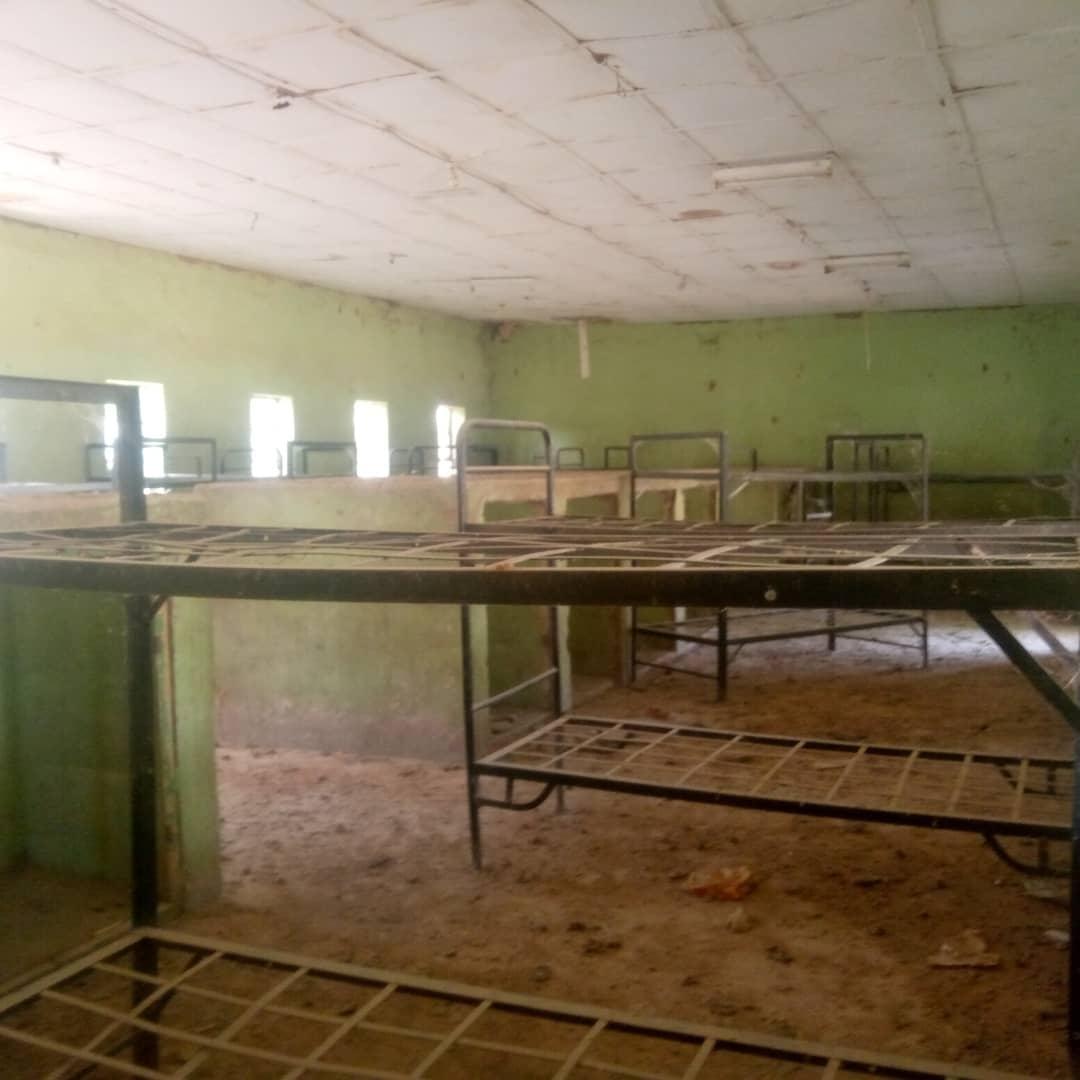
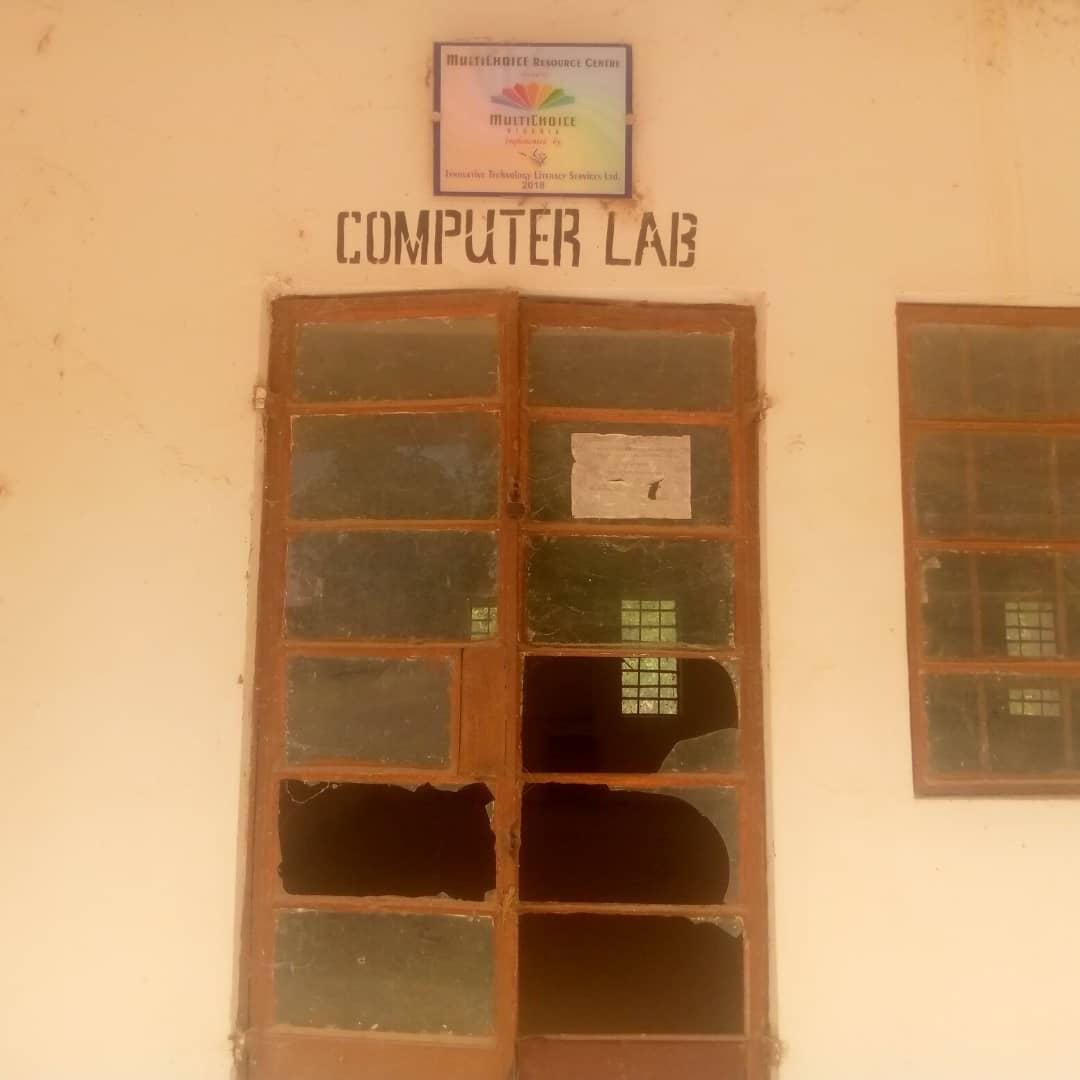
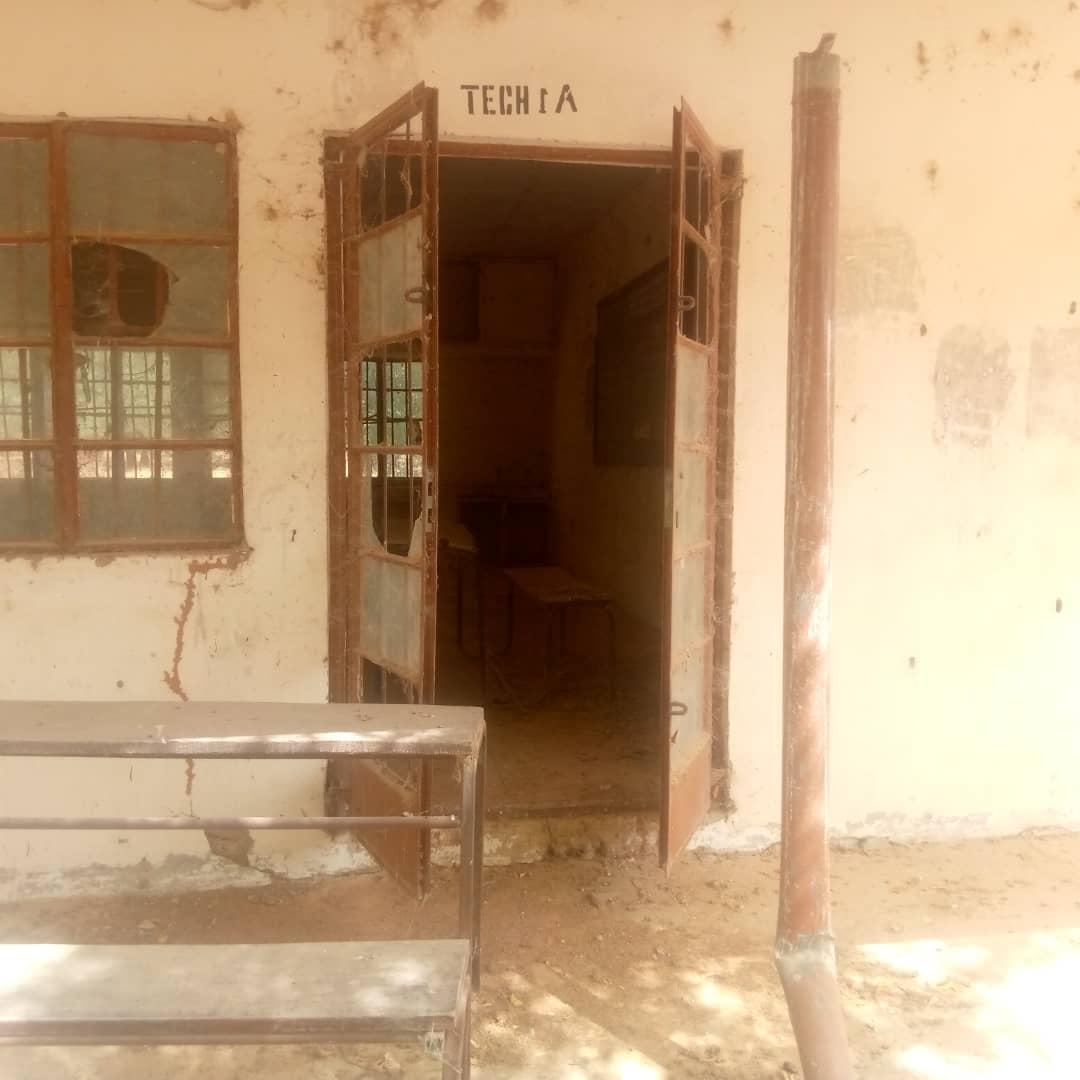
The Government Girls Science School Dapchi is a shadow of its former self, decrepit and overgrown with weeds since that fateful day, as discovered on our recent fact finding mission.

Pix 1 – Below is the school dormitory where Leah Sharibu was tending a sick student just before she was abducted 

Pix 2 Below is the classroom drawing board still showing the last thing written on February 18, 2018 – the eve of the terror attack

Pix 3 Below is the computer lab of the Govt Girls Science Sch Dapchi

Pix 4 Below is Leah’s classroom 

Birds now occupy the staff room as goats and other animals roam free where schoolgirls used to be.

But it is not just infrastructural decay that devastated the school after the terror attack.

Many of the girls have been unable to complete or continue their education.

Several were displaced during subsequent attacks by Boko Haram on Dapchi leading to our intervention.

One of Leah’s schoolmates who went to school in Bauchi was abducted, forcefully converted and wedded by one of her lecturers leading to our intervention last year.

Another schoolmate was impregnated by a military personnel on security deployment to Dapchi who refused to take responsibility for the baby leading to our intervention last year.

Ironically as for Leah herself who was impregnated twice by her abductors, her children are being catered for by the terrorists but a Nigerian soldier abandoned responsibility for his daughter from impregnating Leah’s classmate.

Leah’s widowed birthmom and blood siblings in the village close to Sambisa forest have experienced displacement too from continuing terror attacks leading to our intervention.

Leah’s eldest sister has also had two children while Leah was in captivity which she remains unaware of. Incidentally Leah birthed a boy and a girl in captivity and her sister also birthed a boy and a girl as well.

Sadly despite the infamous Dapchi and Chibok school mass abductions six and years ago, over 600 women and schoolchildren were kidnapped this IWD week in just two incidents in Borno and Kaduna. Each atrocity exceeds the Chibok mass abductions of 276 students a decade ago https://naijalamp.com/2024/03/06/boko-haram-abducts-319-female-idps-in-borno/

To be continued

Emmanuel Ogebe

US NIGERIA LAW GROUP

Washington 

Dad of four commits suicide in Enugu

A 40 year-old father of four identified as Chris Ozobia from Onitsha in Anambra state has committed suicide in Enugu.

Ozobia reportedly took his own life at his block industry located at Ugbo Owa, by old airport road, Emene, Enugu on Sunday 3rd March, 2024.

The deceased left behind four children and a wife. His children are between three to nine years old and lives at standard layout by Tarmac school, Emene Enugu.

A friend of the deceased who wants to remain anonymous, said Ozobia took his own life in his workplace after lying to his wife to leave the house.

He said the lifeless body was discovered the next day, Monday, 4th March, 2024 after his wife and child found his phone at home switched off.

His words: “Only him knew why he left, he dropped no note, hence, nobody knows why he took this decision because he’s full of life and likes enjoying himself. He took his life at his block industry which is located at Ugbowa along the old airport road.

“He left his house on Sunday morning and told his wife he was going to see his cement dealer that sells at Penoks junction. When the wife waited for so long, he tried calling him but his number was switched off.

“The wife raised the alarm because the husband’s number being switched off was uncommon. She came out and starting calling for help and her daughter saw his phone switched off in their room.

“The next day, the woman went to his block industry to look for him and found him lying down lifeless. The police came and took his remains away but has released same to the neighbourhood that helped in putting him in the morgue.

“A lot of stories are flying around but we just learnt he took two big bottles of sniper which he bought at Eke Obinagu market.

“Ozobia is a graduate of University of Benin and was never known to have any tendency of suicide. They’re a struggling family, his kids are still in primary school and needs help because they’re struggling,” he said.

Senator Shehu Sani to NCC, telecos —“You quickly block lines used by Nigerians, but struggle with those used by bandits”

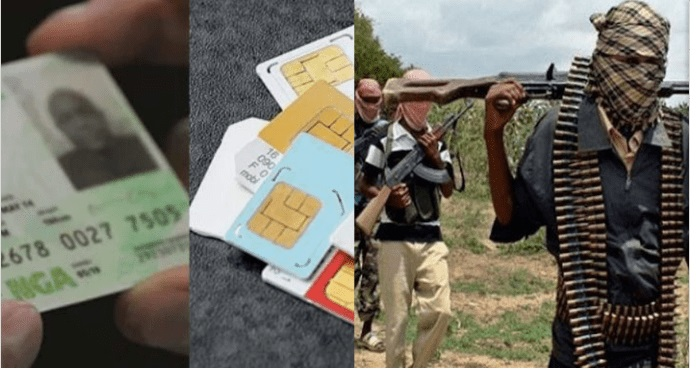
Nigerian Senator Shehu Sani has criticized the National Commission Commission (NCC) and telecommunication companies in Nigeria for their perceived inefficiency in blocking phone numbers used by bandits and criminals.
The senator, who is known for his candidness on national issues, expressed his concerns on social media regarding the priority given to blocking SIM cards over those used by criminal elements.
In a tweet, Senator Shehu Sani highlighted a perplexing situation where telecom operators and the NCC quickly block SIM cards of ordinary citizens, but delay in blocking the numbers used by bandits for ransom collection and criminal activities.

“The NCC and the Telecom operators know how to quickly block SIM cards; the ones they are yet to know how to quickly block are those ones used by Bandits to collect ransom,” Senator Shehu Sani wrote:

In his 28 Feb 2024 article: NIN, SIM CARD LINKAGE AND BANDITRY, Sonny Aragba-Akpore a member of THISDAY Editorial Board wrote that the integration is not being put to effective use. Read his piece below.

The horrors are everywhere and so scary that people discuss them in subdued tones. Both in the city centres and rural communities, no one can claim immunity.

A former Director, Department of State Service (DSS), Mike Ejiofor who had consistently kicked against ransom payments by victims of kidnappings while he was in service was quoted recently that until he became a victim, he didn’t realize how deadly these bandits were.

By last weekend, these deadly gangsters had increased the tempo of their game when they hijacked two vehicles owned by two transporters, ABC Limited and God Is Good Transport and Logistics around Kogi Axis. They were on their way from Enugu and Umuahia enroute, Abuja. The victims are still held in some deadly forests In Kogi State.

 In Kwara State, a traditional ruler was kidnapped with his wife and others. Even before negotiations for ransom began, they had killed the traditional ruler. In Ekiti State, two traditional rulers lost their lives in gory circumstances to kidnappers. A day after that, school children and their teachers were abducted in same Ekiti and while negotiations for ransom went on, the driver of the school bus was gruesomely killed. Though the kids and teachers were released almost a week after, the horrifying experience will remain with these innocent kids for a very long time to come.

And in the face of increasing banditry, kidnapping activities around the country especially including the upsurge in the Federal Capital Territory (FCT) and environs, former Communications and Digital Economy Minister, Isa Pantami recently expressed his worries that security agencies were yet to take advantage of the integration of Subscriber Identification Module(SIM) card to the National Identity Number (NIN) to apprehend bandits and kidnappers who make calls to victims family members for ransom.

 Indeed, Pantami is qualified to raise questions and concerns in this regard because he was the one who initiated the process of integration through the National Identity Management Commission (NIMC) and the Nigerian Communications Commission (NCC).

And despite the nightmares Nigerians went through during that integration, it was worth the troubles and Pantami knew, that is why he is worried today that the process had yielded no significant change to the activities of banditry and kidnappings.

 A Presidential aide had raised the alarm in a tweet about the rising incidents of kidnappings and sought for more legislations to contain this scourge. But in his reaction to the tweet, Pantami blamed security agencies for not utilising the NIN-SIM data to tackle rising kidnappings and banditry for ransom.

“NIN-SIM policy has been working,” said Pantami. “However, the relevant institutions fighting criminality are to be requested to ensure they utilise it effectively when a crime is committed,” the former minister was quoted as saying. “Lack of utilising it is the main problem, not the policy”.

In his lamentation, Pantami said, “If it is not being utilised by the relevant institutions in charge of securing lives and property, then I am more frustrated than any person, as I sacrificed my life and ignored all the threats to my life. This is just a point out of 100 on the policy,” the former minister added.

 He championed the NIN registration policy under Buhari’s administration saying that “linking citizens’ NIN to their SIMs would be a crucial tool in combating banditry, kidnapping, and phone-related crimes.”

Pantami was reported to have allegedly raised a platform to solicit funds to free some victims abducted in the FCT recently. Although there was a backlash on his actions in this regard, the former minister who was likened to a god by agencies and industry players during his reign didn’t care what opinions society held about him.

 Incumbent Minister, Communications, Innovation and Digital Economy, Bosun Tijani thinks the NIN-SIM card linkage will indeed make a difference when he appeared on ARISE NEWS Channels, at the just concluded World Economic Forum (WEF) in Davos, Switzerland, saying “the process of NIN registration and linkage has turned out to be a painful exercise, but the benefits are numerous to the citizens and to the Nigerian economy.”

The process he said “will help government to provide digital services to the people, and it will offer citizens the opportunity to access such digital services that will be provided by government. It will also help government to maintain high level of security across the country. Government had since realised that most databases are in silos and operate independent of each other, but with the successful linkage of NIN with registered SIM cards, government will be able to provide a single database of all Nigerians, from where information could be easily accessed and processed in real time.”

According to him, the government is planning to establish the Digital Public Infrastructure (DPI) , which will allow government to manage and share data.

“With the Digital Public Infrastructure, the Presidency and the Office of the National Security Adviser can sit in their offices and monitor in real time, what is going on around the country, with support from emerging technologies like Artificial Intelligence (AI), Big Data Analytics and Internet of Things (I0Ts),” Tijani said.

 The NCC said in December 2023 that any SIM card not linked properly to a NIN of the same identity will be disconnected from the mobile networks by February 28, 2024.

When it appeared on the Nigerian Exchange (NGX) recently, MTN confirmed the position saying the commission’s latest directive, “is part of an industry-wide directive that requires phone lines for which the subscribers have not submitted their NINs to be barred on or before February 28, 2024”.

“With regard to NINs that have been submitted but not verified, such lines are to be barred on or before March 29, 2024.

“Similarly, where less than five lines are linked to an unverified NIN, such lines are to be barred on or before April 15, 2024. All affected subscribers must be verified (biometrics and biodata) before their lines are unbarred.

  This position is a follow-up to the NCC’s directive on April 4,2022 requiring operators to restrict outgoing calls (one-way barring) for subscribers whose lines are not associated with NINs. Operators are further engaging the affected subscribers through all channels to encourage them to submit their NINs for verification.

  But the NCC threw more light on this last week when it offered explanations for the current situation where already registered SIM cards are disabled and disconnected from mobile networks.

  NCC Director, in charge of Compliance, Monitoring and Enforcement (DCME) Efosa Idehen, explained that “duplicated NINs are responsible for the new wave of complaints from subscribers who have had their SIMs barred despite linking them to them.”

 He said the development is due to the activities of third-party agents who duplicate NINs for unsuspecting telecom subscribers for a fee.

“On already registered SIMs and NIN, the issue is that some of those SIMs were registered with duplicated NINs.”  Idehen explained that “when an audit of the system was carried out, actual owners of the NINs reclaim them.”

 “We have a lot of things that people do within the industry, especially SIM-NIN linkage for money purposes.

 “Yes, people register their SIMs and try to link their NINs but the agents doing those registrations do a lot of damage,” adding that the NCC has seen these and want to correct them .

“We want a situation where when people say they are the owners of their SIMs, there is no doubt,” the NCC official said.

  Millions of subscribers have had their lines barred and subjected to some form of headaches trying to visit service Centres of telcos to reverify their lines by going through biometrics and face identification.

  Industry players have raised strong allegations that alleged criminal elements may have hijacked NIN registration and SIM card integration with the aid of some staffers of the NIMC who engage in duplicating the  NIN of some persons linking telecom subscribers’ lines being barred despite linking their lines to NIN.

  “A majority of the affected subscribers say they have long linked their SIM to their NIN, but were being asked to do so again, and they didn’t understand why this should happen,” an industry player lamented.

Although, officials of NIMC have exonerated the Commission from wrong doings and blaming third party engagement, they are equally worried why the commission should even engage them (third party).

Executive Vice Chairman of the NCC, Aminu Maida, explained that “We want to protect the integrity of our mobile numbers. When we don’t use it for a while, it has to be recycled and this exposes people to fraud.” Maida further noted that the NCC is set to roll out consequences to deter its growth. 

“We want to create more awareness about this so that people can understand that there is a window during which if they do not use their line, it can be allocated to another person.

  “People are using mobile numbers for a lot of frauds today and this is because there are no consequences. We are coming up with a regulation that will make sure there is a consequence for using your mobile for fraud.”

 The National Identity Number is a crucial identifier for citizens and legal residents in Nigeria. Issued by the National Identity Management Commission (NIMC), the NIN is a unique number that links individuals to their biometric data and personal details within the National Identity Database. It serves as a reliable tool for identity verification and authentication, ensuring that all records concerning an individual are accurately consolidated.

For ease of identification, each citizen and lawful resident of Nigeria is given a unique National Identification Number. The process of connecting your NIN to your phone number is meant to give subscribers a way to authenticate and protect their phone numbers as well as their identities.

It is mandatory in Nigeria to link NIN with SIM card.  

Tutorial now available on YouTube for JAMB exam

  • As student’s mum sues JAMB, CBT and employee for privacy & data breach

Tutorials are now available on YouTube for students who are preparing to write the next Joint Admission Matriculation Board (JAMB) examination.

The YouTube link is:  https://www.youtube.com/@nticschool/playlists.

The recorded tutorial cover all the students that would be offered at the examination which is entrance test to Nigeria’s higher institutions- universities, polytechnics and colleges of education.

Disclosing the resources to journalists in Abuja, the Managing Director of Nigerian Tulip International Colleges (NTIC), Mr. Fevzullah Bilgin said this was part of the Corporate Social Responsibility (CSR) of the institution.

He noted that pass questions at JAMB Examination were solved by seasoned teachers from the school.

He said with this intervention, students would be able to pass JAMB with little stress and with high marks.

Bilgin said the school decided to put out the programme to make JAMB easy and assist the students to score high and gain admission into the nation’s tertiary institutions.

In the meantime, the mother of a 15-year-old JAMB applicant has taken the Joint Admissions and Matriculation Board (JAMB), a Computer-Based Test (CBT) center, and an employee to court for allegedly infringing on her privacy and data protection rights.

The lawsuit, filed at the Federal High Court with suit number FHC/L/CS/371/240, was brought on behalf of the mother by the law firm OLUMIDE BABALOLA LP.

According to the mother’s claims, a JAMB official unlawfully used her telephone number to send inappropriate messages to her teenage daughter. The suit seeks several declarations, including:

a. That the 3rd Respondent’s actions constitute an interference with the Applicant’s right to private and family life under section 37 of the Nigerian Constitution.

b. That JAMB and the CBT center are jointly and vicariously liable for the employee’s act of processing the Applicant’s data without legal basis, as per section 53(2) of the Nigeria Data Protection Act, 2023.

c. That the 4th Respondent, as a principal officer of the CBT center, is deemed culpable for the wrongdoing under section 53(1) of the Nigeria Data Protection Act, 2023.

d. That JAMB and the CBT center’s failure to publish a privacy policy on their website violates section 27(3) of the Nigeria Data Protection Act 2023 and interferes with the Applicant’s right to be informed.

e. That JAMB and the CBT center’s omission to file a data protection compliance audit since 2020 violates article 4.1(7) of the Nigeria Data Protection Regulation 2019 and impacts the Applicant’s right to private and family life.

The mother is seeking a perpetual injunction restraining the Respondents from further using her personal data for unauthorized purposes and damages amounting to N100,000,000 (One Hundred Million Naira), payable jointly and severally by all the Respondents.

The case argues that JAMB and the other Respondents violated several provisions of the Nigeria Data Protection Act 2023, thereby interfering with the mother’s right to private and family life. The suit is yet to be assigned to a judge in the division.

This case highlights the growing concern over data privacy and protection in Nigeria, particularly in the context of sensitive personal information handled by organizations like JAMB.

TIPS