Home Blog Page 628

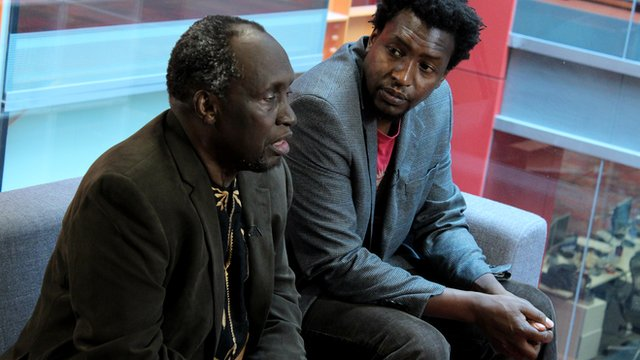
IWD: Son of Ngugi Wa Thiongo reveals how famous author physically abused his mum

Fifty-three-year-old Mukoma Wa Thiongo an author like his famous dad has bared it all about his father’s physical abuse towards his late mother.

Mukoma Wa Thiongo, a prominent author and Associate Professor of Literature at Cornell University, U.S has brought to light the troubling history of physical abuse inflicted by his notable father, Ngugi Wa Thiongo, upon his late mother, Nyambura.

In a candid disclosure shared on the social media platform X on Tuesday, March 12, Mukoma Wa Thiongo exposed the painful truth about his father’s violence towards his mother. He recounted distressing memories of witnessing his mother seek refuge at his grandmother’s house to escape the abuse inflicted by Ngugi Wa Thio.

Kenyan media outlets say much of Nyambura’s life story was overshadowed by her more famous husband whom she married in 1987.

Mukoma expressed the pain of witnessing his mother being systematically erased from Ngugi wa Thiong’o’s story.

In X’s (Twitter) post, he wrote, “My father @NgugiWaThiongo physically abused my late mother – he would beat her up. Some of my earliest memories are of me going to visit her at my grandmother’s where she would seek refuge. But with that said, it is the silencing of who she was that gets me. Ok- I have said it.”

This shocking revelation has shed light on the private life of Thiong’o, a celebrated writer, playwright, and scholar often regarded as East Africa’s leading novelist.

Mukoma revealed that some of his earliest memories involve visiting his mother at his grandmother’s house, where she sought refuge from the alleged abuse.

It isn’t the first time Mukoma has made such a distressing revelation about his father, Mr Thiong’o.

In 2022, he took to Twitter to express his dismay about Nyambura, his late mum, being systematically erased from Ngugi wa Thiong’o’s narrative.

His post from 2022 reads, “It hurts to see my late mother, Nyambura (my daughter is named after her) being systemically erased from the @NgugiWaThiongo_ story. We literally (of course) and figuratively would not be here if it was not for her keeping us glued together through the political persecutions.”

Ngugi Wa Thiong’o

Ngugi Thiong’o, who is not only a renowned writer but also an activist and Nyambura have six children: Thiong’o, Kimunya, Nduchu, Mukoma, Wanjiku and Njoki.

However, his political activism in Kenya led to the collapse of his first marriage, as he was arrested several times.

Nyambura died in 1995, and her husband couldn’t attend her funeral as he was in exile in the United States.

The acclaimed writer and activist later married a new wife, Njeri, with whom he welcomed two children before their separation.

Mrs Njeri is the director of Human Resource Faculty and Staff Conflict Resolution Services at the University of California, Irvine, where Ngugi is a Distinguished Professor.

Thiong’o gained prominence with his debut novel, “Weep Not Child,” released in May 1964.

Despite facing imprisonment and exile due to his criticism of the dictatorial government in Kenya, he has remained an influential figure in African literature.

His work includes novels, plays, short stories, and essays, ranging from literary and social criticism to children’s literature.

He is the founder and editor of the Gikuyu-language journal Mũtĩiri. His short story, The Upright Revolution: Or Why Humans Walk Upright has been translated into 100 languages.

Source, a Kenyan online newspaper, says Ngugi, 86, is currently suffering from kidney failure and is living alone and under the care of medical personnel at his house in California, U.S.

He has to undergo kidney dialysis three times a week and he recently had surgery.

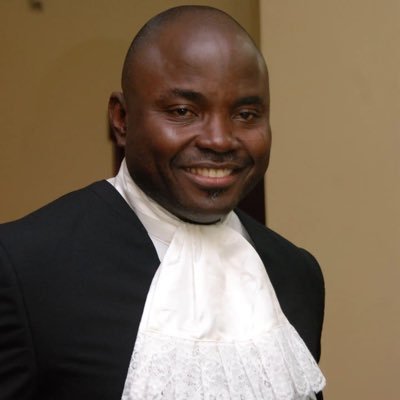
How Judges Think: An Insight into Judicial Reasoning

This is a Paper delivered by Hon. Justice Abiodun Azeem Akinyemi at the Maiden Edition of the Physical Distinguished Personality Lecture Series of the Faculty of Law, Redeemers University, Ede, Osun State, on Tuesday, 27th February, 2024.

“Sentiment commands no place in judicial deliberation, for if it did, our task would be infinitely more difficult and less beneficial to society.” 

OBASEKI JSC, in EZEUGO v ONHANYERE (1975) 6-7 SC, 17 at 184.

Introduction 

I have heard of a book by the title: ‘How Judges Think’ by Richard A. Posner, a highly regarded former Judge of the United States Court of Appeals for the Seventh Circuit. The title excited my curiosity, immediately I learnt of it. Unfortunately, I have not been able to lay my hands on it. However, the ever increasing gap that exists between public perception of court judgements and the reasoning of the Judges who give these judgments, especially in recent times with regard to post election cases in Nigeria, has also aroused my keen interest in the subject of judicial thinking. Consequently, when I was approached to deliver this lecture and further given the privilege to pick a topic of my choice, it did not take me more than a few minutes to come up with the topic that we are discussing here today: How Judges Think -(An Insight into Judicial Reasoning). Although I have not read his book, I give credit to Judge Posner for the title of this lecture. 

Disconnect Between Public Expectation and Judicial Reality

The expressions of discontent by members of the public with court decisions transcend time and jurisdictions, though the attributable  reasons may differ from place to place. In some places, including well advanced democracies, it is fuelled by accusations of political, religious or even racial bias against Judges. In others, particularly in less developed democracies, it is founded on allegations of external or extra-judicial interference, judicial corruption and incompetence of judicial officers. Even on occasions or in climes where no allegations of bias, corruption or incompetence are made, court judgements are still derided just because they are not in tandem with public opinion or popular expectation. This was the case even with the great Lord Denning, Master of the Rolls, whose judgements were on many occasions criticised not only by the public, but also his own peers, despite his acclaimed exceptional brilliance. On one occasion, after he had discharged some Welsh students charged with contempt of court, one commentator irked by his decision called him ‘you lousy coward’. Another said to him, ‘You ought to resign’.  (Lord Denning, The Due Process of Law page 11). Ironically, some of the audacious decisions and legal principles propounded by him and for which he was lampooned, later became ‘locus classicus’.

In our country in recent times, especially in post election matters, public commentators, (sadly, including some members of the legal profession), have lampooned Judges (including eminent Justices of the appellate courts), calling them all manner of derogatory names, because they found some of their decisions disagreeable. Acting on the premise of information bandied in social media, but never proved before election tribunals and courts, public commentators accused Judges of all manner of perceived compromises. While some of the condemnations were borne out of mischief, others were obviously as a result of ignorance – a lack of understanding of how the judicial process works.

While not waiving aside all criticisms of court decisions as unfounded, I am of the  firm view that a better understanding of the nature of the judicial process, especially regarding how Judges think in arriving at their decisions, will be helpful in reducing the gap between public perception and the reality of judicial activity. 

The Nature of a Judge’s Duty

The duty of a Judge, is to resolve disputes between contesting parties who bring their disputes before him for adjudication. In so doing, he is said to dispense justice. And in dispensing justice, he must act according to law. This is referred to by the expression ‘Justice according to law’. It requires that he be fair to all parties, treat them equally, give everyone a chance to be heard, and determine their rights based on the evidence presented by them, in accordance with the prescribed law. His objective is to discover the truth of the case as between the parties, for hiding somewhere between them, is the truth. It is for him to unravel it. However, his search for the truth must be confined to the physical evidence presented before him in court, not outside the court. Not being a Seer, Prophet, Psychic or Diviner, he cannot consult spirits or a crystal ball to discover who is lying and who is telling the truth. He is also not a magician who can simply wave his wand to conjure the truth. The manifestation of his Priesthood in the Temple of Justice is limited to an evaluation of the legal processes filed by the parties, the admissible evidence presented by them in open court, the arguments and legal submissions of their respective counsel, and the relevant laws to the case. These are the only materials his ordination permits him to rely upon, in producing a ruling or judgement that determines the parties’ rights. The only other factors that are permitted to impact the case and influence his decision are his own learning, wisdom, conscience and integrity. 

The Judge’s Mindset

In deciding cases, Judges have a unique mindset different from non-Judges. 

The Lawyer’s mindset is to win a case for his client, at all cost and by any means. In theory and by training, he is a minister in the temple of justice; but, in reality, the only justice he seeks and pursues is judgement that favours his client. He is therefore, an interested party, motivated by personal gain. The mindset of an academic Lawyer is of the law, not only as it is, but also as it ought to be, hence, he thinks beyond the narrow compass of a case – a forbidden foray for a Judge. The mind of a public commentator is influenced primarily by what his audience wants to hear because he doesn’t want to lose them. So, even while sincerely commenting on a case, he is conscious of the need to retain his audience. In addition, he may not have read the judgement, basing his comments only on media reports and gossip. The ordinary folk or proverbial reasonable man’s mindset is a product of sentiments (tribal, religious and political), combined with social media misinformation. On the other hand, the Judge has no interest to foster in the case other than to see that justice is done. His thinking is therefore, unaffected by considerations that are not altruistic. Being concerned only with the facts before him and the relevant law as it is, rather than as it ought to be, he leaves academic or hypothetical questions for academics to deal with. He has no audience to strive to retain, unlike the public commentator. When he thinks about the case, he thinks only within the context of the facts in evidence, rather than the facts in social media or the public space. His decision must not be whimsical or influenced by what he knows personally of the case outside the courtroom, or by personal bias or sentiment. He appraises the case only as presented by the parties before him, and applies the law to it as it is, irrespective of the result. Public approval or disapproval has no place in his thinking process, for he is called to dispense justice according to law, and not according to public opinion. A judgement may attract public applause, yet be wrong in law. That is a bad judgement. On the other hand, a judgement may perfectly meet the justice of the case as presented before the court by the parties, satisfying all necessary legal requirements, yet meet with public disapproval. That is a good and sound judgement. While justice and public opinion may coincide, they don’t necessarily have to, for justice to be done. In every case, the Judge is primarily called to do justice to the parties before him, not the public. If in doing justice to the parties, it rubs off positively on the rest of society, it is a good thing. And if not, it is still a good thing. Unless and except in public interest litigation where the society at large or a segment of it, has a direct interest in the cause. The mindset of a Judge therefore, is to do justice to the parties based on the materials placed before him by them, evaluated and measured by and within the confines of the applicable laws. 

A Prisoner to Conscience

In everything that a man does in life, his conscience speaks. Conscience tells him whether what he is about to do, or has done, is right or wrong, good or evil. There is however, no endeavour where conscience speaks more loudly to its owner than in judging. In judicial thinking, conscience plays a major role. It warns you when you are about to miscarry justice, and convicts you when you have done injustice. It also gives you affirmation when you do justice. The conscience of a Judge is never silent. It always speaks. The question is whether its owner listens, or does not listen to it. The conscience of a Judge is nurtured by his faith or belief, for his faith or belief is his own truth. Yet, he must not substitute his own truth for the truth in the case. The role of his conscience is to nudge him into unraveling the truth in the case, and when he succeeds in finding it, his conscience will bear witness. The Judge’s conscience is further influenced by the sacred oaths of office and allegiance to the Constitution, sworn to by him upon his appointment as a Judge. So, when he sits in judgement over his fellow men, he is actually the one on trial. A trial of, and by his own conscience. The conscience of a Judge is similar to that of a Preacher who stands behind the pulpit, to preach repentance and salvation to others. Every time he is about to fall into temptation, his conscience flashes to his mind’s eye the sermons on piety he had sanctimoniously preached to others. It is amusing how commentators and critics, assume that Judges have no conscience. Nothing can be farther from the truth. Speaking from personal experience, I submit boldly that no assignment on earth puts the fear of God in a man, more than the work of a Judge. As you sit in judgement over others, you metaphorically draw a dagger at your own heart.  As you judge, you are being judged. If truly there is a heaven for the righteous and a hell for the unrighteous, (and I believe there are), with every judgement given, a Judge draws closer or farther away from one or the other. Of course, there are men and women without the fear of God everywhere, and the Bench is not an exception. However, for any sane person privileged to sit in judgement over others, the sheer nature of the revelations that the work exposes him to, is sufficient to compel him to fear God. The point I am making is that, majority of Judges, even if not given to strong religious persuasion, are men and women of good conscience, determined to do what is just and fair, within permissive legal boundaries. A person guided by conscience, is more likely to make mistakes of the head rather than of the heart. There is allowance for mistakes of the head in adjudication. That is the wisdom behind the creation of appellate courts. Their job is to correct mistakes of the head. What there is no allowance for, are mistakes of the heart. There are no appellate courts on earth for mistakes of the heart to be corrected, because unlike mistakes of the head which are found on the record of proceedings, mistakes of the heart are never put on the record of proceedings. They are only recorded, in the unseen heart of the culpable. 

A Prisoner of Facts

The parties to a case are the masters of the facts in their case. The judge is a prisoner of the facts in the sense that he has no right, power or authority to go outside of the facts as presented before him by the parties and their witnesses. Neither the Constitution nor the law, statutory or judicial, vests him with authority to go outside of the facts presented by the parties. He has no inherent jurisdiction to do so. To do so is a sacrilege that will not only taint justice, but may also cost him his job if he is found to constantly do so. Therefore, notwithstanding what other facts of the case may be awash in the public arena, the judge carefully ensures that his thinking is not influenced by them. He must shut them out of his mind. For example, if during an election, there are acts of rigging, intimidation and other malpractices openly displayed in the public or even personally witnessed by him, and case involving the incident comes before him, he cannot take those facts into consideration when deciding the case.  He can only rely on what the aggrieved parties plead and prove before him.  If they are unable to satisfactorily do so, his duty is to dismiss the case. Of course, to the losing parties and the public that was fully aware of the said malpractices, the judgment of the court or tribunal would be perceived to be unjust or perverse. If, on his way to court, he drove past two people fighting and saw who the aggressor was, and they were both later brought before him upon a charge, he must decide the case based only on what is proved before him, rather than what he saw, otherwise, it would amount to a miscarriage of justice. The law is that the court must not rely on extraneous materials or facts not pleaded. Unfortunately, most often, the public is unconcerned with these constraints when condemning court decisions. 

In ADELEKE v IYANDA (2001) 13 NWLR (Pt 729) page 1 @ 20, UWAIFO JSC stated as follows: 

“A trial judge has the primary duty to receive admissible evidence, access the same, give it probative value and make specific findings of fact thereon. He must not impair the evidence either with his personal knowledge of matters not placed or canvassed before him, or inadequate evaluation and should endeavour to avoid vitiating the case presented by the parties through his wrongly stated or applied principle of law. He must carefully examine the evidence and clearly understand and appreciate the issues he has to resolve in the case. His duty is to reach a decision only upon the basis of what is in issue and what has been demonstrated upon by  evidence by the parties and is supported by law.” 

  Continued Online

A Prisoner to Precedent

Ngwuta JSC (of blessed memory) held, in OBASI V MIKSON ESTABLISHMENT INDUSTRIES LIMITED (2016) LPELR 40704: 

“The doctrine of judicial precedence makes the decision of a superior court binding on all courts below it. This applies even if the decision was wrongly reached, as long as it has not been set aside by a court of competent jurisdiction.” 

Thus, judges are equally prisoners to the doctrine of judicial precedent.

 Even the Supreme Court is bound by its own previous decision, though it has the power to depart from it if it finds good cause to do so. But it rarely does. 

The doctrine stipulates that where an earlier case has been decided by a higher court on a point of law, where the facts are similar, a lower court faced with the same issue in a subsequent case, is bound mandatorily to follow that earlier decision, unless the judge is able to find a cogent reason for departing from it, in which case, he may distinguish the case before him from the previous decision. This is because the previous decision is only binding in respect of the issues it actually decided, based on the facts and the applicable law. 

It does not matter how a judge feels about that earlier decision, he must follow it if he has no cogent reason to distinguish it. Even if he is convinced that the earlier case was wrongly decided, archaic or will result in injustice in the case before him, he must follow it, otherwise he will be guilty of judicial impertinence. The doctrine of judicial precedent has very laudable benefits. It fosters stability and enhances consistency in adjudication. It enhances the development of a coherent body of laws, thereby fostering confidence and predictability in the legal system. It ensures equal treatment of litigants in similar facts situations across the ages, while also saving precious judicial time in that a judge does not have to spend time trying to re-invent the wheel where one has already been invented and is still in sound state. See: EPEROKUN v UNIVERSITY OF LAGOS (1986) 4 NWLR (Pt 34) page 162; GLOBAL TRANS OCEANICO SA v FREE ENTERPRISE NIG LTD (2001) FWLR (Pt 40) page 1706. 

However, laudable as the principle is, adherence to it can sometimes result in what some may consider as injustice in particular situations. A good example here is the well-known case of OKAFOR v NWEKE (2007) 10 NWLR (Pt 1043) page 521.  Many, including members of the legal community, have criticised the decision on the ground that it promotes technicality over substance, thereby causing injustice to parties. The ratio decidendi of the case is that a court process signed in the name of a law firm rather than that of a legal practitioner registered on the Roll of Lawyers in Nigeria, is void. As nothing can be built on nothing, such a process and all proceedings founded on it are liable to be struck out. Based on the factual situation before them, the reasoning of their Lordships of the Apex Court cannot be faulted, in my humble view. Either by law or logic, only a person, qualified and registered as a Legal Practitioner can and should sign a court, nay, legal process as its author.  Not a non-human entity that did not attend the Law School, was not called to the Bar, and is not enrolled at the Supreme Court. However, the subsequent application of the ratio of the case by Lawyers has brought about dire consequences that may not have been contemplated by their lordships. Defence Lawyers, especially those whose cases never had any chance of success on the merit in the first place, saw it as an opportunity to ‘throw spanner in the works’ of Claimants cases. They began to file applications to strike out the originating processes of claimants long filed but unfortunately bedeviled by the error. As a result, cases which had been filed and were already pending before courts all over the country, some at judgment stage, began to be struck out by lower courts, because they are bound to follow the decision of the Apex Court. Under the doctrine, courts below the Supreme Court have no choice or discretion in the matter. They must abide by the decision notwithstanding the effect it may have on the cases before them or what they themselves may think of the decision. Even the Supreme Court itself is bound by it, unless and until it finds reason to overrule or depart from it in the future. So far, efforts made to persuade it to do so in a number of cases, have only resulted in reiteration or re-affirmation of the principle by their lordships. See: OGUNDELE v AGIRI (2009) 18 NWLR (Pt 1173) page 219; HAMZAT v SANNI (2015) LPELR-2432; OKPE v FAN MILK PLC (2016) LPELR-42562; SKYPOWER EXPRESS AIRWAYS LTD v UBA PLC 2022) LPELR-56590.

The Rules of Interpretation 

Judges don’t make laws, they only interpret them. Their duty is to EXPOUND rather than EXPAND the law. While a judge may be dynamic and robust in his interpretation, 

Judicial legislation is forbidden. See GOV OF ZAMFARA STATE v GYALANGE (2012) 4 SC page 1; AMADI v INEC (2013) 4 NWLR (Pt 1345) page 595; DICKSON v SILVA (2016) LPELR-42127. 

It is not the duty of a judge to fill in any perceived gaps in a statute or remove any perceived mistake. He is to interpret and apply it as it is, rather than as it ought to be. Judges have been condemned for imposing what is regarded as ‘slap in the wrist’ sentences in some criminal trials, the critics ignorant or conveniently forgetful of the fact that judges have no power to go beyond what the statute has prescribed. The solution in such cases lies in legislative reform rather than judicial activism. While judicial activism requires that a judge should be bold, pragmatic and even think outside the box, it does not give a judge the liberty to do what the law has not empowered him to do. 

In interpreting laws, judges do not substitute their own views of what the law should be for that of the law maker. When interpreting a law so as to apply it in the case before him, the mindset of the judge is to find out what those who made the law had in mind when they made it. What he must apply to the case before him, is not what he thinks about the law, but what the law maker thought and intended by the law. At that point, he is not concerned about what the public’s opinion or expectation of the law is, or might be, to the outcome of his excursion. He restricts himself to the letters or language of the statute in finding out what the law makers meant and intended to convey by them.  Also, in doing this, he is not permitted to think wildly or whimsically, rather the law has established for him, principles or rules of interpretation that must guide his thinking process. In other words, even his thought process is regulated by law. These rules of interpretation require that where the words of a statute are plain, clear and unambiguous, the judge must ascribe to them their ordinary or natural meaning. There must be no embellishments. This is called the Literal Rule. However, where a literal interpretation will result in absurdity or inconsistency with other provisions of the statute, the judge is required to resort to what is known as The Golden Rule. The purpose of this is to ensure internal harmony in the statute. The third principle of interpretation is the Mischief Rule. This requires that the court may consider the mischief or vice which previously existed and which the statute is meant to cure. See: AGI v PDP (2016) LPELR-42578; SARAKI v FRN (2016) LPELR-40013. The end product of the judge’s application of these principles is what is contained in his ruling or judgment. It is unlikely that a judge who has followed this process and a person who has not, will arrive at the same conclusion. Hence the gap between public perception and adjudicative reality.

Logic and Experience 

According to Holmes in his work, ‘The Common Law’, ‘The life of the law has not been logic; it has been experience.’ 

This is not entirely true, for law, logic and experience are inextricably interwoven. In other words, the life of the law has been an admixture of logic and experience. Logic explains how things work, based on deductions and inferences, leading to conclusions. Experience is knowledge and skill gained from doing a particular thing for a long time. Law is a body or system of rules which a people have recognized and accepted as regulating their conduct, with a binding force. Law therefore, is experience lubricated by logic.  Notwithstanding, law is not always logical. That is why it is said to be an ass. For a judge, both logic and experience are needful and must co-exist. Thus, where logic fails, the judge resorts to experience to give meaning to law. Equally, where experience is lacking, sound logic may come to the rescue in ensuring justice. But both logic and experience must find habitation in the law, to be relevant. This is why judges must be men and women not only of learning, but also of experience.  Learning and experience, coupled with integrity and good conscience are the required ingredients in judges, to bring credibility and respect to judicial reasoning. There is no better example of this to be found than in the much revered Lord Denning MR, whose reasoning’s were considered strange and unacceptable for many years, but were later appreciated and adopted by the courts in England and all over the Commonwealth Jurisdiction. 

Judicial Discretion 

 Judicial discretion is an important factor in judicial thinking. Where it exists, the judge has the power to decide one way or the other. For example, where the law gives the judge discretion in the range or amount of sentence to pass on a convict, what the convict gets will depend on the wisdom of the judge, based on the facts and circumstances of the case. That is why two offenders charged with the same or similar counts may receive different sentences. Judicial discretion, which could be statutory or inherent, enables a judge to do what is fair and just in appropriate situations.  It is not in every situation that a judge has discretion. For example where the prescribed sanction for an offence is mandatory, a judge has no discretion to impose something less. 

Conclusion 

In conclusion, given that the factors that judges consider before arriving at their decisions are guided by rules which are not always taken into consideration by the public, the gap between public expectation and the judicial reality will always exist. However, Literacy and public enlightenment may help to reduce it. On the part of the judiciary, a lot also lies with the Supreme Court, being not just a court of law but of public policy. The apex court has itself affirmed and has been portraying this role in some of its decisions, taking into consideration public interest, national security and development. This may underline some of the recent post-election judgments which some sections of the public fail to understand. The Court has the power and authority as the final court of the land, to use its decisions to shape society and point it in the right direction. Their lordships have done this effectively and commendably in a number of cases. Lower courts should also be encouraged to follow this example, though with caution, bearing in mind the limits of their powers and jurisdiction. Too much caution, bothering sometimes on judicial timidity and self-censorship on the part of trial judges inhibits their dynamism and proactive interpretation even where this is necessary. There are cases that may never go on appeal to afford the appellate courts the opportunity to put their stamp of authority on them. These could have been opportunities for the trial judges to explore deeper and lay down principles that may be enduring to the benefit of society. Trial courts have the privilege of seeing and hearing the parties and their witnesses directly; they feel the intensity of the facts and circumstances surrounding the cases brought before them, almost like eye witnesses and whether this is admitted or not, whether consciously or otherwise, this experience impacts their decisions. This rare advantage is denied appellate courts which only deal with the records of proceedings. It is important therefore for trial courts to operate with less fear, think more deeply and exhaust their innate wisdom and abilities in every case and also ensure that there is enough material on record to assist the appellate courts have the nearest feel of the facts and circumstances of the case, as may be possible. In so doing, whether a case ends at the lower court or at an appellate court, decisions reached are more  likely to be more enriching and perhaps more reflective of the people’s expectations.

Hon. Justice Abiodun Azeem Akinyemi, Judge of the High Court of Ogun State, Abeokuta

Ex-CJ Kaduna loses son, Magistrate Yusuf Akilu

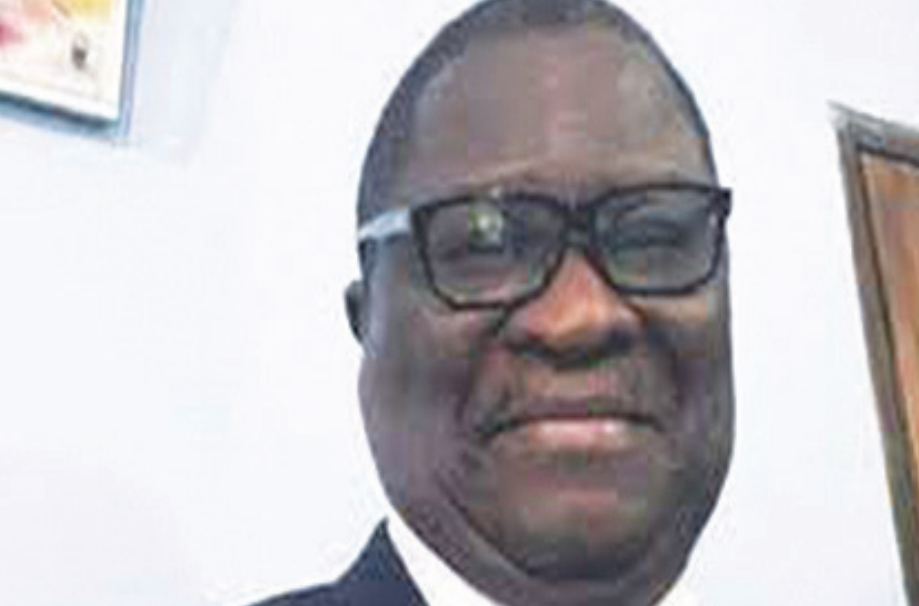
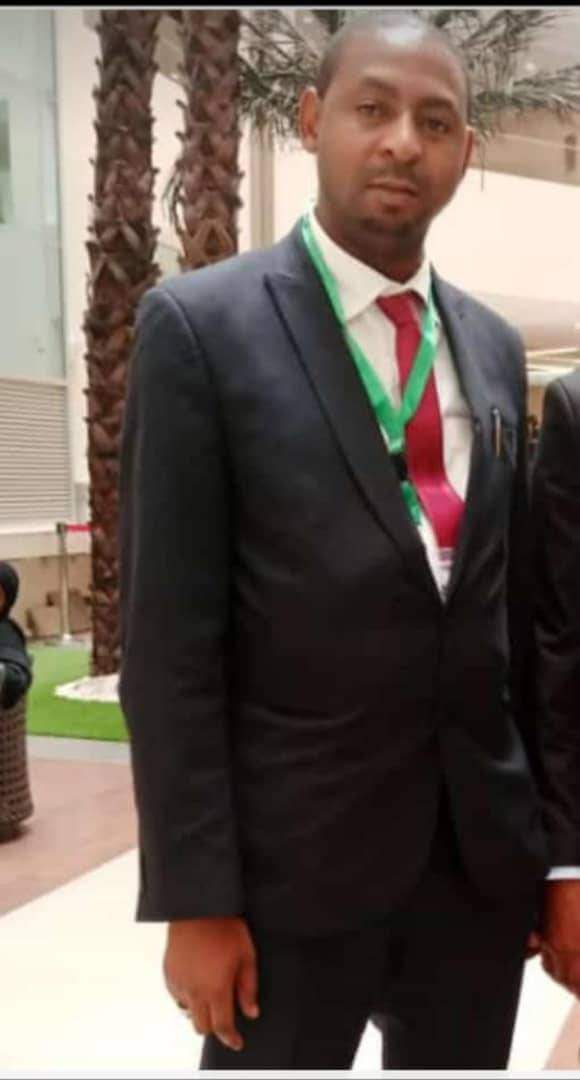
The immediate past Chief Judge of Kaduna State, Hon. Justice Muhammadu Lawal Bello lost his first son last Saturday.

Yusuf Akilu a Magistrate with the Kaduna State Judiciary died after a brief illness on the 9th of March 2024. He was born on 5th August, 1983.

His Worship attended Labayi International School, Kaduna and then proceed to Barewa College Zaria.

After his graduation he undertook a diploma in law course at the Ahmadu Bello University (ABU), Zaria.

He later got his LLB from ABU Zaria, his BL from the Nigerian Law School, Bagauda, Kano campus and was called to the Nigerian bar in 2016.

He was appointed as a state house counsel in 2017 and later transferred his services to the state judiciary as a Magistrate.

He was survived by a wife, two children, parents and four siblings.

What is the justification of the National Assembly for the N1. 2 trillion jerking of the budget?

By Mutalubi Ojo Adebayo, SAN

That session at the Senate where the issue of National Assembly’s jerking up of the 2024 budget by N1. 2 trillion came up, has clearly shown that the greatest impediment to the growth and the development of this country are our National parliamentarians.

What is the justification of the National Assembly for the N1. 2 trillion jerking of the budget?

The “topped up” sum has been clandestinely brought up under the various constituency projects for the lawmakers. Truth be told constituency projects are the euphemism for the ways and manners the parliamentarians got their own “fair share” or loot of our national patrimony. Several frivolous projects like solar street lights, erection of boreholes, district roads construction, building of skill acquisition centres etc , all which will work or function for barely brief periods would be executed under those heads. Some of them will even do some caricature empowerment programmes that will entail spending a very insignificant ratio of the humongous sum they actually collected for the projects. In all, the people and the country are the losers.

Instead of the parliamentarians to appropriate funds for monumental developmental and impactful projects that would be of tremendous and lasting legacies to the people and the country, they prefer to shortchange and cheat the people and the country through those instalmental fleecing of our Commonwealth vide stealing by tricks called constitiency project.

If not, how reasonable is it that while a great institution like TETFUND got N800 billion in the budget, a whooping sum of N1. 2trillion are shared and distributed among the law makers for the provision of sundry items like provision of street lights, bore holes etc. that would even be poorly executed and of which the large chunk of funds earmarked would end up in private pockets.

The wastefulness , irresponsibility and insensitivity of that appropriation may not be fully understood and felt unless you situate it in the context that great institutions like TETFUND which services some critical developmental and research projects of all the nation’s federal and states tertiary institutions got N800 billion whereas the sum of N1. 2 trillion was shared as bazzars by the lawmakers among themselves and inserted in the budget by themselves and for themselves.

My take however is that the National Assembly are not to be blamed wholly, but the present executive arm of government and especially the President which appended his signature to such an anti-people budget. That act alone has convinced me that the present government has nothing good or tangible to offer our people and and the country, in terms of development and real growth or perhaps that it is a government of “anything go” or a government of business as usual and it is very sad.

To me, this is a government of renewed forlorn hope , if we won’t deceive ourselves.

Mutalubi Ojo Adebayo, SAN, was Attorney-General & Commissioner for Justice, Oyo State from
2011 to 2015.

Take control of the small things

Credit: Getty Images

‘Daniel purposed in his heart.’ Daniel 1:8 NKJV

Can you imagine being uprooted from your home and taken prisoner to a hostile country? It happened to Daniel. King Nebuchadnezzar conquered his homeland and carried him off to slavery in Babylon. He lost his house, his job, his freedom, his culture, his friends, and his status as a member of Israel’s nobility. He had to learn to speak a foreign language and live in a place where he didn’t want to be.

If you had been Daniel, wouldn’t you have been tempted to focus on the things you couldn’t control, like blaming exile for your unhappiness and feeling sorry for yourself? Not Daniel! He took charge of his life in little areas. The Bible says, ‘ Daniel purposed in his heart that he would not defile himself with the…king’s [food]’ (v. 8 NKJV). He decided to live by his convictions – even in small things. That’s important because small battles train you for big ones !

If Daniel hadn’t taken control in small things, he wouldn’t have had the strength to say no to big things like worshipping idols or facing the lions’ den without fear or compromise.

Maybe you can’t do anything right now about your house or your job or your relationship, but you can change your life by taking control of the little things. Perhaps, like Daniel, it will involve what you eat, what you watch on TV or the internet, what comes out of your mouth, or a refusal to let others dictate your attitude based on how they treat you. When you ‘purpose in your heart’ to honour God in small things, He blesses you and becomes involved in your life in ways you never thought possible.

May that be our testimony!

Numbers 26-28, Mark 8:31-38

International Women’s Month: Meet the five Nigerian women honoured by Indian High Commission

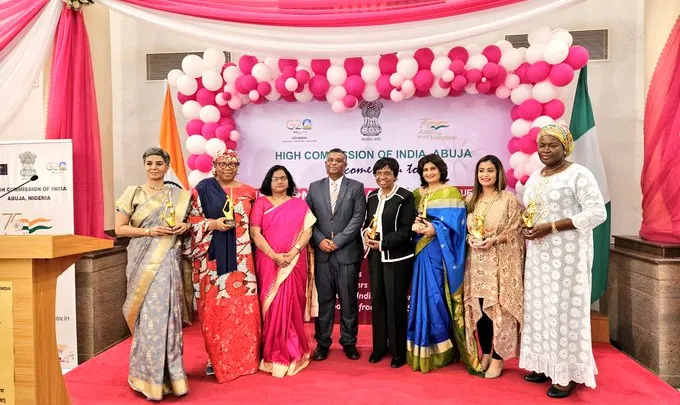
For their outstanding performance to the growth and development of Nigeria, the Indian High Commission to Nigeria honoured five Nigerian women at a ceremony to mark the 2024 International Women Day (IWD).

The women honoured over the weekend in Abuja include Aisha Rimi, Chief Executive Officer (CEO) Nigerian Investment Promotion Commission (NIPC); Prof Fatima Waziri-Azi, the Director General, National Agency for the Prohibition of Trafficking in Persons (NAPTIP), Engr. Abisoye Coker-Odusote, Director General, National Identity Management Commission (NIMC); Hajiya Bola Shagaya, a businesswoman and fashion enthusiast and Ms. Rahama Sadau, Nigerian Actress.

Speaking on the IWD, the Indian High Commissioner to Nigeria, Gangandharan Balasubramanian said it was an important day for more than 50 percent of the population of the world are females (women), and they have to be celebrated for the contributions to the development of the world.

He noted that in every field, women have made their marks, noting that there is no limit to how far a woman can climb in their chosen field in India, calling on other countries which still have gender discrimination to take a leaf.

The envoy said the award was given in recognition of some of the leading women in Nigeria and to motivate others to follow in their footsteps.

One of the awards, the DG, NAPTIP, Prof. Fatima Waziri-Azi described the award as a pleasant surprise to her.

She said: “A lot of time when you do your job, you don’t know many are watching, you don’t know that people are appreciative of what you do. I would say it is an honour and NAPTIP and Indian High Commission have had long collaboration.”

The DG said the award would add to motivate her to do more and spur her agency to feel appreciated and go after human traffickers.

Waziri-Azu who said much more should be expected to be achieved by the agency in 2024 disclosed that NAPTIP performed immensely well last year than it did in previous years.

Nigerians can no longer move freely, most of those in power are only interested in stealing

By J.S Okutepa, SAN

It is time for those who have given themselves power to govern Nigeria to admit that they lacked the vision and direction to lead us well. Nothing has changed in governance and in the lives of Nigerians. The old stories are what we are being told with daily.

Killings, kidnappings, murders, stealing, and all sorts of things that are on the increase daily. Accusations and counter accusations of budget padding and irresponsible leadership behaviours are still the hallmarks of our society.

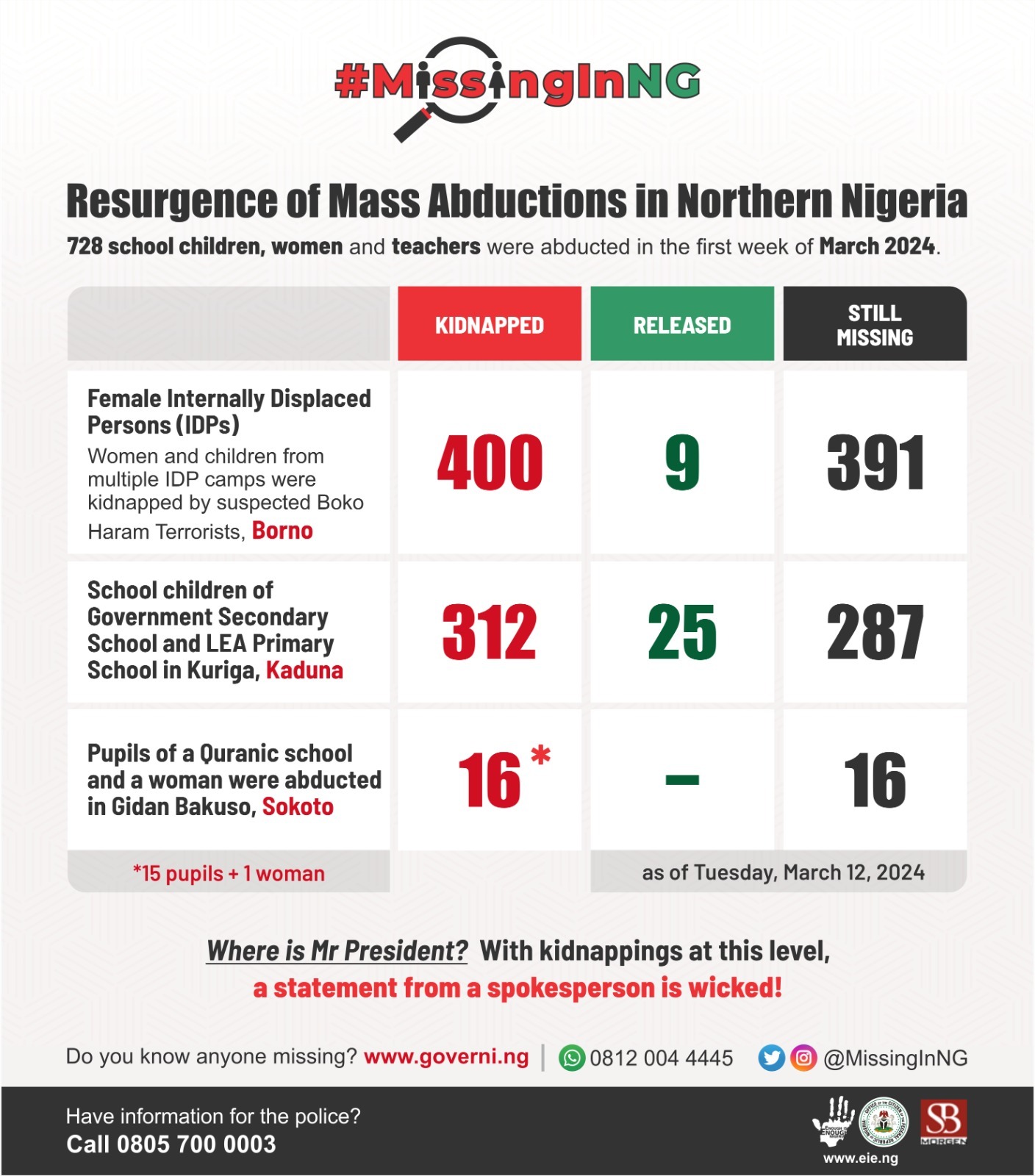
As of today, life has become so short, brutish, and nasty that no one wants to invest in this economy and our society. Kidnappers have become so desperately boldened and daring that they can walk to school and pick up Nigerians children up to 200 unchallenged.

They have the effrontery and boldness to make demands of trillions in exchange for the lives of these traumatized children whose only sin was to seek to be educated.


Nigerians are in hell in their only land. Time to stop playing politics and face real governance is now.

The mumbo jumbo packages in the budget must be unearthed, and money rerouted to useful ventures to fight insecurity in Nigeria. Those in power and government must drop their egos and accept the truth that they are not governing us well.

There is uncommon poverty in the land. There is uncommon insecurity in the land. There is uncommon insensitivity on the parts of those in power now in the land. Most of the things being budgeted for the comfort of those in power are unnecessary and an insult to the collective sensibilities of Nigerians. It is irritating and provocative. It is wrong.

Nigerians can not move freely in their land. On a daily basis, our freedom from fear is in jeopardy. Commence and industry are not booming as it should be. Nigerians of all walks of life must come together to salvage our country from the calamity we find ourselves today. These calamities are products of bad governance and injustice in our land.

If our leaders past and present have justifiably used our resources and developed every parts of our land and invest in tourism all the places being used by the Kidnappers and bandits would have been good tourists sites of great commercial and economic values to our people. There lies the need for good governance and accountability in our land.

The way the government is run in Nigeria is simply not productive in development. Very many who venture into politics are doing so to steal and build empires for themselves and cronies. The banks have equally ruined our country.

Nigerians government must be decisive and act fast before these bandits and kidnappers become too dangerous to curtail and curtain. Many things are just wrong with us in Nigeria.

The impunity of those in power must stop. Government exists for the greater good of all. We have reduced leadership recruitment and act of governance in Nigeria to the scale of primordial partisan and tribal sentiments. We are gradually destroying the trusts in our ourselves. There is trust deficit in Nigeria now.

There is religious deficit in our land. The moral fabric of Nigeria is too low for meaningful growth and development. Almost everyone in power is interested in stealing and stealing to satisfy personal comfort. We can not run government that way.

Nigerians of all walks of life must be assembled to tackle the menace of the challenges facing us. We can do it together if no section is marginalized and we have in us patriotic commitment for tomorrow prosperity.

Ritual Murder: Man caught with daughter’s head in Edo, body found in shallow grave

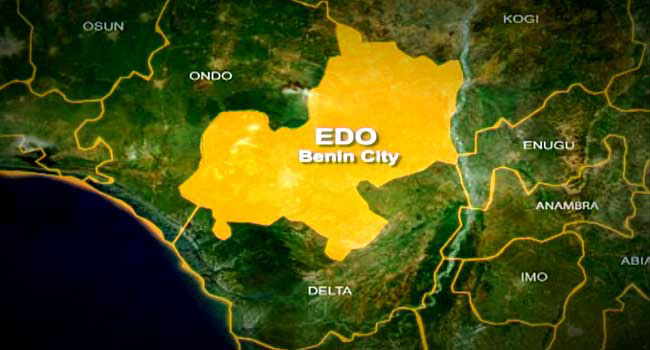
A middle aged-man Emmanuel Ovwarueso has been arrested by operatives of the Edo State Security Network (ESSN) for allegedly killing his daughter and burying her body in a shallow grave in Uteh Community in Ikpoba Okha Local Government Area of the state.

Ovwarueso reportedly confessed to killing his daughter for a money ritual.

It was gathered that the suspect, also known as ‘Emma One,’ confessed to the ESSN operatives who apprehended him at the Uteh area of the Upper Mission Road Extension, where he resides with his family.

According to his wife, whose name could not be obtained at the time of the press, “my husband’s attitude changed recently. He kept saying I should not look at him like a poor man anymore.

“Even at his place of work, he was buying drinks for everyone as if he was celebrating. Even his co-workers were surprised at his new spending style.

“He even told them that his money is very near. We never knew he was having such a dangerous plan,” she said.

The vigilante member, who spoke on the grounds of anonymity, said, “we saw him that Thursday night with a bag, walking so fast like he was rushing to catch up with a flight.

“We stopped him, but he resisted us. We asked what was inside the bag; he said it was his food. So we searched the bag and found a human head inside.

“We interrogated him, and from the way he was talking, it was obvious he was hiding something.

“So we took him to his house, and we met his wife tied down. We untied her and asked who tied her; she said it was her husband.

“She told us that her husband tied her down with a rope before killing their daughter.

“He took us to the place where he buried the little girl’s body in a shallow grave, and the body of the girl was exhumed immediately,” he said.

Some residents of the Uteh community who spoke to newsmen said “Emma One” is fond of beating his wife and kids regularly.

Some of his co-workers said he is heartless and loves fighting uncontrollably.

Contacting the Edo State Police Command for confirmation, the Public Relations Officer of the command, SP Chidi Nwabuzor, said he was yet to be briefed about it.

He said when he finds out, he would get back to the reporter.

“I am not aware. I will find out, and when I do, I will get back to you,” Nwabuzor said.

Lady plunges into river from moving boat in Lagos

A woman, who boarded a boat from Igando in Lagos State to Ogun, has allegedly jumped into the river from the moving boat, the police have said.

The Police Public Relations Officer, SP Benjamin Hundeyin, who confirmed the incident to the News Agency of Nigeria (NAN) on Sunday evening, said that rescue teams were already searching for the woman.

Hundeyin said that one Rasaq reported the case to the Igando Police Division on Sunday about 8.00 a.m.

According to Rasaq, about 10.00 p.m. on Saturday, one Folashade Nimotalahi, of yet-to-be-known address, boarded a boat from their Isuti Jet, Isuti Road, Igando in Lagos, going to Totowu in Ogun.

“They were 12 passengers on board. Suddenly, the woman removed the life jacket she was wearing and jumped into the river.

“She left behind one nylon bag containing a bottle of sniper, Alimosho General Hospital cards and some drugs,” the spokesperson quoted Rasaq to have said in his report.

Hundeyin said that the scene of the incident was visited immediately by detectives from the division.

He said a search party had been contacted to recover the corpse, while investigation was ongoing as they made efforts to contact the family.

NAN

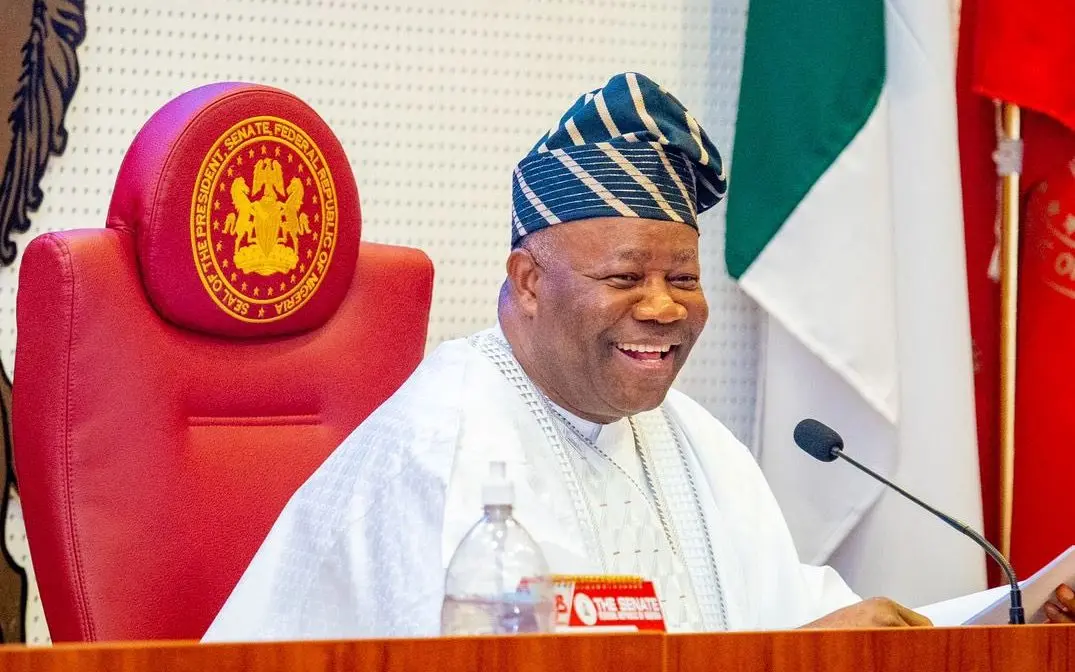
Second Quarter Assessment of Akpabio’s 10th Senate (part 1)

By Mon-Charles Egbo

Until there is a government that is purposeful in evaluating legislative inputs, especially resolutions, there shall be a deficit of good governance in Nigeria.

For example, the latest banditry attack on the Abuja-Kaduna highway and the spate of kidnapping that has overwhelmed the entire Federal Capital Territory could have been averted.

The Senate, in its first quarter, had declared what seemed a state of emergency on the road infrastructure. It developed “a compendium of all the affected Federal roads and erosion sites across the country either awarded but abandoned by contractors or have not been awarded at all, to be forwarded to the Executive Arm for urgent intervention”. Specifically, there was a provision for “increased security surveillance through deployment of more personnel and use of Unmanned Aerial Vehicles (UAVs) such as drones, radars and scanners” on the Abuja-Kaduna expressway. Also, it expressed some proactive opinions aimed at making the entire FCT relatively secure.

However because the executive dismisses legislative resolutions as strictly advisory, the opportunities for the above unfortunate incidents were nurtured.

Nevertheless, one attribute of the 10th Senate is its consistency in demonstrating that the legislature is all about the good of the people. It is always deliberate in its obligations. It is not given to drama or grandstanding. Also, it is not interested in the quantity but in the quality of legislation, as long as the overall fulfilment of the citizens is attained. All these features indeed reflect the legislative agenda upon which Godswill Akpabio was elected the president of the senate.

Having started with the road infrastructure given its crucial nature to national development, the Senate, in the second quarter, deepened its interventions in this regard. Among others, it took the Bitumen Development Commission of Nigeria (Establishment) bill through a second reading and then initiated another to amend the Federal Highways Act as well as those for establishing the National Roads Fund and Erosion Control Commission respectively. The Senate again effected quick confirmation of the Federal Roads Maintenance Agency managing director and board members. Also while adopting it “as part of Enugu State’s submission to the Committee on the Collapse of Road infrastructure in Nigeria”, the Senate urged “the federal government through FERMA to embark on the immediate reconstruction of the collapsed bridge at the Enugu end of the Enugu-Port-Harcourt Expressway”.

Equally on the FCT, the Senate created additional standing committees for integrated and broad-based interventions towards improving governance. They included the Committee on Federal Capital Territory Area Council and Auxiliary Matters whose jurisdiction entails a “review of all the laws establishing the structure and administration of the Area Councils in the FCT” and then, the Committee on Federal Capital Territory that focuses on “matters affecting the FCT, planning and development of the new FCT as well as “allocation of lands in the FCT”. Furthermore, the Senate, while urging “the FCT Minister to revisit the award of contract for the installation of CCTV cameras worth $500 million in and around the FCT” passed the FCT statutory supplementary budget and also introduced a bill to establish the FCT School of Nursing and Midwifery.

Other newly created committees were those on Atomic and Nuclear Energy, Sports Development, Youth and Community Engagements, Solid Mineral Development, Steel Development, Tourism as well as Culture, Art and Creative Economy. And for productivity, several bills were also proposed.

Then towards economic recovery and sustainable growth, the Senate commenced amendments to the Nigerian Investment Promotion Commission Act, Nigerian Deposit Insurance Corporation Act, Federal Inland Revenue Service Act and the Price Control Act in addition to two other separate attempts on the Central Bank of Nigeria Act.

Particularly on the opportunities inherent in the emerging blue economy, the Senate expeditiously passed the bill for an Act to Establish the Nigeria Maritime University, Okerenkoko, Delta State while the Nigerian Maritime Safety and Administration and the Merchant Shipping Acts amendments gained momentum.

And again, to “enhance sustainable socioeconomic relationships across the country and also promote national integration, and ultimately boost the economy and give a sense of belonging to all” the Senate activated the mechanism “to ensure that all the 4 Geopolitical Zones within the Eastern Rail Line Corridor (traversing Port-Harcourt to Maiduguri) benefit from the on-going Railways Standardization and Modernization Programme of the Federal Government”. It also proposed bills for the establishment of the South-East Development Commission and the North-Central Development Commission.

Intensifying its avowed commitment to protecting the citizenry, the Senate accorded significant attention to the two hydra-headed issues undermining the fight against insecurity namely the absence of coordination among the security agencies and the perception that certain security operatives secretly aid terrorism and banditry.

The basic areas of focus were the incessant “kidnapping for ransom in the North-West Geo-political Zone”, the spate of “Insurgency And Terrorism in Niger State”, as well as “the abduction of students of the Federal University, Dutsima, Katsina State”. Others were the attacks by armed robbers on banks and Oturkpo Police Command in Benue State and the Christmas Eve massacre of innocent citizens in Mangu and Barkin-Ladi areas of Plateau State which particularly reinforced the seeming culpability of the security operatives.

Extending its interventions to “the Displaced People of Gwer-West, Makurdi and Guma Local Governments” including the communal clashes between Ifon and Ilobu communities in Osun State as well as Ovonum and Ofatura in Cross River State, the Senate holistically investigated the reported “complexities of the security personnel and agencies that were supposed to protect and enforce security in the affected areas, but are harbouring and protecting the criminals”.

In the end, it recommended the development of “a National Policy document outlining the framework for an improved and streamlined synergy and coordination between the various security agencies” both military and paramilitary, and also “permanent presence of soldiers and other security agencies in Niger State to contain the upsurge of insecurity” in addition to challenging “the Nigeria Police and other relevant security agencies to unravel the mystery of lack of intelligence and alertness on the day of (Oturkpo) invasion”.

Furthermore, the Senate urged the federal government to “address the manpower deficit in the armed forces and the police, and equip them to discharge their functions effectively and efficiently” and also “to urgently address the twin problems of unemployment and poverty since these evils cause insecurity in Nigeria”.

Then specifically, it requested “the federal government to redeem the ten billion naira promise made to the people of Benue State to rebuild the destroyed communities by the immediate past Vice President, Prof. Yemi Osinbajo in 2018”, in addition to ensuring “quick return of the displaced persons to their ancestral homes and as well provide a sustainable security corridor to all flash points within the affected communities”.

Additionally, it called for the federal government’s urgent intervention through the relevant agencies per their respective mandates, particularly by setting up internally displaced persons (IDP) camps in the affected areas and providing necessary support to the communities affected”, such as deploying “security personnel……..and prevent any further escalation of the conflict”.

These positions ideally were complemented with the relevant legislation. While the National Security Adviser (Appointment of Staff, etc.) and the National Social Investments Programme Agency Act went through the second reading, amendments to the National Security Agencies Act and Control of Small Arms and Light Weapons Act as well as those for the Nuclear Safety Security and Safeguard, Documentation and Protection of Domestic Workers and Employers, Nigeria National Internship and Unemployment Benefit Scheme, Informal Sector Private Employment Agencies (Regulation) and the Federal Data Bank respectively were initiated.

In a related development, the Senate, within the period, dealt with three painful deaths, in different circumstances, of young Nigerians.

The first was one Ms Greatness Olorunfemi who lost her life on account of the alleged refusal of Maitama District Hospital, Abuja, to accept and treat her after being attacked and pushed out of a fast-moving vehicle by notorious ‘one chance’ operators. The second was a toddler, David Etim Udo, who fell from a school high-rise building at Emerald International School Aba, Abia State. The third was Chalya Silas, a 24-year-old NYSC member serving in Kaduna State who “was attacked and fatally stabbed by hoodlums while engaging in her regular morning jog”.

Lamenting such avoidable incidents, the senate strongly advised “all the hospitals in the country to comply with the provisions of the law by treating patients with gunshots without police report”. It followed it up with initiated amendments to the Compulsory Treatment and Care of Victims of Gunshots Act.

Also while calling on the federal government “to work relentlessly towards safeguarding the lives of its citizens” the Senate recommended that schools across the country should “relocate their crèche and nursery classes to the ground floor or bungalow within the premises” and also that government should “enforce safety protocols in schools as enshrined in the National Policy on Safety, Security and violence-free schools”.

Similarly, the Senate, through a motion on the “unlawful killings and incarceration of over 250 Nigerians in Ethiopia”, called for urgent intervention from the federal government.

Another area that challenged the responsiveness of the Senate was the growing menace of floods in the country. Motions were raised on the perennial challenges arising from the “un-dredged River Benue in Adamawa State, the “Flood-induced Damages caused by the wilful release of water from the Lagdo Dam in Cameroun”, as well as the disasters “in Ikosi-Isheri, Agboyi-Ketu and several other communities in Lagos and Ogun states”.

Though already working on a “comprehensive long term solution to address the problem”, the Senate resolved to “facilitate the inclusion of dredging of River Benue, Niger and other rivers in the 2024 Appropriation Bill to address the perennial flooding and its multidimensional consequences” and also the “construction of receptor dams including Dasin Hausa Dam proposed to be in Fufore local government area to curtail potential risk of excessive flood from the Lagdo Dam in Republic of Cameroun”. Above all, it introduced the bill to establish the National Flood Management Commission “to serve as a central body responsible for coordinating flood management activities nationwide”.

Still, on internal security, the Senate considered the Report of the Adhoc Committee on Abuse of Firearms by Officials of the Nigeria Customs Service resulting in extensive recommendations. Some of them included a reduction in “the multiple checkpoints mounted along corridors of border communities (to)enable free flow of goods, especially farm produce, in, around and out of these communities to the main towns and around the markets in the border communities”, investigation and review of “ the operational activities of Border Drill, the CGC Special Strike Force and Federal Operations Unit across the country” and a declaration that “ the act of harassing, shooting at innocent citizens, raiding markets and chasing smugglers into towns leading to chaos and loss of lives is unacceptable and barbaric in a modern Customs System”. Additionally, it recommended “that functional scanner equipment should be installed at all major land borders for import examination purposes” and also “that auctioning of legally seized items (rice, etc.) should be done promptly or in time to avoid contamination, depreciation or outright waste”.

Also, whereas further consideration of a motion on the re-opening of the Nigeria-Niger Republic Border “for economic advantages of the two countries” was suspended for wider consultations, the Senate called on “the federal government to press for a Two State Solution as a final and permanent solution to the Isreali-Palistanian crises as earlier agreed by the United Nations” towards saving the “lives and properties of innocent women, children and indeed humanity in general”.

Also during the period, there were processed petitions from victims of wrongful dismissal from public service and several other fundamental rights abuses and interestingly, that of a community that felt short-changed in the execution of government contracts.

Empirically, if the executive reviews the inputs from the legislature with an open mind the quality of governance will improve tremendously.

To be continued!

Egbo is a parliamentary affairs analyst

TIPS