Home Blog Page 626

Nigeria: A history of scandals

By Lasisi Olagunju

On October 29, 1974, the Nigerian Ministry of Defence, through the Ministry of External Affairs, wrote to Nigerian missions and embassies abroad that it wanted to buy tonnes of cement to build barracks for its post-civil war armed forces of 200,000 officers and men. The Nigerian Army had just about 8,000 personnel before the war. The ministry not only made that open call for supply of cement, it avoided competitive bidding; it fixed the price at $60/per ton. Analysts noted that that offer price was five dollars more than the prevailing world market price. But, no wahala. Price and pricing have never been a problem for Nigeria. In fact, at that point in our growth (or decadence), the problem we had wasn’t money, it was what to spend it on.

So, between December 1974 and June 1975, our Ministry of Defence, which needed just 6 (six) million metric tonnes of cement, awarded 69 contracts for 16.23 million metric tonnes valued at almost $1billion. Other agencies and departments of government soon got on board the cement armada. History says half of the world’s cement was diverted to Nigeria. One researcher (Fabian Ihekweme, 2000) found that “approximately half the merchant ships in the world which were suitable for carrying cement became involved in supplying Nigeria.” An American newspaper reported that “the massive orders led to an armada of ships anchored off the Lagos coastline…stretching as far as the eye could see. Many were decrepit hulks manned by skeleton crews dispatched by ship owners to collect demurrage costs…”

The end was the famous cement scandal of 1974/75 which The New York Times of June 28, 1976 described as “a web of kickbacks and bribes involving government officials, foreign ship owners, corrupt purchasing agents, unscrupulous middlemen, phony corporations, dubious letters of credit and Swiss bank accounts.”

The scandal was not just about us biting more than our mouths could contain. We not only allowed and accepted substandard cement from suppliers, concessions were granted by Nigeria approving extension of expiry dates for expired products. Hanaan Marwah, an African infrastructure historian formerly with the London School of Economics, did a major work on this in 2020 for Business History. She places the scandal “in the context of debates about corruption, organizational failure and a ‘resource curse’ in Nigeria.” We had a ports congestion of over 400 ships queuing to offload cement. To compensate for the delay at the ports, we offered generous demurrage. We increased payable demurrage from the standard $3,500 per day to $4,100/ per ship per day. Some ships came carrying nothing; some did not come near our ports at all; some never existed. Yet they all claimed demurrage. And we paid. An account says Nigeria ultimately paid an estimated $240 million in real and phony demurrage costs.

In instances when deals were too criminally stark to click, Nigeria demurred in payment of costs for delays. And some audacious fake suppliers went to court to demand payment for their ashy goods. For this, Nigeria had a harvest of court cases, home and abroad. The very interesting UK Supreme Court appeal case number (1978) EWCA Civ J1219-3 appeals to me here. That case was between a company, Etablissement Esefka International Anstalt (Plaintiffs/Respondents) and the Central Bank of Nigeria (Defendants/Appellants).

Lord Denning, Master of the Rolls, who presided over the appeal, tells the story of the case better in elegance of language and in ghastly details – and copiously I am quoting him:

“This is another case involving what has been called in the papers ‘the cement scandal’ in regard to Nigeria. It so happened a few years ago that the Ministry of Defence in Nigeria ordered vast quantities of cement from all over the world. The Central Bank of Nigeria issued letters of credit to pay for all the cement which was coming in, and a good deal of it was payable through London banks.

“Great quantities of cement were shipped to Lagos: and at one time there were 300 or 400 ships waiting outside the port of Lagos to discharge the cement. There were not enough wharves or quays to take it there, let alone all the other goods coming into Nigeria. So immense demurrage was built up on the ships which were lying outside the port of Lagos for months and months. The story of what happened will be found in the case of Trendtrex v. The Central Bank of Nigeria, in which that bank claimed sovereign immunity and said they could not be sued. It was held in this court that they could be sued in the ordinary courts. That was the position in law. This is a further aspect of that “cement scandal”.

“In this case the Ministry of Defence ordered 240,000 metric tons of cement in December 1974 at a price of U.S.$59.90 per metric ton c.i.f. Lagos. The total purchase price was U.S.$14,376,000. That was ordered and agreed to be paid for by the Ministry of Defence in Lagos from a company (I will call it such) called Etablissement Esefka International Anstalt of Liechtenstein, but operating apparently from an address in the Strand, London. The Nigerian Ministry of Defence said that letters of credit would be opened accordingly – transferable, divisible letters of credit. The letters of credit were issued on the 18th March, 1975. The advice was given by the Midland Bank here on the account of the Central Bank of Nigeria for these monies to be paid for the goods against documents. The documents included commercial invoices (four copies), a full set of four bills of lading, an insurance policy and the like. The ordinary set of shipping documents was to come forward. The credit was irrevocable, transferable and divisible: and, furthermore, there was a special provision by annexure for demurrage to be payable in the total sum of U.S.$4,100 a day. That demurrage also came under the letters of credit which were issued by the Central Bank of Nigeria through the London correspondents the Midland Bank in favour of the Liechtenstein company Esefka International.

“I do not suppose that Esefka International had any cement at all themselves. They had to buy it; and apparently successfully in several cases. A good deal of the cement was shipped, a good many of the ships were held up, and a good deal of demurrage was payable. As to a great number of them, no question arises. But a question does arise in regard to eight vessels which were supposed to have shipped about 94,000 tons of this cement. With regard to those eight vessels, the shipping documents, the bills of lading, certificates and the like were presented to the Midland Bank as though everything was in good order. On being presented with those documents, the Midland Bank in London paid out huge sums in respect of these goods. Nearly $6,000,000 were paid out in respect of these ships.

“Lo and behold. I will come almost to the end of the story in a moment. Solicitors from London have been out to Lagos on behalf of the Central Bank of Nigeria. They have been to Greece, and they have obtained very strong evidence that there were no genuine documents at all – that these bills of lading were not genuine, but were forged. There is great doubt whether these eight vessels ever existed at all. What happened was that bills of lading were presented on behalf of three of these vessels by Esefka in Liechtenstein, and five others by a gentleman called Klemo. This is the way they got the money. Mr. Klemo, for example, on the 21st June, 1975 presented to the bank in London four commercial invoices apparently in order, full sets of 4/4 shipped bills of lading apparently in order, giving the name of the ship ex so and so. For instance, I have one before me for the m.t. Lion ex Avgi.In practically every one of these eight ships the bills of lading appeared as if there had been a ship which had changed its name. Nearly all the bills of lading were made out on that basis, and signed by the master, that they were shipped at a port in Greece called Volos.

“When the solicitor from London went out to Greece he found that it was all “moonshine” in effect.They had never had any of these ships in Volos at all. And Volos had not got the quantity of cement or anything like it to fulfil these supposed bills of lading. What is more, the harbourmaster did not know of any being put on board or sent forward, and so forth. So a very strong case was made out that these bills of lading were not genuine at all. They were forged in respect of goods which had never existed.

“In addition, added to these documents, there was a certificate of value given by Mr. Paul Harris, who seems to be a leading member of this Liechtenstein company Esefka International. He apparently lives in Zurich now. He gave certificates of value and certificates of origin of these goods, certifying himself that the invoices were all correct and the goods were produced in Greece and so on. When he was asked for an explanation of it, he said that he signed it in blank thinking that it would be all right in the ordinary way. That sounds a little suspicious to me: people ought not to sign certificates of this kind in blank and leave them for other people to fill in. At all events, there it was.

“Esefka, the Liechtenstein company, got money on three vessels. There is a question of whether those vessels ever existed. Klemo got money on five other vessels, and the same question mark arises about those. And the long and the short of it is that on these supposedly genuine documents Mr. Klemo and the other people got U.S.$6,000,000.

“When the solicitor from London found this out, he advised the Central Bank of Nigeria and the Midland Bank in London that they were not to pay any more money. They were certainly not to pay any demurrage with regard to this claim under these letters of credit when this kind of fraud, as he said it was, had been perpetrated.

“Was there such a fraud or not? Of course it is a debatable question. We have not got anywhere near the trial itself. But for myself, in view of the strength of the evidence which has been collected by the London solicitor in Lagos and in Greece, it seems to be elementary that, if it was a genuine transaction, Mr. Paul Harris (who was obviously the genius behind it) and Mr. Klemo (who was the person who was supposed to have supplied the goods) would have made affidavits or come forward to show that these were genuine goods and these were genuine shipments.

“But there are no such affidavits. All we know about Mr. Klemo is that he supposedly in May 1975 took up a divisible part of 60,000 tons of this supply and took up the transfer of the corresponding letters of credit. There it is…”

That was about us from the legendary Lord Denning.

The Shagari regime of 1979 to 1983 had its “Rice Armada” scandal into which Nigeria reportedly sank over N4 billion. A dollar exchanged for 55 kobo in 1980 when we minted that scandal. The scandal is foregrounded by a story of food crisis in Nigeria. The price of rice tripled with consequent political and social implications. President Shehu Shagari responded with mass issuance of import licences for 200,000 metric tonnes of rice in January 1980. A big scandal soon afflicted the policy. Stories of how sweet sleaze was being extracted from people’s hunger painted the street red. As more and more rice reportedly came in, the price of the commodity was going up, aiming at the roof. Who and who got the licences? Jon Kraus answers that question in his ‘Nigeria under Shagari’ (1982) published in Current History, Volume 81. Kraus writes that when the scandal broke, and the National Assembly demanded a list of the licencees, what it found on the list of rice importers were “records and electronics companies.”

Further to the lawmakers’ horror, on the list were names of their leaders in the Senate and in the House of Representatives. The Washington Post of 26 December, 1980 reported that one of the rice merchants, the deputy leader of the House of Representatives, was very “unapologetic about his floor-tile company receiving one of the highly sought after licenses.” To reporters who questioned him, The Washington Post said the House leader posed a counter question: “Do you think because I am in the House of Representatives I should stop doing business? I have been in business a long time.”

The arrogance in the above statement shocked Nigeria of 1980. If you followed proceedings in our senate in the last seven days, you would know that such audacity of privilege won’t shock anyone in Nigeria of today. Bola Tinubu’s presidency calmly admitted last week that he presented a budget of N27.5 trillion to the National Assembly but the “National Assembly, in its wisdom, increased the amount proposed by the executive by N1.2 trillion.” The lawmakers returned to Tinubu a pregnant budget of N28.7 trillion, largely of borrowed money, for him to sign. And he signed it; no query raised or question asked; no explanation or answer given. Part of that infusion is the provision of scandals that will sink one borehole for N193 million.

All around us here we see what the French call déjà vu – the feeling that you’ve experienced something before. Unlike the French who thought it a mere feeling, here, the experience is real. President Shehu Shagari, in his autobiography ‘Beckoned to Serve’ wrote on what he called “the greed culture” which dominated the legislative life of his regime. He reminisced that “in the 1981 financial year alone, the three million naira that I proposed for improvements to legislators’ quarters was hiked to twenty million naira by the joint committee on finance and appropriation” (see page 269-270). Now, do the calculation. How much would that criminal hike in cost be today? A dollar exchanged for 60 kobo in 1981.

“Nigeria, long known for its flamboyant corruption”, was how the journal, ‘The Historian’, synopsized an article on Nigeria by Steven Pierce five years ago. Because character is smoke, scandals of same hues and similar odour have continued to climb the ladder of time with us. Indeed, the narratives in the cement scandal of fifty years ago would sound so familiar to Nigerians of this day. You remember the oil subsidy scandal and its sad, lurid details. Under the military in 1974/1975, people demanded and got paid demurrage for goods that never existed. In this democracy, people have collected (and may still be collecting) subsidy payments for vessels of petrol that never came here or that never existed.

Our elders say the fear of death does not prevent soldiers from going to war. Tinubu’s friends should tell him to learn to say no to his National Assembly. His success is in saying not yes to whatever is wrong. Great leaders step on toes. I read an article in the Financial Times last year on why saying no may be a virtue. On the very top of that article the author planted a quote: “You can only achieve great things if you know how to say no.” The president presumably saw everything in that budget of transparent sleaze and scandal yet he did not withhold his assent. Tinubu’s office said the big boss closed his eyes to whatever was added to what he presented “in the spirit of democracy which allows give and take.” Yet, last Friday, the president waxed patriotic. He told his visiting party patricians: “As we are fighting corruption, smugglers and old subsidy beneficiaries, they most certainly will fight back. All those who falsified records and became losers with the subsidy removal, they will fight back. But we will defend our people. The treasury belongs to the people, and that sacred trust must not be abused.”

It was so nice hearing the president pronounce “the treasury belongs to the people.” But some carnivores plan to sink 427 boreholes with N82.5 billion public funds and the president endorsed it with his signature. What else is the meaning of complicity?

Touching story of how a retired soldier’s daughter sponsored dad in Law School

  • “I smile because you’re my father. I laugh because there’s nothing you can do about it.” – Unknown
  • “Behind every great daughter is a truly amazing dad.” – Unknown

By Ajibade Omape

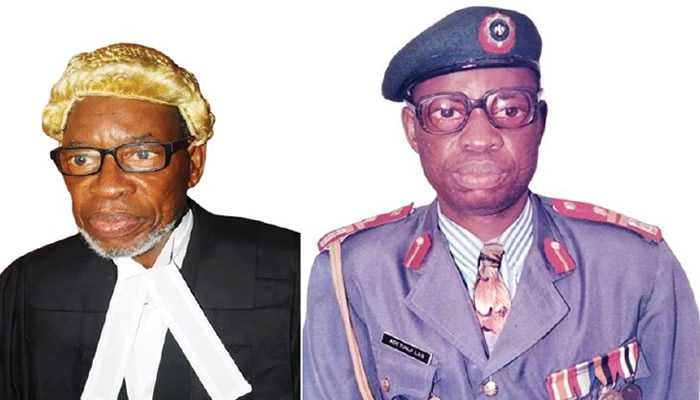
Seventy-six-year-old retired soldier and former Chairman of the Nigerian Legion in Oyo State, Alhaji Adetunji Lasisi, who was recently called to the bar, speaks to AJIBADE OMAPE on his life in the military service and new life as a lawyer

What motivated you to join the military, and can you describe your experience while in service?

My name is Alhaji Adetunji Lasisi, I was born in 1948, and I am from a village called Ilori Alaja in Arulogun, under the Akinyele Local Government in Oyo State. I started my education at St John’s Anglican Primary School in Igbo Oluwe around 1954 and finished my primary school there before the family moved to the town and I became a city boy at that time. I then started modern school at ICC Secondary Modern School, Aperin; after a year I moved down to Methodist Commercial Secondary School Elekuro, where I finished my commercial four in 1964, and immediately I finished because I was a village boy and my father had passed away that time in 1961, I started looking for jobs at different places.

I moved to the defunct Mid-Western State in Sapele, and did a small job at the African Timber and Plywood in Sapele when I went to live with my uncle, and that time I was eager to join the military force because I loved the force and not just the Army;, I struggled to join the police back then, and at that time we were having local government police at Amokoko here in Yemetu, Ibadan, but I could not get in so I travelled back as I was asked to return home. When I came back, there was nothing again and I started working as a typist with an importer and exporter, where I was getting paid seven shillings and six pens, and it was alright.

I then decided to go for the military force; a recruitment came up on February 6, 1966, and luckily we were moved to Zaria; I later was posted to the third battalion here in Ibadan and we were moved to the warfront immediately, and I was in the warfront from the beginning to the end, and I thank God that nothing happened to me. It was during that period that I developed myself; the Army gave room for everything needed for someone to develop himself and at that time we usually had extramural classes that were run by the University of Ibadan; we had free tuition, free forms and all we needed; so I was attending the extramural classes with some of my friends and referred to ourselves as ‘ABU’, which stood for ‘Army brought up boys’.

I sat the GCE in 1977 and I took six papers and I cleared them all by the grace of God, and that result enabled me to attend Wesley College for Grade Two; I was in Wesley College when the Oyo State Government established the NCE campus at the Wesley College; I took the exams and passed. We were the very first set of students at the Wesley College campus; while doing the morning devotion, the vice-principal of the school made a statement that one lucky student had been admitted into the NCE, mentioned my name, and asked me to step out. I was surprised that I had become a senior to my seniors, so the three years that the Army gave me for grade two was what I used for my NCE, so I didn’t take the grade two certificate as I went straight to the NCE.

What followed after the NCE?

I tried to go to the University of Ibadan but a lot of things went wrong with the system and it did not work out. Thereafter, I got the opportunity to travel to Paris (France) for a diploma in French in 1979 during the (former President Shehu) Shagari election time; after my diploma, I came back to Nigeria and wanted to further my education. I eventually left the (military) service in 1991 as a warrant officer; when I left the Army I joined the Nigerian Legion and that was the time that there were five local governments created out of the Ibadan, so I became the chairman of the legion in Ibadan south-east first, then I contested in a 25-local-government poll, and I managed to secure 20 votes out of the 25, and the rest votes were shared and that was how I became the chairman of the Nigerian Legion in Ibadan in 1993.

It was at that period that I decided to do my diploma in Law at the University of Ado-Ekiti (now Ekiti State University) in the year 2000; after I passed it, I felt there was still more to do, so immediately I finished with the legion because I was a full-time chairman until 2004 when I left the legion; in 2005, Lead City University started offering Law courses so I joined the very first set, although I struggled to go there I thank God for the success. We finished the degree programme in 2008/2009 but because of accreditation issues, we could not go to Law School until 2019 when the first batch left.

I was told that I could not attend because one of my children offered me an Umrah or lesser Hajj slot and I preferred that because I knew that if God spared my life, I could always go to the Law School. So, I forfeited the Law School and went to spend the last 10 days of Ramadan there. By 2022, I went back to Lead City University to enrol and I got my papers to go to the Law School; that was how I got called to the bar and became a lawyer on March 6, 2024.

How did your military background and experiences influence your leadership style and approach to serving the Nigerian Legion and its members?

It was while in the military that I noticed that I would be able to serve the people and make an impact on many lives; there was a good and standard institution but there was nobody to pilot it properly. I made a positive change because I knew what I was there for; I made sure to make use of the decree created for us in 1988 and I used it to make sure that everything was okay. I will say they all enjoyed my tenure, even the disabled were beneficiaries. I had to go the extra mile with the principal of the rehabilitation centre to change a lot of things in their facilities; I changed wheelchairs and other necessary items for people, I cannot be able to say much but the institution is there to check and I thank God that I was able to make an impact on lives.

What inspired you to pursue a career in Law, particularly at this stage in your life and after retiring from the military?

Honestly, I love it because it is a noble job; there are two noble jobs in the world, the first is the military and I served in the Army to protect the integrity of this country; the second noble job is Law. I wanted another noble job that would enable me to serve humanity, not politics or any other job, so Law was what I chose. I want to be able to help the oppressed and the underprivileged; there are so many people in prison yards today who are first-time offenders who do not have anybody to fight for them, and they do not have the means to pay fines; so these are the type of people I want to help, and besides, I have been blessed by God so I feel that is one of the only ways I can also make an impact in society; you know nobody is going to contest with me unlike when one engages in politics.

Immediately I was called to the bar on March 6, I reported on the 11th to learn the nitty-gritty of the job. To be an ex-serviceman, you will be recognised, and I’m not just talking about Nigeria; I remember when I was in London with my military ID card, I enjoyed a lot of benefits and because we are members of the League of the Ex-servicemen of Britain because we are tied to them; but for Law, it is to help humanity and that is why I love it.

How do you envision your role and contributions to the legal profession given your unique background and experiences?

I can bring a lot; I know the way things were done back when I was in the service so I understand the basics; there are many things to be done and I can go from point A to point B to see if my contribution is felt and defend the people there because there are many who have cases but do not have money to engage legal practitioners.

Will your service to people be free?

Well, just like I said, there are so many people in correctional centres who don’t have legal representatives, so I am free now to do a pro-bono job for them. I told God I wanted a 90/10 ratio for all cases, however, the filing of papers may attract some fees, but for appearance and charges, I will not be taking fees.

Were there any specific challenges or obstacles you encountered while studying Law, and how did you overcome them?

Well, there is nothing that is simple and there is nothing too tough but the thing that is peculiar about studying Law is that when you fail in one subject, you fail in all, and not only that but there is a particular subject called ethics that can affect all papers, so one should face ethics right from the beginning. The grading system in the Law School is different, so one should be up and doing in that one year for Law School.

What kind of support did you receive from your family throughout your journey to becoming a lawyer?

Well, I lost my father in 1961; my father was a rich farmer and circumcision expert, as our lineage’s profession is circumcision (Oloola descendants); he took ill and the sickness lasted a week and that was what led to his death on November 8, 1961, after which my brother supported me to finish my commercial four in 1964. As for my Law School, it was my eldest daughter who sponsored me, and that is why I thank God for her; she fell sick a while back, but I thank God that she is back in sound health.

I was so happy when I was called to bar because she is alive; other members of my family have also supported me; my first wife as well, whom I met in Sapele during my service in the Army is an Itsekiri lady whom I married back then; she made sure that she did all that was expected of her and stayed behind to look after the home; she made sure to look after the children, which made them succeed; she died of natural causes at the age of 50 on March 29, 2001, and bore six children, (three boys and three girls). My second wife, whom I married in 2009, has one child for me.

What areas of Law are you most interested in practicing, and do you have any particular goals or aspirations for your legal career?

I want to be able to represent people who are not able to hire legal practitioners to handle their cases, and just like I said earlier, there are people in prisons and correctional centres who do not have any legal representatives.

What advice do you have for individuals who may be considering a career change or pursuing new opportunities later in life as you did with Law?

What I will say is that there is no limit to what we can learn; education is continuous, and there is no limitation until we leave the earth; many people questioned my decision to go to Law School asking what I wanted to gain, but I think we should not waste time when it comes to learning so everyone and anyone who has the chance should be encouraged and not waste their opportunities.

How has the transition from military to civilian life and legal pursuits impacted you personally and professionally?

Well, I will not say that I am a civilian now even though I have retired from the military, but all I have learned in the military has helped me to perform well as a civilian because, in the military, we are rigid, we keep to time and pay attention to details; anyone who sees the way I behave will be able to tell that I have a military background.

How do you hope to contribute to the broader legal community and society as a whole with your unique background and perspective?

I discovered that some people are in prison because they do not have people to cater to them not because they want to be there; some of them do not even have parents and others need help too, so those are the people I feel that I need to assist, and the government does not plan well for these people as well; imagine someone who is just going to prison for the first time, such a person should not be put in the same place with the older inmates; this and some other things are what I feel that should be done for people.

What other plans do you have for the future?

I want to see that I try to settle people, and I have planned for it; for instance, I have good land for farming, so if I can bring people out of prisons, maybe in hundreds, I won’t mind settling them because if I do, they will live freely and if I pass away, I will be remembered. I have the Yusuf Adetunji Memorial Education Foundation which was established in 2019. I have plans to help as many people as I can so that people will read about me the same way I read about people in society as well. Even the school in my village, Ilori Alaja, I have been organising inter-house sports for them for the past 20 years, so things like that are what I will be doing to contribute to society.

Culled from The PUNCH

Abdul Ningi and the “Apapin” fraternity

By Festus Adedayo

Talented filmmaker, Tunde Kelani, recalibrated a popular Yoruba folklore in his famous Agogo Ewo (the forbidden gong) movie. A supremacy battle ensued between Eledumare – God, and Land. The two earthly ancient principalities had gone hunting and jointly killed an Emo rat. When it was time for sharing of the game, both got locked in a duel on who was the eldest and thus should take the chunkiest part of the animal. Armistice could not be found. In unspeakable display of greed, Land eloped with the totality of the ground game. Furious at this despicable treatment, Eledumare relocated from the earth to the firmament. From then onwards, like the proverbial bitter yam whose excesses made it a pariah and ineligible for a pounded yam meal, Land’s excesses led to its total rejection. In sympathetic protest against Land, all that Eledumare created withdrew their bestowals upon the earth. Rain, for instance, sheathed its downpour and plants adamantly refused to sprout, leading to massive hunger in the land. Weeping and wailing sundered the earth, so much that the mammary glands in maidens’ breasts withered unceremoniously.

Abiodun, wife of highly respected and one of the best known, critically acclaimed Yoruba dramatists to have emerged from postcolonial Africa, Duro Ladipo, also known as Moremi or Oya, was the narrator of the folklore. She leads the chorus of the Yoruba incantatory song, Olunrete and her children listeners spice it with the backup, “Aja nrete ja.” Then, Duro-Ladipo delves into an epic poem of the evil machination of a selfish combine of leaders in an imaginary country named Jogbo. These leaders, she narrates, are locked in a conspiratorial gang-up to castrate the land.

It is important to quote the epic poem verbatim for its relevance in today’s Nigeria: “You form yourselves into parties to selfishly deceive us that you would reform Jogbo. In utter contravention of the spirit of your advertised intention, our collective game which we jointly killed has become the booty you share among yourselves. You are embezzlers (egbe apapin) who shave and beautify one part of the head, wickedly leaving the other half unattended. You indulge in splendor but forget the masses of our country.” The epic ends with the narrator enjoining the masses of Jogbo country to be watchful and vigilant.

Last Tuesday, a roiling crisis struck the Nigerian senate like lightning. When it subsided, it revealed the Nigerian parliament’s sinkhole appetite for filthy lucre. Storm petrel and unapologetic northern Nigerian senator, Abdul Ningi, representing Bauchi Central Senatorial District, had stirred his usual hornet’s nest. The recently passed Nigeria’s 2024 budget had undergone serious disparaging from Ningi who claimed it was padded with the sum of N3.7 trillion. As usual, he also attempted to weaponise and whip up Nigeria’s fragile ethnicity sentiment

What Ningi did was to pelt the naked parliament with reeking faeces. The whitewash crew of Senators Solomon Adeola (Chairman, Senate Committee on Appropriation, representing Ogun West) Michael Opeyemi Bamidele of Ekiti Central and Jimoh Ibrahim (Ondo South) immediately sprung up to rescue their pot of soup. As they attempted to dress the parliament in borrowed robes of righteousness, it boomeranged. All that the people saw was naked sanctimony. Unfortunately, their glib talks could not remove the stench from the senate. Rather, they succeeded in making a hero of Ningi, a staunch member of the Apapin Jogbo leaders who, for 17 years, had been part of the rot.

Adeola mellifluously defended the budget. Bamidele delivered one of the most self-serving speeches ever. He went on a binge of ethnicizing a fraternal, group sharing of Nigeria’s budget. He cited the history of gang-ups in the National Assembly and how the senators had been collaborating to undermine the Nigerian people. He then, metaphorically, concluded that it was time for the south under Akpabio to take ownership of the buccaneer sharing of national patrimony that has been going on in the parliament since 1999. Senator Jimoh Ibrahim wanted the police IG to arrest Ningi. He sounded like one suddenly seized by an undertaker mentality. Revelations after the stormy session have shown that, rather than Ningi alone, all the senators who authored that leaflet’s padding should be in the slammer. The deodorants were either too little or too late.

You would imagine that you were listening to Shakespeare’s Mark Antony. Suave, sweet but poisoned chalice.  The senators’ speeches were another “friends, Romans, countrymen, lend me your ears; I come to bury Caesar, not to praise him.” Like a whirlwind, they aimed to blurry the vision of Nigerians from seeing the maggots wriggling inside the 2024 Appropriation Act. Adeola was at his glibbest best. Bamidele descended into the primordial. Jimoh Ibrahim spoke like a butcher in the abattoir, seeking companionship in the cadences of disorder and violence. Ningi must be arrested for treason, he sermonised ad-nauseam. The senators later came across as shrouds deliberately spread to cover the over-two-decades pastime of huge sleazes that have become the way of Nigeria’s parliament. You could compare them to well-fed maggots wriggling out of carrion; maggots whitish in colour but enveloped by dark rots. Senate President Godswill Akpabio was also at hand to wield the gavel. That gavel has given vent to vultures’ feast on Nigeria’s resources in the last 24 years of the Fourth Republic.

After suspending Ningi, the triumvirates must have clinked glasses of celebration. They had succeeded in stoning Ningi, the bird which alerted a flock of vultures to their chunky game. The initiate of the fraternity who betrayed the cult by his unholy disclosure on BBC Hausa Service radio had been handed his just recompense. The senators had hardly dropped their wine glasses when, in the manner of a broken water tap, revelations began to burst out with the fury of Anthony Joshua’s punches. Nigerians began to push back with revelations from the budget. Today, Ningi’s allegation of N3.7 trillion padding is proving to be icing on the cake of a massive heist gone burst. As such, the analogy of Jogbo is proving to be the most fitting explanation of the shameful revelations.

The Apapin concept, whose explanation can be found in a hunter’s forest, I explain underleaf: Apapin is a Yoruba hunters’ lingo. It speaks to the earlier Duro-Ladipo narrative of theft and embezzlement. I once espoused, in Hunting buffalo in presidential jet, (15 October, 2023) that dialogues in the forest can explain the unequal nature of our human society, especially between those who are in government, their families and the governed. It can also explain the inequality in the economic systems of the world, capitalism and socialism and the divide between leaders and their followers. In hunting expeditions, the first thing hunters do is to identify what particular forest to go. When they have done this, judging by prior knowledge of the forest or tales told about them, they then identify the particular game that makes that forest its habitat. This could range from antelopes, porcupines, buffalo, fox, to leopards, etc. When a hunting crew embarks on this journey, it divides itself into two. The first set of hunters is one that holds dane guns; they are often about two or three persons. The other crew, usually many, as many as ten, is called the “forest encircling hunting group.” The job of this group is to envelope the identified forest. With sticks, stones and any other objects, they make sufficient noise and discomforting howls to unsettle the animals from their holes. The aim is to get the animals suddenly fleeing and scampering to other parts of the forest. In the process, the animals run into the crew of about three whose guns are readied to fire. Then the escaping animal gets pounded by a fiery volley of bullets which immobilises it and prepares it as a fitting gourmet for dinner.

Game successfully hunted, with blood dripping from it, the hunters then heave the animal, depending on its weight, on their shoulders, on a journey back to the village. It is time for sharing of the meat, the spoil of the hunting expedition; what is called Apapin – literally, kill and share. The crew that encircles the forest, which disrupts the animal from its hole, is decidedly and actually, the one that does the most herculean of the task. It is comparatively less armed and harm could easily come its way on the expedition. It also exerts the greatest energy, having to walk inside thorns, briers and thistles to get the animal scramble off its comfort zone. The other crew merely holds the gun and shoots when the animal attempts to escape. But, in the sharing of the now dismembered animal, the formula does not follow this pattern of contribution to the hunting. The shooting crew gets the meatiest part, ranging from the thighs, the neck to even the torso while the “encircling crew” is given less.

What has been happening in Nigeria’s parliament – Senate and House of Representatives – in the last 24 years can be easily explained by the above long narrative of hunters and apapin. Nigerians and the parliamentarians jointly hunted game. Nigerians were the bush encircling crew. The parliamentarians held the gun, the Appropriation Act. At each budget cycle, when it is time for sharing of our collective game, the parliament deploys licit and illicit tricks to swindle Nigerians. It then goes home with the chunkiest meat of the game, leaving miserable bones behind. One top senator in the 8th Assembly was reputed to always send his foot soldiers to “nondescript” federal commissions, agencies and parastatals to solicit their DGs to ask senate to vote funds for their infrastructural projects. The senator would then fight for the projects’ inclusion in the budget. Immediately after budget is passed, he would send his contractors to execute them. Many of the senators have become stupendously wealthy through this trickster gambit. Yet, the game is our collective patrimony. We are hungry, even lean as skeletons, while Nigerian parliamentarians grow rotund cheeks.

Make no mistake about it: Nigeria’s parliament is a fraternity. A coven of witches. Since the revelations of gross trickery in this year’s budget, how many senators of Peter Obi’s Labour Party, PDP of APGA has resigned their positions, or spoken against the padding menace? None. This is because, in fraternities, it is about group interest and nothing else. While the coven/fraternity is cobbled together by secrecy and blood oaths, the Nigerian parliament may, in reality, not be ruled by blood oaths. However, its own oath is mutual sucking of the blood of Nigeria’s collective heritage. For instance, just as it is done in Nigeria’s parliament, a significant portion of Ogboni fraternity operations are deliberately shielded off non-members. Like it, too, the yearly federal budget rituals are deliberately hidden from ordinary eyes. At the death of Ogboni lords, their corpses are (allegedly) requested by living initiates, allegedly with the brief to sever the hearts off the cavity. Such, many times, brings the dead initiates’ families in conflict with the Ogboni elders, most of whom are always in the dark about the card-carrying membership of their departed ones.

In 1960, Peter Morton-Williams did a locus-classicus on the opacity of Yoruba fraternity and cult organizations in his The Yoruba Ogboni Cult, published in Africa: Journal of the International African Institute, Vol. 30, No. 4, pp. 362-374. An earlier work on this cult which Yoruba call “secret society” was carried out in 1910 by self-taught German ethnologist and archaeologist, Leo Frobenius, whose works influenced Aime Cesaire and Leopold Sedar Senghor’s Negritude. Frobenius discovered the controlling importance of cults in Yoruba religious organizations and promptly became initiated into the Ibadan Ogboni cult. Subsequent similar scholarly works emerged dwelling on what actually interested the Yoruba in esotericism. One of such was Babatunde Lawal’s A Ya gbo, A Ya To: New Perspective on Edan Ogboni, published in African Arts, vol. 28, no. 1, 1995, pp. 36-49, 98-100, Lawal B.’s “Ejiwapo: The dialectics of Twoness in Yoruba Art and Culture,” African Arts, Spring, 2008, and Hans Witte’s Earth and the Ancestors: Ogboni Iconography. The books written by Susanne Wenger, a longstanding German devotee of classical Yoruba spirituality and art, known as Adunni Olorisa, who publicly claimed to have been a member of the Ogboni society, are also strong indicators of this. Wenger’s works, like A Life with the Gods and The Return of the Gods:The Sacred Art of Susanne Wenger, where a picture of hers with Ogboni elders is attached, most likely after her initiation rituals, made direct reference to the inaccessible operations of Ogboni cult, its beliefs and symbolism.

When a group of people are united by a common goal, common purpose and mutual financial aspiration, especially when such aspiration is illegal, they become a fraternity. They then sacrifice everything, anything within their powers for the sustenance of that common purpose. King Sunny Ade, famous Juju maestro, dwelled tangentially on the nocturnal minds of fraternities and witchcrafts in one of his albums in the 1970s. He sang that the witch who got drenched by a previous night rainfall will suffer the tyranny of non-disclosure. Where does she tell neighbours she was coming from when the downpour occurred? On an Arise television programme last week, when confronted with details of the opaque nature of Senator Ningi’s suspension from the parliament, Enyinaya Abaribe latched on to an Igbo aphorism for explanation. The palmwine tapper does not say everything he sees on top of the tree. The palmwine tapper’s non-disclosure is against the spirit of a democratic open society. It is regrettably the code of operation in the Nigerian parliament.

As antithetical to modernity as it may sound, the logic of fraternities can be grounded in and corroborated by the history of blood oaths in Africa. Our forefathers’ scamper to seek existential explanations from Ogboni, witches, wizards’ cults and fraternities are poignant reminders of the existence of the sustenance of group interests. This is done through the Aboriginal Ogboni Fraternity or the Reformed Ogboni Fraternity, with their esoteric orders. In this same vein, the Nigerian parliament has proven to be a reincarnate of those sacred groves of fraternities. It holds the executive by the jugular as the constitution empowers it to do. It can castrate and relieve the executive of its office. Since the executive too has dinosaur-sized skeletons in its cupboard, it easily becomes a marionette in the hands of this fraternity. What transpired before, during and after the Tuesday stormy session leading to the suspension of Senator Ningi is a testament to this.

Abdul Ningi violated one of the sacred codes of fraternities and he had to be disciplined by the chief priests of the fraternity. In covens, public disclosure of sacred tenets is equal to treason. Where we copied this democratic system from, Akpabio and all the dramatis personae of this evil attempt to filch Nigeria’s collective wealth would tender their letters of resignation. And walk out of the Three Arms Zone, shamefaced and straight to a jailhouse. Those who scooped maggots into the 2024 Appropriation Act should face the music. The wind has blown. And we have seen the rump of self-centered buccaneers.

Festus Adedayo is an Ibadan-based journalist. 

Varsities Funding: Prof. Olu Obafemi speaks in UNIJOS, as ASUU holds heroes’ day

Renowned poet, playwright, author and Professor of English and Dramatic Literature, Prof. Olu Obafemi has been nominated as guest speaker at the public lecture/heroes’ day of the Academic Staff Union of Universities (ASUU) at the University of Jos (UNIJOS).

At the event scheduled for 10am this Friday March 22 2024 at Unity Hall, ASUU Secretariat in Naraguta Campus of UNIJOS, Obafemi would speak on the topic, “Government’s Commitment Towards The Funding Of Public Universities In Nigeria: The Past, The Present and The Future.”

Obafemi, former President, Nigerian Academy of Letters (2016-2018), is believed to have pioneered an experimental tool for revolutionary aesthetics in Africa, typifying the plays of second generation Nigerian and African dramatists.

His works has also influenced the interpretation of radical drama among theatre scholars in West Africa in the 1980s and 90s.

Obafemi has also contributed to advancing the discourse on post-feminist aesthetics in Nigeria drama to the engagement in material perception of society.

A statement by the Convener of the event and Head, Department of English in UNIJOS, Prof. Jeff Doki, said the Chief Host is the institution’s Vice Chancellor, Prof. Tanko Ishaya; Host is Dr. Jurbe Molwus, ASUU chairman (UNIJOS Branch) but under the distinguished chairmanship of Prof. Monday Mangvwat, former Vice Chancellor of the University.

Doki said apart from being a detribalized Nigerian, Olu Obafemi is a man who is very willing to tear down the veils behind which the truth is hidden.

He said, “In 2023, when he served as a member of the Re-negotiating team between ASUU and the FGN, he asked the Federal Government to tow the path of honor by finalizing the agreement it signed with ASUU in order to bring peace and industrial harmony on university campuses in Nigeria.

“Again, last year during a convocation lecture at the Federal University Lokoja, he decried a situation where the FGN allocates only 4 per cent of its total budget to the education sector and called on the FGN to pay university staff their withheld salaries. He also told the FGN that the dissolution of University Councils is clearly against the spirit and ethos of university autonomy. This is an abundant testimony of the fact that Olu Obafemi is a Comrade Professor.

“It is left to be said that Obafemi is a scholar with an unquenchable commitment for the emancipation of the poor and a distaste for the exploitation of one class by another especially in modern industrial capitalism. Obafemi represents the black radical’s anti-imperialist voice and tradition, he represents the black radical’s increasing commitment to justice, freedom and human rights, he represents the black radical’s revolutionary humanist political vision and theories of social change.

“In Obafemi could be found a combination of the political activist, social organizer, cultural worker or what the Italian critical theorist, Antonio Gramsci, grandly calls the ‘organic intellectual’. He is one of the most clamorous advocates of a free society in which the truth would be placed in the service of national liberation and the construction of a social order that favors the mass urban workers and rural producers at the base of the socio-economic pyramid in Nigeria.”

When the Chief Justice Brings the Judiciary to Ridicule

By Chidi Anselm Odinkalu

On 27 February, 2024, Nigeria’s National Judicial Institute (NJI) in Abuja opened a continuing education course for judges. The opening featured an address by the Chief Justice of Nigeria (CJN), Olukayode Ariwoola, who invited the participants to eschew “unethical conduct that could expose the judiciary to ridicule.” Beneath his text, it seemed as if the Chief Justice desired to warn the participants to stay away from interfering with a brief that he has chosen to make entirely his own. Under his watch, judicial appointments in Nigeria have become corruptly farcical.

The fortnight before this address, it emerged that the CJN’s daughter-in-law, Oluwakemi, was at the top of a list of 12 nominees to fill judicial vacancies in the High Court of the Federal Capital Territory (FCT). In the preceding six months, he had also appointed his son, Kayode Jr., as a judge of the Federal High Court; elevated his nephew, Lateef, to become a Justice of the Court of Appeal; and made his own blood brother, Adebayo, the auditor of the National Judicial Council (NJC), which he chairs in his capacity as the CJN. With this CJN’s retirement from office due on 22 August 2024, the concerted effort to annoint his daughter-in-law to the bench would presumably showcase his credentials for gender equity within his family. Let’s not digress though.

That these appointments have occurred when they did is no coincidence. They are spoils of office for the CJN. Nor is it any coincidence that the same list that proposes the CJN’s daughter-in-law for appointment as a judge of the High Court of the FCT also contains the names of the daughters of the Chief Judge of the FCT, Hussaini Baba-Yusuf; and of Ariwoola’s predecessor in the office of the CJN, Ibrahim Muhammad Tanko.

As a federal institution, however, section 14(3) of Nigeria’s constitution requires that appointments to the High Court of the FCT “shall be carried out in such a manner as to reflect the federal character of Nigeria and the need to promote national unity, and also to command national loyalty, thereby ensuring that there shall be no predominance of persons from a few State or from a few ethnic or other sectional groups in that Government or in any of its agencies.” If these nominations in favour of the children of the Chief Judge of the FCT and the CJN were to be implemented, then their respective states, Kogi and Oyo, will have three judges on the bench of the court while a state like Ebonyi would have none.

It requires no original insight to understand that this kind of outcome is hardly compatible with the requirements of Federal Character. Sadly, the senior judges who are supposed to protect this high constitutional value are the people willfully endangering it.

Last month, Azubuike Oko, a lawyer from Ebonyi State, sued accusing the CJN and the Chief Judge of the FCT High Court of unconscionable insider-dealing in judicial appointments. In response to the suit, the CJN and his satrap in the FCT High Court did not bother to confront the serious allegations levelled against them. Instead, they sought to disqualify Mr. Oko from litigating the issue by arguing that he lacked the standing to sue, claiming, contrary to a long line of relevant jurisprudence, that he had not suffered any personal injury.

On 15 March, the Federal High Court in Abuja presided over by Inyang Ekwo, upheld these shameful objections by the CJN and the Chief Judge of the FCT High Court. According to the judge, in order to establish standing to question this high racketeering in judicial office by the two officials responsible for stopping it, Mr. Oko needed to show “how the appointment being considered by the defendants has affected him as a person…. This, he would have done, by showing that he applied to be considered by the defendants for appointment but he was ‘routinely excluded and marginalized.” How he was supposed to show do this in a situation in which the CJN and the heads of courts who work under him will not allow a fair and credible process of judicial recruitment, only the judge can tell.

This is the latest in a line of cases in which senior judges use their offices to steal judicial appointments for their children or mistresses and then use lower court judges to make it legal. In 2020, the Justice Reform Project (JRP), an entity comprising several Senior Advocates of Nigeria (SANs), sued to restrain former President, Muhammadu Buhari, from going forward with the appointment of 21 persons to the bench of the High Court of the FCT who, according to the JRP, “failed to meet the mandatory requirements under the NJC Procedural Rules.” That round of hires, like the latest, was bounty for judicial insiders. On 30 September, 2020, Okon Abang, then a judge of the Federal High Court, ruled that the “JRP lacked the legal right to challenge the NJC’s actions and that the National Industrial Court and not the Federal High Court was the proper court to approach as it was an employment-related case.”

The appeal by the JRP against this judgment has been pending since 24 November, 2020. Meanwhile, for his efforts, Okon Abang got elevated to the Court of Appeal in October 2023 along with the nephew of the Chief Justice.

The JRP are not the only SANs openly scandalized by what the CJN and his colleagues are doing with judicial appointments. In January 2024, seven SANS from Kogi State sued the State Chief Judge, Josiah Majebi, and the Kogi State Judicial Service Commission, alleging egregious perversions in the nominations into high court vacancies in the state, including the nomination of a wife of the then outgoing governor of the State, Amina, whose only claim to the nomination appeared to be her marital relationship with the then incumbent in the office of the Governor. The SANs effectively claimed that the effort by the Chief Judge of Kogi State and the Judicial Service which he chairs, to nominate Amina Bello as a judge of the Kogi High Court was meant as a parting gift to the state governor, who was term-limited, making it clear that this was not a lawful or relevant factor in the exercise of powers of judicial appointment.

While this case is pending, the NJC has suspended the process of appointment of new judges in Kogi State. In neighbouring Edo State, however, the appointment of new judges is suspended by the ego of Governor Godwin Obaseki. In June 2023, the NJC approved the appointment of eight new judges to the High Court of Edo State. Over eight months later, the Governor has refused to consent to their appointment or to swear them in. Adaze Emwanta, a former Commissioner in Governor Obaseki’s Cabinet, sued late last year seeking to compel the Governor to formalize these appointments.

A manifestly unwilling Governor Obaseki has chosen instead to use the case as his excuse for refusing to appoint them. While the case pends, these judicial nominees waste. Because they have been nominated as judges, they can no longer undertake legal work to subsist or earn. But because they have not yet been formally appointed as judges, they cannot be paid in that role. In effect, Governor Obaseki does more than merely choose not to appoint them as judges. He has chosen to destitute them and ruin their lives.

While all these scandals unfold, the leadership of the Nigerian Bar Association (NBA), under the presidency of Yakubu Maikyau, SAN, has chosen to the path of eloquent silence. The president of the NBA is a member of the ational Judicial Council and he is entitled to nominate three other representatives of the Association into that body. For the record, the stated motto of the NBA supposedly is “promoting the rule of law.”

A lawyer and a teacher, Odinkalu can be reached at [email protected]

Education is key to better life for female children- My Take Initiative

  • Says we must give equal value to all children
  • São Paulo State Bar Association Senior Associate reveals Brazil has a ratio of one Public Defender to about 30,000 people

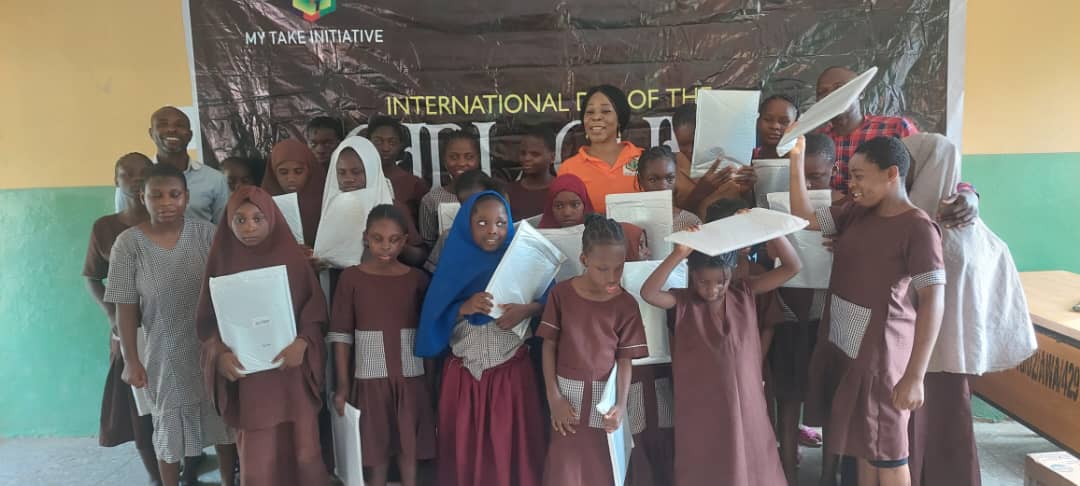
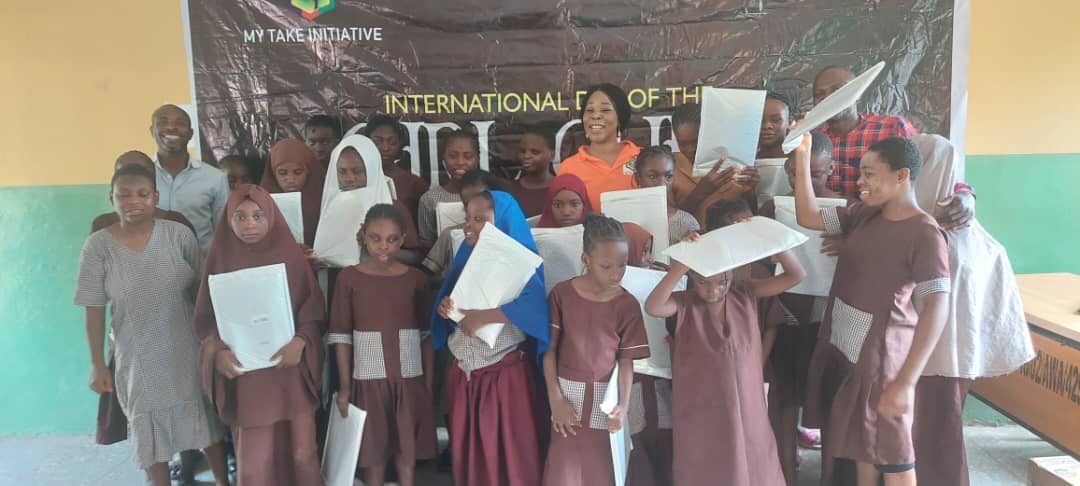
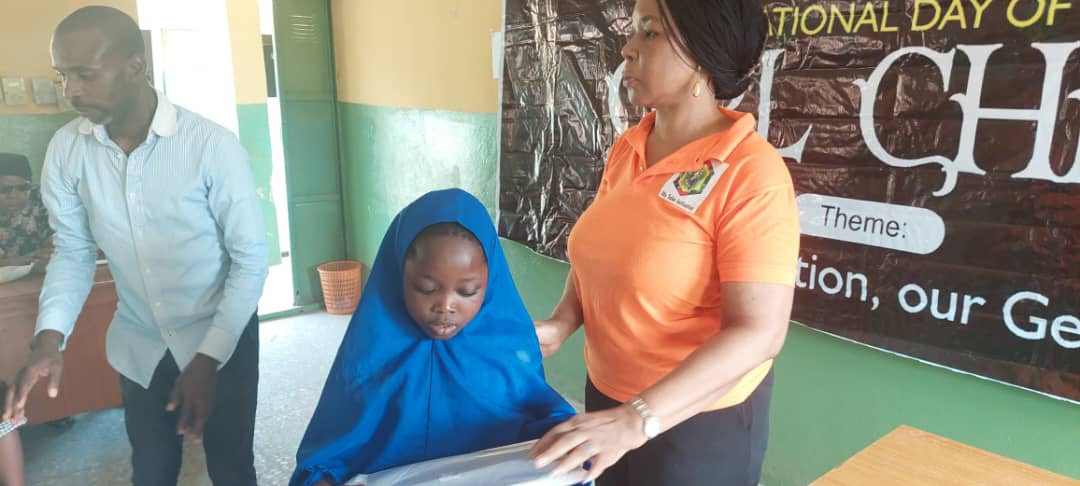
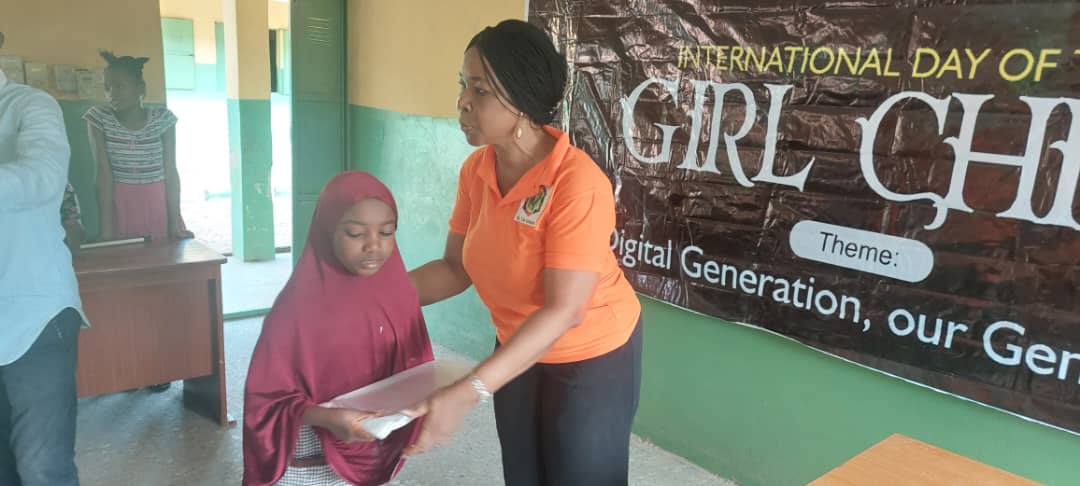
The immeasurable benefits of education and its being the key to better quality of life for women and girls formed part of the conversations at a virtual parallel event hosted by My Take Initiative with the United Nations CSW68 Forum on 15 March, 2024.

Kickstarting the discussion at the event tagged, Education For All: Ensuring Inclusion And Equitable Learning Opportunities For women And Girls, convened by Dr. Rosemary Chikwendu, Executive Director of My Take Initiative, ex-Africa Regional Vice President of FIDA, Chief Mrs Victoria Awomolo, SAN, pointed out that education is the key that will unlock opportunities for the girl child.

“With education, a girl child can compete effectively. She will be financially empowered and she can make the right decisions. Education key to civilization and a better quality of life for the girl child.”

The Senior Advocate of Nigeria and My Take Initiative’s Board of Trustees Chair added that: “Beyond advocacy and parents knowing the importance of education, mothers should also be provided with some form of education for them to appreciate its value and importance.” Chief Mrs Awomolo noted that a mother who knows the value of education and the doors it is capable of unlocking will do everything to ensure her female child is not left behind.

Drawing a parallel between the challenges of females in Nigeria and Brazil, Bianca dos Santos Waks a member of the São Paulo State Bar Association Non-profit Law Commission, Senior Associate and Pro Bono Coordinator at Mattos Filho Advogados, spoke extensively about gender inequality in Brazil.

Bianca who has served as a consultant to the United Nations Development Program (UNDP) advising the General-Secretariat of the Presidency of Brazil on a new regulatory framework for partnerships between non-profits and public authorities revealed that although there are more women with university education than men in Brazil, there is a strong workplace discrimination against women, with more men being able to secure good jobs commensurate with their qualifications.

The former researcher at FGV São Paulo Law School equally disclosed that Brazil holds the 4th position in early child marriage in the world adding that there is a huge rate of abused girls, young girls giving birth and dropping out of school in the South American country.

Expressing pain that young girls are forced into harrowing experiences when they should be at school or being looked after at home, Bianca also revealed that her country has a huge challenge with access to justice and free legal services adding that Bazil has a ratio of one Public Defender to about 30,000 people.  

According to, Bianca dos Santos Waks, sexual abuse is prevalent in Brazilian universities with Professors also psychologically exploiting their victims.

She however said her organisation renders pro bono services to right gender inequalities and rights violations; does awareness campaigns against racism/discrimination particularly against children in schools.

Additionally, Ms. dos Santos Waks’ organisation grants scholarships, sponsors and create opportunities for vulnerable women to either go to school or complete their studies when circumstances make them drop out of school; get breastfeeding women to complete prison terms at home so the children will be brought up in prison.

Victoria Banke Olagbegi-Oloba, a Law Lecturer and member of the American Bar Association Section of International Law called for intentional quality education for Nigerian children, training and retraining of teachers so that there will be quality teachers and a level playing field for male and female in the workplace after school

Banke Olagbegi-Oloba recommended that financial barriers to education should be breached by providing scholarships for brilliant vulnerable girls. The law lecturer said this will curb the challenge of dropouts among smart, brilliant young girls who run into problems capable of aborting their future

Recounting how her brother a retired judge advised her dad against training her in school, she advocated provision of welfare and counselling for poor and vulnerable girls.

Moreover, Ms. Olagbegi-Oloba stressed the importance of adequate facilities to enhance quality education in public schools; monitoring and evaluation to assess the quality of education for accountability and improvement in the public school system; collaboration between CSOS and the government.

In her contribution, Prof. Cathy Osuji who joined from London called for mentorship of young girls and ladies. “Adopt a girl around you to mentor. It will bridge the gap. Stand up for females in universities against sexual harassment. Protect girls around you.  Female house helps for instance are daily being violated. Let’s stand up for them.”

Mrs Joy Ejim, Africa Regional Vice President of FIDA noted that “a woman brings more value to the table if she’s educated.”

“Deny a woman education, you deny her a lot of things. You ruin her future and that of her generation because many destinies are tied to her. Educate boys too. When you do, they’ll appreciate the importance of educating a girl. And when both genders are considered valuable, there be mutual respect and prosperity. Boys alone should not be educated. We must give equal value to all children.

Attorney Grace Ajunwa who joined from Atlanta spoke about making education for the girl child compulsory. Ajunwa restated the importance of Nigerian Legislators making education compulsory for female children.

IWD 2024: My Take Initiative, FIDA provide free legal services at Keffi Correctional Centre

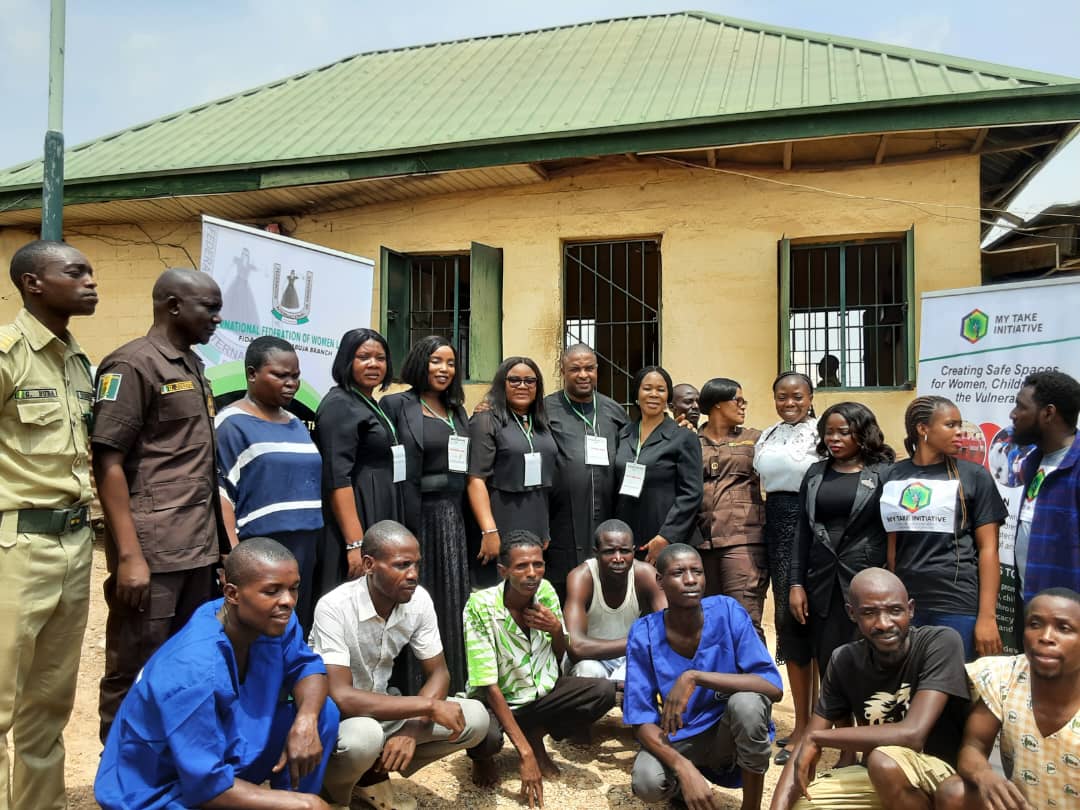
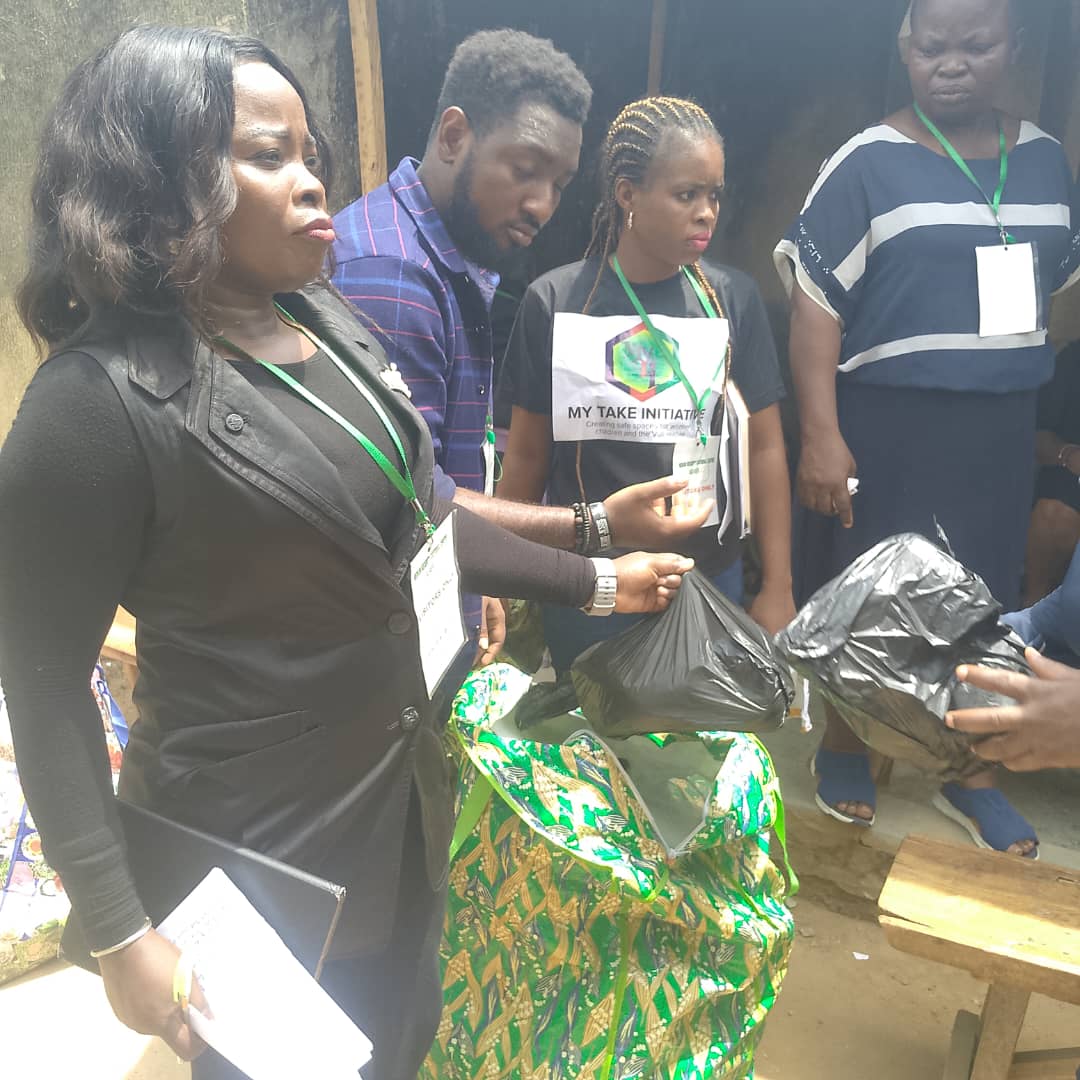
As part of the International Women’s Day (IWD) celebration, My Take Initiative, a civil society organisation in collaboration with the Correctional Service Committee of International Federation of Women Lawyers, FIDA Nigeria Abuja branch, took access to justice to Keffi Correctional facility in Nasarawa state on the 13th of March, 2024.

Executive Director of My Take Initiative and Chairperson of the Correctional Service Committee, Dr. Rosemary Chikwendu, FIDA Abuja Branch Chair, Ms. Chibuzor M. Nwosu and Barr. Tobenna Erojikwe, Chair of NBA-ICLE who also joined the team, brought succor to female and male inmates alike.

In the course of the legal clinic, the team identified inmates who were serving various sentences including those sentenced with the option of fine and took over their matter.

My Take Initiative sponsored and championed the visit.

Thereafter, the team paid fines for two female inmates who were behind bars because they could not afford the fine, while Tobenna Erojikwe paid fines for seven male inmates.

The inmates were also gifted with bathing soap, detergent, other toiletries, bathroom slippers, some bags of rice and more.

Association of Nigerians Abroad(ANA): A call for a public national outcry and judicial enquiry on the National Assembly

Press Statement

Friends, Citizens, and Compatriots, Nigeria stands today at a threshold of iniquity, intrigue, and fear unleashed upon helpless Nigerians. While Nigerians are battling hunger, terrorism and kidnapping, our meager resources are being plundered by the ruling class in the Senate and House of Representatives, working in cohort with dubious elements in the civil service and judiciary. The national law making body charged with the responsibility to make laws and statutes to protect us has become an albatross, a source of national shame, and a leading entity in national decay.

Nigerians are aware of the disproportionate salaries drawn by Senators and their ostentatious lifestyles in the face of national hunger with citizens scrambling for bread crumbs scattered on the ground by some governors for hapless citizens to struggle for as if we are dogs. While they do this, our school children, youths, parents, and foreigners are being kidnapped in broad daylight. Sadly, the Senate has lost its voice on these critical national issues. They have shown that they are incapable of making laws to arrest the insecurity and hunger in the land.
This week, as we listen to the stories of rot in the Senate as they pad the national budget to be redistributed as constituency allowances! This is despite standing constituency allowances for senators and House of Representatives members.

We, the people under the leadership of the Association of Nigerians Abroad (ANA) at home and Diasporas, call for a National Judicial Inquiry to be established by the President to address and:

1) Investigate and establish the level of rot in the Senate

2) Bring the salaries of Senators and HOR members to be at par with salaries drawn by citizens and civil servants in the country. Senators and HOR members are not sacred cows.

3) Arrest the deplorable hunger in the land

4) As a matter of urgency, investigate, pursue and punish publicly elements responsible for kidnapping of citizens country wide

5) Drastically reduce the cost of governance nationally

It has become very obvious that the current Senate leadership is incapable of the roles and responsibilities vested on them by the peopje. We the people in line with attributes of civilised democracies require stealing of public funds in the Senate by padding the budget need to be stopped.

Furthermore, the senate is NOT the executive arm of government. Hence giving senators constituency allowances is strange. Constituency allowances has to be stopped and be redirected to local governments. To be legislating and executing at the same time is a strange behaviour. The function of legislature is to make laws and the role of the executive is to EXECUTE those laws so legally passed. The legislators cannot be the judge and jury. This illegality has to STOP.

We urge Mr President with the support of the people to address these issues as a necessary step. We plan to take further legal steps nationally and internationally if these sought-after citizens’ demands fall on deaf ears.
Signed

  1. Prof Johnson I Agbinya (Australia)
  2. Uzoma Onyemaechi (USA)
  3. Prof Thaddeus Mku Ityokumbul (USA)
  4. Dr. Rosaline OKOSUN Ph.D (Nigeria)
  5. Prof Felix O B Akojie (USA)
  6. Dr. John Okoye (USA)
  7. Dr. Fatai Oyejobi (USA)
  8. Victor Adewusi (USA)
  9. Dr. Robert Okojie (USA)
  10. Dr. Monday Gala (Canada)
  11. Lee Olaniyi Kareem (USA)
  12. Dr. Akobuije Chijioke (USA)
  13. Prof. Folabo Ajayi Soyinka (USA)
  14. Dr Abraham Girgir (Canada)
  15. Chief Bright Igodo (USA)
  16. Comrade Ogbale Oga (Nigeria)
  17. Barr Agbinya S Agbinya (Nigeria)
  18. Hon Kelvin Odatse-Peters (Nigeria)
  19. Chief Ode Oko (Nigeria)
  20. Hon Dan Onda (Nigeria)
  21. Hon Amity Ijwuo (Nigeria)
  22. Comrade Andyson Iji (Nigeria)
  23. Dr Kenneth Okedu (Australia)
  24. Michael Sekoni (USA)
  25. Thomas Akagbosu (USA)
  26. Eno Godson Beedie (UK)
  27. Callistus Duruihezie (Argentina)
  28. Mr Hilary Ahonye (UK)
  29. Mr Otor Ade (Nigeria)
  30. Engr. Charles Akure (USA)
  31. Dr. Wonuola Yomi-Odedeyi (Canada)
  32. Pastor Nevkaa Richard Chenge (USA)
  33. Barr. Adima Edo (Nigeria)
  34. Prof. Chukwudi Okafor (USA

Re Alleged Missing N100 billion in Kogi State: Let Kingsley Fawon ans his group allow EFCC to do their work

By J.S. Okutepa, SAN


Yesterday, I read with amusement and total disappointment a statement issued by one Kingsley Fawon, who is said to be the Commissioner of Information of Kogi State that EFCC should leave Yahaya Bello, immediate past Governor of Kogi state alone.

According to this Kogi State Commissioner of Information, no money belonging to the Kogi state government was not missing, and no money was stolen during the reign of the most despotic regime and government of Yahaya Bello between 2015 to 2024.

This Kingsley Fawon, who said to be the commissioner of information of Kogi State, does not seem to know that the duty of his office does not extend to use his office in defence of private persons who have a date with penal laws of the land. He also seems not to know that he does not have immunity from criminal arrest and prosecution. Therefore, his careless and reckless statement constitutes unlawful interference with statutory duties and responsibilities of EFCC to investigate and prosecute economic crimes and sundry money laundry offences alleged against Yahaya Bello.

Furthermore, Yahaya Bello is no longer the governor of Kogi State. Therefore, the resources of Kogi State must not and should not be deployed by Kingsley Fawon to launder the bettered image of Yahaya Bello by press states attributable to the Government of Kogi State.

It is therefore abuse of office contrary to the 5th schedule to the 1999 constitution for Kingsley Fawon to use his office in defence and protection of Yahaya Bello who is not the governor of Kogi State and who is not in employment of Kogi State as at today.

It is be noted also that Kingsley Fawon and his government must be told in clear term that they cannot stop EFCC from performing their statutory duties, and the government of Kogi State does not need to report the crimes against Yahaya Bello and which crimes were alleged to have been committed by Yahaya Bello before EFCC can investigate and prosecute Yahaya Bello for those crimes. Yahaya Bello is alleged to have committed crimes against the people of Kogi State.

The dead and the living know the alleged crimes of Yahaya Bello. No crony and accessories before and after the facts of those crimes should use the resources of the people of Kogi State to engage in endless propaganda to shield Yahaya Bello.

Yahaya Bello is known and addressed as the White Lion. Lions are known to be bold and courageous. The symbol of EFCC is just an ordinary Eagle. Why should the White Lion run away or be afraid of invitations from Eagle. The invitation is for explanations. It puzzles me that Kingsley Fawon is deploying the resources of the people to argue that the then Lion sh9uld be left alone by EFCC. Are you not puzzled, too?

The monies Yahaya Bello was alleged to have laundered and stolen while terorrising the good people of Kogi State in the name of government and governance belonged to the people of Kogi State and not the government of Kogi State .Therefore, Kogi people are demanding that Yahaya Bello be arrested immediately, let him state his side of the story, give account of his stewardship from 2015 to 2024 and if his explanations defliled logic he should and must be prosecuted in accordance with penal laws of the land.

Yahaya Bello has no immunity again. His immunity while serving as government does not cover the crimes and atrocities he is alleged to have committed while serving as governor. The resources of the people of Kogi State he is alleged to have laudered and stolen in aid of private ventures are clear cases of breaches of public trust and money laundering, which constitute grave criminal offences against the penal laws of Nigeria. Yahaya Bello is not the first governor to be arrested after their tenures in office. Ayo Fayose walked straight to EFCC after his tenure. That is a man. He did not go into hiding.

Furthermore, it is a premature and complete exhibition of adolescent conduct and direct interference with statutory functions of the judiciary and EFCC for Kingsley Fawon to indulge in defending Yahaya Bello on the pages of news papers or using mass media to giving Yahaya Bello clean bill of righteousness vide media publications when those who have statutory duties and responsibilities to say so have not done so.

As of the last I checked, this Kingsley Fawon is not an official of EFCC. He is not a judge or judicial officer. So, the statement being issued by this Kingsley Fawon is completely outside his duties as a so-commissioner of information of Kogi State. He is, as I said before, abusing his office contrary to the provisions of the Constitution of Nigeria. Kingsley Fawon must be called to order now.

Let it be known that Kogi people are united in their beliefs that the regime of Yahaya Bello was the worst in the annal of the history of the state where public funds were wantonly looted in the most reckless abandon. Thuggish and thuggery were unleased on the people. A woman, Salome Abuh, was burnt and roasted alive in the name of politics in Kogi State.

Governance was reduced to the art of propaganda, terrorism and the people were brazenly slaughtered at the whims and caprices of those who should protect lives and properties. These were done under the watch of Yahaya Bello. Law and order were in abeyance under the watch of that despotic government. Now, the time for reckoning has come.

Let Kingsley Fawon and his group wait. Let Yahaya Bello surrender himself to EFCC and other security agencies in defence of petitions against him. If and when the security agencies decided that he has a case or cases to answer and he is finally charged to court or courts, then Kingsley Fawon and his group can line themselves up as witnesses for defence or defences of Yahaya Bello. Until then let Kingsley Fawon and his puppet government govern Kogi State to reduce the suffering of Kogi people who are currently in total bondage and hell foisted on them by the squandermania regime of Yahaya Bello. Enough of these shenanigans. EFCC must not be ganged. Let EFCC get Yahaya Bello anywhere he is and let Yahaya Bello’s side of stories be heard in accordance with the law. That has to be done, and it should be done now.

11 Reps of NBA General Council of the Bar allege improprieties against Maikyau, accuse him of defamation, misleading NEC

In two separate letter addressed to The Trustees of the Nigerian Bar Association and The Annual General Meeting Nigerian Bar Association, 11 representatives of the Nigerian Bar Association (NBA) to the General Council of the Bar (GCB) have called for the setting aside of “the decision of the NEC made on the 29th day of February 2024 at Jos” against them on the basis that not only was National Executive Council (NEC) misled, it “has no vires to howsoever interfere with the resolutions and acts of the GCB.”

The March 9, 2024 letter titled: UNWARRANTED ATTACKS ON NBA REPRESENTATIVES IN THE GENERAL COUNCIL OF THE BAR (GCB) AND MISUSE OF NATIONAL EXECUTIVE COUNCIL (NEC) FOR PERSONAL MOTIVES BY THE NBA PRESIDENT, YAKUBU C. MAIKYAU, OON, SAN, was signed by:

  1. LAWRENCE OBI ANIZOBA (JP)
  1. JOHN AIKPOKPO-MARTINS
  2. DENNIS E. AGBAGA ESQ
  3. VICTOR C. ONWERE
  4. ISRAEL LAGBAMUE _
  5. OLALEKAN IDOWU OLADAPO
  6. MERCY IJATO AGADA (MRS)
  7. EBUKA NWAEZE
  8. ANNE URUEGI AGI
  9. JOSHUA ENEMALI USMAN
  10. THEOPHILUS T. IGBA

According to the lawyers: “It is crucial to emphasize that these NEC resolutions were founded on a misinterpretation of the letter and do not accurately represent the issues addressed therein. As members of the GCB, we are fully aware of our challenges, and the letter was intended to provide valuable insights into these matters. Since our tenure in the Council, our objective has been to contribute to the strengthening and independence of the GCB, which has been comatose for far too long, addressing concerns we deemed appropriate. The letter in question was a means to communicate these concerns to our Council President. We fail to understand why this warranted such a public display by the President….”

They further stated: “Our primary motivation in bringing this matter to your attention is to protect our integrity and to rectify any misconceptions that may have arisen as a result of Mr. Y. C. Maikyau’s statements. Maintaining the integrity of the legal profession is of paramount importance to us, and it is imperative that the records are set straight.

“We also respectfully urge you to call on the NBA President to provide clarifications regarding his conduct and the motivations behind the recent actions against NBA representatives in the GCB; and take appropriate measures to ensure that the NBA President refrains from leading the NEC recklessly without regard to the far reaching implications of its resolutions…

“The President’s blatant misrepresentations and deliberate attempts to discredit the duly elected Representatives of the Nigerian Bar Association in the General Council of the Bar are not only disheartening but also alarming. The President’s assertion that we, the elected members, formed an unrecognized body is a baseless and malicious attack on our integrity and the democratic process that elected us into our positions. It is disheartening to witness the NBA President moving the NEC to take actions against a body recognized by the NBA Constitution. The resolutions, in paragraphs 9 and 11 of the NEC Communique, particularly those proscribing the Representatives of the Nigerian Bar Association in the General Council of the Bar, are in direct violation of the NBA Constitution.

“It is indeed highly troubling that the President, the custodian of the NBA Constitution, has chosen to exploit his position to mislead NEC members for personal vendettas. Clearly upset at seeing that the signatory to the GCB letter is the same Mr. John Aikpokpo-Martins of SPIDEL, he reckoned that was another opportunity for Mr. John Aikpokpo-Martins to upstage him and so thought it best to use NEC to discredit him, not minding the collateral damage to the GCB and without giving signatories of the letter or other members of the GCB, an opportunity to explain. The resolutions thus passed during the meeting, particularly those aiming to proscribe our existence and activities, are not only unwarranted but also a gross violation of the very constitution the NBA President is supposed to uphold…”

Below are full text of the letters.

GCB_LETTER_TO_AGM_11 GCB_LETTER_TO_TRUSTEES_1.doc1_

TIPS