Home Blog Page 620

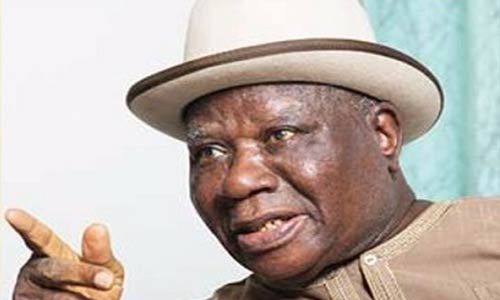
How soldiers invaded my country home – Edwin Clark

THE INVASION OF MY COUNTRY HOME IN KIAGBODO, DELTA STATE BY THE NIGERIAN ARMY ON SATURDAY, 23RD MARCH, 2024 – A CAUSE FOR CONCERN

By Chief (Dr.) E. K. Clark, OFR, CON

At about 6pm on Saturday, 23rd March, 2024, I got a telephone call from someone who identified himself as the commanding officer Nigerian Army, Division in Port Harcourt. He said that a tracker of the Nigerian Army, had tracked one Mr. Vote, the community chairman of Okuoma Community, whom the Army was looking for in respect of the killings of the 17 men of the Nigerian Army, to a house in Ughelli; and that the military men had broken into the house, ransacked it, before they were informed that the house belongs to me, that he was very sorry and apologising to me on behalf of the Army.

In my usual way and as a leader who is expected to condone as much as possible, I accepted his apology whole heartedly, but told him that I do not own a house in Ughelli, that the house he is referring to, could be my father’s. I went on to sympathise with the Nigerian Army over the gruesome murder of the soldier, an action I had condemned severally the moment I heard of it in the news. I assured him that we will all work within our powers to avail the security agencies with any available information that would unravel the whole thing and bring the perpetrators to book. We ended the discussion on a cordial note.
It was not long after that, I was inundated with calls from my home, Kiagbodo, telling me how the army had invaded my country home by land and by air. That they came in about 5 trucks loaded with armed soldiers numbering between 30 and 40. They my house, used their legs to break open all the doors in the compound including the security door to my sitting room which was locked because I reside in Abuja. At the same time, flying their drone within the premises.

Some of them went to the buildings behind the main house, and also broke all the doors that were locked. They matched out my staff living in those buildings, including lecturers at the university; made them to sit on bare ground. They also broke into my late brother, Ambassador Akporode Blessing Clark’s house; a man who served this country internationally in various capacities, including as Nigeria’s Permanent Representative to the United Nations and Permanent Secretary, Ministry of Foreign Affairs; as both of us share the same premises. They brought out his son almost naked, as the young man was taking a bath, when they stormed the house.

All their phones were seized. The people had to identify themselves, and told them whose house it was, before they asked for my telephone number, which they said they will pass to their “oga”’, before they all departed. One would have expected that at this juncture, a call could have been put to the Governor of Delta State, to inform him of what happened. I immediately called back the commanding officer to tell him of the actions of his men. And he said he was aware, and that was why he called to apologise.
Before continuing, let me play the devil’s advocate by stating that the army may not know that the house they went to in Kiagbodo is my country home. But I feel very uncomfortable to conclude this recent incident with such theory, when I recall how men of the Tactical Squad of the Nigeria Police, attached to the Office of the Inspector General of Police, on 4th September, 2018, at about 12 noon, stormed my house in Abuja with in a bus load, fully armed.

They came with a Search Warrant from a Magistrate Court in Abuja, bearing Mrs. Helen Clark, but with the address of my house on it, that they had come to search the house; that they had information that arms from the Niger Delta were being stock piled there. I identified myself, and told that there was no one named Helen Clark, living with me in the house. I spoke with the then Deputy Inspector General of Police, Operations. But they insisted on carrying out their search. With a very clear conscience, I allowed them to go ahead with their mission. They took their time to search every space in the compound, including my bedroom, but found nothing incriminating. They wrote their report to that effect. I asked to be given a copy of the report, but the men who came for the search informed me that a copy can only be given to me if I went to their office. I detailed two persons to accompany them to their office, but they refused to give them the copy. I was told that I had to apply formally. I asked my lawyer to apply, which he did, till date, I do not have a copy of that report.

The incident attracted a lot of attention locally and internationally. Dignitaries from everywhere trooped to my house to visit/sympathise with me. Some of them were former President, Dr. Goodluck Ebele Jonathan, GCFR; former Vice President, Alhaji Atiku Abubakar, GCON; former Senate President, Dr. Bukola Saraki; Governor Ifeanyi Arthur Okowa then Governor of Delta State; Governor Seriake Dickson, then Governor of Bayelsa State; the then government of Akwa Ibom State sent a delegation of six Senators; Chief Ayo Adebanjo, leader of Afenifere; Chief John Nnia Nwodo, then President-General, Ohaneze Ndigbo; Dr. Pogu Bitrus, President General, Middlebelt Forum, and a host of others, including a journalist who called from France, asking about the incident.

On the evening of the Police search which was seen in some quarters as life threatening, tensions started brewing among the youths who had already started protesting in the streets, especially in the Niger Delta region. The then Inspector General of Police, Ibrahim Kpotum Idris, dispatched a ‘high powered delegation’, of four top Police officers, led by a Deputy Inspector General (DIG) of Police, to come apologise to me, stating that the police officers who came to carry out the operation, were on an illegal assignment. I refused to bite that bait. There is no way the young officers would have gone to a Magistrate Court to procure a Search Warrant, to come search my house for arms. But I accepted the apology for the sake of peace, as the nation, especially the South-South region was already agitating. However, the condition I gave them was that the young officers who came to do a ‘job’ officially assigned to them, should not be touched.

Now, few days ago, on Saturday 23rd March, 2024, another set of state actors, this time the Army, invaded my country home, by land and air, breaking into my house that was securely locked.

This has gone beyond coincidence and is giving me a source of concern. By God’s grace I am one of the oldest men in this country today. On May 25, I will be 97 years, God keeping me alive. In about seven decades of my life, I have served this nation meritoriously in different capacities. I have served in the same cabinet with persons who later became Heads of State and Presidents, both as military and civilian.
On military side, I had become quite acquainted with many Military Officers. These include Admiral J. E. A. Wey, General David Ejoor, General Hassan Usman Katsina, General Gibson Jallo, Major-General Shehu Yar’Adua, while he was a Captain; General Abdulsalam Abubakar while he was a Captain; Colonel Mike Okwechime, Colonel Trimnel, Colonel Nzefili, Colonel Conrad Nwawo, Major Emmanuel Ifeajuna, Brigadier Benjamin Adekunle; Major-General IBM Haruna, Major-General Ike Nwachukwu while he was a Captain, General Charles Ndiomu, also a Captain at the time; Brigadier-General Godwin Alabi-Isama; General I. B. Bisalla; Major-General Paul Tarfa; Major-General Emmanuel Abisoye, Major-General James Oluleye. I served with some of these persons in various cabinets, both at the State and Federal levels. As God would have it, many of them have passed on, those of us still alive, have continued to work assiduously to improve the socio-economic well-being of our country men.

I make this introduction to let the present-day state actors that most of them who are authorizing disrespectful and unlawful conducts against me today, were probably young men or may not even have been born, when I was interacting with officers who are their superiors by far.

In politics, I later also became a Distinguished Senator of the Second Republic of the Federal Republic of Nigeria.
I deserve to be respected, left to live in peace, safety and tranquility.

I have very high regard for the Nigerian Army. I used to attend most of its ceremonies at the Nigerian Defense Academy (NDA). Three of my brothers retired as top military officers; Maj. Gen H. U. Clark, Col. Peter Clark and Col Bernard Clark. Two of them, unfortunately, have passed on, namely H. U. Clark and Bernard Clark. Incidentally, Bernard Clark was buried the same week the sad incidence of the gruesome murder of the 17 soldiers happened. My last discussion with Lt. Col. Ali, was in respect of according Bernard Clark the usual military ceremonial burial. Lt. Col. Ali told me he was going to call me back later in the day. Unfortunately, that call never came as he was amongst the soldiers gruesomely murdered.

I want to end this write up to all concerned with what I told President Muhammadu Buhari, when my security details were withdrawn that if I die today as a result of natural occurrence, it will be a joyful celebration. But if my death is linked to any dubious means by some overzealous state actors, no one can tell how far the fire will rage. This is not a threat. It is an acknowledgment of God’s mercies on me. Having said that, I want to appreciate the enormous responsibility on the shoulders of the Nigerian Army, who are burdened with so much internal security issues. And it is for that reason I want to use this medium to kindly appeal to all concerned to work assiduously to unravel what happened and bring the perpetrators to book. The earlier this matter is concluded the better, as it will also avail the affected communities which are almost locked down today, without adequate food and water, the chance of returning to normal life.

I also wish to commend President Bola Ahmed Tinubu for his efforts in combatting the ravaging security issues in the land, especially as it concerns the release of some of the abducted children in Kaduna State. I employ all of us to give him the necessary cooperation. This is the only country that we have.

Again, I call on the various state actors to let me live in peace, and treat me with the kind of respect that I deserve, having served this country, and still serving even at the age of 97 years, until when it will please the Almighty God to call me home.

A twist in the tale: Board nullifies sack of Eko DISCO MD/CEO

In a spectacular twist, board members of the crisis hit Eko Electricity Distribution Company (EKEDC) has cancelled the purported termination of the appointment of its Managing Director/Chief Executive, Dr. Tinuade Sanda.

The EKEDC CEO was said to have been sacked by the chairman of EKEDC, Dere Otubu allegedly in compliance with the orders of the Nigerian Electricity Regulatory Commission (NERC).

But the Director, Chairman Legal and Regulatory Committee of EKEDC, Babor Egeregor, in a statement described the order as unambiguous, incapable of, and unyielding to plural interpretations.

He said there was nowhere in the order where NERC requested the removal of any staff either seconded to or hired by EKEDC except those connected to the alleged fraud and negligence i.e Wola Joseph Condotti, Sheri Adegbenro, and Aik Alenkhe.

According to him, NERC’s directives were issued to compel the Board of EKEDC, following picketing by the union and unrelenting staff protests, to act appropriately in the face of a determined position of a majority of the Board members to cover up the alleged use of ghost workers together with the alleged fraud and protect Wola Joseph Condotti especially.

The statement reads, “It has come to my notice that by a letter dated 26th of March 2024, the Chairman of Eko Electricity Distribution Company (EKEDC), Mr. Dere Otubu purportedly terminated the Contract of Employment of Dr. Tinuade Sanda, the MD/CEO of EKEDC, allegedly in compliance with Orders/Directives issued by the Nigerian Electricity Regulatory Commission (NERC).

“The said Order of the NERC, herein displayed, are unambiguous, incapable of, and unyielding to plural interpretations. There was nowhere in the Order where NERC requested the removal of any staff either seconded to or hired by EKEDC EXCEPT those connected to the alleged fraud and negligence.

“In fact, NERC’s directives were issued to compel the Board of EKEDC, following picketing by the union and unrelenting Staff protests, to act appropriately in the face of a determined position of a majority of the Board members to cover up the alleged use of ghost workers together with the alleged fraud and protect Wola Joseph Condotti especially.

“Mr. Dere Otubu’s letter, therefore, was done in bad faith and in vengeful revenge against the MD/CEO for escalating the alleged fraud and issuing queries against one of his protégés, whom he has desperately swore to protect by all means. As a matter of fact, the Acting DG of the BPE, representing the government on the Board of EKEDC, vehemently rejected the attempt to cover up the alleged crime and insisted on compliance with the punishment prescribed in the Conditions of Service.

“Rather than comply with the Orders of NERC, a recourse to subterfuge was hatched with the purported termination and the publication of different misleading headlines such as “FG Sacks MD of EKEDC”, “Tinuade Sanda relieved of her position as MD, Eko Distribution Company”. There are no doubts about a deliberate agenda and unconcealed mischief to misread the Orders of the NERC to malign Dr. Sanda’s reputation for daring to escalate and issue queries to the suspects for alleged fraud through the use of ghost workers for three years, and continuous payment of salaries to exited staffs despite personally receiving their resignation letters.

“Similar queries were issued to Sheri Adegbenro, the Chief Audit and Compliance Officer and Aik Alenkhe, the Chief Human Resources Officers respectively for their failure and gross negligence to audit and detect fraudulent payments on pay roll for over 3 years.

“We are also aware of a purported press release appointing Mrs Rekiat Momoh as the Acting MD/CEO.

“The Board of EKEDC, on which I sit has neither met nor decided on the purported appointment of Mrs. Rekiah Momoh as Acting MD/CEO, except Mr. Otubu and his close circle of colleagues have transformed themselves into “The Board”. I and all well-meaning members of the EKEDC Board, I believe, should vehemently distance themselves from this contrivance.

“The Board is not a one man show, and matters are to be collectively deliberated on and approved by Board members. Mrs Momoh is the Chief Commercial Officer of EKEDC and remains so.

“Mr. Otubu and his co-travellers have chosen to cherry pick the exhaustive interaction with NERC where one of the Commissioners wondered why no one was yet to be tried or in prison for these grievous allegations and how to recover lost funds part owned by the federal government. They are more focused on settling scores with our performance driven MD/CEO, Mrs Tinu Sanda

“At EKEDC, we are known for due process and legality, and anything that would take away from our avowed commitment to due process and corporate governance would be resisted.

“Therefore, let it be known that Dr. Tinuade Sanda remains the MD/CEO of Eko Electricity Distribution Company and has since her assumption of office as the MD/CEO, turned EKEDC around for good, with very great milestones and achievements which every sector player recognises. She made EKEDC the number one distribution company in Nigeria.

“The Investors, Board, and Management of EKEDC believe firmly in her leadership and look forward to many more record setting and breaking moments. This is for the information of the general public and all NESI stakeholders.”

“International Parliamentary Union (IPU) admits leading Nigerian professional Association (ALDRAP) as member of it’s IPEN”

The International Parliamentary Union (IPU) has admitted the Association of Legislative Drafting and Advocacy Practitioners-ALDRAP as a member of it’s IPEN.

IPEN is the International Parliamentary Engagement Network which is made up of academics and others engaged in research and practice of how members of the public can engage parliaments. It’s secretariat is domiciled at the University of Leeds in the United Kingdom.

In an email dated 26th March 2024 and endorsed by it’s key officials, Emma Brewis
IPEN Admin Officer conveyed the good news.

Part of the email reads: “I am copying other members of the IPEN team, so that you have the contacts of key IPEN people: Chair of IPEN – Professor Cristina Leston-Bandeira; Deputy Chairs – Dr Elise Uberoi and Dr Sarah Moulds and Communications and Events Coordinator – Fiona Blair.

Please let me know if you have any further questions.

Thanks
Emma Brewis
IPEN Admin Officer


International Parliament Engagement Network (IPEN),
School of Politics and International Studies,
University of Leeds, Leeds LS2 9JT, United Kingdom.

Divorce: “Before coming to court, we had sex” — Distraught man tells court

A Senior Magistrates’ Court has given a couple who had sex before appearing before it for divorce a week to consider reconciliation.

The stunned Local Court A3 in Zambia’s Livingstone found it hard to believe that the duo actually had sex on the eve of court appearance and still came seeking for divorce.

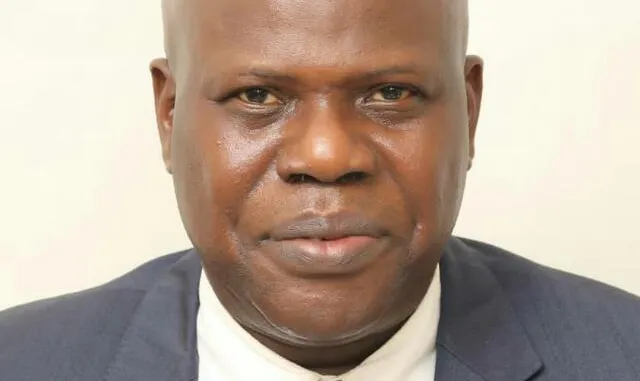
Senior Local Court Magistrate Fredrick Mainza could not hide his surprised when 335-year-old Faustina Sikazimina pleaded with the court to grant her divorce after her husband, Mizinga Mwanza, revealed that they had a roll in the hay the previous night.

“You even had sex before coming to court, which shows that you still love each other. The matter will be adjourned so that the mother of the woman can give her evidence,” the court ordered.

Mwanza, who opposed the divorce, let the cat out of the bag on the position of his conjugal rights in his marriage after his wife accused him of womanising around bars.

“We had sex last night and we slept in the same bed. We have lived happily in this marriage. Just give me another chance,” Mwanza said.

Sikazimina told the court she gave in to Mwanza’s demands for sex before coming to court under duress as she was no longer interested in the marriage.

Passing judgment, Senior Local Court Magistrate Mainza gave the couple a week-long marriage chance.

Zambia Daily Mail

TheNigeriaLawyer Blog, NBA-SPIDEL leadership, and the global ethics for journalists, bloggers on accuracy, truthfulness and fact-based communications

By Sylvester Udemezue

TheNigeriaLawyer is a major name in the legal/law blog industry in Nigeria. Without mincing words, I think the entry of TheNigeriaLawyer into Nigeria’s law blogging space has contributed immensely to revolutionizing law blogging in Nigeria, bringing news, reports, developments and opinions on law, law practice, legal education, and the legal profession, among others, to the doorsteps of lawyers, judges, and other stakeholders. Besides, efforts of TheNigeriaLawyer in consistently and regularly making CTC’s of high-profile court judgements and other legal precedents readily available, is noteworthy.

It is therefore safe to hold the view that publishers of TheNigeriaLawyer have made tremendous contributions to advancement of law, legal education, law practice and the legal profession in Nigeria. Indeed, if anyone describes the proprietors of TheNigeriaLawyer as a group of lawyers who may be ranked among those who have attained distinction in the legal profession in Nigeria, that one may not be wrong, because courtroom advocacy isn’t the only career nor the only route, towards achieving distinction in the legal profession. That publishers of TheNigeriaLawyer are not yet being considered by relevant stakeholders in the industry for an open acknowledgement, commendation or award in the profession, on account of their invaluable impacts on the legal profession, law practice and legal education in Nigeria is, to me, one of the riddles/mysteries of the profession.

Meanwhile, while I’m proud of theNigeriaLawyer and its efforts towards advancing the profession, it’s important, when necessary, to respectfully point out perceived loopholes or lapses requiring corrective attention, in order that a distinguished blog may retain its enviable and respectable position in the industry and in the profession. Hence, the present commentary, which is intended solely to offer sincere observations, humble suggestions and candid advice towards making journalists, law bloggers, law blogging, lawyers and the law profession, better and more effective in service of the public. Anne Tyler’s observation appears instructive here: “It is very difficult to live among people you love and hold back from offering them advice”.

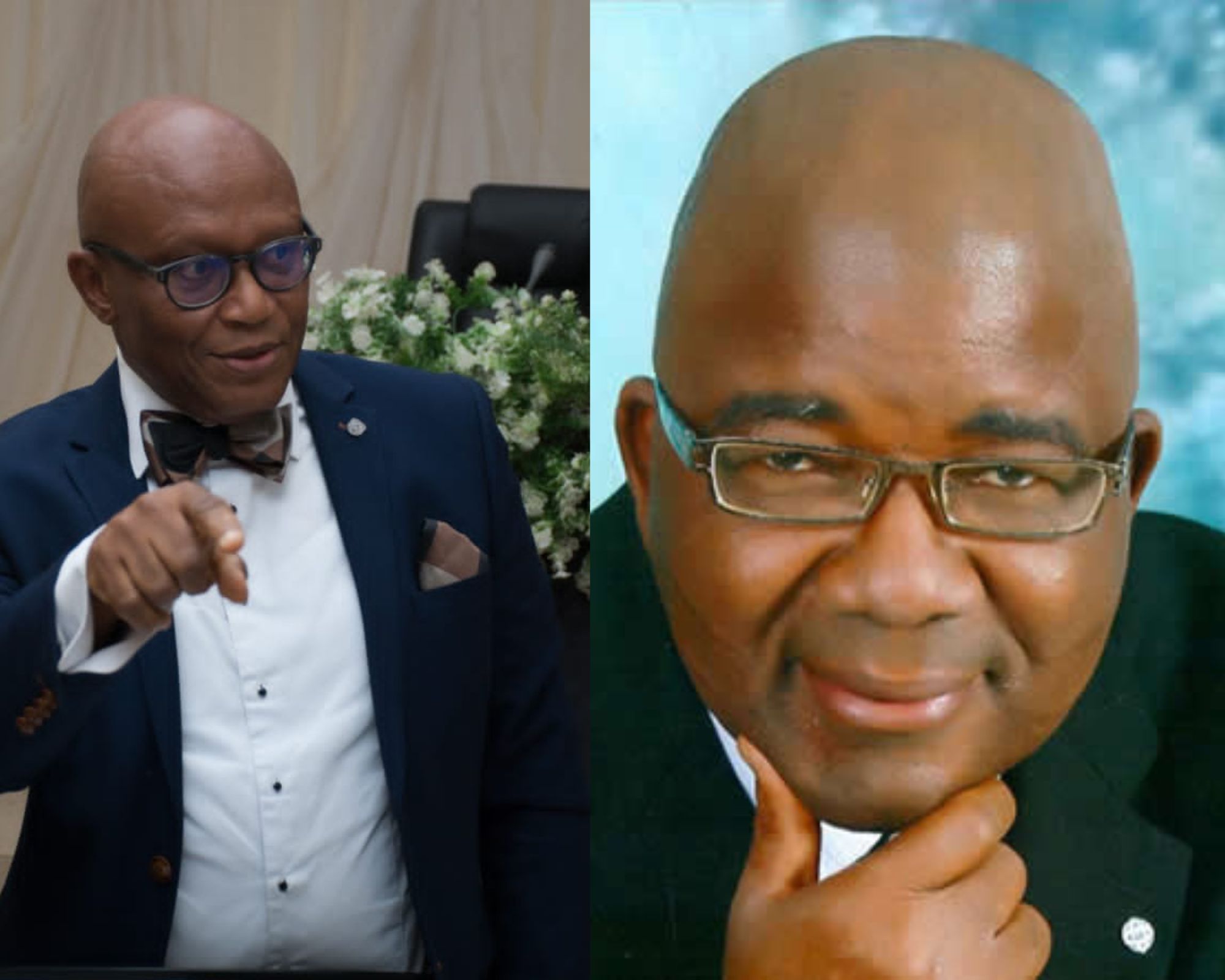
(1). Publishers of @TheNigeriaLawyer had covered the quarterly meeting of the Nigerian Bar Association’s National Executive Council (NBA-NEC) which held in Jos Nigeria on 29 February 2024, and whereat a UNANIMOUS resolution was passed, removing the former leadership of NBA-SPIDEL.
Indeed, on 29 February 2024, the NBA-NEC at that first quarterly meeting for the year 2024, held in Jos Plateau State, had resolved inter alia, that the Executive Committee of NBA-SPIDEL led by Mr. John O. Aikpokpo-Martins (as the Chairman) and Funmi Adeogun (as the Secretary) be removed from office forthwith and that a Caretaker Committee be appointed to run the NBA-SPIDEL in its place; the following persons were appointed to constitute the Caretaker Committee to run the affairs of the NBA-SPIDEL until further notice:
▪A). Sir Steve Adehi, SAN (Chairman);
▪B). Yakubu Philemon, SAN (Member),
▪C). Ben Oji (Secretary);
▪D). Ronke Adeyemi (Member), and
▪E). Eva Amadi (Member).

(2). As far back as 29 February 2024, @TheNigeriaLawyer had published this:
“a caretaker committee has been appointed and tasked with withdrawing all court cases filed by the ousted SPIDEL executives. This decision was made during the recent NEC quarterly meeting held in Jos. A motion was moved by the NBA Gwagwalada Branch Chairman, Emmanuel Ogunjide, and seconded by a co-opted member from the Maiduguri Branch calling for the president to preside over NEC meetings and ratifying all actions taken regarding SPIDEL. The caretaker committee is comprised of Ben Oji of Warri Branch, Funke Aderemi of Ilorin Branch, Yakubu Philemon SAN of Abuja Branch, and Eva Amadi of Port Harcourt Branch. They have been mandated to withdraw all court cases filed by the removed SPIDEL leaders” (“NBA-NEC UNANIMOUSLY VOTES TO REMOVE SPIDEL LEADERS, APPOINTS CARETAKER COMMITTEE, & ORDERS WITHDRAWAL OF SPIDEL COURT CASES”
(29 February 2024; TheNigeriaLawyer.com).

(3). Publishers of @TheNigeriaLawyer knew that a communique was issued on 01 March 2024, following the NBA-NEC meeting of 29 February 2024, stating inter alia, that the NEC of the NBA had removed the previous leadership and had directed that all pending actions, including this instant Suit (Suit No. FHC/ABJ/CS/90/2024 between John Aikpokpo-Martins (Chairman, NBA-SPIDEL) & Funmi Adeogun (Secretary, NBA-SPIDEL) (for themselves and on behalf of members of NBA-SPIDEL) v. Ms. Hannatu Musa Musawa & 3 Ors.) filed by the John Aikpokpo-Martins-led NBA -SPIDEL be discontinued. (See: “DOWNLOAD] NBA-NEC Quarterly Meeting Communiqué: Recap Of Resolutions Made On February 29th, 2024”. (publisherd by TheNigeriaLawyer on 04 March 2024).

(4). Publishers of @TheNigeriaLawyer knew that Suit No. FHC/ABJ/CS/90/2024 between John Aikpokpo-Martins (Chairman, NBA-SPIDEL) & Funmi Adeogun (Secretary, NBA-SPIDEL) (for themselves and on behalf of members of NBA-SPIDEL) v. Ms. Hannatu Musa Musawa & 3 Ors, hitherto pending at Court Number 08, Federal High Court, Abuja Division, was dismissed on 21 March 2024, following an issue raised by the Court, which had led to argument by the Incorporated Trustees of the NBA, to the effect that the lawsuit earlier filed by John Aikpokpo-Martins (Chairman, NBA-SPIDEL) & Funmi Adeogun (Secretary, NBA-SPIDEL) (for themselves and on behalf of members of NBA-SPIDEL), without prior go-ahead of the NBA President and/or the NBA-NEC, was incompetent. See: “NBA-SPIDEL OFFICIALS CANNOT SUE IN OFFICIAL CAPACITY WITHOUT INCORPORATED TRUSTEES, COURT RULES; DISMISSES NBA-SPIDEL OFFICIALS’ SUIT AGAINST HANNATU MUSAWA, OTHERS OVER LACK OF LOCUS STANDI” (TheNigeriaLawyer; 22 March 2024)

(5). Surprisingly, publishers of TheNigeriaLawyer have thereafter continued to misrepresent the facts regarding the removal of the former leadership of the NBA-SPIDEL. A few examples will serve to illustrate this:

(A). On 22 March 2024, TheNigeriaLawyer reported that “The Federal High Court in Abuja on March 21, 2024, dismissed a lawsuit filed by officials of the Nigerian Bar Association’s Section on Public Interest and Development Law (NBA-SPIDEL) against the Minister of Art, Culture, and Creative Economy, Hannatu Musawa and two others. The case, registered as FHC/ABJ/CS/90/2024, met an abrupt end due to the plaintiffs’ lack of legal standing, commonly referred to as locus standi. The plaintiffs, John Aikpokpo Martins, the Chairman of NBA-SPIDEL, and Funmi Adeogun, the Secretary, had initiated the legal action in their official capacities”. In the above report, while representing that (I) the dismissed lawsuit was filled by “filed by officials of NBA-SPIDEL” and that “The plaintiffs, John Aikpokpo Martins, the Chairman of NBA-SPIDEL, and Funmi Adeogun, the Secretary, had initiated the legal action in their official capacities”, TheNigeriaLawyer made no attempt to indicate that the said leadership of NBA-SPIDEL had now been removed by the NBA-NEC. A statement indicating that the named individuals, although now removed, had filed the lawsuit in their official capacity as the Chairman and the Secretary of NBA-SPIDEL, would have been better to represent facts as they’re.

(B). In a 25 March 2024 news report inaccurately titled, “NBA President Threatens To Drag SPIDEL Chairman To LPDC Over Alleged False Pretense And Refusal To Fund GCB Members’ Expenses”, TheNigeriaLawyer indicated that “The President of the Nigerian Bar Association (NBA), Yakubu Chonoko Maikyau, SAN, has threatened to initiate disciplinary action against the NBA SPIDEL Chairman, John Aikpokpo-Martins, before the Legal Practitioners’ Disciplinary Committee (LPDC) for allegedly obtaining money under false pretense”. A statement like “has threatened to initiate disciplinary action against a FORMER Chairman of NBA-SPIDEL” or theNigeriaLawyer could have used a term as _”the removed Chairman of the NBA-SPIDEL” which would alternatively have captured the accuracy of the situation. With due respect to TheNigeriaLawyer

(C). And in yet another news publication on 26 March 2024, titled, “SPIDEL Chairman Aikpokpo-Martins Slams NBA President Maikyau For Attempted Blackmail, Accuses Him Of Misrepresentation”, TheNigeriaLawyer reported that “In a strongly-worded letter dated March 15, 2024, John Aikpokpo-Martins, the Chairman of the Nigerian Bar Association’s Section on Public Interest and Development Law (NBA-SPIDEL), has accused the NBA President, Y.C. Maikyau, SAN, of attempting to blackmail him amidst their ongoing face-off”.

One had expected that TheNigeriaLawyer would have complied with the ethics of journalism and blogging, which require accurate and unbiased reportage. The fact that the NBA-NEC while exercising its powers under the Constitution of the NBA, 2015, and as the General Overseer of NBA-SPIDEL, had unanimously removed the previous leadership of the NBA-SPIDE, led by respected learned John Akpokpo-Martins, and appointed in its place, a Caretaker Committee to pilot the affairs of the Section until further notice, is not in doubt. TheNigeriaLawyer knew and had even reported this fact. Also not in doubt is that no court of law has removed the Steve Adehi-led leadership of the NBA-SPIDEL or restored the earlier-removed John Akpokpo-Martins-led leadership. Why TheNigeriaLawyer would nevertheless continue to ignore that Sir Steve ADEHI, SAN is the Chairman of the NBA-SPIDEL, and that there can’t be two different leaderships of the same NBA-SPIDEL at one and the same time, is befuddling, shocking.

On the other hand, it may be necessary to respectfully cite as an example of an ACCURATE reportage on the subject under discussion, a 26 March 2024 news report that came under the title, “I WILL CHARGE YOU BEFORE LPDC FOR OBTAINING MONEY BY FALSE PRETENSE IF…….. – NBA PRESIDENT, MAIKYAU SAN WRITES NBA EX-VP, AIKPOKPO-MARTINS” wherein BarristerNG reported:
“The President of the Nigerian Bar Association, NBA, YC Maikyau SAN has directed the immediate past 1st Vice President of the Association, John Aikpokpo Martins to refund some money collected by the members of the General Council of the Bar, GCB to cover their sitting expenses for a meeting held on the 28th day of November 2023. Mr Aikpokpo was also the Chairman of the NBA SPIDEL before his leadership was dissolved by NBA NEC at Jos Plateau State in February”.

In a related report under the title, “I AM SADDENED AT YOUR ATTEMPT TO BULLY/BLACKMAIL ME BECAUSE YOU HAVE ISSUE WITH SPIDEL, TREAD CAREFULLY – EX-NBA VP AIKPOKPO-MARTINS REPLIES NBA PRESIDENT, YC MAIKYAU SAN”, the same Blog, BarristerNG, on 27 March 2024, reports as follows:
“Former Nigerian Bar Association, NBA’s 1st Vice President, John Aikpokpo-Martins has replied a letter written to him by the President of NBA YC Maikyau SAN requesting that he refund back to the Attorney General of the Federation, some sitting allowance allegedly paid to him as a member of the General Council of the Bar, GCB…. In a detailed reply to the NBA President, Mr Aikpokpo-Martins denied the allegations and the Accusations of the NBA President and accused Mr Maikyau SAN of telling lies and half truths. He expressed a deep sadness that the NBA President will seek to bully and/or blackmail him simply because he had a misunderstanding with the Section on Public Interest and Development Law (SPIDEL) which Aikpokpo was the Chairman”

Meanwhile, writing on ACCURACY and TRUTHFULNESS as core ethical and professional requirements in responsible journalism and blogging, Colin Porlezza, in the introductory statement to his work, “Accuracy in Journalism” (published in Oxford Biographies on 25 July 2023), had explained as follows:

“Offering accurate reporting is at the heart of journalism practice. Accuracy is therefore a fundamental norm in the journalistic profession. It is closely related to other key concepts, such as objectivity, truthfulness, trust, and credibility. Its importance is also reflected in the weight that is given to the concept when it comes to media self-regulation, for instance in press councils’ regulations or codes of ethics. Even if accuracy developed out of the concept of objectivity, being therefore of Anglo-American origin, it has become a universal rule that transcends different journalistic cultures. It also allows journalism to be distinguished from works of fiction. Accuracy is also an important criteria to determine the quality of news reporting. Particularly in digital journalism, where the accelerated news cycle requires immediacy and fast publication, news outlets often adopt the strategy “publish first and verify second,” although research has shown that the accuracy of journalistic reporting and trustfulness are related…. Nevertheless, accuracy plays an important role in terms of a fact-based journalistic discourse, since it forces journalists and editors to check whether the conveyed facts are true or not. Particularly in times of dis- and misinformation, implementing a thorough fact-checking process becomes paramount, not only to verify information, but also to tackle the further spread of fake news. Research finds that fact-checking can help to correct disinformation, and many online fact-checking and verification services have thus been launched—even if some studies suggest that fact-checking might not always be effective or that it can even backfire. Research into news accuracy can look back on a long history of studies that originated in the United States in 1936. Since then, accuracy research has become an established research strand in journalism studies that yields regular publications”

For the avoidance of doubts, in the present commentary is not aimed (by udems) to support or to not support the removal of the John Aikpokpo-Martins-led NBA-SPIDEL leadership of the NBA-SPIDEL, nor to discuss the circumstances that had led to, or surrounded, the NBA-NEC resolution of 29/02/2024 which had removed the John Aikpokpo-Martins-led NBA-SPIDEL leadership and replaced the same with a Caretaker Committee headed by Sir Steve Adehi, SAN. This commentary is devoted solely to correcting the inaccurate impression being created in some quarters, especially by an otherwise reputable and respectable law blog, (TheNigeriaLawyer) to the effect that the John Aikpokpo-Martins-led leadership of the NBA-SPIDEL still holds sway. Truth is, the John Aikpokpo-Martins-led leadership of the NBA-SPIDEL was removed on 29 February 2024, and replaced with a Caretaker Committee headed by Sir Steve Adehi, SAN. This remains the status quo until further notice. Thus TheNigeriaLawyer, in line with the requirements of accuracy, truthfulness, and reasonableness, is hereby advised to respect the status quo until further notice. Where anyone stands is immaterial at this juncture; the important thing is that the status quo ought to be respected by all. Wikipedia gives further explanations on journalists’ ethical virtues of accuracy, truthfulness and fact-based communications:
“Journalistic ethics and standards comprise principles of ethics and good practice applicable to journalists. This subset of media ethics is known as journalism’s professional “code of ethics” and the “canons of journalism”. The basic codes and canons commonly appear in statements by professional journalism associations and individual print, broadcast, and online news organizations. There are around 400 codes covering journalistic work around the world. While various codes may differ in the detail of their content and come from different cultural traditions, most share common elements including the principles of truthfulness, accuracy and fact-based communications, independence, objectivity, impartiality, fairness, respect for others and public accountability, as these apply to the gathering, editing and dissemination of newsworthy information to the public”

Finally, The IFJ Global Charter of Ethics for Journalists was adopted at the 30th IFJ World Congress in Tunis on 12 June 2019. It completes the IFJ Declaration of Principles on the Conduct of Journalists (1954), known as the ”Bordeaux Declaration”. The Charter is based on major texts of international law, in particular the Universal Declaration of Human Rights. It contains 16 articles plus a preamble and defines journalists’ duties and rights regarding ethics. In its preamble, while emphasizing that “The journalist’s responsibility towards the public takes precedence over any other responsibility, in particular towards their employers and the public authorities”, this international declaration specifies the guidelines of conduct for journalists in the research, editing, transmission, dissemination and commentary of news and information, and in the description of events, in any media whatsoever. Among these “guidelines of conduct” are the following:

(1). Respect for the facts and for the right of the public to truth is the first duty of the journalist.

(2). In pursuance of this duty, the journalist shall…make sure to clearly distinguish factual information from commentary and criticism.

(3). The journalist shall report only in accordance with facts…. The journalist shall not suppress essential information or falsify any document….

(6). The journalist shall, in a timely, explicit, complete and transparent manner, do the utmost to RECTIFY ANY ERRORS OR PUBLISHED INFORMATION WHICH IS FOUND TO BE INACCURATE

(10). The journalist will consider DISTORTION OF FACTS a serious professional misconduct.
(See: https://www.ifj.org/who/rules-and-policy/global-charter-of-ethics-for-journalists)

Based on the foregoing, it’s hoped that TheNigeriaLawyer shall take urgent steps to comply with Guideline Number (6) of the Global Charter of Ethics for Journalists which is binding on all journalists and bloggers all over the world, especially considering that “DISTORTION OF FACTS a serious professional misconduct”. It was our own Michael Bassey Johnson who in his “The Book of Maxims, Poems and Anecdotes”, said that “Sometimes, the mistake is not the problem; the lack of remorse is the real mistake”. And in the book, “The Thoughtful Beast” is contained a declaration that “I accept when I am wrong because that only makes me strong”. This is an indication that life is an error-making and an error-correcting process, which is why John Maxwell was to declare that “A man must be big enough to admit his mistakes…and strong enough to correct them”. Accordingly, when proven wrong, a wise man ought to immediately correct himself. It has been suggested by Orlando Aloysius Battista that “An error doesn’t become a mistake until you refuse to correct it”. We all know the right thing to do!

God bless the Nigerian Bar Association, the Nigerian Bar, the Legal Profession and Nigeria.
Respectfully,
Sylvester UDEMEZUE (Udems)
Proctor,
Reality Ministry of Justice (RMJ)
08109024556.
[email protected].
(27 March 2024)

Akaraiwe counsels Asiwaju Awomolo on Benchers’ mode of dressing, applauds him on appointment as Chair Body of Benchers

Dear Chief Adegboyega Solomon Awomolo, SAN,

Congratulations on your well-deserved elevation to the position of Chair, Body of Benchers.

Promotion comes neither from the East, West or South but from the Lord God Almighty. Psalms 75/6-7:
“For promotion cometh neither from the east,
nor from the west, nor from the south.
But God is the judge:
he putteth down one, and setteth up another..”

Permit me sir to draw your attention to the need for Benchers to revert to the Benchers mode of dressing, which is to wear a tie within the ceremonial benches robes and not the SAN’s cravat bands as is being worn presently by some benchers.

The Lord grant you Solomonic wisdom for navigation of the issues which concern our noble profession.

Yours Sincerely,

Ikeazor Akaraiwe, SAN

27/03/2024

An insight into medical negligence under Nigerian jurisprudence

By Oyetola Muyiwa Atoyebi, SAN FCIArb. (U.K)

Introduction
In Nigeria, there is a troubling surge in cases of medical negligence, primarily attributed to a dearth of manpower and inadequate infrastructure within the healthcare sector.[1]  Many Nigerians have experienced substandard care from healthcare providers, constituted by acts or omissions by medical practitioners falling below the accepted standard and leading to patient injury or death. [2]

Despite the alarming rise in the number of victims of medical negligence, formal complaints or lawsuits for compensation remain surprisingly low.[3] This phenomenon is often attributed to various factors such as ignorance, financial constraints, and, in some instances, a reluctance to pursue legal recourse against the implicated medical practitioners. [4]

The prevalence of this unethical conduct has triggered a complex inquiry into the standard of care maintained by medical practitioners, a matter that has undergone extensive judicial scrutiny, yielding responses marked by controversy.[5] Although the law on medical negligence finds its origins in the law of torts, its evolution beyond the typical standard of care expected in negligence cases has created challenges.[6] This evolution, making it more challenging to successfully establish claims against medical practitioners for negligence, has also served as a deterrent to initiating medical negligence actions.[7]

This article will delve into medical negligence under Nigerian jurisprudence, ways to institute these actions, the onus of proof under medical negligence and the challenges surrounding medical negligence in Nigeria.

Meaning of Medical Negligence

Negligence according to the Black’s Law Dictionary, is the omission to do something which a reasonable man, guided by those considerations which ordinarily regulate the conduct of human affairs, would do or doing something which a prudent and reasonable man would not do.[8]

In the context of Medical Negligence, it involves the violation of a legal duty to provide care, resulting in unintended harm inflicted by the caregiver upon the patient.[9] Furthermore, it can be described as the failure of the medical practitioner to exercise a reasonable duty of care in the treatment of a patient.[10]

Medical negligence under Nigerian jurisprudence

The practice of medicine in Nigeria is governed by a comprehensive framework of laws, rules, and policies, which includes but is not limited to:

  1. The 1999 Constitution of the Federal Republic of Nigeria (as amended).
  2. The Medical and Dental Practitioners Act of 2004.
  3. The Criminal Code Act of 2004.
  4. The National Health Act of 2014.
  5. The HIV/AIDS (Anti-Discrimination) Act 2014
  6. The Compulsory Treatment and Care for Victims of Gunshot Act of 2017.
  7. The Rules of Professional Conduct for Medical and Dental Practitioners.

These legal instruments are further reinforced by institutional mechanisms tasked with overseeing medical practice in the country.

Moreover, the legal interpretation of the right to life has extended to encompass the right to health in numerous judicial decisions[11]. This implies that ensuring access to healthcare services and facilities is deemed essential for the preservation of human life. Additionally, the recognition of the right to health within Chapter II of the Constitution signifies its growing significance in Nigerian jurisprudence. As a result, individuals now have the legal means to seek redress if their right to health is infringed upon, reflecting an evolving understanding within the legal system that access to healthcare is not solely a moral or ethical imperative but also a legally enforceable right under the Constitution.

Furthermore, in Nigeria, medical practitioners are subject to civil proceedings for negligence or failure to provide adequate care to patients. Negligence leading to civil proceedings may include acts such as: [12]

  1. Careless retention of medical equipment.
  2. Incorrect treatment resulting from failure to conduct necessary X-rays.
  3. Failure to fulfill professional responsibilities by visiting patients as required, among others.

These instances of negligence can result in severe consequences, including death, physical injuries, financial burdens, and emotional distress.[13] To establish negligence, the evidence must demonstrate that the medical practitioner failed to adhere to generally accepted standards of care, leading to physical harm to the patient.

Proof of Medical Negligence

  • Standard of proof

The bedrock of legal success rests upon the standard of proof in any court of law. A cause of action only assumes legitimacy when fortified by substantiated evidence whether in civil or criminal litigation and it must be discharged or satisfied.[14] The Evidence Act 2011,[15] on whom the burden of proof lies, states that:

The burden of proof in a suit or proceeding lies on that person who would fail if no evidence at all were given on either side

In a medical negligence lawsuit, the onus lies on the patient-complainant to substantiate his claim against the medical doctor, rather than requiring the doctor to prove that they acted with sufficient care and skill. Once the claimant successfully establishes the initial burden of negligence, the responsibility then shifts to the hospital and the doctor in question to substantiate their defence asserting the absence of negligence. But if the claimant fails to prove damage, the defendant will not be held liable.

The Court of Appeal, in Otti V. Excel-C Medical Centre Ltd & Anor[16], highlighted a fundamental legal principle:

“It is rudimentary law that, to find a medical professional guilty of negligence, the situation must be such that his actions are deemed a mistake by professional colleagues, actions that fall short of the standard expected of a reasonably skillful medical professional: OJO vs. GHARORO.”

Nonetheless, an exception arises when the facts and circumstances allow a plaintiff to invoke and depend on the doctrine of res ipsa loquitur, meaning “the fact speaks for itself.” This exception represents a deviation from the typical burden of proof in specific cases. The res ipsa loquitur plea asserts that the plaintiff’s circumstances inherently indicate a direct outcome of the defendant’s negligence. Consequently, the responsibility shifts to the defendant to rebut the presumption of negligence by demonstrating that the plaintiff’s situation could have been or was influenced by other factors. Such a plea may find more applicability in cases where the elements are purely ‘physical’ and sufficiently evident.[17]

Requirements to prove medical negligence

In the case of DELTA STATE HOSPITALS MGT BOARD & ORS v. ONOME,[18] the Court of Appeal held that “The Plaintiff must prove that the defendant owes or owed him a duty of care and was in breach of that duty”.

This means that the basic elements for proving negligence in tort exist in medical negligence, comprising:[19]

  1. A duty of care owed by the defendant to the plaintiff;
  2. A breach of that duty by the defendant; and
  3. Damage to the plaintiff resulting from the breach.

This underscores the fact that to successfully assert a valid cause of action in negligence, the plaintiff must not only establish the existence of circumstances giving rise to a general duty of care but also provide evidence that the harm suffered was a reasonably foreseeable consequence of the defendant’s conduct.[20]

Who can sue and be sued under medical negligence?

Individuals directly affected by medical errors generally have the right to sue for malpractice. Exceptions exist for deceased patients or minors, allowing close relatives or guardians to pursue legal action. Medical professionals are legally bound to uphold a duty of care, and breaching this duty, resulting in harm, can lead to compensation claims. Perfection isn’t required, but a reasonable standard of care must be maintained. While each case is unique, seeking legal advice is crucial for understanding claim viability. Notably, a valid claim requires the claimant to have suffered harm due to the negligence, emphasizing the importance of reporting incidents to regulatory bodies even if a compensation claim may not be substantiated.[21]

Expert Testimony

The Evidence Act[22] provides a definition of an expert thus “persons so specially skilled as mentioned in subsection (1) of this section are called experts.” In the case of ANPP & Anor v. Alhaji Saidu Nasamu Usman[23], the Court emphasized that the determination of whether a witness qualifies as an expert is a question of fact for the court to decide.

The role of an expert witness in a medical liability case is to testify to the standards of care in a given case, and to explain how the defendant did or did not conform to those standards.[24]

Nevertheless, the question “Is an expert witness required when proving a case of malpractice against medical practitioners?” is of utmost importance and thus receives an affirmative answer. This is because, in situations involving highly specialized areas of medical care that laypeople may not understand, the court needs to rely on expert testimony to make informed and just decisions.[25]

The involvement of the expert witness in medical malpractice cases can take many different forms. The expert witness may be asked to evaluate the merits of a claim before legal action is filed. The expert witness may be tasked to review the medical records and provide a written opinion regarding the standard of care and any deviation from the standard of care.[26]

Options available to victims of medical negligence in Nigeria.[27]

The legal avenues for an aggrieved party vary across civil, criminal, and professional jurisdictions. Understanding these dimensions is crucial for both victims seeking redress and professionals navigating potential legal consequences.

  1. Civil Jurisdiction:

Negligence, when it constitutes a tortious claim, falls under civil law. In this area of law, a victim is responsible for establishing the fundamental elements of the negligence tort in order to succeed legally.

  1. Criminal Jurisdiction:

Negligence, in its pure form, is not inherently actionable within criminal jurisdiction. However, instances of medical negligence entangled with criminal aspects can lead to charges under the Criminal Code Act[28]. In cases where medical negligence results in death, the culpable professional may face charges such as murder or manslaughter, contingent upon the circumstances.

  1. Professional Body Oversight:

Section 15 of the Medical and Dental Practitioners Act, 2004 establishes the Medical and Dental Practitioners Disciplinary Tribunal, which maintains medical ethics and discipline within the medical profession. This tribunal serves as a recourse for victims of medical negligence seeking resolution and redress.

Under Nigerian negligence principles, not all medical errors automatically translate to medical negligence, particularly when no resulting injury or permanent damage occurs although the Medical and Dental Practitioners’ Disciplinary Committee can still take disciplinary measures against erring medical practitioners for breaching medical ethics. For individuals unable to establish a strong case of medical negligence but have been victims of medical errors, alternative options exist.[29]

One option is to initiate professional disciplinary action against the erring doctor by filing a petition with the Medical and Dental Council of Nigeria (MDCN). The MDCN’s professional disciplinary department investigates[30] allegations of professional misconduct against a medical practitioner or dental surgeon, and if a prima facie case is established, the medical practitioner or dental surgeon may face charges before the Medical and Dental Practitioners’ Disciplinary Tribunal[31], which holds the status of a high court. In the event of a contested judgment, the doctor can appeal to the Court of Appeal.

Recommended steps towards redress [32]

The following are administrative steps to be taken in seeking redress on medical negligence:

  1. Report the erring medical practitioner to the Chief Medical Director of the hospital.
  2. Report to the Medical and Dental Council of Nigeria. Your petition should be in form of an affidavit.
  3. Write a complaint/petition to The Ministry of Health and Commissioner for Health.
  4. Request for the patient-victim’s case file.
  5. In the event of questionable death, request an autopsy to be conducted on the deceased body.
  6. Contact your lawyer; who can help you determine if your case is actionable in court.

You may also contact the following for assistance:[33]

  1. Centre for the Right to Health (CRH)
  2. Human Rights Protection Agencies
  3. International Federation of Women Lawyers
  4. National Human Rights Commission
  5. Legal Aid Council of Nigeria
  6. Ministry of Health

Challenges of proving actions against medical negligence

  1. Securing Expert Witnesses: The scarcity of qualified and willing expert witnesses presents a significant challenge. Medical experts may be hesitant to testify against colleagues, hindering the development of a robust case. This most times delays the possible outcome of cases.
  2. Settlement Pressures: Plaintiffs, facing financial or emotional stress, might accept inadequate settlements. Settlement pressures can result in cases being resolved without a comprehensive examination of merits, potentially depriving the injured party of a fair and thorough legal resolution.
  3. Meeting the Burden of Proof: Proving negligence is challenging, especially in complex and technical medical issues. Difficulties in discharging the burden of proof may lead to the dismissal of valid claims, impacting the pursuit of justice for those harmed by medical negligence.
  4. Consideration of Pre-existing Injuries: The defence in medical negligence cases may assert that the patient had pre-existing injuries or conditions contributing to or causing harm. Distinguishing between pre-existing conditions and alleged negligence complicates liability assessment. Establishing causation becomes challenging with pre-existing injuries, requiring clear evidence attributing harm specifically to alleged negligence rather than the pre-existing condition.

Recommendation

  1. Accountability: This entails the ability to be held accountable as well as the ability to enforce one’s decision. Healthcare providers and health institutions ought to account for their decisions/actions and be prepared to face the penalties imposed on them in the event of wrongdoing when held accountable. This goes to touch all healthcare institutions, medical practitioners, as well as national governments that influence the Nigerian health system.
  2. Thorough Monitoring of Health Facilities and Accreditation: The different national healthcare commissions responsible for health facilities regulation, licensing, and accreditation of hospitals should be on their toes while on their duties to avoid hospitals not having important equipment when needed.
  3. Public Education & Enlightenment of Citizens: When the citizens are enlightened, they would be bold enough to challenge the infringement of their rights provided in chapter II of the CFRN 1999 even by Public Interest Litigation.

Conclusion

Medical practitioners in the healthcare sector may cause distress or irreversible injury to patients as a result of their actions or inactions. To show liability for negligence, the three principles of negligence must be established: a duty of care is owed, a violation of the duty of care occurred, and the harm or permanent handicap suffered as a direct result must be proven beyond a reasonable doubt. However, the inability to prove a negligence claim does not relieve a medical practitioner of penalties for medical malpractice or error. Patients can still seek legal options, such as a res ipsa loquitor plea, in which the victim’s burden of proof shifts to the medical practitioner.

Snippet:  In a medical negligence lawsuit, the onus lies on the patient-complainant to substantiate their claim against the medical doctor, rather than requiring the doctor to prove that they acted with sufficient care and skill.

Keywords: Medical negligence, actions against medical practitioners, expert witness in medical negligence.

AUTHOR: Oyetola Muyiwa Atoyebi, SAN FCIArb. (U.K)

Mr. Oyetola Muyiwa Atoyebi, SAN is the Managing Partner of O. M. Atoyebi, S.A.N & Partners (OMAPLEX Law Firm).

Mr. Atoyebi has expertise in and vast knowledge of Litigation Practice and this has seen him advise and represent his vast clientele in a myriad of high-level transactions.  He holds the honour of being the youngest lawyer in Nigeria’s history to be conferred with the rank of Senior Advocate of Nigeria.

He can be reached at [email protected]

CONTRIBUTOR: Chikezie Iwu

Chikezie is a member of the Dispute Resolution Team at OMAPLEX Law Firm. He also holds commendable legal expertise in Litigation Practice.

He can be reached at [email protected]

[1] Ogundare, Bisola, Medical Negligence in Nigeria: A Quick Guide on Liabilities and Remedies (October 28, 2019). Available at SSRN: https://deliverypdf.ssrn.com/delivery.php accessed on 18 January 2023

[2] Oludamilola Adebola Adejumo et al. Legal perspectives on liability for medical negligence and malpractices in Nigeria. Pan African Medical Journal. 2020; 35:44. Available at: https://www.panafrican-med-journal.com/content/article/35/44/full accessed on 18 January 2023

[3] Resolution law firm: Nigeria: Liability and Proof of Medical Negligence in Nigeria. (11 November 2020) available at Liability And Proof Of Medical Negligence In Nigeria – Professional Negligence – Nigeria (mondaq.com) accessed on 18 January 2023

[4] Ibid.

[5] Michael Aondona Chiangi: Principles of Medical Negligence: An Overview of the Legal Standard of Care for Medical Practitioners in Civil Cases. Miyetti Quarterly Law Review Vol.4 (Issue 4) December, 2019 pp. 53-77. Available at Microsoft Word – Principles of Medical Negligence.docx (ssrn.com) accessed on 18 January 2023

[6] Ibid.

[7] Kigai Zontong, An Analysis Of The Proof Of Medical Negligence Under Nigerian Law. Available at AN ANALYSIS OF THE PROOF OF MEDICAL NEGLIGENCE UNDER NIGERIAN LAW | Kigai Zontong – Academia.edu accessed on 18 January 2023

[8] Black’s Law Dictionary 10th Edition

[9] Ezinne Vivian Edu, Chidinma Blessing Nwakoby, Medical Negligence in Nigeria: A Critical Analysis (2023; JEHMSS) Available at Medical Negligence in Nigeria: A Critical Analysis | Chidinma Blessing Nwakoby | JOURNAL OF EDUCATION, HUMANITIES, MANAGEMENT AND SOCIAL SCIENCES (JEHMSS) (nigerianjournalsonline.com) accessed on 18 January 2024

[10] Ogundare, Bisola op cit. fn. 1.

[11] M.D.P.D.T V. Okonkwo (2001) 7 NWLR (Pt. 711) 206

[12] Lisa Esamah LE: Medical Negligence in Nigeria, Available at Medical Negligence in Nigeria | Lisa Esamah LE – Academia.edu accessed on 18 January 2024

[13] Scott Snyder: Consequences Of Medical Negligence (March 27 2023) available at https://www.410thefirm.com/blog/consequences-of-medical-negligence accessed on 18 January 2024

[14] Ezinne Vivian Edu, Chidinma Blessing Nwakoby op cit. fn. 8.

[15] Section 132 Evidence Act 2011

[16] LPELR-47699(CA) (2019)

[17] Adejumo OA, Adejumo OA. Legal perspectives on liability for medical negligence and malpractices in Nigeria. Pan Afr Med J. 2020 Feb 17; 35:44. Available at https://www.ncbi.nlm.nih.gov/pmc/articles/PMC7245980/ accessed on 18 January 2024

[18] LPELR-59333(CA)

[19] LearnNigerianLaw: Negligence. Available at Learn Nigerian Law accessed on 18 January 2024.

[20] Ashton v Turner and Anr. [1981] l QB

[21] Lawpadi: How to sue for medical negligence in Nigeria. Available at https://lawpadi.com/sue-medical-negligence-nigeria/ accessed on 18 January 2024

[22] Section 68(2) Evidence Act 2011

[23] (2008) LPELR-3786 (CA);

[24] American Academy of Pediatrics Committee on Medical Liability: Guidelines for Expert Witness Testimony in Medical Liability Cases. Available at https://biotech.law.lsu.edu/map/GuidelinesforExpertWitnessTestimonyinMed .html#:~:text=The%20role%20of%20an%20expert,not%20conform%20to%20those%20standards.

[25] Salihu, Sani ibrahim. (2022). The Need for Expert Witness in Medical Malpractice Suits and the “Conspiracy of Silence” Journal of the Nigerian Bar Association Kano Branch 2019. Available at https://www.researchgate.net/publication/362986277_The_Need_for_Expert_Witness_in_Medical_Malpractice_Suits_and_the_Conspiracy_of_Silence_Journal_of_the_Nigerian_Bar_Association_Kano_Branch_2019 accessed on 18 January 2024

[26] Ronquillo Y, Robinson KJ, Nouhan PP. Expert Witness. [Updated 2023 Jun 26]. In: StatPearls [Internet]. Treasure Island (FL): StatPearls Publishing; 2023 Jan-. Available at https://www.ncbi.nlm.nih.gov/books/NBK436001/

[27] Queen Ukpo Esq & Koski Obruche Esq.: AN OVERVIEW OF THE CONCEPT OF MEDICAL NEGLIGENCE IN NIGERIA (September 14, 2023) available at https://compos-mentis.com/an-overview-of-the-concept-of-medical-negligence-in-nigeria/ accessed on 18 January 2024

[28] Section 343 & 344 Criminal Code Act 2004

[29] Obaro, Hassan King. Legal Imperatives of Medical Negligence and Medical Malpractice. Nigerian Journal of Medicine 31(5):p 600-604, Sep–Oct 2022. Available at Legal Imperatives of Medical Negligence and Medical Malpract… : Nigerian Journal of Medicine (lww.com) accessed on 18 January 2024

[30] Section 15 subsection 3 of the Medical and Dental practitioners’ Act

[31] section 15 subsection 1 of the Medical and Dental practitioners’ Act

[32] Centre For The Right To Health (Crh), “The Right To Health And Violation Of Patients’ Rights In Nigeria: A desk review of Health Related Laws in Nigeria” available at https://www.crhnigeria.org/images/pdf/Patients-Rights.pdf accessed on 18 January 2024

[33] ibid

Nigeria’s “Oil Curse”: ‘Paradox of Plenty’ or ‘Poverty of Paradox’?

By Richard Odusanya

Nigeria is blessed with vast natural resources and rich environments. It is generously endowed with productive land and valuable natural resources, which include renewable resources (such as water, forestry, and fisheries) and non-renewable resources (minerals, coal, gas, and oil). Natural resources dominate many national economies and are central to the livelihoods of the poor rural majority. These resources are the basis of income and subsistence for large segments of Nigeria’s population and constitute a principal source of public revenue and national wealth.

Nigeria’s “Oil Curse” is a phenomenon called the ‘Resource Curse’. This is sometimes rendered as ‘The Paradox of Plenty’ or ‘The Poverty Paradox’. It’s factual, and perhaps, Nigeria —and her developmental inertia —seems to be the most plagued, in the whole Godless world, by this curse. Resource Curse is the phenomenon of countries with abundant natural resources having less economic growth, less democracy, or worse development outcomes than countries with fewer natural resources.

Whereas, this contribution argues that current approaches to conflict resources uphold a specific conceptualization of the relationship between natural resources, war, and peace, which is premised on the so-called ‘resource curse’ theory. This theory expounds a ‘paradox of plenty’ whereby states rich with natural resources experience poor economic growth and an increased likelihood of violent conflict. Within this context, natural resources (oil, minerals, diamonds, timber) are defined in terms of their role in increasing the risk of conflict or acting as an obstacle to peace.

Thus, for example, viewing history through an evolutionary lens and perspective: Yes, it is important to report what is happening in our beloved country Nigeria, and be outraged by Insecurities, Pain, Misconduct, Outright Unprofessional and ‘Gross Mismanagement’ at the Central Bank. Uncharacteristically, given that, the struggle by the government to woo investors is more or less like a mirage because of some of the factors that affect efficiency and time consciousness….we need to pray for our leaders to be conscious of their responsibilities and not be carried away by the perks of office. However, as a country, It’s not all doom and gloom. 

On the flip side, amid the economic challenges in Nigeria, with $1 presently exchanging below ₦1,300.00 (one thousand and three hundred naira), yet basic goods are unaffordable, hope wanes. Since the inception of the Muhammadu Buhari government in 2015, a change initiative led to a decline, marked by economic turmoil and illegality. The Apex Bank (CBN), tasked with financial stability, contributed to the economic downturn through embezzlement and outright Profligacy. It is important to emphasize hope, restoration, and positive change for the well-being of Nigerians who have endured the consequences of a faltering economy and questionable governance.

Of course. As long as there is breath there is hope. For one reason or another, Nigeria is considered the giant in Africa. However, Nigeria as a country is presently beset with many problems including institutionalized corruption, poor social infrastructure, struggling educational systems and facilities, epileptic power supply, youth unemployment, etc. Yet, we still have not given up. It underscores the essence of ‘Leadership – which is undoubtedly what we need as a nation. What else has God not provided to make Nigeria a great nation? Natural/human resources; Arable land/good weather?

I think it is important to remember that the story isn’t complete until you’ve won! Things may not be going the way you expect at the moment, but don’t despair. Keep affirming your trust and confidence in the Lord by praising Him for perfecting all that concerns you. Refuse to give up, and rejoice in Him for being your deliverer and rescuer. Consider for a moment the inspiring story of Paul and Silas. Things couldn’t have looked more hopeless for them as they huddled in chains in the dark dungeon of a Roman prison. Instead of cringing in fear and hopelessness, they praised God all night and experienced a mighty deliverance (Acts 16:23-36).

As a strong advocate of good governance and fair society, I want to conclude this article focusing on the ‘Paradox of Plenty’ or ‘Poverty of Paradox’ with revolutionary and resurrection messages. For me, the Easter period this year is quite distinct. It’s time to RENEW-HOPE in our beloved country Nigeria. As we celebrate the resurrection of Christ, we must remember we have a hope greater than anything in this world. We are Resurrection people.

Finally, permit me to share the RESURRECTION message from Floyd Williams Tomkins Jr. An American Episcopal Priest, and Rector of the Church of the Holy Trinity, Philadelphia, USA. Floyd solemnly posited: “Let the resurrection joy lift us from loneliness and weakness and despair to strength and beauty and happiness.”

EASTER-IN-VIEW.

Richard Odusanya

[email protected]

Can I tell our First Lady that graduates drive cabs here, too?

By Suyi Ayodele

My people have different social stratifications. One of them is a group of people they call olórí àpésín. That simply means those who chose destiny that makes people worship them. Mrs. Oluremi Tinubu numbers among that group. And when you are an olórí àpésín, you don’t feel what the common man feels. And olórí àpésín is like the proverbial child strapped to the mother’s back. He will never get to know how long the journey is. This is exactly Mrs. Tinubu’s fate. She has been strapped to her husband’s back for too long to know how long the journey has been for an average Nigerian, especially in these nine months of her husband in power.

Again, our First Lady is not just an olórí àpésín. She is a lot more than that. Looking at her political, financial and social trajectories in the last 25 years, we can comfortably call her an obìrin tí a nfi orí è súre fún obìrin (a woman whose destiny we call upon as blessing to other women). When you are in that classification, reality is completely lost on you. No matter how people in that stratification struggle, they remain apathetic. When you see such persons, you don’t blame them when they are in their most insensitive mode. Rather, you pity them. And, in all honesty, Mrs. Tinubu, and everyone in her class among the pitiless Nigeria’s elite class, has my sympathy.

Last week, Mrs. Tinubu played host to three senators from her home state, Lagos. The trio of Senators Adetokunbo Abiru, Wasiu Eshinlokun Sanni and Ranti Idiat Adebule were in Aso Rock Villa on a courtesy visit to the First Lady. It was during that visit that Mrs. Tinubu spoke about our conditions. While Nigerians would not know what led to it, we all woke up to watch the video of that visit. 

This is what the wife of our president said: “Look at all those people saying they are going to Japa; they go there. What work are you going to do? You know, work that you refused to do at home where you have loved ones, you now end up to go and do there. With all their education, they’re driving cabs, but they won’t drive cabs here”. She called on Nigerians to help the “poor” among them but added that it is difficult to know the real poor as “…you don’t even know who are the poor. If they don’t ride a car, they will say they are poor. If you don’t have your own home, they will say they are poor.” 

The president’s wife agreed with the Scripture that “…in the Bible, we even talk about Jesus saying the poor you will always have in the land, and it’s for people whom God has blessed to help the poor.” The summary of her speech as relayed on the Arise TV later is a complete mockery of fellow Nigerians who would not be drivers here in Nigeria but would go to the United Kingdom, Canada, the United States of America and other European countries to go and do menial jobs.

Truth be told, Mrs. Tinubu is right. Yes, Nigerian graduates abroad are cab drivers. Many are caregivers, a euphemism for nannies to old people. Quite a huge number of them are into guard duties. We have those who are cleaners, shop attendants; human payloaders and everything else we can imagine! Many of these folks, and their spouses, hold postgraduate degrees from reputable Nigerian universities. Pity! Again, another truth from Mrs. Tinubu is that these Nigerians would never accept those menial crafts they do with all enthusiasm abroad back home in Nigeria. Truth is bitter. But that is where it ends for Mrs. Tinubu and those other elites with similar mentality.

I don’t know much about the activities of witches and their act and art – witchcraft. But I know a little bit of their categorisation. I know the female ones called Àjé (witches), and their male counterparts known as Osó (wizards). Àjé and Osó, are the mildest of the group. At times, they can be appeased. Their level of wickedness can also be curtailed and managed. Next to that class is the Olubi (purveyor of evil). This set ranks higher than Àjé or Osó in that you don’t have to offend an Olubi before she attacks you. These ones are simply not at home with their victims’ wellbeing, the generosity or kindness of the victims towards them notwithstanding. In fact, it is better not to show an Olubi any kindness than to seek to please her. The elder sibling of Olubi is Ofíndòdo.

Those in this league combine wickedness with fury. They fight their victims without relenting. They are simply temperamental! And they don’t need any reason to strike. They are the sadists of the groupings. The worst of them all is what people in my locality call Ukòtò (Pit). Ukòtò does not fight her victims. She swallows them. She afflicts them with all manner of plagues. Ukòtò ruins her victims to no end. If for instance, a victim is taken to those who should know and they discover that he or she is under the affliction of an Ukòtò, the one consulted to help stylishly backs out. Why? Ukòtò gets angrier the moment an attempt is made to pacify her. Victims of an Ukòtò don’t get help; no antidote works for them. They are simply ruined for life except the cosmic intervenes on its own. Nigerians are at the mercy of Ukòtòs at the moment.  Our leaders combine all the peculiarities of the aforementioned esoteric beings to afflict the citizenry. That is why they have no pity on us. They speak to us as if we don’t matter.

Yes, Nigerians go abroad to work as cab drivers; a job they would not do in Nigeria. But, has Madam Tinubu asked herself where the roads for those Diasporan Nigerians to drive cabs in Nigeria are? If they elect to be drivers here, who guarantees their safety from kidnappers, killer-herdsmen, bandits and other criminals that have taken over our highways and local roads? Does it occur to our First Lady that many of those Nigerians driving cabs abroad were frustrated out of this country? The other time, I saw a video of a young lady, who left her banking job in one of the most prominent banks in Nigeria to pick up a cleaning job in the UK while also going to school there.

I asked a friend who also left that same bank as a senior manager to take up a less paying job somewhere else in Nigeria, what the problem is with that particular bank. His response was that the problem cuts across the Nigerian banking industry. He explained that our banking industry is a place where you employ a young graduate and you give her unachievable targets. When such a marketer, mostly a beautiful lady, cannot go the “extra mile”, a sort of euphemism for “corporate prostitution”, she gets fired! He added that that is what is responsible for high staff turnover in most banks. What other options do those victims of the wicked corporate environment have other than to Japa (migrate) to go and do cab-driving (for the males), and cleaning or care-giving (for the females).

The banks and other exploitative corporate bodies get away with all the inhuman treatments of their employees because the regulatory bodies saddled with the responsibilities of checking those excesses and near-second slavery treatments have been compromised. That in itself is a failure on the part of the government and that is where Mrs. Tinubu should direct her attention to rather than deriding Nigerians who travel out to do jobs that are below their qualifications. At a time in his life, Mrs. Tinubu’s husband also japad to God’s Own country, America, before he became somebody. So, what’s the fuss about?

It is convenient for the First Lady to talk the way she did because she would never be in the position of parents who laboured to train their children and wards in schools and those graduates stay at home for years without any job. When we talk about children born with silver spoons, Madam Tinubu’s children simply swallowed the silver spoon and the melting machine at birth. Has it occurred to her that most parents, whose children are the cab drivers she referred to, are at pains seeing their medical doctor-trained children turn mere cab drivers?

When was the last time Mrs. Tinubu took a cab in Nigeria? I have come across scores of Bolt cab drivers who are university graduates on the streets of Nigeria. So, I can conveniently tell Her Excellency that it is not true that Nigerian graduates are not cab drivers here. Some of them are dry cleaners, shoemakers, sales girls and boys in malls and other menial jobs. Most kiosks where the business of Point of Sales (POS) is carried out are owned and manned by graduates! Madam First Lady should get on the street to know this fact.

When she ventures out of the Villa, she has a company of soldiers and other security agents attending to her safety. How would she know then that many of us recite Psalm 91 almost seven times before we dare travel from one location to another? She is a typical eni aye ye (the one life has favoured).

It is sad that Nigerians are being shipped daily abroad for second slavery. If our leaders, especially of this ruinous epoch, had done what is right, we would have no reason to travel to be slaves in the UK, Canada, or any other country for that matter. My late parents-in-law studied in the UK in the late 60s. My late mother-in-law told me that they did not wait for the results of their final examinations to be out before they sailed back to Nigeria. Why? Because Nigeria was good then. That was a period we had leaders who put the country first before selves. Those were leaders who never boasted of being richer than a state. Our situation became bad when locusts took over our political space.

We are worse off now because we have Ukotos at the helm of our affairs. Witches and their siblings don’t normally fly in the daytime. However, the present ones in power hold courts in broad daylight. In her last week’s engagement, she referred us back to the Bible. She made a biblical allusion to the presence of the poor in our midst. I love that! Today is Tuesday. As a good Christian, and in the spirit of Bible study, permit me to commend Her Excellency to the injunction of our Lord Jesus Christ, who told one of the ‘righteous’ Pharisees thus: “If thou wilt be perfect, go and sell that thou hast, and give to the poor, and thou shalt have treasures in heaven; and come and follow me” (Matthew 19-21).

Murder and vengeance in Okuama

By Lasisi Olagunju

I have a very senior police officer friend whose nickname is Ambush. On the front of my friend’s left shoulder is an ugly scar. At the back of the shoulder is an even bigger scar. I remembered Ambush the day it became known that 17 soldiers were murdered in a community in Delta State. My friend got his scars two decades plus two years ago somewhere in the Niger Delta during a routine police assignment. His team walked into an ambush mounted by militants and a firework ensued. A bullet meant for my friend’s heart missed it by an inch. The bullet whistled into my friend’s shoulder, ripped through flesh and bone and escaped. He was carried off the war field by his colleagues with very little hope of making it. But he did. If he was a Yoruba, he would kneel down and affirm that it was his orí that declined taking that destiny of premature death – his inner head refused to accept fatal ambush.

That near-death experience gave my friend his nickname, Ambush. And he loves being so called.

I spoke with the officer last week. His first daughter was about three years old and his wife heavy with the second child when he suffered that shot. The daughter has left the university now, top of her class. We agreed that if he had died in that incident, his daughter’s destiny may have been fatally altered. She would not have had any serious memory of the father beyond his being a victim of Nigeria and the career he chose. We agreed that only the grace of God would have saved the child, the unborn and their mum from life’s effective abandonment.

We discussed the Federal Government’s promise to give the 17 dead soldiers a befitting burial complete with national honours. We thought that was highly thoughtful and commendable. But I pointed out to my friend that national honours do not pay school fees. We agreed on that truth and on the truth that tributes do not buy love and do not give the warmth which only a father and a husband can give. We agreed that life can be really ice-cold for widows and children without fathers or mothers or both.

We discussed other incidents that ended more tragically for persons we knew: The Ombatse mass murder of May 7, 2013 at Alakyo, Nasarawa State, saw a militia kill 74 security operatives. We knew one promising young man among the fallen. Many of those wasted souls were married with children. The ones that were not married had loved ones. What has happened to those they left behind? Some anti-kidnapping operatives were ambushed, overpowered and murdered by vandals in Ikorodu, Lagos State in September 2015. One of them was personally known to us. He was part of our team when we were in government. He left a family and a fiancée. Whatever anyone may have done or may be doing to mitigate the loss cannot compensate for the broken pot and the spilt water.

So, what eventually happened to those who shot my friend? He didn’t tell me. They don’t tell.

You can’t convince soldiers not to avenge their colleagues’ death. Epe is one of the principal towns in today’s Lagos State. It is a community pockmarked by a fissured history of fights and recriminations. It is a two-in-one town made up of Ijebu Epe and Eko Epe. Thirteen years before Lagos became a colony, there was a case of killing and revenge killing of lead warriors in Epe. Celebrated Epe historian, Theophilus Avoseh (1960) recorded in his ‘A Short History of Epe’ that in about 1848, Epe and one of its neighbours, Makun Omi, had a trade dispute. One of Ijebu Epe’s war chiefs was Balogun Agoro. His counterpart in Makun Omi was a strong man called Nabintan. Nabintan warned Agoro not to come to his side to trade or there would be trouble. But Agoro was like William Shakespeare’s Julius Caesar who thinks himself “elder and more terrible” than danger. You remember Caesar’s famous rebuff of warnings about the Ides of March: “Danger knows full well that Caesar is more dangerous than he.” For Agoro, it was ibi tí wón bá ní kí gbégbé má gbé, ibè níí gbé. Ibi tí won ba ni ki tètè má tè, ibè níí tè… Like importunate Caesar, Agoro put his feet where he was warned not to. He went to the other side to trade in palm kernels and there was a fight and Agoro was murdered.

The historian wrote that a violent cry for vengeance rent the air in Epe: “The news of his assassination was soon broken to the Ijebu Epe, who trooping out to retaliate, drove and forbade the Makuns from fishing in their creeks. Makun people became apprehensive and as they were reduced to starvation by the measures taken by the Epes, they quickly appealed to Awujale Anikilaya to use his regal office to pacify the Epes. To engender mutual reconciliation and understanding, a date was fixed by the Awujale for the Epe and Makun people to meet at Epe Oju Alaro, Lagbade. During the settlement, however, Balogun Omini (of Epe) suddenly and without warning shot Nabintan dead with a gun. This resulted in a civil war. Omini praised himself for having revenged the assassination of Agoro and named himself ‘Omìní pa ohùn oba dà’ which interpreted means ‘Omini altered Awujale’s order for reconciliation.’ That was how it became a proverb in the town that ‘Ohun tí ó se Àgòrò tí kò bò ní Makun, òun náà ló se Nabintan tí kò bò ní Epe’ which means ‘the thing that prevented Agoro from coming back home from Makun has also prevented Nabintan from returning from Epe.’ The historian noted that the Awujale, who was initially angry at the killing was later pacified. Oba Anikilaya ‘winked at the offence’ and the fugitive offenders ‘returned to their respective homes.’”

Do not kill the Igúnnugún (vulture) of warriors so that you can live to see the year end. Kill the hornbill (àkàlàmàgbò) of the army and die this month. There is always a price to pay for every enemy action directed at soldiers.

Because we are far removed from the experience, some people are making excuses for the mass murder of soldiers in Okuama, Delta State. It takes very horrendous amounts of destruction for a storm abroad to make news at home. Distance is a factor when we interrogate tragedies. The farther they are, the less empathy we feel for the victims. Should it be like that? In my very long years as a reporter covering governors and governments, and in my short years in public office, I encountered and befriended persons across all professions. And, these included civil servants, doctors, nurses, soldiers, policemen, SSS operatives. Some of them have grown old and have retired. Some are dead. Many have grown tall and big and are still in service. They all dote on me and I monitor their career welfare and their personal wellbeing the way mother-hen casts furtive glances at its eggs. Every news of attack on service men or death in active service gives my heart a skip. Photographs and names of the murdered soldiers were released last week. I scanned the faces and skimmed through the names, holding my breath. None of them was known to me but all of them shared the human space with us. They did not deserve that death.

How should we mourn them? Or how are we mourning them? A gush of regional and ethnic emotions flood our common course. Our partisan reactions question the humanness of our existence. The soldiers who fell were some parents’ sons; some ladies’ husbands; some children’s fathers. Their children no longer have a father to hug them; the kids do not again have a father for them to hug. The dead were brothers to some persons. The courses of those streams of life are altered forever – some now flow inexorably to extinction. It will only be in dreams that things will smell nice again for those families. Yet, we ethnicise the mass murder and conditionise condolence for the lost souls. Some pillory their memory because of the cyclone of their colleagues’ anger.

All through military history, those whose hens break soldiers’ pot of medicine always suffer mass loss of eggs. You heard that young soldier who went online to vow a revenge of the killings? I heard him and felt a chill at the cadence in his carefully chosen words: “We take good things to good people, bad things to bad people. Since you don price, you must collect.” That does not sound like a hollow boast from a lone wolf. If you think it is, scroll back to August last year when bandits killed scores of soldiers in Niger State. The Chief of Defence Staff, General Christopher Musa, uttered these words in August 2023: “When you have to bury your own, you feel very pained. I call on all commanders and troops all over Nigeria that we must avenge this. Those who did this and those who continue to kill our men wherever they are, we will smoke them out.” The young soldier issued his promise of revenge in poetry; the CDS’s pledge of vengeance was in plain prose. Those who wreaked the latest havoc in Delta should have listened to Musa’s unleavened words of last year. If they had taken heed and followed the word and the law, there would not have been this hackneyed talk about another deathly journey to Odi and a deadly detour to Zaki-Biam.

‘Revenge in Warfare’ is the title of an editorial comment published on May 27, 1861, by the defunct American newspaper, Springfield Daily Republican. It was in the early weeks of the American Civil War. A unit of soldiers from Massachusetts going to Washington was attacked by a pro-secession mob in Baltimore. The mob killed four soldiers. The newspaper said the Massachusetts troops “were proceeding so peaceably upon their patriotic errand, they had responded so promptly to the president’s call, the attack upon them and its fatal results thrilled the country’s heart, and men could hardly be restrained from taking the task of vengeance into their own hands.” There was a response from the troops, and the walls of Baltimore itself bore testimony to that day of murder and vengeance.

Vengeance and payback are ready companions to incidents of murder. In Yoruba, we say Akóda oró, kò dàbí àdágbèhìn – vengeance is always meaner than the original act of wickedness. You may call it retribution or reprisal or payback. If you like call it anything. All the wounded desires is to smash the thick walls of the enemy. A Second World War Soviet writer for the army wrote about why Germany must suffer fire. “When you walk through streets in the smoke of a conflagration, there is no pity in your heart. Let it burn – it is not a pity! I do not feel sorry for houses, I do not feel sorry for things. I do not feel sorry for the city. We have no pity left for Germans. Payback has come to Germany. May the robber’s nest become ashes and decay. Let them! Not a pity!” Whether in Russia or in America or in Nigeria, soldiers think that thought for whoever is the enemy that has visited them with death. It didn’t start with modern armies.

The Warrior Ethos governs the conduct of soldiers. It has done so from Achilles to today, coast to coast. Americans have formalized the Ethos into four pledges: “I will always place the mission first. I will never accept defeat. I will never quit. I will never leave a fallen comrade.” Not leaving a fallen comrade is at the heart of the present ‘war’ in the Niger Delta. And, if the military are not yielding the space to our pleadings for kindness and forgiveness, it is because the officers and men know as Prussian General, Carl von Clausewitz (1780-1831) observed in his ‘Vom Kriege’ that in the dangerous business of war, “the mistakes which come from kindness are the very worst.” So, if the air is presently heavy from Delta to Bayelsa in pursuit of the killers of our soldiers, the forces expect us to understand.

But, I join in pleading with the military. If they stay too long in that space, grass may start growing under their feet. More importantly, the innocent should be spared from sharing in the fate of the sinner. Indiscriminate recriminatory operations won’t prevent the sinner from committing the next sin. If they could, there would not have been Zaki-Biam soon after Odi; there would not have been Okuama after Zaki-Biam. How many officers and men have we lost in this democracy to killings such as the latest in Delta State? Even the authorities may have lost count. It is obviously rain that is yet falling. We do not know who will be next. And there will be another one unless we say enough.

How to say enough should be the present conversation. If Nigerians won’t stop killing Nigerian troops in Nigeria how about another look at the architecture of our forces, the structure of their formations and the social texture of their operational deployments? I have read low-toned social media whispers on the ethnic configuration of the Okuama casualties. More than 90 percent of those names sound northern. Why? From comments and commentaries on the tragedy, I could glean some sounds of fear and lack of trust in the fairness and justice of the forces. Martha Nussbaum, American philosopher and professor of Law and Ethics, said “a fearful people never trust the other side.”

We send policemen and soldiers to the north east, they get killed by terrorists bred locally; we send them to Zamfara and Niger states, they get killed by homegrown bandits; we deploy them to the Niger Delta, wanton militants give them the grasshopper treatment – they kill them “for their sport.” Why don’t we start sending children of death to death? If we, henceforth, send the children of fire to fire, will they still get charred? Send Yoruba soldiers and policemen to Yorubaland; send children of the creek to the creeks. If they misbehave, their misbehaviour will be to their people; if they are attacked, their attackers would know they are attacking their brothers. Everyone would know the compounds of who killed whom.

A word for the Niger Delta. It should rethink its ways. Every feud should not draw the sword. Tomorrow always eludes the land that allows every disagreement to end in war and bloodshed. Why do you think some lands are deserts and some are oases? Ask myths and legends. They have lessons to tell on how some soil sucked forbidden blood and suffered the eternal curse of aridity; nothing grows there again. Modern warfare would call it scotched-earth effect. Yet, some tragedies could be avoided if only patience is offered a seat in the heart of anger. That is why our elders warn that even when you are right, if you don’t fight right, you lose all rights. They say if you must fight, fight with sense:

E má bínúkínú

Kí e má baà j’ìjà k’ijà;

E má j’ìjà k’ijà

Kí e má baà j’èbi k’ébi.

Meaning:

Do not be unduly angry

So that you won’t fight undue fight;

Do not fight undue fight

So that you won’t be unduly guilty.

TIPS