Home Blog Page 61

Deportation By Design: How the UK–Nigeria pact trades dignity for convenience

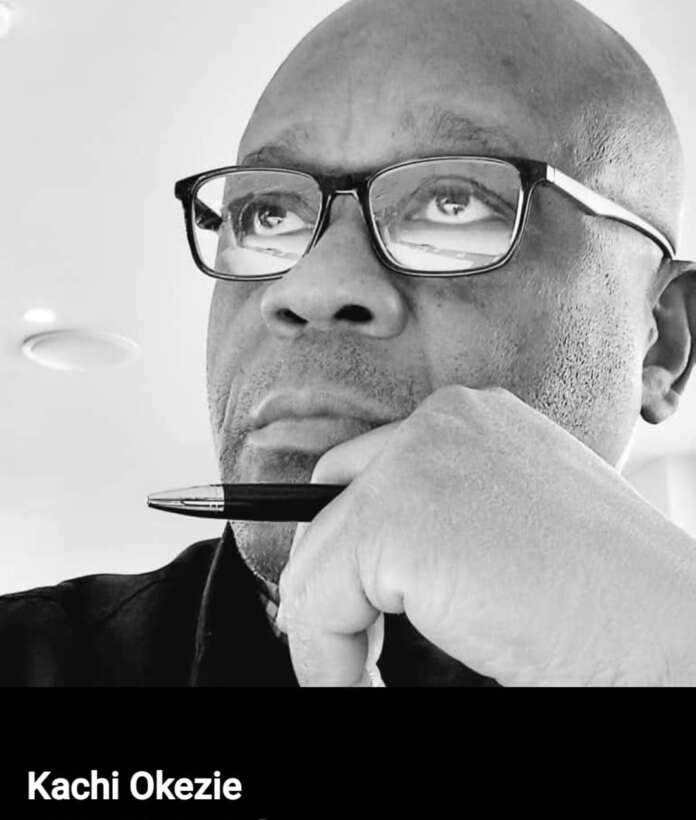
By Kachi Okezie, Esq.

There is something quietly unsettling about the efficiency of modern deportation systems. They are often presented as administrative necessities, tidy solutions to messy human realities. But beneath the language of “cooperation” and “migration management” lies a harder truth: deportation is rarely neutral. It is an exercise of power. And in the case of the recent UK–Nigeria deportation agreement, it risks becoming an arrangement where one state’s political convenience is purchased at the expense of its citizens’ dignity.

At first glance, the deal appears pragmatic. Nigeria agrees to receive over 2,000 nationals who lack legal status in the United Kingdom, including failed asylum seekers and convicted offenders. In return, there are assurances of reintegration support: airport reception, temporary accommodation, modest financial assistance, and access to vocational or educational opportunities. There are even provisions for appeal under domestic and international law. On paper, this resembles a balanced framework: responsibility paired with humanitarian consideration.

But policy is not just what is written; it is what is incentivised. And here, the context of the UK’s voluntary repatriation scheme casts a long shadow over the agreement.

The UK’s approach to voluntary return did not emerge overnight. It has evolved over more than two decades, beginning with the Voluntary Assisted Return Programme in 1999, and gradually expanding into a suite of policies that now form the Voluntary Returns Service. Today, eligible migrants, typically irregular migrants or those with refused asylum claims, can access support for travel, documentation, and reintegration funding of up to £3,000 per person. The scheme reflects a simple calculation: it is far cheaper, easier, and politically safer to encourage people to leave than to forcibly remove them.

Case studies reveal both the logic and the limits of this approach. Under the Facilitated Return Scheme, foreign national offenders may leave the UK early with financial assistance, saving the government the cost of prolonged incarceration. In other instances, returnees have received in-kind reintegration support: funding for small businesses, education, or housing, offering a fragile but real pathway to rebuilding their lives. These examples show that voluntary return, when properly resourced, can offer something rare in migration policy: a degree of agency.

Across Europe, similar patterns emerge. Portugal offers support of up to €2,000 to encourage voluntary return. Germany’s schemes range from €300 to €3,000 depending on circumstances. France and Ireland also operate voluntary return programmes, though with less publicly specified financial details. Eligibility across these systems tends to follow a familiar logic: irregular migrants and visa overstayers may qualify, while those with pending asylum claims are often excluded. These schemes are fluid, shaped by shifting political and economic priorities, but their underlying purpose remains consistent: reduce the burden of forced deportation by making departure more palatable.

It is against this broader landscape that the Nigeria–UK agreement must be understood. Because what is at stake is not simply whether migrants return, but the terms under which they do so.

Voluntary return schemes, for all their imperfections, preserve a measure of choice. They allow individuals to prepare, to plan, and to access financial support that can make reintegration viable. Forced deportation removes that space. It compresses timelines, reduces options, and often leaves returnees with fewer resources and less stability.

The concern is that this bilateral agreement subtly shifts Nigerian nationals facing removal in the UK away from that voluntary pathway. By streamlining identification processes and facilitating quicker removals, it risks closing off the very moments where migrants might otherwise opt for voluntary return. Efficiency, in this case, is not neutral, it reshapes outcomes.

This creates a troubling disparity. Migrants from countries without such agreements may still access voluntary return schemes and their associated benefits. Nigerian migrants, by contrast, may face faster removals with comparatively limited support. The difference is not just procedural; it is deeply material.

Defenders of the agreement will point to Nigeria’s reintegration provisions: airport reception, temporary accommodation, small cash payments, and access to training or entrepreneurship programmes. These measures matter, but they are modest when compared to the structured support available under voluntary return schemes in the UK and across Europe. This agreements denies Nigerian deportees the benefit of that scheme, which is available to other migrants. Reintegration is not achieved in a day, and symbolic assistance cannot substitute for sustained support.

This brings us to the central question: has Nigeria let its people down by making this deal?

Not entirely, but not insignificantly either.

Nigeria has fulfilled its international obligation to accept its citizens and has secured baseline protections in the process. It has acted as a cooperative partner in a system that increasingly demands such collaboration. But cooperation, in itself, is not the highest standard of leadership. Some might even question whether the UK would accept such a deal from Nigeria were roles to be reversed. Who knows?

Where the Nigerian government falls short is in what it did not secure. It appears to have accepted a framework that prioritises administrative efficiency over comparative fairness. Nigerian nationals may now find themselves with fewer options, less support, and diminished agency relative to others in similar circumstances. This is not outright abandonment, but it is a form of underrepresentation, a failure to fully leverage negotiation in defense of its citizens’ interests.

A more assertive approach could have demanded explicit access to voluntary return schemes, stronger reintegration funding, or even expanded legal migration pathways as part of the bargain. Countries like Pakistan, Bangladesh, Zimbabwe and Iraq rdfused such a deal outright, preferring to push for expanded pathways for their people . For Nigerians, these alternatives were not unrealistic goals; they were missed opportunities.

And that is the quiet tragedy of the agreement. It does not dramatically betray Nigerian citizens; it simply does not fight hard enough for them.

In migration politics, that distinction matters. Because the true test of leadership is not whether a government complies with international expectations, but whether it extracts maximum benefits, meaningful protections, and opportunities for its people while doing so.

The UK–Nigeria deal may succeed in making deportations more efficient for the UK. But efficiency, without equity, is a hollow achievement. And if dignity is the first casualty of that efficiency, then the cost is far greater than any policy can justify.

The views expressed by contributors are strictly personal and not of Law & Society Magazine.

Tales My Patients Told Me: Donald Trump would love this! By Emmanuel Fashakin

Carmen, 43, came to the office few days ago at 12 noon. Surprisingly, Carmen’s name did not appear on the appointments list for the day. So, one hour later, with Carmen still sitting in the corner in the waiting room and watching TV, I became curious and asked her what she was doing in the office. “Oh, I am waiting for my daughter Diana coming from school who has an appointment with you; I got a ride, and that’s why I came in early.” I saw that Diana’s appointment was not until 2.30 p.m. Isn’t it too early to arrive for an appointment scheduled for two and one half later? I would later understand the reason behind Carmen’s apprehension.

Diana, 17,  was ushered in to see me at around 2.45 p.m. after she left school. I have known the family for over ten years, when they enrolled soon after we opened our Hollis branch. I have watched Diana, and her sister and brother grow up over the years. The family have had a lot of troubles in the past four years, starting with the arrest of their father, an illegal alien. Their father, Manuel, had slipped into the United States 18 years ago from Guatemala and hooked up with Carmen. They have three children together, two girls and a boy. The family was happy and everything was fine until a fateful night four years ago.

Manuel went out partying with friends, and while the party was still going on, Manuel got exhausted and sleepy and went to take a nap in the car. To keep himself warm, he left the engine running, and the car heater on, which was his undoing. As he was snoring happily, knocks on the window woke him up. A command of  “Registration and license, please”, and a quick breath-analyzer test was all it took for the police to haul him to jail for operating a motor vehicle while under the influence of alcohol. In jail, while waiting to be arraigned, they found that he was an illegal alien, and that compounded his woes; he was handed over to the Feds. He was soon transferred out of State to Federal Penitentiary in Pennsylvania. It was the beginning of the woes for the family.

Jose, 16, the only male in the family broke his right femur while playing football. The alignment of the bones were bad and he needed an operative reduction and internal fixation of the fracture. The girls became frequently sick from asthma attacks. Carmen remained steadfast and held the family together; she would make the long trip to Pennsylvania whenever she could. She arranged legal representation for her husband. On the advice of the attorney, she came to me for a letter to the Judge handling the case showing all the problems with the children and how her husband should be allowed to stay in the country on compassionate grounds. The case dragged on for three years, but last year, she came to the office wearing a grim look. Manuel had called from jail saying that he had heard that he had exhausted all his options and an order had been given for his deportation, which could happen at any time. Then all went eerily quiet.

Carmen’s sister in law called them from Guatemala four days later: Manuel is home in Guatemala! Manuel said that at about 11 p.m. on the day after his call home, they were bundled into buses and taken to the airport. First, there was a stop in a Texan airport, then the deportees were sorted out and taken to their respective countries. They were just dumped in their own countries at the airport. Manuel said that he was dirty and unkempt, and didn’t want his people, who had seen him depart for the United States with much hope and promise almost two decades earlier, to see him in such shape. He called a friend who picked him up and allowed him to clean himself and refresh before he went home. Even then, his people were shocked to see him looking so gaunt and emaciated, the result of over three years of depressing incarceration. Manuel promised to sneak back into the United States as soon as he got himself back together. That was over one year ago.

Now Diana and Carmen are sitting apprehensively in my office. Three months earlier, my office did a comprehensive medical check up for Diana, including screening for gonorrhea and chlamydia which is mandated by the City for all women between the ages of 16 and 24. Since that test, my office had called Diana several times to discuss her result, and she had not showed up. As I reviewed the lab results, my jaw dropped when I saw: “Chlamydia = POSITIVE.” I asked Carmen to please excuse us while I discussed with Diana privately. State Law accords underage people the right of privacy in issues relating to sex, pregnancy and abortion so that they would be free and tell the truth. “You had sex”, I declared matter-of-factly. “Only once”, she confessed immediately. “He infected you with Chlamydia”, I informed her. She burst out crying. I encouraged her to tell her mom, and after some reluctance, she agreed. We ushered in Carmen to join the sobbing party.

“I knew that boy was up to no good”, Carmen declared. “Thank God you are not seeing him again, You must never talk to him again”, she commanded Diana. I told them both that they must still contact the boy to get himself treated so that he would stop infecting the other girls. “Undiagnosed chlamydia infection is one of the commonest causes of infertility in females from blocked Fallopian tubes”, I warned them, please make sure the boy gets treated. It was at this time that Carmen told me the bombshell: Manuel is not coming back to the US! Manuel was calling from Guatemala virtually everyday at the beginning, then his calls became infrequent.

Then his sister called Carmen that Manuel has another woman already. Manuel then called and confirmed that he wasn’t coming back and that Carmen should inform the children. Carmen said she insisted that he inform the children himself. A few days later, Manuel called the children and said “bye-bye”, that he wasn’t coming back. I felt really sorry for Carmen who had worked so hard to keep the family together, but Donald Trump would surely love how things unfolded in the family — it’s one less illegal alien for him to worry about!

Emmanuel O. Fashakin, M.D.,FRCS(Ed), FAAFP, Esq.
Attorney at Law & Medical Director,
Abbydek Family Medical Practice, P.C.
web address: http://www.abbydek.com
Cell phone: +1-347-217-6175
MY DECLARATION: I resolve to do as much good, at as many times, in as many ways, to as many people, the Lord sends my way. I resolve, to do it, as quickly as I can, because my time is limited. Emmanuel Fashakin, made on Jan 19, 2014.

New UK Visa Fees: What Nigerians will pay starting April

The United Kingdom government will increase fees for a wide range of visas, residency applications and citizenship processes from April 8, 2026, with the hike affecting Nigerians and other foreign nationals seeking to visit, study, work or settle in the country.

The revised fee schedule, published by the UK Home Office shows increases across virtually all categories of visa applications made both inside and outside the UK, with affected categories spanning visit visas, student visas, work visas, settlement applications and naturalisation fees.

The increases, which take effect in less than two weeks, come as Nigeria remains one of the largest sources of visa applicants to the UK, with hundreds of thousands of Nigerians applying annually for visit, student and work visas.

The short-term visit visa rises from £127 to £135, while the student visa increases from £524 to £558. Nigerians seeking permanent residency will pay £3,226, up from £3,029, and those applying to naturalise as British citizens will pay £1,709, up from £1,605.

In a rare exception to the broad pattern of increases, the fee for registering a child as a British citizen is being reduced — from £1,214 to £1,000, a cut of £214. All other fees either rise or remain unchanged. Some categories, including the Tier 1 (Investor) visa and the High Potential Individual visa, are unchanged at £2,000 and £880 respectively.

Here is the full list of UK visa and immigration fees relevant to Nigerians:

VISIT VISAS

Short-term (up to 6 months): Old: £127, New: £135

Long-term (up to 2 years): Old: £475, New: £506

Long-term (up to 5 years): Old: £848, New: £903

Long-term (up to 10 years): Old: £1,059, New: £1,128

Visiting academic (more than 6 months, up to 12 months): Old: £220, New: £234

Private medical treatment (more than 6 months, up to 11 months): Old: £220, New: £234

Direct airside transit visa: Old: £39, New: £41.50

Landside transit visit visa: Old: £70, New: £74.50

STUDENT VISAS

Student (main applicant and dependants): Old: £524, New: £558

Child Student: Old: £524, New: £558

Short-term student (English language, over 6 months up to 11 months): Old: £214, New: £228

WORK VISAS

Skilled Worker – up to 3 years: Old: £769, New: £819

Skilled Worker – over 3 years: Old: £1,519, New: £1,618

Skilled Worker (Immigration Salary List) – up to 3 years: Old: £590, New: £628

Skilled Worker (Immigration Salary List) – over 3 years: Old: £1,160, New: £1,235

Skilled Worker – Health and Care Visa – up to 3 years: Old: £304, New: £324

Skilled Worker – Health and Care Visa – over 3 years: Old: £590, New: £628

Innovator Founder: Old: £1,274, New: £1,357

Start-up: Old: £465, New: £495

Scale-up: Old: £880, New: £937

High Potential Individual: Old: £880, New: £880 (unchanged)

Graduate Route: Old: £880, New: £937

T2 Minister of Religion: Old: £769, New: £819

International Sportsperson – up to 12 months: Old: £319, New: £340

International Sportsperson – over 12 months: Old: £769, New: £819

Temporary Work (Seasonal Worker, Religious Worker, Charity Worker, Creative Worker, International Agreement, Government Authorised Exchange, Youth Mobility Scheme, India Young Professionals Scheme): Old: £319, New: £340

Representative of an overseas business: Old: £769, New: £819

Global Business Mobility – Senior or Specialist Worker (up to 3 years): Old: £769, New: £819

Global Business Mobility – Senior or Specialist Worker (over 3 years): Old: £1,519, New: £1,618

Global Business Mobility – Graduate Trainee: Old: £319, New: £340

Global Business Mobility – Service Supplier: Old: £319, New: £340

Global Business Mobility – UK Expansion Worker: Old: £319, New: £340

Global Business Mobility – Secondment Worker: Old: £319, New: £340

SETTLEMENT AND INDEFINITE LEAVE

Route to Settlement: Old: £1,938, New: £2,064

Route to Settlement – other dependant relative: Old: £3,413, New: £3,635

Route to Settlement – refugee dependant relative: Old: £424, New: £452

Indefinite leave to remain: Old: £3,029, New: £3,226

Visitor Extension (in-country): Old: £1,100, New: £1,172

Leave to remain – Other: Old: £1,321, New: £1,407

TRAVEL DOCUMENTS

Certificate of travel (adult): Old: £300, New: £320

Certificate of travel (child): Old: £151, New: £161

Convention travel document (adult): Old: £94.50, New: £102

Convention travel document (child): Old: £61.50, New: £66.50

NATIONALITY AND CITIZENSHIP

Naturalisation (British citizenship): Old: £1,605, New: £1,709

Registration as British citizen – adult: Old: £1,446, New: £1,540

Registration as British citizen – child: Old: £1,214, New: £1,000 (reduced)

Renunciation of nationality: Old: £482, New: £513

Nationality review: Old: £482, New: £513

Status Letter (Nationality): Old: £459, New: £489

Non-acquisition Letter (Nationality): Old: £459, New: £489

PUNCH

Woman bleeds to death in Kano after giving birth to quintupletes

A Kano woman, Hafsatu Yusuf, who recently gave birth to quintuplets at Murtala Muhammad Specialist Hospital, has died.

Confirming the development in a telephone interview with PUNCH Online on Thursday, the Public Relations Officer of the Kano State Ministry of Health, Nabilusi Abubakar K/Na’isa, said the woman died around 2am at the hospital.

He disclosed that the woman experienced persistent bleeding after delivering the five babies — three boys and two girls — and efforts by medical personnel to stabilise her were unsuccessful.

“She had been bleeding since after delivery, and all efforts by doctors to control the situation were unsuccessful,” he said.

K/Na’isa added that the deceased had since been buried in accordance with Islamic rites at her residence in Hotoro.

“We are appealing to the public to support the babies with milk and other essential items,” he said.

He, however, confirmed that the newborns are in stable condition and are currently receiving medical attention at the hospital.

PUNCH Online reports that the incident comes barely a day after the Kano State Government announced that it had taken responsibility for the medical care of the mother and her babies following the delivery at the facility.

In an earlier statement, the ministry disclosed that the quintuplets were delivered successfully and that both the mother and the newborns were placed under special care by medical personnel.

The husband of the deceased, Malam Salisu Nufi’u, had expressed appreciation to the state government for the intervention, describing it as timely support.

The government also reiterated its commitment to improving maternal and child healthcare services and reducing mortality rates across the state.

Nigeria’s justice system under the spotlight as Supreme Court Justice Agim headlines 5th Annual Lecture of Akaraiwe Associates

Nigeria’s legal community is set for a critical moment of introspection as leading jurists and practitioners gather in Enugu for the 5th Annual Lecture of Akaraiwe Associates (Lex Rehoboth Partners), a forum increasingly seen as a barometer for the direction of justice delivery in the country.

This year’s lecture, themed “The Role of the Legal Profession and Justice Delivery in Nigeria,” will be delivered by Hon. Justice Emmanuel Akomaye Agim, a Justice of the Supreme Court of Nigeria, whose jurisprudence and opinions continue to shape the nation’s legal landscape.

Read Also: A perverse judge, irrespective of the safeguards put in place will deliver perverse judgments, Prof R.A.C.E Achara

The event is scheduled to hold on Friday, March 27, 2026, at the Enugu State High Court Auditorium, with proceedings expected to commence promptly at 10 a.m.

Legal observers say the lecture comes at a time when Nigeria’s justice system faces mounting scrutiny over delays, conflicting judicial decisions, and questions around consistency at the highest levels of adjudication.

In a notable development, Justice Agim is also expected to revisit the controversial doctrine of “Per Incuriam Reagitata,” described as Nigeria’s emerging “superiority rule” for addressing divergent Supreme Court decisions—a topic that sparked intense debate during last year’s lecture delivered by Prof. R.A.C.E Achara.

The doctrine, which seeks to resolve inconsistencies in apex court rulings, has gained traction among legal scholars and practitioners concerned about judicial certainty and the integrity of precedent in Nigeria’s legal system.

With the presence of a sitting Supreme Court Justice and renewed focus on doctrinal clarity, this year’s lecture is expected to generate robust discourse on the future of legal practice, the credibility of the courts, and the urgent need for reforms in justice delivery.

Below are the login details for virtual attendance.

Click https://us06web.zoom.us/j/84004403475?pwd=bmdXdGEwc3FDYmRSMWVjU0xCVG5HZz09 to start or join a scheduled Zoom meeting.

Zoom Meeting ID: 840 0440 3475

Password: 163647

YouTube link: https://youtube.com/live/o_GXPWwln3A?feature=share

Many feared dead as suspected herdsmen launch deadly attack on Mararaba community near Abuja

Aso A, a community located near Jumai Estate in Mararaba, a boundary area between Abuja and Nasarawa State, has been attacked by suspected herdsmen, leaving several persons dead and many others injured.

DAILY POST gathered that the attack, which began on Wednesday morning, has so far claimed no fewer than six lives, although the exact number of casualties remains unconfirmed.

Sources told DAILY POST that the violence was triggered by an earlier clash between a farmer and a herder, which reportedly led to the death of the herder. The farmer, whose identity is yet to be established, was said to have fled shortly after the incident.

In apparent retaliation, suspected herdsmen reportedly stormed the residence of the fleeing farmer, attacking residents indiscriminately and setting houses ablaze. The situation escalated when community members attempted to resist the attackers, resulting in further destruction of property and loss of life.

A video obtained by DAILY POST shows several houses engulfed in flames, while the body of one of the victims was seen being transported in a wheelbarrow to a nearby hospital.

A resident, who spoke on condition of anonymity, said the entire community has been deserted, with many residents fleeing to neighbouring areas in Abuja and other safer locations.

As of the time of filing this report, a combined team of police and military personnel had been deployed to the area to restore order.

Meanwhile, a motorcyclist transporting a police officer to the scene was reportedly ambushed and killed by the attackers.

Although the exact death toll is yet to be officially confirmed, a community leader said tension remains high in Mararaba amid reports that more armed herdsmen may have been mobilised from Keffi for possible reprisal attacks.

Efforts to obtain an official response from the Divisional Police Officer of Aso A Police Division were unsuccessful, as the female Divisional Police Officer (DPO), who answered our call, declined to comment on the incident.

In a related development, former Senate Leader, Ali Ndume, raised the alarm over what he described as critical ammunition shortages among Nigerian troops, warning that soldiers are increasingly being overwhelmed by insurgents in parts of Borno State.

Speaking with journalists in Abuja on Tuesday, the lawmaker cautioned that Nigeria risks losing territories in the North-East if urgent steps are not taken to strengthen military capacity, particularly in frontline communities.

Ndume, who represents Borno South Senatorial District, said troops were recently forced to withdraw from Ngoshe and Pulka communities following sustained attacks by insurgents due to inadequate ammunition.

“I am calling on the federal government to double its efforts in equipping the Army with sophisticated arms and ammunition,” Ndume said.

“I gathered that our soldiers lacked adequate ammunition and had to withdraw from Ngoshe and Pulka because they were overwhelmed. It was only after reinforcements arrived that they reclaimed the areas. Nothing was left standing in both communities by the attackers,” he added.

The senator’s remarks highlight growing concerns over the operational readiness of troops deployed in the insurgency-hit region, where communities continue to face repeated attacks.

Describing the aftermath of the attacks, Ndume painted a grim picture of destruction in the affected areas.

“I have seen Ngoshe, and it is beyond description. The destruction is total—reduced to ground zero, with nothing left except a small mosque.

“The people are resilient, and the governor is determined to rebuild. There is an urgent need for federal government intervention,” he said.

Ndume stressed that without immediate reinforcement in terms of arms, ammunition, and logistical support, the military may struggle to sustain gains against insurgents, leaving vulnerable communities exposed to further devastation.

Earlier, SaharaReporters reported that no fewer than 23 persons were confirmed dead, while 108 others sustained varying degrees of injuries following multiple bomb explosions that rocked Maiduguri last Monday evening.

The coordinated attacks occurred at three separate locations across the city, throwing residents into panic and prompting a swift response from security agencies and emergency services.

A statement issued by the Borno State Police Command, Nahum Daso last week Tuesday confirmed the casualty figures.

He revealed that investigations were ongoing to determine the full circumstances surrounding the attacks.

The statement read, “Following the devastating suspected suicide IED explosions that occurred at about 7:24pm on March 16, 2026, at (1) Maiduguri Monday Market, (2) University of Maiduguri Teaching Hospital gate, and (3) Post Office Flyover area, Maiduguri.”

“Preliminary investigation reveals that the incidents were carried out by suspected suicide bombers. Regrettably, 23 persons lost their lives, while 108 others sustained varying degrees of injuries.”

Daso added that security agencies responded swiftly to contain the situation and prevent further harm.

“The scenes were immediately secured, cordoned off, and subjected to thorough sweep operations by Police Explosive Ordnance Disposal Unit Base 13 Maiduguri to rule out the presence of any additional threats,” he added.

He further noted that a combined team of police tactical units, the military, and other security operatives had been deployed to the affected areas.

Victims of the explosions were promptly evacuated by emergency responders, including the National Emergency Management Agency and the State Emergency Management Agency, to nearby medical facilities where they are currently receiving treatment.

“He commiserated with victims and their families, while assuring the public of the command’s unwavering commitment to safeguarding lives and property,” he said.

Authorities also reassured residents that calm has returned to the city.

“The Borno State Police Command wishes to state that normalcy has been fully restored in the affected areas.”

“Meanwhile, security operatives have heightened their presence and surveillance across Maiduguri and its environs to prevent any further occurrences,” he added.

Last week Monday, SaharaReporters reported that there was tension in the capital of Borno State, Maiduguri, going by a series of explosions, one of which occurred at the entrance of the Maiduguri Teaching Hospital, causing panic and fear across the city.

SaharaReporters gathered that the first explosion occurred around 7pm last Monday, during iftar, the evening meal that marks the breaking of the Ramadan fast.

In a video obtained by SaharaReporters, some security personnel were seen using torchlights to inspect a car parked at the entrance of a gate.

Horror Cases: Babysitter faces 25 years jail for violating 5-year-old as 12-year-old is charged with sexual assault and wounding of elderly woman

A Guatemala citizen, Carlos Aguilar Reynoso, sat in a Long Island court on Monday, March 23, as prosecutors outlined sickening new details of his alleged babysitting sex attack on a young girl he left needing surgery.

The 27-year-old was babysitting a 5-year-old girl while her mother was at work on Feb. 1, 2026.

Rather than care for the child as he was being paid to, he allegedly violently raped the girl, leaving her bleeding and suffering from internal injuries, Suffolk County prosecutors told the court Monday.

“When the victim’s mother returned from work — the victim told her mother that ‘her private parts hurt,’” Assistant District Attorney Sean Murphy said as Reynoso stood emotionless, blankly staring ahead.

“Believing that her child may have soiled herself, she took her to the bathroom to change — when she noticed her underwear was soaked in blood,” Murphy said.

The child then told her mom what the babysitter did to her, prosecutors said.

The child was then rushed to the Peconic Bay Medical Centre in Riverhead where doctors found internal injuries and a tear in her private regions, prosecutors said.

She was then transferred by ambulance to Cohen Children’s Medical Centre in New Hyde Park, where she had to undergo emergency surgery, according to prosecutors.

Police arrested Reynoso just one day later, though not easily as he resisted the cops attempts to detain him, Murphy revealed.

He was nearly let loose back on the streets due to a combination of lax state bail laws and sanctuary policies.

Reynoso was initially charged with endangering the welfare of a child, which isn’t bail eligible in the Empire State. ICE would have been barred from picking him up because of the state’s sanctuary policies but investigators issued the alleged pervert a desk-appearance ticket so he would be processed and released.

The federal agents then cuffed him on his way out of the precinct, sources said.

Reynoso, who used an interpreter in court, barely moved during the proceeding, and only spoke once, responding with “yeah,” when asked if he understood what was happening.

He is charged with a laundry list of sex crimes, including first-degree rape and predatory sexual assault against a child, and is facing 25 years to life in prison.

The alleged paedophile was remanded without bail and is due back in court April 27.

In a related development, a 12-year-old boy appeared in a UK court after he was accused of sexually assaulting a woman in her 60s, leaving her seriously injured.

The woman was found in a property north of Birmingham city centre at around 6.15pm on March 18, bleeding heavily from several wounds and barely conscious, a court heard on Tuesday.

The woman was lying on the floor, naked apart from a t-shirt, with cuts to her chest and face, prosecutor Colin Charvill told Birmingham Youth Court.

She remains in hospital in a serious condition, having been placed in an induced coma.

A boy aged 12 has been charged with sexual assault and wounding, as well as an offence of theft on the same day and intentional strangulation in relation to an alleged incident on February 11.

The defendant, who cannot be identified for legal reasons, appeared in court today where he indicated pleas of not guilty to all of the charges.

He was remanded to youth detention accommodation by District Judge David Murray ahead of an appearance at Birmingham Crown Court on April 21.

West Midlands Police said in a statement: ‘Our enquiries remain ongoing, but we understand how concerning this will be within the community.

‘Our officers will be continuing to provide reassurance in the local area.

‘If anyone has any information regarding suspicious behaviour on 18 March or in the days leading up to last Wednesday, details can be submitted via the Major Incident Public Portal or via 101 quoting log 4888 of 18 March.’

Meta to pay $375 million in New Mexico trial over child exploitation, user safety claims

 A New Mexico jury on Tuesday found Meta Platforms (META.O), opens new tab violated state law in a lawsuit brought by the state attorney general, who accused the company ​of misleading users about the safety of Facebook, Instagram and WhatsApp and of enabling child sexual exploitation on those platforms.

After deliberating less than a day, the jury found that Meta violated New Mexico’s ‌consumer protection law and ordered the company to pay $375 million in civil penalties.

The verdict marks the first time a jury has ruled on such claims against Meta, as the company faces a wave of lawsuits over how its platforms affect young people’s mental health.

“We respectfully disagree with the verdict and will appeal,” a Meta spokesperson said in a statement. “We work hard to keep people safe on our platforms and are clear about the challenges of identifying and removing bad actors or harmful content.”

In a statement, New Mexico Attorney General Raúl Torrez, a ​Democrat, called the verdict “a historic victory for every child and family who has paid the price for Meta’s choice to put profits over kids’ safety.”

“The substantial damages the jury ordered Meta to pay should send a ​clear message to big tech executives that no company is beyond the reach of the law,” he said.

In a second phase of the trial in May, Torrez said ⁠his office will ask the court to order Meta to make changes to its platforms to protect children and to impose additional financial penalties.

Meta shares were up 0.8% in after-hours trade following the verdict. The state had asked the jury to award ​more than $2 billion in damages.

META FACES BROAD CHALLENGE RELATED TO YOUTH MENTAL HEALTH

The jury’s decision capped a six-week trial in Santa Fe. Torrez had accused the company of allowing predators unfettered access to underage users and connecting them with victims, often leading ​to real-world abuse and human trafficking.

“Over the course of a decade, Meta has failed over and over again to act honestly and transparently,” Linda Singer, an attorney for the state, told the jury during closing arguments on Monday. “It’s failed to act to protect young people in this state.”

Meta denied the allegations, saying it has extensive safeguards in place to protect younger users.

“What the evidence shows is Meta’s robust disclosures and tireless efforts to prevent harmful content. And these disclosures mean that Meta did not knowingly and intentionally lie to the public,” Kevin ​Huff, an attorney for Meta, told the jury on Monday.

Meta has come under increasing scrutiny in recent years over its handling of child and teen safety, spurred in part by whistleblower testimony before Congress ​in 2021 that alleged the company knew its products could be harmful but refused to act.

Separately, Meta is facing thousands of lawsuits accusing it and other social media companies of intentionally designing their products to be addictive to young people, leading to a ‌nationwide mental health ⁠crisis. Some of the lawsuits, which have been filed in both state and federal courts, seek damages in the tens of billions of dollars, according to Meta’s filings with financial regulators.

A state court jury in Los Angeles is currently deliberating in the first trial over the addiction claims.

Meta has argued the company is shielded from liability in both the addiction and the New Mexico lawsuits by the free-speech protections of the U.S. Constitution’s First Amendment and Section 230 of the Communications Decency Act, which generally bars lawsuits against websites over user-generated content. The company has said the state’s allegations of harm cannot be separated from the content on the platforms, because its algorithms and design features serve to publish content.

The judge in New Mexico ​rejected Meta’s arguments on Section 230, allowing the case ​to go to trial.

NEW MEXICO’S INVESTIGATION

The New Mexico lawsuit ⁠grew out of an undercover operation, which Torrez, a former prosecutor, and his office ran in 2023. As part of the case, investigators created accounts on Facebook and Instagram posing as users younger than 14. The accounts received sexually explicit material and were contacted by adults seeking similar content, leading to criminal charges against multiple individuals, according to Torrez’s office.

The state ​claims Meta told the public Instagram, Facebook and WhatsApp are safe for New Mexico teens and children, while hiding the truth about how much dangerous and harmful content ​the company hosts. According to the ⁠state, internal company documents acknowledged problems with sexual exploitation and mental health harm. Yet the company, the state says, did not institute basic safety tools such as age verification and insisted it was safe.

The state also accused Meta of designing its platforms to maximize engagement despite evidence they were harming children’s mental health. Features such as infinite scroll and auto-play videos keep kids on the site, fostering addictive behavior that can lead to depression, anxiety and self-harm, the lawsuit claims.

On Tuesday, the jury found ⁠that Meta had ​violated the state’s consumer protection law by knowingly engaging in an unfair or deceptive trade practice. The jury also found that the company’s actions ​were unconscionable, meaning Meta knowingly took advantage of a lack of knowledge in New Mexico residents. The jury found 75,000 violations and awarded $5,000 per violation.

In May, Judge Bryan Biedscheid is slated to hold a trial without a jury on the state’s claims that Meta created a public nuisance that harmed state residents’ ​health and safety. The state will ask Biedscheid to direct Meta to make changes to its platforms, including adding effective age verification and removing predators, it said Tuesday.

Source: Reuters

We Saw It Coming”: Qatar energy chief warns Iran provocation could ignite global crisis

Qatari Energy Minister Saad bin Sherida Al Kaabi speaks during the opening ceremony of the annual energy industry event Abu Dhabi International Petroleum Exhibition and Conference (ADIPEC) in Abu Dhabi, United Arab Emirates, November 3, 2025. REUTERS/Amr Alfiky Purchase Licensing Rights

As Qatar reels from an Iranian attack that has hobbled its giant natural gas company, its boss, who doubles as the country’s energy minister, ​says he had warned officials and executives of just such a danger should Iran’s own sites be hit.

“I was always warning, talking to executives from oil and gas that are partnered with ‌us, talking to the U.S. Secretary of Energy, to warn him of that consequence and that that could be detrimental to us,” QatarEnergy CEO Saad al-Kaabi told Reuters.

‘AWARE OF THE THREAT’

“They were aware of the threat, and they were always reminded by me, almost on a daily basis, that we need to make sure that there is restraint on oil and gas facilities,” he said.

The U.S. Department of Energy deferred to the White House on the matter.

Asked for ​comment, White House spokesperson Taylor Rogers said: “President Trump and his entire energy team were not ignorant of the reality that there would be short-term disruptions to oil and gas supply during the ongoing operations ​in Iran, and planned for these highly anticipated, temporary disruptions.”

ExxonMobil declined to comment.

“We remain fully committed to our longstanding partnership and will continue to work with QatarEnergy on ⁠a path to recovery,” a ConocoPhillips spokesperson said.

The U.S. oil major holds significant minority stakes in both multi-billion-dollar LNG trains taken offline by recent attacks.

Three weeks into the U.S.-Israeli war with Iran, missile and drone attacks have damaged tankers, refineries and other important energy infrastructure, with the biggest known impact so far on QatarEnergy’s Ras ​Laffan, the world’s largest liquefied natural gas (LNG) complex.

Kaabi told Reuters on Thursday that the damage to the facilities that had cost $26 billion to build would impact LNG deliveries to Europe and Asia for up to five years.

Governments have long feared ​such a scenario, where facilities vital to the world’s supply of not only crude oil and natural gas, but also products such as jet fuel and liquefied petroleum gas (LPG) used for heating and cooking, sustain long-term damage.

NO PRIOR WARNING

Israel attacked Iran’s main South Pars gas field in a sharp escalation of the war on Wednesday. Tehran’s response was a series of attacks on Gulf energy infrastructure in Kuwait, UAE, Saudi Arabia and Qatar’s Ras Laffan.

Kaabi said he had no prior warning of the South Pars attack.

“I was not aware ​of anything, but I don’t think anybody was aware. President Trump said he didn’t know. So do you think we would know?”

South Pars is part of the world’s largest gas field which Iran shares with Qatar, where it ​is named the North Field.

Kaabi said QatarEnergy had not yet assessed whether insurance would cover its war-related losses.

DAMAGE DETAILS

He said not only had the attack on Ras Laffan knocked out 17% of Qatar’s LNG export capacity, but the impact would last up ‌to five years ⁠because of what was damaged.

“The cold boxes are gone,” Kaabi said, referring to the cooling mechanism damaged on two of the complex’s 14 trains, which purify and chill gas for transport as a liquid.

“This is the main unit, that is the cooling box of the LNG, it is completely destroyed.”

MAJOR EXPANSION NOW DELAYED

Having evacuated its facilities after an Iranian attack earlier this month, there will also be a delay to expansion at Ras Laffan, Kaabi said, impacting gas meant for delivery to countries including France, Germany, and China from 2027.

“It wasn’t easy to pull everybody from offshore, you know, 10,000 people evacuated in 24 hours, and shut down all the operations,” he said.

“I’m so glad we have ​zero injuries, zero fatalities. It is because of that ​decision we took.”

The expansion, set to boost Doha’s position ⁠as the world’s top LNG exporter, was to have ramped up Qatar’s liquefaction capacity from 77 million to 126 million tons per annum by 2027.

“No work is happening on the North Field expansion. There are no workers there. It’s definitely delayed,” Kaabi said.

“I think it will be delayed for months, if not a year or more.”

QatarEnergy’s production ​can only restart should hostilities end, and even then it would take at least three to four months to resume loading fully, Kaabi said.

WIDER GULF ECONOMIC IMPACT

Kaabi, ​who is also chairman of Qatar ⁠Airways, said the wider impact of the war would ripple across all the economies of the Gulf.

“This has taken the whole region back 10-20 years.”

“Tourism is out. Your airlines are not flying …Your trade is down. There is nothing moving from any of the ports.”

“You have economies that have zero income from oil and gas, and we are predominantly an oil and gas economy. So obviously, the spending from the governments is going to be at a much, much lower rate.”

‘DIFFICULT TO ⁠DESCRIBE’

Kaabi has spent ​his career at QatarEnergy, joining the state firm in the mid 1980s while still studying at Pennsylvania State University.

Known for keeping a cool ​head in challenging situations, he rose through the ranks to become CEO of what was then Qatar Petroleum in 2014.

Asked how he felt about the attacks on his company and country, Kaabi was lost for words.

“How I feel is difficult to describe,” he said before pausing and ​moving on to the next question.

Credit: Reuters

Online uproar as wife and side chick mourn one man on TikTok

Social media never sleeps—and when real-life drama meets TikTok, the result is often a whirlwind of emotions, controversy, and public spectacle. That was exactly the case recently when news broke about the sudden passing of a man whose complicated love life has now become the center of online attention.

What started as a solemn moment quickly turned into a viral storm after two women—his legally married wife and an alleged side chic—both took to TikTok to mourn him… publicly.

The wife, visibly heartbroken, shared emotional tribute videos filled with photos, memories, and heartfelt captions about love, loss, and the pain of losing her partner. Her posts drew sympathy from many users who flooded her comment section with condolences and prayers.

But just as the dust was beginning to settle, things took a dramatic turn.

Not long after, another woman surfaced on TikTok, also mourning the deceased—equally emotional, equally expressive, and claiming a deep romantic connection with him. She posted her own videos, speaking about their bond, the plans they had, and the shock of his untimely death.

Social media users quickly connected the dots—and the reactions were explosive.

The comment sections across both profiles became battlegrounds. Some users criticized the side chic for “overstepping boundaries,” arguing that the wife deserved full respect during such a sensitive time. Others, however, took a different stance, pointing out that grief is personal and complex, regardless of relationship labels.

As clips from both women circulated, TikTok users began stitching videos, analyzing timelines, and even uncovering alleged evidence of the man’s double life. The situation escalated from mourning to full-blown online investigation, with opinions flying from every corner.

Amid the chaos, one thing remains clear: the incident has sparked conversations about relationships, loyalty, and how much of personal grief should be shared online.

While both women continue to process their loss in their own ways, the internet has, as usual, turned a private tragedy into a public spectacle—raising questions about empathy in the age of viral content.

In the end, beyond the drama and divided opinions, a life has been lost—and two women, regardless of their roles, are left to deal with the reality of that loss in the harsh glare of social media.

Naijalamp

TIPS