Home Blog Page 603

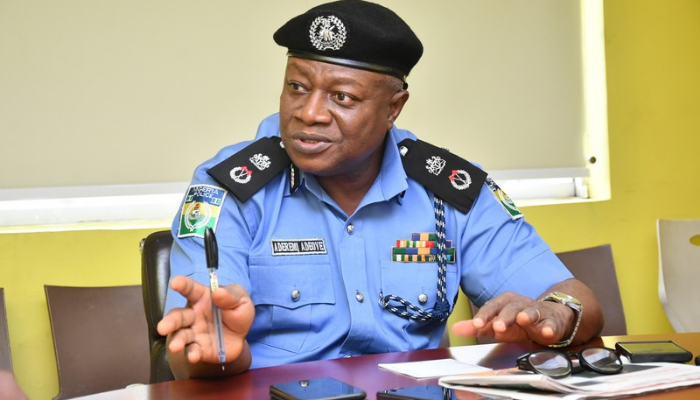
The audacious billionaire cop

By Dauda Adesina Joki-Lasisi, Esq.

Before my appointment as a cadet inspector and got trained at the Police Academy, Kano, in 1988, I’d first served as a constable for 2 years in Lagos state command. When we passed out of the Police College Ikeja in November of 1986, CP Saminu Daura (as he then was, he later rose to DIG. He is now of blessed memory), was the CP Lagos State command. The officer who was nominated by the CP to address us at the premises of the Lagos state command Headquarters was ACP Lawrence Makama, the command’s AC (Admin).

Throughout his address to us, ACPOL Makama was stressing and laying emphasis repeatedly that we all should keep it indelibly at the back of our minds, that Police job was one of selfless service, and never a money-making venture. He warned us sternly that if there was any of us whose ambition was to become a millionaire, such fellow should signify there and then, so he or she could be excused from service right away. For according to him, police job was not a place to realise such ambition. He, however, added with an ecclesiastical tone as follows….

“However, I’ve just told you the ethical requirements of Policing. But don’t be despondent or dispirited. For if any of you is destined to become a millionaire in life, nothing can stop it from coming to pass. So hope in God, eschew corruption, and be diligent at work.”

It was upon that philosophy that we grounded our service in the police. In fact, some of us were so loathful of money that we preferred working in postings where we were completely insulated from monetary inducement of any sort.

My very first posting was the checking point at Tin Can Island, on the Apapa/Oshodi Expressway, under the command of one very old inspector, called Magnus Kayode as the team leader. As I was on duty there, here came one white M/Benz car driven by a young man, whose name I later knew as Hakeem. I flagged the car to a stop, and I requested for his car particulars. The next thing he did was to bring out a brand new five naira note and begged me to take it in place of the particulars. Upon seeing the money, Acpol Makama’s words started to ring bell in my head like a clock alarm. Fears overwhelmed me, as if taking the money would result in a fatal consequence for me.

I asked the man to keep his money, and I insisted on seeing the papers of the car. It was then he disclosed to me that he was a driver to one Ambassador E.O. Kolade. He explained that his boss had sent him to go and clean up the car at the car wash, because the boss was due to travel abroad later in the day and it was with the car that he would drop him off at the airport. He confessed to using the car to run his personal errands. So, in a hurry to return home to pick his boss to the airport, he forgot the car’s papers at the car wash. He said if he had to go for the papers now, his boss would miss his flight. He promised to come with the papers as soon as he dropped his boss off at the airport and he picked the papers from the car wash.

I somehow believed his story. So, out of compassion, I asked him to hurry up to go and pick his boss. But Inspector Kayode, my own boss at the duty post, was not so convinced. He insisted that the young man should leave the car there at our checking point and go back to the car wash to pick the papers and show them to us. As a novice that i was, I joined the driver to be pleading with the inspector to let him go, so his boss wouldn’t miss his flight. The inspector scolded me for blind trusting the driver, solely upon hearing his own story without more. But I followed my conviction through. So, I kept begging the inspector, who then reluctantly allowed the driver to go. In doing so, I can still remember his words very clearly. He said…

“Oga (referring to me derisively as ‘oga’) has begged me to let you go. So you can go. But ‘oga’ next time, don’t come to me with this kind of stupid begging again o.”

The driver left us. Not quite an hour later, the same car surfaced again at our duty point. This time, the driver was with his boss, Ambassador E.O. Kolade. The boss beckoned to me and said “young man, come here*. I moved close to him. He then said further, “my driver told me you asked him to go so I wouldn’t miss my flight. He said he gave you money and you rejected it. Is that true?” I said yes sir. “Very good. Take this card (his complimentary card). I am traveling now. But I’ll be back in the country in two weeks time. You come and see me. God bless you”

As the car was about to zoom off, my boss, Inspector Kayode, waved it to stop and he asked the big man: “Gentleman I am the boss here at this duty post. What did you give my boy?” The man said I didn’t give your boy anything other than my complimentary card sir. And the inspector requested him to give him his card also. The man obliged and gave the inspector his card, after which the car zoomed off and left us. One day, I’ll tell the full story of how my encounter with Ambassador E.O Kolade had helped to shape my career positively in the Force. Suffice it to say now that since that 1986 till today, I am still relating with the old man. He is now a 93-year old great grandfather, residing with his wife in the United Kingdom. But we still relate like father and son till today !

In 1994, I was already an old Inspector of Police. I was shortlisted for pre-posting examination, the success in which was a requirement for posting to work as a detective in the prestigious Force CID, Alagbon close, Lagos. The examination panel was chaired by CP Jolade Ojomo (as she then was. Now DIG rtd). But my paper was marked by SP Adamu Mohammed (as he then was. Now IGP rtd). I was subsequently posted to the Force CID, following my success in the examination. But before our deployment to sections, we had to pass through a month’s induction training in which we were tutored by seasoned officers on the ethics of detectives at that level of criminal investigation. One of the very senior officers who came to lecture us was DIG Achibong Nkana, the then head of Force CID. In his lecture, he laid much emphasis on the need for police officers to eschew flamboyant and ostentatious lifestyles or open display of wealth. He said such lifestyles were inconsistent with policing ethics, particularly as detectives. Quoting a short aphorism which he attributed to Abraham Maslow, DIG Nkana said as follow….

“Hire a banker, and pay him maximally. Also use him maximally. If he is disposed to ostentatious lifestyle, sack him. Even if your inquiry about him revealed that his earnings were legitimate, still sack him and let him leave the fold of your work force.”

When the DIG got to that point, all of us the course participants rented the hall with murmuring, saying that was too harsh. For how could he be sacked, even when he was funding his glamorous lifestyle with his legitimate earnings without stealing from the bank? When the DIG noticed our displeasure, the then dropped the following aphorism to justify his proposition. He said…

“The banker with an ostentatious lifestyle deserves to be sacked, irrespective of the fact that was living on his legitimate earnings. This is because extravagancy, if not a crime in itself, can lead others into crime. Same goes with any police officer that lives an extravagant lifestyle. He too should be sacked like the banker”

Those were the morals that we were taken through in our days in police service. But due to the nature of human beings as a dynamic creature, things seem to have changed drastically between our days and now. Not only in the police force, but generally in virtually all areas of human endeavors.

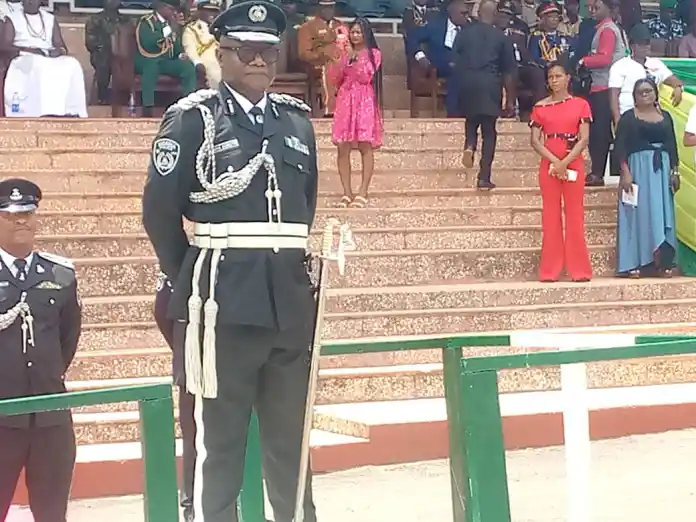
It is only in this attribute of human dynamism that I think one can possibly find explanation for the impudence of CP Aderemi Adeoye, the retiring CP of Anambra state command. In his valedictory speech, the retiring CP was quoted as throwing down the gauntlet to challenge Dangote into a duel of wealth, boasting that his own business concern had geometrically risen to 20 billion Naira within the six years of its floating with just 54 milliion Naira.

To say the least, this presumptuous outburst of the CP was in my view, an act of gross manifestation of unethical disposition that was quite unbecoming of a public officer of his status. If the officer had drank, even in very small quantity, to that aphorism of DIG Nkana, he would have realised that his act of indiscretion could cause an incalculable damage to the integrity and selfless attributes of Police service in Nigeria. In a service where the pension of a retired CP is not up to a 100k, what message was CP Adeoye sending to those still in service? Wasn’t for them to embark on a rabid pursuit of money at all costs in order to secure their post service life? And in that case, how wouldn’t these officers then compromise the sacred policing ethics by monetizing their services to the detriment of the masses and the security of the nation?

I think retiring senior officers need to now be compelled to submit their valedictory addresses to the police authorities for vetting and possible censorship of any damaging content thereof, in order to prevent the recurrence of an embarrassing absurdity of this nature. A stitch in time, saves nine!

My name remains Dauda Adesina Joki-Lasisi esq.

Departing Anambra CP: I will give Dangote a run for his money, my firm now worth N20bn

The retiring Commissioner of Police in Anambra State, Aderemi Adeoye, has announced that he is going fully into business and that he is ready to give Africa’s richest man, Aliko Dangote, a run for his money.

Adeoye stated this on Saturday during his ceremonial pull out parade from the Nigeria Police Force at Dr Alex Ekwueme Square in Awka, Anambra State capital.

Explaining that he had been at various police units and formations in Anambra state where he also performed very well, the outgoing CP disclosed that during those years, he served many police commissioners who recorded outstanding performances.

According to Adeoye his long service to the state before becoming a commissioner made him a better commissioner, who was prepared for the position.

He also stated that he had been to various dangerous places without a scar to the glory of God.

“I have been through militancy in Niger Delta, Boko Haram in North East, fought IPOB militancy in the South East, and I’m glad that I’m alive today. Despite face-to-face gunfire and bombs we encountered, to the glory of God I did not have any scare on me.

“The opportunity of being made Commission of Police in Anambra State was my crowning glory of my career in the police. I came in prepared as the CP of the State,” he said.

Adeoye, while commending the Nigeria Police and Nigerians said he had also prepared himself for retirement days.

“I thank NPF for the opportunity to serve and Nigeria for investing in me through training at home and abroad. I have been privileged to be trained in Ghana, England, Israel, California and more.

“I have served abroad in the United Nations, and this career gave me opportunities for self development, and these have prepared me for retirement. It’s been a unique privilege serving Anambra.

“I’m proud of my men at Anambra State Police Command. You are gallant, heroic and never giving up. We didn’t achieve anything through individual efforts but with other sister agencies,” he stated.

The retiring CP who revealed that he founded Alpha Trust Investment Club (ATIC) Limited in 2018, said though it was started with a modest sum of N54 million, the investment was now worth over N20 billion.

Adeoye said the club currently has investments worth over N20billion, and that as he retired, he would go into business full time, ready to give Dangote a run for his money.

“That will be my full time business from Wednesday, May 1 when I fully disengage. We have been investing and now we want to go into full time business and we will in the next 10 years give Dangote a run for his money,” Adeoye said.

He also described Anambra State as a good place with good people, saying that he cannot say any evil against the state and the people.

Earlier, the Anambra State Governor, represented by Deputy Governor, Dr Onyekachi Ibezim, praised Adeoye for his efforts in helping Soludo fight insecurity in the state.

He said, “There’s a time to start and a time to begin and a time to end everything. We knew today would come. The CP came to Anambra and has played his role meritoriously. He came when Soludo was tackling insecurity and people were in the bush fighting lawful citizens.

“Adeoye came in at the same time with his own style and dedication, sincerity of purpose and doggedness and within a short space, Anambra is now calm.
It is not over until it is over and the fight is still sustained.

“If it were in our hands, we will say let this good man continue because we are happy with his works. A street has been named after him and many awards too. I’m happy to proclaim that you are now a citizen of Anambra. We wish you well in your future endeavours.”

Sex for free Botox: British-Nigerian cosmetic doctor stripped off Licence

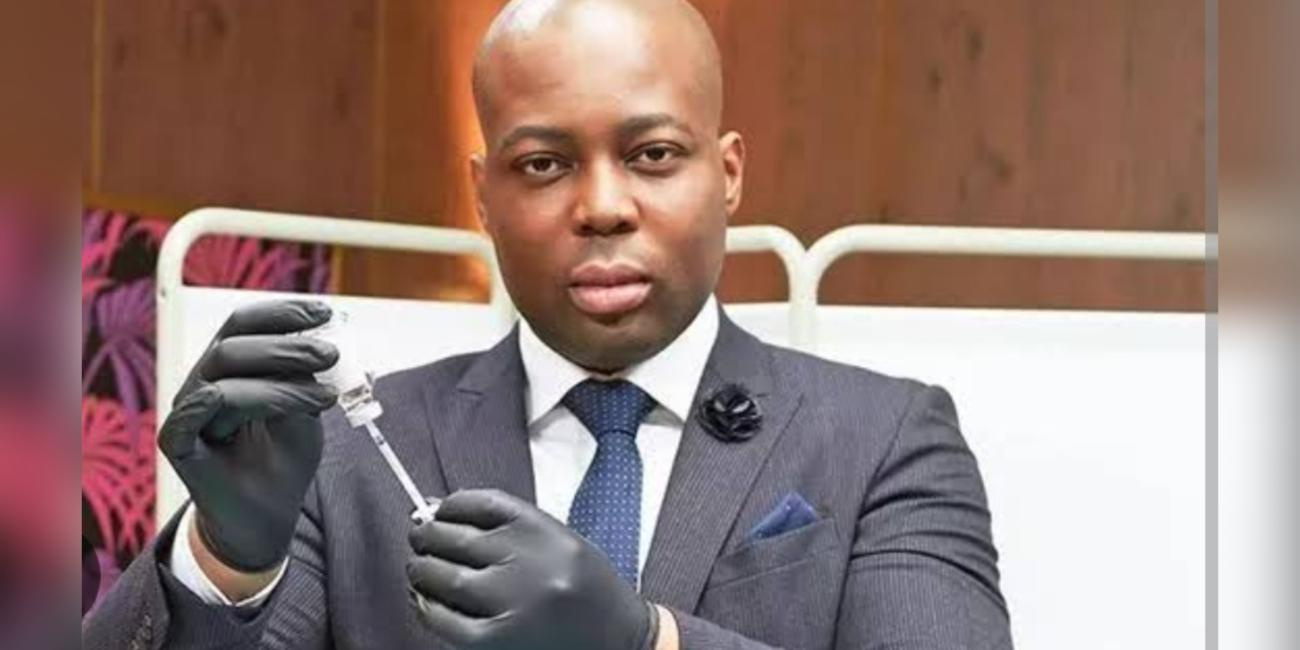
Having been found guilty of giving Botox to a patient in return for sex, Dr Oluwafemi “Tijion” Esho, a Nigerian cosmetic doctor based in the United Kingdom, has lost his licence to practise.

Esho, a popular TV cosmetic doctor, confessed to an improper emotional relationship with the woman, referred to as Patient A, with whom he exchanged “inappropriate” sexual messages on Instagram.

While appearing before a Medical Practitioners Tribunal Service (MPTS), the doctor argued that he never had any physical sexual contact with Patient A, who provided sex services via OnlyFans and webcams.

But, an MPTS panel, sitting in Manchester, ruled earlier this month that Dr Esho did have sexual intercourse with Patient A at his clinic in Newcastle upon Tyne in 2021 and administered Botox free of charge.

It was reported that the tribunal also ruled that, at a consultation months earlier, he had stroked her hair and rubbed himself against her after he made inappropriate comments about the shape of her bottom.

The tribunal also established that the doctor, last year made similar remarks to Patient A, and allowed her to masturbate him.

Hence, the tribunal found Dr Esho’s fitness to practise was impaired because of his misconduct and the tribunal announced on Saturday that Esho’s name should be removed from the medical register.

The tribunal’s reasons for imposing the sanction will be released next week.

According to the Telegraph, among the “inappropriate” Instagram messages sent to Patient A between July 2019 and February 2022 was an exchange in September 2019 when he said: “What you doing to me lol. Morning Glory. Bloody have me wanting the real thing. That’s like every man’s dream.”

In November 2019 he posted: “Why you making me bulge lol. Send more, don’t be sorry lol.”

The following month he wrote “Lol loving the tongue” and “Ha free mls [millilitres of botox] I’d need the whole booty and more”.

Weeks later he told her: “My God having you for a night/every night is a dream but if we do it for mls I break the doctors code and I’d be a dead man x lol.”

The tribunal also ruled the conduct of the doctor, also known as Oluwafemi Esho, was sexually motivated but did not find Patient A to be vulnerable because of her profession.

Dr Esho was featured on the ITV morning programme to provide his medical opinion and comment on cosmetic surgery discussions.

He was also regularly consulted on Body Fixers for E4, a channel operated by Channel 4, which aired for two seasons in 2016 and 2017 and made appearances on segments of BBC’s Morning Live until the summer of 2022.

Dr Esho is the founder of the Esho Clinic, which also has locations in London, Liverpool and Dubai, and has a host of celebrity clients.

He issued a statement following the tribunal’s finding of facts in which he admitted his conduct in communications with Patient A was wrong, but he continued to deny having sex with her.

Sending Ooni of Ife to Tinubu

By Lasisi Olagunju

One day, I will have the courage to ask the immaculate Ooni of Ife, Oba Enitan Ogunwusi, how he feels each time he travels on the horrible Ibadan-Ife road. Ben Okri, ‘The Famished Road’ storyteller, finds his own ‘road’ a torment – he says it “leads home and then away from it, without end.” Okri thinks the road a torment because he meets it “with too many signs and no direction.” The Ife-Ibadan road has signs, it has directions – and I find them very treacherously significant because they interlock fingers while road users lose life and limbs. The road has signs and directions to the very bowel of hell.

Olojo, the guardian divinity of the House of Oduduwa, is the famed owner of two machetes: with one machete, he prepares the field for the plants of tomorrow; with the other, he clears the road for prosperity (Ó fì’kan sán’ko/ Ó fì kan yè’nà). Those weapons must either now be blunt or lost. An Odu Ifa tells us something about Ile Ife and roads. It affirms that well-paved open roads start from Ile Ife. That affirmation today can only be treated on the operating theatre of irony. Could it be that truth has an expiry date and Ogbe’s truth of good, open roads in Ile Ife has expired? What we see today from the capital of Yorubaland (Ibadan) to the historical source of Yoruba people is the torment of a closed road that mocks the pathfinder-spirit of Oduduwa. The road does worse with its gaping craters and their threats of morphing into greater gullies. And it is a federal road.

Has the Ooni ever told the president that the worst road in the universe leads to his kingdom? Has he told the president that the N79.8 billion contract for the reconstruction of Ibadan-Ife-Ilesa road awarded in September, 2019 by his friend and villa mate, Muhammadu Buhari, has remained a contract for ghosts? Has he invited the president’s attention to the truth that since last year when he took over, the road has sunk even deeper in the mire of decrepitude? And, that even FERMA, a perennially rich agency that pretends giving palliatives on federal roads, has since seen the futility of stitching this rag? Or could it be that Kabiyesi does what our presidents since 1999 do – escaping road users’ pains by flying over our heads?

The reigning culture here is rooted in the ragged soils of our toil. I admit that badness is not peculiar to the Ife-Ibadan-Ilesa road. It is a national affliction that can’t be cured because of the greed of doctors who treat sick roads with fake and expired drugs.

We work hard to build roads that wear out before they are inaugurated. We have the interminable construction mess called Lagos-Ibadan Expressway. When did construction start there? When will it end – if it will ever end? How much have we sunk there? And, is it not a shame that the road is ready already for corrective surgery even before its makers are done making it? If you are a woman, and you are pregnant and your doctor tells you dancing is a ‘safe and fun way to exercise’, do not dance to the break beats of that road. It is made for abortion.

Ben Okri says “all roads lead to death” and “some roads lead to things which can never be finished.” Is that why our federal government’s roads are forever ongoing, none is ever finished or completed? Federal government’s statistics says out of Nigeria’s national road network of 200,000 kilometers, 36,289 km belong to it. Now, you ask Abuja which of its other roads, apart from the one from the Villa to Abuja airport, is good? Ask them why almost all roads that wear federal tags suffer neglect, abandonment or crass abuse.

My NYSC journey to the far north 34 years ago was on the Ibadan-Ilorin-Jebba-Mokwa-Yauri road. It was an experience in pleasantness. It is, today, a monument to frustration, a shrine to demons that feed on losses -human and material. The Ibadan-Oyo-Ogbomoso part of that road is one major reason why Nigeria should not have a federal government – or have roads managed by the Federal Government. There should be a coroner’s inquest on why that road was killed and who killed it. Without the states, the vehicle of Nigeria would have long lost its chassis. States keep doing what heart surgeons do when arteries are found blocked. They create bypasses, byways. A brand new 78-kilometre Iseyin-Ogbomosho road has just been built by Seyi Makinde’s Oyo State to escape the Federal Government’s death trap along that axis. A commenter online wrote: “The road has helped us to link northern Nigeria without using the dangerous Oyo-Ilorin road that has consumed so many lives…” The Oyo-Ilorin road of death spoken of here belongs to the government in Abuja.

Potholes jolt us to appreciate what bad roads represent in our lives. They tell us why the tyres of our country never last and why our rides are forever bumpy. Asking questions on why our roads are perennially bad is living the times of Ayi Kwei Armah’s ‘Two Thousand Seasons’: “A thousand seasons wasted wandering amazed along alien roads, another thousand spent finding paths to the living way.” Like Ouroboros, the self-tail-devourer, Nigeria’s ‘alien roads’ cyclically keep consuming the ‘living way.’

It is time to pound yam for the household, the idler among us goes for the heaviest pestle. This is better said in Yoruba: Òle bàá tì, ó gb’ódó nlá. There are abandoned federal roads everywhere which directly affect millions of Nigerians, but the government has moved the money to a 700km super coastal highway that will cost N15.6 trillion. The first phase is 47 kilometres, starting somewhere and ending nowhere, at a cost of N1.06 trillion. Should I just say that that N1 trillion will start and complete the reconstruction of decrepit Ibadan-Ife-Ilesa Road (224km), Ilorin to Bida (244.9km) and Shagamu to Benin (492km) if wisdom wills? Even at an inflated cost of N1 billion per kilometre, our husbands will achieve these and will even ‘collect change’. And Tinubu would have become very popular with it. But he wants a white elephant and has moved our money to purchase it.

White elephants are always expensive! Poet and journalist, Mathew Wills, in his ‘The Original White Elephant’ defines ‘white elephant’ as “something excessive that turns out to be valueless.” James A. Robinson and Ragnar Torvik in 2005 published an interesting article about the third world and deliberate bad investments – they titled their article: ‘White Elephants’. In that piece, they hold that politicians around here would always go for “white elephants” as against “socially efficient projects” because “the political benefits are large compared to the surplus generated by efficient projects.” That piece says much more than this. It is published in the Journal of Public Economics 89 (2005: 197-210). I think you should read it.

‘The Stolen White Elephant’ by Mark Twain is an interesting story on the cost of investing in big, expensive loss centres. It is the story of a fictional Kingdom of Siam. A reviewer says Siam is blessed with a “national appetite for fraud”. Another says it has officers of “pompous assumption of infallibility and ridiculous inappropriate procedures.” The “pointless” story is about an expensive search for a stolen white elephant, a further loss of hundreds of thousands of dollars in compensation and the eventual discovery of the rotting corpse of the supposedly stolen animal. The story ends with the duped narrator celebrating the man who duped him. It ends as the man pronounces himself “a ruined man and a wanderer in the earth.” In Studies in American Humour, Peter Messent (1995) does a lot of justice to it in his ‘Keeping Both Eyes Open.’ The whole story sounds Nigerian; what Fela called “expensive shit.” But I can argue that though we wander today, the past was a better experience.

“How can you develop a country rapidly if you can’t get about it?” Sir Rex Niven, pre-independence Speaker of Northern Nigeria House of Assembly, asked that question 69 years ago in relation to the state of roads in Nigeria. On January 27, 1955, Riven was asked to brief the Royal African Society and the Royal Empire Society in London on “Recent Developments in Nigeria.” He gave a very detailed account of himself as a British participant in the affairs of a key component of the Nigerian federation. Sector by sector, he spoke about efforts and failures. He particularly spoke on roads which he described as “the most important of the great aspects of development.” He said as he was speaking (in 1955), Nigeria had over 30,000 miles of roads whereas in 1920, “she had hardly any at all.” Then he used Kabba (in present Kogi State) to illustrate what he was saying: “The first province I went to, the newly constituted Kabba Province, had exactly 4 miles of road…but when I left Kabba four years later, there were over 200 miles of road.” Thirteen years later, the same Niven, in retirement, told the Commonwealth section of the Royal African Society on 11 November, 1969 that Nigeria had 40,000 miles of quality roads. That figure was even in spite of the ongoing civil war. Now, you ask: Why are our golden years always in the past? The past was obviously better handled.

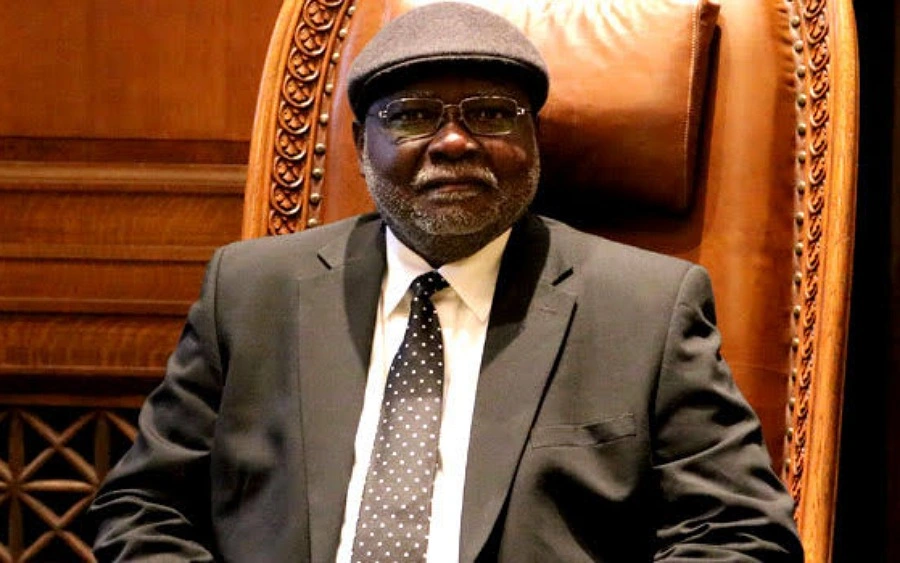
There is a new strongman in judiciary… not the CJN

By Lanre Adewole

The name, Rauf Oladosu, will likely mean nothing to outsiders but it means the world to senior operatives of the Judiciary, especially heads of courts and agencies within the system.

He is the Special Assistant to the CJN, Justice Kayode Ariwoola on Budget Matters and his appointment, scope of influence and operations, have been causing ripples in the accounting and appropriation orbit of the system.

No, the appointment isn’t novel. Walter Onnoghen, the CJN, disgraced out of office by Muhammadu Buhari as President, made a heavy weather of the office, by appointing a Professor to man it, for the time his aborted tenure lasted. Popularly known as Dr. Collins, the University of Nigeria, Nsukka lecturer was something close to the overseer of budgeting in the Judiciary, to the discomfort of several accounting officers of the 12 courts and agencies, that make up the federating units of the arm of government, especially in the early days of his involvement. It was the first time such enhanced hands would be ruffling financial equations within the system.

As much as the senior lecturer was disdained by some top operatives, who must now answer to the CJN, through him, practically nobody queried his profile and professional pedigree as unfitting for the job. He left when his boss’s job was undone by Buhari, I believe, back to Nsukka. He was a jolly fellow I will always reference a friend.

The Tanko interregnum saw one of his numerous favour-seeking sons, play the role, of course, without impacts as father and sons were busy chasing crumbs even when the elephant was on their shoulders. History has Tanko’s mess, stored.

As of today, without the reintroduction of the suspended retirement leave, Ariwoola has exactly four months in office and for all the mostly justified sticks, blows, knocks and stones he has received over appointments, both administrative and judicial, one area he appears to have done it right, is fund management. An empirical evidence is both his enemies inside and outside, yet unable to link him with at least one financial scandal in the administration of billions of naira allocated to the system, through the National Judicial Council. He deserves commendation for being prudent and transparent with public money voted for the running of the system, (his security guys would however have to stop eating bread and water in office), just as knocks should be rained on him over his nepotistic appointments, especially his unbridled appetite for Iseyin-centrism and shamelessly keeping too much in the family.

Oladosu’s appointment is a study in contradiction. Of course, despite the wide age difference, he is known as years-long confidant of the CJN within the system; also family, and predictably, from Iseyin. Ariwoola loves his communal heritage too much, to even be pro-Oyo State. There is a story about him preferring the road to his Iseyin country home being tarred, instead of the one linking his Ibadan abode. I love culturally-minded people, only that they could be uncomfortably provincial, regardless of how well-educated they are.

Aside the nepotism angle, Rauf, who is now considered a political appointee till the expiration of Ariwoola’s tenure, was a Level 9 officer at the Federal Judicial Service Commission (FJSC), where he was the Budget Officer, before, as they would say, God buttered his bread and his kinsman became the CJN.

When placed side-by-side with his immediate predecessor, a professor, it is easy to rule Rauf out as lacking in the requisite pedigree and knowledge, to oversee the system’s entire budgetting, appropriation and spending, serving as the eyes and ears of the CJN.

But despite the misgivings, the lowly officer has done well with judiciary’s budget, getting it jacked up and ensuring due process. The evidence of this claim is the fact that no one, at least from the grumbling insiders, has accused CJN and his boy(s), including a Senior Advocate from Iseyin who rules the privileges’ appointments (both legal and supreme court administration) of budget padding, despite the king-size grudge against the incumbent over his weakness.

That should be a plus for the argument that favours competence over seniority. By positional arrangement, thinking Rauf for the high-profile job, would be akin to the saying “kiniitanaja se kanlemomu” (how can one consider giving dog tigh to the imam when Islam forbids adherents from eating the animal). His now-proven ability and the merit he has shown on the job, would never have been known if Ariwoola hadn’t been wholly consumed by Iseyin-ism. Maybe nepotism isn’t that terribly bad on all sides as the dictionary meanings have projected, worsened by the negative optics of its usage, especially in relation to public service and grammatical applicability.

Maybe future allowances should be given when public service appointments favour family members and kinspeople of the appointors, especially when those without godfathers are also allowed to compete with the favoured, in open and transparent processes. The favoured, if they win fair, should also be weighed on performance and added-value basis, not who appoints them.

But that would never make up for what the constitution clearly calls abuse of office and use of office to confer personal advantage which is a criminal offence, under the law.

Rauf’s appointment, being a political one; meaning he is on secondment from FJSC, hasn’t offended any known law. His apparent capacity on the job, is also a recommendation, for future consideration for higher assignment. But asking his hitherto 12 bosses across the system, to be answerable to him, in the name of being Special Assistant to the ultimate boss, can’t be morally and emotionally right and a sure recipe for more angst against the CJN.

The Rauf scenario and the ill-wind it’s breeding, is a pointer to Ariwoola’s lack of experience as a manager of men. Of course, like Onnoghen and several CJNs before him, Ariwoola never managed any court or agencies of the judiciary, before fate thrust him to the zenith, where everyone now answers to him. His provincialism isn’t helping. It is the same challenge his imminent successor, KudiratKekere-Ekun would be confronting. She also never managed any court as CJ or headed any judicial agency and she will start administering all, in four months, from now. Yes, she has been the vice chairman of NJC since the combative Musa Dattijo Muhammad exited, statutorily heading appointment/promotion, constitution review and finance committees of the Council, but the position counts for nothing if the big man doesn’t fancy you. Dattijo was there and left a bitter man.

It is dangerous for the judiciary to keep appointing men and women without any experience in resource management as CJN. The groundswell of systemic opposition to Ariwoola today, is due to both his greed, and administrative inexperience. Instead of thrusting the manifestly-capable Rauf, who he says he trusts, forward, to boss his bosses with the expected cataclysmic fight-back, an experienced administrator would hide an asset like that as a secret weapon against systemic rot, keeping his subordinates guessing, when he, deemed an ignorant boss, is consistently a step ahead of their shenanigans.

But now, Ariwoola has exposed what Yoruba say an elder should hide under the agidi leaves while eating the cold pap.

To get the CJN now, all his teaducers need is get Rauf, who I learnt is already wearing shoulder-pads in dealing with those who would remain his bosses when the CJN is done and he would be compelled to revert to his FJSC role, maybe now, with promotion to Level 15 as being expected, going by precedents. To help the one who catapulted him to relevance, Rauf must keep his head on his shoulders and stay away from Greek gift. As a friend will joke, awufu dey run belle.

Ariwoola’s chapter in Nigeria’s judiciary is already inked, in the minds of both the reasonable and the unreasonable. He is generally perceived as a man who can’t stop taking for his own, like owambe women who would collect free party jollof packs even for their cats and dogs. It reflects poorly on him as someone called on by fate for a national assignment. But his poor judgement in appointment, also produced a Rauf. How then do we reconcile this, for posterity to make an objective call?

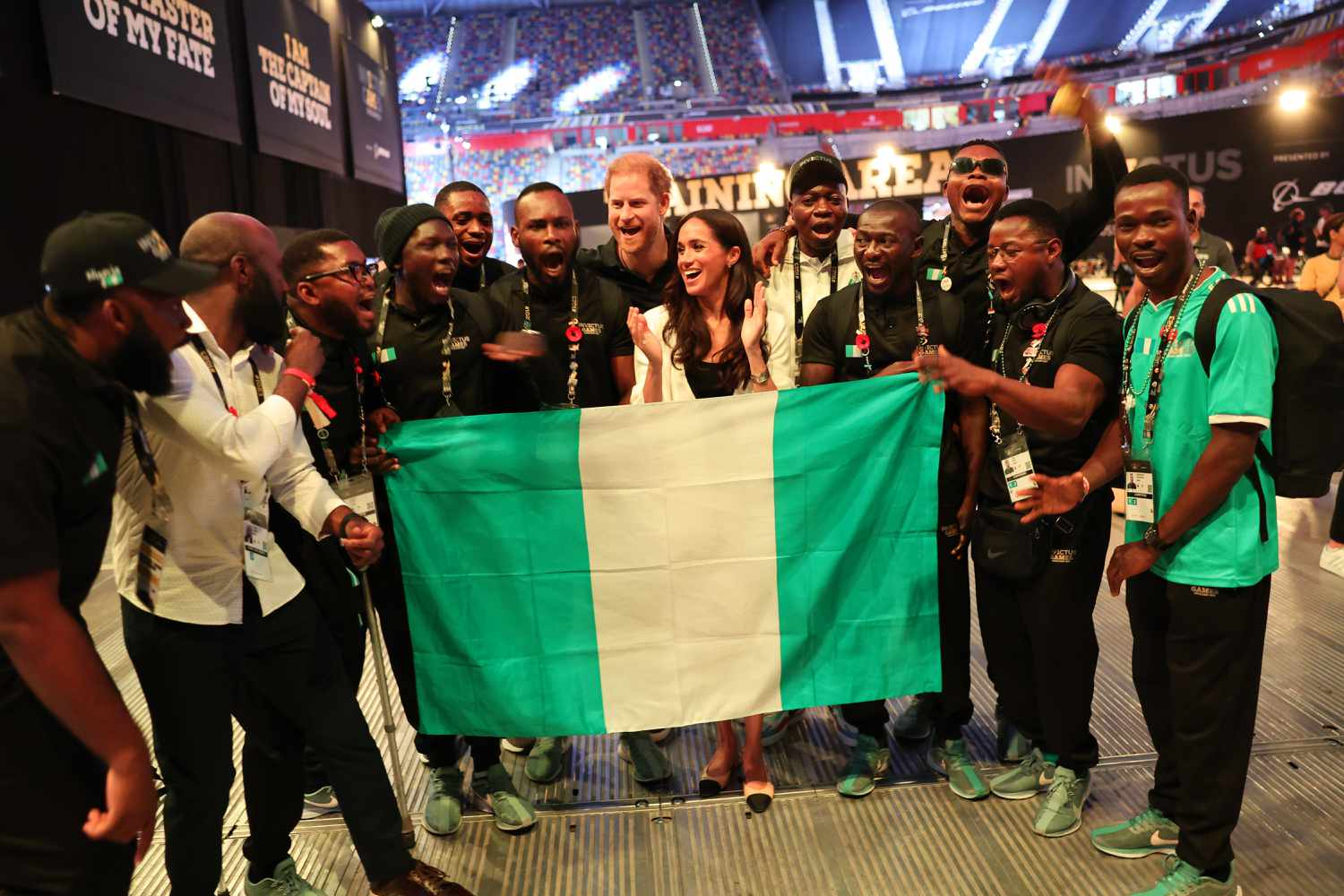
#Invictus Games: Prince Harry, Meghan Markle to visit Nigeria in May

Sequel to Nigeria’s debut appearance at Prince Harry’s 2023 Invictus Games which was held in Düsseldorf, Germany, Harry and his wife, Meghan Markle will visit Nigeria in May.

According to Yahoo Entertainment reports Sunday, the visit of the Duke and Duchess of Sussex owes to the invitation to visit the country on behalf of the Chief of Defence Staff, Mohammed Badaru.

The Invictus Games an international multi-sport event first held in 2014, for wounded, injured and sick servicemen and women, both serving and veterans were founded by Prince Harry the Duke of Sussex in partnership with the United Kingdom’s Ministry of Defence.

Nigeria’s Chief of Defence Staff Badaru who was an attendant at last year’s event, had expressed willingness to host the games should Nigeria be granted the opportunity.

In 2023, among the 21 participating nations, Nigeria, alongside Colombia and Israel, were new entrants at the Invictus Games which welcomed 500 athletes.

As contained in a statement by the acting Director of Defence Information, Brig -Gen. Tukur Vusau, “The visit is to consolidate Nigeria’s stronghold at the game and the possibility of hosting the event in later years.”

The report recalled how the royal British prince and his wife “spent time with the Nigerian team, whom Harry said his wife was supporting during his opening speech.”

Harry joked that the event may be more competitive this year since his wife had discovered that she’s of Nigerian descent. “Now, I’m not saying we play favourites in our home, but since my wife discovered she’s of Nigerian descent, it’s likely to get a little bit more competitive this year,” he said.

On May 8, Harry, 39, will attend the Invictus Games’ 10th anniversary celebration at St. Paul’s Cathedral in London. Soon after, he will be joined by Meghan, 42, in Nigeria, according to the report.

During their visit, the couple will meet with service members and will take part in a variety of cultural activities.

The Duchess revealed she’s 43% Nigerian after she took a genealogy test in 2022.

Markle made this known in the latest episode of her podcast, Archetypes, where she expressed her desire to learn more about her roots, Mirror reported.

She said, “I just had my genealogy done a couple of years ago. I’m 43% Nigerian,” adding, “I’m going to start to dig deeper into all of this because anyone that I’ve told, especially Nigerian women, are just like, what?”

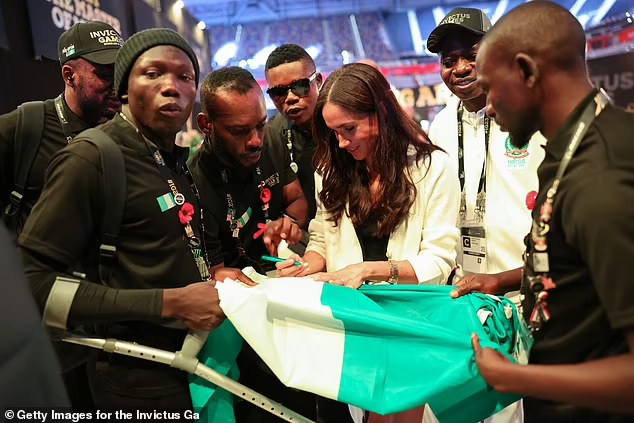
Harry and Meghan posed for a photo with Team Nigeria and the National Flag, and the squad presented them with a plaque from the Chief of Defence — plus a new nickname for Meghan.

The Duchess of Sussex received the name “Amira Ngozi Lolo,” which bears a royal meaning – “Amira is the name of a warrior princess from a legend, while Ngozi means “blessed” and Lolo means “royal wife,” the report stated.

Follow the Law & Society Magazine channel on WhatsApp:

https: //whatsapp.com/channel/0029VaL4J8rIt5rxOV1Ckl2B

Attorney-General Adoke and the Burden of Freedom

By Chidi Anselm Odinkalu

Senior Nigerian public officers are notoriously parsimonious with their recall once out of office. From among their club, memoirs are unusual. In a country ruled by whim, risk aversion is prudent when you are out of power. By feigning amnesia, yesterday’s men limit the likelihood that their successors may remember them for the wrong reasons. Moreover, with government as the principal guarantor of a good life, respect for the its rule of Omerta is the only way to retain any hope of access to its revolving doors.

When it occurs, departure from this trend is usually enforced. This is why Mohammed Bello Adoke’s 2019 memoirs remain notable. Adoke, a Senior Advocate of Nigeria, (SAN), was Attorney-General and Minister of Justice under President Goodluck Jonathan for five years from 2010 until 2015. Since leaving office, he has endured exile, detention, and a failed criminal trial in connection with the infamous Oil Prospecting Lease (OPL) 245 granted in April 1998 by General Abacha to the shadowy Malabu Oil and Gas Limited.

Even before his trial began, Adoke felt called upon discharge a burden in relation to the controversies that dogged him after office. Fittingly, his story is published under the title: Burden of Service. The sub-title Reminiscences of Nigeria’s Former Attorney-General, underscores the point that Adoke is, remarkably, the first former Attorney-General of the Federation to publish an account from his time in office. In addition to the Malabu Oil controversy, Burden of Service also offers insights into many other highlights of the Goodluck Jonathan years, including the hand-over of Bakassi Peninsula to Cameroon, recovery of the endless Abacha Loot, the removal of Ayo Salami as President of the Court of Appeal, and the climactic denouement to Nigeria’s 2015 presidential elections. In the afterglow of what he must regard as judicial vindication, it is timely to re-examine Adoke’s own narration.

While his parochial account is interesting in and of itself, it is the vignettes he offers when he is not necessarily pleading his own cause that make Adoke’s insights deserving of attention. A general theme of his is the shiftiness of Nigerian politicians and he illustrates this with several issues in the book. Some deserve scrutiny.

The first is the currency of loyalty in Nigerian politics. Under General Abacha, politicians popularised “I am loyal” as cult greeting. It is not lost on those interested that anyone who has need to repeat affirmations in this way probably knows nothing about loyalty in the first place. Illustrating this point, Adoke narrates how many people close to President Jonathan donated money to support the campaign of General Muhammadu Buhari in 2015. According to him, “many of my cabinet colleagues, including those known to be close to the President, had made donations to Buhari’s campaign. Those involved included heads of agencies. A Principal Officer of the National Assembly from the PDP was to later confess publicly that he donated N5 million to the APC during the elections.”

This shiftiness is not limited to politics; it also extends to high matters of constitutional legality. This is the second highlight from Burden of Service. Adoke tells a remarkable story about the fate of the Constitution (Fourth Amendment) Bill of 2015, which was said to have failed to receive presidential assent before President Jonathan vacated office. The amendment included clauses granting immunity to law-makers, life pension to former presiding officers of the National Assembly and inducting them into life membership of the National Council of State. It also contained a provision dispensing with presidential assent to constitutional amendments. As Adoke recalls, after the 2015 election, the National Assembly transmitted the Bill to President Jonathan for his assent. By the time Adoke learnt of this, President Jonathan had reportedly assented to the bill and authorized for it to be returned to the National Assembly. So, Adoke raced to the presidency to explain to the President the dangers inherent in the provisions contained in the amendment he assented to. After his encounter with President Jonathan, “the President looked genuinely surprised and promptly withdrew his assent”, whereupon he directed the Attorney-General “to prepare a memorandum elucidating all the issues…. raised and why he would have to veto the bill.” The rest is history but an important constitutional question arises – can a president having assented to a law unilaterally withdraw his assent?

Thirdly, there is the issue of weaponisation of litigation against the public purse in judgment debts. It’s best to render this in Adoke’s own words: “Many of the claims were bogus but since it was an organized scam, they were getting away with it…. Again, there were too many people interested in judgment debts. We were getting calls from all manner of people, including members of the National Assembly. Actually, some National Assembly members were making appropriation for judgment debts based on an understanding with the debtors (sic). It was a conspiracy against the national treasury.” This does not require any translation but it is noteworthy that Attorney-General Adoke chose not to tell who “they” were.

Fourth, there is the matter of plea bargains in white collar crimes involving politically exposed persons (PEPs) in Nigeria. About this, Adoke tells the story of the presidential pardon granted former Bayelsa State Governor, Diprieye Alamieyeseigha. According to him, Alamieyeseigha’s conviction was under a plea bargain and “as part of the plea bargain he was to be granted presidential pardon by (President Umaru) Yar’Adua after his release from jail. This, however, did not materialize as President Yar’Adua fell ill and died.” Plea bargains are subject to approval by courts and it’s doubtful whether this part of the deal was disclosed to any court. It certainly wasn’t disclosed to Nigerians.

Fifth, as Attorney-General of the Federation, Adoke was also the official leader of the Bar. His memoir offers an unusual insight into how he views hierarchies at the Bar. To make this point, he tells the story of how, before his time, “a substantial part of the budgetary allocation made for solicitors’ fees was being paid out only to two or three private solicitors. There was a case of a former Attorney-General that was paying a Senior Advocate N50 million for each case….” The result was there was insufficient money to go round and many cases against government went un-defended, leading to more judgment debts. So, how did Adoke address this? He decided that “no SAN would be paid more than N5 million for a brief; any other lawyer, who was not a SAN, would receive a maximum of N2 million.” In the un-complicated calculus of Attorney-General Adoke, a SAN is worth 250% of a non-SAN!

The narration in Burden of Service unfolds at four distinct levels of pre-text, text, context, and sub-text. It is replete with claims of moral high ground and completeness of disclosure but – as with nearly all memoirs – the reader must have an eye for both the credible and the incredulous. The line between these two can sometimes be non-existent in Adoke’s mind.

In telling the story of the removal of Ayo Salami as the President of the Court of Appeal, for instance, Adoke prefaces his narration with the implicit disclaimer that “the Attorney-General is not a member of the National Judicial Council (NJC)”, who recommended the retirement of Salami. He then proceeds to a pro-forma narration that is half-hearted to the point of being manifestly disingenuous.

According to Adoke, Salami “had personally encouraged” him to apply for SAN. However, Chief Justice Katsina-Alu, who was the other party in this terminal dog-fight with Salami, was his “mentor and adopted father” and benefactor, who personally recommended him to President Jonathan for the position of Attorney-General. Why it should fall to the Chief Justice of the Federation to nominate the Attorney-General of the Federation is another matter altogether. It is difficult to escape the conclusion that in this part of the book, at least, Adoke was – to put it rather mildly – less than economical with the truth.

A lawyer and a teacher, Odinkalu can be reached at [email protected]. An earlier version of this article was first published in October, 2019.

Intimate Affairs: Dear Madam

By Funke Egbemode

Some wives are not worth the titles they carry. They are women, yes. Wives? No. The right moves, acts and depth are just not there. It is either they forgot everything their mothers and clerics taught them about being a wife or they simply came up with their own codes of conduct but whatever they did, now they are not happy. They are not enjoying their marriages. And they are blaming everybody and everything but themselves. You know any wife like that? We all do.

Women who refuse to acknowledge that marriage has its own laws, refuse to live by them, then turn around to blame the husband, the in-laws, their husbands’ friends and generally the society for their bad marriages. Come on girl, you need self-assessment. You need to calm down and check yourself. Are you handling the ‘wife’ title with the right sense of responsibility? Is this ‘badness’ in your marriage caused by your attitude to marriage? Is your marital unhappiness self-inflicted or not?

Let us check out some of the little things wives do that hurt their marriages, things they have ignored over the years to their peril.

Madam ‘My-money-is-my-money’

Is it that all you see when you look at your husband is a beast of burden, a donkey or an ass that must carry all loads? Do you ever see a man you love, once loved and is the father of your children? Why do you want to kill him with your bills? Fine, it is his job to take care of his family as the head but you as the neck of the family, why do you avoid the bills? Your money is your money and his money is family money, right? Look at your son, yes your nine-year-old son and that three-month-old one you are breastfeeding, what you are doing to their father is what their wives will do to them. Oh, you never heard of the law of karma and the law of harvest? Both of them are waiting for you in the future. All bills will be loaded on your sons’ backs while you watch helplessly. Don’t you dare start snapping your fingers or muttering ‘God forbid’ or I reject it in Jesus name’. Your mother in-law bore it stoically, you will too. Keep treating your husband as one slave, we will all be here when you reap bountifully what you have sown.

A woman, a good wife is her husband’s helper. Even if you are a stay-at-home-wife, you must find a way to support him financially. Wives who keep their incomes and watch their husbands labour under the yoke of rent, school fees and housekeeping alone are not just mean, they are witches. In fact, if you are a wife and you fall into this category, I put it to you, you are subtly trying to kill your husband. And look at your son again and picture his wife not supporting him in the future.

Madam ‘Is-sex-food?’

You don’t want your husband to take a second wife or enlist the services and comfort of a side-chic, but you keep saying “Is sex food”? Well, for your information, sex is food and you are starving your husband. You cannot keep your thighs shut and still tell your husband to ignore the women who are singing ‘open and close’ out there. You can only vote one way. You either let him sail in or leave him to go fishing.

Madam Black Bra

Ehn Ehn, like my Online Apostle, Olori Ranti Ajayi, asked on Facebook recently, that your black bra, when last did you wash it? Yes, all your bras are black and brown so you can wear them for two weeks. Who does that? Do you know what the competition is wearing and washing daily? You have even tacked these old brassieres with needle and thread so much that I fear one day, they will take off and fly out of the window when they see you approach with another needle. Borrow yourself brain, my sister. Red, sweet pink, fuschia pink, lilac, powder blue, cream, peach are also colours for bra, not just nail polish. Lacy, push-up, half-cup, pointers are all the rave. Black on black is okay if they are frilly and lacy. Plain black is for those not in relationships but you are a wife, for God’s sake! You’ve got a territory to protect, borders to defend. Change your bra. Wear G-strings, sexy panties. Your underwear are the front office desk to your inner chamber. They are the ushers leading to the door of the other room. They must be breathtaking. Your man must stop in his tracks, miss a button or two in the morning when he sees you dressing up. He must feel like ‘one for the road’ when he sees you in bra and pants when you are applying your make up. He must feel like a ‘quickie’ before dinner when he sees your smooth cheeks in thongs and your twin pointers in lacy bra when you are undressing.

Cotton bra are for nursing mothers, unless you are role-paying. The role playing class is for next semester in Intimate Affairs 402. But role play and its siblings are important for your border patrol. Enough said! You can thank me later. Just find a way to start using these lines.

Honey, please help me hook my bra.

Babe please help me adjust my strap.

Then you rub the twin towers a little on his shirt sleeves. Wink and then dress up. He will come home early to finish the job.

Do we need to complete this class now, here, today?

Just go and change your lingerie and spend money on your intimate wears the way you invest in your shoes and designers party clutch bags. Give your man something to drool over.

Enough of the dreary dull pants and bra.

Madam Show-Off

Madam, what’s your plan for rainy days? Or you are the plan-as-you-go wife and mother? Now that all is going well with your husband’s finances, what are you doing with what is overflowing from his cup? Are you saving and investing or just partying and blowing it all? Some women simply forget themselves when everything is fine and dandy and when there’s enough to spend. They buy everything; also-ebi, latest bags and throw parties for their birthdays every year. Family vacation becomes a ritual that must be observed like Egungun or Eyo festivals. Millions of naira are spent on flight tickets to exotic spots around the world. Even as you read this, there are women who are paying more attention on savings towards the most expensive lace-front wigs. They know nothing about treasury bills, capital and money market trades and care even less about investing in real estate. They join the joneses to do hare-brained stuff. They live for the day. They want new cars every year, designers wears, shoes, all those things that fade and lose values with every fashion season. Rainy day is a bridge they will cross when they get there. Somebody tell me the definition of dumb carelessness!

Madam, what if your husband falls ill and needs money for a major surgery or needs to be flown abroad? Do you have a fall-back position? What if your husband loses that fancy accommodation in the highbrow part of town? Can you help with rent or you will resort to nagging and extramarital affairs? If your family falls on hard time today, will you be able to sustain the children in their school or the poor kids will have to go to public school, because Mummy did nothing reasonable with the good times? If your husband dies today, won’t you marry even an illiterate money-miss-road just because he can pay your rent?

Only wise women build nests for rainy days. The foolish ones just buy aso-ebi and Brazilian wigs and go on vacation. Their hard days and foolish choices wait for them in their future.

Funke Egbemode could be reached via [email protected]

PRAWA says congestion fueling jailbreaks

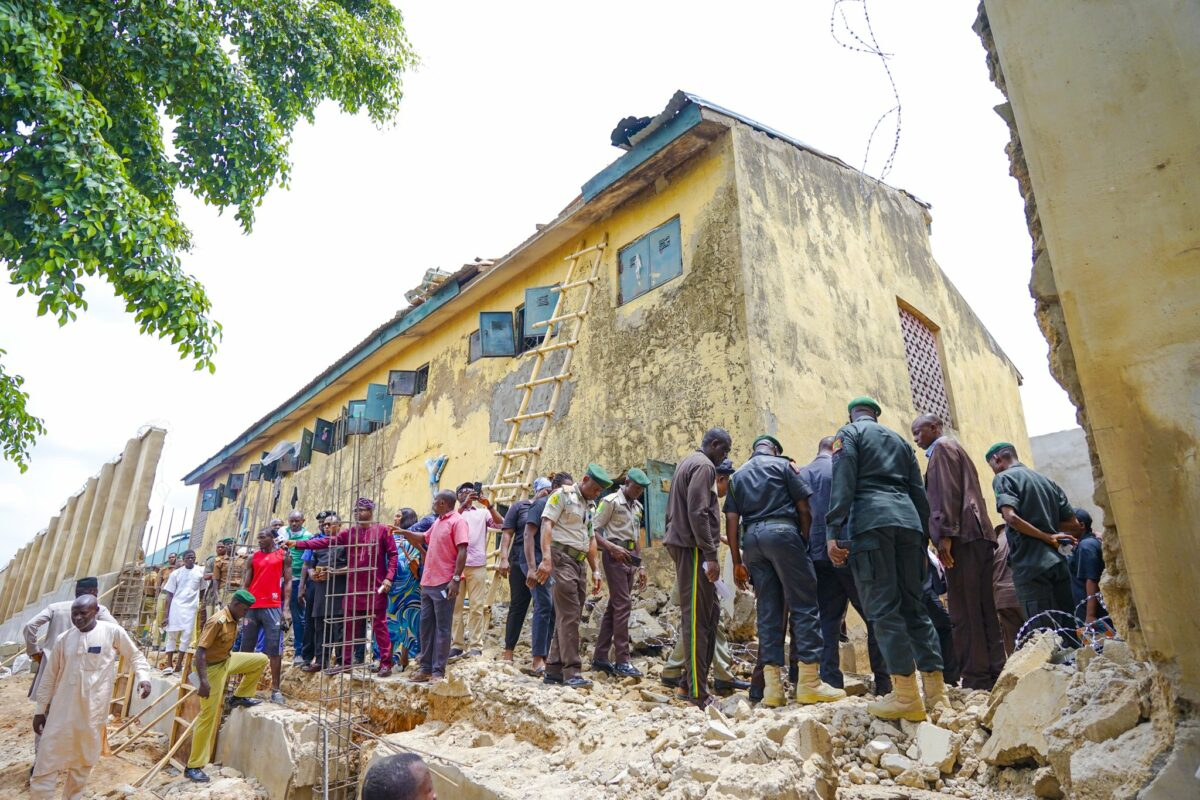
Following the recent jail break that saw about 119 inmates escape from the the Suleja Medium Security Centre following a rainstorm that damaged a part of its fence on Wednesday, April 24, the Prisoners Rehabilitation and Welfare Action (PRAWA) has warned that congestion of Correctional Centres, was often responsible for jailbreaks.

The Executive Director of PRAWA, Dr Uju Agomoh, said this while addressing newsmen in Abuja.

The conference was  organised by PRAWA in partnership with the National Civil Society Forum on Detention and Corrections on Friday in Abuja.

Agomoh said that concerns have grown regarding the overcrowding of Nigeria’s correctional centres over the years.

The PRAWA boss said that Section 12 of the Nigerian Correctional Service (NCoS) Act, required notification of relevant authorities and prompt action to rectify overcrowding.

She said that the criminal justice system in Nigeria faces significant challenges to the prolonged detention of inmates and exacerbating overcrowding in correctional facilities.

She added that issues such as historical underinvestment, socioeconomic disparities, and weak judicial systems have resulted in inefficiencies and delays in the administration of justice.

According to her, in spite of the provisions of section 2(1) of the NCoS Act 2019.

“This in which designates the correctional service facilities as rehabilitation and reformation facilities for individuals who have been found to be in conflict with the law;

“The number of Awaiting Trail Persons (ATPs) far exceeds the number of convicted inmates, leading to congestion and hindering the implementation of rehabilitation programmes.

“Non-compliance with provisions of the law, such as the NCoS Act 2019, further complicates efforts to address overcrowding and improve conditions in correctional facilities.

“Statistical data demonstrates the significant strain on Nigerian Correctional facilities, with overcrowding being a pervasive issue.

“We therefore emphasise the importance of adhering to the provisions of Section 12 of the
Act, which requires the prompt notification of relevant authorities in cases of overcrowding
or capacity limitations within correctional centres, “she said.

The PRAWA boss said that it was imperative that state controllers, in conjunction with the correctional service, notify the Chief Judge, Attorney General, and other relevant bodies within the stipulated time frame to address overcrowding effectively.

She said “Upon receipt of notifications regarding overcrowding, the notified bodies must take
immediate and decisive action to rectify the situation within the specified timeframe.

“This may include the implementation of alternative sentencing measures to reduce inmate populations and alleviate overcrowding pressures, “she said.

Agomoh urged enhanced collaboration with relevant bodies such as the prerogative of Mercy committee, state criminal justice committee and administrative of criminal justice monitoring committee to address overcrowding and other systemic challenges.

The News Agency of Nigeria (NAN) reports that PRAWA is dedicated to promoting justice, human rights and penal reform in Nigeria.

The Suleja custodial facility was built in 1914 to house 250 inmates, before the incident, the facility had 499 inmates.

NAN

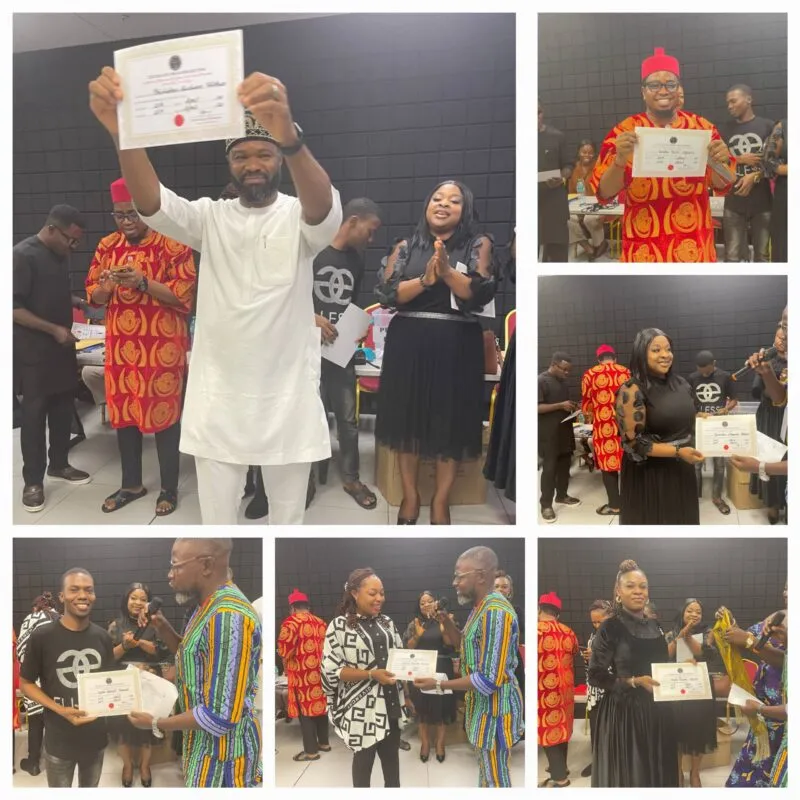
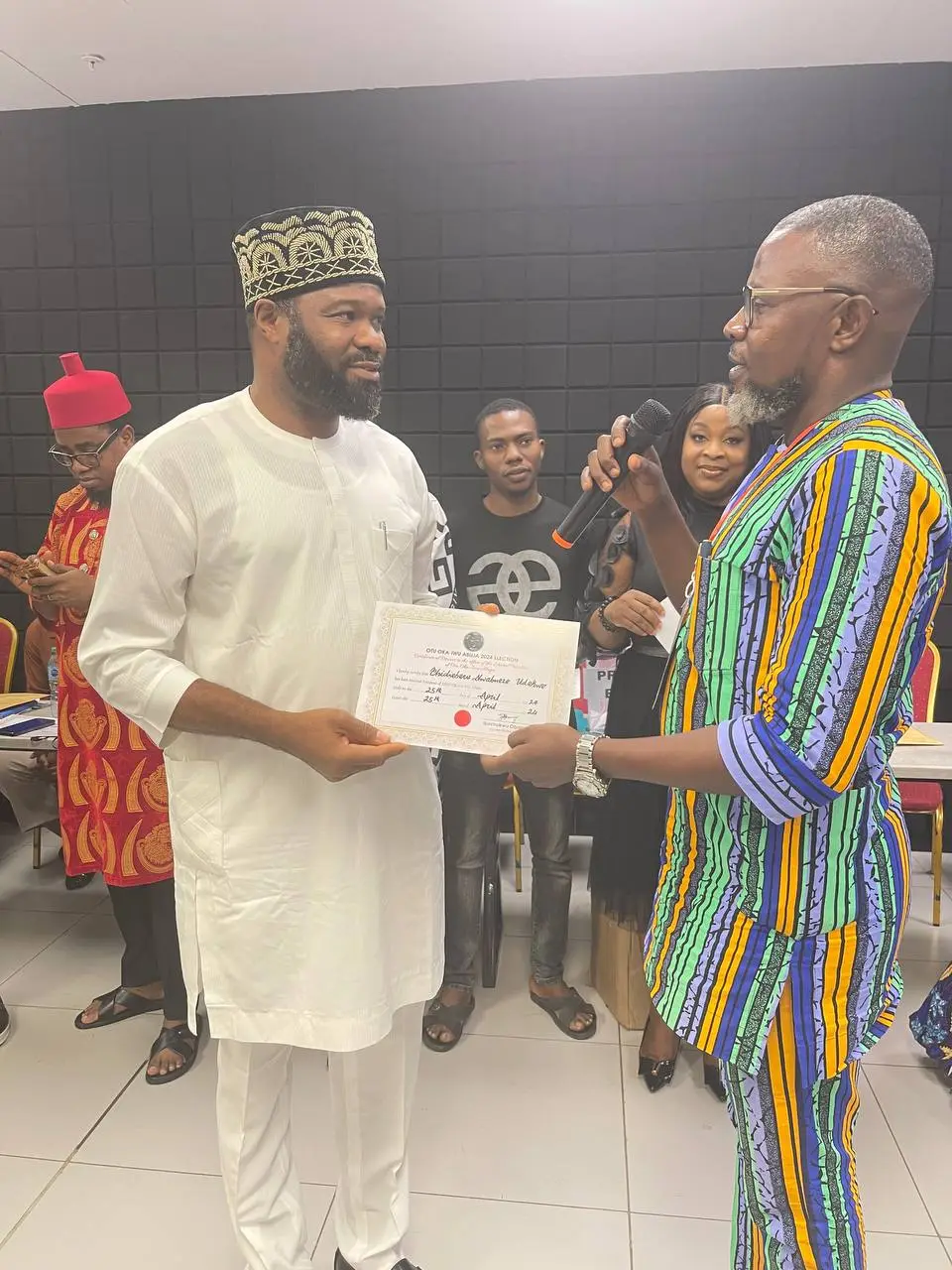
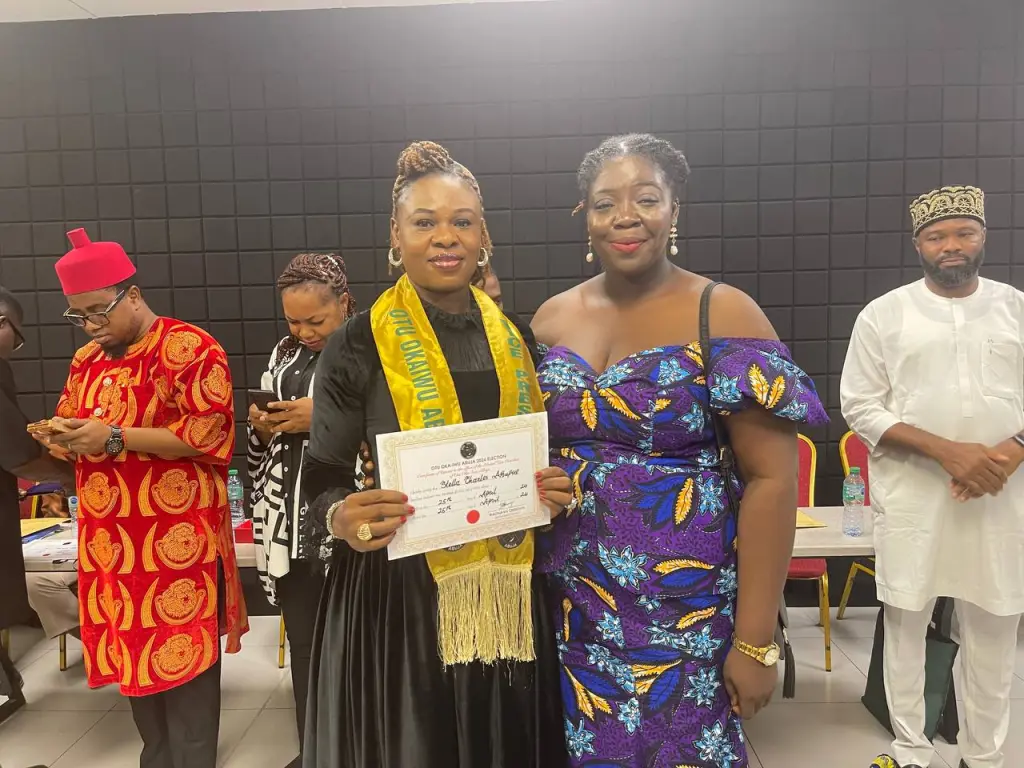
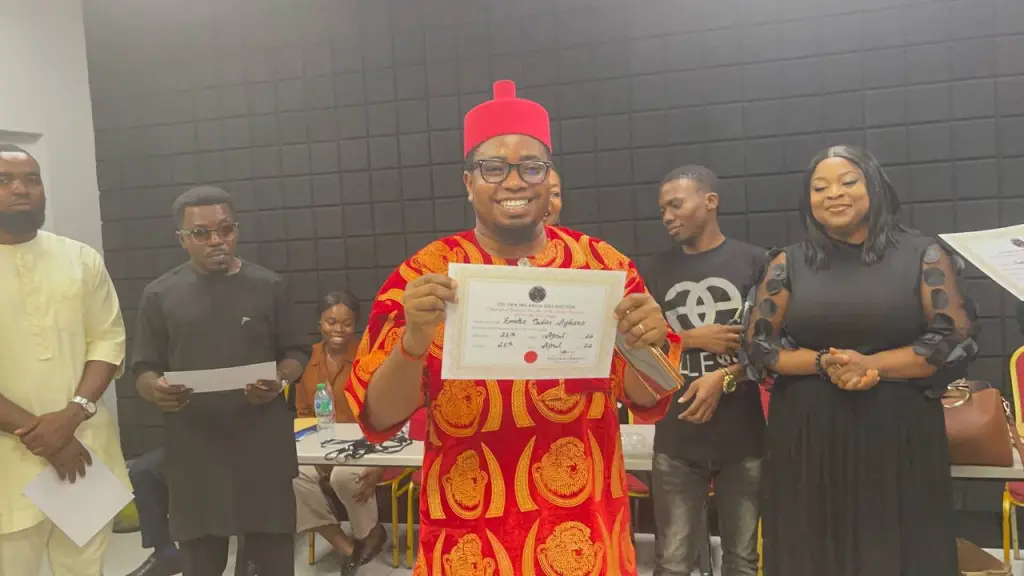
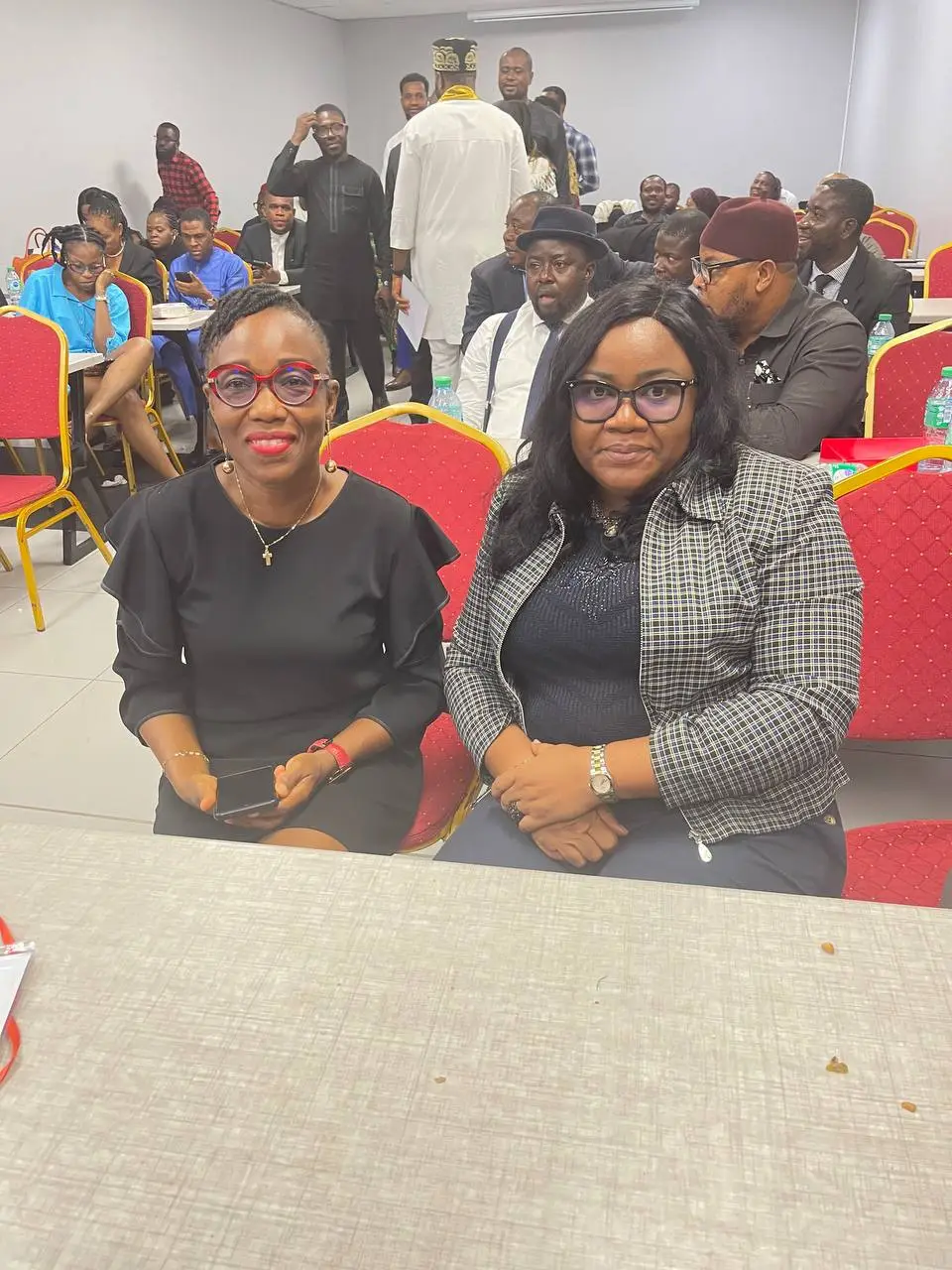
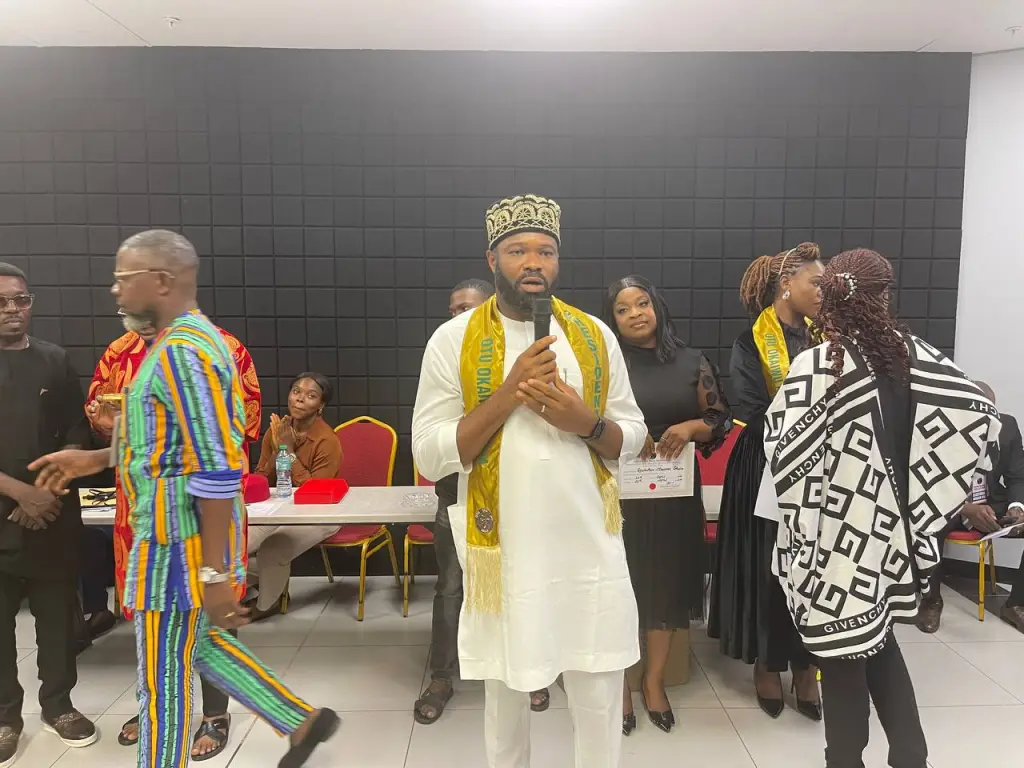
Photo Speak: Chidi Udekwe elected President of Otu Oka-Iwu Abuja

Abuja lawyer, Chidi Nwabueze Udekwe Esq has been elected President of the leading Igbo lawyers Association in Abuja, Otu Oka-Iwu Abuja.

Udekwe’s polling of 54 votes against his rival, Chief DAN Nwobodo’s 31 votes at the election which took place at Ground Floor Hall, NOVARE CENTRAL MALL (Shoprite building) Zone 5, Wuse, Abuja earned him the top job.

Chairman of the Otu Oka-Iwu Abuja electoral committee, Ikechukwu Obianyor Esq. at the end of the exercise declared Udekwe Esq elected as the Otu Oka-Iwu Abuja President for a tenure of 3 years.

After his election, Udekwe Esq made a commitment to take the Association to a greater height, urged members to support his administration and thanked the outgoing executive for their numerous achievements.

The other elected officers of Otu Oka-Iwu Abuja are as follows;

1. STELLA CHARLES AKUPUE- VICE PRESIDENT

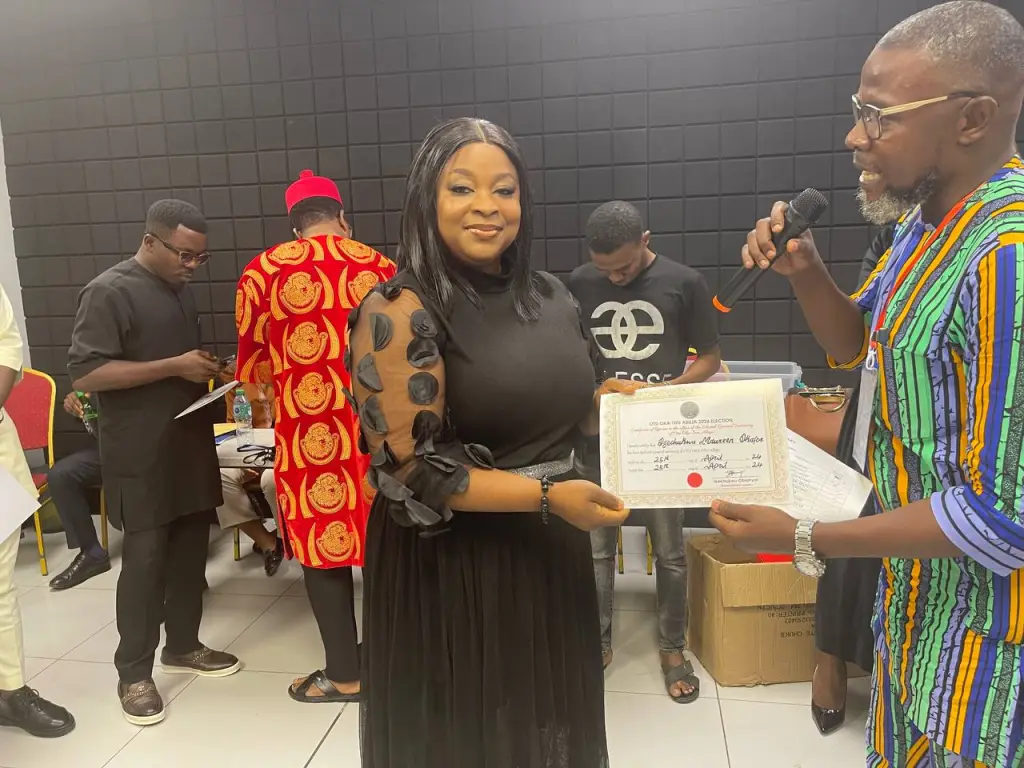
2. OGECHUKWU MAUREEN OKAFOR- GENERAL SECRETARY

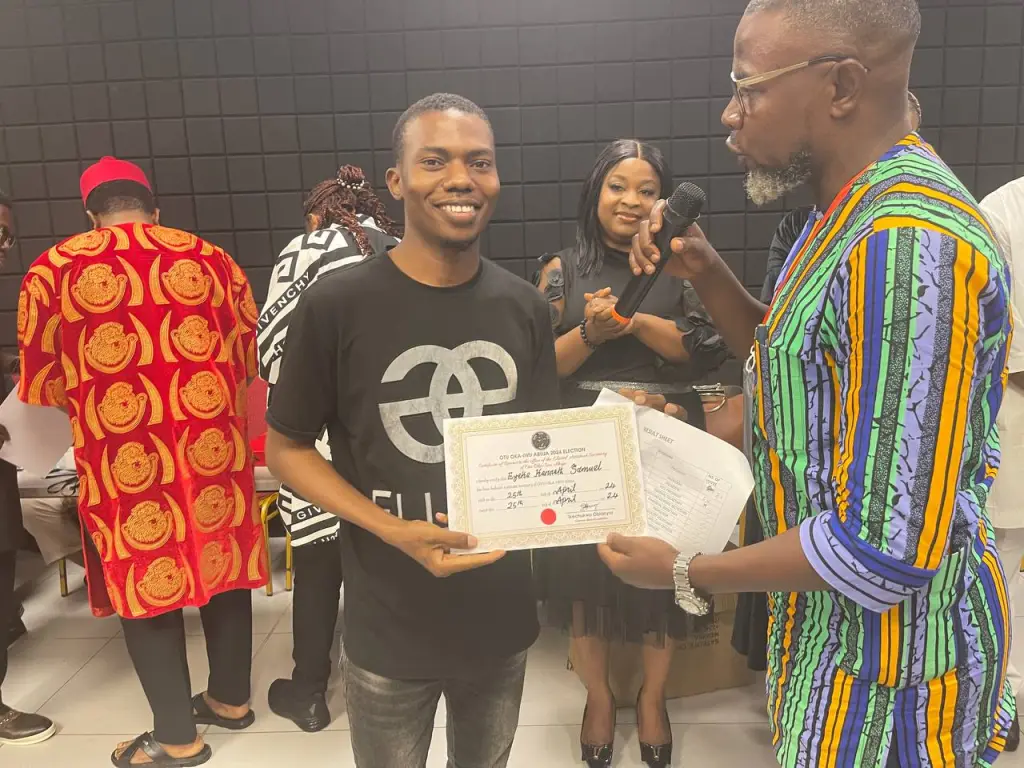
3. EYEKE KENNETH SAMUEL- ASSISTANT GENERAL SESECRETARY

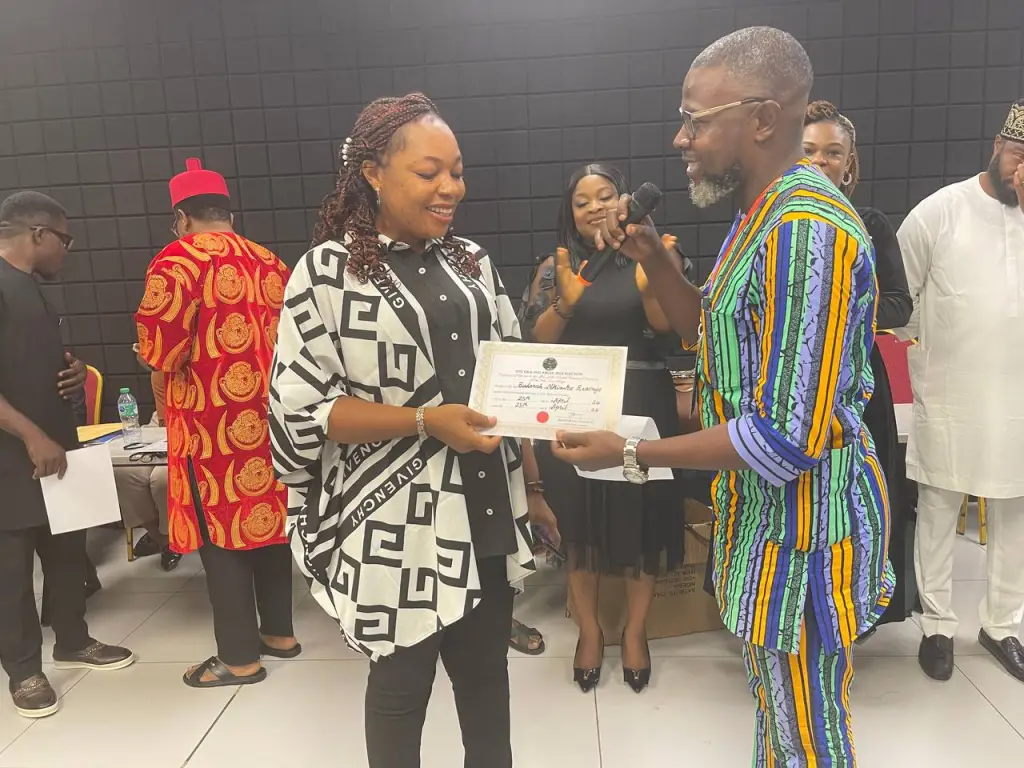
4. EUDORAH NKIRUKA EZEONYE-  FINANCIAL SECRETARY

5. EMEKA SILAS AGBARA – TREASURER

6. OCHILI MICHAEL OBINNA – PUBLICITY SECRETARY

7. OBI CHUKWUMA FAVOUR – SOCIAL WELFARE OF OFFICER

8. EMMANUEL ONYEDIKACHI NWALI – PROVOST

Below are photos of the event.

Electoral Committee Chairman, Ikechukwu Obianyor Esq. Presents Certificate of Return to New President, Chidi Nwabueze Udekwe Esq

Outgoing Otu Oka-Iwu Abuja Vice President, Adaeze Anah Esq and New Vice-President, Stella Charles Akupue Esq

The New Treasurer of Otu Oka-Iwu Abuja, Chief Silas Emeka Agbara.

The Electoral Committee Chairman Ikechukwu Obianyor Esq Presents Certificate of Return to Otu Oka-Iwu Abuja new Secretary, Ogechukwu Maureen Okafor Esq
The Electoral Committee Chairman Ikechukwu Obianyor Presents Certificate of Return to New Financial Secretary of Otu Oka-Iwu Abuja, Eudorah Nkeiruka Ezeonye Esq

Electoral Committee Chairman Ikechukwu Obianyor Esq Presents Certificate of Return to New Assistant Secretary, Eyeke Samuel Esq
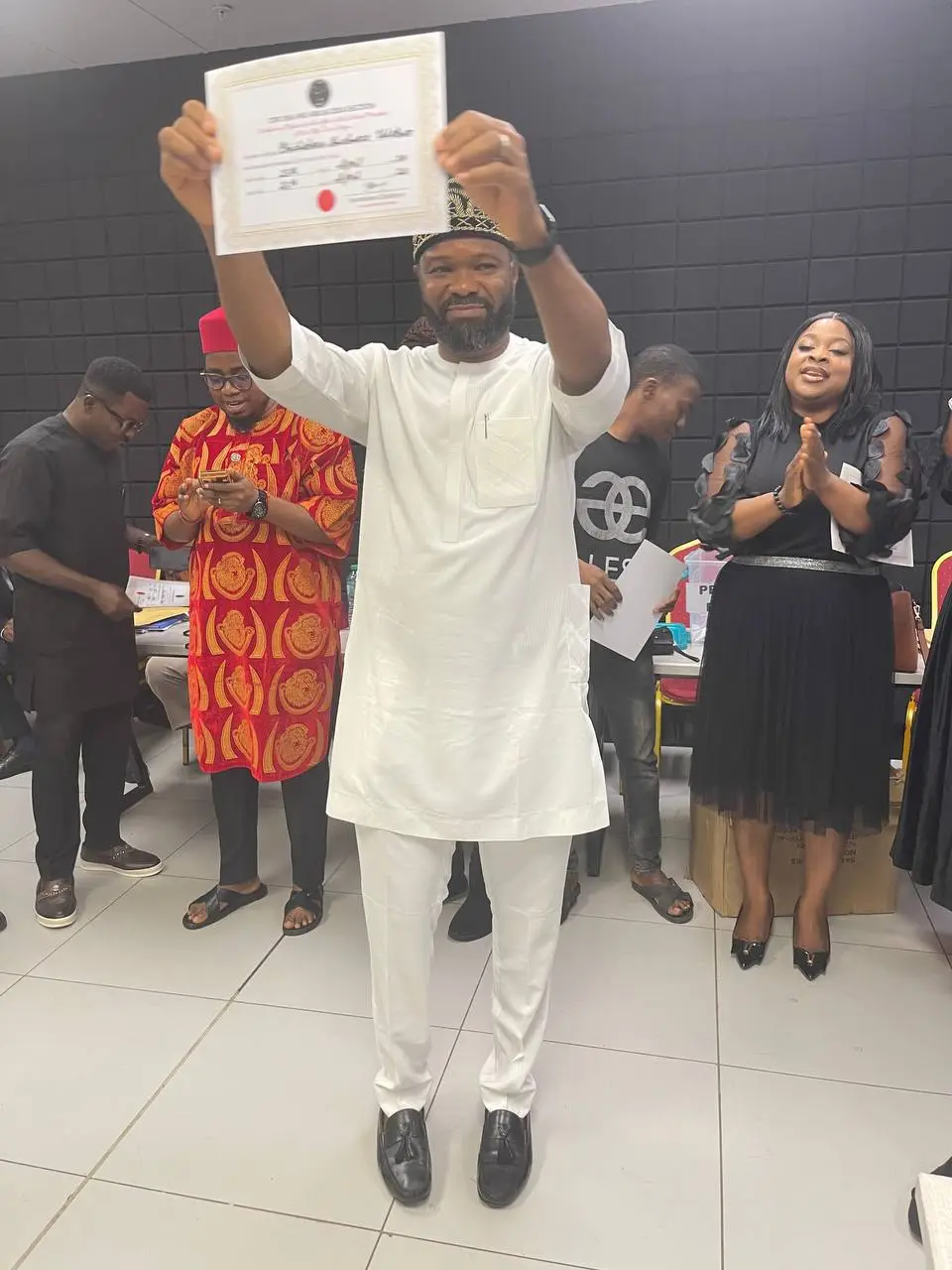
New President of Otu Oka-Iwu Abuja, Chidi Nwabueze Udekwe Esq displays his certificate of Return to members of Otu Oka-Iwu Abuja
Former Vice Chairman of NBA Abuja Branch, Ogechi Abu and Chairperson of FIDA Abuja, Chibuzo Maureen Nwosu

Udekwe addressing Members after his election

TIPS