Home Blog Page 583

A Judicial Mano-O-Mano in Kano

By Chidi Anselm Odinkalu

Muhammad Ali, the American boxing phenomenon whom the British Broadcasting Corporation (BBC) voted the Sports Personality of the 20th Century in 1999, often promoted pugilistic enterprise in verse. When then ruler of the country formerly known as Zaire (now the Democratic Republic of the Congo), Mobutu Sese Seko Kuku Ngbendu wa za Banga, invited him to a contest against then reigning champion, George Foreman, for the undisputed heavyweight boxing championship of the world in October 1974, Ali christened the contest as “Rumble in the Jungle”.

One year later, in October 1975, Filipino dictator, Ferdinand Marcos, thought to imitate his friend in Zaire by inviting Ali to fight his long-time rival, Joe Frazier, for a third time for bragging rights to the title of greatest of all time (GOAT). Never short of a keen lip for every occasion, Ali promised that it was going to be “a killa and a thrilla and a chilla, when I get that gorilla in Manila.” The fight went into the history books as “Thrilla in Manila.”

Over a five-day period in the last week, three different judges in two court systems in Nigeria – one state and one federal – have gone mano-o-mano in Kano in judicial pugilism deploying a fusillade of mutually contradictory ex-parte and interim orders, all and each purporting to comfort one side or the other in the contest over the destination and future of the Kano Emirate.

Like the legendary manager of Arsenal FC, Arsene Wenger, who always seemed not to see awful things that he was reluctant to pronounce upon, Yakubu Maikyau, the physically imposing but somnolent president of the Nigerian Bar Association (NBA), on this occasion got unusually exercised by the judicial blood-sport in Kano. In an uncharacteristically forthright statement, Mr. Maikyau, a Senior Advocate of Nigeria (SAN), denounced “the conducts (sic) of counsel and the courts in handling the proceedings, which culminated in the orders issued by the Federal High Court, the Kano State High Court, and again the Federal High Court”, describing them as “a circus”, which “have brought utter disgrace and shame to the profession.”

A statement from this president of the NBA on this kind of affair is so unusual that it is a spectacle on its own, there to be admired for the fact of its existence and not to be made the subject of any quibble. There are several things that this president of the NBA was reluctant to utter but whose acknowledgement is essential if the affliction that he has chosen on this occasion to recognize is to be lanced for good.

First, it must count as one of those judicial miracles that have become the staple of the Nigerian judiciary that two different judges of the Federal High Court managed to both defy the Constitution and overrule the Supreme Court over a local chieftaincy question. Section 251 of Nigeria’s 1999 Constitution makes it clear that the Federal High Court is a court of limited jurisdiction confined to issues over which the Federal Government has competence to make laws or to necessarily ancillary matters. A chieftaincy dispute, which is what the tussle over the Emirship of Kano is, is palpably beyond the scope of the Federal High Court under the constitution and under well-established jurisprudence of the Supreme Court.

36 years ago, following his 1986 deposition as the Emir of Muri by then Governor of Gongola State, Yohanna Madaki, a soldier, Alhaji Umar Abba Tukur sued to enforce his fundamental rights before the Federal High Court in Kano. The Supreme Court made clear that the Federal High Court is a court of limited jurisdiction and warned: “Courts in this country, without exception, have no power to prescribe jurisdiction for themselves. Neither do they have power to expand or reduce their area of jurisdiction.” Even more telling was this line from the judgment of Otutu Obaseki speaking in that case for a unanimous Supreme Court: “all the breaches of the fundamental rights alleged flow from the deposition of the appellant from the office of Emir of Muri by the Military Governor of the State. The office of Emir of Muri is a chieftaincy office and the deposition of the Emir a chieftaincy question which only a State High Court has jurisdiction to determine.”

Second, Abdullahi Liman, the judge of the Federal High Court, who issued the first order, recognized explicitly that there were “constitutional and jurisdictional issues apparent on the face of the application.” Rather than caution him to tarry, this recognition appears to have inspired Abdullahi Liman to undue haste in issuing a rather muscular end-run of the jurisdictional inquiry.

Third, the case before Abdullahi Liman concerned the Kano State Emirate Council (Repeal) Law of 2024, assented to by Governor Abba Kabir Yusuf on 23 May. After indicating his assent to the law, the Governor publicly asked what time it was, to which the response came that it was 5:10 pm. All court registries in Nigeria were already closed. A few hours later on the same day, however, Abdullahi Liman claimed to have issued an order directing parties to “maintain status quo ante the passage and assent to the bill.” The natural question that he alone must answer is: when was the case filed and in what registry?

Fourth, Simon Amobeda, another controversial judge of the same Federal High Court, proceeded to issue another order on the same subject matter despite confessing on the face of the order to being “mindful of the order made” five days earlier by Abdullahi Liman.

Fifth, the real scandal in this matter is what the Federal High Court has turned into. Under the watch of its current Chief Judge, John Tsoho, the Court has developed a reputation as a safe harbour for a coven of judicial renegades specialized in the business of issuing scandalous pay-as-you-go orders at the urging of predictable political clients. The line up of judges of the Federal High Court to whom these cases usually get assigned cannot exist or thrive except with the knowledge and complicity of the Chief Judge of the Court who assigns the cases to the judges and posts them to various stations.

Under the leadership of Chief Judge John Tsoho, this corrupt judicial coven has authored a self-serving power-grab, turning the Federal High Court from a forum of specialized and limited jurisdiction envisaged by the constitution and sanctified by the Supreme Court, into a court of unlimited jurisdiction of their own invention with non-existent supervisory competence over the state high courts, which the Constitution created as courts of unlimited and general jurisdiction. They countermand, overrule, and review state high courts at will on the basis of entirely fictional perversions of their own significance. To be fair, there are many judges of the Federal High Court who are honest, hard-working and plainly scandalized by this development. But the existence of this coven and the fact that this Chief Judge of the Federal High Court is complicit in its judicial brigandage can no longer be denied.

For the better part of the past four years, Chief Judge John Tsoho has been voluble in complaining that judges of his court are “overburdened with work.” It is difficult, therefore, to see beyond corruption and perversion in explaining how two judges of the same court can go rampaging beyond their permissible scope to invent jurisdiction that they know they don’t have.

The only hopeful thing in this sorry story is that it has taken this judicial mano-o-mano in Kano to rouse a set of actors who have for long chosen to be part of the problem in offices that require them to be part of the solution. The Nigerian Bar Association claims to promote the rule of law. It is, therefore, disappointing when its president creates false equivalence between the Federal High Court and a State High Court on a question of chieftaincy. There is none. As for the proposed encounter between the out-going Chief Justice of Nigeria and the pugilists next week, anyone holding their breath does so at their own risk. This Chief Justice embodies the problem.

A lawyer and a teacher, Odinkalu can be reached at [email protected]

Rescue of Traditional Rulers From The Grips Of Political Office Holders in Nigeria


By Akintayo Balogun Esq.
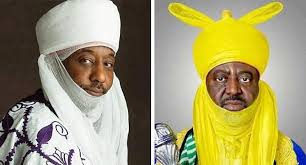
The uproar caused by the dethronement of the Emir of Kano, Sir Ado Bayero and the reinstatement of the Sanusi Lamido Sanusi back to the throne as the 16th Emir of Kano has caused a series of discussions as to the propriety of the traditional stools in Nigeria within the whims and caprices of political office holders, particularly the governors of the 36 States in Nigeria through the various Traditional and Chieftaincy Laws, Rules and Regulations, operating in the various states in Nigeria.

This discourse is not centered on the pending suits in court regarding the removal of the monarch or around the various interim orders that followed the reinstatement and dethronement of the monarchs, but the rightness or otherwise of the dethronement/reinstatement of traditional leaders by State Governments.
Before the 18th century, traditional rulers in the areas that eventually became Nigeria held absolute sway over their domain with the assistance of their chief councils.

These rulers, though without western education, were absolutely in charge. Their powers were not constitutional but cultural, derived from the ancestral and spiritual authorities of the kingdoms they ruled over. They collected taxes from their people, led their armies to war and defended their territories. They also administered their local dispute settlement structures and governed their domain. Upon the arrival of the colonialist, they introduced indirect rule in most of their colonies, operating through the traditional rulers. As the colonialist gained control over their colonies, the powers of the traditional rulers began to dwindle and even got worse after independence.

With the placing of the structure and management of the traditional institution under State Governors, particularly within this democratic dispensation, Governors in Nigeria have been seen to wield enormous powers within the 4 or 8 years they spend in office. These powers cut across who and who holds any traditional title within their domain, in some cases, even local government Chairmen and councilors command more authority than traditional rulers. When a new traditional ruler is to be appointed, the staff of office emanates from the office of the Governor of the State. There are Traditional and Chieftaincy Laws, Rules and Regulations, that are enacted by the State Houses of Assemblies of the various States in Nigeria, which enables the governors to wield decisive influence over these monarchs. More particularly as the governors are responsible for the remuneration of these monarchsmonarchs.

Traditional rulers are meant to be custodians of the norms, culture and traditions of the community under their realms. They are the closest form of government to the people. However, traditional rulers have been restricted to ceremonial functions, attending of parties, attestations, settling minor communal disputes with no powers to make enforceable laws within their domain
Ordinarily, traditional stools in Nigeria are meant to last a life time. A person once given the staff of office ought to remain in that position till the end of his life. Unfortunately, the intervention of governors has led to a situation where a monarch is not guaranteed his office for the rest of his life. His term in office is determined by his relationship with his State governor. It is clearly evident in Nigeria that virtually all the monarchs dethroned in Nigeria were as a result of their fall out with their Governors, Military Heads of State or Administrators, and were along political lines and nothing more. Dethroning and total disrespect for traditional rulers has been a practice of both colonial masters and post-independence political leaders. Some post-independence incidences are as follows;
In 1963, Sir Ahmadu Bello, the then premier of northern Nigeria deposed the then Emir of Kano, Muhammad Sanusi ll, the father of the recently reinstated Sanusi Lamido, and banished him to Bauchi.
In 1996, the Sultan, Dasuki was summoned to the office of the military administrator of Sokoto State, Yakubu Muazu, and he was told that he had been deposed as the Sultan. He was later flown to Yola and then driven to Jalingo where he was placed in exile.
On the 4th of January 1999, the military administrator of Edo state, Navy Captain Anthony Onyearugbulem suspended the then Oba of Benin as chairman of Edo state council of traditional rulers for alleged partisanship – endorsing an APP governorship candidate.
The deposing and banishing of the then Emir of Gwandu, Mustapha Jokolo in 1996 by the former governor of Kebbi State, Adámù Aliero, an action described by Justice Tunde Awotoye of the court of appeal, as contravening sections 6 and 7 of the chief appointment and deposition law of the state, because the governor neither made an inquiry into the allegation against the Emir nor consulted the Kebbi state’s council of chiefs before arriving at his decision to depose him.
Former Governor Rochas Okorocha of Imo State once threatened to arrest and banish the former chairman Imo state council of traditional rulers HRH Eze Cletus Ilomuanya if he continued to parade himself as a traditional ruler of Obinugwu community in Orlu LGA.
On 9th day of March, 2020, the Emir of Kano, Sanusi Lamido Sanusi was dethroned and banished to Nasarawa State by the former Governor of Kano State, Governor Abdullahi Ganduje for speaking truth to power.
Anambra State Governor dethroned three traditional rulers and withdrew their certificate of recognition because they were among the 12 ruler that visited Abuja to see then President Buhari without the State Government’s approval.
Sokoto State Governor Ahmed Aliyu has dethroned 15 District heads over alleged insubordination, land racketeering, aiding insecurity and conversion of public properties.
In 2023, the immediate past governor of Kogi State, Yahaya Bello, deposed the Ohimege Igu, the paramount ruler of Koton Karfe, Alhaji Abdulrazaq Isah Koto, along with two other first-class chiefs and were also banished to Niger State. He further suspended His Royal Highness, Boniface Musa, the ONU-IFE in Omala Local Government, indefinitely allegedly for being absent at a campaign rally of the governor.
The interference of the former governor of Oyo State, the late Governor Isiaka Ajimobi, when he crowned some high chiefs who were in the succession line of the Olubadanship thereby distorting the succession line to the Olubadan.
In September 2023, there was an incidence where former military head of state and two-term democratic President, Olusegun Obasanjo, scolded the monarchs present at an event for breaching state protocol when they did not stand to greet the state governor, Seyi Makinde.
A former governor of Rivers State, Nyesom Wike, called a traditional ruler ‘a small senseless boy’ to his face in 2020 at a meeting in the government house. The governor had asked the traditional rulers in attendance who had their staff of office to stand up, saying it is disrespectful for them not to carry it around. The monarch referred to as a senseless boy nodded in agreement with the assertion of the governor. However, in reaction, the governor verbally attacked him describing him as a young boy. He said: ‘I know him when I was in school, he was running around us, going on errands. Now he’s dressing like Usman Dan Fodio (founder of Sokoto caliphate). Then he begins to breach protocol. He thinks when he’s shaking his head like this, I’d be happy. That’s fake…that’s fake…’
These and many more are incidences where traditional rulers were deposed or suspended or experienced some very unpleasant situations and outright disrespect from the governors. These have reduced traditional rulers to mere errand boys of political office holders, whose tenure lasts just a few years. In less than 8 years, that political office holder will not be able to walk into the palace of the monarch at will. The trend is a bad one and the offices of these traditional leaders need to be more secured. Honour must be given to our traditional institution. The damage being done by these temporal politicians is alarming. Looking at the imbroglio in Kano State for example, without being a doomsday prophet, there might still be troubled days ahead if another political party comes into power in Kano State. Trouble started when the former Governor of Kano created 5 emirates out of the single Kano emirate and the following year, based on allegations of insubordination and lack of respect for authority, the governor deposed and banished the Emir of Kano, Sanusi Lamido Sanusi as well as appointed Ado Bayero as the Emir of Kano in his place. 4 years after, the new governor of Kano State, from a different political party, through the State House of Assembly, dissolved the 5 emirates and returned them into a single emirate. The governor then deposed Ado Bayero and reinstated Sanusi. The risk here is that if another political party comes into power with bais for the dethroned Emir, the deposed Emir might be returned to office and the circle continues. This ought not to be. The Constitution of Nigeria ought to have provisions that cater for the appointment, issuance of the staff of office, renumeration, management, deposition, discipline etc of traditional rulers in Nigeria and not leaving them at the mercy of politicians, particularly governors. An institution should be created under the Constitution that manages issues involving the appointment, suspension or dethronement of a monarch.

In conclusion, the office of the traditional monarchs in Nigeria should be accorded more respect than what is currently applicable. A traditional ruler should not be subjected to political rallies, political endorsement of any candidate, whims and caprices of governors or even the President. Where would the British prime minister say he derives from, the power to depose King Charles or any of his dukes or duchesses? It is inconceivable. Their royalties are held in high esteem. The same should apply to our traditional rulers. Nigeria requires a constitutional review that would rescue our traditional leaders from the whims and caprices of these temporal political office holders. In a visit in March 2022, to the Ovie of Uvwle Kingdom; His Majesty Dr. Emmanuel Sidesohe, former Vice President Osinbajo argued that traditional rulers were more in touch with the grassroots and ‘in view of this there is need for the National Assembly to give them constitutional roles.’ Monarchs have been making this demand for years, but have only received promises from the legislative arm. There is not a single mention or traditional rulers, Monarchs, Ezes, Obas, Emirs etc, in the entire 1999 Constitution as amended, yet these titles have been long been in existence before the advent of Constitutionalism in Nigeria.
We are hopeful that the National Assembly will rise to the occasion and restore the glorious days of our monarchs in Nigeria.

Akintayo Balogun Esq., LL.B (Hons), BL, LL.M, is a legal practitioner in private practice and based in Abuja, FCT. A prolific writer, public affairs analyst and commentator on national issues. [email protected].

Angry dad assaults female teacher for flogging daughter in Abuja school

A female teacher, Sekinat Adedeji was reportedly assaulted on Tuesday, May 28, 2024. by an angry father at the Aces Nursery, Primary and Secondary School in Abuja for allegedly beating his daughter, Karima Jimeta.

Narrating her ordeal to PUNCH Metro on Wednesday, Sekinat Adedeji, said she was holding her three-month-old baby when her pupil’s father, Muhammad Jimeta began to hit her.

Adedeji who said she teaches the female pupil, Karima Muhammad Jimeta, in Basic Three disclosed that: “It happened around 12:30 pm on May 29, 2024, when I used a rule on her leg when she and others were disturbing and were asked to kneel down.

“The pupil shockingly disrespected me by giving me a ‘wanka’, that was why I beat her on the leg with a small rule.”

Pronounced as “uwarka” in Hausa, literally meaning ‘Your Mother’, the word is an abusive expression used by stretching out one’s five fingers towards a person.

Adedeji continued, “The father slapped me four times close to 4 pm because our school closes at 3 pm. His daughter reported what happened at 12.30 pm to him at the close of school when he came to pick her up.

“The child is not serious with her studies and insults teachers who come to the class”

A parent who witnessed the incident, Magdalene Ukuedojor, alleged that the female pupil had a habit of insulting everyone, stressing that the father had no justification to lay hands on a nursing mother and teacher of his child.

“The teacher has a three-month-old baby. She carries her baby in a carrier. This man beat her up while she was carrying this baby in front of little children.

“Teachers were even begging, they knelt begging but he still charged at her. She had to run and leave the class. It was when I came to pick up my son that I saw her outside, her face already swollen.

“And other teachers, because they don’t want to talk and lose their jobs, everybody was angry that this girl was very insulting. She does this all the time. Parents are angry. He should have reported it to the school authorities not to beat the teacher up.”

When PUNCH Metro contacted the father, Jimeta, he claimed the teacher had been assaulting his child for weeks.

“This woman has been beating that child for such a long time. The last time she beat her up, I talked to the school management and they calmed me down. But she was shouting at me and I didn’t talk to her.

“After two days, she beat the child and sent her to come home and tell us that she’d beaten her and dared us to do what we wanted to do.

“If you see the marks and the blood on her legs, she made me crazy.”

The school owner, Aminu Kani, did not respond to inquiries from our correspondent when PUNCH Metro contacted him.

Around Italy with Valentine Alli: Motor show at the Brescia Castle and more

By Valentine Alli

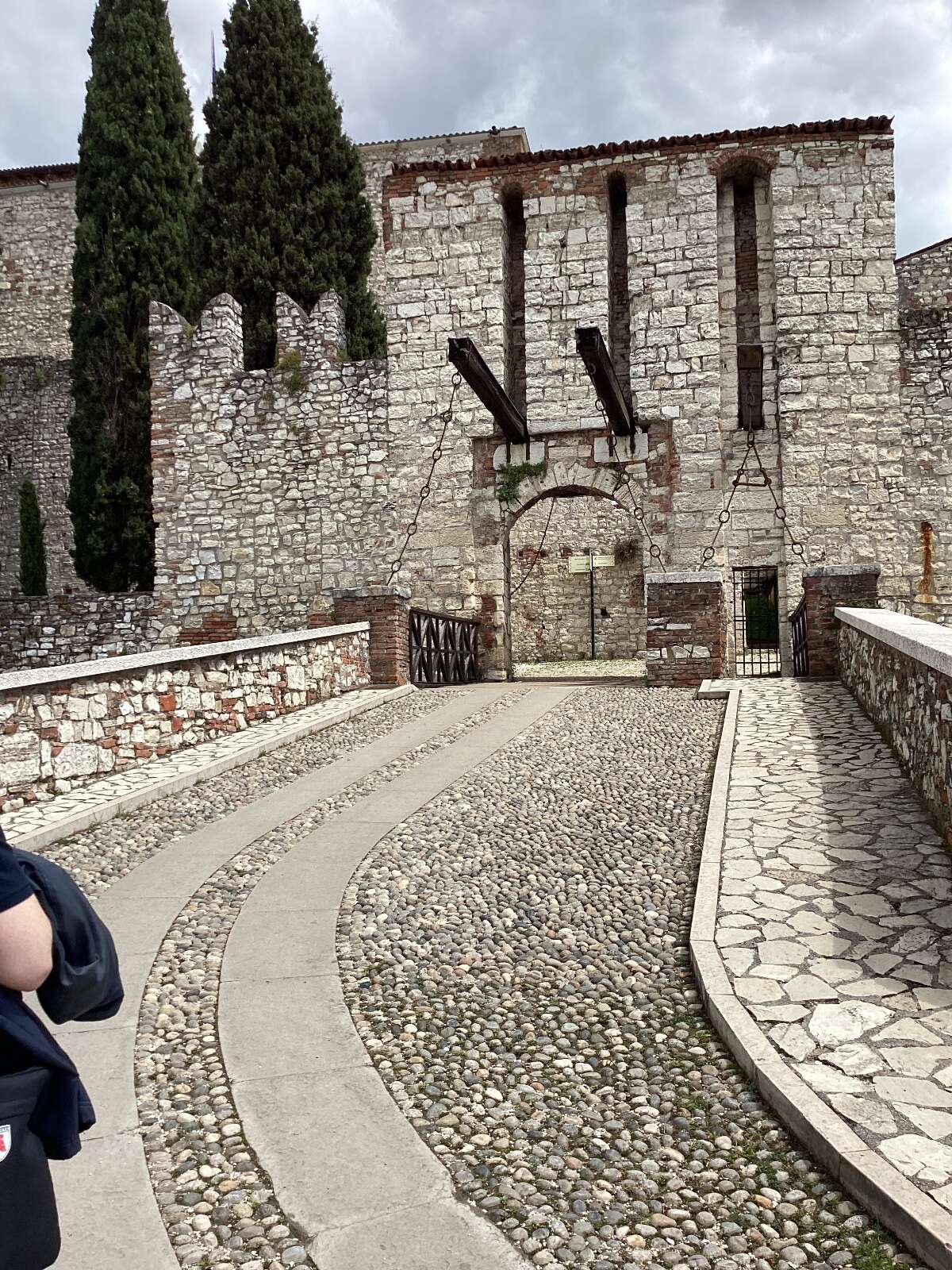
Built between the 13th and the 16th century, the Brescia Castle also known as Falcone d’Italia (Falcon of Italy), it is one amongst the largest castles in Italy.

Located on top of the Cidneo Hill on the northeast of Brescia, the Castle is a stage to many key events in the history of Brescia, including its famous Dieci giornate (Ten days) —a revolt which broke out in the city which lasted from 23 March to 1 April 1849.

An entrance into Castello the Brescia Photo by Valentine All

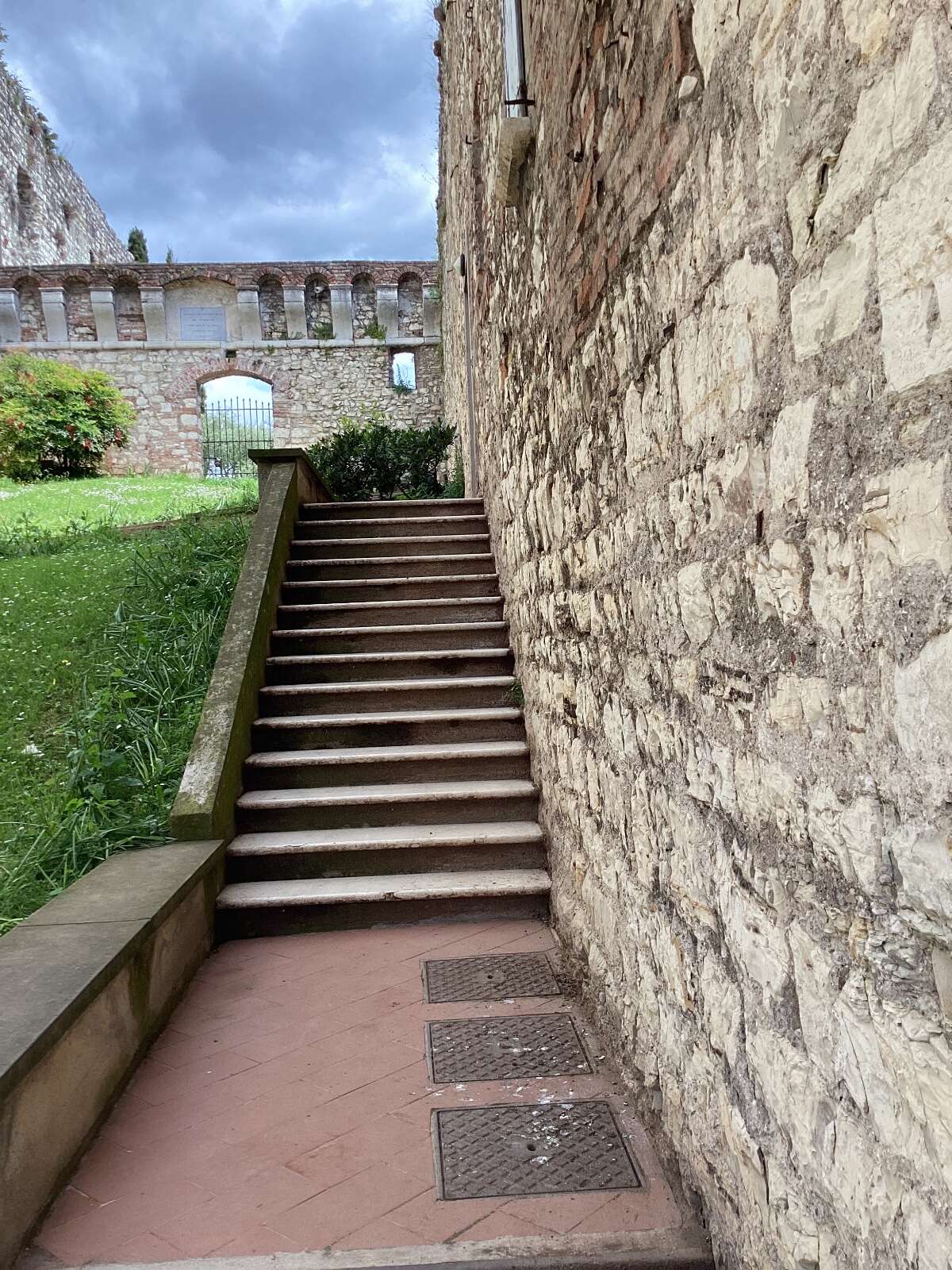
It is one of the most fascinating fortified complexes in Europe, still bearing the traces of the various vestiges of the past.

Part of the Castello the Brescia Photo by Valentine All
A motor show inside the castle. Photo by Valentine All

Brescia, called Brixia in ancient times was founded over 3,200 years ago. It has been an important regional centre since pre-Roman times. Its old town contains the best-preserved Roman public buildings in northern Italy and numerous monuments.

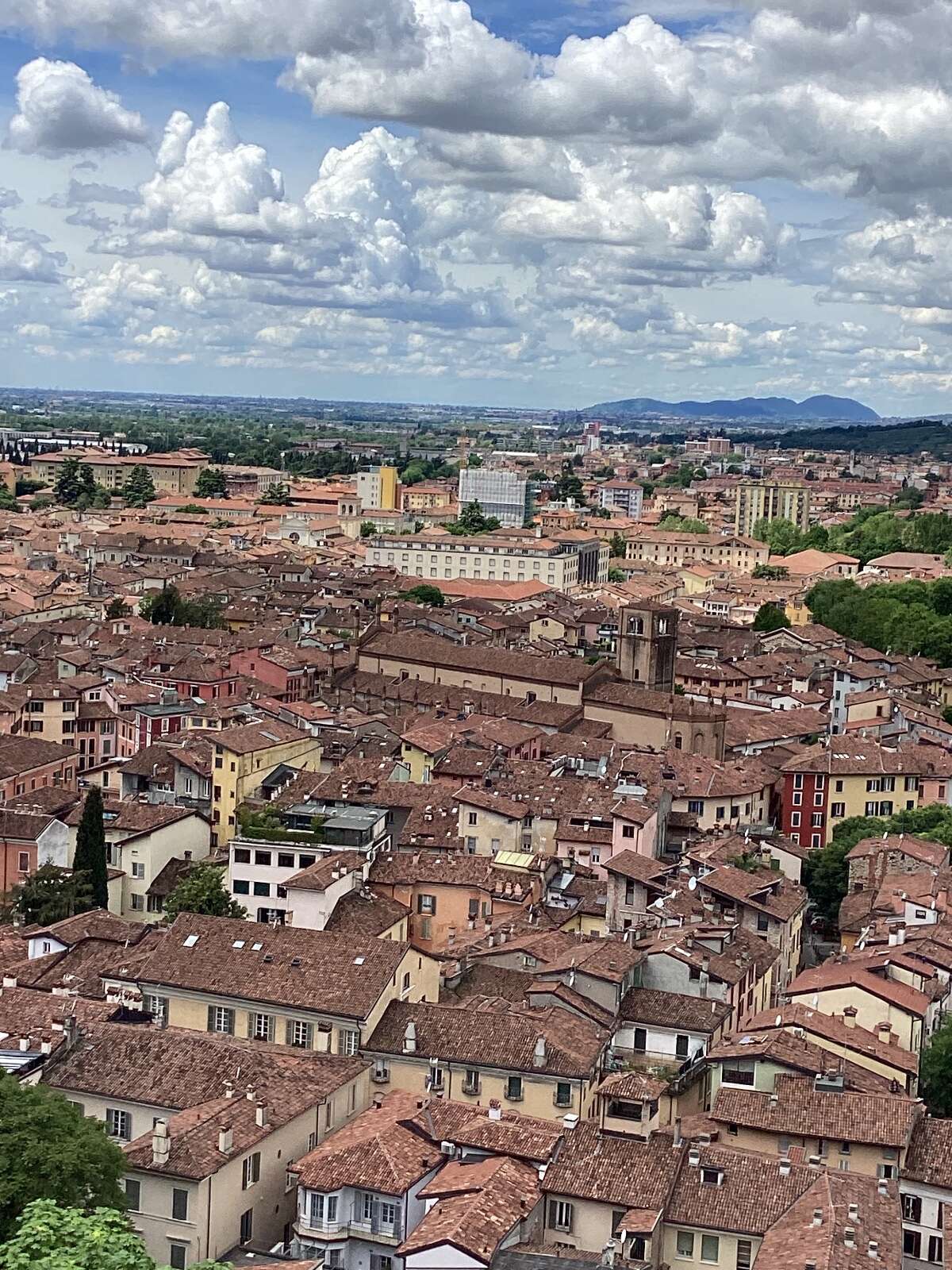
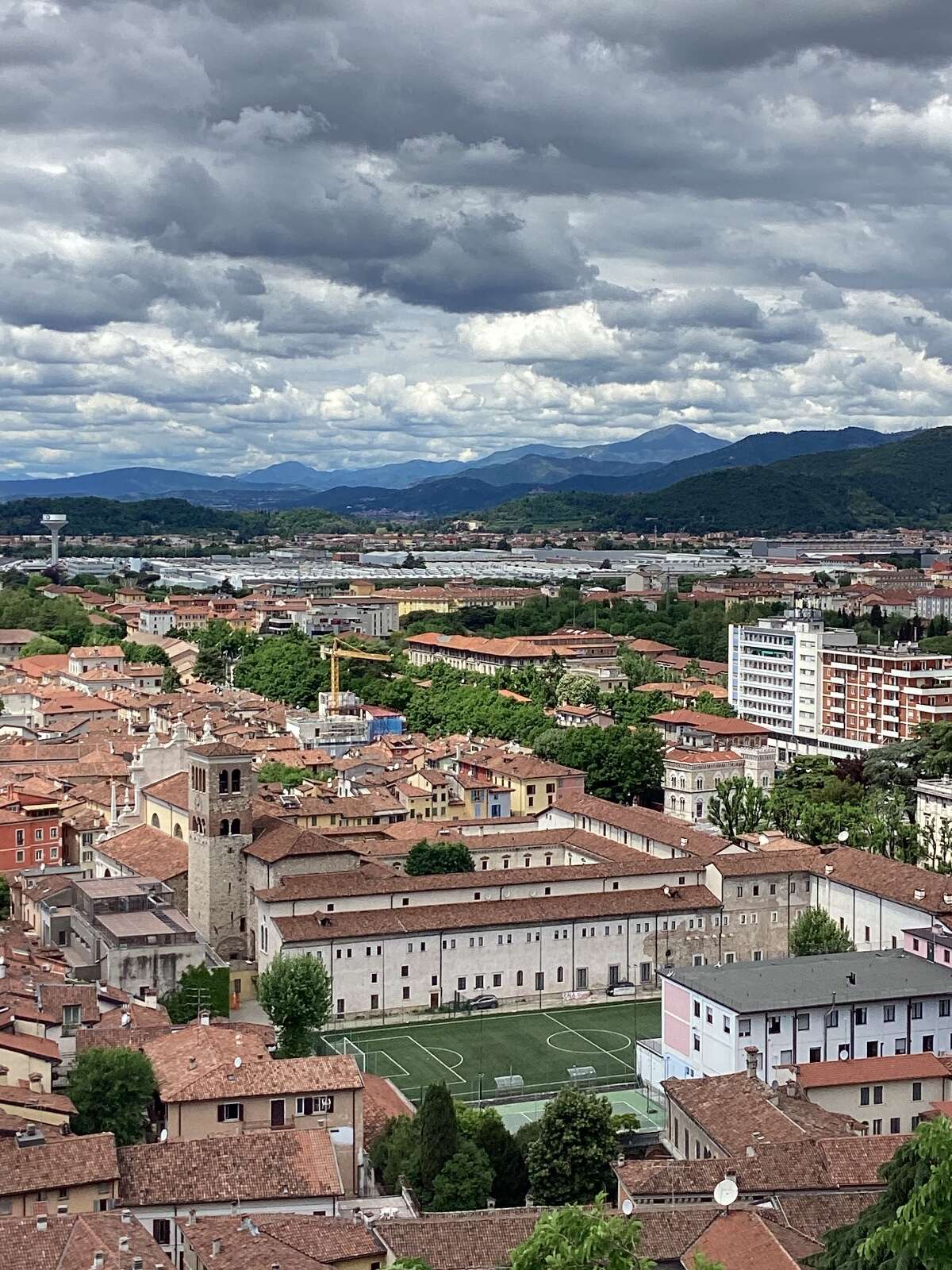
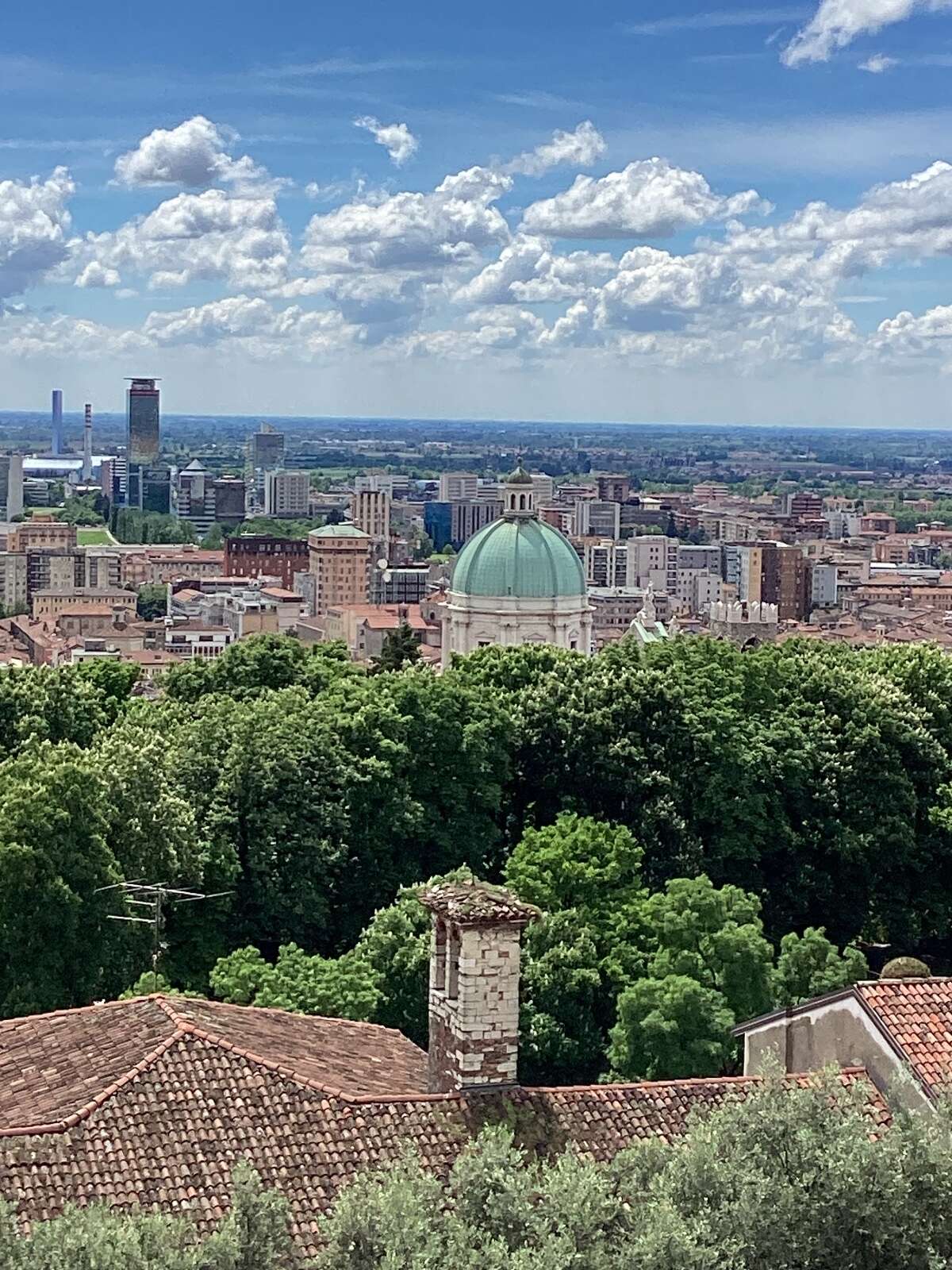
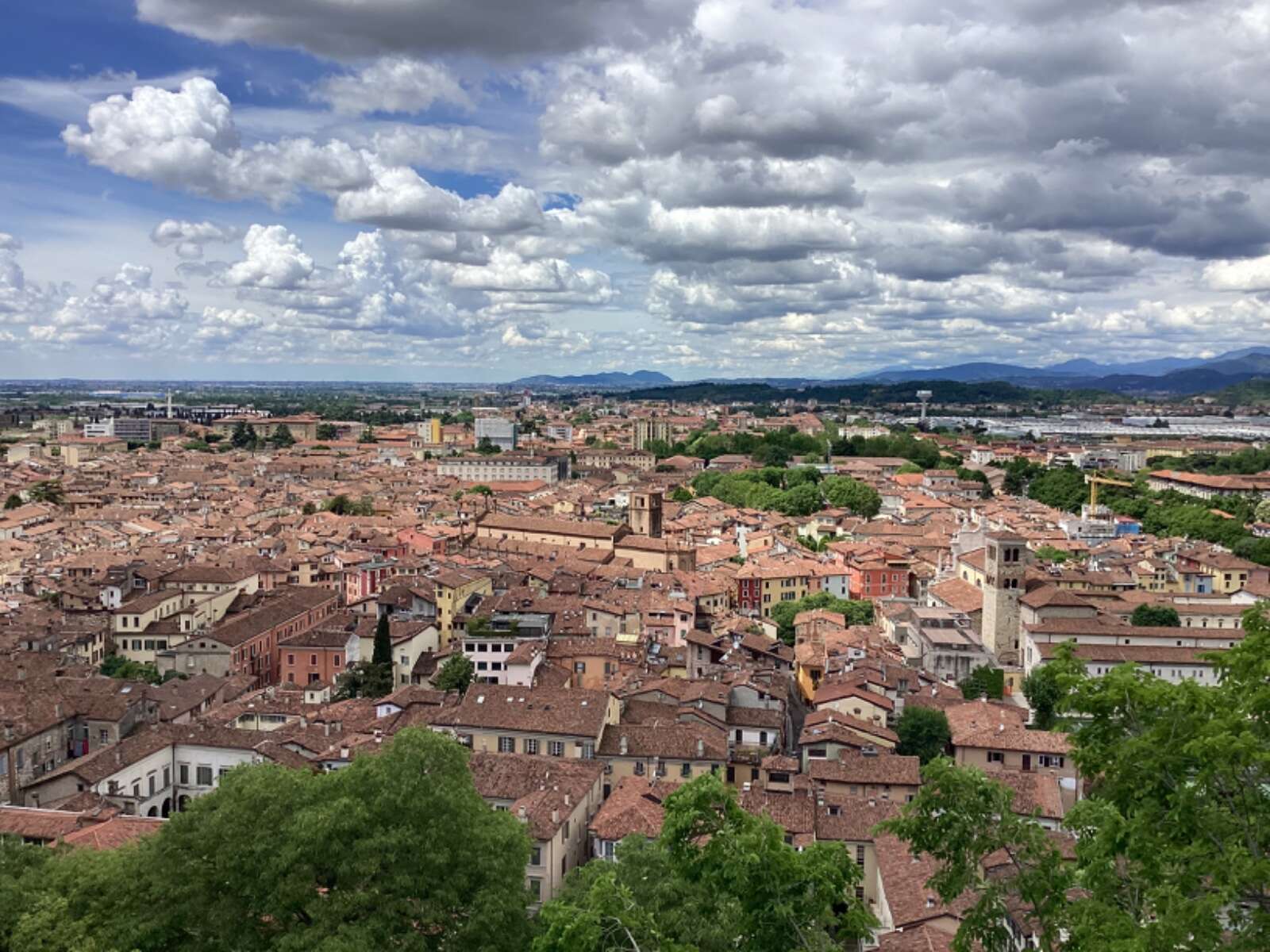
An aerial view of the city from the top of the castle Photo by Valentine All

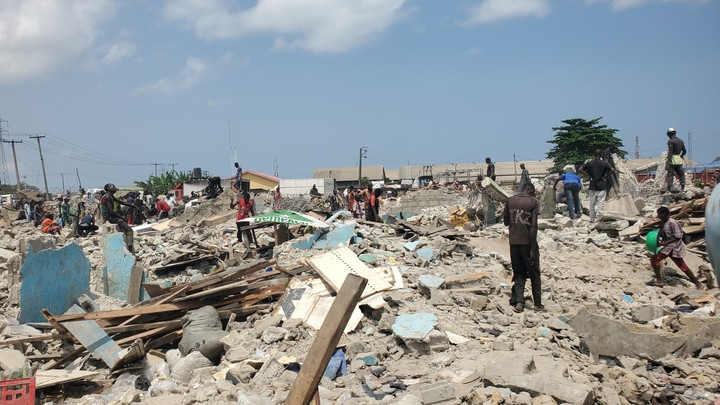
Woman who lost N50m in Lagos market demolition dies of heart failure

A 68-year-old woman, identified as Alhaja Iyabo, said to have lost over N50 million cash in the ongoing demolition of shanties in the Alaba Rago market area of Ojo by the Lagos State Government, has died.

Alhaja Iyabo, a dealer in rice and beans, reportedly developed a heart problem after discovering that her weekend earnings, kept in a safe in her shop, had vanished during the Sunday morning demolition.

The state’s task force on May 15 issued a removal notice to squatters and occupants of illegal structures in Alaba Rago, directing them to vacate immediately.

Market leaders, speaking to our correspondents, estimated that the losses incurred by traders could reach N50 billion.

They said bags of rice, beans and livestock were among the items lost during the demolition.

Many traders, including Alhaja Iyabo, had stored their weekend sales in safes within the market, planning to deposit the money in the bank on Monday.

Mallam Ibrahim Hamad Namari, head of the cow dealers in Alaba Rago market, said they received no prior notice of the demolition scheduled for Sunday morning.

CSP Shola Jejeloye, who led the state taskforce, said the removal notice followed an earlier one issued on May 19, 2022.

Mallam Namari said the state task force had only given a removal notice to a section of the market without specifying a start date for the demolition.

“After Saturday’s sale, we kept our money in safes in our shops, intending to take it to the bank on Monday. We woke up on Sunday morning to hear about the demolition.

“By the time we reached the market, everything was gone. It was the shock of losing her money that led to Alhaja Iyabo’s death,” Namari said.

Nushubau Ahmad, secretary of the yam dealers, estimated the total losses to be as high as N50 billion.

Daily Trust

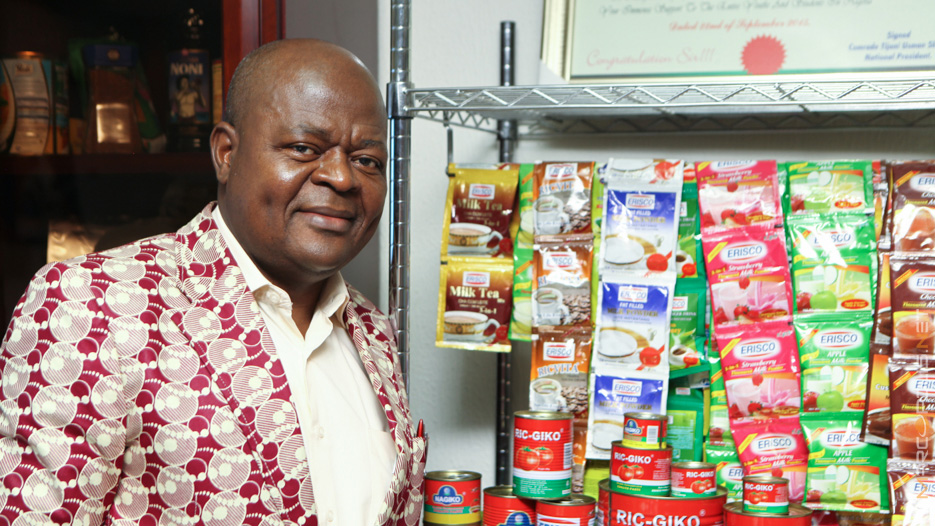
#Chioma Okoli: Boycott Erisco products now! 300 women groups urge Nigerian women

Following the incessant harassments and eventual detention of Chioma Okoli in prison custody over her review of Erisco tomatoes, a coalition of of over 300 women organisations under the aegis of Womanifesto has called on all Nigerian women to promptly boycott all Erisco Foods Limited products.

The demand was in protest to the continuous incarceration of Tomato Paste reviewer, Chioma Okoli following a complaint by the CEO of Erisco Foods, Eric Omeofia, in 2023.

Omeofia had alleged that a negative product review by a customer, Chioma Okoli, negatively impacted his business when she claimed that the Nagiko Tomota Mix she bought had too much sugar.

Okoli was eventually arrested by the police in September 2023 with her lawyer, Inibehe Effiong, raising the alarm that the fundamental rights of his client was being breached by the police and Omeofia.

Okoli is facing charges bordering on conspiracy and cyberstalking leveled against her.

On being arraigned before Justice Peter Lifu of a Federal High Court in Abuja, Okoli pleaded not guilty but was remanded in Suleja Correctional Centre till today, Friday May 31 2024 for ruling on her bail application.

While human rights lawyer, Inibehe Effiong, along with S. M. Oyeghe appeared for her, Abdulrashid Isyaku-Sidi appeared for the Inspector-General of Police.

Effiong told the court that his client suffered miscarriage in the course of the case and eventually lost her baby.

Womanifesto in a statement signed by its co-convener and Executive Director of Women Advocates and Research Documentation Centre (WARDC), Dr. Abiola Akiyode-Afolabi alongside other signatories on behalf of the over 300 women organizations also called on the government to come to the aid of Chioma as its silence is deafening and “loudly telling us that we the consumers cannot voice our opinions about goods we purchase with our hard earned money.’

Other signatories include Dr. Oby Ezekwesili, Women Aid Collective (WACOL), ActionAid Nigeria, Baobab for Women’s Human Rights, Christian Women in Nigerian Politics, Christian Association of Nigeria, Women’s Wing (WOWICAN), 100 Women Lobby Group (100WLG), Federation of Muslim Women Association in Nigeria (FOMWAN), Nigerian Association of Women Journalists (NAWOJ), National Centre for Women Development (NCWD), National Council of Women Societies (NCWS), Women In Politics Forum (WiPF), Media & Teens Network, Nigerian Women Trust Fund (NTWF) and Nasrul – Lahi-L- Faith Society (NASFAT) and others.

The statement titled, “Womanifesto Demands Release of Chioma Okoli”, reads: “We call on all Nigerian women to join us to #BoycottErisco products with immediate effect, for the following reasons:

“The continued harassment & detention of Chioma Okoli. The insufferable stress and trauma that has been inflicted on Chioma Okoli since September 2023 to date, which has also led to the loss of her pregnancy.

“Loss of earnings and livelihood due to her inability to work and provide for her family as a direct consequence of the ongoing persecution and psychological molestation.

“The apparent risk and threat to her life and flagrant abuse of her human rights.

“For being subjected to constant litigation for exercising her freedom of speech and expression, including freedom to hold opinions, and to receive and impart information without interference as granted to her under section 39 of the 1999 Nigerian constitution.

“We are concerned about her ability to get justice in a country with a reputation for compromised justice.

“We salute Chioma’s continued courage, bravery and tenacity in the face of intimidation and threats. We will continue to support her quest for justice.

“It is worthy to note that in other countries where the health and nutritional well-being of the citizens are paramount, relevant government agencies would be at the forefront of the investigations into all Erisco products and the corresponding labels, instead of leaving this landmark issue in the hands of those who prioritise profit to the lives and general well-being of 200 million Nigerians.

“We call on the government to come to the aid of Chioma as your silence is deafening; loudly telling us that we the consumers cannot voice our opinions about goods we purchase with our hard earned money. Is it silence or suffer? Like it or be locked up? Purchase tomato paste, next stop prison. “

#ReleaseChiomanow!”

‘Leave or die’ — ISWAP to Borno communities

The Islamic State – West Africa Province (ISWAP) terrorists have given residents of Kukawa LGA notice to quit their communities or face death from the terror group.

This is coming barely four days after killing fifteen fishermen in the Tumbun Rogo community.

A resident who fled his community to Maiduguri three hours after receiving the threat, revealed this to Channels Television.

While relieving his experience, the resident who begged anonymity, explained that the terrorists had gathered residents of various communities in the LGA in the early hours of Thursday, and told them to vacate their homes before Saturday, or else they would be killed.

According to him, immediately after they received the threat from the terrorists, communities started vacating their communities, some to Kross Kauwa while others left for Monguno.

Kukawa LGA is a local government at Lake Chad that is popular for fishing, farming and other agricultural value chain activities. it is surrounded by Lake Chad and has the presence of troops of the Nigerian Army and the Navy.

Although displaced by the insurgents during the insurgency, some communities like Kross Kauwa, Baga, Doron-Baga, Kukawa community, Tumbun Rogo were resettled back by the Professor Babagana Zulum administration.

Despite the restoration of relative peace and stability to the area, Boko Haram/ISWAP terrorists have continued to attack the communities, due to the socioeconomic value of the area to the terrorists, who exploit the fishing and farming activities of the place for their survival and financial support.

Vanguard

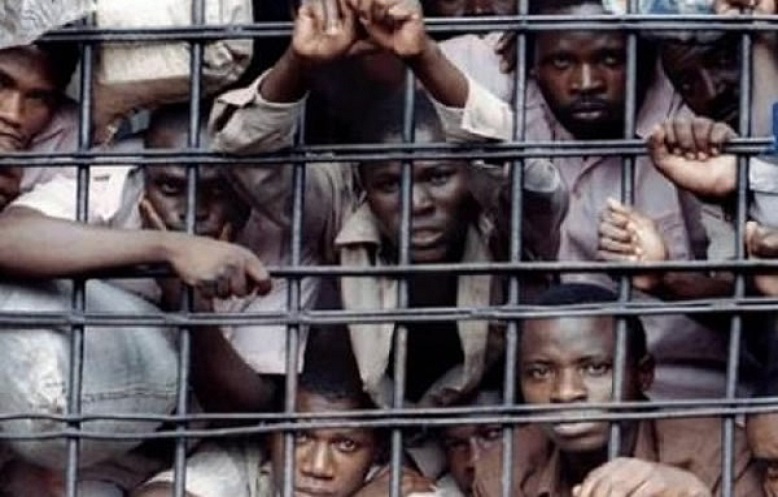
Years after a name-change, we have had more jailbreaks —Akpabio

By Punch Editorial Board

A few years after a name-change from the Nigerian Prisons Service to the Nigerian Correctional Service, it is debatable whether the crucial mandates of the NCoS to seclude and reform criminals before returning them to society are being realised. Therefore, apart from the name change, the Federal Government should take pivotal steps to reform the NCoS.

Senate President, Godswill Akpabio drew the attention of the lawmakers to the “deceitful” change of name at plenary on Tuesday during the consideration to change the name of another public agency.

Akpabio said, “Since the adoption of that name, we have had more jailbreaks.” Media reports put jailbreaks at 11 after the renaming. He argued that “laws are meant to punish and to correct. If by the time you are convicted and you are sent to prison, you are even meant to learn a skill and ethical reorientation and all that. It is not only when we specifically call it a correctional centre and yet we are not correcting anything.”

His observation is the harsh reality of the prison system. The name-change of 2019 was not deep; it was only cosmetic.

Before the Muhammadu Buhari administration applied the makeup, the facilities were congested and lacked adequate amenities. They still have not improved. First-time offenders, awaiting trial inmates, and hardened criminals were cramped into overcrowded cells.

Without ample skill engagement, education, and nutrition, they were groomed to become sophisticated criminals waiting for the opportunities to form vicious gangs once they complete their sentences or escape during jailbreaks.

A recent report reflected this. A suspect confessed that he formed a kidnapping gang with fellow inmates he met while he was in prison. The suspect, who was rearrested in March by the Rivers State Police Command, was first arrested for killing his uncle over a disagreement on a plot of land in 2012. He was remanded in prison for 11 years. Upon his release, he reconnected with three criminals and formed a kidnap-for-ransom gang in Port Harcourt.

Most of the correctional centres were built in colonial times. So, the current number of inmates in the cells supersede their capacity. The walls of the centre in Suleja, Niger State, collapsed in April during heavy rainfall. About 104 inmates exploited this to escape. The prison was built in 1914 to house 250 inmates but had over 499 inmates.

The government’s assurances of new and well-equipped prisons are yet to get off the ground, except in the North-West.

This overcrowding is compounded by the ATIs there. There are 80,507 inmates in the 244 custodial centres across the country. The convicted inmates are 25,033 and ATIs are 55,474 or a 31/69 per cent ratio. The Enough is Enough charity says that apart from the strain on the weak facilities, inmates are prone to disease, exposed to environmental hazards, and are fed at N750 per day, despite the food inflation of 40.01 per cent in the country.

The UN states that imprisonment is meant to deprive the convicted criminal of his liberty, to reform and achieve social rehabilitation. It therefore advised that imprisonment should not include the ‘risk of physical or emotional abuse by staff or by other prisoners’ or ‘risk of serious illness or even death because of the physical condition or lack of proper care.’

Elsewhere, prison reforms are dynamic. In Germany, the objective of the prison system is to correct, rather than punish. Most of the prisoners are mandated to engage in full-time work in 12 of the 16 German states.

Nigeria’s policing and legal system need to be evaluated and rejigged to disrupt the high rate of arbitrary arrests and delayed legal processes. Issues of delayed trial, prosecution of cases, and complex bail system should be rectified to achieve a fair society.

PUNCH Editorial

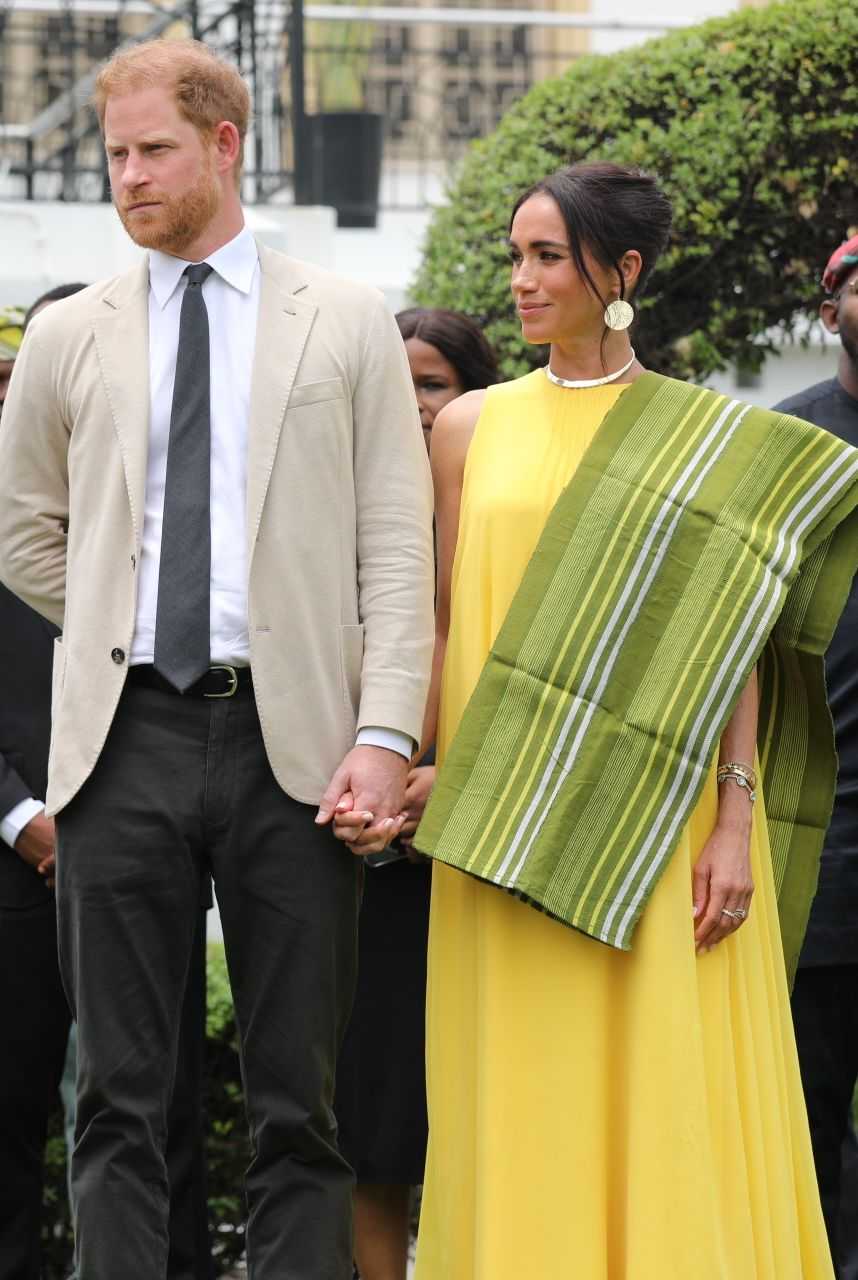
Despite misleading reports after successful Nigeria visit, Meghan and Harry vow to do more overseas tours

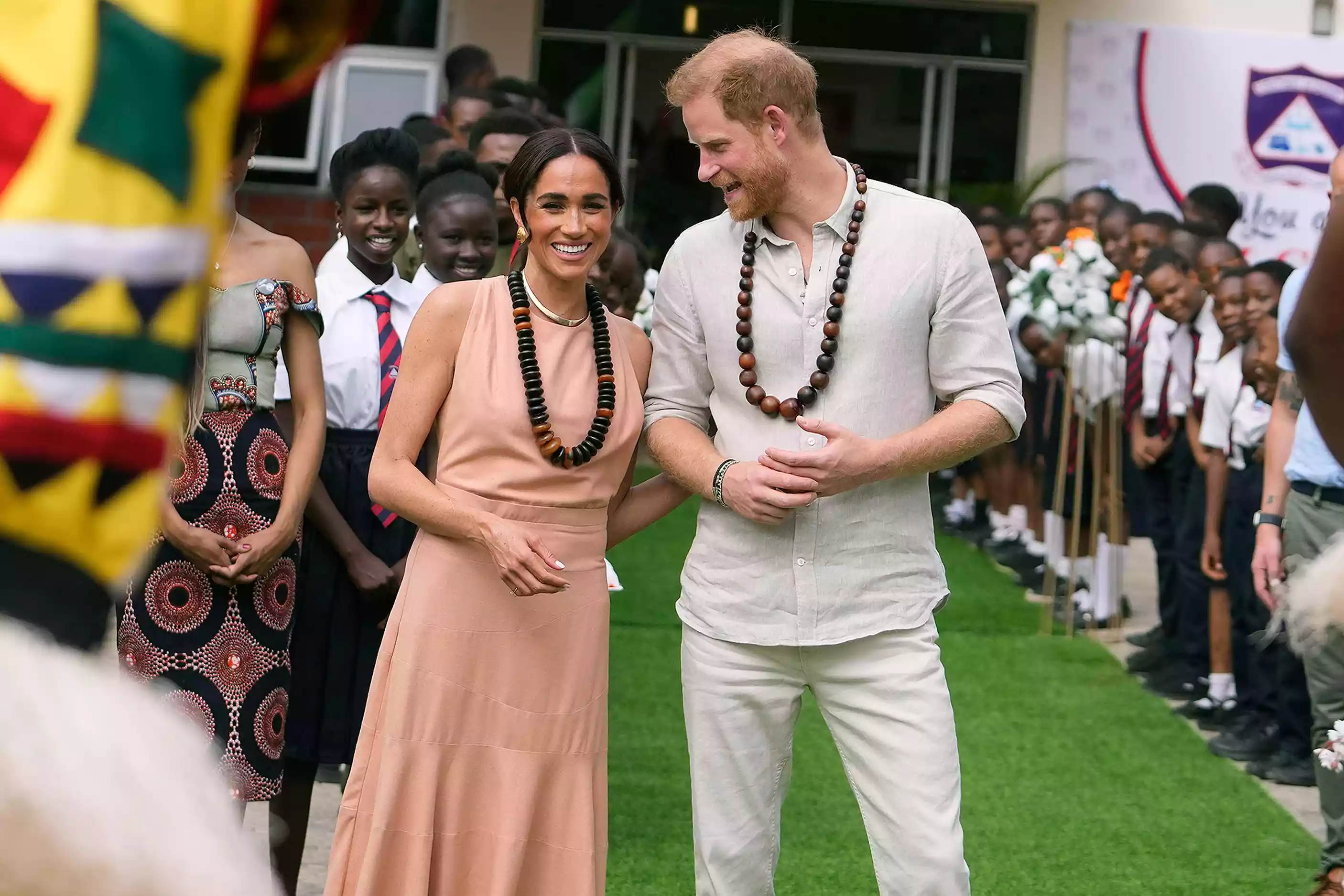
Ignoring the misleading reports claiming that Nigeria’s first lady First Lady Oluremi Tinubu castigated the Duchess of Sussex for dressing indecently during her trip to Nigeria, a claim which the first lady’s office told AFP Fact Check was untrue, and the unfortunate media reports that followed, the Duke and Duchess of Sussex have vowed to carry out more overseas tours following a hugely successful three days in Nigeria.

ANADOLU//GETTY IMAGES

The three days which witnessed excited schoolchildren, speeches about mental health, a formal welcome ceremony and an outfit change.; musicians and dancers showcasing local culture, the military putting on a show and the guests of honour letting slip a few sweet anecdotes about their children allegedly generated a lot bitterness and anger within the royal family.

The Duke and Duchess of Sussex, pictured with children at the Dream Big Basketball Clinic in Lagos, described their three-day trip as ‘fantastic’ CREDIT: Sunday Alamba/AP

African Business reports that in early May, Prince Harry, Duke of Sussex, and Meghan Markle, Duchess of Sussex carried out a three-day visit to Nigeria. The couple are no strangers to the African continent – prior to his marriage, Prince Harry carried out much humanitarian work including the launch of Sentebale in Lesotho, a charity to assist children orphaned by HIV/AIDS, and joined a team of volunteers in Malawi to carry out elephant relocations, while Meghan Markle travelled to Rwanda for the Clean Water Campaign as global ambassador for World Vision Canada. They last visited the African continent in 2019, where they undertook a Southern African tour of Malawi, Angola, South Africa and Botswana.

The Duke and Duchess of Sussex (centre) with dignitaries and children at the Lagos Polo Club on Sunday CREDIT: KOLA SULAIMON/AFP

Since stepping back from the monarchy in 2020, Prince Harry and Meghan have continued to represent the monarchy abroad from their home in California. Their visit to Nigeria was at the invitation of the country’s chief of defence staff, General Christopher Musa, who stressed that they were invited in a ‘personal, not official capacity’, as the couple are no longer working royals, despite remaining members of the British royal family.

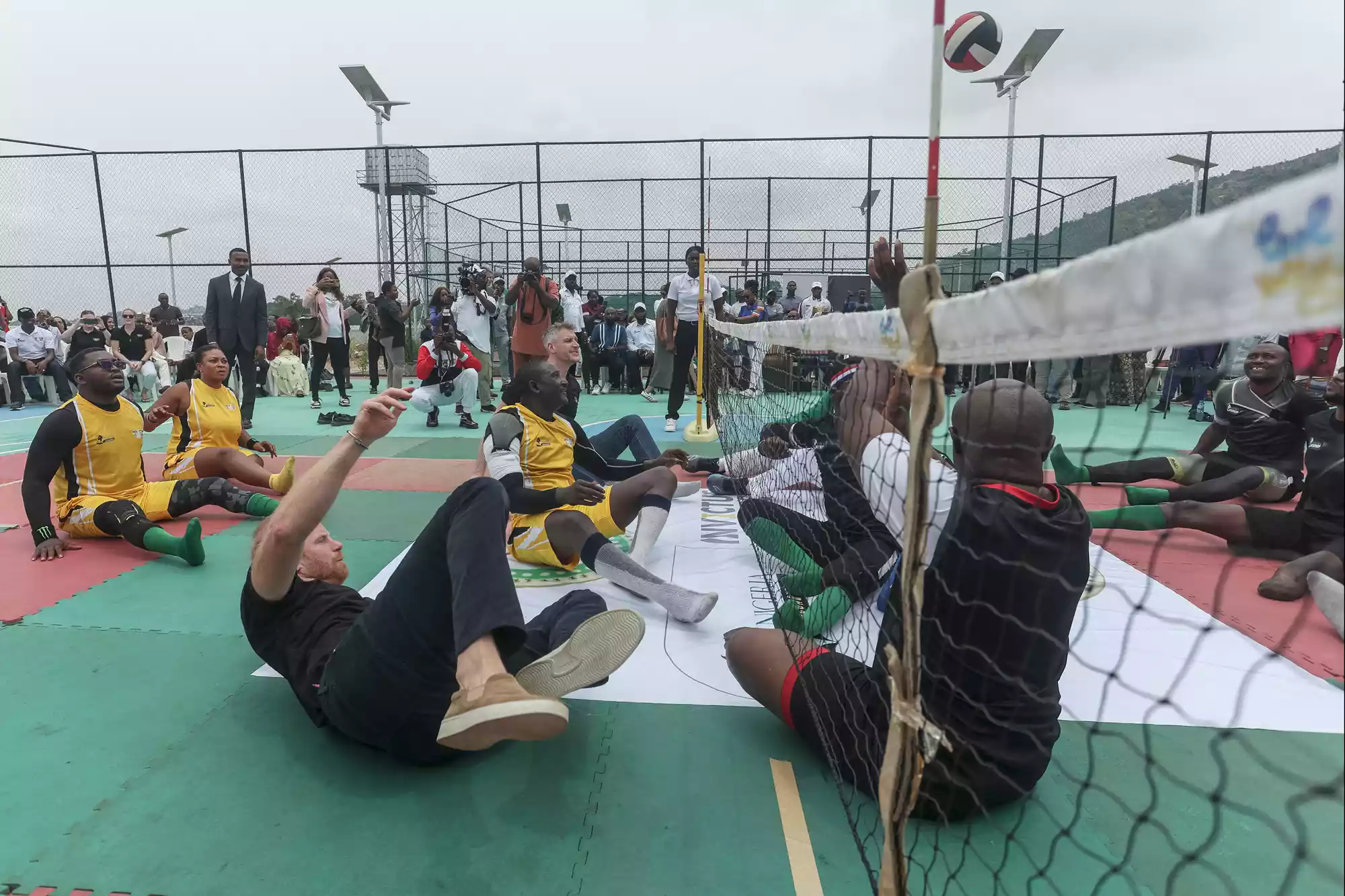
The visit was planned in connection with Prince Harry’s role as founder and patron of the Invictus Games Foundation which supports wounded and injured and sick servicepeople, both serving and veterans. Nigeria, which joined the Invictus Community of Nations in 2022, was the first African country to do so.

On the face of it, Prince Harry’s and Meghan Markle’s visit featured many hallmarks of a tried and tested royal tour, including visits to a school and a hospital, speeches, musicians showcasing local culture, and an evening dinner reception. Over the 72 hours they spent there, The Duke and Duchess met people from all walks of life, including schoolchildren, diplomats, and servicepeople.

Meghan’s “motherland”

Yet this was a unique royal visit like no other. The last royal tour of Nigeria was in 2003, carried out by the then Prince of Wales and Duchess of Cornwall. Yet unlike her parents-in-law, Meghan Markle, who is the first biracial member of the British royal family, has a personal connection to Nigeria. In an episode of her podcast Archetypes in 2023, Meghan revealed that she is ethnically 43% Nigerian based on a genealogy test she had taken, which led to her desire to further explore her Nigerian roots. Indeed, as Meghan Markle stepped off the plane hand-in-hand with Prince Harry, she became the first member of the British royal family with an ancestral connection to Nigeria to visit the country.

The Duchess revealed on her Archetypes podcast in 2022 that she had discovered she was “43 per cent Nigerian”.

Unlike most of the British Royal family, Meghan Markle does not claim high-born ancestry. Her father is descended from Dutch, German, English and Irish immigrants to the United States. On her mother’s side, her American family were, only several generations ago, indentured slaves in North Carolina, with, as she has now discovered, Nigerian origins. While co-hosting a Women in Leadership panel with director general of the World Trade Organization, Ngozi Okonjo-Iweala, Meghan described learning about her heritage as “eye-opening”, and called Nigeria “my country” and “my motherland,” and thanked the people of Nigeria for “welcoming [me] home.”

ANDREW ESIEBO//GETTY IMAGES

Unlike all the royal tours which have come before, Prince Harry and Meghan Markle’s visit to Nigeria was first and foremost rooted in themselves, rather than an institution they represent, making it perhaps the most sincere and heartfelt of all royal tours on the continent to date – of which there have been many. The British Royal Family has a long and complicated relationship with the African continent stretching back centuries, which is firmly entwined with Britain’s history of colonial rule in many African nations.

Royals’ complex Africa history

The first official tour by a member of the British Royal Family to the continent was in 1860, when Prince Alfred, son of Queen Victoria, visited South Africa on HMS Euryalus. It was during his mother’s reign that the European “Scramble for Africa” grew in earnest, which saw European nations colonise many African countries, some of whom would not gain independence until close to the next millennium. In 1928, King Edward VIII undertook an ‘Official Imperial Tour to East Africa’ which saw him shoot what was then known as the ‘Big Five’ – a lion, an elephant, a rhino, a leopard, and a buffalo.

Towards the middle of the century, sub-Saharan African countries began to gain independence, starting with Ghana, which gained independence from Britain in 1957. The late Queen Elizabeth II had been staying in Kenya when she was told that her father had died and that she would now be Queen, and over the course of her reign, she visited the African continent twenty-one times, overseeing the independence process for many former British colonies. Her first visit to Nigeria was in 1956, four years before its independence, and she received a pledge of loyalty upon arrival on behalf of her then Nigerian subjects. In a marked contrast, her second visit in 2003 was to attend the Commonwealth Heads of Government Meeting, Nigeria having joined as a member in 1960.

Several royal visits to Nigeria followed over the years, including a tour by the former Prince and Princess of Wales in 1990, but Prince Harry and Meghan’s recent visit to the West African country strikes a completely different tone – that of authenticity. Unlike Prince William and Kate Middleton’s widely-derided Jamaican tour in 2022, which – with its failed optics of Jamaicans cheering the Royals from behind fences – led critics to accusations of colonial-style arrogance, Prince Harry and Meghan Markle’s Nigerian tour struck all the right notes. 

KOLA SULAIMON/AFP VIA GETTY

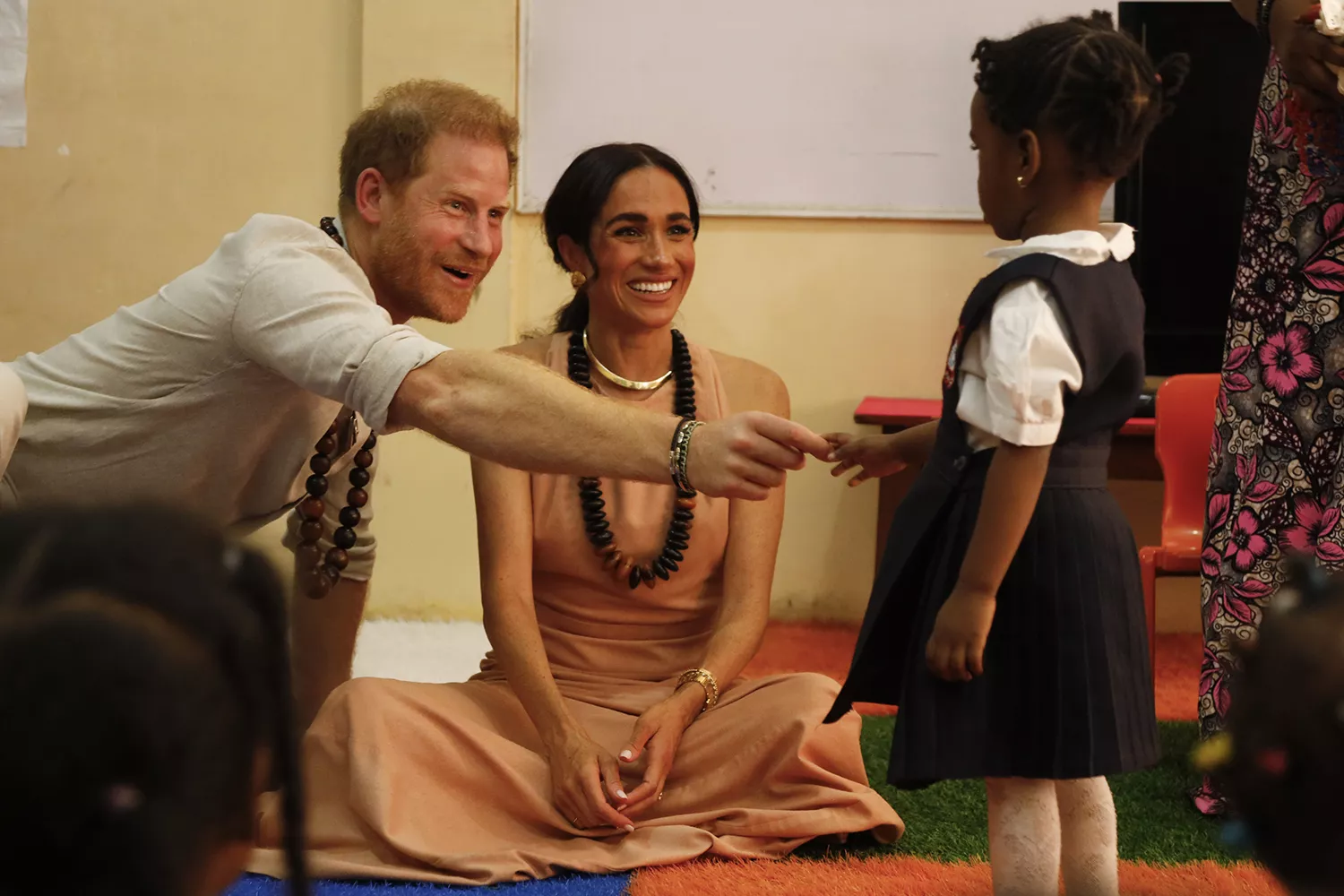
From Harry donning a Nigerian scarf and joining in a game of volleyball, to Meghan who, after being presented with a bouquet of roses by a young girl, offered her one of the roses to keep as a memento, the trip was peppered with human touches.

Their itinerary was packed with promoting causes dear to their hearts, including mental health, women’s empowerment, and sports, and their enthusiasm was clear to see. The royal visit was lauded in the Nigerian press as a success, with Punch describing Kaduna State Governor, Senator Uba Sani, as “delighted to receive Harry”, and Vanguard stating that “Harry and Meghan’s visit to Nigeria carried a lot of symbolisms which must not be lost”, describing the couple’s visit as “a true reflection of the populist activities of [Harry’s] late mother, Princess Diana, fondly known as the “Queen of Hearts.”

Prince Harry (Left) and Meghan Markle greet a student in Nigeria. ANDREW ESIEBO/GETTY

After their return back to America, the couple posted on their social media, thanking ‘the Nigerian community for their tremendous hospitality and the first of many memorable trips.’

It seems that this Nigerian tour may in fact be the first of many more for Prince Harry and Meghan Markle, as they continue to carve out their own unique role within the royal family.

Most part of this article culled from African Business was written Emily Allen, Arts and Culture correspondent at IC Publications.

Cop to be prosecuted for killing two in Ekiti, bricklayer arrested for stealing from dead herbalist

A policeman who killed two people at an accident scene in Ado Ekiti, the Ekiti State capital has been arrested even as 24-year-old bricklayer was recently apprehended for allegedly breaking into the house of a dead herbalist.

PUNCH Metro reports that after the accident, which involved a Lexus car and a Jincheng motorcycle occurred late on Tuesday night at the Omisanjana area of Ado-Ekiti, stray bullets from one of the police officers who came to the scene hit two persons.

A source the two victims, who were rushed to the hospital, were said to have died before getting to the medical facility.

The source said irate youths caused a stir in a bid to prevent the driver of the vehicle from escaping after his car had injured the motorcycle rider.

The Commissioner of Police, Ekiti State Command, Mr Adeniran Akinwale, disclosed that “The command, upon the receipt of the information, deployed the State Traffic Section to the scene (of accident) to ensure there was no breakdown of law and order as well as ensure the safety of the victims.”

The commissioner, in a statement by the Police Public Relations Officer for the command, Sunday Abutu, said, “On getting to the scene, the operatives met resistance as some irate youths disallowed them from performing their lawful duty and insisted on carrying out jungle justice.

“This necessitated a call for re-enforcement to assist the officers on the ground.

“However, in the process, one of the officers accidentally fired a shot that fatally injured two persons.

“The officer responsible for the shooting has been disarmed, arrested and detained and shall be made to face disciplinary action immediately,” he stated.

The commissioner, who said the command was already in touch with the families of the two deceased persons condoled with the families and assured them that a discrete investigation had commenced and justice shall prevail.

In the meantime, Adedapo Ayobami the bricklayer, resident of the Oja Oba area, Osogbo, Osun State, was apprehended for allegedly breaking into the house of a herbalist where he stole some electronic appliances and kitchen utensils.

Ayobami was reportedly arrested by the operatives of the Nigeria Security and Civil Defence Corps, Osun State Command around the Osunjela community during a routine patrol.

In a release signed by the spokesperson for the command, Kehinde Adeleke, in Osogbo on Wednesday, the Osun NSCDC Commandant, Dr. Michael Adaralewa, while giving further details about the circumstances surrounding the arrest of the suspect, said Ayobami in his confessional statement explained that before his death, the herbalist had given him a spiritual soap meant to improve his (Ayobami’s) financial status.

Ayobami also informed the investigators that the herbalist told him he would be collecting the spiritual soap every month, adding that he collected for April and went back to collect the one for May, when he was told the herbalist had passed on.

It further read in parts, “The suspect was arrested on Thursday, May 23, 2024, in the afternoon, at the Osunjela area, Osun State by the NSCDC personnel who were on patrol in the area.

In his confessional statement, the suspect said that before the owner of the house died, he was a herbalist and he gave him a traditional soap to improve his financial status.

Security beef up around Emir’s palace, others
“He said the herbalist told him he would be collecting the traditional soap every month. He went to the herbalist’s house to collect the soap for May, but on getting there, he was told the herbalist had died. He went home disappointed.

“The following day, Thursday, May 23, he went to the herbalist’s house, checked where he used to keep his key while alive, opened the door and carted away Plasma television, cooking utensils, Solar panel, bulbs, two different cable decoders and other household items.

“The suspect disclosed that he intended to sell the stolen items to unsuspecting members of the public.”

Adaralewa, who said even though some people in the neighbourhood where the crime was committed saw the suspect carrying some of the stolen items, they did not challenge him.

He enjoined members of the public to be security conscious, urging them to ask questions and report strange movements in their environment to security agencies in the state, noting that the suspect would be taken to court after the investigation had been concluded.

The Osun NSCDC had on Wednesday, May 15, said its operatives had arrested and recovered four motorcycles from a suspected serial motorcycle snatcher, Wahab Saburi, in Ede town.

TIPS