Home Blog Page 543

Lest China seize our President

By Suyi Ayodele

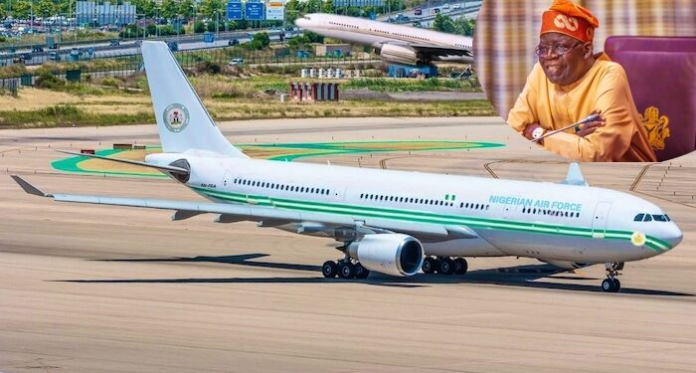
“President Bola Tinubu will embark on a trip to France on Monday, August 19, departing from Abuja, the nation’s capital. The President will return to the country after his brief work stay in France.” I read this terse statement by Chief Ajuri Ngelale, Special Adviser to the President (Media & Publicity), early Monday morning, and my heart skipped. Some people are bold! Why France of all places this time around?

Has the presidency forgotten that it was in France that a Chinese company seized our presidential jets? Are those who planned the president’s trip not aware that we also owe China itself a huge sum of money? Is this Efun (bewitchment), Èdì (spell) or Àsàsì (enchantment)? Are there no Yoruba among the president’s aides who planned the trip? Do they not know that the deity that seizes the home and the stream is also capable of taking over the farmland (Òòsà tó gba’lé, gba odò ó lè gba oko lówó Eni)? What if those in the Chinese Finance Ministry swallowed the wrong frog and decided to approach a French court to seek to attach the President and his entourage as collateral? How can we owe, and the number one citizen is travelling in the type of luxury his creditors cannot afford?

From time immemorial, the Yoruba traditional setting devised three methods of recovering debts from chronic debtors. These methods are employed only when the debtor becomes recalcitrant, arrogant and ostentatious. Nothing angers a Yoruba creditor more than to see his debtor eating gizzard. This is why the elders of the land warn: A kìí je iwe lójú olówó eni (You don’t eat gizzard in the presence of your creditor). The Gizzard is the most precious part of the chicken. It is reserved for the rich or the head of the family. In a case of ritual, where a chicken is used as the sacrificial object, the one on whose behalf the ritual is performed is the one that is permitted to eat the gizzard. Yet another saying confirms this assertion thus: Eni a bá torí è pa adìye níí je iwe (It is he on whose behalf the chicken is sacrificed that eats the gizzard). When a debtor is caught eating gizzard, the creditor goes for the kill and employs any of the three methods to recover his money depending on the amount of money involved, the period of the indebtedness and the antecedents of the debtor.

The first of such traditional method is known as Òsómàáló, commonly used by the Ijesha people of the present-day Osun State. Òsómàáló involves the creditor coming to the debtor’s house in the wee hours of the morning before the debtor rises from his bed, to squat while asking for his money. While in that squatting position, the creditor does all manners of things. He can, for instance, begin to drink water continuously from the gourd of water he brought along, or he begins to eat wraps of corn meal (agidi or eko) from the basket he carried to the debtor’s house. The implication of these acts is that the creditor can suffer a health challenge or die in the process. Should any of these happen, it becomes a bigger problem for the debtor and his family. To prevent such an eventuality, the moment an Òsómàáló, which means: this is how I will squat till I collect my money, shows up, the debtor’s family members rally round to raise and pay off the debt. An Òsómàáló, must not suffer any untoward consequence in the house of the debtor!

The second method is more nauseating. It is known as Ológo or Ológodò. This method entails sending an invalid person, or someone who has infectious diseases to the house of the debtor. Lepers, people with tuberculosis, or other highly communicable infections are engaged in this case. What they simply do is that they begin to live with the debtor, eat his food without permission, use his household items freely and sleep on his bed and those of members of the debtor’s family. Again, neither the debtor nor members of his family are permitted under Yoruba tradition to chase away the Ológo or Ológodò. In some extreme cases, Ológo or Ológodò can also go violent by destroying items in the house of the debtor. The debtor’s neighbours and family members are not spared. The aim is to get the family members to pay up the debt.

The third method is the Ìwòfà system in which a relation of the debtor is pawned off to the creditor till the debt owed is paid. The one so pawned works for the creditor, while the creditor feeds him and accommodates him. But it is beyond just working for the creditor. An Ìwòfà suffers a lot in the hands of the creditors. There is no moment of respite for him; he must work continuously under the rain and scorching sun. This is why it is said that Olówó kii gelete, kí Ìwòfà na gelete (The creditor will not sit comfortably, and the pawn also sits comfortably).

There is no one among these three methods that is palatable. The best option is for one to stay out of debt. And if it is inevitable that one must owe, the debtor should refrain from eating gizzard, especially, where his creditor can easily see him. This piece of traditional advice does not hold any value in today’s Nigeria. Nigeria owes many foreign creditors, yet the country’s leader displays uncommon affluence to the chagrin of the nation’s creditors!

The last one week has not been good enough for our dear country. The international embarrassment the nation suffered at the hands of a Chinese investment company, Zhongshan Fucheng Industrial Investment Co. Ltd, leading to the seizure of three of our presidential aircraft is something that should give us all concern. In all honesty, if there is any time President Bola Ahmed Tinubu has my faint sympathy, it is over this international embarrassment. I said faintly because I have read a lot by some people who believed that the Tinubu team stage-managed the ‘seizures’ so that Mr. President could bring home his N150 billion newly acquired luxury Airbus A330. As much as one is tempted not to believe that storyline in the face of the embarrassing situation we found ourselves, the fact that the new aircraft is the one the Chinese firm graciously released to President Tinubu to travel to France, speaks volume. I cannot, indeed, beat my chest for Tinubu’s presidency over this, especially when his government has turned out to be like the Àjàntálá child that is full of mischief. We may come to this later if space permits.

The issue of Zhongshan Fucheng Industrial Investment and the seizure of our presidential fleet should not have happened at all but for the dearth of good leadership in the country. I have read all the explanations given by the Federal Government, the Ogun State Government, and former Governor Ibikunle Amosun of Ogun state over the matter. The only message I got is that there is an acute absence of sincere leadership, especially on the part of the Ogun State Government. The contract, whatever it was or is, between the Chinese firm and the Ogun State Government, went bad 14 years ago! If it has taken the state government 14 solid years to prepare for madness, may we ask them in Ogun State when exactly they would enter the market in full-blown madness? Everything that has happened in this matter is part of the lethargic system we run where no one is made accountable for anything. It is a collective shame that an ordinary company could get our sovereign assets seized just because a contractual agreement between it and a state government went bad! This is so when there is no evidence to show that those seized items were used as collateral for the agreement! But this does not exonerate the Federal Government completely.

Elementary Government teaches us that the Federal Government enters into agreements or treaties with foreign countries. It is after the Federal Government might have established a contact (bilateral) with another country that the states can begin to draw from the goodwill. This then confers the responsibility of close monitoring of any agreement by any state in the Federation with any foreign company or country, on the one entity who signed the initial bilateral agreement. So, at what point did our Federal Government get to know about the dispute? What did it do to ensure that the nation was not subjected to this kind of international ridicule? But we are in Nigeria. The responses from Abuja have always been too much grammar. Nobody will be punished. We have had Ministers of Trades and Industries in the last 14 years; nobody will ask them what they did or did not do. In a matter of days, especially now that President Tinubu has his new jet to use, this matter will be forgotten like others before it. We may not come to it until something bigger happens. And I see that happening. If a firm could seize our presidential jets over a trade dispute, China may be emboldened by that to seize our president! Alarmed?

I believe that China can seize President Tinubu as a collateral for our indebtedness to the Chinese Government because of the lifestyle of our leaders. Nigeria is behaving like the proverbial chronic debtor who eats gizzard in the presence of his creditor. The records by the Debt Management Office (DMO) showed that Nigeria owes China $5.04 billion as of March 31, 2024. That is well over N6 trillion! The same country that owes so much is the one that could afford to buy a N150 billion aircraft for the use of the president. In addition, the President now rides a Cadillac Escalade SUV that is almost N1 billion. How do we convince our numerous creditors that we are a poor country? In the face of all this profligacy by the one-wristwatch-wearing President, how do we justify our continuous borrowing like the chronic debtor-wife of Oshin?

Have we forgotten that as far back as 2020, there has been the rumour that Nigeria has been ‘colonised’ by China due to the nation’s indebtedness to Beijing? The rumour then was that Nigeria pledged its assets as collateral for the loans it took from China, such that China can come at any time to take over those assets. Rotimi Amaechi, who was the Minister of Transport, said in August 2020 that Nigeria had waived immunity on one of the loans. The simple implication is that with that waiver, China might not have to go to arbitration before the take-over. Amaechi, while dismissing the rumour, however said: “We must learn to pay our debts and we are paying, and once you are paying, nobody will come and take any of your assets.” How much have we paid back? How much do we still owe? If China were to take over our assets today, which asset is the biggest in Nigeria? We should also not forget that we took loans from France, Japan, India and Germany.

Despite all these loans, President Tinubu still, presumptuously, went ahead to purchase a N150 billion aircraft using the ignoble Service Wide Vote, a euphemism for spending without the permission of the National Assembly! How cruel can our leaders be? How unfeeling can those lording over us be? For his personal comfort alone in 15 months, President Tinubu has expended over N160 billion! Yet, his government is asking Nigerians to keep hope alive and to continue to bear with the government. From a N5 billion Presidential Yacht to the state-of-the art Cadillac Escalade SUV and now the N150 billion jet, Tinubu lives larger than life amid poverty, hunger and inflation ravaging the country. It is this same man that his deputy, Kashim Shettima, wants us to believe is modest and poor, using only one wristwatch almost his entire life!

The most embarrassing aspect of this Chinese company’s saga is the fact that President Tinubu chose to travel in the new Airbus A330 aircraft that Zhongshan Fucheng Industrial Investment Co. Ltd said it released to the president on “goodwill.” If the president must travel, couldn’t he have used another means? How will the president convince us that the whole seizure saga is indeed not an arrangee for him to bring the luxurious Airbus A330 aircraft home? How coincidental is the arrival of the new presidential jet on Sunday evening and the president jetting out in it on Monday? My major concern is that none of our foreign creditors will get the funny idea of taking human collateral for our various debts! Festus Adedayo in his Sunday, August 18, 2024, Flickers column published by the Sunday Tribune under the headline, “Nigeria as shock-horror skits”, concludes by saying: “Nigeria is a joke!” We are indeed a theatre of comedy!

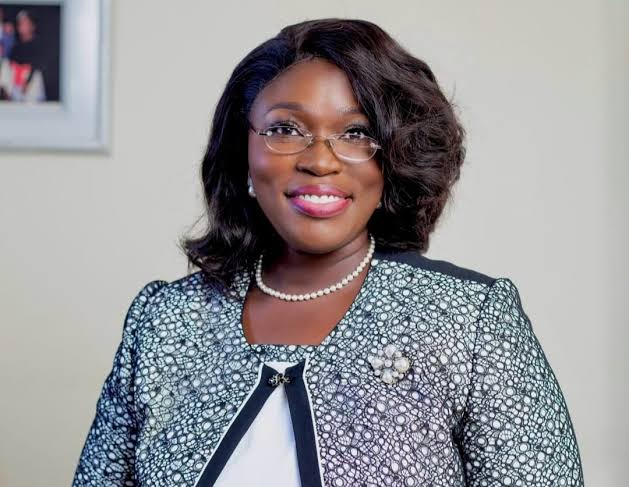
Judge says, To become federal judge in Nigeria, you need political backing

A Federal High Court judge, Justice Mabel Segun-Bello, has revealed that to attain the position of a federal judge in Nigeria, one must either have the backing of the presidency or a political party.

Speaking on Saturday in Abuja at the 2024 Clarity Conference, themed “The Constellation: Gathering of Stars, By Stars and For Stars,” Justice Segun-Bello shared insights from her challenging journey to the top.

As the keynote speaker at the event, she recounted how her rise to the esteemed position of a federal judge was anything but easy, emphasizing that determination was key to her success.

Addressing the participants at the conference, she stated, “You may come from a poverty-stricken background. That is a powerful condition, but you must have the will to rise above it.

” If I tell you where I come from, two things will happen: you will either think I’m lying or start crying. And remember, I’m not just a state judge; I’m a federal judge.”

She continued, “To become a federal judge, you need the backing of the presidency or support from a political party. I had neither. This goes to show that principles, when applied universally, can make anything possible.”

The convener of the conference, Atuzie Tuzzi, highlighted the purpose of the event, saying, “We organised the Clarity Conference to guide young people from the ideation phase to implementation.

“Many struggle with feelings of inadequacy due to their early environment and the exposure they had during school years.”

PUNCH

Young Enugu Artists make big wins using art competition to mark end of Sit-at-home

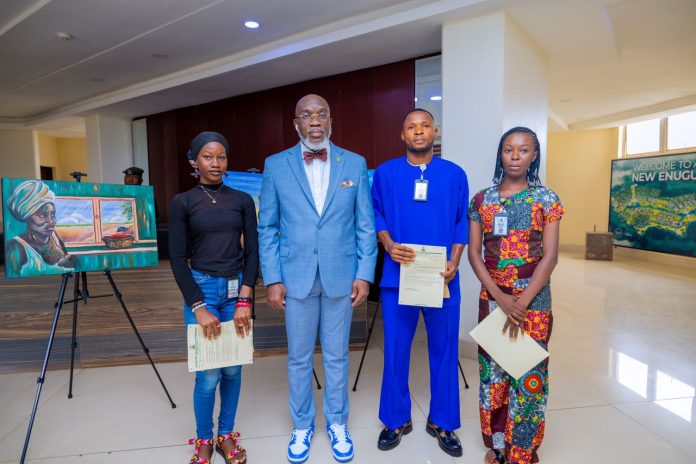
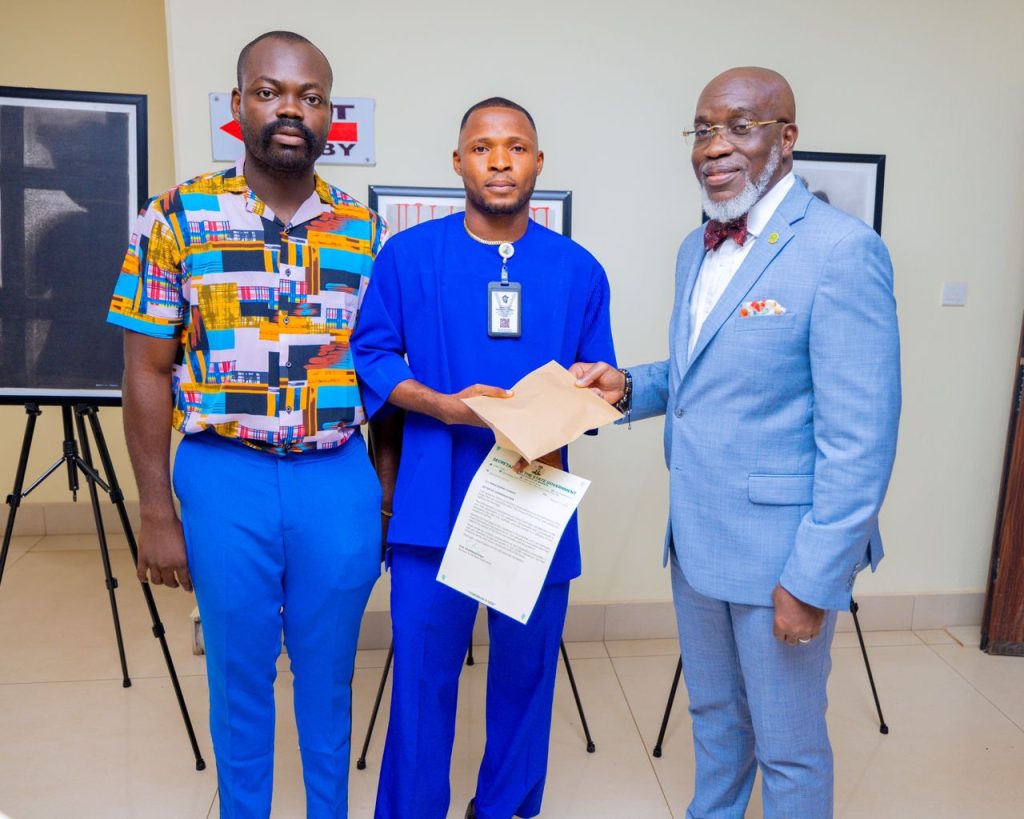
Young people of Enugu State have smiled home with various cash prizes and commendation letters, as winners in the art competition to depict the transition from Monday sit-at-home to productive Monday emerged.

The joint winners are Mstr. Nwachukwu Sunday and Ms. Ukeje Olubebe Victory, while Ms. Nkiruka Ogbonna is the runner-up.

The competition, according to the Special Assistant to Governor Peter Mbah on Visual Communications, Mr. Great Okeke, was put together to allow the youth of the state to tell their stories during and after the sit-at-home.

“The governor came in and made that declaration that there was no longer sit-at-home in Enugu State. So, after one year, we tried to put the art competition together for the youth of Enugu State to tell us their own stories about the sit-at-home.

“For instance, you know the students were among the most hit because they did not go to school on Monday before now. They lost 52 days out of the 365 days in each year that it lasted. And, at the end of the day, those in secondary school would still compete with others in Lagos or other states in the same examinations such as JAMB UTME and WAEC,” Okeke stated.

Presenting the prizes, the Secretary to State Government, Prof. Chidiebere Onyia, expressed happiness over the restoration of the entrepreneurship, productivity, and studies in all parts of the state on Monday, saying the sit-at-home was a sad and shameful part of the state’s history it wants to put behind it.

“One of the key things the governor said at the very beginning was that the sit-at-home syndrome that had lasted and changed what we are as a people, who are entrepreneurial and fearless, was over in Enugu.

“Before that, activities in Enugu State dwindled and you can see the first drawing here shows the very basic things that happened: people going out to sell, but they could not anymore because they were scared of the confusion, the chaos, the running around, and of course the syndrome that when you moved around and you saw the Sienna and it was tinted, that something bad was going to happen.

“So, I am happy that I can see the transition you depicted and that joy and order have come back. You were selected because you really reflected the thinking of this administration. In your storyline, you expressed the desires of the governor for Ndi Enugu to feel that level of safety, for commerce to come, for our people to live in joy and peace, and for our state to be great again,” Prof. Onyia stated.

Speaking, the winners, Nwachukwu Ozoemena and Ukeje Oluebube, said they were motivated by the theme of the competition, especially given the frustrations they suffered as students and youth while the sit-at-home lasted.

“The theme says “The echoes of sit-at-home”. So, immediately I saw the theme, I was very thrilled and it encouraged me to say yes, I need to do that which I have been keeping in mind. I said let me express myself.

“The message here is that anybody should move around and do his or her businesses because Enugu State today is free on Monday as other days of the week. Normalcy has returned because this current administration has actually helped us by keeping up with the promise to protect lives and property,” Ozoemena said.

On her part, Ms. Ukeje said, “My first painting depicts the dark part of the sit-at-home where I used the tomato seller as a topic. From the picture you see Sienna and whenever people see Sienna they will scamper for safety because of fear of the unknown gunmen.

“From the second painting, you could see her sitting at home and peeping through the window, seeing the unknown gunmen with their Sienna and no one is moving because of fear.

“But the third picture depicts the return of normalcy on Monday after the emergence of Dr. Peter Mbah as the governor of Enugu State. The woman can now take her perishables to the market and sell since there are security personnel everywhere. She is now happy.”

Summit News

Let’s not kill this democracy with our own hands out of groundless fear of regime change

By Dr. G. A. Onuoha

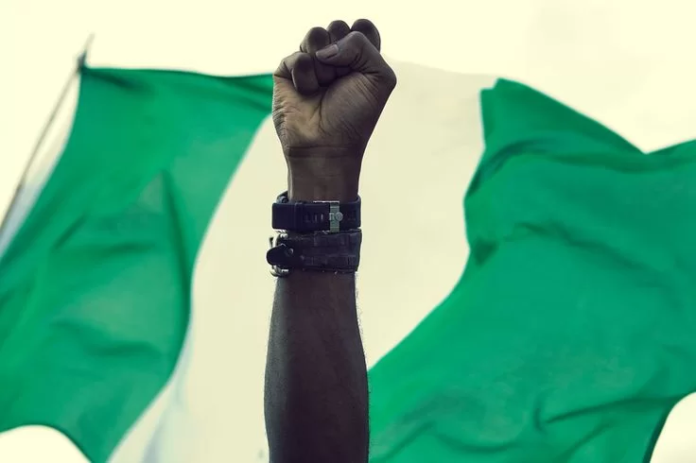
I was sad when l read the Amnesty International’s Report that over 1,000 individuals are being held in custody as a result of the just concluded hunger and #EndBadGovernment protests in Nigeria. The million dollar question is, what happened to our constitutional rights to freely assemble and protest against bad government and write freely about it in the press and discuss it as individuals and groups? (See chapter 4 of the Constitution of the Federal Republic of Nigeria, 1999 as amended).

Are we now into a nascent dictatorship in a supposed democracy? If this federal government were truly democratic and therefore, government of the people, by the people and for the people, no one would have been arrested during the hunger and #EndBadgovernment protests. That is part of the benchmark of any vibrant democracy and an inalienable constitutional right of the masses of the Nigerian people.

A government under which the people cannot protest against bad or perceived bad governmental measures or policies cannot in any wise be described as “democratic”. It’s a dictatorship! And here we are again – back to the bad old days in which even top notch members of the current federal government, including the President himself, were once opposition leaders under NADECO and allied groups that opposed General Ibrahim Babangida and late General Sani Abacha’s dictatorships and brought them to their knees – thus giving birth to this same nascent democracy they are now trying to stiffle.

Let’s not forget that to their credit, both President Shehu Shagari and President Goodluck Jonathan’s democratically elected Federal Governments NEVER arrested even one single individual for public demonstration opposing their policies or programmes. The records are there! Those were real democratic Governments Nigeria had in those dispensations. And that is the very beauty of democracy and democratic maturation.

Today, what we have is a gittery, very gittery federal government that has employed attack dogs and ethnic bigots and gingoists and sabber rattlers that insult people whose views differ from those of the Federal government or who dare criticise federal government policies or proffer sensibe alternative policy templates. That is not democracy nor does it conduce to democratic growth or maturation.

Democracy is all about disagreement, street demonstrations, robust disputation, class litigation against governmental policies, but also popular inclusivity, tolerance and managing diversity on the anvil of ethnic heterogeneity in such a manner that everyone will have their say, but the majority will ultimately have their way.

I was therfore shocked to learn that over 1,000 people (as revealed by Amnesty International Report) are being detained by this federal government over the hunger protests.

Haba! When has it become a crime to protest unless violence is involved which imports elements of criminality? I think this federal government is beginning to operate like a military dictatorship by allowing the DSS and allied security agencies to arrest Nigerians indiscriminately on the spurious and nebulous grounds of “national security”! After all, what is “national security” other than the security of fellow Nigerians who are hungry and distraught as a result of unpopular governmental policies and programmes?

Let’s be careful before we use our own hands to tear down, degrade and ultimately destroy this hard-worn democracy we are still trying to grow despite all the odds and provocation that constitute convenient excuse for its destruction.

The federal government should forthwith effect the release of every single individual currently in its custody over the hunger and #EndBadGovernment protests. It was a perfect democratic exercise and should therefore not be criminalised for any reason.

Dr. G. A. Onuoha is a Law Teacher and Legal Practitioner

What to know about Thailand’s new Prime Minister (Video)

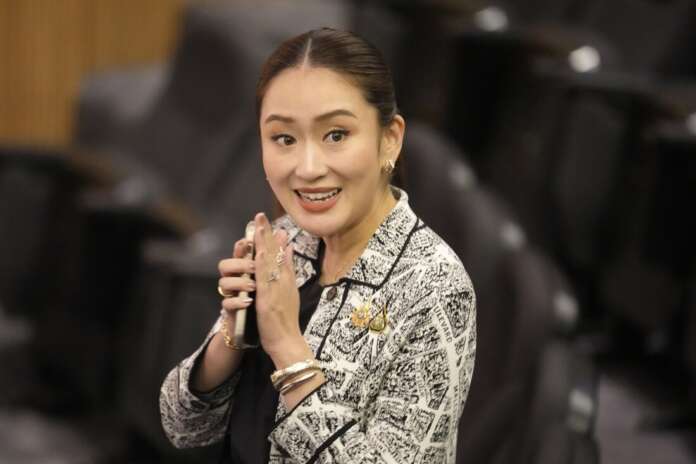
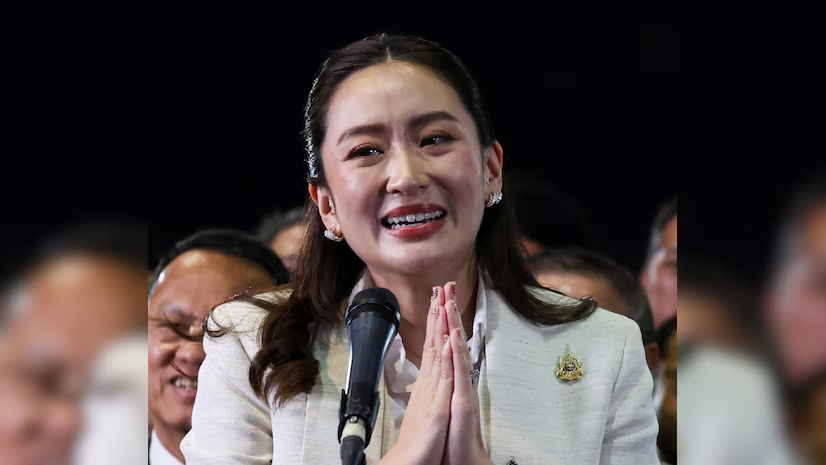
Days after the dismissal of former Prime Minister Srettha Thavisin, the Thai parliament elected its youngest-ever prime minister, Paetongtarn Shinawatra.

Paetongtarn Shinawatra, who took office on 16th August 2024 is the youngest child of billionaire Thaksin, 75, founder of the Pheu Thai party, with which Srettha was also affiliated.

Paetongtarn, 37, was elected easily as her party and its allies hold 314 out of 493 seats in parliament, and she required the vote of at least half of the current legislators to become prime minister.

She studied at the elite conservative institute, Chulalongkorn University, in Bangkok.

Paetongtarn is known by her nickname, Ung-Ing. Before entering politics three years ago, she helped run the hotel arm of her family’s business empire.

Her political career began in 2021, when she became chief of the Pheu Thai party’s Inclusion and Innovation Advisory Committee.

She gave birth to her second child two weeks before the 2023 elections, during which she was a favoured candidate.

Paetongtarn is the third person from her family to take the country’s top job. Her father, Thaksin, became prime minister with the Thai Rak Thai Party in 2001 until he was deposed by a military coup in 2006.

Thaksin’s sister, Yingluck Shinawatra became prime minister in 2011 until she was removed by the Constitutional Court in 2014 after she dismissed Thawil Pliensri from the National Security Council in 2011. That was followed soon after in 2014 by another military coup following months of political turmoil in Thailand.

Both Thaksin and Yingluck left Thailand for self-imposed exile to avoid arrest until Thaksin returned to Thailand in August 2023.

As well as being the youngest person to take the leadership, Paetongtarn is Thailand’s second-ever female prime minister after her aunt.

When she campaigned for election as a prime ministerial candidate last year, Paetongtarn’s promises included lowering Bangkok’s public transportation fares, expanding healthcare coverage and doubling the minimum daily wage.

In Paetongtarn’s first term in office, she will be faced with Thailand’s struggling economy, her party’s dwindling popularity and a possible rise of the opposition, which, since the dissolution of MPF, has regrouped as the Peoples’ Party.

Watch the video below.

Culled from Aljazeera/YouTube

Daar Communications: Tosin Dokpesi, other directors commence compulsory retirement

Daar Communications PLC, the parent company of Africa Independent Television (AIT) and RayPower, has mandated the retirement of directors who have held executive roles for 10 years or more.

This decision is set to take effect in November.

Notable executives affected by the directive include Tony Akiotu, Tosin Dokpesi, Ambrose Somide, Paulyn Ugbodaga, and Tony Uyah.

Tosin Dokpesi is one of the widows of the late Chief Raymond Dokpesi, the company’s founder, who passed on May 29, 2023.

He fell off his treadmill during a routine gym exercise.

His son, Raymond Dokpesi Jr., who has served as the company’s chairman since 2019, has overseen the organization during challenging times, including a financial loss of N1.6 billion reported for the year ending December 31, 2023.

The Conclave

In defence of our president

By Lasisi Olagunju

How rich is Vice President Kashim Shettima? I ask because twice last week, the big man from Borno described President Bola Ahmed Tinubu, Lion of Bourdillon, Jagaban Borgu, Asiwaju of Lagos, as “this poor man.” To prove that the president is poor, Shettima said since he knew him “he has been using only one wristwatch” and living in a house without swimming pools. And, as a wrap-up of his definition of “poor”, he described himself as a better dresser than Tinubu. “He has overcome all those odds to dress well,” he said of the president. May God save us from the spirit of ostentatious poverty.

In case you missed it, a recap: The vice president spoke in Abuja last Thursday at the launch of a book. The event and the book itself were on universal education and what is needed to make it work. I didn’t read or hear the vice president speak on that topic. Instead of words on education, which his country needs desperately, it was the size of the president’s house and his table manner that tickled Nigeria’s number two. First, in defence of the government and the ravages of these lean times, he said the president once drank garri and munched groundnut –a perfect marker of poverty. “At the formative stage of the APC, we held a meeting in his house. They served us a variety of meals but he opted to take garri with groundnut for lunch.” Tinubu’s deputy said those words. He was sure that “posterity will be very kind to this poor man.” I wonder what members of his audience were thinking. There was no one bold enough there to tell him that garri had stopped being poor man’s food; and that groundnut was no longer selling for peanuts.

Vice President Shettima is a lover of books, an aficionado of the written word. But Albert Einstein warned us against the evil of reading too many books. First century CE Roman philosopher, Epictetus, spoke about reading right and thinking better. There are others with similar cautions. If you read too much, you will likely start seeing what ordinary eyes do not see. Photographs of the vice president in bookshops home and abroad dot the Internet’s landscape. The man reads; what he reads, I do not know. He sees also. We say Ení we’jú l’èru nbà – the clairvoyant sees stuffs and gets scared. But this man sees and enjoys his seeing the unusual. The vice president may not be like Shakespeare’s Cassius who “has a lean and hungry look”, but like Cassius, “he reads much…and looks through the deeds of men.” Unlike you and me, blind bats, Senator Shettima sees the inner man. He declared that he had “seen the soul of Bola Tinubu” and it is “a good soul.” Unlike the Roman senator who trusts not Caesar, our own senator-VP passionately begged us to invest our trust in his boss, Tinubu, and “rally around this poor man” – the president.

At a time in the 1980s, a very prominent oba described Chief M.K.O. Abiola as a man who needed prayers to be truly rich. And that was at the peak of Abiola’s glory as a billionaire. The oba was someone everyone knew had a deep pocket, an old money, and so, no one could say he talked rubbish. That is what I remembered when Shettima uttered those words about Tinubu being “poor”. He went further: “He (Tinubu) means well for the nation. He wants to live in a place of glory. He is not in power to engage in primitive capital accumulation. He is in power to leave landmarks in the sands of time. He is the most demonised politician in Nigeria. The first time I went to his house at Bourdillon, I was looking forward to seeing a mansion comparable to Buckingham Palace, with gardens, and swimming pools, but there was nothing special about that house. My house in Maiduguri is better than the house in Bourdillon.”

Where is our good old writer, Nkem Nwankwo, author of ‘My Mercedes is Bigger than Yours’? It is in that novel we encounter clansmen and women extolling “the luck of the clan” for having a son who has come home with a “mythical car.” It is in that story that one of them, Herdsman, is heard saying with much pride: “From today, we are the greatest. Any clan which claims they are equal with us, let them come out.” The author says “the speech received applause” (check page 41 of that novel). Death is wicked – and wasteful. If death hadn’t taken Nwankwo, the storyteller, perhaps Shettima would have inspired him to give us another bestseller- ‘My Manson is Mightier than Yours.’ This is a good time to be alive.

A child’s name is his star; his culmination (orúko omo níí ro’mo). ‘Tinubu’ should not have occurred in the same sentence with ‘poor’. Indeed, the vice president and all who do not know should know today that the name ‘Tinubu’ is the shortened form of “Òsun-ti-inú-ibu-wá (Osun goddess has come from the depths of the seas)”. That is not my invention; it is the very original truth as documented in history books. The deity who birthed that name is never associated with poverty and a lack of any good thing of life. In fact, it is to the bosom of that goddess of fecundity that people in need of help go for succour. And they get their hearts’ desire. So, let no one again describe this Tinubu as poor. The gods will be angry.

The president is my brother, he shall not want. We won’t allow anyone, including the vice president, to point at him a finger that suggests poverty. Where we come from, being poor is being cursed; we pray fervently against wretchedness; we bind the spirit of poverty. A war that is won shall never raise its head again. Poverty is an affliction which our man defeated a long time ago. Even if our brother is not picking our calls, we his people won’t ever wish him evil. Never.

But why did the vice president veer off and go on that voyage? Will Tinubu being poor educate the uneducable and the uneducated? Will it give food to the hungry and make the sick well? And, how rich really is this Shettima to whom our wealthy Tinubu is a poor man, and who boasted that his far northern house is “better” than Bourdillon’s street-to-beach mansion in Lagos? Even the president’s gardener would laugh at that comparison. In the best of times, Buckingham Palace, if built in Shettima’s Maiduguri, won’t be worth half a plot in Tinubu’s Bourdillon Street.

Someone should just not provoke our president’s masquerade to dance out of the grove with all the majesty of his elegance. If the president has not read his deputy’s eulogy, I appeal to my brothers in charge of his media to cover it with palm fronds of forgetfulness. The president must not show the size of his weight, the height of his full length and the hues that are his colour. But, even if he reads the words, I am sure Tinubu is too seasoned to be provoked into wearing gold bars as wristwatches. He would not be president of Nigeria if he was just a wealthy pauper with a mansion in the richest part of Lagos. When a child is smart, our people say ‘o mo way’. Our president is president because he is rich in ways and in means.

Sir H. Rider Haggard KBE (1856-1925) was an English writer who authored many adventure fiction romance novels. He wrote ‘King Solomon’s Mines’ and its sequel, ‘Allan Quatermain’; he wrote ‘Morning Star’; he wrote ‘She’; he wrote ‘Queen Sheba’s Ring’; he wrote ‘Finished’ and fifty other novels. At a time, he told us to take things easy because ultimately “time eats up the works of man.” Sir Haggard’s adventure stories are as money-and-women-themed as the adventures of our big men here. His characters are as varied in character as the characters you find in our politics here. These include the urbane prince, Umbopa, and the ugly witchy hag, Gagool. I am interested in his Umslopogaas, king of the wolves – a man he describes as “full grown, fierce and keen”. The one who would be our president here and ride the waves would be that character who sees “by night as well as by day”. In Haggard’s voice, I say Bola Tinubu is president because, like Umslopogaas, he is “fleet of foot”, and of “valour unequalled”. Such men can’t be poor; their wealth is denominated in gold and diamond mines – not in bars, not in rings and wristwatches.

The man who is our president is our president because he is smart and generous with his money. People who are around him or who have been ‘fortunate’ to be in his presence say he does not know what tribal mark the circumciser put on naira and dollar bills. They say he has no patience to check the mien of all currencies of value before spending them. They say you don’t go into his den of dough sobbing and come out still teary. They say the man’s nimble needle sutures all tears. But, they add that he is not a stupid spender. They say he is strategic in spraying his gold coins and in throwing his diamond bars. They say he gives in measures that won’t make him lose the receiver and that won’t swat his own desires. Our late friend, Yinka Odumakin, once told a story: A man from ‘the other side’ sneaked into Bourdillon Road with a valuable piece of information. The man was well ‘appreciated’ but our friend said he felt the ‘appreciation’ was not big enough; he suggested a little more. “No”, the wise spender told his adviser, “if he gets more than that, he won’t come back.” Wisdom!

One more thing: I have read haters also making a fuss around the president’s new Airbus A330 and his latest wonder-on-wheels – a Cadillac Escalade. They are speculating on the costs. What is money? Money is nothing! Does it really matter that a woman we married in this season of famine is moulding bricks and blocks with pounded yam? (Ìyàwó tí a fé l’ósù agà t’ón f’iyán mo’lé). If the president of Nigeria does not spend Nigeria’s money, who else will? When a commission of inquiry in 1956 said Adegoke Adelabu spent money of IDC (Ibadan District Council), his appreciative people poured into the street with songs that endorsed whatever he did with their money: “Adegoke omo Adelabu / Máa k’ówó wa ná/ Ìgunnu l’ó ni Tápà/ Tápà l’ó nì’gunnu; Máa k’ówó wa ná (Adegoke, son of Adelabu/Spend our money/Igunnu owns Tapa; /Tapa belongs to Igunnu/Spend our money…).” It is not the fault of Tinubu’s haters. I blame the president for being too soft with everything, including our purse. An ancient oba who was that soft was rebuked by his courtiers with something that sounded like: “You are at fault/ You who married their wives and did not marry their mothers;/ You are to blame.” I blame the president. He should spend our money like a rich man that he is. He should not mind what haters and enemies say. Their anger is induced by envy; it is a fight that cannot be resolved by the passage of time (Ìjà ìlara ni, kò lè tán bòrò). Ultimately, all heads shall bow; all knees shall bend. At the end of this president’s two thousand seasons, we will thank him and praise him — and worship him.

Nigeria’s Curious Next Steps

Oseloka H. Obaze

The art and practice of good governance and nation-building is not for the apathetic, shortsighted or presumptuous. Only focused, selfless, visionary, adaptive and transformative leaders end up being great leaders and nation builders. For sixty-four years, Nigerian leaders have respectively offered platitudinous intent to make Nigeria great, and to restructure it for greater equity and effect. They all failed. On their respective watch, Nigeria has with disambiguating blatancy stagnated.

The argument has been made continually that Nigeria needs systematic restructuring, or risk being restructured by default, with indefinite outcomes. Realities gleaned from the just-concluded #EndBadGovernance protests offer a scary insight into the unfolding trajectory.  Nigeria has never been this polarized. Besides bad governance, Nigeria has been damaged by highly-placed bigotry. The protests have ended, but two salient variables remain: lessons learned and missed opportunities.

Curiously, one of the narratives that emanated from the August protests was the allusion of foreign involvement. This is mythical and mere shadow chasing. It was Nigeria that misplayed her diplomatic and political hands by meddling in Niger’s domestic affairs; thus damning as it were, realpolitik and historical and contiguous affinities. Some protesters unfurling presumed Russian flags on Nigeria’s soil was an outlier that reflected unintended and unforeseen consequences. It’s nonetheless a deeply troubling reality. Relatedly, the usually non-protesting North has finally protested. With its Zanga-Zanga fervor, the genie is out of the bottle and the much touted north-southwest pact stands amortized. Some have translated the Northern protests as indicative clamor for an Arewa Republic.

Nigeria’s diversity used to be her strength. As a composite of over 250 ethnic nationalities cobbled together by the colonialists, Nigeria had always managed to find some balance, by her three major Wazobia tribes symbolically standing in brotherhood, and also through the symbolic protection of minority rights.  This is no longer so. Unwittingly, Nigeria is presently being dangerously dissected by Nigerian elites, for primordial reasons that trumps her rich diversity and hardly serve common cause. 

Up till now, it was accepted, even if grudgingly, that each of the 250 ethnicities that form Nigeria’s national mosaic had a place and role in the federation. But as things stand, those places and rights seemingly can no longer be protected. Thus, the places and rights of the big three can’t be guaranteed. Ever more, Nigeria’s tight knit seams that underpin the national mosaic have frayed, making each ethnicity more distinct, yet weaker. Nigerians now seems averse to cohabitation, which denotes clear and present danger.  

Sardonically, some mistake and therefore misinterpret the evolving ethnocentric distinction as having achieved leadership primacy or unilateral sectional strength in a secular federal system. But the intrinsic comparative advantage of each ethnic component has not changed.  Neither has the mutually beneficial attributes. Here is the befuddling fallacy; whereas some national parts seem to have become stronger, the resiliency of the parts that form the whole have became visibly weaker. The crux of this challenge is the tactless default of recent leaders who placed sectional interests above national interest. 

In her 2018 book, Our Time Has Come; How India is Making its Place in the World, Alyssa Ayres, drew on how two successive Indian leaders, Mamohan Singh and Narendra Modi, single-mindedly and selflessly repositioned India. Apropos Nigeria, except for Murtala Muhammed’s Addis Ababa Declaration that ‘Africa has come of age’, no other Nigerian leader has in the strict sense, visualized and enunciated authoritatively, Nigeria’s place in the world. 

Contextually, Nigeria continues to wallow in unbridled leadership ineptitude and bad governance. Her comeuppance has manifested via unvarnished bigotry. And restructuring, as desirable as it is, remains to some, a national buzzword of seemingly inconsequential value. As far as metaphors go, present day Nigeria mirrors in stark reality, the depiction so well-captured by the great allegorist, John Bunyan: “He that is down needs fear no fall.” The apathy that is commonplace in Nigeria is predicated on the contrived willingness of the national elite to ensure that Nigeria, a fallen and failed nation stays down.

Oddly enough, the national elite clearly have not factored in fully, the intent and aspirations of the succeeding generation – Nigeria’s Gen-Zs. Hence, the unfolding battle ground for the soul of Nigeria, is across the generational divide. Perhaps Nigeria no longer needs to be restructured formally. The visible divide in the compartmentalized support of the national protests, speaks clearly to this fact. The people have restructured Nigeria, albeit involuntarily.

Also, the nation’s inexplicable change of her national anthem may yet prove prescient. ‘Nigeria, hail us or let huger kill us’. This assertion is antonym to ‘Nigeria we hail thee,’ which is now often mouthed facetiously and derisively. Such a sarcastic anecdote would be comical, if in reality, it was not so tragic. The scriptural return to the old order, if that was what the perfunctory anthem swap was meant to signify, holds nothing nostalgic, except for foolhardiness and pain, now well beyond suffering and smiling. It was exceedingly painful to hear Nigerians call for a return to military rule. It was also very painful for a nation of 200 million people to come off the 2024 Paris Olympics, without a single medal. Signs of the times!

For long Nigeria has been immersed in a rut. Truly, the rut did not start today. Still, given her dependent-independence status, asserting Nigeria’s independence, is now a bittersweet oxymoron. Nigeria can be whole, but it is not. Her citizens are cofounded by the stupor of independence co-mingled with incivility of deprivation. Long held beliefs of national greatness have turned grotesquely illusory. Due to squalidly bad leadership, Nigeria and her denizens reel in itinerancy. Nigeria and Nigerians have thus become a beggar nation, beggarly people; and debt and poverty challenged.

Bad governance in Nigeria is a reality. At all levels, governance has become a walk in the perilous forest; not a walk in the freedom park.  Presently, some of Nigeria’s best brains –youths trying to japa– lay buried in unmarked graves in the Sahara Desert and the Mediterranean Sea. Understandably it’s the prevailing dichotomies that compel some to seek an exit from the union; from that ‘sea of mud’ that is Nigeria, or die in the mud while trying. Yet some insist on the reset of Nigeria, convinced that a new Nigeria is possible. Their mission is not to put Nigeria asunder; but to reset it in line with the vision of the founding fathers and the tenets of true federalism and democracy.

There can be no pretenses whatsoever, that unaltered and un-restructured, Nigeria’s future will remain bleak; and her past indeterminate and fraught by a gilded era of disparate voices for unity. There could not be hope; not with interloping faux leaders taking charge in nation building; not with embedded voices in the southwest vociferously promoting the #IboMustGo campaign, without broad censure and disclaimers from the region’s elite; and not with the insipient call for military rule. What these attests to, is that very few true patriots remain who retain a modicum of unshaken faith in the cohesion and indivisibility of the nation. It’s salutary that some Patriots recently engaged the President.

Quo Vadis, Nigeria? Which Way Nigeria? Before ever talking of modalities for restructuring, Nigerians must grapple first with the need to reset Nigeria as one would reset an errantly late clock. There are two parts to this urgent process. There are inherent demands aligned with the national protestations. Too many grievances persist that needs to be addressed. So too, are unmet governance and material needs. Poverty, hunger and deprivations are the common denominators. That totality of bad governance can’t be wished away. And that’s the butt of the protestations by Nigerians.

Those protesters who took to the streets to clamor for change were not scofflaws or miscreants. They are hungry, disenfranchised and disappointed Nigerians. They are also Nigerians cognizant that peaceful protestations are permissible within constitutional ambits. Though separated by ethnicity and religion, they were unified by poverty, hunger and deprivations. As such, no bluster or intimidation can dampen their fervor. And so long as hunger and bad governance persist, we can expect more protestations in the months ahead.

Nigeria is in dire straits, but a sliver of hope remains. In contemplating Nigeria’s curious next steps, the present APC leadership should lead by example. First, is to acknowledge the evident governance fallibilities and quickly rethink its defective governance modalities. Second, is to concede to some key demands aimed at abating prevalent hunger and suffering. Third, with the recent convocation of the National Council of State, present and past Nigerian leaders must undertake measures to expeditiously rejig Nigeria; perhaps first, by embarking on a government of national unity comprised of a team of rivals. They can also elect to dither until unscripted circumstances compel a different trajectory to collective or segregated aspirations. That seemingly hard choice is indeed quite an easy one to make.

——

Obaze is MD/CEO, Selonnes Consult – a policy, governance and management consulting firm in Awka.

Former DG NIALS, Prof. Azinge, SAN is new Asagba of Asaba

One-time Director General of the Nigerian Institute of Advanced Legal Studies (NIALS), Prof Epiphany Azinge, SAN, has been announced as the 14th Asagba of Asaba in Delta State.

The Asagba-in-Council announced his selection as the most qualified among the 10 contenders in the race, who hail from Ugbomanta quarters and is to produce the next Asagba after Prof. Chike Edozien, who had since joined his ancestors.

The Ochendo Ahaba (Regent), Anthony Edozien, announced the result of the selection process in line with the Traditional Rulers and Chiefs Edict of 1979, applicable to Delta State, on Sunday at the Palace of the Asagba of Asaba at Ezenei quarters, Asaba.

He said, “Prof Epiphany Azinge, SAN, has been selected among 10 contenders after due process.

“He will be coronated in due course.”

Other contenders, apart from Prof. Azinge, are Tony Ogugua Konwea, Prof. Emmanuel Onwuka and Ogbuechi Chinedu Esealuka, among others.

Born 13 November 1957, Epiphany AzingeSAN, is the 5th Director-General of NIALS. He served 2009 and 2014.

He is a Judge at the Commonwealth Arbitral Tribunal sitting in London, where he represents Nigeria and Africa. He is the founder and senior partner at Azinge & Azinge, a law firm in Abuja where his wife Valerie Azinge, SAN is also a partner.

Epiphany had his secondary education at Sanit Patrick’s College, Asaba from 1970 to 1975. He studied law at the University of Lagos in 1976 and graduated with a Bachelor of Laws. He was called to the Nigerian Bar in 1980. He proceeded to the University of London for his Master’s degree in comparative constitutional law and shipping law in 1983. He proceeded to the London School of Economics for his Ph.D. His thesis was on Electoral Laws in Nigeria.[1] In June 2015, he was appointed a member of the Commonwealth Secretariat Arbitral Tribunal (CSAT) for a period of four years. He was re-appointed for another term of four years in 2019.

PUNCH

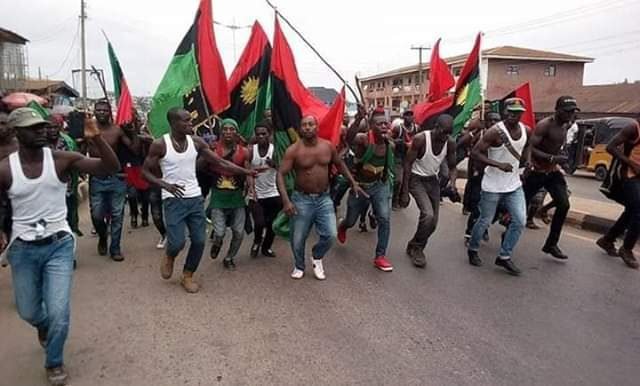
Policemen allegedly shoot each other after mistaking themselves for IPOB members

The police in Abia State, south-east Nigeria, say they are investigating a report that claimed some police operatives exchanged gunfire after mistaking themselves for members of the Indigenous People of Biafra (IPOB).

Mistaken for IPOB members

There was confusion on Wednesday around Alaoji Area of Aba, the commercial hub of the state, when some police operatives reportedly opened fire on themselves.

PREMIUM TIMES gathered that the shootout occurred between police patrol teams from Police Area Command in Aba, and another police team from Umuahia, the state capital.

Residents claimed the operatives appeared to have mistaken themselves for IPOB members in the area.

It was learnt that the incident occurred because operatives from Umuahia operated in commercial buses, prompting their colleagues from Aba to mistake them for the separatist group.

PREMIUM TIMES gathered that during the shootout, shop owners around Alaoji Motor Spare Parts Market and passersby scampered for safety to avoid stray bullets.

The market is located along the Enugu-Aba-Port Harcourt Expressway in the state.

A truck driver was killed by a stray bullet during the encounter.

It was learnt that an altercation ensued after the operatives realised that they were all police officers.

Police speak

Reacting in a statement on Thursday, the police spokesperson in the state, Maureen Chinaka, said police authorities are investigating the incident.

“From our preliminary investigation, there is no credible evidence to suggest that police officers mistook themselves for members of IPOB and fired at each other,” Ms Chinaka, an assistant superintendent of police, said.

“What we can confirm is that there was a shooting in that area, which resulted in the death of a civilian,” she stated.

The police spokesperson urged anyone with useful information regarding the incident to report to the police to aid their ongoing investigation.

IPOB, a group leading agitation for an independent state of Biafra from South-east and some parts of south-south Nigeria, has been accused of some fatal attacks in the two regions.

Credits: Chinagorom Ugwu, Premium Times

TIPS