Home Blog Page 532

Beyond Oil: Niger Delta development and failed promises

By Daniel Iworiso-Markson Ph.D

Nothing puts in more stark relief the squandering of Nigeria’s fortunes than the state of development of other oil-endowed climes like the Gulf states vis-a-vis the utter despoilation of our oil-rich Niger Delta. Why couldn’t the Niger Delta be developed like Dubai, which in the space of two decades,and before our very eyes, grew from an unremarkable fishing town to the Middle East’s business, tourism and culture epicentre?

In one of his many published articles, Brandon Bekker, while on a sabbatical in Dubai wrote a piece he titled ‘A Dream in the Desert: The Man Who Built Dubai’, where he said, “If ever there was an example of a high growth, high performance city, Dubai would certainly be it.

“What’s even more impressive about the meteoric growth of Dubai is the role that one man played in developing the ideas, strategies and teams that fuelled it. I greatly admire Sheikh Mohammed bin Rashid Al Maktoum, prime minister and constitutional monarch of Dubai, and reading his book My Vision: Challenges in the Race for Excellence reminded me exactly what I love about his style of leadership.”

The challenge of today’s Niger Delta, not to talk of the larger Nigerian polity is that we have been bereft of leaders like Sheikh Mohammed bin Rashid Al Maktoum. Truth is the development or advancement of any state or nation is a function of her leadership. According to John Maxwell, author of over 70 leadership books, everything rises and falls on leadership.

The success story of Dubai today revolved around the vision and uncommon leadership of Sheikh Mohammed bin Rashid Al Maktoum. The same can be said of Singapore’s Lee Kuan Yew. It was clear that both the Sheikh and Lee Kuan Yew were not just men of enormous vision, but they possessed the unique ability to be single-minded in the execution of their vision.

To build the Niger Delta of our dream will require a similar single-minded deliberation and effort. The first place to start is to identify and be deliberate about the choice of leaders we put in positions of leadership for if the truth be told bad and corrupt leadership is at the heart of our region’s underdevelopment. If the Niger Delta must develop, then it is imperative that we elect the right set of leaders and buck the national predilection to enthrone mediocrity. For too long it appeared as if only the worst amongst us found their way to power by hook or by crook.

The right leaders would of necessity prioritize basic development, focusing poverty alleviation, primary healthcare and education. If you move around the Niger Delta today you will be shocked to find out that our people still lack the very basic amenities. There are many communities still without portable drinking water or a primary health clinic. Whilst it is good to build roads and bridges to link communities and promote social and economic intercourse, it is equally important to attend to the very basic needs of clean water supply and basic health facilities.

Leaders in the Niger Delta should be intentional about assisting the common people with resources to meet their basic needs. Your good roads and bridges mean nothing if the people are wallowing in abject poverty, unable to appreciably pursue a means of livelihood that will enable them live in dignity.It means nothing if the children are roaming the streets instead of having them in the school classrooms and learning. It means absolutely nothing if the bulk of your youth population are not gainfully employed or empowered and armed with the requisite skills to fend for themselves.

Sadly, the derelict situation of the denizens of the Niger Delta reflects the national condition such that Nigeria today teeters on a dangerous precipice fuelled by widespread discontent and instability.

For us in the Niger Delta, our future and prosperity now lies in our ability to look beyond oil, a depleting asset that has inflicted more pain than gain. The magnitude of the damage to our environment and the attendant effects on the lives and health of our people by oil exploitation is still to be fully appreciated.

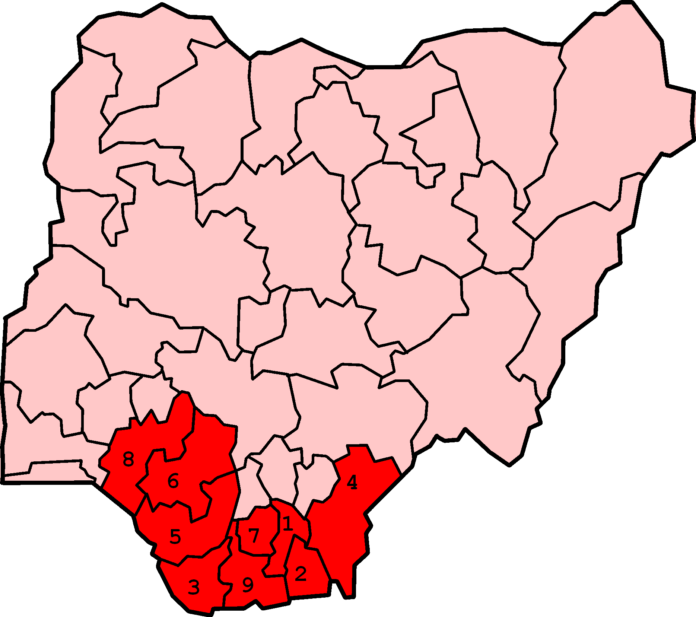
Rather than wasting time in lamenting this baleful legacy, we must focus our energy on harnessing available resources to actualize our goals of create a strong regional economy through economic cooperation and integration. This was the aim that undergirded BRACE ( acronym for the states that make up the Niger Delta) Commission. It is sad to say that the governors of the six South-South states today have not moved the needle as far as BRACE is concerned. What is clear from where I stand is that some of our governors are busy politicking and are more concerned about their hold on power than be bothered by any vision to transform the Niger Delta and positively affect the material conditions of the people.

With the future of oil and even natural gas fast receding into the past as a result of climate change driving the development of alternative energy sources, we cannot afford to waste any more time.

I strongly believe the Niger Delta can still be made to emulate Dubai’s development model if our leaders would embrace the vision of looking beyond the self and take the necessary steps. Many years ago, Qatar sought to emulate the development template of Dubai and today that effort has paid off. Qatar today is fast overtaking Dubai as the number one business and tourism destination in the Middle East. I believe If it worked for Qatar, it can also work for us in the Niger Delta. All that is required are men of vision to arise, give the people a new hope and provide selfless leadership and example.

Reflection on the squandered opportunity to develop the region and the imperative to do something about it rather than indulge in lamentation and hand-wringing informed our decision to mark the fourth anniversary of our online newspaper, FIRST NEWS, by organizing a public lecture with the theme “Building the Niger Delta of Our Dream: With or Without Oil”. It is scheduled to hold in Port Harcourt on the 4th of October 2024 at the Atlantic Hall of Hotel Presidential. Billed to speak at the event are some of the engaged figures on the challenge of development in the region and beyond. They will engage our audience in meaningful conversation and dialogue that will stimulate new ideas and solutions on the way forward to fast track the region’s development.

It bears restating:there can be no better time than now for us to rethink the future of the region, casting our minds back to the time when we were a thriving economy, long before the discovery of oil in Oloibiri in 1956. That was when the white man came with his oily business. Then, our people were bemused by his preoccupation with the oil and allowed him to exploit our land rather mercilessly. Now he has sucked out the black gold and has left our land badly degraded and despoiled, leaving whatever is left to their local interlopers. Now they have put a knife (guns) in the hands of warlords in the name of pipeline surveillance contract, in another phase of exploitation and despoilation of our land and its resources.

Indeed it is worth recalling that before the discovery of the oil at Oloibiri the Niger Delta occupied a most fertile land suitable for the cultivation of crops such as yam,cassava, palm kernels and rubber while the availability of water bodies made for aquaculture particularly fish farming . Agriculture was the mainstay of our region’s economy back then and we grew our crops both for local consumption and exports. The region was a major exporter of rubber, timber, and palm oil and palm kernels via the Niger delta ports of Burutu, Forcados, Koko, Sapele, and Warri. Today, all that has gone with the wind. Warri and other ports in the Niger Delta are now looking like grave yards.

The only gainful (some would say ungainful) employment in the Niger Delta today is either to be a card carrying politician or a brief case toting oil and gas contractor. Agriculture has been relegated to the background. With the people economically marginalized little wonder one report indicates that 73% of the population are multidimensionally poor in the Niger Delta. Some states in the region had the largest percentage of people in the country living below the poverty line as of that 2023 report.

The situation demands clarity of vision and spirited engagement by a new generation of leaders to turn the tide. The challenge is urgent. The time to act is NOW!

Daniel Iworiso-Markson (PhD), Publisher/Editor-in-Chief of FirstNews was a former Commissioner for Information and Orientation in Bayelsa State

Recent review of cost of NBA Stamp/Seal in light of ‘Nothing worth having comes easy’

By Sylvester Udemezue

By Rule 10 of the Rules of Professional Conduct for Legal Practitioners in Nigeria, 2023, NBA has the exclusive powers to prescribe stamp and seal which gives an insignia of validity to any legal document prepared by a lawyer in Nigeria. The RPC further requires that a legal practitioner acting as such legal practitioner, or as a legal officer or adviser of any Government Department, Ministry or any corporation, who signs or files a legal document must affix on any such document his seal and stamp approved by the NBAThe requirement of stamp and seal applies to all legal documents prepared by a lawyer. Legal documents envisaged include pleadings, affidavits, depositions, applications, instruments, agreements, deeds, legal letters, memoranda, reports, legal opinions or any other similar legal documents. 

This exclusive regulatory powers of the NBA to prescribe stamp and seal has been judicially endorsed. See ALL PROGRESSIVE CONGRESS V. GENERAL BELLO SARKINYAKI SC/722/15 (reported as SENATOR BELLO SARKINYAKI V. SENATOR ATIKU BUBAKARBAGUDUORS (2015) LPELR-25721 SC); ), (2015) 18 N.W.L.R (Pt. 1491) 288; ADEWALE & ANOR V. ADEOLA & ORS (2015) LPELR-25972(CA), the Court of Appeal (Per AGIM, J.C.A. (Pp. 16-17, Paras. D-A; 19-20, Paras. A- B, P 20, Para C-E). The Nigerian Supreme Court has also ruled that any process filed in court by a lawyer in Nigeria without affixing the Stamp and Seal prescribed and approved by the NBA is deemed to be not properly filed. See also: JOSIAH CORNELIUS LTD AND ORS V. EZENWA(1996) LPELR-1632 (SC) and In Re OSIBAKORO D. OTUEDON(1995) LPELR-1506 (SC).

However, following acknowledged widespread inconvenience and challenges occasioned by noticed delay in the production and dispatch of NBA stamps/seals to successful applicants, the immediate past leadership of the Nigerian Bar Association led by Y.C. Maikyau, SAN, had adopted measures to combat the unpredictability of the physical stamp regime. The immediate past General Secretary, Mr Adesina Adegbite had in a statement hinted that NBA had “developed and implemented a digital stamp (e-stamp) as an alternative”. Attributing the noticed delay in NBA stamps/seals production to constraints faced by the stamps producer largely due to foreign exchange rates and inflation, Mr Adegbite on behalf of the NBA expressed the deep regret for the inconveniences caused by the delays. He added that previous resistance to a cost-revision aimed at protecting the interests of its members was what ultimately led to the unavoidable consequences being experienced.

Days after the statement by Mr Adegbite, and in a landmark event, the Maikyau-led NBA leadership  launched what it called “the Secure Digital Stamp and Seal”, said to be a revolutionary, cutting-edge innovative solution, powered by blockchain technology and designed to modernize and streamline legal practice in Nigeria, with a view to addressing the long-standing document authentication challenges and enhancing the credibility and security of legal processes. The digital stamp/seal initiative, said to be seamlessly integrated into Microsoft Word,  and a tamper-proof, verifiable, and user-friendly solution, marked a significant shift from the traditional physical stamps, aimed at eliminating delays and inefficiencies that had hitherto plagued the stamp/seal system. According to the NBA leadership, such advancements “are crucial for aligning the legal profession with global best practices.” Finally, in his report to NBA’s 2024 Annual General Meeting held in Lagos on 28 August 2024, the NBA-GS recommended that an upward review of the cost of procuring the NBA stamp/seal would ensure its availability in view of prevailing economic realities.

However, upon taking over the mantle of NBA leadership on 29 August 2024 as its President, Mazi Afam Osigwe immediately promised to look into the stamp/seal imbroglio with a view to resolving the same in the interest of NBA members. Shortly thereafter, an official statement published on September 11, 2024 on NBA’s official blog, and under the title, “Mazi Afam Osigwe, SAN Leads NBA In Resolving Stamp Distribution Delays” read in part:

“Distinguished Colleagues. In an effort to urgently resolve the ongoing issues regarding the production and distribution of NBA Stamps, as well as the resultant dissatisfaction among members, the President of the NBA, Mazi Afam Osigwe, SAN, on Monday, the 9th of September 2024, convened an emergency meeting with the Chairmen and Secretaries of NBA branches. During the meeting, which was also attended by the Managing Director of Strataflex Ltd, the consultants engaged by the NBA for the production of adhesive stamps, President Osigwe provided an in-depth explanation of the reasons behind the delay in the production and distribution of stamps. The delay is essentially attributed to the inability of the consultant to cope with rising production costs.

The current price of Four Thousand Naira per pack of four sheets of stamps, which has been in effect since the contract’s inception in 2015, is no longer sustainable. This has led to substantial costs for both the NBA and the stamp producers. It was revealed that market fluctuations have made the current production model unsustainable. This financial imbalance has severely impacted the producer’s capacity to meet demand, resulting in operational losses and eventually leading to the producer’s decision to suspend production. To ensure improved efficiency in the production and distribution of stamps, a phased adjustment of the current price has become imminent. Consequently, effective from the 1st of November 2024, a negotiated adjustment will increase the price from Four Thousand Naira per pack of four sheets of stamps to Six Thousand Naira per pack. Additionally, from the 1st of January 2025, members will be required to pay Seven Thousand Naira for a pack of four sheets of stamps to sustain the initiative effectively.”

A summary of the review plan:

  1. ₦4000 per pack Until 31 October 2024;
  2. ₦6000 per pack Until 31 December 2024; and
  3. ₦7000 per pack after 31 December 2024

Meanwhile, take note of these painful reminders about the prevailing socio-economic realities in Nigeria:

  1. In 2015, when the “₦4000 per pack” was introduced, One US Dollar was ₦171. In 2024,One US Dollar is ₦1,650.
  2. Cost of petrol (PMS) per litre in 2015 was ₦180 per litre as opposed to ₦900 – ₦1,400 per litre in 2024;
  3. A bag of rice in 2015 was ₦6,500 – ₦7,500 as opposed to ₦95000 – ₦110,000 in 2024;
  4. A rim of printing paper (A4) which sold for ₦350–₦500 in 2015 is now ₦5,000–₦6,500 in 2024.

In view of these prevailing socio-economic realities about Nigeria, one would not be far from the truth in affirming reality if one suggested that the 75 percent increase may not be realistic in fulfilling the objectives of the review, especially if the main objective of the price adjustment was/is to ensure promptness, stability and consistency in production of the seal, and to forestall any more hiccups, hitches or technical hitches. While it is said that good soup na money make am, truth is that there are no shortcuts to any place worth going, meaning that nothing in this world that’s worth having comes easy. Put differently, what comes easy won’t last long, and what lasts long won’t come easy, which perhaps had informed Theodore Roosevelt’s declaration, that “Nothing worth having comes easy.” 

Well, if the current NBA leadership is retaining its predecessor’s plan for issuance of the stamp/seal to be wholly online, then one may be right to agree that a further review of the review may be unnecessary. Else, I respectfully doubt that a further review to, say, ₦10,000 per pack, would not be necessary to bring things in tune with prevailing realities. Some people may not be comfortable with this view, which they may consider unpopular. But it is okay. It was Beverly Sills who once observed: “It seemed no longer important whether everyone loved me or not, more important now was for me to love them”. As Anne Tyler once said, it is very difficult to live among people you love and hold back from offering them advice.  Hence my advise to NBA managers and all of the members of the NBA is this: never reject good advice; that’s what makes you wiser. When one sees good advice, one should not only listen to it, but should also take it. 

I am sorry that I have to face REALITY. You see, one may succeed in avoiding reality, but one cannot succeed in avoiding the consequences of avoiding reality.  

Long live the NBA!

Best wishes to NBA members!

Respectfully,

Sylvester Udemezue (Udems),

Proctor,

The Reality Ministry of Justice (TRM)

08109024556.

[email protected]

(13 September 2024)

History, Hissy Fits, and Hatchetry about the Igbo

By Chidi Anselm Odinkalu

“A historian ought to be exact, sincere and impartial; free from passion, unbiased by interest, fear, resentment or affection; and faithful to the truth, which is the mother of history the preserver of great actions, the enemy of oblivion, the witness of the past, the director of the future.” Bhimrao Ramji Ambedkar

History is endangered in Nigeria and those who research or teach it as their vocation are at risk of extinction. Every opportunity to celebrate or learn from history or historians in a country like this, therefore, is not one to be spurned.

When the Usman Dan Fodiyo University (UDUS) in Sokoto, north-west Nigeria, announced that the latest instalment of its Inaugural Lectures would engage with the universe of history, a coincidence of three factors guaranteed them more than the usual bandwidth reserved for such events.

First, this was advertised as the 50th Inaugural Lecture in what is effectively the 50th year of the university. UDUS began life in 1975 as one of twelve federal universities established by the military in the aftermath of the Nigerian Civil War with a mission to disperse the frontiers of enlightenment across the country. Usman Dan Fodiyo after whom it is named was the founder of the Caliphal system and a scholar of some repute.

Second, the subject matter of the Inaugural Lecture had audacity written all over it. The framing was: “The Igbo Factor in the History of Inter-Group Relations and Commerce in Kano.” It departed from the usual preoccupation with academic comfort levels and promised a peek into delicate recesses of the Nigerian narrative.

Third, this was only the second Inaugural Lecture from the History Department of UDUS and the lecturer was a man who had spent over 43 years teaching and researching Nigerian history. He had every right to be taken seriously. Moreover, this was the teacher of Mahmood Yakubu, the Chairman of the Independent National Electoral Commission (INEC), no less. Here was an opportunity to find out whether the legend of the INEC chairman as an alchemist of fantasy was a product of nature or nurture.

By the time he stepped up to the podium in Sokoto for his lecture on 5 September, 2024, Professor Ahmed Bako was guaranteed an audience like none that he had encountered in nearly four and a half decades as a university teacher. A full auditorium in the university was more than outstripped by the remote audience.

The esteemed lecturer began by acknowledging that his subject matter was one steeped in “extreme prejudice and emotions”, particularly, “in recent years when a lot of stories are being told or rumours being peddled on Igbo Community in different parts of the country.” Far from fidelity to his promise to put matters “in proper perspectives” (sic), the lecturer wasted no time in fulsomely embracing the prejudice.

Growing up, he confessed, he “heard a lot of frightening stories about Igbo as wicked people who killed Sardauna.” On the evidence of his rendition, this tragedy was not the origin of their wickedness; it was proof of it.

According to Professor Bako, the Igbo in Kano are a “diaspora”, which calls into question any claims they may have to Nigerian citizenship. The pioneer Igbo cultural organization in Kano, the Igbo (State) Union, was both clannish and “extremely militant” and the contemporary pan-Igbo socio-cultural institution, Ohanaeze Nd’Igbo, is a “separatist” organization.

He was only warming up. The Igbo, he theorized, “embarrassed” (sic) education “all with the hope of eventual domination of the country; not necessarily for developing it for the benefit of the nation.” Deploying “ethnic solidarity”, he claimed, the Igbo “gradually marginalized or even displace (sic) large number of Hausa traders.”

Far from an Inaugural Lecture, this read very much like a 21st Century Bill of Attainder. There was hardly a constructive contribution to be gleaned from his study of or occasional interaction with the Igbo. Even the Igbo Union School built entirely form community resources of the Igbo and launched in 1959 was dismissed as “exclusively meant for the Igbo, the school had only 9 non-Igbo students.”

In the absence of any organizing theoretical or philosophical framework, the lecture read like a long-suppressed eruption that finally found an occasion to occur. Its context, sub-text, and texture belied its ostentatious claim early in the text that it was “purely historical not political. It is base (sic) on Archival (sic) and field research.”

Blinkered by prejudice, Professor Bako could not muster the curiosity to interpret his own evidence. Earlier in his lecture, he acknowledged “the colonial residential segregation policy that established different enclaves for migrants”, which effectively binned the Igbo in Kano into an ethnic ghetto in Sabon Gari. He could not have been so bereft of imagination as to be unable to discern it was ethnic discrimination that forced the community to build the Igbo Union School. In striving parents who sought to afford education to their children who may otherwise have missed out on it altogether, all he had the capacity to see was ethnic malevolence.

Professor Bako trotted out hackneyed tropes with a recklessness that dispensed with evidence, authority or comparison. For instance, he claimed that “searching for economic power and dominance make the Igbo to be desperate and aggressive. Desperation is what make (sic) them to not only be disliked by host communities in several of the areas of their dominance in Northern Nigeria but to pushed (sic) some young Igbo into criminal activities.” In support of this claim, he provides neither archival material nor evidence from anthropology, criminology or comparative criminal justice research. It was difficult to believe this was an Inaugural Lecture.

In Professor Bako’s fantastic world, these Igbo are an ethnic group in perpetual conspiracy. In reality, he comes across as projecting his own ethnic self-image onto the Igbo, reflecting at the same time the crisis of a country that cannot make up its mind about this ethnic group. The classic Nigerian trope about the Igbo is of an ethnic nationality almost congenitally incapable of unity. In Professor Bako’s world, however, all they do is conspire on the altar of ethnic solidarity and before the god of domination.

Blinded by this, the professor could not imagine alternative explanations outside his conspiratorial theory of Igbo domination. The lecture mentions “Igbo” 427 times and contains 16 references to words “dominate”, “dominance” or “domination” but finds no citation, authority or evidence to support its connection between Igbo and domination.

The only currency it trades in is homogenization. Magically, it deploys “Igbo” as singular, plural, and collective. It’s a sorcerer’s epic.

Professor Bako’s history of Igbo interaction with Kano coincides rather conveniently with the onset colonial urbanisation in Nigeria. The text is too lazy to even speculate as to whether or not there was any interaction before this time. If he had allowed himself to think outside the frame of homogenized Igbo identity, the professor may have realized that different Igbo communities came to education (and to Kano) at different times.

The Onitsha on the banks of the Niger, for instance, were relatively early recipients of Western education. Their neighbours in Obosi came to it a little later and pursued it aggressively not to dominate Nigeria (a notion that was alien to them) but to compete more equitably with the Onitsha. The idea that the Wawa, the Aro, the Ngwa and the Onitsha (all Igbos sub-groups) conspired to head to Kano to pursue domination makes meaning only to someone who is willfully illiterate about Igbo inter-group relations.

In 2012, an evidently unwell Emir Ado Bayero traveled to Enugu to attend the funeral of Emeka Odumegwu-Ojukwu, whose leadership in the Nigerian Civil War has Professor Bako throwing hissy fits. In January 1966, Ojukwu was the Brigade Commander in Kano who saved Bayero’s life and precluded Chukwuma Nzeogwu’s subaltern, Captain Ude, from coup operations in Kano. Ojukwu was himself fluent in Hausa and may indeed also have fathered a child in Kano. None of this merited acknowledgement in Professor Bako’s elevated piece of pitiable hatchetry. The students who endured him for over four decades deserve our thoughts and prayers.

One thing is clear, however, after surviving Professor Bako: the provenance of this current INEC Chairman is settled.

A lawyer and a teacher, Odinkalu can be reached at [email protected]

Senior Advocate secures court order barring police from accepting complaint, investigating paternity tussle and alleged sexual impropriety

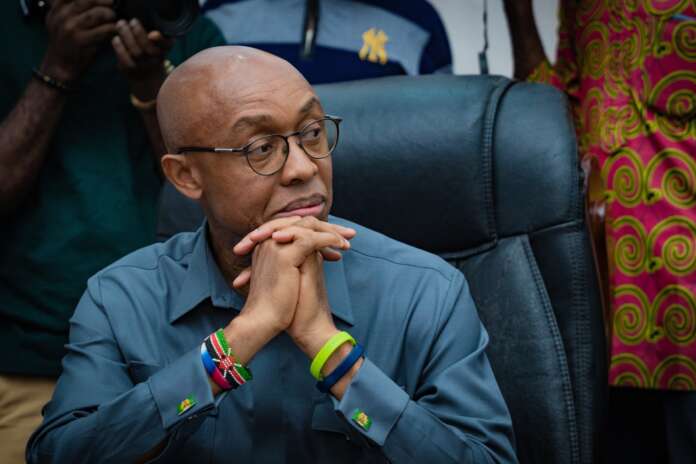
An Upper Area Court sitting at Kado in the Federal Capital City of Abuja has granted an order restraining the Nigeria Police from accepting any complaint or carrying out any investigation relating to a paternity wrangle and an allegation of sexual impropriety levelled against an ex-Minister of Special Duties and Intergovernmental Affairs, Kabiru Turaki by a woman who reportedly had a child for him outside wedlock.

Granting Turaki’s prayers following an ex-parte motion moved by his counsel on September 2nd, Hon. Shehu Ahmadu, in his ruling directed to the Inspector-General of Police and his officers not to accept any complaint from Musa Baffa, Uwani Arabi and their daughter, Hadiza Baffa, in relation to the matter as an action was already before the Court.

“Respondents are hereby restrained, especially 4th to 10th respondents from accepting any complaint from the 1st to 3rd respondents (parents and daughter) especially the 2nd respondent (Hadiza) or carrying any investigation relating to the applicant as the matter is already before a competent court of law, the Upper Area Court Kado FCT, in CV/35/2024 until the determination of the motion on notice before this court.

“This order Is given under the hand and seal of the honourable judge.”

Turaki had in the motion, number: M/26/2024, sued Musa Baffa (father), Hadiza Baffa (daughter), Uwani Arabi (mother) and Nigeria Police Force as 1st to 4th respondents respectively.

Others listed in the application include the I-G, DIG Sylvester Alabi (DIG Force CID), AIG Muhammad Dan Kwara (Force CID), CP Musbahu Ajani (CP Admin, Force CID), CSP Mohammed Gashua and SP Ibrahim Shugaba as 5th to 10th respondents.

In the substantive suit, marked: CV/35/2024, filed before the court, Turaki sued Musa, Hadiza and Uwani as 1st to 3rd defendants.

While the former Minister denied being responsible for Hadiza’s pregnancy, which resulted in a baby girl, insisting that Hadiza had a boyfriend who he said was responsible for the pregnancy, Hadiza’s mother, Uwani Arabi (2nd defendant) in the defendants’ statement of defence alleged that Turaki opted to serve as her daughter’s guardian but took advantage of her and got her pregnant.

Further stating she never knew the Senior Advocate had ulterior motives when he offered to help with her daughter’s education, Uwani in the defendants’ joint statement of defence pointed out that Turaki told them he was taking her under his wings as his own daughter but turned round to initiate sexual relations with her.

Refuting Turaki, SAN’s criminal allegations against them, the trio, Musa Bashir Baffa ( 1st Defeandant and Hadiza’s father), Hadiza Musa Baffa (2nd Defendant) and Uwani Arabi (3rd Defendant and Hadiza’s mother) in their joint statement of defence maintained that the ex-minister exploited and used them only to run to court after the Human Rights Radio (Brekete) invited him for intervention following his refusal to take care of his little daughter whose antenatal and birth he took care of at Nizamiyye Hospital in Abuja.

Hadiza and Uwani averred that it was the ex-Minister who reached out 3rd defendant (Uwani) and offered to help her daughter “by enrolling her into Baze University in Abuja, bear the cost of her education and accommodation; and serve as her guardian”.

They said Hadiza’s registration fees when she gained admission in 2014 was N950,000 and that the ex-minister gave her $2,000 for the fees.

Uwani, who said she never influenced the Senior Advocate’s decision added that she did not suspect Turaki had sinister motives towards her daughter. She also said contrary to Turaki’s claim that she begged him to give her daughter a car, she never had any such discussion with the ex-minister.

Hadiza on her part averred that she never suspected that Turaki’s benevolence towards her was to take her advantage.

According to her, it was the plaintiff who called her to pick up the Toyota Almera from his office at T. Y. Danjuma Street, Asokoro, Abuja and she was surprised to see that the car particulars carried her name as: “Hadiza Turaki.”

On her part, Hadiza alleged that it was Turaki who had changed her name to “Hadiza Turaki” by putting same on the vehicle papers he bought for her and persuaded her to use the same name on her Guaranty Trust Bank account number through which he sent monies to her severally through his account officer.

Hadiza alleged that she “had  challenges with her education, and faced physical and  emotional trauma  when  the Plaintiff exploited her under the guise of being her guardian and frequently       visiting her  in   the  apartments  he  got   for  her and severally lured her into having illicit  sexual   relationship with him.

She added that the “ Plaintiff severally threatened her not to let her parents know that he was taking advantage of her thus, she was scared and  traumatised trauma affected her and her studies.”

She alleged that he frequently visited her in the apartment he rented for her and severally pressured her to have sexual intercourse with him. That on many of such occasions the Plaintiff will threaten to  cut  of the financial support he was offering her.  

That “under such  threat and coercion she gave into his sinister  moves. Further  to  the  above,  the  Plaintiff also   threaten   the  2nd  Defendant never to allow the 3rd Defendant,   her mother  to know about his sexual exploitation of her and  as a result she was scared of letting her know until after a long time.”

According to her, when the plaintiff realised that she was going through psychological and physical trauma, he kept promising to marry her and began to build romantic phone and WhatsApp conversations with her.

Hadiza alleged that when she discovered that she was pregnant for Turaki, she informed him and he took several steps, including phone calls made to her, trying to compel and pushing her to abort the pregnancy.

She said she decided to keep the pregnancy against all odds when she was advised against terminating it and the risk involved.

She alleged that Turaki became wild against her when she refused to listen to him.

Hadiza said she delivered the baby girl on April 3, 2023 “And when the plaintiff later saw the baby, he acknowledged that she was his daughter as a result of the striking resemblance with him.”

She further alleged that the ex-minister even paid monies for the antenatal, delivery and post natal services of the baby girl at Nizamiyye Hospital, Abuja.

The one time Minister had  alleged that sometime in 2016, Uwani, who was a person known to him in Kano before her marriage to Musa, called him on phone and sought his advice on her plans to relocate her daughter, Hadiza, “who was then schooling, according to her, at University of Maiduguri, because of the activities of Boko Haram.”

He said he advised Uwani to secure admission for her daughter at Bayero University, Kano; Usman Danfodiyo University, Sokoto; or University of Ilorin.

Turaki said after some weeks of the previous discussion, Uwani called and told him that she was coming to Abuja together with Hadiza and begged him to arrange an accommodation for them.

He said he obliged by securing an accommodation at Ideal Guest House, Garki, which Is a furnished apartment let out for short or long stay.

He said Uwani secured admission for Hadiza at Baze University in Abuja and he supported her with N1 million out of the N3 million for registration.

He alleged that Uwani pleaded with him to serve as Guardian for her daughter, Hadiza.

The ex-Minister, who averred that he took responsibility for Hadiza’s upkeep, said he was surprised to discover that Hadiza connived with her mother to change her surname to Turaki without his knowledge and consent.

He alleged that when Hadiza’s criminal acts became so intense, he drove her away and directed his staff not to allow her close to her office anymore.

He alleged that after walking out on the daughter and the mother for a month or so, Uwani called him on the phone and requested to see him.

He said during the meeting, Uwani told him that her daughter was pregnant and she said he was responsible.

Turaki averred that he outrightly denied the allegation, describing it as a blackmail.

The matter was adjourned until September 24 for continuation of hearing.

Towards a peaceful, transparent and credible Local Government Council elections in Enugu State in 2024

Following a 30 May 2024 public announcement in a Statement by the Prof Christian Ngwu-led Enugu State Independent Electoral commission (ENSIEC), that Local Government Elections in the State had been fixed for Saturday October 5, 2024, a flurry of political activities began and have progressed in an interesting and thought-provoking fashion. As a Lawyer, disinterested observer, public legal affairs analyst, a public-interest advocate, corporate and constitutional democratic-governance promoter, (and an indigene of the affected State), I have closely but keenly followed much of the developments, and I think this is the first time in a long time, genuine efforts are seen being made by contenders to engage in actual electioneering campaigns during a scheduled local council election in Enugu State. It’s highly commendable, and I particularly salute the extent Government in Enugu State. However, the discussion doesn’t end there.

I humbly recommend that towards restoring true democracy at the grassroot in our State, Enugu State, deliberate and honest efforts must be made, and seen to be made, by the Enugu State Government, the Enugu State Independent Electoral Commission and other stakeholders, to create a level-playing ground for all participating political parties and their candidates by ensuring that all systems, stages and processes of the upcoming election are made and seen to be transparent and credible with the objective of assuring that the outcome/results of the elections come out as a reasonable acceptable and true reflection of the will of the electorate in Enugu.

For constitutional democracy to grow and be sustained, leadership recruitment processes and programs must be tailored towards ensuring that the will of the people are upheld at all times, through transparent elections that strictly observe the dictates of the rule of law and the Constitution.

A transparent election process improves good governance, engenders followership-coopertaion, and reduces tension and agitationsnin society, while eliciting people’s confidence in and genuine respect for their governments. If there is anywhere respect for the principles and precepts of democracy must start, it’s at the grassroot, because a thriving democracy at the grassroot is a recipe for accelerated national development. Many researchers have found that political development should start at the grassroots, especially because positive change in any country, in the long run, is usually traceable to distant rumbles at the grassroot level. This is perhaps one of the reasons an ex President of the USA, Barack Obama had to acknowledge that “I was elected because I believed in… ‘grassroots politics,’ politics from the bottom up, not the top down”. No wonder, a certain author, political commentator and consultant in the USA, Dick Morris believes that spontaneous combustion of grassroots politics is the future.

In the meantime, it’s respectfully suggested to all contending parties and candidates, to go about their campaign activities with peace, being law-abiding and respecting extant rules and guidelines in the interest of a peaceful election season and process in our beloved State, Enugu.
Best wishes to all contenders, and long live Enugu State.
Respectfully,
Sylvester Udemezue (udems),
Proctor,
The Reality Ministry of Justice (TRM).
08109024556.
[email protected].
(13 September 2024)

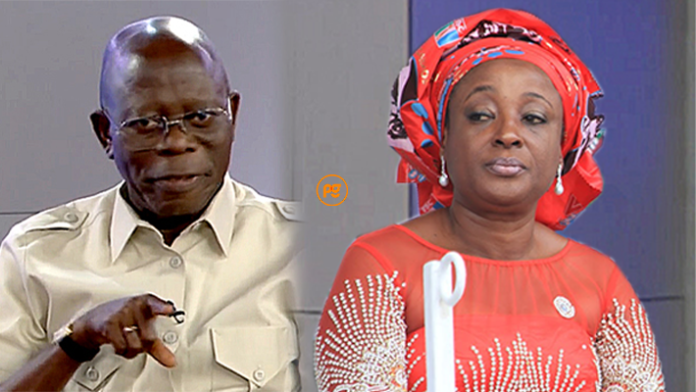
Still on Oshiomhole’s diatribe against Betsy Obaseki, By Juliana Oyegun

Actually, on a personal level, this is a couple that has raised, sponsored and fostered countless children, particularly those who have lost one or both parents, some relatives others not.

The saying “It takes a village to raise a child” is so true and this couple has modelled it quietly and consistently for years. Betsy is productive.

Adoption presumes that you must ‘own’ a child to love and care for a child. I think we all know that legality is not a prerequisite for loving kindness towards vulnerable children AND there’s a lot more to giving life than giving birth!

Possibly one lesson from this tussle with the former Governor— a widower himself — who once told a poor struggling widow to “Go and die” is that election season is the worst of times to contend with the worst of politicians IF you can help it…

Mrs Juliana Oyegun, a lawyer, Independent Director and Consultant at Amazing Grace Inspirations! retired from the World Bank in February 2013.

Cult leader, Apollo Quiboloy pleads not guilty to sex trafficking charges after arrest in compound where he allegedly kept women as sex slaves and abused children

A Filipino cleric who describes himself as the ‘Appointed Son of God’ has pleaded not guilty to several criminal charges including sexually abusing a child and sex trafficking. 

Apollo Quiboloy, leader of the Philippine-based Kingdom of Jesus Christ (KOJC) with six million followers, was arrested on Sunday, September 8, at the KOJC’s 30-hectare compound in southern Davao City after a weeks-long police operation.

The 74-year-old was led handcuffed into the heavily guarded Pasig courthouse in a bulletproof helmet and flak jacket this morning.

He stands accused of heinous crimes, indicted in the United States for conspiracy to engage in sex trafficking by force, fraud, and coercion and the sex trafficking of children, among a litany of other alleged offences. 

Cult leader, Apollo Quiboloy pleads not guilty to s3x trafficking charges after he

He told his followers to ‘stay strong’ before police took him into the courtroom along with several of his alleged accomplices.

A tip-off from a ‘whistleblower’ helped police detain the preacher in his compound where he allegedly ‘kept women as sex slaves’ and ‘abused children’

The self-anointed ‘Son of God’ will remain in detention at a police headquarters for now, the police said, along with several of his acolytes. 

‘He is innocent,’ his lawyer, Israelito Torreon, told reporters after his client’s first arraignment today. 

Quiboloy also pleaded not guilty to the sexual abuse charges at a Quezon city court via teleconferencing. 

Cult leader, Apollo Quiboloy pleads not guilty to s3x trafficking charges after he

But police said more people had come forward alleging they had been sexually abused by him almost immediately following his arrest.

‘It is our firm belief that the truth regarding the alleged criminal acts of Apollo C. Quiboloy and his co-accused will ultimately be disclosed,’ Joahna Paula Domingo, a co-counsel for one of the alleged victims, said in a statement.

‘These cases have been filed in 2019 and we have long been seeking justice for the complainant since then,’ she said.

In a statement issued by KOJC ahead of Quiboloy’s arraignment, the church said that its ‘cardinal rule’ was that members are ‘not forced to do anything against their will.’

Cult leader, Apollo Quiboloy pleads not guilty to s3x trafficking charges after he

Quibolo faces similar charges in the United States, where he has been included in the FBI’s most-wanted list.

The United States was expected to request the extradition of Quiboloy and his co-accused at some point, but President Ferdinand Marcos Jr. said they have to first face justice in the Philippines.

NAF officer wins 2023 international sword of honour at RAF college Cranwell

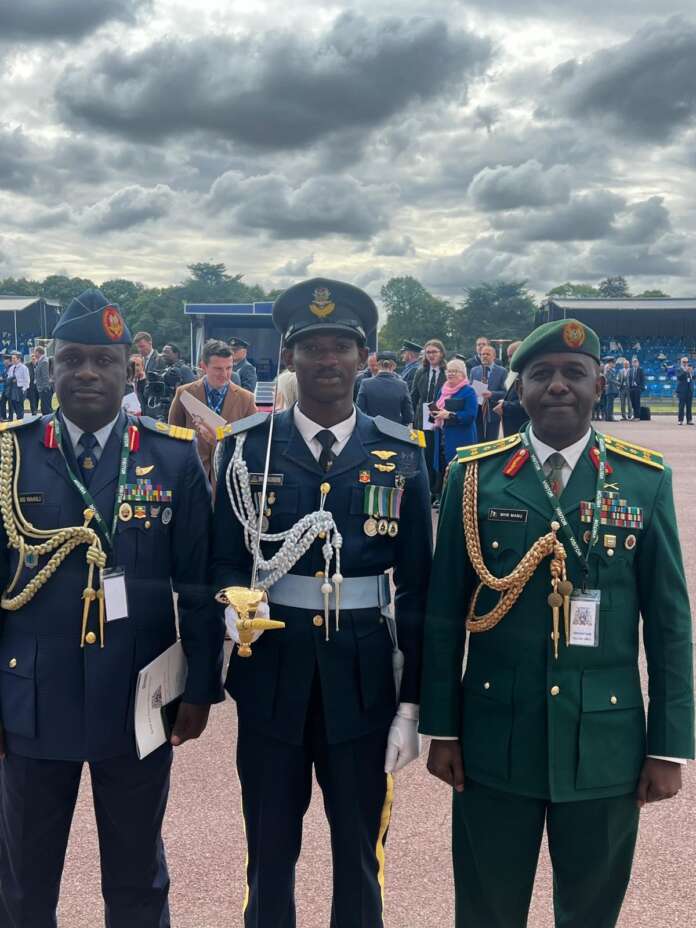
A Flying Officer of the Nigerian Air Force (NAF), David Sangokoya has been awarded the prestigious International Sword of Honour for 2023 at the Royal Air Force College Cranwell (RAFCC) in the United Kingdom.

The Deputy Director of Public Relations and Information Nigerian Air Force Group Captain Kabiru Ali, attending the Modularized Initial Officers’ Training (MIOT) Course 22 as a cadet from March to September 2023, Sangokoya emerged as the Best International Cadet among peers from multiple courses held annually by RAFCC.

The award, presented by His Royal Highness, Prince William, on behalf of King Charles III at the Royal Graduation on 12 September 2024, marks a historic achievement as Sangokoya becomes the first African recipient of the International Sword of Honour.

Sangokoya becomes the first African recipient of the International Sword of Honour.

This accolade not only underscores his personal excellence but also highlights NAF’s exceptional performance on the global stage.

Air Marshal Hasan Abubakar, Chief of the Air Staff, congratulated Flying Officer Sangokoya, commending his dedication, focus, and hard work, and also acknowledged the support of his family.

This accomplishment, according to the CAS, reflects positively on both the Nigerian Air Force and the nation as a whole.

Man jailed for stealing beans at Ibadan

A Grade ‘A’ Customary Court sitting in Ibadan, the Oyo State capital, has sentenced a 20-year-old man, Samuel John, to six months imprisonment for stealing beans worth N20,000.

The Court’s President, Sukurat Yusuf, sentenced John after he pleaded guilty to a two-count charge of housebreaking and stealing on Friday, September 13, 2024.

The Prosecutor, Philip Amusan, told the court that John committed the offences at about 6 p.m. in the Omi-Adio area of Ibadan on September 2.

Amusan said the convict broke into the house of one Felicia Oni and stole the beans without her consent.

He said the offences contravened Sections 411 and 390(9) of the Criminal Laws of Oyo State, 2000.

Yusuf, thereafter, sentenced John to six months imprisonment without an option of fine and held that the convict should be kept in the Agodi Correctional Centre in Ibadan.

The Conclave

24-year-old man kills grandfather and uncle in Ibadan

A Magistrates’ Court sitting in the Iyaganku area of Ibadan, the Oyo State capital, on Thursday, September 12, 2024, remanded one Nurudeen Hammed, a 24-year-old man, for allegedly killing his grandfather and uncle.

Hammed who is currently in a correctional facility is standing trial on a two-count charge bordering on murder.

The prosecutor, Inspector Olalekan Adegbite, told the court that the defendant committed the offences at about 7 p.m. in the Apete area of Ibadan on Sunday, September 8.

Adegbite said the 24-year-old man unlawfully caused the death of two people – his 80-year-old grandfather, Jimoh Oyekola; and his 46-year-old uncle, Semiu Oyekola.

The prosecutor said Hammed killed the two men by strangulating his grandfather and by hitting a power bank on his uncle’s jaw.

He told the court that the defendant usually stole from his grandfather’s house.

Adegbite added that on the fateful day, Hammed attacked his grandfather and uncle “when they tried to prevent him from stealing from their house”.

“Hammed strangled his grandfather and hit his uncle with a power bank when he tried to rescue the old man,” the prosecutor said.

He said the offences contravened Sections 319 and 316 of the Criminal Law of Oyo State, 2000.

The Magistrate, Oluwabusayo Osho, did not take the plea of the defendant for want of jurisdiction.

Osho directed the police to return the case file to the office of the Directorate for Public Prosecution (DPP) for legal advice.

She, thereafter, adjourned the case until November 12, 2024, for mention.

TIPS