Home Blog Page 501

Dress codes versus morality police, by Bisi Adeleye-Fayemi

I wrote a Loud Whispers essay about dress codes in 2017. These days, when I read debates about how people of all ages present themselves in public, I think back to what I wrote then. In light of all I see happening, perhaps I will write an updated commentary soon.  For now, let me ‘recycle’ what I wrote, the key message remains the same.

Over the past couple of weeks, there has been a debate in Nigeria about Dress Codes and the implications for civil liberties. There was an order from the leadership of Nigerian Ports Authority(NPA) that a dress code would be enforced on all employees. They listed a number of dress items which would henceforth be considered inappropriate. These ‘banned’ items include spaghetti tops, tight jeans, navel exposing tops, rough hairstyles, scuffed shoes and soon. Around the time this happened, a woman who was visiting the Immigration Service was turned back for wearing a ‘high low hem’ dress which covered her upper body, but  revealed her knees. Her outfit was smart casual enough for an office visit, but she was turned away. Nigerians, especially women, were up in arms about these developments and rightfully so.

In my own opinion, and from my experience as an employer, dress codes are important. Through a dress code, you express a corporate culture of value, respect and professionalism. If your employees can show up in anything they like, as a boss you should not be upset if your place of work is mistaken for the local bar. Serious customers who have come in to see their lawyer, accountant or banker will simply take their business elsewhere, rather than take the risk of leaving their money in the hands of a manager dressed like a local gangster. It is just plain common sense to dress appropriately for the work place. Dress codes, according to global best practice, are not meant to discriminate against anyone, but to encourage a projection of the workplace in the best possible light.

Having said all this, when it comes to the use of dress codes in most African countries, we have to be vigilant. The agendas might not necessarilybe all about promoting the right corporate culture, it is usually to do with policing women and girls. There are many who feel that women should not wear certain things, regardless of whether they are going to work, church, a party or the beach. For example, many believe women should not wear trousers of any kind neither should they wear miniskirts or short dresses. Many Pastors in Nigeria have preached against women wearing trousers, jewelry and makeup. There are also concerns that an agenda is afoot to ‘Islamise’ Nigeria, hence the need to find ways to cover up as many women as possible. The desire to police and control women is something all deeply conservative forces share regardless of their religion or ethnicity. 

In 2008, Senator Eme Ekaette sponsored the infamous ‘Indecent Dressing’ Bill, which thankfully, died a natural death. The Bill sparked a lengthy debate about the role of the State in legislating how citizens should dress. It was considered a clear violation of human rights. It is true that a lot of young people dress in ways which give cause for alarm. It should however be noted that if they are over 18, they are adults, with the right to make choices, be they good ones or poor. For the adults who insist on wearing inappropriate clothing, again, it is a matter of choice. I do not see how you can legislate against someone bent on making a fool of themselves. If Senator Ekaette’s Bill had been passed, no woman would have been safe in Nigeria. The appropriateness of our outfits would have been decided by a horde of morality police, enthusiastically extorting money from thousands of frustrated and humiliated women going about their business.

Dress codes for the work place must be unambiguous and non-discriminatory. If the rules are perceived as clamping down on only women then it is discrimination. The NPA rules about ‘tight jeans’ are very suspicious. If you want to add jeans to the list of excluded items that is okay, many workplaces do not allow jeans except for those who have a ‘Dress down Friday’ policy. To say you are excluding ‘tight jeans’ sounds like a rule that will place women at the mercy of the morality police, because ‘tight’ is rather subjective. In 2015 I was with family and friends in Dubai, and we made a day trip to Abu Dhabi. One of our stops was the famous Sheikh Zayed Mosque. 

There were twelve of us in the group, and when we got out of the bus, we were screened by a security guard at the entrance. He obviously had the responsibility to weed out those who were not dressed appropriately to enter the mosque. He pointed at me and my cousin’s wife and shook his head. My cousin’s wife had a short sleeved T Shirt on and a long skirt. Let us give it to him that her mostly bare arms caused offence. What was I wearing? I dress primarily for comfort so I never wear anything tight.  I had on a three-quarter-sleeved shirt dress with a pair of leggings.

The dress was well below my knees, and I also had a shawl to cover my head with. Other members of the group wanted to know why he would not let me through. He only spoke Arabic, but he kept gesticulating with his hands, drawing what looked like a figure eight. Then we understood what he was trying to say. Beneath my long shirt dress and leggings, he could still see my curves, especially my backside! I found it so hilarious. I stayed behind withmy cousin’s wife while the rest went in to the mosque. I had visited the mosque before in 2009 with my husband, and back then I had on a blouse and jeans, and my backside was pretty much the same. I was let in. Now on this day, this particular guard decided that my visible backside would cause offence. That is the danger of placing people’s freedoms of movement and expression in the hands of morality police.

My advice for all government Ministries, Departments and Agencies (MDAs) who want to adopt or implement a dress code is that such dress codes should be in line with best practice around the world. The dress codes should in no way discriminate against women. For example adding trousers or ‘tight jeans’ to the list of unacceptable clothing is wrong and discriminatory. Women should be able to wear trousers if they want to. 

For the benefit of those who are wondering what is appropriate to wear to work and what is not, I would have said everyone should know and it is a matter of common sense, but sometimes it is not. As I mentioned above, I have had to insist on a dress code in organisations I have been responsible for. I once had a colleague who was always so careless about her appearance, almost everytime I went out with her I had cause for concern. One day, we went for a meeting with a donor agency in the US. When I got back to the hotel, I got a call from the person who had facilitated the meeting, she was quite angry. ‘Why can’t your colleague iron her dress?’ she wanted to know. I was so embarrassed. I had of course noticed the rumpled silk dress, it looked like she had slept in it. I however held my peace because I did not want her to think I was always picking on her. And now a third party had weighed in. As soon as we got back, I drafted a dress code using established guidelines.

Dressing for work is an opportunity to present yourself as a competent, trustworthy professional. Miniskirts, spaghetti tops, tank tops, cleavage exposing camisoles and so on should be set aside for Saturday or for clubbing.  For the guys, your hair, shoes, tie and a nice aftershave (not too much) say a lot about you. For both men and women, a good appearance does not need to be expensive, you can do things within your means.

We do not need morality police trailing us around, telling us what we can or cannot wear. In a democracy, citizens are entitled to many freedoms, including the freedom to express themselves. It is the role of parents, guardians, teachers and mentors to provide guidance to young people when necessary. The next time you see your niece dressed like she is going to the beach when in fact she is going to church, you might want to have a word with her. I did that once to a niece of mine. I gently pushed her towards a full-length mirror and asked her, ‘What do you want to be in future?’ ‘A Lawyer’ she told me. ‘Great. Do you look like one now?’. ‘No’, she said. She got the message. She is a young adult who can be counselled or advised. She does not need to be policed.

We collected money, and we voted’

By Lasisi Olagunju

Nigeria is a ring of iniquity. And, the iniquitous didn’t start with it today. For several years, I covered the activities of several military governors and administrators in Oyo State. Each of those well-trained minds came with their peculiarities. Colonel Ahmed Usman (God bless his soul) was particularly voluble. Whenever he spoke, it was as he felt; he had no euphemism for whatever came to his mind.

Anytime he did that, his media handlers were left horrified, scrambling and begging reporters for a soft landing. At a point, whispers of unwholesome deals were disturbing his sleep and the man came out full blast at a public function: “Even if I took anything, you don’t know that oga dey front, oga dey back, and all these people you see around me, dem no dey collect? If I chop alone na for the throat here e go stay.” He was right that time. If he said the same today, he would be right with the present administration of our election. It is a bustling bazaar.

On Saturday, you heard the Igbotako, Ondo State, woman who said she and everyone around her collected money and voted. The woman was asked by a television reporter what she had to say on the governorship election that was underway. She got possessed by the spirit of violent truth, and she sang: “We have voted. Voting is going on peacefully; there is no wahala; no fight. We voted and we collected money. All of us; we collected money; money for our votes…” She was about to say more but the people around her said enough! She was hushed up. And you could hear inside of her the voice of Sutpen, William Faulkner’s innocent character in ‘Absalom, Absalom!’: “What did I do or misdo?” The woman is the definition of innocence. She must be in some trouble now with the merchants of votes.

Second Republic governor of Ogun State, Chief Olabisi Onabanjo, wrote a popular column, ‘Ayekooto’, for the Nigerian Tribune. That was an unusual name. Ayekooto, when literally translated, means “the world rejects truth.” There was a creature called Bird of Truth. It used to live with man, conversing freely with him. But the bird told man too many brutal truths leading to its deportation and banishment forever to the bush. Because there is no vacuum in nature, the place of the deportee at home was filled with the presence of Parrot. This one is, however, different. It only mimics man. It says only whatever man says. Parrot is then asked why it hides its truth in monotonous mimicry, its reply is one lone word: ‘Ayekooto’. It became its name till tomorrow.

Naïveté or childish ignorance is a connotation of innocence. Jacques Maritain who stresses this in his ‘Dantes Innocence and Luck’ adds the second connotation of innocence: “integrity or incorruption, untouched original purity.” I think the ‘simple’ woman of Ondo represents Maritain’s both senses. She put in plain words what people of the world say in tongues. There is no election here, what we do is buying and selling. Or, in more graphic words, the people have come to realize that it pays to do with their votes what street whores do in their dingy holes.

The woman said there was “no wahala, no fight.” There couldn’t have been. Was it not a matter of cash? It is what the Yoruba call owó rèé, ojà rèé (money is here, what to purchase is here); it is in Hausa too: Ga kasuwa; ga kudi (see market, see money). Right buyers and right sellers always bond; they don’t fight unless there is a conman among them. But in this election business, all the thieves preserve their honour. They, therefore, do not fight. My people also say that in the Christian church, there is no reason for fisticuffs: you say your prayer, I say my Amen (Ìjà ò sí ní sóòsì; s’àdúà kí ns’àmí). At the polling booth, there is no more fear; everyone knows their place and their role. There is a vote to sell, who has come with the biggest cash? If today’s relationship between the voter and the voted is sustained, we won’t need policemen for elections again. Thugs will be useless, they will be out of job.

It is amazing how elections here have evolved; it is now big business. Politicians have borrowed sense from slave merchants of 19th century West Africa who bought captured people from raiders. Today’s slave raiders are a multi-layered lot. ‘Stakeholders’ of influence negotiate with candidates and their sponsors; candidates mobilize ‘stakeholders’ who pay agents; agents round up the actual voters and sell them to the candidates. The paid voters are shepherded to the polling booth, they vote like the Ondo woman – but unlike her, the paid voter does not go on the rooftop revealing the secrets of the market. It is pay-and-go and clean yansh like the brisk business of the street slut.

The Ondo woman was not stupid. She was just plain innocent and down-to-earth. To be down-to-earth is to be unpretentious. We should thank her, even give her a national award. In her honesty, she gave us what we’ve been searching for concerning our democracy. What is the right definition of what we do that we call elections? She has defined our democracy in a way no political scientist could. And, if I could reconstruct her thought, I would write that what we call democracy here is a government of money by money and for money.

A winner has emerged in the Ondo contest. The man won not necessarily because he was the best of the pack. He won because he was the one whose pocket best aligned with the demands of the electors. Politicians have stopped making promises of good governance. You don’t get pressed and go to the one-night stand and proceed into needless toasting. It is foolishness or inexperience. Pay the right price; if there is a competition, outbid them and get the prize. Fasting is for the foolish; the wise never get famished.

PDP clears Zamfara LG polls; APC sweeps Ogun LG election; Ondo governorship poll: It is 18 over 18 for APC. Those are current headlines. What do they tell about our democracy?

Last week, I quoted the title of a 1965 editorial of the Nigerian Tribune: ‘White elephant elections.’ I wonder what the writer of that piece would scribble if he were alive today and witnessed what we call elections. We pour bastard money into elections even when what we do is elect without elections. There were pretences in the past. These days, we think pretence is for the faint-hearted. We simply tell the people to come and be bedded if they would eat and their children would not starve. And they come well-behaved like captured slaves on a straight line – or like the guiltless volunteers on the firing line of Baltasar Engonga, popular s3x star (tsar) of Equatorial Guinea.

As I write this, I take a pause, and then a rush to Ayi Kwei Armah’s ‘Two Thousand Seasons’. Its prologue keeps reading like an epilogue to what I call my country: “People headed after the setting sun, in that direction, even the possibility of regeneration is dead. There, the devotees of death take life, consume it, and exhaust every living thing. Then they move on, forever seeking newer boundaries. Wherever there are living remnants undestroyed, there lies more work for them. Whatever would direct itself after the setting sun, an ashen death lies in wait for it. Whichever people make the falling fire their aim, a pale of extinction awaits them among the destroyers…”

Nigeria’s journey towards the setting sun did not start today. With its democracy, it is a train that is plainly headed towards ashen waste, the falling sun. It is choking, killing and very expensive and we are all paying, even the rich are crying. The Japanese have a proverb which will be hated if said here: “If you get on the wrong train, get off at the next station – the longer you stay, the more expensive the return trip will be.” Indians have a counter proverb: “Sometimes, the wrong train takes you to the right station.” Do not listen to the Indian. It worked for India because the Indians dropped off their wrong coaches very early in their lives. Here, we are in a wrong train, pulling deathly coaches, facing the wrong direction. This democracy. There is no right station where it is headed. Unfortunately, cheap or expensive, we are not even thinking of any return trip. We all pretend that all is well. We sing Alleluia to the operators who packed sheep with humans and shut the door. All na passenger (wón k’éran m’éro). The interior blurs all lines between what is third-class and what is first. The experience is the same.

‘The Morning Train to Ibadan’ is the title of a foreigner’s experience of Nigeria sixty-two years ago. One morning in 1962, John Henrik Clarke, an American journalist, took a train from Lagos to Ibadan. The train left the Lagos Terminus at exactly eight o’clock in the morning and arrived Ibadan at 2.20 p.m. Between the time the journey started and the time it ended, enough of Nigeria happened for the newsman from America to write about.

And he wrote: A beggar strolled into the train, “pleading for the price of his morning meal.” The man thought he deserved some pity. The train got to Yaba, passed through that part of Lagos and had its first stop at Ebute Metta. The American noticed that the beggar left the train here “and three more got on.” The newsman added that at Agece (Agege), another beggar boarded the train “carrying a sign saying he was deaf and dumb.” The train continued its journey to Ibadan. The passenger noticed the train panting. At another time, it “started jerkily.” Things weren’t exactly right. Was it with the train or with the driver? It made several stops and started in the middle of nowhere. And while it did this, the American said he noticed that no one, except himself “seemed to care why the train had stopped in the first place.” Some were busy eating, many just chatted away in the overcrowded third-class cabin while the journalist sat taking mental note of the fainting train and its carefree passengers.

The train got to another station and stopped. Our American guest noticed that one of the deaf and dumb beggars ended his tour here. If all the man wrote is a drama, this is where I cite as the denouement. What happened? The journalist saw the beggar shedding his deaf-and-dumb costume like a snake does its skin. Snake keepers call it molting or ecdysis. The beggar got down and “was met by friends. He took off his sign and stood by the tracks, laughing and talking as other friends came up to greet him.” Now, to be dumb, is it not to lack the capacity to speak? The deaf is the one who has ears but hears nothing. But this deaf-and-dumb dude laughed and spoke heartily with friends! Nigeria must be a country of the impossible; our American guest was utterly disappointed. “Hereafter,” he wrote, “it is going to be difficult for me to believe that anybody in Nigeria is really deaf and dumb.”

No one is really deaf and dumb in Nigeria. No one has ever been. Our country is a nation of drama and jokes. Nothing shocks anyone; no experience mocks anybody. Only foreigners like that American journalist get worked up and take us seriously. Did you notice how the beggars came on and off the train? For them, the train ride was not a journey, it was business. Everything was transactional, their presence, their cries for pity, even their innocence.

The American’s train experience happened in 1962 – two years after independence. Sixty-two years after that journey, tell me if the train of Nigeria has stopped fainting, stopping and jerking without explanations. And whether Nigerians have started getting bothered by anything beyond their eating and chatting, saying nothing. Sixty-two years after ‘The morning Train to Ibadan’, tell me if beggars have stopped faking blindness. Or that the deaf of the last century has not given birth to newer generations of the deaf and dumb. Tell me what has changed and if something will change. Nothing will change because nothing is real. Not election. Not democracy. Not politicians. Not even the country.

And the future of where we are? I will tell what I know: Again, I quote Ayi Kwei Armah, but this time, from his ‘The Beautyful Ones Are Not Yet Born’: “When you can see the end of things even in their beginnings, there’s no more hope, unless you want to pretend, or forget, or get drunk or something.” There is no country. What is Nigeria is void; pitch dark darkness.

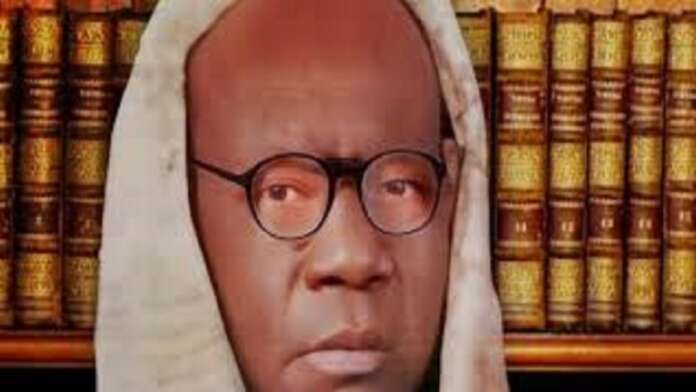
Emanuel Obioma Ogwuegbu: The last of a few good men?

By Chidi Anselm Odinkalu

Phillip Adenekan Adekunle Ademola had everything it takes for an excellent career at the highest levels of a judicial career. He was the grand-son of a king, the son of a Chief Justice and a prince in his own right. In another era, he could easily have become the first second generation Chief Justice of Nigeria, CJN. It was his destiny to make neither and many still believe that he could well have been the ablest Justice of the Supreme Court Nigeria never had.

Born 27 July 1926, Adenekan Ademola finished his high school at Kings College in Lagos in 1944 and attended Higher College Yaba before proceeding to the University of London from where he graduated with a degree in law. When he qualified as a lawyer in 1951, his dad was already a judge, only the third Nigerian to be so appointed. Adenekan Ademola practiced law for the next 19 years and spent three of those years also working as Chairman of the Finance Committee of the Egba Divisional Council in present day Ogun State.

When General Yakubu Gowon gazetted his appointment as a judge of the High Court of the Western State of Nigeria on 18 June 1970, Adenekan Ademola was just 45 years old. His dad, Sir Adetokunbo Ademola, an Egba blue blood, had been in office as the CJN for 12 years. It was two years before Sir Adetokunbo retired as CJN. Five years after his appointment as a judge, in 1977, another soldier, Olusegun Obasanjo, elevated Adenekan Ademola into the pioneer cohort of justices of the Court.

A product of the mostly diffident judicial philosophy of the military era, he did not let the soldiers down. When some pesky Taiwanese litigants approached his bench in the Court of Appeal to hold the military to account for what looked like evident violations of human rights, Adenekan Ademola elegantly counselled judges to “blow muted trumpets.” It was only a matter of time, many thought, before his diligent service was requited by setting him on his way to follow in the footsteps of his celebrated father to the Supreme Court. Many made it there who had but a fraction of his ability and preparation.

On more than two occasions, Adenekan Ademola was actively considered for elevation to the Supreme Court. He had the intellect and pedigree for the role and no one could accuse him of judicial levitas. In the end, it was not to be. There was a persistent objection from another scion of an equally famous Egba dynasty who relentlessly levied serious complaints against Adenekan Ademola which were never dispositively determined. But that was considered enough to ultimately park his judicial career in the cul-de-sac of the Court of Appeal. In 1991, Adenekan Ademola retired from the Court of Appeal. Reflecting his cultured intellectual outlook, he was appointed thereafter as the inaugural Director of Studies of the National Judicial Institute.

In those days, judicial integrity was taken seriously and even the slightest whiff of integrity deficit or exposure attracted career consequences. Sir Olumuyiwa Jibowu was the first Nigerian Justice of the Supreme Court. His reputation as a judge appeared impeccable. In 1957, it emerged that Sir Olumuyiwa had written a letter to an old friend, one Mr. Savage, which was said to have content that made references considered to be insalubrious about the leader of the National Council of Nigeria and Cameroons (NCNC), Dr Nnamdi Azikiwe. One year later, when his name came up for consideration to become the first indigenous CJN, the contents of the letter were enough to force Sir Olumuyiwa’s withdrawal from contention. The beneficiary was Adenekan Ademola’s dad.

Today in Nigeria, closeness to politicians is widely perceived to be a boost to judicial ambitions, not a constraint. A judge of the Federal High Court has recently gone on record to say that to be appointed a federal judge today in Nigeria, “one must either have the backing of the presidency or a political party.”

A widely respected continental medium recently reported under the caption “Why Nigerian judges love Nyesom Wike”, that the Minister of the Federal Capital Territory (FCT) is “lauded like a rock star in judicial circles.” Part of the reason for the judicial superstardom of the FCT Minister is his material “generosity” towards judges.

This was not always the standard judicial fare.

The 1983 elections in Nigeria were quite contentious. Those were the first to be supervised by civilians under the presidential system. Many of the disputes over election outcomes ended up in court. Emanuel Obioma Ogwuegbu, whose death at 91 recently became public, was then a judge of the High Court of Imo State. He later joined Adenekan Ademola in the Court of Appeal. The year after Adenekan Ademola’s retirement, Ogwuegbu proceeded to the Supreme Court where he served for 11 years before retiring in 2003.

One night shortly after the 1983 elections, Obioma Ogwuegbu received an unusual night-time visitor at his official residence in Aba. Onyeso Nwachukwu who died in 2022 was a pious man, an Elder in the church, and the state chairman of the ruling National Party of Nigeria (NPN). On this night, the party chairman arrived with his wife, who blagged her way into the house by dropping the fact that she was a high school contemporary of the judge’s wife at the Community Girls Secondary School, Elelenwo, Rivers State.

Under the guise of a social visit, the party chairman visited to plead the cause of the beaten NPN governorship candidate, Collins Obi. The election petition was yet to be heard and the panel to hear it was not even announced. But the party wanted to advance the judge onto the panel as its “person.”

Obioma Ogwuegbu firmly reprimanded him before ushering him out of the house.

On the grounds of the compound but unknown to the judge, the party chairman had parked a brand-new Range Rover car complete with cellophane frills. As Justice Ogwuegbu ushered him out of the house, he noticed the party chairman walking to slide into another well-appointed sedan. So, he asked who the owner of the new Range Rover was. In response, the party chairman sidled up to the judge to inform him that he was the proud recipient of the four-wheel gift for his end of year.

Obioma Ogwuegbu smiled and pleaded with the party chairman to spare him further hardship. He explained that he had enough problems maintaining his Mercedes Benz car on his judicial salary and could not afford the financial exposure of trying to maintain an exponentially more expensive car. He insisted that the party chairman had to go with the car in the same manner that he brought it onto his compound. Obioma Ogwuegbu later begged off election tribunal duty because of this.

With reluctance, Elder Onyeso Nwachukwu drove out in the Range Rover which was manifestly meant to bribe an honest judge. For the remainder of his life, however, he lived in awe of Obioma Ogwuegbu because, he said, the judge belonged to that rare breed who could not be bought.

Honorable Justice Emanuel Obioma Ogwuegbu was part of a generation in which judging was a deservedly elevated calling. In return, society honoured people like him with the honorific “My Lord”, an acknowledgement that they were called to a job that is truly divine. Today, the senior-most lawyers publicly twerk to partisan orchestras conducted by people who were in professional diapers when they were already in the Inner Bar and judges are made to believe it is kosher to enjoy political joy-rides and be serenaded with four-wheel bribes by politically exposed persons.

There will be time to return to the matter of how judicial integrity descended into their current morass and to address what can be done about that. For the moment, it is time to honour the memories of a generation of men and women, epitomized by Emanuel Obioma Ogwuegbu, who put the “honorable” into the appellation, “Honorable Justice.”

A lawyer and a teacher, Odinkalu can be reached at [email protected]

Anioma Peoples Development Think Tank [APEDETT] announces her 1st monthly dialogue

Anioma Peoples Development Think Tank [APEDETT] will hold her 1st Monthly Dialogue The [Virtual] on Sunday, 17th NOVEMBER 2024 at 7 pm.

THEME: THE IMPERATIVE OF CREATING ANIOMA STATE: TO BE OR NOT TO BE? AND IN WHAT GEOPOLITICAL ZONE, IF AT ALL?

Zoom Link – Time: Nov 17, 2024 19:00 Africa/Lagos

Join Zoom Meeting
https://us02web.zoom.us/j/89396182282?pwd=yPaiKVnNigcuVG57iErKiVjz0T5Zcu.1

Meeting ID: 893 9618 2282
Passcode: 083887

Date: Sunday, 17th November 2024
Time: 7pm prompt

LEAD SPEAKER:
Prof. Sylvester Monye, MFR (Special Adviser to the President on Performance, Evaluation and Monitoring – 2011-2015).
DISCUSSANT:
Chief Steve Ikpade of Agbor Kingdom

APEDETT is committed to thinking Anioma into prosperity, and the monthly dialogue of which this is the first is a crucial part of this vision.

Dated this 30th day of October, 2024
Ikeazor Ajovi Akaraiwe, SAN
[President of APEDETT]

21-year-old man convicted for killing friend who grabbed the butt of hooker he hired

For killing his friend, Takudzwa Kavhuru, during a dispute over a commercial sex worker at Matomati Bar, a 21-year-old man, Passwell Chiwaura, has been convicted.

The incident occurred after Kavhuru reportedly grabbed the butt of a companion Chiwaura had hired for the night.

Justice Munamato Mutevedzi of the High Court found Chiwaura guilty of murder after a year-long pretrial detention. The sentencing date is yet to be determined.

H-Metro reported that the altercation took place last year when Chiwaura, Kavhuru, and two commercial sex workers, Joyce Gwese and Patience Gezi, were drinking at the bar. The situation escalated when Kavhuru touched Gezi, whom Chiwaura had hired.

Gwese reprimanded Kavhuru, leading to a confrontation between him and Chiwaura. According to the prosecution, Chiwaura overheard the exchange and confronted Kavhuru, and a scuffle ensued.

During the fight, Chiwaura grabbed a broken beer bottle and stabbed Kavhuru in the stomach, causing fatal injuries. Kavhuru was rushed to a nearby hospital with his intestines exposed but succumbed to his injuries upon arrival.

During the trial, Chiwaura denied intending to kill Kavhuru, claiming self-defence. He argued that he mistook his friend for an attacker amid a perceived gang threat. However, Justice Mutevedzi dismissed this argument.

“It is for the same reason that this aspect of the accused’s defence remained tepid. It was not seriously argued. We dismiss it like we dismissed the accused’s self-defence argument,” said Justice Mutevedzi.

The court concluded that the State had proven beyond reasonable doubt that Chiwaura was guilty of murder.

Chiwaura has been in custody for 14 months and will be sentenced at a later date, with the court expected to weigh the severity of the crime.

Chukwuemeka Odumegwu-Ojukwu University (COOU) seeks to institute Genius Fund, TGF

My name is Chidi Anselm Odinkalu. I am a teacher and I chair the Governing Council of the Chukwuemeka Odumegwu-Ojukwu (COOU).

I recognize this is a busy time of year. It is also a difficult season. For those of you who are about to make commitments at the end of this year, I seek your permission to put one thing on your radar.

In Anambra State and the south-east, our people, especially our young people, are our biggest investments. Today, we are losing many of them to avoidable distractions. Attrition & dropout rates from basic education are rising, especially among boys. Many who finish from high school are unable to go further because of hardship or financial or exclusion.

At the COOU, we are committed to a simple idea: no young person from Anambra State who has the grades and the ability and who desires to should be excluded from access to University education because of financial hardship.

To finance this idea, the Governing Council has authorized the establishment of a social solidarity fund for education called TGF – The Genius Fund.

Proceeds from TGF will support awards to finance the education of deserving beneficiaries at the COOU, including those from host communities.

TGF Funds under authority of the Council will be ring-fenced. Council will provide an annual report to on fund management. Those who contribute to the Fund will be our investment partners in this model of education financing.

Awards under the Fund are not open to children or relatives of staff, faculty, management, Council or other persons on organs of the university or staff of the public service.

We propose to designate the first TGF awards on the silver jubilee of the university next year and seek the participation and investment of alumni, civics, communities, professionals, business people and Ndi Anambra niiné. I have already made my commitment and so have all the external members of my Governing Council.

On behalf of my colleagues on the Council, I seek to enlist your partnership in this model. You can make your contribution directly to:

COOU TGF Account, Zenith Bank, AC No. 1313240404

You can also #AdoptAGenius. Pledges are also welcome. I am happy to answer any questions and so will the University management.

Many thanks.

Chidi Anselm Odinkalu

Professor Odinkalu, let the New CJN Breathe!

By Omoniyi Osadare

In recent times Professor Chidi Odinkalu has become a constant critique and “thorn in the flesh” of the Nigerian Judiciary and he is very right to do so because the Nigerian Judiciary has in recent times become a shadow of its former self with its inconsistent decisions and it indeed appears to have been hijacked in many respects by unscrupulous people.

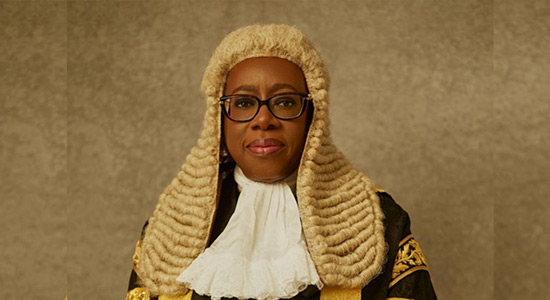
As soon as the current CJN Hon Justice Kudirat Kekere-Ekun resumed office, Professor Odinkalu continued his spate of criticism against the Judiciary and has even attacked the CJN ‘s character raising insinuations she has been captured or about to be captured by Politicians and unscrupulous persons.

His latest missile is against the Dinner hosted by the Lagos State Government to celebrate the appointment of the current CJN who is the third indigene of Lagos State to be appointed to the exalted position of Chief Justice of Nigeria.

Professor Odinkalu says that Justice Kekere Ekun ought not to have attended the event because Lagos State is a litigant at the Supreme Court and he suggests that her attendance may colour her objectivity and may affect the Supreme Court’s impartiality in their ultimate decision.

With due respect to Professor Odinkalu, his submission is “balderdash ” and without basis for the following reasons:

  1. Justice Kekere Ekun is a respected, impartial and fearless jurist who has been a Judge at all levels of the Judiciary including the Magistracy and has never been indicted for any form of impartiality or moral turpitude in the course of her judicial career.
  2. Secondly, as CJN she is now the Administrative head of an arm of Government and must as a matter of course interact with other representatives of the other arms of Government including the State Government as part of her administrative duties. Some of those duties will include attending social events of the Government that should not necessarily carry any imputation of malfeasance or compromise.
  3. ⁠Attending a dinner event compromising mainly Judges from all levels of the Judiciary and legal practitioners to honour one of their own who has attained the highest office in the Judiciary cannot be interpreted by a stroke of imagination as a prelude to compromise by this respected Jurist.
  4. ⁠The decisions at the Supreme Court are rendered by Panels of five and seven as the case may be, so the CJN does not make unilateral decisions as Professor Odinkalu would want the undiscerning public to believe.
  5. Judges may be “Godlike” but they are human beings and members of the Society and cannot therefore be completely insulated from Society because their judgements must continue to reflect the ethos and character of a society that remains dynamic and changing. The most important traits are that the Judex must be fearless and upright and be prepared to deliver justice based on law and equity no matter whose ox is gored. I dare say that the new CJN possesses these qualities and is unlikely to be swayed by her attendance at an event organised by her State of origin to honour her ascendancy to the apex of her profession.

Professor Odinkalu should put his excellent writing skills to better use by putting forward a world-class position paper with specifics and not generalities for consideration by the CJN in her quest to retool the Judiciary .

After all, criticism cannot be for criticism’s sake alone ..it must be constructive.
Professor Odinkalu should let the new CJN breathe!!!!!

Industrial Court President reveals why government lawyers lose cases

  • “We are only as strong as our weakest link”, AGF Fagbemi, SAN

Hon. Justice Benedict Kanyip, President of the National Industrial Court of Nigeria, (NICN), has given insight into why lawyers in the employ of the Federal Government, lose cases in court.

His Lordship who spoke at the opening session of a training on proceedings of the NICN, organised for State Counsel recently in the Federal Ministry of Justice, said it was unfortunate that many government lawyers appear in court not only unprepared but also ignorant of new developments in the jurisprudence.

“Many cases have been lost by the government due to the incompetence of counsel,” the NICN President said.

He disclosed that the situation got to a point where a former Solicitor-General of the Federation confronted him to complain that the government was losing a lot of cases.

According to Justice Kanyip, while the Federal government was complaining about its inability to win most industrial-related disputes, labour unions, on the other hand, accused the court of favouring the government.

Pointing out that many state counsel approach the NICN with the erroneous notion that it shares similar procedural guidelines and practice directions with the Federal High Court, he confessed that: “In such cases, there is nothing we can do.”

Continuing, he stated that: “As Judges, there are limits that we can go into the arena. Recently, I did a case that involved Shell. Apart from the state counsel coming late to court, there was late filing of processes with the excuse being that he could not find the case file.

“I asked if counsel wanted to get the certified copies from the court and he said no, so, I dismissed the excuse. Even though the case was won at the end of the day, it was not because of the effort of counsel, but because of the industry of the bench.”

While declaring the training open, the Attorney-General of the Federation and Minister of Justice, Prince Lateef Fagbemi, SAN, said the aim was to build the capacity of lawyers in the Ministry of Justice “in the resolution of industrial disputes either through the litigation or mediation windows offered by the NICN.”

The AGF maintained that the NICN, being a specialized court with expertise in the increasingly complex field of labour law, employment matters and trade unions, plays a critical role in the protection and balancing of employer and employee rights, ensuring socio-industrial stability, and economic development of the country.

“Let me also emphasize that this Hon. Court is also vital to the sustenance of government policies as exemplified by cases which have challenged or borders on interpretation of the Public Service Rules, government circulars, tenure policy in the Federal Public Service, issues bordering on sensitive matters of recruitment, remuneration, pension, termination, etc.

“The role of the NICN is therefore critical to our national interest, as it has the responsibility not only to resolve labour disputes but to shape the environment in which workers and employers can coexist productively.

“This court, by its decisions, promotes the stability required for sustainable economic growth and sets standards that encourage both foreign and local investments.

“To my colleagues from the Federal Ministry of Justice, the work that each one of us does as Legal Officer in our various entities is pivotal in enhancing the fortunes of this country.

“Our legal opinions, drafting, decisions and approach to issues have consequences that extend beyond the legal field to socio-political and economic fields.

“Therefore, it is essential to strengthen our collective skills and ensure we are well-equipped to address the evolving legal challenges starring our dear nation.

“Sadly, we are only as strong as our weakest link. As the legal arm of the government, our responsibility is to uphold and enforce the laws of the land with integrity, professionalism, and impartiality.

“The demands of this role are immense, requiring not only technical legal expertise but the unique practical application of these principles in a rapidly changing society like ours.

“This training therefore offers a unique platform to deepen our skills, sharpen our knowledge, and prepare for the complexities we face as legal professionals.

“As an administration, we will continue to invest in capacity development initiatives for our law officers in all recondite/specialized areas of public law to substantially improve upon the quality of prosecution and defence conducted on behalf of the government, so as to meet contemporary demands of good governance.

“It is my earnest expectation that this training, which will be continuous, will adequately address the genuine concerns of the bench and the law officers appearing before your Lordships as it relates to the conduct of trial proceedings before the court,” the AGF stated.

Senior lawyers say, forcing an employee to join morning devotion is a breach of right to freedom of association and faith

A former First Vice President of the Nigerian Bar Association (NBA) Mr Ikeazor Akaraiwe, SAN, has weighed into the forced resignation of a young lawyer as a Trust Associate at a financial institution, Capital Express Global Trustees Limited, Lagos, following his refusal to take part in the organisation’s morning devotion.

Reacting to the development which has drawn sharp criticisms from various quarters particularly since the lawyer, Unique Eke, a Jehovah’s Witness was not notified about the company policy of compulsory morning devotion before his employment, Akaraiwer, SAN said:

“Failure to disclose, in the letter of employment, that morning devotion is compulsory taints the employer’s insistence on compulsory attendance with illegality.

“The employee might have a cause of action against the employer especially in the light of the email received one day after his “forced” resignation to the effect that he was sacked for poor productivity or words to that effect.”

Likewise, Mr Dele Aloko, a top HR Professional and Management Consultant had this to say.

“As an HR Professional, I find so many things wrong with this episode.

  1. Compelling attendance at an event that was not made a term of his contract of employment.
  2. ⁠Breach of his right to freedom of association and faith.
  3. ⁠No visible involvement of HR in the process. Clearly, HR is weak or non existent. This is sadly, all too common in the financial sector in Nigeria
  4. ⁠Purporting to terminate the employee after his resignation (clearly an afterthought, after they realized their error)

“The resignation letter shows that the employee is aware of his rights that have been infringed. I hope he pursues an action to enforce them.”

Unique Eke’s predicament brought the conflict between religious beliefs and workplace ethics when Capital Express Global Trustees Limited on Thursday forced him to resign from his appointment over his refusal to participate in the compulsory daily 20-minute morning devotion in the office.

Although nothing in Unique Eke’s appointment letter spelt out certain religious regulations every staff member must abide by, nor was he informed by other means at the time of his employment that refusal to comply with the company’s unwritten religious policy could cost him his job, Eke was instructed by the company’s Group Managing Director (GMD), Obaleke Olufemi to tender his resignation since he (Eke) maintained that his religious belief restrains him from participating in the morning devotion.

Trouble began for the lawyer, a Jehovah’s Witness on Wednesday, November 13, 2024, when he was summoned to the office of the GMD accompanied by other top staff members Mr. Olufemi Kalejaiye and Mrs. Oyinposola Akinsulie.

After expressing his annoyance over Eke’s continual absence at the morning devotion, stressing that it is intrinsic to the organisation’s ideology, he advised Eke to tender his resignation immediately if he could not comply with the policy.

On being summoned again by the GMD on Thursday, Eke’s moves to explain how the policy conflicts with his personal convictions as well as his request for some time to consider the directive was refused as Mr. Olufemi insisted on a letter of resignation by 9:00 a.m. on of the same day.

A part of his resignation letter of November 14, 2024, reads:

“Further to the directives of Mr. Obaleke  Olufemi, the General Managing Director, I hereby tender my resignation from the employment of Capital Express Global Trustees Limited as a Trust Associate.

“On November 13, 2024, at about 8:15 a.m., Mr. Olufemi, in the company of Mr. Olufemi Kalejaiye and Mrs. Oyinposola Akinsulie, expressed disgust at my exercise of the right to be excluded from the office morning devotion, a religious activity which I chose not to participate in. He thereafter directed me to submit my resignation, effective immediately.

“On November 14, 2024, at about 8:00 a.m., I met with Mr. Olufemi in an attempt to explain the reason for my refusal to participate in the religious activity. After our discussion, he reaffirmed his earlier directive and advised me to comply with it on or before 9:00 a.m.

“Notwithstanding the above, I am grateful for the opportunity to have worked here. Thank you…”

Interestingly however, Eke got an email from the company stating that his services were no longer required as his “performance” had been found “to be grossly below acceptance levels.”

This development has led some public affairs analysts to question whether a premium should be placed on competence or certain religious practices or both in organisations.

The legality or constitutionality of FCT Minister building houses for judges in the FCT

By Chief Jibrin Samuel Okutepa, SAN, Bencher

It is no longer news that the Hon Minister of the FCT, Nyesom E.Wike Esq, Life Bencher, is said to have secured the approval of Mr. President to build 40 houses for judicial officers of the High Court of the FCT, Federal High Court and Court of Appeal, Abuja. In a widely televised media chat on the 13th of November 2024, the Hon Minister who himself is a lawyer, justified the decision to build these houses for Nigerian judges with many reasons, which reasons with profound respect did not appeal to me in the least and the reasons seemed to overlook the legality and constitutionality of the project.

1.0. There is no doubt that the Hon Minister of the FCT is a lawyer. He knows the law, although God forbid that he should know all the law. He is not an ordinary minister whose qualification is a Secondary School Certificate or its equivalent as defined by Section 318 of the Constitution of the Federal Republic of Nigeria, 1999 (as amended). A lot has been said by well-meaning Nigerians, and I am proposing to examine the legality or constitutionality of this Housing project for judges to be undertaken by the FCT Minister and not the National Judicial Council.

2.0. The Federal Capital Territory (FCT), Nigeria is a creation of law and operates under specific legal frameworks, which also outline the duties and functions of the Minister of the FCT and the constitutional provisions governing the financial autonomy of the Judiciary. With the recent passage of Act No. 28 of 2023 and subsequently assented by Mr. President, even if Mr. Wike had built houses for judges before this Act was passed and signed with all the best of intention, can he or any other member of the executive arm of government, still undertake housing and other capital projects for Nigerian judiciary without the NJC? I do not think so.

3.0. There is no debate that Act No. 28 of 2023 amends the Nigerian Constitution to grant financial independence to the Judiciary. The question then arises whether the Minister of the Federal Capital Territory (FCT) has the legal stand to initiate projects, such as the construction of housing for Judges, that may potentially conflict with the constitutional autonomy granted to the Judiciary. In examining the legality of such actions of the Minister of the Federal Capital Territory, focus will be placed on the following aspects:

  1. The powers of the Minister of the FCT;
  2. The role of the Judiciary in the context of constitutional amendments;
  3. The allocation and control of funds meant for the Judiciary;
  4. The legal implications of the Minister’s decision.

POTENTIAL CONFLICTS OF INTEREST AND THE APPEARANCE OF IMPROPRIETY: THE POWERS AND DUTIES OF THE MINISTER OF THE FEDERAL CAPITAL TERRITORY

ROLE AND POWERS OF THE MINISTER OF THE FCT:

4.0. The Minister of the FCT has significant powers regarding land management, urban planning, and development within Abuja, as outlined in various statutes, such as the Federal Capital Territory Act, Cap. F6, LFN 2004, the Urban and Regional Planning Act, Cap. 136, LFN 2004, and the Land Use Act. However, these powers are not without limitations, especially when they intersect with other constitutional provisions, particularly those that protect the Judiciary’s autonomy. Section 302 of the Constitution of the Federal Republic of Nigeria, 1999 (as amended) provides:

“The President may in the exercise of the powers conferred upon him by Section 147 of this constitution, appoint for the Federal Capital Territory, Abuja a minister who shall exercise such powers and perform such functions as may be delegated to him by the president, from time to time.”

The power the president can delegate to the Minister must be the Executive powers set out in Section 5 of the constitution and does not extend to powers vested in the National Judicial Council, NJC.

5.0. Under the above section and other Sections of the Constitution of the Federal Republic of Nigeria, 1999 (as amended), such as Section 299 which empowers the Minister to operate as Governor of a State, the Minister of the Federal Capital Territory (FCT) is responsible for the governance of the Federal Capital Territory (Abuja), and the administration of its affairs. The Minister’s powers are largely executive in nature and pertain to urban planning, infrastructural development, land management, and the overall administration of the territory. However, the powers of the Minister are defined within the framework of the Constitution and he must therefore adhere to the principle of separation of powers and respect for the autonomy of other arms of government, including the Judiciary.

6.0. Key powers of the Minister include:

6.1. Urban Planning and Infrastructure Development: The Minister oversees urban development, including construction projects, land allocation, and zoning within the FCT. Section 18 of the Federal Capital Territory Act (Cap. F6), Laws of the Federation of Nigeria empowers the Minister to manage land within the FCT, allocate land, and develop the Capital. However, land allocation and displacement of occupants typically require adherence to specific procedures (including compliance with zoning laws, fair compensation, and consideration of stakeholders’ rights).

6.2. Administration of Land: The Minister has the authority to manage land within the FCT, including its allocation and re-development.

6.3. Coordination of FCT Agencies: The Minister is responsible for coordinating the activities of various agencies within the FCT, including those related to urban development, transportation, and housing.

7.0. It must be stated, however, that these powers are not limitless. The Minister must operate within the scope of the law and cannot usurp the powers of other arms of government, particularly the Judiciary, especially after the constitutional amendment granting financial autonomy to the Judiciary. As admirably put by his lordship Ogunbiyi JSC as he then was in Kayili vs. Yilbuk (2015) 7 NWLR (Pt. 1457) 26 at PP. 55 at Paras D-G., the constitution is very clear and specific on the separation of powers between the arms of government to wit: the executive, legislature and the judiciary at both federal and state levels; thus, the executive cannot exercise or usurp the powers of the judiciary and vis-visa.

THE LEGAL FRAMEWORK FOR JUDICIAL AUTONOMY POST – 2023 CONSTITUTIONAL AMENDMENT

8.0. The Amendment done to the Constitution in 2023 by Act No. 28 is a landmark piece of legislation that grants the Judiciary financial autonomy. Specifically, in Section 81(2), (3) and (4), the constitution provides that:

“(2) The heads of expenditure contained in the estimate other than expenditure charged upon the Consolidated Revenue Fund of the Federation by this constitution shall be included in a bill to be known as an Appropriation Bill, providing for the issue from the consolidated revenue funds of the sums necessary to meet that expenditure and the appropriation of those sums for the purpose specified therein.

(3) The amount standing to the credit of the – Judiciary in the consolidated Revenue Fund of the Federation shall be paid directly to the National Judicial Council for disbursement to the Heads of the Court established for the Federation and the States under section 6 of this constitution.

(4) If in respect of any financial year, it is found that:

(a) the amount appropriated by the appropriation Act for any purpose is insufficient; or

(b) a need has arisen for expenditure for a purpose for which no amount has been appropriated by the Act, a supplementary estimate showing the sums required shall be laid before each House of the National Assembly and the heads of any such expenditure shall be included in a supplementary Appropriation Bill.”

9.0. It is clear from the above provisions that the funds meant for the capital and recurrent expenditure of the Judiciary, shall be directly disbursed to the heads of Courts, including the Chief Justice of Nigeria (CJN) and the heads of other courts in the states including the Chief Judge of the FCT, Chief Judge of the Federal High Court and the President of the Court of Appeal. It was the intention of the lawmakers that the judiciary shall no longer rely on the executive or legislative branches for its funding. This is to ensure the independence of the Judiciary from political influence. Before this amendment, the Judiciary through the National Judicial Council (NJC) would prepare its budget which covered the operation of various courts and present the proposed budget to the National Assembly (Senate and House of Representatives) for review, amendment and approval. After approval, the National Judicial Council would coordinate the activities of the Judiciary therefrom but would have no control over the disbursement of funds to the Judiciary.

11.0. The Judiciary had no control over its funding; it relied on the Executive and Legislature for its funding creating the potential for political interference. The 2023 amendment to the Constitution corrects this by providing a direct and independent funding stream for the Judiciary, reinforcing the principle of separation of powers and the independence of the judicial arm of government. Under this constitutional amendment, it is clear that the financial management of the Judiciary, including capital expenditures, such as the construction of housing units for Judges, falls under the purview of the Judiciary and its administrative organs; not the FCTA, the Minister, the President himself or any member of the executive arm. The direct allocation of funds to the Judiciary is designed to preserve its autonomy and prevent any undue influence or control by the executive branch, including the Minister of the FCT.

    ANALYSIS OF THE MINISTER’S ACTION IN CONSTRUCTING HOUSING UNITS FOR JUDGES

    12.0. In September 2024, the Federal Executive Council (FEC) approved the construction of 40 housing units for Judges and justices in the FCT. The FCT Minister, Nyesom Wike, revealed this to State House correspondents after the 18th Council meeting, which was chaired by President Bola Ahmed Tinubu, at the Aso Rock Villa, Abuja. He said the decision was part of the government’s Renewed Hope Housing agenda to provide secure and convenient accommodation for judicial officers. Of the 40 units to be constructed in the Katampe District, 20 will be allocated to the FCT High Court, 10 to the Federal High Court, and 10 to the Court of Appeal. The land on which the houses would be built was seized by the FCT administration from the construction giant, Julius Berger Nigeria. The Minister of the Federal Capital Territory’s action of constructing housing units for Judges raises several legal questions:

      DOES THE MINISTER HAVE THE LEGAL AUTHORITY TO CONSTRUCT HOUSING UNITS FOR JUDGES?

      13.0.  I do not think so. It is unconstitutional. From which budget are the houses being built? The FCT Minister is not a member of the judiciary – at least for now. The constitutional autonomy of the Judiciary, especially post – 2023 amendment of the Constitution by virtue of Section 81(2) (3), and (4) of the constitution, raises serious concerns regarding whether the Minister of the FCT can unilaterally decide to build houses for Judges. Building housing for Judges would fall under a significant capital expenditure item. However, given that the Judiciary now controls its own budget, the Minister cannot be said to retain the requisite legal authority to initiate such projects without the approval of the Judiciary’s head i.e. the Chief Justice of Nigeria or the heads of the respective Courts. The President who approved the building of these projects is not the Head of the judiciary. He is also not the chairman of NJC. The Judiciary’s control over its finances suggests that any housing project for Judges should be proposed and financed directly by the Judiciary, not the Minister of the FCT.

        CONFLICT WITH THE JUDICIARY’S FINANCIAL AUTONOMY:

        14.0. The act of the Minister to unilaterally construct 40 houses for Judges is in direct conflict with the financial autonomy of the judiciary and it is undermining the financial autonomy granted to the Judiciary under the 2023 constitutional amendment. The direct implication of the new provision is that the Judiciary’s budget is now free from executive control, and the Minister’s involvement in such a project is an infringement on the Judiciary’s autonomy. That the minister did build houses for judges while he was the Governor of Rivers State between 2015 – 2023, cannot excuse his doing so as a minister in 2024 given the coming into force of Act No 28 of 2023, which was assented by the president. The Hon. Minister cannot agree to the direction of Mr. President in breach of the constitution. The Constitution is supreme to both the President, the Minister and even the judiciary. See Section 1(1) of the Constitution of the Federal Republic of Nigeria, 1999 (as amended).

        15.0. It is submitted that what the Hon. Minister and the President have agreed to do, that is building 40 houses for judicial officers under the renewed hope agenda, is nothing but constitutional iniquity and sacrilege. Furthermore, any attempt by the Minister to embark on this Housing expenditure on behalf of the Judiciary would clearly amount to encroaching on the Judiciary’s ability to manage its own affairs. Such encroachment it is submitted, undermines the spirit of the constitutional amendment, which sought to ensure that the Judiciary remains independent of political interference.

          THE POLITICAL AND SELF-SERVING NATURE OF THE ACTION:

          16.0. One of the critical concerns in this context is whether the Minister’s decision to build houses for Judges is not self-serving or politically motivated. Housing projects, especially those targeting high-ranking individuals like Judges, are a sensitive matter and can easily be perceived as an attempt to curry favour with the Judiciary for political leverage. In this context, the Minister’s actions could be seen and have been seen by all reasonable men in the society, as an attempt to consolidate political power or seek undue influence over the Judiciary. Speaking on a media chat, the FCT minister on the 13th of November, 2024 denied the allegations that the building of the houses for Judges in Abuja was aimed at “pocketing them for political gains”. Minister Wike insisted that the project was approved in the 2024 budget and that he was only performing his duty by implementing it. He added that the building of the Judges’ quarters was not his policy but part of welfare packages that President Tinubu designed for the Judges to promote the independence of the Judiciary.

          17.0. Minister Wike claimed that President Tinubu asked him, ‘Where are the Judges living? They have no homes and are, therefore, open to political manipulations, and for him as a president who wants to guarantee the independence of the Judiciary, Judges must have their homes. The Minister announced that President Bola Tinubu approved and sent to the National Assembly, as part of the 2024 budget, a proposal for the construction of residences for judges and justices. This initiative aims to relocate judges from rented accommodations, where they often live alongside criminals, to secure and convenient quarters. Minister Wike further insisted that there was nothing wrong even if it was his idea to construct homes for Judges, adding that he did something similar as Governor of Rivers State.

          18.0. These arguments with profound respect cannot survive the reasonable man test and constitutionality rooted in the separation of powers as enacted under Act No 28 of 2023. The National Assembly cannot pass a budget for Minister Wike to construct houses for judges because the constitution says that:

            The amount standing to the credit of the – Judiciary in the consolidated Revenue Fund of the Federation shall be paid directly to the National Judicial Council for disbursement to the Heads of the Court established for the Federation and the States under section 6 of this constitution. … If in respect of any financial year, it is found that:(a) the amount appropriated by the appropriation Act for any purpose is insufficient; or

            (b) a need has arisen for expenditure for a purpose for which no amount has been appropriated by the Act, a supplementary estimate showing the sums required shall be laid before each House of the National Assembly and the heads of any such expenditure shall be included in a supplementary Appropriation Bill.”

            19.0. Even if the money was budgeted as Minister Wike postulated, the constitution says that that money must be paid directly to the National Judicial Council which has the constitutional duty to disburse the money to the heads of Courts to build the houses through appropriate agencies of the judiciary. The argument that if the judiciary were to award contracts and a dispute arises, the issue of “who will decide the case?” would arise, is an argument rooted in partisan self-serving interest. Judges have sued NJC on several occasions or Federal Judicial Service Commissions or such other judicial organs and judgements given against these organs of the judiciary.

            20. The appearance of impropriety is crucial in this analysis. Even if the Minister’s actions are well-intentioned, the optics of an executive branch official providing housing for the Judiciary can and has the potential of further eroding public trust and the impartiality of the Judiciary. There has never been a time that the image of the Nigerian judiciary has been lowered than now. Judicial rating is low in geometric proportion. The Judiciary is expected to be free from political influence and any action by the executive that could be seen as a gift or a favour, risks tainting the perception of interference in judicial decisions by the executive. This could lead to public concerns about the independence of the Judiciary and its ability to make unbiased decisions without fear of political retribution. The action of the Minister completely contravenes and defeats the entire purpose of putting the National Judicial Council in charge of the capital and recurrent expenditure of the Judiciary.

            21. Furthermore, the Federal Capital Territory as well as the FCDA and the Federal Republic of Nigeria have cases pending before these Judges. On the theory of equality before the court, the executive cannot be found to be publicly gifting the Judges who are going to determine their cases. If the action of the minister is indeed not self-serving and a need arises for better housing of Judges, then the Judiciary is to propose a capital expenditure for such a project. It must do so as part of its budget request, presented to the National Assembly as part of the broader Appropriation Bill. The legislature must then approve it, and it must be disbursed to the Judiciary’s administrative body, which will oversee its implementation. That is what the constitution says and Minister Wike cannot breach the constitution with the pride of having 40 houses to be built by him for judges.

            22..0. The Minister of the FCT, in this context, has no role in directly allocating or controlling the use of such funds, especially since the Judiciary is now constitutionally empowered to manage its own capital and recurrent expenditures. The Minister of the FCT’s action is ultra vires and gives the impression of self-serving partisan political interest. Section 81(3) of the Constitution now directly grants the Judiciary the authority to handle funds meant for judicial infrastructure, including housing for Judges. The Minister’s interference violates these principles and gives the appearance of impropriety as the Minister will be acting independently without even the involvement or collaboration with the Judiciary or clear legal justification.

            23.0. In light of the 2023 constitutional amendment granting the Judiciary financial autonomy, the Minister of the Federal Capital Territory does not have the legal authority to initiate a housing project for Judges. Such decisions fall within the exclusive purview of the Judiciary, particularly in relation to capital expenditures intended for its own officers. The potential for the Minister’s actions to be viewed as politically motivated or self-serving is significant. Even if no direct corruption or improper conduct is involved, the appearance of impropriety could undermine public trust in both the Judiciary and the executive. This situation presents a conflict between the constitutional principles of judicial independence and the power dynamics within the Nigerian government. While the Minister of the FCT may have good intentions in seeking to improve the living conditions of Judges, any initiative in this direction should be coordinated with and executed by the Judiciary, not the executive.

            24.0. The Judiciary must retain control over its financial matters to preserve its independence and avoid any appearance of partisan influence. Thus, the Minister’s unilateral decision to construct housing units for Judges not only breaches constitutional principles but also carries significant political and legal risks. The Minister of the Federal Capital Territory (FCT) by virtue of the Constitution of the Federal Republic of Nigeria, 1999 (as amended) and the Federal Capital Territory Act, is vested with significant executive powers related to urban planning and land administration within the FCT. However, the 2023 constitutional amendment Act No. 2, which grants the Judiciary financial independence, creates a clear separation between the functions of the Judiciary and the Executive. The Judiciary, in its new autonomous role, now has full control over its own budget, including capital and recurrent expenditures, such as housing projects for Judges.

            25.0. Therefore, the decision by the Minister of the FCT to independently initiate a housing project for Judges is problematic, legally questionable, and potentially unconstitutional. Such actions infringe upon the Judiciary’s newly established financial autonomy and circumvent the constitutional process that ensures the Judiciary’s independence from executive influence. The Appropriation Bill plays a critical role in ensuring that public funds are allocated transparently and appropriately. While the executive branch continues to play a central role in proposing the national budget, the Judiciary now controls its own fiscal matters, including how and when funds for capital projects like housing for Judges are to be used. If the Judiciary believes such a project is necessary, it must request funding through its own budget, subject to approval by the National Assembly. The Executive, represented by the Minister of the FCT, has no authority to initiate such projects independently, particularly when doing so could be seen as politically motivated or self-serving. The Minister’s unilateral decision to embark on a project like the building of houses for Judges could easily be perceived as an attempt to gain favour or influence over the Judiciary. Even if the project were well-intentioned, the optics of such actions would risk undermining public trust in the independence and impartiality of the Judiciary. This is especially concerning in a country where the principle of separation of powers is fundamental to the proper functioning of democracy.

            26.0. Let the Minister and the President have a rethink. The executive cannot breach the Nigerian constitution under the renewed hope agenda and expect Nigerians to praise them.


              TIPS