Home Blog Page 473

Kidnappings, crimes that “defy” a government

By Emmanuel Onwubiko

Just after attending the Holy Mass of Sunday January 5th 2025 which was marked as the Epiphany of our LORD and SAVIOUR JESUS CHRIST, yours faithfully decided to take an hair cut in one of the most staffed and well governed barbing saloons located in Wuse 2 in a place considered as one of the centres of businesses in the Federal Capital Territory.

It was at the saloon that the receptionist who announced to me that a barber would soon be available to attend to me, gave me one of the day’s copies. I think it was either Sunday Punch or Thisday on Sunday. I then went straight to read the human angle interview’s page which to me is the most illuminating of all the news pages because most of these interviewees are persons who passed through the shadows of deaths and survived by the whiskers. The story that attracted and indeed tickled my fancy, was a true life crime story about a teenager sentenced to death for stealing fowls in Osun state.

This Osun state resident,Segun Olowookere, who was sentenced to death by hanging for stealing a chicken and eggs in 2010, had revealed in the interview that he would prostate and thanked the judge who asked that he should be executed.

Olowookere stated this during a recent interview where he was asked if he want the government to revisit his case.

He Said; “No. I do not want the government to do anything to those who implicated me. I have accepted my fate. I have learnt that whatever will come to pass will surely come to pass. I cannot blame anyone for my travail. If I have the opportunity to meet the judge who sentenced me to death, I will prostrate and thank him.

“If he had discharged and acquitted me then, God knows what the person who planned what happened to me would have done to me. He might have found a way to kill me. I might have died. The judge who sentenced me did well; he added a chance for the governor to pardon me after 10 years. I don’t harbour any ill feeling towards the judge or anybody.

“But I will advise the police to be responsible and civil in discharging their duties. Not everyone will have the grace of coming out for people with a good heart and improved character. The police should try as much as possible to investigate thoroughly and weigh the level of offence before rushing to try suspects in court.

The aforementioned story tells anyone that the Country’s legal system isn’t totally free from internal and Systemic Challenges. In both the Criminal code and Penal Code which applies in the South of Nigeria and North of Nigeria, there are embedded dysfunctionality that DEFIES logic to such an extent that it would seem that suspects who commit petty crimes, get heavier sentences whereas bigger felons, especially those with the cash to manipulate the legal system, are prosecuted for a deliberately prolonged period of time during which times, most of these hitherto high profile cases involving politically exposed persons are quietly abandoned.

But there is also some crimes that are looking like they are much more sophisticated than the government of the day to such a ridiculous extent that these heinous crimes have been allowed by both the immediate past corrupt administration of Major General Muhammadu Buhari and the current President Bola Ahmed Tinubu’s administration to continue to defy solutions.

These crimes of kidnappings have constituted the greatest cog in the wheel of progress of millions of Nigerians. Kidnappings are happening all around us but the security forces set up, equipped, trained as it were, to crack down on these practitioners of evil acts, have spectacularly failed to find a lasting solutions to them. State justice administration in the subnational entities that make up the federation of Nigeria, appear overwhelmed to tackle and deal decisively with kidnappers.

The crimes of kidnappings have become so endemic that most unfortunate Nigerian travellers kidnapped by these terrorists are detained as hostages for months and some lucky ones who survived to witness their eventual freedoms after heavy financial payout are made by their families, have emerged to reel out intriguing stories that point to one certainty: that there is a collusion between some operatives of the security agencies and these armed abductors most of whom are never actually caught and penalised by the government.

For eight years that the last administration lasted, armed Fulani terrorists gained ascendancy in the hierarchy and sophistication of their fascinating involvement in serial crimes of terrorism and kidnappings.

The then government of Muhammadu Buhari, lacked the political will and the determination to decisively crush these criminals only because they are kinsmen of President Buhari whose regime provided these terrorists the free hands to smuggle in all kinds of sophisticated weapons which Buhari himself claimed that these weapons were been imported from Libya and Chad but his administration which appointed Fulani heads of all the internal security outfits such as the Department of State Services, Customs, Immigration, Police, NIA, failed to stop the influx of these sophisticated weapons. The office of the federal attorney General and minister of justice under Buhari was also compromised and inefficient. The police did nothing to combat kidnappers and their satanic violence.

There was this real life story that was narrated by the head of the Methodist Church of All of Nigeria who was kidnapped near his hometown somewhere between Imo and Abia States, that tells the story of intricate connivance and conspiratorial communion between Fulani born kidnappers and soldiers most of whose top officers are also Fulani born. After this cleric narrated his story of near-death, the Buhari’s junta attempted to silence him for mentioning that Fulani kidnappers and soldiers were responsible for his ordeals which costs the Methodist Church over N100 million in ransom payment before the tormented man of God was freed.

In the next few lines, the then Methodist Prelate, Samuel Kanu-Uche, recounted his kidnap ordeal just as he insisted that soldiers were complicit.

As reported by every conceivable media in Nigeria, Bishop Kanu-Uche and two other priests were recently kidnapped and freed after N100 million ransom was paid.

The then Prelate of the Methodist Church of Nigeria, Samuel Kanu-Uche, has recounted his experiences in the hands of kidnappers who attacked him in Umunneochi Local Government Area of Abia State, Nigeria’s South-east.

Bishop Kanu-Uche was kidnapped while returning from a programme in the area alongside his chaplain, Abidemi Shittu and the Church’s Owerri Bishop, Dennis Okechukwu.

The clerics were released nearly two days later after paying N100 million to the kidnappers.

In an interview with Arise TV, around that period which was rebroadcasted, the prelate said their vehicle was attacked by a group of eight heavily-armed young men dressed in black attire.

He said his driver had attempted to circumvent the kidnappers when they jumped out of the bush, but they fired shots and deflated their vehicle’s tyres.

“After two of them fired shots at our tyres, our vehicle started swooping and fell,” he recalled.

The cleric noted they forced them inside a forest after the leader of the kidnappers introduced himself as the commander-general of the forest in the area and also in charge of kidnappings from Lokpa, Isuochi, Ihube and Isikwuato, all in Abia State.

According to the Methodist Prelate, the commander told him that they were not robbers but only kidnap for ransom, assuring that they would be freed if they were able to pay the agreed ransom.

The Commander later warned the cleric that they would behead them and dump their corpses in a big gully without being traced if they failed to pay the ransom.

Reverend Kanu-Uche said they were joined in the vehicle by two male officials of the church who ran away during the attack.

The cleric said they threatened to kill one of them when he pleaded with the kidnappers to accept N50 million as ransom.

“They said the least money you can pay us and we will accept is N100 million,” the cleric said.

Rev. Kanu-Uche said the kidnappers said the money would be shared with their sponsors.

He said the church rallied around to bring the money to the kidnappers before they were asked to go.

“When they went to collect the ransom (from our people), they brought in more people hidden somewhere with more guns.

“And they were heartless. When they said, ‘you can go,’ they didn’t even give us even N200 to board a bike. Nothing. They just allowed us to walk like that. It was the worst humiliation I have ever witnessed in life,” he said.

He said they stole his wedding ring worth $150 and other valuables.

Sadly, as I write today in 2025, nearly two years after this heinous crime, not one person is behind bars. Hundreds of thousands of terrorists are simply let off the hook during the last administration which tolerated terrorists.

Another story of chilling acts of premeditated and cruel violence is that of a school girl kidnapped and freed during the last Yuletide after her family paid to set her free. The following lines were some questions posed to her by the media and her answers are so revealing even as we can see how so ineffective and inefficient the military and policing institutional processes are to confront kidnappers.

Which school do you attend?
I’m a 400-level student at the School of Health, Makarfi, in Zaria.

How old are you, and which state are you from?
I’m 26 years old now. I’m from Oyo State. My dad is from Ogbomoso, but my mum is from Oyo Town. I can say I’m from Ogbomoso Ayilara, but we stay in Oke-Elerin, and we always go home.

Could you describe the events leading to your abduction?
I was coming back from school in Zaria and heading to Funtua, which is in Katsina State. When I got to the park, no taxi was available. So, I decided to take a car along the road. Another woman, who had six children, also joined me. When we got to a village called Maraba Maska, the driver stopped, claiming the fuel had finished and that he would call another car for us to board. We had to enter the new car.

When did this happen?
It happened on December 1, 2024.

How many passengers were in the new car?
There were four of them; three passengers and the driver. None of them were female, and they were all Fulani. The seats inside the car were insufficient, and it was already 6pm. So, the woman and I entered while the children sat on our laps. Another man also joined us. When we reached Funtua Junction, where I was supposed to alight, I informed the driver, but he ignored me.

He drove past the junction, and we started shouting. That was when the passengers who had pretended to be fellow travellers brought out their guns. We didn’t even know they had guns, as they had concealed them. The car continued moving until we reached a point where there were soldiers.

This girl also told a story of how the kidnappers killed two children of one of the kidnapped victims just because these kids weren’t walking fast enough in the Katsina forests. In Niger State, a man and his wife were kidnapped since over 4 months and even after paying millions in ransom, they haven’t been freed. In the same Niger State, dozens of women are hostages to terrorists and kidnappers who are allowed by security agencies to operate uninhibited. In Zamfara, over one dozen graduates posted for the National Youth Service Corps scheme were held for thirteen months and were not freed not until their families paid ransoms running into several millions. In Kogi state few hours back, a Professor at the Kogi State University Anyingba was kidnapped violently near his home and taken into the forests. A fast moving Abuja to Kaduna train was derailed by terrorists and over 40 passengers were kidnapped and were not released for many months.

So why have kidnappings defied the government of Bola Ahmed Tinubu? Why was the head of the National Bureau of Statistics arrested by the operatives of the Department of State Services after this federal government agency released a disturbing report showing the massive scale of the activities of kidnappers and the colossal amounts these kidnappers successfully collected from families of victims of kidnappings?

Simply, the security forces are doing as they pleased and there is a total deterioration of professionalism and discipline which explain why none of the top executives of all the internal security outfits are ever sanctioned for dereliction of duties or compromises which enable kidnappers to continue to operate despite the fact that everyone who uses a telephone is linked to the database governed by the Nigerian Communications Commission just as all the security forces have working relationships with the agency that collect telecommunications by all persons in Nigeria and also banks are monitored by the Economic and Financial Crimes Commission and another separate agency created specifically out of the EFCC and the Central Bank of Nigeria to monitor movements of cash, exists and lavishly funded to trace laundered money.

So how are these terrorists and kidnappers doing their businesses without any trace by the security forces and why is the President and the governors not adopting stringent steps to enforce the laws against kidnappers? Who are the sponsors and beneficiaries of commercial kidnappings that have become billions of dollars franchises in Nigeria? The answers to these revolving questions will tell every discerning minds that Nigeria is almost a failed state described allegedly by erstwhile prime minister of Britain Mr. David Cameron as a nation that is FANTASTICALLY CORRUPT.

Emmanuel Onwubiko is head of the Human Rights Writers Association of Nigeria and was National Commissioner of the National Human Rights Commission of Nigeria.

Fulani, Hausa and Yoruba truths

By Lasisi Olagunju

We say in Yoruba that if we do a census of slaves, slaves will be sad. History, an account of facts of the past, is always injurious to the health of sick nations. And, Nigeria is sick. We’ve all become ethnic nationalists – especially after the coming of the last regime. Questions previously unasked are now being asked. What is the meaning of the name of my ethnic group? And my neighbours’? How did the word ‘Fulani’ come to be? How about the meanings of ‘Yoruba’, ‘Hausa’, Igbo’, ‘Nupe’? Who coined those names? You and I know you bear a name but have you ever asked who truly suggested that name? Your parents? A relation? Or a neighbour? Or is it just a plain alias?

On the last day of 2024, our Minister of Education, Tunji Alausa, announced on Channels Television that from 2025, History would be reintroduced in our primary and secondary schools as a subject of study. “We now have people up to 30 years old totally disconnected from our history. It doesn’t happen in any part of the world. From 2025, our students in primary and secondary schools will have that as part of their studies,” he declared.

I heard him and wondered which ‘history’ would be taught in our schools that won’t ignite a ‘civil war’? The one written by my conquerors proving how inferior I am to them or the one written by me that affirms my tribe’s superiority over my neighbours’?

We are a nation that will never agree on anything. Not on history; not even on truth. Towards the end of last year, three ‘historians’ wrote on what is true about Yoruba history and each of the three accounts cancelled out the others. First it was Kemi Badenoch (a Yoruba and leader of the Conservative Party in the United Kingdom), who said she should not be lumped with northern Nigeria because she had nothing in common with that part of the country. “Being Yoruba is my true identity, and I refuse to be lumped with northern people of Nigeria, who were our ethnic enemies, all in the name of being called a Nigerian,” she announced.

Then came a reaction from Nigerian-American professor of communication, Farooq Kperogi, a Bariba (Baatonu) from the north central who mocked Kemi’s position and told her that her Yoruba ethnic group owed its name and a chunk of its history and language to northern Nigeria. Kperogi wrote in his 21 December Saturday Tribune column that even “the term Yoruba… originates from — of all places — northern Nigeria!” For effects, he dug down and declared that “‘Yoruba’ is, after all, an exonym first bestowed upon the Oyo people by their northern neighbours, the Baatonu (Bariba) of Borgu, before it was shared with the Songhai (whose scholar by the name of Ahmad Baba has the distinction of being the first person to mention the name in print as “Yariba” in his 1613 essay titled “Al-kashf wa-l-bayān li-aṣnāfmajlūb al-Sūdān”).” Kperogi went further to give examples of many Yoruba words that were borrowed from Hausa or Arabic or other northern Nigerian languages.

Kperogi’s position on ethnic identity and on who named whom generated considerable interest all through the last weeks of 2024. I read a commenter on LinkedIn who reacted to Kperogi with “Bariba is the father of the Yoruba.” I read counter posts. Reactions depended on the ethnic identity of the person reacting.

Nigerian-American Arts History professor, Moyo Okediji of the University of Texas at Austin soon joined the fray. He wrote on Monday, 23 December, 2024, that he was grateful to Kemi Badenoch for distancing herself, as a Yoruba, from northern Nigeria because of the terrorism there. Kemi’s remark, Okediji said, echoed what millions of Yoruba people had in mind but dared not say “in a country in which you get arrested and criminally prosecuted for saying what you consider to be plain truth.” Okediji noted reactions from the north on what Kemi said. He then dwelt extensively on Kperogi’s piece. He gave his own truth on the origin of the name ‘Yoruba’ quoting his grandmother: “Yoruba is a shortened form of ‘A yọ orù bá wọn dáná ọmọ tuntun.’ It is a panegyric phrase for both Ọ̀ṣun and Ọya, but especially for Ọ̀sun.” On the borrowed words, Okediji disagreed again with Kperogi. He wrote: “Would it occur to him— and others like him who have made similar claims in the past, and who continue to espouse that sentiment—that those foreigners could have borrowed the words from Yoruba people rather than the other way round? Why do they assume that if x is found in Yoruba language and it is also found in the Arabic language, x must be an Arabic word by default, but not a Yoruba word?” Okediji titled his piece ‘Of Kemi Badenoch and Yoruba etymologies.’ It was widely shared by Yoruba ‘nationalists’ across social media platforms.

I read Kperogi and told him I would try to add my voice to the discourse. He said he would read me. While I was reading him, I thought I should seek answers to similar questions of what meaning have the names Hausa and Fulani, the obvious point of reference of both Kemi and Okediji.

In his ‘The Wanderers’ published in African Affairs in January 1946, M. D. W. Jeffreys argues that many present-day tribal names were nicknames. He then proceeds to “show how widespread in Africa is a tribal name whose meaning boils down to “wanderers, migrants, nomads, foreigners, or strangers…”

The name ‘Hausa’, what does it mean? Getting an answer to that question has been of interest to researchers even before the last century. We see an effort in ‘The Origin of the Name ‘Hausa” authored by Neil Skinner and published in the Journal of the International African Institute in July 1968. Skinner suggested that the name was from the Songhay which held sway in Sub-Sahara Africa between the 15th and the 17th centuries. He wrote: “The Songhai word for ‘east’ is hausa, which would seem to be fairly conclusive. ‘Hausa’ also has the connotations of ‘left bank of river ‘ and ‘bush’ (in the West African sense of ‘wild, uncultivated country’); and it may be that for Songhai-speakers there was an added pejorative significance of ‘bushmen ‘ – a term of abuse in modern West African pidjin.”

Indeed, 58 years earlier, A. J. N. Tremearne, in his ‘Notes on The Origin of the Hausas’ published in the Journal of the Royal Society of Arts in July 1910, traced the root of the name and concluded that “the word ‘Habeshi’ was a term of contempt applied by Arabs to mixed races, and Hausa (ba-haushe) is a modification.” I wonder how many Hausas will agree to this history today.

The Fulani know that their traditional ethnic identity name is Fulbe but they have accepted to be called ‘Fulani’, the name their Hausa neighbours gave them. What does that mean? In ‘L’origine du nom Fulani’ published in 1944, Jeffreys tells us that the words ‘Philistine’ and ‘Fulani’ “come from a common root F-L which in the Indo-European languages means ‘foreigner, stranger, alien’ and, by a secondary meaning, ‘inferior.’” It is also from Jeffreys (1946) that we learn that ‘Nupe’ carries almost the same meaning. To state what ‘Nupe’ means, Jeffreys uses a Nupe tale of origin. He writes that: “‘Nupe’ itself means ‘stranger, fugitive, wanderer’. Among the Nupe, there is a legend to this effect, that a certain stranger, a hunter, called Abduazizi, travelling from the East, arrived with his family at the town of Doko Daji, where he settled among the Beni. He was given the title of Nefiu, the Arabic word for fugitive, whence arises the corruption Nufe (Nupe).” He apparently took that from O. Temple and Charles Lindsay Temple’s ‘Notes on the Tribes, Provinces, Emirates and States of the Northern Provinces of Nigeria’ (1919).

M.D.W. Jeffreys, quoted in the narratives above, was British government’s official anthropologist and colonial administrator in Southern Nigeria from 1915 to 1932. He did very extensive research into the histories and cultures of ethnic groups in southern Nigeria and is acknowledged as having published hundreds of articles on the subject “in specialist journals including ‘Africa’, ‘Man’, Folklore’ and the ‘Journal of the Royal African Society’.”

Like Kperogi, I am not a historian but I have always been interested in that part of his (Kperogi’s) piece on where and how the Yoruba got the name ‘Yoruba’. We had a back and forth exchange on it on the pages of the Tribune five years ago. In my column of 28 October, 2019, I engaged Kperogi on his claim that his Baatonu (Bariba) people gave the Yoruba people the name ‘Yoruba’. I suggested then that given what professional historians, ethnographers and anthropologists had done in that area, the name ‘Yoruba’ may have existed long before the Bariba and the Yoruba had cause to meet. I challenged his thesis then by asking if he did not think the existence of ‘Yoru’ or ‘Yorubu’ in his Baatonu (Baruba) language could be as a result of the very long history of interaction between Baruba and the Yoruba dating back to the sack of Oyo Ile by the Nupe and the exile of the Alaafin to Borgu in about 1535 (See Richard Smith’s ‘The Alaafin in Exile: A Study of the Igboho Period in Oyo History’ published in The Journal of African History, Vol. 6, Issue 1, March 1965 from pages 57 – 77). Could it be that the word was an export that accompanied the Alaafin to Baruba’s Borgu which then became corrupted to Yoru/Yorubu? Again, can Kperogi examine Sultan Bello’s and other researchers’ findings which indicate that the word ‘Yarba’ or ‘Yaarba’ may have existed outside sub-Sahara Africa long before Yoruba-Baruba and Yoruba-Hausa/Fulani interactions?

I have in the last one week reread eminent historian, Professor J.A. Atanda’s ‘The Historian and The Problem of Origins of Peoples in Nigerian Society’ published in December 1980. Atanda writes that “Sultan Bello’s account of the origin of the Yoruba people derived inspiration from an old Arabic text, ‘Azhar al-Ruba fi Akhbar Bilad Yoruba’ written by one Dan Masani, a noted scholar of Katsina, who lived in the seventeenth century and died in 1667.” Atanda explains further, with references, that even Dan Masani is believed to have “obtained his information from Yoruba converts to Islam.” What this suggests is ‘Yoruba’ as an endonym – the reverse of Kperogi’s exonymic explanation of the name.

Kperogi was sure that some illustrious Basorun of Oyo, including Basorun Gaa were not Yoruba. Kperogi wrote that “well-regarded Basoruns like Magaji, Worudua, Biri, Yamba, Jambu, and Gaa who helped extend Oyo’s frontiers were of Borgu origin.” He said he “was shocked to read recently that even Ibadan, the administrative capital of Western Nigeria, was founded by a northern Nigerian of Borgu origins. Oluyole, the founder of modern Ibadan, was the scion of Bashorun Yau Yamba, who was of Borgu ancestry.” That is from Kperogi. First, Oluyole did not found Ibadan. He came and joined the founders after 1830. Read Toyin Falola’s ‘Ibadan: Foundation, Growth and Change: 1830-1960. Available historical facts say that Oluyole’s father was a noble man in Old Oyo (Oyo Ile) called Olukuoye Ajala while his mother was a daughter of Alaafin Abiodun. Iwe Itan Ibadan published in 1911 by I. B. Akinyele, who later became an Olubadan, gives some clarity on this. Akinwumi Ogundiran’s ‘The Yoruba: A New History’ published in 2020 says so too on page 395.

Professor Kperogi’s claim is more intriguing when he described the six Basorun he listed as Bariba. History says until 1783, Borgu, the country of the Bariba, was under the rule of Oyo Ile. That fact is in grand old I. A. Akinjogbin’s 1963 PhD thesis titled: ‘Dahomey and its Neighbours 1708-1818’. This fact he reinforces in his ‘The Oyo Empire in The 18th Century’ published in 1966, on page 453. History, however, agrees that there is a long tradition of interaction between Oyo and Borgu people – an Alaafin actually lived and died in exile in Borgu after Oyo Ile was sacked by the Nupe. But it is also true that that friendship ended in fracas and fiasco. Read Robert Smith’s ‘Alaafin in Exile’, 1965: page 61-63. The hostility was very evident when Richard and John Lander visited Borgu in around 1830. The explorers were quoted by Robin Hallet (1965:112) as noting that: “perhaps no two people in the universe residing so near each other, differ more widely in their habits and customs, and even in their natures, than the natives of Yariiba (Yoruba) and Borgoo (Borgu). The former are perpetually engaged in trading with each other from town to town; the latter never quit their towns except in case of war, or when engaged in predatory excursions…”

So, I find Kperogi’s claim of a succession of non-Yoruba Basorun of Oyo, Alaafin’s second-in-command, quite worthy of scientific interrogation by historians.

Kperogi mentioned a Basorun Worubia, whom, because of his name, he took to be Bariba. Well, ‘Woru’ exists as a Yoruba name among the Sabe Yoruba community. The Sabe Yoruba are in Benin Republic surrounded by Borgu people. Olasope Oyelaran’s ‘Orita Borgu: The Yoruba and the Baatonu down the Ages’ (2018) says so on page 245. Yau Yamba (Yamba bi Ekun), mentioned variously by Kperogi, is described by Samuel Johnson in his ‘The History of the Yorubas’ (page 174) as “one of the most famous men in Yoruba history.” Yamba is said to be Basorun Gaa’s father (or ancestor). This presupposes that he was Basorun long before 1754 when Gaa became Basorun. This fact also means that both of them were Basorun at a time the Borgu country was a vassal of Old Oyo. So, at what point did a subject (before 1783) and an enemy or rival (post 1783) become so involved and indispensable that they started supplying candidates for Oyo Empire’s prime ministership?

A foremost authority on Yoruba history, Professor Banji Akintoye wrote in his ‘A History of the Yoruba People’ published in 2010 that “most of the greatest warriors of Yoruba history were produced by Oyo Empire.” He proceeded to name one of such warriors as “Iba Magaji, who served both Obalokun and Ajagbo as Basorun and commanded the earliest campaigns that conquered most of Nupe and Bariba countries.” So, would a Bariba lead outsiders to conquer his own people? Akintoye named a Basorun Akindein – his name is clearly Yoruba. He mentioned another – “the Basorun under the Alaafin Ojigi, the personage known to history by the nickname Yau Yamba…” (see page 242). It is possible that some of the Basorun of Oyo listed by Kperogi as Borgu (Bariba) merely used aliases possibly derived from the interactions they had with their non-Yoruba neighbours. As suggested by Akintoye, their real Oyo-Yoruba names may have been lost to history.

There is no agreement on this – even among well established Yoruba historians. Kperogi’s claim on the Basoruns appear to draw its roots from Akinwumi Ogundiran’s ‘The Yoruba: A New History’, cited earlier. Ogundiran wrote on what he called “the revitalized Oyo polity after 1570” which “bore the strong marks of power sharing” between the Oyo (Yoruba) on the one hand and the Bariba, Nupe, Songhai, Mossi, and others who “adopted the Oyo political identity and by extension became members of the Yoruba community of practice” (page 191). Ogundiran agreed that in post 1570 Oyo, Bariba families started controlling the office of Basorun, and the Nupe families, the Alapinni, head of the egungun cult. Ogundiran did not cite any authority to back this claim.

Kperogi also wrote that the Bariba (Baatonu) founded many Yoruba towns in present Oyo State. History says that what some Yorubanised Baribas founded were ruling dynasties, not towns and kingdoms. Kperogi mentioned Ogbomoso. There are three versions of the tradition of origin of that town. None of them says that Soun Ogunlola, the Bariba-Yoruba man, founded Ogbomoso. Ogunlola met people at that military post although his valour later gave the name ‘Ogbomoso’ to the settlement. Read Babatunde Agiri’s ‘When was Ogbomoso Founded’ published by the Transafrican Journal of History in 1976. You can also read N.D. Oyerinde’s ‘Iwe Itan Ogbomoso’ published in 1934.

I read something from Kperogi about “Kishi, another major town in Oyo State” being “founded by a Borgu prince by the name of Kilishi Yeruma.” Well, I have an eighty-something-year-old friend, a very literate man, who hails from Kishi. We say here that no one can carry a baby better than its mother. And, so, to my octogenarian friend I went in search of the truth in the history of Kishi. He disagreed with Kperogi; he gave to me what he knew to be the truth of that aspect of his people’s history. This is how he put it:

“As I sought to say sometime ago about Kishi, Kilishi met people already living in our town at Ilé Ògoríodó and his people exclaimed: “So, people are hiding here—Kìrìsí!” Kishi (Kisi) is thus derived from Kirisi. That is the origin of the name of the town. Otherwise, if the town was founded by Ìbàrùbá how come our language is pure Yoruba and so is our mode of dressing and our culture and not the way of the Ìbàrùbá? The Ìbàrùbá ethnic group still inhabit their own land in Borgu…?” So, how did the Borgu man, Kilishi Yeruma come to start the dynasty ruling Kishi till tomorrow? My aged friend told me: “What we were told as children by our great and grand parents was that Kilishi was a brave and valiant warrior. The people lived in an era of wars. He was, therefore, asked to lead them in their frequent wars. That was how the lineage of Kishi kings came from them, and instead of referring to the king as Oba, he is called Iba. So we have Iba of Kishi and not Oba of Kishi. Along the line, one of the Ibas married one of the daughters of an Alaafin called Àdàsóbo. From then the Iba became entitled to wearing a crown bestowed by the Alaafin.

“When Igboho was under siege, and similarly Shaki, by the Fulanis in the course of Ilorin’s expansionism, it was Kishi that went to the rescue of the two towns. The song that arose from the Kishi warding off the invaders went as follows:
Tí kò bá sí Lágbùlú,
Shakí a run, Ìgbòho a bàjé;
Shakí a run, Ìgbòho a bàjé!

Lagbulu was Kishi’s lead warrior. Now, you would want to ask why that song was not in Bariba if truly Kishi is a Bariba town? Even a Bariba-Yoruba won’t sing such deep lyrics.

“Kìshí became the fortress protecting Yorùbá land in the North-Western part of Yorùbáland. When Òyó’lé disintegrated, an arm of the Aláàfin Ruling House moved to Kìshí and they were given abode and land to cultivate onions,àlùbósà eléwé! Their compound is called Ilé Alálùbósà (the house in which onion is cultivated and grown). Indeed, by our own history, it was the reluctance of the Òyómèsì to pick one of the princes from Kishi to succeed Alaafin Atiba that led to the rebellion of Kúnrúmi at Ìjàyè more known as Ìjàyè War. After the war, a majority of the fighters from Kishi decided to settle at Ibadan. Their wives started Ojà-Iba (Ojà’ba). Many people including historians thought and believed Ojà’ba was founded by or named after Basorun Olúyòlé. What made the market to be markedly different was that it was a night market that would open by say 7pm and close by 10pm. “The Kishi people in Ibadan founded Màpó – named after Òkè Màpó (Iya Mapo) back home in Kishi. Molete is the other area of Ibadan where fighters of Kishi descent who participated in the Ìjàyè war settled. The Molete people in Ibadan are from Molete area in Kishi. The point I am getting at, therefore, is that Farooq Kperogi got only the popular angle of the stories, not the actual, true angle.”

So, if the Nigerian government will reintroduce history as a subject in primary and secondary schools in 2025, whose history will that be? Who will write it? Even among the vociferous Yoruba, there is no consensus on what Yoruba history is. Samuel Johnson’s monumental ‘The History of the Yorubas’, to some critics, is Oyo-centric.

But then, “why does history matter?” A Polish diplomat asked himself that question in 2004. The man provided the answer; he said “Knowledge about the past can, and should, influence the course of current and future developments” while “negligence of the wisdom that history offers to us can lead to fateful consequences.” But, there are dire consequences for saying certain truths. Because of such consequences, we can only teach compromised facts as history. And what purpose will that serve? I think we should just continue doing what we are doing – hiding the fire even when we do not know what to do with the smoke.

Does Africa have a January problem?

By Chidi Anselm Odinkalu

57 years ago almost to the month, celebrated Kenya political scientist, Ali Mazrui, observed that “for some reason a disproportionate number of the historic acts of violence in Africa since independence have tended to happen in the months of January and February.” He had good reason for this.

In January 1961, the Belgians and the Americans arranged to hand over to Moise Tshombe in Katanga, Patrice Lumumba, the inconvenient post-colonial Prime Minister of the country now known as the Democratic of the Congo. The following month, the world learnt of the brutal fate that befell Lumumba. The Congo and, indeed Africa, have both paid a heavy price for those events.

Togo’s first president, Sylvanus Olympio, was killed in January 1963. Two years later, in January 1965, Pierre Ngendandumwe, Burundi’s Prime Minister, was assassinated.

In the year before the assassination of Ngendandumwe, meanwhile, Ugandan, John Okello, led overthrow of Sultan Jamshid bin Abdullah in the very bloody Zanzibar Revolution. The Central Intelligence Agency (CIA) would later record with clinical economy that the effect of the revolution was that “the Arab regime of Zanzibar vanished in a single day as its leaders fled, died or were interned.”

The year after the assassination in Burundi, it was the turn of Nigeria’s Prime Minister, Abubakar Tafawa Balewa together with the regional premiers in the Northern and Western regions. The following month, Ghana’s Kwame Nkrumah was overthrown while on his way to see Mao Tse Tung in Beijing, China.

Professor Mazrui never did manage a dispositive answer to his question as to whether there is “any special reason why the opening months of January and February from year to year should have had such a disproportionate share of Africa’s great acts of turbulence?” Instead, he offered a telling insight, arguing that these events were the fallouts of the search for two forms of legitimacy essential to the trajectory of Africa after the colonial experience. One was the legitimacy of the state and the other was the legitimacy of regimes or of rulers.

Nearly six decades later, these twin problems of state and regime legitimacy continue to afflict African countries but the ways in which different countries now respond to them have arguably made our collective African Januaries a little more interesting.

In many countries, elections – rather than assassinations – have become the chosen path. In 2024, the people defenestrated ruling parties in Botswana, Ghana, Senegal, and even South Africa. Namibia’s ruling party edged a contest that produced the country’s first female president in an act of political survival for the ruling SWAPO that may just have postponed its day of electoral reckoning.

Some of the elections during the year, of course, re-enacted familiar scenes from a discredited part in Africa’s history. Tunisia’s election in October 2024 arranged to re-select law professor and incumbent president, Kais Saied, with 90.7% of the votes cast. It was like a scene from the period before the Arab Spring.

Since the turn of the millennium, however, many of Africa’s elections have been increasingly decided by judges not voters. In the latest example, in Mozambique, the ruling FRELIMO party procured a judicial validation of an election widely seen as heavily rigged in its favour. A country already ravaged by a murderous insurgency in its northern region of Cabo Delgado and a destructive cyclone must now live with self-inflicted ungovernability. The Botswana Democratic Party (BDP), in power since independence in 1966, made a different choice when the people rejected it.

Judicial involvement in elections is not without high risk to the judges involved or to political stability. To deliver their judgment nullifying the rigged presidential election in 2020, the Malawi Defence Forces arranged to clothe all five judges of the Constitutional Court of Malawi who sat on the case with bullet-proof vests.

In the same year, by contrast, the ruling party in Mali chose to steal through the courts 31 seats won by the opposition in parliament. The result was an uprising that led first to the dissolution of the Constitutional Court, and later the overthrow of the government in a military coup.

Ghana’s 2024 election was the first in nearly one and a half decades not to end up in the courts. The candidate of the ruling party and incumbent Vice-President, Mahamudu Bawumia, conceded the race long before a far-from-credible electoral commission had got around to announcing any results.  Ahead of the election, the opposition had made it clear that they would not contemplate going to court if they were denied victory. In his concession, Bawumia saved the country from what would have been an assured date with instability.

Judges do not always wait until after the ballot to weigh in with their own votes. In Burundi in 2015, President Pierre Nkurunziza was determined to run for a third term even though it seemed clear that he was constitutionally barred from doing so. The case ended up before the Constitutional Court where the judges initially decided to uphold term limits barring the president from running for a third term. Under pressure from a barrage of very personalized presidential threats, the Vice-President of the Constitutional Court, Sylvere Nimpagaritse, fled into exile and “the remaining judges then changed their decision in Nkurunziza’s favour.”

The model of judicial overthrow of the popular will and its replacement with judges as the only eligible voters is, of course, an exclusively Nigerian invention. The politicians who control Nigeria’s Independent National Electoral Commission (INEC) are quick to intone “Go to court” at the end of every rigged election, secure in the knowledge that they have also rigged the courts and have many of the judges safely locked away inside their bedrooms.

In the 2023 election cycle, over 81% of the seats contested ended up being decided by the judges. This business model of managing elections is bad both for democracy and for independence of the judiciary.

First, it denies citizens the right to decide who governs them or on what platform.

Second, the way in which judges achieve this result is not much different from the toppling of elective government by soldiers with guns. The only difference when the judges do it is that they deploy the artifice of law when in fact what they seek to do is to replace legality with corrupt whim.

Third, the depth of judicial involvement in elections in Nigeria makes the judiciary a plaything of the politicians who have every incentive to capture and corrupt it.

Fourth, this creates an internal market in judicial business that casualizes all but political cases where the judges involved increase their chances of trading in judicial power and legitimacy for cash or powerful networks at the hands of politically exposed litigants.

In 2025, Nigeria will enter the foothills of another major election cycle. With all the political parties all but defanged, the main theatre of activity will be the judiciary. In Imo State, for instance, where the National Judicial Council (NJC) has removed the Chief Judge for falsifying her age, the State Governor has chosen not to designate any replacement because, ostensibly, he does not find the options available politically palatable. 

In the elections in Tanzania this year and in Uganda at the end of the year, judges will be very active persecuting regime opponents. In Nigeria, that is already routine even before the electoral gong tolls. The upshot is almost assuredly to guarantee uncertainty instead of ending it.

When he wrote in 1968, Ali Mazrui thought that the opening months of the year seemed to guarantee turbulence in Africa. Today, that tendency occurs all year round. Far from becoming less turbulent, Africa’s January may have infected the remaining months of the year with a turbulent contagion.

A lawyer and a teacher, Odinkalu can be reached at [email protected]

Lady celebrates as her mother leaves 27-year “abusive marriage”

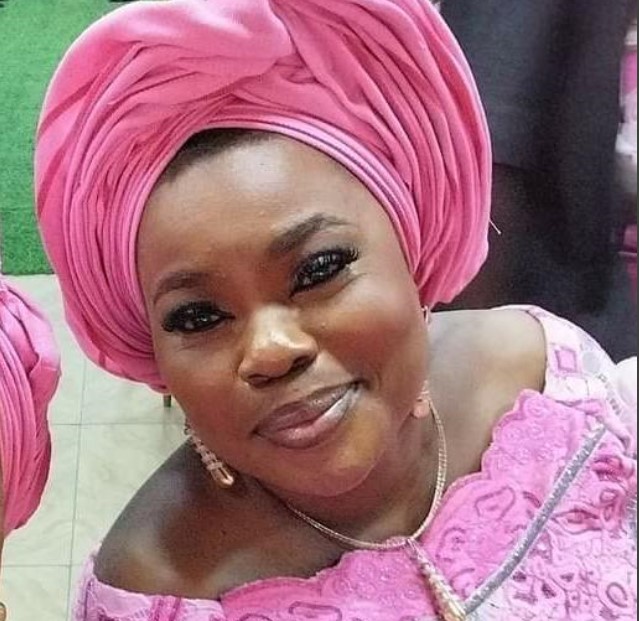
A Nigerian lady, Feyi, has shared her happiness after her mother left an ‘abusive marriage’ of 27 years.

“Today my Mother left this 27years Abusive marriage. Father lord I returned all glory to you,” she wrote on X on Friday, January 3.

“Father lord thank you! 4 out of 6 children have left the house when this man almost made our lives miserable We left the house 8 years ago and never looked back.

“My heart is so filled with joy when she told me she just furnished her house, when will I and my siblings come visit her.”

Father lord I return all glory to you - Nigerian lady celebrates as her mother leaves 27-year ?abusive marriage?

Intimate Affairs: From my crystal ball, by Funke Egbemode

It is the fourth day of the year. It’s an opportunity to do something new, refocus your life and do things differently. This is the best time to look back, nod or shake your head, depending on what you see. Was 2024 a year you’ll like to do again what you did or is 2025 a year you are determined to change some things? This is the first Saturday of the year. You probably are not at work. Spend today to process where you were in 2024 and plot where you want 2025 to take you.

Bose, I know you are desperate to marry. In fact, you have made up your mind to do anything to become Mrs. Somebody by thunder and fire in 2025. Girl, determination is good. Desperation is not. Desperation blinds. You have all it takes to be a wife. A good job and a more-than-comfortable bank balance. That’s why you want to pay your boyfriend’s rent and foot bills for the wedding. In your church mind, do you think giving your boyfriend a monthly allowance and changing his wardrobe will make him husband material? A cap does not become a crown just because you told a tailor to sew in sequins. It’s the same way a synthetic wig cannot become a Brazilian. If that guy does not want to settle down, don’t force him. 2025 is not a year desperation will work. It is not a year to buy a man. A husband you buy will expect to be maintained. He will come with a king-size entitlement mentality. He will constantly remind you through his actions that he did you a favour, married you when nobody else would.

He will dent your self-esteem. His family will conveniently suffer selective amnesia. They will accuse you of using the head of their brother even though they knew he had no head before you bought him. You’ll be accused of ‘stealing’ his stars for your wealth. I know you know the drill. You are just too desperate to acknowledge it. The man you buy will sell your soul. Wait patiently for the man who will pay your bride price. Do not pay your own bride price. Women who buy husbands are not wives. They are bad investors dancing on Regrets Avenue.

Emeka, you have been ‘chopping and cleaning mouth’ for years. You will lose your teeth in 2025, if you don’t stop. The women you will meet this year are designed as rods of punishment. In fact, one of them, according to my crystal ball, was treated badly last year by another man, and is looking for a scapegoat. She will deal with you physically and spiritually. So, before you launch your fake promises and Ogbanje treats, be warned. All those nice things you do to make girls fall ‘yakata’ for you just before you yank the rug from under them will lead you into trouble this year. See this as a warning that will help you avoid stories that touch the heart. Do not go on social media to curry sympathy if a woman scorned decides to reshape your face and or destiny.

Madam Bisi, I know you think you are an old woman just because you retired from civil service last year. You are 61 going to 80. Shame on you. Auntie Tinuke, you too are looking like you are quarter-to-the -grave because your husband married a second wife. Double shame on you. So both of you want to wither and die because you think your life is over? What I see in my crystal ball favours you, fortunately. All you need do is listen to me and follow my advice. Be like a certain friend of mine who insists she’s 57 going on 37. Yeah, she says that, aside her uncooperative knees, she feels 20 years younger in her mind.

So, my dear Tinuke and Bisi, shake things up in 2025.

Lose the tangled, dirty wigs.

Lose the permanent blouse and wrapper

Lose the chapped nails and do something about your dry lips.

It’s the year to think, look and feel differently.

Live your life to the hilt.

Look good for yourself. Get a new hair cut for a new look.

Tint the emerging gray strands into gold or crimson streaks.

Install a parting on the left.

Install semi-permanent lashes.

Get Brazilian brows. The last two, especially will ensure that even when you are just getting out off bed, you look good. With a styled-low cut and Brazilian brows, you do not need plenty makeup.

Shake up your wardrobe

But a few three-quarter trousers.

Figure hugging denims too.

Not all your dresses should be maxi, go for short dresses in 2025.

Trash your loose-fitting bra and get some push-ups.

You are 60. You are not dead yet.

Live and let your man smack his lips. Let him do double-takes when he sees you in shorts in the kitchen. Or is there somewhere it is written that becoming a Grandma means becoming dull and dowdy?

Uncle Jamal, your skin-to-skin ‘parole’ will get you into trouble in 2025. I’m saying it authoritatively. You are allergic to condom. Right? Well, one of your side chicks has just been advised to find a way to get pregnant this year. Another one has received a prophecy of a set of twins. Do you still think this is a year of skin-to-skin? Because I see unwanted pregnancy in your future. Kabayaaaaaa. The ‘spirit’ is upon me right now. I see women chasing you with pestles. You can heed this warning or get ready for ante-natal bills.

Monica, you are a side-chick. Wake up and smell the coffee. That guy, again, went to the village to do Christmas alone. That makes it three years in a row. Only his friends know you. He has refused to take you home to his parents. He has refused to propose. Yet you go to his house every weekend to play wifey. How many times do I have to tell you that you are the one wasting your own time? Paul knows what he’s doing. You are his special assistant on domestic services and resident ‘Olosho’. This year, my crystal ball says Paul will marry secretly and shatter your heart and dream. Stop fooling yourself this minute. That other toaster you’ve been ignoring, give him a chance. Move on quickly before Paul serves you a very cold breakfast.

Alhaji, stop taking your wife for granted. You travelled for three straight weeks, returned and picked a fight. You complain about her weight. You complain about her food. Any excuse to go to your Secretary’s apartment. Swear that you have lifted her wrapper in the last four months. All you do is verbally abuse her and leave her in tears. Let me warn you, another man is eyeing her. That her full option ‘fronters’ and ‘rolling-hill’ backside are making someone pant and sweat. That matured field you are ignoring is about to be harvested by another sharp guy. What you think is ‘fairly used’ is about to be ‘thoroughly used’.

My crystal ball is worried about your old age. Those spindly-legged side chicks will eventually abandon you when they have sucked your juices and you are limp and empty. What if Alhaja too decides to explore? I’m not saying two wrongs will make a right but my crystal ball is seeing Alhaja moving further and further away from you. Come back home before your dinner gets ravished by someone who knows the worth of a tasty meal.

Have a wonderful year.

Egbemode can be reached at [email protected].

Inebriated Zambian policeman frees 13 prisoners to celebrate New Year

A highly intoxicated police officer in Zambia has been arrested for allegedly releasing over a dozen prisoners so they could celebrate New Year’s Eve .

The 13 suspects had been in detention near Kanyama, in the country’s south, facing charges including assault, affray, and theft.

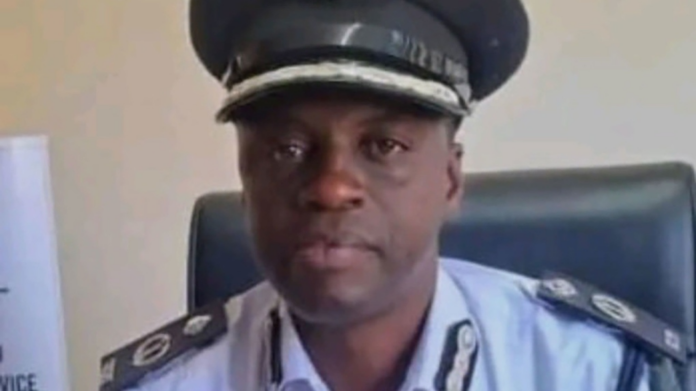
Detective Inspector Titus Phiri “forcibly seized cell keys” on Tuesday morning whilst “in a state of intoxication,” Zambia’s Police Service said in a press release on Wednesday, January 1.


“Subsequently, (Phiri) unlocked both the male and female cells and instructed the suspects to leave, stating they were free to cross over into the New Year,” the police statement said.


A manhunt has been launched for 13 detainees who remain at large, according to the police statement.


“The Zambia Police Service reiterates its commitment to upholding law and order and assures the public that decisive action will be taken against any officer found to be abusing their authority or acting contrary to the law,” it added.

Armed men storm Sun Editor’s house, adduct elder brother, 16-year-old son

Armed men, who claimed to come from the Imo State Police Command, Owerri, stormed the family house of the Senior Deputy News Editor of Daily Sun, Mr. Emma Njoku, and abducted his elder brother, Mr. Bennett Njoku and his 16-year-old son, David, in handcuffs.

They were reportedly taken to an unknown destination.

The incident is coming barely 48 hours to the burial of Emma Njoku’s mother, Ezinne Lolo Keziah Njoku, who died on September 15, 2024.

The armed men, about 10 in number, operated in a Gestapo style, shooting sporadically before barging into the family house while they were holding their morning devotion.

They were led by one Godspower Chimaeze who recently returned from abroad.

Prior to the incident this morning, Godspower had, on Monday and Wednesday, stormed the family compound with armed men dressed in mobile police uniforms, who fired several shots in the air while Godspower went about the compound threatening to deal with anyone who dared him.

In a conversation with the head of the village meeting, Godspower further threatened that Mr. Bennett Njoku and his 16-year-old son will not be released until four other of his siblings, including the Senior Deputy News Editor of Daily Sun, Emma Njoku, are in his custody.

Meanwhile, the incident has been reported to the Imo State Police Public Relations Officer (PPRO), Mr. Henry Okoye, who has assured he will step into the matter after he was briefed on the incident by the Daily Sun Deputy News Editor, Emma Njoku.

Credits: https://dailyquery.com.ng/breaking-armed-men-storm-sun-editors-house-adduct-elder-brother-16-year-old-son/

Fr. Ebube Muonso reveals how police in Anambra refused to rescue kidnapped Catholic priest until N1million was paid

Popular Catholic priest and Spiritual Director of Holy Ghost Adoration Ministry, Uke, Anambra State, Rev. Fr. Emmanuel Obimma also known as Father Ebube Muonso has revealed how he paid N1million to the police to rescue a priest that was kidnapped after returning to Nigeria from overseas.

Introducing the kidnapped priest as Fr. Nonso, Father Ebube Muonso disckosed that after he spent one week in the forest with the kidnappers, he decided to lead the rescue operation with his adoration security.

He said the police authorities told him that they could rescue him, but lacked logistics. 

According to him, the victim was abducted on December 17 shortly after his return from overseas for the Christmas holiday and was released by the kidnappers, a week after. 

Presenting Fr Nonso to the congregation during the ministration in a video which has gone viral, Fr Obimma said, “For a week, Fr Nonso was in the hands of kidnappers. Government could not do anything, it got to a point where I had to use my arsenal to rescue him.”

Lamenting the deplorable state of insecurity in the country, especially in Anambra State, the Catholic priest wondered what the governor did with the billions of naira collected every month in security votes.

He said that the hopelessness of the situation forced him to “approach a state outside Anambra and begged them to use their tracker to find my brother priest”. 

He added, “They tracked him and sent the full location to me. I sent it to security people and they asked me what I wanted them to do with the information. I told them to go after the kidnappers and rescue our priest, but they told me they didn’t usually go into the forest.

“I volunteered to lead the operation. I called the Chief Security (Officer) of Adoration Ministry and told him to assemble his men, let those who had cutlasses bring their cutlasses and those who had guns should bring them, I would lead the operation. When they saw that I was serious, that was when the police told me I should not worry that they could rescue him, just that they lacked logistics.

“I had to send N1million to them. This is a state where we have a governor who receives security votes, but it is individuals who are now funding security.”

He noted that all the while he was in the kidnappers’ den, his mobile phone line remained open and the kidnappers never bothered to put it off or even dispose of it, knowing that they could be tracked through it.

“They knew that there is no security in this state. That was why I said there is no security in Anambra State. Imagine using a tracker from another location to trace kidnappers, yet, the security agencies refused to act until I opted to use my security to rescue the victim, and later they accepted and I still paid them N1m for mobilisation. Only God will lead us,” the priest added.

However, the Anambra State Police Command confirmed the rescue of the priest and promised to investigate Fr Obimma’s revelation.

The Command’s spokesman, SP Tochukwu Ikenga, said the Commissioner of Police, CP Nnaghe Itam, had ordered a full-scale investigation into the allegations.

“We are aware of the allegations and the CP has directed the investigation, please. I will get back to you as soon as an investigation is concluded,” he said in a text message.

Eight-year-old boy survives five days in lion and elephant-infested game park

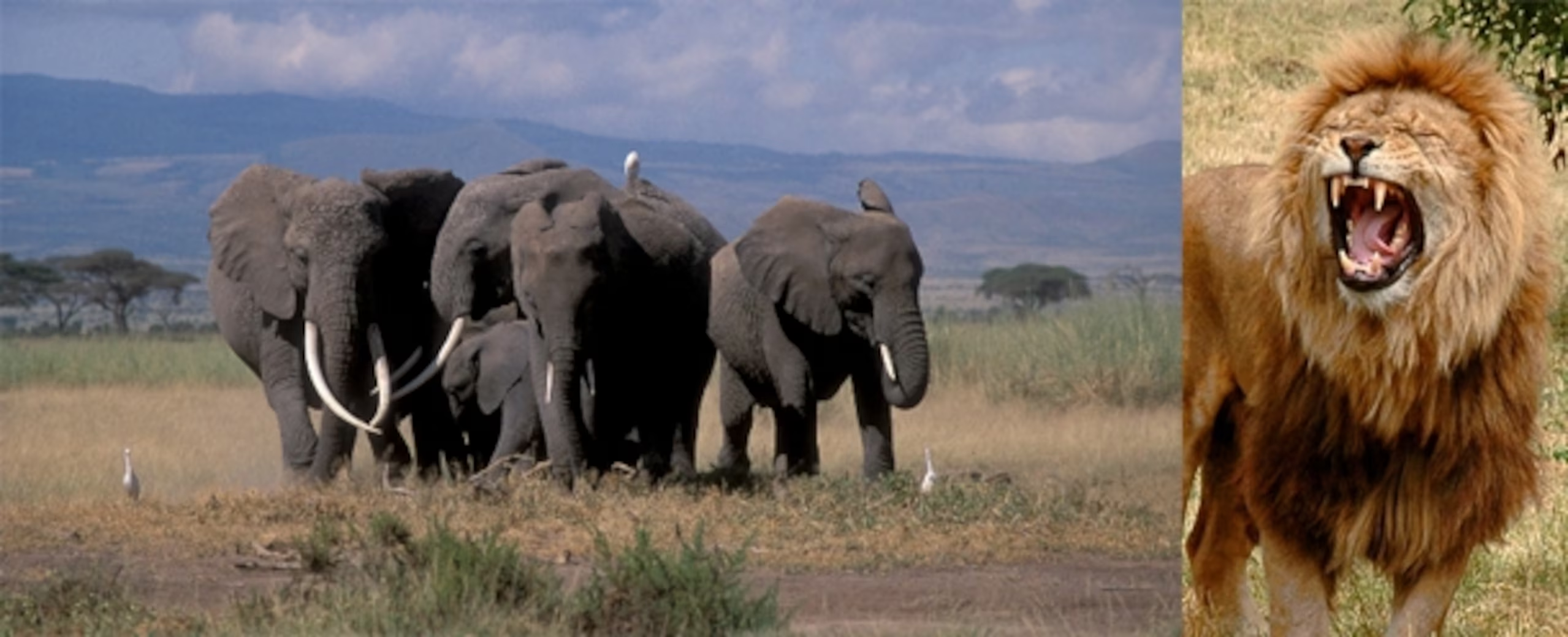
An eight-year-old boy in Zimbabwe, Tinotenda Pudu, has been found alive after spending five days in Matusadona Game Park, a wildlife sanctuary known for its large populations of lions and elephants.

This was disclosed on X by Mashonaland West MP Mutsa Murombedzi who described the park as “perilous.”

According to her, the boy wandered 23 kilometres from his home into the dangerous park, prompting a frantic search by the local community and park rangers.

She noted that the park, located in northern Zimbabwe, is home to about 40 lions and is known for having one of Africa’s highest lion population densities. Despite the threats posed by predators and harsh conditions, Tinotenda survived by relying on his knowledge of the wild.

She added that the boy ate wild fruits and used a stick to dig small wells in dry riverbeds for drinking water, a survival technique common in the drought-prone region.

She explained that the local Nyaminyami community began the search by beating drums daily to help guide the boy back home. However, it was the park rangers who eventually located him. On the fifth day, Tinotenda heard a ranger’s car and ran toward it but was initially missed. Later, the rangers discovered fresh footprints, which led them to the boy.

She tweeted, “A true miracle in remote Kasvisva community, Nyaminyami in rural Kariba, where one wrong turn could easily lead into a game park. 8-year-old Tinotenda Pudu wandered away, lost direction & unknowingly headed into the perilous Matusadonha game park. After 5 long, harrowing days in the jungle near Hogwe River, which feeds into Ume river, the boy has been found alive by the incredible rangers from Matusadona Africa Parks. His ordeal, wandering 23km from home, sleeping on a rocky perch, amidst roaring lions, passing elephants, eating wild fruits and just the unforgiving wild is too much for an 8-year-old.

“We are overwhelmed with gratitude to the brave park rangers, the tireless Nyaminyami community who beat night drums each day to get the boy hear sound & get the direction back home & everyone who joined the search. Above all, we thank God for watching over Tinotenda and leading him back home safely. This is a testament to the power of unity, hope, prayer and never giving up.”

Matusadona Game Park spans over 1,470 square kilometres and hosts a wide range of wildlife, including zebras, hippos, antelope, and elephants.

She found herself in a most horrific place after the suicide

A woman who attempted suicide as a teen has shared the ‘hideous’ things she witnessed after being taken straight to hell.

Tamara Laroux, now age 54, was overwhelmed with feelings of rejection at 15 years old after her parents divorced, thinking the separation was about her.

She took her mother’s 38-caliber gun, aimed it at her heart, pulled the trigger and instantly knew her body was dying.

I felt the blood rushing through my lungs. Death gripped my body. I became blind and deaf,’ Laroux explained, adding she began travelling faster than the speed of light.

She described feeling an explosion inside her body as if ‘someone took acid and poured it over’ all over her.

While Laroux recalled a feeling of total isolation, she found herself standing among millions of other people who were screaming in agony and begging for another chance.

According to Laroux, behind the sea of tormented souls was a creature with dragon-like heads upon his body that ‘stood more fierce than anything that the earth has ever seen.’

But then a giant hand ‘that was brighter than any light she had ever seen’ scooped her from the darkness and brought her to heaven, Laroux claimed.

Scientists are not entirely sure why some people have near-death experiences, but hypothesize that it is brought on my physiological changes in the brain due to extreme stress. 

This can cause altered states of consciousness that can manifest as vivid sensory perceptions like seeing bright lights and feeling detached from their body.

Laroux has written a book about her experience and is the co-founder of Life Change International, which provides worldwide humanitarian outreaches.

She has used her near-death experience to help others but still speaks about the horrors she endured as a teenager.

But her struggles started when she was six years old after her parents separated.

Laroux recalled feeling rejection, loneliness and despair, she told CBN.

She and her two sisters lived with their mother, but when her father called he only spoke to her siblings.

‘I just didn’t understand why my father would talk to the others, but not want to talk to me,’ Laroux said.

The pain continued into her teens and in September 1985, she decided it was better not to live than to live with the agony.

Laroux got down on her knees and placed the gun to her head, but then heard a voice telling her to put it on her chest.

She pulled the trigger, feeling the bullet pierce her body and fell back onto the ground. And then her soul was taken directly to hell.

‘I realized my soul had been transformed into a being of sin and death,’ she said.

Laroux found herself in a fiery pit with a sea of other souls damned for eternity.

‘I remember looking at an individual, I knew everything about them,’ she said.

‘I knew every sin they committed. My knowledge about their life was full. I knew their thoughts and emotions.’

Amid the fire was a ‘gulf’ that separated hell from heaven and as Laroux looked out, she saw Earth as if it was enlarged through a magnifying glass.

As she gazed into the distance, she recalled being lifted out of the fiery pit and taken what she claimed was heaven.

‘The glory there is too exquisite for words,’ she said.

‘The colors were so bright and refreshing….their very sight was rejuvenating and full of energy.

‘There was an overwhelming sense of peace, joy and complete serenity.’

Laroux said she could feel God’s presence and wanted to stay there but was taken back to Earth instead.

She saw herself enter the roof of her home and placed back into her body.

‘I could see and hear again, she said, recalling being able to open her eyes and hear everything around her.

Laroux was rushed to the hospital where doctors said that the bullet should have exploded her heart but missed it by less than one-quarter of an inch.

It has been decades since her suicide attempt, but the experience has led her to become a Bible teacher and published author.

‘I share my experiences openly and honestly to encourage others to live in freedom,’ Laroux wrote on her website.

‘By sharing truth, I have helped millions of people find hope and salvation through Jesus Christ.’

This originally titled article I went straight to hell after trying to take my own life… here’s how I know God is real was first published by Daily Mail on 2 January 2024

TIPS