Home Blog Page 471

Justice Mshelia of Borno High Court released by abductors, family Members still in captivity

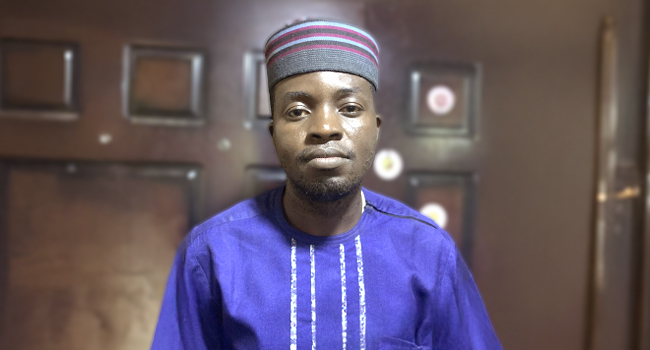
Hon. Justice Haruna Mshelia, the The Borno State High Court Judge who was kidnapped with his wife, Binta, their driver and an orderly on June 24, 2024, has been freed from Captivity by his Abductors.

Although Mshelia, who was kidnapped by suspected Boko Haram members, was released in the early hours of Sunday, his wife who is a magistrate, and his driver as well as the orderly are still being held captive.

An earlier message about the Judge’s release reads “Alhamdulillah, we have just received the news of the release (from BH captivity), of Justice Haruna Mshelia. May Allah Almighty protect us all from any form of mishap.”

At the time of the abduction, Justice Mshelia, his wife, and cousin who is also his driver were travelling from Biu in the southernpart of Borno State to Maiduguri.

UK set to nominate Dapo Akande for election as judge to International Court of Justice

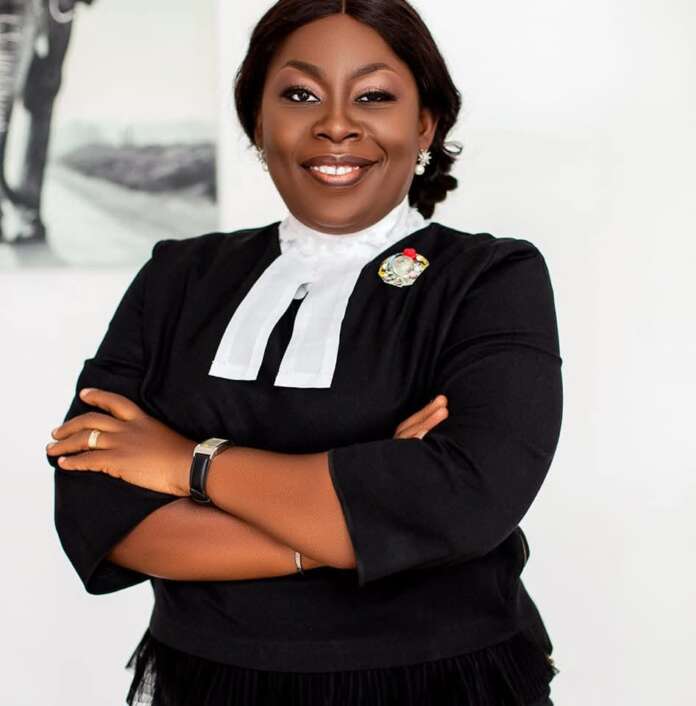
The United Kingdom’s (UK) Ambassador to the Netherlands, Joanna Roper CMG has announced that the UK National Group will nominate Professor Akande in 2026, for election as a judge to the International Court of Justice, based in The Hague.

In a statement published on the website of GOV.UK, His Majesty’s Ambassador to the Netherlands Joanna Roper CMG said:

“The UK is pleased to announce that Professor Dapo Akande will be nominated for election as a judge to the International Court of Justice in 2026 by the UK National Group.

Professor Akande is an outstanding international lawyer, who will bring deep legal expertise and experience to the ICJ. Professor Akande reflects the UK’s firm commitment to international justice, human rights and the international rule of law.”

HM Ambassador to the Netherlands represents the UK Government at International Organisations in the Netherlands, including the International Court of Justice.

South East has the highest glaucoma, cataract prevalence – Ophthalmological Society

By Dennis Agbo

The Ophthalmological Society of Nigeria (OSN), has revealed that the southeastern part of Nigeria has the highest low vision, glaucoma, cataract and other eye defect prevalence, more than other regions in Nigeria.

The OSN stated that the reason for the high prevalence was not because of environmental factors, but because the region has the lowest intervention rate more than any other part of the country.

The Society made the disclosure during its 49th Annual General Meeting and 48th Scientific International Conference, ongoing in Enugu.

Speaking at the opening ceremony of the conference, the President of OSN, Dr Abiola Oyeleye said that the Society has over 700 Ophthalmologists in Nigeria, noting that the most common cause of blindness through Cataract was age but that the society was educating people on how to take preventive measures.

A former President of OSN, Prof Sebestin Nwosu said that it was true that the south east has the highest rate of not just glaucoma but also prestrous segment because of genetic factor which the people in the south east are prone to.

“The best way to tackling it is by creating awareness, to ask people to go for examination. When people present themselves early they will be examined and the disease will be controlled because now there are many powerful drugs that are used and when it’s recalcitrant surgery comes in.

“The most important thing is to spread the news that glaucoma runs in families. Anybody who knows relatives of one with glaucoma should come for eye check in any of the hospitals that have Ophthalmologists. Very importantly, do not put medicines that will destroy your eye because some of them destroy the optic nerve and make your matter worse. Do not put things in your eyes such as urine, breast milk or kerosene,” Nwosu advised.

Corraborating the disclosure, the Chairman of the Local Organising Committee of the conference, Prof Nkiru Akariwe said that, “the south east zone has the highest prevalence of low vision, it also has the highest prevalence of glaucoma in the country, and highest prevalence of prestrous segment diseases and causes of blindness.

“It’s much of a genetic thing but for some other causes, there have not been much of intervention, like non governmental intervention in the South Eastern part of the country, it’s not about environmental factors.”

Governor Peter Mbah who was represented by the Secretary to the State Government, Prof Chidiebere Onyia noted that the state government has been doing some health interventions in the state in it’s one year of administration.

The State Commissioner for Health, Prof Ike Obi noted that the state government has been supportive of Ophthalmology practice through its teaching hospital and hopes to make the services available in its State University of Health and Applied Sciences, Igboano.

Re: “Uduak Akpan who killed job seeker, Iniubong hanged to death” (From Gistmania)

MY HUMBLE COMMENT
A well-deserved death; those who live by the sword deserve to die by the sword. The guy did not appeal his conviction and sentence probably because he knew he didn’t have any cause to. This notwithstanding, we all know that if the convict had appealed, he would have had the opportunity of living his life for at least another 25 years because the appeal would last at least 09-10 years at Nigeria’s Court of Appeal and thereafter about 15-25 years at Nigeria’s Supreme Court.

A Law School student appearing before my panel for Portfolio Assessment a few days ago on 04 September 2024, was so sad to announce to the Panel that he was at the Supreme when a matter was adjourned from 2024 to 2028.

QUESTIONS ARISING
What impression are we leaving in the mind of such a Bar aspirant? What type of lawyer would he be, upon call to the bar?

With due respect, Nigeria’s judiciary has reasonably proven to be grossly INEFFECTIVE in fulfilling its objectives to our society. The judiciary is thus among the major contributors to, and enablers of, the problems of Nigeria; among the worst hindrances to Nigeria’s progress and stability. The worst part is that no one (within or without the judiciary) is doing anything at all, currently, to change this nauseating situation; the judiciary and its leaders are either UNSERIOUS or CLUELESS about the way out. It’s therefore clear that the future of justice delivery, and by extension of the country, is bleak; hopelessness pervades our society.

I respectfully crave to be invited on national TV to discuss more on this. It’s time to begin to ask uncomfortable questions and to demand immediate answers from those who lead us. To whom much is given, much is expected in return. With due respect, Nigeria’s judiciary receives much but gives too little in return. The maxim that “Justice delayed is justice denied” means that if legal redress or equitable relief is available for a party that has suffered some injuriy, but is not coming in a timely fashion, it is effectively the same as having no redress at all. Hence those who argue that “delay of justice is injustice” are right. In the book, A People’s History of the United States: 1492 – Present, Howard Zinn wrote: “The cry of the poor may not always be just, but if you don’t listen to it, you will never know what justice is”.:See: “Nigeria’s Supreme Court About The Slowest In The World” By Sylvester Udemezue (21 June 2022; https://guardian.ng/features/law/nigerias-supreme-court-about-slowest-in-the-world/

FOR FURTHER READING:

(2). Prolonged Justice Dispensation As The Bane Of Nigeria’s Judiciary: Leadership By Example As The Cure ” By Sylvester Udemezue (11 August 2021; TheNigeriaLawyer)

(3). “Let Only High-profile Nigerians Fund The Supreme Court; The Supreme Court Of Nigeria Is A court Of/for Only High-profile Cases”
By Sylvester Udemezue (17 June 2022; TheNigerianVoice);

(4). “How Leaders of Nigeria’s Judiciary Dissipate Valuable Time on Irrelevancies to the Detriment of Effective, Efficient Administration of Justice (Part 1)” By Sylvester Udemezue (17 May 2020; TheGrundNorm) ;

(5). “Continual Shutdown Of Courts As A “Demonic Stronghold” Obstructing Effective Justice Administration In Nigeria” By Sylvester Udemezue (Thenigerialawyer: April 06, 2021);

(6). Sylvester C. Udemezue, ‘Snail-Paced Justice Dispensation In Nigerian Courts: Factors and Actors’ in U.D. Ikoni, T.F. Yerima, and P.H. Faga (eds), Judicial Autonomy, Administration of Justice and Contemporary Trends in Development of Legal Profession In Nigeria: Essays In Honour of His Lordship, Hon Justice S.O Itodo (1st, Wisdom Books & Publishing, Makurdi, Nigeria 2023) 511-530.

(7). “How To Stop The Unacceptable Delay In Court Justice Delivery In Nigeria” By Sylvester Udemezue (TheNigeriaLawyer; 03 January 2022).

God help the Nigerian Judiciary. Amen🙏

Respectfully,
Sylvester Udemezue (udems)
Proctor,
The Reality Ministry or Justice (TRM).
08109024556.
[email protected].
(07/09/2024)

When judges suffer terror

By Chidi Anselm Odinkalu

Around 26 May 2020, the Police in the Democratic Republic of the Congo (DRC) announced that Raphael Yanyi, a senior judge, “had suffered a suspected heart attack” leading to his death. The Ministry of Justice quickly clarified, however, that the remains of the judge “did not exhibit any toxic substances.” Following an autopsy, Justice minister, Celestin Tunda Ya Kasende, disclosed that Judge Yanyi had died from “blows of sharp points or knife-like objects, which were thrust into his head.”

Contrary to the claim by the police, the judge did not die of a heart attack. Instead was murdered. At the time of his killing, Raphael Yanyi was presiding over the high profile corruption trial of Vital Kamerhe, Chief of Staff to President Felix Tshisekedi.

The killers of Raphael Yanyi have yet to be unmasked and it is impossible presently to say whether they were state or non-state actors.

Zimbabwean advocate, Justice Mavedzenge, makes the distinction between attacks on the independence of judges on the one hand and the persecution of judges on the other. While the former are usually institutional, the latter seek to harm the lives, persons or wellbeing of judges and their families. This goes beyond the weaponization of judicial ethics or the targeting of judges for political reasons. It is not exactly new in Africa.

On 21 September 1972, for instance, elements in the army of Uganda’s Field Marshall Idi Amin Dada, abducted Chief Justice, Benedicto Kiwanuka, from his chambers at the Supreme Court of Uganda. Four days later, Marshall Amin shot and killed his captive, Chief Justice Kiwanuka, at the State Lodge in Nakasero, Kampala, Uganda’s capital.

Nearly 10 years later, on 30 June 1982, unknown persons abducted three serving judges of the High Court of Ghana: Cecilia Koranteng-Addow, Frederick Poku Sarkodee, and Kwadwo Agyei Agyepong. They transported the judges to the Bundase Military Firing Range near Accra where they were shot and killed. To cover up the act, the perpetrators set fire on their bodies. Their charred remains were located the following morning. Joachim Amartey Quaye, a senior member of the ruling Provisional National Defence Council, PNDC, was one of the people found guilty of the judges’ murder. He was subsequently executed by firing squad on 18 August 1983.

Elective government found in most of Africa today, is supposedly more subtle. The predominant contemporary arc of the judicial trajectory around the continent reflects intersecting trends of both “regime capture of the courts” and willing abdication of independence by the highest levels of judicial leadership. However, there remain many examples of judges possessed of both integrity and courage. To bring such judges into line, they are increasingly targets of persecution and harm.

The assumption that the state, government or ruling political parties have a monopoly over these kinds of malefaction appears to be supported by both experience and evidence. It is also the state or ruling parties that are best placed to weaponize mechanisms of judicial ethics in order to terrorise upright judges into submission. However, in many African countries these days, the presumed monopolies of the state are contested by sundry entities. In Burkina Faso, Mali, Mozambique, Niger, Nigeria, Somalia, and Sudan – to cite a few examples – there exist belligerents, insurgents, or armed movements, who exercise quasi-state capacities, enabling them to target judicial officers or other public officials at will or to harm them.

In the face of a slow build-up of this reality in Nigeria, for instance, there has been a concerted effort to deny it or avoid conferring upon it the stamp of official acknowledgement.

At the beginning of January 2012, for instance, an unknown gunman entered the house of Baba Loskurima, Registrar of the High Court of Borno State in north-east Nigeria and “fired several shots into Baba’s head and chest with a Kalashnikov rifle in front of his wife and children.” He stood no chance.

Nine months later, in September of the same year, Zanna Mallam Gana, the Attorney-General of Borno State was also assassinated. The killings of both Baba Loskurima and Zana Mallam Gana were suspected to have been the handiwork of assassins from the Islamist insurgent group, Boko Haram.

These were not the first attacks by suspected non-state actors in Nigeria designed to bring judges to harm. In 2009, Florence Duroha-Igwe, a judge of the Imo State High Court in south-east Nigeria suffered an attack in which both her driver and police orderly sustained severe gunshot injuries.

The following year, the judge-president of the state’s Customary Court of Appeal, Ambrose Egu and senior Magistrate, Pauline Njemanze, were abducted near the Sam Mbakwe International Cargo Airport near Owerri on official duties.

In March 2011, high court judges in the state embarked on a strike to protest the abduction of one their colleagues, Theophilus Nzekwe.

Emboldened by the incapacity of the Nigerian state to exact accountability, the perpetrators of these attacks grew in both audacity and intensity and started trading judges for ransom. In October 2019, a senior Justice of Appeal from the Imo State, Chioma Nwosu-Iheme, was abducted in Benin City while on duty presiding over election disputes. She spent a fortnight in captivity.

In September, 2021, former Chief Judge of Abia State, Nnenna Oti, was abducted in Orlu, Imo State. Seven months earlier, Presiding Justice of Appeal in Owerri, Rita Pemu, needed an extra supply of native wiles to survive the perils of abduction.

The non-state perpetrators of the most recent attacks on the safety of Nigeria’s judges are no longer keen to hide their provenance. Janet Gimba, a judge of the Upper Customary Court of Kaduna State in north-west Nigeria, was abducted with her four of her children on 24 June 2024 by reputed bandits who brutally killed one of the children in order to drive home their bargain for both money and prisoners. The children were released after 15 days in captivity.

On the date in June on which Judge Janet Gimba and her children were abducted, in the Borno-Yobe borderlands in north-east Nigeria, elements suspected to be from the Islamic State, West Africa Province (ISWAP), abducted Haruna Mshelia, a senior judge of the High Court Borno State together with his wife, Binta (who was nursing a fracture), their driver and an Orderly. For two years until 2010, before his appointment as a judge, Haruna Mshelia was the Chairman was the Nigerian Bar Association (NBA), in Maiduguri.

While the fate of the judge, his spouse and their staff remain uncertain, it is prudent to prioritise their safe return. As such, it may be premature to dwell too closely on their case. It is not difficult, however, to speculate as to why a senior judge who is deeply respected for his integrity could be the target abduction by an armed quasi-state actor like ISWAP.

The real question that must be addressed is how legitimate institutions of the state and of organized civics should respond to this kind of situation. 77 days since the abduction of this senior judge and his wife, very little official or public information exists about their plight or about efforts to free them. That could, of course, be because public authorities have decided that this is the best guarantee for their safe return.

The good news in that is that this suggests that government trusts that the judge, his wife and other abductees with him are alive. The risk, however, is that this could also enable government to demobilize pressure for their safe return. That could guarantee their erasure from public consciousness and, even worse, bring closer the day when the abduction by non-state actors of conscientious judges will become normalized in Africa’s most populous country.

A lawyer and a teacher, Odinkalu can be reached at [email protected]

The wahala that will kill Tinubu’s door

By Abimbola Adelakun

Thirty years ago, Nigeria was in severe crisis. In the wake of the previous year’s elections that was annulled and the attendant protests, 1994 was an unpleasant time.

General Sani Abacha had rigged his way into power through a coup and was setting the country on edge. Media houses had been shut, and journalists serially harassed and detained.

Acclaimed winner of the 1993 presidential election, Moshood Abiola, was in prison along with scores of activists who had protested either the fuel prices inflation or the election annulment. Ken Saro-Wiwa too was in prison. The Niger-Delta region was restless due to the state-induced violence racking the region.

NADECO members were arrested and charged with treason for their audacity to challenge Abacha. Government critics had their homes raided, and some were attacked. That was the year Prof. Wole Soyinka went into exile.

Decree after decree expanded the government’s power to punish. They could detain—without charge or trial—anyone suspected of subversive activities.

The Senate that had been inaugurated the previous year was disbanded. Six of the lawmakers who had taken a stand against the government were arrested and charged with “treasonable felony and conspiracy.” They were initially granted bail, and five of them re-arrested months later. The sixth person? That was Bola Tinubu.

By now, I am sure you already see where I am going. As you would have read, this week the police arrested and charged 10 people who allegedly participated in the #EndBadGovernance protests last month for the same crime Abacha’s government had once arrested Tinubu: treason.

Those 10 people, along with another 700 police said they also arrested, were some of the thousands who responded to the strangulating economic and political conditions the same way Tinubu and his fellow travellers did in 1994.

Tinubu is either forgetful of history or, since he once confessed that he took a major economic policy while under the influence of a “spirit,” has been fully possessed by Abacha’s ghost. It does not matter which is true; the shame is that a severe charge like treason is being trivialised by a government that cannot brook citizens towing the same path that brought him into power.

I want to believe that Tinubu’s fellow pro-democracy activists, some of whom were imprisoned on frivolous charges during the dark days of Abacha’s rule, are looking at the unfolding chain of events and terrified at the uncanny repetition of history.

Wherever he is now, Abacha must be exultant. He should rejoice; he is not the only tyrant whose ignominious history would be tossed into the sewers of our national history. By the time their time passes, Tinubu and company would have personified the Orwellian pigs who became indistinguishable from the “man” they kicked out of the animal farm.

When we find the mouth with which to tell the story, we will understand how we sought statesmen but were rewarded with executioners.

After reading the police’s press release issued by a fellow called Olumuyiwa Adejobi, I still fail to see how the protests are treasonable. Which “foreign sources” gave “substantial backing” to the #EndBadGovernance protesters?

Or was it just that one Briton, Andrew Wynne, who constituted the so-called “foreign sources”? Given that last month, the Department of State Services also arrested about eight Polish nationals who were on an education tour in Kano State while the protests were ongoing, this might just be a case of using white Europeans to create a sensation.

DSS spokesperson Peter Afunanya said those Polish nationals were arrested “because of where they were found during the protests and for displaying foreign flags.” I am yet to understand the method to the madness of this “foreign-phobia” among our security agencies.

There are several wild accusations in Adejobi’s document that need substantiating. I am not saying Adejobi plagiarised Abacha’s playbook, but the allegations are a frightful recrudescence of the military era. He says, “preliminary findings suggest they orchestrated and funded violent protests…to create anarchy and justify their illegal plot to overthrow…government.”

But what is the pedigree of these individuals that they could organise what is tantamount to a coup? How would their supposed plan to overthrow the government through protests have led them to Aso Rock? Did they have an armoury, or the weapons of their supposed warfare were just placards? What were their plans to take over the National Assembly, for instance?

Adejobi also says they are investigating how these people planned to “orchestrate violence across the country”? I am genuinely curious how this bunch of individuals (including a shop attendant) can have the means to organise the violence that will disrupt the entirety of a complex country like Nigeria.

Meanwhile, hear Adejobi on how they established Wynne’s guilt: We went to invade (Wynne’s) bookshop. As we asked questions, he came out. If you have a genuine business, are you not going to ask the police what we went to do in his shop or his office? You read that and you wonder at the quality of investigation that sort of rudimentary extrapolation of evidence can possibly produce.

Meanwhile, let us not forget that the “comprehensive investigation” on which they planked their whole case took place in less than a month. If they are that efficient, how come they find it hard to solve kidnapping problems?

Whether they like it or not, protests are a democratic right. You can charge people who committed crimes of looting or violence during protests, but you cannot stifle the right to protest.

I never thought the day would come that I would look back and compare Muhammadu Buhari’s government favourably with anyone, but looking wistfully from inside the fire of Tinubu’s government, I am beginning to think we were better off inside Buhari’s frying pan.

Even in all his pathological madness, Buhari did not go to the extent of charging the #EndSARS protesters for treason. He did accuse them of trying to topple him, but the ghost of Abacha that had been haunting Aso Rock did not possess him fully.

The ghost waited until the perfect person usurped his path into power before completing Abacha’s historic mission of perpetuating himself in power using democratic means.

You listen to the families of those arrested and you realise these people have no new game; they are stuck in historical time. Unfortunately, we are trapped along with them.

The Nigeria of 2024 is not that different from that of 1994. There is hardship in the land. Prices of goods and services are skyrocketing; purchasing power is dwindling, and it is getting harder and harder to get by. The marriage of Asiwaju and Shettima of last year has become Àşetì 2023.

Nobody’s hope has been renewed, and people are more combustible than the fuel they are expending hours on their lives on extended queues just to purchase. The days ahead are likely to be filled with protests, and the government is preemptively charging protestors with arrests to intimidate.

Meanwhile, this same government faces a million other challenges. There is economic insecurity, a serious threat to the lives and livelihood of Nigerians. Shouts of “ebi ń pa wá” have replaced the “on your mandate we shall stand” anthem in many mouths; hunger is resetting the political loyalties of those whose heads were climbed into power but have now been forgotten.

The government appears confused by the complexity of the situation; they have undone several economic knots, and they know not how to re-tie them. Then there is the issue of kidnapping that has become a national epidemic and revealed the police as impotent.

Let us not even talk about banditry, plus the one million problems of poor infrastructure that bedevil the country.

Rather than the Tinubu administration concentrating on what it can solve, it compounds its own problems by investing administrative time and energy hounding people for treason.

Like the Yoruba door that eventually gets unhinged when endlessly swung back and forth, the Tinubu regime too has found the wàhálà that will wear it down. I almost feel sorry for them.

Zamfara govt disowns document alleging payment of huge funds to bandits

The Government of Zamfara State has said it remains resolute in the fight against banditry, kidnapping and other criminality across the state.

It disowned some documents being circulated, insinuating that it had released huge funds to some bandits’ kingpins for dialogue in the state.

The Secretary to the State Government, SSG, Abubakar Nakwada who addressed newsmen in Gusau on Thursday said the documents “were not only fake but also mischievous, misleading, malicious and false.”

Nakwada said that the documents with his signature and other top government officials were forged.

He said the security agencies had been properly briefed and were on trail to track down the social media source.

The official also faulted the claims that money was paid to some media promoters under the guise of “reconciliation efforts” from the state Security Trust Fund.

“This is very crucial that we address this matter with transparency and urgency.

“Ordinarily, we should have ignored this, like we have ignored many other fabricated lies aimed at distracting the administration of Gov. Dauda Lawal from its commitment in rescuing and rebuilding the state.

“But due to the sensitivity of the security, which remains one of the priorities of this administration, we are compelled to make some clarifications,” the SSG said.

Nakwada said to set the records straight, the purported memo allegedly said to have originated from his office to Gov. Dauda Lawal was entirely fake and mischievous.

“The state government has consistently announced its firm stance against negotiating with the bandits and terrorists.

“We still maintain the position that we will not negotiate with terrorists.

Our administration has been unequivocal in its approach to addressing the security challenges facing our state,” Nakwada explained.

He said the state government had implemented strategic measures to combat the menace of banditry, adding that the efforts were always guided by integrity, accountability and an unwavering commitment to the safety and well being of people.

“The fabricated document and the baseless claims it contains are not only distracting but also an attempt to erode the trust and confidence that the people of Zamfara have in Gov Lawal’s administration to restore peace and order,” he said.

Daily Post

Leaked memo indicates Zamfara Govt. might be settling bandits from state’s security vote, financing gold extraction

A leaked memo appears to indicate that Governor Dauda Lawal of Zamfara State used security funds to finance his gold mining interests and pay off notorious bandits.

The document showed that a substantial amount of money was approved to finance a reconciliation project, totaling over one billion Naira.

However, sources claim that the funds were used to settle bandits and finance gold extraction in a newly discovered large gold deposit.

The former Chairman of the Zamfara State Security Trust Fund, MD Abubakar, was sacked after he allegedly refused to comply with the governor’s scheme.

Abubakar had written a memo requesting funds to procure patrol vehicles and logistics for community protection guards, but was rejected by the governor.

Sources close to the matter reveal that Governor Lawal held a meeting with commissioners to increase the state budget to meet the demands of bandits and finance gold extraction.

According to the Governor’s media aide, Nuhu Salihu Anka, MD Abubakar has been spending the Security Trust Funds on irrelevant and unnecessary travels, including foreign trips without the governor’s approval.

But other sources claim that one billion naira was allegedly withdrawn from the ex-IGP’s office to settle some wanted bandits kingpins, in order to allow Governor Dauda Lawal to extract gold and settle some media promoters to divert Nigerian attention from the just concluded #Endbadgovernance protests, which resulted in the loss of lives and destruction of properties worth billions of Naira.

A source at the office of the former IGP (whose name was withheld) confirmed that he wrote a memo entitled: ‘Urgent Need to Use Trust Funds to Procure Patrol Vehicles and Other Logistics’ to support community protection guards amounting to N800, 000,000, which was also rejected by the governor, further infuriating the former IGP.

The source further said that another conflict arose between the governor and the former IGP emanating from a meeting the governor held with the Commissioners for local government and chieftaincy, that of Budget and planning, as well as finance, Alhaji Ahmed Yamdi, Abdulmalik Gajam, and Bello Auta respectively, as well as Prof Kabiru Mato, Barau, Modibbo, and the state Account General to increase the state budget to the tune of more than One billion Naira to meet the demand of some bandits to allow the governor to continue his gold extraction in a newly discovered large gold deposit in a forest near Dankurmi Under Maru Local government area of the State, and also finance some selected Media promoters to create significant divisions within the northern region.

Another revelation indicated that the former IGP was not happy with the way Governor Dauda not only declined the approval of his memo but also used the same memo for other missions with the Security Trust Funds Money without his knowledge.

It will be recalled that Governor Dauda Lawal has vowed to never negotiate with bandits, but unfortunately went back on his words and employed a controversial scheme by accepting the bandits’ demand to allow him to get access to the newly discovered large gold deposit sites in the State.

“I believe the dramatic sacking of the former IGP M.D Abubakar by Governor Dauda was connected to the disagreements between the former Police boss and Governor Dauda Lawal,” said the source who requested to remain unknown.

Further information gathered in the same scandal reveals that a hasty completion of Zamfara State Cargo airport by the government of Dauda Lawal was to bring in modern mining processing equipment from outside the country into the State, despite the banning of mining activities and declaring Zamfara as a “no-fly zone” State.

It will be recalled that the Zamfara state assembly refused to screen and confirm former IGP M.D Abubakar due to his bad records and mismanagement of public funds, which resulted in denying some house members their eight months salaries and allowances.

According to our reporter in Gusau, the members who protested against the appointment of M.D Abubakar alleged that the former police boss would not do the job but rather mismanage and divert public resources for his personal use.

Last month, over 20 people were recorded to have died in Kali community of Gumi Local Government Area, Zamfara State, while escaping from bandits’ attack.

DAILY POST learnt that their boat capsized in a river.

Zamfara residents fleeing from bandits

According to a resident who pleaded anonymity, the bandits besieged the village at 1:00 pm last Sunday.

“The bandits were seen moving towards Kalli village on motorcycles with sophisticated weapons to attack the community, which forced the villagers to flee for their safety,” he added.

According to him, the boat was overloaded and it capsized along Birnin Magaji River, which led to the death of 20 villagers.

He explained that five corpses were recovered at Falale River, four at Birnin Magaji River, while three were also recovered at Gadar Gummi River.

Speaking further, he said that the bandits terrorised communities of Kwammaka, Kwammaka Jibi, Kwammaka Mai Katsina, Kallin and Kazura villages, all in Gummi local government area.

The police are yet to issue any statement on the reported incident.

Daily Post/AbujaBizReports

Nigeria’s first Olympic Games medalist ‘buried with borrowed flag’

The first Nigerian to win a medal at the Olympic Games, Nojimudeen Maiyegun, has been buried.

He was buried in Vienna, Austria without the presence of Federal Government delegation or officials of the Nigerian mission in Austria.

Maiyegun, a brave boxer who possessed a deadly left punch in his fighting days, opened the way for Nigeria in the Olympic Games with the bronze medal he won in Tokyo, Japan in 1964.

A Nigerian living in Austria described the treatment meted to the 83-year-old retired boxer by the Nigerian government as a national shame because the body was buried “with a borrowed Green-and-Green Nigerian National Flag”.

Nojim Maiyegun

He wrote: “Attention: Presidency (Aso Rock Villa) Nigeria Federal Ministry of Sports
Nigeria Ministry of Foreign Affairs.
“The Federal Government of Nigeria has neglected another National hero in death.
Nojim Maiyegun, the first ever Nigerian citizen to win an Olympics medal was buried in Vienna, Austria like a nobody to the extent that the Nigerian flag used in covering his coffin was borrowed.

The question that came to mind was “Is Nigeria worth dying for?”
“Not even a condolence book was opened for him at the Nigerian Mission in Austria. We demand an immediate apology by the Federal Government of Nigeria, a belated message of condolence to the family of the late legend, and a posthumous National honour.

“It is worth mentioning that the only government agency that sent a condolence message to the family of the deceased was NIDCOM (Hon. Abike Dabiri Erewa)”.

Sextortion and Teens Death: Two Nigerian brothers bags 17 years jail in US

Two brothers from Nigeria were sentenced to 17 1/2 years in federal prison Thursday after pleading guilty to sexually extorting teenage boys and young men across the U.S., including a 17-year-old from Michigan who took his own life.

A federal judge sentenced Samuel Ogoshi, 24, and Samson Ogoshi, 21, after hearing emotional testimony from the parents and stepmother of Jordan DeMay, who was 17 when he killed himself at his family’s home in Marquette, in Michigan’s Upper Peninsula.

The Ogoshis, both from Lagos, Nigeria, had previously been extradited from Nigeria to stand trial. The brothers each pleaded guilty in April to conspiring to sexually exploit teenage boys.

They were accused of running an international sextortion ring in which they posed as a woman, a scheme which resulted in DeMay’s March 2022 suicide. The siblings were accused of inducing DeMay to send a naked picture of himself and then extorting him. Federal prosecutors said their sextortion schemes targeted more than 100 victims, including DeMay.

“Today’s sentencing of Samuel and Samson Ogoshi sends a thundering message,” U.S. Attorney Mark Totten said in a statement. “To criminals who commit these schemes: you are not immune from justice. We will track you down and hold you accountable, even if we have to go half-way around the world to do so.”

Sexual extortion, or sextortion, involves persuading a person to send explicit photos online and then threatening to make the images public unless the victim pays money or engages in sexual favors. The offense has a mandatory minimum sentence of 15 years in prison and a maximum penalty of 30 years.

U.S. District Judge Robert J. Jonker, who also sentenced the Ogoshis to five years of supervision following their release, said he would decide what restitution the brothers must make once he receives additional information.

Before sentencing the brothers, Jonker said the case called for long sentences. He said both of the defendants had shown a “callous disregard for life,” while noting that the siblings had continued their sextortion scams even after learning that DeMay had killed himself.

“The continuation of the overall scheme even after there was certain knowledge that one individual, the individual in this case, took his own life points to the need for a high sentence,” the judge said during Samson Ogoshi’s sentencing hearing.

DeMay’s mother, Jennifer Buta, told the court during Samuel Ogoshi’s sentencing that her son’s death had left her “shattered to the core, infuriated and trapped in grief.” She said the last text her son sent her was “Mother I love you” — a text she awoke to and thought was endearing until she learned that Jordan had killed himself in his bedroom.

“What I thought was an endearing message from Jordan was his goodbye and his reassurance of his love for me,” Buta said. “I would never have imagined that while I was asleep both of the defendants hid behind their screens and tortured Jordan for hours while he was alone.”

DeMay’s stepmother, Jessica DeMay, said during her tearful testimony that she and Jordan’s other relatives will “never again experience pure joy” because every happy moment would be tainted by “a small cloud of sadness around it” that comes from Jordan’s death.

The teen’s father, John DeMay, told the court he is haunted by the image of “my son laying on his bed dead with a gunshot wound to his head.”

“Jordan was an amazing young man. He was resilient, he was smart, he was educated, he was an athlete. He was my only son. And you got to talk to him for the last time in his life. That’s horrifying to me,” he said.

Samuel Ogoshi’s attorney, Sean Tilton, said his client has cooperated with authorities and has written a letter of apology. He said Samuel Ogoshi is remorseful “and feels a tremendous sense of guilt of the loss of life in this case.”

Samson Ogoshi’s attorney, Julia Kelly, said during his sentencing that her client is “very remorseful” and that he was 18 when he began taking part in extortion and scam attempts. She said such scams are common in Lagos, Nigeria, and he saw those as a quick way to make money.

Kelly wrote in a court filing that “hundreds of people just like him were involved in similar scamming.”

“He was told who could get him a hacked account, how to make a fake profile, how to boost accounts and, because English is not his first language, was given a script of what to say,” she wrote.

TIPS