Home Blog Page 465

No matter the volumes of evidence, the judiciary appears to have taken stand — Okutepa, SAN

By J.S Okutepa, SAN

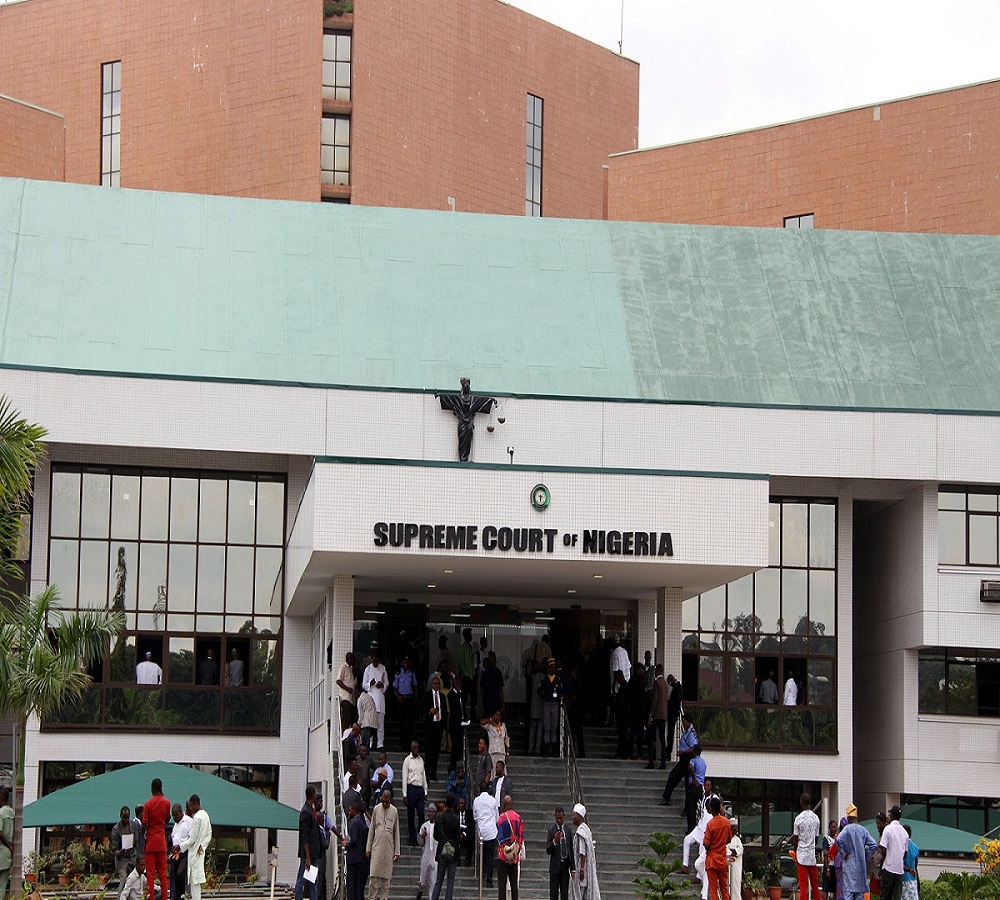
Section 285 of the 1999 Constitution establishes Election Petition Tribunals to adjudicate over electoral disputes for governorship, National and state Houses of Assembly elections in Nigeria. In the same way, the Electoral Act 2022, gives the Federal High Court the jurisdiction to decide pre-election matters. Appeals in all these matters both pre and post elections go in most cases to the Supreme Court except for post elections disputes where the appeals in National and State Houses of Assembly terminate at the Court of Appeal.

The reasons parliament gives jurisdiction to the judiciary to determine these electoral disputes are not far-fetched. It is believed and assumed rightly in my view that the judiciary being an unbiased arbiter will ensure that democracy is not truncated by political hoodlums and rascals. It will decide electoral disputes without fear or favour, affection or ill will. Judges are not politicians. Partialities are not parts of the attributes of judicial officers.

Parliament then reasoned rightly in my view that the judiciary is best suited to call political actors to order and will act as checks and ensure that the will of the people or the sovereignty of the people which is the basis of any legitimacy in electoral context is not undermined.

The judiciary was therefore expected to team up with the people in adjudications so that the mandates of the people are not snatched by processes that lacked legitimacy.

Unfortunately, the experiences over the years showed that despite these laudable legislative initiatives, political impositions and rascality, which are contrary to democratic norms always get the judicial stamp of legitimacy in most cases. It is observed with profound respect that despite the laudable legislative interventions to give justice to victims of electoral frauds and manipulations in Nigeria, the judiciary appears to have effectively blocked access to electoral justice by the kind of judgments it gives in most cases in electoral jurisprudence in Nigeria.

The roadblocks to justice in electoral jurisprudence are based on bad judicial precedents set, which precedents have enabled political actors to rig and bypass due process with audacity of arrogance and impunity. These precedents have enabled electoral rascality to thrive in the most barbaric manner in the Nigerian brand of democracy. These precedents acquired notoriety from 2003 and became more terrible under the 2015 to 2023 general elections in Nigeria.

The concepts of demonstration of documents, dumping of documents, calling of polling units by polling units agents, certified true copies of public documents must be tendered by the makers and to the now requirements that no subpoenaed witness can testified unless his or her frontloaded statements on oath are filed along with the petitions within 21 days allowed to file petitions are such judicial precedents that have effectively put spanners in the wheels of electoral justice in Nigeria.

As a lawyer who has consistently prosecuted election petition cases for “losers” over the years, my experience show me that no matter the volumes of evidence, the judiciary appears to have taken stand and seems to be siding with the people who have no regard and respect for the sovereignty of the people. This is clear in several decisions that emphasised more on arid anachronistic legal jargons and technicalities that are rooted in caricature justice.

No matter the best of efforts, by legal practitioners for the petitioners, most decisions hide under what the judiciary called sui generis, to cause havoc and deal terrible blows to democratic processes. Judiciary in most cases developed blind eyes to many fraudulent manipulations either because it is overwhelmed or there are some other considerations that are not truly visible for some of us outside the judicial system to comprehend.

For me, until the judiciary decides to see wrongs where wrongs are visible even for the blind to see, and then overrule or is prepared to depart from road-blocking precedents it has set as shown above, there is no need for anyone to waste time, resources and energy to file election petitions in Nigeria.

Let everyone who has what it takes to write results write it and then approach the compromised and commercialised institutions of INEC and security agencies to enter the results on the relevant forms and then announce the “winners.”

This way, there will be no need for judicial officers to be moved from their normal stations to Election Petition Tribunals. Judges will then be focused on their normal judicial cases. This will also reduce the waste of state resources to pay huge amounts of money to defend fraudulent electoral victories. There are some people who are experts in blocking access to electoral justice and are making huge money from petitions filed who don’t deserve this money.

It is therefore my proposal to all “losers” of elections in Nigeria not to waste time and resources to file election petitions because it is earlier for an elephant to go through the eyes of the needle than for anyone who was robbed of victories in our elections to get immediate remedies and electoral justice. Technicalities are now being used to aid and abet the fraudulent democratic processes in Nigeria. This is the reality of the matter.

We beg bread, they belch beer

by Lasisi Olagunju

Are Nigerians hungry because they’ve been drinking too much free beer and now the brewery is bankrupt? I ask because President Bola Ahmed Tinubu waxed rhetorical Thursday last week as he dissected the very bad hunger wracking his country and its more than 200 million people. “I understand we are hungry, but no free beer parlour anymore,” he said. Except the president is suggesting that we are a nation of drunkards, I am tempted to wonder what shred of meaning connects “hunger” and “beer” here.

What the president said was a rhetorical gaffe that deserves a rebuke. When a person says what he said and in the context he said it, the Yoruba would look at him and wonder why he is talking ìrù (tail) when we are talking irú (locust beans). What are we saying, what are they saying? We are begging for bread; they are belching beer. The old man saw liquid when his people cried solid. The president’s ‘learned’ supporters will insist that ‘beer’ is the president’s metaphorical substitute for ‘food’. That will be interesting. We’ve always suspected that metaphor serves as a ready refuge for the flawed – especially in the very slippery terrain of politics. But the Emilokan rationalists should remember to tell the president that a successful metaphor is one that is apt. When the vehicle and the topic cohere in semantic peace, we congratulate the metaphor birther for a successful delivery.

His preference for “beer parlour” where ‘food bank’ should be was a tragic subversion of aptness in metaphorical deployment. A mandatory credit pass in Literature is recommended for whoever would be president after this one. ‘Beer’ does not collocate with ‘hunger’.

The beer-parlour talk of the president may be one of his lasting contributions to language and the field of political rhetoric. You never can tell. He already, during the 2023 campaigns, dropped ‘balablu’ as one of his hit singles. Sometimes, what the enemy thinks is blemish ends up embellishing one’s memory. We call it èébú d’olá in Yoruba. William Archibald Spooner lived between July 1844 and August 1930. Between those years, he served as a clergyman, author and professor of ancient history, divinity and philosophy at the University of Oxford. He was described as “a well-liked, respected, genial, kindly, hospitable man” but blessed with “a head too large for his body.” Spooner was brilliant but was equally very absent-minded, and he got famous for it. He, in 1879, from the pulpit, famously gave out the first line of a popular hymn as “Kinkering Kongs their titles take” (instead of ‘Conquering Kings Their Titles Take’). And he did it, not intentionally.

When Spooner died, his obituary in the 1 September, 1930 edition of Manchester Guardian contains this passage: “All sorts of stories, probable and improbable, were invented… Of the well-worn ones, the best are those which made Spooner declare that he was leaving Oxford by ‘the town drain,’ that some unauthorised person was ‘occupewing his pie,’ that at a marriage it was ‘kistomary to cuss the bride,’ and that he was tired of addressing ‘beery wenches.’ Much better authenticated and not even a Spoonerism is his famous reply to a young lady who asked him if he liked bananas. He is said to have retorted, ‘I’m afraid I always wear the old-fashioned nightshirt.’”
That Guardian obituary was not only how Spooner was remembered. Because he said all he said, before he died, the English Language got enriched with one more permanent word – spoonerism. The word proceeded to get a barge of honour as a rhetorical device in literature – and a mention in neuro science.
Who knows, courtesy of our president, ‘beer’ may enter the English Dictionary as a synonym for ‘food’ just as the president’s social media enemies, irreverent children of anger, use ‘agbadoan’ as a collective name for his long-suffering fans. Agbado is the Yoruba name for corn. The president, before his election, recommended it as a solution to the hunger on the streets.
Now, more seriously, let us ask the president and his defenders: Can beer replace dinner? Or could it be that we are hungry because our leaders have been taking too much freebies from our liquor bank? Or could it be that our president has been too far removed from the caked reality of the scorched earth for him to know that the world is about to end courtesy of his apocalyptic policies? When the president said what he said and ended it with a demand for patience from the hungry, I heard a loud applause from his fawning followers. The president enjoyed that applause. How I wish he would read Shakespeare in ‘Pericles: Prince of Tyre’. The playwright says: “They do abuse the king that flatter him.” He says again that “kings should let their ears hear their faults.” Clapping when the leader spoke beer when food was needed was distressing; it numbs the soul. But you would ask who made up that adulating audience? Former principal officers of the National Assembly. They are plaintive ex-eagles desirous of new feathers for fresh flights and feasts. They are men who are ready to kneel lower than their knees. A high-five for what the president said shames all – especially the eight million plus who elected him last year.

The president also spoke about “free bowl” which he said hungry Nigerians “cannot just take”. Then he spoke about the closure of Nigeria’s “free beer parlour”. The tone, texture and context of Tinubu’s beer-and-bowl statement trivialized the people’s travails. Who will help Nigerians tell their president that their hunger is not for beer and the inebriation it offers? That the starvation cries in town are not a craving for free meal. That Nigerians do not seek, and are not demanding indebtedness to charity. All they seek are policies with a human face, a government that cares.

The town writhes in agony because government has lost its meaning. Every citizen has a personal reason for voting in elections. One of those reasons is what English philosopher, Bernard Bosanquet (1848-1923) explains as the hope by the citizen that the government would help him to become “what he has in him to be.” Not all who voted for Tinubu last year did so for party, tribe or money. Some genuinely thought he would make a positive difference in their lives. Now, everyone is stranded because the government crashed the car.

The country is in deep trouble. What is broken in our economy is brittle beer bottle, not calabash. It cannot be mended. It doesn’t look like the government is worried as we are about the present darkness. Where leaders do not care, we would be right to inquire what they have where a heart ought to be. If there is a heart there, then it must be made of something very hard. William Bascom wrote of the Yoruba concepts of the wicked and the hard-hearted: “A hard-hearted person is bad-tempered, easily offended, willful and stubborn, doing what he likes and paying no attention to what others say. When an ordinary person in anger would throw a small lump of dirt, a hard hearted person throws a large stone. Worse than the hard-hearted person is one who is ‘wicked’ (ìkà).

A wicked person loves no one but himself; he advises others to sell things for less than he knows they are worth; he injures others and destroys their property without cause…” I agree. The wicked counts the number of stars he shoots down. Last week, US vice president, Kamala Harris, told talk show host, Oprah Winfrey, that a leader’s real strength lies in “who he lifts up, not who he brings down.” She said the same, and much more, in another interview in April this year, long before she became the Democratic Party’s presidential candidate:

“We need a protector”, the interviewer told Kamala Harris.

And she replies:

“Yes. Sadly, over the last many years, there has been this kind of perverse approach to what strength looks like, which is to suggest that the measure of one’s strength is based on who you beat down instead of what we know that the true measure of your strength is based on who you lift up. You know, and if you ever want to measure, if you ever want some objective indication of your individual power, see what you can do to help other people, people in need. It could be some simple act, like just listening to how people are feeling and to sincerely, sincerely have some interest and concern about their well-being or their suffering. That’s what we want from leaders…That’s really what strength looks like and that’s the kind of strength that we want.”

That is the kind of strength Nigerians demand to see in their president. They do not desire a leader who sits somewhere far in the sky and speaks in tongues about hunger and patience; about beer, bowls and booze. A leader should not preen like a god while his people reel in pain.

We also read the president declaring last Friday that he was in government to work and not to make money. I read him and said great! A leader should take less and give more. “The less a man needs, the nearer he is to God who needs nothing,” said Socrates. But we read of our leaders’ stories of grasping and taking that leave us to wonder if some people’s needs have a limit.

About 50 years ago, Sakara music legend, Yusuf Olatunji, had cause to sing: “You said there is no food but your own children feed to satiation (E ní kò sí, kò sí, omo yín ńyó…).” Between the 1970s when the song was sung and now, what has changed is that things have grown worse. Our presidency is famed as the most powerful in the history of presidential democracy. It is also sadly, the most unfeeling. Ghanaian writer, Ayi Kwei Armah, asks: “Is it always true that it is impossible to have things strong and at the same time beautiful?” Our Federal Government is strong and powerful but so are wolves and lions in the jungle. We think our president should be king – or god – and we have him so invested. That should explain why a president says the wrong things and all palms turn zombie, clapping.

In a careless republic as ours, a president can easily become a virtual monarch, or even a god. We will soon be there – if we are not there already. It is possible some people have a shrine where they make offerings of kola and liquor to the Nigerian president. If they do, they would have several pages of history to guide them. One of them is in the West Africa magazine of March 3, 1945 which published a piece in celebration of the memory of an Alaafin who had just joined his ancestors. “The highest oath that an Oyo man could take was to swear by the head of the Alaafin,” the magazine wrote, and added that the people believed the late oba was divine. The oba himself thought himself so and he said so and acted so. How?

Eshugbayi Eleko was deposed as the Oba of Lagos in 1925 by the British. He was subsequently banished to Oyo town but he didn’t go quietly into the night; he went to court. During the ensuing celebrated case, evidence on some historical issues was needed in support of the deposed oba. It was to the Alaafin of Oyo that counsel to Oba Eshugbayi went.

The Alaafin was asked to swear before his evidence was taken.

Alaafin queried in anger:

“By whose name?”

“God’s name or by the name of your idol,” the lawyer told him.

“I myself am God!” the oba replied.

By calling himself god or God, the Alaafin of 1925 had not said what no one had ever said.  About 300 years earlier, King James I of England uttered something weighty about the king occupying a throne almost as powerful as God’s. King James told the English parliament on Wednesday, 21 March, 1609 that “kings sit upon God’s throne, but even by God himself they are called gods.” A king, he said, could make anyone “beggars or rich at his pleasure; restrain, or banish out of his presence…” And he used that power, and faced resistance – from the Catholic Church and from other churches. He fought and won. He enjoyed exercising that divine right, quashing opposition, bringing people up, casting people down. But his son, Charles I, who succeeded him didn’t have the grace he had. History says Charles was fought, defeated, arrested, tried by a parliamentary court and found guilty of charges which included devising “a wicked design to erect and uphold in himself an unlimited and tyrannical power to rule according to his will, and to overthrow the rights and liberties of the people”. At his execution at about 2 p.m. on Tuesday, 30 January, 1649, Charles insisted that he did no wrong, that the people were his subjects who should really have no “share in the government.” He stressed that “a subject and a sovereign are clean different things.” May God give Nigerians the sense to continue to have a share in their government.

Unmasking Tinubu’s Government of NADECO Veterans

By Chidi Anselm Odinkalu

When Major-General Muhammadu Buhari overthrew the elected civilian administration of President Shehu Shagari on the last day of 1983, he inherited an economy in a mess and a political system in a turmoil. This crisis of a dysfunctional political economy was Buhari’s principal reason for sacking the Shagari administration.

For Buhari, Nigeria’s crisis of balance of payments was the result of two things: indiscipline and economic crimes. His answer to the former was a War against Indiscipline (WAI), a catch-all acronym for everything from instilling a queue culture in the population to capital punishment for drug suspects. Turning to the latter, General Buhari invented a very capacious category of economic sabotage. Those arrested for these did not necessarily have to suffer a predictable judicial ritual.

In 1984, the Buhari regime ordered the detention of five citizens of Taiwan arrested by the officers of the Customs Service who caught them in possession of blank attested and proforma invoices for goods supposedly imported into Nigeria. One of the arrested persons was known as Wang Chin-Yao. They were supposedly involved in economic sabotage of the country which was meant to be a crime. Rather than charge them with a crime known to law, however, the regime arranged to have them locked up in administrative detention under the State Security (Detention of Persons) Decree No. 2 of 1984. Under this decree, a detention certificate issued by the Chief of Staff, Supreme Headquarters was enough to lock a person away interminably. Among its features, the decree precluded courts from inquiring into anything concerning the detention of persons held under its authority.

Fearing interminable detention, Wang Chin-Yao and his compatriots sued the Chief of Staff in the hope that the court could pronounce on the lawfulness of their detention but the High Court chose to emulate the Biblical Pontius Pilate and decided that the decree under which they were held precluded it from questioning the detentions. On All Fools Day (1 April) in 1985 the Court of Appeal decided their appeal against the decision of the High Court. In a judgment delivered by Phillip Adenekan Ademola, the Court of Appeal affirmed the ruling of the High Court. Adenekan Ademola, whose father was the first indigenous Chief Justice of Nigeria, stated his reasons with flamboyant economy holding “that on the question of civil liberties, the law courts of Nigeria must as of now blow muted trumpets.”

These words were to prove exceedingly corrosive in their effect on judicial imagination under the military. A mere three years after this judgment by Adenekan Ademola, his bossom friend and Sarkin Wurno, Shehu Malami, became the subject of considerable interest by the security services of the military government when he threw his hat into the ring to become the 18th Sultan of Sokoto at the death of Sultan Siddiq Abubakar III. It was impossible to find a court without its own muted trumpet. The muted trumpets of the courts enabled the abuses that ultimately made military rule untenable and brought about its demise one decade later.

The hope – with the end of military rule – was that the return of the country to government with electoral legitimacy would unleash the civic imagination of Nigerians. In the run up to Nigeria’s presidential elections of 2023, part of the claim made in favour of the man whom the Independent National Electoral Commission (INEC) eventually anointed as president, Bola Ahmed Tinubu, was that he had fought the excesses of military rule as a chieftain of the National Democratic Coalition (NADECO), a pro-democracy collective, many of whose leading members were exiled during the last half decade of military rule in Nigeria. It is natural to expect that the government of a man with those credential would be a paradise for the kinds of rights for which he reputedly took the military to task.

The reality has been anything but…. The government of Bola Ahmed Tinubu has instead become the graveyard of freedoms of expression and association and of the right to protest in Nigeria and it is only just a little over 15 months in power. The numbers are there to prove it.

In the first year of the Tinubu administration, the Press Attack Tracker recorded 37 incidents of attacks against journalists and the press. The first five months of 2024 alone witnessed 27 such attacks. For comparison, advocacy organization, Global Rights, which monitored similar patterns under the Buhari regime recorded 189 journalists arrested, detained or harassed over the eight years of the Buhari administration. At the current pace, the Tinubu regime of NADECO graduates will by the end of its second year easily eclipse the record of the entire Buhari administration in press freedom violations over its eight years of existence.

At the end of August 2024, Bola Tinubu’s Nigeria comfortably topped the league table of attacks on journalists in Africa with over 76 recorded incidents of attacks against journalists, beating Somalia (with 18 attacks) into second place, with Congo DRC a distant third with five incidents.

These numbers only provide a peek into a more troubling pattern. Last month, the Committee to Protect Journalists (CPJ) reported “at least 56 journalists who were assaulted or harassed by security forces or unidentified citizens while covering the #EndBadGovernance demonstrations in Nigeria.” The “unidentified citizens” who were involved in some of these attacks mostly conducted themselves in ways which suggests that they were agents or emissaries of the ruling party or government.

The #EndBadGovernance protest and its aftermath have been a squalid advertisement of the illiberal credentials of the Tinubu Government. After failing in intimidating citizens out of the protest, the administration resorted to third-degree methods to squash it. It arrested thousands of citizens whose only crime was peaceful expression of dissent, instructed the freezing of the accounts of persons and groups whom it claimed to be organisers of the protests, and procured suspicious court orders to unsafely kettle and intimidate the protesters. Security forces killed at least 13 protesters although the real casualty count is thought to be well north of this number.

Not content with these, the government arranged in Abuja to charge many of the protesters with treason or conspiracy to commit treason. Campaigners at Human Rights Watch have rightly pointed out that this signals the extent of the regime’s “intolerance for dissent.” The significance of these charges go well beyond this, however. The charges of treason for the #EndBadGovernance protesters are designed to intimate any wannabe protesters. They are also a dog whistle for the judges before whom these protesters are charged to treat them as beyond the pale and beneath the law.

The judges are listening. At the trial before the Federal High Court in Abuja, the court has eventually granted the protesters bail on rather stringent conditions. Citizen groups are now working hard to socialize the costs of meeting these conditions. Lawyers for the government meanwhile go around intimidating the courts with specious reasons as to why protest has become treason under the government of a serial protester.

Nearly 40 years ago, when the son of a former Chief Justice of Nigeria told judges to blow muted trumpets on questions of civil liberties, there was an assumption that the judges were capable of doing different. Now and again many of them indeed served the soldiers with a judicial bloody nose. Today, that capacity no longer exists. Nigerian courts no longer want to be associated with any trumpets, not even muted ones, lest they inadvertently let out some judicial sound.

Instead, many courts, under the thumb of their Chiefs or administrative judges have become enablers of the authoritarian instincts of the government of NADECO veterans. When the security services invade the offices of advocacy organization, SERAP; or interdict the passport of Omoyele Sowore at the airport, they don’t even contemplate the existence of judges capable of playing Pontius Pilate. For them, the courts no longer exist. That is some progress!

A lawyer and a teacher, Odinkalu can be reached at [email protected]

Intimate Affairs: It’s just sex, nothing more

By Funke Egbemode

Sometimes, a woman is just a glorified call girl, “olosho” , but she tells herself she’s in a relationship. She calls a man her boyfriend while he sees her as just a booty call. She believes she has a man in her life while the man sees her as just one of the girls in his life. She invests her time and body in the ‘relationship’ while the man treats her a little bit better than a prostitute. She’s the one that is all over him just like chocolate melts all over ice cream. The guy, on the other hand, spreads his cream all over many chocolates.

Am I communicating? Do you know any couple like that? Maybe you are one of the men that are currently leading a woman on a wild goose chase knowing that she’s heading for a heart-shattering end not the altar?

Are you a woman who thinks she’s finally found a man who will propose to her but deep down you know something is wrong. Your heart tells you to believe this is your final bus stop while your head is telling you your journey will still start again after this stop.

Let me attempt to break it down.

Many women know that the only time the men in their lives talk to them and listen to what they have to say is when the man is in-between their legs. Yes, the man is warm and nice only when he’s in her warm place. He’s attentive only when he’s worshiping in her sacred place. Once he’s done, he’s gone. He becomes a new creature, another man emerges and she can’t reach him again until the next time.

Sex, that is all that is holding them together. If unless and until you are having sex, you cannot reach your man, you are not in a relationship. Let us play some scenarios.

You are in a relationship with a man but the two of you don’t live in the same town. Note this, he calls four times a day when he’s coming to the town where you live. He sends you jokes and Facebook links of your favorite online comedians. He remembers such words as honey and darling and sweetheart and makes you feel special and loved so you could drop everything and be at his ‘service’ for the period he’s in town. A weekend of intense sex and he returns to his base. Then the calls and text and jokes thin out. He ignores your calls and when he eventually returns one or two of them, he explains everything away with ‘you know how it is now, I have been crazy busy juggling a dozen meetings’. But as soon as it’s time for another workshop or a party in the town you live, he starts prepping you again for another ‘intensive course in occasional sex’.

Now, there’s nothing wrong with that arrangement if it is also what you want, after all, all work and no play makes Jackie a dull girl. But you should stop thinking there’s more to what you guys share. You are a warm body for a visiting Don Juan. That’s all. It’s just sex. Just enjoy it and stop hoping you are heading for the altar.

Another scenario: Her husband or fiancé is in Dublin and she’s waiting for everything to fall in place so she can join him, but she has stopped wearing her ring all the time. So she meets you, fine-boy-no-pimple, great-in-the-sack. The sex, for her, is body-no-be-wood arrangement. Bros, don’t go and start ‘catching feelings’. It is only her body that is here. Her heart is abroad. You are just a sex-provider. Separate your heart from your third leg in this matter. If you watch her closely, you will see that she wears her ring when you stumble on her in other places, that is when she’s not under you or on top of you. She attends her in-law’s events. Don’t read any ‘mushy-mushy’ feeling into your arrangement. Yes, because that is all there is. As soon as her documents are complete and her visa is in, you will be left grabbing air.

Third scenario: You have been in that relationship for two years. The sex is hot and consistent. Once he corners you anywhere, his office, your kitchen, he drills you like a Sergeant Major. Ah, and if it’s a weekend in his house, he flips you like burger until you beg for mercy. But as soon as you bring up topics that tend towards ring, babies and visiting your parents, he gets up and drinks water, gets in the shower or starts a long phone conversation with his office. If you are supposed to spend the weekend in his house and you suddenly come down with cold and malaria, he’s more pissed than sympathetic. He’s more worried about how you have ‘ruined his weekend’ than what the doctor said or your hospital bill. If your period shows up when sex is on his mind, he gets angry as if the ‘visitor’ is what can be turned back when it shows up unannounced. The two years you have played wifey and housekeeper don’t mean to him what they mean to you. That’s why each time you ask him ‘when are we getting married’? He retorts: ‘What’s the rush?’. Then he pulls you into a ‘Cordelia’ shape and starts doing to you what he’s good at. If that is what you want from two years of pretend-wife, go on, give it all up. If you want more, you may want to move on.

Go on, scratch your head, examine your life. Analyze your relationship if you are sure you are in one. Does he love you as much as you love him or you are the one providing the love for both of you? Is this a one-winged flight, a one-sided affair? Are you in a relationship with yourself or there’s really a man in your life who loves you beyond the hot sex?

All sex is good. All relationships need sex, good sex, but not all sex occur in love relationships. Does your partner care, truly care for you outside the bedroom? Does he walk the talk after you have taken him to all the clouds? Does he only say ‘I love you’ when he’s about to drop his load? If he makes great promises when you are doing things to his body and soul but never keeps the least of them, you need to double-check.

Sometimes, sex is just a walking stick with which we prop up a dying affair. At other times, in desperation, we convince ourselves that a man who knows how to deploy his third leg is a husband material. That’s a sad and depraved street. Get off it. Only sex is just not enough, so do not shortchange yourself. You deserve it all, everything. Not just the sex

Funke Egbemode could be reached on [email protected]

Judgeship now up for election in Mexico

Hollowing out courts while playing footsie with the cartels, Mexico’s President AMLO is leaving office, but not power.

By Quico Toro

Last week, the most successful and popular Mexican president in living memory took a major step towards dismantling Mexico’s democracy. Just three weeks before handing over power to his hand-picked successor, Andrés Manuel López Obrador (AMLO) hectored congress into approving his harebrained scheme to make most Mexican judgeships—including the Supreme Court—subject to election rather than appointment. 

Judicial election in general is a bad idea for reasons Jesus articulated best in the gospel of Matthew: “no man can serve two masters: for either he will hate the one, and love the other; or else he will hold to the one, and despise the other.” Elected judges are expected to serve both the law and the electorate. When those two masters are pulling in different directions, judges who follow the law lose the electorate… and with it, their judgeships. 

But if electing judges is a bad idea in general, electing judges in Mexico is a terrible idea in particular. Because Mexico’s political system is now dominated by a charismatic populist—López Obrador—who has built a cult of personality, along with a party—MORENA—that he fully dominates. Candidates competing in judicial elections over the next two years will have little chance of success without MORENA’s endorsement, which means Mexico will probably be left with a political-judicial monoculture—MORENA congressmen making laws for a MORENA president to execute and MORENA judges to arbitrate. Elections, in other words, will become little more than cover for a power play to monopolize state power in López Obrador’s hands. Subscribe

But it’s even worse than that, because Mexico’s system is badly distorted by its hugely powerful drug cartels. These aren’t just sprawling criminal enterprises but, in many cases, quasi-governments that monopolize violence and administer some version of justice across wide swathes of territory. Mexican elections are increasingly disfigured by the toxic influence of the cartels: they intimidate voters, finance friendly political bosses and murder troublesome candidates as a matter of course. Earlier this year, ProPublica led a consortium that substantiated charges that cartels financed at least the first of López Obrador’s presidential campaigns.

Making judges subject to election in this climate amounts to handing the judicial system over to the cartels. López Obrador knows this. 

In reality, what AMLO is proposing—guardedly, using coded language—amounts to a long-term accommodation between the Mexican state and its criminal syndicates. His softly-softly approach to the cartels is increasingly turning Mexico into a mafia state, where the interests of drug lords take precedence over the civil rights of ordinary citizens. 

This is why Mexicans are out protesting this judicial reform on the streets. As a parting shot, López Obrador has engineered the end of one of the most important safeguards to constitutional government in Mexico. And his successor, Claudia Sheinbaum—elected back in June—is cheering him on from the sidelines. 

López Obrador’s parting shot is no one-off. He has spent his entire term in office undermining each of the checks and balances in the Mexican institutional landscape that allowed the country to transition to democracy back in 2000. Last year, he railroaded a drastic reform that would have gutted Mexico’s independent electoral administration agency. The Supreme Court overturned the new law. Now AMLO is moving to replace all those judges with elected ones, to ensure no future Supreme Court can overrule a president again. 

The business sector is increasingly concerned about the direction of travel, with the peso exchange rate gyrating wildly last week amid chatter about a worsening investment environment. Naturally, businesses considering investing in Mexico aren’t much encouraged by the prospect of having any dispute that arises adjudicated by judges who owe their robes to a friendly understanding between drug barons and MORENA apparatchiks. How much Mexico’s democratic backsliding will actually slow or reverse investment flows into the country is a subject of hot dispute right now—but nobody at all expects it to help.

What is the end-game here?

I’m far from the first to note that AMLO seems determined to take Mexico back to something very much like the “perfect dictatorship” the country endured under the Institutional Revolutionary Party (PRI) for most of the 20th century. Back then, the party controlled every bit of the state and won every election for more than seven decades. Elections were rigged. Courts virtually always ruled in favor of the government. The checks and balances written into the constitution were a dead letter. 

And yet the PRI was, as its name implies, an institution—the party was bigger than any one man, and had mechanisms in place to ensure the leadership torch would be passed on every six years. López Obrador’s MORENA is a personalist party built entirely around him. Hollow out the state to leave MORENA in control, and what you’re left with isn’t the depersonalized bureaucratic authoritarianism of the PRI. What you’re left with could turn out to be much closer to the Putin-Medvedev model, with AMLO dominating the political scene regardless of who technically occupies the presidency. 

Once the institutions that might put a stop to this are effectively gutted, it’s unclear how anyone might slow this process down. Going forward, the worst case scenario is a self-reinforcing dynamic where Mexican courts start handing down nonsensical rulings that favor their political masters and scare away investors, leading to an economic downturn that leaves local economies more and more beholden to the drug cartels that helped select the judges in the first place. 

Americans should care about this, because the United States needs a minimally functional democracy on its southern border. The institutional degradation Mexico is experiencing, along with its government’s apparent willingness to cede large chunks of territory to drug cartels, is incompatible with Mexico’s long-term prosperity and stability. And a poor and unstable Mexico is not just an economic drag on the United States, it’s also the ultimate push factor for migration. Nobody wants this. But it’s no longer clear that it can still be stopped.

This article originally titled: The Mexican State is Being Vandalized, was culled from Persuasion

Quico Toro is a contributing editor at Persuasion and writes the Substack One Percent Brighter.

How government neglect led to Alau dam collapse and Maiduguri flood disaster

By Ibrahim Adeyemi, Mansir Muhammed, Alamin Umar and Usman Abba Zanna

HumAngle writes, “On the surface, the disastrous flooding that overwhelmed Maiduguri in northeastern Nigeria was caused by a ruptured Alau dam. [But] that the dam has suffered years of devastating decay, despite multimillion funds disbursed for its rehabilitation.

When flooding submerged towns and villages of Maiduguri, the capital of Borno state in North East Nigeria, a wave of terror gripped the atmosphere. Thousands of houses were buried underwater; the heavy rainfall swallowed people as families lost track of one another. Hundreds of residents lost their homes to the visiting floods taking over the city.

Goni Usman, a survivor of the fierce flooding, is desperately searching for his wife and five children after violent floods took his family away from him. “I am finished,” he sobbed bitterly as he spoke to rescue workers at one of the displacement camps in the town. “We went to the Babagana Wakil Camp but couldn’t find them. I saw some of my neighbours there, but I couldn’t find my family.”

A despondent Goni isn’t alone in this trouble. Though residents say the actual figures are much higher, authorities say about 30 persons were killed by the flooding, over 400, 000 residents were displaced and around one million people were generally affected, according to the National Emergency Management Agency (NEMA). The terror that turned troubled Maiduguri into a Mississippi of tears was, however, not orchestrated this time by the known insurgents and violent extremists terrorising northeastern Nigeria.

The official narrative provided by NEMA was that nearly half of Maiduguri was buried in disastrous flooding after the Alau Dam, a critical infrastructure designed to regulate water flow and provide irrigation and drinking water, overflowed following heavy rainfall. In no time, floodwaters swept through over 23, 000 neighbourhoods, drowning the city under its force. 

Flooded street with submerged shops and a partially visible yellow auto-rickshaw on the left.
An entire street was swallowed by water in Maiduguri. Photo by Usman Abba Zanna/HumAngle.

When the disastrous flood struck,  the State Governor, Babagana Zulum, addressed the people through the media, expressing commitment to building infrastructures to avert future floods. “We shall leverage on this calamity as an opportunity to invest in sustainable practices and infrastructure that can withstand the forces of nature,” he pledged, asking locals to cooperate with authorities over his fresh vow. “I invite and encourage other stakeholders to collaborate with our agencies to identify the best ways of assisting. Together, we can create a robust response plan that would address not only immediate needs but also long-term recovery and rebuilding efforts.”

The statement seems appealing to the Borno public, but the Alau Dam collapse was bound to happen, only that authorities had turned deaf ears to prior warnings from environmentalists in and around the region. According to the experts, there had been cracks in the dam’s walls, and erosion had taken over the embankments, a result of years of abandonment that weakened its structure.

A few days before the flooding uproar, dozens of residents living near the dam were asked to leave for fear of impending hazards that may result from the overflowing dam. Forewarned again by residents and concerned people of Borno, the government insisted that the state was not under any flooding threats, claiming to have done some independent assessment of the dam.

A HumAngle investigation has, however, revealed a case of negligence on the side of the state government and mismanagement of funds by officials of concerned ministries. Behind this neglect is a broader pattern of mismanagement that plagues infrastructure projects across Nigeria. The Alau Dam is not an exception. Funds disbursed for the dam’s maintenance were misappropriated, with little to no accountability. Now, the people of Maiduguri are paying the price for the systemic rot.

Evidence of neglect

A HumAngle satellite analysis of the dam’s location reveals that two gates control the flow of water out of Lake Alau. For nearly two years, only one of the dams has been functional. Satellite evidence shows that the dam on the western side of the lake has been destroyed since October 2022, with the surface destroyed beyond recognition.

We obtained and collated satellite images showing the decaying journey of the dam in the past years.

A satellite image depicting a river, two dams with labels, and surrounding arid landscape with patches of vegetation.
Imagery: Google Earth pro

August 2022: The last known imagery of the dam intact, according to available data.

Aerial view of an aquaculture farm near a river, with rectangular ponds and access paths.
Imagery: Google Earth pro

October 2022: Satellite images show water violently and uncontrollably overflowing the damaged structure. The dam was likely destroyed sometime between August and October 2022.

November 2022: This imagery reveals the extent of the damage to the dam, with more than 50 per cent of the structure wrecked beyond recognition.

Aerial view of a dam with a highlighted section near water and surrounding terrain.
Imagery: Google Earth pro

February 2023: The latest available imagery of the lake shows the dam remains in disrepair, with no signs of restoration. This condition persisted until the recent flooding earlier this week.

Aerial view of a dam with water flowing through its spillways into a river, surrounded by arid land.
Imagery: Google Earth pro

Mismanagement of funds?

Aerial view of a dam on a river with surrounding arid landscape.
Damaged Alau Dam as of February 2023.  Imagery: Google Earth pro

The federal government again raised people’s hope after the flooding, with a pledge to “upgrade” the Alau dam to avoid future flooding. HumAngle, however, finds that funds running into hundreds of millions had been disbursed for the rehabilitation of the dam, but were either mismanaged or misappropriated.

According to Govspend, a public portal dedicated to tracking the federal government’s spending, more than ₦309 million (309,316,169.01) were disbursed for rehabilitating the Alau dam between 2018 and 2024. The funds were released in 13 tranches by the Chad Basin River Development Authority (CBDA) to different companies. 

In 2020, one of the companies, Dalori Construction Nigeria Ltd, received ₦51.7 million in three months —  ₦13.6 million in March, ₦12.3 million in April and ₦25.8 million in June. S.M Gudunbali Nigeria Ltd, another company, was paid ₦8 million in 2018 and N7.6 million the following year.

Similarly, Balmari Investment Nigeria Ltd was paid ₦14.6 million in 2022 and ₦21.4 million a year before. On November 12, 2022, Auno Engineering and Construction Services Ltd, was paid ₦17 million for rehabilitation works on the dam. In June 2023, Kukabam General Merchant Niger Ltd was paid ₦23.4 million for the same purpose. On September 20, 2023, the agency disbursed more than ₦16.2 million to Federal Inland Revenue for “VAT in respect of Hammal and Partners Ltd for the final payment on Alau dam.” 

Hammal and Partners Ltd received the highest amount of money for the same project other companies were paid for. It received ₦122.4 million in 2023 alone. However, on July 29, 2024, the agency also paid ₦26 million to Bulgari Global Link Nigeria Ltd for rehabilitation work on the Alau dam.

Flooded street with people wading through water near a damaged building with bracing supports.
Flooded London community members learning to live with water. Photo by Usman Abba  Zanna/HumAngle.

Curiously, in the name of “rehabilitation”, the agency has disbursed funds to different companies in the past five years. HumAngle’s satellite investigation, however, shows a pattern of abandonment, causing a damning decay of the Alau Dam infrastructure, which later caused flooding that almost swallowed the entire capital city.

Get our in-depth, creative coverage of conflict and development delivered to you every weekend. Subscribe now to The HumAngle Dispatch!First Name Email Address *

When HumAngle contacted the Managing Director of the CBDA, Abba Garba, for comments concerning the disbursement of the funds and repair of the dam, he said, “We are at the airport, about receiving the minister. Let’s talk later,” We have not been able to reach him since then.

“Last year and the year before it, communities around the dam were flooded. And despite several warnings, I don’t know why the government refused to take preventive measures. There was research from the University of Maiduguri that established the condition of the dam. Assuming the government had taken preventive measures and repaired the dam, it would have saved us a lot of resources, human lives and properties,” said Ibrahim Izge, an environmental activist in Maiduguri.

Devastating effects

Table showing Chad Basin RBDA disbursements for Alau Dam rehabilitation in Borno, listing beneficiaries, amounts, and descriptions from 2018-2024.
The above table shows how multimillion-naira funds were disbursed to rehabilitate the Alau Dan before its rupture caused devastating flooding in Borno. Data was collated by Ibrahim Adeyemi and visualised using Data Wrapper.

The construction of the Alau Dam started in August 1984 and completed in 1986. Located in the Alau community of Konduga Local Government Area, the dam gets water supply from the Ngadda River in the Gwange community of Maiduguri, serving the primary goal of providing water for irrigation, domestic use, and fisheries developments. The dam has played a vital role in sustaining the livelihoods of local farmers, enabling them to grow crops in a region otherwise prone to drought and desertification.

However, demands on the dam would later increase as the population grew and urbanisation intensified. What had once been a source of life and prosperity gradually became an overburdened structure, requiring constant attention and maintenance to keep it functional. As with many public infrastructures in Nigeria, the Alau Dam became a victim of administrative neglect, lack of political will, and insufficient funding, experts said.

The collapse of the dam also has significant economic and social consequences. Farmers relying on the dam’s water for irrigation have lost not just their crops but also their means of survival. The fertile land that once surrounded the reservoir is now inundated, and the next planting season is uncertain. Agricultural losses are estimated to run into billions of naira, significantly affecting an economy that was already struggling with the effects of climate change and conflict.

Businesses in Maiduguri that depended on the dam for their water supply have also been severely impacted. The water shortages that followed the collapse have disrupted daily life, with many residents forced to seek alternative, often unsafe, sources of water. The collapse has intensified water scarcity, exacerbating the region’s public health crises as people now face a higher risk of waterborne diseases like cholera and typhoid.

The human toll of the Alau Dam collapse has been enormous. Displacement camps earlier shut down by authorities were reopened to accommodate the flood victims.  For many, the flood was a cruel irony: After surviving years of conflict, they now face another existential threat from nature. In the overcrowded displacement camps, access to food, water, and healthcare is woefully inadequate, heightening the risk of malnutrition and diseases.

This article originally titled — Maiduguri Floods: The Unfortunate Series Of Events That Led To The Breakdown Of Alau Dam — written by Ibrahim Adeyemi, Mansir Muhammed, Alamin Umar and Usman Abba Zanna was first published by HumAngle on September 14, 2024.

Man who tied up sex worker at Abuja hotel says “I’m a thief, not a ritual killer”

One Joseph Efe, a 30-year-old man who was arrested for tying up a half-naked lady believed to be a sex worker with cellotape at Top View Hotel in Abuja as seen in a viral video has said he is a thief and not a ritual killer as widely speculated on the social media.

There were speculations that Efe was an internet fraudster and had intended to kill the lady she tied up in the hotel and possibly use her body parts for money ritual before he was busted after the video emerged on the social media.

However, Efe told journalists when he was paraded by the Nigeria Security and Civil Defence Corps (NSCDC) FCT Commandant, Dr Olusola Odumosu in Abuja on Friday that his intention was to steal the cellphone of the lady he identified as a commercial sex worker and not to kill her for ritual.

Efe said before his arrest in Abuja, he had stolen from four victims in Port Harcourt, Lagos and Abuja.

He claimed he was committing the crime to raise money for his sister who has sickle cell anemia.

Efe also revealed during his confession before journalists on Friday that he met the victim on a “hookup site” before inviting her to the hotel.

The suspect said he tied the victim to prevent her from getting help as he exited the hotel after stealing from her.

“I tied her so that she would not run after me as I fled. I told her to take off her clothes so that even if she is able to untie herself, before she puts on her clothes I will be long gone,” Efe said.

Narrating her ordeal, the woman(name withheld), said that she had been on the hookup site called “coded site”.

“I met the suspect some months ago. I live in Enugu but visit Abuja for other business reasons.

“When I got to the hotel, the suspect asked me whether I feared death.

“He said if I cooperate with him he will not hurt me like other girls. He said his friend was outside and if I made any wrong move, he injected me with something.

“ I pleaded with him, he slapped me and asked me to strip my clothes. I tried to get to the door but it was locked by him and he held the keys,” she said.

He removed my clothes when I tried running to the door, he locked the door and removed the key.

She alleged that he used her dress to tie her hands my dress to first tie her hands but when it was not tight enough, he took out a cellophane tape .

“ He turned the television volume very high and blocked my mouth with a handkerchief ,” she said.

She further said that he stole her phone, unlocked it with her thumb, asked for her bank app details then realised she had no money in the account.

“ He warned me not to make noise that he was stepping out then locked me in the room.

“ I later noticed a movement outside the door and saw the color of the uniform the person wore is that of the hotel staff.

“ I struggled and dragged myself to the window then started banging it, luckily the guy heard me at which I immediately gave him a sign to run after the person taht just left the room which he did then he was caught,” she said.

According to the NSCDC FCT Commandant it was in the process of Joseph Efe trying to escape from the hotel premises that his movement became suspicious and in the process of trying to stop him, he took to his heels before being chased and caught by NSCDC operatives.

Odumosu said that the video circulated on social media of the lady and the Efe in the hotel room was not recorded by NSCDC operatives.

“Let it be made clear that the video in circulation on this incident was not shot by the operatives of the NSCDC as we only became aware of its existence when it went viral on social media,” he said.

He added that after preliminary investigation the suspect and victim will be handed over to the relevant agency for further necessary actions and investigation.

“We are duty bound and empowered to do due diligence before taking necessary steps towards prosecuting or handing over a suspect as the case may be to any relevant sister agency,” he said.

The commandant warned hotel operators to be more vigilant and should do better in protecting guests.

“Ensure your hotel facilities and premises are not used as a place to perpetuate crime.

“Let me also caution all young ladies also known as ‘runs girs’ to desist from such acts that will endanger their lives but rather engage in legitimate businesses to earn a living,” he said.

In another development, he said that four alleged vandals were arrested in the territory for theft and vandalising public infrastructure.

“One Usman Ibrahim was arrested while vandalising armoured cables from a transformer in Nuclear Technology Centre, Nigeria Atomic Energy Commission premises in Kwali Area Council following an intelligence tip-off.

“Another three persons were arrested while transporting a vandalised air-conditioner and stolen cables suspected to have

been vandalised at Nigeria Educational Research and Development Council (NERDC) in Kwali also.

“ Charms were found on them and they confessed that one of the three is the seller while the other two are the buyers,” he said.

NAN

Ceding our sovereignty to the United Nations and World Health Organization

By Sonnie Ekwowusi

Formally founded on April 7, 1948, under the United Nations to promote international healthcare and improve access to essential medicines and health products worldwide, the World Health Organization (WHO) has enjoyed decades of success and global recognition. As an arm of the United Nations, the WHO is tasked with educating, advising, and establishing health and disease prevention programs worldwide.

Unfortunately, the WHO has faced criticism for being influenced by a narrow Western ideological perspective, prioritizing the funding and promotion of controversial issues such as vaccines causing infertility, LGBT rights, abortion, population control, teen sexual rights, teen masturbation, and transgender rights in Nigeria and other African countries. To achieve these objectives, the WHO receives significant funding from pro-LGBT and pro-abortion organizations, such as the Bill and Melinda Gates Foundation, the United Nations Population Fund (UNFPA), the Global Fund to Fight AIDS, Tuberculosis and Malaria, the Ford Foundation, the Open Society Foundations, Marie Stopes International, Rutgers, and the International Planned Parenthood Federation. These organizations provide the WHO with specific funding, directing its work toward their intended purposes. Consequently, the views of the vast majority of countries have very little impact on the actual operations of the WHO, leading to a clear erosion of national sovereignty.

Shockingly, the WHO has funded the Federal Ministry of Health in Abuja, Nigeria, to issue and enforce the Guidelines on Self-Care for Sexual Reproductive and Maternal Health 2020 and the National Guidelines on Safe Termination of Pregnancy, in violation of sections 17(3)(f)(g), 21(a), 23, 33(1), 37, 38, and 45(1) of the 1999 Nigerian Constitution; Articles 2, 3, 4, 5, 8, 17, 18, 28, and 29 of the African Charter on Human and Peoples’ Rights (Ratification Enforcement) Act, CAP 10; the Preamble to the 1990 Convention on the Rights of the Child (CRC) (ratified and adopted by Nigeria); sections 228, 229, 230, 297, 309, and 328 of the Criminal Code Act, CAP C38 (and their equivalent provisions in the Penal Code); and sections 1, 2, 3, 4, and 17 of the Child Rights Act 2003 (as amended). It beats the imagination that the WHO could conspire with the Federal Ministry of Health, Abuja to violate Nigerian laws?. What this has shown is that the WHO and most of these foreign NGOs and organizations working in Nigeria care no hoot about respecting our laws. What many of them are after is to conspire with some Nigerians to decapitate our human capital.

The WHO in particular has shown itself to be a big nuisance on Nigerian soil. It is on record that the WHO’s vaccination in Nigeria is unsafe and deadly. A couple of months ago, the Global Prolife Alliance (GPA) petitioned the Senate President, Dr. Godswill Akpabio, concerning the recent introduction by WHO of routine malaria vaccination in Nigeria and other African countries. The group noted that the WHO endorsed the first vaccine based on the initial two years of a four-year pilot study, raising concerns about the transparency of the WHO regarding the vaccine’s safety. According to the group, “recent data from clinical trials associated the vaccine with increased risks, including an elevated risk of clinical malaria after four years, a tenfold increased risk of cerebral meningitis, an increased risk of cerebral malaria, and a higher risk of death, especially among female children.” Consequently, the group warns that a precautionary approach should be taken to ensure safety and the strict observance of ethical standards related to parental informed consent in accordance with the 2014 WHO Policy Document.

It should be recalled that at the height of the ravaging COVID-19 pandemic, the WHO endorsed policies such as lockdowns that had been previously acknowledged by the WHO itself to cause significant collateral harm, disproportionately affecting low-income populations and countries in Africa. The lockdown regulations were a class-based and unscientific instrument, disproportionately harmful to lower-income people and useless for crowded informal settings, such as in urban parts of Africa. At the same time, African governments were subjected to intense pressure to merely adhere to protocols formulated outside the continent, disregarding their demographic, economic, and climatic contexts. This rendered them powerless on public health matters in their own jurisdictions, which was tantamount to eroding their health sovereignty with predictable and harmful consequences. The same WHO discouraged the use of affordable repurposed drugs while promoting new drugs under Emergency Use Authorization (EUA) during the COVID-19 pandemic. The WHO also promoted mass and often mandatory vaccination against COVID-19 for African populations, known to be at very low risk due to their young age and existing immunity, thereby diverting resources from malaria, tuberculosis, HIV/AIDS, and other urgent health problems on the continent, and violating the right to informed consent.

The WHO funds the radical sexualization of Nigerian school pupils. For example, in 2016, the WHO’s European office issued standards for Comprehensive Sexuality Education that deemed “the right to explore gender identities” appropriate for children aged 0-4 years and the right of children to have sex. School pupils in open classrooms are required to touch each other’s genitals, saying, “I like you.” The pupils are also expected to touch each other’s private parts and find out the differences in their respective private parts. Under the Youth Peer Sexuality Education Training Guide/Toolkit, funded by the WHO and used in many public secondary schools in Nigeria, the students are told to share with other students with whom they feel more comfortable things like: “Your sexual fantasies (fantasies),” “Your feelings about oral sex (oral),” “Whether you enjoy erotic material (X),” “Whether you have fantasized about a homosexual relationship (gay-fan),” “Whether you have had a homosexual relationship (gay-exp).”

But the most feared and worrisome issue is the WHO’s Pandemic Treaty. At the moment, widespread opposition is being fueled by growing suspicion that the proposed Pandemic Treaty and the modification of International Health Regulations, which would be deliberated on at the ongoing 79th United Nations General Assembly would give the WHO unnecessary powers to dictate and impose obnoxious health policies on nations. Under the WHO’s Pandemic Treaty, the WHO would be empowered to tell countries to lock down and close businesses, schools, pubs, churches, and mosques. We would be forced to take injections, whether we want to or not. We would be forced to wear masks again. We would be forced to do whatever the WHO tells us to do, including restricting our personal liberties. This is why some countries opposed to the proposed Pandemic Treaty are rebelling at the moment. For example, massive rallies are occurring in Japan, with tens of thousands of citizens taking to the streets protesting Japanese ratification of the upcoming WHO’s Pandemic Agreement and the proposed modifications to International Health Regulations.

It is gladdening that Africa is opposed to the proposed Pandemic Treaty. For example, the Pan-African Epidemic and Pandemic Working Group, a network of senior African academics from a variety of disciplines committed to advocating for sound public health policies at the national, regional, and global levels, has recently alerted the African Union to table a motion to postpone the votes for the draft WHO Pandemic Treaty and amendments to the International Health Regulations (IHR). According to this group, these instruments are designed to provide the WHO with new and greater powers. More specifically, they would give the WHO Director-General the authority to personally declare a public health emergency of international concern and thereafter exercise unprecedented sweeping powers over all state parties to the proposed instruments. The Pandemic amendment will pave the way for the WHO to take over jurisdiction of everything in the world under the pretext that climate change, animals, plants, water systems, and ecosystems are all central to health. In addition to that, it will remove human rights protections, enforce censorship and digital passports, require governments to push a single ‘official’ narrative, and enable the WHO to declare ‘pandemics’ on its whims and caprices.

As the 79th United Nations General Assembly trudges on at the United Nations Headquarters in New York, we urge Nigeria and other African countries to ensure that they do not by any stretch of imagination cede their sovereignty to the United Nations and the WHO. They should desist from assenting to the proposed WHO’s Pandemic Treaty. African countries must not sell their sovereignties to the globalists who are bent on erecting a global one-world government which should be controlling all the countries in the world. Before the leaders begin addressing the General Assembly on Tuesday next week, a two-day Summit of the Future will be held this weekend, that is, from September. 22-23. Already, the U.N. member states are currently negotiating three documents they hope to adopt on September 22 – a pact for the future, a declaration on future generations and a global digital compact. The U.N. Secretary-General Antonio Guterres has said it was “absolutely essential” to ambitiously use the summit to come up with “adequate governance for the world of today.”

What sort of “governance” was Guterres alluding to? A “one-world governance”, of course. Therefore Nigeria and other African countries must ensure that the rights of African countries are affirmed and respected so that African countries will freely participate at the General Assembly without any subtle coercion to compromise their identity and cultural heritage. Certainly, the sexualization of school pupils is antithetical to African cultural heritage and philosophical convictions. LGBT is illegal in Nigeria and many African countries. LGBT has no respect for the religious and philosophical convictions of the African people and therefore cannot be imported into Africa. Laws are made in consonance with the values of a people. Every country is interested in protecting what it holds dear or its cherished values. LGBT is a complete break with African civilization.

African leaders should table a motion at the General Assembly to halt the process of enacting the draft Pandemic Treaty and the Amendments to the International Health Regulations by the WHO. African leaders should facilitate a transparent and accountable review of the role of Western-based international governmental and non-governmental health entities in the WHO’s operations and policies. Such a review must ensure the full participation of African countries. The WHO, which is heavily-funded and masterminded by organizations such as the Bill and Melinda Gates Foundation, United Nations Population Fund (UNFPA), Global Fund to Fight AIDS, Tuberculosis and Malaria, Ford Foundation, Open Society Foundations, Marie Stopes International, Rutgers, and International Planned Parenthood Federation, boasts that it would dismantle all legal, religious and cultural and philosophical principles in Nigeria to pave way for its totalitarian onslaught in Nigeria.

It is obvious that the WHO Pandemic Agreement and Amendments to the IHR, if signed in their current form by the requisite WHO member states will pave the way for the withdrawal of health sovereignty and economic sovereignty from African state

This is completely unacceptable. Nigeria is a sovereign country. So, we have a right as a sovereign nation to decide for ourselves what is good for us. We have a right to reject anything which compromises our territorial sovereignty. Neither the UN nor WHO has a right to interfere in the way we run our country or enact our laws. Only our National Assembly is empowered by virtue of section 4(1) (2) of the 1999 Constitution to make laws that conform to the aspiration of the Nigerian people.

Certainly the UN or WHO lacks the locus standi to dictate to Nigeria and other African countries the way and manner they should run their countries. A people without identity are a people without existence. We have our identity. The UN and WHO cannot redefine who we are as a people. We cannot be copying hook line and sinker abrasive foreign lifestyles and imposing them on our people. To hell with a “one-world government” concocted by the United Nations and the WHO that would result in annulling the territorial sovereignty of independent countries especially Nigeria and other African countries.

The Cadbury story and kingdom-shaped workplace

By Sheridan Voysey

Your will be done, on earth as it is in heaven. Matthew 6:10

The factories of Victorian England were dark places. Fatalities were high, and workers often lived in poverty. “How can the working man cultivate ideals,” George Cadbury asked, “when his home is a slum?” And so he built a new kind of factory for his expanding chocolate business, one that benefited his workers.

The result was Bournville, a village of more than three hundred homes with sports fields, playgrounds, schools, and churches for Cadbury’s workers and their families. They were paid good wages and offered medical care, all because of Cadbury’s faith in Christ.

Jesus teaches us to pray for God’s will to be done “on earth as it is in heaven” (Matthew 6:10). This prayer can help us imagine, as Cadbury did, what our workplaces would be like under God’s rule, where our “daily bread” is earned and our “debtors” forgiven (vv. 11-12). As employees, it means working with “all your heart . . . for the Lord” (Colossians 3:23). As employers, it means giving staff what’s “right and fair” (4:1). Whatever our role, whether paid or voluntary, it means tending to the well-being of those we serve with.

Like George Cadbury, let’s imagine how things could be different if God were in charge of our neighborhoods and workplaces. Because when He is, people flourish.

Reflect & Pray
What would your workplace or neighborhood look like under God’s rule? How could you pray and work toward this vision?

Loving God, please help me to see what my workplace or neighborhood would look like under Your rule, and empower me to bring change where I can.

Read Matthew 6:9-13

Bible in a Year: Proverbs 16-18, 2 Corinthians 6

https://odb.org/2024/09/13/kingdom-shaped-workplace

Ifeanyi Ubah: A Global Citizen’s Eventful and Incredible Life

By Tony Eluemunor

The moment Senator Ifeanyi Patrick Ubah died last July, I knew I had to write about him – the personable and uncommon businessman and politician, as distinct from the drab garb which media hype, politics, bitterness and misunderstanding had forced on him. Like Chinua Achebe’s Okonkwo, Ubah “bubbled with life like fresh palm wine”, flashing his trademark warm smile, working through punishing hours – night and day, ever the optimist who like a child would stand at the gates of midnight and yet dream of sunrise – as the Australian novelist, Morris West, put it in the The Navigator. Beyond all else, he actually bubbled with business ideas, espying money-minting opportunities where others saw only obstacles. Ifeanyi Ubah recognized neither obstacles nor impossibilities. If becoming wealthy with cash is an audacious adventure, then it suited Ifeanyi perfectly; he was most adventurous, giddily so, boldly so, tactically and tactfully so. Yes, he was kind, warm and personably but when occasion demanded, he could be an irresistible charmer or relentless in his quest and even hard-nosed in execution of his tactics. His aim; to win. Most of the time his major and winsome battle plan was his superior strategy.

Yes, many who knew nothing about him had preached, some abusively, about his character and business morals. Their justification? Oh, Nigerian politicians and businessmen and women have little honour, and because Ubah was both a politician and a businessman, painted him twice guilty. What about the lessons the youths could learn from this primary school teacher’s son, who was rightly convinced that his pathway through life laid in the market place… and so delivered on that singular promise that he became a billionaire before he hit his 25th birthday? What about the inspirations to be drawn from the life of Chief (Dr) Ifeanyi Ubah, a much-moneyed man who after coming a billionaire returned to school and passed his secondary school certificate examination, then contested elections and became a Senator of the Federal Republic? And somewhere along the line, he detoured to the Faculty of Law of an Abuja University to earn a degree. Yes, he did!

Is there nothing wholesome to be copied from the life of this man who, though rich and influential enough that he walked with kings, also remained an unchanged ordinary old time pal to his friends from long ago and from more modest circumstances and eras?

Talk about honour and Ifeanyi Ubah would tell you that the letter “h” in his version of Ubah, stood for honour. So, why the controversies? I asked him point blank during his altercation with a nationally renowned auto dealer, and he told me that he would not play dead, lie prostate on the floor for anyone to use him for a foot mat.  He said he had immense respect for those who extended the hand of friendship to him along the way of life, just as he had extended same to others, but that he would not be bullied by anyone. He knew who he was and if he could not stand up for himself, who would?

Ifeanyi Ubah blazed into the Nigerian public space in 2011 when an unprecedented media splash celebrated his 40th birthday. Yet, how many of the people who tagged him narcissistic knew that Ifeanyi Ubah did not plan that media outing but his friends did – just to celebrate a friend or business associate that had touched their lives? He was not even in Nigeria then. When he returned, he was convinced to say a big thank you by throwing a party for those friends; he did throw that party, but he also threw the doors open so that anybody could attend.

Yes, that party was almost unprecedented in sumptuousness but if there was any trait that could have defined Ubah, it was the epic dimension of all he did. Would he build a house? Oh, it must stand out. Ifeanyi was innovative; he did things in new but astonishing ways.

Ifeanyi Patrick Ubah would have been 53 on September 3rd this year. Many knew him as the Capital Oil man, but Ubah had notched up huge successes in various business fields and in various countries that he was truly legendry. To put this in true perspective, bear in mind that he was born in 1971. By age 20 in 1991, he was already a topflight international businessman s as he was already flying out tires from Nigeria to Mali and Ghana and other West African countries. The real spirit of Ifeanyi Ubah, the one that made him different showed this early in his life; he would often identify ways to do things differently. While other major players in the tire sector were fighting for local turfs, Ubah identified markets overseas. By 1991, when the Structural Adjustment Programme (SAP) was sapping life out of Nigeria, the 18-year old Ubah had a business relationship with tire manufacturers across the globe. From there he ventured into auto spare parts sales. It was after he had deeply rooted his business that he bought his first car. Yet, when he died many wrote that he was showy.

From Ghana Ubah moved to DR Congo n 1991, became the President of the Nigerian Community there, same year, a post he held for over ten years. I met Ubah in Kinshasa, DR Congo capital city by year 2000. Prof Sylvester Monye and I, travelled with late Ambassador Raph Uwechue, President Olusegun Obasanjo’s Minister for Conflict Resolution in Africa, who was on a peace mission there, and a solicitous Ubah remained close to meet our needs. He spoke French fluently.

At 21, Ubah had built his first house at Nnewi, got married same year, and was doing business across Europe and USA. In 1993, he attended the Las Vegas (USA) Auto Show at Las Vegas Convention Centre to learn a few things about the car industry – as he had a big dream for the Nigerian auto industry. But Innoson Motors beat him to it. He frequented the biggest Auto Mechanical fair in Frankfurt, Germany, the globe’s biggest in the automotive sector to arm himself for his entry into the auto-manufacturing business. That dream died with him.

From 1993, Ubah invested in South Africa, partnering with the Anglo America Corporation and acquired his first house there at the age of 24 or 25. That same time, he had opened a Dubai office. From Congo the restless Ubah made business forays into Angola, was buying fish from Windhoek, Namibia, can beer from South Africa Brewery and freighted them by chartered flight to Congo and from Congo to Angola’s twin cities of Lunda and Luanda. He played same game in Dare Salaam, Tanzania, crossing from Lubumbashi in Congo, to Tanzania. Ubah had Mining concessions in diamond and gold rich Kisangani province of Congo.

He returned to Nigeria in 2001 after his close friend, Congo’s President Laurent Kabilla, was assassinated and dreamt up the Capital Oil idea. By 2015 Capital Oil was relevant enough to unilaterally break an embargo on petrol sales the Independent Oil Marketers had ordered against President Goodluck Jonathan’s administration. Barr Afam Iluno and I drafted that proposal to Ifeanyi; to break the protests if he had the means. He had the seventh biggest petrol storage tank farm in Nigeria – in Lagos, Kano, Suleija, near Abuja (he once gave me a tour of the Lagos tank farm, built on reclaimed marshy land) and perhaps in Nnewi and about 500 hundred petrol tankers. Instead of the 30, 000 litres-tankers that Ifeanyi met, his tankers carried 60,000 litres of petrol. Ubah was an innovator. He used novel and creative means to do things differently.  He had studied the oil industry for six months before he stepped into it. He was fully prepared and new the holes to plug; he even said that he knew the number of petrol stations from Benin City to Abakaliki before he registered Capital Oil as a business.     

Thank you, Mr. Daniel Elombah for strengthening the bond between Ubah and I. Elombah had recommended me to head Ubah’s media team in his failed 2014 Anambra state governorship election bid. I turned it down because I was (and still remain) Chief James Onanefe Ibori’s spokesman – but I aided his efforts from the sidelines.  Through Barr Afam Iluno (now US-based) Ubah offered me the Managing Director post of his newspaper, The Authority; I turned it down for same reason. So, Ubah engaged the team I had supplied him (of Madu Onuoha, late Joe Nwankwo and Chuks Akwuna), through Iluno again, to remain close to for political relevance, after his failed governorship bid – to manage the newspaper – Onuorah served as MD.  When Ubah was birthing his NGO, Transformation Ambassadors of Nigeria (TAM) I sat through all the meetings with the likes of his lawyer, Mazi Afam Osigwe, now the Nigerian Bar Association President, Iluno who had been an Anambra state PDP Publicity Secretary and Barr Ben Chuks Nwosu, former Speaker, Anambra state House of Assembly. When I attempted to avoid the final meeting, Ubah postponed it that Sunday from 2pm to 8pm just so that I would attend.

When the DSS detained him, Ubah sent a message; that I should use the things he sent me to write and sensitize the world that he was being persecuted unjustly. I did but refused to sign it because I couldn’t be Media Assistants to him and Ibori at the same time or the speculation could spread that I had abandoned Ibori – and Ibori was in London by then.

Yet, one day, Ubah addressed over 20 journalists in the Authority Newspaper Board Room, saying, “I want to be very clear. I never met any of you before, except Tony Eluemunor – who is a member of my family”. He accepted my stand and respected the boundaries of our friendship.

Please, forget his two private jets, his ten or more crude oil freighter ships, humongous fleet of petrol tankers, a jetty capable of berthing four shuttle vessels simultaneously, 32-arm loading gantry capable of discharging up to 55 million litres of petroleum products, his stately mansions, his Rolls Royce, Maserati and other exotic cars and the razzle-dazzle glitziness that comes with wealth of the stupendous kind. When Ubah died, Nigeria lost an incredible son, a sports enthusiast, a man of vision, a workaholic of boundless energy (who knew neither day nor night but would place his head on a table or a seat’s arm-rest when tired and simply dose off for 10 or 20 minutes while holding meetings in his office and then wake up, shake his head and continue the meeting), an inspired innovator. Ubah’s death robbed the Nigerian sports and Nollywood community of a pillar of support, the common people lost a listening ear and helping hand (his house was always thickly parked with common folks like Nkwo Nnewi (Nnewi’s major market), yes, Ubah loved to be with the people, often just sitting and discussing with his drivers, photographers, tailors, about past experiences, eating with his recent acquaintances and old friends.  Ex-sports stars ran to him when they hit rough seas and he never let them down. Often, you would find him playing table-tennis with ordinary folks. Let a wrist watch or phone seller come in when Ubah was hosting friends and associates and everyone present would receive a gift. But against powerful enemies, he was a formidable adversary.

I had still not found the right moment to write about Ubah when within the week, a former governor and South-South leader, sent me a link to an internet discussion thread; it was about Peter Obi and the Obidients. That was when I saw the light; the late Senator Ifenayi Patrick Ubah actually blazed the trail for grassroots political movement of a different kind in Nigeria with TAN. That was the spark I needed…to write about the Ubah I knew.

TAN, Transformation Ambassadors of Nigeria was conceived in the heart of one man; Dr. Ifeanyi Ubah. TAN embraced strategic media marketing and political advocacy like nothing before it in Nigeria, re-writing the rules of engagement and furthering the limits of what was thought feasible. In the electronic media, it aired over 170 television jingles over 123,000 times. Over 68 Radio jingles (including in Igbo, Yoruba, Pidgin and Hausa).

TAN went into a working relationship with key Television houses in the country: NTA, AIT, Channels and Silverbird, as well as signing an MOU with National Orientation Agency (NOA). It had about 75 critical interventions in the print media in terms of interviews, feature pieces and opinion editorial pieces. TAN attracted over 5,000 news stories- ranging from sports to other critical national issues. 

Yet, where TAN stood out is in the pro-Jonathan rallies it organized in the six geo-political zones, with a grande finale in Abuja. The defining outcome of each rally was the presentation of signatures of real flesh and blood Nigerian citizens calling on President Jonathan to contest the 2015 presidential poll. In the end, it garnered some 12 million signatures of real Nigerians, backed by real addresses, who were urging President Jonathan to make himself available as a presidential candidate in 2015.

That was where TAN helped the Peoples Democratic Party (PDP) the most. Unlike the other 800 pro-Jonathan groups which mushroomed across the country, waiting to be husbanded into action by the PDP, TAN actually showed the PDP the way to follow – to come right behind TAN, which like a bull elephant, beat out a path in the woods and thereby left a trail for the PDP to follow. What TAN did was as audacious as it was novel. The Obidients and other political support groups have a lot to learn from Ubah’s TAN. So, too, do Nigerians.

Yes, Ifeanyi Ubah was an activist, a courageous one. I will never forget Sunday 24th May 2015 – a few days before Mohammadu Buhari’s presidency incepted. Independent oil marketers had on Saturday 16th May, announced that all depots should suspend petrol loading from Monday 18th May 2015 because of unpaid funds owed to transporters by oil marketers who in turn were owed by the Federal Government. Barr. Afam Iluno and I deliberated all afternoon how Ubah should intervene to save Nigeria from the embarrassment of having a nation-wide shutdown during a presidential inauguration and under intense global focus.  We tinkered with statements whereby Ubah would announce he was opting out of the strike on humanitarian grounds over the torture it had caused Nigerians and he would call for the strike to end. Ubah took the statement, a cheeky smile lit up his face and he said, Capital Oil had in storage over 79 million litres of petrol, though its tank farm facility had a combined storage capacity of 190 million litres of petrol with the capacity to load over 13 million litres, approximately 400 trucks of product per day. Ubah said that he would instruct all Capital Oil facilities to break the strike for the sake of the ordinary Nigerians, especially as the nation was preparing to have a new government. He started making the needed phone calls to his managers immediately, disdaining our advice to wait till Monday for the statement to get into the news media. The reworked statement said: “This is a period that requires patriotism and service to fatherland. Let’s join hands to help our fellow citizens and save Nigeria. We also call on striking bodies to call off the strike action. Let us work together for the betterment of our people.” All night, Ubah was the news. The oil marketers called off the strike the following day.

As the Jews say, “man proposes, God laughs”. A month before his death, Ubah said about his coming Anambra state governorship election bid as an APC candidate; “anyi enwetagoya” (Igbo for we have received it). Would he have won? What sort of innovative governor would he have been? Such answers will ever remain among the useless ifs of history. A total and permanent eclipse abridged Ubah’s life on 27 July 2024.

Ubah was the global citizen; at home in Johannesburg, Kinshasa, Luanda, Bamako, Issale Eko or Ajegunle (Lagos), Las Vegas, London, Frankfurt or his beloved Nnewi.

With Ifeanyi Ubah’s death I lost a friend. Nnewi lost a great son whose petrol stations, often times, sold petrol at Nnewi at reduced price as Ubah’s palliative to his beloved home town. Nigeria lost a sports enthusiast who owned a Football Club, a Games Village and a stadium, a Pan-Africanist, an uncommon innovator with the Midas touch whose business interests spanned from oil and gas (he controlled Nigeria’s kerosene market) the mass media as he owned a newspaper and radio station, hotels overseas to other numerous areas. Unfortunately, Nigerians are not about to learn uplifting lessons from the life of this self-made man who triumphed dazzlingly despite all odds. That is sad.

Ubah was a meteor; ever on the move, ever on the rise, ever aglow until the total and permanent eclipse of this determination and courageous global citizen; at home in Johannesburg, Kinshasa, Luanda, Bamako, Issale Eko or Ajegunle (Lagos), Las Vegas, London, Frankfurt as in his beloved Nnewi or Abuja. He not only lived, he taught us how to live – poor learners that we are. 

TIPS