Home Blog Page 456

NDLEA reviews visa clearance procedures, says married women no longer need approval letters from husbands

The National Drug Law Enforcement Agency has announced a review of its visa clearance procedures.

A controversial requirement, which mandated married women to submit an approval letter from their husbands as part of the visa application process, sparked widespread debate on social media on Wednesday.

Many criticised the policy, describing it as outdated and discriminatory.

In response, the agency’s spokesperson, Femi Babafemi, in a notice on Thursday, stated that the provision had been removed as part of an ongoing review of the entire procedure.

The notice read, “The entire procedure for visa clearance issued by the NDLEA, as required by some countries, is currently under review, and the requirement for a married woman to present a letter of approval from her husband to travel is one of the items the Agency has since discarded as a non-mandatory requirement. The inclusion of this item initially arose due to certain unfavourable developments in some source countries.

“Members of the public are assured that this item has been removed from the list of requirements in the ongoing review, which will be made public in the coming days.”

In response, the agency’s spokesperson, Femi Babafemi, in a notice on Thursday, stated that the provision had been removed as part of an ongoing review of the entire procedure.

The notice read, “The entire procedure for visa clearance issued by the NDLEA, as required by some countries, is currently under review, and the requirement for a married woman to present a letter of approval from her husband to travel is one of the items the Agency has since discarded as a non-mandatory requirement. The inclusion of this item initially arose due to certain unfavourable developments in some source countries.

“Members of the public are assured that this item has been removed from the list of requirements in the ongoing review, which will be made public in the coming days.”

PUNCH

Parents win notable court case to use deceased son’s sperm for surrogacy

A couple in India has expressed their joy after a landmark ruling by the Delhi High Court granted them access to their late son’s frozen semen, allowing them to pursue surrogacy and have a grandchild, as reported by The BBC.

This decision followed a four-year legal battle with a hospital that had initially refused their request.

Harbir Kaur and Gurvinder Singh lost their 30-year-old son, Preet Inder Singh, to Non-Hodgkin’s Lymphoma in September 2020. Before starting chemotherapy, doctors advised Preet to store his semen, as the treatment could potentially damage his fertility. Preet, who was unmarried, followed this advice, and his semen sample was frozen in June 2020. Following his death, the grief-stricken parents sought to retrieve the sample from Delhi’s Ganga Ram Hospital, but their request was denied.

Determined to continue their son’s legacy, the couple petitioned the Delhi High Court. They argued that they wished to raise a child born using Preet’s sperm and had already made arrangements for the child’s care within their family. Their daughters had even provided assurances to the court that they would take responsibility for the child if the couple passed away.

Last week, Justice Prathiba Singh ruled in favor of the couple, stating that Indian law does not prohibit posthumous reproduction if the deceased has given consent. She acknowledged that, as Preet was unmarried and had no children, his parents became his legal heirs under the Hindu Succession Act and were entitled to access the sperm sample.

The couple, now in their 60s, explained that this ruling offered them a chance to preserve their son’s memory and carry on the family name.

Their lawyer, Suruchii Aggarwal, noted that while this case is rare, it is not unprecedented. She cited similar cases in India and abroad, including one from 2018 where a mother in Pune used her deceased son’s sperm for surrogacy. Justice Singh, in her ruling, also referenced international examples, such as a 2002 case in Israel where parents were allowed to use their deceased son’s sperm to conceive a grandchild.

In court, Ganga Ram Hospital had argued that sperm samples could only be released to a spouse, as there were no clear guidelines for transferring them to legal heirs in the absence of a spouse or children. The Indian government also opposed the petition, pointing out that surrogacy laws in India are primarily intended to assist infertile couples or women, not those seeking grandchildren. Additionally, the Assisted Reproductive Technology (ART) Act 2021 prohibits single individuals from having children through surrogacy.

However, Aggarwal contended that Preet had given implied consent for the use of his sperm, as he had filled out a form stating it was for IVF purposes and included his father’s contact information. Justice Singh sided with this argument, concluding that Preet had intended for his sperm to be used to have children, and as his legal heirs, his parents were entitled to use the sample.

Following the ruling, the family is now considering surrogacy, with a relative agreeing to act as the surrogate.

Culled from todaysfamilylawyer

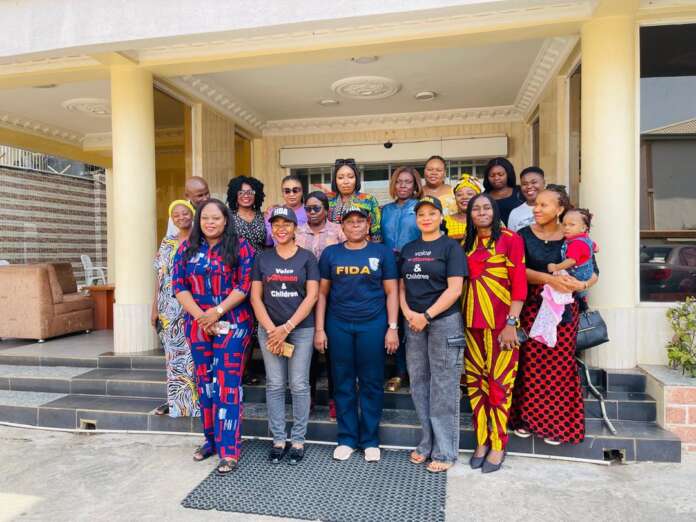
FIDA Nigeria says decisive actions must be taken to dismantle structures that perpetuate gender inequality, gross discrimination against the girl child

Press Release

FIDA Nigeria Press Release on the International Day of the Girl-Child 2024

Theme: “Girls’ Vision for the Future”

As we celebrate the International Day of the Girl-Child observed annually on the 11th of October, FIDA Nigeria stands resolute and in solidarity with every girl whose dream and aspiration remains a beacon of hope for a brighter tomorrow. Today, we do not only celebrate girls—we amplify their voices, highlight their struggles and call for urgent and proactive action to ensure that their vision for the future become a reality.

Across Nigeria, millions of girls are born into a world filled with challenges that are beyond their making. From the plains of the northeast, where continued conflict and displacement shatter the innocence of childhood, to the rural communities where girls are still denied access to basic education, the story of the Nigerian girl-child is often one of untold hardship and deprivation.

A story of daily struggle from dawn, not to prepare for school, but inundated with household chores and in most cases enduring the endless and cruel reality of child labor and gender inequalities. She dreams of a future where she can learn, grow and thrive, yet that dream is clouded by the weight of systemic barriers and discrimination, early and forced marriages, gender-based violence, harmful traditional and cultural practices that rob her of her childhood and future.

In the face of all these adversities, the Nigerian girl-child tenaciously remains a symbol of resilience and courage, daring to dream despite the odds, constantly envisioning a world where she is empowered, her rights protected, her voice heard and her potentials nurtured. However, this vision cannot be realized alone. The girl-child needs allies—people, institutions, and government that will not only listen but take decisive actions and steps to dismantle the structures that perpetuate gender inequality and gross discrimination.

The theme for the year 2024 resonates deeply within our nation. Insecurity, poverty, climate change, illiteracy, cultural and religious limitations and the degradation of progress made in gender parity, have further exacerbated the plight of girls in Nigeria. Nevertheless we make bold to say that the Nigerian girl-child is not a victim waiting to be saved, she is a leader waiting to be heard, standing tall at the frontline of change, challenging oppressive norms and pushing boundaries, yet she cannot win this fight alone.

FIDA Nigeria recognizing the immense potential of girls to reshape our society is deeply committed to creating spaces where their voices are not only heard but acted upon. We shall continue to work tirelessly to provide support, legal protection, and advocacy for the right to education and the overall wellbeing of the girl-child, ensuring that every Nigerian girl has the tools, resources and opportunities to shape her future.

As we reflect on this year’s theme, we call on Government, Civil Society Organizations, Public and Private sectors and indeed all stakeholders and well-meaning Nigerians to invest in proven solutions that address the challenges which girls face. We must focus on and prioritize security, education, health care, and wholesome protection from violence and exploitation. When girls lead, they uplift families, transform communities, and strengthen the nation.

Let us not only dream with our girls but invest heavily into these dreams. The future of Nigeria is in their hands and by empowering them today, we are securing a brighter tomorrow for all.

It is time to rise for the girl-child, walk the talk, guarantee her participation in leadership through education, thereby accelerating progress for a brighter tomorrow where her dreams become reality.

Together we certainly can!

FOR: FIDA NIGERIA

Signed

Amina Suzanah Agbaje (Mrs.)

Country Vice President/ National President FIDA Nigeria

Is there justice for workers in Nigeria?

By Olusegun Adeniyi

The National Industrial Court of Nigeria (NICN) held its 2024/2025 Legal Year ceremony yesterday in Abuja. With a retired Justice of Supreme Court, Ejembi Eko as Chairman, I was the guest speaker. Below is a slightly abridged version of my presentation that speaks not only to labour justice and public interest but also the rule of law and the role of Judges in Nigeria.

Read it:

I consider it an honour and a privilege to stand before this august gathering as you celebrate the 2024/2025 Legal Year. I expect many of you may be wondering what qualifies me to be here and why a journalist is presenting a paper on labour justice and public interest. Perhaps I should let you in on a secret. I got the invitation for this assignment when I met an energetic man playing ping pong (table tennis) sometime last year. Had I not been introduced to the gentleman before I watched him toss the ball upward with his left hand and strike it fiercely with his right, it would have been difficult for me to believe that he was the Honourable Justice Benedict Kanyip, President of the National Industrial Court of Nigeria (NICN).

Even though we exchanged contacts that day, I decided not to dwell too much on the promise because I thought it was one of those spur-of-the-moment decisions people make while in a jolly mood. But early this year, the honourable justice followed up with a call to remind me that I would indeed be the speaker at the 2024/2025 Legal Year ceremony. I cannot thank Justice Kanyip enough for the honour. Let me also appreciate other Judges of this court.

My understanding of the contributions of the NICN to labour jurisprudence in our country has been enriched in recent days. To prepare my paper, I spent considerable time at the Court’s library. And, as it is with most libraries in Nigeria, the environment could be better. But I was fortunate to encounter two dedicated library staff who painstakingly provided me access to relevant materials, including ‘Digest of Labour Cases in Nigeria (1960 to 2012)’ and ‘Digest of Judgements of National Industrial Court (1978 – 2006)’ edited by Oluwole Kehinde with foreword (to both books) written by a former President of this Court, Justice Babatunde Adejumo. These materials, and a few others I browsed through, catalogue hundreds of cases decided by this court to advance the course of justice for workers in Nigeria.

I have been asked to speak on labour justice and public interest. There could not have been a better time to interrogate this topic in Nigeria as both labour and government were recently locked in negotiating an appropriate national minimum wage—the lowest amount of salary that employers of labour, whether in the private or public sector, should earn in the country. After much drama, it is gratifying that the two parties were able to reach a consensus on the issue, despite the fact that the agreed amount cannot even buy a bag of rice in the market.

The situation of workers in Nigeria is further complicated by the fact that those in the informal sector are practically excluded from any form of labour justice. Today, the only avenue for redress for most is to appear on radio programmes. That is how Ahmed Isah, an activist and on-air personality who anchors ‘Brekete Family’ on Human Rights Radio Abuja, has become not only the ‘Ordinary President’ for the vulnerable of our society but also their ‘Chief Justice.’ Such is the flagrant violation of workers’ rights by all levels of government and the private sector that even foreign owned entities operating in Nigeria have been emboldened to treat our people with disrespect.

In a clear breach of extant labour laws, many of these companies resort to unwholesome practices that deny their Nigerian workers job security and appropriate benefits. Even where there are statutory compensation provisions for work-related diseases, injuries, disabilities, or death, they are mostly observed in the breach. In several cases, affected workers or their next of kin receive little or no compensation for death or permanent injuries, including when they occurred while carrying out assigned duties.

The concept of Labour justice and public interest are interwoven. Any initiative that engenders fair treatment in the workplace impacts positively on societal wellbeing. Indeed, the United Nations (UN) has on many occasions highlighted the importance of access to justice which essentially means the right to have one’s cause heard before an impartial arbiter. The international reference point for the concept of labour justice, as we are all aware, is the International Labour Organization (ILO) which, in several instruments, enshrines the right of workers to access justice without encumbrance. This includes access to courts and other formal dispute resolution mechanisms in pursuit of effective remedy.

The parameters in any given jurisdiction to measure labour justice include fair wages, which indicates that workers are to be compensated by their employers in a manner commensurate with their output; safe working conditions that guarantee protection from foreseeable danger and defence of their inalienable right to organize protests and negotiate collectively. There are of course several others, including not being discriminated against on the basis of religion, race, gender, age etc. If these parameters encompass the principles and practices that ensure fair treatment and protection of workers in their employment context, it goes without saying that the aim of labour justice is to address power imbalances between employers and workers, and to promote the dignity of labour.

Unfortunately, despite a plethora of legislation and the fact that Nigeria is a signatory to numerous conventions that should guarantee access to justice for workers, the reality is quite different. This can be glimpsed from the way key aspects of labour justice are resolved in our country. Not necessarily to the satisfaction of workers. These include freedom from discrimination, the ability to engage in collective bargaining, modalities for addressing unfair dismissal, among others. This then brings me to the issue of specialized labour court which the NICN represents in Nigeria.

The evolution of industrial courts can be traced to 1806 in France, 1869 in Germany and 1919 in the United Kingdom. But it was not until 1976 that authorities in our country signed on to the idea with the NICN. Established to address labour justice in all its ramifications, the court became functional in 1978. In the early years, the NICN faced several challenges that affected its effectiveness and efficiency. But even when operational, the court provided no reprieve for aggrieved workers for decades as its judgments were unenforceable due to the lack of laws and procedures required of a Superior Court of record.

The problem started with the Supreme Court decision in the case between the National Union of Electricity Employers (N.U.E.E.) and Bureau of Public Enterprises (BPE). The apex court held that, despite the provisions of Decree 47, the NICN had neither exclusive nor coordinate jurisdiction with state high courts. The fact that the court was powerless for about 28 years of its operation was acknowledged on 5th May 2003 by the then NICN President, Justice Adejumo in a scathing remark. This was the way he put it: “The NICN remained practically moribund. The court sat only in Lagos for those years. It was clearly unknown and its decisions and pronouncements hardly respected.”

The constitutional amendment of 2011 assented to by President Goodluck Jonathan changed the narrative by altering sections 6 and 254 of the 1999 Constitution and including the NICN as a Superior Court of record with coordinate jurisdiction with High Courts. The amendment also expanded the jurisdiction of the court to handle human right cases emanating from the workplace. The court is also saddled with jurisdiction to resolve disputes between the Nigeria Labour Congress (NLC), Trade Union Congress (TUC) and government.

Before I continue with the issue of labour justice and public interest, let me make a general point about justice administration in Nigeria. It is important because the extent of justice available to workers in any given society is a function of the extent of rule of law available in that society. It is doubtful that citizens as workers can expect a higher degree of labour justice than what is available within the larger society. In her speech at the special session of the Supreme Court commemorating its new Legal Year and the induction of the latest set of Senior Advocates of Nigeria (SANs) on 30 September 2024, the Chief Justice of Nigeria, Honourable Justice Kudirat Kekere-Ekun emphasised that obedience to court orders will, under her watch, be “non-negotiable”. And that “No individual or institution, irrespective of their standing, will be permitted to treat the judgments of our courts with levity or disregard”.

This, indeed, is as it should be in a society governed by ‘rule of law’. But ‘rule of law’ is not the same as ‘rule of judges.’ According to worldjusticeproject.org, “The rule of law is a durable system of laws, institutions, norms and community commitment that delivers four universal principles: accountability, just law, open government, and accessible and impartial justice”. In contrast, ‘rule of judges’ denotes impunity towards the law by the very persons who ordinarily are invested with the functions and responsibilities of upholding ‘rule of law’. It is a situation in which a judge places himself/herself above the law or makes himself/herself the law rather than a servant of the law or shepherd of the ‘rule of law’. Regrettably, the loud and overpowering noise of the latter is becoming definitive of Nigeria’s judiciary in the perception of most people. Nothing gives better expression to that than the statement, “Go to Court” by conscious wrong-doers, often followed by “Go on appeal” by their hand-in-glove judges!

Aside the indiscipline of conflicting judgements, there is also the disgraceful issue of courts of coordinate jurisdiction nullifying one another since forum shopping has been institutionalised in Nigeria. In recent days, we have seen how the judiciary has been dragged into the power struggle between the godfather and his godson in Rivers State. If there is anything to take from what transpired before last Saturday’s local government election in the state, it is the willingness on the part of an alarmingly increasing number of judicial personnel to accept and play the role of hitmen for influential political actors as against serving the interest of the country and the public good. That should also be of serious concern to Justice Kekere-Ekun.

I still cannot fathom how any self-respecting Judge would grant an injunction, using subterfuge to restrain the police from performing their primary responsibility of restoring law and order during an election process. Unfortunately, it is such contrived court orders that the police are ever eager to obey most often against the public interest. (NOTE: After my presentation yesterday, Mr Nnamonso Ekanem, SAN, said I was wrong on the case of Rivers State, and that the Federal High Court Judge did not restrain the police. He asked me to go and read the Certified True Copy of the judgement. Ekanem was immediately countered by another SAN, Jibrin Samuel Okutepa, who said the Judge indeed restrained the Police in what he described as an affront on the law. Okutepa (who later sent me the CTC of the 45-page judgement) was unsparing of the antics of some judicial officers in the country. Interestingly, shortly before I left the court, a respected retired Jurist whispered to me that my position is indeed unassailable. The Judge not only restrained the police from carrying out their constitutional responsibility, according to the eminent jurist, but he also prevented the Independent National Electoral Commission from providing a voters register that would have aided the conduct of a credible local government election in the state).

Meanwhile, at the rate some Judges are going; they will soon be granting injunctions to spouses who seek to restrain their partners from performing matrimonial duties in ‘The Other Room’. Now that prominent politicians are openly describing judgments emanating from our courts as ‘Kangaroo judgement’, it is incumbent on the National Judicial Commission (NJC) to step in and deal with blatant deviant behaviour among its members. But let’s come back to the issue of labour justice and public interest.

The NICN may have been envisioned as a specialized superior court of record with the aim of having its divisions everywhere in Nigeria, but this vision, in my view, is yet to be achieved. From its website, the NICN currently has twenty-eight (28) divisions outside the Abuja division. This means that eight states are left without any division of the NICN. Regrettably, that includes my state, Kwara, where the presence of the court is no more than a Registry located at 13A Offa Road, Ilorin. This lack of national spread not only raises the issue of awareness and accessibility but also limits the court’s ability to serve all segments of the population effectively.

There is another issue that relates to a crisis of mission, though not of its own making. In creating the NICN in the mid-seventies, the military government at the period envisioned sustainable rapid industrialization of Nigeria which they reasonably believed would make industrial disputes inevitable. For instance, between 1975 and 1985, Nigeria experienced significant industrial growth driven by the oil boom and government-led initiatives aimed at diversifying the economy. This period saw the establishment and expansion of various manufacturing companies across different sectors, including food and beverage, textiles, cement, pharmaceuticals, and more .Unfortunately, that sector is now almost comatose.

I began from the premise that the NICN has done quite a bit to advance labour jurisprudence in Nigeria based on my rudimentary research. But, as attested to by Justice Adejumo, the work of the Court is not known to most Nigerians. Even lawyers are not particularly conversant with it, according to some legal experts. In his book, ‘Rocheba’s Labour Law Manual (with International Conventions of Occupational Health and Safety)’, Enobong Etteh who has edited several Nigeria Labour Law Reports alluded to this. “A good number of the lawyers that appear before the court (NICN) do not appreciate the law and practice of the court. And consequently, they carry on as if what obtains in the regular courts necessarily obtains in the NICN,” Etteh wrote. “This is far from being so as the NICN is a specialised court permitted to regulate its procedures and proceedings as it thinks fit, and is not bound by any rules of evidence, although it may inform itself on any matter in such manner as it thinks just.”

However, the biggest challenge to labour justice has come from the regular courts. Between 2010 and 2024, the NICN has had a number of its decisions overturned, particularly by the Court of Appeal and the Supreme Court. These reversals often stemmed from jurisdictional challenges, misinterpretation of labour laws, and procedural issues. I will highlight three of such notable cases and what they mean for labour justice in Nigeria. The first is the case between Skye Bank Plc (now Polaris Bank) and Victor Iwu. The NICN had ruled in favour of the claimant regarding wrongful termination of appointment. But the Supreme Court overturned the NICN decision and clarified that the Court of Appeal has the jurisdiction to hear all civil matters from the NICN, not just those related to fundamental rights.

Considering that there were already two conflicting judgements of the Court of Appeal regarding appealability of the NICN on the issue under reference, this ruling overturned the prevailing belief that decisions of the court were final except in cases involving human rights or criminal matters, thus opening the door for more NICN decisions to be appealed. There are implications for this decision. I know that this may not sound well to lawyers but I am of the view that the NICN should have both original jurisdiction and final say on some issues pertaining to workers. Especially those relating to compensation for injury or disease and wrongful dismissal. Allowing all cases instituted at the NICN to be subject to appeal may not bode well in a country like ours. While it is conceded that the right of appeal may encourage NICN judges to be careful about their decisions in cases before them, some unscrupulous employers could use the right of appeal as a punitive measure or a delay tactic.

The second case is that between Chevron Nigeria Ltd and Mr. Titus Oyegun. While the NICN ruled in favour of the employee in a wrongful termination claim, the Court of Appeal overturned the decision, arguing that the NICN overstepped its jurisdiction by addressing certain contractual matters that should have been handled by the High Court. I am of the opinion that the decision of the Court of Appeal upturning the decision of the NICN should be tested at the Supreme Court. I do not believe it is in the interest of labour justice to exclude contractual matters from the jurisdiction of the industrial court.

In the third case between Arik Air Ltd and Mr Gabriel Igbinigie, theNICN had ordered the reinstatement of the claimant and awarded compensation. The Court of Appeal overturned the decision on grounds that the NICN exceeded its jurisdiction by ordering reinstatement. This was based on the time hallowed labour principle that you cannot force a willing employee on an unwilling employer. I understand the point the appellate court is trying to make but I still do not believe the ruling will serve the end of labour justice. In such circumstances, I would prefer punitive damages and compensation for aggrieved workers as a deterrent to arbitrariness on the part of employers.

The next point I want to make may sound a little bit heavy but there is a perception among some stakeholders that the judges of the NICN tend to be biased, especially in favour of the government. That is understandable since the jurisdiction conferred on the NICN dictates that a good percentage of its cases will involve government as employers of labour. The challenge is that a labour court considered biased may be unhelpful to workers. I must, of course, state here that the allegation of being pro-government cannot be sustained by any credible evidence.

When the federal government secured an injunction restraining the Nigeria Labour Congress (NLC) from proceeding with its proposed nationwide strike last year, the Congress accused the court of a “continuous weaponisation of the instrument of Exparte injunction in favour of government.” According to the NLC President, Joe Ajaero, “that is against the interests of Nigerian workers.” However, it should be noted that in several instances, the government has also attacked the judgments of the court. I remember the former Governor of Kaduna State, Mallam Nasir El-Rufai saying that one of the biggest mistakes Nigeria made was to establish the NICN, citing instances when judgements were entered against the government in favour of workers. So, if neither the government nor the NLC appear comfortable with the NICN, then the court must be doing something right. However, while the perception of being pro-government may be baseless, it can undermine public confidence in the court’s impartiality and fairness.

Let me now come to the issue of jurisdiction. As the ILO has succinctly put it in their publication, ‘Overview of procedural for access to labour justice in judicial dispute resolution institutions’, access to labour justice should not only be viewed from the perspective of labour courts and the right to have a claim examined by an impartial judge. It should also encompass access to a fair procedural regulation which enables real conditions of equality before recuring to the judiciary. The emerging regime in labour justice globally is ensuring effective labour dispute prevention and resolution, in law and practice. That’s because the notion of access to labour justice, according to the ILO, “encompasses judicial and non-judicial mechanisms and institutions dealing with the prevention and resolution of individual and collective labour disputes.”

Here, I must commend the establishment of the Alternative Dispute Resolution (ADR) Centre of the NICN to resolve certain labour related disputes using the process of mediation and/or conciliation. Since an effective labour justice system accommodates other active players, the exclusive jurisdiction of the NICN as guaranteed by the Industrial Act and Constitution may be unhelpful. Exclusive jurisdiction doesn’t, in my view, enhance access to justice for workers. For instance, the history of the labour court in England show shows how refusal by the major labour unions to appear before it ultimately led to the labour court ceding the majority of its powers to administrative tribunals.

Meanwhile, I find it disturbing that in conversations about labour justice in Nigeria, there is hardly any thought given to the informal sector. Yet, as of the first quarter of 2023, according to the National Bureau of Statistics (NBS) ‘Nigeria Labour Force Survey’, 92.6 per cent of workers in Nigeria were in informal employment. If you exclude agriculture from this sector, going by the survey, we still have 89.4 per cent of our people in informal employment. How can we exclude such a huge percentage of workers from access to justice and social protection and imagine we can develop our society? Take farmers for example. Because of their vocation, they are both employers and employees who feed the nation. Their incapacitation by reason of insecurity and natural disaster has resulted in nationwide shortages of foodstuffs, high cost of food crops and hunger in the land, impacting all Nigerians. Yet, they are excluded from any form of labour justice or social protection.

What the foregoing suggests is that in Nigeria today, labour justice is designed more for the formal sector. We need to redress this anomaly by the instrumentality of law and policies. Can there be a law mandating that at least 75% of the labour justice standard applicable to the formal sector also be made applicable to the informal sector? With that, we can address issues like unwritten contract agreements regarding wages, hours of work, and other indices of labour justice enjoyed by the formal sector. At present, there is no such law. These are some of the issues that should concern the National Assembly whose members seem obsessed with where and how Mr Bobrisky was sleeping when serving his jail term.

I am also aware of the principles of the Common Law of Contract that make some oral contractual agreements enforceable. So, may I ask: Will this court or any tribunal for that matter adjudicate on the hypothetical case of an office clerk whose employer refuses to pay him the meagre amount orally agreed by both parties, and then lays him off after working for 13 months? Will our court not be technically rigid by asking for a document evidencing labour agreement?

To enthrone labour justice, there is need for effective enforcement of labour laws. But it is important to also note that labour laws in Nigeria are complex and with outdated provisions that make their interpretation and application challenging. This complexity has often led to unpredictable judgments and uncertainty in labour relations and justice. There is therefore an urgent need to align these laws with current realities and international labour standards.

As I take my seat, let me briefly speak to the issue of compensation for injury or disease contracted at the workplace. Based on the duty of care to which workers are owed by their employers, the Employee Compensation Act of 2010 provides comprehensive compensation to those who sustain injury from accidents at the workplace. There is a brilliant disquisition of the Act by Mr Ajibola Olaosebikan, a lawyer. “Despite the existence of robust legal frameworks, several challenges persist in the realm of employee compensation in Nigeria. Enforcement of labor laws can be inconsistent, especially in smaller enterprises or informal sectors where oversight is limited” he wrote after reviewing all the provisions in the Act. “This inconsistency sometimes leads to exploitation and unfair practices, such as inadequate wages or denial of benefits.”

Many countries have devised creative ways by which workers in the informal sector can access justice, especially when in distress and there is no reason why we should not learn from them. In Canada, for instance, they have the Workplace Safety and Insurance Board (WSIB), an independent trust agency operating under the Ministry of Labour for small businesses that employ staff like nannies, babysitters, gardeners, bar attendants etc. Regulated by the Workplace Safety and Insurance Act (WSIA), it is a collective liability insurance to which employers subscribe. It provides compensation to employees in the event of a workplace accident.

Finally, we must understand that public interest is served when workers are not only fairly treated but also economically empowered. But in a society where there is weak enforcement of labour laws to protect workers, it is easy for employers to evade legal responsibilities. That’s why and how most of the banks and oil sector companies now deploy graduates as casuals who are paid peanuts and deprived of the opportunity to become mainstream workers.

This is an issue that should be addressed by relevant stakeholders. What the government, at all levels in Nigeria, must understand is that a system that ensures labour justice also fosters cohesion as addressing grievances in the workplace can prevent social unrest and promote harmony. To the extent that public interest is tied to ensuring a humane interpretation of socio-economic rights, relevant authorities must ensure that workers’ rights are respected, fair wages are paid, and safe working conditions provided. All of these are geared towards balancing the rights of workers with the economic and social well-being of society as a whole. Prioritizing labour justice, therefore, is a public interest imperative.

* You can follow me on my Twitter handle, @Olusegunverdict and on www.olusegunadeniyi.com

Reconsider the one-year ban, Kwara State University appeals to Council of Legal Education

Kwara State University, Malete has sent out an appeal to the Council of Legal Education (CLE) asking it to reconsider the one-year ban on admission of law students imposed on the University.

The school in a letter addressed to the Chairman of the Council of Legal Education pointed out that when its attention was drawn to the violation of the CLE accreditation regulations in 2020, it ceased from admitting students into its Law programme for two academic sessions.

In the letter of appeal signed by its Registrar, Dr. Kikelomo W. Sallee, the university further explained that its pause on law students’ admission accounted for there being no students’ graduation from the Faculty of Law at the end of 2022/2023 and 2023/2024 academic sessions.

The letter sighted by Law & Society Magazine reads:

On behalf of the Governing Council, the Vice Chancellor and the entire management of the Kwara State University, Malete, I express our profound gratitude to the Council of Legal Education (CLE) under your chairmanship, for the kind reprieve for our law graduates who are currently undergoing their mandatory vocational training in the Nigerian Law School.

However, our attention has been drawn to a social media report that the CLE decided at its last meeting to suspend our University from admitting students into its law programme as a result  of our commencement of the Law programme before the CLE accreditation. I wish to state that Kwara State University, Malete has zero tolerance for violation of laws or regulations. Hence, the University unilaterally suspended admission of students into its law programmes the moment its attention was drawn to the inadvertent violation of the CLE  accreditation regulations in 2020.  

Consequently, the University did not admit students into its Law programme for two academic sessions until the Faculty of Law passed the CLE resource visit in 2021 and was cleared to commence the programme. This accounted for why the University did not graduate any student from the Faculty of Law at the end of 2022/2023 and 2023/2024 academic sessions. Our law graduates who are currently in the Law School are the 2019/2020, 2020/2021 and 2021/2022 sets.

In view of the foregoing, we sincerely appeal to the CLE under your leadership to reconsider its position and waive the one-year ban on admission imposed on our University having established our remorsefulness by suspending the law admission process suo motu for two academic sessions even without the Council’s directive to that effect.

BOSAN announces the passing of Tanko Ashang, SAN

The Body of Senior Advocates of Nigeria (BOSAN) has announced the passing of its member, Mr. Tanko Ashang, SAN.

Below is the press statement signed by BOSAN’s Secretary, Mr. Olumide Sofowora, SAN.

NOTICE OF THE PASSING OF MR. TANKO ASHANG, SAN

It is with profound sorrow and heartfelt regret that we announce the passing of Mr. Tanko Ashang, SAN, who departed from this world on the 8th of October, 2024, in Abuja.

Mr. Tanko Ashang, SAN was called to the Bar in 1993 and was conferred with the prestigious rank of Senior Advocate of Nigeria on September 29, 2022.

A native of Busi in the Obanliku Local Government Area of Cross River State, Mr. Ashang, SAN was also the son of the late Paramount Ruler of Obanliku, Uchua Moses Ashang.

He served as the Attorney General and Commissioner for Justice for Cross River State from 2019 to 2023.
Prior to his tenure as Attorney General of Cross River State, Mr. Tanko Ashang, SAN was engaged in legal practice with the Federal Ministry of Justice, where he ascended to the role of Director.
Throughout his illustrious career in the Federal Ministry of Justice, Mr. Tanko Ashang, SAN held various esteemed positions, including but not limited to:

  • Legal Adviser, National Lottery Regulatory Commission, 2019.
  • Head, Central Authority Unit, 2016-2019.
  • Deputy Director, Civil Litigation, 2015-2016.
  • Legal Adviser, Office of the Secretary to the Government of the Federation, 2013-2014.
  • Legal Adviser, National Emergency Management Agency, 2007-2013.
  • Assistant Legal Adviser, Federal Inland Revenue Services, 2005-2007.
  • Legal Assistant to the Attorney General of the Federation, 1998-1999.
  • Public Prosecutor, 1996-1998.
  • Principal Counsel, Templice Chambers, 1995-1996.
  • Special Assistant to the Deputy Chairman, 1995.

Mr. Tanko Tanko Ashang, SAN, is survived by his wife and children.

In this time of profound grief, we extend our deepest condolences to his family and loved ones. We offer fervent prayers for the solace and eternal peace of Tanko Tanko Ashang, SAN, along with our departed colleagues. Amen.

Further details regarding the funeral arrangements will be communicated promptly upon receipt of information from his family.

Signed:

Mr. Olumide Sofowora, SAN  
Secretary

Appeal Court returns Labour Party’s Agbo, sacks Enugu PDP Rep

The election of the Labour Party (LP) candidate for the House of Representatives, Hon. Dennis Nnamdi Agbo to represent Igboeze North/Udenu federal constituency was on Wednesday affirmed by the Court of Appeal, Enugu division.

The Appeal Court in its verdict upheld the ruling of the House of Representatives tribunal which sacked the Peoples Democratic Party (PDP) candidate and member representing Igboeze North/Udenu federal constituency, Hon. Simon Atigwe.

The judgment of the court’s three-member panel was read by the presiding judge, Hon. Justice Joseph Eyo Ekanem.

The now victorious Hon Agbo was declared winner in the February 25th 2023 National Assembly election and sworn in but got removed after a re-run election that took place on February 3rd 2024.

However, the All Progressives Congress (APC) candidate in the election, Oby Ajih, challenged the outcome of the election at the Court of Appeal in Lagos State.

Mrs Ajih argued that the election did not follow the right process as the logo of her party was not on the INEC’s EC8A form for the exercise.

In November 2023, the court voided the election and ordered a re-run election in the constituency within 90 days.

In the re-run held on 3 February this year, Atigwe of the PDP was declared winner of the exercise when INEC said the PDP candidate polled 23,863 votes to defeat his closest rival, Agbo of the Labour Party, who scored 23, 226 votes.

Atigwe was subsequently sworn in later the same month but Agbo proceeded to the tribunal to challenge his declaration. But, Agbo argued that the rerun election was marred by the wrong computation of results and substantial non-compliance to the Electoral Law 2022, among others.

Counsel at both Tribunal and Court of Appeal included Ikeazor Akaraiwe, SAN for Hon. Dennis Agbo (the winner) and Onyechi Ikpeazu, SAN for Simon Atigwe (the removed representative); while Messrs Akinlolu Kehinde, SAN, and Tochukwu Maduka, SAN appeared for Labour Party and PDP respectively.

In the earlier ruling in August, the National Election Petition Tribunal in Abakaliki, Ebonyi State, sacked the PDP federal lawmaker.

The tribunal, headed by Justice H. N. Kunaza, also declared Dennis Agbo, candidate and winner of a rerun election held in February. But Atigwe filed an appeal at the Court of Appeal in Enugu State to challenge the ruling.

Justice Kunaza’s panel declared invalid, null and void the 2000 votes added to the PDP candidate and restored the votes of 25th February 2023 of 14,229 for the PDP and 28,870 for the LP candidate, Rt Hon Dennis Agbo.

It also held that Atigwe was not duly elected by the valid votes cast as the petitioner won with 23,221 and PDP 21,863 votes and as such, the certificate of return issued to Atigwe should be withdrawn and issued to Hon Agbo.

Imo police arrest stepmother who brutally assaulted 12-year-old stepdaughter

  • State health insurance agency, NBA Imo, other human rights groups step in

By Prince Uwalaka Chimaroke

Following the alleged brutal assault of her 12-year-old stepdaughter, Amarachi Emmanuel, the Imo State Police Command has confirmed the arrest of a secondary school teacher, Mrs Blessing Emmanuel.

Her arrest came after Chidiebube Okeoma, an Owerri-based journalist and activist, raised the alarm about the severe abuse, thereby bringing the case to the attention of the police at the Owerri Area Command.

The abuse came to light when two concerned women, Eunice and Amarachi, noticed the young girl selling sachet water on the streets of Owerri. Upon closer inspection, they were horrified to see her body covered in bruises and scars, the result of years of abuse at the hands of her stepmother. Okeomaon being notified by these women, recorded a video that soon went viral, showing the extent of the girl’s injuries, including machete cuts and burns.

Amarachi, who lost her mother in 2018, had been forced to live under the harsh rule of her stepmother since her father remarried in 2019. The stepmother allegedly denied her education and forced her and her siblings to hawk sachet water to support the family. The abuse escalated when the young girl cooked rice and ate without her stepmother’s permission, leading to another violent attack.

On witnessing the child’s condition, Okeoma rushed her to Umuguma General Hospital in Owerri for urgent medical attention.

Recognizing the girl’s critical need for long-term care, Okeoma sought further intervention.

As part of the government’s commitment to protecting vulnerable citizens, the Imo State Health Insurance Agency swiftly stepped in, led by its Executive Secretary and CEO, Dr. Uchenna Ewelike. The agency enrolled Amarachi into the state’s health insurance program under a special scheme for vulnerable children. This move ensures that all the costs of her medical treatments, including any necessary surgeries and rehabilitation, will be covered.

Woman subjects her 12-year-old stepdaughter to h0rrific ab*se with kn!fe, cutlass and fire for eating food without her permission (video)

Dr. Ewelike emphasized that this intervention falls under Governor Hope Uzodimma’s policy to provide health coverage for the poor and vulnerable, reaffirming the state’s commitment to supporting victims of abuse. The young girl was immediately transferred to Imo Specialist Hospital, where she will receive the best care available under the health insurance program, allowing her access to critical and comprehensive medical services without financial burden.

Beyond this immediate intervention, Chidiebube Okeoma who currently advocating for Amarachi’s long-term welfare, reached out to organizations such as the National Human Rights Commission, the Owerri Municipal Council Welfare Department, and the Imo State Ministry of Women Affairs and Social Development to ensure Amarachi and her siblings are placed in a safe environment. He also intends to secure their education, which had been neglected for years due to the abuse.

Okeoma, along with several human rights groups and the Nigeria Bar Association’s Owerri branch, has called for swift justice, urging the authorities to prosecute Mrs. Emmanuel for the physical and emotional torment inflicted on the children. The police, led by Commissioner Aboki Danjuma, have launched a thorough investigation into the case, with assurances that due process will be followed.

Woman subjects her 12-year-old stepdaughter to h0rrific ab*se with kn!fe, cutlass and fire for eating food without her permission (video)

In the meantime, the public’s attention has been drawn to Amarachi’s plight, with calls for compassion and support for her recovery. “Her body bears the scars of unimaginable cruelty—her lips, eyes, genitals, legs, and stomach have been mutilated by burns and machete cuts. She needs all the help she can get,” Okeoma shared, appealing for ongoing public assistance and kindness.

Amarachi’s case has brought to the forefront the urgent need for stronger measures to protect vulnerable children in society. The quick response from the Imo State Health Insurance Agency provides hope that Amarachi will receive the care she needs, while broader efforts continue to seek justice and a brighter future for her and her siblings.

Through the combined efforts of activists like Okeoma, law enforcement, and the support of state institutions such as the Imo State Health Insurance Agency, Amarachi’s tragic story is becoming one of rescue, recovery, and hope.

Click here to watch a video of how little Amarachi was discovered.

Prince Uwalaka Chimaroke

Police nabs suspect who threw 16-year-old girl into well after sexually assaulting her in Katsina

A 24-year-old man, Usman Mohammed Iyal has been arrested by the Katsina State Police Command for raping and throwing a 16-year-old girl into a well in Katsina Local Government Area of the state.

Parading Usman alongside other suspected criminals on Tuesday, October 8, 2024, spokesperson of the command, ASP Abubakar Aliyu, said he was apprehended on 17 September in the Ambassadors’ quarters.

According to ASP Aliyu, the suspect accosted and threatened the victim who was on an errand with a knife before dragging her into an uncompleted building where he “violently assaulted and raped” her.

In a desperate bid to conceal his crime, he said the suspect threw the victim into a nearby well and hurled stones down the well, with intent to murder her, but she was rescued and taken to hospital by police operatives.

“On September 27, 2024, at about 1216hrs, the Katsina State Police Command succeeded in arresting a suspected rapist for the brutal assault and attempted m8rder of a 16-year-old girl in Ambassador’s quarters, Katsina,” the PPRO stated.

“The victim was sent on an errand by her mother when the suspect, one Usman Mohammed Iyal, m, age 24 of Ambassadors quarters, armed with a knife, accosted, threatened, and dragged her into an uncompleted building where he then violently assaulted and raped the victim.

“Upon the victim’s disappearance, her father Abdullahi Sabitu, reported the incident at the GRA divisional police headquarters, leading to swift action. 

“An investigation was immediately launched, successfully rescued the victim from the well and arrested the suspect. The victim is currently receiving medical attention, and the investigation is currently ongoing.”

He said the suspect would be charged to court for rape, assault and attempted murder after a preliminary investigation by police in the state.

Headteacher bags double life sentences for raping two minors

By Agency Report

A Sexual Offences and Domestic Violence Court in Ikeja, Lagos on Tuesday, sentenced a headteacher, Benjamin Ogba, to two life sentences for raping two seven-year-old girls.

The News Agency of Nigeria (NAN) reports that while Justice Abiola Soladoye held that the prosecution had proven its case beyond reasonable doubt, the evidence of the defence witnesses was tainted with lies, which did not hold water.

According to Her Lordship, the convict is a serial paedophile, and his testimonies are a pack of lies.

“The defendant and his fellow defence witnesses were not truthful and credible in their testimonies. Their testimonies were a pack of lies and fell asunder like a pack of cards.

“This serial paedophile, a headteacher, who is expected to teach his students morals, stooped so low and defiled the underage girls, what a shame!

“This irresponsible and randy teacher, who teaches his students nonsense, should be locked away,” she held.

The judge also praised the two survivors for their courage to speak up in court against their assailant.

She said that sexual abuse of any sort must be reported and not swept under the carpet.

Ms Soladoye further urged parents not to relent in reporting sexual abuse cases to the appropriate authorities.

“Continuous education and awareness of this issue of sexual menace must be at the forefront of all stakeholders in the administration of justice so as to advocate for the rights of young children.

“The defendant, having been found guilty of the two counts bordering on defilement, is hereby sentenced to life imprisonment on each of the counts.

“The sentencing will, however, run concurrently and his name be registered in the sex offences register as maintained by Lagos State,” she said.

NAN reports that the state counsel, led by Olusola Soneye, called three witnesses while the defence counsel called four witnesses during the trial.

The prosecution submitted that the convict, sometime in the months of April and May 2019, at Shalom Private School, Oke-Ira Road, Ebutte Metta in Lagos, raped the two survivors by having unlawful sexual intercourse with them.

The prosecutor told the court that one of the girls, however, informed her mother and the case was reported to the police.

The offence according to the prosecution, contravenes the provisions of Section 137 of the Criminal Laws of Lagos State, 2015.

(NAN)

TIPS