Home Blog Page 429

Right Of Reply: When will the judges who cheated on their age be made to account?

By Johnson Agwu

On 20 October 2024, I was gloomy. It was four years since the #EndSARS protests by Nigerian Youths against police brutality and the bloody reprisals that followed in its wake. I scrolled my phone with the intention of exiting the #EndSARS sorrows. Instead, I scrolled unto premium tears.

On Premium Times, I stumbled on an article headlined: “Theresa Chikeka: The retired judge who is chief judge of Imo State? By Chidi Anselm Odinkalu”. I take anything written by Prof Odinkalu seriously because he bears a torch in the dark times we find ourselves in this country. By his flint we hope to find guidance to the paths that could make life liveable for those coming after us. The opening phrases of the article read as follows:

“The judicial career of Francis Chukwuma Abosi was supposed to last only seven years. In the event, he did 12 and may well have reached 20 years if events had not intervened. In his 12th year as a judge in April 2020, while serving as the Acting President of the Customary Court of Appeal of Imo State in South-East Nigeria, the National Judicial Council (NJC) mercifully ended it all.”

The story was not about Francis Abosi though. It was about Theresa Eberechukwu Chikeka who was appointed a judge of the High Court of Imo State on the same day as Abosi in 2008. Theresa Chikeka schooled, did Youth Service, and worked on the basis that she was born on 27 October 1956 and should have retired at 65 in October 2021. Instead, she changed her year of birth from 1956 to 1958, thereby making her eligible to retire in 2023 instead of 2021. On 28 June 2022, Imo State House of Assembly confirmed her as Chief Judge, more than eight months after she should have retired.

On 18 November 2024, the National Judicial Council (NJC) recommended the sack of Chikeka for age falsification. Additionally, “the council found that Grand Khadi Mahdi of Yobe State had three different dates of birth – December 10, January 28, and July, all in 1959, while his actual date of birth is 1952. The council held that Babagana, the Grand Kadi of Yobe, committed an act of misconduct in violation of Rule 02908 (i) and (ii) of the Public Service Rules, 2021 and ought to have retired from service 12 years ago.”

I am scandalised to learn that falsification of age by judicial officers is this rampant. How many more retired judges remain in service of the judiciary? The judicial officer’s calling is to do justice and, in some instances, convict people who cheat the system, falsify documents, or depose falsehoods on oath. What is the moral justification for persons like Abosi, Babagana, or Chikeka to purport to dispense justice on others?

I thank Odinkalu for amplifying the situation, keeping it in the front burner and insisting that the right thing is done. It remains to be seen if the NJC’s recommendation directing compulsory retirement and refund of salaries by the number of months that Babaganda and Chikeka respectively overstayed their judicial tenure will be implemented.

However, retirement and refund of salaries alone are, in my opinion, not proportionate punishment for the misconduct established. I think that there should be additional consequences for the misconduct by  Abosi, Babagana and Chikeka. They have each done considerable damage to the standing of the judiciary and to the careers of other persons who could have been President of Customary Court of Appeal, Grand Khadi, or Chief Judge who would have filled the vacancies had they left the judicial service when they were due. Their conduct also implicates several heads of crime, including fraudulent misrepresentation, forgery, and perjury.

The Difficult Question

The more difficult question is: what is the fate of judgments or proceedings delivered or conducted by these judicial officers after the time that they ought to have retired?

The judiciary is not like the executive where acts done by a person who is not the governor or duly appointed executive member could still be saved by several theories, such as the doctrine of necessity. Nor is the judiciary like the legislature where the participation of persons not qualified to do so would not necessarily invalidate laws made. Of course, participating in parliamentary proceedings when unqualified is unconstitutional under section 57 of the Nigerian Constitution of 1999.

However, that did not deter people like Salisu Buhari from forging their age and qualifications to claim eligibility to become elected to the position of the Speaker of the House of Representatives from 3 June 1999 to 23 July 1999. Laws, resolutions or proceedings made while he was speaker did not become void. Salisu Buhari would later confess, resign, apologise, and be convicted of his crimes. President Olusegun Obasanjo extended a pardon to him after the courts sentenced him to two years in prison for those crimes.

Numerous lawmakers had been in the national or state assemblies making laws while not eligible to be in those places. The constitution in those instances provides that the ineligibility of a lawmaker does not make the law made invalid. No one has bothered to ask if without those ineligibles, the legislature would have been quorate to begin with.

The enquiry as to whether the acts of Chikeka, Mahdi Babagana, or Abosi would remain valid is important because of its implications for the validity of their decisions after they should have retired. The case of former Abia State governor, Orji Uzor Kalu, is relevant here.

The Economic and Financial Crimes Commission (EFCC) prosecuted Orji Kalu for stealing the equivalent of about US$700m from the state’s coffers. The trial court convicted and sentenced him to about 12 years in jail. Before the conclusion of the proceedings, the trial judge (Muhammed Idris) was nominated a justice of the Court of Appeal. Orji Kalu applied for Idris to continue and complete the trial. Section 396(7) of the Administration of Criminal Justice Act (ACJA) allowed a judge of the High Court elevated to the Court of Appeal to continue to sit as a High Court judge for the purpose of concluding partly heard criminal matters which s/he was handling before the elevation.

Idris granted Orji Kalu’s application and concluded the trial despite his nomination to the Court of Appeal. On appeal, the Supreme Court held that Idris was no longer a judge of the Federal High Court on the day he convicted and sentenced Orji Kalu. It therefore set aside the proceedings. On 2 June 2020, Justice Abdullahi Liman ordered the release of Orji Kalu from custody, claiming that the decision of the seven-person panel of the Supreme Court meant that his conviction was wrongful and there was no basis for him to remain in custody. Justice Inyang Ekwo on 21 September 2021 restrained EFCC from re-arraigning Orji Kalu, holding that to do so would breach the constitutional prohibition against double jeopardy.

The principle in this decision is clear. So, what happens to the decisions rendered by Chikeka, Babagana, Abosi or any other unqualified judge rendered after they were supposed to have retired? What about accused persons convicted or acquitted by Chikeka et al? Will the Orji Kalu precedent be democratised and who will bear the cost of wasted time and resources of the State and litigants? It is not just enough for Abosi, Babagana, Chikeka and others to disgorge salaries unlawfully earned. They deserve their day(s) in court.

Johnson Agwu is a lawyer and writes from Lagos

Justice Denied: A call to reassess the Appeal Court’s verdict on sexual abuse of a minor, By the Adinya Arise Foundation AAF

On November 29, 2024, the Court of Appeal sitting in Lagos overturned the conviction and life sentence of Dr. Olufemi Olaleye, a medical director previously found guilty of sexually abusing his wife’s 16-year-old niece. The judgment, which ruled that the evidence presented by the prosecution was “tainted” and “unreliable,” has sparked outrage, especially as the global community marks the 16 Days of Activism Against Gender-Based Violence.

This verdict is not just a blow to the victim; it sends a chilling message to survivors and activists fighting for justice in cases of sexual violence. The ruling undermines decades of progress in addressing the culture of silence and impunity surrounding sexual abuse, particularly against minors.

A Failure of Justice

The appellate court’s decision rested on perceived procedural flaws in the trial, including contradictions in the victim’s testimony and the trial judge’s alleged interference to “bridge gaps” in the prosecution’s case. However, the essence of justice should not rest on procedural technicalities but on the pursuit of truth and the protection of vulnerable individuals.

The survivor in this case, a minor under the care of the accused, demonstrated immense courage by coming forward. Her testimony, corroborated by expert evidence from a child forensic specialist and a medical doctor from the Mirabel Centre, painted a clear picture of abuse. Yet, these voices were dismissed as “worthless.”

By prioritizing procedural missteps over the survivor’s ordeal, the appellate court has inadvertently sent a dangerous signal: that the rights of the accused to escape conviction outweigh the rights of the survivor to be believed and protected.

The Broader Implications

This ruling arrives at a critical moment when global campaigns against gender-based violence are gaining momentum. It threatens to erode trust in the judicial system and discourage other survivors from seeking justice. If survivors feel that their testimonies and expert evidence can be so easily disregarded, many will remain silent, emboldening perpetrators.

Moreover, the ruling has undermined the painstaking efforts of activists, social workers, and NGOs who have fought tirelessly to create an environment where survivors of sexual violence are empowered to speak out. This decision risks undoing years of advocacy and sets a dangerous precedent for future cases.

A Call for Reawakening and Accountability

The justice system must prioritize the protection of the vulnerable and the accountability of perpetrators over technicalities. This case demands an urgent review. The Supreme Court must step in to reassess the facts and evidence, ensuring that justice is served.

Furthermore, this ruling underscores the urgent need for judicial reforms, including:

  1. Training for Judges: Judges should receive specialized training in handling gender-based violence cases, particularly those involving minors.
  2. Victim-Centered Approaches: Legal proceedings should prioritize the well-being of survivors, ensuring they are not re-traumatized by the judicial process.
  3. Strengthened Prosecution: Prosecutors must be equipped to present watertight cases, with a clear focus on safeguarding survivors’ rights.

The Fight Continues

This verdict is a setback, but it is not the end. Activists, legal practitioners, and the public must rally to ensure that the rights of survivors are upheld. We owe it to the young girl at the center of this case and to countless others who face similar atrocities to ensure that their voices are heard, believed, and acted upon.

As the 16 Days of Activism Against Gender-Based Violence continues, let us channel our anger and disappointment into renewed advocacy. The fight for justice is far from over, and this case must become a rallying cry for systemic change.

Justice for one is justice for all. Let us not rest until the scales are balanced. Adinya Arise Foundation AAF stands in solidarity and relentless in her advocacy to end GBV

[Video] Concerns rise over empty loading bay at Port Harcourt refinery, as many describe the exercise as a hoax

The excitement surrounding the resumption of activities at the Port Harcourt Refinery on Tuesday, November 26, has quickly faded, leaving many Nigerians questioning the refinery’s true operational status.

As of Friday, November 29, it was indicated that there was no activity on-site.

Some workers claimed that the refinery was undergoing calibration, which could last until the following week.

The Port Harcourt Refinery has been plagued by multiple delays and missed deadlines regarding its return to full operations.

Despite this, the Group Chief Executive Officer of the Nigerian National Petroleum Company Limited (NNPCL), Melee Kyari, had inaugurated a new plant at the refinery’s Area 5 terminal on November 26, with reports suggesting that up to 200 petrol trucks were loading daily from the facility.

However, skepticism quickly followed as it emerged that the trucks were reportedly filled with old products stored in the tanks, not fresh refined fuel.

A visit to the Area 5 terminal confirmed that there were no visible signs of active operations.

An anonymous official further disclosed that the trucks were carrying what is known as dead stock products that are no longer suitable for sale from the refinery.

This has raised concerns about the refinery’s actual readiness to meet Nigeria’s fuel demands and the credibility of the resumption announcement.

“Before the refinery was shut down between 2015/2016, we had dead stock left in the tank, including some Premium Motor Spirit (petrol) DPK  (kerosene), and Automated Gas Oil (diesel),” He said.

“So, these products were in large quantities in stores in those tanks. During the rehabilitation of the Port Harcourt Refinery, Old Area 5, those products were evacuated from the tanks for storage.”

However, he pointed out that the substantial amount of refined petrol was off-spec and needed to be separated from water in order to produce the desired product with the correct color.

“But for DPK, it is in large quantity but they have not pushed it from the tank where it was kept after refined ready for commercial purposes.

“So, the product that was loaded was dead stock, that is the old product that was in the system. So, after these dead stocks, they will have to clean the tank, remove all the debris before pumping the new project into that tank, and redye it,” the source said.

The worker emphasized that refineries globally should be operated electronically rather than manually.

“But what they are trying to do at the Port Harcourt Refinery is manual, which cannot match the new digital pumps. Most of the pumps used for the event were refurbished,” he added.

He explained that during Kyari’s visit on Tuesday, November 26, seven trucks were prepared for loading, but only five were filled with petrol.

At the inauguration on the same day, the Chairman of the Independent Petroleum Marketers Association of Nigeria (IPMAN), Taken Ikpaki, expressed optimism, stating that more trucks were expected to arrive at the facility for product loading in the coming days.

However, instead of the anticipated influx, the number of trucks at the refinery decreased.

Nine trucks were parked on site, but the loading bays, numbered from one to eighteen, were completely empty, and some workers were seen lying down.

When asked about the lack of activity, a worker in overalls explained that there had been no further operations since the initial loading, attributing it to technical issues.

“They are de-watering, removing the water under the PMS. Maybe there will be loading after that, but we don’t know what time today.” The worker said.

Another worker at the loading bay explained that the delay was due to ongoing calibration of the refinery’s systems.

“They are calibrating the meters,” he said tersely.

It was revealed that the petrol left in the storage tanks may not be sufficient to fill five trucks.

A source further stated that calibration work was set to continue until Monday, December 2, with the loading of DPK (kerosene) and AGO (diesel) expected to commence thereafter.

A resident from Alode in Eleme Local Government Area of Rivers State, who identified himself only as Osaro, shared his thoughts.

“After that ceremony with Mele Kyari where they said the refinery had started operation and loading was taking place, what happened afterwards? They continued loading on air, that is on the pages of newspapers and social media,” Osaro said.

Dr. Joseph Obelle, the National Public Relations Officer of the Petroleum Product Retail Outlet Owners Association of Nigeria (PETROAN), explained that the delay was due to the ongoing calibration process.

“They are calibrating the loading pumps. They will be done today,” Obelle said.

On Thursday, November 28, the Senate Committee on Petroleum conducted a facility tour of the Port Harcourt refinery, though the results of their visit have not been disclosed.

In response to claims made by Timothy Mgbere, a leader from the Alesa community, who alleged that the refinery was not producing fuel, the NNPC issued a statement refuting the accusation.

Soneye, a spokesperson for the NNPC, criticized Mgbere, accusing him of lacking understanding of refinery operations.

“The old and new Port Harcourt refineries have since been integrated with one single terminal for product load-out. They share common utilities like power and storage tanks. This means that storage tanks and loading gantry which he claimed belongs to the new Port-Harcourt Refinery can also receive products from the Old Port Harcourt Refinery,” Soneye said.

He urged the public to dismiss the claims, describing them as nothing more than misguided and ignorant statements made with ill intent.

Watch the video below.

Auditor General’s office unravels N14bn tax fraud in over 30 agencies

A report by the Auditor-General of the Federation has uncovered tax irregularities amounting to N14.33bn across more than 30 Ministries, Departments, and Agencies.

The findings, disclosed in the Auditor-General’s Annual Report on Non-Compliance and Internal Control Weaknesses, highlight serious lapses in tax deductions, remittances, and compliance with financial regulations between 2020 and 2021.

The report revealed that six MDAs were responsible for N129.34m in under-deduction of taxes.

Paragraphs 234 and 235 of the Financial Regulations (2009) mandate accounting officers to ensure that all applicable taxes, such as Value Added Tax and Withholding Tax, are deducted and remitted promptly to the Federal Inland Revenue Service.

However, the audit observed widespread breaches of these provisions.

The Federal Road Safety Corps, Abuja, was identified as the highest offender, with an under-deduction of N90.57m, while the Federal Ministry of Labour and Employment, Abuja, recorded the smallest shortfall of N623,162.80.

The audit report read, “The sum of N129,341,764.04 was the amount of under deduction of taxes by six ministries, departments and agencies, and “The Federal Road Safety Corps, Abuja, has the highest amount of N90,579,554.92 while the Federal Ministry of Labour and Employment, Abuja, has the least amount of N623,162.80.”

Other agencies implicated include Federal Polytechnic Bida, Niger State; Nigerian Security Printing and Minting Company Plc, Abuja; National Water Resources Institute, Kaduna; and Council for the Regulation of Freight Forwarding in Nigeria.

A more concerning irregularity was the non-deduction of taxes, which amounted to N2.64bn across 21 MDAs.

The report noted that these agencies failed to deduct taxes from payments made to contractors and other beneficiaries, violating established financial regulations.

The NSPM, Abuja, led the defaulting agencies in this category with a discrepancy of N1.01bn, while the Federal Medical Centre, Ebute Meta, was the least offender, with an amount of N617,427.66.

The report read, “The sum of N2,636,147,740.99 was the amount of taxes not deducted from payments to several beneficiaries by 21 Ministries, Departments and Agencies, and

“The Nigerian Security Printing and Minting Company Plc, Abuja, has the highest amount of N1,009,286,718.93 while the Federal Medical Centre, Ebute Meta, has the least amount of N617,427.66.”

Other defaulting MDAs include Nigerian Railway Corporation, Ajaokuta Steel Company, Ministry of Petroleum Resources, Nigeria Police Force, and Corporate Affairs Commission.

The most significant breach involved non-remittance of taxes, amounting to N11.56bn.

According to the report, 11 MDAs deducted taxes but failed to remit the funds to the Federal Inland Revenue Service, as required by law.

The NSPM, Abuja, was again highlighted as the largest defaulter, with a total of N10.39bn in unremitted taxes.

The Federal Medical Centre, Katsina, accounted for the lowest unremitted amount of N1.37m.

The report read, “The sum of N11,561,131,193.52 was the amount of taxes not remitted to relevant tax authorities by eleven Ministries, Departments and, Agencies, and

“The Nigerian Security Printing and Minting Company Plc, Abuja, has the highest amount of N10,393,793,419.34 while the Federal Medical Centre, Katsina, has the least amount of N1,371,984.59.”

Other agencies flagged in this category include Galaxy Backbone Limited; Irrua Specialist Hospital, Edo State; Aminu Kano Teaching Hospital, Kano; and Medical Rehabilitation Therapists (Registration) Board of Nigeria, Abuja.

The Auditor-General of the Federation also uncovered N69.93bn in unrecovered tax liabilities across 26 Federal Inland Revenue Service outstations nationwide.

The findings, which spotlight lapses in tax enforcement, have raised concerns over the efficiency of the FIRS in recovering overdue tax assessments despite the provisions of the Federal Inland Revenue Service (Establishment) Act, 2007.

The FIRS outstations in Akwa Ibom, Cross Rivers, and Bayelsa States accounted for the highest combined unrecovered amount of N26.32bn. In contrast, the FIRS (MSTO), Gwagwalada, Abuja, recorded the least unrecovered tax liabilities, with N4.18m.

The report read, “The sum of N69,926,317,274.64 was the amount of unrecovered tax liabilities by 26 Outstations of the Federal Inland Revenue Service across the country, and

“The FIRS, Akwa Ibom, Cross Rivers and Bayelsa States offices have the combined highest amount of N26,324,196,289.63 while the FIRS (MSTO), Gwagwalada, Abuja, has the least amount of N4,180,362.94.”

The audit identified the following FIRS branches with notable unrecovered liabilities FIRS, Makurdi; FIRS (MSTO), Ibadan; FIRS (MSTO), Osogbo; FIRS (MSTO), Lagos; FIRS (MSTO), Aba; FIRS (MSTO), Akwa Ibom; FIRS (MSTO), Lafia; FIRS (MSTO), Abuja; FIRS (MSTO), Garki; and FIRS (MSTO), New Bussa.

The Auditor-General’s report has raised significant concerns about weak internal controls and widespread non-compliance with financial regulations among government agencies.

These lapses are said to undermine government revenue collection and public accountability.

The report recommends immediate corrective measures, including capacity building for accounting officers, stricter enforcement of tax laws, and heightened oversight of financial practices in MDAs.

It also urged the Federal Inland Revenue Service to recover the outstanding amounts and ensure strict adherence to financial regulations to avoid further revenue losses.

PUNCH

Historic! UK Parliamentarians back legitimisation of assisted dying

Parliamentarians in the United Kingdom have backed proposals to legalise assisted dying in England and Wales in a historic vote which paves the way for a change in the law.

In the first Commons vote on the issue in nearly a decade, MPs supported a bill which would allow terminally ill adults expected to die within six months to seek help to end their own life by 330 to 275, a majority of 55.

It followed an emotional debate in the chamber, where MPs from both sides shared personal stories which had informed their decisions.

The bill will now face many more months of debate and scrutiny by MPs and peers, who could choose to amend it, with the approval of both Houses of Parliament required before it becomes law.

Supporters gathered outside Parliament wept and hugged each other as the result was announced.

Campaign group Dignity in Dying said the vote was a “historic step towards greater choice and protection for dying people”.

Dame Esther Rantzen, one of the most high-profile campaigners for assisted dying, said she was “absolutely thrilled”.

The broadcaster, who has terminal lung cancer, said any change in the law would probably come too late to affect her personally.

But she said “future generations will be spared the ordeals we have to suffer at the moment” if the bill becomes law.

Labour MP Kim Leadbeater, who put forward the bill, told the BBC she was “a bit overwhelmed” following the vote and it meant “a huge amount” to be able to tell campaigners the bill had passed its first parliamentary hurdle.

However, Conservative Danny Kruger, a leading opponent of the bill, said it could be defeated at a later stage if MPs’ concerns were not properly addressed.

He said many of his colleagues believed the bill was “very dangerous” and he hoped that if safeguards in the legislation were not strengthened they would choose to vote against it in the future.

A chart showing a breakdown by party of MPs who voted for, against and did not vote on the Terminally Ill Adults (End of Life) Bill for England and Wales. The 330 MPs who voted for were made up of 234 Labour, 61 Liberal Democrat, 23 Conservative and 12 MPs from other parties. The 275 MPs who voted against were made up of 147 Labour, 92 Conservative, 11 Liberal Democrat and 25 MPs from other parties. The 38 MPs who did not vote were made up of 18 Labour, 3 Conservative and 17 MPs from other parties.
MPs were given a free vote, meaning they could make a decision based on their own conscience rather than having to follow a party line.

A higher percentage of female MPs backed the bill compared to their male counterparts.

Of the 258 female MPs able to express their preference, 143 – or 55% – were in favour, while 188 (49%) of the 381 male MPs backed the bill.

Prime Minister Sir Keir Starmer and his Conservative predecessor Rishi Sunak voted in favour, while Tory leader Kemi Badenoch voted against.

The PM, who previously supported a change in the law in 2015, did not speak in the debate or reveal how he planned to vote in advance, saying he did not want to influence the decisions of MPs.

The government has taken a neutral stance on the bill and has said it will work to ensure it is effective if Parliament backs a change in the law.

The vote followed more than four hours of passionate debate in a packed Commons chamber.

More than 160 MPs requested to speak but far fewer got an opportunity to do so due to time constraints.

Opening the debate, Leadbeater said the current law was “failing” and needed to change to give terminally ill people choice at the end of their life.

The MP for Spen Valley said too many people were experiencing “heartbreaking” suffering as a result of the “cruel reality” of the status quo.

She gave examples of terminally ill people who had died “screaming for assistance” or taken their own lives because they were in uncontrollable pain.

Opponents of the bill raised concerns that terminally ill people, particularly the elderly, disabled or vulnerable, could be pressurised into ending their own lives.

They also argued the focus should be on improving end-of-life care rather than introducing assisted dying.

Leadbeater insisted her bill included “the most robust and strongest set of safeguards and protections in the world”, with strict eligibility criteria.

Campaigners in favour of changing the law celebrated outside Parliament after the result was announced
To be eligible for assisted dying under Leadbeater’s Terminally Ill Adults (End of Life) Bill, someone must have the mental capacity to make a choice about ending their life and express a “clear, settled and informed” wish, free from coercion or pressure, at every stage of the process.

Two independent doctors and a High Court judge must be satisfied someone is eligible and has made their decision voluntarily.

However, Labour’s Diane Abbott was among those who argued these safeguards were not sufficient.

The longest-serving female MP said she feared the role of the judge could be only “a rubber stamp”.

She told MPs some terminally ill people may also feel under pressure to end their lives as they don’t “want to be a burden” or because of the cost of their care.

Cabinet ministers are divided over the issue, with Health Secretary Wes Streeting and Justice Secretary Shabana Mahmood – the two ministers who would have overall responsibility for implementing any change in the law – voting against.

Overall 15 cabinet members, including Chancellor Rachel Reeves and Home Secretary Yvette Cooper, voted in favour, while eight voted against.

Current laws across the UK prevent people from asking for medical help to die.

A separate bill to legalise assisted dying in Scotland has been proposed by a Liberal Democrat member of the Scottish Parliament and is expected to be voted on by MSPs next year.

ActionAid says judiciary is disenfranchising Nigerians

A global rights and anti-poverty agency, ActionAid, has advocated judicial reforms in the country following the role the judiciary has played so far in ensuring that justice is served to deserving individuals or political parties.

The group, in a paper presented during a recent programme by the Nigerian Guild of Editors observed that despite Nigeria’s resources, the country faces political and socio-economic challenges, including issues bothering on judicial accountability in pre and post election justice. It noted that it has become more and more apparent that the court has the power to disenfranchise Nigerians by a single judgement, therefore the country cannot eradicate poverty if the courts are enabling it, making the judiciary a focal point of advocacy for Nigerian Citizens.

Affirming election to be the most preferred process of leadership recruitment in most democracies, including Nigeria, ActionAid examined elections held in the country since the return to democracy and wondered if the pronouncements by the judiciary in recent times have been in the interest of Nigeria’s democracy. It then took a look at the most notorious set of contradicting judgments that emanated from the courts to determine whether we have a democracy in Nigeria.

Conflicting judgments

First, is the Election Petition Tribunal Judgments from Plateau State. “Here, while some panels in the state sacked some elected members of the House of Assembly and National Assembly on the ground that the PDP to which they belonged did not hold a valid primary election, some other panels disregarded that point and held that the issue concerning primaries of a political party was a pre-election matter and could not be raised to challenge the declared winner at an election petition tribunal (which has always been the legal position). When the matter went on appeal, the Court of Appeal surprisingly disregarded the settled principle of law that a pre-election matter cannot be raised at the post-election stage and affirmed the decisions of the tribunal which nullified the return of several PDP members on the ground that there were no validly conducted PDP primaries leading up to the general election, and while setting aside the decision of the panel that applied the known position.

The decision of the court of appeal affected the current governor. Luckily for the Governor, he had a right of appeal to the Supreme Court, which he exercised and got the Supreme Court to restate the position of the law, set aside the decision of the Court of Appeal and restored his mandate. Unfortunately for the members of the House of Reps from the state and members of the State House of Assembly who were elected under the umbrella of PDP, they lost their mandate since the Court of Appeal is their final level of appeal.”

Bashir Machina vs Ahmed Lawan

Another case was that of the Supreme Court judgment in Bashir Sheriff Machina vs Ahmed Ibrahim Lawan (Then Senate President). According to ActionAid, “It would be recalled that the then senate president did not participate in the Primaries for the National Assembly election for Yobe North senatorial district and Machina was returned unopposed. Shockingly, when Lawan lost out on the presidential primaries, his name was submitted by his party to INEC as the candidate for the Yobe North senatorial election. This led to the case instituted by Machina at the Federal High Court in line with the Electoral Act. He won both at the Federal High Court and at the Court of Appeal. When the matter got to the Supreme Court by an appeal by Lawan, the Supreme Court took a different turn by holding that the process used by Machina to commence the case at the Federal High Court was wrong. The apex court said rather than commencing his case by use of Originating summons, he ought to have used a writ of summons in light of the criminal allegations contained in the affidavit. This saw Machina losing out and Lawan being adopted as the party’s candidate since his name had already been submitted to INEC. In giving this judgment the Supreme Court disregarded its earlier judgments where it clearly held that only a party who took part in the primaries can contest the result of the primaries. The decision of the court sounds strange as the court abandoned the substance of the case despite the ample evidence that Lawan never contested the Primaries for Yobe North, which should have disqualified him, but relied on undue technicalities on the mode of commencing the action at the Federal High Court.”

2023 presidential election

And the mother of them all- the 2023 Presidential Election Petition Tribunal. “The presidential election petitions filed against APC and President Tinubu by Abubakar Atiku and Peter Obi presents a case filed with several issues which left citizens more confused than convinced that the tribunal was unbiased in its decision. A few of the grey areas were; the allegation of double nomination against Vice-President Kashim Shettima. It was argued that Shettima’s nomination as the running mate to Tinubu was in breach of the provisions of Sections 29(1), 33, 35 and 84{1)}(2)} of the Electoral Act, 2022 (as amended), claiming that Shettima had double nominations. Having been nominated as a vice presidential candidate, he had not withdrawn his nomination as candidate for the Borno Central Senatorial poll. Despite the decision of the court refusing the argument, the general feeling has been that Section 35 of the Electoral Act was violated by the double nomination of Shettima.

The section provides that ‘Where a Candidate knowingly allows himself to be nominated by more than one political party or in more than one constituency, his nomination shall be void. The court was, however, more concerned with who raised the issue, holding that such issues have to come from APC and not any third party; Civil forfeiture sufficient to disqualify a candidate. There was a lot of noise about the American case against Bola Tinubu, where there was an order against him forfeiting a certain amount of money which was proceeds of crime. Citizens saw this issue as very germane due to an earlier decision of the Supreme court delivered on the 17th of January 2014 by the CJN Ariwoola (as he then was) in a case between Mohammed Abacha, the second child of Sani Abacha, a former head of state; and the Federal Republic of Nigeria. One of the seven men on the panel of justices was Walter Onnoghen, a former CJN also held that forfeiture means ‘the loss of a right, privilege or property because of a crime’. How come the presidential tribunal disregarded this known position in the case of Tinubu to find that this particular forfeiture was not one anticipated by the constitution?

This has become a normal parlance in Nigeria, without much thought to the implications, given the absence of infrastructures that enable justice,” It stated.

Still on some of the contradicting judgments by the Nigerian judiciary, ActionAid cited the recent Edo Governorship election. According to the group, “The recent Edo governorship election shows us that there is still so much work to be done by Citizen groups. If we cannot get it right at the polls, if we cannot trust INEC, should we still be apprehensive of the Judiciary? What is the hope of a Nigerian?”

The presentation also covered “The Political Economy Analysis of Judicial Accountability in Post-Election Justice in Nigeria”, where it examined the complex interplay between political, economic, and institutional factors that shape the functioning of the judiciary, particularly in handling election disputes which helps to understand the urgency for intervention by Social movements, CSOs etc, to hold the Judiciary accountable.

It then gave a breakdown of the key components and considerations fuelling post election litigations: “Political factors which looked at the electoral system; Political actors and Influence, which see the political elites, especially those in power, attempting to exert influence over the judiciary to secure favourable judgments; Judicial Independence- The Nigerian Constitution guarantees judicial independence, but we can see an obvious erosion of its independence. Political pressure, corruption, and executive are undermining the judiciary’s role; Electoral Tribunals which are specifically set up to handle election-related disputes. The functioning and integrity of these tribunals are key to post-election Justice; Economic factors which deal with resource allocation- Adequate funding is necessary for the judiciary to function effectively. Financial dependence on the executive is limiting judicial autonomy, making the courts vulnerable to manipulation; Judicial Corruption- Economic incentives, such as bribery, may influence judicial decisions, especially in high-stakes election disputes; Political economy of patronage- post-election periods in Nigeria are often characterized by political patronage systems, where those in power distribute economic resources to maintain loyalty.

The judiciary is pressured to align with this system; institutional factors which deal with the ‘Legal Framework’ – The Nigerian Constitution and the Electoral Act provide the legal basis for post-election dispute resolution. However, loopholes in the law and delays in the judicial process are hindering accountability; Judicial Oversight Bodies: Bodies like the NJC play a role in ensuring accountability within the judiciary by sanctioning corrupt judges. However, the effectiveness of these oversight bodies is in question;

Electoral Tribunals and Courts– The efficiency and transparency of electoral tribunals are central to post-election justice. Delays in the adjudication process, non-compliance with tribunal rulings, and conflicting judgments can undermine the integrity of these mechanisms; and Enforcement of Judgments: Even when courts make rulings in election disputes, the enforcement of these judgments is sometimes met with resistance from political actors, raising concerns about the judiciary’s ability to hold them accountable.”

The NGE

Describing NGE as a “Non-governmental organization, non-partisan, and non-profit making organization for the highest strata of working journalists who have attained the exalted position of editors in the journalism profession to help Nigerian media practitioners to uphold the tenet and ethics of journalism, it pointed out that “Engaging with the Nigerian Guild of Editors (NGE) can significantly enhance ActionAid Nigeria’s efforts in its judicial accountability programs.”

It stressed the importance of media influence on public awareness whereby editors play a crucial role in shaping public opinion, adding that,”Through their reach and influence, they can help bring attention to issues surrounding judicial accountability, ensuring these topics reach a broader audience. By partnering with the NGE, ActionAid can gain visibility and foster a greater public understanding of judicial reform needs,” it stated.

The group gives more insight into how NGE could contribute more to having a working system. “Editorial Expertise in Advocacy: Editors in the NGE are skilled at presenting complex information clearly and compellingly. They can help convey the nuances of judicial accountability, including technical details and case studies, in ways that resonate with the general public and policymakers alike, supporting ActionAid’s advocacy goals.

“Strengthened Narrative and Credibility: The backing of respected media outlets, spearheaded by editors, can add credibility to ActionAid’s initiatives. The NGE’s engagement can amplify ActionAid’s message, validating its calls for transparency and accountability within the judiciary.

Catalyst for Policy Reform: With direct access to policymakers and influencers, editors are well-positioned to drive conversations that can lead to policy change. Their editorial support could generate pressure on decision-makers to act on judicial reforms, aligning with ActionAid’s objectives.” 

As govt. pampers ‘repentant’ Boko Haram members, survivors demand justice

By Lillian Okenwa

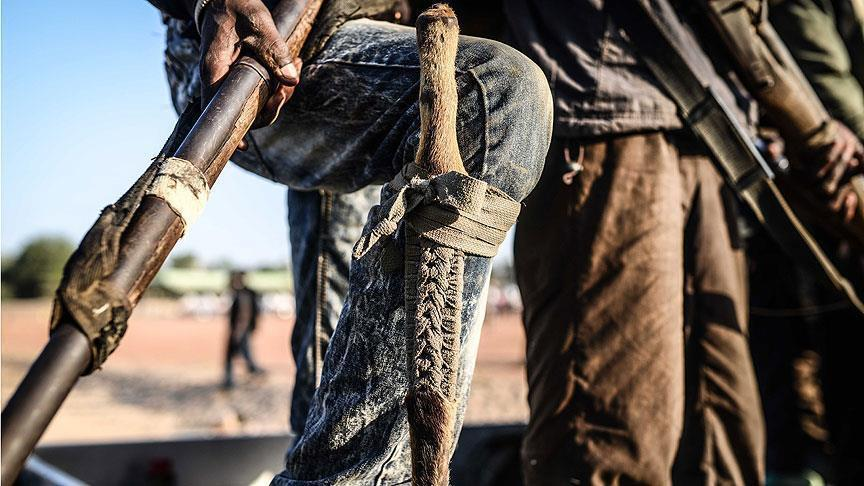
Amidst the mollycoddling of ‘repentant’ Boko Haram members, while their victims who have undergone severe physical and psychological violence have received very little attention and care from the Nigerian government, survivors of insurgency in Borno state are demanding justice and reparations for the atrocities they suffered in the state.

On Wednesday, the Al-Amin Foundation for Peace and Development, a community-based Non-Governmental Organisation, convened a dialogue in Maiduguri to articulate a chartered demand for survivors, victims, and deradicalised women of the Boko Haram insurgency.

In February 2020, Senator Mohammed Ali Ndume who has been representing Borno South senatorial district since 2011 publicly denounced the announcement by the military that another batch of 603 ‘repentant’ insurgents had completed their de-radicalisation programme. Ndume alleged that most of those earlier integrated into the communities had gone back to their old ways. 

“Many among those released have since run away. The government should know what to do about them, but not reintroducing someone to you, who has killed your parents or your relations”, said Ndume who recounted the atrocities committed by Boko Haram in his community.

“In my village, mallams that are Muslims, not ordinary Muslims but mallams, elders above 60, were taken to an abattoir and slaughtered by Boko Haram. 75 of them…Not that they even apologised to you, they apologised to the government with the thinking that the government has failed and that is why they are being pampered. They are like Kharajites. They will never repent,” he added.

On the night of 30th April 2024, Senator Ndume’s warning came true when ‘repentant’ Boko Haram insurgents (who dressed in military uniform) invaded a police station in Maiduguri to set free eight of their colleagues who had been arrested earlier with 476 grammes of illicit substances.

“Thereafter, they went and attacked Nigeria Immigration Service and NDLEA checkpoints after the welcome to the township gate and they burnt it down,” according to the Police Public Relations Officer in Borno State, Kenneth Daso who said arrests were made. Although Daso was silent on injuries and death, there are reports of fatalities.

Hamsatu Allamin, Executive Director of the foundation, in an interview, said the dialogue aimed to ensure that every victim, survivor, and deradicalised woman receives justice, as outlined in the three charters of transitional justice enshrined in Borno Ministry of Women Affairs and Social Development. 

Allamin explained that many victims, including deradicalised women and survivors, face stigma and isolation, urging the government and traditional and religious rulers to establish policies preventing negative societal punishment.

“We have organised this deliberately to address the plight of those affected by the insurgency and promote transitional justice and human rights,” Allamin said.

The Borno State Commissioner for Women Affairs and Social Development, Hajiya Zuwaira Gambo, assured her ministry would continue partnering with the Allamin Foundation in achieving transitional justice in the state.

Gambo commended the foundation for organising the dialogue, which brought attention to the plight of the victims of Boko Haram insurgency.

The Boko Haram insurgents have killed tens of thousands of people and displaced millions since 2009. The dialogue in Maiduguri is seen as a step towards addressing the grievances of survivors and promoting transitional justice in the state.

Asserting that Nigeria and the UN must help the survivors of Boko Haram, Joyce Bukuru in an article wrote:

“While the Nigerian military has rescued some girls and young women, most of them have risked the threat of death and undertaken harrowing journeys to escape their captivity. Many were subsequently unlawfully detained by the Nigerian military and almost all were left to fend for themselves. The reintegration of young women and girl survivors of Boko Haram is the focus of a report Amnesty International published earlier this year.

“Prioritizing the rights and needs of survivors like the young women and girls who have endured brutal crimes in northeast Nigeria is critical to the implementation of the women, peace and security agenda. This year marks 24 years since its adoption by the United Nations Security Council.

“After surviving years of abuse by Boko Haram factions and then by the Nigerian military by some, reintegration support and access to justice remain elusive for the girls and young women associated — or perceived to be associated — with Boko Haram. As detailed in our report, they face unique and profound challenges, bearing the scars of serious human rights abuses and crimes under international law that they have suffered in Boko Haram captivity. These include rape, trafficking, forced marriage and forced pregnancies as well as unlawful military detention.

“Many girls that Amnesty International spoke with reported that the “freedom” they have experienced after escaping Boko Haram has brought new struggles. Health complications, lack of access to education and, for some, the heavy burden of stigma from their families and communities are only a few of those challenges.

“As they navigate life post-captivity, they are left trying to reclaim their rights within the confines of a deeply flawed reintegration process run by Nigerian authorities. For example, our research revealed that many of the survivors, upon returning to government-controlled areas, were overlooked by officials during a screening process that typically treated them as “Boko Haram wives” rather than recognizing them as victims of trafficking. In one transit camp intended to host “surrendered individuals,” women and children lived side by side with former Boko Haram fighters, raising serious human rights concerns, including heightened risk of sexual violence.

“Instead of seeing their legal, health, education and livelihood needs met, many girls and young women have been unlawfully detained in military custody in detention facilities and were not charged with a criminal offense. Some of them spoke about being insulted by soldiers, such as being called “Boko Haram wives” and accusing them of killing all the people in town.

“In separate research, Amnesty International found that survivors — including some of the freed Chibok girls abducted 10 years ago — were forced into marriages with former Boko Haram fighters. This scheme, organized by local authorities, was driven by a misguided effort to appease “repentant” Boko Haram fighters.

“To date, the Nigerian authorities have failed to take effective measures to uphold their international human rights obligations, including to reintegrate the girls and young women. Nigerian authorities have also failed to prosecute members of Boko Haram and the Nigerian military for crimes committed under international law against the victims.”

Intimate Affairs: Why can’t a side chick have a side guy?

By Funke Egbemode

I had not seen Fey (short for Feyikemi) in a while, a year and some weeks, I think. Until that bright afternoon last week. I was getting out of my car in the parking lot of my favourite spa in Victoria Island, Lagos. I had finally decided that I was ripe and ready for some head-to-toe professional pampering to take out the crinks and deep massage for the bunched-up muscles. I deserve a treat after all those tension-soaked months, even if I say so myself.

As I stepped out of my car, right beside me was this sleek Range Rover, white too. I’m a sucker for white automobiles, I confess. Still admiring the nice ride and Fey stepped out. We screamed, hugged and screamed some more. Fey, my Fey was looking totally luxe in a simple sky blue kaftan.

‘Babe. This Range na new one o.’ I winked. The Benz and Lexus I know, but not this Range.

‘Yes o, it’s a gift from me to myself to console me.’ Fey and her lively sentences, I’d missed them but I didn’t miss the import of that particular statement. Why did my friend need consolation? Who died? Nobody really, just her five-year relationship with B.J. Now, that was a truly sad one and a great affair must be mourned properly when it dies. Fey and B.J were a discreet item and we all thought they were going to live happily the rest of their days, one way or the other, somehow. I’ll explain.

Fey is a big Lagos babe, a successful importer, a contractor who also plays in the real estate sector. B.J owns one of the thriving real estate companies building estates left, right and centre of Nigeria. He has his fingers in other pies too. He will be 60 later this year and he is married. He and Fey met at one of the real estate industry events and hit it off from the get-go. Fey’s two sons are in Canada and she was a searching, single mother. Fey and B.J were a couple to behold. They made time for each other within and outside the country, bae-cation and weekend getaways. Don’t ask me for details. The long and short of it all was B.J. was, is, a married man, which made my friend a side-chick. Hard, sad reality. But Fey hoped for and wanted more. Months turned into years and B.J continued to spoil her, spending time, quality time with her.

So, what went wrong? The two of us went to the poolside, took up a table for two and ordered drinks. According to Fey, she was about to board her flight back to Nigeria in Qatar when she saw what she described as the most shocking story of her life on one of the online platforms. Real Estate Big Boy Takes Second Wife in Quiet Ceremony!!! B.J.’s photo accompanied the story.

‘Babe, my world went into a spin. My emotions went into a riot. First, it was unbelief, then anger, denial and then shame, followed by more angry thoughts. Not my B.J. Then I told myself I was a fool anyway, foolish enough to have thought I was anything more than a warm body to him. I felt used and ashamed, wondering even if B.J. had me under a spell. My eyes misted over and I still don’t know how I didn’t stumble or fall between the lounge and the aircraft. I sank into my seat and did my best not to put my two hands on my head and bawl like a child. Thank God for the Business Class cabin. I had the privacy to sniff and cry into my handkerchief.

Fey had a dozen and one dozen questions for herself and tons for B.J. whose phones were switched off, including the one that was known only to the two of them. Yes, they were that close. Or so Fey thought. Reminds one of Atlantic Star’s Secret Lovers’ lyrics. That was what dawned on Fey. She was just his secret.

‘I felt like a fool, used, discarded and left to figure things out. I mean, B.J.’s phones were actually switched off and he took a second wife and left me to find out on social media! I was faithful to him for five whole years, only he saw my nakedness. I cooked and shopped for him. I cancelled business meetings, rescheduled appointments to be available for him. I allowed him to act out his fantasies. His clothes, shirts, agbada, socks, and boxers were in my house. And in all those years he didn’t think I was good enough for a second wife. He wanted a second wife and he went shopping elsewhere. Can you beat that, Funke?

Fey felt like a slut, a regular runs-girl. Runs-girls, however, know the ‘score’ and don’t bother with expectations and loyalty.

B.J didn’t call to explain for a whole week. I guess he was waiting for the inferno to become a controllable fire. When bad B.J eventually called, his explanation was really no explanation. But my friend was a fool in love, I think. You know how it is with a man you have loved deeply. Cutting them off is usually hard grind.

‘His familiar scent, charming sexy voice and smile did me in, I must confess. But my head was clearer and I told myself from there on I was putting my heart on vacation. I told myself I was no longer the exclusive preserve of B.J. ‘ That’s how a smart mature babe should roll.

Fey nicely, smartly, of course, painfully stepped away from B.J who somehow thought he could warm his way back into my friend’s heart and panties. He didn’t see my friend coming. When he called that he was coming over for dinner (dinners are dangerous with a man you are breaking off with), she sweetly told him lunch the following week would be a better idea. But B.J still felt he owned Fey lock, stock and barrel. Until that day in September at the Murtala Mohammed International Airport, Lagos.

‘I was going to South Africa with the new man in my life. We were getting our drinks at the lounge when B.J walked in with his pregnant new wife. Imagine if I was there alone to witness that! I’d have been miserable. Trust me, I milked the situation to the brim. I put my head on Emma’s shoulder, looked in his eyes constantly, dusted imaginary specks from his designer shirt. I got up twice to show off my cute arsenal and nicely wrapped Man-U. When B.J is upset, he chews on his lower lip. That day, he chewed it raw and it was a pleasant sight.’

So, guys, tell me, what was B.J expecting? Perhaps the more appropriate question is why do married men expect their side chicks to be faithful and exclusive to them? Isn’t the side chic game built on unfaithfulness? Mr Married Man wants one on the side, why should Miss Side Chick be kept on ice when a marriage proposal is not on the cards? Men, they are interestingly selfish all the time, but what can we do without them? They are fun and cool but certainly need to kick the cocky selfishness. Why would B.J. who had a wife and all the fun with a side chick who he ignored, passed over, dumped, to get a second wife to chew his lips in anger until they bled, just because he saw her with another man? I don’t understand why a side chick can’t have a side guy. What is sauce for the goose should be sauce for the gander.

The side chick’s duties are clear. She’s the one you go to when you want. She is the one who does not have a headache when you want her. She wears sexy lingerie to serve her man red wine after a hard day’s work. She fixes her nails and hair the way he wants it. She is his personal masseuse. She allows him as many missionary journeys as he wants as often as he wants. She does not just say sorry when he’s unhappy or loses a business deal. She puts his head in between her breasts and rocks him to sleep. And if she’s a big girl side-chick, she comes through with soft loans and useful business contacts. She is his go-to-girl, the one who does all the things Madam no longer has time for. Of course, she gets generous pampering for being sweet and warm. But side chicks are not forever. I mean, it’s not a status most women want to keep or be kept in forever. However when they are loyal, they can be totally loyal, totally devoted. And when they feel used and are tired of playing second fiddle, that’s when they start considering alternatives such as a side guy. Me, I think every woman should look out for herself and not allow her supple years to be sucked dry by a man who is not giving her something tangible in return. Oga, if you are not going to give your side chick the ‘more’ she wants, brace up, she just might get herself a side guy soon. That’s how a deregulated market works.

I’ll leave it here, for now.

Funke Egbemode could be reached at [email protected].

Herbalist sustains life threatening injury while trying out efficacy of bulletproof charm

  • Might be charged with unlawful possession of firearms and attempted suicide

A Federal Capital Territory (FCT) based herbalist of Kuchibuyi Village on November 23, 2024, injured himself while testing the potency of his self-made ‘bulletproof’ charm.

Confirming the incident to newsmen, the command’s spokesperson, SP Josephine Adeh, said while testing the charm, Usman shot himself in the stomach with a shotgun.

Sadly, the charm failed to protect the medicine man, leading to life-threatening injuries. CSP Adeh said officers from the Byazhin Division were alerted and they visited the scene where they found Usman in critical condition. 

‘’He was quickly transported to Kubwa General Hospital for emergency treatment and later transferred to Gwagwalada Specialist Hospital for further care.

In the aftermath, police conducted a thorough search of Usman’s home, recovering the homemade gun and an array of charms used in his experiment. Investigations are ongoing, and Usman is expected to face charges for unlawful possession of firearms and attempted suicide under Section 231 of the Penal Code Law of Northern Nigeria.” Adeh said

The police spokesperson mentioned that the Commissioner of Police FCT, CP Olatunji Disu, has condemned the incident, highlighting the dangers associated with illegal firearms. “This situation illustrates the serious risks of engaging in reckless behaviour. We strongly advise the community to avoid such dangerous practices.”

Nigeria Immigration denies requesting married women to attach husband’s passport data page or proof husband’s identity before renewing passport

The Nigeria Immigration Service has refuted the allegation of asking married women to attach their husbands’ passport data pages or proof of their husband’s identity before they can renew their passports.

A Nigerian woman had taken to social media to call out the service. In her post, the lady who is in the process of getting a divorce stated that she began renewing her passport last week but is yet to complete it due to the many requirements needed from women. She wondered if the service knows how dangerous they are for women trying to escape all kinds of things in their marriages, including domestic violence. Read here.


However, the NIS reacting through its X handle, said there is no such law that says married women must attach their husbands’ passport pages or proof of their husbands’ identity before they can renew their passports. 

Read their reaction below.

Nigeria Immigration denies asking married women to attach their husband?s passport page or proof of her husband?s identity before she can renew their passport

TIPS