Home Blog Page 387

Lugard: 80 years after 

By Lasisi Olagunju

On 9 June, 1913, Lord Friedrick Lugard minuted on a document that Lagos “could never be made a healthy place.” It was his reaction to a proposed sewage scheme estimated to cost £186,000. He believed that that amount was too vast to expend on an unworthy Lagos. He was Governor of Southern Nigeria at that time.

On January 1, 1914, Lugard became Governor-General of the whole of Nigeria. Thomas S. Gale, who was very critical of his ways, notes that one of Lugard’s first acts “was to close the popular Ereko dispensary in Lagos. He also approved the cancellation of plans for a badly-needed Lagos maternity home” because Lagos people” insisted that it be staffed with indigenous personnel.” Lugard always referenced what he described as “the inherent racial qualities of the coast negro” as justification for the ‘apartheid’ he prescribed for Lagos.

The soil is the crop; the planter the yield. That is why I am writing this. This week marks the 80th anniversary of the death of Lord Lugard. He was the British colonial administrator variously blamed – or praised – for ‘creating’ Nigeria and its principal structural problems. I read him each time I get exasperated by Nigeria; whenever I wonder why we are where we are.

From 1900 to 1906, Lugard was High Commissioner of the Northern Nigeria Protectorate. His blitzkrieg conquered the North but the North counter-conquered him with bewitching love. He was pleased with northern Nigeria and never hid his love for the region and his appreciation for its loyalty to him and to the British crown.

The southern part, particularly Lagos and its environs which he later added to his portfolio, Lugard found very insufferable. His words for the people there share meaning with savagery and its synonyms. Probably if we understand our leaders, past and present, we can design our escape route out of their failure and foibles.

What were Lugard’s legacies in the North? His North had no western schools when he got there and he did very little to alter that situation throughout his years there. Check paragraph 161 of his ‘Report on Amalgamation’ published in December 1919. He later established two schools for the Muslim area of the North. There were 43 mission schools which Lugard wrote were “confined to the non-Muslim districts.” These mission schools, he wrote, enjoyed neither government’s financial assistance nor inspection and control. Lugard did so ‘well’ here for the North such that “at the time of amalgamation, the total number of pupils in government or mission schools was between 700 or 800 out of a population of some nine million.” Those were his words.

The man was lucky. With no western educated elite, he had no opposition, and he did not have to worry about the emirs. They cooperated with him on everything and he reciprocated their good behaviour by not allowing western culture and its Christian missionaries to disturb their region and religion. Earlier in 1903, after he conquered Sokoto, his speech to the new Sultan and his people ended with a charge that he had no issues with Islam. When he conquered Bida “a walled town that had been giving trouble”, his final words were to the effect that “every man was free to worship God in his own way.” He was wise. He later empowered the emirs with indirect rule which came with lucrative salaries and other inducements.

He was wise. He had superior weapons but he didn’t use them after defeating the north in battle. For these, he was respected in palaces and on the streets. He became the lord of the north, his word was law. Then, he was made governor of southern Nigeria in 1912; he came down to Lagos and encountered a set of Africans – negroes who argued with him. He did not find it funny and he acted and reacted so throughout his years in power.

On 28 March, 1913, Lugard, apparently after encountering the educated elite of Lagos, strongly counselled against giving western education to Africans outside Africa. He wrote in a memo: “It appears to me that residence in Europe is bad for the African. He returns at best an insufferable prig; at worst he is a very objectionable person.”

The amalgamation he midwifed was not for any negro to enjoy. It was for his country’s treasury to breathe and for it to use one slave to sustain another in perpetuity. And he said so. In an August 16, 1915 memo, Lugard wrote that “a great native city lives its life as its forebears did and is little affected by progress. Such a community has no desire for municipal improvement. It neither appreciates nor desires clean water, sanitation, or good roads or streets.” He said more than this. You can read it and other things he said and did in Thomas S. Gale’s ‘Segregation in British West Africa’, page 502. That was the man who led northern Nigeria into today’s Nigeria.

If anyone thought the white man came to Africa to civilise the uncivilised and show the heathen the way to heaven, Lugard, as early as 1893 knew it was not so and he said so in black and white. He wrote: “It is in order to foster the growth of the trade of this country (Britain) and to find an outlet for our manufacturers and our surplus energy, that our far-seeing statesmen and our commercial men advocate colonial expansion… If our advent in Africa introduced civilisation, peace and good government, abolishes the slave trade, and effects other advantages for Africa, it must not be therefore supposed that this was our sole and only aim in going there. However greatly such objects may weigh with a large and powerful section of the nation, I do not believe that in these days our national policy is based on motives of philanthropy only.” You can read him in his ‘The Rise of Our East Africa Empire’ published in 1893, page 381-382. If that work is too far out of reach, go read Toyin Falola’s ‘Ibadan: Foundation, Growth and Change, 1830-1960’, page 290.

Before Nigeria, Lugard was in several places, doing things his own way. He was in Kenya; then he crossed into Uganda. He chose Kampala as the capital of Uganda and that was after he arrogantly turned down an offer of a camp site from Mwanga, king of the country. That was on the 13th December, 1890. Lugard’s own words best describe his action on this critical occasion: “I declined to accept it nor yet another place shown to me. Eventually, I went to the top of a low, gravelly knot of wasteland and said I would camp there. Its name was Kampala. I got message after message from the king urging me not to use this spot, but I was obstinate and declined to move. Not only was it the only clean and healthy spot around, but I intuitively saw that if I was to do any good in this country it was essential that I should assert my independence from the first, and it appeared to me that Mwanga was even now already engaged solely in finding out to what extent he could order me about, and whether I was afraid of him. Later experience showed me that I had gauged his motives right, nor did he cease thus to endeavour to badger me and pit himself against me in matters of trivial importance, as well as in greater until he learned to his cost that his policy was a mistake.”

Lord Lugard is sorely hated in the South and, I think, very celebrated in the North. The man died on 11 April 1945. He was 87 years old. When he died, a flurry of reactions and reviews followed his transition. His official biographer, Margery Perham, who wrote in 1945 that Lugard “stands out too far above human stature,” denounced some liberals who denounced Lugard “as a dangerous buccaneer.” I saw that in Perham’s Lord Lugard: A General Appreciation, published in July 1945. The man’s other friends wrote beautiful tributes on him. I read ‘Lugard’ by H. R. Tate, John Eaglesome and Selwyn Grier; published in the July 1945 edition of ‘African Affairs’. If you are interested in what his critics thought of him, you should read ‘Lord F. D. Lugard: An Assessment of His Contribution to Medical Policy in Nigeria’ by Thomas S. Gale. It was published in 1976. For a deeper read of the man and his service to slaves, slavery and slave trade in Nigeria, read ‘Slow Death for Slavery: The Course of Abolition in Northern Nigeria, 1897–1936’ written by historian Paul E. Lovejoy and economist Jan S. Hogendorn. Or read the review ‘Lugard: the Devious Years’ by Barbara M. Cooper. When you read the last two here you can then imagine what sort of leader outlaws slavery without freeing slaves. What kind of man does that?

Osun State’s Joy Mojisola Raimi crowned Miss World Nigeria 2025

A 24-year-old University of Port Harcourt graduate, Joy Mojisola Raimi, has been crowned Miss World Nigeria 2025.

Raimi, who represented Osun State, clinched the title after a competitive grand finale held at the Federal Palace Hotel, Victoria Island, Lagos.

The announcement was made by Ben Murray-Bruce, the founder of the Silverbird Group, who congratulated the new queen in a post on X on Saturday.

“Congratulations to Joy Mojisola Raimi, the 24-year-old representing Osun State, on being crowned Miss World Nigeria 2025!” Bruce wrote.

According to Ben Bruce, 37 contestants from across the country participated in the national pageant, all vying for the prestigious crown. Raimi stood out not only for her elegance but also for her commitment to humanitarian causes through her initiative, ‘The Love for Humanity’ project.

“The grand finale took place at the Federal Palace Hotel in Victoria Island, Lagos, where 37 contestants from across Nigeria competed for the top spot.

“Raimi, a University of Port Harcourt graduate, is passionate about humanitarian services and founded ‘The Love for Humanity’ project, dedicated to spreading love and restoring faith in humanity,” he stated.

The former senator and beauty pageant promoter further shared insights into the new queen’s personal journey, noting that her strength was shaped by a challenging upbringing.

“In the final round, Raimi faced off against Miss Imo, Miss Ebonyi, Miss Abuja, and Miss Abia.

“When asked about overcoming bullying, she shared her inspiring story of growing up without a mother and facing harassment from her caregiver.

“She emphasized that despite being told she would never amount to anything, she has proven otherwise by achieving this milestone,” he wrote.

With her new title, Raimi will go on to represent Nigeria at the 72nd Miss World pageant scheduled to take place in Hyderabad, India, from May 7 to 31, where she will compete against contestants from 140 countries.

Re: Wike’s media aide tackles Odinkalu, says judges in USA are openly identified by political ideologies: Senior Lawyers, other, speak

Senior Advocate of Nigeria and ex-First Vice President of the Nigerian Bar Association (NBA) Ikeazor Akaraiwe has faulted the suggestion of Lere Olayinka, the media aide to the Minister of the Federal Capital Territory (FCT) Ezenwo Nyesom Wike, who appeared to endorse the close association of Nigeria’s judicial officers with politicians.

Olayinka, in a tweet said: “In USA, Supreme Court Justices are openly identified by their Conservative and Liberal political ideologies. They are associated with political parties in power when they were nominated…”

Reacting to the assertion, Akaraiwe said, “But our jurisprudence does not take its trajectory from the United States but from the United Kingdom, where judges are not identified by their political ideologies. To change that trajectory midstream would traumatise more than 100 years of jurisprudence, given, in particular, our immature politics.”

Abuja lawyer Chief Nkereuwem Akpan was scathing in his response: “So which judge in the US can declare someone who came 5th or 6th as governor? Which judge in the US will pretend not to know and take judicial Notice that 27 Lawmakers defected from PDP to APC in Rivers State?

“Which judge in the USA will not recognize the age-old doctrine of self-defence? Which judge in the USA will remove a sitting CJN based on an ex parte motion where the defendant was not heard? Can an Attorney General in the USA advise the President to remove a democratically elected Governor and state legislators from office?

“Has any American President removed an elected Governor from office or is it not the same Presidential Constitution that we are practicing. Which past Governor in the USA is putting pressure on the incumbent to steal money from the Treasury and allow the ex-governor to control the state while serving as a Secretary (Minister) at Washington, DC?

“Which judge in the US will take up the issue of traditional rulership and squeeze it into section 251 of the 1999 Constitution as a matter over which the Federal High Court (Federal Courts) have jurisdiction

“Ultimately, judges and justices do not file motions, it is the ridiculous prayers sought by unscrupulous lawyers that the unscrupulous judges will grant. Which lawyers in the US will file the sort of motions and applications that very senior lawyers are filing in Nigeria just to get their fees without scruples?

“So, we can pick and chose what portions of the US system that is convenient? This man should enjoy his salary as an Aide and stop comparing apples to oranges. Odinkalu is not at his level.”

On his part, a former news editor of a national newspaper said: “I am sorry for our country, which has thrown up the likes of Leke. At best, this journalistic MC Oluomo would be a beat reporter.

“Yes, even judges go for election as per last week’s election into Wisconsin Supreme Court which cost over $60 million in campaign costs. Though judges are appointed either from the prism of ideologies and they give judgements based on conservative interpretations of the law, you don’t see them consort with the executive or the legislature.

“Indeed, the criticisms that have been lodged against Supreme Court Justice Clarence Thomas has been over his COVERT association with likely elite whose cases might eventually come up to SC. He is not consorting with the executive or legislature, whether of conservative or liberal cue.”

President Tinubu and the AGF’s Inverse and Twisted Application of The Law of Vicarious Liability: Governor Fubara is held liable for actions of militants, but others are excused

By Dr. Tonye Clinton Jaja

Vicarious Liability is defined as follows:

“Vicarious liability, also known as imputed liability, is a legal doctrine where one party (often an employer) is held responsible for the actions or omissions of another party (often an employee or agent) with whom they have a specific relationship, even if the first party is not personally at fault.”

From the foregoing definition, a major pre-condition before application of the law of vicarious liability, is that there must be established a prior”specific relationship” between parties!!!

In this regard, President Tinubu and the Attorney-General of the Federation (AGF) failed to establish that Governor Fubara maintained any prior specific relationship with the said militants who ALLEGEDLY blew up crude oil pipelines which served as justification for declaration of a State of Emergency in Rivers State on 18th March 2025.

To the contrary, by virtue of Section 3 of the Nigerian Security and Civil Defence Corps Act, 2007, it is the responsibility of the Nigerian Security and Civil Defence Corps to protect and prevent vandalism of all crude oil pipelines anywhere within Nigeria.

Considering that the Commandant-General of the said Nigerian Security and Civil Defence Corps is a direct appointee of the President, it logically follows that the ultimate responsibility for protection of the said crude oil pipelines rests squarely with the President of the Federal Republic of Nigeria.

Therefore, if anyone was to be penalised for dereliction of duty it is President Bola Ahmed Tinubu (PBAT).

In contrast with the alacrity with which PBAT imposed penalties upon Governor Fubara in the name of application of the law of vicarious liability, some weeks ago, Boko Haram terrorists attacked a Nigerian Army base in Borno State and vandalised their facilities as well as killing soldiers. Till today, the PBAT has not imposed penalties upon the Governor of Borno State.

On 16th of March 2025 or thereabouts, some officials of the Edo State owned and established Edo State Security Corps and Vigilante Group (and others) were involved in the killing and setting ablaze of 16 hunters who were traveling from Port Harcourt to Kano State!!!

Up till today, PBAT and the AGF have not imposed any penalties upon the Governor of Edo State for the vicarious liability of the said officials of the Edo State Security Corps and Vigilante Group!!!

On 13th January 2025, the Governor of Lagos State sponsored the impeachment and removal of Mr. Obasa, who is the Speaker of the Lagos State House of Assembly.

This singular action triggered a series of insecurity, unrest, actual breach and threat to the public peace such as the invasion of the premises of the Lagos State House of Assembly by both militant thugs, and policemen and officials of the Department of State Security Services (DSS).

Till today neither the PBAT or the AGF has imposed any sort of penalty upon the Governor of Lagos State under the guise of vicarious liability!!!

During the month of February 2025, some members of the Benue State House of Assembly ALLEGEDLY deployed unconstitutional methods to impeach and remove from office the Chief Judge of Benue State (without any input from the National Judicial Council-NJC)!!!

Up until today PBAT has not suspended the members of the Benue State House of Assembly who applied unconstitutional methods to prevent the functioning of the chief official of another arm of government namely the judiciary!!!

In contrast, one of the grounds for suspension of Governor Fubara is the allegation by both the Supreme Court of Nigeria’s judgment of 28th February 2025 and the PBAT and the AGF, that he prevented the functioning of another arm of government namely the legislature (Rivers State House of Assembly)!!!

In the case of the Lagos State House of Assembly, instead of declaration of a State of Emergency in Lagos State, PBAT explored and exhausted all amicable informal and formal methods to resolve the said dispute between the Governor of Lagos State and members of the Lagos State House of Assembly.

The first step was to convene meetings of all the warring parties with the Lagos State Governor’s Advisory Council (GAC).

When this failed, the PBAT took the second step of appointment of two former Governors to hold series of meetings with all members of the warring parties.

The outcome of this meeting with the two former Governors was submitted to the President.

Then finally, at his Aso Rock villain Abuja, the President himself held a meeting with all the warring parties wherein a Resolution was agreed.

Why were similar steps not applied in the case of Governor Fubara?

This is a question that plagues the minds of all reasonable right-thinking Nigerians!!!

Wike v. Odinkalu: UN Special Rapporteur on Independence of Judges and Lawyers says, Lawyers must be free to speak without threats or intimidation

The United Nations Special Rapporteur on Independence of Judges and Lawyers, Margaret Satterthwaite, has described the call for disciplinary action against Prof. Chidi Odinkalu by the Minister of the Federal Capital Territory (FCT) Ezenwo Nyesom Wike as ‘disturbing.”

Reacting to Amnesty International’s condemnation of the call published by Law & Society Magazine on her X (formerly Twitter) page, Ms. Satterthwaite said: “Lawyers must be free to voice their analysis and opinions without threats or intimidation.”

During a courtesy visit on the minister by the Body of Benchers, Friday, 28 March 2025, he recommended that Odinkalu should be sent to the Legal Practitioners Disciplinary Committee (LPDC) for degrading the legal profession.

#Nigeria: Disturbing news–Minister calls for disciplinary action against Professor @ChidiOdinkalu based on the exercise of his right to freedom of expression. Lawyers must be free to voice their analysis and opinions without threats or intimidation,” the UN Special Rapporteur on Independence of Judges and Lawyers said.

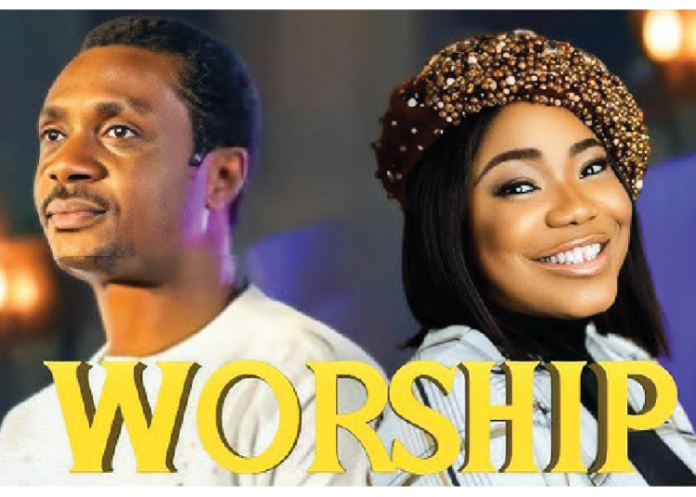
Nathaniel Bassey, Mercy Chinwo, others exceed afrobeats artistes on YouTube’s most-streamed rankings

Nigerian gospel artistes, Nathaniel Bassey, Mercy Chinwo, and Moses Bliss have made impressive strides in the music scene, ranking among the most-streamed Nigerian acts on YouTube Music for the first quarter of 2025, surpassing some popular Afrobeats artists.

Data compiled by Debut Hub revealed Nathaniel Bassey as the highest-ranked gospel artist, with 52.8 million streams. Mercy Chinwo closely followed with 46.4 million streams, while Moses Bliss garnered 41.5 million streams.

Mercy Chinwo’s biggest hit, “Excess Love,” has accumulated an astounding 133 million streams, cementing its place as one of her signature songs. Nathaniel Bassey’s top tracks, including “Yahweh Sabaoth” with 25 million streams, “TOBECHUKWU” (featuring Mercy Chinwo Blessed) with 39 million, and “Jesus Iye,” which has reached 32 million streams, have contributed to his success.

In the overall top 20 ranking, Nathaniel Bassey secured the 13th spot, Mercy Chinwo ranked 17th, and Moses Bliss came in at 19th, surpassing Afrobeats artist BNXN.

Meanwhile, Rema dominated the Q1 2025 rankings, taking the number one spot in Nigeria with his hit song “Calm Down,” featuring Selena Gomez, amassing a remarkable 223 million streams and reaching a groundbreaking 2.5 billion plays.

Burna Boy secured second place with 171 million streams, followed by Ayra Starr in third with 169 million streams, outpacing Davido, who amassed 113 million streams. Wizkid, with 102 million streams, rounded out the top five.

Leadership

Watch out, that oral s3x could get you pregnant!

  • How teen became pregnant from oral s3x…

Medics have recorded a unique case of a teenage girl who became pregnant from giving oral sex through a bizarre series of events. 

The unnamed 15-year-old from Lesotho, in Southern Africa, visited a hospital complaining of abdominal pain, only for tests to reveal she was nine months pregnant and about to give birth.

Doctors were shocked to discover the girl didn’t have a vaginal opening, a rare birth defect called distal vaginal atresia that scientists estimate only affects between one in 4,000 to 10,000 newborn girls. 

This, in principle, should have made it impossible for the teen to have become pregnant without the aid of technologies like in vitro fertilization (IVF).

The condition also made it impossible for her to give birth through her vagina, with her son having to be delivered via C-section instead.

Puzzled medics questioned the girl on how she became pregnant and eventually learned that nine months prior she had attended hospital for a stab wound to her stomach region shortly after giving oral sex.

She told a nurse she had been attacked by her ex when he found her performing a sex act on her new boyfriend. 

Medics writing in the British Journal of Obstetrics & Gynaecology, said this led them to conclude the sperm she had swallowed had travelled to her reproductive organs from her stomach via these stab wounds, resulting in conception.

But there was one piece of the puzzle still missing.

Acid found in the digestive system, which breaks down food into nutrients for the body, is normally potent enough to kill sperm easily.

However, the medics think the sperm may have been able to survive because the girl was malnourished at the time of the stabbing.

They explained that being malnourished can reduce the acidity of the digestive system, and this had created the bizarre opportunity for the swallowed sperm to reach her uterus via the knife wound. 

Medics said the final piece of evidence that helped rule out what they termed a ‘more miraculous conception’ was that the boy, born weighing 6.2 pounds (2.8kg), grew up to resemble his father, the man she was intimate with before the attack. 

Further interviews with the girl revealed that she was aware she had no vagina after ‘disappointing attempts at conventional intercourse’ and as a result preferred oral sex.

She also detailed that in months before giving birth she had been worried about the increasing size of her abdomen but, given she didn’t have a vagina, ‘did not believe she was pregnant’.

Culled from Daily Mail

Nigeria and the fading lights of justice

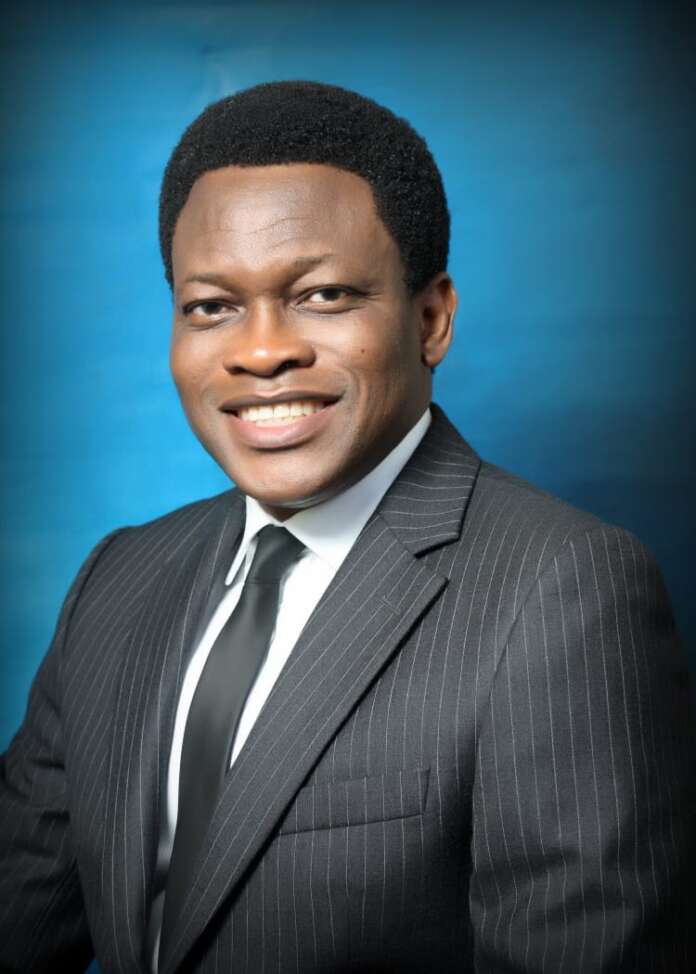
By Chidi Anselm Odinkalu

As he settled in to deliver the judgment of the Edo State Governorship Election Petition Tribunal on 2 April 2025, presiding judge Wilfred Kpochi felt obliged to get one ritual out of the way. Glancing left and right, he asked each of his two colleagues on the three-person tribunal to confirm that the judgment he was about to deliver was unanimous. Justice Kpochi only proceeded after each, one to his left and the other to his right, nodded their affirmation.

The judge had good reason for this preliminary ritual. 48 hours before it was due, a leaked document purporting to be the judgment of the tribunal went into circulation. Ahead of judgment day, both leading parties in the electoral contest, which had inexorably mutated into a judicial one – the Peoples Democratic Party (PDP) and the All Progressives Congress (APC) – felt compelled to issue duelling statements denouncing the leak and blaming the other for it. The APC claimed that “the PDP leaked a fake judgment, knowing they would lose”, while the PDP “accused the APC of using the leaked fake document to gauge public reaction.”

The leaked document suggested that the tribunal would deliver a split verdict, with one of the three judges dissenting from the majority of two who were supposed to decide against the petition of the PDP and its candidate, Asue Ighodalo. When, therefore, the presiding judge asked his colleagues to affirm that the judgment was unanimous, he sought to telegraph that tales of the leak of their judgment were unfounded or, in any case, had misdescribed the decision of the tribunal. Instead of a split decision suggested by the leak, this was a unanimous court.

This was far from the first time that the decision of an election petition tribunal in Nigeria would be foreshadowed by suggestions or allegations of a leak ahead of its delivery.

At the onset of presidentialism in Nigeria in 1979, the contest between Shehu Shagari of the National Party of Nigeria (NPN) and Obafemi Awolowo of the Unity Party of Nigeria (UPN) ended up before the presidential election tribunal. On 20 August 1979, Obafemi Awolowo filed his petition against the declaration of Shehu Shagari as the winner of the election. The following day, military ruler, General Olusegun Obasanjo, invited Atanda Fatayi Williams to the Dodan Barracks (as the seat of government then in Lagos was called) and offered him the office of the Chief Justice of Nigeria (CJN).

Fatayi Williams’ first task was to adjudicate Chief Awolowo’s petition. The military had committed to handing over power on 1 October, a mere 40 days later. General Obasanjo, who was overseeing arrangements for a high profile handover to an elected successor, was anxious to know that the Supreme Court would not torpedo his plans. It was credibly suspected that he received the necessary assurances from his hand-picked CJN well ahead of the judgment.

In March 2008, Action Congress (AC), the party then led by Bola Ahmed Tinubu, vigorously alleged that the outcome of the presidential election petition challenging the announcement of Umaru Musa Yar’Adua of the PDP as the winner of the 2007 presidential election had leaked. Lai Mohammed, the spokesperson of the party at the time, denounced the leak, proclaiming that the judgment would “not stand the test of time.”

15 years later, as the Presidential Election Petition Tribunal issued a 48-hour notice of the delivery of its judgment on 4 September 2023, Bola Ahmed Tinubu, the candidate of the APC, whose announcement on 1 March as the winner of the presidential election was under challenge, departed for New Delhi, India, to attend the G-20 Summit. He arrived India on 5 September, the day before the judgment, guaranteeing that he was going to be outside the country when the tribunal delivered its judgment. Many people believed that Tinubu traveled to India with the confidence of a man who had been assured ahead of schedule of the outcome that the tribunal would announce the day after he landed in India.

Whether these allegations were true in any specific case is a subject for another day. Far from diminishing over the years, however, credible suspicions of breach of the deliberative confidentiality of judicial decision-making in election disputes and political cases in Nigeria have grown. They enjoy high credulity with the public, an indication of a deep-seated deficit of credibility that now clearly afflicts the business of what judges do in political and electoral disputes in Nigeria.

At the valedictory session of the 9th Senate in June 2023, Adamu Bulkachuwa, the senator for Bauchi North, confirmed suspicions of unconscionably intimate dalliances between judges and politicians when he appreciated his colleagues “whom (sic) have come to me and sought for my help when my wife was the President of the Court of Appeal.” Senator Bulkachuwa did not forget to thank his wife “whose freedom and independence I encroached upon while she was in office…. She has been very tolerant and accepted my encroachment and extended her help to my colleagues.” His wife, Zainab, was President of the Court of Appeal from 2014 to 2020.

For insisting on calling attention to this kind of criminal acccessorisation of judges, Nyesom Wike, the Minister of the Federal Capital Territory who is also a member of Nigeria’s Body of Benchers (BoB), invited the grandees of the BoB who visited him in his office at the end of last month to dispense with basic niceties of process and “punish” me. His 36 minute-long harangue to the old men and women of the BoB who were his guests was occasionally punctuated with enthusiastic applause belying the average age of the group as well as the kind of undisguised ridicule which they had to endure for both themselves and the institutions of the judicial process in Nigeria. Such cravenness from the leadership of the self-described “body of practitioners of the highest distinction in the legal profession in Nigeria” bodes ill for judicial credibility and independence.

As Mr. Wike was busy advertising his undisguised contempt for them and telling the leaders of Nigeria’s legal profession that they were no better than deodorized sex workers with an inflated price-tag, an advocate who had spent his life campaigning against that tendency took a characteristically unpretentious leave.

Raised in Agbor, Delta State, by a father who was a high school teacher from Imo State, Joseph Otteh was one of the first two colleagues whom I engaged in the legal directorate of the Civil Liberties Organisation (CLO) in Lagos in 1991. He brought tremendous integrity, intellect, and industry to the role, and had remarkable reserves of empathy.

In 1999, Joe founded the group Access to Justice “to work towards rebuilding the institutional credibility of the Nigerian legal and justice system, restoring public faith in its institutions.” He approached that task with both courage and single-mindedness, doing a lot of good along the way.

Joe epitomized the lawyer as a gentleman and professional of civic virtue. On 28 March, he succumbed reportedly to complications from Diabetes, leaving behind an aged mother, wife and three children.

30 years ago, in 1995, Joe authored a defining study of the customary court system in the 17 states of southern Nigeria under the title The Fading Lights of Justice. As an advocate, Joseph Otteh did his utmost to ensure that those lights were kept aflame. That title could only have come from a man who was well ahead of his time and had the acuity to see the future. The Heavens will be enriched by the acquisition of this incredible angel.

A lawyer and a teacher, Odinkalu can be reached at [email protected]

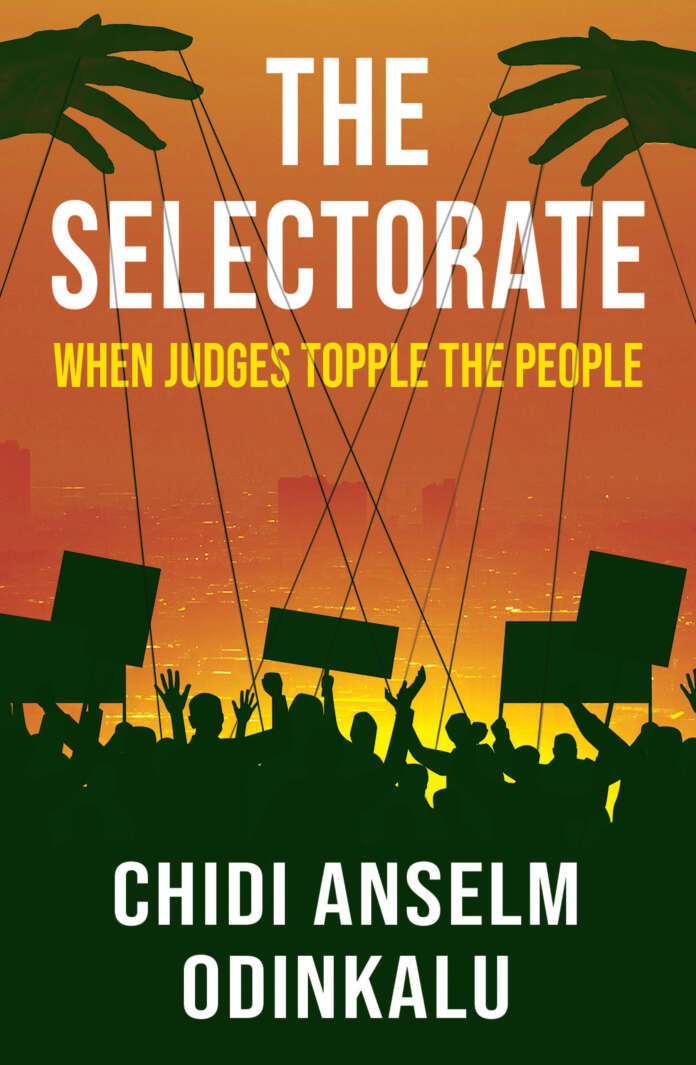
In your bookstores shortly! “The Selectorate”, By Chidi Anselm Odinkalu

Far from being independent, Nigeria’s judiciary has historically operated “under three masters”: colonial rulers, military juntas, and political elites. Chidi Odinkalu unpacks how this legacy persists today, with judges acting as instruments of power rather than protectors of justice.

The-Selectorate-Cover-and-back

The Selectorate interrogates the institutional cultures that reinforce judicial subservience and challenges the legal profession’s complicity in maintaining the status quo. This is a book that dares to ask: If democracy depends on an independent judiciary, what happens when that judiciary serves interests other than the people’s?

Uromi: Cause, effect and misdirected outrage

By Calixthus Okoruwa

I will not watch the videos of the events that took place in Uromi, in which travelers were lynched on the suspicion of being terrorists and kidnappers. The reports emanating from the media are gruesome enough. The incident dehumanizes us all as Nigerians and is yet another commentary on our country’s rapid descent to the barbaric. It is sad. My unqualified sympathies go to the victims of this mob justice and the sundry other victims of mob justice all over our country.

It is fitting that the entire country has been united in its condemnation of mob justice. Mob lynchings of fellow citizens ought to belong in ancient history.

Incidentally, as usual, the government whose duplicity and ineptitude have led to this pathetic state of affairs in Nigeria, has been busy in their well-oiled machination to deflect blame for the development. Vigilante groups have been quickly disbanded. Police commissioners have been redeployed. And there have been well-commended visits by the Edo State Governor to his Kano counterpart as well as bereaved families with promises of compensation.

The Uromi incident, however, ought to help redirect our attention as a country to the sundry contradictions that collectively act as the “cause” of the growing epidemic of insecurity in our country (the “effect”). It is to these contradictions, these deliberate failings by government that Nigeria ought to target its most vociferous outrage.

One of the most glaring contradictions is that the biggest perpetrators of terrorism and kidnappings in Nigeria are known and reachable. In 2022, at least two media organizations, the BBC (“the bandit warlords of Zamfara”) and Daily Trust (“Nigeria’s banditry, the inside story) conducted discrete investigations into banditry in northern Nigeria. In the course of these investigations, they conducted one-on-one interviews with terrorist leaders. Yes, journalists were able to track and engage the leadership of various terrorist gangs holding huge swathes of Nigeria to ransom. The face-saving reaction of the Federal Government at the time, was to impose a fine of N5million on the BBC and Daily Trust, respectively.

In a more recent incident, the Kaduna State Government announced a peace deal with dozens of known terrorists. In so doing, terrorists whose scope of operations and escapades including killings and kidnappings are well-known and documented were fished out and invited to a round-table. Some of the terrorists at the “peace meeting”, which was also graced by the military and the security forces, were armed.

The Kaduna State “peace deal” with terrorists follows in the footsteps of similar dalliances between government and terrorists over the years. A particularly instructive deal is one that Nigerians appear to have forgotten. On February 18, 2018, terrorists abducted over 100 school girls from their school in Dapchi, a town in Yobe State. Five girls lost their lives to the emotional and physical trauma of that event. By March 21 of the same year, all the abducted girls with the exception of one, Leah Sharibu, were released to the Federal Government. What could have been responsible for the sudden change of heart of the terrorists? Compassion for the kidnapped girls? A generous ransom by the government? We will never know, but what is clear is that the government via some formal or informal channels negotiated the release of the girls with the terrorists. The same terrorists it repeatedly claims it is fighting and bombing and “decimating”.

According to the Nigerian Bureau of Statistics, Nigeria’s kidnapping industry helped to amass well over N2 trillion for its perpetrators between May 2023 and April 2024. A huge proportion of such monies apparently goes into the purchase of the sophisticated arms which these bandits bear and with which they often unabashedly raze entire villages to the ground. Worse still, released victims of kidnappings often lament that these terrorists are better armed than the military who are saddled with the task of neutralizing and eliminating them. Banditry documentaries so far aired indicate that security agencies often delay in responding to attacks by these terrorists on communities, ostensibly on account of the superior fire power of the terrorists.

No media house has yet produced an investigative documentary on the state of the Nigerian military, including how well-equipped and -motivated its operatives are. However, the circumstantial evidence of the occasional videos made by a handful of soldiers on the battlefront who lament their lack of equipment, poor motivation and lack of support by the military high command for hospitalized colleagues coupled with the apparent hesitancy of security forces to respond to distress calls in villages under attack by terrorists, strongly suggests that the Nigerian military and security forces are morbidly under-resourced and ill-prepared to tackle the monstrosity of terrorism.

But Nigeria has in the last 15 years since the gradual incursion of terrorism into our polity budgeted the equivalent of billions of dollars annually towards defence and security. Where has all the money gone? Has defence spending ever been audited and by whom? Have the heads of the several defence agencies ever been requested to account for defence spending over the last decade and half?

So clearly, government chicanery and incompetence in tracking and eliminating terrorists and bandits from the polity is worsened by corruption. Going by the operating manual in the Nigerian public sector, it is reasonable to infer that only a small fraction of the annual budgetary provisions for defence and security may have actually been deployed to defence and security since 2009.

Amidst the incompetence, corruption and insincerity of government, therefore, citizens across the country have over the years been left no choice but to take over community policing and security, by forming vigilante groups among others. But community policing is a specialized role. It is a role that is meant for trained professionals within a system that ought to be properly overseen by unbiased operatives and reasonably well-funded. It is a role for the police and security forces, not groups of untrained operatives called “vigilantes”, formed out of desperation by citizens. Little wonder, therefore, that vigilante policing despite pockets of successes has often created bigger societal challenges.

It is the selfish and hypocritical dithering by politicians towards eliminating terrorism that has fueled the expansion and increasing brazenness of the terrorists. If they strike nocturnal deals with the presidency and attend “peace meetings” with governors decked in their fake military fatigues while brandishing military grade rifles, why should they spare a thought for the victims they beat up, rob, extort, rape and decapitate? Or those whose homes they raze to the ground? Why should they bother when they invade farms, uproot tubers and feed them to their herds? It is most heart-rending that the same politicians who are fully conversant with the genocidal inclinations of these kidnappers and terrorists and know how and where to reach them, continue to deceive Nigerians; enabling the specter of insecurity to fester nationwide.

The Uromi incident ought to mark a turning point for our country in the protracted and badly prosecuted war against terrorism. Why are our politicians, like the Roman Emperor Nero, fiddling while the country burns? Why is Nigerian politics so laden with corruption, incompetence and deceit? How many more Nigerians need to die needlessly before Nigeria decides to call its politicians to order?

  • Okoruwa works for the communications company, XLR8

TIPS