Home Blog Page 350

The ghomid in the tears of JAMB

By Suyi Ayodele

Dear Ajanlekoko Oriojobi Samuel (real name withheld), Reg Number: 2125512372451F. 2025 UTME Result: Underaged and Under-Performed.”

With the above terse message from the Joint Admission and Matriculation Board (JAMB), the fates of thousands of Nigerians who sat for the 2025 Unified Tertiary Matriculation Examination (UTME) were sealed.

Those thousands of candidates will never see their results. Their parents or guardians, who paid the registration fees and took the candidates—children in their teens—to the various examination centres, will never know the performances of their children’s or wards.

Incidentally, those candidates did not commit any examination malpractice. They were not guilty of any crime known or unknown. Their crime was to be children of the Nigerian society that looks backwards, where other climes are forward marching!

The only crime those affected “underaged’ candidates committed was to be endowed with brains that the awkward system we run here frowns at. Their counterparts in other sane countries of the world are celebrated. But here, we are still in the Stone Age to accept that there are geniuses!

So, when Professor Is-haq Oloyede, the JAMB Registrar, came crying over the mass failure recorded for over 400,000 candidates who wrote this year’s UTME because of the glitch which affected JAMB servers, Nigerians must know that there were more issues than the computer malfunctioning Oloyede cried about. The tears of the former Vice Chancellor of the University of Ilorin were nothing but Ekún Egbére.

When two rival wives fight and one cries when the matter comes up for adjudication, my Yoruba elders have a way to qualify that. They devise a saying: Arojó sunkún obìrin, ilé níi tú (A woman who cries while stating her case tends to destroy the home) to explain the intention of such an act. The tears by the woman playing the victim are considered manipulative.

Elders who sit in judgment don’t usually pay attention to the crying woman in any dispute. They could see through her deceptive tears and her true intention — simply to gain undue sympathy. In my culture, a woman is allowed to cry as much as she wants and then asked to restate her case. More often than not, the crying woman turns out to be the guilty party.

There is a more graphic and semiotic way to qualify such crocodile tears. The Yoruba concept of “Ekún Egbére” is the apt way to describe manipulative tears by the one trying to play the victim.

Ekún Egbére means the tears of the goblin (or bush baby). Egbére in Yoruba mythology refers to a short spiritual being who goes about with a small mat, crying. The myth around the goblin, Egbére, says it cries out, looking for sympathy for its unusually small stature among the legion of ghomids created by Obatala.

It tells whoever cares to listen that the creator is unfair to it by making it the smallest of the ghomids, whereas it has more potential than any others ever created. Those other ghomids Egbére accuses of conspiracy against it. It says they conspired to dampen its potential and good work! How true?

What Egbére, however, does not tell its listeners and would-be sympathisers is the fact that its small stature has nothing to do with any heavenly factory faults. The fault is due to the goblin’s own making of rubbing the wrong lotion on its own body while it had just come out of Obatala’s furnace without waiting for the god of creativity to apply the normal lotion.

So, Egbére goes about crying, giving a false narrative to gain the people’s sympathy as the victim of Obatala’s creative abnormality! It does that without stating how it goes against the general principle of discretion and the heavenly discipline of patience and respect for public opinion.

As it is with Egbére, the crying spirit, so is it with Professor Oloyede, the Registrar of JAMB, whose conduct of the last UTME leaves the nation gasping for breath at the rate of mass failure recorded in the five states of the South-East geopolitical zone and Lagos, the Centre of Excellence!

Expectedly, heaven has been let loose on Oloyede, especially from our fellow Nigerians from the East. The noise from that region over what many considered to be a deliberate attempt to deny candidates of Igbo extraction admission into our universities, is enough to sink this federation. Most unfortunate is that the intelligentsia from the South-East joined the fray of ethnic profiling of the computer errors that occurred!

As much as I find most of the comments from the South-East over the JAMB glitch case alarming, I think the reaction speaks more to some fundamental issues about our nationhood. It is most unfortunate that 65 years after independence and an avoidable civil war where we lost over two million patriots, Nigeria is still as divided as the period we were struggling for independence. Most saddening is that no administration after the 1967-1970 civil war has brought to the fore our differences more than the current government, which began in 2015 with the administration of General Muhammadu Buhari!

It is, therefore, natural for the South-East to easily conclude that the recent JAMB misfortune was targeted at the region. The bitter argument here, which many of us are not ready to accept, is that the Igbo race has not been treated fairly by the Nigerian nation. The only unfortunate argument by the Igbo is to think that the Yoruba are their sole enemy!

And I say this without any apology, until the Ndigbo consciously realise that they suffer the same fate as other ethnic groups, they will remain largely marginalised. Until they shed the toga of Yoruba-hate-us and adopt the holistic idea that most ethnic groups in Nigeria have one thing or the other against the Ndigbo, nothing will change for them.

Should that be the case too, the Ndigbo must also look inward and ask self-directed questions as to why the race is detested by virtually all other ethnic nationalities. They must do self-retrospection to determine what in the attitude of an average Igbo man would make others dislike him.

While doing that, the Nigerian nation must also take deliberate steps to integrate the Ndigbo into our nationhood. The attitude of ‘no-Igbo-man-can-be-president’ doesn’t augur well for our unity. If the Ndigbo are not good enough to lead Nigeria, can we deliberately allow them to own their own space, their nation, where they will have no one to contend with?

This is why it is difficult to rationalise that the glitch which affected JAMB servers affected all five states in the South-East and Lagos! For people who already feel unwanted, it will be difficult for anyone to convince them to look at the issue from the angle of science and technology.

I want to put my shirt on it that if the errors had occurred only in the South-West states, no matter the sophistication of the people there, there would have been no outcry of ethnic attack on the prospects of the candidates from that region. That is due to the pseudo-federalism we practice. The North-East, North-West, North-Central and South-South would have felt the same way. The only difference, probably, would have been the magnitude of the outcry.

While JAMB has our sympathy for the unfortunate incident, I think there are some other fundamental issues we need to address here. I strongly believe that whatever happened in JAMB or with JAMB or to JAMB can be traced to just one problem: restructuring deficiency!

A lot of Nigerians have said that it is wrong to have just one body conducting examinations for both federal, state and private universities in a country that claims to run federalism! The recent claims by JAMB that it remitted over N6 billion to the coffers of the Federal Government makes the body more of a profit-making venture than a serious examination set up.

If we celebrate JAMB for making enough profit like a business venture, for the Federal Government, what about the state-funded universities? What part of that ‘profit’ goes to the private universities? Should JAMB be talking about how much money it rakes in or how effective it is in the conduct of the examinations it was established to conduct?

Take the case of the underage candidates we mentioned above. Why would JAMB withhold the results of candidates it termed “underaged” after collecting the registration fee from them? Where is that done, except in a country where roguery is the order of the day?

If the National Assembly had been alive to its responsibilities, would JAMB have had the audacity to withhold candidates’ results based on being “underaged” without any act of parliament allowing that? If a candidate purchased a form, submitted the form, was accredited and allowed to write an exam, why would the examination body send the message: “UTME Result: Underaged and Under-Performed” without showing the actual scores of the candidates?

Oloyede is a brilliant scholar, no doubt. He did well, so they say, when he was the VC of the University of Ilorin. But I find it difficult to believe that it did not occur to the erudite professor that some parents actually asked their children to write the examination as a mock exercise to prepare those children for when they will be of age, according to the backwards-thinking policy of age limit for admission into our universities?

Agreed cyber attack or glitch is not peculiar to Nigeria. Our major concern is how, when it happened to us, it wore a three-piece suit of ethnic colouration and age discrimination! That is the peculiarity of the Nigerian version of the global phenomenon. In Nigeria, what affects other nations comes in different shapes, shades and dimensions for us. Nigeria must always “happen” to any universal issue that finds its way to our shores!

If truly we want a restructured country with full-fledged federalism, JAMB has no business conducting examinations, for instance, for Ekiti State University or Afe Babalola University. It has no business determining the questions Obafemi Awolowo University, Ile-Ife, or Ahmadu Bello University, Zaria, should set for its intended undergraduates. What do we even gain from the centralised examination when a candidate with a grade of 250 marks from any of the South-West states will be denied admission to study Medicine, and his counterpart from Zamfara State who scored 180 marks will be given a laboratory coat as a medical student?

The lawlessness of JAMB at fixing the age limit for its examination against a subsisting judgment of a competent jurisdiction apes the lawlessness of the government of the day. Nigeria, no doubt, needs an effective and efficient examination body. What the nation does not need now is a weeping Chief Executive of its examination body. Ekún Egbére won’t solve our self-inflicted problem; proper restructuring will do. Maybe we should just start with JAMB.

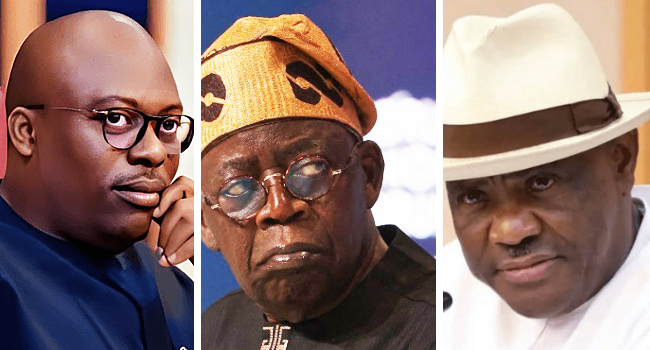
2027 Polls: Suspended Rivers Gov Fubara might be poised to join APC after Tinubu deal and political intimidation

In a major political twist that could reshape the 2027 electoral landscape, exclusive information obtained by SaharaReporters reveals that President Bola Ahmed Tinubu has finally coerced Rivers State Governor, Siminalayi Fubara, into joining the ruling All Progressives Congress (APC), following months of intense political pressure, institutional intimidation, and strategic coercion.

This development, sources say, is the culmination of a calculated campaign by the APC-led Federal Government to weaken opposition strongholds across the country ahead of the next general elections.

According to sources, the objective is to consolidate power, neutralise political threats, and ensure that President Tinubu coasts to victory in 2027 with minimal resistance.

Multiple sources familiar with the situation describe the pressure mounted on Governor Fubara as “unprecedented and deeply troubling” in Nigeria’s democratic history.

The Federal Government, allegedly using every state apparatus—from the judiciary and security agencies to the National Assembly—launched a coordinated offensive aimed at undermining Fubara’s authority and isolating him politically, until he had no viable option but to capitulate.

At the centre of this political storm is Minister of the Federal Capital Territory (FCT), Nyesom Wike, Fubara’s political godfather-turned-adversary.

With federal backing, Wike spearheaded a relentless campaign to bring Fubara to his knees. From orchestrated legislative threats to judicial manoeuvers and threats of impeachment, Wike was said to be acting with the full blessing of the Presidency.

“The President wanted Rivers State under control by any means necessary,” one source disclosed. “The fear of 2027 is real. Their internal assessments showed that public discontent was growing over hardship, insecurity, and economic mismanagement. The only way out was to break the opposition and enforce loyalty, state by state.”

This explains why, according to political observers, the Presidency turned a deaf ear to the outcry from prominent Nigerians and civil society groups who condemned the sustained political siege on Governor Fubara.

Sources say the turning point came during the controversial “2025 London Peace Accord,” a high-level secret negotiation between Fubara and Tinubu.

“It was during this meeting that Governor Fubara agreed to join the APC in exchange for political survival,” one of the sources said.

In April, during a working visit to London, President Bola Tinubu met with suspended Rivers State Governor Siminalayi Fubara.

The meeting, confirmed by The Africa Report, has not been officially acknowledged by the Presidency.

According to officials, it marked the first face-to-face encounter between Tinubu and Fubara since the President declared a state of emergency in Rivers State and removed Governor Fubara and his deputy, Ngozi Odu, from office.

As part of the terms, the embattled Governor would be reinstated—albeit under strict conditions—with control of Rivers State’s resources now shared or closely monitored by the ruling party’s power brokers. The same Wike who publicly derided and sought Fubara’s removal is now singing a different tune, recently describing the Governor as “his son” and denying ever fighting him.

In a recent interview with BBC Pidgin, Wike denied fighting with the suspended Rivers State governor, saying, “Fubara is my son, why will I fight with him?

“I’m only fighting against people who want to steal what they did not work for.

“When you don’t defeat them, they will think you….. Defeat them to the final stage.

“Now, they are ashamed because they are being defeated. They are the ones pushing Fubara.”

According to the publication, Wike noted that he had told Fubara during a visit that he was ready for peace — if Fubara was ready as well.

“I told him that you have yam in your hand and the knife, you are the one that knows how you want peace. If you want sincere peace, you take, if you want dubious peace, you also take.”

This abrupt political U-turn has left many Nigerians disillusioned.

“Fubara has been beaten into submission, and Rivers State has been turned into a pawn in the power game of Abuja,” one of the sources said.

“No governor has ever suffered such humiliation as Governor Fubara suffered in the history of Nigerian politics.”

The source lamented how Fubara, a governor, was “humiliated, tormented, and politically crushed” to force him into the ruling party.

No governor has been subjected to such abuse of power in Nigeria’s history,” the source said.

How Tinubu Declared Emergency Rule in Rivers State

On March 18, 2025, President Tinubu invoked Section 305 of the 1999 Constitution (as amended) to declare a state of emergency in Rivers State, citing a breakdown of law and order and the failure of constitutional mechanisms to resolve the escalating political crisis in the state.

The declaration followed months of intense political turmoil between Fubara and his estranged political godfather, Wike.

The conflict, which began shortly after Fubara assumed office in May 2023, led to repeated attempts by a faction of the state House of Assembly to impeach the governor, violent protests, destruction of government property, and a governance vacuum in the state executive council.

Citing the state government’s inability to maintain public order and coordinate essential governance functions, President Tinubu also secured a controversial National Assembly approval for the emergency declaration as required by the Constitution.

He stated that the crisis in Rivers had become a national security concern with implications for democratic stability.

Following the proclamation, Governor Fubara and his deputy, Ngozi Odu, were suspended from office, along with key state officials, and the state’s executive and legislative functions were dissolved.

The President then appointed a sole administrator, retired Vice Admiral Ibok-Ete Ekwe Ibas, believed to be loyal to the Presidency, to take charge of governance in the state during the emergency period.

The move was widely condemned by opposition parties, civil society groups, and constitutional scholars, who argued that the declaration was politically motivated and violated democratic norms.

Critics accused the Tinubu administration of using federal power to suppress dissent and consolidate control over opposition strongholds ahead of the 2027 general elections.

Despite public outcry, the state of emergency remained in effect, and federal security forces took over key government institutions in Port Harcourt, further deepening fears of a creeping authoritarianism under the guise of constitutional emergency powers.

Originally published by Sahara Reporters

Diddy trial: I’d give back $20m settlement to undo freak-offs —Cassie Ventura tells court

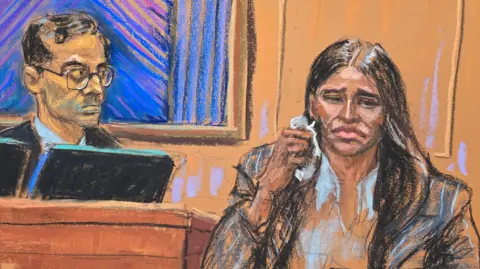
Cassie Ventura has tearfully told a court she would give back a $20m (£15m) legal settlement from Sean “Diddy” Combs if it meant she would never have taken part in his “humiliating” drug-fuelled sex parties.

She rejected defence suggestions that her accusations were financially motivated as she wrapped up four days of testimony in the New York criminal trial of her ex-boyfriend.

Ms Ventura, the government’s star witness, faced questioning from both legal teams about her decade-long relationship with Mr Combs, and their “freak off” sex sessions.

Mr Combs, 55, has pleaded not guilty to racketeering, sex trafficking and transportation to engage in prostitution. He could face life in prison.

Ms Ventura’s testimony revealed graphic details about her sex life with the rapper and the physical violence she allegedly endured from him.

The rap mogul’s lawyers have been trying to depict Ms Ventura, 38, as an eager participant in the sexual lifestyle.

She testified this week that she was coerced into the sessions, which involved male escorts, because Mr Combs had threatened her with violence.

On Friday she addressed a $20m pay-out he gave her after she filed a lawsuit against him in November 2023.

The settlement, which came just one day after the filing of the legal action, was public knowledge, but the number was previously unknown.

Mr Combs’ lawyer, Anna Estevao, seemed to imply that Ms Ventura was strapped for cash before filing her lawsuit. The singer had just moved to her parents’ house with her husband and children.

Ms Ventura rejected this suggestion, later sharing that she would exchange the money for a life free of the “freak offs”, which she said caused her physical injuries, would sometimes go on for days, and stifled her career as a singer.

“I would have agency and autonomy,” she said.

Reuters A courtroom sketch of Cassie Ventura, in a white blazer and striped jacket, crying on the stand in court. To her left is Judge Arun Sumbramanian, in black robes and glasses.
A courtroom sketch of Cassie Ventura

Mr Combs’ legal team also showed the jury dozens of messages between the couple from each stage of their relationship, arguing their dynamic was toxic at times, but not criminal.

Minutes before Ms Ventura was set to leave the stand on Friday, the defence questioned her about another legal settlement she won.

Ms Ventura told the court she was expecting to receive about $10m from InterContinental Hotels, connected to her claims against Mr Combs.

The settlement relates to an incident at the InterContinental in Los Angeles in 2016, in which security footage showed Mr Combs hitting, kicking and dragging her in a hallway.

That clip was played at length in court this week, and is one of the most important pieces of evidence in the trial.

On Friday in court, Ms Ventura went through her texts after that beating. In one message she told Mr Combs: “I’m not a rag doll. I’m somebody’s child.”

She and Mr Combs were expressing love for each other days later in other texts.

The defence cross-examination continued on all day Thursday and Friday.

The prosecution squeezed in two more witnesses before court adjourned for the weekend.

One was Dawn Richard, a singer in the group Danity Kane – formed on Diddy’s MTV show Making the Band. Last year she filed a lawsuit accusing him of physical abuse and withholding her earnings.

Ms Richard testified that she saw Mr Combs assault Ms Ventura at his Los Angeles mansion in 2009.

“She fell down,” Ms Richard told the court. “She was in the foetal position.”

After the incident, she said Mr Combs took her aside and told her what she saw was “passion” and that where he is from, “people go missing” if they talk.

US Homeland Security special agent Yasin Binda took the stand as well, telling the court about the cash, drugs and baby oil that were seized from the rapper’s hotel room when he was arrested in New York.

More testimony is expected from the witnesses called by prosecutors next week.

The Manhattan court has been a media circus since the beginning of the trial, with spectators gathering in droves and camping out overnight to get a glimpse of the music mogul, his family, and the celebrities testifying.

Sakshi Venkatraman, BBC News

NNPC’s Ojúl’arí ọ̀rẹ́ ò dé ‘nú

By Lasisi Olagunju

In Yoruba, there is a proverb: “Ojú l’arí, ọ̀rẹ́ ò dé ‘nú” — literally it means ‘we only see the face; friendship does not go deep inside.’ That is the name the Group Managing Director of the NNPCL, Mr Bayo Ojulari, bears. The name calls attention to why appearance and essence sometimes wear different colours. It teaches a lesson in how names, faces and accents may be mere masks — not mirrors.

In Nigeria, the powers of power always wear tribal costumes. Every big position is a sacred grove, only the initiates have its access cards. Kinship confers initiation rights at the grove; free cakes are the benefits. For this and other familial reasons, about a month ago when Ojulari was made the boss of Nigeria’s national oil company, Yoruba people, home and abroad, danced round the world. They thought the NNPC had become their grove.

There is a town called Oke Ode in Ifelodun Local Government Area of Kwara State. Chiefs and youths of that community competed for space in newspapers, on radio and TV with press releases thanking President Bola Tinubu and their own stars for the appointment of Ojulari. They said he was their son in whom they were very well pleased. The chiefs, in particular, added, for effect, that he was “able and capable of bringing the necessary turn-around in NNPC for the benefit of Nigeria and the entire citizenry.”

But the man by himself gave a definition of himself last week. He spoke extensively to BBC Hausa in flawless Hausa language, clearly and purposively choosing and declaring where he belongs. Newspapers did English translations of what he said: “I was surprised when people said I was not from the North. I am a child of the North, and I come from Ilorin. I was brought up in Kaduna State. I started learning Yoruba when I was 15 years old. When I left Kaduna, I went to Zaria to study, so I am a northerner,” he said — and added: “I need the support of the North to do this work well and bring development to the North and the whole of Nigeria…”

What Ojulari said is a culture jolt to Western Nigerians, and I saw it in more than one critical Yoruba circle. It is a reminder that the face is not necessarily the soul. It is also a warning that a name may and may not mirror allegiance or belonging.

Three things I noted in what the man said: That he is from the North is true and the truth; Kwara is geographically north. It appears settled forever, no matter what I may think or feel. That the man is from Ilorin will be declared false by Ilorin, and held to be very untrue by the people of Oke Ode, his father’s hometown. The city he claims, Ilorin, is in Kwara-Central senatorial district; the town that claims him, Oke Ode, is an Igbomina town that sits deep in the savanna of Kwara South. Much more fundamental is this: “I need the support of the North to do this work well and bring development to the North and the whole of Nigeria.” Now, read the last clause of that sentence again. Did you see that ‘the north’ comes first before ‘Nigeria’? So, between the two which one is really his country?

In the pantheon of the gods, some deities are more worthy than others. The North is that deity who stands by you with everything it has. When you have northern Nigeria on your side, you can sleep completely and totally. No ant will dare walk your skin; rodents won’t disturb your rest. Ojulari knew this as a proven fact. He, therefore, desperately wanted the North behind him. And, with that interview, the boss man has owned the North; the North is expected to accept and own him.

I discussed that interview with a big man from the North – a Fulani businessman. I told him that the oil man did not need that ethnic part of the interview. I expected the NNPC boss to know that these are very treacherous, testy, delicate times in Nigeria. Identity in Nigeria is not a buffet; you can’t claim Yoruba before appointment and do cultural code-switching after the swearing in. What define leaders here are the name, language, tribe, religion and geography they wear. And, each of those items has an opposite; the affirmation of one quickly alienates the other.

I believe Ojulari could claim his northernness without posting a disclaimer of his ethnic, linguistic and communal roots. His interview has stomped his feet on the eyes of that part of the earth which calls him son. The language and tone of the interview suggest his mother tongue is a footnote; an afterthought that came after 15 years. His hometown, Oke Ode, did not even feature at all in his story as told by him. I hope his Yoruba is strong enough for him to understand that rain beats one into the same house more than once. He can still make quiet amends.

A lesson: Butterfly gazed at her reflection in a clear pond and said, “These wings are too grand for an insect—I must be a bird! I am a bird!”

Butterfly convinced herself and stopped associating with insects; she opted for the assembly of birds.

In his majesty, the eagle arrived the next meeting of birds. He spotted butterfly and queried her:

“Why are you here?”

Beautiful butterfly replied: “I have wings like you. I fly. This is where I truly belong. I am a bird.”

The eagle smiled, patted butterfly on the back and gently told her: “You are truly beautiful, but you are not of our tribe. You flutter, we glide and soar. The world may keep praising your beauty but you should never let achievement, praise and adulation make you forget who you truly are.”

So, the Hausa-speaking Yorubaman who started learning Yoruba at the age of 15 should listen to the elders when they warn his butterfly never to think itself bird. Achebe’s Ikemefuna called Okonkwo father. We all know how fatal the boy’s run for cover turned out in his ‘father’s’ arms. May be I should kuku read out that part of the story: “As the man who had cleared his throat drew up and raised his matchet, Okonkwo looked away. He heard the blow. The pot fell and broke in the sand. He heard Ikemefuna cry, ‘My father, they have killed me!’, as he ran towards him. Dazed with fear, Okonkwo drew his matchet and cut him down…”

The views expressed by contributors are strictly personal and not of Law & Society Magazine.

Good governance isn’t rocket science 

By Oseloka H. Obaze

Nigerians rarely take pride in their incumbent leaders. They have good reasons not. As a sixty-five years old nation, Nigeria has never been blessed with a leader, who Nigerians freely elected and loved for his charisma, ideology, vision or disruptive thinking; or for being an unrepentant patriot who imbues a deep sense of patriotism. Nigerians never had a Nelson Mandela, Jerry Rawlings, Julius Nyerere, or Thomas Sankara. We covet being like Singapore, but have never produced a Lee Kuan Yew. The fault is not in the nation’s God endowed destiny, but in those who choose third-rate leaders and their acolytes, who follow such bad leaders blindly.

Our national bane remains bad leadership. We continue to pay for it. Still there’s plentiful evidence that Nigerians are resigned to electing compromise candidates to public offices. In return, they have infinitely paid the high price of such poor leadership. Thus, Nigeria’s perverse politics and associated comeuppance is not so much the fault of the leaders as it is of the followers. Because Nigerians never elect seminal leaders, inefficient governance becomes the norm, as they opt for sectionally preferred leaders, who though they meet the compromise criteria, are hobbled by partisan clientelism.

Nigerian leaders become heroes only after they die. Being leadership heroes and legends in their lifetime is a rarity and that reality is toxic to good governance. These facts impact on our national development and good governance credentials.  Also, our poor governance statecraft has domestic and international implications. Domestically, our youths are being radicalized nationwide. Traveling abroad with a Nigerian passport tells the pathetic story.

As a nation, Nigeria has carved a niche of providing new indices of underdevelopment.  Recently, as the Economist magazine was disclosing that “Nigeria has more people without electricity than any other country” and that “fixing that will be fiendishly difficult,” Abdullahi Umar Ganduje, National Chairman of the ruling All Progressives Alliance (APC), brazenly avowed that there was nothing wrong with Nigeria being a one-party state, since China a one-party state was developmentally well off.  Well, what percentage of the people in China has electricity?  100%. Conversely, our non-salutary story is that the presidency is going off the national electricity grid and resorting to solar power. Was the announcement supposed to be a confidence-building measure? What electricity fate awaits Nigerians? Such dubious and contentious comparison coming from a prominent political leader overlooked a notable corollary: in China corrupt politicians and public officials are executed. Same should be true for Nigeria in order for Ganduje’s comparison to be valid. 

The consequences of Nigeria’s poor governance are sorely felt, when bad leaders make frivolous and tactless comments aimed at blanking out or justifying prevailing ineptitudes. The political opposition has enough arsenals to rubbish the APC government as being apathetic and incompetent. Take for instance our budgetary accounting. There is nothing more emblematic of fuzzy math and corruption, than when we don’t know the barrels of oil we produce daily or quarterly; or how much oil is stolen. On both counts, the figures emanating from the CBN, the Ministry of Finance and NNPC are frequently at variance. Concerning our national deficit, at the close of 2024, the Ministry of Finance had it pegged at N6.6 trillion; the World Bank at N10.5 trillion and the CBN at N14.7 trillion. DMO figures were astronomically higher. The only commonsensical deduction is that as a nation, we are badly leveraged and criminally indebted. Still, we continue borrowing for non-regenerative ventures.

The bucket list of what constitutes good governance is short.  Benchmarks of good governance are also few and easily achievable to provide an elongated value chain of dividends of democracy. Regrettably, as Nigerians, we play politics for the sake of politics, not for the sake of good governance or entrenching true democracy.  Our leadership elite do not play politics as the grounding norm for good governance.  They play politics to belong, to be in the corridors of power and to cash in. 

Good governance is not rocket science.  It will never be. But like democracy, good governance is hard work fostered by discipline. Good governance demands strict respect for the rule of law. So we have to work hard at it in order to fix our politics.  In a presidential system like ours, the separation of powers is imperative. As such, we must resolve to entrust our national interest chores to those with the capacity and commitment to serve.  We must also grasp that the enablers of good governance consists of the leaders, the people and the national institutions.  These are the pivotal operatives. Each has a critical, consistent and resolute role to play. Weak leaders, weak institutions and weak people cannot produce a robust government, society or sustainable development.  To wit, they cannot produce a vibrant democracy. Yet, working together they can be adaptive and transformative. They can orchestrate an orderly and productive society.  

Nigerians are not blind to their leadership challenges. Oddly enough, they are also not averse to holding on doggedly to “blind hope,” which according to the tragedian Aeschylus translates to “we are living and partly living.”  The manifestation of “blind hope” is now a national curse. To paraphrase a public policy interlocutor, “blind hope is a curse to every human, and every nation.” Most Nigerians are living dead or walking dead; thanks to our political rut and rot. Food and physical insecurity are rife. Healthcare delivery is a disaster. To paraphrase Pope Leo XIV, most Nigerians are “fed up with scandals, misused powers,” so much so “they no longer believe, no longer hope, and no longer pray because they think God has left.”  Indeed, most Nigerians believe God already left Nigeria to her own proclivities and detriment; considering the Pandemonium’s Paradise that Nigeria has become.

When Obu Udeozo avers in a poem in his seminal 2021 anthology titled, GODSelected Poems, that “…Ministers, governors, and senators of earthly pleasure, harvest copious dividends of unforgiving flames..;” he unfurls the insidiousness of statecraft that our present leaders serve, invest or bequeath on their constituents. Nigerian leaders rank high in the realm, where rhetoric, “prejudiced and loud communication” of failed policies and governance modalities drown out free speech and the aspirations of the “gathering of the voices of the weak who that have no voice.”  Nigerian leaders contrive poverty, hunger, insecurity and death as choice dividends of a presumed democracy. We now also attribute evident maladministration in INEC elections results and JAMB results to “glitches,” despite the respective institutional commitment to “free, fair, and credible electoral process,” and “service and integrity.”

Nigeria ambled into the status of a lawless nation long ago; not because there are no laws, but because there are no consequences for those who break the law regardless of their status.  The alarming adjunct is that our law enforcement institutions -judiciary, police, state security and paramilitary agencies- are all weak. We can now even add the military to that cadre. In its proper context, our unlawful inclinations and becoming a nation of scofflaws can be explained by the epigram in Khalil Gibran’s book, The Prophet, wherein a question was asked: “But what of our laws master? And he answered: You delight in laying down laws. Yet you delight more in breaking them.”  

We have other fault lines. Canvassing for full adherence to the rule of law and due process in a democracy does not consist of rhetoric, sound bites and propaganda. Good governance advocacy must speak to commitment and core values of democracy, complete with the checks and balances and total respect for constitutional dictates. These are anchored by the state’s unfettered service delivery and equal protection for every citizen. Sadly, our leaders gloss over these values. Nepotism has reached a new high. Preferential and discriminatory policies now induce cancel culture.

As we approach the 2027 general elections, we have entered a season of anomy. Defectors and defections are the norm.  Non-subliminal APC Presidential Campaign billboards now glut the nation. President Bola Tinubu’s second term campaign is visibly on. All these violate the extant Electoral Law.  But what does it matter? Financial profligacy is also on the rise. What galls the most is that the present leadership has appropriated the rights of approbation and reprobation. That is not a benchmark of good governance.  Years back, when Nigerians were perceptibly bedeviled by severe austerity due to poor governance, Nigerians protested under the rubric of “Occupy Nigeria.” Now that the economic and security conditions have worsened, all forms of protestation, which ought to be routine, has been muted.  Courage is on high demand. Yet courage has a deserted Nigerians as repression and reprisals manifest. The disunited political opposition seems cowed. Their complacency abets APC’s impunity.  

Some suggest that it’s no longer worth writing; protesting or speaking up o the ills of Nigeria as those in power neither read nor listen. I disagree. We must continue to harp on key national interest issues and challenges. We must also continue to offer possible, probable and plausible solutions. We must continue underlining that good governance is not rocket science. As such, those who can’t lead should get the hell out of the way in the national interest. Let those who can do the job lead for the common good and in the national interest. 

——

Obaze is MD/CEO, Selonnes Consult – a policy, governance and management consulting firm in Awka.

The views expressed by contributors are strictly personal and not of Law & Society Magazine.

Justice served? Food vendor poisons 40 members of gang that murdered her relatives

A female food vendor in Haiti who had lost family members to a criminal gang took her revenge by poisoning 40 gang members, the country’s media reported.

Haiti has long been at the mercy of violent street gangs, and many families have suffered tragedies at the hands of these ruthless criminals, but few ever dared to fight back out of fear for their loved ones’ safety. 

But one woman in the Kenscoff district of Port-au-Prince, Haiti’s capital city, made international news headlines after carrying out a massacre in the ranks of a local gang that had reportedly been responsible for the deaths of some of her family members. 

A respected street vendor specialising in a special delicacy, the woman recently offered dozens of gang members the delicacy free of charge as an appreciation for “protecting her neighbourhood.”

In reality, she was carrying out a revenge against the people who had terrorised and killed her family members.

The woman, whose name has not been revealed for protection, had long sold the delicacy in Kenscoff, so the gang members had no reason to suspect anything, but on this particular occasion, the delicacy was laced with a powerful industrial insecticide. 

Minutes after feasting on the food, the 40 criminals started experiencing severe stomach aches and vomiting. They all died before they could even receive medical assistance.

The country’s media reported the deaths of 40 members of ‘Viv Ansanm’, a Port-au-Prince gang allegedly affiliated with former policeman turned crime boss, Jimmy Cherizier, also known as ‘Barbecue’. 

Fearing reprisals, the woman left her home in Kenscoff, which turned out to be a good idea, as her home was burned down shortly after the poisoning incident.

The woman was said to have later turned herself in to Haitian police and confessed to carrying out the poisoning of the 40 gang members as revenge for the deaths of her family members. 

She claims to have acted alone in devising and carrying out the plan. There is no information on whether she faces any charges for killing 40 criminals.

Tribune

Supreme Court orders fresh hearing into Obaro of Kabba-Owe Stool legal battle

From Kayode Lawal

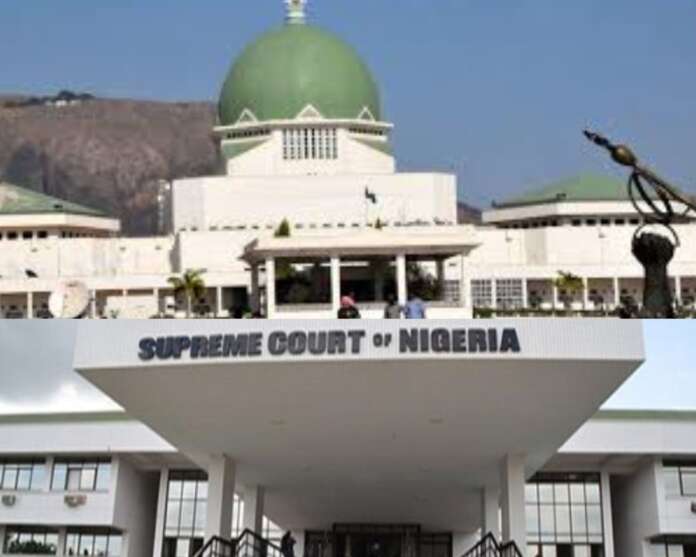
The Supreme Court has ordered that the legal battle over the Obaro of Kabba-Owe Stool and paramount rulership of Kabba-Owe land in Kogi State be heard afresh and speedily on its merit by the Kogi State High Court.

The apex court on Friday directed that the case be remitted to the Chief Judge of the Kogi State High Court to be assigned to another judge of the court for a fresh hearing.

Justice Stephen Jonah Adah gave the order while delivering judgment in an interlocutory appeal brought before the court by the Obaro of Kabba, Oba Solomon Dele Owoniyi (Otitoleke Oweyomade I).

Judgment in the appeal by Obaro Owoniyi, marked SC/CV/796/2021, was prepared by Justice Heleen Morenikeji Ogunwumiju but read by Justice Adah.

In the judgment, the Supreme Court upheld the decision of the Court of Appeal delivered on March 31, 2021, which set aside the judgment of the Kogi State High Court of October 10, 2019, that declined jurisdiction in the case on the grounds that the plaintiffs’ case had become statute-barred.

The apex court affirmed that the plaintiffs, who are from the Ilajo family, have locus standi (legal right) because of their claim to be the sole family entitled to produce the Obaro of Kabba.

The Ilajo family, comprising three ruling houses, Ajinuhi, Ajibohokun, and Mokelu, had in 2018 sued the Kogi State Government and Kabba kingmakers following the appointment of Chief Solomon Dele Owoniyi as the Obaro of Kabba.

Oba Owoniyi’s appointment was made pursuant to the Kabba-Owe Chieftaincy Law, which recognizes rotation of the first-class stool between the Akunmejila and Ilajo families.

The last Obaro, the late Oba Michael Folorunso Olobayo, was from the Ilajo family, prompting the appointment by the Kogi State Government and Kabba kingmakers of a candidate from the Akunmejila group in line with the rotatory provision of the law.

The Ilajo family, however, insisted that it has the exclusive right to produce the Obaro, without consideration of any other family.

Those who challenged Oba Owoniyi’s appointment are Chief Henry Oluwole Aiyewumi, nominated by the Ilajo family; Chief Stephen Ojo Beleyi for the Ajibohokun ruling house; Raphael Aiyegunle for the Mokelu ruling house; and Olorunmola Oloruntobi for Ajinuhi—all from the Ilajo family.

Their claims were, however, rejected by the Kogi State High Court in 2019 in a ruling which held that their case had been statute-barred, having not been filed within the time allowed by law, and thus, they lost their claims of exclusivity to the throne.

Specifically, the High Court in Lokoja held that the Ilajo Royal Family had “slept for too long over their right,” having failed to challenge the 1995 Edict that recommended rotation between it and the Akunmejila Royal Family.

The Ilajo Royal Family appealed the case, and the Court of Appeal ruled in its favor, prompting Obaro Owoniyi and the kingmakers to take the case to the Supreme Court.

However, both the Court of Appeal and the Supreme Court have directed that a fresh hearing be conducted speedily into the propriety or otherwise of the appointment, rather than terminating the case through the preliminary objections raised by Obaro Owoniyi.

The unanimous decision of the Supreme Court justices has thus set the stage for a fresh determination of the legality or otherwise of the Kogi State Government’s actions in appointing Obaro Owoniyi.

Reacting to the apex court’s judgment, lead counsel to Obaro Owoniyi, Mr. Dayo Akinlaja (SAN), said that his client remains the Obaro of Kabba and the paramount traditional ruler of Owe land.

The senior lawyer maintained that the Supreme Court only ruled that the plaintiffs’ case be freshly looked into on its merit, and that the decision has not overturned the lawful appointment made by the Kogi State Government.

“When the suit was instituted in 2018 to challenge Oba Owoniyi’s appointment, a preliminary objection to its competence was raised based on jurisdiction, and it was upheld by the State High Court.

“Now that the decision of the High Court on the preliminary objections has been reversed, we are ready for the fresh hearing on the merit of the substantive matter,” he said.

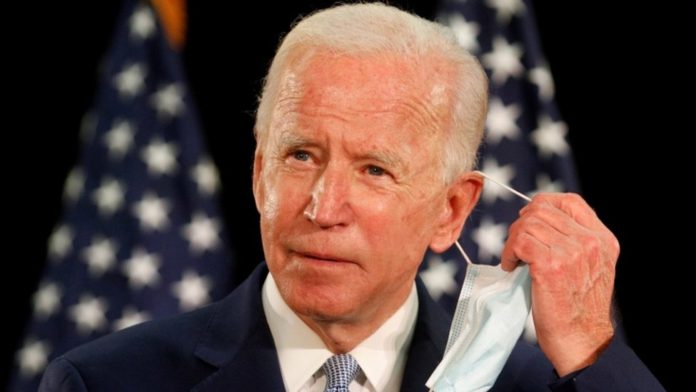
Ex-President Biden diagnosed with ‘aggressive’ prostate cancer

Former US president Joe Biden has been diagnosed with prostate cancer, a statement from his office said on Sunday.

Biden, 82, was diagnosed on Friday after he saw a doctor last week for urinary symptoms.

The cancer is characterised by a Gleason score of 9 with metastasis to the bone, his office said, meaning it is a more aggressive form of the disease.

Biden and his family are said to be reviewing treatment options, the statement said. The former president’s office added that the cancer is hormone-sensitive, meaning it can likely be managed.

The news comes nearly a year after the former president was forced to drop out of the 2024 US presidential election over concerns about his health and age. He is the oldest person to hold the office in US history.

Biden, then the Democratic nominee vying for re-election, faced mounting criticism of his poor performance in a June televised debate against Republican nominee and current president Donald Trump. He was replaced as the Democratic candidate by his vice president Kamala Harris.

According to Cancer Research UK, Biden’s cancer diagnosis with a Gleason score of 9 means his illness is classified as “high-grade” and that the cancer cells could spread quickly.

Read Also: The wages of presidential subterfuge

This is a developing story.

BBC

From Bribes to Graves: The shocking fall of a corrupt director and his greedy contractor

By Mogaji Wole Arisekola

Life would be far simpler if we all truly realize that our time on earth is fleeting. A man once came to me, visibly troubled, to share a disturbing tale about how deeply, corruption has eaten into the soul of Nigeria. He recounted how he had entered a gentleman’s agreement with a director in a federal agency after securing a contract—an agreement to part with 15% of the contract’s total value as kickback.

All documents were signed, the deal sealed. But after receiving his first payment, the director suddenly informed him that there was a new minister in charge and that the agreed bribe has been increased from 15% to an outrageous 40%. The contractor was left baffled and shaken. How could he possibly fund the execution of the project after surrendering nearly half of the contract’s worth?

They called a meeting. The solution? Inflate the contract from N25 billion to a staggering N107 billion and resubmit it for approval. Everyone in the loop—directors, ministry aides, and even clerical staff—were reportedly jubilant when the new figure was approved. They continued with the plan, greedy and blind to the consequences.

But fate struck with chilling precision. The director and his son died in a ghastly motor accident just weeks after. Years passed. Then came a shocking letter from the late director’s widow, demanding the balance of the “deal”—a whooping N27 billion. Unknown to the contractor, the vague agreement he signed never clearly stated what the payment to the director was for.

The matter escalated quickly. The family, through their lawyer, had allegedly connived with a judge. Within three months, the court ruled in their favour, ordering the contractor to pay the director’s family N27 billion. No questions were asked about how a civil servant could lay claim to such vast wealth. Not even a whisper of concern from the bench.

The contractor appealed. He lost again.

But when the case reached the Supreme Court, a panel of five justices took a stand. They declared it fundamental to establish the origin of the N27 billion in question. Where was the proof? Where were the receipts? Where did a federal director get such wealth from? They ruled that no one can build something on nothing. Without any documents backing the family’s claims, the apex court dismissed the case and fined the director’s family for wasting judicial time.

This incident mirrors a larger tragedy in Nigeria: a nation where many civil servants enter public office poor and leave as multi-billionaires, owning mansions in Abuja, Dubai, and London. We have seen directors in the Ministry of Works own fleets of cars while project sites rot. Top officials in health agencies stash millions meant for rural clinics. Education boards inflate budgets for ghost schools. Yet, they still wear white agbada in church and mosque, hailed as philanthropists.

Nobody seems to love this country anymore. The rot in Nigeria’s civil service has reached a scandalous peak. Everyone’s mantra appears to be: “Steal now, become a saint later.”

Sadly, after all his troubles, the contractor was killed by bandits last week along the Akure-Ilesha road. One thought struck me like lightning: what became of the wealth they had amassed so fraudulently? It remains here—untouched, unclaimed, useless. Both principal actors—director and contractor—have left it behind to meet their Creator.

We chase shadows, we betray our conscience, we ruin generations unborn, forgetting that life is a fleeting whisper. Power, wealth, influence—they all end in the grave. Nothing we gain dishonestly lasts forever.

Let this story haunt the hearts of those who still think corruption is a clever game.

Mogaji Wole Arisekola writes from Ibadan.

Pope Leo’s personal trainer reveals shock at learning client became next pontiff

By Caitlin Danaher, Sharon Braithwaite and Christopher Lamb

An Italian personal trainer has spoken of his shock after learning his client for two years had been elected to lead the world’s 1.4 billion Catholics as Pope.

“Here in the gym, no one knew that Robert, now Leo XIV, was a cardinal, least of all me who trained him,” Valerio Masella, 26, told the Italian newspaper Il Messaggero.

The Pope, then Cardinal Robert Prevost, trained regularly in the gym near the Vatican, Il Messaggero reported, often working out multiple times a week.

Masella had suspected the reserved ‘Robert’ from the gym was a professor or an academic. The clergyman certainly wasn’t turning up for a session dressed in his cardinal cassock, the trainer explained.

“He came in informal clothes. However, he was always kind, never nervous or irritated. A truly serene and balanced person,” Masella said.

It wasn’t until Prevost stepped out on the balcony of St.
Peter’s Basilica as Pope Leo XIV that the penny dropped.

“Seeing him on TV, I recognized him immediately. I couldn’t believe it,” Masella said. “Basically, I trained the future pontiff: it’s incredible, but for me, he was a client like any other, and he behaved like all the clients of this gym,” he added.

As for his physical condition? “For a man of his age…exceptional,” Masella told the Italian paper. “Typical of someone who has never stopped playing sports, with an excellent ratio of muscle mass, bone mass, and fat mass.”

The gym’s president and founder, Alessandro Tamburlani, described his excitement upon discovering he already knew the new pontiff, in a separate interview with the Catholic News Agency.

“My joy was doubled or tripled. Joy to finally have a new Holy Father after the obligatory period of mourning we went through. And joy also to know that he’s a good person and, moreover, someone we all already knew here at the gym,” Tamburlani, founder of the Omega Fitness Club in central Rome said.

The gym founder added that Pope Leo’s healthy lifestyle sets a good example for all, and praised his ability to combine “spirituality and sports training.”

A known lover of tennis, Pope Leo XIV met with the world No. 1 Jannik Sinner earlier this week. The Italian tennis star gifted the pontiff a racket, which he might put to use on the Vatican’s own tennis court.

The Chicago native is also a proud supporter of the White Sox baseball team, the Pope’s brother John Prevost revealed in an interview with CNN.

CNN

TIPS