Home Blog Page 337

A Midterm of Misery: Periscoping the bungling blunders of Bola Ahmed Tinubu

By Haruna Yahaya Poloma

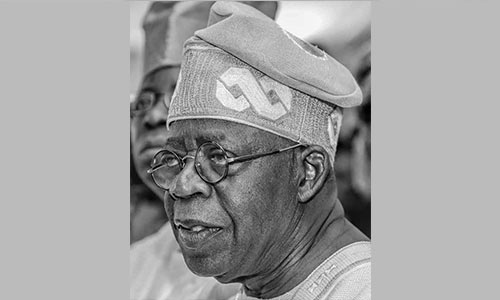
Two years ago, Bola Tinubu swept into power on the wings of his “Renewed Hope” mantra, promising prosperity, stability, and a break from Nigeria’s cycle of dysfunction. Today, as his administration marks its midterm, that hope has curdled into despair. Tinubu’s tenure has been a masterclass in economic mismanagement, policy incoherence, and a staggering indifference to the suffering of ordinary Nigerians. From skyrocketing inflation to a collapsing power sector, from mass unemployment to a security crisis spiraling out of control, his government has presided over a midterm of unrelenting misery.

The Fuel Subsidy Fiasco: A Self-Inflicted Economic Catastrophe
Tinubu’s defining act—the abrupt removal of petrol subsidies on his inauguration day—was less a bold reform than an act of economic arson. Overnight, petrol prices surged from ₦185 to over ₦1,000 per litre, triggering a chain reaction of hyperinflation in transportation, food, and basic goods. The government’s justification—that subsidy removal would free funds for development—rings hollow when Nigerians see no tangible improvements in infrastructure or social services. Instead, they face a brutal cost-of-living crisis, with inflation peaking at 34.8% in late 2024.

Worse still, the promised benefits of subsidy removal—like domestic refining capacity—remain a mirage. Despite Tinubu retaining the petroleum portfolio (a dubious tradition of Nigerian leaders), fuel imports continue as local refineries struggle. The much-hyped Dangote Refinery, while a rare bright spot, has yet to offset the crisis, leaving Nigeria’s energy sector in shambles.

The Power Sector: Darkness and Dysfunction
If Tinubu’s handling of fuel was disastrous, his administration’s approach to electricity is outright negligent. Under Minister Adebayo Adelabu, Nigeria’s power grid collapsed 12 times in 2024 alone, plunging homes, businesses, and even hospitals into darkness. Universities and medical facilities, including the prestigious University College Hospital, were disconnected for months over unpaid bills—forcing the government to scramble for a ₦10 billion solar bailout for Aso Rock itself.

With only 5,000 megawatts for a population of over 200 million—compared to South Africa’s 58,000 MW—Nigeria’s power sector is a lamentable laughingstock. The introduction of punitive “consumption bands” has only raised costs without improving supply, perversely squeezing households and businesses.

Economic Freefall: The Naira’s Nosedive and the Exodus of Jobs
Finance Minister Wale Edun presides over an economy in freefall. The naira, once trading at ₦740 to the dollar, now wobbles between ₦1,500 and ₦1,600, eroding savings and purchasing power. The new minimum wage of ₦70,000 is a cruel joke when compared to South Africa’s ₦393,000 or Egypt’s ₦209,000—yet even this paltry sum remains unimplemented in many states of Nigeria.

Multinationals, from Diageo to Kimberly-Clark, have fled Nigeria, taking 20,000 jobs along with them. The reason? An unfriendly business environment, erratic power, and suffocating bureaucracy. Meanwhile, the “japa” syndrome drains the country of doctors, engineers, and skilled professionals, leaving critical sectors in manpower ruination.

Security: A Government in Denial
Despite allocating ₦6.11 trillion to defense in 2025, Tinubu’s security chiefs have failed spectacularly. Boko Haram, ISWAP, bandits, and newly emerging terror groups in Sokoto and Kwara continue their reign of unchecked violence and impunity. Plateau and Benue states remain blood-soaked battlegrounds, while the military struggles to protect even its own bases from attacks. The government’s hollow assurances—”terrorists are no match for our troops”—are an insult to grieving communities and their hapless victims.

Ethnic Favouritism and a Divided Nation
Beyond policy failures, Tinubu has exacerbated Nigeria’s fragile unity by stacking key institutions with his ethnic Yoruba appointees. All eight of Nigeria’s most powerful positions—Central Bank, NNPC, Police, Army, Customs, EFCC, and others—are now held by Yorubas, a historic imbalance that fuels ethnic tensions and magnifies the fault lines of a deeply divided nation. Critics, including voices from his own party, warn that this lopsidedness undermines national cohesion and sets a dangerous precedent.

Conclusion: A Government Adrift
Tinubu’s midterm report card is one of broken promises and worsening suffering. His reforms, praised by vampire and blood sucking international bodies like the IMF, have yet to translate into tangible relief for Nigerians. Instead, his administration oscillates between denial and deflection—APC governors may trumpet “vindication,” but the streets tell a continuously different story.

With two years left in an era of unprecedented bungling blunders, Tinubu has a choice: course-correct with genuine reforms, fiscal discipline, and inclusive governance—or double down on the same blunders while eyeing re-election in 2027. For now, Nigerians endure a midterm of misery, led by a government that governs for itself and its cronies, not the Nigerian people it swore to serve.

Haruna Yahaya Poloma.
[email protected]

The views expressed by contributors are strictly personal and not of Law & Society Magazine.

Trump’s unfounded attack on Cyril Ramaphosa was an insult to all Africans

By John Dramani Mahama

“If we want to solve injustices in Africa today, we cannot forget the injustices that shaped our shared history.” John Dramani Mahama, president of the Republic of Ghana

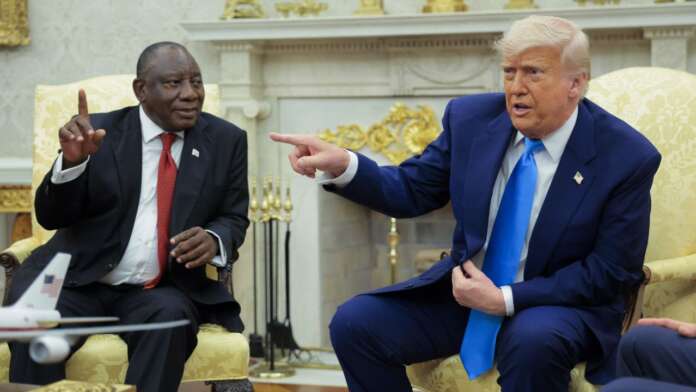
The meeting at the White House between Donald Trump and the South African president, Cyril Ramaphosa, was, at its heart, about the preservation of essential historical truths. The US president’s claims of white genocide conflict with the actual racial persecution and massacres that took place during the two centuries of colonisation and nearly 50 years of apartheid in South Africa.

It is not enough to be affronted by these claims, or to casually dismiss them as untruths. These statements are a clear example of how language can be leveraged to extend the effects of previous injustices. This mode of violence has long been used against Indigenous Africans. And it cannot simply be met with silence – not any more.

The Kenyan writer Mzee Ngũgĩ wa Thiong’o wrote: “Language conquest, unlike the military form, wherein the victor must subdue the whole population directly, is cheaper and more effective.”

African nations learned long ago that their fates are inextricably linked. When it comes to interactions with the world beyond our continent, we are each other’s bellwether. In 1957, the year before my birth, Ghana became the first Black African country to free itself from colonialism. After the union jack had been lowered, our first prime minister, Dr Kwame Nkrumah, gave a speech in which he emphasised that, “our independence is meaningless unless it is linked up with the total liberation of Africa”.

Shortly after, in 1960, was the Sharpeville massacre in South Africa, which resulted in 69 deaths and more than 100 wounded. In Ghana, thousands of miles away, we marched, we protested, we gave cover and shelter. A similar solidarity existed in sovereign nations across the continent. Why? Because people who looked like us were being subjugated, treated as second-class citizens, on their own ancestral land. We had fought our own versions of that same battle.

I was 17 in June 1976, when the South African Soweto uprising took place. The now-iconic photo of a young man, Mbuyisa Makhubo, carrying the limp, 12-year-old body of Hector Pieterson, who had just been shot by the police, haunted me for years. It so deeply hurt me to think that I was free to dream of a future as this child was making the ultimate sacrifice for the freedom and future of his people. Hundreds of children were killed in that protest alone. It is their blood, and the blood of their forebears that nourishes the soil of South Africa.

The racial persecution of Black South Africans was rooted in a system that was enshrined in law. It took worldwide participation through demonstrations, boycotts, divestments and sanctions to end apartheid so that all South Africans, regardless of skin colour, would be considered equal. Nevertheless, the effects of centuries-long oppression do not just disappear with the stroke of a pen, particularly when there has been no cogent plan of reparative justice.

Despite making up less than 10% of the population, white South Africans control more than 70% of the nation’s wealth. Even now, there are a few places in South Africa where only Afrikaners are permitted to own property, live, and work. At the entrance to once such settlement, Kleinfontein, is an enormous bust of Hendrik Verwoerd, the former prime minister who is considered the architect of apartheid.

Another separatist town, Orania, teaches only Afrikaans in its schools, has its own chamber of commerce, as well as its own currency, the ora, that is used strictly within its borders. It has been reported that inside the Orania Cultural History Museum there is a bust of every apartheid-era president except FW de Klerk, who initiated reforms that led to the repeal of apartheid laws.

Both Kleinfontein and Orania are currently in existence, and they boast a peaceful lifestyle. Why had the America-bound Afrikaners not sought refuge in either of those places?

Had the Black South Africans wanted to exact revenge on Afrikaners, surely, they would have done so decades ago when the pain of their previous circumstances was still fresh in their minds. What, at this point, is there to be gained by viciously killing and persecuting people you’d long ago forgiven?

According to the UN Department of Economic and Social Affairs, half of the population of South Africa is under 29, born after the apartheid era and, presumably, committed to building and uplifting the “rainbow nation”. For what reason would they suddenly begin a genocide against white people?

Ramaphosa was blindsided by Trump with those unfounded accusations and the accompanying display of images that were misrepresented – in one image, pictures of burials were actually from Congo. Trump refused to listen as Ramaphosa insisted that his government did not have any official policies of discrimination.

“If you want to destroy a people,” Archbishop Desmond Tutu once said, “you destroy their memory, you destroy their history.” Memory, however, is long. It courses through the veins of our children and their children. The terror of what we have experienced is stored at a cellular level. As long as those stories are told, at home, in church, at the beauty and barber shop, in schools, in literature, music and on the screen, then we, the sons and daughters of Africa, will continue to know what we’ve survived and who we are.

Mzee Ngũgĩ wa Thiong’o wrote: “The process of knowing is simple. No matter where you want to journey, you start from where you are.” We journey forward with a history that cannot be erased, and will not be erased. Not while there are children dying in the mines of the Congo, and rape is being used as a weapon of war in Sudan.

Our world is in real crisis; real refugees are being turned away from the borders of the wealthiest nations, real babies will die because international aid has been abruptly stopped, and real genocides are happening in real time all across the globe.

Culled from The Guardian

Trump says he fired National Portrait Gallery chief, experts suggest he does not have legal grounds to do so

Donald Trump says he is firing the first female director of the National Portrait Gallery, which contained a caption that referenced the attack on the US Capitol that his supporters carried out in early 2021.

The president announced the termination on Friday in a post on his social media platform that accused Sajet – born in Nigeria, raised in Australia and a citizen of the Netherlands – of being “a strong supporter” of diversity initiatives that his administration opposes as well as “highly partisan”. He cited no evidence for either claim.

Legal experts, including Eric Columbus, a former litigator for the January 6 select committee, suggested Trump does not have the power to fire Sajet, since the gallery is part of the Smithsonian, which is not run by the executive branch.

Click here to continue reading.

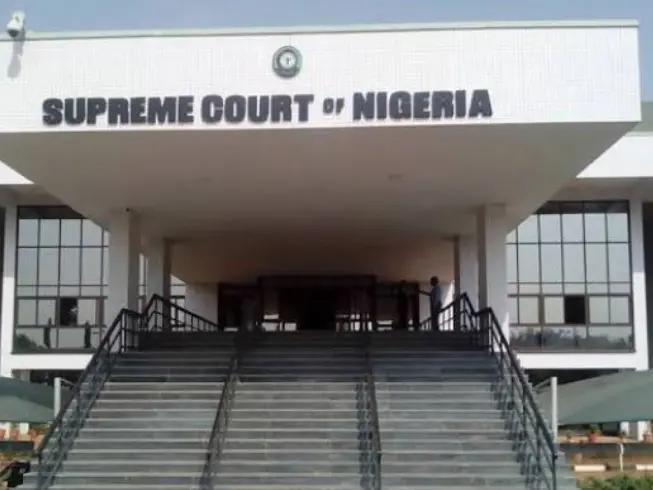
Osun drags FG to Supreme Court over seizure of LGs’ February, March, April allocations

Osun State filed an originating summons at the Supreme Court following the Federal Government’s confiscation of the monthly allocations accruing to its local governments for the months of February, March and April 2025.

It has not been ascertained whether that of May will also be withheld.

The suit dated 23 April 2025 marked SC/CV/379/2025 filed by Musibau Adetunbi, SAN, counsel for the Attorney General of Osun State (plaintiff), has the Attorney General of the Federation (AGF) as the sole defendant.

The state government approached the Supreme Court for an order directing the federal government to release the seized funds and for further orders restraining it from further withholding, suspending and for seizing fund allocations to the local government councils in the state.

In an originating summons filed on 24 April, 2025, the state government is asking the Supreme Court to determine the following questions:

Whether upon a proper construction of the provisions of Section 162 (3), (5), (6) and (8) of the 1999 Constitution of the Federal Republic of Nigeria (as amended) via-a-vis the decisions of this Honourable Court in A.G. Lagos State V. A.G. Federation (2004) 18 NWLR (PART 904) 1 and A.G. Federation V. A.G. Abia State (2024) 17 NWLR (PART 1966) 1; the defendant can withhold, seize and/or suspend payment of the monthly allocations, revenues and other funds due to the constituent local government councils of the plaintiff state without any justification whatsoever, notwithstanding the fact that the plaintiff state has in place, at all-time material to this suit, democratically elected local government councils?

Upon a proper construction of Section 7(1) of the 1999 Constitution of the Federal Republic of Nigeria (as amended), which guarantees the existence and subsistence of democratically elected local government councils in all the states of the federation, including the plaintiff state, whether the act of the defendant in withholding, suspending and/or seizing the statutory allocations due to the constituent local government councils of the plaintiff state without any justification whatsoever, does not pose a threat to the existence, governance and/or subsistence of the democratically elected local government councils in place in the plaintiff state and, by extension, the state generally, and thereby contravening the clear provisions of the constitution?

Whether the defendant, without any lawful justification and/or any valid or subsisting judgment/order of court whatsoever, can single out the plaintiff state herein and decide to withhold, suspend, seize and/or refuse to pay the monthly allocations and revenues standing to the credit of the constituent local government councils of the plaintiff state, notwithstanding the fact that the plaintiff state has in place democratically elected local government councils in the state at all-time material to this suit?

The state government is praying the apex court to make the following declarations:

A declaration that the defendant has no right to withhold, suspend and/or seize the monthly allocations, revenues and/or other funds standing to the credit of the constituent local government councils of the plaintiff state without any justification whatsoever, particularly in view of the fact that the plaintiff state has democratically elected local government councils in place at all-time material to this suit.

A declaration that the acts of the defendant withholding the monthly allocation and revenues due to the constituent local government councils of the plaintiff state for the months of March 2025, without any justification whatsoever, despite the fact that the plaintiff has in place democratically elected local government councils at all-time material to this suit, as unconstitutional, unlawful and ultra vires the powers of the defendant.

A declaration that the seizure, suspension, withholding and/or refusal to pay the allocations and revenues due to the plaintiff state by the defendant is a threat to the existence and subsistence of the democratically elected local government councils which is in place in the plaintiff state at all-time material to this suit.

A declaration that insofar as the defendant is yet to commence implementation of the Judgment of this Honourable Court in Suit No.: SC/CV/343/2024 between A.G. Federation V. A.G. Abia State & Ors. by putting in place necessary logistics to ensure direct payment of the allocations and revenues due to each local government council of the states, the plaintiff cannot be singled out by the defendant for non-payment of its local government allocation while other states in the federation continue to receive payment of the local government allocation for and on behalf of their local government councils.

An order directing the defendant to release forthwith to the plaintiff, the monthly allocations and revenues due to its constituent local government councils for the months of March 2025 which have been unlawfully and unjustifiably withheld by the defendant into its state joint local government accounts.

An order directing the defendant to continue paying the allocation, revenues and other funds due to the local government councils of the plaintiff state through the plaintiff’s state joint local government accounts opened for that purpose pending the necessary logistics.

In an affidavit of extreme urgency deposed to by the Commissioner for Finance, Ogungbile Adeola Olusola, the state government, through the state Attorney General, said the suit was filed against the backdrop of the unjustifiable and unlawful withholding and seizure of the funds, allowances and revenues due to the local government councils from the federation account.

The plaintiff told the apex court that “the continuous seizure of this fund by the federation would paralyse the education and health sectors of the plaintiff state if not urgently restrained by this honourable court, hence the plaintiff had contemporaneously filed an application for both interim and interlocutory injunctions alongside the originating summons in this suit”.

The Finance Commissioner said in the affidavit of urgency, sworn to on April 24, 2025 that the various local government councils in the plaintiff state need the allocations and revenue to function.

He said: “I know that if the defendant is not urgently restrained from further withholding, suspending and seizing this fund, the local government councils would not be able to function and perform their constitutional obligations.

“I equally know as fact that the continuous seizure of this fund by the defendant would cripple the governance and subsistence of the local government councils in Osun State and, by extension, cripple the governance of the state itself.”

He said, “The defendant, having withheld the allocation and revenue of the local government councils of Osun State of March, 2025 has caused hardship on the people of the state, and if the defendant is not urgently restrained, the monthly allocation for April, 2025 would also be withheld, suspended and seized and this will cause more and serious hardship on the people of the state.”

The deponent averred: “It will satisfy the interest of justice and fairness if the motion ex parte for Interim Injunction is urgently heard and determined by the apex court so as to mitigate the hardship already being faced by the people of Osun State, due to the withholding, seizure and suspension of their local government councils’ allocation and revenue.

“I depose to this affidavit in good faith, conscientiously believing same to be true, correct and in accordance with the Oaths Act.”

No date has been fixed for hearing of the case.

It will be recalled that the APC had, in February called on the Federal Government to withhold allocations to local government councils in the state, alleging illegal constitution of council heads by Governor Ademola Adeleke’s administration.

According to the APC, Governor Adeleke conducted a “purported” local government election on February 22, 2025, “in disregard of a valid and subsisting judgment of the Court of Appeal.”

READ ALSO: Court asks FG to withhold Osun LGs’ allocations

The party’s spokesman, Felix Morka, said, “In keeping with the rule of law, it is our expectation that the Federal Government will make federal allocation for local governments available only to democratically elected and judicially certified local government officials in Osun state.”

The state government and the PDP, however, countered the APC argument, pointing at a case the APC lost at the same Federal High Court, the appeal on which was dismissed by the Court of Appeal on 13 January 2025 for lack of diligent prosecution.

The Court of Appeal recently heard an application filed by the All Progressives Congress (APC) praying the court to relist the appeal against the Federal High Court judgement which sacked its chairmen and councilors on 30 November, 2022.

Ruling on the application and on a preliminary objection filed by the respondents, Action Peoples Party and OSSIEC, has been adjourned till a date yet to be announced by the court.

Meanwhile, the state chapter of the Inter-Party Advisory Council (IPAC) appealed to the Federal Government not to withhold allocations to the state’s local governments over the controversy surrounding the council elections.

Borno Mourns: 8 volunteers killed in an IED blast

By Yilik Mukwan

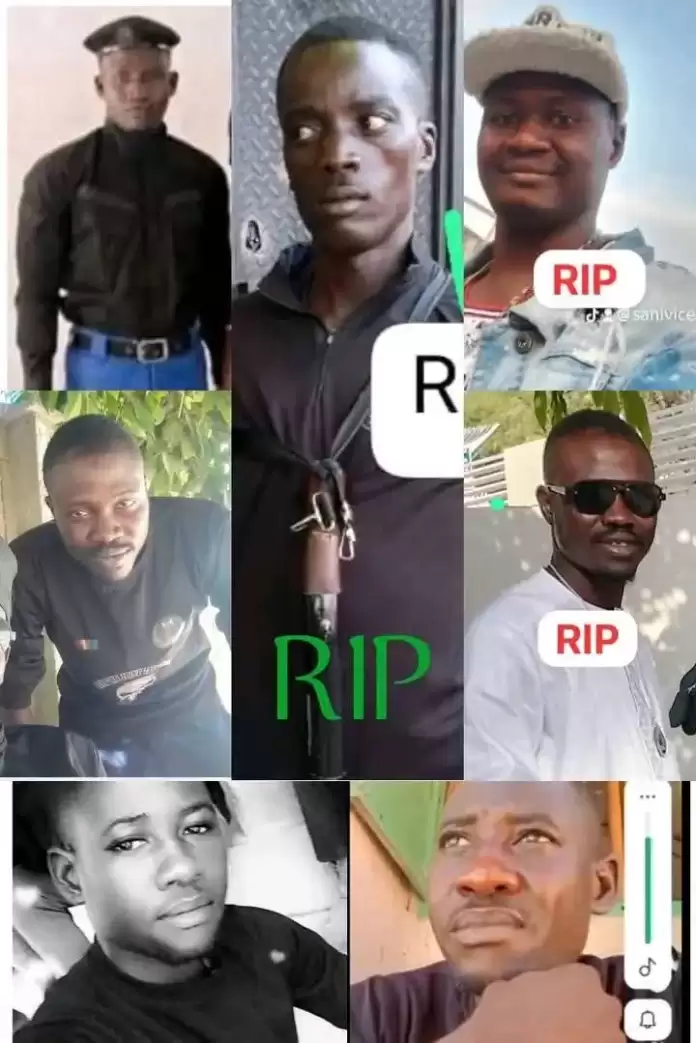
Borno State is in mourning over the tragic death of eight Civilian Joint Task Force (CJTF) members killed in an Improvised Explosive Device (IED) blast on Tuesday along the Dikwa-Marte road.

CJTF is a security volunteer outfit supporting the Nigerian Army in the fight against insurgency in the North-east region.

The brave volunteers were trying to retrieve the body of a colleague killed in an encounter between insurgents and the Nigerian Army in Marte Local Government Area when the device exploded on them.

Borno residents have always commended the vigilante groups for their role and sacrifices in the fight against the insurgency.

Many have paid tributes to the fallen volunteers.

“I grew up together with Abba. Even though we went our separate ways after he became very stubborn, he later grew into a courageous and reliable man. Just yesterday we met and chatted. May the soul of Baba rest in peace,” Abubakar Dodo said about one of the victims.

Mr Dodo was among hundreds of Borno residents who paid their last respects at the burial rites of the victims.

“Alhamdulillah, the gathering is enough to confirm they died as heroes. We pray that God will see their sacrifices and forgive them,” Musa Inuwa, another resident, said.

Many others have shared their condolences on social media.

According to a Daily Trust report, between 2012 and 2025, over 1,773 members of the CJTF were killed fighting Boko Haram and Islamic State of the West African Province (ISWAP) terrorists in the entire Northeast.

The Insurgents, believed to have been degraded, recently renewed attacks on Borno communities.

PREMIUM TIMES reported recently how 12 communities were attacked within three weeks.

Governor offers support

Governor Babagana Zulum has described the deceases as heroes whose memories will remain in the hearts of Borno forever.

He also offered support to their bereaved families.

Mr Zulum, on Thursday, paid a condolence visit to the families of the fallen heroes in the Fezzan ward of the Maiduguri metropolis.

The governor pledged a scholarship for the children of the deceased CJTF members or their family members.

“I want to announce an initial assistance of N5 million to be given to each of the families to take care of their immediate needs,” Governor Zulum stated during his visit.

He described the fallen CJTF members as “martyrs who made ultimate sacrifices in defence of their communities.”

Governor Zulum was accompanied on his sympathy visit by a delegation of government officials, including the Deputy Speaker of the state House of Assembly, Abdullahi Askira; APC state chairman, Bello Ayuba; and the Permanent Secretary of Government House, Mustapha Busuguma.

The governor’s swift response underscores the state government’s recognition of the invaluable role played by the CJTF in securing Borno.

Premium Times

President Tinubu introduces executive order to boost oil, gas Sector

President Bola Tinubu has issued a new Executive Order geared towards lowering project costs, attracting investment, and enhancing revenues from oil and gas operations.

A statement issued by Senan Murray, media contact in the office of the Special Adviser to the President on Energy, disclosed that the Upstream Petroleum Operations Cost Efficiency Incentives Order (2025) introduced performance-based tax incentives for upstream operators who deliver verifiable cost savings that meet defined industry benchmarks.

The statement said the Nigerian Upstream Petroleum Regulatory Commission (NUPRC) will publish these benchmarks annually according to terrain—onshore, shallow water, and deep offshore.

It also said detailed implementation guidelines for the new Order will be issued in due course.

Among other provisions, it explained that the Order returns to investors 50 per cent of incremental government gain resulting from cost savings, and also caps available tax credits at 20 per cent of a company’s annual tax liability—protecting government revenues while still offering strong fiscal terms to incentivise efficient operators.

“Nigeria must attract investment inflows, not out of charity, but because investors are convinced of real and enduring value. This Order is a signal to the world: we are building an oil and gas sector that is efficient, competitive, and works for all Nigerians. It is about securing our future, creating jobs, and making every barrel count,” Tinubu was quoted as saying.

To ensure effective implementation of the new Order, the statement said the President has tasked the Special Adviser on Energy to lead inter-agency coordination, ensuring alignment across key government institutions and translating policy intent into measurable outcomes.

According to Olu Verheijen, Special Adviser to the President on Energy: “This is not a pursuit of cost reduction for its own sake. It is a deliberate strategy to position Nigeria’s upstream sector as globally competitive and fiscally resilient. With this reform, we are rewarding efficiency, strengthening investor confidence, and ultimately delivering greater value to the Nigerian people.”

The statement noted that the new order builds on the administration’s 2024 presidential reform directives, which delivered improved fiscal terms, shortened project timelines, and aligned local content policies with global best practice.

Akinboro, SAN advocates urgent amendments to Nigeria’s constitution

A former General-Secretary of the Nigerian Bar Association (NBA ), Olumuyiwa Akinboro, has challenged the feasibility of Nigeria’s federalism as it is presently constituted, pointing out that only a constitutional amendment could guarantee fiscal autonomy for true federalism to be realised in the country.

Akinboro, SAN, who delivered a delivered a keynote address at the 2025 Law Week of the Nigerian Bar Association (NBA), Osogbo branch on Thursday spoke on the topic “State and Local Governments’ Independence under the Constitution of the Federal Republic of Nigeria 1999 (as Amended): A Myth or Reality.”

According to the Senior Advocate of Nigeria, such amendments must guarantee decentralised judicial and security structures, while state and local governments must also be empowered to function effectively and independently.

He also said that federalism practised today was greatly shaped by colonial and military antecedents, which were both characterised by their unitary and dictatorial leanings.

“For true federalism to be realised in Nigeria, constitutional amendments must be pursued to guarantee fiscal autonomy, decentralise judicial and security structures, and empower state and local governments to function effectively and independently.

“Federalism is not a constitutional provision alone; it is a culture, a practice, and a commitment.

“If Nigeria is to truly reap the benefits of its diversity and democratic potential, it must recommit to the tenets of true federalism.

“The independence of state and local governments is not a luxury, it is a necessity. Until then, the federalism we claim remains largely a constitutional myth, not a governing reality.

“Until such structural reforms are actualised, the supposed federal character of Nigeria will remain largely ceremonial, and the promise of genuine democratic governance at the sub-national level will remain elusive,” he said

In his remarks, Mr Olayemi Abiona, the NBA Chairman in the state, said that the discourse was timely and pivotal.

“As legal practitioners and stakeholders in the country’s governance framework, we are confronted with enduring questions about the autonomy of sub-national governments under the 1999 Constitution (as amended).

“The tension between federal dominance and the quest for true federalism, the fiscal constraints on states and local governments, and the practical realities of governance in Nigeria demand our rigorous examination.

“Is the constitutional promise of independence for states and local governments a tangible reality, or does it remain an elusive myth?

“This lecture challenges us to dissect these issues with clarity, courage, and a commitment to advancing Nigeria’s democratic ideals,” he said.

Also, Gov. Ademola Adeleke of Osun commended NBA for organising the programme and the chosen topic of discourse.

Adeleke, represented by the state Commissioner for Information and Civic Orientation, Kolapo Alimi, said that local governments in the country could not be truly or totally independent of the state

“There is no true or total independence due to the financial commitment of both tiers of government in paying salaries and pensions for local government workers and teachers,” he said.

25th NAWJIN Biennial Conference: AWLA President commends Nigerian women judges, says they are trailblazing custodians of a legacy

  • Congratulates Justice Binta Nyako on her successful tenure as President of the International Women Judges

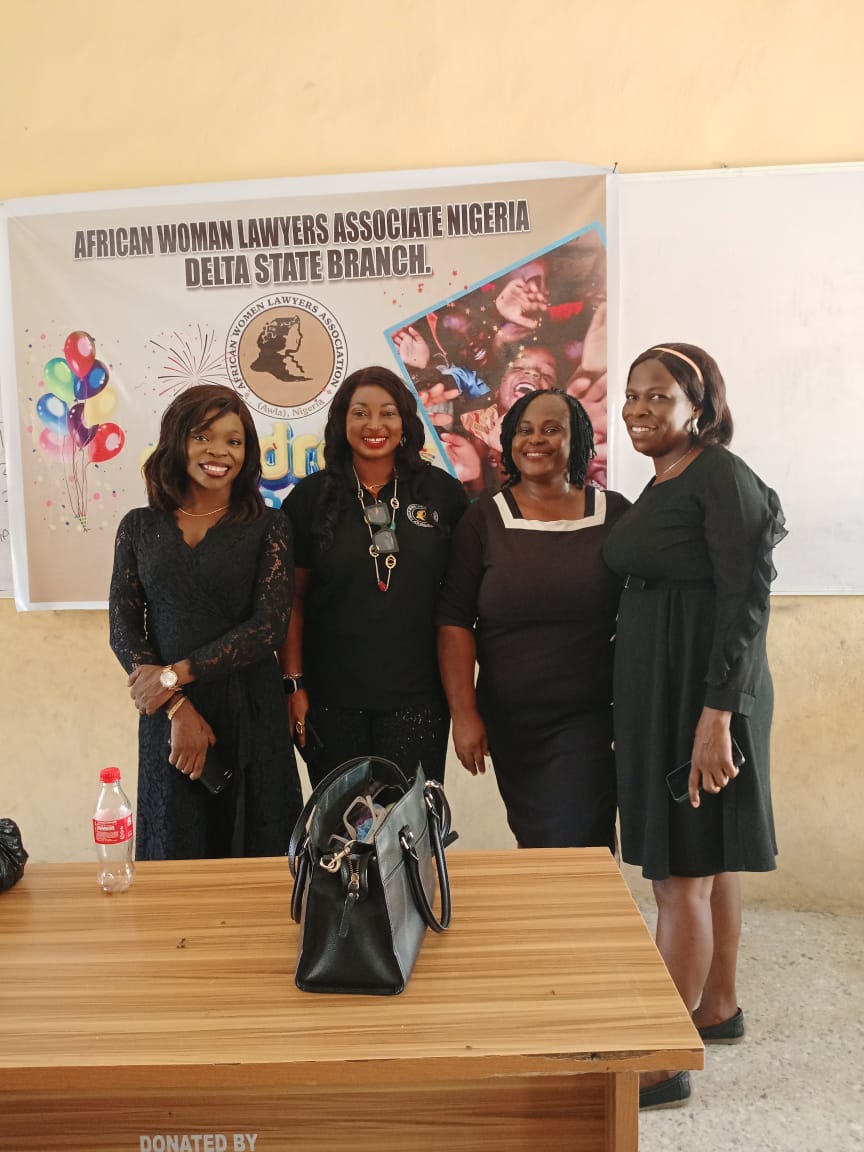
The President of the African Women Lawyers Association (AWLA), Caroline Ibharuneafe, on Friday eulogised women judges in Nigeria under the auspices of the National Association of Women Judges of Nigeria (NAWJIN), describing them as “not only arbiters of justice but also beacons of inspiration to countless young female lawyers who look to the judiciary as both a calling and a compass.”

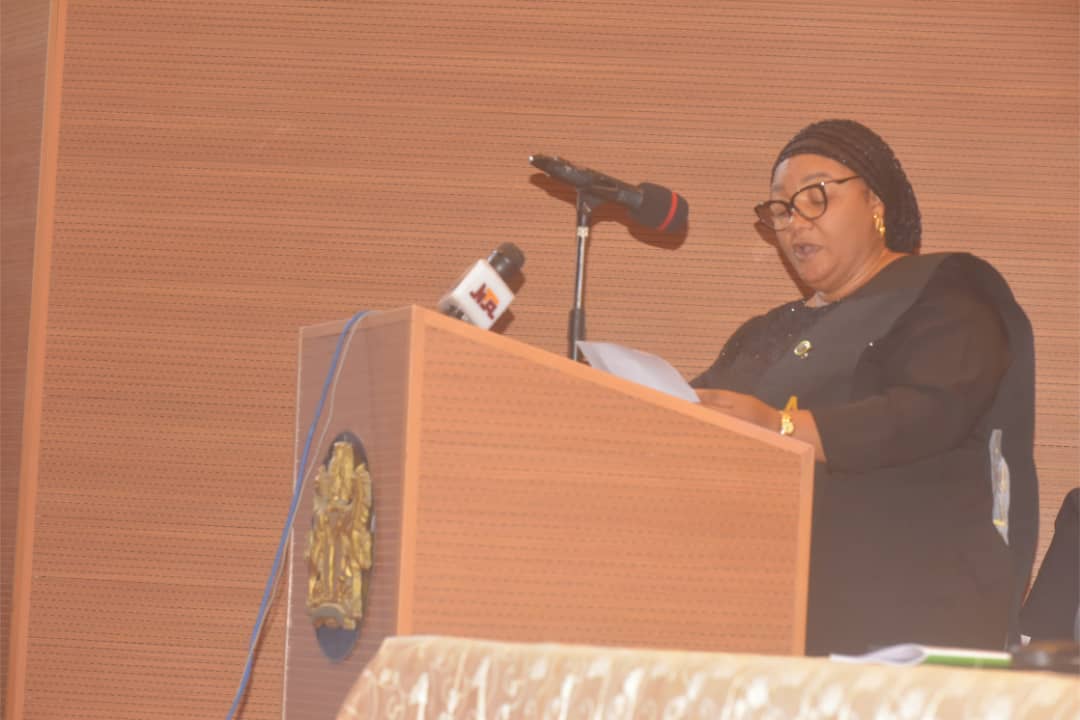
Ibharuneafe, while delivering AWLA’s goodwill message at the opening ceremony of NAWJIN’s 25th Biennial Conference, which was held at the National Judicial Institute, Abuja with the theme: “Mentorship and Legacy Building: Fostering a Culture of Mentorship, Inclusivity, and Empowerment of the Next Generation of Women Leaders in Law,” said: “We are here today to join not just professionals, but custodians of a legacy; a legacy built by trailblazing women who dared to sit at the bench when it was neither easy nor common. Many of you in this room are such women.”

AWLA Chair, Abuja, Rukaiya Cynthia Emmanuel, reading AWLA President’s speech

In the speech delivered on behalf of the AWLA President by Rukaiya Cynthia Emmanuel, Chair of AWLA Abuja branch, Mrs. Ibharuneafe further stated that: “The African Women Lawyers Association believes deeply in the power of mentorship, not as a formality, but as a lifeline.”

According to her, “For many young women in the legal profession, the difference between stagnation and success is often the presence of a mentor who says: ‘I see you. I’ve walked this path. Let me show you how.’

“Mentorship is how we protect the gains we’ve made. It is how we ensure that the bench remains not only accessible but also representative. And in a society where barriers persist, both visible and invisible, mentorship provides more than just guidance; it provides courage.

“Legacy, on the other hand, is not built at the end of a career. It is built moment by moment, decision by decision, case by case, and in every hand, we extend to the next woman coming up.

“We must also ensure that our mentorship is inclusive. We must reach beyond familiar spaces and institutions, into underserved communities, rural areas, and informal networks, to find the hidden brilliance that only needs a hand to thrive.

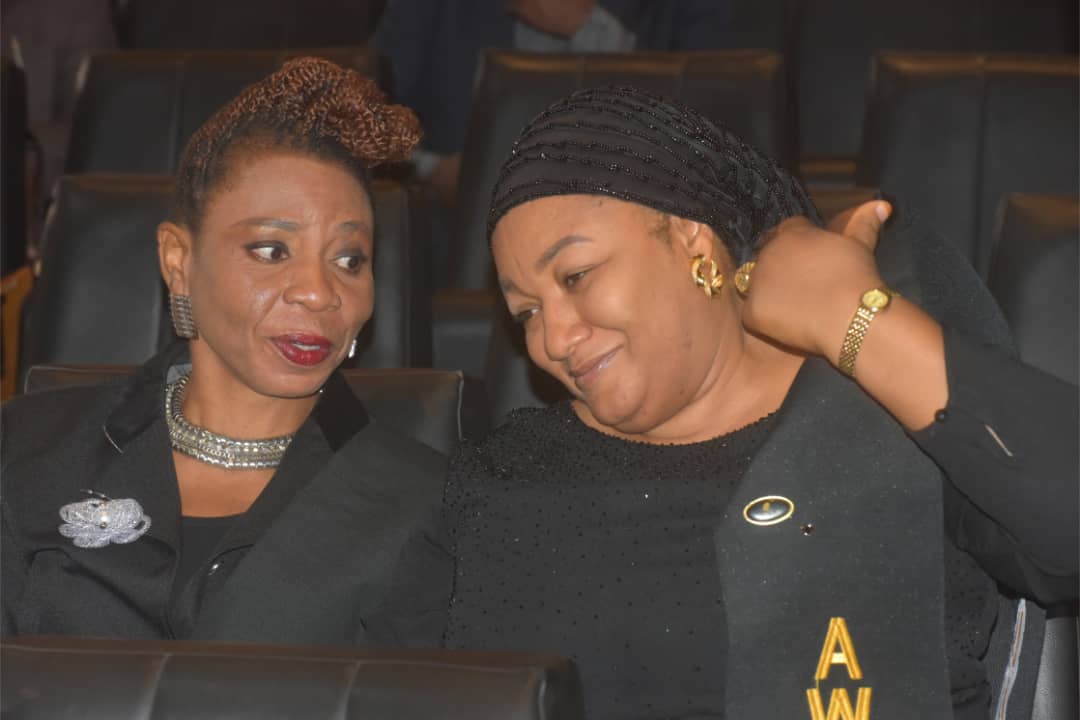
R-L: Rukaiya Cynthia Emmanuel, Chair of AWLA Abuja branch and a member, Lillian Okenwa at the event on Friday

 “AWLA Nigeria is proud to align itself with the visions of NAWJN. We see you not only as leaders in jurisprudence but as partners in the mission to raise a generation of women who are not afraid to lead, to speak, and to transform.

“We will, at this point, extend our heartfelt congratulations to our dear Justice Binta Nyako for a successful tenure as the President of the International Women Judges.

“In conclusion, I encourage us all to ask not only, “What legacy will I leave?” but also, “Whose journey will I make lighter?” Let us continue to build together, not just careers, but a culture of upliftment and excellence.

“May our collective efforts ignite the next generation of women judges, lawyers, and leaders who will go even further than we dared to dream.

“Thank you, and may this event leave a lasting imprint on the future of our profession.”

Old Roger (oversight) is Dead and Gone to His Grave: How 36 legislators of the National Assembly could not exhibit their oversight and legisprudence to amend the S.O.E. before debating the 2025 Rivers state ₦ 1.48 trillion budget

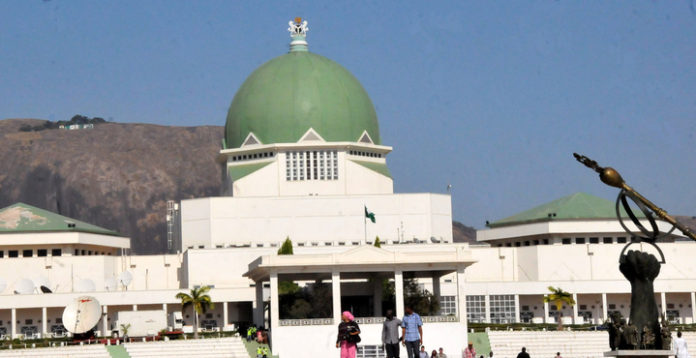
National Assembly Complex

By Dr. Tonye Clinton Jaja

Anyone who attended nursery and primary school during the 1980s must be familiar with the old nursery school rhyme: “Old Roger is Dead and Gone To His Grave”.

It appears that it is not only Old Roger that is dead and gone to the grave”.

It appears that the essential knowledge of what constitutes “Oversight” as a function of law-makers and legislators is also dead and gone to the grave. This is evident amongst majority of the law-makers of the National Assembly, especially worrisome is this amongst the 36 members of the National Assembly Committees on the Oversight of the State of Emergency in Rivers State.

Knowledge of the Oversight function of law-makers is a component of “LEGISPRUDENCE” which is a composite of the body of knowledge regarding the legal aspects of rational law-making.

Anyone with even a basic rudimentary knowledge of the law that governs the rational legislative process (LEGISPRUDENCE ) would know that no legislature can perform any task that is not specifically authorised by a written law. This is an extension of one of the cardinal pillars of the principle of Rule of Law as espoused by A. V. Dicey.

Nowhere inside the Proclamation of State of Emergency (SoE) legislation that was enacted on 20th March 2025 is it authorised that the National Assembly would enact laws for Rivers State.

Talk less of a very important piece of legislation such as the Appropriation Bill/Budget legislation.

As Femi Falana SAN had rightly argued by virtue of Section 81 of the Constitution of the Federal Republic of Nigeria, 1999 only the Rivers State House of Assembly is empowered to enact the said Appropriation Law.

In the event that such a fundamental function needs to be performed by the National Assembly, both logic, commonsense and the tenets of the Nigerian Constitution demands that there ought to be a prior amendment to the SoE legislation to confer such powers upon the National Assembly.

This amendment would not even take up to ten minutes of the time of both chambers of the National Assembly.

The amendment Bill could be sponsored by all the 36 members of the National Assembly Committees on Oversight of the State of Emergency in Rivers State.

Overall, the importance of oversight aspect of law-making is well described in an article by Ecoma, B., Ecoma, L., & Ecoma, E. (2025). The Oversight Function of the Nigerian National Assembly: A Legal and Research Analysis. Nagari Law Review, 8(2), 315-337 wherein they stated as follows:

“Oversight is arguably the only function that enables the legislature to keep an eye on the activities of government and its agencies and the implementation and impact of laws. As one of the cornerstones of democracy, oversight represents a process by which the legislature monitors the quality of work of the government regarding the implementation of laws, development plans, and budgets that the legislature has previously adopted; “it is a means for holding the executive branch accountable for its actions and ensuring that it implements policies in accordance with the laws and budget passed by the legislature.”

Effective legislative oversight is, therefore, key to the integrity of democratic systems and transparency of government. As such, the robust executive monitoring by the legislature is regarded as an indicator of good governance. It is the only process through which the legislature can ensure a balance of power and assert its role as the defender of the people’s interests. In Nigeria, while the National Assembly possesses the requisite
tools and constitutional powers to undertake effective oversight,…”

Despite the promise of the 36 members of the two Oversight of the SoE in Rivers State Committees of the National Assembly, we are not seeing any oversight.

Below are details of the said two Committees as follows:

“The Senate Committee tasked with oversight of the emergency rule in Rivers State has pledged to ensure fairness and adherence to democratic principles as it begins the process of considering the state’s 2025 budget.

The 18-member committee chaired by the Senate Leader, Opeyemi Bamidele (APC Ekiti Central), resolved that despite the ongoing emergency rule in Rivers State, democratic governance would not be suspended.

“Members of the committee include Senators Adamu Aliero, Osita Izunaso, Osita Ngwu (South East), Kaka Shehu, Aminu Abass, Tokunbo Abiru, Adeniyi Adebire, Sani Musa, Simon Lalong, Asuquo Ekpeyong, Adams Oshiomhole, Ireti Kingibe, Onyekachi, Idiat Adebule, Ide Dafinone, and Mohammed, alongside the Clerk of the Senate.” See https://leadership.ng/senate-sets-up-committee-to-oversee-rivers-administrator/

The House of Representatives Committee on Oversight of the SoE in Rivers State is as follows:

  1. chaired by House Leader, Prof. Julius Ihonvbere, is scheduled to be inaugurated on Tuesday, April 15, by the Speaker of the House, Rt. Hon. Abbas Tajudeen.
  2. Members of the committee include the Minority Whip, Hon. Ali Isa J.C., who will serve as Deputy Chairman;
  3. Deputy Chief Whip, Hon. Isiaka Ayokunle Ibrahim;
  4. former Deputy Speaker, Hon. Idris Ahmed Wase;
  5. Leader of the North-East Caucus, Hon. Aliyu Muktar Betera;
  6. and Leader of the North-West Caucus, Hon. Sada Soli, among others;
  7. The oversight Committee also include leader of the South West caucus, Hon.James Abiodun Faleke;
  8. Leader of the South East caucus, Hon. Igariwey Iduma Enwo;
  9. Hon. Shehu Saleh Rijau;
  10. Hon. Wole Oke;
  11. Hon. Akarachi Etinosa Amadi;
  12. Hon. Patrick Umoh;
  13. Hon. James Barka;
  14. Hon. Alex Egbona;
  15. Hon. Isa Anka;
  16. Hon. Amos Daniel;
  17. Hon. Erhiatake Ibori-Suenu;
  18. Hon. Onuh Onyeche Blessing;
  19. Hon. Fatima Talba; and
  20. The Chief of Staff to the Speaker, Prof. Jake Dan-Azumi is expected to head the Secretariat of the committee.
    https://thenationonlineng.net/reps-name-19-member-committee-to-oversee-emergency-rule-in-rivers-state/amp/

12:12 network monitoring reports that:

“Senior Advocates Slam Tinubu’s Rivers State Budget Presentation as Unconstitutional

Several Senior Advocates of Nigeria (SANs) have criticized President Bola Tinubu’s decision to present the 2025 Appropriation Bill of Rivers State to the National Assembly, describing it as unconstitutional and a breach of Nigeria’s federal structure.

Here’s a breakdown of their arguments:

  1. Femi Falana (SAN): Argues that the President’s action is unconstitutional, violating Section 81 of the Constitution which empowers the President to present only the federal budget.
  2. Mike Ozekhome (SAN): Questions the grounds for the emergency declaration in Rivers State, stating that the crisis didn’t meet the constitutional threshold of war, external aggression, or civil unrest.
  3. Professor Sam Erugo (SAN): Describes the President’s action as a “clear breach of Nigeria’s federal structure,” stating that there’s no provision in the 1999 Constitution that empowers the President to present a state budget to the National Assembly.”

The views expressed by contributors are strictly personal and not of Law & Society Magazine.
TIPS