Home Blog Page 307

Yet another Nigerian military jet mistakenly strikes, kills 20 vigilantes in Zamfara State

In what has been termed another human error, a Nigerian military fighter jet has mistakenly struck and killed about 20 men of a vigilante group during an operation targeting bandits in Garin Mani, a village in the Maru Local Government Area of Zamfara State.

The tragic incident occurred after armed bandits attacked the village, killing several residents and abducting over 50 others, mostly farmers who were working on their fields.

But a concerned Nigerian captures this one too many curious airt strikes in this manner:

“1st time – happenstance, 2nd time – mistake, 3rd time – enemy action, 4th, 5th, 6th, 7th, 8th time ………….”

Eyewitnesses said the attackers stormed the area on motorcycles around noon, shooting indiscriminately and causing widespread panic. 

In response, local vigilante groups mobilised and began chasing the fleeing assailants.

However, a military aircraft deployed to the scene allegedly misidentified the vigilantes as bandits and launched airstrikes on them.

“We were pursuing the bandits when we saw the fighter jet approaching,” one of the vigilantes told BBC Hausa. 

“It flew very low and started bombing us. Some of us survived by pretending we had been hit. When the jet left, we got up and fled to safety.”

Another resident, who spoke on condition of anonymity, confirmed the incident and expressed disappointment over the lack of communication from the military. 

“We understand it was an unfortunate mistake, but the military should acknowledge what happened and reach out to the victims’ families,” he said.

He also appealed to the government to deploy additional troops to the area, as the bandits had threatened to return.

This is not the first time such an incident has occurred. In January, an airstrike mistakenly killed 16 people, including vigilantes, in Tungar Kara, also in Zamfara. 

Less than three weeks after a military airstrike in Sokoto state reportedly killed 10 villagers on December 25, 2024, an airstrike in Zamfara state has resulted in more accidental deaths. The victims, who the military wrongly identified as bandits, were members of a local vigilante group and farmers in the vicinity of Tungar Kara village, Zurmi Local Government Area.

Similar airstrikes have killed hundreds of people in Nigeria. They have been carried out during operations against bandit gangs that emerged from years of conflict between farming and herding communities in Nigeria’s northwest. The military has called the killings of ordinary people accidental, but such deaths have become a recurring feature of these airstrikes.

Besides the costly human toll, these mistakes are indicative of significant failures in operational protocol and military oversight.

The Nigerian Air Force, which carried out the Tungar Kara airstrike, claims that the strike dealt a “decisive blow” to bandits in the area but also expressed “grave concern” about “reports of the loss of civilian lives.” The air force says it has launched a “comprehensive investigation” into the incident. However, similar promises by military authorities to ensure justice and accountability for airstrikes in the past have yielded little to no results.

In a statement on January 12, the Zamfara state government, while expressing condolences for the mistaken deaths, also commended what it called the military’s “successful” strike.

A Tungar Kara villager, one of the first on the scene, told Human Rights Watch that he found 17 dead bodies and over 30 others injured.

A 52-year-old farmer who sustained injuries described how, a few minutes after seeing the vigilantes ride past his farm on motorcycles, a sand-colored jet appeared in the sky above them. “The area became dusty and smoky, the reverberation was so loud, then I realized bombs had been dropped on them. Due to my proximity, I was hit by shrapnel,” he said.

Is it not time President Bola Tinubu urgently works with the military leadership to address the escalating number of civilian lives claimed by airstrikes? Security forces should be held accountable for any and all abuses. Next steps should include reforming military operational protocols and oversight, ensuring justice for victims, and measures to better protect innocent people during security operations.

As of the time of filing this report, the Nigerian military has yet to issue an official statement on the latest incident. 

Inquest opens in South Africa into notorious apartheid-era killings

Rachel Savage Southern Africa correspondent

‘We want to correct the historic record’ – families of the Cradock Four, beaten and killed in 1985, seek justice 40 years on…

An inquest has opened into one of the most notorious killings of South Africa’s apartheid era, with a former general denying he ordered the deaths of four men who became known as the Cradock Four.

Fort Calata, Matthew Goniwe, Sicelo Mhlauli and Sparrow Mkonto were stopped at a roadblock on 27 June 1985 by security officers and beaten, strangled with telephone wire, stabbed and shot to death.

Inquests into the killings of the four activists were held in 1987 and 1993, before South Africa’s first democratic elections in 1994. In 1999, the country’s Truth and Reconciliation Commission refused six security officers amnesty for their role in the killings. They were never prosecuted and have all since died.

Howard Varney, a lawyer for relatives of the Cradock Four, said in his opening statement to the inquest, at the high court in the city of Gqeberha: “These were four young men who had so much to offer South Africa. The searing pain of their absence persists with the families to this day.”

At one of the previous inquests, it was revealed that Joffel van der Westhuizen, the former military commander of what was then the Eastern Province, sent a message to the apartheid regime’s state security council requesting permission to “remove permanently from society as a matter of urgency” the “agitators”. Another general who received the message argued that this meant detaining the men, not killing them.

In an opening statement, Van der Westhuizen’s lawyer said “he denies ever authorising or ordering the killing of the deceased”.

The lawyer said the former general was “not in a very healthy condition” and had so far not been able to get the South African military to pay his legal costs. The lawyer argued that witnesses, who include nine family members of the Cradock Four, could not give evidence that implicated Van der Westhuizen unless he had funded legal representation.

Judge Thami Beshe ruled that in the first part of the inquest, which will last until 12 June, witnesses could refer to Van der Westhuizen and three former police officers who are also still alive, as long as they only used information in the public domain.

Calata’s son, Lukhanyo Calata, said: “Today is emotional. Good emotion. We’ve waited so many years to finally get to this point, where a court in democratic South Africa finally gets to hear the Cradock Four case.”

Calata, who is a journalist, noted that some Afrikaners, the white minority that ruled South Africa during apartheid and the same ethnicity as his father’s killers, were promoting the false claim that there was a “genocide” against them, a claim amplified by the US president, Donald Trump.

He added: “What we are hoping for now is to correct the historic record.”

Nombuyiselo Mhlauli, the 73-year-old widow of Sicelo Mhlauli, said: “We are just hoping that we will reach that stage where we process our grief. Because, since all these years, we are living in our grief.”

The relatives of the Cradock Four are among 25 families who in January sued the government for not prosecuting apartheid-era killers. In April, the country’s president, Cyril Ramaphosa, set up an inquiry into whether past democratic governments interfered with investigations and prosecutions. However, the families have criticised the inquiry, as it has only fact-finding powers and cannot award damages.

The inquest continues on Tuesday with a visit to the home of Goniwe in the town of Cradock, now called Nxuba, and the site between there and Gqeberha, formerly known as Port Elizabeth, where the men were abducted.

Credit: The Guardian

Chukwuemeka Odumegwu Ojukwu University to honour activist, Sonnie Ekwowusi

The Faculty of Health Sciences and Technology of Chukwuemeka Odumegwu Ojukwu University, Igbariam, Anambra state will tomorrow, Wednesday June 4, 2025, honour a leading pro-life activist and human rights lawyer Sonnie Ekwowusi

According to a letter addressed to Ekwowusi and signed by the Dean of the Faculty, Professor Nkeiruka MaryKate Orji, co-signed by Dr Blessing Onyeje, Chairman of the Local Organising Committee and Dr Eucharia Ezeumeh, secretary, the award is in recognition of his hard work, dedication and significant contributions to the development of the health sector in Nigeria

A former member of the Editorial Board of Thisday Group of newspapers and Columnist, Ekwowusi, currently sits on the Editorial Board of The Guardian Newspaper in Nigeria.

A legal practitioner and notary public, Ekwowusi is the Principal Partner, Sonnie Ekwowusi & Co. (Legal Practitioners & Notaries Public)

A law graduate of the University of Nigeria, Nsukka, he holds an LL.M. in Maritime and Commercial Law. He is also a director of Project for Human Development (PHD), a values-based NGO based

Sonnie Ekwowusi has mastered the strategic political communication methodologies for winning pro-life and pro-family public campaigns and political support. As a delegate to the United Nations, New York, United States, Sonnie Ekwowusi, together with other delegates and Parliamentary lobbyists across the world, has successfully deployed these methodologies in protecting the common heritage of mankind, especially human life and the traditional family as enshrined in the 1948 Universal Declaration of Human Rights.

As a legal consultant to many Nigerian Parliamentarians, Sonnie Ekwowusi has been able to assist in preventing the domestication of certain International Conventions and African Protocols that are antithetical to cherished African heritage and African values. He was one of the lawyers who successfully opposed and stopped the passage of the Abortion Bill (euphemistically called the National Institute Reproductive Health Bill) at the National Assembly, Abuja, Nigeria in 2006.

In 2009, Sonnie Ekwowusi was one of the lead lawyers who successfully opposed the Imo State Abortion Bill (otherwise called the Imo State Reproductive Health Bill). Sonnie Ekwowusi was one of the legal advisers in the making and passage of the Same Gender Marriage (Prohibition) Bill 2011.

He was one of the lawyers who successfully opposed the passage of the Nigerian Artificial Reproduction Bill at the National Assembly, Abuja, which sought to legalise human cloning, trafficking in human organs and women embryos. He was one of the lawyers that provided argument that led to the expunging from the National Health Act the sections that had legalized the harvesting and selling of human embryos, harvesting of human egg and sperm and trafficking in human eggs, embryos, embryonic stem cell research, “therapeutic” and “reproductive” cloning.

Sonnie Ekwowusi is currently mobilizing a campaign to repeal the Anambra State Abortion Law (euphemistically tagged Anambra State Reproductive Rights Law, which came into force on 17th March 2005 when Dr. Chris Ngige was the governor of Anambra State.

Sonnie Ekwowusi is a graduate of several schools and international leadership trainings. He is a graduate of the Leadership Institute, Arlington, Virginia, U.S.A. He is an alumnus of the Lord Acton University (Acton Institute), Michigan, United States

Sonnie Ekwowusi is a recipient of the 2010 Global Leadership Award jointly awarded by the Leadership Institute, Arlington, Virginia, United States, the Howard Center, and the Bow Group, United Kingdom.

Response to Duke of Shomolu: “When leadership becomes a spectacle”

*Governor Babajide Sanwo-Olu

Dear Duke of Shomolu,

I read your piece, not just with eyes, but with a heart heavy with the weight of what it truly means to lead in these times—and what it means to be led.

The scene you described—a man in his own land, bowing with grace, hand outstretched in loyalty, and being publicly ignored—was not just a political moment. It was a human one. It pierced through the optics, through the headlines, and settled in that quiet place where dignity resides.

It was painful to watch. Painful not because one politician may have lost favor with another, but because it stripped away the decorum and mutual respect that should define governance, no matter the underlying tension. The Governor of Lagos, however he got there, represents over 20 million souls. To be publicly diminished in such a fashion wasn’t just a slight against a man—it was a message, intentional or not, about how power is wielded in our system.

You are right: Sanwo-Olu is not a fighter in the mould of Fayose or Wike. But isn’t there also strength in composure? In restraint? In a quiet but resolute refusal to be broken?

Yes, he is not perfect. None of them are. But the deeper tragedy is that a man serving, leading, and representing the economic and cultural nerve center of this nation is left dancing on a tightrope between loyalty and survival, his every move scrutinized, his silence mistaken for weakness, his humility seemingly punished.

Let’s not be fooled—this isn’t just about politics. It’s about culture. It’s about how we’ve allowed power to become a throne to be worshipped rather than a trust to be honored. It’s about how we’ve romanticized godfatherism and normalized humiliation. And it’s about how easily we forget that those who lead, too, bleed.

The tragedy is not that the President may have snubbed him. The tragedy is that a nation watched it happen and instantly knew what it meant. That speaks volumes about our understanding of how things work behind the curtain. That moment wasn’t surprising—it was confirming.

So what should Sanwo-Olu do?

Maybe what you suggested: a little resistance, a little diplomacy. Enough to show he’s not spineless, but not so much that he becomes reckless. Enough to remind Baba that loyalty does not equal servitude. And enough to remind us all that respect is not something to be begged for—it should be mutual, even among kings.

But beyond all this, we must fix the system that allows one man’s mood to dictate the career, legacy, or fate of another elected official. Until then, we will continue to live in a democracy in name only—where governors bow not to the people, but to power brokers behind the curtain.

So yes, I feel for Sanwo-Olu. Not because he is a saint, or a villain, but because he is a man navigating a system that doesn’t allow for dignity once favor is lost. And in that sense, any of us—civil servants, appointees, or citizens—could be him.

Thank you for writing what many have felt but few have said.
And no, Duke—you need not worry. No one will beat you.
Because this time, you spoke for many.

Warm regards,
A Fellow Watcher of the Times

Concerned Lagosian

The views expressed by contributors are strictly personal and not of Law & Society Magazine.

Babajide SANWO-OLU – The Tinubu debacle

By Duke of Shomolu

I had thought everything had died down. The news of the ‘wahala’ my favourite Governor was going thru with the powers that be had left the front pages and I had thought the worse was over.

The lady was granted the fastest bail ever and had scurried back into obscurity and there was seeming peace in the land

Then Baba forgot or refused to shake his hands in a line up of his people at an event

Sanwo had taken a deep bow like his peers and stretched out his hands and the President in a very un-presidential manner ignored it and moved to the next person

The clip has gone viral and a lot of furore has been made on the presidential snub

This is not looking good for SANWO-OLU at all levels the least being the optics

This shows him as a light weight and not in the good books of the President and may have been frozen out

My question at this point is what happened at the Airport when Baba arrived.

As it is customary, the Governor is to receive the President upon arrival

Did that happen and did he shake him? Was he also snubbed at the Airport?

Was he also part of his entourage through out Babas touring of Lagos?

With that snub, the answers to the above no longer matter to me and we must fashion out a clear strategy for our man before he is turned into mince meat and chewed out

From my point of view, options opened to SANWO-OLU are dual.

He either goes for broke and calls the Presidents bluff and honker down and prepare for the consequences which can be anything from impeachment to prosecution after tenor or even exile

The second option is to intensify the begging cos its looking like the begging thus far is not working.

Before I advise him on which of the positions he should take, let me make a brief analysis

Remember we do not really know what is causing all of these beyond piecing things together from the snippets we are getting both from official and unofficial sources and as such our position can not be factually binding.

That said, lets look at the character of the man SANWO-OLU.

By nature, he is not a Wike or a Fayose or a Dino who are born stubborn and would fight to the end and danm the consequences

Remember how Fayose fought Buhari to the last day of his stay in office and appeared at the EFCC with a tshirt – we are here.

SANWO-OLU is a different kind of person. He is sophisticated, non confrontational, consensus building and a docile party man

Who or what distracted him to this point needs to be studied

On the other hand, the President is at full strength.

Lagos has been rescued, everybody is decamping even as far as Akwa Ibom, the National Assembly is safe, the Judiciary is malleable and those who control legitimate force are in line

This is the person that we have gone to look for their trouble

So can SANWO-OLU at the height of any kind of madness attempt a full throttle fight?

He will be like those midgets that we see on American wrestling struggling with Andre the giant – he will be torn apart that we will be picking various parts of his body in different parts of Lagos

Now the begging.

Should he intensify the begging working with people that Baba can listen to with the hope that just maybe he will get a soft landing?

With these he also has to be careful. He must think of his image, political future and all before he will now go and beg his way into irelevance.

So If I were SANWO-OLU what would i do

Simple. A little bit of both.

The elephant in all its might is afraid of the rat.

Call Babas bluff for a bit. Walk out of the venue after the humiliation, show no fear for impeachment and send signal that na person dey enter prison no be ghost

They will be wondering who or what is behind him.

There is a way someone will be beating you that it will get to a point where you sef wil say – Ahhhh kilode gan

For the incident to have happened publicly, then we can imagine what would have been happening outside of public glare

Yes SANWO-OLU is a ‘boy’, yes they ‘put’ him there, he is still the Executive Governor of Lagos and he must at all times carry himself in that regards no matter what.

Would any President do that to Saraki as Gov of Kwara, or Wike as Governor of Rivers or any of the Northern Govs or even El Rufai no matter what

He should strategically ‘yari’ and send a signal that he can fight back after all Zelensky is still fighting years after.

While fighting he would continue to try to open the doors for reconciliation and pushing strategic people thru that door.

I can see him doing that with the Thisday article of this morning and the attack on Peter Obi the other day.

These cannot get him any where, he needs to uproot first class Obas, captians of industry, foreign heads of states and those Lebanese brothers who live in France for this job.

All of these is as a result of the wayo democracy we are running which has personified power and weakened institutions

The President of the Federal Republic is The President and the Governor of Lagos is the Governor which one is all that grovelling and prostrating all over the place.

Its cos the boundaries have been blurred and we now have mercurial leadership that runs the stable within its whims and caprices.

Its really sad that we have gotten here where a cult of personality have subsumed institutional power in our democracy

Whatever it is that SANWO-OLU has done or not done, he certainly does not deserve that kind of treatment.

That was not really necessary.

Thank you and you may come and beat me

Duke of Shomolu

The views expressed by contributors are strictly personal and not of Law & Society Magazine.

More Than A Handshake: Asiwaju speaks without words

Ti oju ba n se ipin, a fi si ọwọ, a fi han an – When the eye discharges rheum, it is removed and shown to it.

Dear Abisoye Oshodi,

It is with the utmost respect for your person and your right to air your views that I pen this message, but I must express, in full candour, my deep disappointment at your latest commentary on the encounter between President Bola Ahmed Tinubu and Governor Babajide Sanwo-Olu.

While your delivery was, as always, passionate, your submission this time was not only misleading but deeply troubling – both in its selective memory and in its intentional disregard for unfolding truths that many Lagosians have neither forgotten nor forgiven.

Let us start with the claim that Governor Sanwo-Olu “helped” Asiwaju during the last general elections. If that were true, how did the President lose Lagos to the opposition while the same Governor comfortably cruised to re-election barely a week later? Does that sound like a team player, or more like someone who, behind closed doors, ensured that his own house was in order while the President’s was left vulnerable?

Your reference to “ingratitude” is, quite frankly, misplaced. Gratitude, Abisoye, must be rooted in truth and loyalty, not deception and betrayal. You of all people should remember how loudly you once warned that Asiwaju would punish those responsible for the coup that nearly cost the APC its moral compass in Lagos. That coup – executed on January 13th – was not orchestrated by faceless elders. It was Governor Sanwo-Olu who initiated it, and it was under his directive that the lawmakers moved against the Speaker, Rt. Hon. Mudashiru Obasa, until interventions reversed their actions. You know this. We all do.

Even if the world chooses to heap the blame on old GAC members, we are not deluded. We were here. We saw it happen. The Governor led the ambush, and he did it with audacity.

More disheartening is your sudden silence on the deeper allegations swirling around the Governor – allegations that deserve the voice of a true activist like yourself. What happened to your usual fire when reports emerged linking Ms. Aisha Achimugu to the siphoning of state funds allegedly on behalf of Sanwo-Olu to fund opposition interests? Why have you remained mute? Where is the activist in you?

And what of the swirling talk about the Governor’s continued secret alignment with Asiwaju’s known adversaries – Aregbesola and others? Would you also claim ignorance of the widely circulated account that the Deputy Governor, Dr. Obafemi Hamzat, once pleaded with the President on Sanwo-Olu’s behalf, only for Asiwaju to say: If I tell you half of what he’s done to you, you’d be the one to finish him off? That wasn’t written in fiction, Abisoye – it was whispered from within.

The hard truth, my dear brother, is that no one pats a known enemy on the back in public, especially one who remains unrepentant. Asiwaju has been too blessed, too discerning and far too informed to be deceived by pleasantries or handshakes. He sees through the veil, and if he chooses to withhold his hand from a man whose loyalty has repeatedly been in doubt, who are we to question his wisdom?

It is disingenuous to accuse the President of ungratefulness when it is Sanwo-Olu who must account for the broken trust. This is a Governor on his final lap – unbound by future electoral obligations and free to dance with opposition forces as he pleases. The same forces that almost toppled the integrity of our party in Lagos. If Fashola and Ambode – despite all they did – were not tolerated after certain excesses, why should we turn a blind eye now, simply because of your personal gains or sentiments?

Let me remind you, Abisoye, that loyalty is not a thing to be purchased with gifts, houses or political favours. You, who once stood as a voice of accountability, should not reduce yourself to a cheerleader for the very characters you once condemned – especially when that transformation appears to coincide with sudden material elevation.

I say this with love, but also with firm conviction: this fight for the soul of Lagos, and by extension, the APC, is too important to be clouded by emotional attachments or transactions masquerading as loyalty. It is time to recalibrate your lens and look beyond your immediate benefits.

Asiwaju did not make a mistake. He made a statement. A bold one.

May wisdom and courage return to those who once had it in abundance.

With all due respect,
DONRASH,
A Party Faithful and Jagaban Disciple

The views expressed by contributors are strictly personal and not of Law & Society Magazine.

FAAN v. Bi-Courtney: The Lagos airport concession agreement

Moving around from one location to the other in Nigeria has become a major challenge for a number of reasons. In its 2015 Manifesto, the ruling All Progressives Congress (APC) had promised to deliver a minimum five thousand kilometres of durable highways in Nigeria. Ten years later, major roads in Nigeria have collapsed. On their way back to Kano from the 22nd National Sports Festival held in Ogun State last week, 22 athletes lost their lives in a fatal road accident. This is a regular occurrence on many of our roads. Even when you decide to risk road travel, the fear of bandits, criminals and kidnappers is enough discouragement as many people get kidnapped, robbed and killed.

Added to this is extortion by various security agencies positioned at strategic portions of the bad roads, causing major delays and frustration for motorists, passengers and other road users, thus prolonging travel time. These and many other factors make air travel very attractive for many Nigerians. On a good day, most airlines are fully booked for the busy routes despite the prohibitive cost of the air tickets, the delays and cancellations. You can then imagine my curiosity and interest when I got to read of the court case between the Federal Airports Authority of Nigeria (FAAN) and Bi-Courtney Limited, concerning the building and operation of the Murtala Muhammed Airport 2 (MMA2).

The facts of the case as reported in (2025) 7 NWLR (Pt.1989) 365 are that the Federal Government of Nigeria granted a concession to the 1st respondent (Bi-Courtney) to re-develop the fire-razed Murtala Muhammed Airport domestic terminal 2 (MMA2) Ikeja, Lagos on a Build, Operate, and Transfer (BOT) basis. By virtue of the concession agreement executed on 24th April 2003 between the Federal Government of Nigeria (represented by the Honourable Minister of Aviation) as Grantor and the appellant (FAAN) on the one part, and the 1st respondent and Stabilini Visinoni Limited, as concessionaire on the other part, the 1st respondent was to finance, design, build and operate MMA2 for a period of 36 years commencing from 7th May 2007. Clause 2.2 (a) – of the concession agreement provided as follows:

“(a) Save as otherwise provided in articles 17.4 and 20.2 the concession granted to the concessionaire pursuant to this agreement is exclusive. The Grantor shall ensure that no part of the concession shall be granted to any other party unless the concessionaire is in breach of any of its obligations under this agreement that would give rise to a right of termination by the Grantor under Article 17 or is in breach of Nigerian law in relation to this concession.

The Grantor guarantees and assures that it will not build any new domestic terminal in Lagos State and that no existing domestic terminal will be materially improved throughout the concession period that would compete with the concessionaire for the same passenger tariff provided that the concessionaire shall have a right of first refusal in the event that passenger traffic during the concession period necessitates an expansion of the terminal and the first right of consideration if the Grantor elects to build a new domestic terminal in Lagos State.

The Grantor further guarantees and assures that all scheduled domestic flights in and out of FAAN’s Airport in Lagos State shall during the concession period operate from the terminal.”

Further, by clause 3.2 (c) of the concession agreement, it is stated that:

“The grantor hereby represents and warrants that –

the Concession Rights granted under this agreement are valid and neither it or any Relevant Authority has issued (nor are obliged to issue) to any person, any rights or privileges that are inconsistent with or conflict with or would limit or interfere with the exercise and enjoyment by the Concessionaire of the Concession Rights.”

Contrary to the tenor of the agreement, the Federal Government of Nigeria allowed domestic flights in and out of Lagos State using a terminal other than terminal MMA2 concessioned to the 1st respondent, thereby denying the 1st respondent of its rights to levies and surcharges from fuel marketers delivering fuel to airlines operating scheduled flights into and from MMA2. Also, during the subsistence of the concession, the Federal Government granted an approval in principle to Lagos State Government for the construction of an airport in the State, while refusing to deliver vacant possession of General Aviation Terminal of the Murtala Muhammed International Airport, Lagos, to the 1st respondent as agreed in the concession agreement.

The 1st respondent asserted that the actions of the Federal Government were all towards denying the 1st respondent the opportunity of recouping its N39 Billion Naira expended in reconstruction of MMA2. So, in line with Article 22.1.1 of the concession agreement, and by a letter dated 20th June 2008, the 1st respondent notified the 2ndRespondent (Attorney-General of the Federation) of five disputes which had arisen between the parties suggesting a breach of the agreement by the Federal Government of Nigeria. The 2nd respondent inaugurated a 7-member co-ordinating committee on 10th September 2008 to resolve the issues raised by the 1st respondent.

The coordinating committee, after seven meetings and painstaking consideration of the submissions of both parties, submitted its report dated 10th October 2008 wherein it resolved all five issues submitted for consideration in favour of the 1st respondent. It directed the Federal Government of Nigeria to take immediate steps to move all scheduled domestic flights operations in Lagos State to MMA2; to render account of all revenue which had accrued on such scheduled domestic flights operations of any airline outside MMA2 while MMA2 was operational; and to remit such revenue to the 1st respondent. The committee also resolved that the 1st respondent has the exclusive right to collect levies and surcharges paid by fuel marketers delivering fuel to airlines operating scheduled domestic flights into and from MMA2.

The report of the coordinating committee was served on the Federal Government of Nigeria and all its agents/agencies in the aviation sector, including the appellant but they failed to comply with the directives of the coordinating committee. Therefore, the 1st respondent commenced an action by an originating summons filed on 23rd January 2009 in Suit No. FHC/ABJ/CS/50/2009 against the 2ndrespondent. However, the appellant was not a party to the action. After hearing the suit, the trial court delivered its judgment on 3rd March 2009, and found in favour of the 1strespondent. The appellant thereafter filed a motion on notice on 29th June 2010 before the Court of Appeal praying for:

Extension of time within which to seek leave to appeal as “party interested” against the judgment of the trial court.

Leave to appeal as “party interested” against the judgment of the trial court.

Extension of time within which to appeal as “party interested” against the judgment of the trial court.

Any further order(s) the Court of Appeal may deem appropriate to make in the circumstances of the case.

The appellant based its application on a number of grounds and supported it with an affidavit of 5 paragraphs to which it attached 5 exhibits. In the supporting affidavit, the appellant stated that it delayed in filing the application because it was ignorant of the existence of the suit and the judgment of the trial court. It further stated that after it became aware of the judgment, it had to wait for authorisation from the Federal Ministry of Aviation, and received it on 23rd March 2010. On its part, the 1st respondent opposed the application by filing a 19-paragraph counter-affidavit. The Court of Appeal heard the application on the merits and dismissed it on grounds, amongst others, that the application was incompetent and that the appellant did not disclose good and substantial reasons for failure to appeal within the period prescribed by law. The appellant was dissatisfied with the ruling of the Court of Appeal and it appealed to the Supreme Court, which dismissed the appeal. The apex Court held the application of FAAN to be incompetent as no leave was sought to appeal as a party interested in the case in which it was not originally a party.

Many issues arise from this and other cases pending in our courts. From the facts as reported, the case was filed at the Federal High Court on 23rd January 2009 and judgment was delivered on 3rd March 2009. Judgment was delivered by the Court of Appeal in July 2011 while that of the Supreme Court came in June 2024. Essentially, the case spent about two months in the trial court, two years in the Court of Appeal and thirteen years in the Supreme Court, on a matter so critical as air travel in and out of the commercial capital of Nigeria. The case was commenced by originating summons which means witnesses were not called. Although the Supreme Court delivered its judgment on 28th June 2024, the case was not reported until 5th May 2025.

What happened to the prosecution and defence of the appeal itself and indeed the airport concession agreement? Are there other cases of this nature pending in the courts? It took the appellant, FAAN two years to know of a landmark judgment affecting its operations in its busiest zone and another thirteen years to conclude its appeal in the Supreme Court. I have used MMA2 several times, and I am impressed by the way and manner Bi-Courtney has handled its operations. I had in the past recommended it as a model for other domestic airports in Nigeria. I however do not think it patriotic for any government to tie the fate of its people to a single private entity, through a monopoly. I strongly believe that healthy competition enhances effectiveness and efficiency. Parties in the case should work out a solution that will favour return on investment for the investor and improved air transport for all Nigerians.

The song “Things Are Getting Better” by Choirmaster Godswill Obot Akpabio is the worst insult to the poor and suffering masses of Nigeria —Okutepa, SAN

By J.S. Okutepa, SAN

I do not know why most Nigerian politicians in leadership positions are far removed from the realities of the suffering of the Nigerian masses. There are always sycophantic praises of leadership, particularly of the president, by those who are close to him. They hardly tell the president the truth about the realities on the ground in the economy and other areas of governance. They tell the president that things are getting better under him and that his policies and programmes of government are working when they are indeed not working.

I came across a video of the Senate President, Senator Godswill Obot Akpabio, singing praises of Asiwaju Bola Ahmed Tinubu, Nigeria’s president. In the video, Senator Akpabio was singing as a choirmaster at an occasion. He sang a song that things are getting better since Asiwaju came on the throne and as Asiwaju is on the throne, things are getting better for Nigeria. He was so unashamedly singing the song as someone who does not know the plights of Nigerians. I wept that the Senate President can do this sort of things. For what I asked. To mislead the president or to taunt Nigerians.

If things are getting better since Asiwaju became president and now he is on the throne it must exist only in the fantasy of the president of the Senate and those who are being fed from the resources of Nigeria. The Senate President did not point out which things are getting better. Is the security of Nigerians getting better since the government before this and even this government? I do not think so. Are staple foods available at cheaper rates for the poor masses? I do not think so. Have security agencies stopped extorting money from Nigerians on the roads? I do not think so. How motorable are our roads? I see few. What about healthcare facilities? They are still, in most cases, mere consulting clinics. How have we fared in terms of respect for the rule of law and due process? I think we are getting bad and no improvement.

The song “Things Are Getting Better” by Choirmaster Godswill Obot Akpabio is the worst insult to the poor and the suffering masses of Nigeria. This is the head of an arm of government that should hold the executive accountable, engaging in sycophantic praise singing of the president to the irritation and annoyance of the truth on the ground. No wonder no serious oversight functions in defence of probity and accountability are seen being seriously undertaken by the legislative arm of the Nigerian government.

I do not think God will forgive those who have consolidated wickedness as official state policy unless they change to work for the people. Selfish interests have overshadowed the interests of the people. Which things are getting better? Only Godswill Obot Akpabio knows. Perhaps the president of the senate can give us particulars of those things that are getting better in concrete terms and which can be seen and felt by the poor masses under the leadership of the current government.

Where are the things that are getting better? Only the president of the Senate can tell. Things must be getting better for only him and a few others around him. But for the poor masses and ordinary Nigerians who patronise Nigerian markets, things are getting worse. Nigerians are not finding things better. Rather, Nigerians are seeing worse things in their lives. Roads in the villages and even rural parts of Abuja are in a worse state. The electricity supply has not improved. Industries are not being opened up. Employment is still not available for graduates.

Nigerians who have no means or with no means and or access to unaccountable government funds are not getting anything better. Things are not getting better, Mr Senate President. For Mr Senate President to know that things are not getting better I challenge him to drive on roads from Abuja to Lagos without escorts and see how things are not getting better. He can also do the same from Abuja to Makurdi, then to Gboko, all through Ogaja to Uggep to Calabar to Uyo and see how the roads Nigerians travel through are in terrible states and terrorist infested.

Today’s lifestyles of many in power and what they do with their ostentatious living styles do not seem to instil in the younger generation any more desire to be honest, dedicated and hardworking with values and respect for decency and decent earnings. So when the president of the Senate can, in the face of current hardships, tell Nigerians that things are getting better with Asiwaju on the throne, one begins to wonder what level of insensitivity to the stark realities on the ground.

Why do Nigerian public office holders in most cases, live in denial of the realities of our situation? Is it because they are far more removed from the people, or because Nigerians are just being taken for granted? Let the Senate President kindly stop adding pepper to the already wounded Nigerians who are suffering in many areas of the Nigerian economy and social life. Enough of insults to the sensibilities of Nigerians and our feelings. Let the Senate President travel by road to many states without escorts and security, and then return to sing if truly things are getting better. What a country of sycophancy.

The views expressed by contributors are strictly personal and not of Law & Society Magazine.

Federal Republic of Loans

By Suyi Ayodele

Reasonable people borrow for production; we borrow to fund contracts of bloated values!

In Shakespeare’s Hamlet, Lord Polonius is heard advising Laertes, “Neither a borrower nor a lender be; for loan yes-men oft loses both itself and friend”.

Shakespeare is saying here that borrowing does no help; that what it does is to damage the financial situation of the borrower and his friendship with the lender. More tragically, it ruins, as Polonius further advises, “And borrowing dulls the edge of husbandry.” Husbandry here suggests innovation and deep thinking. Borrowing kills both.

Why work hard to make money when you can borrow and default in payment? You can read that again!

One of the reasons why poverty walks the streets of Nigeria in a three-piece suit is the reckless way the government borrows money to fund corruption and consumption. Unfortunately, our National Assembly under the watch of Godswill Akpabio is readily available to approve anything from President Bola Ahmed Tinubu. As we get suffocated with the previous loans, Akpabio and his gang are there to approve more loans!

For instance, in a recent article by the Economy Post on Nigeria’s indebtedness under the current administration, President Tinubu is said to have borrowed N56.6 trillion in his first 23 months in office. The article says: “… is N18.7 trillion or 75.2 percent less than N75.26 trillion loans taken by former President Muhammadu Buhari in the whole of 8 years. Under President Tinubu, Nigeria’s public debt has jumped from N87.379 trillion as at June 2023 (one month after Mr Buhari’s exit from power) to N142.319 trillion as at September 2024. The debt reached N144.67 trillion ($94.23 billion) in December 2024. With the World Bank’s approval of a fresh $1.08bn loan to Nigeria to support education, nutrition, and economic resilience in the country, the total public debt is now above N144.67 trillion, which is a worry to financial experts.”

And when one tries to draw the attention of the government to this alarming situation, the usual refrain from those in power is that Tinubu inherited a badly managed economy from Buhari! What escapism! Who is deceiving who here?

Last Tuesday, May 29, was a frenzy day in Nigeria. It was the day the administration of President Tinubu turned two years old. The political class did not disappoint. Government hangers-on, favour-seekers and lackeys alike tried all they could to outdo one another. Praise-singing the ‘performing’ President was not in short supply! President Tinubu, no doubt, savoured the occasion. You can’t blame him. Who wouldn’t, given the gullibility of the blind followership system we have here? Nigeria is a cruise, let us eat our popcorn and lick our ice cream. That’s how we roll!

Some state governors also enjoyed the moments as their praises were sung into high heaven. If we were to go by the celebrations, Nigeria should be a paradise on earth. But it is not; Nigeria shares borders with the hot hell, going by the palpable pain on the streets! If all the praises showered on President Tinubu were true, why then the pain in the land?

I read some comments from some people in the government. I listened to a few praise-singing from those who are close to those in government. Nothing confirms the paddy -paddy nature of the government of the day more than the drums rolled out for the President and the state governors that day. It is, as a multi-billionaire I know is wont to say, ‘a case of someone helping someone.’ Sycophancy has never been scarce here, we have more than enough of it!

The biggest lesson for me in it all is in the saying of our elders, to wit: Àrùn tó ún se Lémibájé kó ló ún se omo rè, Lémibájé ún sunkún owó, omo rè ún sunkún oko – what ails Lémibájé is different from what ails her daughter, while Lémibájé cries over lack of money, her daughter laments her lack of a husband. We don’t suffer the same ailment with our leaders.

Truth be told, our leaders are far away from the reality of the situation of the people they claim to lead. The Aso Rock Villa and other Government Houses across the country are simply too impregnable; too impenetrable for the occupants to feel the heat on the Nigerian streets. Aso Rock Villa is too soundproof to hear the agony from the streets.

The BusinessDay of that same May 29, 2025, ran its Editorial on the topic: “Nigeria’s Electricity crisis is a national Security Threat.” Above the Editorial was the paper’s cartoon for the day. The cartoon tells more graphically, the attitude of President Tinubu to the litany of woes confronting the nation under his watch.

The cartoon is the caricature of the President watering a flower bed with the inscription: “2027.” Behind him is a house branded “Nigeria”, on fire. Rather than stretch the water hose to combat the conflagration ravaging the Nigeria House, the President is seen watering his 2027 second term bid! For all that matters, Nigeria can burn as long as the second term of the President is secured!

That is exactly what is happening in the country today. Governance has receded to the back seat. The Villa is no longer interested in what is happening to the masses. In all the states of the Federation where the governors are in their first term, their attention has shifted from governance to their second term ambitions. Ambition is, indeed, the last refuge of failure!

This is the season of endorsements. This is the season of rent-a-crowd support pulling devices. The level of political ‘realignment’ or ‘reengineering’ is alarming! Governors, senators, federal legislators and members of the states houses of assembly are falling over one another as they move from their opposition parties to the President’s ruling party. In all, President Tinubu is playing God! His aides and supporters are telling him that his ‘good’ works are attracting the opposition to his fold. Who will tell him the truth?

But the reality on the streets is alarming. Nigerians are going down by the seconds as poverty keeps shooting arrows of economic depletion at them. The masses are not just at the receiving end of the malady going on in the political circles. They are the victims of the insensitivity of the locusts in power. There appears to be no solution in sight. We are hooked!

Yet, Tinubu cares less. Rather than being sober, he is taking the ‘battle’ to his ‘enemies’ and ‘perceived enemies.’ Governor Babajide Sanwo-Olu of Lagos State was the president’s latest victim. You need to watch the video of how the President openly embarrassed the Lagos State governor at the Lagos-Calabar Coastal Highway event over the weekend! Nothing can be more condescending, nothing can be more unstatesmanlike! But nothing spoils; that is why Tinubu is Tinubu!

While the President thinks of himself as the best thing to happen to Nigeria and his Hallelujah orchestra are drawing the cord of the harp in his praise, those managing our economy are saying the obvious; Nigeria is going down the drain! What do I mean?

Get a copy of the Nigerian Tribune of Monday, June 2, 2025. Read the screaming headline: “Manufactures lament mounting challenges.” Check out the riders: “Say 767 manufacturing companies shutdown in 2023”, “Over 18,000 jobs lost in 2024”, “Cost of imported materials surged by 118%” and “Spending on alternative energy hit N1.11trn in 2024.” Then weep for our dear fatherland.

Segun Ajayi-Kadir, the Director-General, Manufacturers Association of Nigeria (MAN), who gave the alarming figures at the Businessday Manufacturing 2025 Conference held in Lagos, said that apart from the exchange rate depreciation in 2024 by 53 percent, manufacturers paid a whopping sum of N76.64 trillion in 2024 to import raw materials, an amount he calculated to be an increase of 118 percent from the 2023 figure!

The manufacturing sector, Ajayi-Kadir lamented, “…is now facing the combined storm of FX losses, rising raw material costs, high energy prices, multiple taxation, escalated borrowing costs, infrastructural deficits and policy uncertainties”, adding that “It is not surprising that the sector’s growth has been on a decline for years, falling to 1.40 per cent in 2023 and further dropping to 1.38 per cent in 2024. The sector’s quarter-on-quarter growth reflects a similarly negative trend.”

The above and many more that the MAN boss mentioned are the true report cards of President Tinubu, the media razzmatazz of his second year in office notwithstanding! The Presidency may live in self-delusion; the suffering masses can feel the heat. If “767 manufacturing companies shut down in 2023”, one can imagine the numbers that joined the league in 2024 and what to expect in the current year. It is a sad situation, only the President doesn’t know that!

We are still waiting for the Vuvuzelas in government to tell us that it is not true that factories and other business ventures spent N1.11trn in 2024 to source for alternative energy when Aso Rock Villa itself is on the verge of spending N10 billion on solar power for the President and his family living in the presidential quarters!

That is the level of insensitivity we have in this era. How it never occurred to the policy maker that such a venture is an open declaration of lack of trust in the National grid beats one’s imagination! How the Presidency failed to realise that the simple message in that singular act is an open resignation to fate and a signal to the populace that all is lost with the National Grid, is another low for the government.

Nigeria did not get to this parlous state in one day. Not even in one decade. It is also not true that the present administration of President Tinubu is the sole cause of our woes. The bitter truth, however, is that this government and the immediate one before it, have taken the nation deeper into the bottomless pit of penury!

It doesn’t matter the number of spin doctors out there defending the present administration, those in government, in their few sober moments, know that they have done more damage to the nation’s economy than any other person before them!

Unfortunately for the supporters of the government, the figures are there to show that no government has been this brazen, tactless and reckless as the Tinubu administration in formulating pain-inflicting policies. That the president gets away with all the shenanigans going on in his administration and is most likely to get away with more clueless policies will not change that!

The Economy Post’s piece in reference here situates the issue properly when it submits that: “However, while Mr Tinubu’s debt has been monumental, the effect of naira devaluation cannot be ignored. President Tinubu has taken some external loans from the World Bank, the African Development Bank (AfDB) and other multilateral financial institutions. But that is at a time the naira exchange rate has weakened against other major currencies.

“As at the time President Buhari was leaving power by late May 2023, the exchange rate was less than N800/$. Data from FMDQ Securities Exchange showed that the naira exchanged at N775/$ on May 26, 2023. Mr Tinubu came to power on May 29, 2023. Hence some of former President Buhari’s external loans were taken when a dollar exchanged at less than N800. However, President Tinubu has taken some of his loans at a point when the naira exchange rate is at over 1,500 to a dollar. The naira was quoted at 1,552.53 to a dollar on Thursday at the Nigerian Foreign Exchange Market (NFEM), according to data from the Central Bank of Nigeria (CBN). In fact, the naira has weakened by over 70 percent since May 29, 2023, when Mr Tinubu came to power…”

Read full text on www.tribuneonlineng.com

The summary of the Economy Post’s article is that President Tinubu should stop the blame game, wake up and smell the coffee of poverty his administration is brewing for the poor masses to drink! He who goes a borrowing, goes a sorrowing, goes the saying. The Presidency should allow that to sink.

Even as I penned this, the President had transmitted another set of requests to borrow to the pliable National Assembly. The new requests amount to N34.15 trillion in external and domestic loans. And guess what the loans are meant to address; a domestic bond issuance of N757.9 billion to settle outstanding pension liabilities and a new external borrowing plan of over $21.5 billion, (N33.39 trillion)! at the official exchange rate of N1,590 per dollar.

By the time the approvals come, Nigeria’s public debt, analysts said, would exceed N180 trillion! For a government that recently ‘celebrated’ a great feat of paying off the nation’s IMF loan, one begins to wonder if President Tinubu’s mission is to make poverty go global, as they say in our street lingo!

The most damaging part of the Economy Post’s piece on the Tinubu’s penchant for loans is the aspect where the article dwells on the Nigeria’s total debt, where it submits that the “Nigeria’s total public debt increased to N142.3 trillion as of September 30, 2024, representing an increase of 5.97 percent (N8.02tn) from N134.3 trillion seen in June 2024.

“Data from the Debt Management Office (DMO) showed that external debt in dollar terms increased from $42.90 billion in June to $43.03 billion in September 2024. However, the total sum has not factored in Mr. Tinibu’s recent loans, especially from the global lender, the World Bank.”

If the people in my place were to give a befitting name to President Tinubu and his followers as they are clinking wine cups in celebration of the President’s two years in office amidst soaring debts, they will simply be christened: Amúgbèsèsewà – he who uses debts as ornaments!

The views expressed by contributors are strictly personal and not of Law & Society Magazine.
Kpai Kpai, the forgotten Abuja community where locals urinate blood from contaminated water, beg for schools, basic amenities

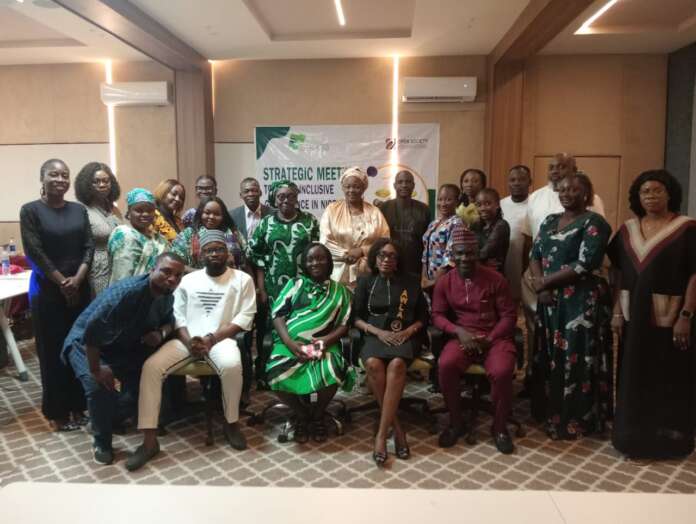
Kpai Kpai, a rural community located in Gosa, Gui Ward, under the Abuja Municipal Area Council (AMAC) of the Federal Capital Territory (FCT), is facing a dire humanitarian crisis.

Home to over 3,000 residents, the community is grappling with a severe water shortage, lacks primary and secondary schools, and has no access to healthcare due to the absence of any medical facilities. As a result, residents are urgently calling on the government to intervene.

During a recent visit by MonITNG, a civic technology organisation that monitors public projects and promotes accountability, the full extent of the community’s hardship was laid bare.

Over 3,000 people rely on a single borehole for water, a borehole that often breaks down and fails to meet the overwhelming demand of the residents.

Residents, including women and children, sometimes wait up to two days to fill a few containers, and when the borehole stops functioning, the community is left without clean water for days.

Beyond water, Kpai Kpai lacks both primary and secondary schools, and there is no healthcare facility in or near the area, according to the report.

The report added that when residents fall ill, they must cross a river using canoes to reach the nearest clinic, a perilous journey, especially during the rainy season when river currents become treacherous.

A female resident of the community who recounted their ordeal said, “Inside Kpai Kpai, we don’t have primary and secondary schools, we don’t have a hospital.

“If we are sick, we have to cross the bridge to the other side (neighbouring community), whereby it is not good. We follow under the bridge or cross over the bridge.

“When it rains, we don’t go anywhere. We sit at one place. We can’t even cross our children. We need school, we need a hospital.”

Pointing at the only borehole which serves as the only source of potable water in the community, she said, “This is the only thing we depend on for good water because we can’t take this big water,” – referring to the dirty, contaminated river in the community.

“If we take (drink) this water, we urinate blood. In fact, when we use it to bathe, we urinate blood. We have a big problem in this community,” she said.

MonITNG said, “This community is in the Federal Capital Territory. Yet it remains excluded from the most basic services and infrastructure. No school. No health post. No road. Just one failing borehole.

“These are not just statistics, they are people. Families. Children. Women who walk long distances daily, waiting hours just to fetch water.”

MonITNG called on the FCT Minister Nyesom Wike and Federal Capital Territory Senator Ireti Kingibe to urgently intervene in what the organisation described as a “systemic abandonment” of the community.

“Their lives are shaped by hardship that should not exist in the capital of Nigeria,” it said.

“We call on FCT Minister Nyesom Wike and Senator Ireti Kingibe to intervene. Kpai Kpai urgently needs more boreholes and access to basic services.”

“Development must reach every part of the FCT, including communities like Kpai Kpai,” it added.

Kpai Kpai’s plight is not an isolated case. Across several rural communities within the FCT, including communities like Gwagwa, Giri, and Jiwa, residents have similarly decried poor access to potable water, lack of schools, and inadequate healthcare infrastructure.

In 2023, residents of the Gaube community in Kuje Area Council protested after years of broken promises on water and roads.

Despite Abuja’s status as Nigeria’s capital and a symbol of national development, stark inequalities remain within its rural districts.

As Nigeria continues to pursue its Sustainable Development Goals (SDGs), particularly SDG 6 (Clean Water and Sanitation), SDG 3 (Good Health and Well-being), and SDG 4 (Quality Education), communities like Kpai Kpai serve as a stark reminder of the work still to be done.

For the residents of Kpai Kpai, falling ill often feels like a death sentence. Their message is clear: they are not asking for luxuries, just the basic amenities that every Nigerian citizen deserves.

Culled from Sahara Reporters

TIPS