Home Blog Page 276

The age of the judicial impostor in Nigeria must end

By Chidi Anselm Odinkalu

“The mind grows old, no less than the body.” Aristotle, The Politics, Book II, Ch. 9, 146 (Penguin Classics, 1981)

A little over two decades ago, away from its perception as a shrine for the resolution of the most rarefied disputes in the country, the Supreme Court of Nigeria played host to a Nigerian drama. With less than two years to go before retirement, a senior justice of that court approached then Chief Justice of Nigeria (CJN), Mohammed Lawal Uwais, with a discovery. A wise, old uncle of his from the village in one of the states of southern Nigeria had just informed him, the Justice disclosed, that there had been an error in the computation of his age as he had, indeed, been born two years later than the age disclosed in his documentation. He sought the consent of CJN Uwais for the rectification of that little error.

The CJN doubted that it was within his power to consent to the rectification sought. But before making up his mind, he had two requests to make of the Justice who approached him. First, he asked that the request be reduced formally into writing and that thereafter it should be circulated to all the other Justices of the court for their comments. This process effectively killed the request. By the time the written application arrived at the desk of the Chief Justice with the comments of his peers, it was clear that his application for age rectification was dead on arrival.

England, from where Nigeria inherited much of the traditions of its judiciary did not always have a compulsory retirement age for judges. The consequences were sometimes grim. Edward Foss tells the story in his Biographia Juridica of Salathiel Lovell, appointed a Baron of the Court of Exchequer “on the verge of ninety years of age” in 1708; whose judicial tenure (which lasted for the next five years) “was distinguished by his want of memory.”

England only introduced the compulsory age of retirement for judges in 1959. Judges appointed before then could serve for life. The last judge in that category was the famous Alfred Thompson Denning. Lord Denning, who had jocularly claimed to have “every Christian virtue, except resignation” was forced to do just that at the age of 83 in 1982 because of “illiberal comments in his declining years.”

By contrast, independent Nigeria always had a retirement age for judges. In a country with notoriously perfunctory attitude to documentation and evidence, however, attitudes to proof of date of birth and age in Nigeria have always been shifty and judges have proved to be avid practitioners in the game of genealogical chicanery. The result sometimes can be both chastening and dramatic.

In a State in southern Nigeria not too long ago, the local youths had to be mobilised on night before a high society funeral to mop up all the posters of the deceased on the road to and around his village, so they could be promptly pulped. The elder brother of the dead man, a serving judge of a state high court, had arrived home for the funeral to the sight of posters announcing the age of his late younger brother as 71 at a time when the judicial retirement age was 65. He was nothing if not genuine in his desire to spare his invited judicial peers due to arrive for the funeral the following morning the agony of the implausibility as to how he could still be a serving judge when his deceased younger brother was already over six years above the judicial age of retirement.

Imo and Yobe States have had a particularly hard time of judges messing about with their age. In Yobe State, two Grand Khadis in succession have suffered the indignity of being caught age racketeering. In 2020, the National Judicial Council, (NJC), found that over two instalments of falsification, Grand Khadi Shu’aibu Talba reduced his age by four years from 1955 to 1959.

Last November, the same NJC found that the man who succeeded Talba as Grand Khadi of Yobe State, Babagana Mahdi, was at least eight years over the eligible age at the time of his appointment into the position, having falsified his own age by at least 12 years. In effect, the NJC’s decision to approve his appointment into the office was unlawful.

On 26 June 2025, the NJC recommended the compulsory retirement of five judges of the High Court of Imo State and four judges of the Customary Court of Appeal of the same state whom it “found to have altered their dates of birth in their official records in order to confer on themselves the undue advantage of staying longer in service.”

This was the latest instalment in a growing scandal of judicial-age racketeering in the state. Last November, the NJC similarly required the compulsory retirement of the State Chief Judge, Theresa Chikeka, whom it found to have falsified her age by two years. In her case as with the Grand Khadis of Yobe State, the Council also ordered the refund to the public purse of the excess of emoluments paid to them for the years during which they should not have continued to serve as judges.

The judicial body count suggests that this practice of age falsification among judges could be rather more widespread. In July 2013, the NJC ordered the compulsory retirement of Shadrack Nwanosike, then acting Chief Judge of Abia State, for age falsification.

Three years later, in 2016, it was the turn of Idris Evuti and Tanko Yusuf Usman, both judges of the High Court of Niger State, whom it found to have changed their ages by two and a half years and one year respectively.

In 2018, the NJC retired Joshua Ikede, a judge of the High Court of Delta State, whom it similarly found guilty of age falsification.

In 2020, it was the turn of  Francis Abosi, Acting President of the Customary Court of Appeal of Imo State who altered his age by eight years; and Abdulkareem Babatunde Abdulrasaq, judge of the High Court of Ogun State who falsified his age by two.

Tanko Muhammad, the CJN who presided over the November 2020 decision to sack Abdulrasaq, Abosi, and Talba from the bench, was himself the focus of serious but unresolved allegations of age falsification. In May 2019, the High Court of the Federal Capital Territory dismissed a case by Tochi Michael whose claim was that CJN Muhammad had falsely altered his date of birth from 31 December 1950 to 31 December 1953.

The court held that Tochi lacked the standing to bring the case having failed to show how he “has been injured by the defendant.” In other words, the court decided that it did not have jurisdiction over the case. As such, it disavowed the power to delve into Tochi’s claims and, therefore, lacked the power to dismiss it. Yet, Danlami Senchi, the judge who sat over the matter, didn’t just dismiss the case, he imposed punitive costs Tochi and referred his lawyer for disciplinary investigation ultimately by the same CJN whose age was said to have been falsified.

In June 2022, Tanko Muhammad was forced by “deteriorating health condition” to resign as CJN. He has hardly been seen in public since then.

A judge who sits beyond the lawful judicial age is a judicial impostor. The costs on society and litigants could be colossal. It is a crime of fraud and a theft of judicial salary. Even worse, the person afflicts the judicial process with corrosive reputational hazards.

The High Court judgment in the case of CJN Muhammad felt like a cover-up. It turns out that Tochi’s claim was, in fact, very well founded. Tonnie Iredia points out that “before Tanko Muhammad became a judicial officer, all his records including WAEC showed that he was born in 1950 and not 1953.” The NJC can no longer afford to be half-hearted on the issue of judicial age racketeering. It needs a more systematic response.

A lawyer and a teacher, Odinkalu can be reached at [email protected]

The views expressed by contributors are strictly personal and not of Law & Society Magazine.

Angelique Kidjo set to make history as first African on Hollywood walk of fame

Grammy-winning Beninese singer Angelique Kidjo is about to make history as the first African artist to be honoured with a star on the Hollywood Walk of Fame.

Kidjo was recently named among the 2026 Hollywood Walk of Fame honorees announced by the Hollywood Chamber of Commerce.

Other notable recipients include American pop star Miley Cyrus, French actor Timothée Chalamet, and former basketball player turned sports analyst Shaquille O’Neal.

Also honoured are Filipino singer Lea Salonga, French actress Marion Cotillard, Indian actress Deepika Padukone, British actress Emily Blunt, and Canadian actress Rachel McAdams, among others.

Official dates for the star ceremonies are yet to be announced, but honorees have two years to schedule their inductions.

Angélique Kpasseloko Hinto Hounsinou Kandjo Manta Zogbin Kidjo is a Beninese-French singer-songwriter, actress, and activist. Kidjo has won five Grammy Awards and is a 2023 Polar Music Prize laureate. She has released many albums, performed around the world, and frequently collaborated with other artists.

She performed at the Tokyo 2020 Olympic Games Opening Ceremony on July 23, 2021.[4] On September 15, 2021, Time included her in their list of the 100 most influential people in the world.

Kidjo is fluent in five languages: FonFrenchYorùbáGen (Mina) and English. She sings in all of them, and she also has her own personal language, which includes words that serve as song titles such as “Batonga”. Kidjo often uses Benin’s traditional Zilin vocal technique and vocalese.

Angélique Kpasseloko Hinto Hounsinou Kandjo Manta Zogbin Kidjo was born in OuidahFrench Dahomey, in what is now Benin.[9] Her father is from the Fon people of Ouidah and her mother from the Yoruba people. Her father was a musician, and her mother worked as a choreographer and theatre director.[10] She grew up listening to Yoruba and Beninese traditional music, Miriam MakebaHugh MasekelaJames BrownManu DibangoOtis ReddingJimi HendrixFela KutiStevie WonderOsibisa and Santana. By the time she was six, Kidjo was performing with her mother’s theatre troupe giving her an early appreciation for traditional music and dance.

Natasha’s Reinstatement: Senate says court judgment did not override its constitutional powers to discipline members

The Senate has given conditions for the reinstatement of Senator Natasha Akpoti-Uduaghan after a Federal High Court in Abuja nullified the six-month suspension handed down on her by the Senate.

Justice Binta Nyako, in her judgment on Friday, ordered the Senate to reinstate the Kogi Central senator, describing her suspension as excessive.

In March, Akpoti-Uduaghan was suspended by the Red Chamber for six months for alleged gross misconduct, following her face-off with the Senate President, Godswill Akpabio, over the sitting arrangement.

Tensions intensified when Akpoti-Uduaghan, on national television, accused Akpabio of punishing her for rejecting his alleged sexual advances.

The Peoples Democratic Party senator submitted a petition to the Senate, alleging that she was sexually harassed by Akpabio, an allegation the Senate President had since denied.

Akpoti-Uduaghan, in the suit marked FHC/ABJ/CS/384/2025, challenged her suspension in court.

Delivering her judgment on the matter, Justice Nyako faulted the provision of Chapter Eight of the Senate Standing Rules as well as Section 14 of the Legislative Houses, Powers & Privileges Act, declaring both as overreaching.

The court stressed that the two legislations failed to specify the maximum period that a serving lawmaker could be suspended from office.

Justice Nyako stated that while the Senate had the authority to discipline its members, such disciplinary actions must not strip citizens of representation in the National Assembly.

She noted that since the Senate was constitutionally required to sit for only 181 days in a legislative year, Akpoti-Uduaghan’s 180-day suspension amounted to denying the people of Kogi Central effective participation in national governance.

“The court is not saying that the Senate lacks the power to sanction a member. However, such sanctions must not negate the constitutional right of constituents to be represented in parliament,” Justice Nyako ruled.

The court, however, found Akpoti-Uduaghan guilty of contempt over a satirical apology she posted on her Facebook page on April 27.

Justice Nyako held that after reviewing the post and the application before her instituted by the third respondent, she was satisfied that it was linked to the suspension matter before the court and therefore found the plaintiff guilty of contempt.

The judge ordered Akpoti-Uduaghan to publish an apology in two national dailies and on her Facebook page within seven days. She also imposed a fine of N5m.

Reacting to the judgment, the Senate Spokesperson, Yemi Adaramodu, said the Red Chamber would not immediately reinstate the embattled senator.

Adaramodu stated that the court judgment did not override the Senate’s constitutional powers to discipline its members.

“Which judgment are we appealing when they (the court) said the Senate has the right to discipline its erring members? The court has not ousted the Senate’s statutory right to punish any erring senator.

“It was established that the senator in question erred. The court has already told her to go and do some things, like restitution, so after the restitution, the Senate will now sit again and consider the content of that restitution, and that will inform our next line of action,” Adaramodu said.

The Senate, he explained, would only reconvene to deliberate on the matter after Akpoti-Uduaghan had complied with the court’s directives.

“The onus is no more on us now; it is already on her doorstep to go and apologise. Once she does that, then the Senate will sit and determine how to deal with her matter.

“The first reaction now will not be from us, the court has ruled, so once she takes the step to redress and does what the court has directed her to do, then the Senate will sit and look at the content of her reaction as prescribed by the court,” Adaramodu added.

Addressing journalists after the judgment, the Senate counsel, Paul Dauda, SAN, described the ruling as a partial victory for the Senate, particularly on the issue of civil contempt arising from social media posts made during the case.

Dauda said, “The first application filed by the Senate, that no social media posts should have been made, was decided in our favour. The court directed that the satirical apology be taken down and that a proper apology be published in two national dailies. Additionally, damages of five million naira were awarded to be paid to the court.”

On the substantive ruling regarding the suspension, Dauda noted that the Senate’s authority to discipline its members was not in dispute.

“It appears the court affirmed that the Senate, as an institution, has the right to discipline its members. While members are elected to represent constituencies, they are expected to conduct themselves in accordance with the Senate’s standing rules,” he said.

He explained that the court did not order Akpoti-Uduaghan’s reinstatement but merely suggested that the Senate could consider recalling her.

“There was no relief asking for the suspension to be lifted. The judge only made what we call an obiter dictum, a non-binding remark, that the suspension may have been excessive. We will consult with our colleagues, read the full judgment, and respond accordingly,” he added.

Meanwhile, former Vice President Atiku Abubakar has commended Justice Nyako for lifting the suspension of Akpoti-Uduaghan.

In a post shared on his verified X (formerly Twitter) handle on Friday, Atiku also praised Akpoti-Uduaghan for seeking redress in court.

“I commend Justice Binta Nyako of the Federal High Court, Abuja, for the courage in lifting the obnoxious suspension of Senator Natasha Akpoti-Uduaghan (Kogi Central),” he wrote.

“I also hail Sen. Akpoti-Uduaghan for challenging the illegality of her suspension by not sleeping on her rights in a chamber where women are already vulnerable.”

He added that no price should be too high to pay in the pursuit of justice and the assertion of one’s rights.

Nigerian pastor jailed in the US over $4.2m COVID-19 fraud, as Osun monarch forfeits property

A United States District Court has sentenced Edward Oluwasanmi, a Nigerian pastor, to 27 months in prison for his role in a $4.2 million COVID-19 relief fraud scheme. His co-defendant, Joseph Oloyede, a traditional ruler in Osun State, has also forfeited property linked to the crime.

Oluwasanmi was convicted on Counts 1, 11, and 12 of a 13-count indictment and sentenced by Judge Christopher Boyko of the U.S. District Court for the Northern District of Ohio on July 2, 2025. The court also ordered him to forfeit $1.3 million to the U.S. government. His sentences will run concurrently.

The pastor and Oloyede, who holds the title of Apetu of Ipetumodu, were arrested in April 2024 and later charged with conspiracy to commit wire fraud, conspiracy to defraud the U.S. government, money laundering, and engaging in monetary transactions involving criminally derived property.

According to court records obtained by our correspondent, between April 2020 and February 2022, the duo submitted fraudulent Paycheck Protection Programme (PPP) and Economic Injury Disaster Loan (EIDL) applications using falsified tax and wage documents for businesses under their control.

Oluwasanmi reportedly used companies such as Dayspring Transportation Limited, Dayspring Holding Incorporated, and Dayspring Property Incorporated to obtain and misappropriate millions of dollars for personal use.

In February 2025, both defendants entered guilty pleas and submitted plea bargain agreements. While Oluwasanmi has now been sentenced, judgment in Oloyede’s case is still pending, though sources say properties linked to him in the U.S. have already been seized as part of asset forfeiture proceedings.

Are you sure you know what acronyms are? Really?

By Chinua Asuzu

Not every abbreviation is an acronym. Loosely, any shortened form of a word, phrase, or term is an abbreviation. But lawyers, linguists, and scholars draw distinctions between abbreviations, acronyms, clippings, contractions, and initialisms.

An acronym is usually an initialism pronounceable as a word. It’s typically formed from the first letters, parts, or syllables of the full term. Some acronyms are lowercased, others uppercased. Here are examples:

• AIDS (Acquired Immune Deficiency Syndrome)
• ASAP (as soon as possible)
• ATOL (Air Travel Organizers’ Licensing)
• AWOL (absent without leave)
• Benelux (Belgium, Netherlands, and Luxembourg)
• CALL (Computer Assisted Language Learning)
• ICE (Immigration and Customs Enforcement [a wicked US agency])
• Laser (Light Amplification by Stimulated Emission of Radiation)
• LED (light emitting diode)
• NATO (North Atlantic Treaty Organization)
• PIN (Personal Identification Number)
• radar (radio detection and ranging)
• scuba (self-contained underwater breathing apparatus)
• SIM (as in SIM card) (subscriber identification module)
• SLAPP (Strategic Lawsuit Against Public Participation)
• snafu (situation normal, all fucked up)
• sonar (sound navigation and ranging)
• taser (Tom Swift’s electric rifle)
• UNCITRAL (United Nations Commission on International Trade Law)
• WASP (White Anglo-Saxon Protestant)

Any abbreviation that’s not pronounceable as a word AND not formed from the initial parts of the elements of the full term may be a clipping (e.g. “ad” for “advertisement”), contraction (e.g. “don’t” for “do not”), or initialism (e.g. “ATM” for “Automatic Teller Machine.”

FIDA Nigeria, Abuja Branch drums support for passage of the reserved seats for women bill

Press Release

Dear Members, Partners, and Friends of FIDA Nigeria,

The time is now for us to stand united in amplifying the voices of Nigerian women in governance. FIDA Nigeria is championing the Reserved Seats for Women Bill, a pivotal step toward inclusive representation and gender equity in our political space.

We at FIDA Abuja Branch proudly lend our voice to this national campaign and urge you to join us. Let’s raise awareness, influence policy and drive change together!

Show your support by clicking on the link below to personalise the “Reserved Seats For Women’s Bill” flier with your own photograph. Please endorse with a message of support and share across your social media platforms to be a part of this vital movement! Don’t forget to tag FIDA Abuja so we can amplify your voice too.

https://getdp.co/O1G

Together, let’s push for a Nigeria where women’s voices are equally heard and represented at all decision-making tables. 💪🏾💜

#FIDAAbuja

#FIDANigeria

#FIDA4GenderEquity

#SupportTheReservedSeatsforWomenBill

#Reservedseatsbill

#WomenInPolitics

Things Fall Apart –  Obierika and  The Igbo philosophy of balance

'Isi ana adi ato ebe akpolu ya…!’

By Agabaidu C. Jideani

Obierika, a pivotal character in Chinua Achebe‟s Things Fall Apart, embodies a philosophy of balance that resonates deeply with the Igbo worldview and serves as a critical lens through which to explore the novel‟s themes of tradition, colonialism, masculinity, and change. As Okonkwo‟s closest friend and counter-balance, Obierika‟s reflective, measured disposition contrasts sharply with Okonkwo‟s rigid adherence to cultural norms and fear of weakness, offering a nuanced perspective on the complexities of Igbo society and its collision with external forces.

His character reflects the Igbo emphasis on harmony, duality, and equilibrium, navigating the tensions between individual and communal responsibilities, masculine and feminine energies, and tradition and innovation. Through Obierika, Achebe crafts a figure whose philosophical depth illuminates the moral and existential challenges of a society in transition, making him a timeless symbol of resilience and introspection.

In the Igbo worldview, balance is a foundational principle, evident in the culture‟s cosmological, social, and moral frameworks. The Igbo recognize a dualistic universe where opposing forces, human and divine, individual and collective, masculine and feminine, must coexist in harmony. This harmony is exemplified in the saying: “Ndu Mmili, Ndu Azu”. Here, the society seeks to balance sustainability and interdependence such that the survival of the fish and aquatic life is

found within the global need for the survival of the body of water. It is further said amongst the Igbo people that: “Mmili bu ndu Azu, Mana Azu bu Ogo Mmili”; thus, whilst the water sustains the fish, the fish in turn glorifies the water and gives it its essence- thus harmonious interdependence and sustainability is highlighted.

This is further encapsulated in their belief in chi, a personal spirit that shapes one‟s destiny when aligned  with  individual  actions  and  communal  values.  Okonkwo‟s relentless  ambition  and rejection of perceived weakness disrupt this harmony, leading to his alienation and suicide. Obierika, by contrast, exemplifies balance in his relationship with his chi. As a successful, titled man, he achieves wealth and respect without dominating others, reflecting the Igbo ideal of aligning personal effort with collective well-being. His pragmatic decision to sell Okonkwo‟s yams  during  his  friend‟s  seven-year  exile  (Chapter  15)  ensures  economic  stability  for Okonkwo‟s family while respecting communal norms, demonstrating a wisdom that harmonizes individual loyalty with societal expectations.

Obierika’s reflective nature further aligns with the Igbo practice of questioning traditions to maintain moral equilibrium. The Igbo are a people who continually interrogate issues and seek to maintain practicality and effectiveness. It is said amongst them. “Ikenga Adizi Ile Awaa Ya Nku”; thus, when the deity loses its potency, it is discarded. This finds expression in Obierika‟s refusal to take part in the Killing of Ikemfuna, though this was an activity sanctioned by the Oracle, it didn‟t sit well with Obierika, and as a conscientious objector, he refused to take part in it.

The Igbo value righteousness, where actions are judged by their alignment with communal values and divine will, often mediated through institutions like the Oracle of Agbala. Obierika‟s discomfort with harsh customs, such as the abandonment of twins in the Evil Forest, “What crime had they committed?” (Chapter 13), reveals his belief in a higher ethical standard that transcends rigid laws. This critique echoes the Igbo proverb “ Ife Kwulu, Ife Akwudebe ya” loosely  translated  as  “Wherever  something  stands,  something  else  will  stand  beside  it,” indicating the duality of things and emphasizing the need for balance between opposing perspectives. Similarly, his questioning of Okonkwo‟s exile for an accidental killing, “Why should a man suffer so grievously for an offense he had committed inadvertently?” reflects the Igbo practice of weighing tradition against justice, seeking fairness within the framework of nso ani (sacredness of the earth).

The Igbo emphasis on gender balance, where masculine and feminine energies complement each other, is another dimension of Obierika‟s philosophy. The culture venerates masculine qualities like strength and ambition but equally values feminine traits like nurturing and diplomacy, embodied  by  deities  like  Ani,  the  earth  goddess.  Okonkwo‟s hyper-masculine  rejection  of anything “womanly” violates this balance, as seen in his violation of the Week of Peace by beating his wife Ojiugo (Chapter 4), earning communal censure. Obierika, however, integrates both energies. As a titled man, he fulfills masculine roles, yet his compassion is evident in his care for Okonkwo‟s family and his prioritization of his daughter‟s happiness during her bride price negotiation (Chapter 12). Unlike Okonkwo, who imposes his ideals on his son Nwoye, Obierika‟s balanced approach reflects the Igbo ideal of “Nwoke izu ezu” (Manly Completeness), which includes protecting and nurturing the family, not just dominating it.

Communal harmony, maintained through dialogue and consensus, is central to Igbo society, as seen in the umunna (clan assemblies) and the egwugwu, masked spirits who adjudicate disputes impartially. Obierika‟s preference for dialogue over confrontation mirrors this ethos. During Okonkwo‟s exile, he visits Mbanta and discusses the missionaries‟ impact, noting, “It is already too late… Our own men and our sons have joined the ranks of the stranger” (Chapter 20). This reflective approach aligns with the Igbo practice of speaking openly to achieve consensus, prioritizing communal unity over personal ego. His restraint contrasts with Okonkwo‟s impulsive violence, positioning Obierika as a figure who seeks to maintain harmony even in crisis.

The Igbo view of time as cyclical, tied to rhythms like the yam festival, fosters adaptability to change, recognizing that life involves both continuity and transformation. Obierika‟s pragmatic response to British colonialism reflects this perspective. While Okonkwo resists with violence, Obierika observes the clan‟s fragmentation with sorrow but avoids reckless action. His lament “The white man is very clever. He came quietly and peaceably with his religion… Now he has won our brothers” (Chapter 20), reveals an understanding of colonialism‟s insidious mechanisms, akin to a Hegelian view of history where change erodes old structures from within. His care for Okonkwo‟s yams and his final condemnation of the colonial administration “That man was one of the greatest men in Umuofia. You drove him to kill himself” (Chapter 25), demonstrate a commitment to preserving what he can while acknowledging irreversible change, echoing the Igbo proverb about the lizard that praises itself after jumping from the iroko tree.

Philosophically, Obierika’s balance raises questions about agency and inaction. His restraint could be seen as a lack of Nietzschean “will to power,” unlike Okonkwo’s destructive defiance. However, a Taoist reading suggests his passivity reflects an acceptance of life’s natural flow, avoiding the hubris that leads to Okonkwo‟s downfall. His role as a caretaker and witness, preserving Okonkwo‟s legacy and articulating the clan‟s loss, becomes his form of agency, prioritizing endurance over rebellion. This resonates with the Igbo cyclical view, where survival through adaptation ensures future renewal.

Obierika’s universal relevance lies in his embodiment of the human struggle to reconcile personal values with societal norms, particularly in times of cultural upheaval. His grief over Igbo society’s collapse mirrors the experiences of marginalized communities worldwide, while his restraint invites reflection on navigating moral dilemmas when resistance seems futile. As a Socratic figure, he questions without fully rejecting, and as an existentialist precursor, he confronts absurdity yet persists authentically. Through Obierika, Achebe illustrates how the Igbo philosophy of balance, rooted in duality, dialogue, adaptability, and moral reflection, offers a framework for navigating a fractured world, making him a profound symbol of wisdom and resilience in the face of inevitable change.

Obierika was an “Okpaelo” whose philosophy of balance, temperance, and introspection helped to undo knots and ensure sustainability.

Agabaidu Ilinaisaa.

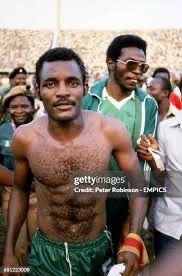
Peter Rufai’s death has added to a long list of July tragedies in Nigerian football

By Kunle Solaja

The death of former Super Eagles goalkeeper Peter Rufai, on July 4, 2025, has once again cast a solemn shadow over July—a month that, over the decades, has become tragically synonymous with the passing of some of Nigeria’s most iconic football figures.

From pioneering coaches and players to football administrators, July seems to carry an eerie pattern of farewells in the Nigerian football community. Sports Village Square recalls the long, haunting list of notable football personalities who have died in this very month:

Jelisavicic Tihomer “Father Tiko” – July 1, 1986

Fondly remembered as the architect of Nigeria’s rise in African football in the 1970s, the Yugoslav coach guided the Green Eagles to third-place finishes at the 1976 and 1978 Africa Cup of Nations.

His era was marked by 45 matches, 24 wins, and a generation of stars. He died in an auto crash in Cancún, Mexico, just two days after the 1986 World Cup ended.

Samuel Ojebode – July 4, 2012

A left fullback and captain of IICC Shooting Stars, Ojebode was part of the legendary 1976 team under Father Tiko. His death marked the near-complete passing of that team’s iconic back four.

Dan Anyiam – July 6, 1977

A pioneer of Nigerian football and vice-captain of the famed 1949 UK Tourists, Anyiam was the first indigenous coach to sign a contract with the Nigeria Football Association (NFA). He was found dead in his car on July 6, 1977.

Muda Lawal – July 6, 1991

The midfield maestro and member of the victorious 1980 AFCON team, Lawal died on the 14th anniversary of Dan Anyiam’s death. He was also a key figure under Father Tiko and a part of IICC’s continental conquests.

Bashorun MKO Abiola – July 7, 1998

Nigeria’s greatest sports philanthropist and financier of several football clubs, including Abiola Babes, MKO Abiola died while in detention. His contribution to football remains unmatched across Africa.

Father Dennis Slattery – July 7, 2003

An Irish missionary and former NFA chairman (1956–1959), Slattery officiated several Challenge Cup finals and was a major figure in school sports development, founding the famed St. Finbarr’s College, Akoka.

Israel Adebajo – July 25, 1969

Founder of the legendary Stationery Stores FC, Adebajo died weeks before his club’s Challenge Cup final appearance. His team was one of the most beloved in Nigeria’s football history.

Enemuo Edozie – July 25, 2004

Edozie Enemuo was the Head of Marketing for the Nigeria Football Association (NFA). He tragically died in a car accident on July 25, 2004, along the Port Harcourt-Aba expressway while travelling to watch a CAF Champions League match between Enyimba and Bakili Bullets. The accident, which involved a collision with a tanker, also claimed the lives of five other people. 

Enemuo’s death was a significant loss to the Nigerian football community. He was described as a dedicated and committed individual, and his death was described as “a very big shock” by NFA spokesman Sam Kaalu. At the time of his death, he was survived by three young children

Chief Emmanuel Iwuanyanwu – July 25, 2024

A political and sports figure, Iwuanyanwu took over Spartans FC and turned it into Iwuanyanwu Nationale, a dominant club in the 1980s and early ’90s. He passed away at 81.

Mathias Obianika – July 27, 1992

The former Enugu Rangers striker made a memorable debut for Nigeria in 1971 with two goals against Upper Volta (now Burkina Faso). He later became Rangers’ chief coach.

Anthony Ikazoboh – July 27, 1999

Former Super Stores player, two-time NFA Chairman and ex-Minister of Sports, Ikazoboh was murdered by armed robbers. He was instrumental in the development of Nigerian football, including the introduction of professional football in 1990.

Akinloye Oyebanji – July 27, 2019

A veteran NTA sports journalist and broadcaster, Oyebanji served for 35 years and retired as Managing Director of NTA Properties. He died after a long illness.

Senator Ifeanyi Ubah – July 27, 2024

Owner of FC IfeanyiUbah and a two-time Senator, Ubah died in a London hospital. He was a key investor in football and politics in the southeast region.

Cyril Okosieme – July 29, 1999

Pioneer goalkeeper for Enugu Rangers and later Bendel Insurance, Okosieme’s legacy lives on through his children who also made significant marks in Nigerian sports.

Tesilimi “Thunder” Balogun – July 30, 1972

The first Nigerian professional footballer in England, Balogun was a legend whose powerful shots earned him the nickname “Thunder.” He remains one of the most iconic names in Nigerian football history.

Sam Garba Okoye – July 31, 1978

A key figure in Nigerian football in the 1960s and ’70s, Okoye was known for his flair and trademark headband. He died in a car accident.


The recurring pattern of loss in July is both painful and puzzling for the Nigerian football community.

With Peter Rufai—the Super Eagles’ 1994 AFCON-winning and World Cup goalkeeper—now added to this sombre roll call, the month continues to be one of mourning and reflection in Nigerian football history.

Source: Sportsvillagesquare

After 12 days in captivity, Bayelsa High Court Judge, Ebiyerin Omukoro regains freedom

After 12 ddays in captivity, Bayelsa State High Court Judge, Hon. Justice Ebiyerin Omukoro, regained his freedom.

Justice Omukoro was presented to newsmen on Thursday evening at the Bayelsa State headquarters of the Department of State Security in Yenagoa.

It was gathered that the kidnappers had demanded N300 million equivalent in foreign currency as ransom, but he was released without payment of ransom.

It was also gathered that his release followed days of joint police tactical operations led by the Commander of the Operation Puff Adder, Mr Chris Nwaogbo.

Some of the suspects involved in the kidnapping were identified and traced to Ekeremor Local Government Area of Bayelsa State where Omukoro hails from.

Security sources hinted that some of the judge’s relations had reached out to the families of his abductors and threatened fire and brimstone if he was not released.

State Director of the Department of State Services, Oluwatosin Ajayi, and Bayelsa State Commissioner of Police, Francis Idu, told newsmen that Omukoro was released without ransom and unhurt.

Looking visibly tired, the judge expressed appreciation to everyone that participated in his rescue efforts saying the last 12 days were confusing.

Omukoro stated: “I was confused in the kidnappers’ den. I was begining to get confused. I still could not come to terms with the fact that I was kidnapped and kept in the forest and exposed to cold. I thank God I was rescue alive.

“I can’t thank God enough. It will always be an unforgettable experience for me. I thank God I came out unscathed.

“The kidnappers told me I should have fallen critically ill. I was subjected to cold. I prayed to God that if I come out, I will testify to his goodness.”

President of the Customary Court of Appeal, Justice Daniel Ayah, said Omukoro’s rescue is a collective effort of the security agencies, the judiciary and the state government.

Ayah pointed out that Bayelsa Chief Judge, Justice Mathilda Ayemieye, was disturbed with the 12-day drama of Omukoro’s kidnapping.

He said that three major suspects were arrested in connection with the kidnap and that the police has identified three other key suspects who are still at large.

Commissioner of Police, Mr. Francis Idu, said the joint efforts of the security agencies abounded towards the rescue of the judge.

State Chairman of the Nigerian Bar Association, Barr. Clement Kekemeke, commended the judiciary and the bar for their calmness and composure during the 12-day abduction of the judge.

“We embarked on court boycott and downed tools. Everyone played their roles and it tells us that in time of trouble, we should be united,” Kekemeke said.

Bayelsa State Commissioner for Information, Orientation and Strategy, Mrs Ebiuwou Koku-Obiyai, expressed joy at the release of the abducted judge, saying his safe release has vindicated the state government and affirmed the state as a haven.

Koku-Obiyai pointed out that despite the attempts by propagandists to rubbish the efforts of the state government in terms of investment in security, the security agencies rose up to the occasion by ensuring that he was rescued unhurt.

She said, “It is a triumph that the security agencies are working harmoniously with the state government. Bayelsa has invested so much in security.”

Independence Day Celebrations: U.S. shuts Lagos Consulate Office, Abuja Embassy

The United States Embassy in Abuja and the Consulate General in Lagos will be closed on Friday, July 4, 2025, in observance of U.S. Independence Day.
Former Nasarawa governor Tanko Al-Makura replaces Idris Olorunnimbe as UBEC chairman
The announcement was made by the U.S. Mission in Nigeria on Thursday.
Former Nasarawa governor Tanko Al-Makura replaces Idris Olorunnimbe as UBEC chairman
The closure marks the annual commemoration of the United States’ declaration of independence from British rule in 1776, a significant national holiday celebrated with patriotic events, fireworks, and public gatherings across the U.S.

The U.S. Mission Nigeria shared the announcement via its official X account, stating: “The U.S. Embassy in Abuja and Consulate General in Lagos will be closed on Friday, July 4, 2025, in observance of the U.S. Independence Day.”
BUK appoints Professor Haruna Musa as VC
The statement did not specify whether visa services, passport processing, or other consular activities would be affected, but such closures typically halt non-emergency operations, with services resuming the following business day, Monday, July 7, 2025.

The U.S. Mission in Nigeria, comprising the Embassy in Abuja and the Consulate General in Lagos, plays a pivotal role in fostering diplomatic, economic, and cultural ties between the United States and Nigeria.

The Embassy in Abuja, established following Nigeria’s capital relocation from Lagos in 1991, handles a broad range of diplomatic activities, including high-level engagements with Nigerian government officials, security cooperation, and development initiatives.
Jaiz Bank reports N24.4 billion profit for full-year 2024, on strong top-line income and other operational gains
The Consulate General in Lagos, meanwhile, is a hub for visa processing, American citizen services, and economic partnerships, reflecting Lagos’ status as Nigeria’s commercial capital.

The annual closure for U.S. Independence Day is a standard practice for U.S. diplomatic missions worldwide, symbolizing the nation’s commitment to its founding principles of liberty and democracy.

In Nigeria, the U.S. Mission has historically used such occasions to strengthen bilateral ties, often hosting events or issuing statements that highlight shared values, such as democratic governance and economic collaboration.

U.S. Independence Day, celebrated annually on July 4, commemorates the adoption of the Declaration of Independence by the Continental Congress in 1776.

The holiday is marked by nationwide festivities, including parades, barbecues, concerts, and elaborate firework displays. For U.S. diplomatic missions abroad, it provides an opportunity to engage with host countries through cultural events, receptions, and public diplomacy initiatives.

In previous years, the U.S. Embassy in Nigeria has hosted Independence Day events attended by Nigerian officials, business leaders, and civil society figures, showcasing the strong partnership between the two nations.

The U.S. and Nigeria share a robust partnership, with the U.S. being one of Nigeria’s largest trading partners and a key ally in areas such as security, health, and education.

The U.S. Mission supports initiatives like the President’s Emergency Plan for AIDS Relief (PEPFAR), which has invested billions in Nigeria’s healthcare system, and counterterrorism efforts to combat Boko Haram and other insurgent groups.

Cultural exchanges, such as the Fulbright Program, and economic investments through agencies like the U.S. International Development Finance Corporation further strengthen ties.

PM News

TIPS