A third female prison officer has been convicted for inappropriate relationships with inmates at HMP Five Wells, Northants, United Kingdom.
Aimee Duke, 26, was sentenced to one year in prison after admitting two counts of misconduct in public office at Northampton Crown Court. Investigators found she “interacted inappropriately” with two prisoners, exchanging 248 calls and messages with one inmate over two months and 254 with another. CCTV footage showed Duke emerging from a one-person cell with the prisoners.
Duke was arrested in September 2022, months after the £253 million super-prison opened. She sobbed throughout the court proceedings.
This case follows two similar incidents at HMP Five Wells. Prison officer Toni Cole, 29, was jailed for 12 months in February for trysts with an inmate, while Rachel Stanton, 31, narrowly avoided a prison sentence in July after engaging in a relationship with an armed robber.
The cases have highlighted ongoing concerns about staff misconduct at the new super-prison and the challenges of maintaining security and professional boundaries.
A university law student cried and declared ‘my life is finished’ after being caught travelling without a rail ticket by an inspector on a station footbridge.
The young man was stopped by a South Western Railway revenue protection officer at Clapham Junction station in London and initially claimed he had a valid ticket.
But while claiming his phone was being slow, he secretly bought a ticket in front of the inspector before displaying it and claiming it was purchased on the train.
The officer, however, could see after scanning the man’s ticket that it was purchased during their conversation – and therefore reported him to colleagues for prosecution.
Life Bencher and Senior Advocate of Nigeria, Mike Ozekhome, SAN who was a speaker at the just concluded Annual General Conference (AGC) of the Nigerian Bar Association (NBA) in Enugu, has declared that national security is a lie.
“The reality is that their national security is actually government security. It’s not security for you and I…”
Plant to create 5,000 jobs, produce 100 cubic metres of oxygen, and 45 cubic metres of acetylene per hour
Remodels Hotel Presidential, others
Governor Peter Mbahof Enugu State on Thursday, unveiled Nigergas Company Limited, revamped and upgraded by his administration after over 30 years of inaction.
Mbah said Nigergas had so far created direct employment for over 100 skilled and semi-skilled workers, and would further create over 5,000 indirect jobs across distribution, fabrication, transport and supply chain.
Likewise, the governor, on 21 August, reinaugurated the remodelled Hotel Presidential Enugu, built 62 years ago by the former premier of the defunct Eastern Region, Michael Okpara, describing the revival of the edifice as “a homecoming for history.”
He stressed that the revival of Nigergas company, which was established in 1962 as part of Dr. Michael Okpara’s vision after decades of abandonment, was another proof of his administration’s commitment to reviving state-owned moribund assets and grow Enugu State’s economy from $4.4bn to $30bn.
The governor stated, “What we have revived and unveiled today is not simply metal and a network of pipes; it is the restoration of purpose, dignity and productivity to a site that once symbolised Eastern Nigeria’s industrial promise.
“When we speak of the goal to grow our GDP from $4.4bn to $30bn, it is not mere posturing. It is rooted in the conviction that Enugu can become a truly diversified, self-reliant economy, if we muster the will to do things differently to launch us to the future we dream of.”
On Nigergas’ rehabilitation model, capacity, and expansion plan, Mbah said, “We approved a full rehabilitation scheme and a management model that blends public ownership with private-sector performance discipline.
“The intention was clear: retain public ownership, but run the facility on modern, accountable, commercially viable lines.
“So, today, Nigergas returns to production with modernised equipment and clear technical specifications designed to meet immediate healthcare and industry needs.
“The plant’s installed capacity has been upgraded to produce significant volumes of medical and industrial gases, ensuring steady local supply and reducing dependence on distant, expensive suppliers.
“Crucially, the plant will supply liquid oxygen, medical and industrial oxygen, and acetylene gas to our hospitals, welders, agro-processors and manufacturers, improving clinical outcomes and reducing production costs for businesses that are the backbone of local livelihoods.
“The new plant has a capacity to produce 100 cubic metres of oxygen per hour; and 45 cubic metres of acetylene per hour.
“We will soon bring on stream these additional products: nitrogen; argon gas; carbon dioxide; and CNG stations.”
Mbah maintained that Nigergas’ revival would guarantee access to reliable medical oxygen, and save lives, as well as provide on-demand industrial gases to lower operating costs, speed up turnaround, and keep workshops and factories turning.
“These improvements ripple outward: increased industrial activity strengthens our revenue base, and deepens opportunities for MSMEs,” he said.
He commended Managing Director of Enugu State Investment Authority, and the Commissioner for Trade, Investment and Industry, Dr. Sam Ogbu-Nwobodo; the engineering firm, Ten Gas Development Ltd (a division of INDEV GROUP), and the community leaders of Emene for their roles in resurrecting Nigergas.
Ogbu-Nwobodo, on his part, expressed joy that although the firm established by the Okpara administration, in partnership with SiadMachine Impianti, was abandoned for over three decades due to mismanagement, misappropriation of revenue, abuse of company resources, nepotism, and weak corporate governance, Mbah had restored the lost dreams.
Managing Director, Ten Gas Development Ltd., Chief Chike Madueke, stated that the restored Nigergas would provide training and thousands of employments for the youth of the state.
Chairman, Enugu State Traditional Rulers Council, Igwe Samuel Asadu; community leader and health consultant, Dr. Joy Uduji; Chairman of Enugu East Local Government Area, Pastor Beloved Dan Anike; and a businessman, Engr. George Ndubeze Ugwu, also commended Mbah for not only breathing life into dead state-owned assets, but for also building infrastructure that made life better and enabled businesses to thrive.
“You are the Nehemiah of our time. Like Nehemiah, who came and supervised the rebuilding of the walls of Jerusalem, you have also come to rebuild Enugu State,” Uduji said.
On Hotel Presidential reopening, Mbah who praised the former premier for his visionary leadership in building the hotel as a symbol of the Eastern Region, lamented that time and neglect had dimmed the light.
“For about 15years, this glorious edifice stood as affront to our pride and something contrary to what we represent. We came into office with strong pledge to recover what belongs to our people,” Mbah said.
He said that the revival of Hotel Presidential was in line with his campaign promise to recover Enugu’s moribund assets and also grow the state’s economy sevenfold.
“That is why this unveiling is more than opening the doors of a hotel; it is the reopening of Enugu’s confidence. It is a tangible sign that when we say Enugu is open for business, we mean business.
“This hotel is a strategic enabler of our growth plan, comprising the ambitious target to grow Enugu’s economy seven-fold to at least $30 billion and to achieve a zero percent poverty headcount rate,” he said.
He assured that the standards for the hotel’s revamp were truly world-class, because the administration “insisted on this so that when Enugu says ‘welcome’ to its investors, our hospitality infrastructure speaks with the same credibility as our policies.”
According to him, “Our hospitality ecosystem today is simply inspiring: the 5,000-seat International Conference Centre (ICC) now anchors Enugu’s conferencing ambitions; the adjacent 5-star, 345-room ICC Hotel under construction will deliver premium “keys” for large events; Enugu Air, which has given wings to our dreams and announced the scale of our vision to the world; And now, the renewed Hotel Presidential adds a full-service icon back into the mix.
“None of this is a whimsical project; they are connecting dots on a large canvas. These assets are crucial to our aim to welcome up to three million annual tourist visits and to make Enugu the Conferencing Capital of Africa.
“The economic value is already visible. This hotel alone supports hundreds of direct jobs, culinary and events teams, engineering, landscaping, suppliers, and several other opportunities.
“Every conference day books our taxis and CNG buses; every visiting family discovers our art, our music, our cuisine, and our warmth.
“And the signal to investors is even bigger: when government shows it can recover assets, fix the fundamentals, and protect investments, private capital follows. That is why you see momentum across other moribund assets like UPPL, Sunrise Flour Mill, Nigergas; International Conference Centre, and a host of others,” he added.
Speaking, Nollywood veteran actor and movie producer, Kanayo O. Kanayo, said, “It is not praise-singing, security is working here because when I come to make movies here, we usually stay out late into the night at Nike, and we are safe
The just-concluded Nigerian Bar Association (NBA) Annual Conference in Enugu, the Coal City of Nigeria, was one of the most remarkable in recent years, an event that combined intellectual depth, social vibrancy, and memorable hospitality.
I arrived a day before the official commencement on August 21st, eager for what was to come. The conference opened with a sports walk covering several kilometres, followed by a colourful opening ceremony. Although former President Olusegun Obasanjo, who was announced as Chairman, was absent, the Sultan of Sokoto, Sa’ad Abubakar Muhammadu CFR, ably filled the gap. Julius Malema, the firebrand South African politician, gave a stirring keynote address that set the tone for the days ahead.
Across plenary and breakout sessions, delegates engaged with a wide range of issues: human rights, good governance, access to justice, insecurity, gender inclusiveness, alternative dispute resolution mechanisms, and the justiciability of socio-economic rights. These subjects were handled with maturity and intellectual rigour, leaving participants both enlightened and inspired.
Governor Peter Mbah of Enugu State and his team deserve commendation for excellent hospitality. Security was tight, logistics well managed, and the social environment delightful. The famous “mammy market” buzzed with energy, offering an endless array of delicacies – abacha, ugba, ukwa, okpa, ofe onugbu, uha soup, akidi with fish, and an assortment of local drinks. Delegates from all regions of Nigeria immersed themselves fully in the city’s warmth and culture.
Despite the successes, there were concerns. Some delegates questioned the prominence given to new wigs and politically exposed personalities such as Dino Melaye, Adeyanju, and Osita Chidoka. This, they argued, disregarded the profession’s long-standing respect for seniority. Others suggested the theme, “Standing Out, Standing Tall,” may have inspired such choices. Whatever the reason/s, seniority at the bar should be respected by future planners, I plead.
In addition, hotel and transport providers sharply increased prices to exploit the influx of visitors, leaving participants with little option but to comply.
Amid the excitement of the conference, one sombre issue demands urgent attention – the plight of Barrister Bright Ngene, a lawyer and lawmaker-elect for Enugu South Urban Constituency, who has remained incarcerated under questionable circumstances.
His appeal against conviction has suffered delays, though the Attorney-General of Enugu State, Mr. Kingsley Udeh (SAN-designate), assured me that the matter has now been assigned by the Chief Judge and will likely be heard immediately after the vacation.
Still, I plead with Governor Mbah to demonstrate statesmanship by exercising the power of clemency. Releasing Barr. Ngene will not only affirm justice but also allow him to take his rightful place in the State House of Assembly, where his constituents – who reaffirmed their mandate in the recent rerun election – await his representation. Such a step will earn the Governor enduring political goodwill and stand as a rare example of magnanimity in Nigerian politics.
Overall, the 2025 NBA Conference in Enugu was a resounding success. It brought together colleagues from every region, many attending to broaden their horizons and others to see firsthand that the East is far safer and more hospitable than sometimes portrayed in the media.
Special appreciation must go to the NBA President, Afam Osigwe, SAN, the Conference Planning Committee led by Emeka Obegolu, SAN, and the Local Organising Committee chaired by Ikeazor Akaraiwe, SAN, for their outstanding work. Yet, for the NBA to meet global benchmarks, we must look back to the 2019 Lagos Conference under A. B. Mahmoud, SAN, which was coordinated by Prof. Koyinsola Ajayi, SAN. That event – despite its cost, remains the closest to the International Bar Association’s standards and should serve as a guide for the future.
The Enugu 2025 Conference was rich in thrills, lessons, and camaraderie. But its ultimate legacy will, in part, depend on how swiftly the case of Barr. Bright Ngene is resolved. Justice delayed for him is justice denied for his people.
As we look forward to Rivers State hosting the next edition in 2026, let us build on this year’s achievements, correct the lapses, and continue to make the NBA a model of professional excellence and justice.
Long live NBA, Long live Nigeria!
Dr M.O. Ubani, SAN 2025 NBA Enugu Annual Conference Participant.
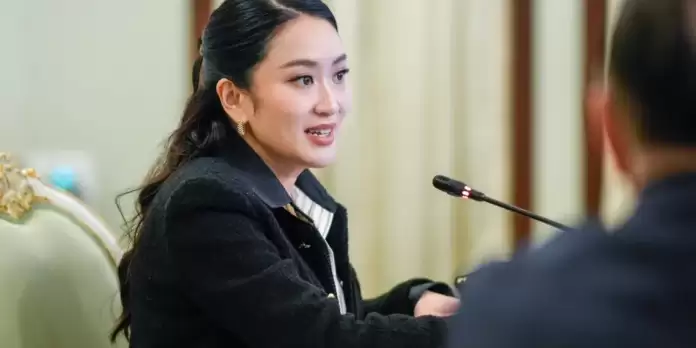
Thailand’s Constitutional Court has removed Prime Minister Paetongtarn Shinawatra from office over ethics violations after only one year in office.
In a verdict issued on Friday, the court ruled that Ms Shinawatra violated ethical rules in the leaked phone call with Cambodian Senate President Hun Sen.
In the phone conversation, which leaked in June, Ms Shinawatra appeared to have criticised a Thai army commander when Thailand and Cambodia were on the brink of a conflict.
She was also heard referring to the former Cambodian prime minister as “uncle” while stating that if he “wants anything, just tell me, and I will take care of it,” according to the BBC.
She criticised her army’s actions in the border clashes that had led to the death of a Cambodian soldier.
These contentious remarks became the centre of the case against her.
The court ruled that she lacked “demonstrable honesty and integrity and had seriously violated or failed to comply with ethical standards during the phone call.”
Ms Shinawatra, who is the youngest person ever to serve as Thailand’s prime minister, at the age of 39, is the sixth leader tied to the billionaire Shinawatra family to be ousted by either the military or the courts in the nation’s prolonged power struggle over the past 17 years.
The ruling plunges Thailand into fresh political uncertainty, amid simmering frustration over stalled reforms and an economy projected to expand by only 2.3 per cent this year.
Attention has now turned towards electing Ms Paetongtarn’s successor, with Thaksin Shinawatra, founder of the ruling Pheu Thai Party, expected to play a central role in behind-the-scenes negotiations among parties and power brokers to keep his party at the helm of the coalition.
The Pheu Thai party has led and won every election in the country since 2001. However, it has also been repeatedly removed from office by coups or court rulings.
Ms Shinawatra, daughter of Mr Shinawatra, was still very new to politics when she was thrust into the spotlight after the surprise dismissal of her predecessor, Srettha Thavisin, by the same court a year ago.
With her dismissal, Deputy Prime Minister Phumtham Wechayachai and the current cabinet will act in a caretaker capacity until the parliament selects a new leader.
There is no set timeline for when the election is likely to be held.
However, five figures are eligible for the premiership. One of them is from the Pheu Thai party. That is, Chaikasem Nitisiri, a 77-year-old former attorney general with limited ministerial experience who has been mainly out of the political space.
Other potential contenders include former Prime Minister Prayuth Chan-ocha, who seized power in a 2014 coup against a Pheu Thai government before retiring from politics, and Anutin Charnvirakul, a deputy prime minister. He recently withdrew his party from Ms Paetongtarn’s coalition following a leaked phone call scandal.
Alleged N2.7b fraud and how Hadi Sirika split aviation contracts among family members
Following the conviction of Equatorial Guinea’s President’s son for illegally selling off an aircraft belonging to the national airline, public affairs analysts have questioned the possibility of a child of a serving senior political office holder getting jailed in Nigeria.
On Tuesday, a judge in Equatorial Guinea ruled that Ruslan Obiang Nsue, one of the sons of President Teodoro Obiang Nguema Mbasogo, must serve six years in jail unless he compensates the state for the missing aircraft, Supreme Court press director Hilario Mitogo told reporters in a WhatsApp message.
The court convicted Obiang Nsue, 50, a former director of national carrier Ceiba Intercontinental, of selling the ATR 72-500 plane to a Spanish company and pocketing the cash.
He was placed under house arrest in 2023 on the order of his half-brother, the country’s vice-president, Teodoro Nguema Obiang Mangue, also a son of the president.
Mitogo said the court ruled that Obiang Nsue could avoid jail if he paid around $255,000 to the airline, along with damages and a fine to the state.
The court acquitted him on separate charges of embezzlement and abuse of office.
Obiang Nsue has also served as secretary of state for sports and youth in the oil-rich central African state, ruled for the past 46 years by his father, 83.
In a separate case targeting his half-brother, a French court handed Obiang Mangue a suspended jail sentence and a $35-million fine in July 2021 after convicting him of embezzling public funds.
Last month, Christopher Adekunle Odofin, the twelfth Prosecution Witness in the trial of the former Minister of Aviation, Hadi Abubakar Sirika, told a Federal Capital Territory (FCT) High Court, Maitama, Abuja, presided over by Justice S.C Oriji, that the defendant used his position as a sitting minister from November 11, 2016, to May 29, 2023, to split federal government aviation contracts among his family members.
Hadi Sirika, being the first defendant, is standing trial alongside his daughter Fatima Hadi Sirika, son-in-law, Hamma Jalal Sule and Al Buraq Global Investment Limited on an amended six-count charge, bordering on abuse of office and money laundering to the tune of N2.7 billion.
Led by prosecution counsel, Rotimi Jacobs, SAN, the witness, who is an investigating officer with the Economic and Financial Crimes Commission, EFCC, disclosed that the contract for the Terminal Building and Apron Expansion was a single contract as designated in Serial No 13 in the Bureau of Public Procurement, BPP’s response to the Federal Ministry of Aviation in a letter dated June 6, 2022.
However, the first defendant, he disclosed, used his influence to split the contract into two and awarded a part to Enginos Nigeria Limited at N1.3 billion and the other part to Al Buraq Global Investment Ltd at N1.4 billion. By awarding the split contract at N1.3 billion and N1.4 billion, respectively, he was said to have avoided reverting to the BPP and Federal Executive Council, FEC for their approvals because both contract figures fall within the threshold of the contract sums he can approve as minister.
Further investigations, the witness said, showed that Enginos Nigeria Ltd, which the defendant awarded the Terminal Building, is owned by his younger brother, Hamad Sirika, while Al Buraq Global Investment Ltd, the fourth defendant, he awarded the Apron Expansion, is owned by his daughter and son-in-law. Both contracts were awarded on the same day, August 18, 2022.
Further in his testimony, the witness revealed that the second defendant, Fatima Hadi Sirika, upon the incorporation of Al Buraq Global Investment Limited, the fourth defendant, on June 7, 2021, became the company’s secretary till February 2024, when she stepped aside following the commencement of criminal investigations by the EFCC.
Also, the second defendant at the point of incorporation of the fourth defendant, the witness said, owned 500,000 (Five Hundred Thousand) out of the 1,000,000 (One Million) shares of the company, until February 2024 and remains a person of significant control of the fourth defendant as signatory to its account, domiciled in Guaranty Trust Bank. In all of these, the second defendant, he said, remained a public servant to date, working in Nigerian National Petroleum Company Limited, NNPCL, owned solely by the federal government, having been engaged in 2020.
The witness also disclosed that Hamma Jalal Sule, the third defendant at the point of incorporation of the fourth defendant on June 17, 202, owned 500,000 shares of the company, till February 2024, with the commencement of the criminal investigation by the EFCC and remains a person of significant control as signatory to its account, domiciled in Zenith Bank. The second and third defendants, he said, got married on December 25, 2020, in Katsina State, and the third defendant started his public service career in 2021 in Nigeria Nuclear Regulatory Authority (NNRA), but resigned in 2023 and switched over to the Nigeria Upstream Petroleum Regulatory Commission (NUPRC) in the same year and has been working in NUPRC to date. “While the two are public servants, they incorporated, owned the fourth defendant and also used the fourth defendant to get government contracts in the Federal Ministry of Aviation, where the second defendant’s father and the third defendant’s father-in-law was the Minister,” the witness said.
Testifying further, the witness said that upon the award of the Apron Expansion contract to Al Buraq Global Investment Limited on November 14, 2022, the Ministry of Aviation under Hadi Sirika, paid N1.3billion with some fractions after tax to the Zenith Bank account of the company, representing 100 percent payment of the contract sum. He also disclosed that upon the receipt of payment, a cumulative sum of N182 million was transferred on different dates to the personal account of the third defendant, with N110 million transferred to a fixed deposit account belonging to the third defendant. The witness further explained that the payment of 100 percent contract sum was solely based on the approval of the first defendant as a sitting Minister of Aviation.
He added that “furthermore, upon payment of N1.3 billion, the sum of N7.4million was transferred to the personal account of the second defendant in Jaiz Bank; N8.2 million was transferred to the salary account of the third defendant in Access Bank Plc, and N500 million was transferred to Trimak Engineering Services Ltd and was never utilized for the contract,” but was expended on another contract awarded to Trimak Engineering Services Ltd from other agencies of the government.
According to the witness, out of the total contract sum of N1.3 billion paid, the sum of over N549 million is still in the company’s account, which has an interim injunction placed on it. The witness further revealed that there were other transfers to individuals and companies unconnected to the execution of the Apron Expansion contract.
Asked about the status of the contract, the witness said, “nothing has been done.”
The extra-judicial statements of the second and third defendants to the EFCC, the witness disclosed, were taken in the presence of their lawyer, Suleiman Usman Kuku, a lawyer in the office of the second defendant.
Objections from counsel to second and third defendant, M.A. Magaji, SAN and Sanusi Musa, SAN, respectively failed to stop the admission of the extra-judicial statements of the defendants in court, for which they had to claim that the statements were not given voluntarily in accordance with Sections 15(4) and 17(2) of the Administration of Criminal Justice Act ACJA.
The judge had to rule for a trial-within-trial to determine if the statements were taken voluntarily and in compliance with Sections 15(4) and 17(2) of ACJA or not, and adjourned the matter till October 27, 28 and 29, 2025, for commencement of trial within trial.
Today, I join the legal community, friends, and well-wishers in celebrating a distinguished personality, an accomplished lawyer, a visionary leader, and a very dear friend — Afamefuna Okeke, Esq., the immediate past Chairman of the Nigerian Bar Association (NBA), Unity Branch.
During his tenure as Chairman, Afamefuna Okeke, Esq. left behind an indelible mark of service and excellence. He worked tirelessly to strengthen the Bar, creating opportunities for young lawyers to thrive, promoting welfare initiatives for members, and advancing the cause of justice with courage and clarity of purpose. His leadership style was inclusive, professional, and deeply inspiring, setting a standard that many continue to admire.
Beyond his sterling professional accomplishments, Afamefuna is a man of remarkable humility and warmth. He has mentored countless young lawyers, always ready to lend his voice, guidance, and support. His generosity of spirit and his passion for uplifting others are qualities that make him not only a respected leader but also a trusted friend and confidant.
As he now steps forward with courage and conviction to serve the Bar at the national level, aspiring for the office of National Secretary of the Nigerian Bar Association, we are reminded of the depth of competence, integrity, and vision he embodies. His candidacy is not just an aspiration — it is a continuation of his lifelong commitment to service, excellence, and progress.
On this special day, I wish him abundant joy, sound health, renewed strength, and divine favour in every sphere of his life. May this year usher in greater achievements, boundless opportunities, and the fulfillment of all his noble aspirations.
Happy Birthday, dear Afamefuna Okeke, Esq.. May your light continue to shine brightly, and may your impact on the legal profession and society remain evergreen.
As Afam Okeke, the immediate past Chair of the Nigerian Bar Association (NBA) Abuja (Unity Bar), turned a year older today, tributes have continued to roll in.
Chief Chris Uche, SAN
A consummate barman. It gives me immense pleasure to join in celebrating Afam Okeke. As former Chair of the Unity Bar, he carried the office with distinction, wisdom, and a steady hand. I wish him the best in this new level.
Dr. Ogwu James Onoja, SAN
Afam is a young man of high integrity. A man committed to professionalism. A man who respects the elders. I can stand with him anytime, any day, and I’m happy to have him as a brother. As he marks his birthday today, it is my prayer that he continues to promote truth and integrity at the bar. We salute a career of service and an example of leadership that continues to inspire.
Aare Muyiwa Akinboro, SAN
I wish Afam a very happy birthday. He has been a mentor to many and always reminds us that the strength of the Bar lies not only in its advocacy but also in its fellowship. Congratulations on your new age.
Abul Ibrahim, SAN, Ex-Chair, NBA Abuja (Unity Bar)
I wish Afam Okeke a very happy birthday. Extremely reliable person; he was my PRO when I was chairman of the bar. I have also been privileged to see him hold various positions at the bar, and he has done well. Very articulate, his sense of sincerity and purposefulness is very high. He is highly responsible. And this is not only an opportunity to wish him well but to pray that God will take him to higher heights. I pray that God will make it easy for him to achieve all the desires of his heart and his journey in life. Once again, I wish him a very happy birthday.
High Chief Ibrahim Eddy Mark, President, Africaj Bar Association (AFBA)
Afam is so affable, well brought up with family values that are now in need. As he grows a year older today, I do wish him the best life can offer, both for him and his amiable wife and children. He has all the years exhibited binding faith in service to adroit friendship and service to his seniors at the Bar. He deserves the best today on his born day anniversary and much more in the years ahead.
Ezinwa Okoroafor, International President of the International Federation of Women Lawyers (FIDA)
Happy Birthday Afam! This is sharing in your joy and wishing you the very best that life can offer today and in the year ahead. Make sure you have lots of fun! 👍🏽
Steve O. Emelieze Esq, FCIArb(UK). Chairman, NBA Abuja Branch (Unity Bar)
Happy Birthday to my dear friend and brother, Afam Okeke Esq. On this special day, I celebrate not just your life but the strength of character, wisdom, and leadership you continue to embody. Your dedication to service and your unwavering commitment to the ideals of justice and fairness stand you out as a true leader, friend and brother.
As you add another year today, I wish you good health, greater heights, and the fulfilment of all your heart’s desires. May your path shine ever brighter, and may this year usher in new blessings, opportunities, and victories for you.
Cheers to more wins ahead, my brother. Enjoy your day
AN OPEN LETTER TO GOVERNOR FRANCIS OGBONNIA NWIFURU
Sir,
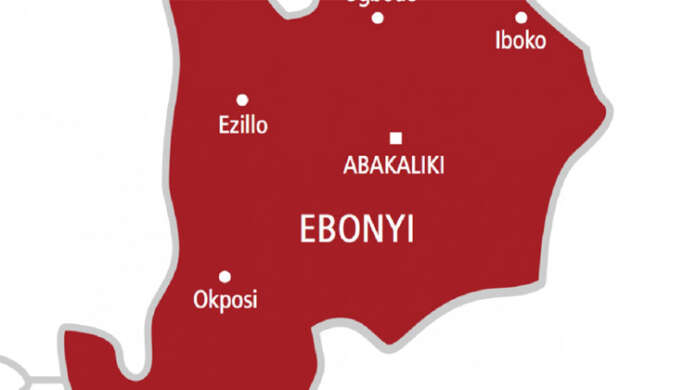
RENEWED ATTACKS, TENSION AND HOSTILITY IN AMASIRI.
I read in Premium Times News that someone is trekking from Lagos State to thank His Excellency in Abakaliki, Ebonyi State for restoring peace in his community, Effium— I am motivated to again write your Excellently, urging him to in like manner, graciously implement the strategy that restored peace in Effium in Amasiri. It is needed urgently.
The “Thank You Trek for restoring peace in Effium“ if not a heist or a superficial political ploy, orchestrated just to redeem the Governor’s lax security effort in Ebonyi State, why have communities in Amasiri not experienced a similar peace restoration to end the continued incessant attacks and killings of their citizens over land disputes?
If the Thank You Trek-A-Thon for peace restoration is to be reckoned as genuine and deserving, it will have to pass as implicit confirmation to selective governance in the State. Otherwise, communities in Amasiri would not be helplessly entwined in security turmoil when the state governor has a potent strategy that has successfully restored peace one of the communities in the state.
Are the people of Amasiri still paying for their choices during the last election?
I understand the Governor to have once blamed them for not overwhelmingly voting for him in the last election. Hence, he vengefully ignored their cry and then wrongly threw everyone in their communities, including the numbers that voted him into the same recycle bin.
May I remind His Excellency that there is resumed unprovoked attacks, hostility, tension and anxiety in Amasiri communities currently, with natives fleeing for safety and every known channel of communication a government having been exhausted by the people with the governor still paying no attention.
If a Trek-A-Thon is all that is required to attract His Excellency to restore peace in the communities, HE is assured of not just a Thank-You-Trek to the Government House—once he restores peace in the Amasiri Communities, praise songs will also be sung in all the radio stations in Nigeria.
Your Excellency, sir, the Effium peace template ( if anything to go by) is urgently needed to restore peace in Amasiri. Indigenes can no longer freely sleep with both eyes closed in their hitherto peaceful communities. There is increased anxiety and hostility. Your Excellency is needed to put politics behind and intervene to save lives.
Our site uses cookies. By clicking “Accept All Cookies”, you direct Law and Society Magazine to store cookies on your device and disclose information in accordance with our Cookie Statement: cookie policyACCEPTREJECT
Privacy & Cookies Policy
Privacy Overview
This website uses cookies to improve your experience while you navigate through the website. Out of these cookies, the cookies that are categorized as necessary are stored on your browser as they are essential for the working of basic functionalities of the website. We also use third-party cookies that help us analyze and understand how you use this website. These cookies will be stored in your browser only with your consent. You also have the option to opt-out of these cookies. But opting out of some of these cookies may have an effect on your browsing experience.
Necessary cookies are absolutely essential for the website to function properly. This category only includes cookies that ensures basic functionalities and security features of the website. These cookies do not store any personal information.
Any cookies that may not be particularly necessary for the website to function and is used specifically to collect user personal data via analytics, ads, other embedded contents are termed as non-necessary cookies. It is mandatory to procure user consent prior to running these cookies on your website.