Home Blog Page 257

As Nigerians groan over poor healthcare, court grants Ex-AMCON boss leave to seek treatment abroad amid pending allegation of ₦76bn fraud

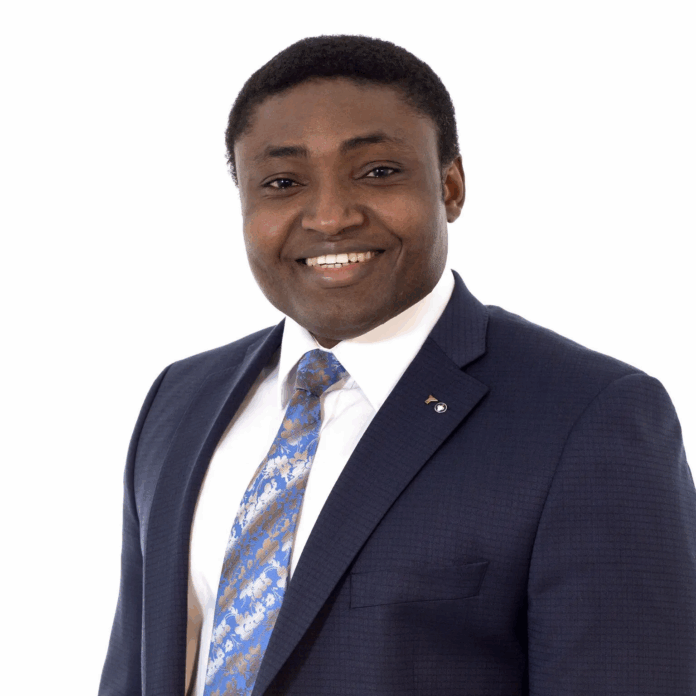
While Nigerians lament the sorry state of healthcare and inability to afford proper healthcare on account of the troubled economy, a Lagos High Court sitting in Ikeja has granted the former Managing Director of Asset Management Corporation of Nigeria (AMCON), Ahmed Kuru, permission to travel abroad for urgent medical treatment.

Justice Mojisola Dada also held that the defendant’s passport be released to enable him to travel to London, United Kingdom, for treatment.

In response to this development, a Senior Advocate of Nigeria, Kunle Edun, said: “Just wondering if every public officer holder in Nigeria, once charged to Court, must fly abroad for medical treatment?

“Can’t the looters have a meeting and resolve to have a world-class hospital in at least 6 of the geo-political zones? The money stolen by one person should be more than enough to do this.

“The Courts must also help Nigerians. When they realise that the Courts are no longer granting them such liberties, they will rush to equip our hospitals. As long as the Courts continue to grant them foreign rest, our hospitals would continue to remain in their bad State.

“I am not aware of any American or Briton facing criminal trial in the U.S or U.K. daring to seek permission of the Court to embark on a foreign medical trip.”

Though the nature of the illness was not disclosed in court, counsel to the defendant, Oyinkan Badejo-Okusanya, told the judge that the ex parte application for her client to be allowed to travel abroad disclosed facts that necessitated “extreme urgency”.

Counsel to the EFCC, Wahab Shittu (SAN), did not object to the application. However, he raised an alarm that the anti-graft Commission has an intelligence report of attempts by the 1st defendant, Kamilu Omokide, the former Receiver Manager of Arik Air Limited, and the 3rd defendant, Captain Roy Ilegbodu, Arik Air’s Chief Executive Officer to dispose of some of the aircraft associated with Arik Air, the subject matter of the criminal proceedings.

He questioned whether the travel application was not an alibi to travel and sell some of the aircraft, which are said to be in France, but urged the court to order status quo ante bellum and to determine the application on its merits.

The former AMCON MD, Ahmed Kuru, is listed as the second defendant. The other defendants are Union Bank of Nigeria PLC and another company, Super Bravo Limited.

While Kuru’s counsel, Okusanya, noted that the alarm sounded by the EFCC counsel did not refer to her client nor affect his application to travel to the UK and not France, counsel to Union Bank, Olalekan Ojo (SAN), urged the court to dismiss the EFCC’s alarm, describing it as mere speculation. He submitted that there was no proof of any intelligence report before the court.

He also insisted that his client was a responsible corporate organisation that would not be involved in anything unethical.

After hearing from all parties, the judge noted the concerns raised by the EFCC counsel but declined to issue any restraining orders to preserve the assets, as no documents were exhibited before the court to warrant the granting of such orders.

In January 2025, the EFCC had arraigned the five defendants before the court on a six-count charge bordering on conspiracy and for allegedly defrauding Arik Airline of ₦76 billion and another $31.5 million.

While Union Bank was charged with one count of making false statements to a public officer, the other four defendants were arraigned on a five-count charge bordering on theft, abuse of office and stealing by dishonestly taking the property of another.

They all pleaded not guilty to the charge, and Justice Dada subsequently granted them bail for ₦20m each, with one surety each in like sum.

The judge had also directed the defendants to submit their international passports to the registrar of the court.

The anti-graft agency alleged that sometime in 2011, Union Bank Nigeria, to cause and/or induce unwarranted sale of Arik Air loans and bank guarantees, made false statements to the Assets Management Cooperation of Nigeria (AMCON) regarding Arik Air Ltd’s performing loans and later transferred the sum of ₦71 billion to AMCON.

The commission also alleged that Kuru, Omokide and Ilegbodu, sometime in 2022, fraudulently converted to the use of NG Eagle Ltd the total sum of ₦4.9 billion.

The anti-graft agency also alleged that the CEO of Arik stole ₦22.5 million by fraudulently converting it to the use of Magashi Ali Mohammed, property of Arik Air Ltd.

The EFCC also alleged that the defendants obtained undue advantage for themselves and intentionally authorised the teardown and destruction of 5N-JEA with Serial No. 15058, valued at 31.5 million dollars, an arbitrary act that was prejudicial to the economic stability of the Federal Republic of Nigeria and Arik Air Limited.

According to the prosecution,  the alleged offences contravene Sections 73, 96, 278(1) and 278(6)  of the Criminal Law of Lagos State 2015.

Nigerians are expressing widespread dissatisfaction with the country’s healthcare system due to a severe shortage of doctors and inadequate infrastructure. This shortage has led to longer wait times, increased strain on existing medical staff, and concerns about the quality of care.

Abbanobi -Eku Onyekachi writes that: “The passing of former President Muhammadu Buhari in a London hospital has reignited discussions about the state of Nigeria’s healthcare system and the implications of leaders seeking medical treatment abroad.”

He further posits that: “It isn’t also not in doubt that when leaders like former late President Buhari travel abroad for medical treatment, it not only highlights the inadequacies of Nigeria’s healthcare system but also puts a strain on the country’s economy. When a one time Senate President Joseph Wayas of Nigeria spent years abroad for medication and died there, and his remains continued to be there, untill through God’s mercy, his remains were able to be brought back for burial in this country, it doesn’t take a child or a novice much time to observe that the cost of medical treatment abroad is often exorbitant, and the loss of foreign exchange can have significant implications for the country’s balance of trade. According to a study, Nigeria’s total merchandise trade had improved to N12.05 trillion, with a trade surplus of N927.2 billion. However, the country’s reliance on imports, including medical equipment and services, can quickly turn this surplus into a deficit.

“Having a perusal at leadership and accountability in Nigeria, the question that has over the time crying for an answer remains, whether Nigeria’s leaders are prioritizing the right areas. With a healthcare system in crisis, it’s imperative that leaders invest in healthcare infrastructure, personnel, and equipment. Instead of relying on foreign medical services, Nigeria should be building a robust healthcare system that can cater to the needs of its citizens.”

Abductors threaten to kill six abducted law students over unpaid ransom

The kidnappers of six Nigerian Law School students have reportedly threatened to execute them if the ransom demanded is not paid.

The students were abducted in Benue State on Saturday, July 26, while travelling from Onitsha, Anambra State, to the Yola campus of the Nigerian Law School in Adamawa State.

They were reportedly travelling to Yola to resume academic activities following their court externship break, with lectures scheduled to recommence on Monday, July 28.

The kidnapped students were identified by a fellow law student, Damilare Adenola, as Rev. Ernest Okafor, Ogbuka Fabian, Nwamma Philip, Okechukwu Obadiegwu, Obalem Emmanuel, and Obiorah David.

A report by The Punch newspaper quoted a student leader at the Yola campus to have said the victims were last heard from shortly before entering a volatile stretch of the road between Benue and Nasarawa states.

Sources at the Yola campus said that the suspected gunmen had made contact with families and colleagues of the victims, initially demanding N20m per student for their release.

However, the demand has since doubled.

A source privy to a phone conversation between the kidnappers and one of the students said on Monday evening that the abductors were now demanding N50m and had issued threats to kill the students if their conditions were not met.

“They said they would kill them if we refused to pay the ransom.

“They warned us not to involve the security operatives. They said they could hear everything happening and insisted that if we wanted them alive, we must stay silent and comply,” the source said.

While the Adamawa State Police Command confirmed it was aware of the abduction, its spokesperson, Yahaya Suleiman, said on Sunday that the command was working with its Benue counterpart to locate and rescue the victims.

However, efforts to reach the spokesperson for the Benue State Police Command, Catherine Anene, were unsuccessful as of the time of filing this report.

This incident marks another tragic chapter in a series of abductions targeting Nigerian Law School students.

In 2022, two students from the Agbani campus in Enugu State were kidnapped while shopping at the Eke Agbani market.

They were later taken to an unknown destination by the armed assailants.

The Punch

Ribadu says Nigeria is safer today than two years ago

Nigeria’s National Security Adviser (NSA), Mallam Nuhu Ribadu, has said that incidents of Boko Haram attacks, banditry, and communal violence in Nigeria’s northern region have significantly reduced under President Bola Tinubu’s administration, compared to the previous government.

Speaking at a two-day interactive session organised by the Sir Ahmadu Bello Memorial Foundation in Kaduna on Tuesday, Ribadu attributed the decline to Tinubu’s directive for a unified approach to national security.

“Kaduna State alone recorded 1,192 killings and over 3,348 kidnappings under the previous administration. In Benue, over 5,000 people lost their lives within the same period,” Ribadu said.

He disclosed that ongoing military operations in the North-West have resulted in the rescue of 11,259 hostages as of May 2025, and that several notorious bandit leaders and their groups have been neutralised in Zamfara, Kaduna, and Katsina states.

The NSA praised Kaduna State Governor, Uba Sani, for adopting a non-kinetic strategy to address unrest in Southern Kaduna, Birnin Gwari, and other flashpoints, describing the approach as “commendable and impactful.”

Northern leaders at the summit included Governor Uba Sani of Kaduna State, Governor Inuwa Yahaya of Gombe, Secretary to the Government of the Federation, Senator George Akume, as well as current and former governors, ministers, service chiefs, and political appointees from the region.

The Sir Ahmadu Bello Memorial Foundation, organisers of the conference, said the session aims to evaluate the Tinubu administration’s impact on northern Nigeria’s socio-economic development and security, serving as a litmus test for federal responsiveness.

Ribadu maintained, “Nigeria is safer today than it was two years ago, and we are seeing the dividends of a coordinated and disciplined security architecture.”

Woman jailed after falsely branding man a ‘rapist and paedophile’ after one night stand

Warrington Magistrates' Court (pictured) heard the pair had a one night stand in December last year after they met in a pub

A woman who falsely branded a man a ‘rapist, a paedophile and a woman beater’ after he dumped her following a one night stand has been jailed. 

Kirsty White, 28, hurled abuse at Andrew Crosby, warned him not to contact police and sent him messages through bank transfers declaring her undying love for him. 

Mr Crosby ended up fleeing his home with his parents and considered taking his own life over the two-month campaign of abuse, a court heard. 

White, from Runcorn, Cheshire, was jailed for 43 weeks this week after she admitted stalking between April and June this year.

Warrington Magistrates’ Court heard the pair had a one-night stand in December last year after they met in a pub.

But Miss Elizabeth Browne, prosecuting, said: ‘The complainant did not want a relationship at that time. 

‘In March 2025, they were going on a night out in Blackpool and the defendant asked Mr Crosby if they were going to be intimate and he said “No”.

‘On April 11, the complainant lent £20 to the defendant but she did not pay it back and he asked her to leave him alone. 

‘The defendant then posted Mr Crosby’s personal details on Facebook, accusing him of being a woman beater.

‘On April 18, she went to Mr Crosby’s address and started shouting towards him, calling him a ‘rapist’ and a ‘paedophile’. 

‘These are all untrue allegations. He called 999, told her to leave him alone and blocked her. 

‘But on April 19, he received messages asking to be unblocked and got a call from a number he did not recognise and a text message saying “Hello. Do not ring the police on me again”.

White was arrested and bailed on the condition she did not contact Mr Crosby.

However, over a ten day period she sent him small amounts of money via online bank transfers with messages in the reference saying: ‘Love you always, Kirsty White’.

She then contacted him over Facebook using different profiles and sent him two parcels.

Now believed to be sofa surfing with friends, Mr Crosby told police: ‘As a result of this crime, I suffer severe anxiety and I am constantly looking behind my back.

‘Kirsty had been staying with her father over the road from me and this has caused my family a lot of stress and put a stain on our relationship. 

‘It caused me to become physically sick due to Kirsty constantly trying to contact me and also trying to get my attention.

‘Kirsty has been messaging my family and friends asking for my address. I am very wary of other people due to this. 

‘It will take a lot to trust anyone. I have been trying to get an appointment with my GP and it is getting to the point where I am becoming suicidal and seeking to get help. 

‘My dad suffers from epilepsy. He had four seizures and has been told they were brought on by stress.

‘My mother has also been in hospital due to the stress caused to her. 

‘I have not been able to sleep over the last few months due to the constant worry of Kirsty turning up at my address or having someone sent around due to what Kirsty posted on Facebook. 

‘It caused me a lot of stress and will affect any relationship I may have.

‘I recently had a panic attack due to seeing someone walk past an address where I was staying. I thought it was Kirsty. It has taken over my life. 

‘I feel I see Kirsty everywhere I go. I should not have to live like this. I feel very vulnerable.

 ‘I have to constantly watch what I am doing, and who I am talking to. I feel she is constantly trying to ruin my life.

‘I have to be very wary even of what shops I go to in case Kirsty is there.’

White had previous convictions for sending indecent or offensive communications and harassment.

Her lawyer Mark Lever said: ‘She is a highly vulnerable young lady who has significant mental health issues. 

‘She has said categorically that she has forgotten and will forget about Mr Crosby. Hopefully, you won’t see Kirsty back before the courts again.’

White was also ordered to pay £400 in compensation to Mr Crosby and was banned from contacting him for five years under the terms of a restraining order.

JP Jeffrey Dodd said: ‘I think everyone is in agreement that this is a really serious offence. 

‘We have been swayed by the victim impact statement. We feel Mr Crosby has had his life significantly impacted by your actions.’

Daily Mail

Talent manager says promiscuity is the biggest challenge for artists after fame

Talent manager Ubi Franklin has said that promiscuity becomes a major issue for many artists once they become successful.

Speaking on the Culture Sonic Podcast, the music executive claimed that both male and female artists struggle with the same challenge, though it often manifests differently.

He explained that it is easier to manage an artist who hasn’t yet had a breakthrough, but once fame enters the picture, discipline becomes a problem.

“The only artist that can be controlled is the one that has not had a hit,” Franklin said.

“Once they have a hit, the first biggest problem for artists is womanising. For female singers, it’s promiscuity as well.”

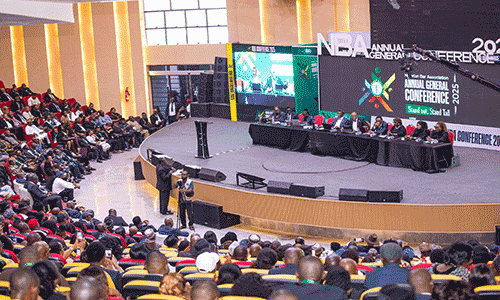
PhotoSpeak: AWLA celebrates Uchenna Ogunedo Akingbade at inauguration as first female NBA Lagos branch chair

Last Friday, members of the African Women Lawyers Association (AWLA), led by their President, Caroline Ibharuneafe Esq., and Vice President, Felicitas Nwaobi, Esq., joined other lawyers to witness and celebrate with Uchenna Ogunedo Akingbade at her swearing-in ceremony as the 28th Chair of the Nigerian Bar Association, Lagos Branch.

Following the formal ceremony of 25 July 2025, Uchenna made history as the first-ever female to hold this high office, dating back to Nigeria’s independence.

After winning the election a few weeks ago, the new chairperson said she was “deeply honoured” by the confidence her fellow Nigerian lawyers had shown in her. She is a partner at Sunesis DLP, a Lagos-headquartered commercial and dispute resolution law firm. 

“The mandate you have given is not one I take lightly,” she said earlier in July, noting that the NBA Lagos Branch has not just elected a Chair, but given life to a vision. “A vision of a Bar where every lawyer, regardless of age, gender, background, or practice area — feels seen, heard, and supported. A Bar that stands tall in dignity, bold in advocacy, and unwavering in professional excellence.”

A Confession Too Late: The scandal of Nigeria’s National Health Act 2014

By Sonnie Ekwowusi

“I wish to express my deep regret for my role in driving the National Health Act 2014 as a Permanent Secretary in the Federal Ministry of Health. At the time, I was unaware of the far-reaching implications of certain clauses, particularly those related to reproductive health. Professor Phillip Njemanze, Head of the Global Pro-life Alliance, brought this to my attention during a courtesy visit to my office, warning about the potential health consequences. Unfortunately, I dismissed his concerns, viewing them as an attempt to undermine our progress in the health sector or as mere politicking.

Now, reflecting on my actions, I realize the gravity of my oversight. If there’s an opportunity for me to share my regrets with the National Assembly and the Nigerian people through a conference or any other platform, I would seize it to clear my conscience. I believe it’s essential to acknowledge the concerns raised by various stakeholders, including Professor Njemanze, and to engage in a constructive dialogue about the Act’s implications”.

The above is a regretful open confession sent by Dr. Linus Akwute to Professor Philip Njemanze today, Sunday, 27th July 2025. As soon as Prof. Njemanze received the message, he wasted no time in forwarding it to me.

Prof. Njemanze, I, and several others vehemently opposed the National Health Bill 2014, which we believed contained vexatious and obnoxious provisions endorsing trafficking in human embryos and organs, as well as organ transplantation. Dr. Akwute, who was then a Permanent Secretary in the Federal Ministry of Health, co-chaired Nigeria’s Technical Working Group for implementing the National Health Act 2014, promoting it as a transformational reform for primary health care delivery and intergovernmental coordination. He was a strong proponent of the Act’s full implementation and often spoke publicly in its defence. In fact, Dr. Akwute positioned himself as one of the leading voices advocating for accountability and strict adherence to the policy frameworks of the National Health Act.

However, as I mentioned earlier, Dr. Akwute wrote to us today, Sunday, 27th July 2025, expressing deep regret over his role in driving the National Health Act 2014, which is now having far-reaching negative repercussions on the Nigerian health system—particularly the clauses related to “reproductive health,” a euphemism for abortion.

To refresh your memory, former President Goodluck Jonathan signed the National Health Bill (NHB) 2014 into law on October 31, 2014. It is worthwhile to briefly recall that long before the signing of the NHB 2014 into law, the Bill had been mired in serious controversy. While some stakeholders criticized it for being largely indistinguishable from the National Health Bill 2008 and the National Health Bill 2012—both of which late President Umaru Musa Yar’Adua and President Jonathan, respectively, refused to sign on grounds that they were perverse, discriminatory, inchoate, and self-serving—others faulted the NHB 2014 for violating certain provisions of the 1999 Constitution, the African Charter on Human and Peoples’ Rights (Ratification and Enforcement) Act, Cap 10, and other international human rights instruments.

You may recall that on Monday, 11th February 2013, the Senate of the Federal Republic of Nigeria organized a Public Hearing on the National Health Bill at Room 231 of the Senate Building. The hearing was well attended by a wide array of stakeholders, including the Nigerian Medical Association (NMA), the National Association of Nigerian Nurses and Midwives (NANNM), the Association of Radiographers of Nigeria (ARN), the Nigerian Society of Physiotherapy (NSP), the Medical and Health Workers’ Union of Nigeria, the Association of Medical Laboratory Scientists of Nigeria (AMLSN), the National Association of Complementary and Alternative Medicine, the Health Reform Foundation of Nigeria, the Pharmaceutical Society of Nigeria, the Institute of Health Administrators of Nigeria, the Nigerian Physiotherapy Association, the Catholic Secretariat of Nigeria, and some Northern traditional rulers.

The Public Hearing was chaired by Senator Arthur Ifeanyi Okowa, who was then the PDP gubernatorial candidate for the 2015 Delta State election. Senator Ike Ekweremadu served as co-chair of the hearing.

Prof. Njemanze and I both submitted memoranda vehemently opposing the National Health Bill.

Prior to the commencement of the Public Hearing, Senator Okowa reassured all stakeholders that their inputs would be taken into account in the final version of the Bill to be adopted by the Senate. To his credit, Senator Okowa did give all stakeholders the opportunity to make their respective submissions. I made my presentation. Prof. Njemanze made his. I remember clearly that almost all the stakeholders present criticized Sections 48, 49, 51, 52, 53, and related provisions of the Bill, which either directly or indirectly endorsed trafficking in human embryos and organs, as well as the sale or trade in human tissues, blood, or blood products from living persons without their informed consent.

Even representatives of the Catholic Bishops Conference of Nigeria held a closed-door meeting with then Health Minister, Prof. Onyebuchi Chukwu, to discuss the vexed provisions. The bishops strongly urged Prof. Chukwu to ensure that those offensive sections were expunged from the Bill.

At the time, Ban Ki-moon, who served as United Nations Secretary-General from 2007 to 2016, was in Abuja lobbying for the passage of the Bill, as Nigeria was reportedly designated as a depot for human parts trafficking globally. Sad

Despite Okowa’s assurances, the final version of the NHB 2014 signed by President Jonathan still contained the aforementioned offensive provisions. Specifically, Section 48(1)(b) of the National Health Act states that a person may remove tissue, blood, or a blood product from another living person without their informed consent for “medical investigation and treatment in emergency cases.” Strangely, the terms “medical investigation” and “treatment in emergency cases” were never clearly defined in the version of the Bill signed into law by ex-President Jonathan.

The implication of this is that anybody, under the pretext of carrying out “medical investigations” or “treatment in emergency cases,” could waylay any non-consenting living person and forcefully remove his or her tissue, blood, or blood product. This could obviously lead to willful bodily injury or even the murder of a human being. Furthermore, it may lead to an increase in human tissue trafficking in Nigeria. Wealthy human-parts merchants in Europe and America, who trade in the tissues of living human beings in Nigeria, will now have a legal justification to perpetuate their illegal activities in Nigeria.

Section 48(2) of the NHB 2014 states that “a person shall not remove ’tissue’ which is not replaceable by natural processes from a person younger than 18 years.” Clearly, this implies that tissue replaceable by natural processes may be removed from individuals aged 18 and above. Section 49 is ambiguously worded and could be grossly abused. It states that a person shall use tissue removed, or blood or blood products withdrawn from a living person, only for such medical or dental purposes as may be prescribed. However, the terms “tissue” and “medical or dental purposes” are not defined in the interpretation section of the Act. This means that anyone could remove any human part under the guise of fulfilling some undefined “medical or dental purpose.”

Section 48(2) permits the removal of tissue from a person over the age of 18, but the section lacks a consent clause. This implies that under the pretense of medical investigation, tissue may be removed from any adult without their informed consent.

Sections 51, 52, and 53 are even more alarming. Section 51 permits the removal of tissue or organs from a living person for transplantation into another living person, without any consent clause. The only requirement is that the removal must occur in a hospital authorized for such purposes or with the written authority of a medical practitioner in charge of clinical services. Section 52 authorizes a registered medical practitioner or dentist to carry out such procedures. Section 53 permits the sale or trade of human tissues such as female egg cells, sperm, and corneas, provided that the payments made are considered “reasonable” and are conducted within an appropriate health establishment.

The cardinal rule of statutory interpretation in Nigeria is that where the language of a statute is clear and unambiguous, the court must give effect to that meaning without inferring any other interpretation. This principle was upheld in cases such as IBWA Ltd v. Imano Ltd(1988) 3 NWLR 633 at 660 and Savannah Bank Ltd & Ors v. Ajilo & Ors (1987) 2 NWLR 421. Therefore, the language of Sections 48 and 51 of the National Health Act must be understood as written.

It is my humble view that Sections 48(1)(b), 48(2), 49, 51, 52, and 53 of the National Health Act, which permit the removal of tissue, blood, or blood products from a living person without their informed consent for “medical investigations” or “emergency treatment,” and which authorize the sale and trade of human tissues and blood products, are in violation of Sections 33 (right to life), 34 (right to dignity of the human person), 37 (right to privacy), and 38 (freedom of thought, conscience, and religion) of the 1999 Constitution, as well as Articles 2, 4, 5, 6, and 8 of the African Charter on Human and Peoples’ Rights (Ratification and Enforcement) Act, Cap 10.

Under these sections of the National Health Act, a Nigerian medical practitioner or dentist could, upon receiving payment from a wealthy foreign merchant, remove tissue, blood, or an organ from a living Nigerian without that person’s informed consent for transplantation into the foreigner. This could lead to rampant cases of the theft of human tissues and organs and the sale of women’s eggs in Nigeria. It would even be legal to remove a kidney from a living Nigerian without consent and transplant it into a paying foreign recipient. Such actions would only serve to expand Nigeria’s already thriving black market in human parts.

Owing to widespread poverty, some relatives of patients, in collusion with unethical medical professionals, may begin to sell off vital body parts of their living patients without obtaining the patients’ informed consent.

Therefore, Sections 48(1)(b), 48(2), 49, 51, 52, and 53 of the National Health Act are in flagrant violation of Sections 33, 34, 37, and 38 of the 1999 Constitution, as well as Articles 2, 4, 5, 6, and 8 of the African Charter on Human and Peoples’ Rights.

It is noteworthy that among all the fundamental rights provisions in the 1999 Constitution, only those under Section 34 are granted in absolute terms. Not even a state of emergency or war permits derogation from the prohibition against torture, inhuman treatment, slavery, and servitude. While rights under Sections 37 and 38 may be curtailed under Section 45(1) in the interest of defence, public safety, order, morality, or public health, or to protect the rights of others, the non-consensual removal of tissues or organs for transplantation cannot be considered a law reasonably justifiable in a democratic society. Indeed, the continued retention of Sections 48(1)(b), 48(2), 49, 51, 52, and 53 in the National Health Act threatens to exacerbate the insecurity crisis in Nigeria.

More importantly, as I earlier noted, Sections 48(1)(b), 48(2), 49, 51, 52, and 53 of the National Health Act are inconsistent with Sections 33, 34, 37, and 38 of the 1999 Constitution, as well as Articles 2, 4, 5, 6, and 8 of the African Charter on Human and Peoples’ Rights (Ratification and Enforcement) Act, Cap 10.

Relying on the case of Denloye v. Medical & Dental Practitioners Disciplinary Tribunal, the Nigerian Supreme Court held in Medical and Dental Practitioners Disciplinary Tribunal v. Dr. John Emewulu Nicholas Okonkwo (2002) AHRLR 159 that failure to obtain a patient’s informed consent before administering a blood transfusion constitutes a violation of the patient’s fundamental human rights to privacy (Section 37) and to freedom of religion and conscience (Section 38).

The Supreme Court held that a patient’s constitutional right to object to medical treatment—or, specifically in this case, to the removal of his tissue, blood, blood products, or organs—is rooted in the fundamental rights protected under the 1999 Constitution, namely:

  1. The right to privacy – Section 37;
  2. The right to freedom of thought, conscience, and religion – Section 38.

The Court further stated that the right to privacy “implies a right to protect one’s thought, conscience, or religious belief and practice from coercive and unjustified intrusion; and one’s body from unauthorized invasion.” The right to freedom of thought, conscience, and religion, it continued, includes “a right not to be prevented, without lawful justification, from choosing the course of one’s life, fashioned on what one believes in, and a right not to be coerced into acting contrary to religious belief.” These freedoms are limited only when they infringe on the rights of others or threaten public welfare or health.

In sum, the rights to privacy and to freedom of thought, conscience, and religion guarantee that an individual should be left alone to choose the course of his life—unless a clear and compelling overriding state interest justifies otherwise.

Under English law, the consent of a living person to medical treatment or to the removal of any part of his body is absolutely mandatory. It is a violation of medical ethics to remove a living person’s organ without his or her consent. In fact, such a person may maintain an action in tort for damages for trespass to the person against a medical practitioner or hospital for removing tissue, blood, or any body part without consent.

See Wells v. Surrey AHA(1978). Even where consent has been obtained, it is the duty of the medical practitioner—said Justice Bristow in Chatterton v. Gerson (1980)—to explain in advance what is intended and its medical implications, in a manner consistent with what a careful and responsible doctor in similar circumstances would do. If the doctor claims that the procedure was performed in a medical emergency, the burden of proving that an emergency existed rests with him—and this may be difficult to establish.

The argument advanced by proponents of Sections 48(1)(b), 48(2), 49, 51, 52, and 53 of the National Health Act—that since the sale or trade in human parts is now a thriving business in Nigeria, it is better to regulate it than to ban it outright to ensure only authorized persons engage in it—is fundamentally flawed.

First, a society does not regulate a crime simply because it is widely committed. For instance, a society cannot regulate the heinous crime of armed robbery merely because it has become rampant.

Second, given Nigeria’s ineffective policing, weak judicial oversight, and poor regulatory enforcement, attempts to regulate the sale or trade of human parts are likely to be futile.

Third, Section 21(a) of the 1999 Constitution enjoins the State to protect, preserve, and promote Nigerian culture.

Fourth—and more importantly—under Section 4(2) of the 1999 Constitution, the National Assembly is empowered to make laws for the peace, order, and good governance of Nigeria. That means making laws that reflect the country’s social and religious realities. Trading in or selling human parts is not part of Nigerian culture.

Laws must align with the values of the people. Every country seeks to protect what it holds dear—its cherished values. It is self-destructive to import alien practices and lifestyles into Nigeria and attempt to impose them as law under the guise of fulfilling international obligations.

As Professor John Ademola Yakubu argues in his book Who Gives the Law? Determining the Jurisprudential Question, the only way to avoid chaos in a society is for the legislature to make laws that reflect the values and aspirations of the people.

It is a major scandal that in a country like Nigeria—where countless patients are dying due to lack of access to basic primary healthcare—our National Health Act is creating a leeway for trading in human tissues and organs. I do not understand why we cannot get our priorities right in this country.

Therefore, to the extent that the National Health Act is inconsistent with the 1999 Constitution, which is the supreme law of the land, it is null, void, and unenforceable. In Military Governor of Ondo State & Others v. Adewumi (1988) 3 NWLR 280, Justice Nnaemeka-Agu (of blessed memory) held that the Constitution is the grundnorm—the fundamental or organic law of the land. Similarly, in *Nafiu Rabiu v. State, Justice Udo Udoma emphasized that the Nigerian Constitution is the supreme law and must not be treated as if it were an ordinary statute passed by the legislature.

All other laws derive their validity from the Constitution. Any law that is inconsistent with the provisions of the Constitution is void to the extent of its inconsistency. Nigerian courts, in the exercise of their judicial powers, are empowered to declare any legislation of the National Assembly that contravenes the 1999 Constitution invalid and unconstitutional—whether the contravention is substantive or procedural, or whether it merely interferes with any constitutional fundamental, including guaranteed rights, federalism, or the constitutionally recognized principle of separation of powers.

(See the pronouncements of Justices Fatayi-Williams, Bello, Idigbe, Obaseki, Eso, Nnamani, and Uwais in Attorney-General of Bendel State v. Attorney-General of the Federation & Others). Also, in M.O. Oloyo v. B.A. Alegbe, Speaker, Bendel State House of Assembly (1985) 6 NCLR 61 at 80, Justice Kayode Eso stated:

“The Constitution of the Federal Republic of Nigeria 1979 is not intended to be a merely academic model Constitution. It is a pragmatic Constitution made for Nigerians, by Nigerians, and by a process of constitution-making which is expected to have benefited from the experience of this country under previous Constitutions and to provide, as much as possible, a panacea for the ills of the past.”

In light of the foregoing, urgent steps must be taken to amend the National Health Act to bring it into conformity with the 1999 Constitution. Until such an amendment is effected, the National Health Act remains unconstitutional and, therefore, unenforceable. The Federal Ministry of Health in Abuja is in dire need of reform.

In a constitutional democracy, sovereignty resides with the people. That means leaders must govern with the consent of the governed. Once that consent is absent, genuine democracy is lost. The American Founding Fathers aptly stated that:

“Governments are instituted among men, deriving their just powers from the consent of the governed.”

The Tinubu administration should be reminded that access to affordable healthcare is a constitutional right—not a privilege. By virtue of Section 17 of the 1999 Constitution, the government is duty-bound to improve the welfare of Nigerian citizens by ensuring they have access to adequate medical and health facilities. If this obligation is fulfilled, the billions of Naira wasted annually on medical tourism could be saved.

CONCLUDED

The views expressed by contributors are strictly personal and not of Law & Society Magazine.

Alleged Misrepresentation: LPDC urged to probe promoters of Nigerian Law Society

An association led by certain aggrieved lawyers have asked the Legal Practitioners Disciplinary Committee (LPDC) to investigate the promoters of the Nigerian Law Society (NLS) over alleged misconduct and misrepresentation.

The request was contained in a petition forwarded to the LPDC by a civic association, Abade-Toru Mangal Community Development Initiative. The petition, dated 25 July 2025, was signed by Comrade George Perewei Wilcox-Idika and Ambassador Gloria Nkechinyere Onyeabor, Executive Chairman and Executive Secretary, respectively.

Titled ‘Petition to the Legal Practitioners Disciplinary Committee (LPDC) against the promoters of the purported Nigerian Law Society (NLS)’, the petition alleged that the promoters engaged in professional misconduct, misrepresentation, and conduct unbecoming of legal practitioners in the promotion and operation of the Nigerian Law Society.

The petition urged the LPDC to investigate the conduct of “certain legal practitioners who have been publicly parading themselves as national officers and promoters of a purported association known as the Nigerian Law Society (NLS), an entity which the Corporate Affairs Commission (CAC) has refused to register as an incorporated trustee and which, despite being unregistered, is actively misleading members of the legal profession.”

Setting out the background and substance of the complaint, the petition stated: “The Nigerian Law Society (NLS) and its promoters are currently embroiled in litigation with the CAC over the latter’s refusal to approve its registration as an incorporated trustee.

“Nevertheless, these individuals have continued to represent the NLS as a legitimate professional body, conducting national elections, building an online presence (https://www.nls.org.ng), and unlawfully recruiting unsuspecting members of the legal profession, especially young lawyers, into an unrecognised and unregulated structure.”

According to the petition, “of notable concern is the fact that the actions were undertaken in full knowledge of the NLS’s unregistered status. Such representation creates confusion and is capable of bringing the legal profession into disrepute, and innocent lawyers are being misled into joining a body which may render them liable to professional sanctions or delisting from the Nigerian Bar Association, as allegedly occurred in the case of a former NBA Vice President in 2024.”

The petition listed some legal practitioners as promoters of the NLS, including Chief Mela Audu Nunghe, SAN; Nimi Walson-Jack, Vice President (South), NLS; Abdulqadir Sani, Vice President (North), NLS; Steve Nwankwo, National Publicity Secretary, NLS; Niyi Adedeji, Welfare Secretary, NLS; and Chief J.K. Gadzama, SAN, as a financier and supporter of the NLS.

The petition noted that “on 23rd July 2025, the NLS conducted purported national elections and published a voters list on their website — a clear indication of impersonating a legal body.

“These actions violate the principles of professional ethics, including Rule 1 and Rule 55 of the Rules of Professional Conduct for Legal Practitioners 2007, which require lawyers to maintain the honour and unity of the legal profession.”

The petition urged the LPDC to investigate the conduct of the concerned legal practitioners in line with the provisions of the Legal Practitioners Act and Rules of Professional Conduct. It also called on the LPDC to issue an appropriate directive or warning regarding the status of the Nigerian Law Society and the potential consequences of continued misrepresentation.

The LPDC was further asked to impose disciplinary sanctions, if it finds merit in the allegations, in accordance with due process.

Similarly, the petition urged the LPDC to protect unsuspecting lawyers, particularly young members of the Bar, who may be misled by the promoters.

Time for Parliamentary Diplomacy as a Mandatory REFRESHER Course for Akpabio, His Lawyers and The 108 Nigerian Senators: In Praise of The Institute for Legislative Studies, University of Abuja

By Dr. Tonye Clinton Jaja

On Thursday 24th July 2024, it was reported that there was an altercation between the Senate President, AKPABIO and the Majority Leader of the Senate, named Senator Michael Opeyemi Bamidele (MOB).

Disputes and conflicts are inevitable in the course of interactions between humans, legislators and Legislatures or other government institutions.

However, it is the ability to manage and RESOLVE these disputes in an amicable manner that provides evidence of capable leadership of legislative institutions.

This is what is called PARLIAMENTARY DIPLOMACY.

For example, as evidence of his parliamentary diplomacy skills, the Rt. Hon. Speaker of the House of Representatives, Rt. Hon. Tajudeen Abbas has successfully managed his relationship and interactions with his Deputy Speaker and Majority Leader of the House of Representatives.

Not many Nigerians are aware of the frictions and stresses arising from seeming acts of insubordination and embezzlement of public funds by his subordinates.

As a true leader, the Speaker of the House of Representatives has reprimanded these subordinates in private, away from public view.

To the contrary, the President of the Senate, has been embroiled in public spats with Senator Natasha Akpoti-Uduaghan and now the Senate Majority Leader.

Regarding the altercation of the 24th July 2025, it was reported as follows:

“The senator regretted that the rift between Natasha/Akpabio “has consumed the goodwill of the senate before the public,” adding that Senator Opeyemi has “threatened to quit his position if Akpabio continues to act autocratically.”

The purpose of this write-up is to encourage the Senate President to spend this period of recess to undertake a mandatory REFRESHER Course in Parliamentary Diplomacy.

This is a course that I wrote the curriculum for when I was first appointed as an Adjunct Lecturer at the Institute for Legislative Studies, University of Abuja in the year 2018.

It appears that this Institute for Legislative Studies, University of Abuja is the only Nigerian institution that offers this course.

I offer myself to teach this refresher course at no cost to the Senate of the Federal Republic of Nigeria, provided that they provide a venue and my hotel accommodation and airfare costs.

I also had the opportunity to increase my knowledge of this course when later the Inter-Parliamentary Union (IPU) approved my membership of the Inter-Parliamentary Engagement Network (IPEN) which is based at the University of Leeds, United Kingdom.

I was also privileged to work as a consultant with the Czech Republic-Nigeria Parliamentary Friendship Group.

“Parliamentary diplomacy refers to the activities of parliamentarians in promoting their country’s interests and values through international interactions, often complementing traditional diplomatic efforts by the executive branch. It involves dialogue, cooperation, and advocacy on global issues, fostering mutual understanding and influencing foreign policy.”

It can also refer to the skill set that is necessary for leaders of legislatures to navigate through their tenures.

It is never too late to learn.

The views expressed by contributors are strictly personal and not of Law & Society Magazine.

Batman and Rambo star collapses, dies on a beach

Popular actor Alon Aboutboul has died after collapsing on a beach, local sources confirmed on Tuesday. 

The actor had been swimming in waters off the HaBonim beach strip in northern Israel before returning to shore and collapsing in front of horrified tourists. 

It’s understood that Aboutboul, whose starred in Rambo III and Batman epic The Dark Knight Rises, complained of feeling unwell immediately after returning to the beach. 

Click here to continue reading.

TIPS