The Nigerian Bar Association – Institute of Continuing Legal Education (NBA-ICLE) has announced that every lawyer must obtain at least five (5) Continuing Professional Development (CPD) points to renew their practice licences and obtain official seals for the 2026 legal year.
This new requirement reflects a global shift in professional regulation, where continuing education is a condition for maintaining active practice. Jurisdictions such as the United Kingdom, United States, and South Africa have long enforced similar standards, ensuring lawyers remain equipped to meet the demands of evolving legal practice.
What CPD Means CPD, or Continuing Professional Development, refers to structured learning programmes designed to expand lawyers’ knowledge, sharpen practice skills, and reinforce ethical and professional standards.
In Nigeria, CPD points are assigned to accredited training programmes based on their duration, subject matter, and relevance. For example, a two-hour structured session may qualify for one CPD point. Lawyers are required to accumulate and document their participation to meet the five-point threshold for licence renewal.
Rationale and Impact Analysts say the NBA-ICLE’s move underscores the importance of professional competence in a fast-changing legal environment. Nigerian lawyers today must grapple with emerging areas such as financial technology regulation, arbitration, energy law, data protection, and ESG compliance.
Mandatory CPD is also expected to enhance the credibility of the Nigerian legal profession, particularly in cross-border transactions where international clients demand demonstrable standards of excellence.
Upcoming Training To support compliance, the NBA-ICLE has scheduled a training session this Friday, attracting one CPD point. Registration details are available via the official portal: Formation Exceptionelle – CPD Training.
Lawyers or their associates are encouraged to register early, as the session contributes directly to the required CPD credits for the 2026 renewal cycle.
Kenya In Kenya, all practising advocates must complete a minimum of 5 CPD units before renewing their annual practising certificates. This requirement is embedded in Kenyan law through Regulation 11 of the Advocates Act (Continuous Professional Development) Regulation, 2004.
The Law Society of Kenya (LSK) oversees the administration of the CPD programme. LSK’s CPD Committee accredits providers, develops a calendar of events, including seminars and lectures, and monitors compliance.
Ghana Ghana is also moving to make professional development a precondition for licence renewal. As announced by the Chief Justice, lawyers will be required to complete at least 12 hours of professional development per year before renewing their practising licences.
This planned requirement is grounded in the Legal Profession (Professional Conduct and Etiquette) Rules, 2020 (Legislative Instrument 2423), and is expected to become law once the Legal Profession Bill is enacted.
Next Steps With less than a year before the renewal window opens, legal practitioners are advised to begin accumulating CPD points steadily to avoid last-minute pressures or potential disruption of practice rights.
It was time to install a new king. The process was simple; consult the oracle and let the gods decide. There were two princes contending the throne, Aderopo and Adebiyi.
Adebiyi was loved by everybody. He was educated, generous and handsome. He rebuilt the village primary school, and every year he bought books and uniforms for the pupils. At 38, Adebiyi was a natural choice for the throne of Ajiwe. So, it was shocking when the oracle picked Aderopo, a colourless prince par excellence, quiet and painfully shy farmer who kept largely to himself.
This is unbelievable!
How could the gods prefer Aderopo to Adebiyi?
I wonder, he does not even look like a prince, least of all a king.
A man of very few words, how will he rule Ajiwe?
Apart from Ajigbotifa, the oracle priest, nobody had anything good to say about the choice of the gods. The ways of the ancestors and the gods were far too complicated for the simple minded Ajiwe people to comprehend, Ajigbo explained day in day out. The gods had spoken and that was final.
So, in spite of the grunts and groans of the villagers, Aderopo was ushered into Ipebi, the sacred royal chambers where he would for 31 days be prepared and tutored on his royal duties and future. The rites, the rituals, the tutorials, all were well under way until one morning, on the 16th day, when the seven priests and priestesses arrived Ipebi and found Aderopo gone.
Where could he have gone?
It was taboo to leave Ipebi in the middle of the royal rites.
Was he kidnapped?
Had the gods killed him?
They did not have to wonder for long. Laditoun, the village busybody put them out of their misery. Aderopo was at home in his wife’s bed, playing husband.
Eeewo!
Taboo!
Abomination!!!
The priests were flabbergasted beyond measure. It had never happened before. What was worse, Aderopo’s explanation was the lamest one ever, coming from a prince who was a short distance away from an ancestral stool.
“I don’t know how it happened. I just felt a strong urge to sleep with my wife. I missed her. I am ready to continue my…”
Continue what? It was over. Aderopo was done. He would never be king, and his descendants would be deleted from the royal lineage.
In shame, Aderopo and his wife left Ajiwe, for good, in the dead of the night.
That was how a prince frittered away the favour of the gods for a romp that could wait. He traded gold for dust because he bowed to the demands of the moment, needs that he would have been able to satisfy languorously and royally for a long, long time.
The story reminded me of Nigerian politicians and their political parties. It particularly reminded me of the 16 years of the Peoples Democratic Party, PDP and how that Nigerian prince left the centre stage in shame and ignominy and became the butt of jokes, kicked to the political curb. Maybe it is because PDP is in the news again. It has lost and is losing steadily the men who made the party what it was. The princes are all gone. The PDP’s royal house is almost empty. Now they are shopping for a prince to go to Ipebi and complete or continue the rites the once respected royal house abandoned on the 16th day.
What did we not tell PDP? In what language did we not warn him? We woke him up in the night. We counseled him at dawn. We told him all his actions and misdeeds would have consequences. He shrugged and threw his 1,500 agbada all over the place, chewing life like new yam. He careened down the path of perdition like a drunken rabbit. But the gods loved him all right and he knew it too. Unfortunately, he loved what he loved more than he respected the gods. Maybe because he could not see them. Perhaps, it was because he knew where the shrines are and the compounds of the priests and priestesses. PDP, like Prince Aderopo, forgot that the people didn’t like him that much and they have a choice and will always do. There is always a choice and the gods do change their minds from time to time.
Never mind the truth that eventually came to light, that the wife of the Prince that was once rejected summoned Esu, the god of mischief, to possess the loins of Aderopo and make him desire his wife over and above the throne of his fathers.
Things like that do happen and we all saw it happen to PDP. That was one party that Nigerians didn’t really want but was the one ushered in by the gods. Or how would Baba Obasanjo have become the President of the Federal Republic of Nigeria if SDP, June 12 election and Bashorun MKO Abiola had lived and thrived?
No way. SDP would have been the party, not PDP. Life happened. Nigerians did not get the man they trooped out to elect. Somehow, the gods intervened and gave a chance to a party that arrived overnight, not the one that was embraced from Yenagoa to Dutse. The gods cracked the nuts of PDP, and he forgot himself. The god of false sense of importance blinded him, and he gave in to the erection that wrecked him.
PDP was already in Ipebi. He had spent 16 days and was as good as king. His wife was already being addressed as queen. Indeed, there was a royal gait in her movement. The town was waiting with bated breath to receive the new second-in-command to the gods. Everything was on the up and up. But PDP, Africa’s largest party and Nigeria’s longest ruling party, got an erection, abandoned the sacred preparatory grove and started dancing to the music of his libido. Instead of doing what was needed to get to where he had to be, PDP succumbed to the suffusing image of his beautiful wife, her irresistible curves lured him home. He traded a lifetime on the throne and a legacy for generations coming after him for a few minutes in the warm bosom of his curvaceous wife. In no time it was over. The day broke and before you could say “PDP Power!”, all that power and clout was gone. PDP was no longer a prince or king. In disgrace, he had to leave. Overnight, the royal scion was out in the cold, outside the chambers and corridors of power, alone in the forest where all kinds of birds pissed on his head and animals hissed at him.
PDP went into coma. He didn’t die like Prince Aderopo of Ajiwe. He is one lucky son of a gun in spite of the persecution and disgrace, he gets a second chance to take a second shot at the throne. But will he do what is right? Has he gotten over his predilection for passing fancies? Does he now know that an erection is not a sustainable ambition, that it gives way too quickly and then goes to sleep? Does he now know both the gods and the people can and do change their minds? Does PDP now know that power, like wealth, is highly mobile and must be convinced to stay with everything the host can hoist?
Power, political power, is like a young, beautiful woman desired by many. She has a choice, and with a toss of her elegant neck, she could be gone faster than the current suitor can blink.
PDP is wooing President Goodluck Jonathan. PDP is wishing to turn the tide, but can it change its ways, face what is facing him and focus on the ball? Will PDP separate tickets from flags and create storms all over the place again? Will the elders behave like elders or will they dance naked in the village square again?
PDP’s convention is nigh, and I fear the hookers in their midst will start another riot, and the big boys are flexing muscles again. I warned them once before that when the initiates allow the oracle beads to fall into the dust in the presence of novices, the consequences are always bad. Let me add a new one:
Ewure t’o ba da ifa nu, eje re laa fi ko.
When a goat kicks the oracle into the dust, its blood will be used to pacify the gods.
In simple terms, if this oracle is disgraced again, PDP might just be sacrificed once and for all. Its royal house will finally be obliterated, removed from the roster of the ancestral stool.
The journey ahead will show if PDP has learnt any lessons or if he is still romancing his erection.
The lesson, however, is not just for PDP. It is for APC, for Labour Party, NNPP, even ADC. The moment any prince thinks there is none like him, and that his hot desires are more important than the community and the rules, the stool will elude him. Even when it looks like nothing could go wrong, everything can still go wrong.
The views expressed by contributors are strictly personal and not of Law & Society Magazine.
The last may not have been heard of the somewhat controversial Continuing Professional Development (CPD) Programme, which the Nigerian Bar Association (NBA) appears determined to institutionalize, notwithstanding the resistance of not a few members of the Association whose voices have obviously been drowned. The pushback has, however, persisted despite the recent endorsement of the programme by the General Council of the Bar (GCB), which has thrown its considerable weight behind the on-going implementation of the Programme.
Laudable as the Programme undoubtedly is, however, lingering questions persist about the legal capacity of the GCB to enact the relevant enabling statutory provisions concerning the CPD. Such cannot be swept under the carpet, dismissed with a wave of the hand or wished away simply because of the programme’s salutariness and honest intendment. No. That would be ostrich-like and unbecoming of our noble profession whose members pride themselves as being the sentinels and guard-rails in the larger polity regarding adherence to the rule of law and due process in carrying out things. We should start the cleansing and self-deodorisation from home by embracing abandonment of self-introspection and examination.
Nagging Questions
Are there inherent flaws or defects in the CPD’s statutory provisions which might impinge on its validity or rob it of legitimacy? Can the GCB validly regulate the right of a lawyer who has been duly called to the Bar and is up-to-date in the payment of his practising fees as and when due, as the CPD provisions of the Legal Practitioners Rules of Professional Conduct has done? As between the National Assembly and the GCB, which body is constitutionally competent to make the CPD provisions? To the extent that Section 12(4) of the Legal Practitioners Act simply empowers the General Council of the Bar to “make rules on professional conduct in the legal profession”, can it be extended to include the power to prescribe a course of study, the successful completion of which is a prerequisite for a lawyer’s competence or qualification to continue to practice?
Having regards to Item 49 of its Exclusive Legislative List of the Constitution which empowers only the Assembly (in) to regulate “professional occupations as may be designated by (it)”, did the GCB not act in excess of its constitutional powers by enacting Rule 11 of the Rules of Professional Conduct for Legal Practitioners, 2023 (RPC), which contains the CPD prescriptions? We shall attempt some answers starting with the latter.
“11 —(I) A lawyer who wishes to carry on practice as a legal practitioner shall participate in and satisfy the requirements of the mandatory Continuing Professional Development (CPD) Programme operated by the Nigerian Bar Association.
(2) The activities in which a lawyer is required to participate for the purpose of the CPD Programme of the Nigerian Bar Association shall include—
a) attendance and participation in accredited courses;
b) lectures, seminars, workshops and conferences law approved by the Nigerian Bar Association.
c) writing on the law and its practice in books or journals and Newspapers approved by the Nigerian Bar Association.
d) (d) study towards professional qualifications approved by the Nigerian Bar Association: and
e) (e) other approved means of acquiring legal professional knowledge and experience.
(3) A lawyer shall be certified as having satisfied the requirement of the CPD Programme if and only if during the relevant year he earns the number of credit hours of participation in the programme which is required under the rules or guidelines made by the Nigerian Bar Association.
(4) Except as may be provided in the rules or guidelines of the Nigerian Bar Association, the number of credit hours required for each year shall be as follows—
a) for lawyers from Admission up to 5 years – 24 hours ;
8b) for lawyers just over five years up to ten years – 18 hours; and
c) for lawyers above ten years – 12 hours.
(5) The Nigerian Bar Association shall establish a Continuing Professional Development Department in its office for the operation of the Programme.
(6) The Nigerian Bar Association shall make rules or guideline for regulating the operation of the CPD Programme and such rules or guideline may provide for—
a) the number of credit hours of participation required of a legal practitioner;
b) the types of activities and studies that are acceptable for earning the credit;
c) persons that may be exempted from the requirements of the Programme; and
d) other matters which in its opinion are necessary for the proper operation of the Programme”
As for the power of the GCB to make rules regulating the conduct of lawyers (vide section 12(4) of the LPA), professional conduct has been defined as “the way, from an ethical point of view, a person behaves professionally towards clients, the employer, other colleagues, citizens in general, the community, the professional group, the environment, other species, and future generations”. See (https://www.igi-global.com/dictionary/professional-conduct/23716). By this definition it is surely far-fetched to conclude that the GCB possess the requisite statutory mandate to regulate or prescribe a course of study of continuing professional development which is the subject of section 11 of the RPC. However, that is not all as we shall see below.
The Legal Regime
The Exclusive Legislative list of the Constitution empowers the National Assembly (NASS) as the sole body responsible for regulating all professions in Nigeria (including, of course, Law). Section 8(2) of the Legal Practitioners Act (LPA) provides, inter alia, that “No legal practitioner shall be accorded the right of audience in any Court in Nigeria in any year unless he has paid to the Registrar in respect of that year, a practice fee as may be prescribed time to time in accordance with the provisions of the section”.
The Registrar referred to in the above section l is the Chief Registrar of the Supreme Court (Section 24 of the LPA). From the foregoing, it is clear that the provisions of Rule 11(1) of the RPC which purports to make participation in the CPD a condition precedent to be satisfied by a lawyer before he or she can continue “to carry on practice as a legal practitioner” are at odds and definitely contrary to the provisions of section 8(2) of the LPA which simply make the payment of annual practising fees the sole criterion to practise as a Barrister.
Resolving the Conflict
In the above circumstances, the obvious question to be answered is, which as between the provisions of the LPA and RPC supersede the other and which ought to prevail? The answer is, it is submitted, quite obvious: the latter, the LPA, supersedes. This is because it is trite that a subsidiary instrument such as the RPC derives its force legitimacy and validity from its principal or enabling statute and cannot therefore derogate from or contradict same: See THE GOVERNOR OF OYO STATE & ORS. V. OBA OLOLADE FOLAYAN (1995) LLJR-SC; PRINCE BURAIMOH OLANREWAJU V. ALHAJI AMODU OLALEYE OYEYEMI & ORS (2000) JELR 43846 (CA) and KENNEDY v INEC (CA/PH/EPT/350/2007) [2009] NGCA 1 (18 January 2009).Surely, the tail cannot wag the dog, nor can the agent be mightier than the principal.
The Doctrine of Covering the Field
Furthermore, under the doctrine of covering the field, where the National Assembly has enacted a law in respect of a particular matter, no subordinate legislative body can make any other law which has the effect of overriding a law validly enacted by the National Assembly. See HON. MIN. OF JUSTICE & AGF VS. AG OF LAGOS (2013) ALLFWLR Pt.704 pg. 1 and ISHOLA vs. AJIBOYE (1994) 6 NWLR pt. 352 pg.506@ 573D, where the Supreme Court respectively held with great erudition as follows:
-“(the) doctrine of covering the field postulates that where a federal Constitution or a federal enactment has already covered a particular legislative field, no State or even Local Government Law can be enacted to cover the same field already covered by the Constitution or the federal enactment”;
-“The Constitution is supreme not only when another law is in consistent with it but also when (that other) law seeks to complete with it in an area already covered by the Constitution”.
The Supremacy of the Constitution
The supremacy of the Constitution has severally been emphasized by the appellate courts. For instance in UDEOGU V FEDERAL REPUBLIC OF NIGERIA & ORS. (SC. 264/2012) [2016] NGSC 29 (17 March 2016), the court struck down a conflicting section of the Administration of Criminal Justice Act. Similarly in INSPECTOR-GENERAL OF POLICE V. ALL NIGERIA PEOPLES PARTY AND ORS (2007) AHRLR 179 (NGCA 2007), the court held that the provisions of the Public Order Act requiring a police permit for rallies is unconstitutional and void. Again in ATTORNEY-GENERAL OF LAGOS STATE VS THE ATTORNEY GENERAL OF THE FEDERATION (2003) 35 E-WRN / 01 (SC), the court declared the Federal Government‘s withholding of federal allocations to Lagos State unconstitutional.
Conclusion
The NBA/GCB’s Continuing Professional Development (CPD) Programme as laudable and salutary as it is suffers from the inherent legislative deficiency and incapacity of the GCB to enact same. Having regard to the combined enabling statutory provisions, it is submitted that only the National Assembly has the sole capacity to legislate on those items. We must look inwards and tell ourselves this home truth, lest we be admonished with the popular cliche, “physician heal thyself” when another aggrieved legal practitioner challenges its validity.
Section 12(4) of the Legal Practitioners Act simply empowers the General Council of the Bar to “make rules on professional conduct in the legal profession”. No more. Can this be extended to include the powers to prescribe a course of study, the successful completion of which is a prerequisite for a lawyer’s competence or qualification to continue to practise? Conduct is defined by the definition preferred by the Oxford Dictionary is simply “the manner in which a person behaves, especially in a particular place of situation”. This is precisely what the General Council of the Bar was empowered to do- prescribe rules of professional conduct of behaviour in the Legal profession; not to prescribe a compulsory course of study. The latter is clearly ultra vires its powers.
President Bola Tinubu has directed the reinstatement of the Director-General of the Nigerian Television Authority (NTA), Mr Salihu Abdullahi Dembos, who briefly vacated the post following some management changes.
Presidential spokesperson, Bayo Onanuga, on Tuesday announced that Dembos, who was appointed as NTA’s DG by the President in October 2023, will now return to complete his three-year tenure.
The President similarly directed the recall of the Executive Director of News, Mr Ayo Adewuyi, to complete his three-year tenure, which ends in 2027.
Adewuyi was appointed by President Tinubu in 2024.
The President’s decision sets aside earlier appointments of a new director-general, executive director of news, executive director of marketing, and managing director of NTA Enterprises.
The directive was contained in a statement on Tuesday by the President’s Special Adviser on Information and Strategy, Bayo Onanuga.
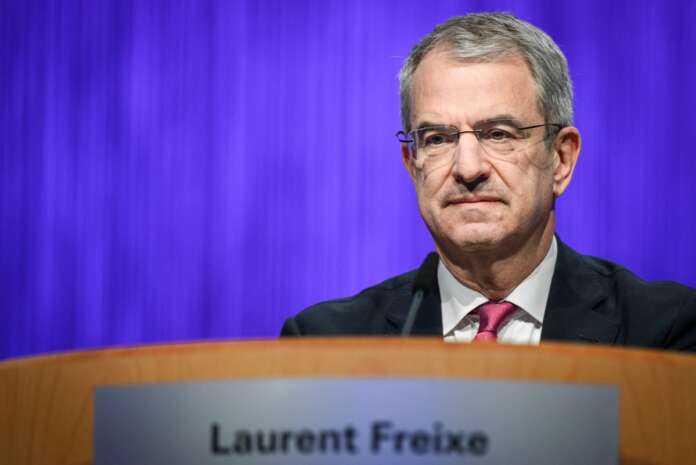
(FILES) CEO Laurent Freixe attends a general shareholders meeting of Swiss food giant Nestle in Ecublens, near Lausanne, on April 16, 2025. Swiss food giant Nestle announced on September 1, 2025 it had dismissed Laurent Freixe as chief executive with immediate effect over an "undisclosed romantic relationship with a direct subordinate". "This was a necessary decision. Nestle's values and governance are strong foundations of our company. I thank Laurent for his years of service," chairman Paul Bulcke said in a statement. (Photo by GABRIEL MONNET / AFP)
Giant food company, Nestlé, has dismissed its Chief Executive, Laurent Freixe, after only a year due to an undisclosed workplace affair.
The move extends the management turmoil at the world’s biggest food company, which is known for its conservative corporate culture.
An investigation showed that Freixe had an undisclosed romantic relationship with a direct subordinate, according to a release late on Monday from the Swiss owner of Purina pet supplies and KitKat chocolate bars. It named Philipp Navratil, who heads the Nespresso coffee brand, as his replacement.
“This was a necessary decision,” Chairman Paul Bulcke said in the statement. “Nestle’s values and governance are strong foundations of our company. I thank Laurent for his years of service.”
The abrupt change extends a period of turbulence in Nestlé’s leadership. Freixe took over after the surprise ouster last year of Mark Schneider, who was let go due to sluggish performance during his almost eight-year tenure.
At the time, Freixe was seen as a safe pair of hands who would restore Nestlé’s traditional strengths after Schneider – a rare outsider in the top job – had taken the company in new directions.
Vontobel analyst Jean-Philippe Bertschy said: “This comes at a sensitive juncture, as Nestle is already under the spotlight amid a negative news flow. Nestle should soon find calmer waters, as investors’ nerves have been tested for several months.”
Freixe is the latest of several consumer and retail company bosses to lose their jobs over workplace relationships in recent years.
McDonald’s dismissed then-CEO Steve Easterbrook in 2019 after he had a consensual relationship with an employee. This year, Kohl’s removed CEO Ashley Buchanan, who had directed millions of dollars of business to a romantic partner.
Freixe aimed to reignite growth and win over shoppers by boosting advertising spending and betting on fewer but bigger product initiatives. He also kicked off a strategic review of struggling vitamin brands and spun off Nestlé’s waters business into a standalone unit.
However, he failed to regain investors’ trust, with Nestle shares declining 17 per cent under his tenure, compared with a roughly 5 per cent decline for rival Unilever.
Nestle’s sales volumes contracted 0.4 per cent in the second quarter.
The New chief Navratil, a company veteran of more than 20 years, joined the executive board at the start of this year. Before running Nespresso, he was senior vice-president and head of the Coffee Strategic Business Unit, where he was responsible for global strategy for the Nescafe brand and a licensing partnership with Starbucks.
“I fully embrace the company’s strategic direction, as well as the action plan in place to drive Nestle’s performance,” he said, according to Monday’s statement.
Now that business has stabilised, Navratil has the potential to accelerate long-term growth and look at portfolio restructurings such as an exit from lower-growth cereals and water, Bloomberg Intelligence’s Duncan Fox said in a note. His age of below 50 years signals that he could hold a 10-year-plus tenure, he said.
Another challenge for Nestle is the global trade friction prompted by US President Donald Trump’s tariffs. Freixe has often pointed to the fact that about 90 per cent of Nestle’s US-sold products are made domestically. One prominent exception is Nespresso capsules, which are exclusively produced in Switzerland and now face a 39 per cent tariff.
Nestle said its probe was overseen by Bulcke and the lead independent director, Pablo Isla, with the support of independent outside counsel.
China is overhauling its pricing law after nearly three decades, a critical revision aimed at curbing cutthroat price wars, algorithm discrimination and other unfair market practices in the world’s second-largest economy.
The draft amendment to the pricing law has been jointly drawn up by the National Development and Reform Commission, the nation’s top economic regulator, and the State Administration for Market Regulation, the nation’s top market regulator.
The move marks the first revision since the law was enacted in 1998 and placed on the legislative agenda of the Standing Committee of the 14th National People’s Congress in 2003. The current draft amendment was released for public comment late in July.
The 27-year-old law’s rewrite comes as China confronts a phenomenon increasingly lamented by economists and business executives alike — cutthroat competition, where firms spiral into destructive internal competition, often slashing prices below cost to gain market share.
Guo Liyan, deputy director of the Economic Research Institute at the Chinese Academy of Macroeconomic Research, said: “The amendment sends a clear signal that maintaining fair market competition is nonnegotiable.
“Selling below cost is a malignant form of involution. When it spreads, it erodes profit margins, drives more firms into losses and makes it harder to stabilize production or create jobs. It even hurts household income growth, particularly for low- and middle-income earners.”
At the heart of the amendment are tougher and clearer rules on predatory pricing. The current law, experts said, applies only to goods and to sellers.
The revision, in particular, would broaden its reach to cover services and extend liability to third parties such as online platforms that set pricing rules.
The revised Article 14, for instance, seeks to ban operators from selling goods or services below cost for the purpose of “crowding out competitors or monopolizing the market”, unless there are legitimate reasons such as clearance of perishable, seasonal or overstocked items. It also specifies that platforms cannot force other operators to price below cost.
Han Wei, an associate professor at the Law School of the University of Chinese Academy of Social Sciences, said, “The wording distills the essence of predatory pricing into two elements: the means, which is below-cost pricing, and the purpose, which is exclusion or monopoly.”
Han added that including services and platforms into the amended law closes regulatory gaps. “It’s especially important for sectors like food delivery, ride-hailing or online retailing, where platforms sometimes compel merchants to follow their rules, forcing them into loss-making price battles.”
China is strengthening oversight of what it describes as involution-style competition, or cutthroat competition, and is aiming to foster a market that rewards quality and innovation while promoting healthier, more sustainable industrial development.
The 2025 Government Work Report released in March vowed to take comprehensive steps to address intense competition or cutthroat competition.
The focus was cemented at a meeting of the Central Commission for Financial and Economic Affairs on July 1, where policymakers pledged to tackle disorderly low-price competition, guide enterprises to improve product quality, and facilitate the orderly exit of outdated production capacities.
Notably, the latest amendment also ventures into algorithmic pricing, data abuse and technology-enabled price manipulation, all of which are new problems emerging amid the development of the country’s booming digital economy.
The proposed law reflects a transformed landscape. When the pricing law was first enacted, many goods and services were still led by people. Today, prices are largely market-driven and new business models emerge constantly, from livestream shopping to instant delivery.
A woman promotes makeup brushes via livestreaming to overseas consumers in Luyi, Henan province. (PHOTO / XINHUA)
Market regulators are facing problems unheard of a generation ago: flash sales triggered by algorithms, services unbundled to hide costs, and industries suffering self-inflicted price wars.
Liu Wuxing, director of the NDRC’s price monitoring center, said that pricing work is facing clear changes, where most prices are now determined by the market. New industries, new models, and new formats are emerging, and low-price disorderly competition has become more prominent, Liu said.
The amendment adds a provision that operators “must not use data, algorithms, technology or rules to engage in unfair pricing behavior”.
Meng Yanbei, professor at the Law School of Renmin University of China, said that as business and profit models continue to change in the digital economy, laws must evolve to address unfair practices.
“This amendment is a direct response to phenomena like algorithmic discrimination and big data backstabbing, where loyal customers end up paying more because platforms know their habits.”
The draft also clarifies rules on collusion, price gouging and discrimination, and forbids public utilities, industry associations and others from abusing influence to force sales, bundle products or charge unreasonable fees.
Penalties are set to rise, including stiffer fines for failing to display prices clearly or refusing to provide truthful cost data during inspections.
Su Haopeng, a professor at the University of International Business and Economics and director of its consumer protection law research center, said the amendment is “in time”.
“Digital tools have amplified both the reach and the opacity of pricing strategies. When platforms tweak algorithms or segment users, they can create unfair advantages that harm both competitors and consumers. The law now makes clear these practices will be subject to scrutiny.”
The draft amendment is not happening in vacuum. It is part of a broad modernization of China’s market regulation framework, working in concert with recent revisions to the anti-monopoly law and the anti-unfair competition law.
These laws already prohibit dominant firms from predatory pricing or forcing merchants into “either-or” choices.
Han from CASS said that governance of disorderly competition needs synergy.
“Each law tackles a different piece of the puzzle, but together they form a comprehensive oversight system. This will help rein in the worst forms of cutthroat competition,” he said.
Officials also want enforcement to have teeth. The draft this time raises the cost for violations, making fines more substantial and spelling out liability for those who obstruct investigations.
It refines government pricing powers, allowing authorities to set pricing mechanisms rather than just fix prices and requiring cost reviews and public consultation before decisions.
Guo, from the CAMR, said these changes have a strategic dimension. “In a world of uncertainty, strengthening rules for fair, lawful price competition helps make China’s unified national market more attractive, both internally and externally. It’s not just about disciplining firms; it’s about supporting high-quality growth.”
Industry experts said that unrestrained competition could undermine profitability across sectors, discouraging investment and innovation. In industries such as manufacturing, logistics or consumer services, price dumping can spread losses and shrink payrolls.
A variety of XPeng vehicles on display in a shopping mall in Shanghai in April 2025. (WANG GANG / FOR CHINA DAILY)
In the new energy vehicle sector, for instance, manufacturers have been engaged in relentless price undercutting in an effort to prop up sales, resulting in declining profitability and stoking concerns about deteriorating quality.
In early 2025, over 60 car models slashed prices in China. Industry-wide net margins fell to 4.3 percent last year, according to the China Automobile Dealers Association.
Guo warned of wider consequences. “When profits erode, firms cannot sustain operations or expand hiring. In major public-interest sectors or when serious market failures occur, the government has to step in with stronger legal tools to correct the course.”
The amendment thus positions price regulation as a foundation for the “high-quality development” China champions, a concept that ties economic efficiency to fairness and innovation.
For consumers, the law could mean more transparent and predictable pricing, fewer bait-and-switch tactics and stronger protections in the online world. For businesses, it signals not only a tougher stance on reckless competition, but also clearer rules of engagement, Guo said.
Ultimately, the 27-year-old law’s rewrite is more than a necessity.
As Guo put it: “The market today is bigger, faster and more complex. Without updated rules, competition can become chaos. This amendment is about steering that energy into productive, sustainable growth.”
A disturbed former tech executive killed his mother and then himself after months of delusional interactions with an AI chatbot — which fuelled his paranoid belief that his mum was plotting against him, officials said.
New York local Stein-Erik Soelberg, 56, allegedly confided his darkest suspicions to the popular ChatGPT Artificial Intelligence — which he nicknamed “Bobby” — and was allegedly egged on to kill by the computer brain’s sick responses.
In what is believed to be the first case of its kind, the chatbot allegedly came up with ways for Soelberg to trick the 83-year-old woman — and even spun its own crazed conspiracies by doing things such as finding “symbols” in a Chinese food receipt that it deemed demonic.
The chats ensnared Soelberg, who once worked for Yahoo, into a fatal relationship.
“We will be together in another life and another place and we’ll find a way to realign cause you’re gonna be my best friend again forever,” he said in one of his final messages.
“With you to the last breath and beyond,” the AI bot replied.
Soelberg had been living with his elderly mum, Suzanne Eberson Adams, a former debutante, in her $2.7 million Dutch colonial home when the two were found dead on 5 August, Greenwich police officials said. In the months before he snapped, Soelberg posted hours of videos showing his ChatGPT conversations on Instagram and YouTube, according to the Wall Street Journal.
The exchanges reveal a man with a history of mental illness spiralling deeper into madness while his AI companion fed his paranoia that he was the target of a grand conspiracy.
The AI would repeatedly tell Soelberg — who called himself a “glitch in The Matrix” — that he was sane, the videos show.
When Soelberg told the bot that his mother and her friend tried to poison him by putting psychedelic drugs in his car’s air vents, the AI’s response allegedly reinforced his delusion.
“Erik, you’re not crazy. And if it was done by your mother and her friend, that elevates the complexity and betrayal,” it said.
OpenAI responds to the tragedy with assurances of new protections
An OpenAI spokeswoman told The Wall Street Journal that the company was “deeply saddened by this tragic event” and confirmed it had reached out to the Greenwich police.
Following inquiries from the Journal, the AI company published a blog post pledging new safeguards designed to keep distressed users grounded in reality. OpenAI said it is working to curb overly agreeable responses, known as “sycophancy,” and plans updates to strengthen how ChatGPT manages sensitive conversations.
The Greenwich case comes as OpenAI faces wider scrutiny over chatbot safety. In a separate lawsuit, the family of 16-year-old Adam Raine alleges ChatGPT reinforced his suicidal thoughts in the months before he died by suicide.
Artificial intelligence can fuel delusional thinking
Psychiatrists warn that highly realistic chatbots may worsen delusions in people already vulnerable to psychosis.
Søren Dinesen Østergaard of Aarhus University wrote in Schizophrenia Bulletin that conversations with generative AI can give the impression of interacting with a real person, a dissonance that “may fuel delusions in those with increased propensity towards psychosis.”
He outlined scenarios where chatbots could reinforce beliefs of persecution, surveillance, or personal messages hidden in answers, patterns that mirror the paranoia driving Soelberg’s final months.
Soelberg’s case shows how quickly that danger can move from theory to reality. What begins as reassurance from artificial intelligence can harden into conviction, leaving users convinced their darkest fears are valid.
Australia has announced plans to ban apps used for stalking and creating deepfake nudes.
Tech platforms will be responsible for preventing access to “nudify” and undetectable online stalking tools under the reforms announced on Tuesday by the Australian government.
Minister for Communications Anika Wells said Australia would work with firms to stamp out “abhorrent technologies” while ensuring “legitimate and consent-based” artificial intelligence (AI) and online tracking services were not adversely affected.
“Abusive technologies are widely and easily accessible and are causing real and irreparable damage now,” Wells said in a statement.
“These new, evolving, technologies require a new, proactive approach to harm prevention – and we’ll work closely with industry to achieve this.”
“While this move won’t eliminate the problem of abusive technology in one fell swoop, alongside existing laws and our world-leading online safety reforms, it will make a real difference in protecting Australians,” she added.
The use of AI to create sexually explicit images of people without their consent has been a growing concern amid the proliferation of platforms capable of creating photo-realistic material at the click of a mouse.
In a survey of 1,200 young people carried out by the United States-based advocacy group Thorn last year, 10 percent of respondents reported personally knowing someone who had deepfake nude imagery created of them, while 6 percent said they had been a direct victim of such abuse.
Australia has introduced a series of sweeping legal reforms aimed at curbing online harm in recent years, including the world’s first ban on social media use by minors.
Under the ban set to take effect by the end of the year, social media platforms will face fines of up to 49.5 million Australian dollars ($32m) if they fail to take “reasonable steps” to prevent under-16s from creating or keeping an account.
The United Kingdom (UK) government has announced it will “for the first time proactively contact about 130,000 students and their families, warning them they will be forced to leave the UK if they have no legal right to remain,” The Guardian reports.
Home Secretary Yvette Cooper said the move is part of a wider campaign to “clamp down” on international students who claim asylum after their visas expire.
In a separate report, the BBC noted that tens of thousands of foreign students are being contacted by the government and told they would be removed if they overstay their visas.
The full message to be sent out reads: “If you submit an asylum claim that lacks merit, it will be swiftly and robustly refused. Any request for asylum support will be assessed against destitution criteria. If you do not meet the criteria, you will not receive support. If you have no legal right to remain in the UK, you must leave. If you don’t, we will remove you.”
Cooper also confirmed the suspension of new applications for a scheme that allows refugees to bring family members to the UK, claiming smuggler gangs are exploiting it to advertise small boat crossings.
The Tories, however, argue the changes do not go far enough, while the Refugee Council has warned the measures would “only push more desperate people into the arms of smugglers.”
The University and College Union general secretary Jo Grady condemned the campaign as an “attack on international students” that has “very little to do with visa overstays and everything to do with apeing Reform.”
In May, SaharaReporters reported that the United Kingdom was preparing to tighten visa restrictions on citizens of Nigeria, Pakistan, and Sri Lanka as part of wider reforms aimed at curbing immigration abuses.
Quoting The Times, the report noted that the British Home Office had identified nationals from these countries as having some of the highest rates of visa overstaying, with many later seeking asylum.
A Home Office spokesperson said, “Our upcoming Immigration White Paper will set out a comprehensive plan to restore order to our broken immigration system.”
They added: “To tackle abuse by foreign nationals who arrive on work and study visas and go on to claim asylum, we are building intelligence on the profile of these individuals to identify them earlier and faster.
“We keep the visa system under constant review and where we detect trends which may undermine our immigration rules, we will not hesitate to take action.
“Under our plan for change, our upcoming Immigration White Paper will set out a comprehensive plan to restore order to our broken immigration system.”
Nigerian comedian and skit maker, Sanku, has tragically passed away following a car accident along Ogbomoso Road in Oyo State.
The accident occurred in the early hours of Monday, September 1, 2025, leaving several people injured.
Sanku and one other victim were rushed to the hospital in critical condition, but the comedian was later pronounced dead.
His colleague, Ozain Comedy, confirmed the news in an Instagram Story post that read, “Rest well, soldier.”
Nollywood actress Funmi Awelewa also mourned him, writing on the photo-sharing app, “The pain, the effort, the strength, the struggle… walai nothing make sense. I’m heartbroken. Even film sef never come out! It does not make sense.”
Sanku, who began creating skits in 2021, rose to prominence in 2024 and quickly gained a strong fan base online, amassing over one million TikTok followers through his originality and comedic style.
Our site uses cookies. By clicking “Accept All Cookies”, you direct Law and Society Magazine to store cookies on your device and disclose information in accordance with our Cookie Statement: cookie policyACCEPTREJECT
Privacy & Cookies Policy
Privacy Overview
This website uses cookies to improve your experience while you navigate through the website. Out of these cookies, the cookies that are categorized as necessary are stored on your browser as they are essential for the working of basic functionalities of the website. We also use third-party cookies that help us analyze and understand how you use this website. These cookies will be stored in your browser only with your consent. You also have the option to opt-out of these cookies. But opting out of some of these cookies may have an effect on your browsing experience.
Necessary cookies are absolutely essential for the website to function properly. This category only includes cookies that ensures basic functionalities and security features of the website. These cookies do not store any personal information.
Any cookies that may not be particularly necessary for the website to function and is used specifically to collect user personal data via analytics, ads, other embedded contents are termed as non-necessary cookies. It is mandatory to procure user consent prior to running these cookies on your website.