Home Blog Page 231

RULAAC mourns Solomon Arase, describes him as an exceptional cop, reformist Police Chief

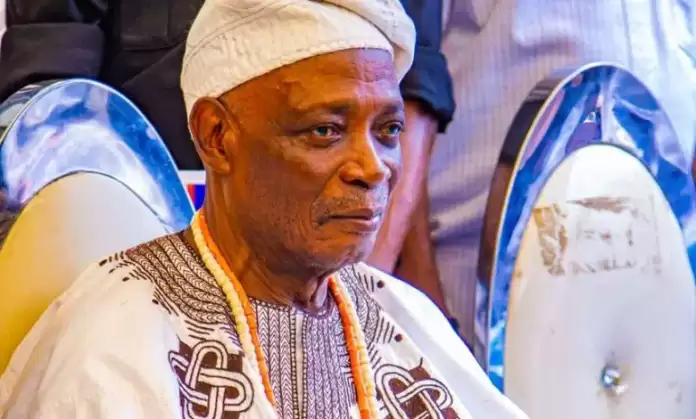
The Rule of Law and Accountability Advocacy Centre (RULAAC) has described Solomon Arase, the ex-Inspector General of Police (IGP) who passed on Sunday, 31 August 2025, as an ‘exceptional and exemplary cop’ while expressing deep shock over his sudden demise.

In a Statement signed by Okechukwu Nwanguma, RULAAC’s Executive Director, the group said the former IGP, who is also the immediate past Chairman of the Police Service Commission, operated in a system where the police institution was associated with impunity, corruption, and brutality, but stood out as a shining example of what policing in a democracy should be.

Dr. Arase was 69 years old.

According to Nwanguma, Nigeria had lost one of its finest Police officers who demonstrated through his action that the police could be a force for good, noting that Arase’s death was a loss to the police institution, human rights, and to all who believe in reform and accountability

The Rights Group said that, as IGP Arase prioritised intelligence-driven policing over brute force, emphasised smarter and evidence-based strategies in crime prevention and control.

“IGP was an exceptional and exemplary cop, a reformer, and a rare breed of officer who made a significant difference.

“He believed that policing should be about service, trust, and legitimacy, not intimidation. He demonstrated an uncommon commitment to police accountability and reform.

“His tenure reflected a clear focus on institutional improvements that went beyond personalities and were aimed at laying a foundation for lasting change.

“He understood the critical importance of community partnership, consistently advocating for trust-building between the police and citizens,” it said.

RULAAC said Arase set himself apart through his respect for human rights and proved that a police officer, even at the highest level, could serve with dignity and empathy without sacrificing discipline and professionalism.

The group stated that unlike other former IGPs who perceived rights groups as adversaries, Arase welcomed constructive dialogue and collaboration as a true partner in the quest for a better police force.

“As a civil society organisation working on police reform and accountability, we particularly recall with admiration how open and receptive Arase was to civil society engagement.

“At a time when recruitment was deeply compromised by corruption, nepotism, and political interference, Arase insisted on a transparent and merit-driven process. He stood firm and restored credibility to recruitment.

“RULAAC commiserates with his family, colleagues, and the entire nation.

“We urge the Federal Government and the Nigeria Police Force to honor his legacy by sustaining and deepening the reforms and values he stood for.”

Alleged blasphemy: Female food vendor burnt to death in Niger State

On account of an allegation of blasphemy against Prophet Mohammed, a woman identified as Amaye was lynched and burnt to death by a mob in Niger State.

The incident occurred on Saturday evening in Kasuwan-Garba town, Mariga Local Government Area.

This is coming three years after Deborah Samuel Yakubu, a second-year Christian college student, was stoned to death by a mob of Muslim students in Sokoto, Nigeria, after being accused of blasphemy against Islam.

According to eyewitness accounts, the victim, a food vendor, was accused of making blasphemous remarks at her restaurant after a customer jokingly expressed interest in marrying her, citing the tradition of the Prophet.

Residents initially took her to the palace of the District Head of Kasuwan-Garba to avert mob action.

The District Head reportedly handed her over to security operatives for investigation.

However, the mob later overpowered the security agents and set her ablaze.

Chairman of Mariga LGA, Abbas Adamu Kasuwan-Garba, confirmed the incident, adding that normalcy had been restored in the area.

The Niger State Police Command also confirmed the killing.

Spokesman SP Wasiu Abiodun said the victim was burnt before security reinforcements arrived.

“Efforts are being made to ensure that arrests are effected, investigated and prosecuted,” Abiodun stated.

The Conclave

Bola Tinubu abolishes ‘corruption’, By Sonala Olumhense

Nigerian leader Bola Tinubu woke up the world last week, declaring he has ended corruption in Nigeria.

But it was Nigerians who were most astounded.

He said, “The reforms I’ve embarked upon since I took over in Nigeria have been very impactful. It was initially painful, but today the result is blossoming…We have more money for the economy, and there is no more corruption.”

To cut him a little slack, he seemed to have begun by trying to affirm that he had installed a better foreign exchange regime to encourage new Brazilian investment.

I believe this to be the case because Tinubu continued as follows: “We have the governor of the Central Bank of Nigeria here. You don’t have to know him before getting the foreign exchange you need. The speculators are out. In our currency market, the door is open for businesses.”

The problem is that his comments, which were even true of the foreign exchange sector, went way beyond it.

The video of the speech shows Tinubu as affirming, “No more corruption,” although some news outlets, including Premium Times and The Punch, quoted him as saying, “There will be no more corruption.”

Foreigners with absolutely no experience of Nigeria may have been swept away by the Nigerian leader’s speech to have hurried to Nigeria to start investing.

The question is how many Nigerians, including those in his own government and on his delegation, believed one word of what he said.

Has Nigeria experienced a C-change, or sea-change, in the past two years? The answer is clearly, No.

In 2015, his APC took control of the federal government by hawking a C-Change message: to Change Nigeria by Cleaning it of Corruption. Here is the official APC Manifesto, perhaps the most dishonest in the history of political chicanery, as recorded by the Independent National Electoral Commission.

Dismissing the PDP, the party it desired to replace, APC declared: “The consequence of trusting (sic) power to a party that does not have the genuine interest of Nigeria and Nigerians are clearly manifest in our political and economic predicament today; tens of thousands of innocent Nigerians have been killed due to government neglect of security; poverty and unemployment have multiplied due to the perverse economic policies, corruption has been taken to new levels while health, education and job opportunities are all in free falls, the question on the lips of most Nigerians is: is there a federal government in Nigeria? Yes, there is a federal government in Nigeria. A government that thrives on chaos, corruption, impunity, injustice and the systematic exploitation of ethnicity, religious sentiments and other primal instincts to divide and rule Nigeria. It is no wonder that at no time since the period of the Civil War have ethnic and regional sentiments been as raw as they currently are. Nigeria can, and must do better.”

We must read The Manifesto because we know that APC lacks the honour to do so, just as it has in the past 10 years, failed to honour even one of the myriads of contracts it marketed to the Nigerian electorate in 2015, selling a phantom weapon it called “APC Commonsense Solutions.”

There are many areas to look at; I will examine four. On corruption, APC’s Commonsense Solutions pledged to:

Create a functionally independent anti-corruption agency, with adequate and predictable funding and full prosecutorial powers and free from political interference; End immunity from prosecution for sitting politicians; Reform budgetary & accounting procedures-including publishing all the meeting-minutes and service performance data on government spending [of] over N100 million at Federal and State and N10 million in local government; and End all private jet and First Class foreign travel for government employees.

On education in 2025, APC pledged to “Triple education spending over the next 10 years, from the current… to 24.5%.”

At that time, the PDP had for five straight years spent between 7.95% and 9.26% of the budget per annum on education, but in the Muhammadu Buhari Years, the APC downgraded education year after year: from 6.65% in 2016 to 4.30% in 2022. Tinubu, for his part, allocated 5.53% in 2024 and 7.3% in 2025; these are the lowest levels internationally.

On unemployment, it promised: “3 million new jobs a year through public works programme.” This means that it now owes Nigerians some 30 million jobs.

On insecurity, the APC in 2015 accused its predecessor of lacking a vision. “And without a vision, that party at the centre has led Nigeria from one crisis to another, lurching deeper into political anarchy, economic decline and social disillusionment. A decade and a half later, nothing has changed. That ruling party has neither concrete plans for the security and advancement of Nigerians, nor the wherewithal to do so, even if it had one. Suffice to say that it had thrived on the maxim: promise nothing, do nothing.”

When Tinubu celebrates his reforms, it is important to remember that, unlike APC, which was feasting on the PDP, the ruling party is not feasting on itself, but on Nigerians.

Thus, there is no truth to either of Tinubu’s claims that his reforms were only “initially painful” or that there is no more corruption.

To suggest that Nigerians are not in pain is to confirm that the Nigerian leader is not leading Nigeria.

Real Nigerians are in pain because, contrary to the claims that he makes abroad, but curiously not at home, the ruling party has abandoned them. His leadership is limited, narrow-minded, and deliberately ignores the general hardship.

There are more government lies about jobs than there are jobs, as the June 2025 Afrobarometer report clarifies. There are about 80 million people, roughly one-third of the population, classified as living in poverty, a large portion of whom are young adults who are either unemployed or lack the necessary skills. This is far short of the APC’s promise of 30 million jobs.

For them, there is no sight of the 24.5% spending on education that the APC promised 10 years ago.

Finally, contrary to the claim that corruption has been abolished or is under some sort of control, it is on a fierce rampage because there is nothing in the behaviour of the ruling party, since 2023, to suggest that honour and integrity are of any importance.

Every year, for instance, the Auditor-General of the Federation routinely issues his obligatory annual report; it is also routinely ignored by the executive, thereby encouraging corruption to fester. The latest report, for 2021, is available. But responding to the 2019 and 2020 reports, the House of Representatives, itself no model of patriotism, recently indicted 31 federal MDAs for N103.8 billion and $950,912.05 worth of financial infractions.

Who will recover the monies and jail the thieves, the Tinubu government?

What of the even more ethically-challenged but powerfully-placed Nigerians, such as Godswill Akpabio, the President of the Senate, or Nyesom Wike, the Minister of the FCT, whom Tinubu recently claimed he would probe?

Corruption is not fundamentally about money, but about how things are done, and Tinubu’s “Fight-Snatch-Grab” political philosophy is perhaps the best illustration of the scourge.

It is not simply that corruption in Nigeria, like insecurity, has gone away. Under APC, it is alive. And mutating.

Sonala Olumhense

The views expressed by contributors are strictly personal and not of Law & Society Magazine.

Ooni, Alaafin and Yoruba’s endless war

By Lasisi Olagunju

A race of giants. The Yoruba had been producing monumental men and women long before Nigeria became a country. Professor Adelola Adeloye’s ‘African Pioneers of Modern Medicine’ (1985) has a list of eleven Nigerians who qualified as medical doctors between the 19th century and 1901. Ten out of the eleven were Yoruba. Check out their names and the dates they qualified: William Davies (1858), Nathaniel King (1874), Obadiah Johnson (1884), John Randle (1888), Orisadipe Obasa (1891), Leigh-Sodipe (1892), Oguntola Sapara (1895), R. Akinwande Savage (1900), C. C. Adeniyi-Jones (1901) and W. Cole (1901). Those are the Yoruba ten.

Chief Obafemi Awolowo, in his autobiography, described the Yoruba as “a fastidious, critical and discerning people.” As trailblazers, their enviable record of being pioneers goes beyond medicine; it is in every field. Again, look at these lines distilled from A. G. Hopkins’ ‘A Report on The Yoruba, 1910′ published in 1969: Henry Carr, born in Lagos in 1863, was the son of a freed slave with Egba provenance; he got a B.A. in 1885 with honours in mathematics and the physical sciences and played pivotal roles in early Lagos’ political life. Obadiah Johnson was the son of a liberated slave from Oyo who was born in Sierra Leone in 1849, took a B.A. in 1879, went back to school in England, qualified as a doctor in 1884 and returned to Lagos in 1886 to play great roles in the history of medical practice in Nigeria and in the cultural history of the Yoruba.

Christopher Sapara-Williams, son of an Ijesha man with strong Egba connections, was born in Freetown in 1855. He was called to the English Bar in 1879 becoming the first Nigerian to become a lawyer. “He settled in Lagos in 1888, established a thriving legal practice, and became prominent in the political and social life of the town.” E. H. Oke was a senior official in the Legal Department of the Lagos government of the early 20th century. He authored ‘A Short History of the United Native African Church: Part 1, 1891 to 1903’ published in 1918. Adegboyega Edun (1860-1930) “was a Methodist minister and schoolmaster who became Principal of the Wesleyan Boys High School in Lagos from 1893 to 1902, when he was appointed Secretary to the Egba United Government. W. T. G. Lawson was the son of a (Yoruba) government interpreter in Sierra Leone. He qualified as a civil engineer and was Assistant Colonial Surveyor in Lagos from 1879 to 1886, when he retired from government service.” Of course, you and I know that Yoruba’s legacy of firsts was carried over into the 20th century; we are in the 21st and the facts are still here, notorious.

A people with this pedigree should normally be above petty squabbling. But that is not so with the Yoruba; they drop the elephant and go after crickets. You would want to ask what their problem is. My friend and Punch columnist, Abimbola Adelakun, told me yesterday that it was “the curse of enlightenment”; the afflicted knowing enough to paralyse themselves. They have the dubious blessing of what my teacher, Professor Adebayo Williams, recently described as a “squabbling and dissolute elite.” They routinely fight themselves over nothing.

On Monday, August 18, 2025, a needless statement was dispatched from Oyo to Ile Ife over a chieftaincy title given to an Ibadan man by the Ooni of Ife. Just as it happened in c1793 in Apomu market, the statement from Oyo has turned out the spark needed by those angling to rekindle the blaze that burnt the past.

The Yoruba are supposed to be the well-clothed moin moin, but they behave more like akara, naked and caked. They are daily exposed to the elements by their knack for division, friction and discord. They get bent and broken by what Vera Schwarcz calls the “accumulated weight of outworn habits.” It means very little that they are well-taught and knowledgeable with more than two centuries of advantage over their neighbours. They rarely collectively profit from their endowments. It is a curse.

I am an Oyo-Yoruba. I have watched in horror as some Yoruba persons, self-interested actors, use the opportunity to say what had always been unsaid, and should be unsaid. You would think this house is another Tower of Babel, or the very abode of Eris, the Greek goddess of strife and chaos. Nothing that binds the family together has been left unquestioned. Some have even extended the war to the Yoruba language and its dialects. They sweat to define what is standard and substandard; what is superior and what is inferior and the implications for the users.

For 100 years (1793 to 1893), the Yoruba fought the Yoruba, neighbour plundered neighbour, brother sold brother into slavery. It took a superior power from outside, the British, to impose peace on that race of discord. If Nigeria disintegrates today and each ethnic group goes its way, the Yoruba will most likely resume their internecine wars almost immediately. That is my conclusion after weeks of watching and monitoring reactions to the unfortunate simmering supremacy spat between people who claim to support the palace of the Ooni of Ife and that of the Alaafin of Oyo, and their tributaries.

What I have seen and heard in the last three weeks evokes unsettling echoes of the Yoruba civil wars of the late 18th and the 19th centuries when obas, princes and generals turned their energies inward and left the nation vulnerable to external forces. You hear and read some comments and gasp. Even where you thought you would meet wisdom, you got there and saw its opposite sitting regal, holding court. You would think the resolution of a supremacy war between the Alaafin of Oyo and the Ooni of Ife is the elixir that would cure today’s security-sick Yoruba, fix their terribly bad roads and feed their hungry. They excitably keep the ember of war glowing. Wisdom has not whispered to those doing the fanning that when brothers waste their strength and dissipate energies fighting each other, strangers seize the inheritance. It happened in the 19th century. Then, as now, the struggle was less about destiny and deliverance; it was more about pride and prejudice with devastating consequences for the collective.

The Yoruba energy and intellect fascinated the white man right from the first contact. Gary Lynn Comstock of the University of Chicago Divinity School, USA, wrote in ‘The Yoruba and Religious Change’ (1979) that “of all the societies in sub-Saharan Africa, the Yoruba of south-western Nigeria are one of the most extensively studied native group.” Toyin Falola and Ann Genova in ‘Yorùbá Identity and Power Politics’ (2006) call our attention to the fact that as far back as “1897, Samuel Johnson wrote in the preface to his pioneer work, ‘The History of the Yorubas,’ (that) educated natives of Yorùbá are well acquainted with the history of England and with that of Rome and Greece…”

They have all these, yet, they fight dirty in the mud like pigs. Their distant ancestors preached moderation even in ennobling pursuits. They told their young to “never stay too long on the farm like hopeless slaves (and) never stay too long at home like the miserably lazy.” But in matters of power and politics, they are extremists. Today as in the past, they fight civil wars and ignore the glaring reality of their present dire situation. More than it was 122 years ago, today’s Yoruba country is hemmed in by far graver existential challenges: economic, political, security, and a generational crisis of values. Yet, what excites their political and traditional elite is which antiquated throne is senior to, or more ‘imperial’ than others. Wisdom has not told the feuding race that to stoke embers of rivalry between two thrones that should embody unity and wisdom is to indulge in a needless diversion from the urgent work of survival and renewal.

Their fathers said “if we don’t forget the bickering of yesterday, we will have no playmate.” Yet, the Yoruba (groups) remain captive of their history of wars and bloody bickering. They worship the past and pour libations to exaggerated stories and histories. But we’ve been told that “all history is tendentious, and if it were not tendentious, nobody would write it. History is therefore never history, but history-for.” Hidemi Suganami, Professor of the Philosophy of International Relations, opens his ‘Stories of War Origins: A narrativist theory of the causes of war’ with that two-sentence quote. He credits the first sentence to R. G. Collingwood’s ‘The Idea of History’ (1994) and the second to C. Levi-Strauss’ ‘The Savage Mind (La Pensee sauvage)’, published in 1972. Both lines remind the reader of Robert Cox’s much-quoted statement: ‘Theory is always for someone and for some purpose.” And it leads me here to ask why the Yoruba people tell or write (or rewrite) their histories.

READ ALSO: #GEJ2027: A Hostage in the lap of the judges

The Yoruba forget nothing and remember everything. Professor Toyin Falola, in his ‘A Research Agenda on the Yoruba in the Nineteenth Century’ (1988) notes this fact. He writes that “the twentieth century inherited some of the unresolved issues of the nineteenth century, notably problems of intergroup conflicts; competition for power among individuals and lineages; redefinition of functions and criteria for chieftaincy titles, etc.” He adds that “communities with turbulent experiences have continued to remember these in their relations with others.” What we’ve seen since the latest Oyo vs Ife ‘war’ of words has its root in those “unresolved issues of the nineteenth century.”

H. G. Wells wrote ‘The War That Will End War’ (1914). The title of that book was immediately applied to the First World War as “the war to end all wars.” But the Second World War started eleven short years after the first. The Yoruba started a civil war in 1878 and for the next 16 years killed and maimed one another. They boasted that the 16-year-war was the war to end all wars. They were wrong. The war has not ended, it is still on in 2025; you have it being fought in inter-communal skirmishes; in sub-ethnic and obaship supremacy contests.

I read R. C. C. Law’s ‘Yorubaland and its History’ and the reviews therein of ‘Yoruba Warfare in the Nineteenth Century’ by J. F. Ade Ajayi and Robert Smith; ‘Owu in Yoruba History’ by Akin Mabogunje and J. D. Omer-Cooper; ‘Revolution and Power Politics in Yorubaland 1840-1893; Ibadan expansion and the rise of Ekitiparapo’ by S. A. Akintoye; ‘The Political Development of Yoruba Kingdoms in the Eighteenth and Nineteenth Centuries’ by Peter C. Lloyd; and ‘Yoruba Towns and Cities: an enquiry into the nature of urban social phenomena’ by Eva Krapf-Askari. R. C.C. Law reviewed those works and zeroed in on Akintoye’s submission that the successful revolt of the north-eastern Yoruba (the Ekiti, the Ijesa, and the Igbomina) against the rule of Ibadan in 1878-93 determined “that no one Yoruba state would (again) attain the position of primacy earlier enjoyed by Oyo.” The present pushing and shoving should be read as an attempt to assert or put a lie to that determination.

If you are implicated in this crisis that started three weeks ago, I urge that you calm down, reflect deeply and ask what benefits will accrue from this dog-eat-dog war of histories. In the present controversy as in all previous ones, I see manipulation and exploitation of history. I see attempts being “made to take political decisions which did not recognize the nineteenth-century changes.” I see history, particularly of the 19th century, being put to different uses by the disparate peoples and interests in Yorubaland. This insight is not mine; it belongs to Professor Falola who notes in the 1988 piece cited above, that “the ‘new Oyo empire’ of the twentieth century benefited from the achievements of the Old Oyo empire before the nineteenth century; (that) Ibadan suffered political decline because of the interpretation that it was a satellite of Oyo with rulers whose appointments were sanctioned by the Alaafin; (that) Ile-Ife ignored its military defeats and humiliation in the nineteenth century and quickly resorted to the Oduduwa myth to attain political prominence and (that) those who had no claim to previous glories, whether on the basis of pre-1800 power or myth, (have) adopted several other innovative strategies.

I am not done with the historian, Falola. He reminds us that in the last century, “traditions played a dominant role” in Yoruba politics, but often not in their purest sense. Rather, what different subgroups stressed were those aspects of history that could best serve their “sectarian and political advantages.” Thus, Ibadan, seeking legitimacy for the Olubadan title and later a crown, popularized the myth of Lagelu, an alleged Ife prince and founder of the city, even though, in Falola’s words, Ìbàdàn’s early settlers were “Oyo-Yoruba refugees.” Oyo itself, after relocating under Atiba to Ago Oja, downplayed the new order while clinging to the grandeur of the old. It still does. The Ijesa, for their part, highlighted their imperial past to assert superiority “over their neighbours (including Ife),” conveniently ignoring myths that would place them in a subordinate lineage to Ile-Ife. Ile-Ife, as stated earlier, “ignored its military defeats and humiliation in the nineteenth century and quickly resorted to the Oduduwa myth to attain political prominence.” Across Yorubaland, even communities of relatively recent origin have invented traditions to trace their roots to Oduduwa, all in a bid to “derive certain political advantages.” Falola’s conclusion is that such “deliberate distortions of history and traditions” were strategies of survival in the turbulent eras of the past.

If 2025 feels like 1825 in crises and controversies, it would mean that two hundred years of Yoruba education and civilisation are a waste. Unprofitable exertions and meaningless supremacy contests between revered thrones repeat a dangerous cycle. The Yoruba elite should reflect and ask themselves if fetishising history and myths is the solution to insecurity and poverty that wrack their people’s present and imperil their survival. The wise does not fight himself. Enough should be enough.

The views expressed by contributors are strictly personal and not of Law & Society Magazine.

#GEJ2027: A Hostage in the lap of the judges

By Chidi Anselm Odinkalu

Seven years ago, in 2018, my good friend and former Dean of Law at the University of Ghana at Legon, Professor Raymond Atuguba, undertook a path-breaking study which sought “to move away from the perception that Justices of the Supreme Court dispense justice impartially under a constitutional democracy and reflect on the influences on the Justices as they are taking decisions.” The focus of the study was the influence of politics on judicial decision making in the Supreme Court of Ghana.

For this purpose, Professor Atuguba examined 78 judgments by 39 Justices of the Supreme Court (including six Chief Justices) over the first twenty-five years of Ghana’s Fourth Republic from 1993 to 2018 in political cases, cross-matching the Justices who sat on the cases against the political party or regime which appointed them. As a functional matter, Professor Atuguba’s study defined a political case to be one in which “you have a political party or politician or politically exposed person as a party to a suit or where it revolves around issues that inure to the political,  social, financial or other benefit of a political party or its operatives or known affiliates.”

The conclusions were revealing but hardly shocking. The study found overwhelming correlation between Justices and the regimes that appointed them. It showed that in a majority of cases, the politics explained how the judges decided. In presenting the conclusions of the study, Professor Atuguba argued for the need to “acknowledge political decision making by our Supreme Court….”

Courts are not instruments of revolutionary change. On the contrary, most judges across the world see their roles primarily as being there to afford cover to the regime which appointed them or the system under which they work, and, as Alexander Hamilton wrote, are defined by “an unwillingness to hazard the displeasure” of these political benefactors. It is unusual for judges, especially in a developing country, therefore, to defect from the path of support for a ruler or party in power.

This should explain the chronically anomalous jurisprudence that has become the routine of judicial decision-making in Nigeria under elective civilian government. Rather perversely, this situation should present politicians with the needed incentive to ensure that the country’s electoral system is credible because once out of power, those who enjoyed the benefit of weaponized or situational court decisions suddenly find themselves at the receiving end.

Former president, Goodluck Ebele Jonathan – also known as GEJ – now finds himself in this situation. As the country prepares for presidential elections in less than 18 months, it now seems certain that GEJ seeks a return to the partisan fray. The man himself has made moves which clearly indicate that he is giving this more than an active consideration. If he were to choose to run for the presidency, his political brand is likely to be #GEJ2027.

Influential columnist, Chidi Amuta, has counselled GEJ to “flee” from the importuning of those who want to draft him into the 2027 contest. Should he choose to ignore that, however, the likelihood is that the judges will have the final say on his ambitions. It does not require a lot of imagination to see why or how such a case will be decided under the present dispensation.

The ambitions of President Jonathan in 2027 will rest on two different provisions of the 1999 constitution. Under section 137(1)(a), a person is disqualified from running for Nigeria’s presidency if “he has been elected to such office at any two previous elections.” This provision was there when President Jonathan ran unsuccessfully for a second term in 2015. At the time, there was a considerable amount of murmuring about his ineligibility to run, having assumed office for the last year following the death of Umaru Yar’Adua in May 2010.

Having been on the presidential ticket with Yar’Adua in 2007 and again at the top of the ticket in 2011, it was arguable in 2015 that GEJ had previously “been elected to such office” twice and was therefore barred from running again. However, it was beyond improbable that a judge could be found at the time to rely on that argument to preclude a sitting president from running.

In 2027, however, two things will be different. First, two years after GEJ left office, in 2017, the fourth alteration to the Constitution (no. 16), introduced section 137(3) which provides that: “A person who was sworn-in as President to complete the term for which another person was elected as President shall not be elected to such office for more than a single term.” This will put GEJ’s eligibility directly in issue. The question will be simple: having inherited the presidency from President Yar’Adua and served a full elected term from 2011 to 2015, is he still eligible to run again in 2027?

On that question, the judges will not be apolitical. In litigation, this will be presented as a legal question. In reality, it is a political one and this is where the second issue arises. Where in 2015, GEJ enjoyed the favours of judicial complaisance and the presumption against judicial defection from incumbents, that presumption would count against him in 2027. And where in 2015, no judge could be found to bump him from the race under cover of judicial ceremony, there will be no end to the number of judges happy to oblige the incumbent in 2027 with precisely that kind of judicial cover for a political hit job.

The only issue will be the timing of such a judgment. A ruling party looking to make the most of this situation will probably lend its organizing and marketing assets with deniability to the promotion of the ambitions of GEJ to begin with. That is the easiest way to decimate the ranks of the opposition. By omission or commission, a putative #GEJ2027 project will suck most of the oxygen from the ranks of other opposition candidates. It will be in the interest of the ruling party to egg him on until he secures the ticket of a major party for the contest.

At that point of no return, an innocuous looking legal challenge will materialize questioning GEJ’s eligibility to run under the constitution. They will sue him, his party, and Independent National Electoral Commission (INEC) and will ask the courts to restrain INEC from recognizing him as a candidate in the election.

The suit will slow walk its way to a decision. Then, suddenly, around the week before the vote, judgment will come down restraining the party from presenting GEJ as a candidate and restraining the INEC from having him on the ballot. Any serious threat to the incumbent’s ambitions will have been judicially squelched. The script is so easily authored, the ruling party must be licking its chops at the idea of a Jonathan candidacy. There can be no better political gift for the incumbent president and his ruling party.

GEJ should know that those importuning him for a tilt at the presidency in 2027 are clutching at withered straws. The judicial landscape he left in 2015 is radically different from what he will confront should he choose to throw his hat into the ring 12 years later in 2027. The odds are that, whatever GEJ does, his ambitions will fall to a judicial hit job made to look all very legal. He can choose to risk it, safe in the assurance that his ambitions will be crushed in the laps of the judges; Or he can choose to continue in the life of a statesman who still has a lot to offer to his country in meaningful leadership.

A lawyer and a teacher, Odinkalu can be reached at [email protected]

The views expressed by contributors are strictly personal and not of Law & Society Magazine.

NBA Body of Vice Chairmen commends constitutional amendment for statutory funding of human rights committees of branches

Press Statement

Acknowledgment of Constitutional Amendment Providing Statutory Funding to Human Rights Committees of NBA Branches

The Body of Vice Chairmen of the Nigerian Bar Association (NBA) warmly acknowledges and commends the historic resolution of the Annual General Meeting (AGM) of our great Association, which ratified the constitutional amendment increasing the Bar Practising Fee (BPF) allocation to branches from 10% to 20%, with 10% specifically earmarked for Human Rights Committees.

This landmark provision represents a statutory minimum funding framework that will strengthen the capacity of Human Rights Committees across NBA branches to carry out effective advocacy, legal aid, and the protection of fundamental rights within their jurisdictions. It is a bold step towards institutionalizing human rights work as a core mandate of the Bar.

The BOVC, on behalf of all Vice Chairmen nationwide, extends profound appreciation to the President of the NBA, Mr. Afam Osigwe, SAN, and the entire leadership of the Association for their vision and commitment to this progressive reform. We equally acknowledge the NBA Annual General Meeting for unanimously endorsing this important amendment.

We specially appreciate Mr. John Aikpokpo-Martins, a respected member of the Governing Council of the BOVC, and former 1st Vice of the NBA for his pioneering advocacy, steadfast dedication, and invaluable contributions which helped to bring this development to fruition. We also commend all stakeholders, particularly members of the Body of Vice Chairmen, whose consistent efforts have shaped this milestone.

The Body reaffirms its readiness to ensure that this funding translates into tangible impact in the lives of our members, communities, and Nigerians at large.

Signed,
Olajide Abiodun, N.P.
Chairman, Body of Vice Chairmen (BOVC), NBA

30/8/2025

Hearing ends without decision on Trump’s sacking of Fed Reserve Governor Cook

A court hearing on President Donald Trump‘s attempt to fire Federal Reserve Governor Lisa Cook ended on Friday with no immediate ruling on the unprecedented legal fight, meaning the U.S. central bank policymaker will remain in place for now.

After hearing oral arguments for two hours in a court in Washington, D.C., U.S. District Judge Jia Cobb asked Cook’s lawyers to file a brief on Tuesday laying out in more detail their arguments for why the ouster was unlawful.

The case, which will likely end up before the U.S. Supreme Court, has ramifications for the Fed’s ability to set interest rate policy without regard to politicians’ wishes, widely seen as critical to any central bank’s ability to keep inflation under control.

The Fed has said it would abide by any court decision. It has given no indication that Cook’s status as a member of its Board of Governors has changed, and she remains listed on its website as an active member of several internal committees.

Concerns about the Fed’s independence from the White House in setting monetary policy could have a ripple effect throughout the global economy. The U.S. dollar stumbled against other major currencies after Trump said he would remove Cook.

Advertisement · Scroll to continue

Cook sued Trump and the Fed on Thursday, saying the Republican president’s claim she engaged in mortgage fraud before she joined the central bank did not give him legal authority to remove her, and was a pretext to fire her for her monetary policy stance.

“Cause for the president means she won’t go along with the interest rate drop,” Cook’s lawyer, prominent Washington attorney Abbe Lowell, said during the hearing.

Cook has denied committing mortgage fraud, calling the allegations “unsubstantiated and unproven” but has not explained the basis for that position.

Trump attacked the Fed for not cutting rates during his first term in the White House and resumed that campaign when he returned to power in early 2025. He has berated Fed Chair Jerome Powell for the central bank’s rate policy and for allegedly mishandling a multibillion-dollar renovation project, though he has stopped threatening to remove Powell before his term as central bank chief ends in May.

The Fed cut rates three times in 2024, but has held them steady since December out of concern that Trump’s aggressive reshaping of U.S. trade policy could boost inflation. Cook voted with Powell and the majority of the central bank’s rate-setting committee in all those policy decisions.

The central bank, however, is widely expected to reduce its benchmark interest rate by a quarter of a percentage point from the current 4.25%-4.50% range at its September 16-17 policy meeting. Trump has demanded a far more aggressive decrease in borrowing costs.

GROUNDS FOR REMOVAL

The law that created the Fed says governors may be removed only “for cause,” but does not define the term nor establish procedures for removal. No president has ever removed a Fed governor, and the law has never been tested in court.

Trump says Cook described separate properties in Michigan and Georgia as primary residences on mortgage applications in 2021, which could have allowed her to obtain lower interest rates.

Cook has said that even if the allegations were true, it would not be grounds for removal because the alleged conduct occurred before she was confirmed by the U.S. Senate and took office in 2022.

Trump administration lawyers argued in a court filing on Friday that alleged mortgage fraud is sufficient cause to remove a Fed governor, regardless of when it happened.

The president and William Pulte, the Trump-appointed director of the Federal Housing Finance Agency who first raised questions about Cook’s mortgages earlier in August, have said the alleged conduct calls her integrity into question.

Pulte weighed in again on Friday evening, posting on X: “I believe that Lisa Cook is causing great liability to the Federal Reserve and its integrity, which is critical to the safety and soundness of the entire mortgage market.”

The administration also argued that giving Fed governors protections from removal violates the president’s broad constitutional powers to control the executive branch, as it has in lawsuits filed by other ex-officials who have been fired by Trump.

Cook has countered that federal laws limiting the president’s ability to remove officials from other agencies define cause as negligence, malfeasance or inefficiency that occurs when an official is in office, and the same standard should apply to the Fed.

The Supreme Court’s conservative majority has tentatively allowed Trump to fire officials from other agencies. In an order issued in May, the court distinguished the Fed from those agencies, citing its unique structure and “distinct historical tradition.”

Cook’s departure would allow Trump to name his fourth pick to the Fed’s seven-member board.

Credits: Reuters

Felicitations as Ikeazor Akaraiwe, SAN adds another year

Chairman, Local Organising Committee (LOC) of the just concluded annual general conference of the Nigerian Bar Association (NBA) and onetime First Vice President of the NBA, Ikeazor Akaraiwe, SAN, added another year on Friday, 29 August 2025.

As a young boy, his father, Edward Akaraiwe, gave him marching instructions to read law. When he was 13, in Form 3, his dad gave him a book— The Law of Torts, at the beginning of summer holidays, and commanded him to finish it before school resumed. The senior Akaraiwe had wanted to read law but took a B.A. instead from the University College, London, in 1960.

While his son was already studying law, Edward Akaraiwe, who had a life-long love for law started a correspondence course in law with the University of London but discontinued along the line. He eventually retired as a school principal. Young Ikeazor’s mother, Madam Elizabeth Akaraiwe née Scott-Emuakpor read French – Education for her undergraduate studies and went on to Harvard for her masters in Psychology – Guidance and Counselling. Madam Elizabeth Akaraiwe was also a school principal who, on her return from Harvard, refused to teach at a university. She instead returned to her job as a secondary school principal, where she could impact the lives of children.

Dr. Nkiru Akaraiwe and Ikeazor Akaraiwe, SAN at the Zambezi River Livingstone Zambia

Described by many as a man of integrity, Akaraiwe once told Law & Society Magazine an inspiring story.

“Over 20 years ago, I was approached by the litigants on the other side with money to not fight my client’s case to the best of my ability. What audacity!!! And I always asked them— ‘If I took this money from you, would you ever recommend me to anyone looking for a good lawyer?’ I am proud to say that I went on to win those two cases, and with respect to one of the two, they came back to me to brief me for three other matters, including an appeal, with the request to me, always, to ‘fight this case for me the way you fought that one against us.’”

Speaking at his birthday celebration held at his residence, Mrs. Oyinkansola Badejo-Okusanya described Ikeazor Akaraiwe SAN as a man of profound intellectual rigour.

According to Badejo, Ikeazor Akaraiwe, SAN, represents the finest qualities of a true leader: wisdom that inspires confidence, courage that upholds justice, and compassion that uplifts everyone privileged to cross his path. His life is a testament to the fact that greatness is not measured by titles alone, but by the impact one makes in shaping minds, building institutions, and guiding generations.

She eulogised him not only as a brilliant advocate but also as a long-time friend, colleague and a guiding light whose contributions to the Nigerian legal profession will continue to echo through time.

To her and many others, Ikeazor Akaraiwe SAN is a rare gem, a man whose legacy of service, mentorship, and excellence will forever remain a source of inspiration to colleagues, young lawyers, and society at large.

Akaraiwe, SAN, Principal Counsel at Akaraiwe Associates (Lex Rehoboth Partners), established in 1994, has been in legal practice for nearly four decades.

Called to the Bar on December 7, 1985, he is a Chartered Arbitrator, Notary Public, a former 1st Vice President of the Nigerian Bar Association (NBA), Member, Governing Council, NBA Human Rights Institute​​ , as well as Member, Steering Committee, NBA Section on Public Interest and Development Law (SPIDEL). The Senior Advocate has held several other positions in the NBA including— Alternate Chair, Nigerian Bar Association Section on Public Interest and Development Law (NBA-SPIDEL) ​​​​​​​​​(2010-2012), Chair, NBA Human Rights Institute (HRI) — 2008 to 2010. As Chair, NBA HRI, he became Chair, Civil Societies Action Group on the Jos Crisis, a position he held from 2009 to 2010. While serving as Chair, NBA HRI, he convened the 1st NBA Conference on Human Rights​(2009) and in the following year​​​​​​​​​ (2010), introduced the Gani Fawehinmi Award for Human Rights and Social Justice.

Tears From Enugu: A lawyer’s heartbreaking diary from a state that works to a state in ruins

By Chinedu Agu

As the goalkeeper of NBA Owerri FC, I went to Enugu to represent my branch in the NBA Football Tournament where 40 branches battled for glory at the just-concluded AGC. We came 4th — a commendable feat. But beyond that, I was privileged to be awarded the Golden Glove as the Best Goalkeeper of the Tournament.

It was a moment of honour. But the true reward came not from a medal; it came from the eye-opening, soul-wrenching experience of spending 10 days (August 18–28) in Enugu, a city that, quite frankly, left me in awe, and in pain.

Because I drove myself and spent time moving around Enugu, I can say with confidence: I saw the city. I felt it. I lived it. And what I saw left me with one question — “Gịnị mere anyị na Imo? What happened to us in Imo State?”

From the moment I entered Enugu, I noticed something strange — no potholes. Yes, I drove across town, from GRA to Uwani, from Independence Layout to Trans-Ekulu, and never once did I fear my tyres would burst or my suspension collapse. The roads were motorable, marked, clean, and vigilantly maintained.

Contrast this with Imo State, where even the so-called capital city of Owerri is riddled with craters that swallow cars and test your patience daily. Literally, a man driving in Owerri carries his heart in his hands.

But in Enugu, I drove with ease. No fear of “boom” sounds. No “zigzagging” to avoid gullies in the middle of the road. Just calm.

One of the most painful yet enlightening moments of my trip was my visit to the Enugu Geographic Information Service (EGIS), an agency under the Ministry of Lands. I went there to conduct a simple search, and what I saw stunned me: digitized records, clear service processes, courteous staff, and fast results.

This is how a public institution should function.

Now tell me — when last did anyone walk into Imo State Ministry of Lands and successfully conduct a search? That Ministry has been under lock and key for over two years. A ministry that holds the key to economic development, investments, and housing — completely paralysed.

What kind of leadership allows such critical infrastructure to collapse while singing songs of development?

When an animal’s head begins to rot, you know it’s been left in water too long. That is what has happened to our institutions in Imo.

In Enugu, the police were present, but not predatory. They were there to maintain order, not to extort, intimidate, or frustrate motorists. For 10 days, I was not stopped indiscriminately. I was not asked for “particulars,” “ECMR,” or “fuel our car.” The officers were polite, civil, and professional.

I even saw a vehicle marked DRS – District Response Squad, strategically situate at major junctions and roundabouts, ready for emergency response; an idea clearly built around public service, not harassment. In fact, a colleague told me how they quickly responded on Tuesday night to a distress call to rescue a lawyer whose leg got stuck inside a Gutter Lid infront of Golden Royale after the Meet-and-Greet Outing of the Eastern Bar Forum. The hotel management called and they responded in less than 4 minutes.

But in Imo, the story is different. Young men drive with their hearts in their mouths. Police stop you for sport. In fact, if you don’t want trouble in Imo, don’t drive. They are at all nooks and crannies, not to protect but to prey, especially at nights – Amakohia Road, before Amakohia Flyover; Onitsha Road before A.A. Rano Fuel Station; Bank Road; Warehouse Roundabout; Okigwe Road, before Government College; Orji, before Orji Flyover; MCC Road; Concorde Road; Yar’ Adua drive; Egbeada Road, before A.A. Rano junction, just to mention but a few. Drive down there tonight and you will definitely see them, preying on young motorists and commercial drivers in a manner most callous.

Being a lawyer, I paid attention to the judiciary during my stay. In Enugu, the courts are active, orderly, and strategically digitizing. There is a Chief Judge in place, and we were even treated to a cocktail by the Chief Judge of Enugu during the NBA Conference. That is a judiciary that understands its role as a partner in nation-building.

Meanwhile, in Imo, we do not currently have a Chief Judge. For a state battling land disputes, insecurity, and civil unrest, that vacuum is dangerous. It’s also telling. Our courts are underfunded, under-equipped, increasingly inefficient and non-existent in this vacation period.

I visited Aba High Court in Abia State from Enugu last Thursday, and I saw how digitization is transforming, how records are kept and accessed. The future is arriving in our neighbouring states, while Imo clutches tightly and happily to the past.

The tortoise says it will go on a journey, but forgets that it must have strong legs. You cannot build the future with broken systems.

During the NBA Conference, over 20,000 lawyers descended on Enugu. Yet, the city did not choke. Why? Because the road network absorbed the pressure. Planning worked. Agencies worked.

Compare that to Owerri. A single wedding can lock down the entire city. There’s no plan. No foresight. Link roads are abandoned. Intersections are chaotic. If you want to see the practical definition of chaos, drive down to Worldbank Last Roundabout, or Hospital Junction at Portharcourt Road!

And yet, we clap. We clap for every shallow project, every half-done road, every fresh coat of paint.

Until the leadership changes how it sees governance, nothing will change in this abandoned property called Imo State.

This is not an attack piece. This is a lamentation. A public mourning. Because it is shameful that Imo, once a shining light of the Southeast, has now become its sick patient, limping behind as Enugu, Abia, Ebonyi match forward, and probably looking at the recent Anambra and saying, “let’s limp along.”

Imo is falling apart, and those who should speak have zipped their mouths.

Let me speak to those still praising mediocrity, especially lawyers who ought to know better: You must not give a vulture the food meant for a hen. We are rewarding those who have failed us while punishing our own future.

If you truly love Imo, stop clapping. Start asking questions. Start demanding good governance.

After 10 days in Enugu, my heart is heavy. I love Imo State. I owe my roots to it. But love tells the truth. And the truth is: we are broken. We are behind. And no one is coming to save us unless we rise to demand better.

So I raise my voice — as a lawyer, a son of the soil, and I say:

Enugu is working. Imo is rotting.

Chinedu Agu is a Solicitor and Notary Public, past secretary of NBA Owerri, and writes from Owerri. He can be reached on [email protected] | 08032568512.

The place of young lawyers in NBA, Matters Arising

By Emeka Obegolu, SAN

When the NBA President, Mazi Afam Osigwe, SAN constituted and inaugurated the Annual General Conference Planning Committee (AGCPC), he charged us with a singular mandate – to give Nigerian lawyers and guests a memorable experience. Within the overall charge was also a specific mandate to ensure that his promise of an all inclusive bar is reflected in all facets of the 2025 conference program.

By most accounts, the 2025 AGC surpassed expectations but some colleagues have expressed concerns about our choice of panelists. They have mentioned Chief Osita Chidoka, Kanayo O. Kanayo, Deji Adeyanju and Senator Dino Melaye as junior lawyers who have been given undeserved prominence during the course of the conference.
It’s obvious we will never see anything from the same perspective. Happily, none of the mentioned lawyers spoke on any issue that could be said to be beyond their remit.

Chief Osita Chidoka was part of a panel that discussed “setting forth at dawn”. He discussed the subject as a person who truly set forth at dawn and was appointed to a high public office and later as a Minister at a very young age.

Kanayo O. Kanayo moderated the set forth at dawn session being a pioneer in the Nollywood industry at a very young age with LIVING IN BONDAGE.

Deji Adeyanju participated in a panel as a human rights activist. The panel had both young and senior lawyers. May that day never come when we refuse to feature young lawyers even though we talk about inclusiveness.

Dino Melaye was a last minute addition to a panel to discuss maritime security from the perspective of legislative oversight. Three panelists did not show up and we appealed to Senator Dino Melaye to step in. I wonder who would object to having a former legislator, a Senator at that, speaking on such an issue. But then, what do I know!

The NBA will always support the inclusion of young lawyers speaking on issues. When young people are given a seat at the table, conferences stop being echo chambers of the past and become laboratories for the future. As Kofi Annan (former UN Secretary-General) said “Young people should be at the forefront of global change and innovation. Empowered, they can be key agents for development and peace.”

As a person, I am of the firm belief that including young lawyers in panels brings fresh perspectives, diverse ideas, and innovative approaches to discussions. They often have recent academic insights, familiarity with emerging legal trends, and a strong grasp of technology and social issues that can enrich conversations. Their inclusion fosters mentorship opportunities, encourages professional development, and ensures representation of newer generations in shaping legal discourse.

The Bar must learn to appreciate that young lawyers have wisdom too and that we can’t build an inclusive Bar if we think that former public officers and persons who have attained some height in life and public service are not good enough to speak at our conferences simply because they are new wigs.

In any case, if out of more than 150 speakers at the Conference, the complaint is about a negligible number “young wigs’ , then it shows how unfair we’ve been to that segment of the profession.

In all, I thank God for a successful conference. Have a great weekend.

Emeka Obegolu, SAN
Chairman, NBA AGCPC 2025

TIPS